
INTRODUCTION TO OCEANOGRAPHY A Suryachandra Rao Indian Institute







- Slides: 25
INTRODUCTION TO OCEANOGRAPHY A. Suryachandra Rao Indian Institute of Tropical Meteorology
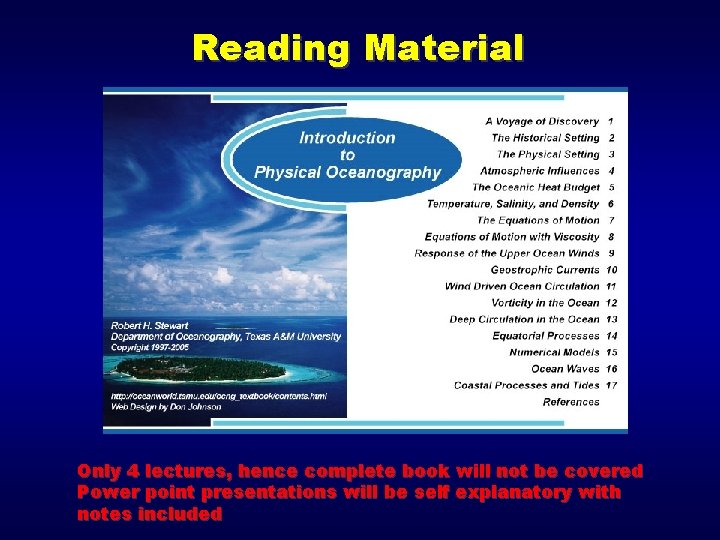
Reading Material Only 4 lectures, hence complete book will not be covered Power point presentations will be self explanatory with notes included
Introduction to Oceanography What is Oceanography? Oceanus = ocean graphos = the description of Oceanography = the description of the ocean Originally accurate, but now much more… Oceanus = ocean logos = the study of Oceanology = the science of the ocean
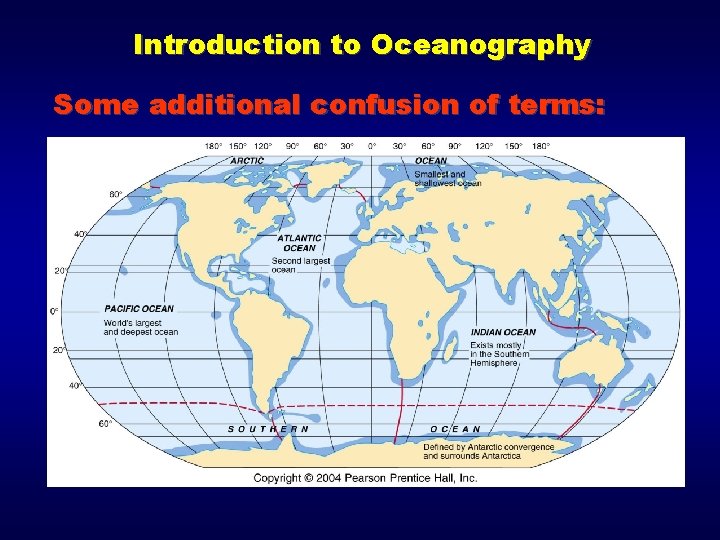
Introduction to Oceanography Some additional confusion of terms: Oceans vs. ocean?
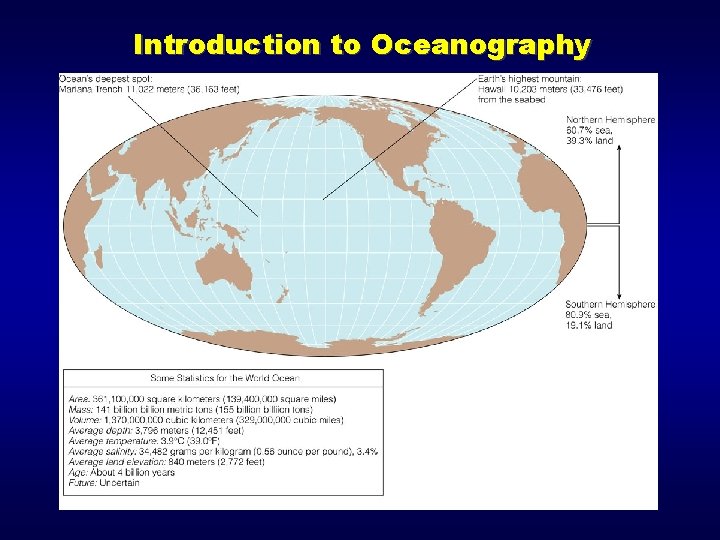
Introduction to Oceanography
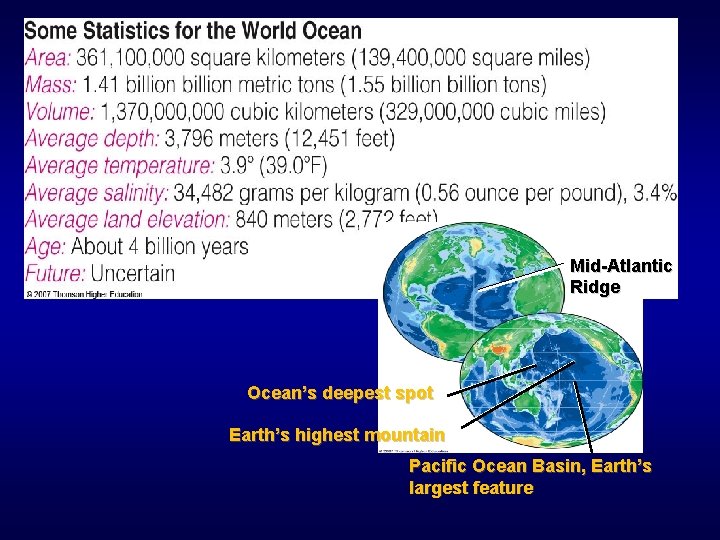
Mid-Atlantic Ridge Ocean’s deepest spot Earth’s highest mountain Pacific Ocean Basin, Earth’s largest feature
Introduction to Oceanography Some ocean factoids: Oceans cover 70. 8% of earth’ surface Size Atlantic - 33, 429, 000 mi 2 (29. 4% of ocean) Pacific - 64, 186, 300 mi 2 (50%) Indian - 28, 350, 500 mi 2 (20. 6%) Arctic - 5, 105, 700 mi 2 Average Depth Atlantic – 12, 612 ft Pacific - 12, 927 ft Indian - 12, 598 ft Arctic - 3, 665 ft
Introduction to Oceanography
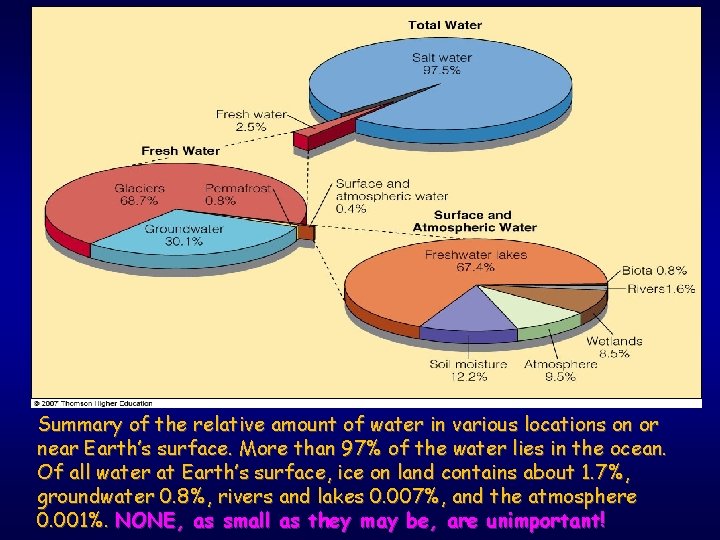
Summary of the relative amount of water in various locations on or near Earth’s surface. More than 97% of the water lies in the ocean. Of all water at Earth’s surface, ice on land contains about 1. 7%, groundwater 0. 8%, rivers and lakes 0. 007%, and the atmosphere 0. 001%. NONE, as small as they may be, are unimportant!
Introduction to Oceanography
Introduction to Oceanography
Introduction to Oceanography
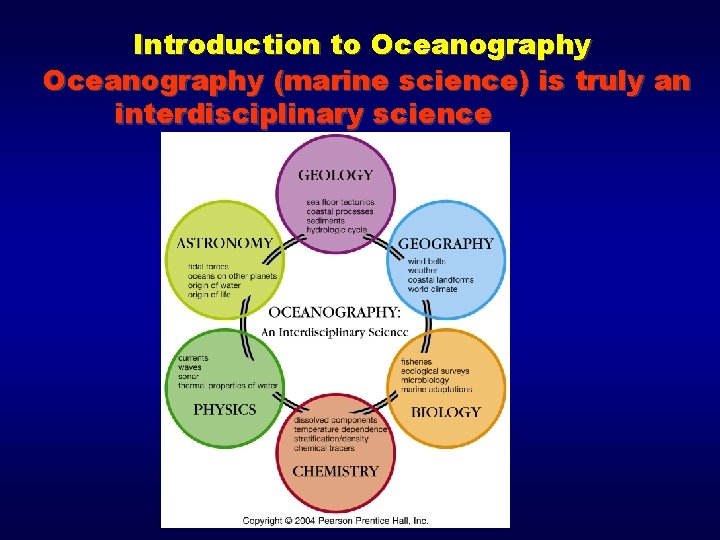
Introduction to Oceanography (marine science) is truly an interdisciplinary science
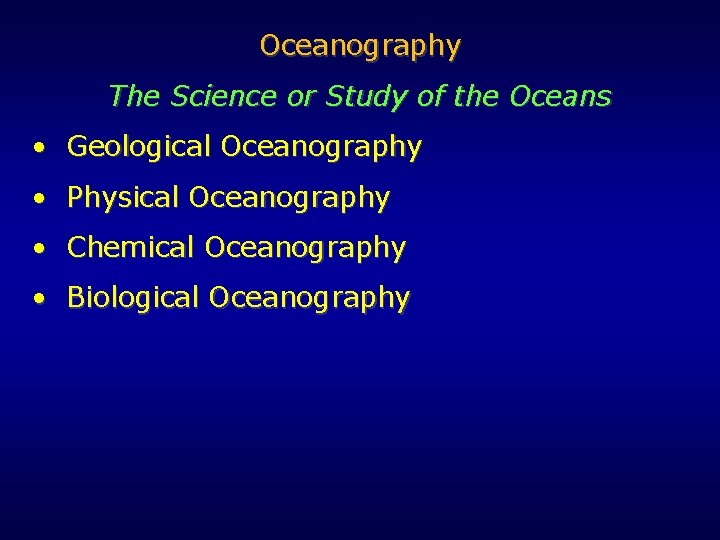
Oceanography The Science or Study of the Oceans • Geological Oceanography • Physical Oceanography • Chemical Oceanography • Biological Oceanography
Geological Oceanography • Study of earth at edge of ocean • Formation processes (seafloor) • Sediments • Rocks & minerals • Geothermal vents
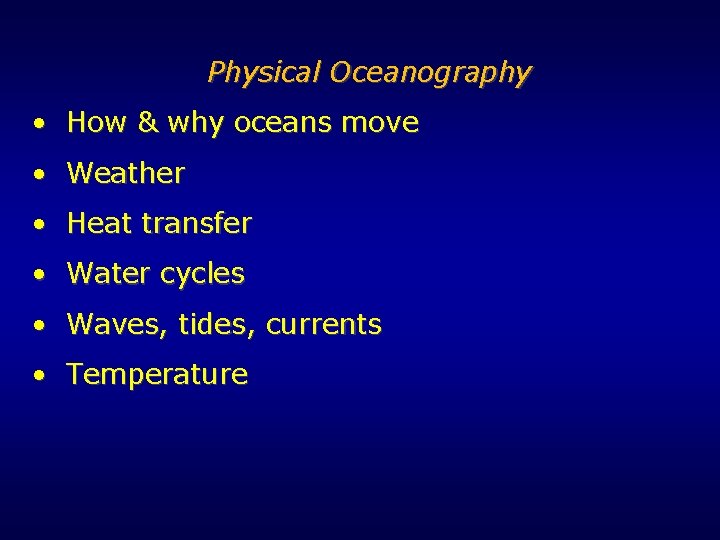
Physical Oceanography • How & why oceans move • Weather • Heat transfer • Water cycles • Waves, tides, currents • Temperature
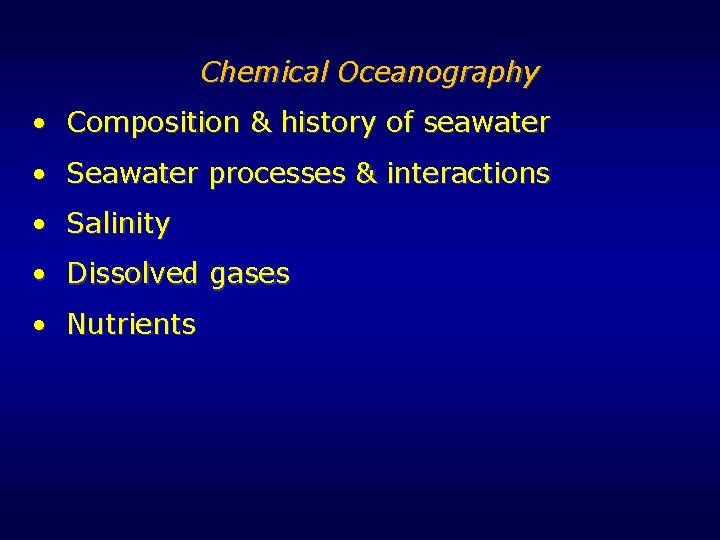
Chemical Oceanography • Composition & history of seawater • Seawater processes & interactions • Salinity • Dissolved gases • Nutrients
Biological Oceanography • Living organisms • Organisms relationships with each other and their environment
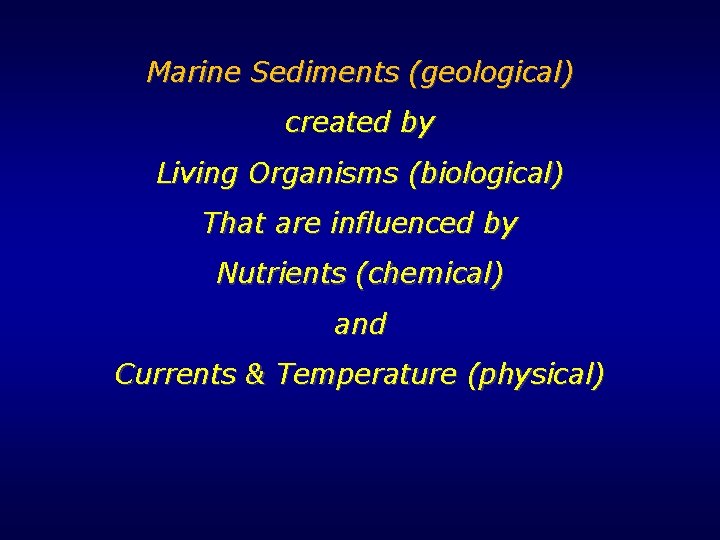
Marine Sediments (geological) created by Living Organisms (biological) That are influenced by Nutrients (chemical) and Currents & Temperature (physical)
Why is Oceanography important? • The importance of the oceans to physical climate, food supplies and biological stability • An extra dimension to human activity And………. • Long-term habitability of Earth 20
A Young Science • Although oceanography is a relatively young science • It is the natural setting to ask fundamental questions about the development of life, and the behavior (or misbehavior) of global climate 21
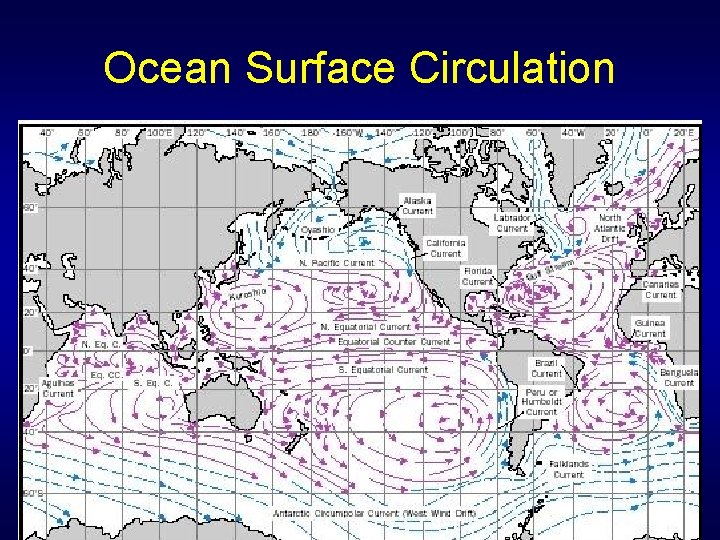
Ocean Surface Circulation
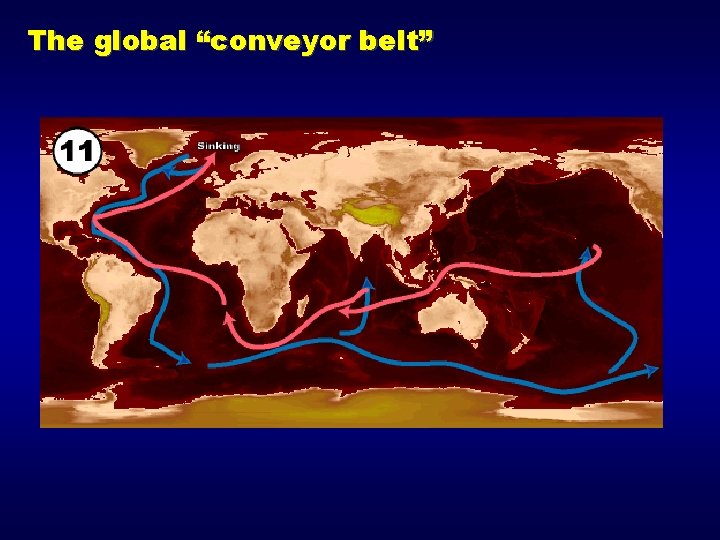
The global “conveyor belt”
What role do the oceans play in the climate system? • The oceans are important for our current climate
What role do the oceans play in the climate system? • The oceans are important for our current climate