Science Starter List some properties that you already
- Slides: 27
Science Starter • List some properties that you already know about acids and bases.
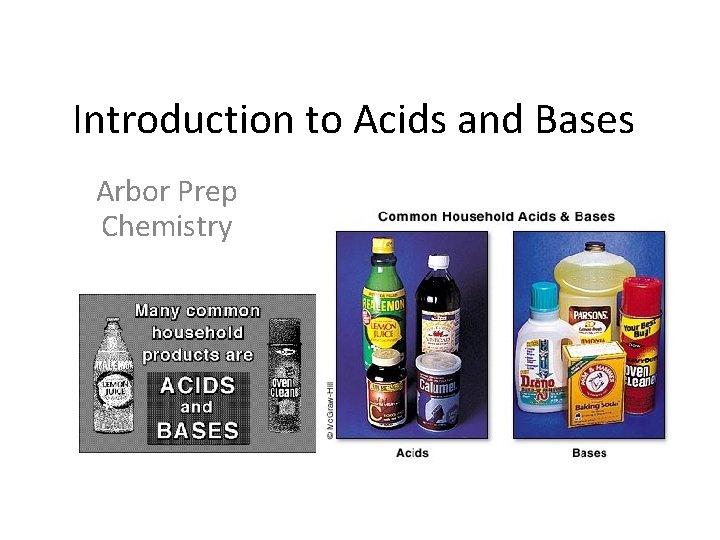
Introduction to Acids and Bases Arbor Prep Chemistry
Properties of Acids • “Any compound that increases the concentration of hydronium ions in water is said to be an acid. ” – Sour – Blue litmus paper turns red. – Low p. H values (<7) – Reacts with… • Metals such as Zn and Mg to produce H 2(g) • Hydroxide bases to produce water and a salt. • Carbonates to produce carbon dioxide.
Properties of Bases • “Any compound that increases the concentration of hydroxide ions in water is said to be a base. – Bitter/caustic tasting – Slippery/soapy feeling – Red litmus paper turns blue. – Has the ability to neutralize acids. – High p. H values (>7)
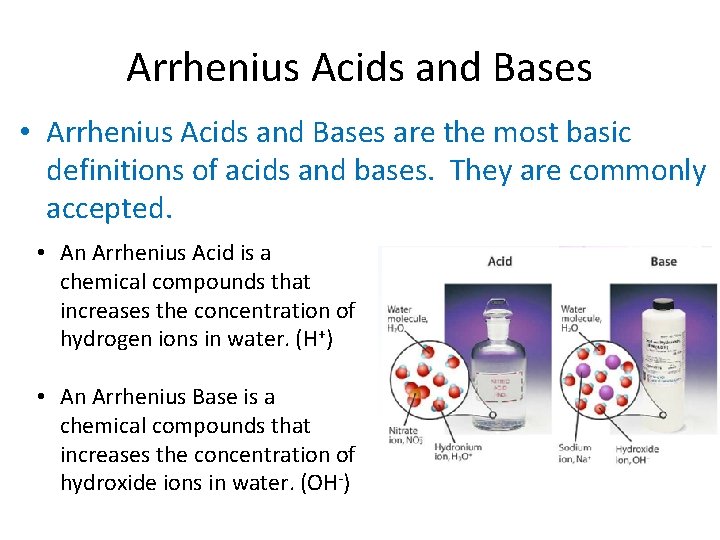
Arrhenius Acids and Bases • Arrhenius Acids and Bases are the most basic definitions of acids and bases. They are commonly accepted. • An Arrhenius Acid is a chemical compounds that increases the concentration of hydrogen ions in water. (H+) • An Arrhenius Base is a chemical compounds that increases the concentration of hydroxide ions in water. (OH-)
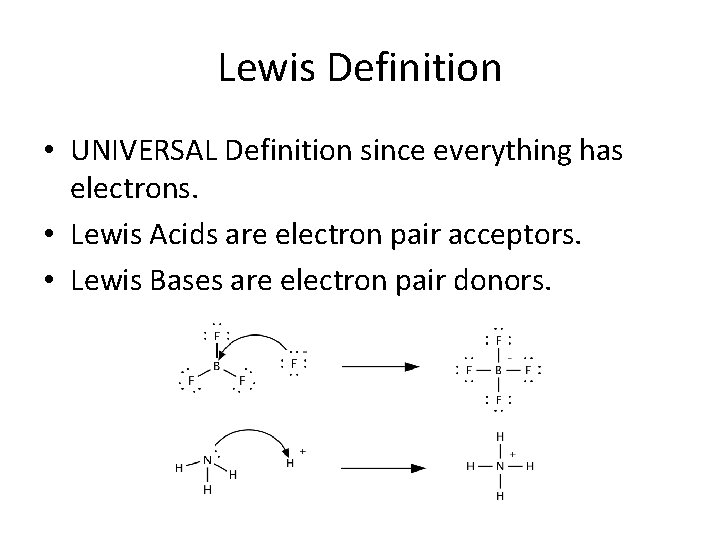
Lewis Definition • UNIVERSAL Definition since everything has electrons. • Lewis Acids are electron pair acceptors. • Lewis Bases are electron pair donors.
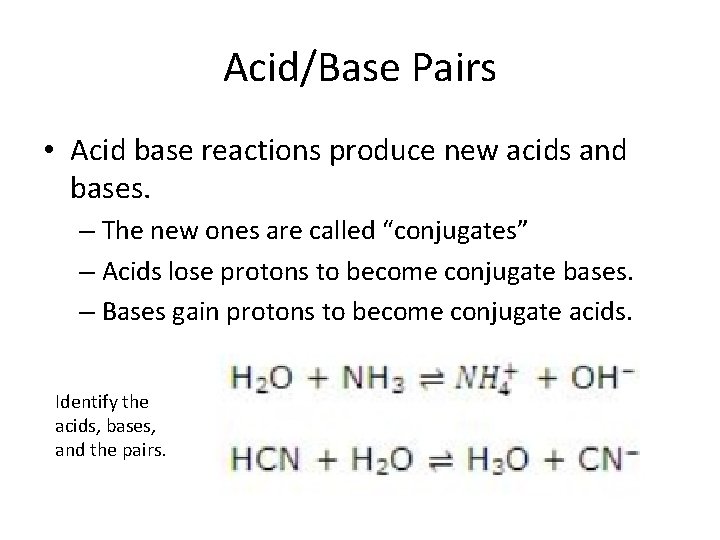
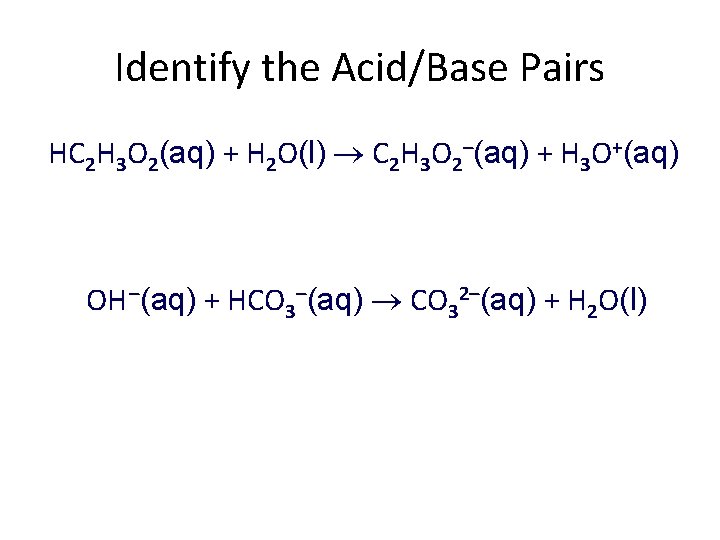
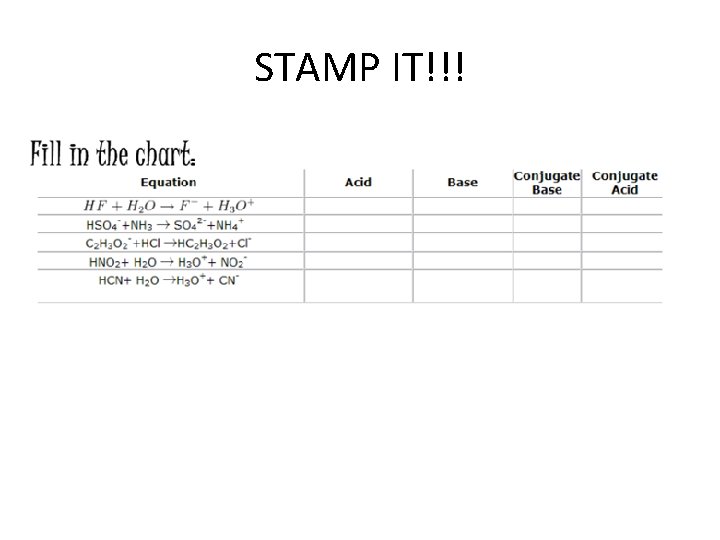
Acid/Base Pairs • Acid base reactions produce new acids and bases. – The new ones are called “conjugates” – Acids lose protons to become conjugate bases. – Bases gain protons to become conjugate acids. Identify the acids, bases, and the pairs.
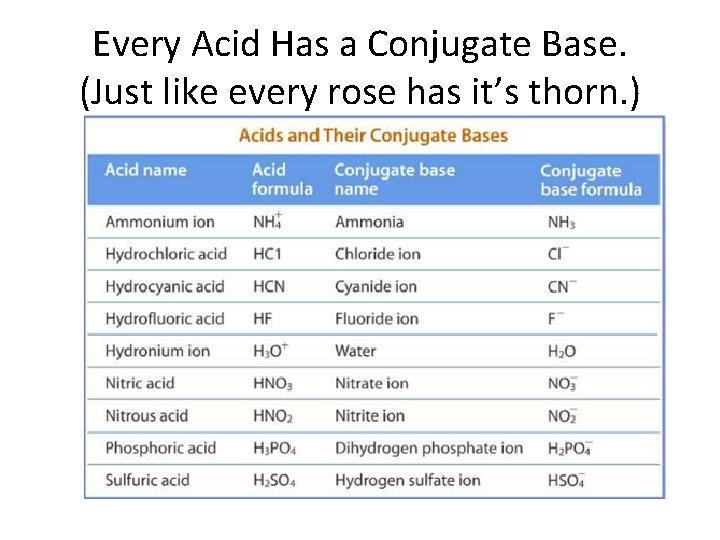
Every Acid Has a Conjugate Base. (Just like every rose has it’s thorn. )
Identify the Acid/Base Pairs HC 2 H 3 O 2(aq) + H 2 O(l) C 2 H 3 O 2–(aq) + H 3 O+(aq) OH –(aq) + HCO 3–(aq) CO 32–(aq) + H 2 O(l)
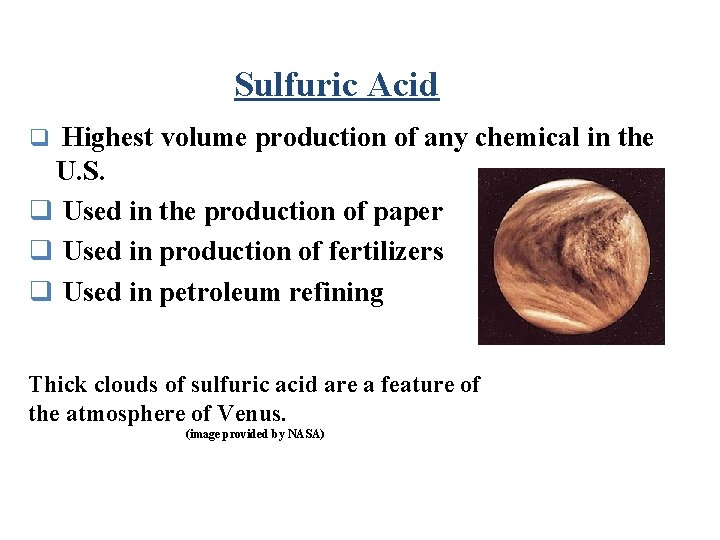
Sulfuric Acid q Highest volume production of any chemical in the U. S. q Used in the production of paper q Used in production of fertilizers q Used in petroleum refining Thick clouds of sulfuric acid are a feature of the atmosphere of Venus. (image provided by NASA)
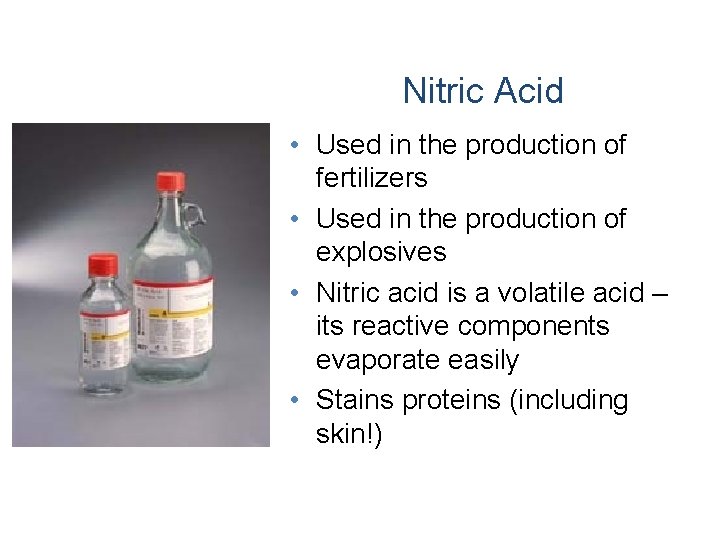
Nitric Acid • Used in the production of fertilizers • Used in the production of explosives • Nitric acid is a volatile acid – its reactive components evaporate easily • Stains proteins (including skin!)
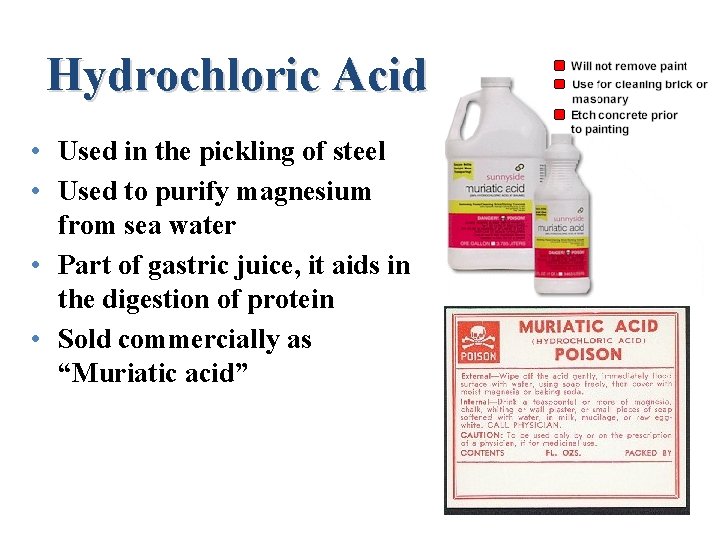
Hydrochloric Acid • Used in the pickling of steel • Used to purify magnesium from sea water • Part of gastric juice, it aids in the digestion of protein • Sold commercially as “Muriatic acid”
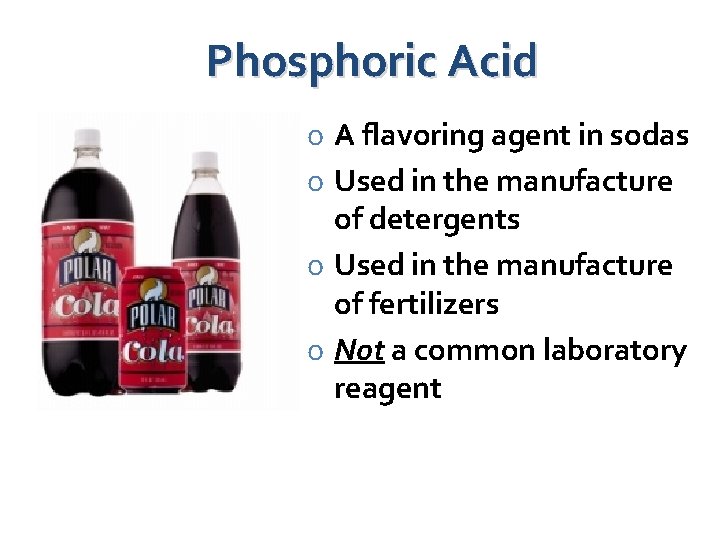
Phosphoric Acid o A flavoring agent in sodas o Used in the manufacture of detergents o Used in the manufacture of fertilizers o Not a common laboratory reagent
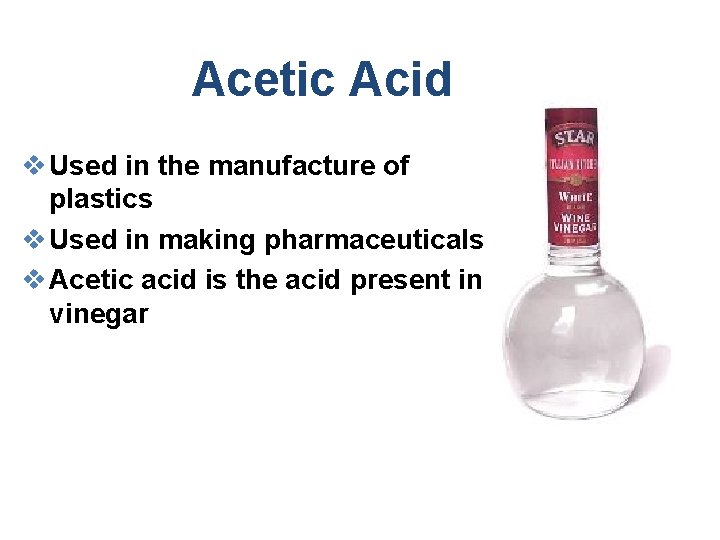
Acetic Acid v Used in the manufacture of plastics v Used in making pharmaceuticals v Acetic acid is the acid present in vinegar
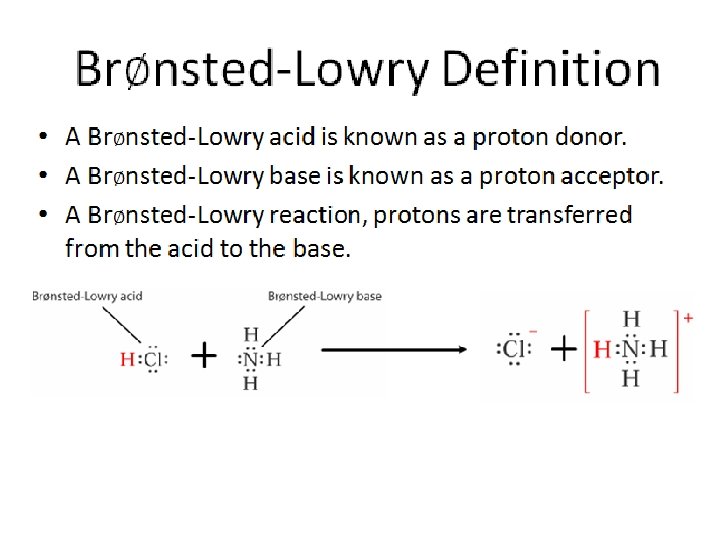
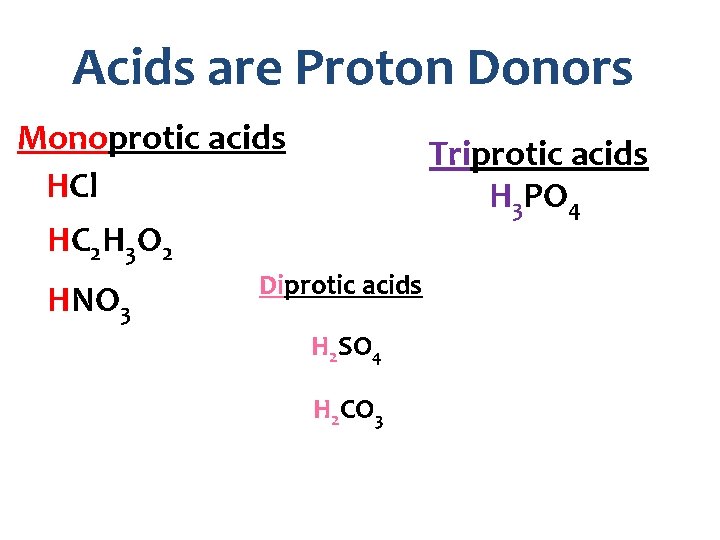
Acids are Proton Donors Monoprotic acids HCl Triprotic acids H 3 PO 4 HC 2 H 3 O 2 HNO 3 Diprotic acids H 2 SO 4 H 2 CO 3
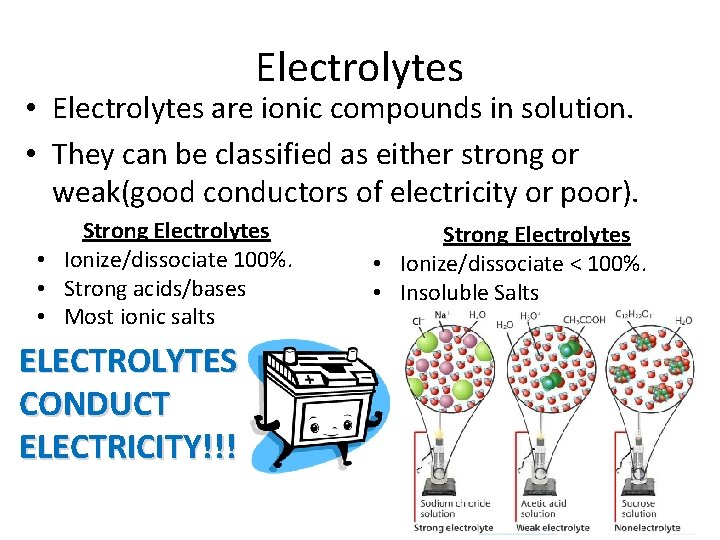
Electrolytes • Electrolytes are ionic compounds in solution. • They can be classified as either strong or weak(good conductors of electricity or poor). Strong Electrolytes • Ionize/dissociate 100%. • Strong acids/bases • Most ionic salts ELECTROLYTES CONDUCT ELECTRICITY!!! Strong Electrolytes • Ionize/dissociate < 100%. • Insoluble Salts
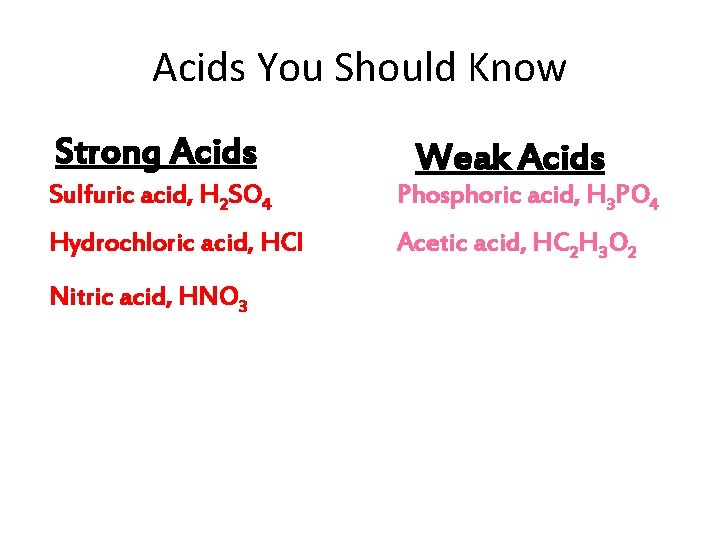
Acids You Should Know Strong Acids Weak Acids Sulfuric acid, H 2 SO 4 Phosphoric acid, H 3 PO 4 Hydrochloric acid, HCl Acetic acid, HC 2 H 3 O 2 Nitric acid, HNO 3
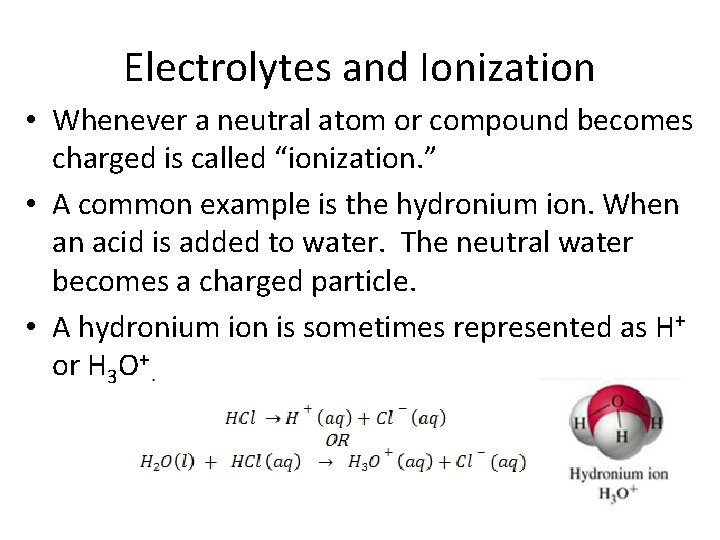
Electrolytes and Ionization • Whenever a neutral atom or compound becomes charged is called “ionization. ” • A common example is the hydronium ion. When an acid is added to water. The neutral water becomes a charged particle. • A hydronium ion is sometimes represented as H+ or H 3 O+.
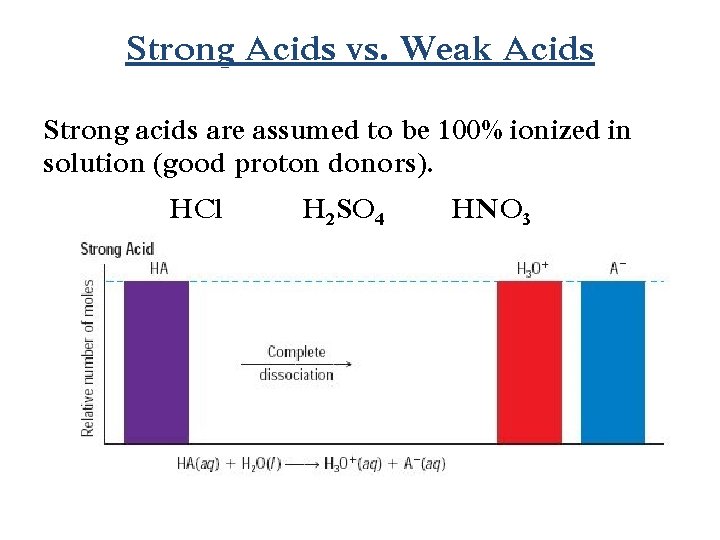
Strong Acids vs. Weak Acids Strong acids are assumed to be 100% ionized in solution (good proton donors). HCl H 2 SO 4 HNO 3
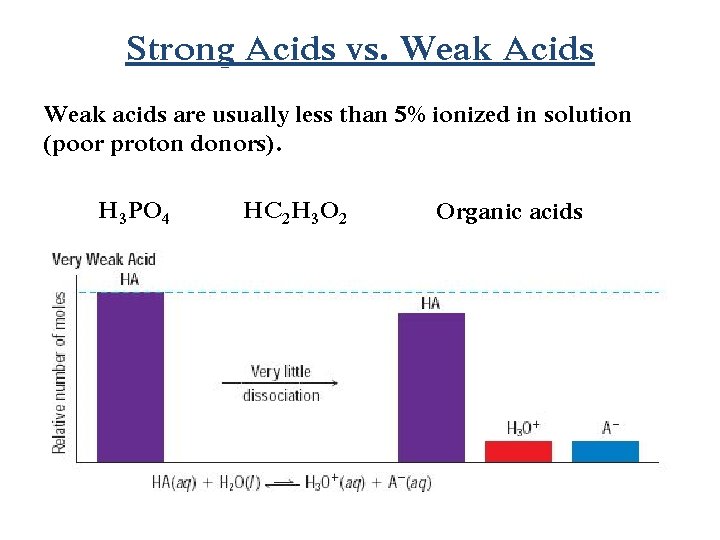
Strong Acids vs. Weak Acids Weak acids are usually less than 5% ionized in solution (poor proton donors). H 3 PO 4 HC 2 H 3 O 2 Organic acids
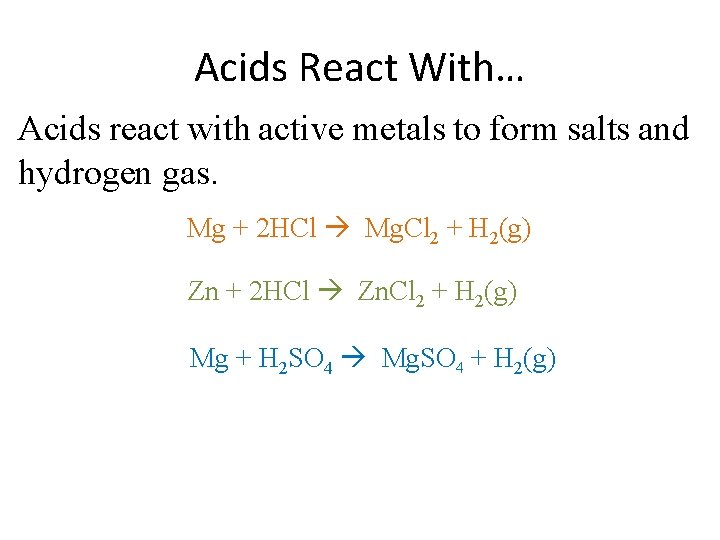
Acids React With… Acids react with active metals to form salts and hydrogen gas. Mg + 2 HCl Mg. Cl 2 + H 2(g) Zn + 2 HCl Zn. Cl 2 + H 2(g) Mg + H 2 SO 4 Mg. SO 4 + H 2(g)
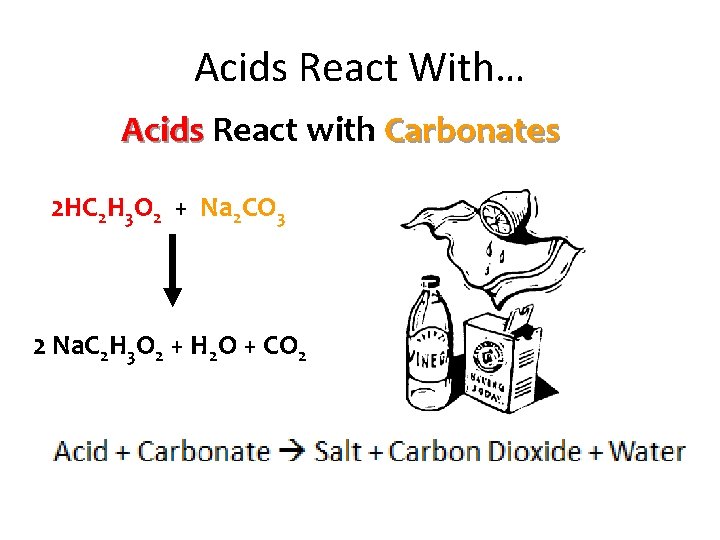
Acids React With… Acids React with Carbonates 2 HC 2 H 3 O 2 + Na 2 CO 3 2 Na. C 2 H 3 O 2 + H 2 O + CO 2
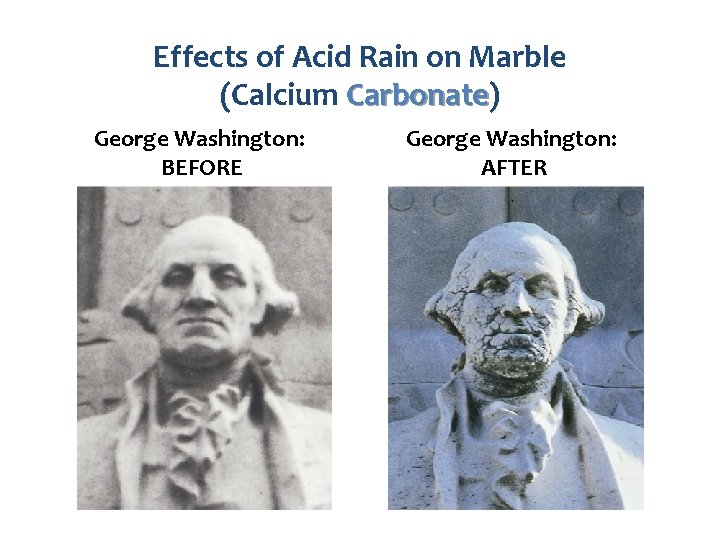
Effects of Acid Rain on Marble (Calcium Carbonate) George Washington: BEFORE George Washington: AFTER
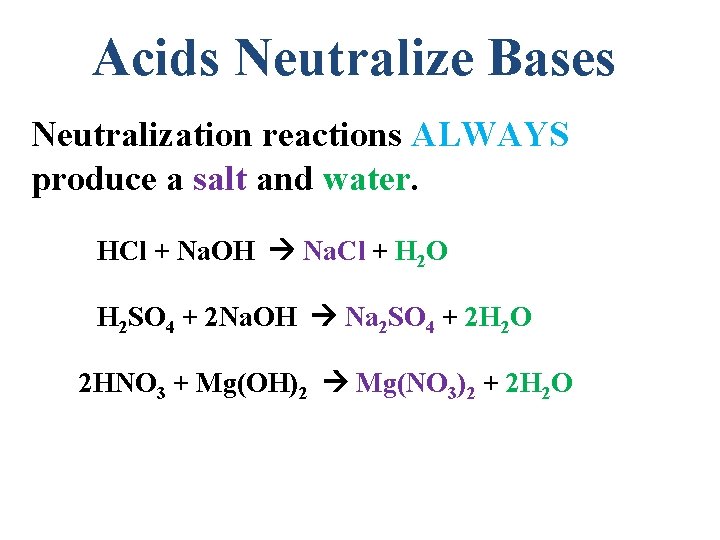
Acids Neutralize Bases Neutralization reactions ALWAYS produce a salt and water. HCl + Na. OH Na. Cl + H 2 O H 2 SO 4 + 2 Na. OH Na 2 SO 4 + 2 H 2 O 2 HNO 3 + Mg(OH)2 Mg(NO 3)2 + 2 H 2 O
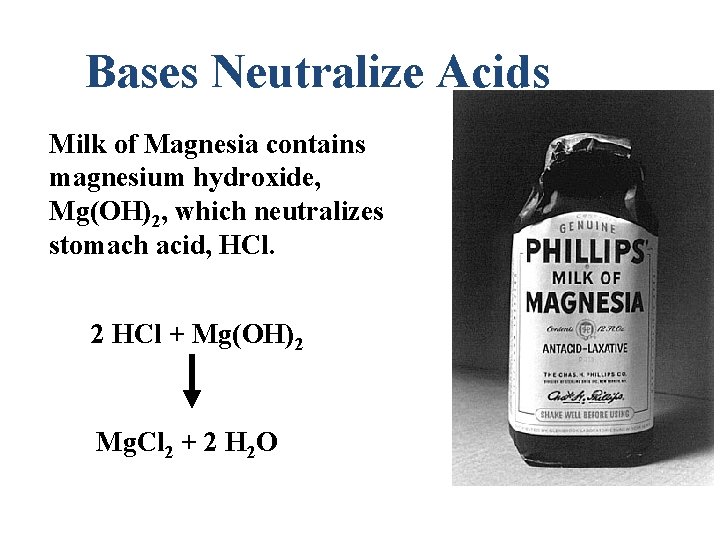
Bases Neutralize Acids Milk of Magnesia contains magnesium hydroxide, Mg(OH)2, which neutralizes stomach acid, HCl. 2 HCl + Mg(OH)2 Mg. Cl 2 + 2 H 2 O
STAMP IT!!!