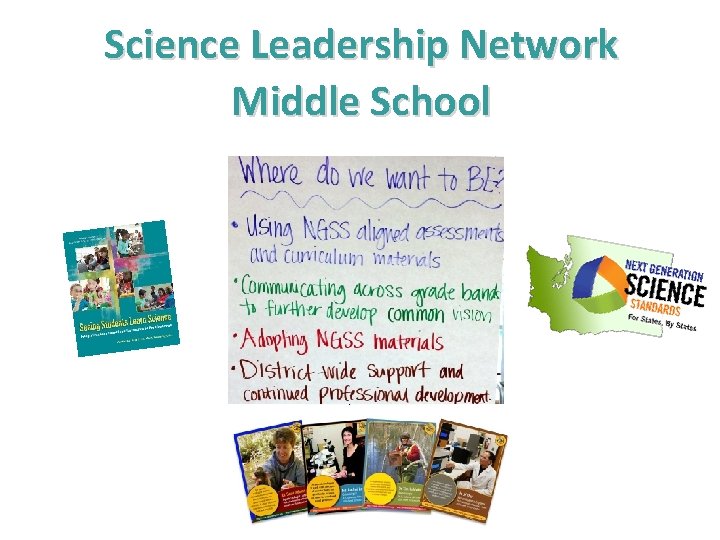
Science Leadership Network Middle School Introductions 1 Find
- Slides: 46
Science Leadership Network Middle School
Introductions 1. Find a colleague you don’t know, introduce yourself. 2. Briefly share something you learned from “Seeing Students Learn Science” - Chapter 1 3. Bonus Question: “What is your school doing to transition to new materials?
Learning Intentions/Targets/Goals • Explore formative assessment strategies for the 3 D instruction. • Develop expertise with processes and tools for selecting NGSS-aligned Instructional Materials. • Network with colleagues to learn about regional implementation efforts. • Connect NGSS learning to STEM learning.
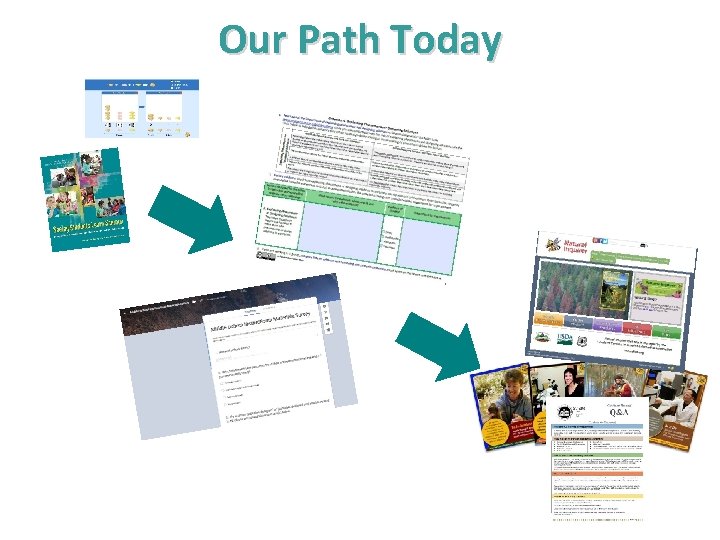
Our Path Today
Learning Intentions/Targets/Goals • Explore formative assessment strategies for the 3 D instruction. • Develop expertise with processes and tools for selecting NGSS-aligned Instructional Materials. • Network with colleagues to learn about regional implementation efforts. • Connect NGSS learning to STEM learning.
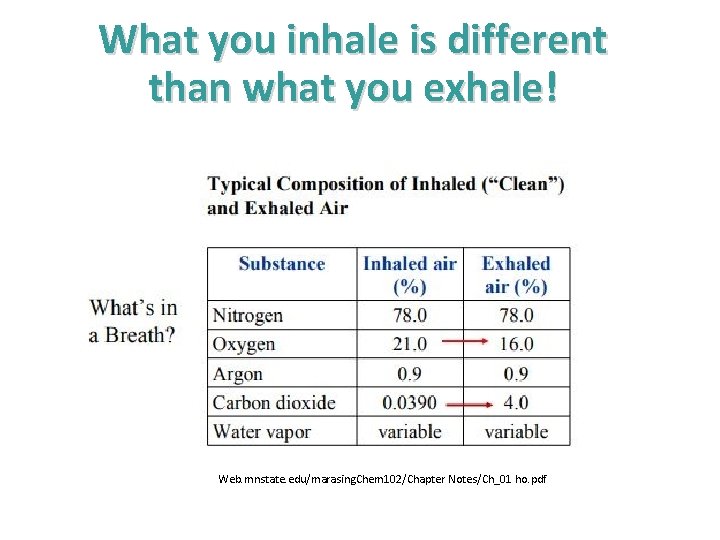
What you inhale is different than what you exhale! Web. mnstate. edu/marasing. Chem 102/Chapter Notes/Ch_01 ho. pdf
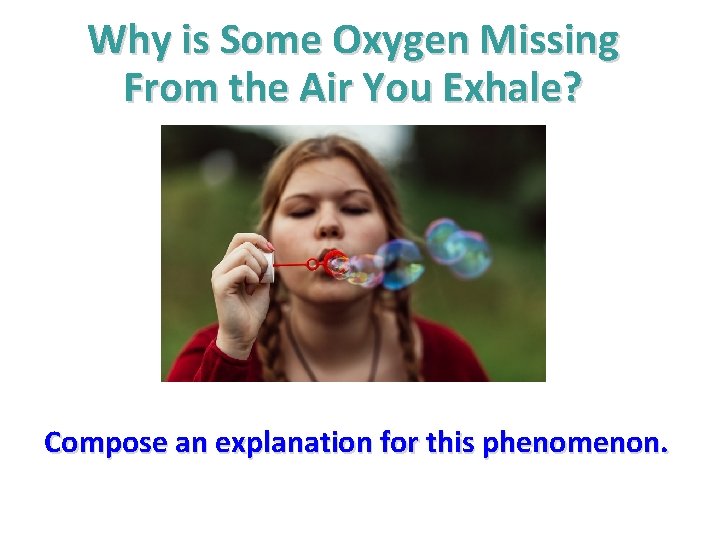
Why is Some Oxygen Missing From the Air You Exhale? Compose an explanation for this phenomenon.
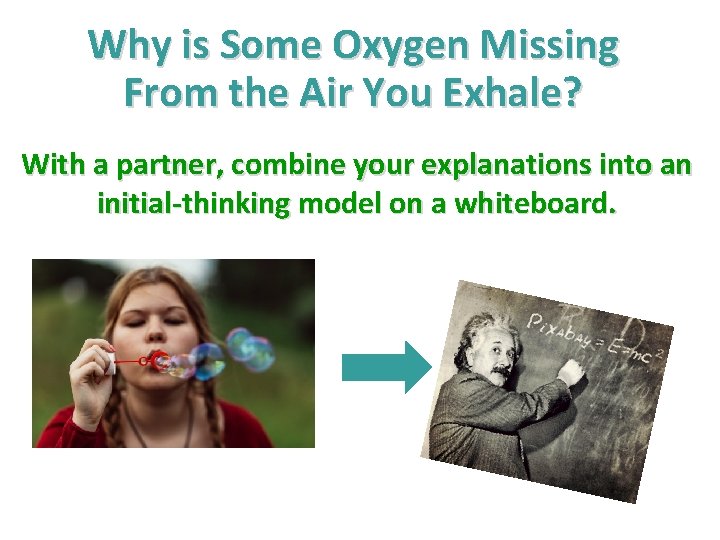
Why is Some Oxygen Missing From the Air You Exhale? With a partner, combine your explanations into an initial-thinking model on a whiteboard.
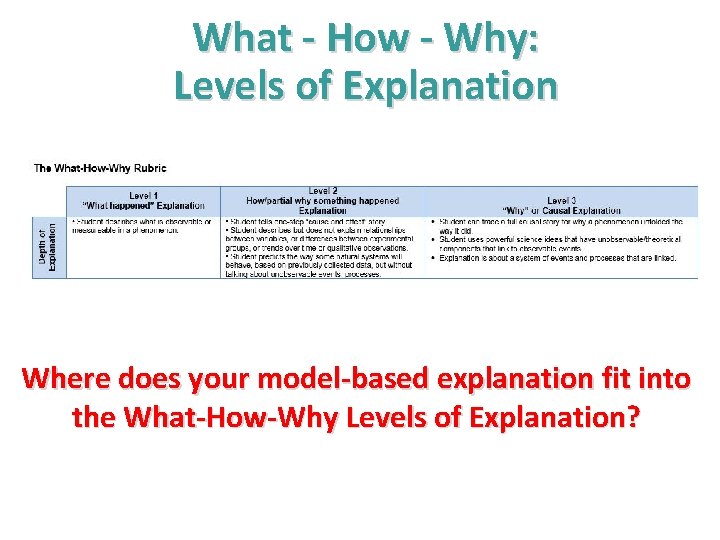
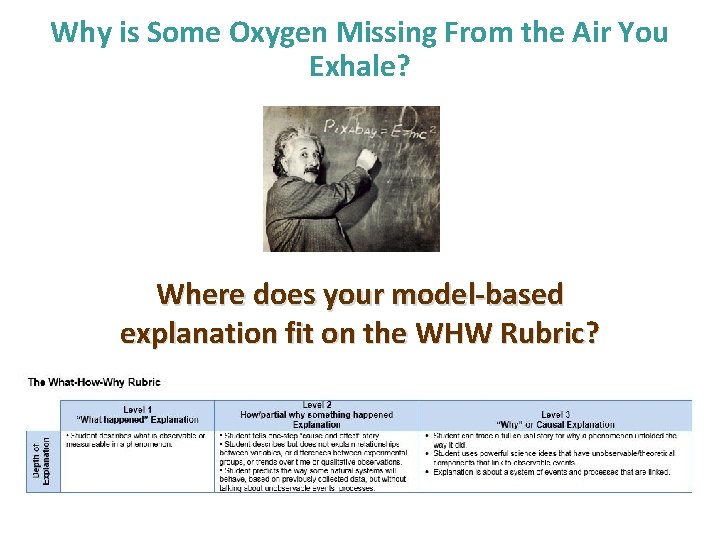
What - How - Why: Levels of Explanation Where does your model-based explanation fit into the What-How-Why Levels of Explanation?
Why is Some Oxygen Missing From the Air You Exhale? Use a simulation to learn more https: //phet. colorado. edu/
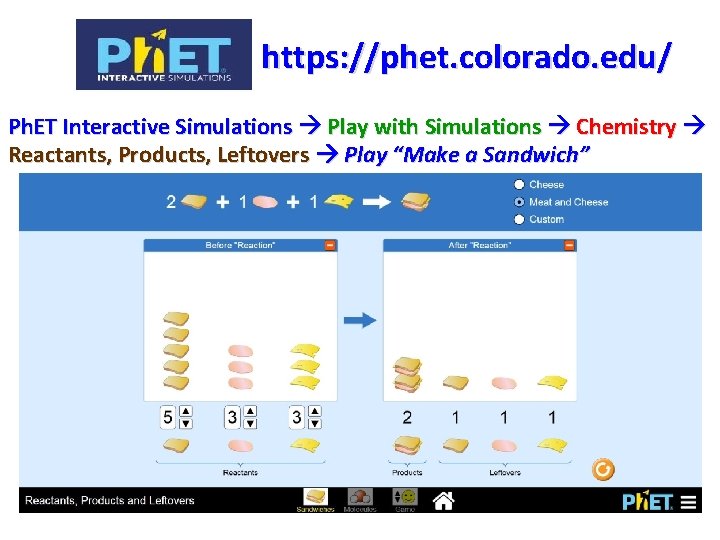
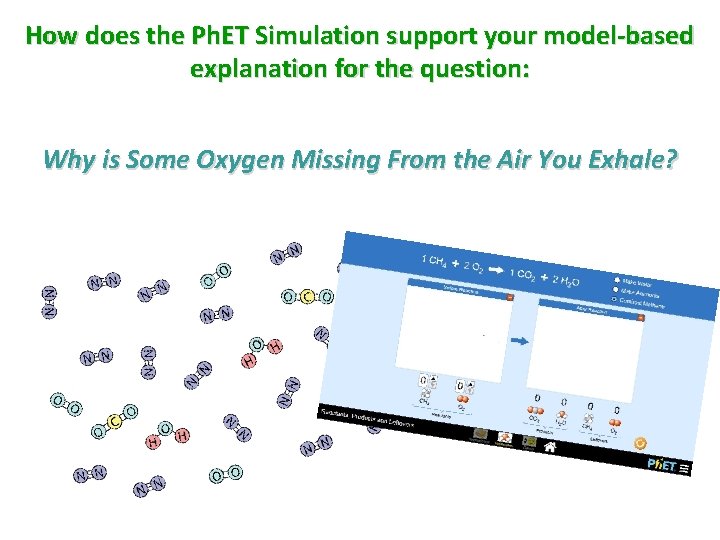
https: //phet. colorado. edu/ Ph. ET Interactive Simulations Play with Simulations Chemistry Reactants, Products, Leftovers Play “Make a Sandwich”
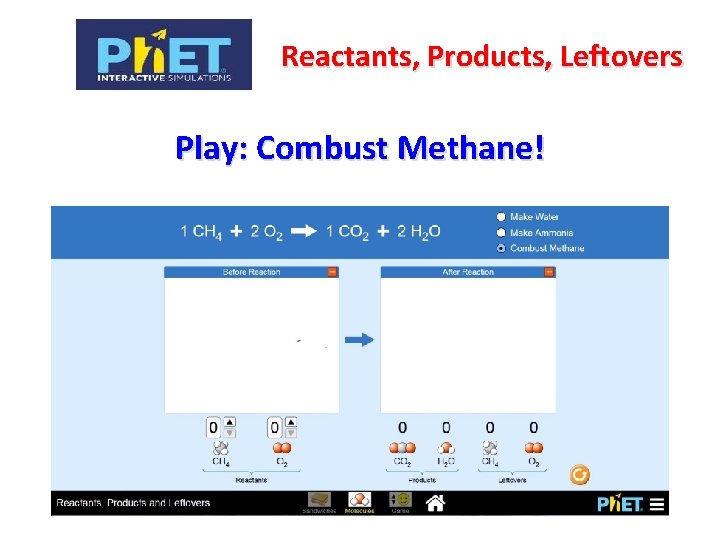
Reactants, Products, Leftovers Play: Combust Methane!
How does the Ph. ET Simulation support your model-based explanation for the question: Why is Some Oxygen Missing From the Air You Exhale?
Why is Some Oxygen Missing From the Air You Exhale? Where does your model-based explanation fit on the WHW Rubric?
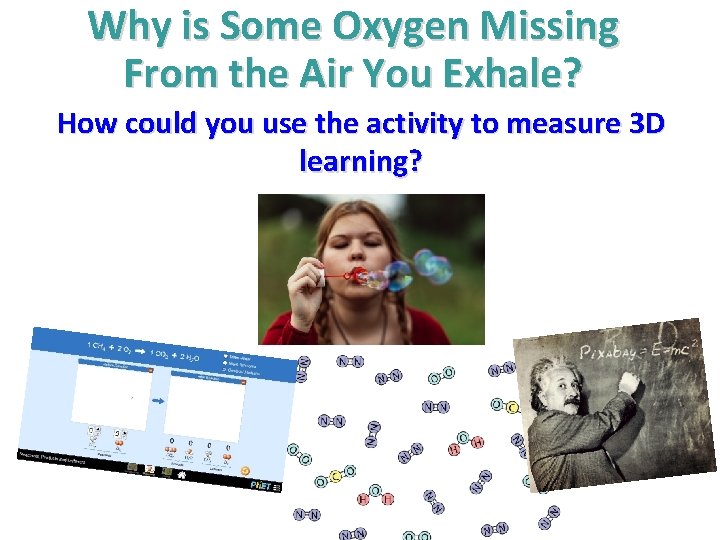
Why is Some Oxygen Missing From the Air You Exhale? How could you use the activity to measure 3 D learning?
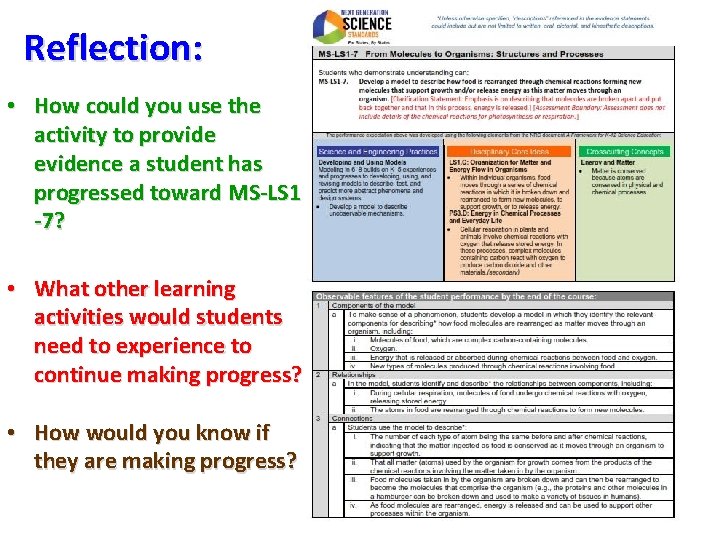
Reflection: • How could you use the activity to provide evidence a student has progressed toward MS-LS 1 -7? • What other learning activities would students need to experience to continue making progress? • How would you know if they are making progress?
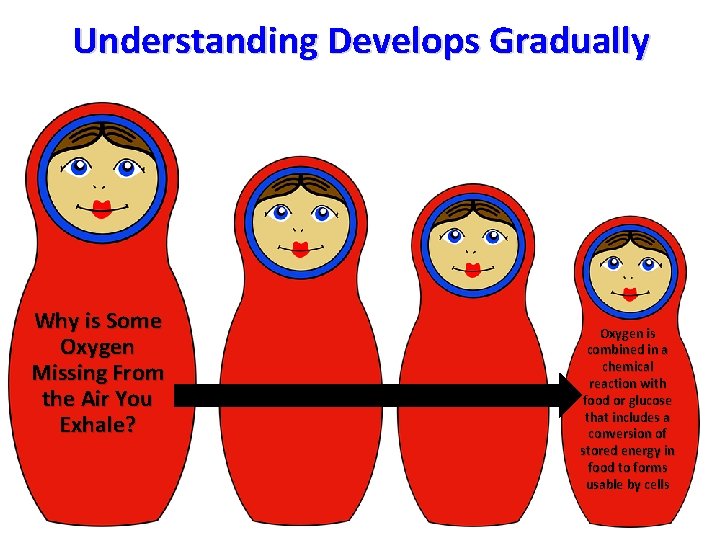
Understanding Develops Gradually Why is Some Oxygen Missing From the Air You Exhale? Oxygen is combined in a chemical reaction with food or glucose that includes a conversion of stored energy in food to forms usable by cells
Take a Break! We will resume at 10: 10
Pick up a book! Take a self-directed tour We will resume at 10: 10
Learning Intentions/Targets/Goals • Explore formative assessment strategies for the 3 D instruction. • Develop expertise with processes and tools for selecting NGSS-aligned Instructional Materials. • Network with colleagues to learn about regional implementation efforts. • Connect NGSS learning to STEM learning.
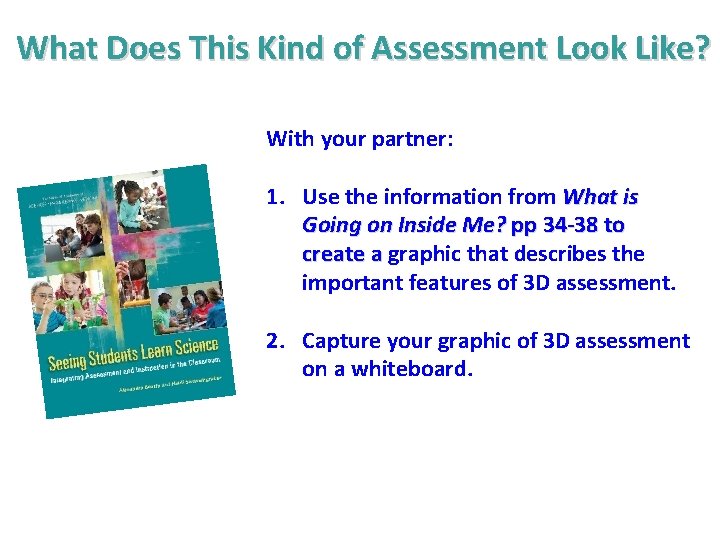
What Does This Kind of Assessment Look Like? With your partner: 1. Use the information from What is Going on Inside Me? pp 34 -38 to create a graphic that describes the important features of 3 D assessment. 2. Capture your graphic of 3 D assessment on a whiteboard.
What Does This Kind of Assessment Look Like? • Share your white board graphic with others at your table. • Be ready to share with the room.
What Does This Kind of Assessment Look Like? What Are the Differences? Traditional vs Three-Dimensional Approach Work as a table group Roles: • Timekeeper (15 minutes!) • Researcher (everyone!) Task: Gather data to compare the two approaches from Chapter 2, pp 38 -50
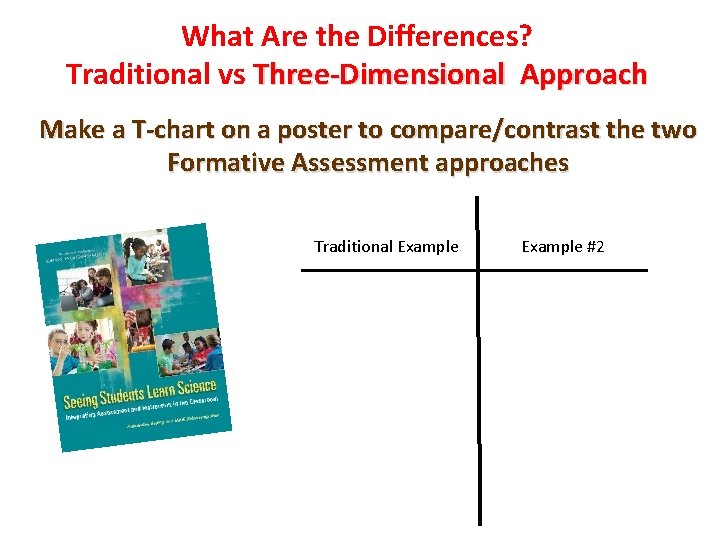
What Are the Differences? Traditional vs Three-Dimensional Approach Make a T-chart on a poster to compare/contrast the two Formative Assessment approaches Traditional Example #2
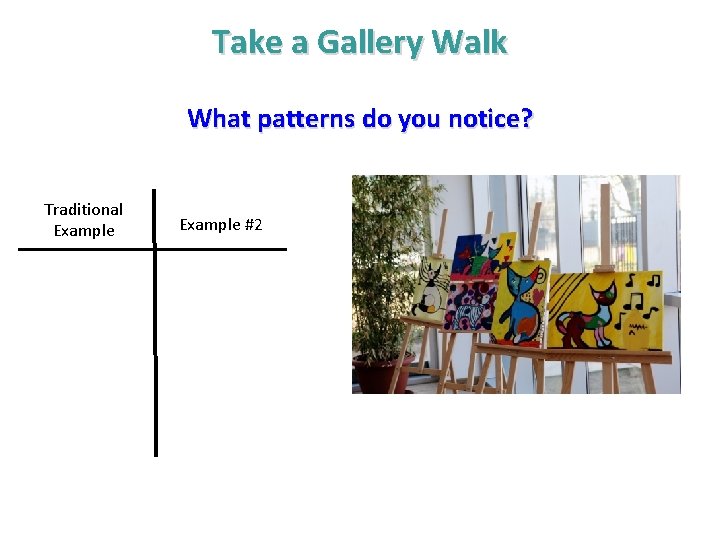
Take a Gallery Walk What patterns do you notice? Traditional Example #2
Reflection Think and Write: • What activities described in the 3 D formative assessment approach are already part of your instructional practice? • What 3 D activities or strategies do you want to add to your practice?
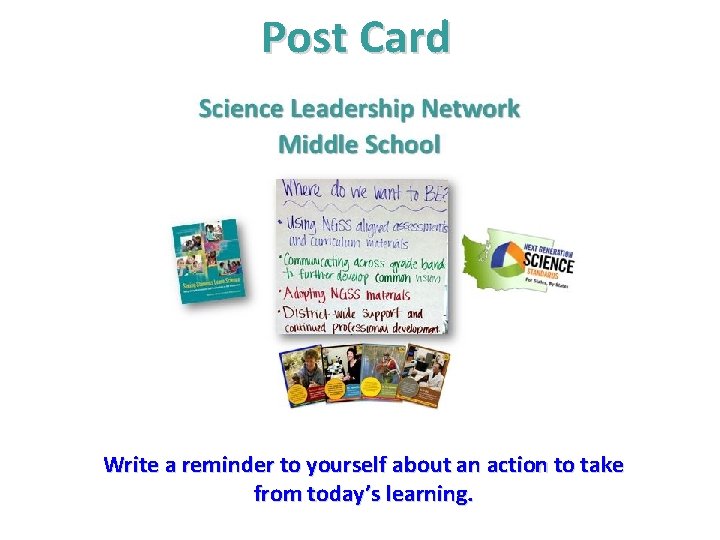
Post Card Write a reminder to yourself about an action to take from today’s learning.
Working Lunch Eat! Team Time Choose one person from your Building/Team to take a survey about the status of your instructional materials: https: //tinyurl. com/ESD 105 MSScience • Regional Announcements • • • We resume at……
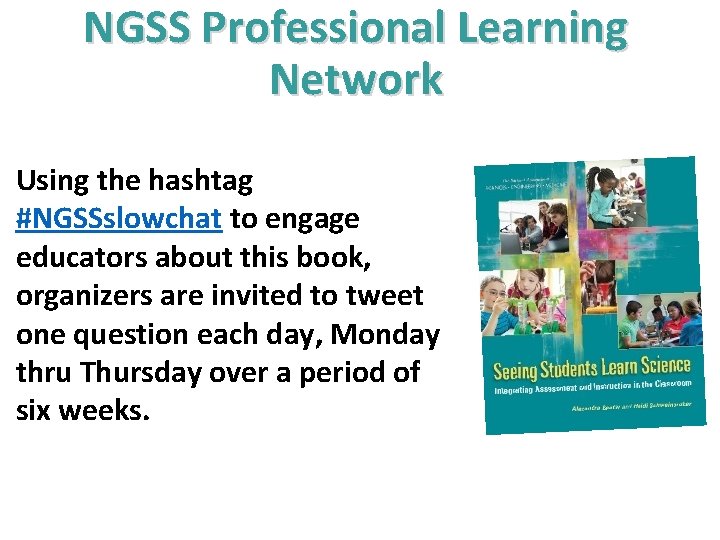
NGSS Professional Learning Network Using the hashtag #NGSSslowchat to engage educators about this book, organizers are invited to tweet one question each day, Monday thru Thursday over a period of six weeks.
Learning Intentions/Targets/Goals • Explore formative assessment strategies for the 3 D instruction. • Develop expertise with processes and tools for selecting NGSS-aligned Instructional Materials. • Network with colleagues to learn about regional implementation efforts. • Connect NGSS learning to STEM learning.
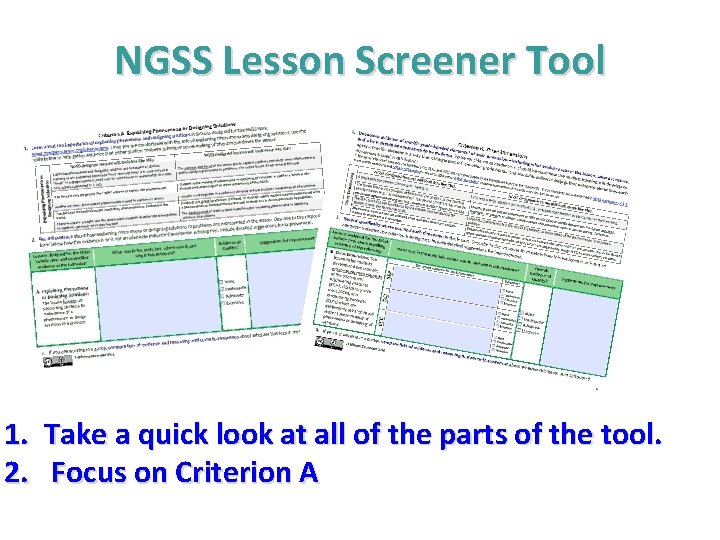
NGSS Lesson Screener Tool 1. Take a quick look at all of the parts of the tool. 2. Focus on Criterion A
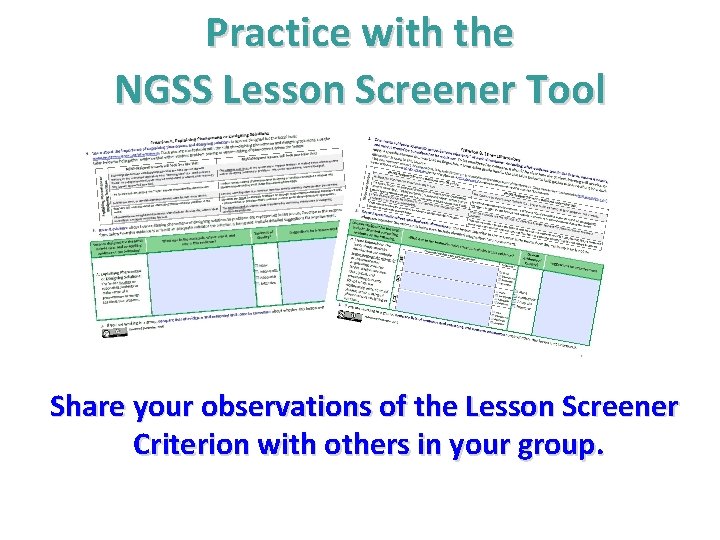
Practice with the NGSS Lesson Screener Tool 1. Form Teams, each teammate chooses a Criterion of the Lesson Screener to use. 2. Apply your Criterion to “Biodiversity in the School Yard” 3. Use the Criterion to collect evidence and suggest improvements for “Biodiversity”
Practice with the NGSS Lesson Screener Tool Share your observations of the Lesson Screener Criterion with others in your group.
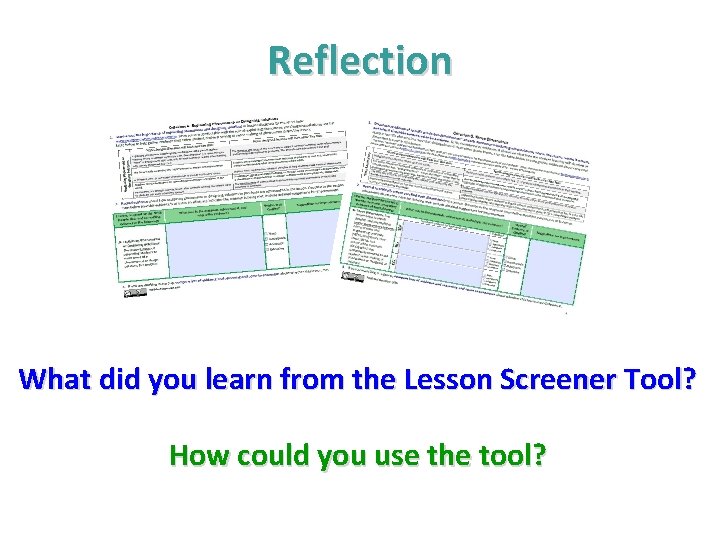
Reflection What did you learn from the Lesson Screener Tool? How could you use the tool?
Learning Intentions/Targets/Goals • Explore formative assessment strategies for the 3 D instruction. • Develop expertise with processes and tools for selecting NGSS-aligned Instructional Materials. • Network with colleagues to learn about regional implementation efforts. • Connect NGSS learning to STEM learning.
Take a Break! We will resume at 1: 15
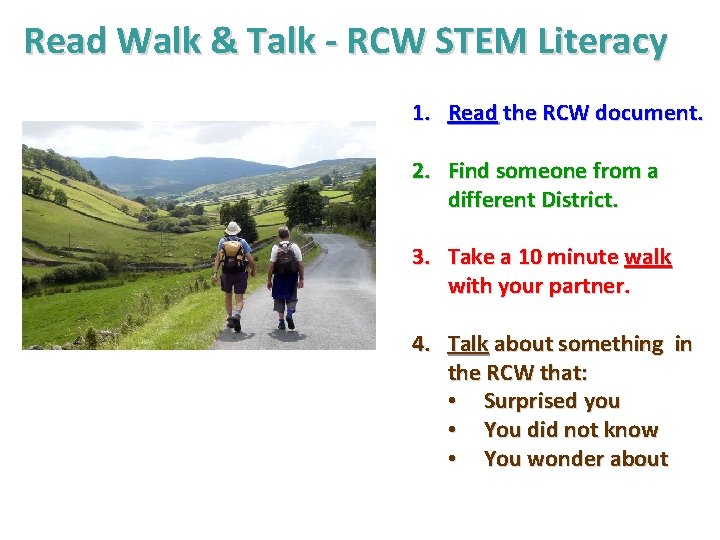
Read Walk & Talk - RCW STEM Literacy 1. Read the RCW document. 2. Find someone from a different District. 3. Take a 10 minute walk with your partner. 4. Talk about something in the RCW that: • Surprised you • You did not know • You wonder about
Read Walk & Talk - RCW STEM Literacy Share at your table something that • Surprised you • You did not know • You wondered about
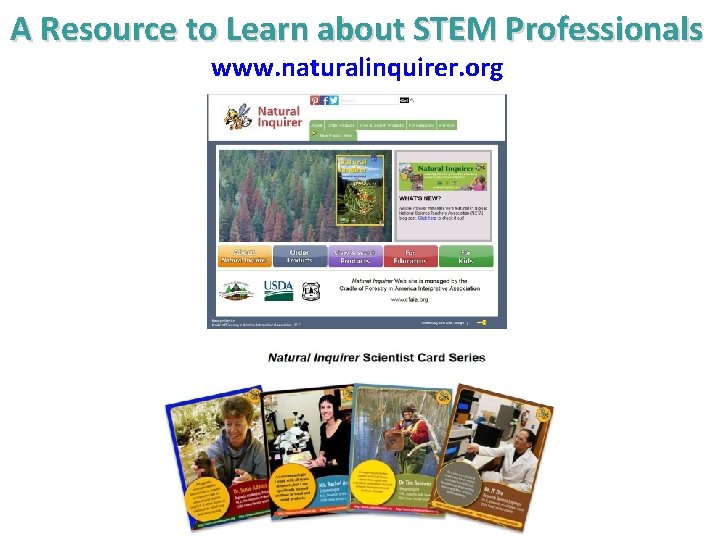
A Resource to Learn about STEM Professionals www. naturalinquirer. org
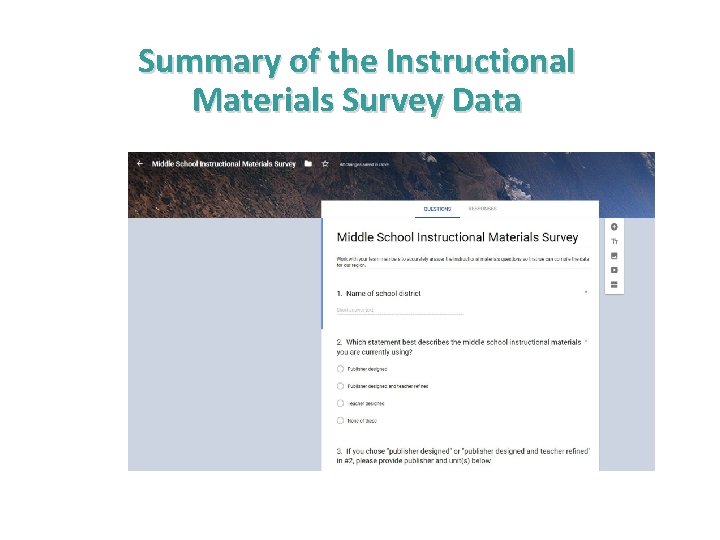
Summary of the Instructional Materials Survey Data
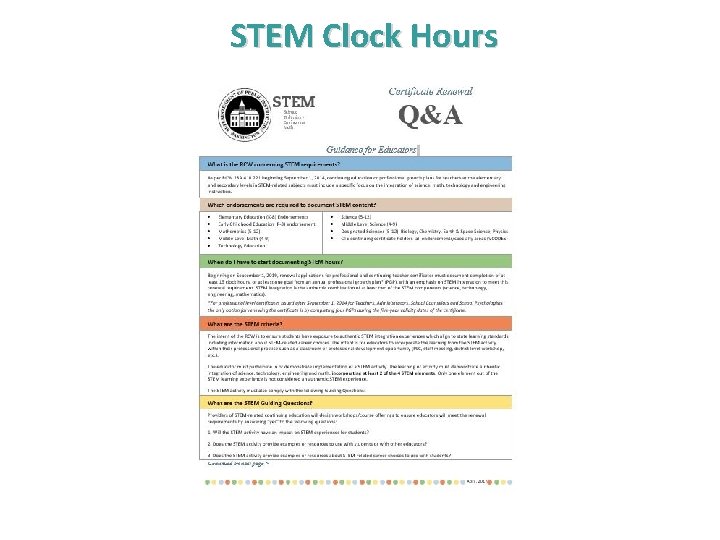
STEM Clock Hours
Learning Intentions/Targets/Goals • Explore formative assessment strategies for the 3 D instruction. • Develop expertise with processes and tools for selecting NGSS-aligned Instructional Materials. • Network with colleagues to learn about regional implementation efforts. • Connect NGSS learning to STEM learning.
AESD Science Professional Learning Survey 2017 -18 Link: http: //tinyurl. com/WAScience 2017 -18 Date of professional Development: October 26, 2017 Course Key: G 1 SLNMS Title: Middle School SLN Number of hours: 6
Science Leadership Network Middle School See you February 22!