
Network Leadership Webinar Four Network Principles for Collaboration

Network Leadership Webinar Four Network Principles for Collaboration Success September 30 th, 2015
AGENDA Welcome and introductions Presentation: Four Network Principles for Collaboration Success, Jane Wei-Skillern Panel: Q&A with Sarah Milligan-Toffler, Cathy Jordan, and José Gonzalez Closing 2
PRESENTERS & PANELISTS Presenter: Jane Wei-Skillern Adjunct Associate Professor at the Center for Social Sector Leadership at the Haas School of Business, University of California, Berkeley Moderator: Avery Cleary Consultant, Children & Nature Network and Co-founder of the Bay Area Children in Nature Collaborative Panel: Sarah Milligan Toffler Executive Director of Children & Nature Network Cathy Jordan Consultant, Children & Nature Network and associate professor in the Department of Pediatrics at the University of Minnesota José Gonzalez Founder of Latino Outdoors Support: Mollie Thompson, Amy Pertschuk (C&NN) and Mary Roscoe (CINC) 3

4

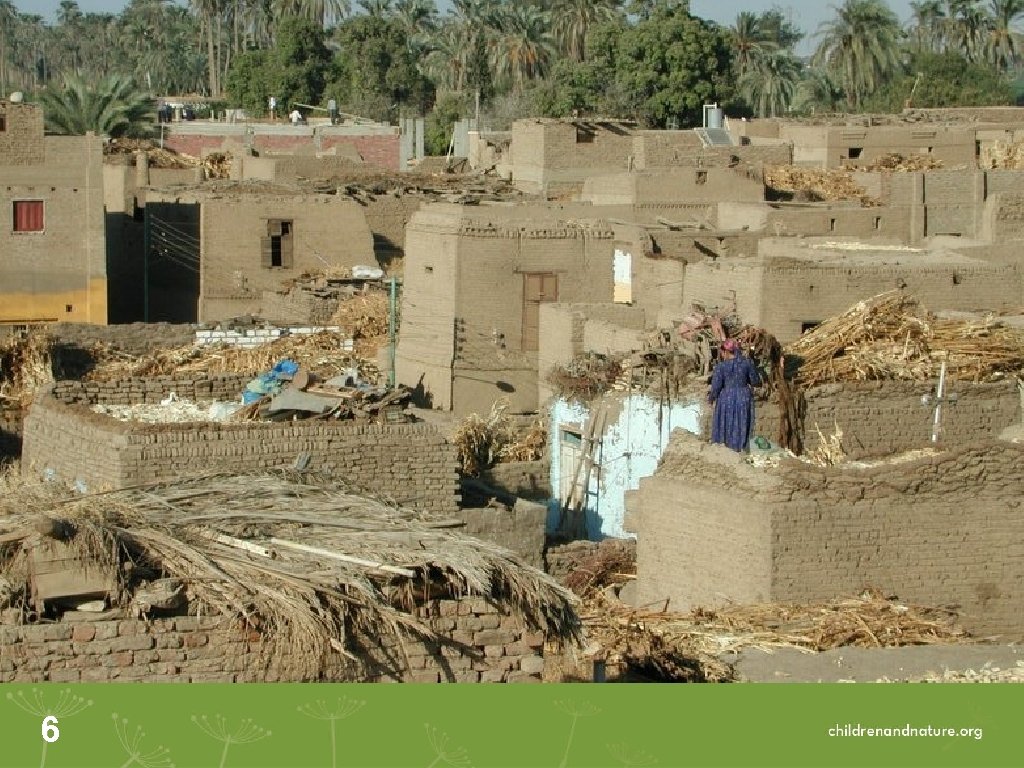
Habitat for Humanity Egypt
6
HABITAT for HUMANITY EGYPT HFHE Mission To eliminate poverty housing in Egypt 7
HABITAT for HUMANITY EGYPT HFHE Mission To eliminate poverty housing in Egypt 8 HFHE Challenges
HABITAT for HUMANITY EGYPT HFHE Mission HFHE Challenges To eliminate poverty housing in Egypt • Tremendous need 9
HABITAT for HUMANITY EGYPT HFHE Mission HFHE Challenges To eliminate poverty housing in Egypt • Tremendous need 10 • Limited resources
HABITAT for HUMANITY EGYPT HFHE Mission HFHE Challenges To eliminate poverty housing in Egypt • Tremendous need • Limited resources • Low brand recognition 11
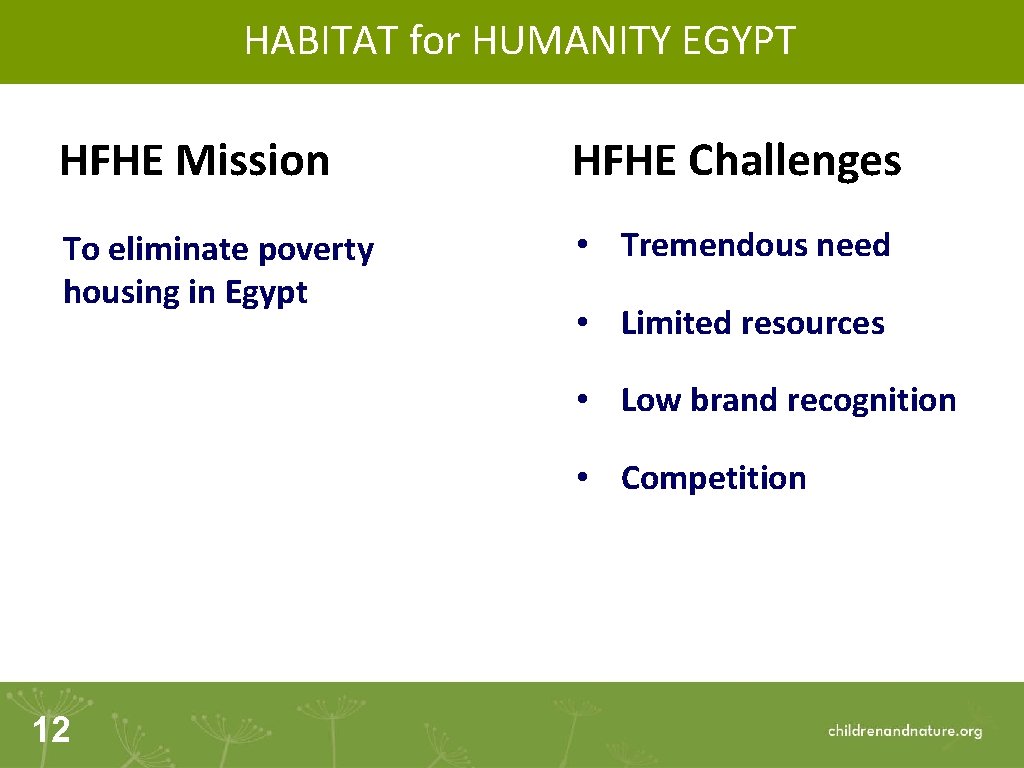
HABITAT for HUMANITY EGYPT HFHE Mission HFHE Challenges To eliminate poverty housing in Egypt • Tremendous need • Limited resources • Low brand recognition • Competition 12
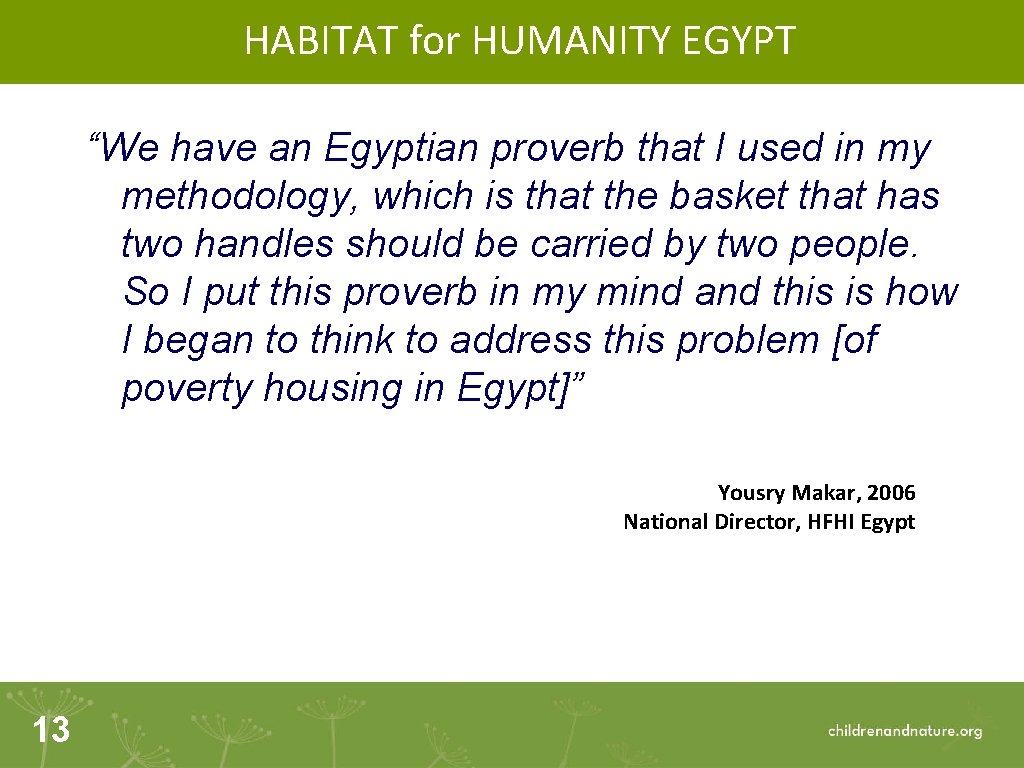
HABITAT for HUMANITY EGYPT “We have an Egyptian proverb that I used in my methodology, which is that the basket that has two handles should be carried by two people. So I put this proverb in my mind and this is how I began to think to address this problem [of poverty housing in Egypt]” Yousry Makar, 2006 National Director, HFHI Egypt 13
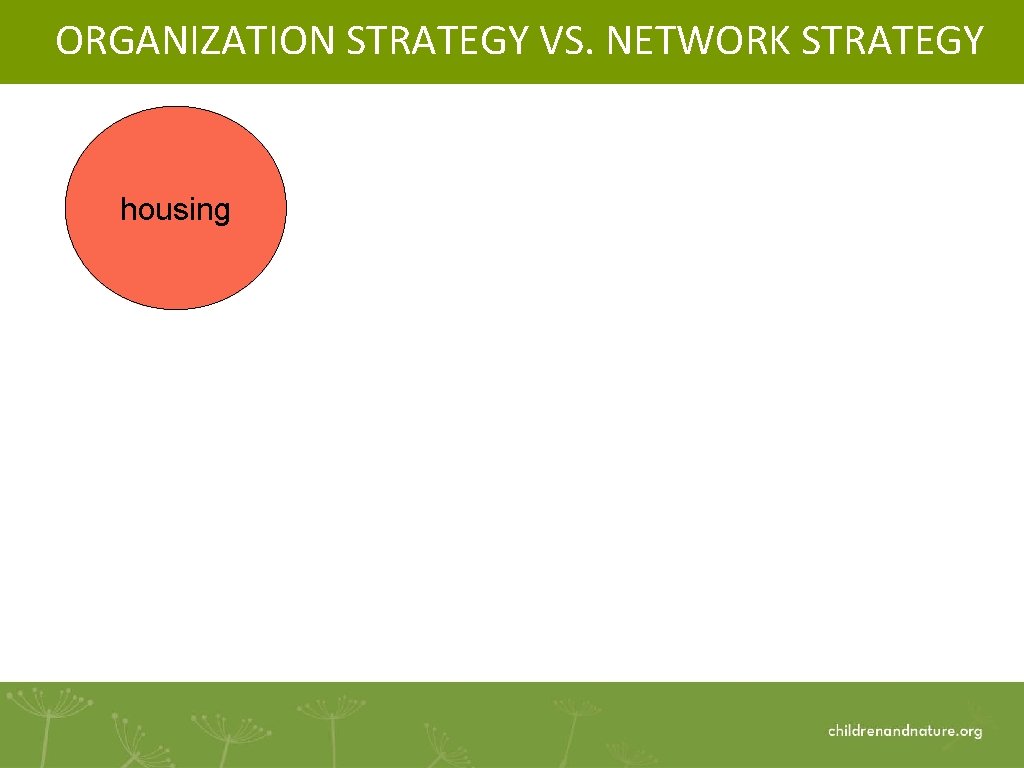
ORGANIZATION STRATEGY VS. NETWORK STRATEGY housing
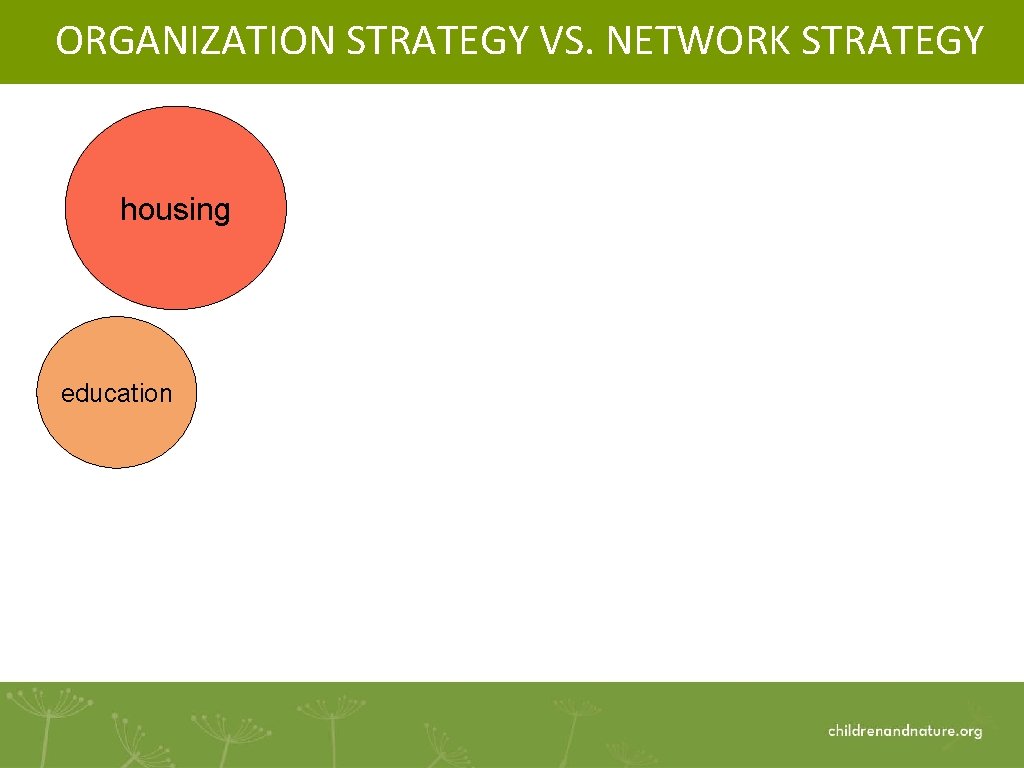
ORGANIZATION STRATEGY VS. NETWORK STRATEGY housing education
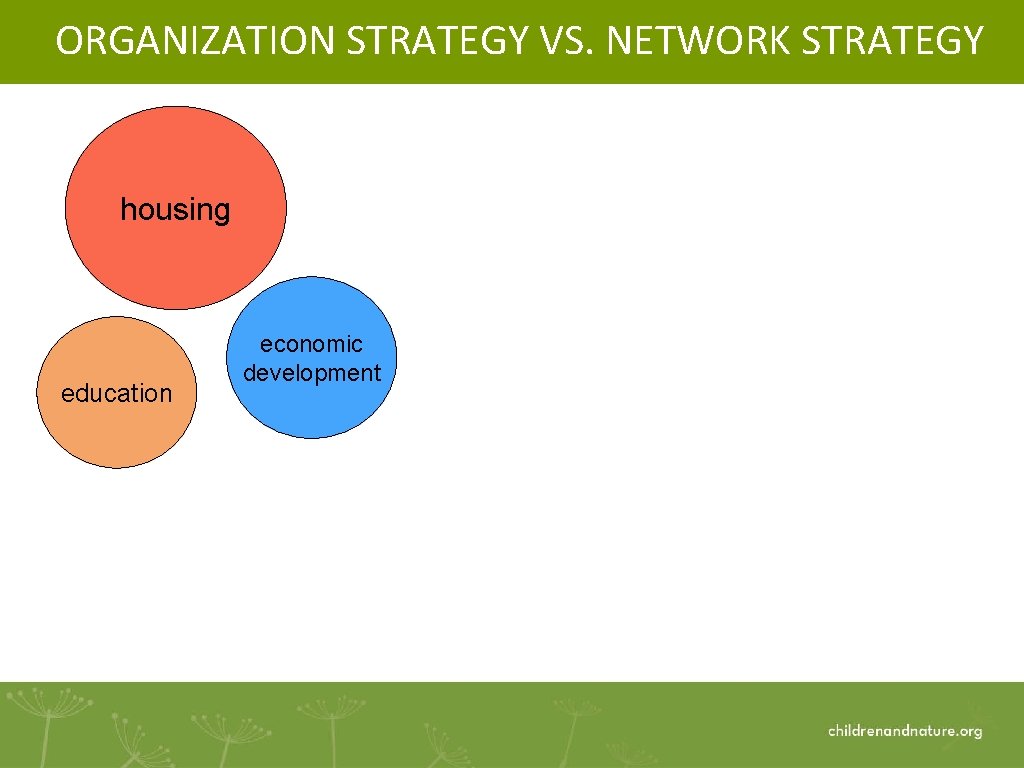
ORGANIZATION STRATEGY VS. NETWORK STRATEGY housing education economic development Networks
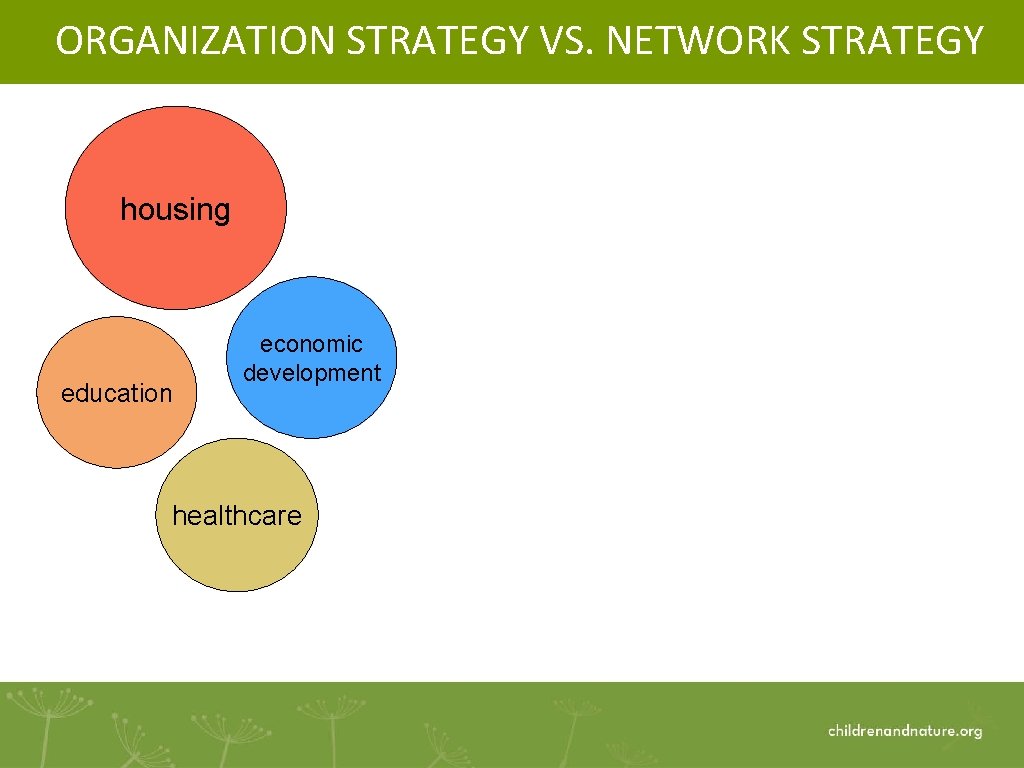
ORGANIZATION STRATEGY VS. NETWORK STRATEGY housing education economic development healthcare
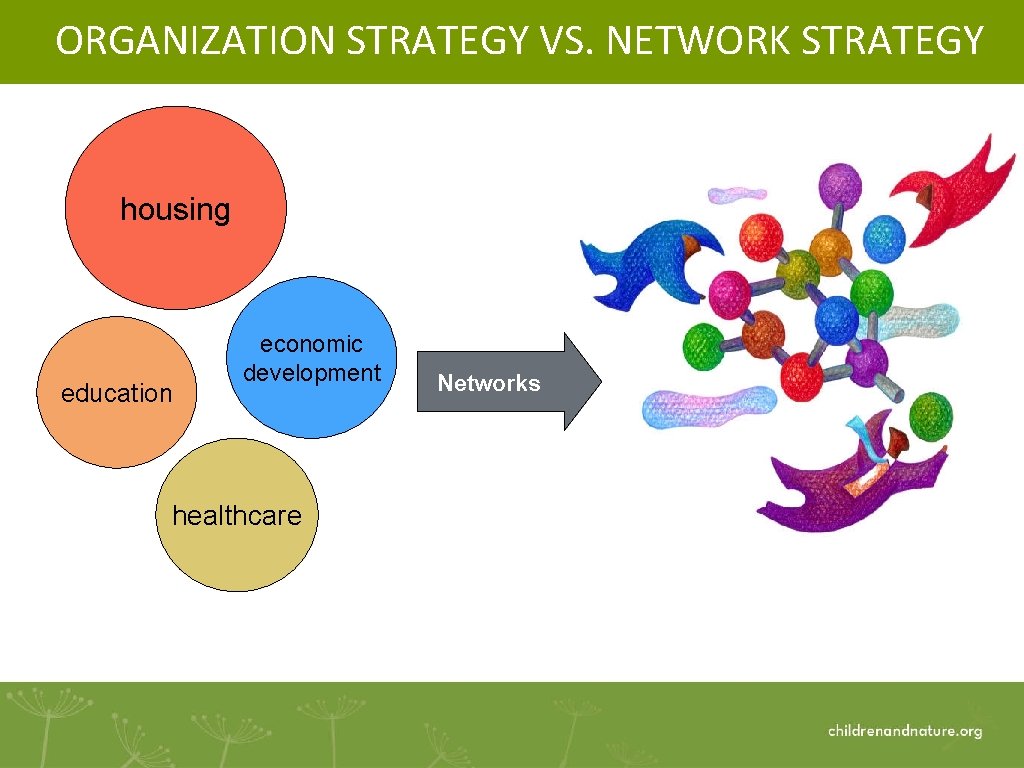
ORGANIZATION STRATEGY VS. NETWORK STRATEGY housing education economic development healthcare Networks
HABITAT for HUMANITY EGYPT IMPACT Efficiency • Fastest scale up worldwide Highest ROI worldwide 19
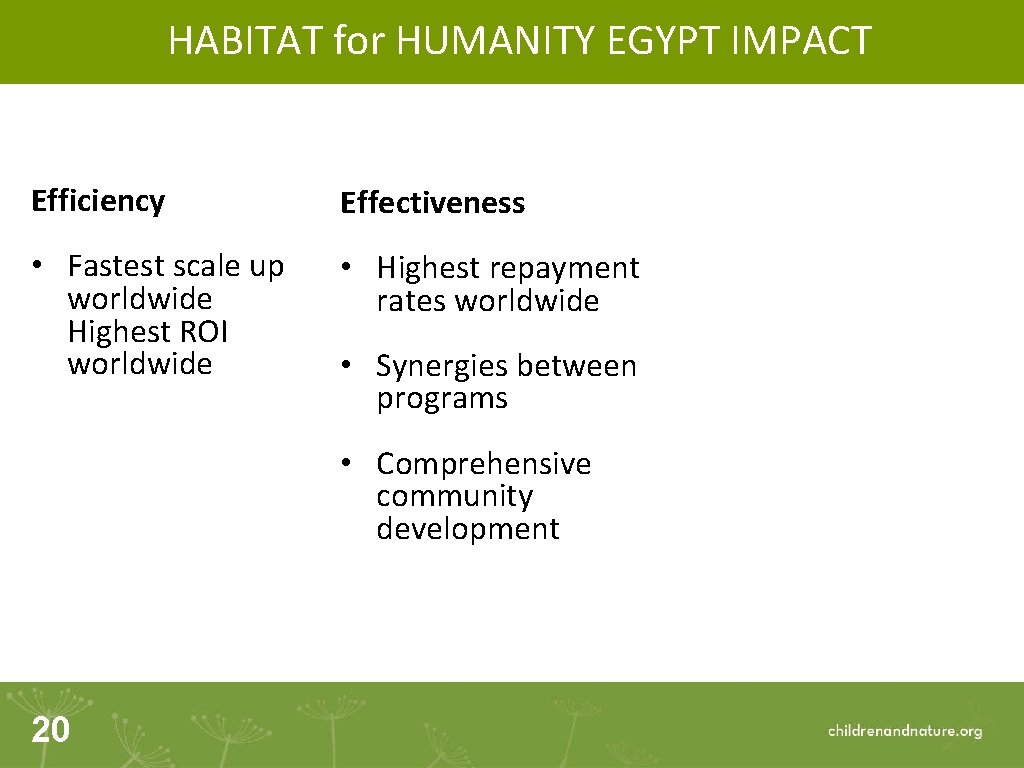
HABITAT for HUMANITY EGYPT IMPACT Efficiency Effectiveness • Fastest scale up worldwide Highest ROI worldwide • Highest repayment rates worldwide • Synergies between programs • Comprehensive community development 20
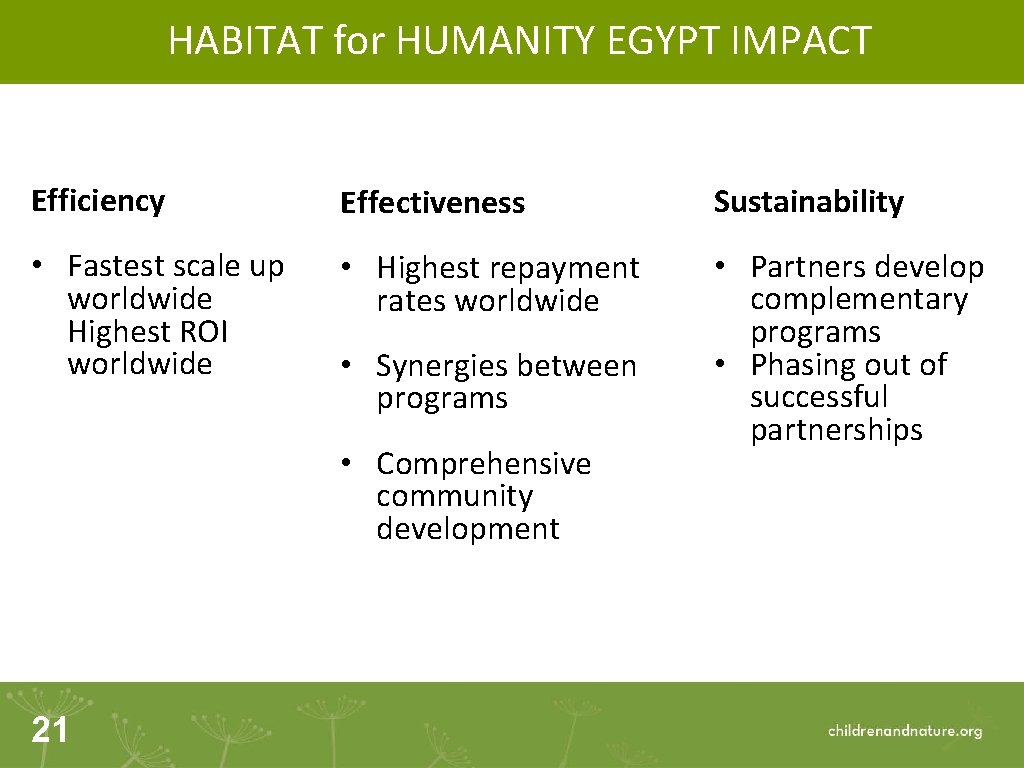
HABITAT for HUMANITY EGYPT IMPACT Efficiency Effectiveness Sustainability • Fastest scale up worldwide Highest ROI worldwide • Highest repayment rates worldwide • Partners develop complementary programs • Phasing out of successful partnerships • Synergies between programs • Comprehensive community development 21
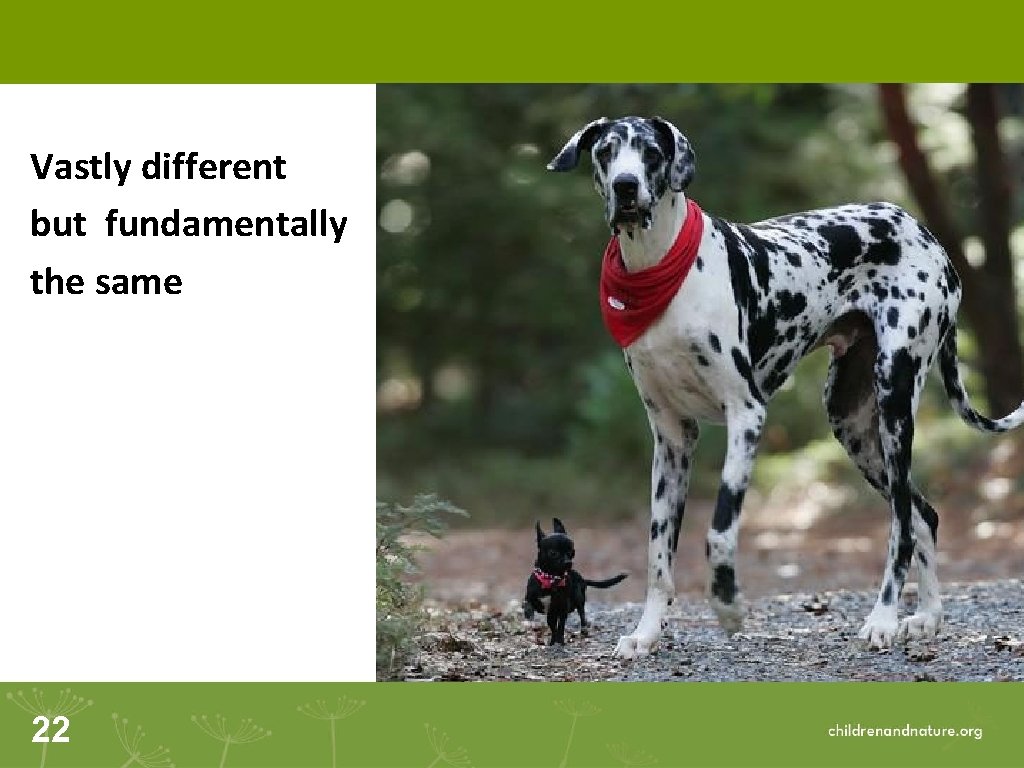
Vastly different but fundamentally the same 22
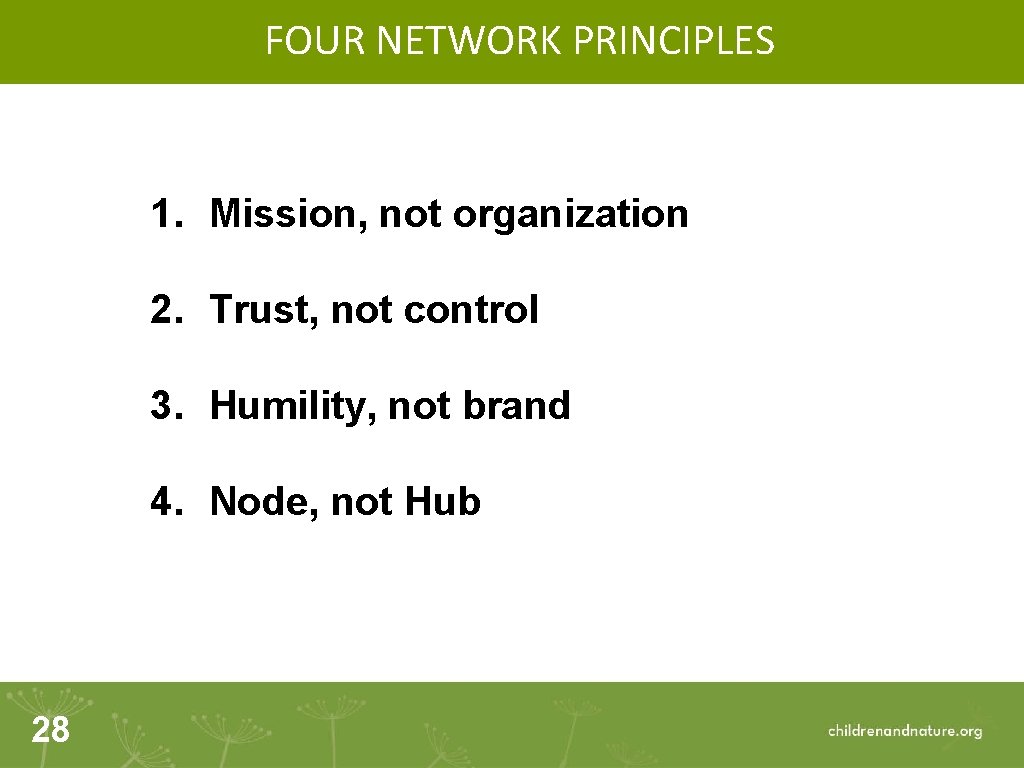
FOUR NETWORK PRINCIPLES 1. Mission, not organization 23
FOUR NETWORK PRINCIPLES 1. Mission, not organization 2. Trust, not control 24
FOUR NETWORK PRINCIPLES 1. Mission, not organization 2. Trust, not control 3. Humility, not brand 25
FOUR NETWORK PRINCIPLES 1. Mission, not organization 2. Trust, not control 3. Humility, not brand 4. Node, not Hub 26
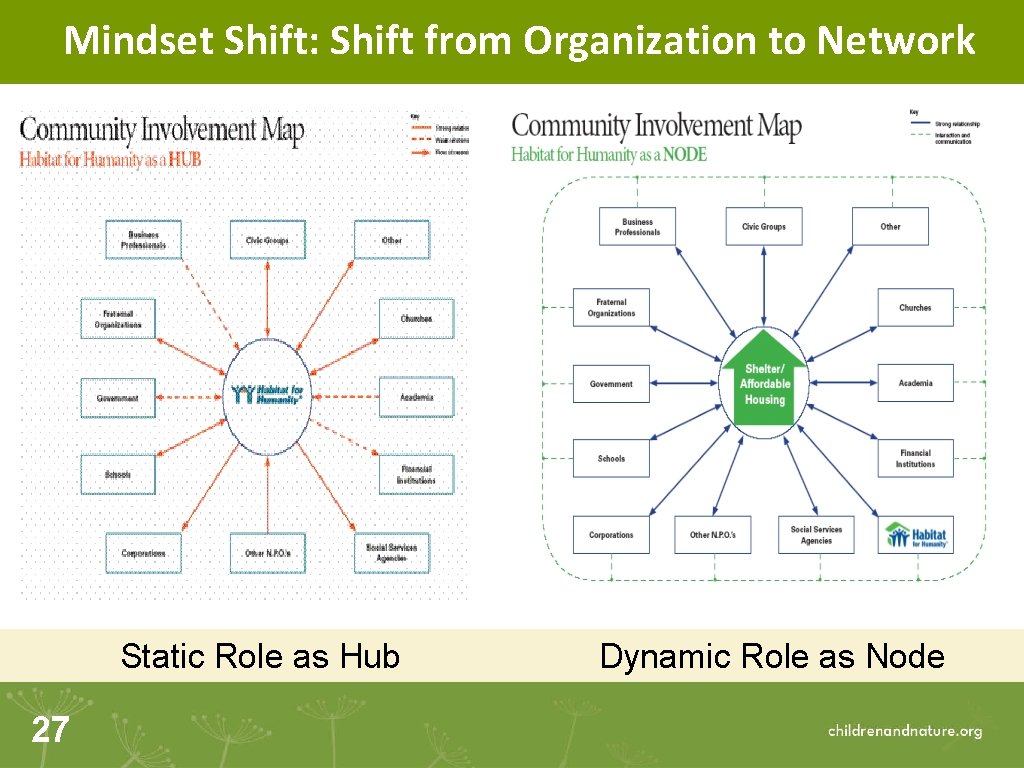
Mindset Shift: Shift from Organization to Network Static Role as Hub 27 Dynamic Role as Node
FOUR NETWORK PRINCIPLES 1. Mission, not organization 2. Trust, not control 3. Humility, not brand 4. Node, not Hub 28
PANEL QUESTION What is the relationship between these four principles and collective impact? 29
PANEL QUESTION What are the biggest barriers you’ve seen to successful collaborations forming? 30
PANEL QUESTION Are there any situations where one or more of the four principles would not be appropriate? 31
PANEL QUESTION How do we frame this work so funderstand the work’s importance? 32
RESOURCES Four Network Principles for Collaboration Success Foundation Review 2013 Vol. 5: 1 http: //scholarworks. gvsu. edu/tfr/vol 5/iss 1/10/ The Most Impactful Leaders You’ve Never Heard Of Stanford Social Innovation Review, September 16, 2015 http: //ssir. org/articles/entry/the_most_impactful_leaders_youve_never_heard_of Cracking the Network Code, Four Principles for Grantmakers GEO (Grantmakers for Effective Organizations) http: //www. geofunders. org/resource-library/all/record/a 066000000 Cquu. QAAR The Networked Nonprofit Stanford Social Innovation Review, Spring 2008 http: //ssir. org/articles/entry/the_networked_nonprofit Funding Successful Collaborations FSG Guest Blog, June 4, 2012 http: //www. fsg. org/blog/funding-successful-collaborations 33
NETWORK DESIGN SESSION TWO Building a Network Culture With Special Guest June Holley Network Design Webinar Series Session Two | October 28 th, 2015 The Children & Nature Network and the Bay Area Children in Nature Collaborative invite you to the second in a series of webinars showcasing the work of experts in Network Leadership and Design.
Trust Not Control Strong relationships among network partners and a culture in which actors routinely invest resources into building long-term, trust-based relationships—without the expectation of control or even recognition—is critical to collaborative success. Humility Not Brand Unlike social entrepreneurs so often held up as hero-like figures, network entrepreneurs are largely anonymous by design.
Node Not Hub Network entrepreneurs not only connect to the larger system around them and foster generative conversation, but also deliberately catalyze and lead action-oriented networks that are aligned around a defined shared purpose and built on the foundation of deep relationship. They develop a culture where no individual or organization seeks to be the brightest star. Mission Not Organization Network entrepreneurs are far more motivated to achieve maximum impact rather than to advance themselves or their organizations.
- Slides: 36