SAFETY RISK FACTORS SAFETY Freedom from psychological and
- Slides: 67
SAFETY RISK FACTORS
SAFETY • Freedom from psychological and physical injury • Essential for a client’s well-being • Critical thinking skills and nursing process used by nurses for assessment of environmental hazards
ENVIRONMENTAL SAFETY • Includes all physical and psychosocial factors that influence the life and survival of a client. • Includes home, school, clinic, hospital, community center , long-term care facility
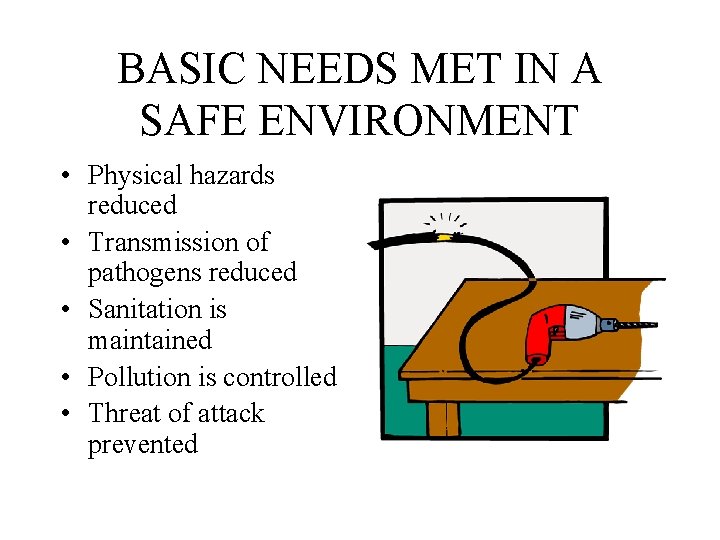
BASIC NEEDS MET IN A SAFE ENVIRONMENT • Physical hazards reduced • Transmission of pathogens reduced • Sanitation is maintained • Pollution is controlled • Threat of attack prevented
ENVIRONMENTAL HAZARDS • Oxygen-essential for life • Improperly functioning heating system may produce carbon monoxide • Symptoms may include nausea, dizziness, headache, decreased concentration • Fatigue
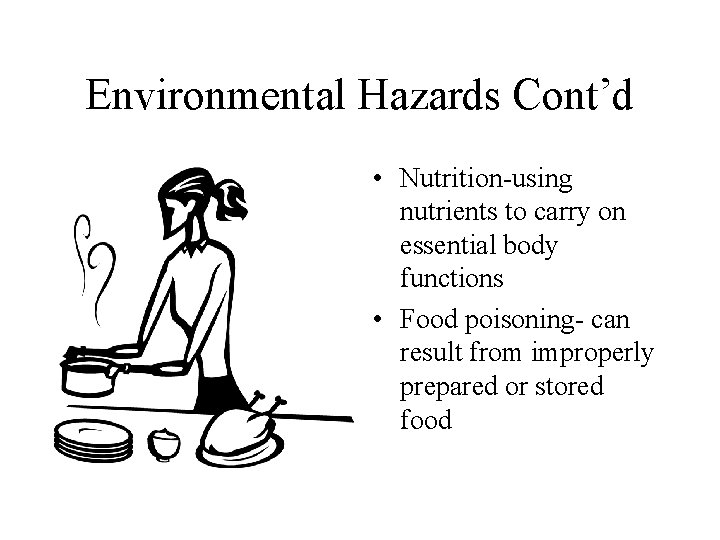
Environmental Hazards Cont’d • Nutrition-using nutrients to carry on essential body functions • Food poisoning- can result from improperly prepared or stored food
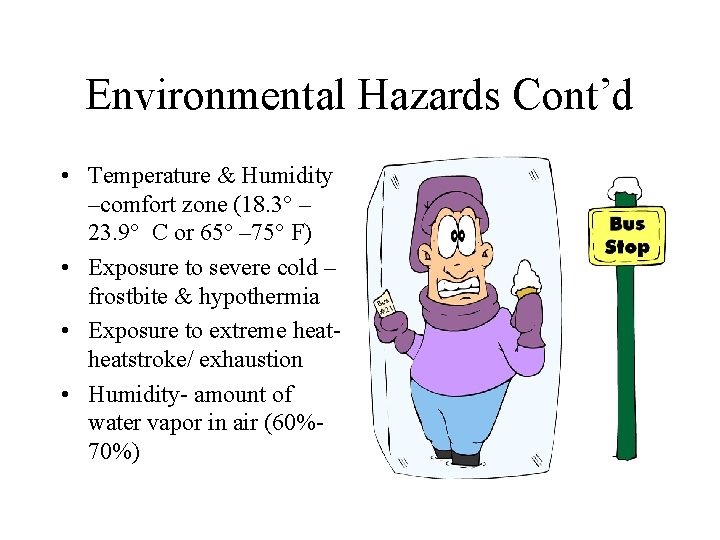
Environmental Hazards Cont’d • Temperature & Humidity –comfort zone (18. 3° – 23. 9° C or 65° – 75° F) • Exposure to severe cold – frostbite & hypothermia • Exposure to extreme heatstroke/ exhaustion • Humidity- amount of water vapor in air (60%70%)
Control of Physical Hazards • Adequate lighting • Obstacles-extrinsic (remove small rugs); intrinsic(illness, drug therapy) • Bathroom hazardsgrab bars • Security system • Smoke detectors
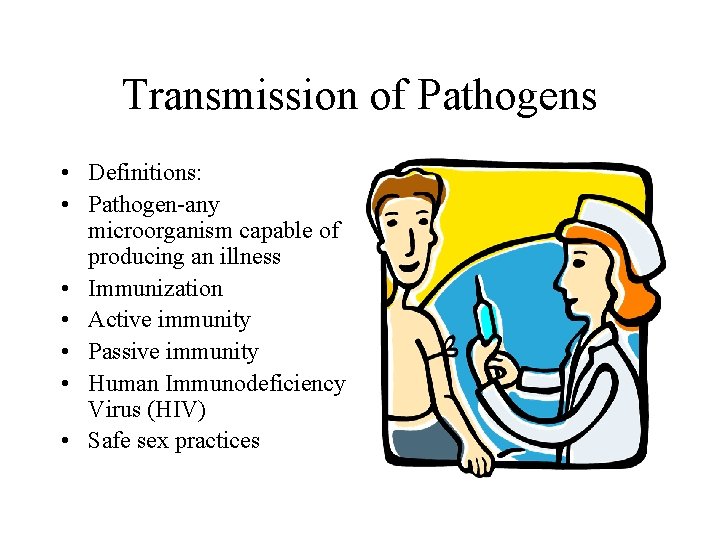
Transmission of Pathogens • Definitions: • Pathogen-any microorganism capable of producing an illness • Immunization • Active immunity • Passive immunity • Human Immunodeficiency Virus (HIV) • Safe sex practices
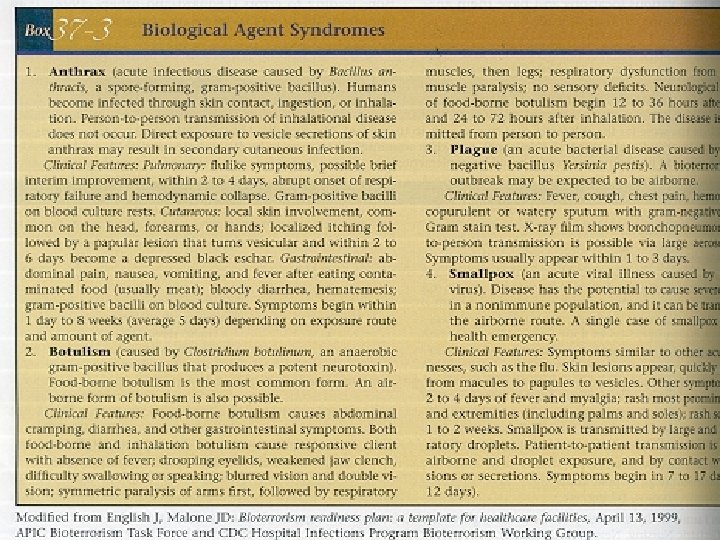
Pollution • • • Air pollution Land pollution Water pollution Noise pollution Bio-terrorism Department of Homeland Security
DEVELOPMENTAL STAGES • Infant, toddler, preschooler- injuries are leading cause of death • School-age childsafety depends on instruction by parents, teachers, and nurses
DEVELOPMENTAL STAGES CONTINUED • Adolescent- greater independence; may engage in risk-taking behaviors • Adults-threats related to lifestyle habits • Older adult- risks due to physiological changes that occur
DEVELOPMENTAL STAGES CONT’D • Clients in all developmental stages may be subject to abuse. • Types: child abuse, domestic violence, elder abuse • Nurses must be aware • Must be reported if abuse suspected
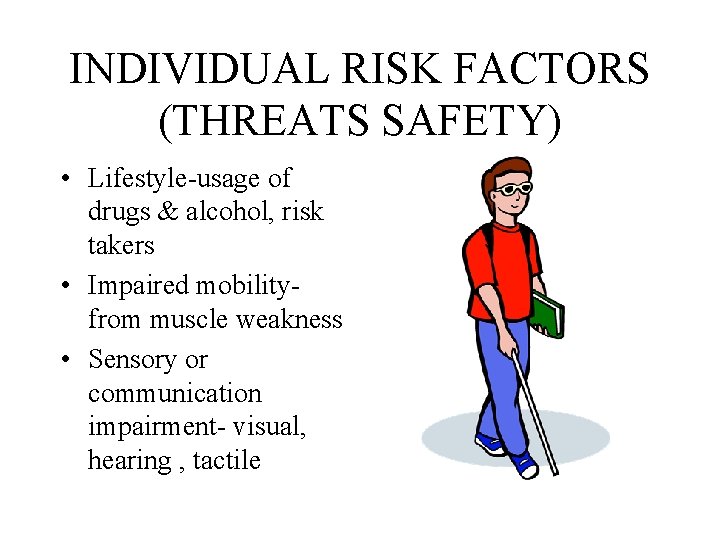
INDIVIDUAL RISK FACTORS (THREATS SAFETY) • Lifestyle-usage of drugs & alcohol, risk takers • Impaired mobilityfrom muscle weakness • Sensory or communication impairment- visual, hearing , tactile
HEALTH CARE AGENCY (FALLS/ ACCIDENTS) • Environmental safety • Medical errors-8 th leading cause of death • Errors due to system failures • Material Safety Data Sheets • Incident report
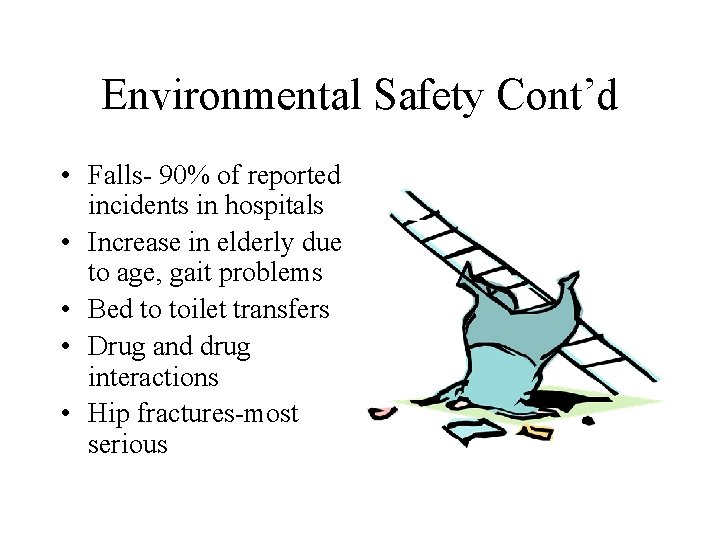
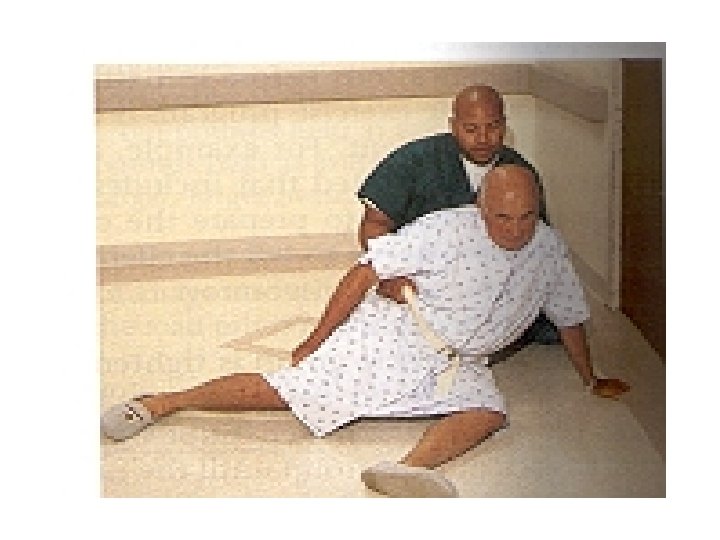
Environmental Safety Cont’d • Falls- 90% of reported incidents in hospitals • Increase in elderly due to age, gait problems • Bed to toilet transfers • Drug and drug interactions • Hip fractures-most serious
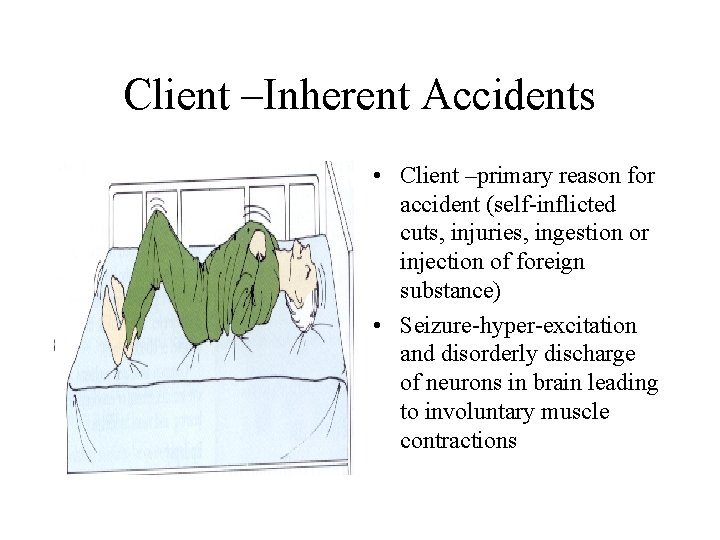
Client –Inherent Accidents • Client –primary reason for accident (self-inflicted cuts, injuries, ingestion or injection of foreign substance) • Seizure-hyper-excitation and disorderly discharge of neurons in brain leading to involuntary muscle contractions
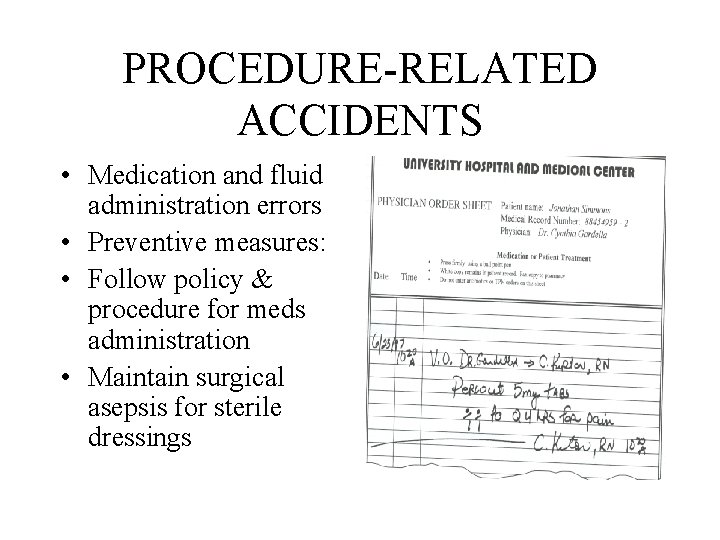
PROCEDURE-RELATED ACCIDENTS • Medication and fluid administration errors • Preventive measures: • Follow policy & procedure for meds administration • Maintain surgical asepsis for sterile dressings
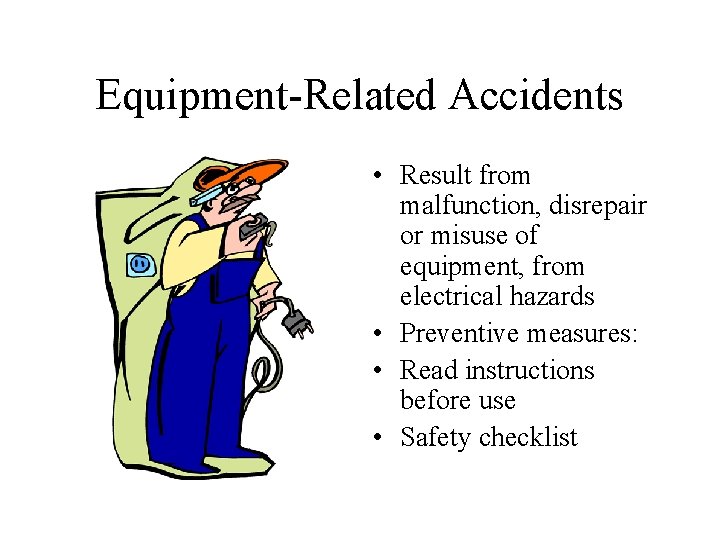
Equipment-Related Accidents • Result from malfunction, disrepair or misuse of equipment, from electrical hazards • Preventive measures: • Read instructions before use • Safety checklist
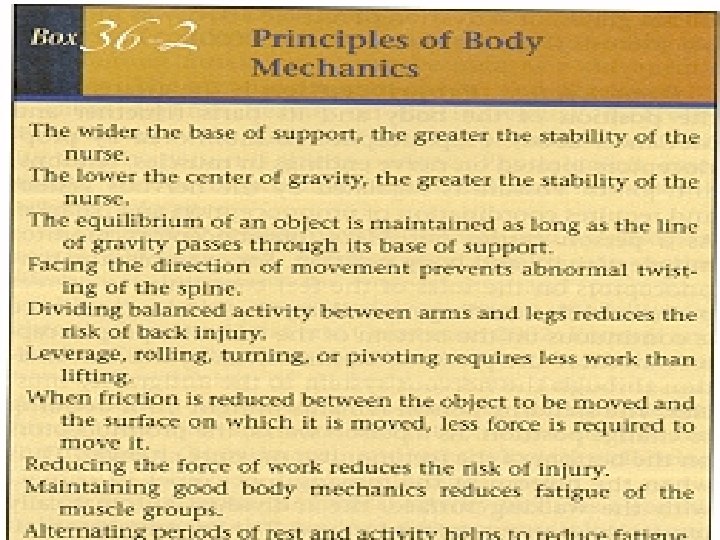
PRINCIPLES OF BODY MECHANICS • Includes the knowledge of the actions of various muscle groups, understanding of the factors involved in the coordination of body movement, and familiarity with the integrated functioning of the skeletal, muscular, and nervous systems.
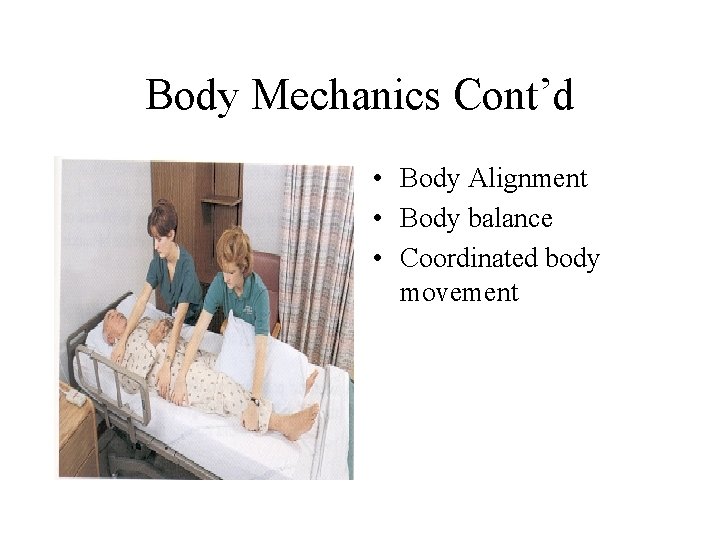
Body Mechanics Cont’d • Body Alignment • Body balance • Coordinated body movement
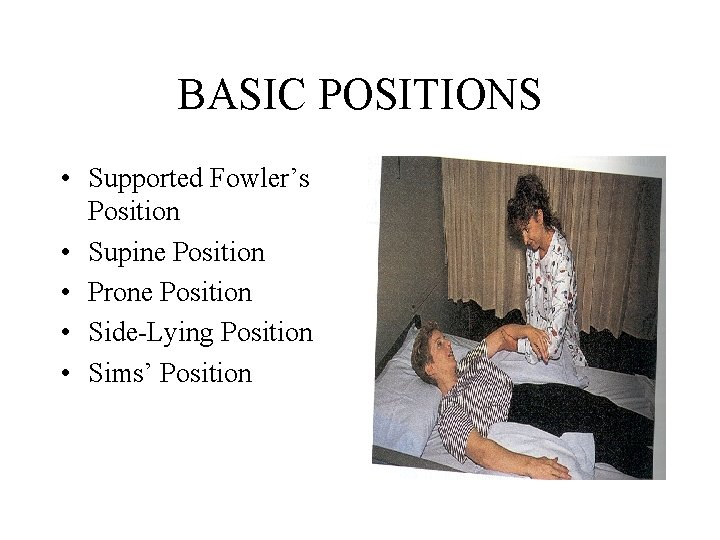
BASIC POSITIONS • Supported Fowler’s Position • Supine Position • Prone Position • Side-Lying Position • Sims’ Position
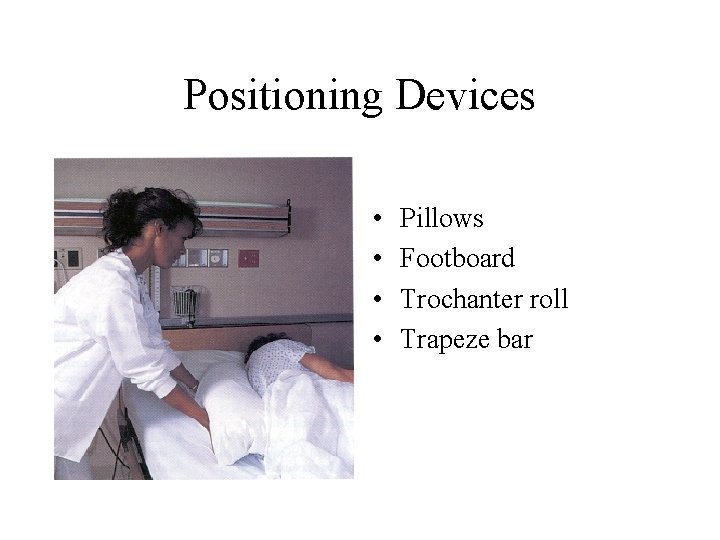
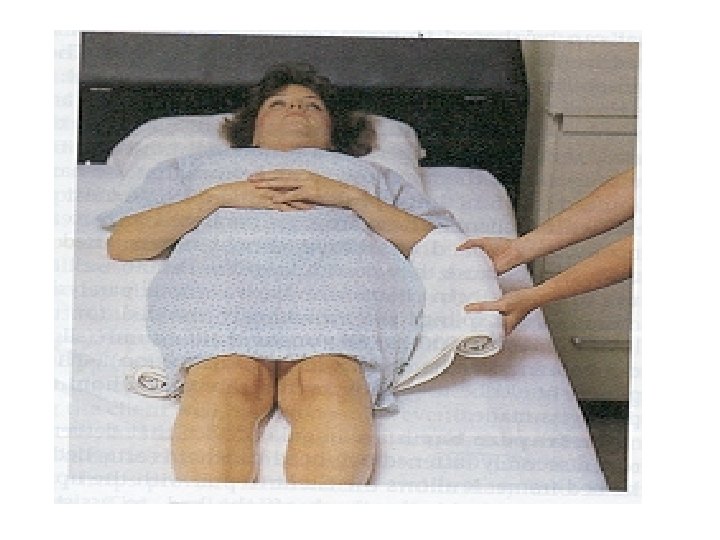
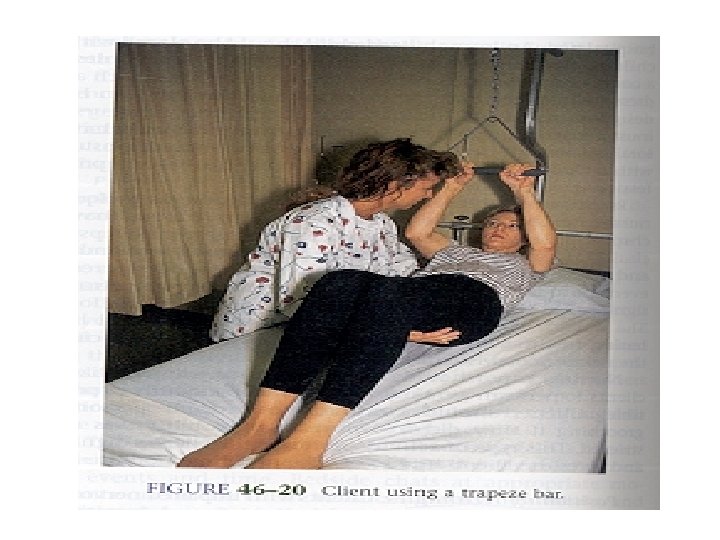
Positioning Devices • • Pillows Footboard Trochanter roll Trapeze bar
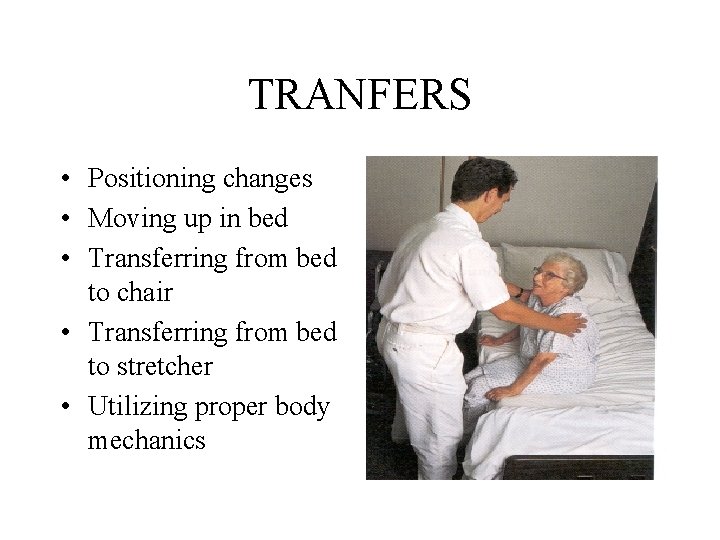
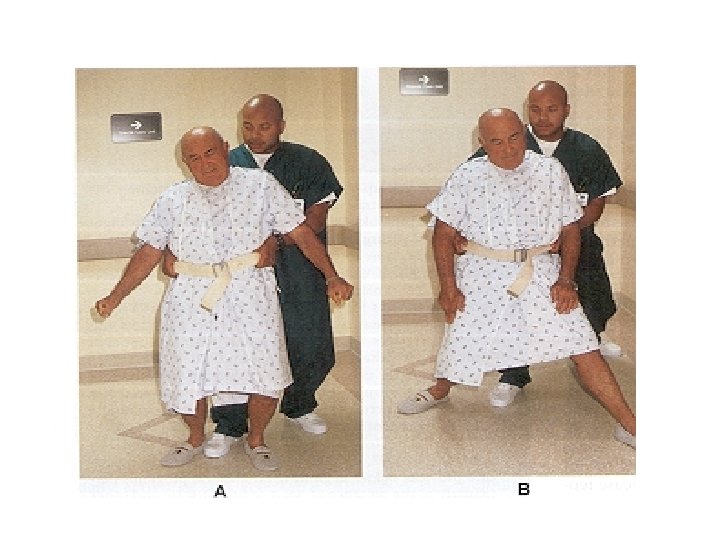
TRANFERS • Positioning changes • Moving up in bed • Transferring from bed to chair • Transferring from bed to stretcher • Utilizing proper body mechanics
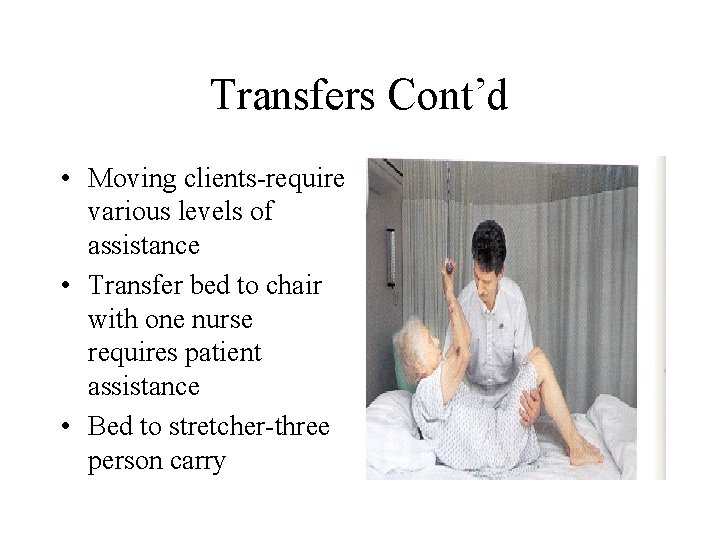
Transfers Cont’d • Moving clients-require various levels of assistance • Transfer bed to chair with one nurse requires patient assistance • Bed to stretcher-three person carry
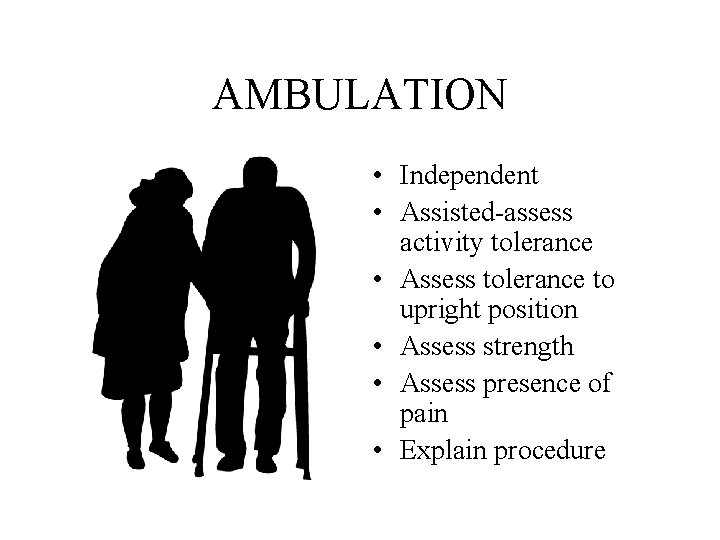
AMBULATION • Independent • Assisted-assess activity tolerance • Assess tolerance to upright position • Assess strength • Assess presence of pain • Explain procedure
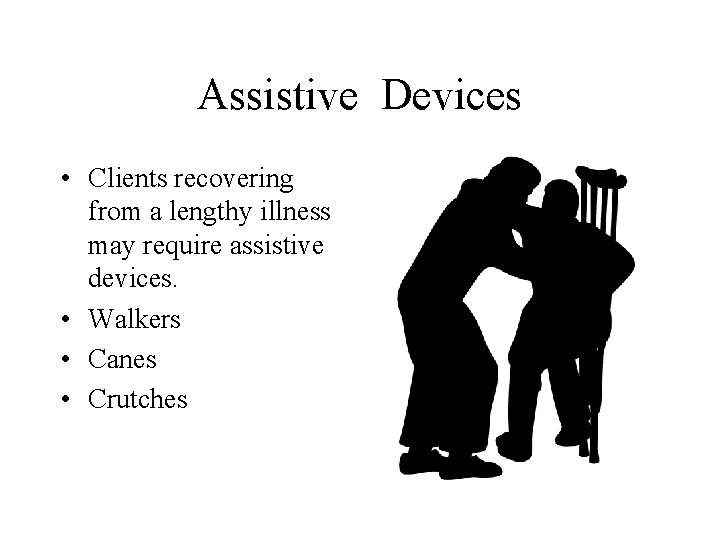
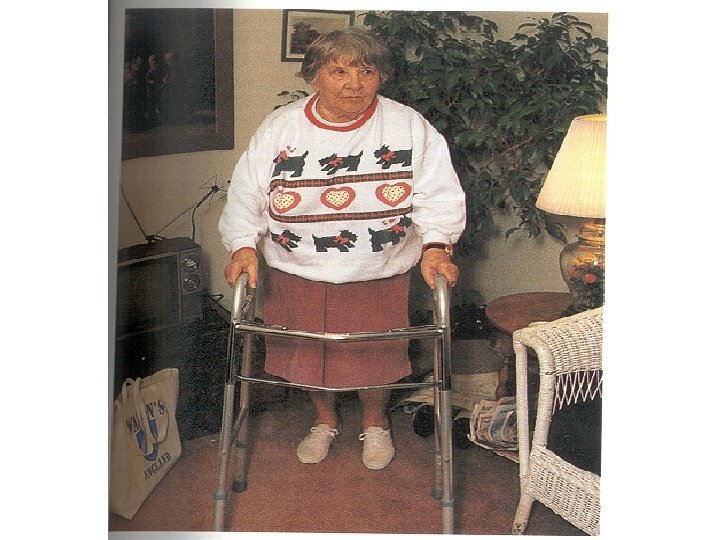
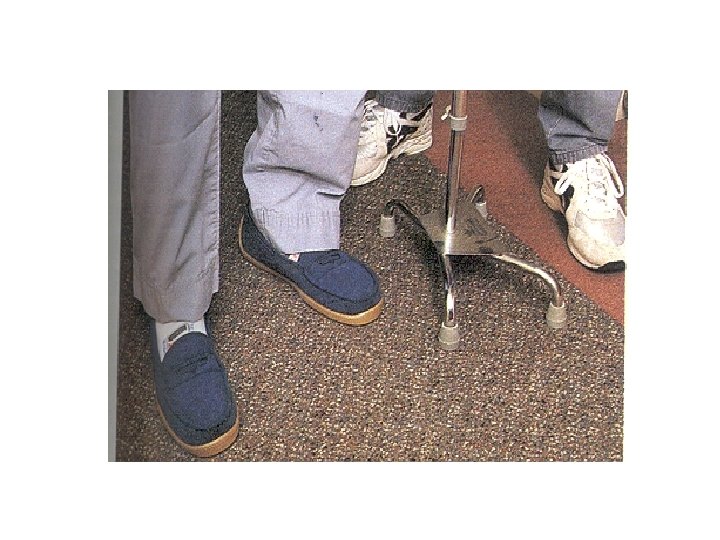
Assistive Devices • Clients recovering from a lengthy illness may require assistive devices. • Walkers • Canes • Crutches
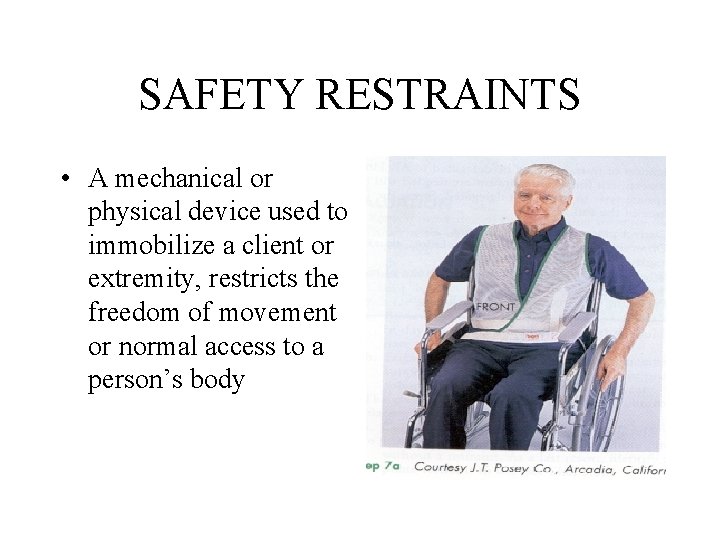
SAFETY RESTRAINTS • A mechanical or physical device used to immobilize a client or extremity, restricts the freedom of movement or normal access to a person’s body
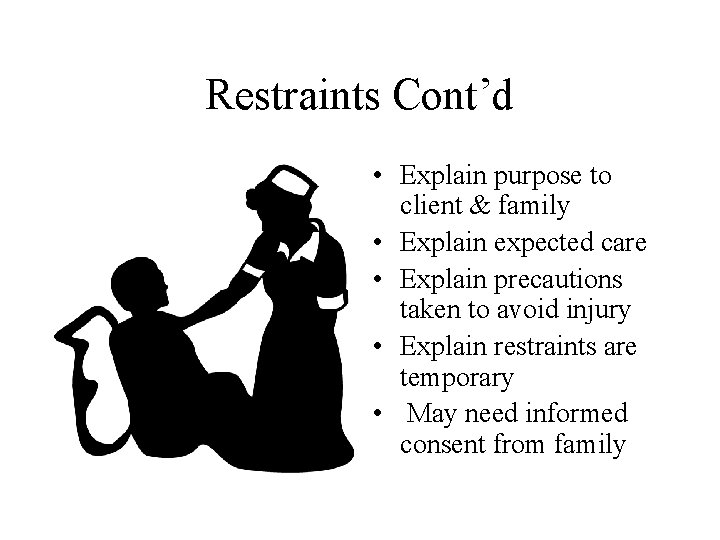
Restraints Cont’d • Explain purpose to client & family • Explain expected care • Explain precautions taken to avoid injury • Explain restraints are temporary • May need informed consent from family
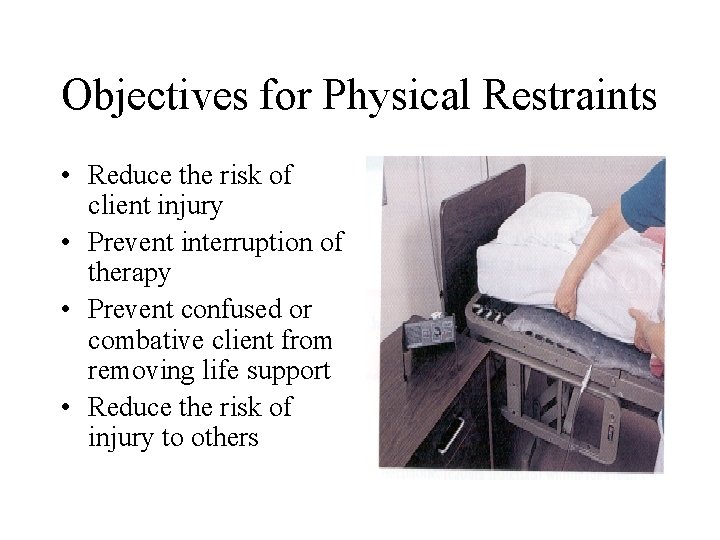
Objectives for Physical Restraints • Reduce the risk of client injury • Prevent interruption of therapy • Prevent confused or combative client from removing life support • Reduce the risk of injury to others
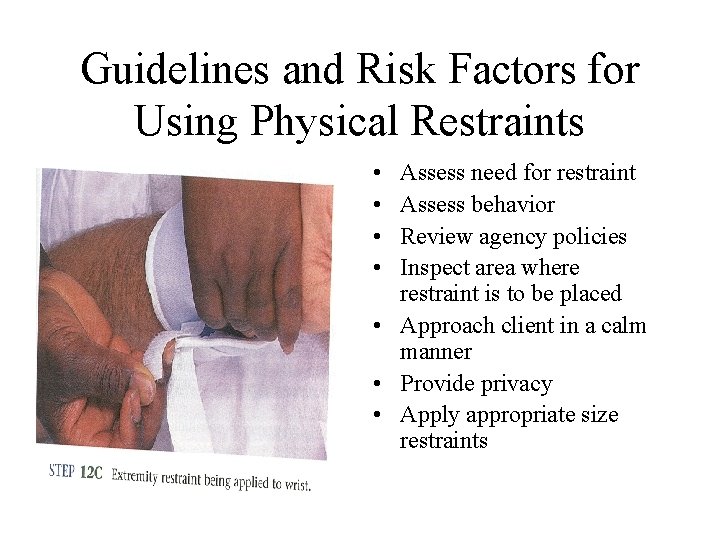
Guidelines and Risk Factors for Using Physical Restraints • • Assess need for restraint Assess behavior Review agency policies Inspect area where restraint is to be placed • Approach client in a calm manner • Provide privacy • Apply appropriate size restraints
Legal/ Policies Issues • Nurse is responsible for assessment of client’s safety needs • Know agency’s specific policy & procedure • Must be clinically justified and part of medical treatment and plan of care
Legal Cont’d • Physician’s order is required • Order must state type of restraint, location, and specific behaviors for which restraints are to be used and must have a limited time frame • Ongoing assessment by nurse
Recording /Reporting • Proper documentation should include behaviors that necessitated the use of restraints • Procedure used in restraining • Condition of the body part restrained • Evaluation of client’s response • Remove prn for ROM etc. .
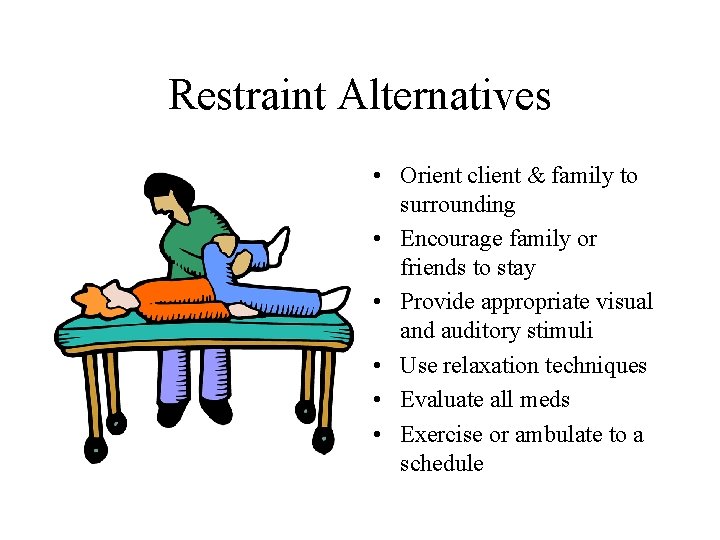
Restraint Alternatives • Orient client & family to surrounding • Encourage family or friends to stay • Provide appropriate visual and auditory stimuli • Use relaxation techniques • Evaluate all meds • Exercise or ambulate to a schedule
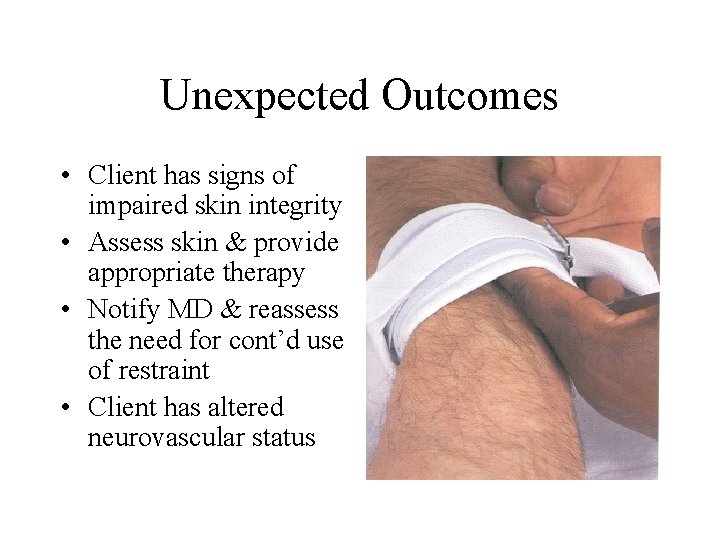
Unexpected Outcomes • Client has signs of impaired skin integrity • Assess skin & provide appropriate therapy • Notify MD & reassess the need for cont’d use of restraint • Client has altered neurovascular status
DISASTER MANAGEMENT • Federal Emergency Management Agency (FEMA)-central federal agency for emergency planning • Health Care Facilityfollow facility’s policy & procedure on management of large scale disasters
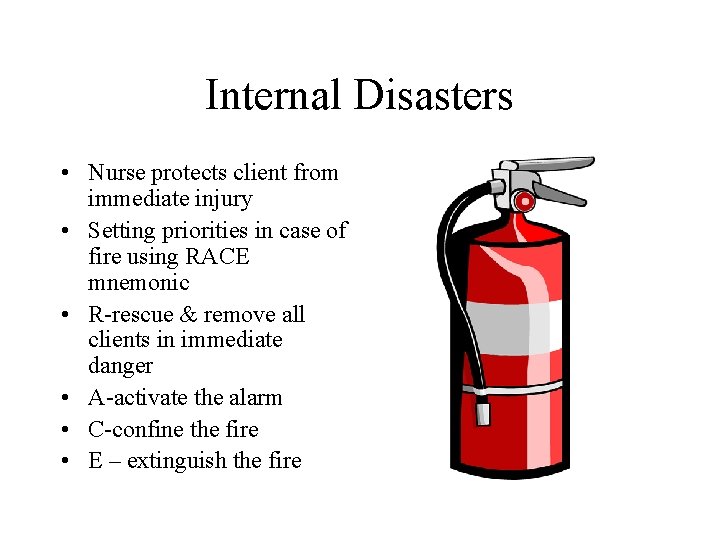
Internal Disasters • Nurse protects client from immediate injury • Setting priorities in case of fire using RACE mnemonic • R-rescue & remove all clients in immediate danger • A-activate the alarm • C-confine the fire • E – extinguish the fire
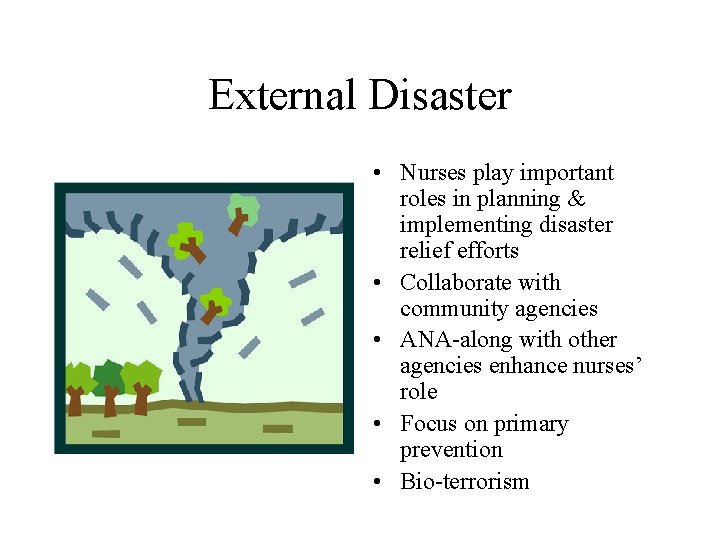
External Disaster • Nurses play important roles in planning & implementing disaster relief efforts • Collaborate with community agencies • ANA-along with other agencies enhance nurses’ role • Focus on primary prevention • Bio-terrorism
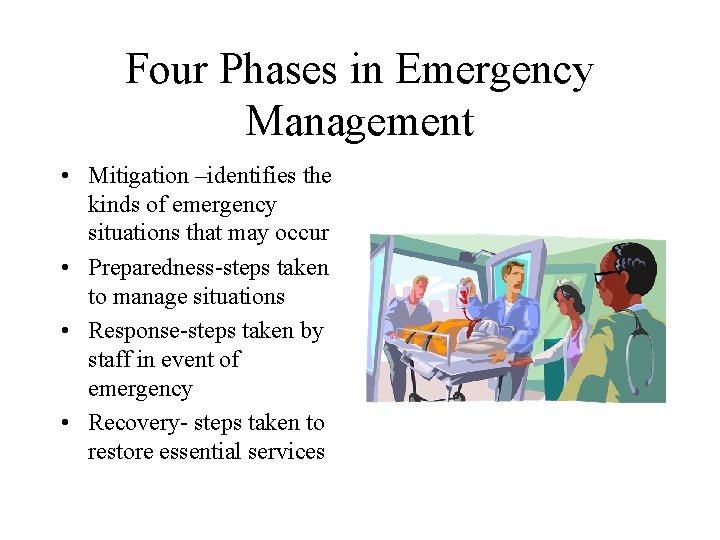
Four Phases in Emergency Management • Mitigation –identifies the kinds of emergency situations that may occur • Preparedness-steps taken to manage situations • Response-steps taken by staff in event of emergency • Recovery- steps taken to restore essential services
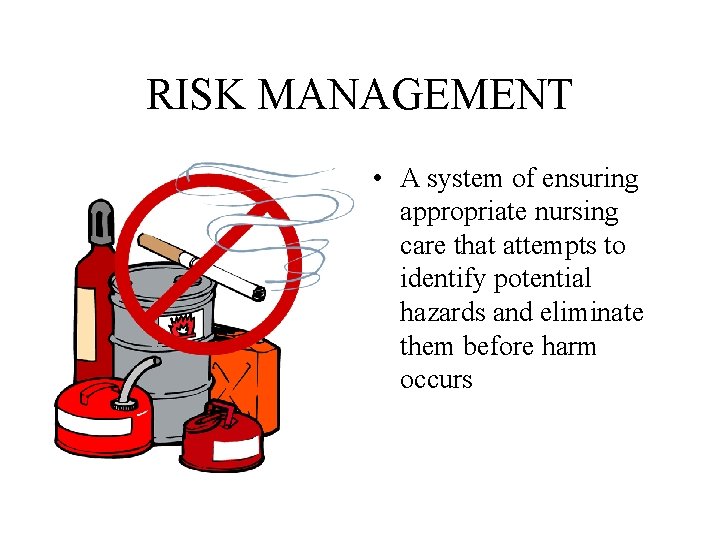
RISK MANAGEMENT • A system of ensuring appropriate nursing care that attempts to identify potential hazards and eliminate them before harm occurs
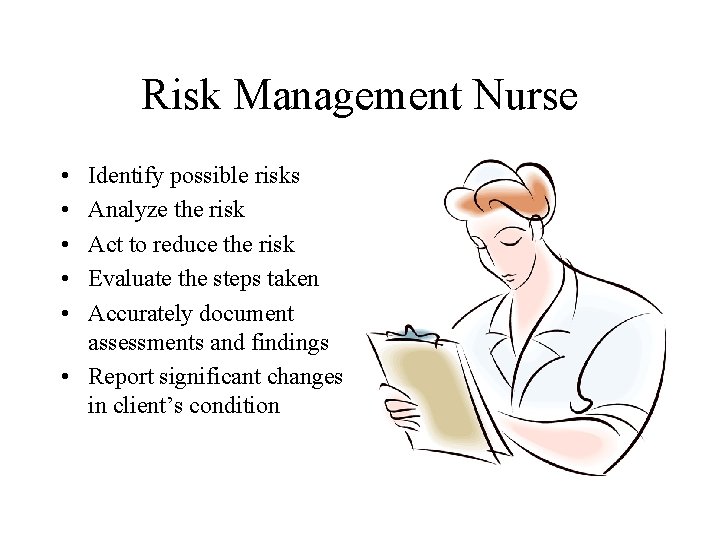
Risk Management Nurse • • • Identify possible risks Analyze the risk Act to reduce the risk Evaluate the steps taken Accurately document assessments and findings • Report significant changes in client’s condition
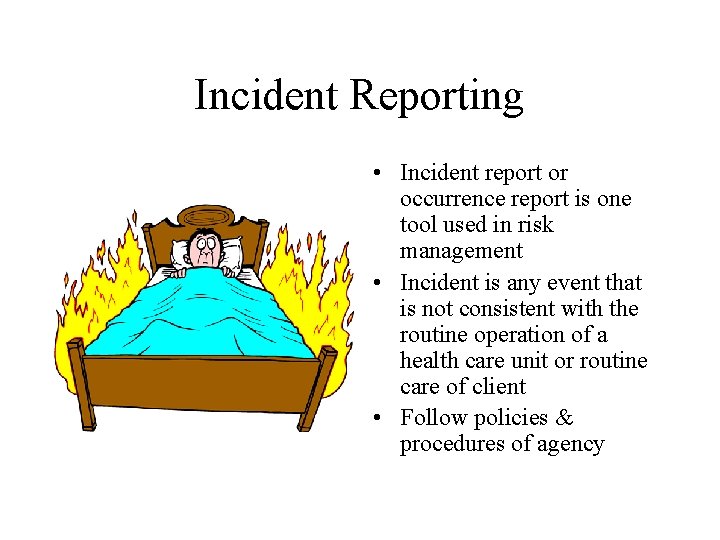
Incident Reporting • Incident report or occurrence report is one tool used in risk management • Incident is any event that is not consistent with the routine operation of a health care unit or routine care of client • Follow policies & procedures of agency
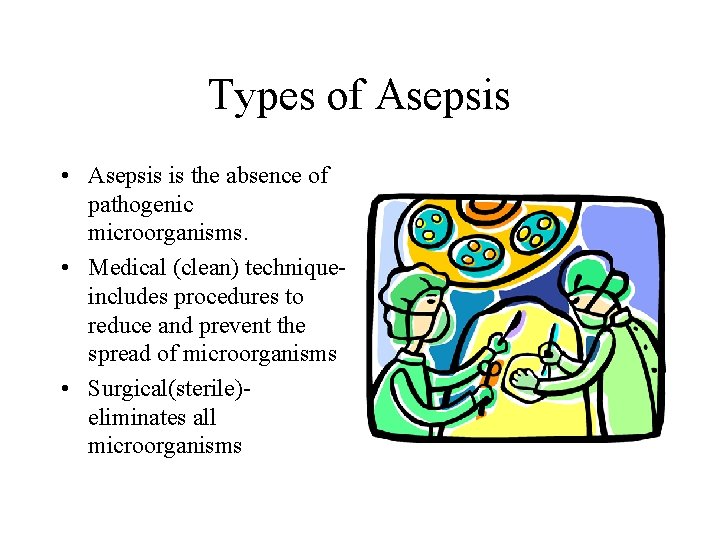
Types of Asepsis • Asepsis is the absence of pathogenic microorganisms. • Medical (clean) techniqueincludes procedures to reduce and prevent the spread of microorganisms • Surgical(sterile)eliminates all microorganisms
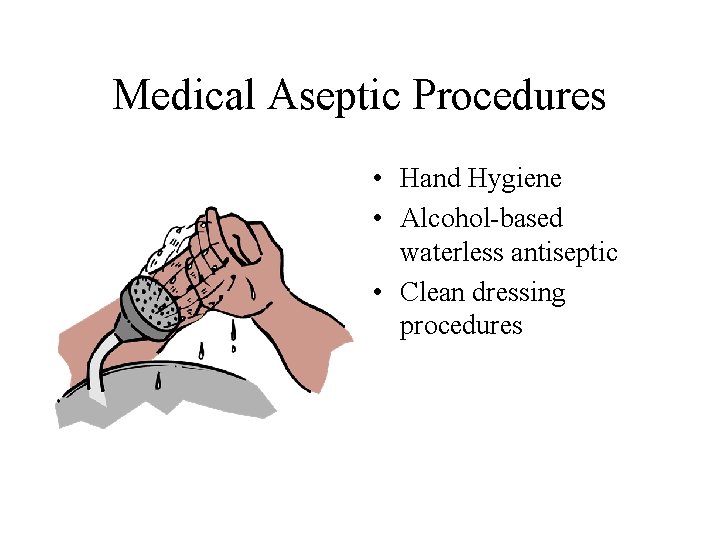
Medical Aseptic Procedures • Hand Hygiene • Alcohol-based waterless antiseptic • Clean dressing procedures
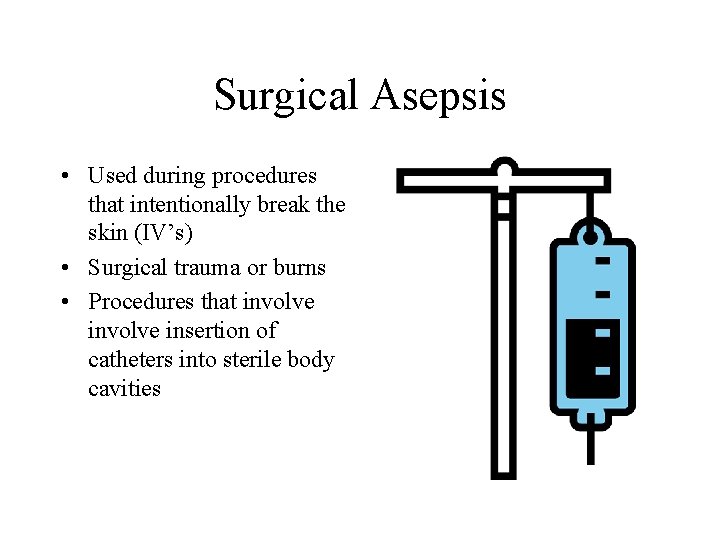
Surgical Asepsis • Used during procedures that intentionally break the skin (IV’s) • Surgical trauma or burns • Procedures that involve insertion of catheters into sterile body cavities
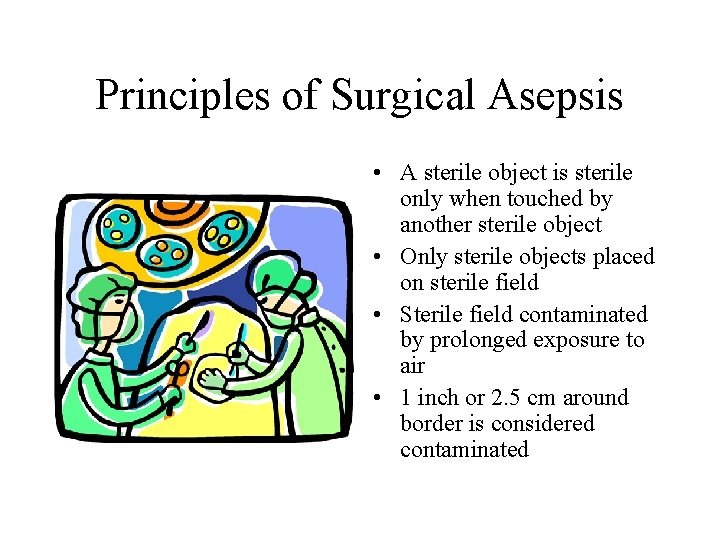
Principles of Surgical Asepsis • A sterile object is sterile only when touched by another sterile object • Only sterile objects placed on sterile field • Sterile field contaminated by prolonged exposure to air • 1 inch or 2. 5 cm around border is considered contaminated
Chain of Infection • An infectious agent or pathogen • Reservoir • Portal of exit • Mode of transmission • Portal of entry • Susceptible host
The Infectious Process • Localized-client may experience localized symptoms such as pain & tenderness at the wound site • Systemic-affects the entire body instead of just a single organ. Can be fatal
Stages of Infection • Incubation Period-interval between entrance of pathogen into body and appearance of first symptoms • Prodromal Stage-interval from onset of nonspecific s/s (tired) • Illness stage-client shows s/s (sore throat) • Convalescence-acute symptoms disappear
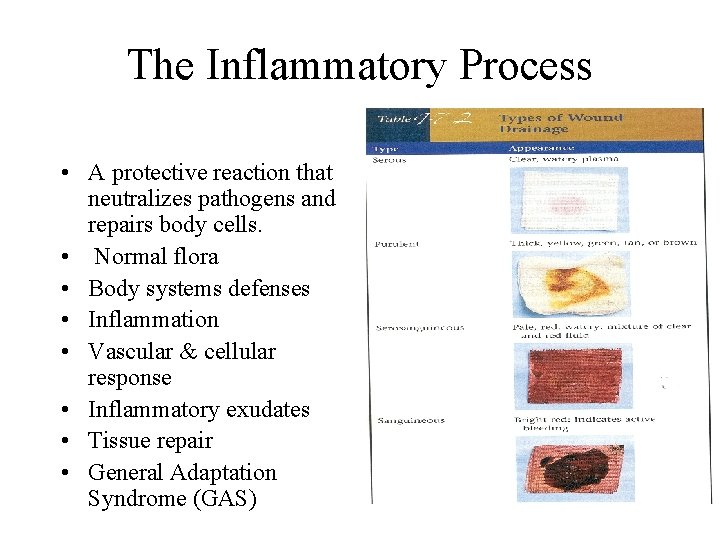
The Inflammatory Process • A protective reaction that neutralizes pathogens and repairs body cells. • Normal flora • Body systems defenses • Inflammation • Vascular & cellular response • Inflammatory exudates • Tissue repair • General Adaptation Syndrome (GAS)
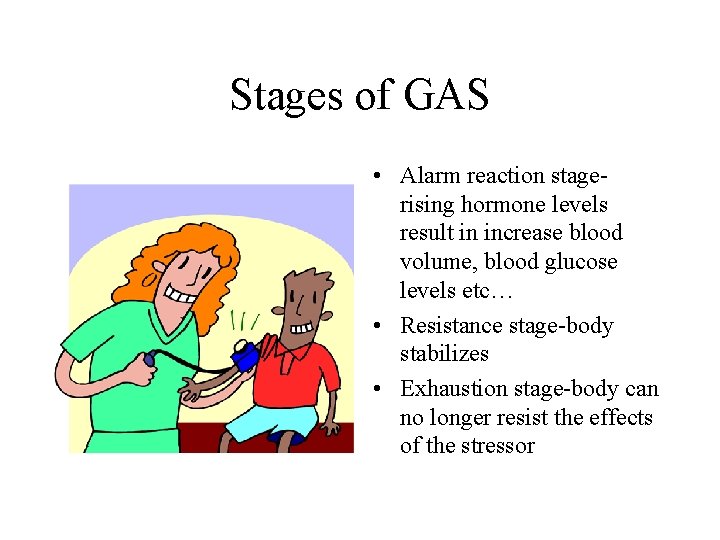
Stages of GAS • Alarm reaction stagerising hormone levels result in increase blood volume, blood glucose levels etc… • Resistance stage-body stabilizes • Exhaustion stage-body can no longer resist the effects of the stressor
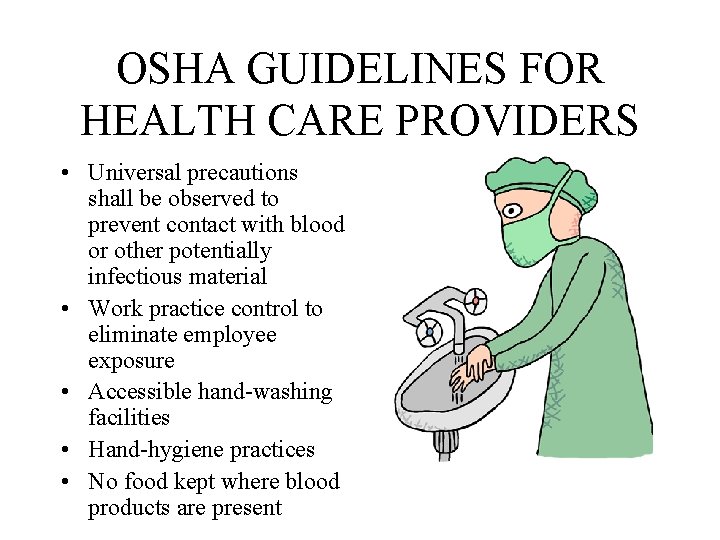
OSHA GUIDELINES FOR HEALTH CARE PROVIDERS • Universal precautions shall be observed to prevent contact with blood or other potentially infectious material • Work practice control to eliminate employee exposure • Accessible hand-washing facilities • Hand-hygiene practices • No food kept where blood products are present
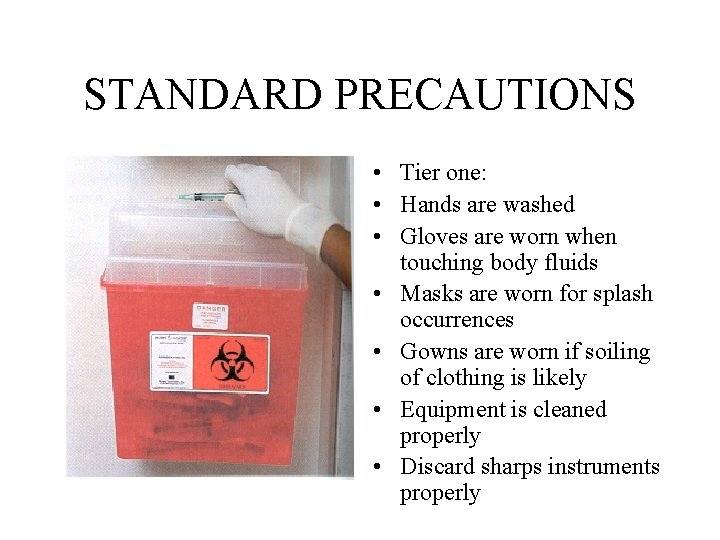
STANDARD PRECAUTIONS • Tier one: • Hands are washed • Gloves are worn when touching body fluids • Masks are worn for splash occurrences • Gowns are worn if soiling of clothing is likely • Equipment is cleaned properly • Discard sharps instruments properly
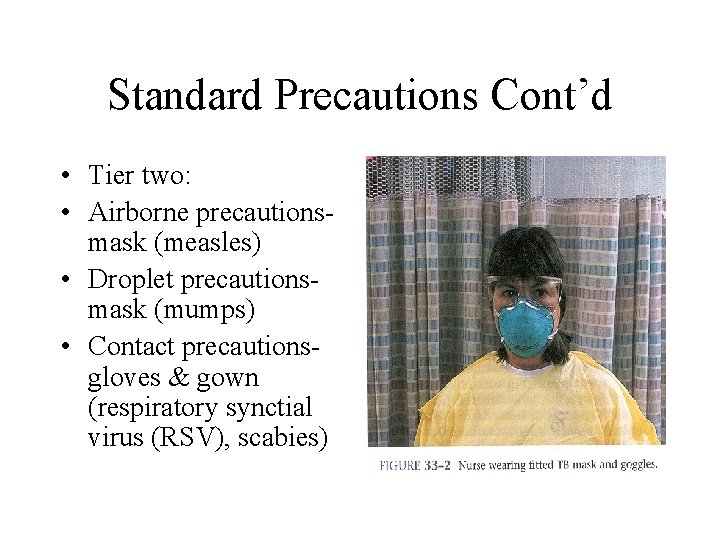
Standard Precautions Cont’d • Tier two: • Airborne precautionsmask (measles) • Droplet precautionsmask (mumps) • Contact precautionsgloves & gown (respiratory synctial virus (RSV), scabies)
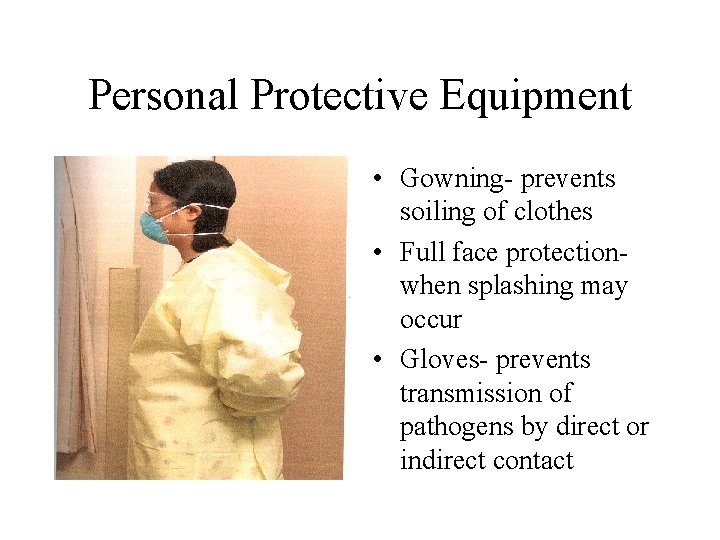
Personal Protective Equipment • Gowning- prevents soiling of clothes • Full face protectionwhen splashing may occur • Gloves- prevents transmission of pathogens by direct or indirect contact
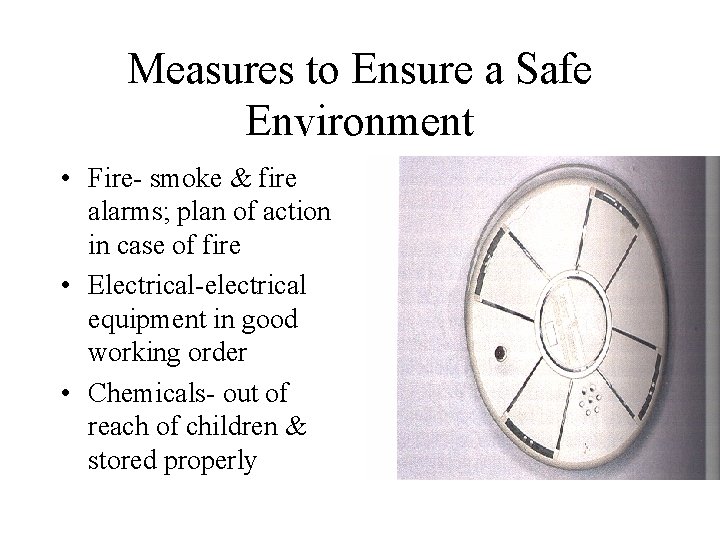
Measures to Ensure a Safe Environment • Fire- smoke & fire alarms; plan of action in case of fire • Electrical-electrical equipment in good working order • Chemicals- out of reach of children & stored properly
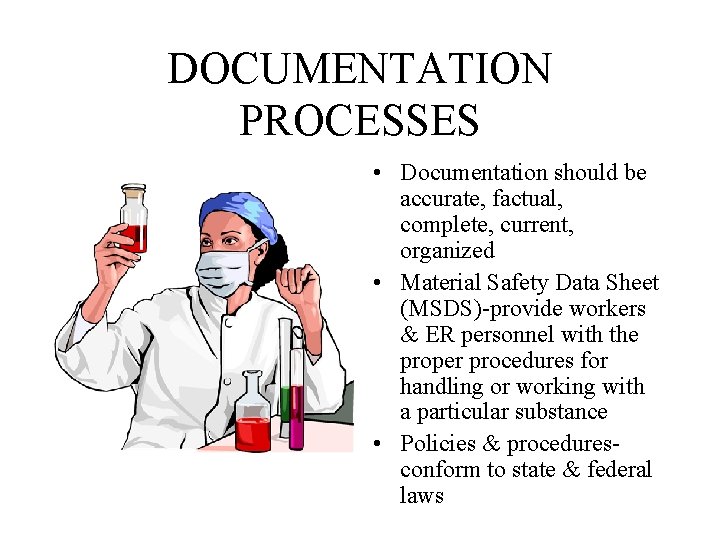
DOCUMENTATION PROCESSES • Documentation should be accurate, factual, complete, current, organized • Material Safety Data Sheet (MSDS)-provide workers & ER personnel with the proper procedures for handling or working with a particular substance • Policies & proceduresconform to state & federal laws
Process for Reporting • Breaches in safety & security • Ethics committee • Chain of command • Incident reports-risk management tool • Health Insurance Portability and Accountability Act (HIPPA)