
5 02 Determine Factors Affecting Business Risks Risk

5. 02 – Determine Factors Affecting Business Risks
Risk: The possibility of a financial loss.
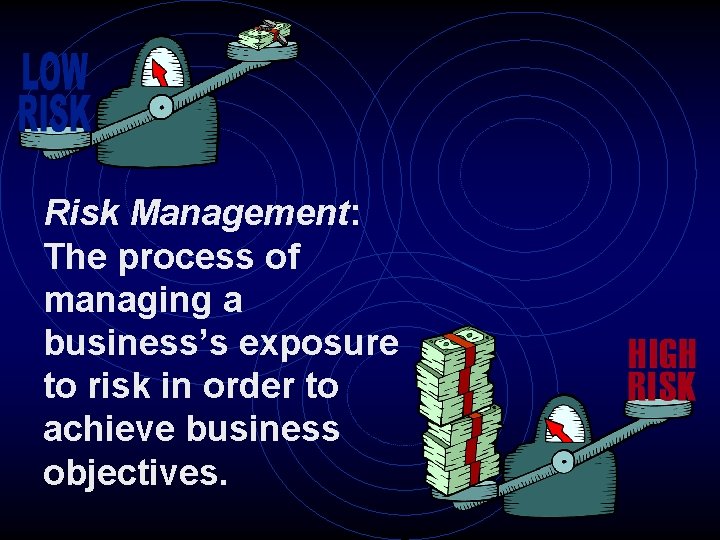
Risk Management: The process of managing a business’s exposure to risk in order to achieve business objectives.

Business risk: The possibility of business failure or loss.

Speculative risk: Risking loss to make a profit. Ø Possibilities of loss, no change, or gain Ø (Examples: buying new machinery, constructing new buildings)

Pure risk: The possibility of loss to a business without any possibility of gain. ØEconomic risks ØNatural risks ØHuman risks
Economic risks: Risks that result from changes in overall business conditions. Ø Competition Ø Changing consumer lifestyles Ø Population changes Ø Limited usefulness of products Ø Inflation Ø Product obsolescence Ø Government regulation Ø Recession
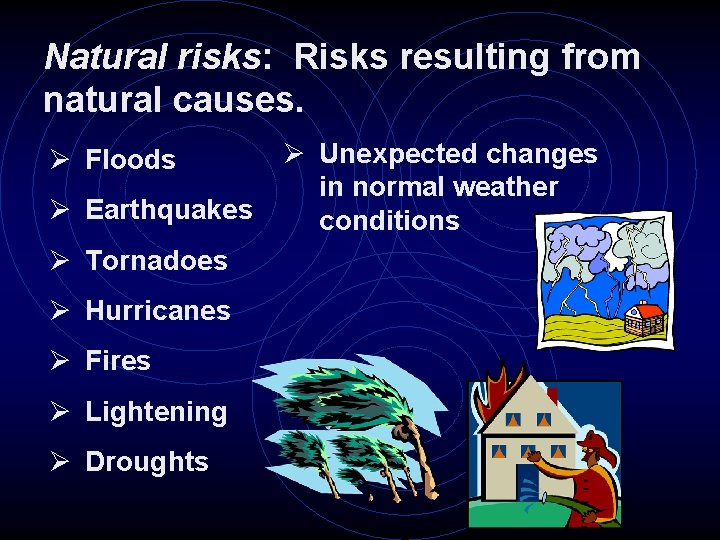
Natural risks: Risks resulting from natural causes. Ø Floods Ø Earthquakes Ø Tornadoes Ø Hurricanes Ø Fires Ø Lightening Ø Droughts Ø Unexpected changes in normal weather conditions
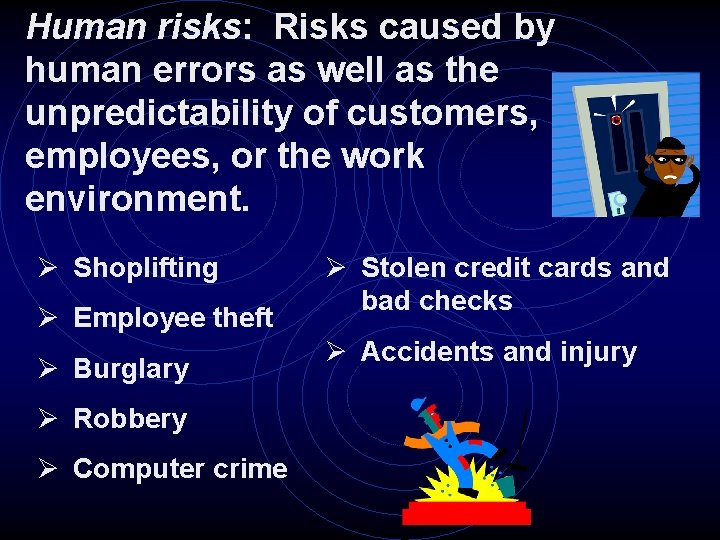
Human risks: Risks caused by human errors as well as the unpredictability of customers, employees, or the work environment. Ø Shoplifting Ø Employee theft Ø Burglary Ø Robbery Ø Computer crime Ø Stolen credit cards and bad checks Ø Accidents and injury
Methods of dealing with business risk ØRisk reduction ØRisk transfer ØRisk retention ØEmergency planning ØAvoidance
Risk reduction Ø Design work areas to reduce the chance of accident or fire. Ø Educate employees on safe use of equipment Ø Check and service safety equipment on a regular basis. Ø Stress the limits of your company’s products. Ø Implement ways to reduce shoplifting. Ø Control employee theft. Ø Implement ways to reduce robbery.

Risk transfer Ø Property insurance: Covers the loss of physical property (cash, inventory, vehicles, buildings). Ø Real property: Buildings, land, and fixtures. Ø Personal property: Vehicles, clothing, furniture, jewelry. Ø Business interruption insurance: Makes up for lost income if a business is shut down for repairs or rebuilding.

Risk transfer Ø Casualty insurance: Protects a business from lawsuits. Ø Errors-and-omissions insurance: Protects businesses from lawsuits resulting from mistakes in advertising. Ø Product liability insurance: Protects manufacturers from claims for injuries that result from using their products. Ø Fidelity bonds: Protect companies from employee theft. Ø Performance bonds: Protect a business if work is not finished on time or as agreed.
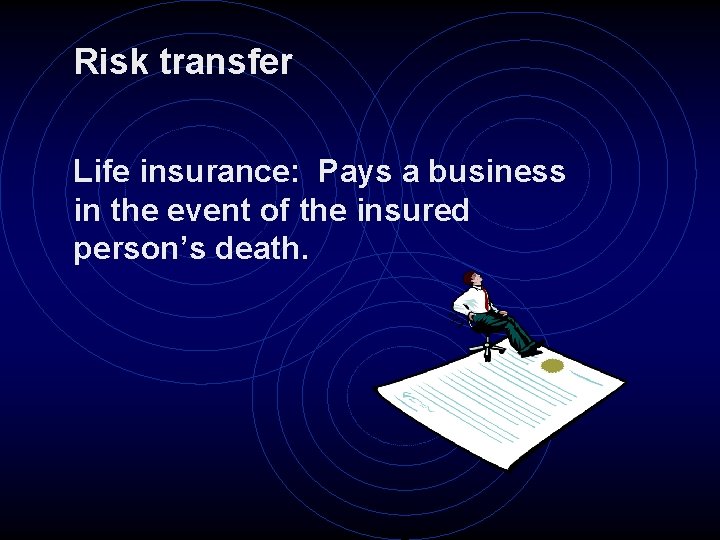
Risk transfer Life insurance: Pays a business in the event of the insured person’s death.
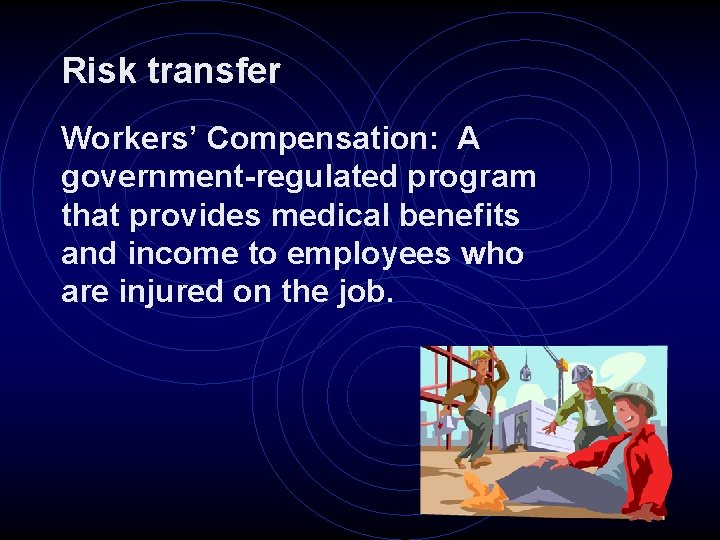
Risk transfer Workers’ Compensation: A government-regulated program that provides medical benefits and income to employees who are injured on the job.

Risk retention Ø Self-insurance against business loss Ø The business must set aside money each month to help cover the costs should a loss occur.
Emergency planning Ø Businesses must have procedures in place before a crisis occurs. Ø Businesses must create emergency response plans to handle emergency situations.
Avoidance Ø Staying away from things altogether Ø Do not offer certain products Ø Assurance of nothing happening by eliminating all possibilities of a risk Ø Examples – Do not open the store
- Slides: 18