RFI Proof your shack Work more DX Keep



- Slides: 59
RFI Proof your shack Work more DX Keep your neighbors happy Bob Brehm, AK 6 R Chief Engineer Palomar-Engineers. com Copyright 2014 Palomar Engineers, Inc.
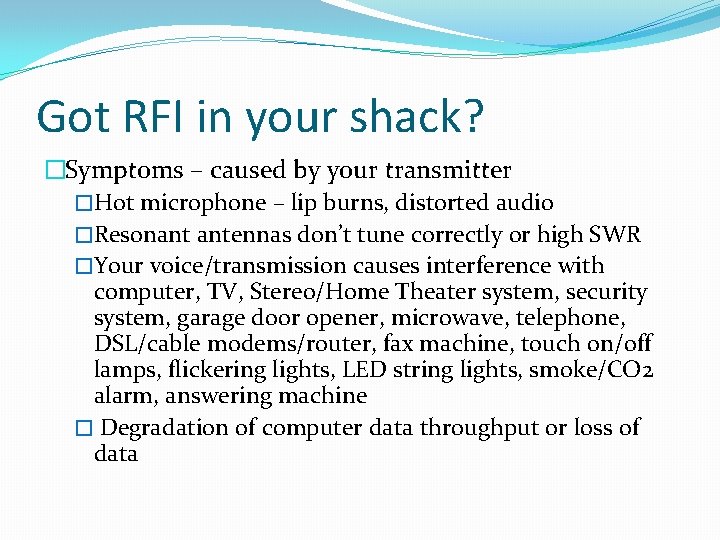
Got RFI in your shack? �Symptoms – caused by your transmitter �Hot microphone – lip burns, distorted audio �Resonant antennas don’t tune correctly or high SWR �Your voice/transmission causes interference with computer, TV, Stereo/Home Theater system, security system, garage door opener, microwave, telephone, DSL/cable modems/router, fax machine, touch on/off lamps, flickering lights, LED string lights, smoke/CO 2 alarm, answering machine � Degradation of computer data throughput or loss of data
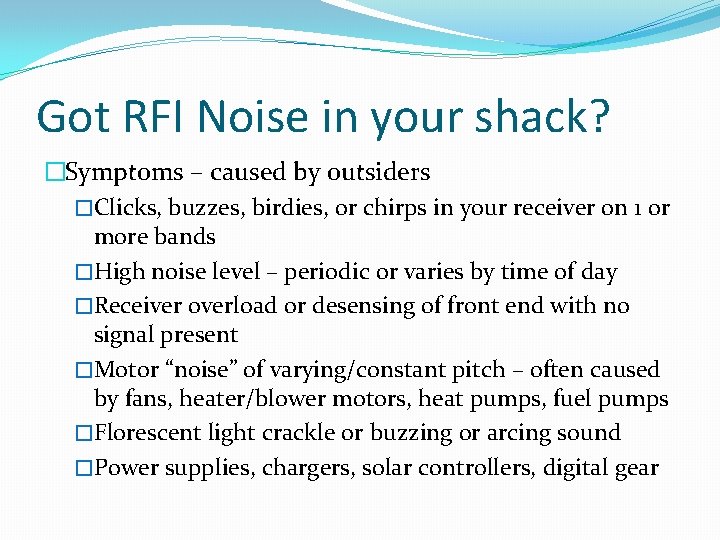
Got RFI Noise in your shack? �Symptoms – caused by outsiders �Clicks, buzzes, birdies, or chirps in your receiver on 1 or more bands �High noise level – periodic or varies by time of day �Receiver overload or desensing of front end with no signal present �Motor “noise” of varying/constant pitch – often caused by fans, heater/blower motors, heat pumps, fuel pumps �Florescent light crackle or buzzing or arcing sound �Power supplies, chargers, solar controllers, digital gear
Audience RFI Survey �About 60% of customers call to REACT to an RFI problem in their shack/home or their neighbor’s home they think is caused by their radio transmission. �TRANSMITTER RFI �About 40% of customers call to CURE an RFI problem caused by outsiders to their radio station �RECEIVER RFI
RFI Proof Your Shack Causes and Cures to make ham radio more enjoyable
What is RFI? �Radio Frequency Interference/Electromagnetic Interference (RFI/EMI) – at radio frequencies �A radio frequency disturbance that causes an unwanted interruption, degradation, or obstruction to an electrical circuit. �Sources � Radio Transmitters (Amateur, broadcast, consumer devices) � Natural: Sun, Cosmic noise, Lightning, atmospheric static � Electro-mechanical devices (motors), ignition systems � All cause rapidly changing electrical currents in the effected device (RECEPTOR)
How is RFI Transferred?
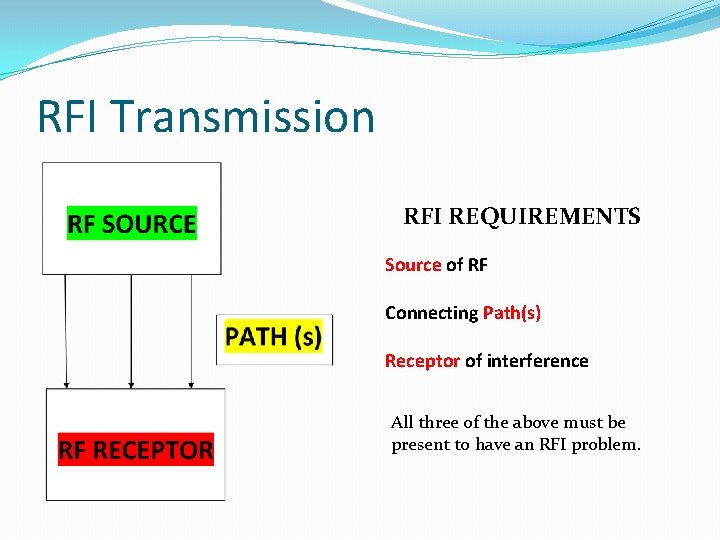
RFI Transmission RFI REQUIREMENTS Source of RF Connecting Path(s) Receptor of interference All three of the above must be present to have an RFI problem.
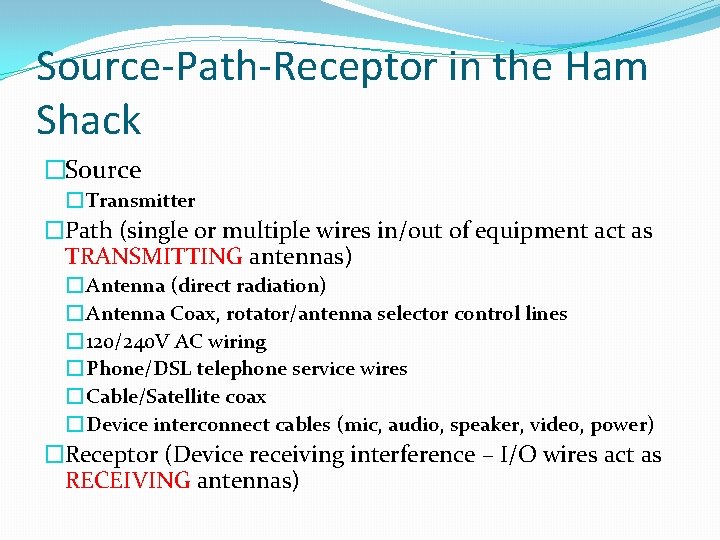
Source-Path-Receptor in the Ham Shack �Source � Transmitter �Path (single or multiple wires in/out of equipment act as TRANSMITTING antennas) � Antenna (direct radiation) � Antenna Coax, rotator/antenna selector control lines � 120/240 V AC wiring � Phone/DSL telephone service wires � Cable/Satellite coax � Device interconnect cables (mic, audio, speaker, video, power) �Receptor (Device receiving interference – I/O wires act as RECEIVING antennas)
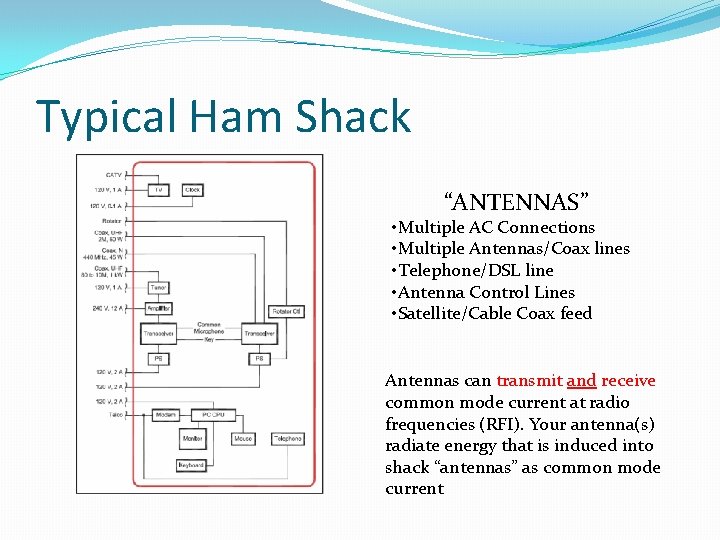
Typical Ham Shack “ANTENNAS” • Multiple AC Connections • Multiple Antennas/Coax lines • Telephone/DSL line • Antenna Control Lines • Satellite/Cable Coax feed Antennas can transmit and receive common mode current at radio frequencies (RFI). Your antenna(s) radiate energy that is induced into shack “antennas” as common mode current
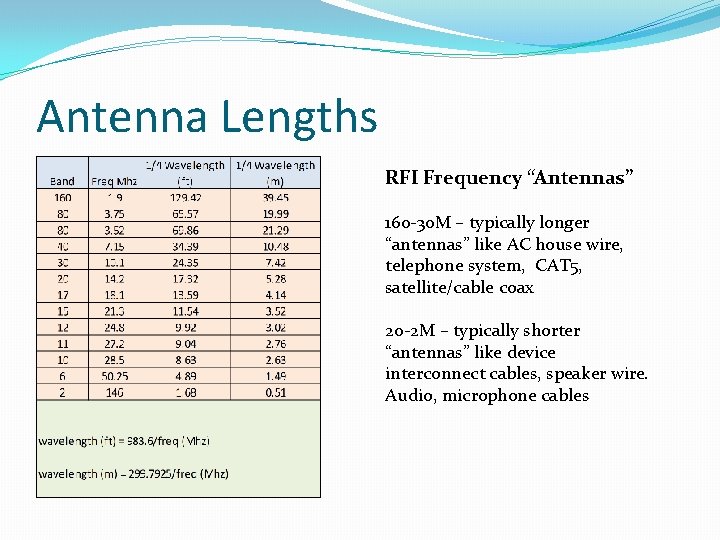
Antenna Lengths RFI Frequency “Antennas” 160 -30 M – typically longer “antennas” like AC house wire, telephone system, CAT 5, satellite/cable coax 20 -2 M – typically shorter “antennas” like device interconnect cables, speaker wire. Audio, microphone cables
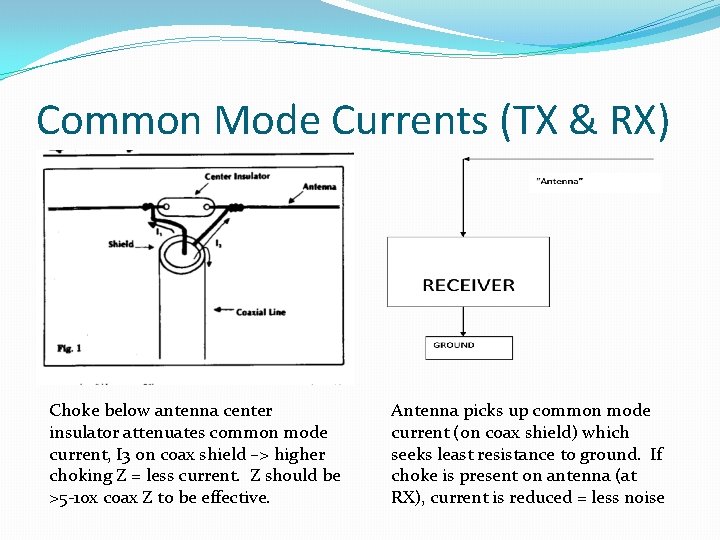
Common Mode Currents (TX & RX) Choke below antenna center insulator attenuates common mode current, I 3 on coax shield –> higher choking Z = less current. Z should be >5 -10 x coax Z to be effective. Antenna picks up common mode current (on coax shield) which seeks least resistance to ground. If choke is present on antenna (at RX), current is reduced = less noise
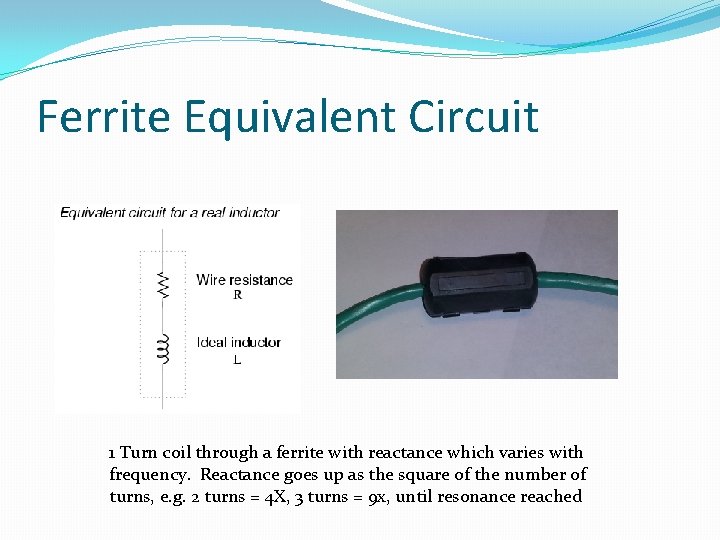
Ferrite Equivalent Circuit 1 Turn coil through a ferrite with reactance which varies with frequency. Reactance goes up as the square of the number of turns, e. g. 2 turns = 4 X, 3 turns = 9 x, until resonance reached
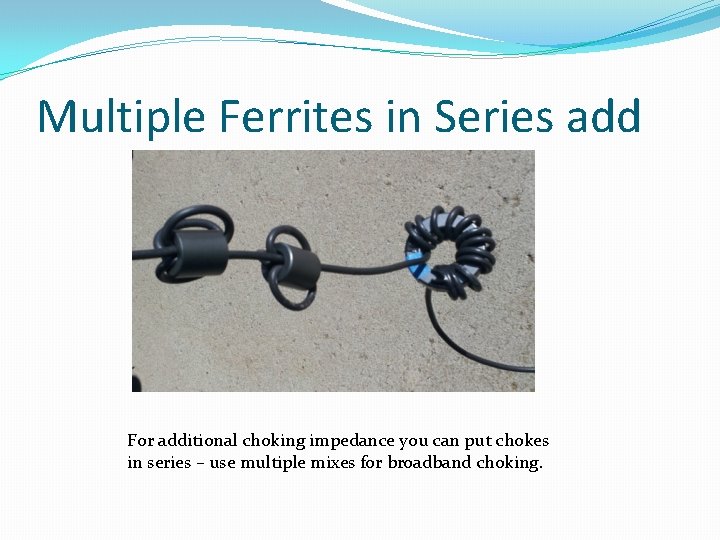
Multiple Ferrites in Series add For additional choking impedance you can put chokes in series – use multiple mixes for broadband choking.
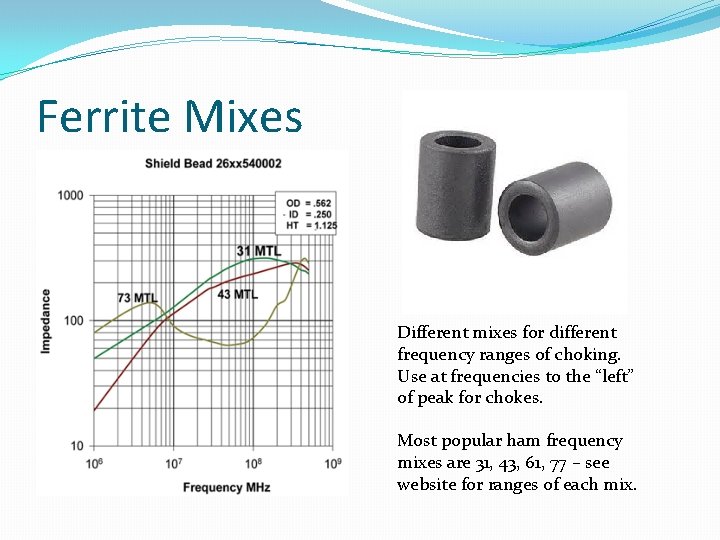
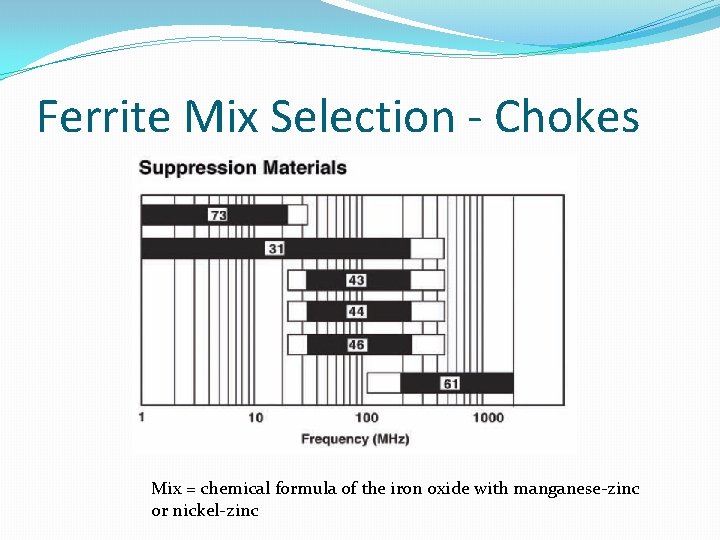
Ferrite Mixes Different mixes for different frequency ranges of choking. Use at frequencies to the “left” of peak for chokes. Most popular ham frequency mixes are 31, 43, 61, 77 – see website for ranges of each mix.
Ferrite Mix Selection - Chokes Mix = chemical formula of the iron oxide with manganese-zinc or nickel-zinc
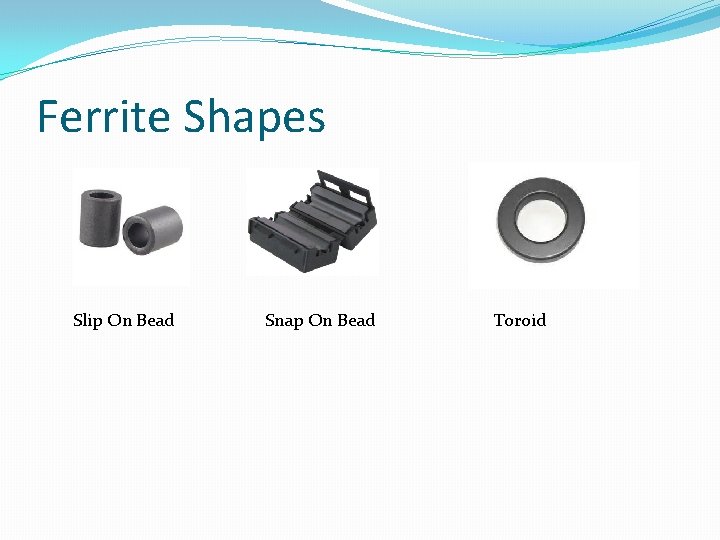
Ferrite Shapes Slip On Bead Snap On Bead Toroid
RFI Chokes for feed line path �Path �Antenna feed line choke (aka 1: 1 balun, line isolator, line choke, sleeve baluns) � Coax Air Wound – frequency dictates # turns for Z � In line (ferrite – toroids, split beads, sleeve beads) � 1: 1 balun (voltage (DC grounded) or current) � Line isolators (w or w/o ground lug) � Examples
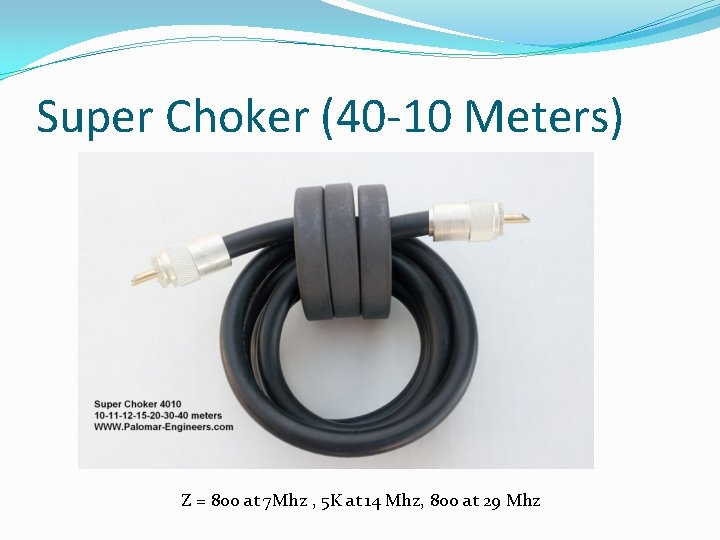
Super Choker (40 -10 Meters) Z = 800 at 7 Mhz , 5 K at 14 Mhz, 800 at 29 Mhz
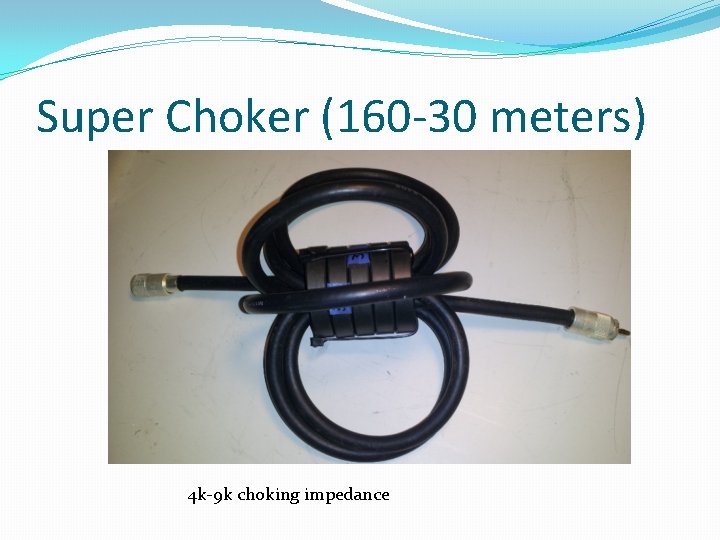
Super Choker (160 -30 meters) 4 k-9 k choking impedance
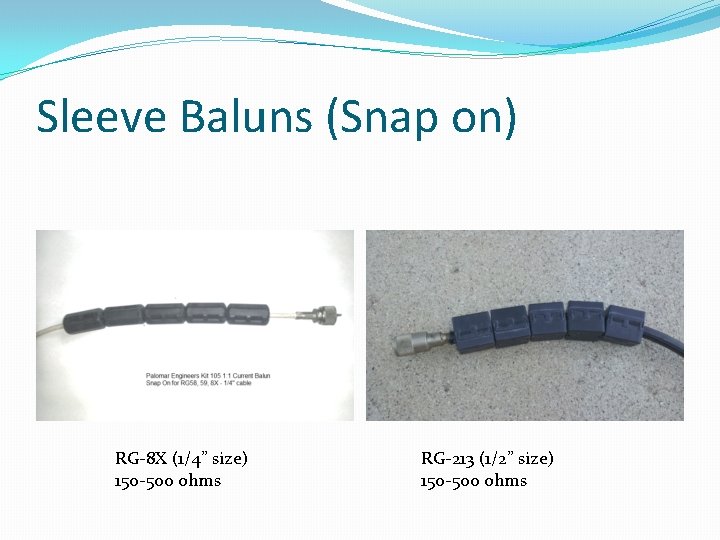
Sleeve Baluns (Snap on) RG-8 X (1/4” size) 150 -500 ohms RG-213 (1/2” size) 150 -500 ohms
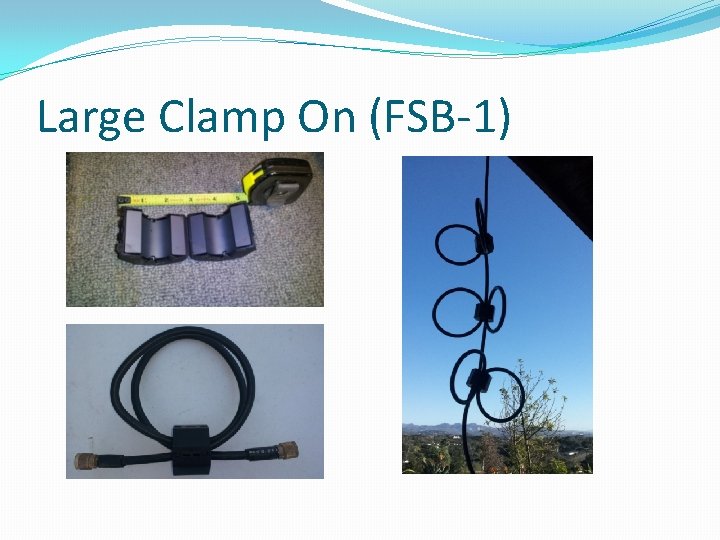
Large Clamp On (FSB-1)
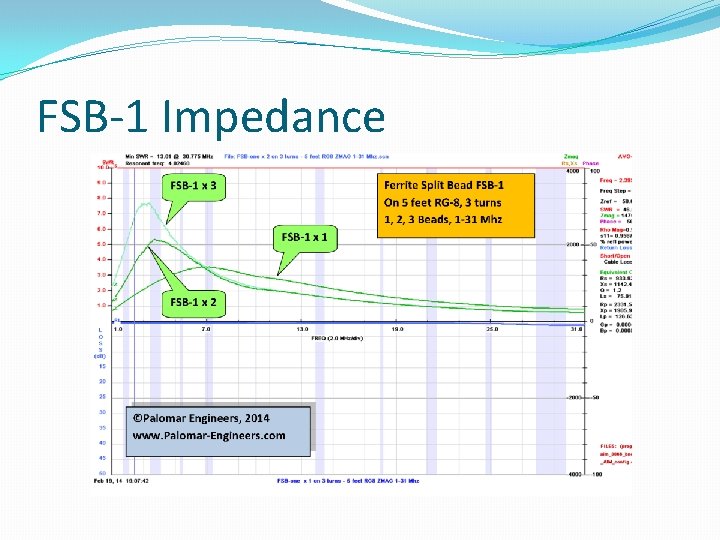
FSB-1 Impedance
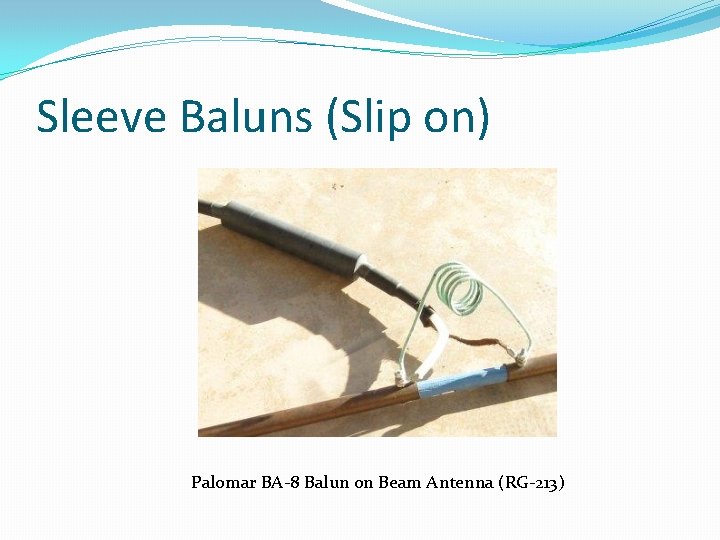
Sleeve Baluns (Slip on) Palomar BA-8 Balun on Beam Antenna (RG-213)
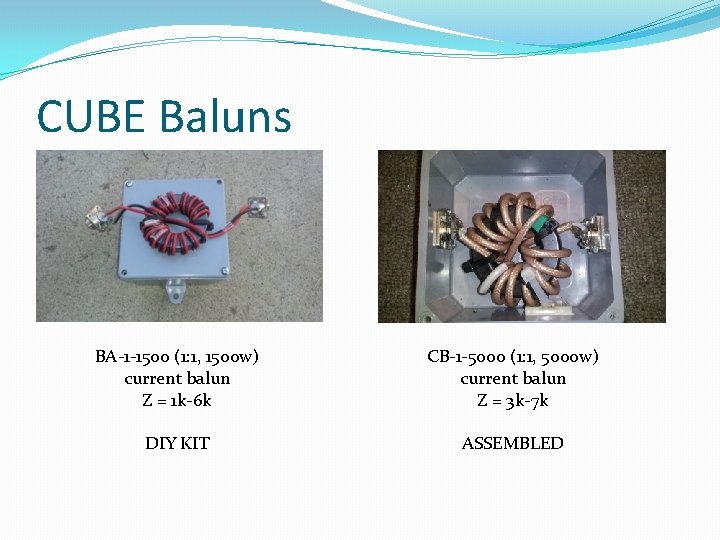
CUBE Baluns BA-1 -1500 (1: 1, 1500 w) current balun Z = 1 k-6 k CB-1 -5000 (1: 1, 5000 w) current balun Z = 3 k-7 k DIY KIT ASSEMBLED
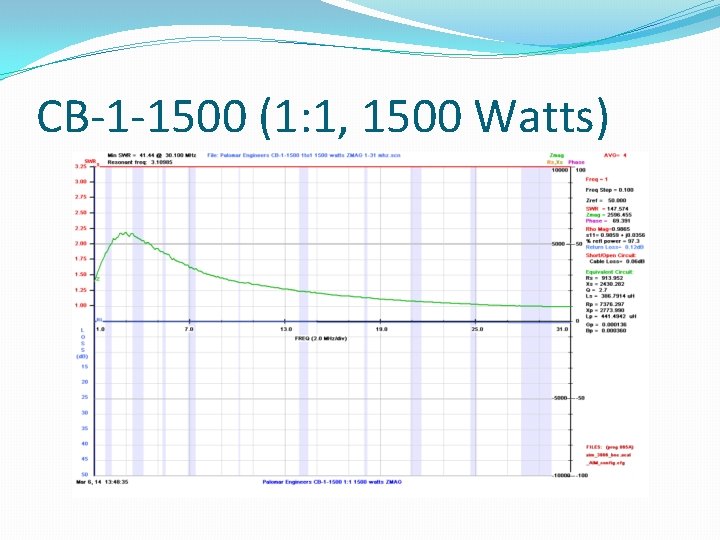
CB-1 -1500 (1: 1, 1500 Watts)
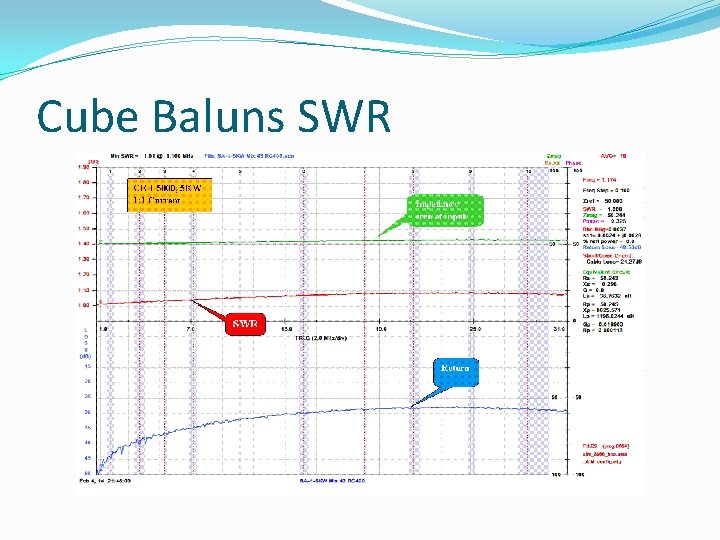
Cube Baluns SWR
RFI Chokes – 120/240 V AC Path �Toroids �Snap Ons �Big Clamp On’s – multiple turns, easy to install �Example pictures
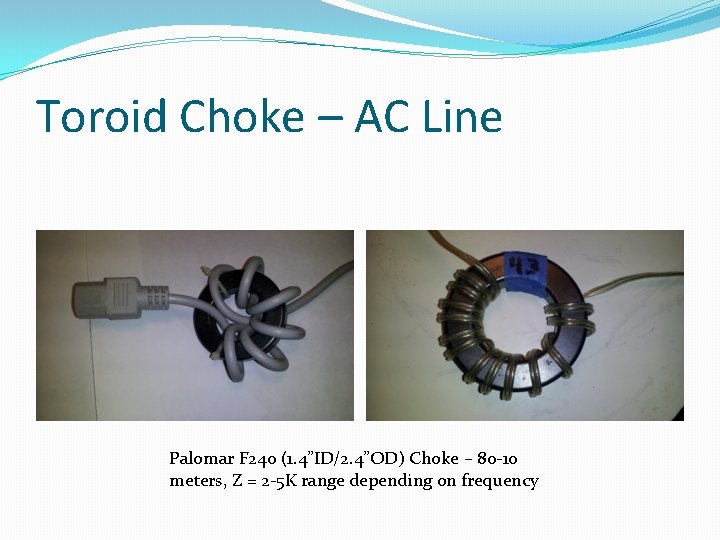
Toroid Choke – AC Line Palomar F 240 (1. 4”ID/2. 4”OD) Choke – 80 -10 meters, Z = 2 -5 K range depending on frequency
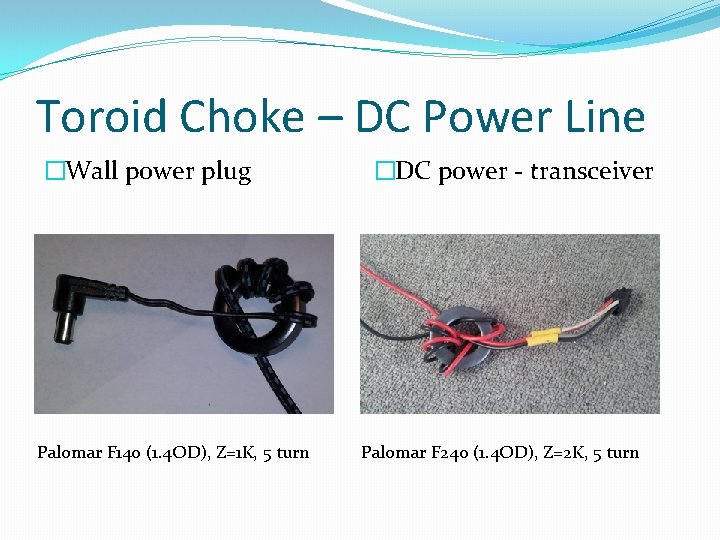
Toroid Choke – DC Power Line �Wall power plug Palomar F 140 (1. 4 OD), Z=1 K, 5 turn �DC power - transceiver Palomar F 240 (1. 4 OD), Z=2 K, 5 turn
RFI Chokes – Internet/Phone Path �Toroids �Snap On’s �Multiple turns �All I/O lines �Longer cables more important because they are better receiving antennas �Examples
Telephone RFI Chokes �Wired/Wireless �Choke phone line (Mix 77), DC power line �Internet Phone (Magic Jack, etc) �Choke router, USB jack to device, power to device
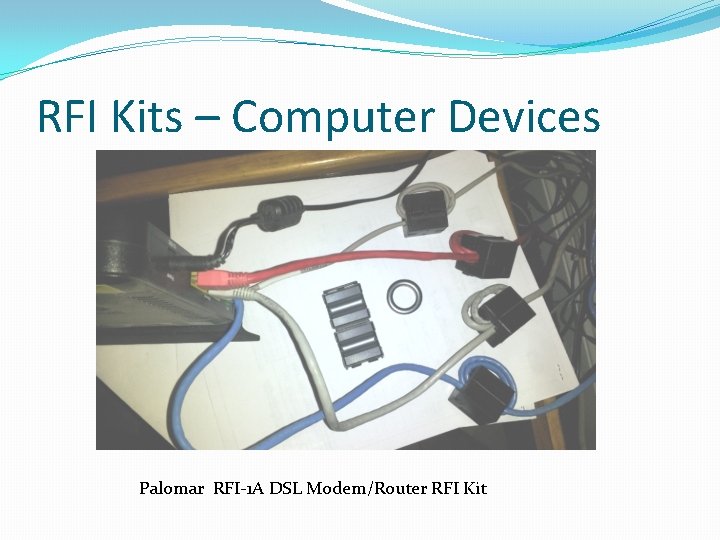
RFI Kits – Computer Devices Palomar RFI-1 A DSL Modem/Router RFI Kit
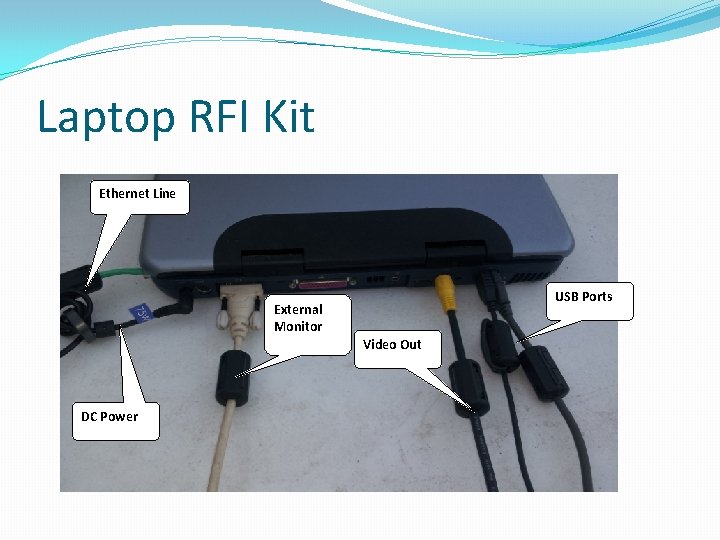
Laptop RFI Kit Ethernet Line USB Ports External Monitor Video Out DC Power
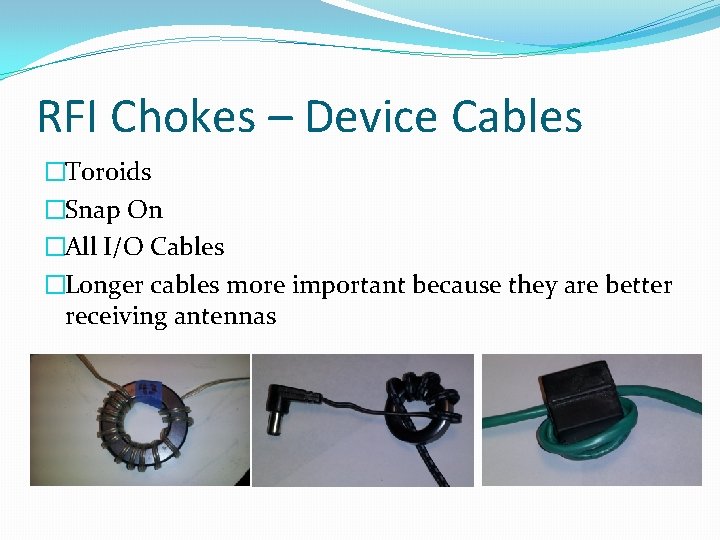
RFI Chokes – Device Cables �Toroids �Snap On �All I/O Cables �Longer cables more important because they are better receiving antennas
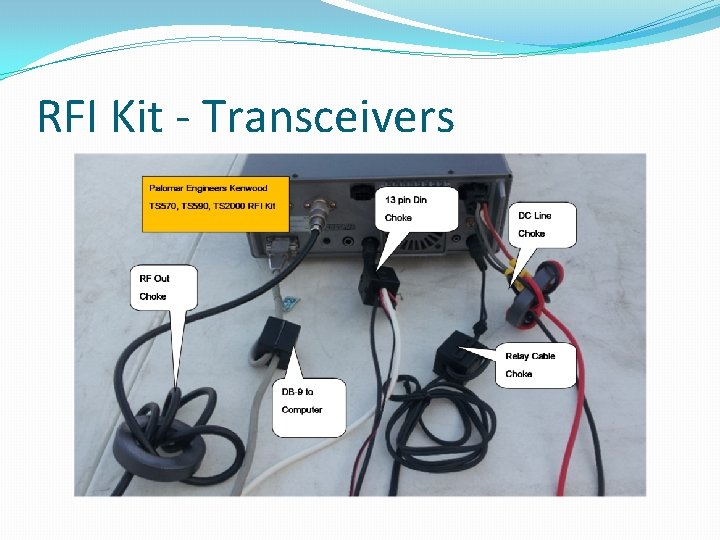
RFI Kit - Transceivers
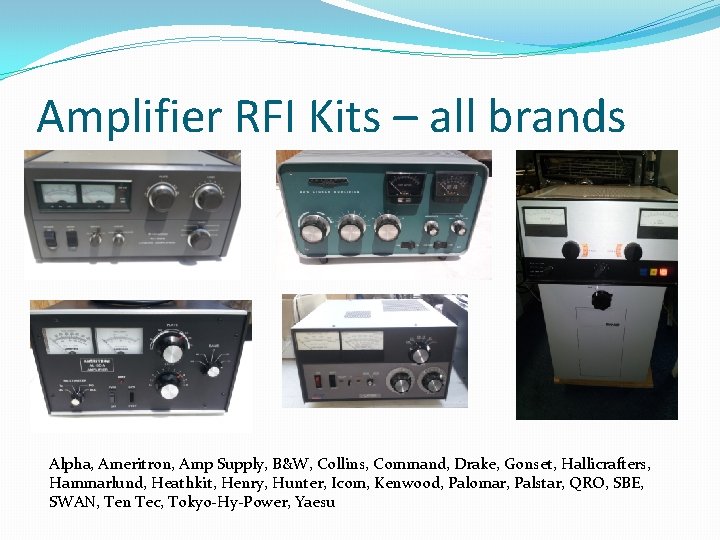
Amplifier RFI Kits – all brands Alpha, Ameritron, Amp Supply, B&W, Collins, Command, Drake, Gonset, Hallicrafters, Hammarlund, Heathkit, Henry, Hunter, Icom, Kenwood, Palomar, Palstar, QRO, SBE, SWAN, Ten Tec, Tokyo-Hy-Power, Yaesu
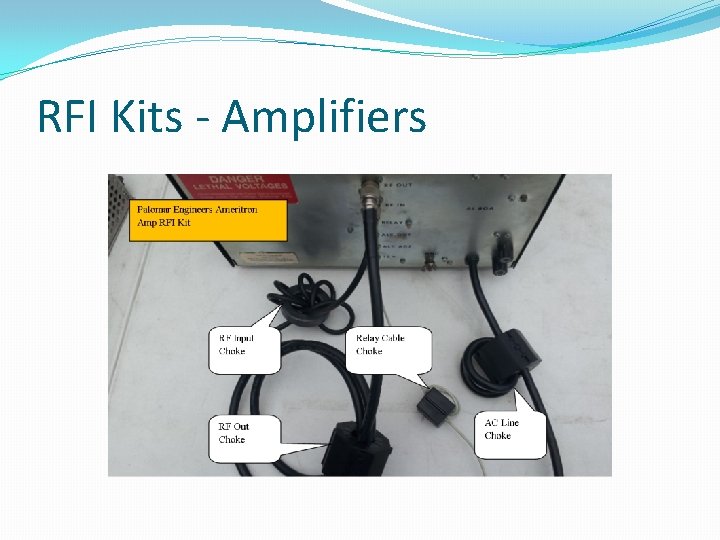
RFI Kits - Amplifiers
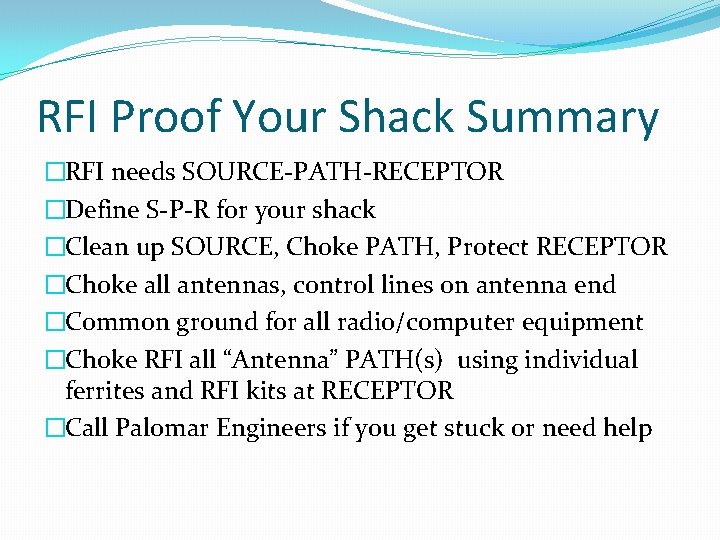
RFI Proof Your Shack Summary �RFI needs SOURCE-PATH-RECEPTOR �Define S-P-R for your shack �Clean up SOURCE, Choke PATH, Protect RECEPTOR �Choke all antennas, control lines on antenna end �Common ground for all radio/computer equipment �Choke RFI all “Antenna” PATH(s) using individual ferrites and RFI kits at RECEPTOR �Call Palomar Engineers if you get stuck or need help
Work More DX Tips, Tricks & Techniques to improve your signal/noise ratio
Tips & Tricks �Reduce noise, interference relative to signal = more DX �More efficient antenna (more signal) = more DX �Less feed line loss (more signal) = more DX �Noise from common mode currents can be significantly reduced using common mode chokes at the ham shack in addition to chokes at the antenna
Got RFI Noise in your shack? �Symptoms – caused by outsiders �Clicks, buzzes, birdies, or chirps in your receiver on 1 or more bands �High noise level – periodic or varies by time of day �Receiver overload or desensing of front end with no signal present �Motor “noise” of varying/constant pitch – often caused by fans, heater/blower motors, heat pumps, fuel pumps �Florescent light crackle or buzzing or arcing sound �Power supplies, chargers, solar controllers, digital gear
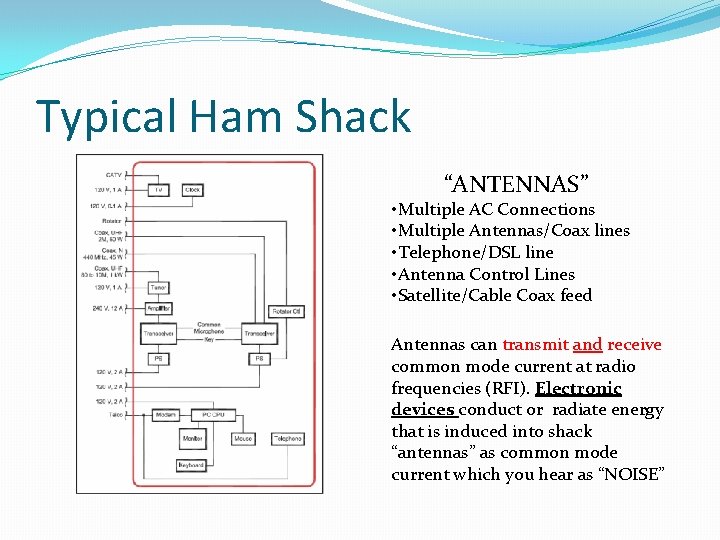
Typical Ham Shack “ANTENNAS” • Multiple AC Connections • Multiple Antennas/Coax lines • Telephone/DSL line • Antenna Control Lines • Satellite/Cable Coax feed Antennas can transmit and receive common mode current at radio frequencies (RFI). Electronic devices conduct or radiate energy that is induced into shack “antennas” as common mode current which you hear as “NOISE”
Improve Signal/Noise Ratio �Concentrate on reducing common mode noise caused by RFI �Path is Inside your shack � 120/240 v AC line, Coax interconnects, computer interfaces, audio interfaces, radio-amp-tuner cables �Path is Outside your shack – neighborhood RFI � Antenna coax � 120/240 V AC line � Telephone/Internet line � Device radiation (Plasma TV, treadmills, heat pumps, etc)
Improve Signal/Noise Ratio �Solutions �Common mode chokes at RECEIVING end (blocks common mode RFI into receiver) in addition to transmitting end (keeps RF on the antenna) �Use common mode chokes (1: 1 baluns) to choke noise on signal path AT THE RADIO/ANTENNA TUNER � Cube baluns � Sleeve baluns – snap on or slip on � Super Chokers
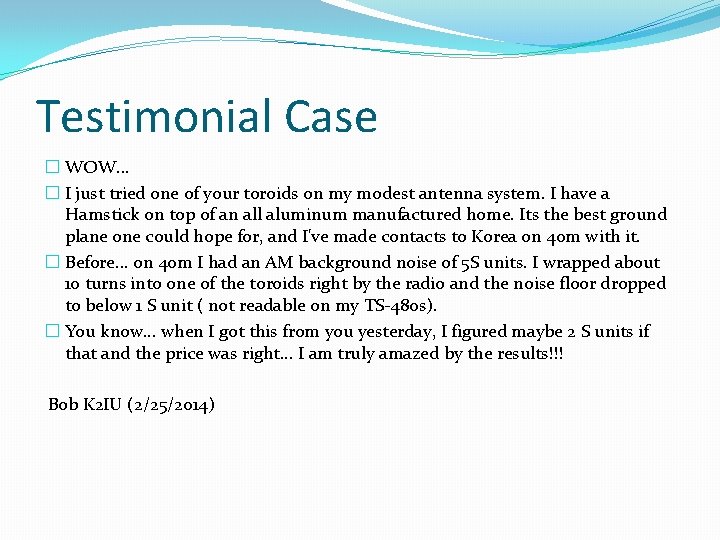
Testimonial Case � WOW. . . � I just tried one of your toroids on my modest antenna system. I have a Hamstick on top of an all aluminum manufactured home. Its the best ground plane one could hope for, and I've made contacts to Korea on 40 m with it. � Before. . . on 40 m I had an AM background noise of 5 S units. I wrapped about 10 turns into one of the toroids right by the radio and the noise floor dropped to below 1 S unit ( not readable on my TS-480 s). � You know. . . when I got this from you yesterday, I figured maybe 2 S units if that and the price was right. . . I am truly amazed by the results!!! Bob K 2 IU (2/25/2014)
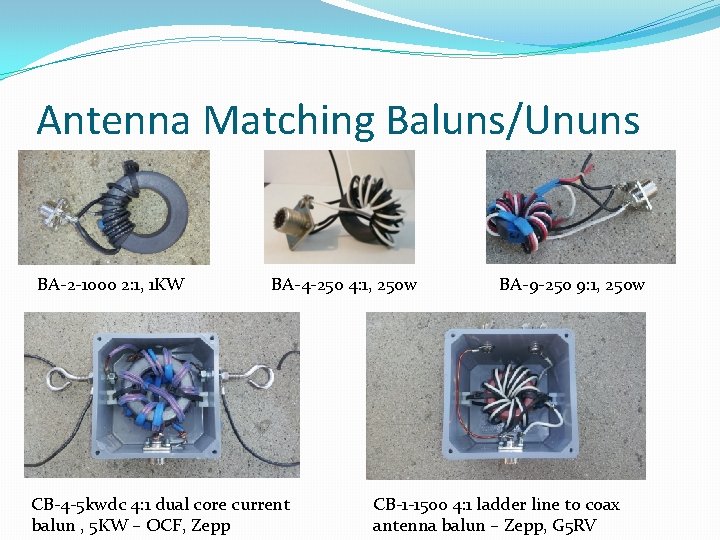
Efficient Antennas �Better antenna patterns with unbalanced to balanced baluns to choke common mode RFI at antenna �Efficient matching baluns for antenna impedance transformation – right power rating, correct frequency range, correct ferrite mix � 1: 1 baluns for dipoles, verticals, beams � 2: 1 baluns for loops � 4: 1 for OCF, Zepp, 31/43 ft verticals � 9: 1 for long wires, end fed
Antenna Matching Baluns/Ununs BA-2 -1000 2: 1, 1 KW BA-4 -250 4: 1, 250 w CB-4 -5 kwdc 4: 1 dual core current balun , 5 KW – OCF, Zepp BA-9 -250 9: 1, 250 w CB-1 -1500 4: 1 ladder line to coax antenna balun – Zepp, G 5 RV
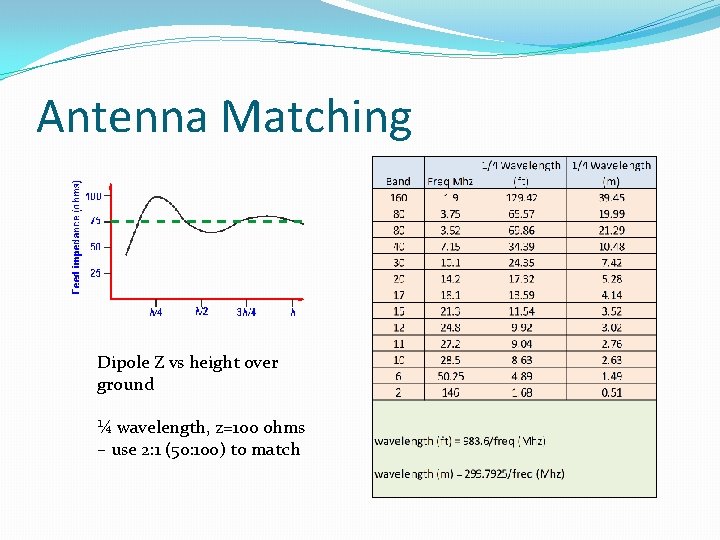
Antenna Matching Dipole Z vs height over ground ¼ wavelength, z=100 ohms – use 2: 1 (50: 100) to match
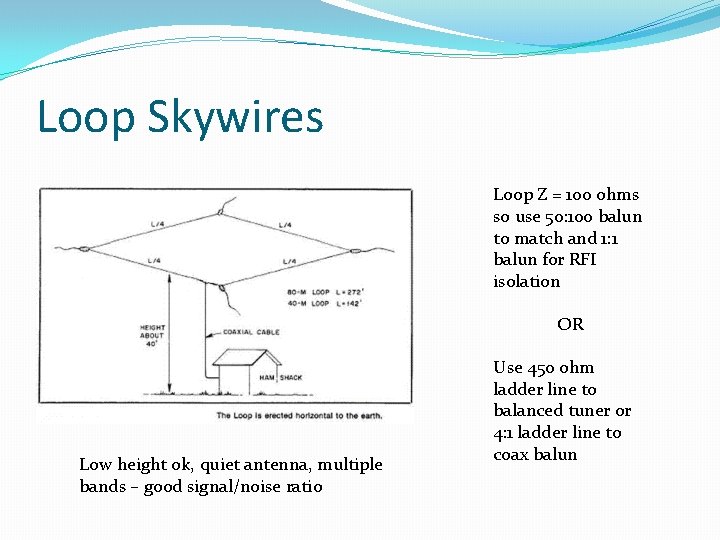
Loop Skywires Loop Z = 100 ohms so use 50: 100 balun to match and 1: 1 balun for RFI isolation OR Low height ok, quiet antenna, multiple bands – good signal/noise ratio Use 450 ohm ladder line to balanced tuner or 4: 1 ladder line to coax balun
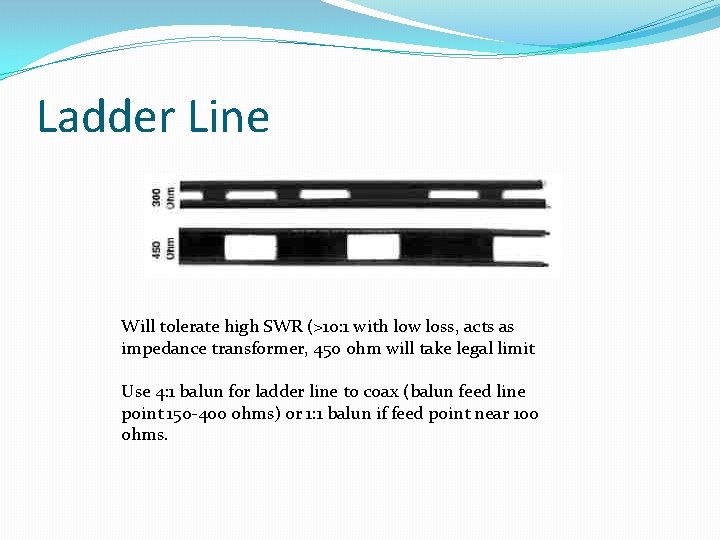
Reduce Feed Line Loss �Higher grade coax – lower loss (LMR 240/400, etc) �Better match of feed line to antenna at antenna = lower SWR = lower loss �Use of ladder line �High SWR OK �Antenna tuner/balun needed – near 100% power to antenna � 1: 1 or 4: 1 antenna balun to interface 450 ohm to 50 ohm coax �All band antennas – Zepps, end feds, folded dipoles – larger bandwidth, higher gain on 40 -10, stealthy
Ladder Line Will tolerate high SWR (>10: 1 with low loss, acts as impedance transformer, 450 ohm will take legal limit Use 4: 1 balun for ladder line to coax (balun feed line point 150 -400 ohms) or 1: 1 balun if feed point near 100 ohms.
More DX Summary �Use Efficient Antennas �Lower Feed line loss with higher grade coax or lower loss ladder line �Reduce common mode noise on RECEIVER with feed line chokes on PATH and RFI chokes on SOURCES
Keep Your Neighbors Happy! Tips, Tricks and Techniques
Problem Isolation �Transmitter – Path – Receiver �Clean up your transmitter/shack first using techniques already discussed �Assess Neighbor’s Problem �Faulty device (device acting as receiver when not designed to be a radio receiver – e. g. Telephone) �Determine frequency of transmitter that is causing the problem (may not be on all bands). �Find the path (or paths) to the Receptor (Receiver) �Choose the RFI choke for the frequency and path �Fix the path, protect the device (externally)!
Solution Kits for Neighbor’s RFI �GENERIC HOUSEHOLD RFI KIT (RFI-4) �COMPUTER DEVICES RFI KIT(RFI-1 A, B, C, D) �GARAGE DOOR OPENER RFI KIT �ALARM SYSTEM RFI KIT �CABLE/SATELLITE SYSTEM RFI KIT �HI FI/ENTERTAINMENT SYSTEM RFI KIT �Use twisted pair speaker wires for maximum immunity �SNAP ON FERRITE BEADS FOR GENERIC RFI USE �Telephone RFI Kit – large toroid around line
Today’s Recap �RFI can be transmitted and received �Choke on the antenna to keep RF on antenna �Feed line choke(s) in shack to cut noise �Use efficient antennas, well matched for more DX �Use RFI kits to improve neighborhood relations!
Current Ad in QST magazine
Contact Info �Website: www. Palomar-Engineers. com �Email: ak 6 r@yahoo. com or Sales@Palomar. Engineers. com �Phone: 760 -747 -3343 �Bob Brehm, AK 6 R – Chief Engineer �This presentation available on the website.