Prior to 1968 many chronicallycritically ill pts died


- Slides: 34
Prior to 1968, many chronically/critically ill pts died of malnutrition; not 1˚ condition Parenteral nutrition, meeting all or part of pts nutritional needs via intravenous feeding, met a great medical need. Improperly managed, PEN has serious complications including liver dysfunction, bone diseases, kidney failure, and MANY nutrient deficiencies.
Ingredients to be considered in PN CHO Protein Lipids Vitamins Minerals Trace Elements FLUIDS
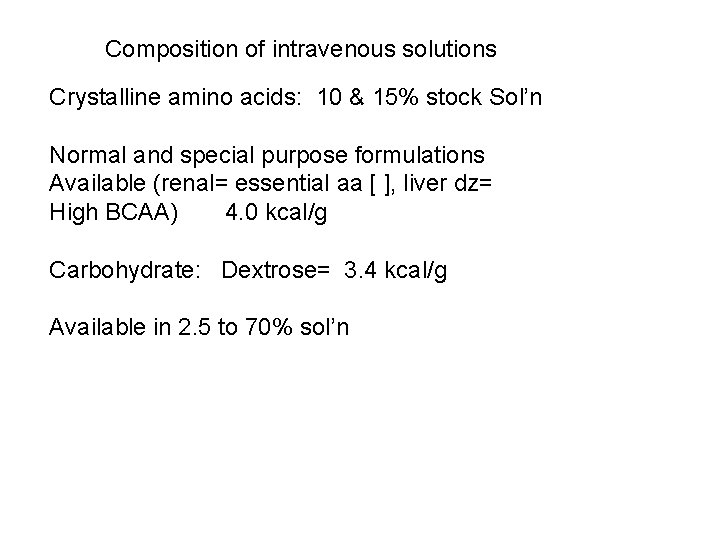
Composition of intravenous solutions Crystalline amino acids: 10 & 15% stock Sol’n Normal and special purpose formulations Available (renal= essential aa [ ], liver dz= High BCAA) 4. 0 kcal/g Carbohydrate: Dextrose= 3. 4 kcal/g Available in 2. 5 to 70% sol’n
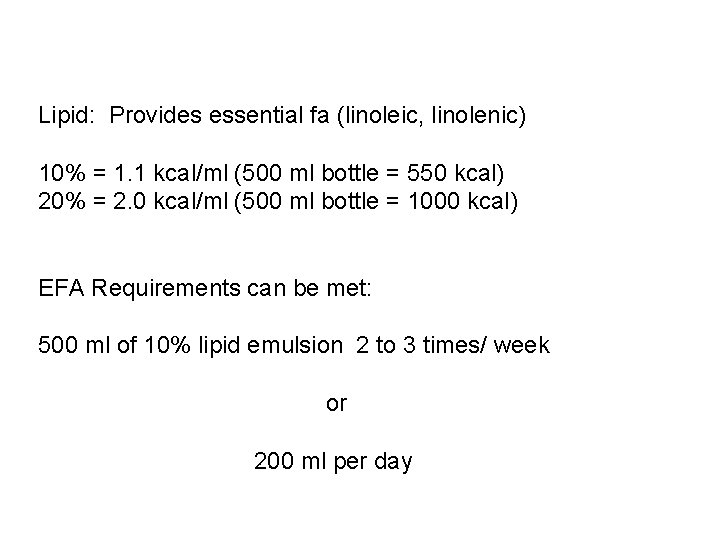
Lipid: Provides essential fa (linoleic, linolenic) 10% = 1. 1 kcal/ml (500 ml bottle = 550 kcal) 20% = 2. 0 kcal/ml (500 ml bottle = 1000 kcal) EFA Requirements can be met: 500 ml of 10% lipid emulsion 2 to 3 times/ week or 200 ml per day
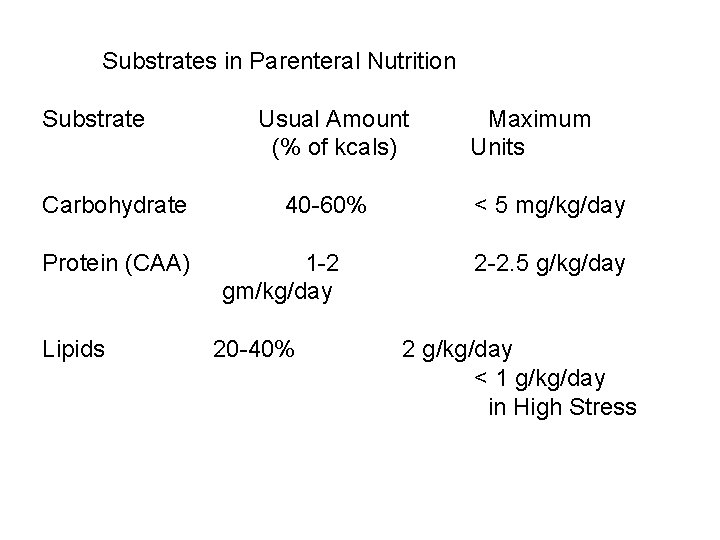
Substrates in Parenteral Nutrition Substrate Carbohydrate Protein (CAA) Lipids Usual Amount (% of kcals) 40 -60% 1 -2 gm/kg/day 20 -40% Maximum Units < 5 mg/kg/day 2 -2. 5 g/kg/day 2 g/kg/day < 1 g/kg/day in High Stress
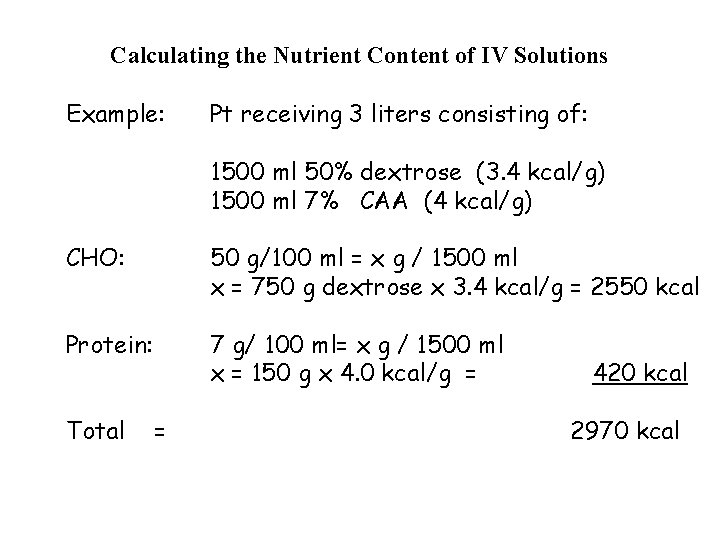
Calculating the Nutrient Content of IV Solutions Example: Pt receiving 3 liters consisting of: 1500 ml 50% dextrose (3. 4 kcal/g) 1500 ml 7% CAA (4 kcal/g) CHO: 50 g/100 ml = x g / 1500 ml x = 750 g dextrose x 3. 4 kcal/g = 2550 kcal Protein: 7 g/ 100 ml= x g / 1500 ml x = 150 g x 4. 0 kcal/g = Total = 420 kcal 2970 kcal
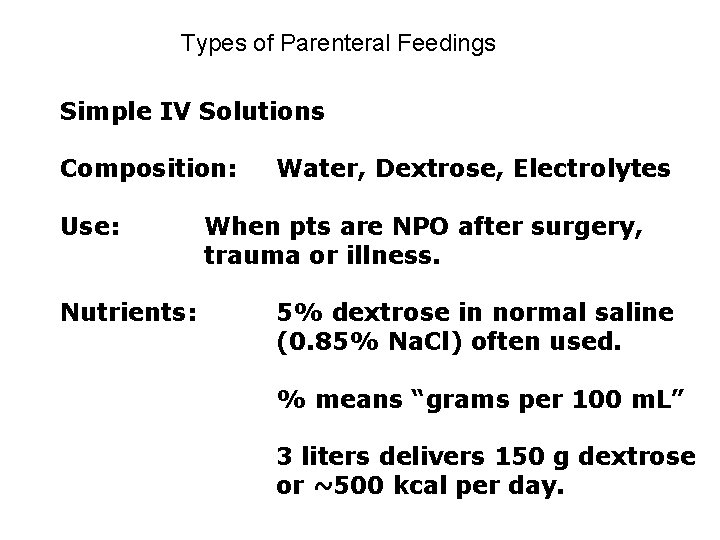
Types of Parenteral Feedings Simple IV Solutions Composition: Use: Nutrients: Water, Dextrose, Electrolytes When pts are NPO after surgery, trauma or illness. 5% dextrose in normal saline (0. 85% Na. Cl) often used. % means “grams per 100 m. L” 3 liters delivers 150 g dextrose or ~500 kcal per day.
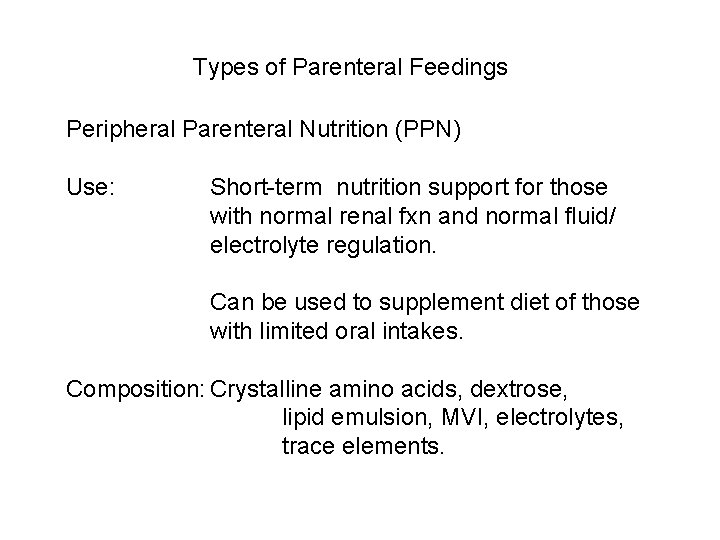
Types of Parenteral Feedings Peripheral Parenteral Nutrition (PPN) Use: Short-term nutrition support for those with normal renal fxn and normal fluid/ electrolyte regulation. Can be used to supplement diet of those with limited oral intakes. Composition: Crystalline amino acids, dextrose, lipid emulsion, MVI, electrolytes, trace elements.
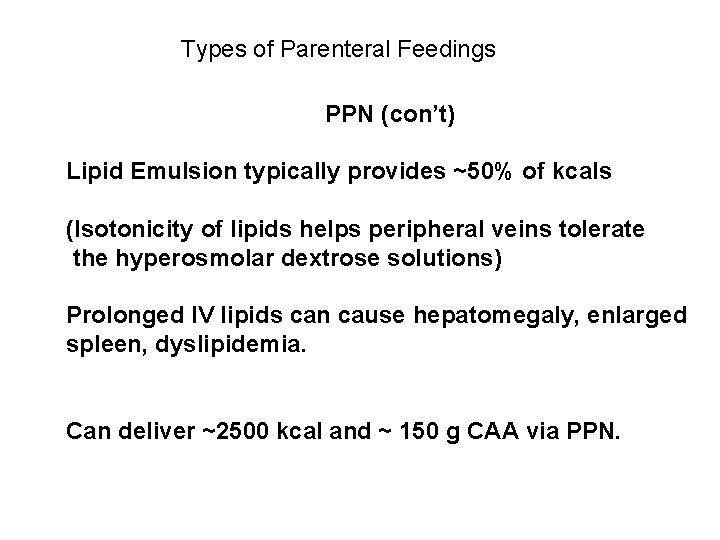
Types of Parenteral Feedings PPN (con’t) Lipid Emulsion typically provides ~50% of kcals (Isotonicity of lipids helps peripheral veins tolerate the hyperosmolar dextrose solutions) Prolonged IV lipids can cause hepatomegaly, enlarged spleen, dyslipidemia. Can deliver ~2500 kcal and ~ 150 g CAA via PPN.
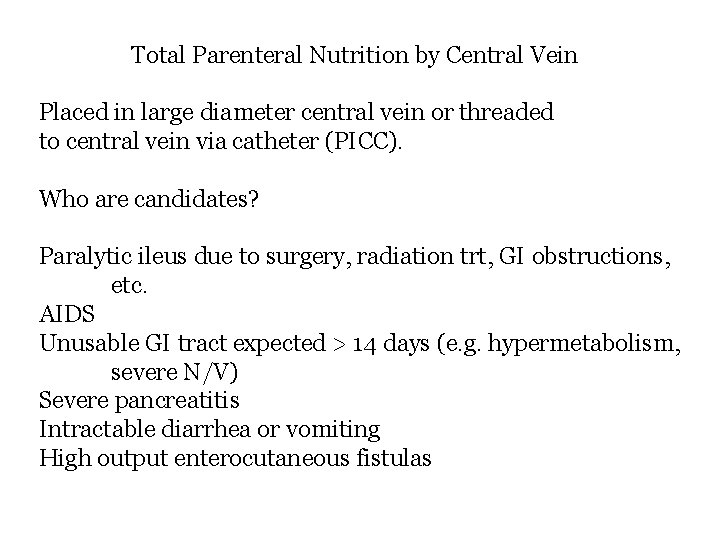
Total Parenteral Nutrition by Central Vein Placed in large diameter central vein or threaded to central vein via catheter (PICC). Who are candidates? Paralytic ileus due to surgery, radiation trt, GI obstructions, etc. AIDS Unusable GI tract expected > 14 days (e. g. hypermetabolism, severe N/V) Severe pancreatitis Intractable diarrhea or vomiting High output enterocutaneous fistulas
Mr. Rossi, 37 yo mail carrier Admitted to hospital for deteriorating GI due to Crohn’s Appearance: Emaciated, face appears drawn Medical Prognosis: Poor; recommend small bowel resection. Serum Albumin: 2. 5 mg/d. L
What Factors indicate need for Nutriton Support? 1. Lack of functional GI tract. 2. Chronic GI disorder (Crohn’s Dz) 3. Evidence of protein-energy malnutrition (e. g. , physical signs, low serum albumin)
Mr. Rossi is placed on central TPN prior to surgery. WHY? Surgery in high risk PEM pts can exacerbate the condition Because surgery produces catabolic stress that can further deplete somatic protein stores.
What are the goals of TPN? • Stabilize nutritional status in in post-operative period. • weight restoration (improved nutritional status) • Increased strength and endurance. Use the GI tract (begin enteral feeding) as soon as bowel function returns.
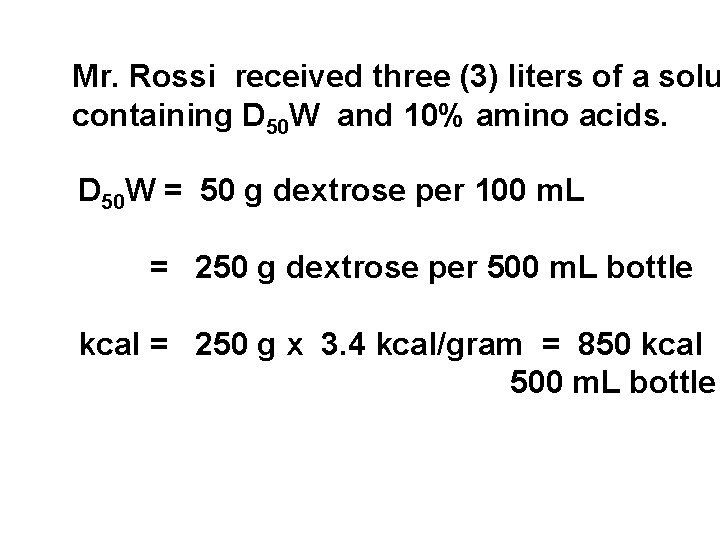
Mr. Rossi received three (3) liters of a solu containing D 50 W and 10% amino acids. D 50 W = 50 g dextrose per 100 m. L = 250 g dextrose per 500 m. L bottle kcal = 250 g x 3. 4 kcal/gram = 850 kcal 500 m. L bottle
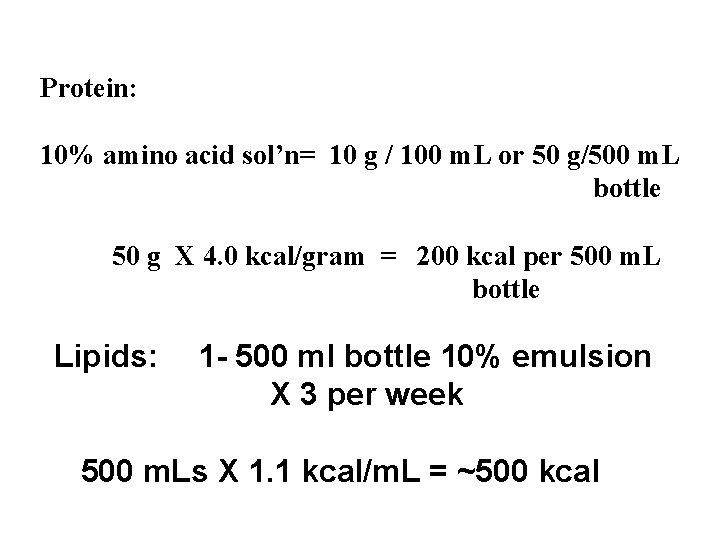
Protein: 10% amino acid sol’n= 10 g / 100 m. L or 50 g/500 m. L bottle 50 g X 4. 0 kcal/gram = 200 kcal per 500 m. L bottle Lipids: 1 - 500 ml bottle 10% emulsion X 3 per week 500 m. Ls X 1. 1 kcal/m. L = ~500 kcal
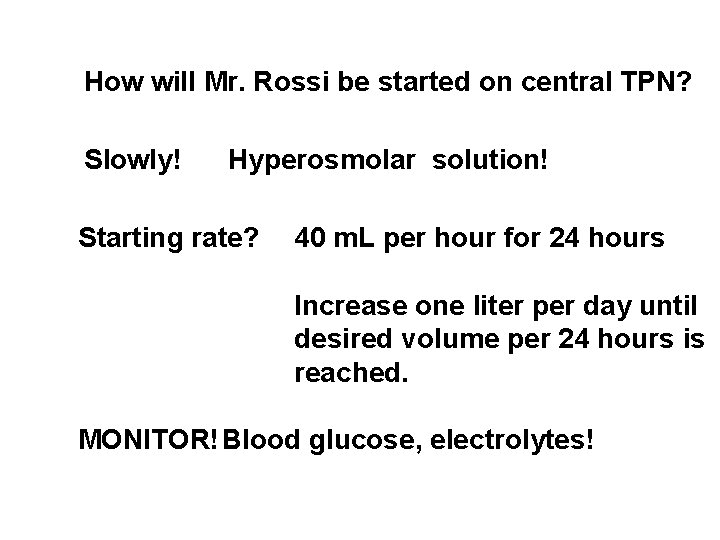
How will Mr. Rossi be started on central TPN? Slowly! Hyperosmolar solution! Starting rate? 40 m. L per hour for 24 hours Increase one liter per day until desired volume per 24 hours is reached. MONITOR!Blood glucose, electrolytes!
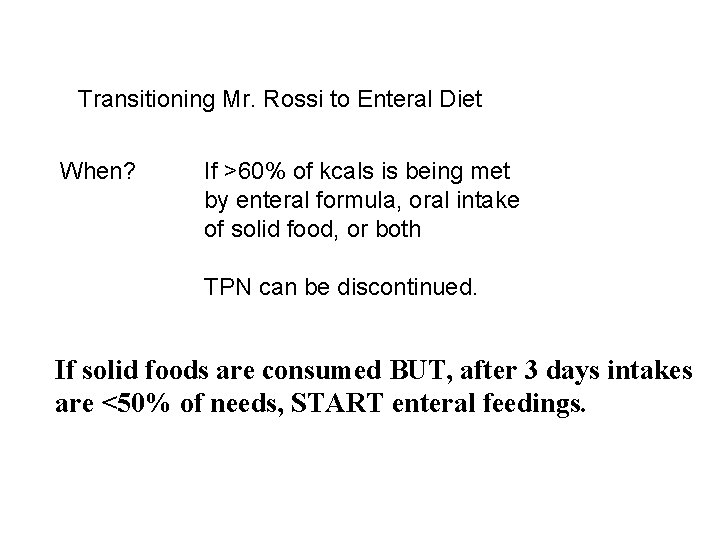
Transitioning Mr. Rossi to Enteral Diet When? If >60% of kcals is being met by enteral formula, oral intake of solid food, or both TPN can be discontinued. If solid foods are consumed BUT, after 3 days intakes are <50% of needs, START enteral feedings.
1. Maintenance of the gut barrier. 2. Improvement in immune function. 3. Maintenance of digestive and absorptive function. 4. Promotion of secretion of gut trophic hormones.
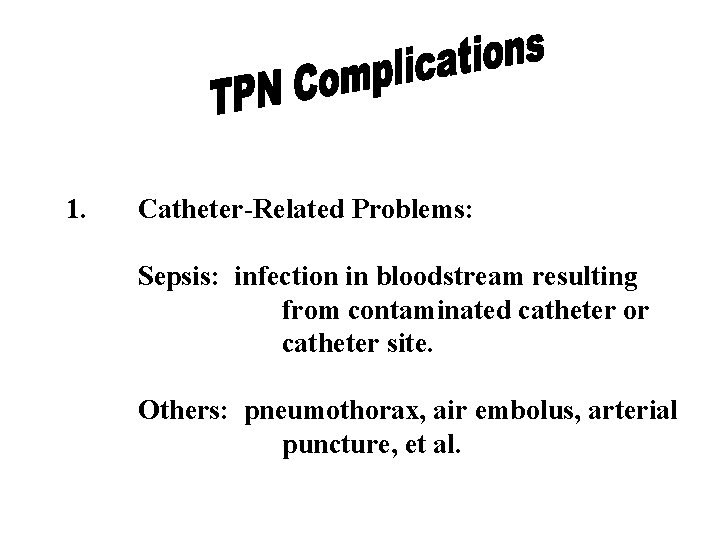
1. Catheter-Related Problems: Sepsis: infection in bloodstream resulting from contaminated catheter or catheter site. Others: pneumothorax, air embolus, arterial puncture, et al.
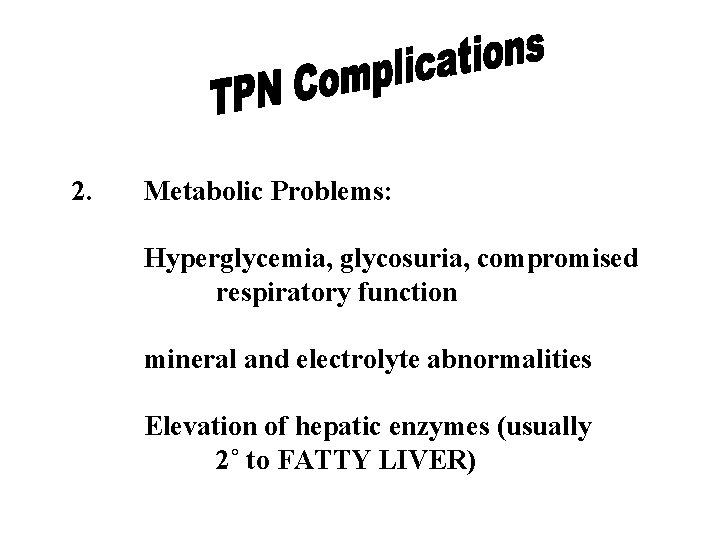
2. Metabolic Problems: Hyperglycemia, glycosuria, compromised respiratory function mineral and electrolyte abnormalities Elevation of hepatic enzymes (usually 2˚ to FATTY LIVER)
3. GI Complications: GI Atrophy (Disuse Atrophy)
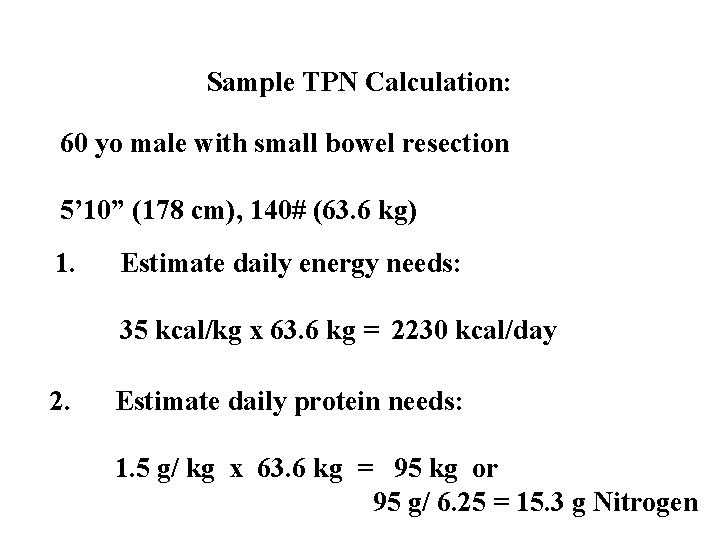
Sample TPN Calculation: 60 yo male with small bowel resection 5’ 10” (178 cm), 140# (63. 6 kg) 1. Estimate daily energy needs: 35 kcal/kg x 63. 6 kg = 2230 kcal/day 2. Estimate daily protein needs: 1. 5 g/ kg x 63. 6 kg = 95 kg or 95 g/ 6. 25 = 15. 3 g Nitrogen
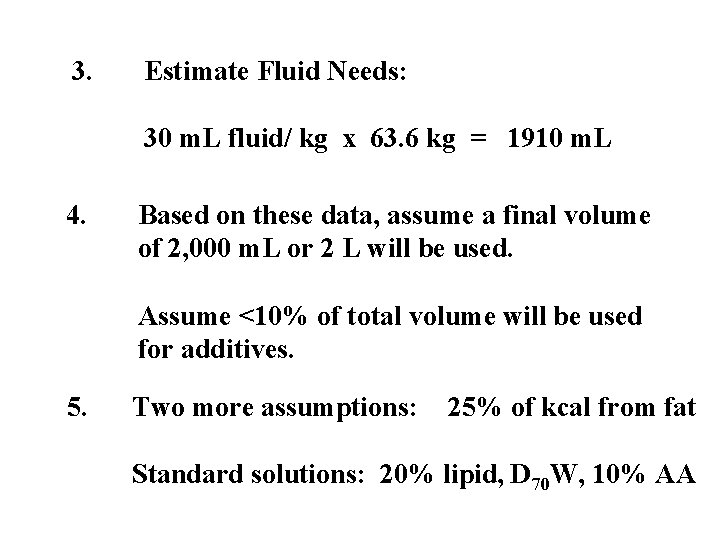
3. Estimate Fluid Needs: 30 m. L fluid/ kg x 63. 6 kg = 1910 m. L 4. Based on these data, assume a final volume of 2, 000 m. L or 2 L will be used. Assume <10% of total volume will be used for additives. 5. Two more assumptions: 25% of kcal from fat Standard solutions: 20% lipid, D 70 W, 10% AA
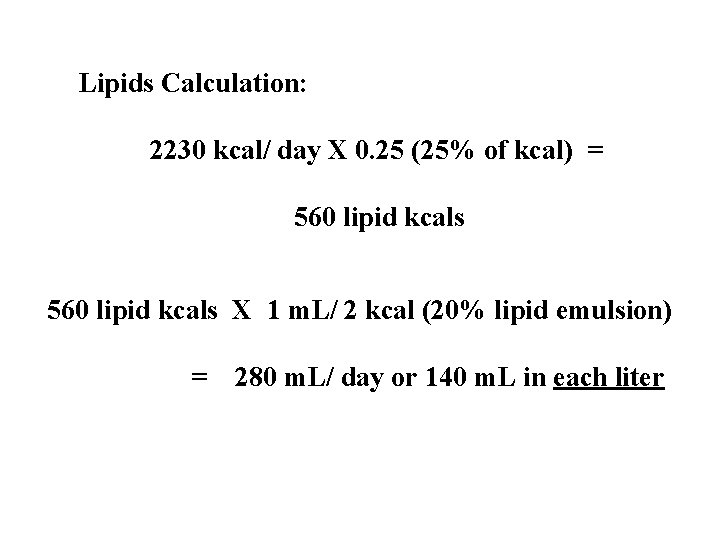
Lipids Calculation: 2230 kcal/ day X 0. 25 (25% of kcal) = 560 lipid kcals X 1 m. L/ 2 kcal (20% lipid emulsion) = 280 m. L/ day or 140 m. L in each liter
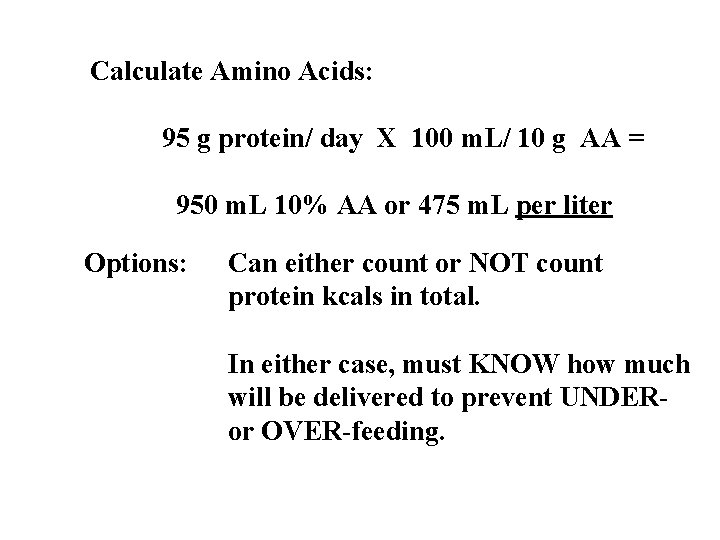
Calculate Amino Acids: 95 g protein/ day X 100 m. L/ 10 g AA = 950 m. L 10% AA or 475 m. L per liter Options: Can either count or NOT count protein kcals in total. In either case, must KNOW how much will be delivered to prevent UNDERor OVER-feeding.
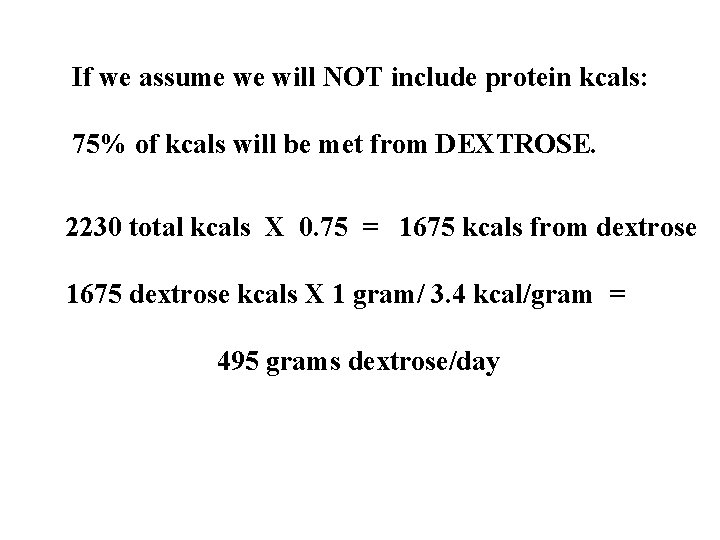
If we assume we will NOT include protein kcals: 75% of kcals will be met from DEXTROSE. 2230 total kcals X 0. 75 = 1675 kcals from dextrose 1675 dextrose kcals X 1 gram/ 3. 4 kcal/gram = 495 grams dextrose/day
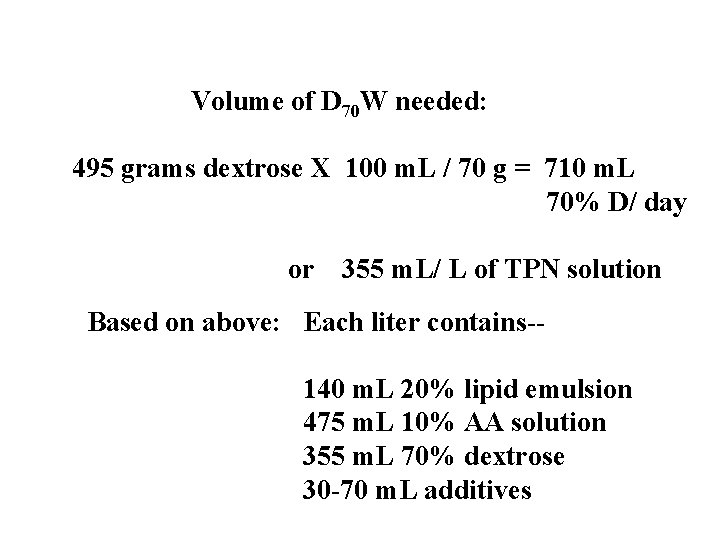
Volume of D 70 W needed: 495 grams dextrose X 100 m. L / 70 g = 710 m. L 70% D/ day or 355 m. L/ L of TPN solution Based on above: Each liter contains-140 m. L 20% lipid emulsion 475 m. L 10% AA solution 355 m. L 70% dextrose 30 -70 m. L additives
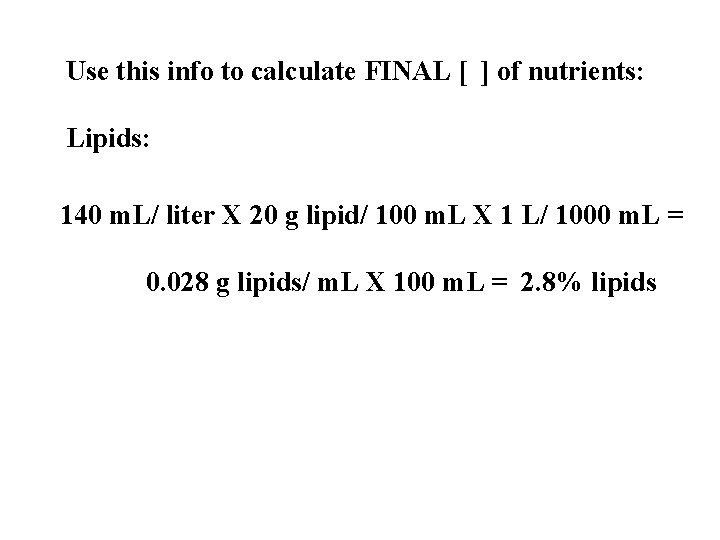
Use this info to calculate FINAL [ ] of nutrients: Lipids: 140 m. L/ liter X 20 g lipid/ 100 m. L X 1 L/ 1000 m. L = 0. 028 g lipids/ m. L X 100 m. L = 2. 8% lipids
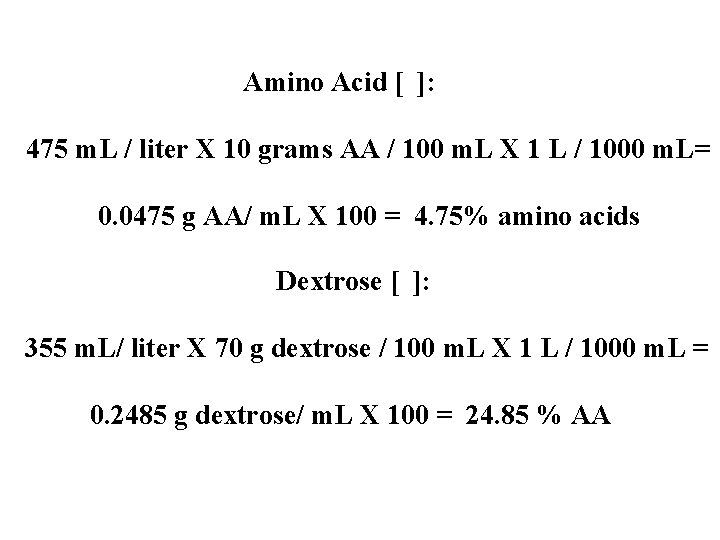
Amino Acid [ ]: 475 m. L / liter X 10 grams AA / 100 m. L X 1 L / 1000 m. L= 0. 0475 g AA/ m. L X 100 = 4. 75% amino acids Dextrose [ ]: 355 m. L/ liter X 70 g dextrose / 100 m. L X 1 L / 1000 m. L = 0. 2485 g dextrose/ m. L X 100 = 24. 85 % AA
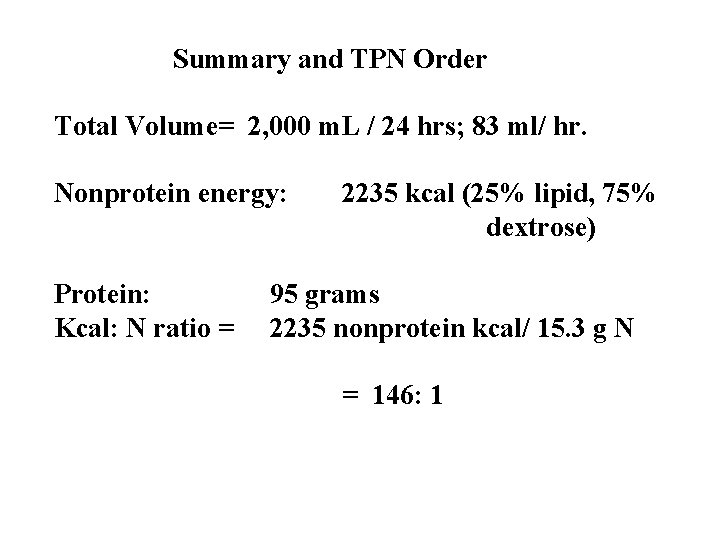
Summary and TPN Order Total Volume= 2, 000 m. L / 24 hrs; 83 ml/ hr. Nonprotein energy: Protein: Kcal: N ratio = 2235 kcal (25% lipid, 75% dextrose) 95 grams 2235 nonprotein kcal/ 15. 3 g N = 146: 1
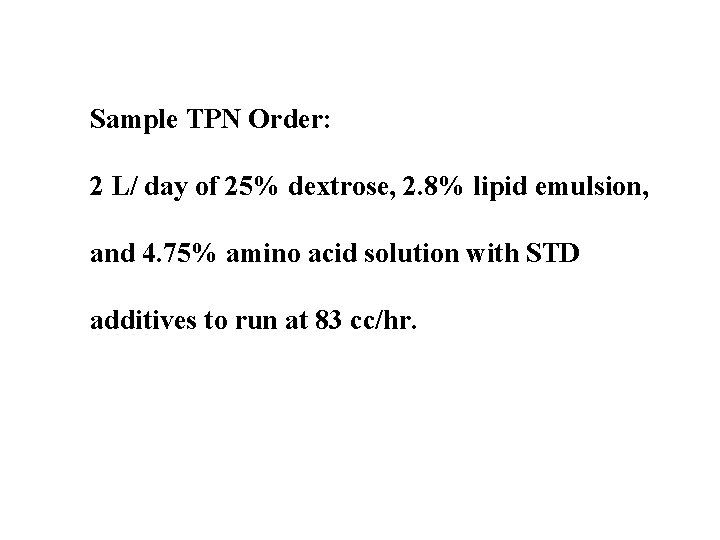
Sample TPN Order: 2 L/ day of 25% dextrose, 2. 8% lipid emulsion, and 4. 75% amino acid solution with STD additives to run at 83 cc/hr.