Paediatric Dermatology Dr Adam Fityan Consultant Dermatologist University







- Slides: 58
Paediatric Dermatology Dr Adam Fityan Consultant Dermatologist University Hospital Southampton and Honorary Consultant Dermatologist, St John’s Institute of Dermatology, London
ECZEMA
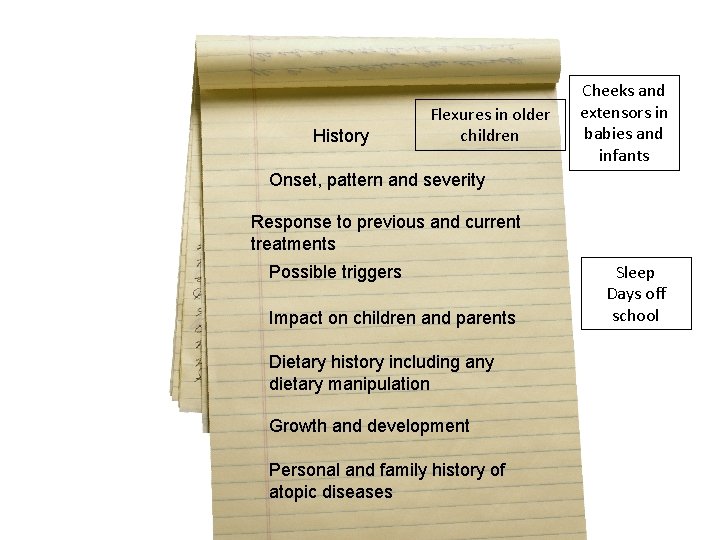
History Flexures in older children Cheeks and extensors in babies and infants Onset, pattern and severity Response to previous and current treatments Possible triggers Impact on children and parents Dietary history including any dietary manipulation Growth and development Personal and family history of atopic diseases Sleep Days off school
When to consider food allergy “Healthcare professionals should consider a diagnosis of food allergy in children with atopic eczema who have reacted previously to a food with immediate symptoms, or in infants and young children with moderate or severe atopic eczema that has not been controlled by optimum management, particularly if associated with gut dysmotility (colic, vomiting, altered bowel habit) or failure to thrive. ” NICE Guidance Dec 2017 Atopic eczema in under 12 s: diagnosis and management
History Onset, pattern and severity What are you using? Response to previous and current treatments Possible triggers How often do you use it? How do you decide when to use it? Impact on children and parents Dietary history including any dietary manipulation Growth and development Personal and family history of atopic diseases Where do you use it? How much do you get through What did you use yesterday?
Treatment Ladder Atopic Eczema In Children Maintain Clearance Active Body and Face/Neck: Mild • Dry skin, infrequent itching • mild impact ADLs/sleep/ psychosocial wellbeing Mild potency topical corticosteroids once to twice daily e. g. 1% hydrocortisone ointment until skin clear and for a further 3 -7 days Mild potency topical corticosteroids once to twice a week to commonly affected sites Body: Moderate • Dry skin, frequent itch, redness • Excoriations, localised skin thickening • Moderate impact ADLs/sleep/ psychosocial wellbeing Severe • Widespread dry skin, incessant itch • Redness (+/- excoriation) • Thickening • Oozing, cracking • Alteration of skin pigment • Severe limitation ADLs/psychosocial wellbeing • Loss of sleep Moderate potency topical corticosteroids e. g. Eumovate ointment until significant improvement (limit 7 -14 days axillae and groin) Body: (ideally avoid in axillae, groin) Potent topical corticosteroids e. g. Elocon / Betnovate ointment - od for number of days equal to child’s age e. g. 2 days for 2 year old Face/neck: Mild potency steroid e. g. 1% hydrocortisone ointment until significant improvement Face/Neck: (Caution with eyelids) Moderate potency topical corticosteroids e. g. Eumovate ointment (3 -5 days only) Bandages Thick resistant areas Apply over topical steroids for one week rotating with use over emollients Moderate potency topical corticosteroids once to twice a week to commonly affected sites (Mild potency for face) Topical tacrolimus 0. 03% (over 2 yrs) 1 -2 x daily or 2 x weekly 0. 1% (over 12 yrs) 1 -2 x daily or 2 x weekly Use the lowest effective level of treatment All patients (even when atopic eczema clear) to use regular Emollients to wash, bathe and moisturise (250 -500 g/week) Antihistamines not routinely used in eczema
Why use emollients? Prolonging time to flare Reducing the number of flares Reducing the amount of topical corticosteroids needed
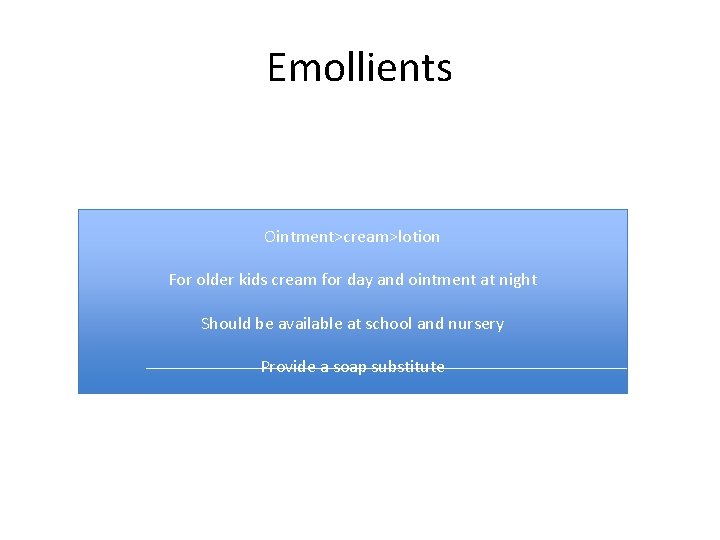
Emollients Ointment>cream>lotion For older kids cream for day and ointment at night Should be available at school and nursery Provide a soap substitute
Treatment Plan Spend time to explain why and when to use treatments Write out a treatment plan Reassure them that it will flare, just stick to the plan
Monitor for evidence of infection • Bacterial – weeping sore crusty eczema • Viral – monomorphic vesicles/erosions, sore – HSV commonest – increasing Coxsackie presenting in same way – consider testing for enterovirus if HSV negative
ACNE
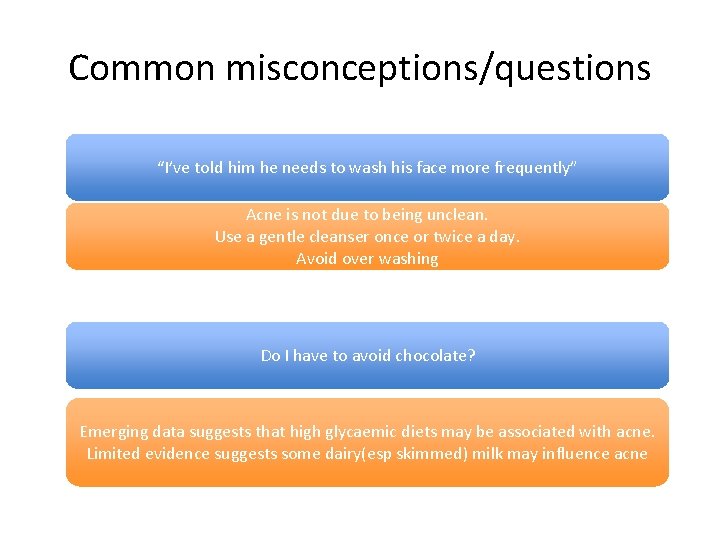
Common misconceptions/questions “I’ve told him he needs to wash his face more frequently” Acne is not due to being unclean. Use a gentle cleanser once or twice a day. Avoid over washing Do I have to avoid chocolate? Emerging data suggests that high glycaemic diets may be associated with acne. Limited evidence suggests some dairy(esp skimmed) milk may influence acne
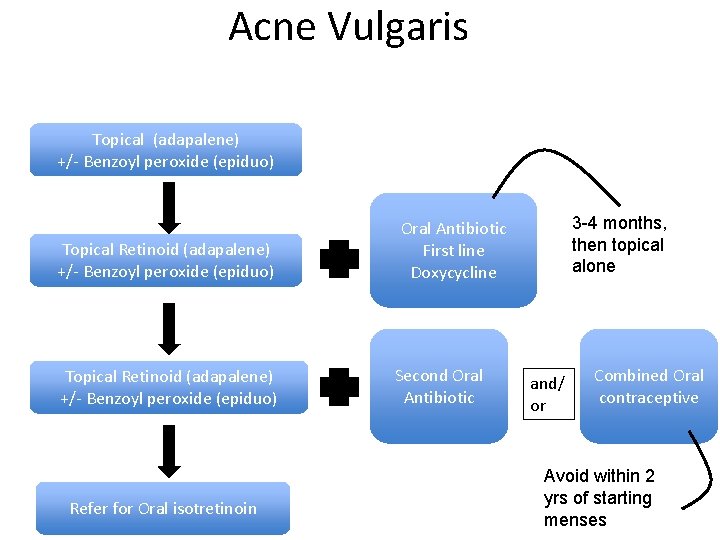
Acne Vulgaris Topical (adapalene) +/- Benzoyl peroxide (epiduo) Topical Retinoid (adapalene) +/- Benzoyl peroxide (epiduo) Refer for Oral isotretinoin 3 -4 months, then topical alone Oral Antibiotic First line Doxycycline Second Oral Antibiotic and/ or Combined Oral contraceptive Avoid within 2 yrs of starting menses
Warts Salicylic acid 15 -26% Apply after removing keratin Allow to dry Cover Cryotherapy 15 -30 sec freeze Repeat 2 -4 weekly for 3 months
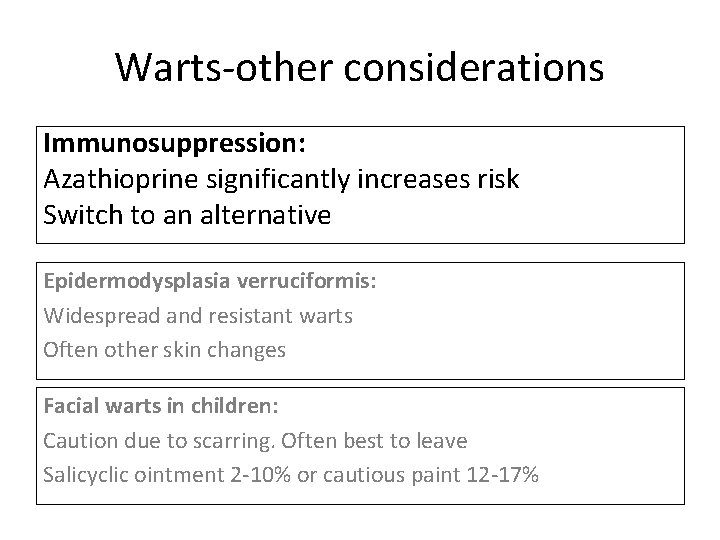
Warts-other considerations Immunosuppression: Azathioprine significantly increases risk Switch to an alternative Epidermodysplasia verruciformis: Widespread and resistant warts Often other skin changes Facial warts in children: Caution due to scarring. Often best to leave Salicyclic ointment 2 -10% or cautious paint 12 -17%
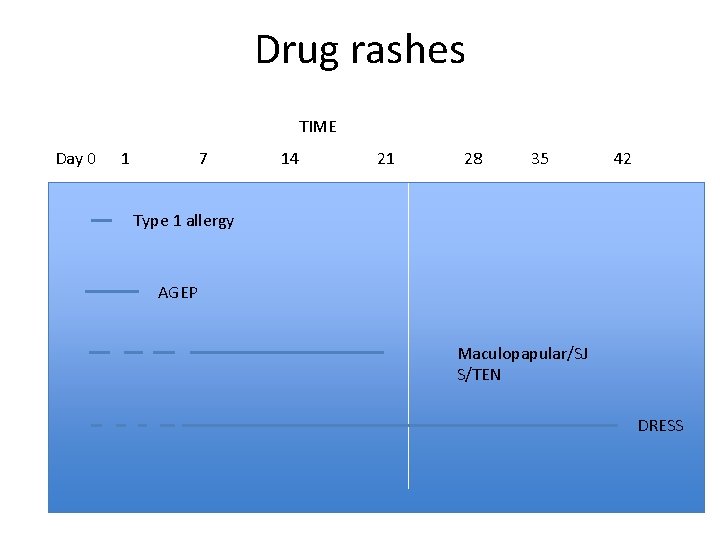
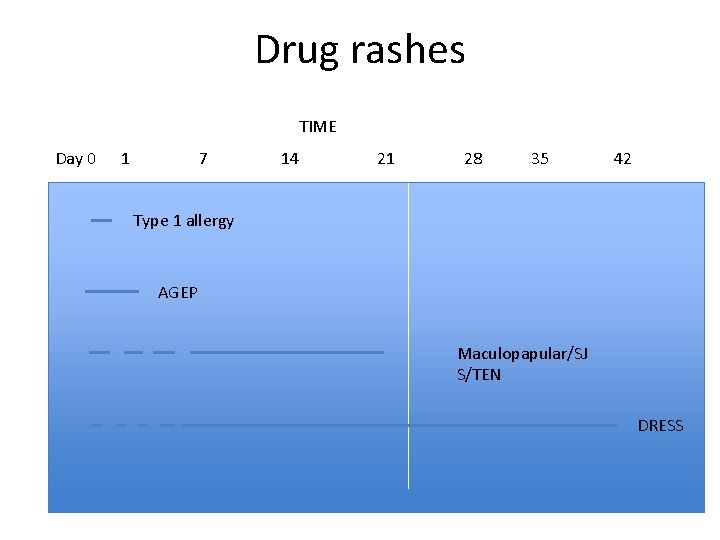
Drug rashes TIME Day 0 1 7 14 21 28 35 42 Type 1 allergy AGEP Maculopapular/SJ S/TEN DRESS
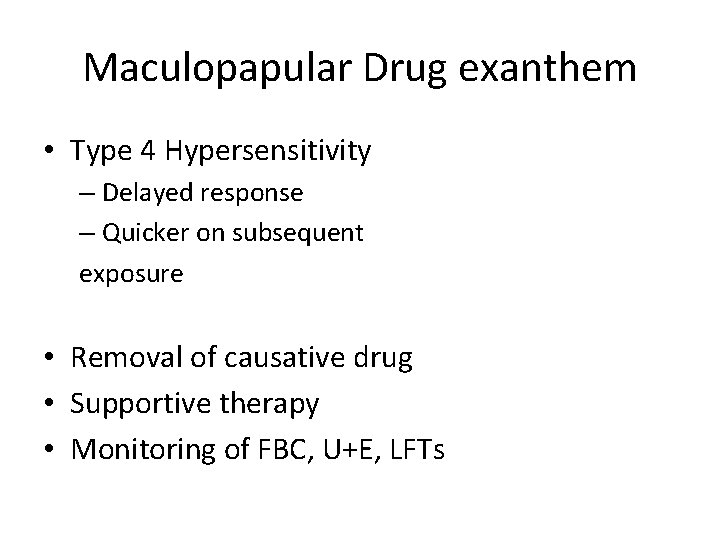
Maculopapular Drug exanthem • Type 4 Hypersensitivity – Delayed response – Quicker on subsequent exposure • Removal of causative drug • Supportive therapy • Monitoring of FBC, U+E, LFTs
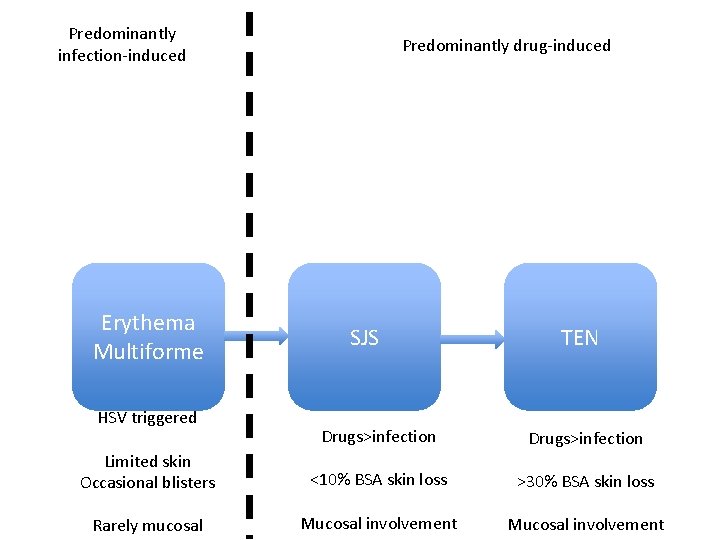
Predominantly infection-induced Erythema Multiforme HSV triggered Predominantly drug-induced SJS TEN Drugs>infection Limited skin Occasional blisters <10% BSA skin loss >30% BSA skin loss Rarely mucosal Mucosal involvement
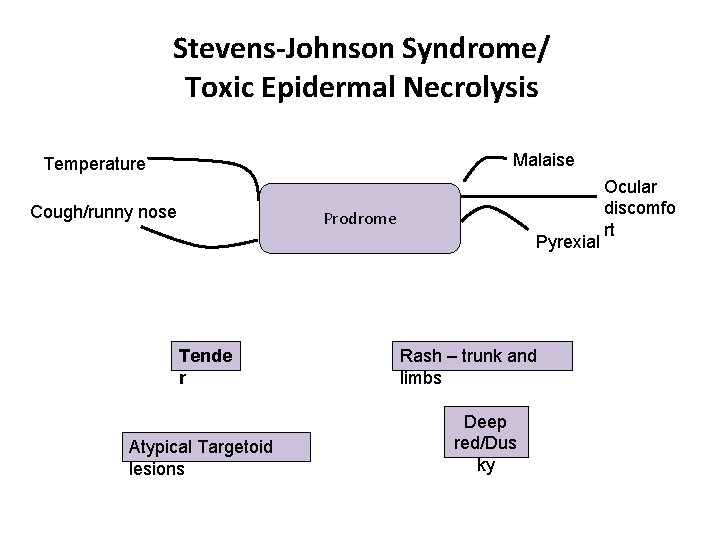
Stevens-Johnson Syndrome/ Toxic Epidermal Necrolysis Malaise Temperature Cough/runny nose Prodrome Pyrexial Tende r Atypical Targetoid lesions Rash – trunk and limbs Deep red/Dus ky Ocular discomfo rt
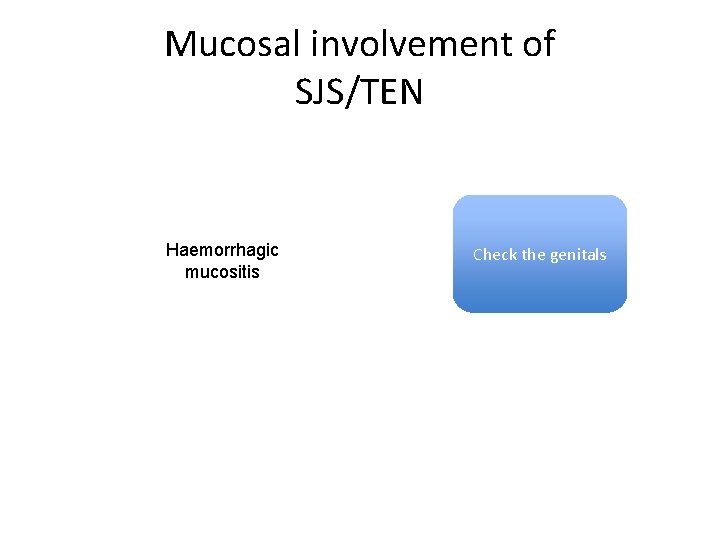
Mucosal involvement of SJS/TEN Haemorrhagic mucositis Check the genitals
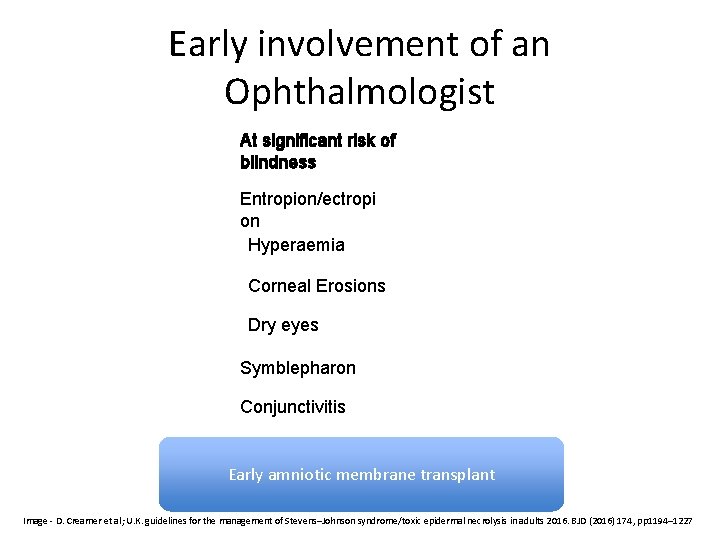
Early involvement of an Ophthalmologist At significant risk of blindness Entropion/ectropi on Hyperaemia Corneal Erosions Dry eyes Symblepharon Conjunctivitis Early amniotic membrane transplant Image - D. Creamer et al; U. K. guidelines for the management of Stevens–Johnson syndrome/toxic epidermal necrolysis in adults 2016. BJD (2016) 174, pp 1194– 1227
Lung involvement both acute and chronic
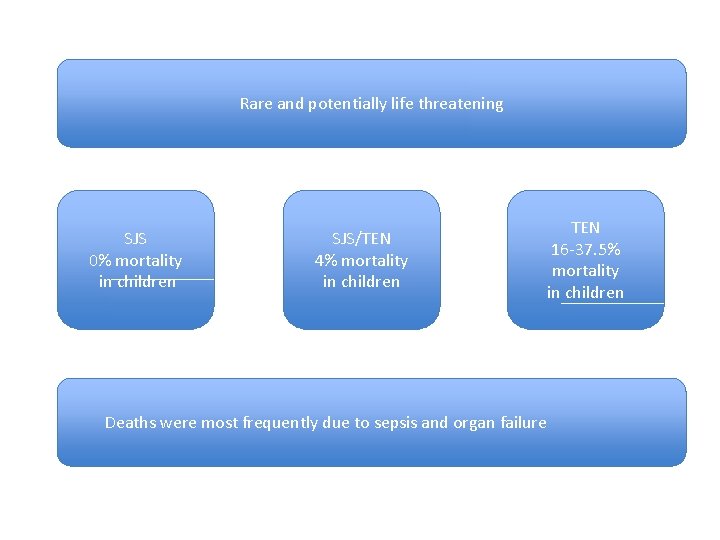
Rare and potentially life threatening SJS 0% mortality in children SJS/TEN 4% mortality in children Deaths were most frequently due to sepsis and organ failure TEN 16 -37. 5% mortality in children
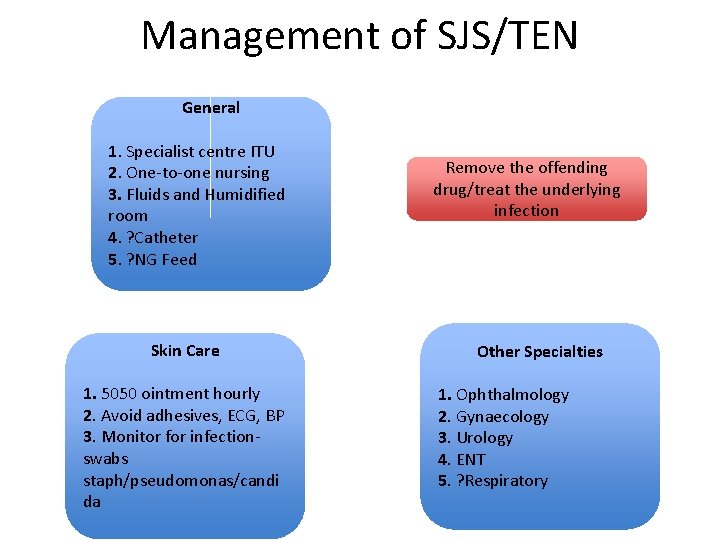
Management of SJS/TEN General 1. Specialist centre ITU 2. One-to-one nursing 3. Fluids and Humidified room 4. ? Catheter 5. ? NG Feed Skin Care 1. 5050 ointment hourly 2. Avoid adhesives, ECG, BP 3. Monitor for infectionswabs staph/pseudomonas/candi da Remove the offending drug/treat the underlying infection Other Specialties 1. Ophthalmology 2. Gynaecology 3. Urology 4. ENT 5. ? Respiratory
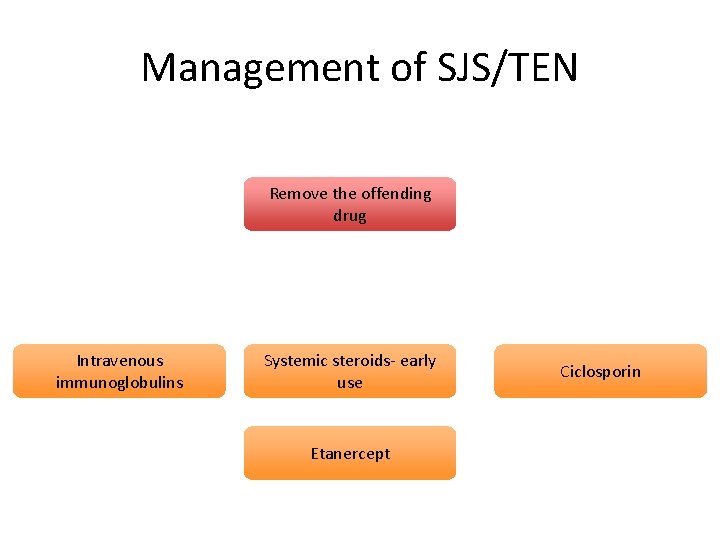
Management of SJS/TEN Remove the offending drug Intravenous immunoglobulins Systemic steroids- early use Etanercept Ciclosporin
Don’t forget long term implications and follow up
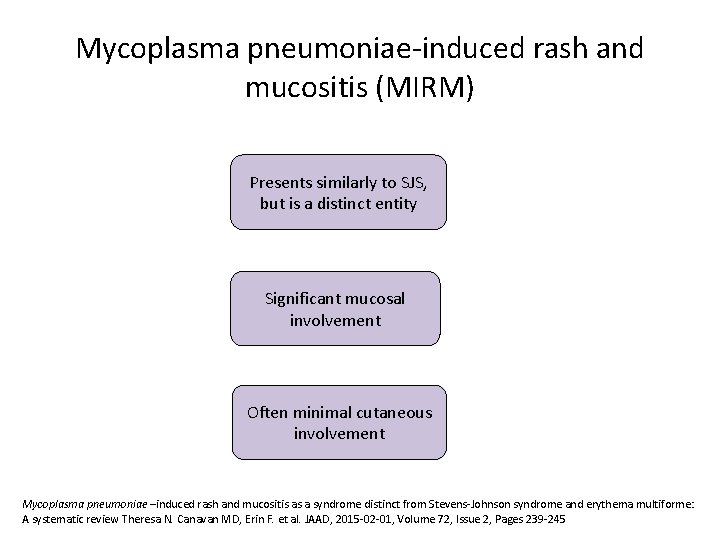
Mycoplasma pneumoniae-induced rash and mucositis (MIRM) Presents similarly to SJS, but is a distinct entity Significant mucosal involvement Often minimal cutaneous involvement Mycoplasma pneumoniae –induced rash and mucositis as a syndrome distinct from Stevens-Johnson syndrome and erythema multiforme: A systematic review Theresa N. Canavan MD, Erin F. et al. JAAD, 2015 -02 -01, Volume 72, Issue 2, Pages 239 -245
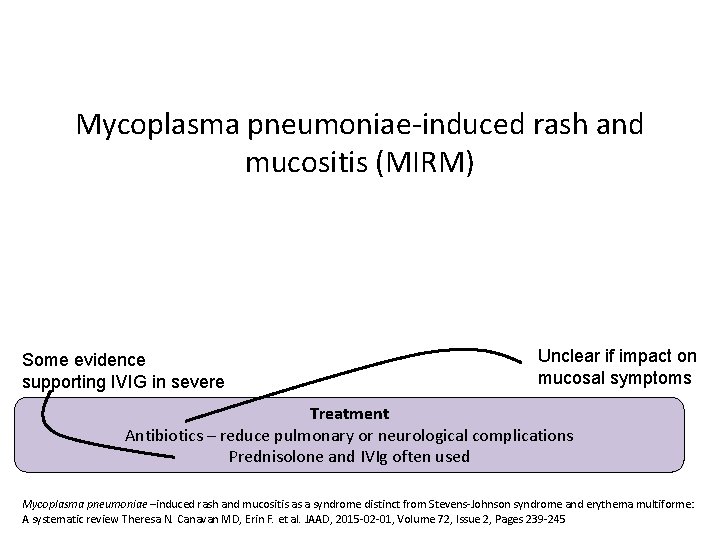
Mycoplasma pneumoniae-induced rash and mucositis (MIRM) Some evidence supporting IVIG in severe Unclear if impact on mucosal symptoms Treatment Antibiotics – reduce pulmonary or neurological complications Prednisolone and IVIg often used Mycoplasma pneumoniae –induced rash and mucositis as a syndrome distinct from Stevens-Johnson syndrome and erythema multiforme: A systematic review Theresa N. Canavan MD, Erin F. et al. JAAD, 2015 -02 -01, Volume 72, Issue 2, Pages 239 -245
DRUG REACTION WITH EOSINOPHILIA AND SYSTEMIC SYMPTOMS
Drug rashes TIME Day 0 1 7 14 21 28 35 42 Type 1 allergy AGEP Maculopapular/SJ S/TEN DRESS
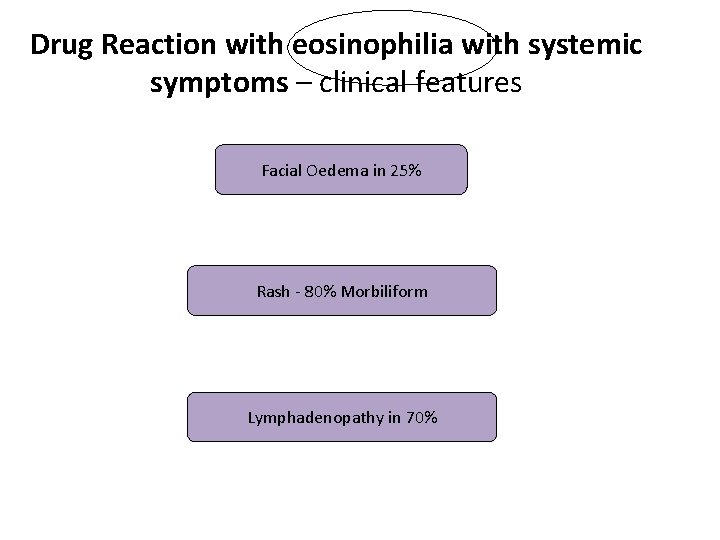
Drug Reaction with eosinophilia with systemic symptoms – clinical features Facial Oedema in 25% Rash - 80% Morbiliform Lymphadenopathy in 70%
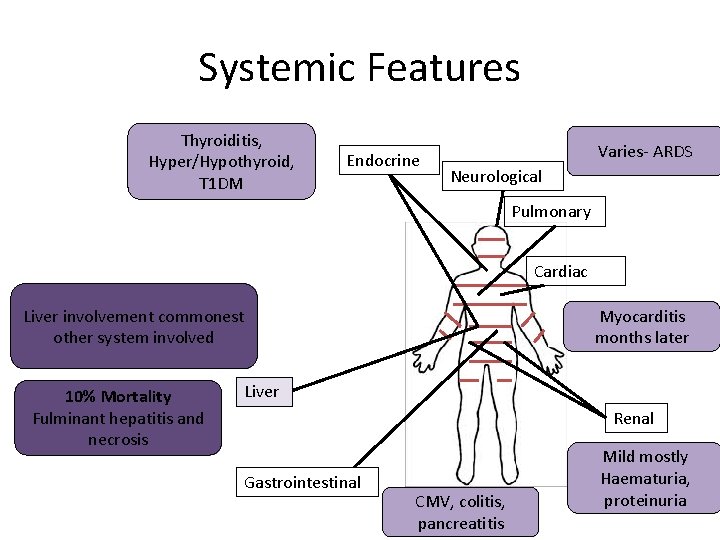
Systemic Features Thyroiditis, Hyper/Hypothyroid, T 1 DM Endocrine Varies- ARDS Neurological Pulmonary Cardiac Myocarditis months later Liver involvement commonest other system involved 10% Mortality Fulminant hepatitis and necrosis Liver Renal Gastrointestinal CMV, colitis, pancreatitis Mild mostly Haematuria, proteinuria
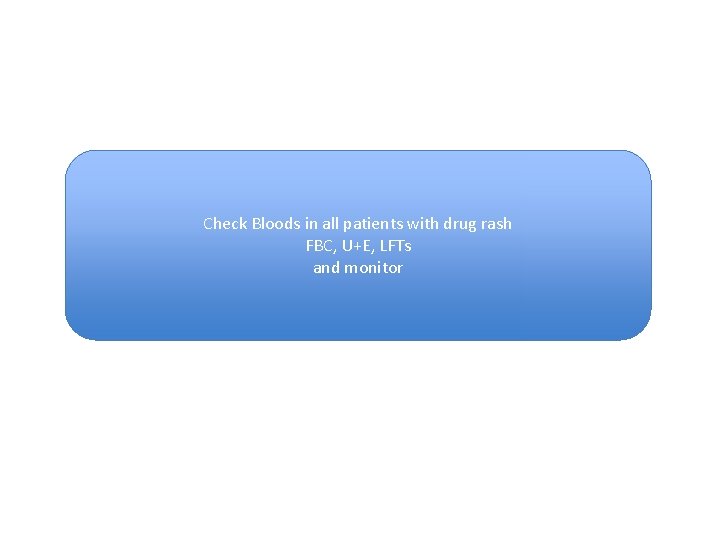
Check Bloods in all patients with drug rash FBC, U+E, LFTs and monitor
• Supportive care and monitoring • Remove suspected drug • Systemic Corticosteroids 1 mg/kg prednisolone
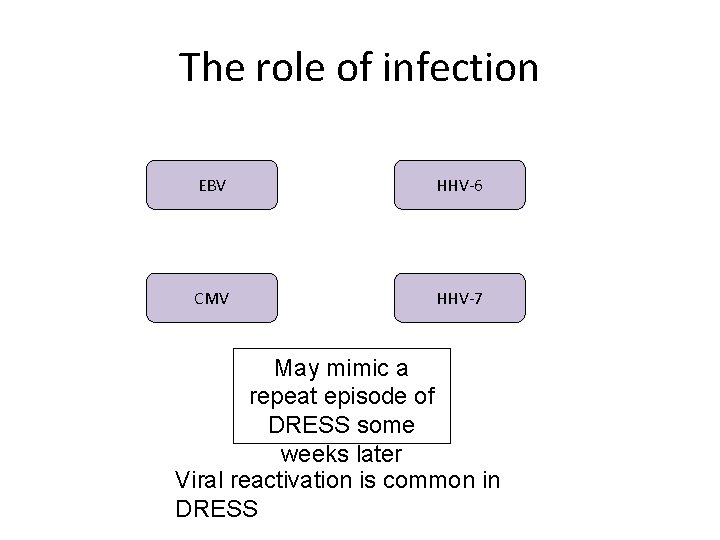
The role of infection EBV HHV-6 CMV HHV-7 May mimic a repeat episode of DRESS some weeks later Viral reactivation is common in DRESS
QUESTION
A 6 -year-old girl presented to ER with red painful skin. This was worse in the axillae and neck, but was also present over the trunk and face. On examination she had a temperature of 38. 1 o. C, widespread erythema and the following skin findings. • Staph scalded skin • Swabs from the blisters not positive.
Assessing moles • • • Asymmetry Border Colour Diameter Evolution
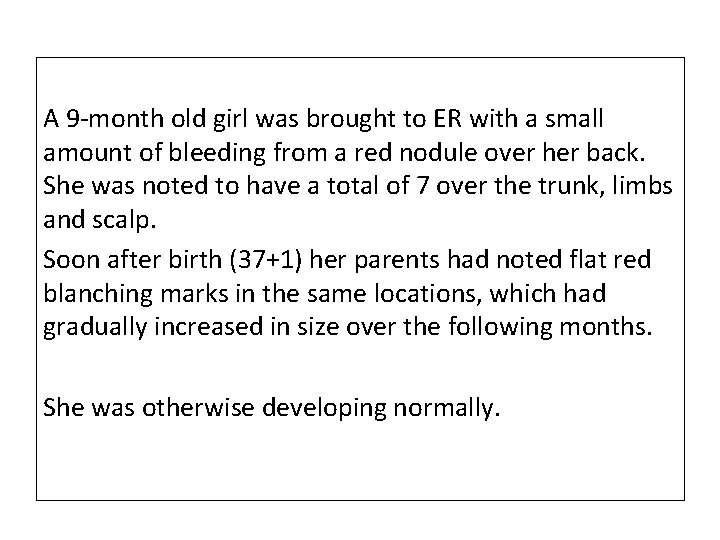
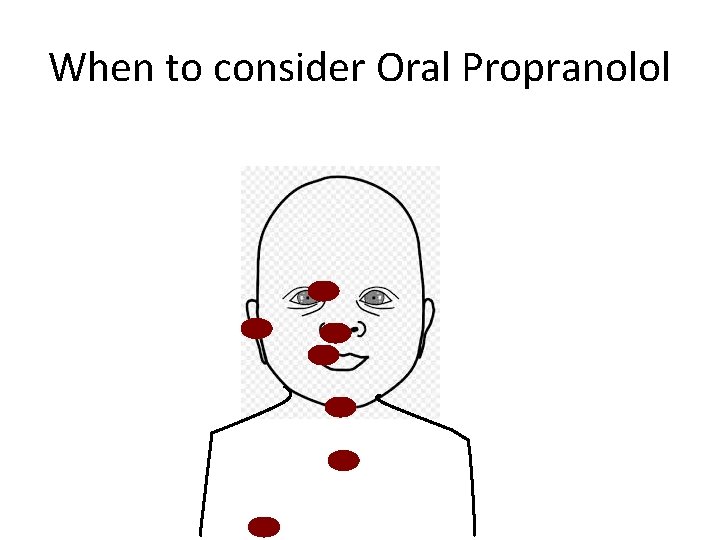
A 9 -month old girl was brought to ER with a small amount of bleeding from a red nodule over her back. She was noted to have a total of 7 over the trunk, limbs and scalp. Soon after birth (37+1) her parents had noted flat red blanching marks in the same locations, which had gradually increased in size over the following months. She was otherwise developing normally.
What is the most likely diagnosis? 1. Langerhan Cell Histiocytosis 2. Leukamia Cutis 3. Multiple haemangiomas 4. Tufted angioma
What is the most likely diagnosis? 1. Langerhan Cell Histiocytosis 2. Leukamia Cutis 3. Multiple haemangiomas 4. Tufted angioma
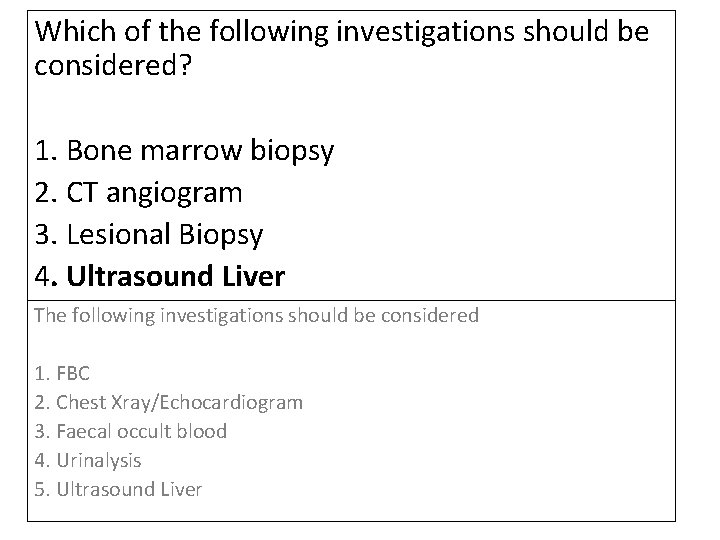
Which of the following investigations should be considered? 1. Bone marrow biopsy 2. CT angiogram 3. Lesional Biopsy 4. Ultrasound Liver The following investigations should be considered 1. FBC 2. Chest Xray/Echocardiogram 3. Faecal occult blood 4. Urinalysis 5. Ultrasound Liver
All investigations were normal. What is the most appropriate next step in her management? 1. 2. 3. 4. Oral corticosteroids Oral bisoprolol Reassurance and monitoring Referral for laser
When to consider Oral Propranolol
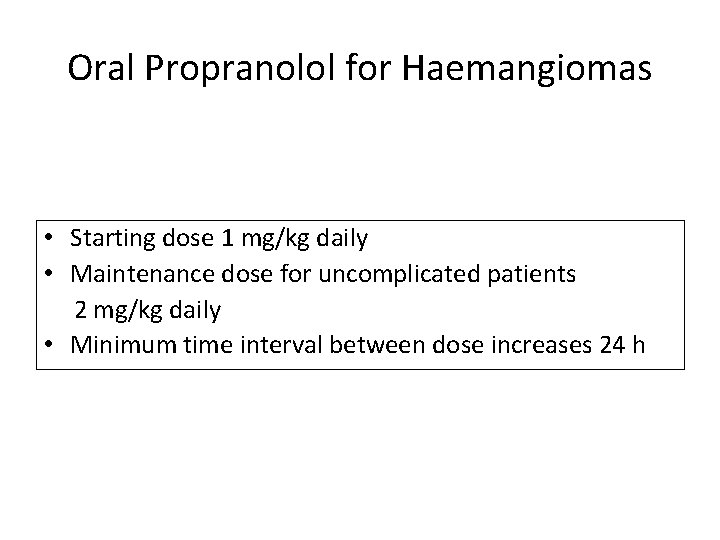
Oral Propranolol for Haemangiomas • Starting dose 1 mg/kg daily • Maintenance dose for uncomplicated patients 2 mg/kg daily • Minimum time interval between dose increases 24 h
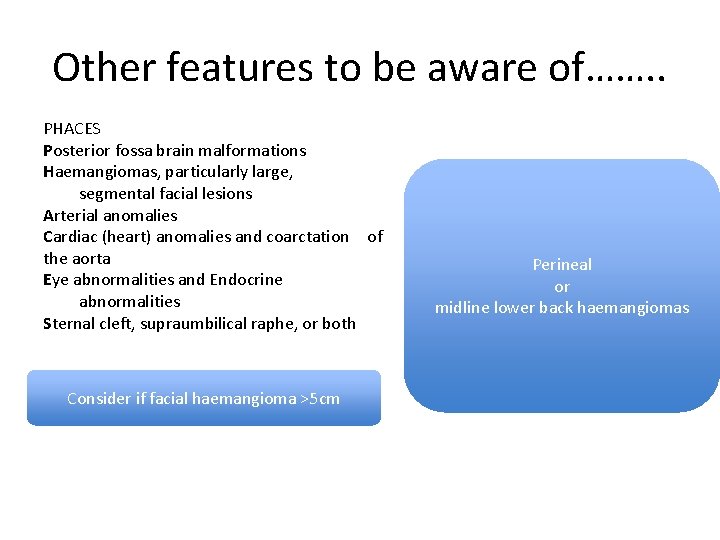
Other features to be aware of……. . PHACES Posterior fossa brain malformations Haemangiomas, particularly large, segmental facial lesions Arterial anomalies Cardiac (heart) anomalies and coarctation of the aorta Eye abnormalities and Endocrine abnormalities Sternal cleft, supraumbilical raphe, or both Consider if facial haemangioma >5 cm Perineal or midline lower back haemangiomas
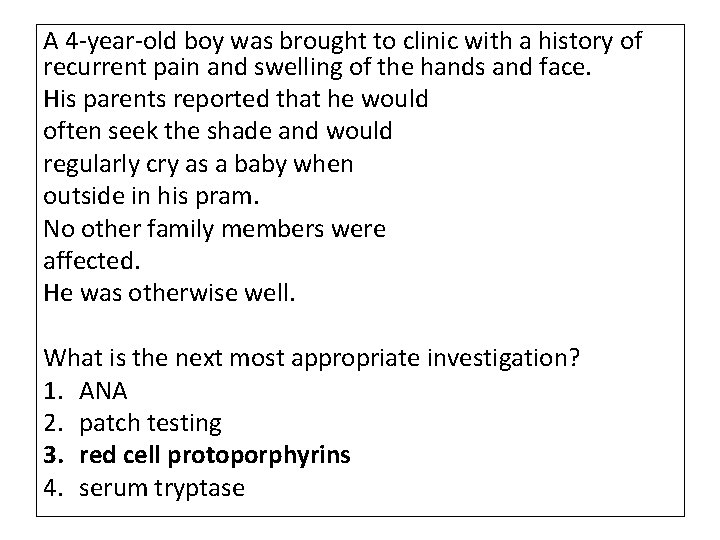
A 4 -year-old boy was brought to clinic with a history of recurrent pain and swelling of the hands and face. His parents reported that he would often seek the shade and would regularly cry as a baby when outside in his pram. No other family members were affected. He was otherwise well. What is the next most appropriate investigation? 1. ANA 2. patch testing 3. red cell protoporphyrins 4. serum tryptase
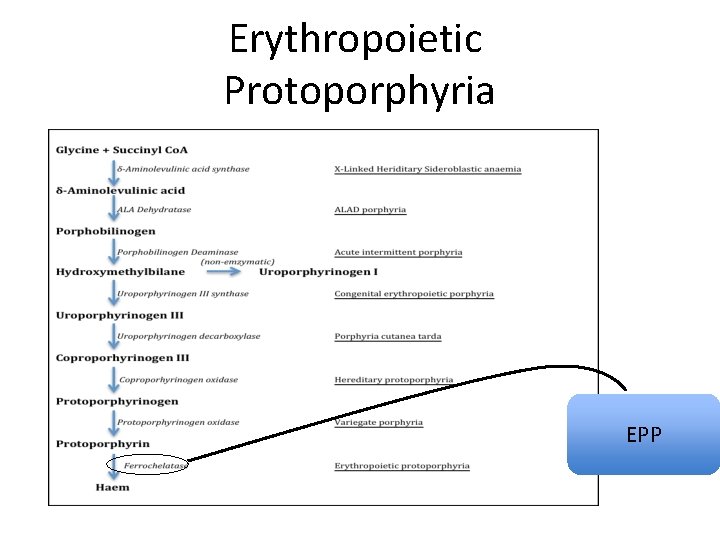
Erythropoietic Protoporphyria EPP
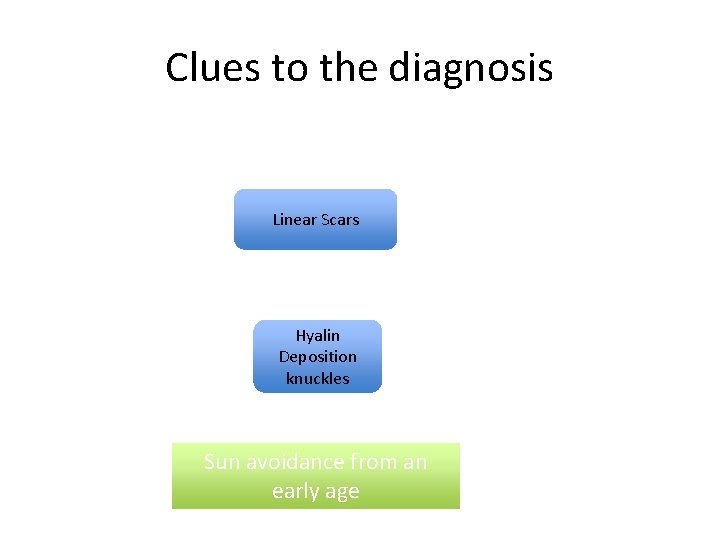
Clues to the diagnosis Linear Scars Hyalin Deposition knuckles Sun avoidance from an early age
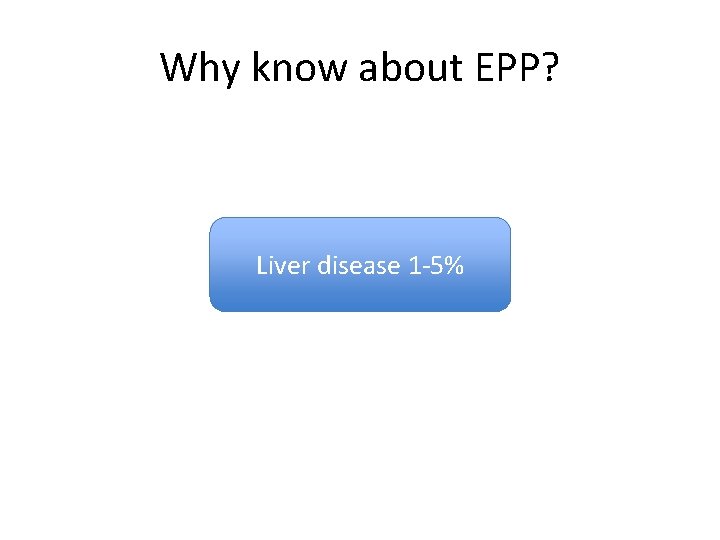
Why know about EPP? Liver disease 1 -5%
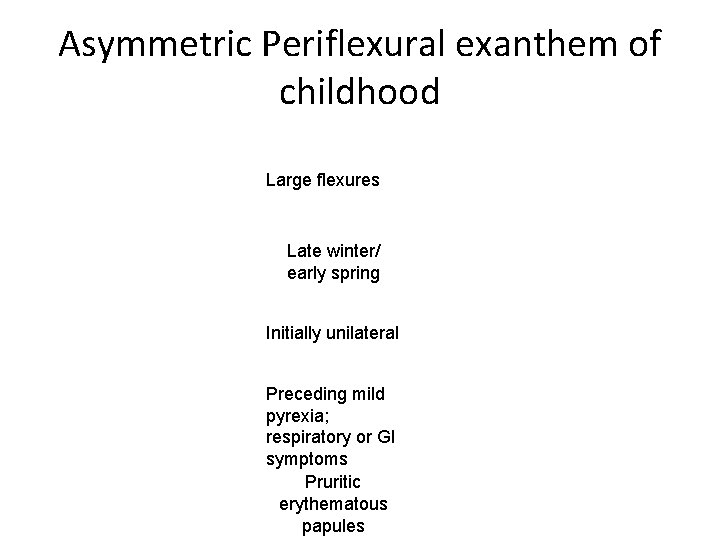
Asymmetric Periflexural exanthem of childhood Large flexures Late winter/ early spring Initially unilateral Preceding mild pyrexia; respiratory or GI symptoms Pruritic erythematous papules
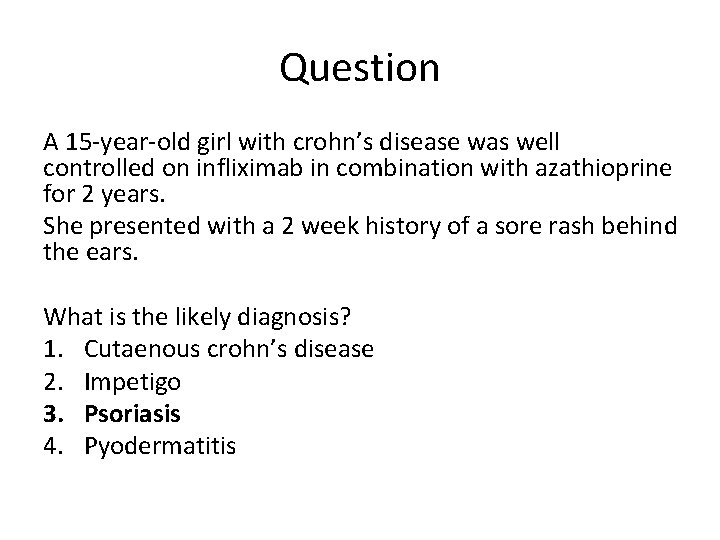
Question A 15 -year-old girl with crohn’s disease was well controlled on infliximab in combination with azathioprine for 2 years. She presented with a 2 week history of a sore rash behind the ears. What is the likely diagnosis? 1. Cutaenous crohn’s disease 2. Impetigo 3. Psoriasis 4. Pyodermatitis
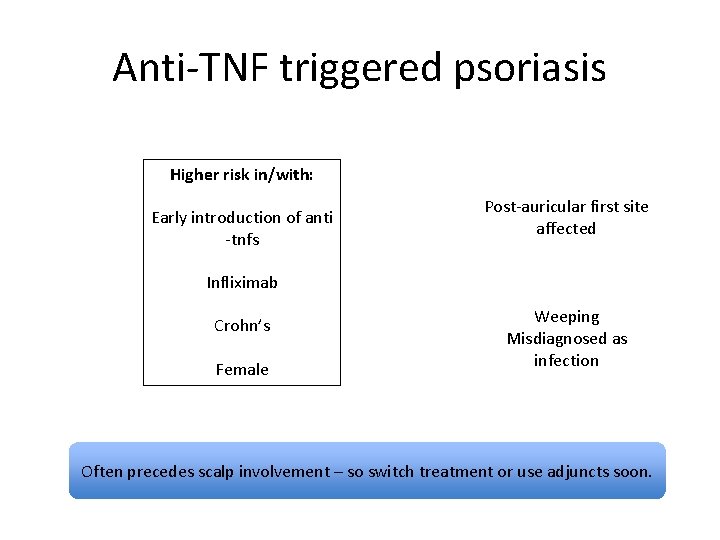
Anti-TNF triggered psoriasis Higher risk in/with: Early introduction of anti -tnfs Post-auricular first site affected Infliximab Crohn’s Female Weeping Misdiagnosed as infection Often precedes scalp involvement – so switch treatment or use adjuncts soon.
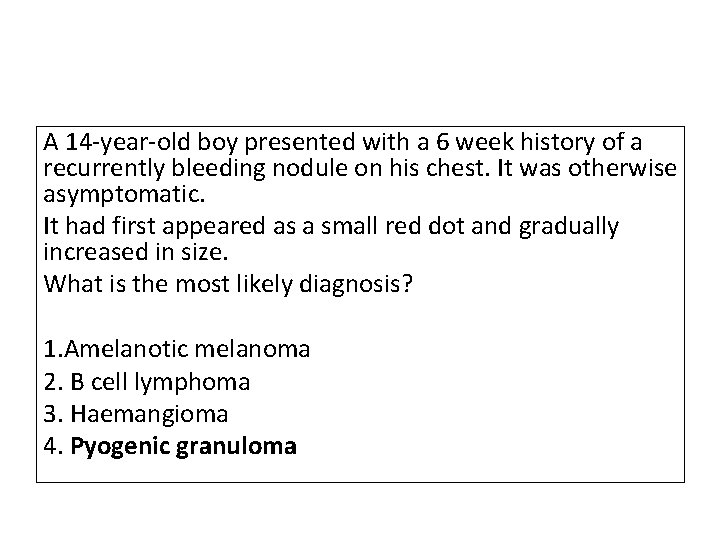
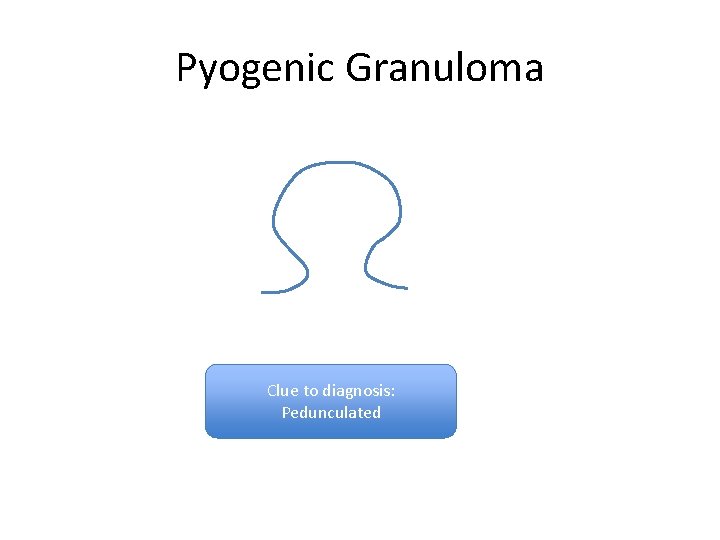
A 14 -year-old boy presented with a 6 week history of a recurrently bleeding nodule on his chest. It was otherwise asymptomatic. It had first appeared as a small red dot and gradually increased in size. What is the most likely diagnosis? 1. Amelanotic melanoma 2. B cell lymphoma 3. Haemangioma 4. Pyogenic granuloma
Pyogenic Granuloma Clue to diagnosis: Pedunculated
What is the most likely diagnosis? 1. acrodermatitis enteropathica 2. bullous dermatosis of childhood 3. non-accidental injury 4. transient zinc deficiency of prematurity
• What is the most appropriate treatment? 1. 2. 3. 4. Fucibet cream iv benzylpenicillin Metanium ointment oral zinc sulphate
What would be the optimum period of treatment? 1. 2. 3. 4. 1 week 3 months 1 year life-long