Outer Stress Inner Peace Wellness through Stress Mastery
- Slides: 31
Outer Stress: Inner Peace Wellness through Stress Mastery
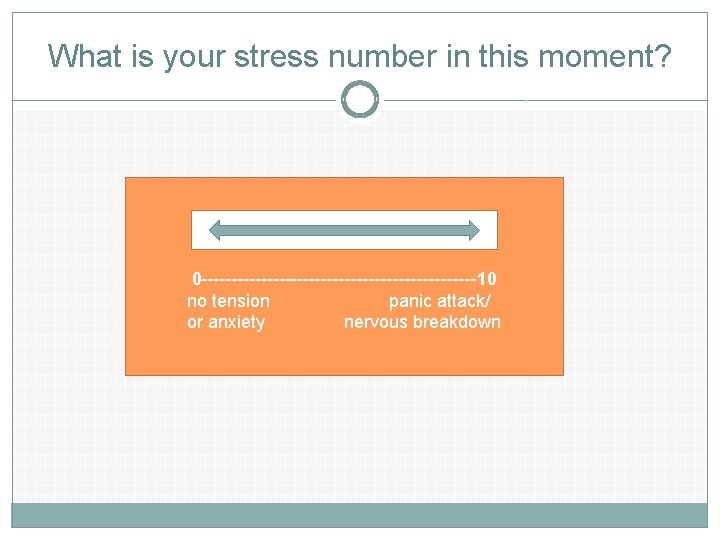
What is your stress number in this moment? 0 -----------------------10 no tension panic attack/ or anxiety nervous breakdown
Check-In �How do I feel right now? (overall) �What am I feeling in my body? �What is my mind focused on? �How am I feeling (emotionally)? �What is surrounding me and how is it affecting me? �Do I feel spiritually connected?
Overview Ø Stress: What it is and what the acute and chronic effects of stress are on the body. Ø Causes of stress. Ø Stress Mastery vs. Stress Management. Ø The 3 Powers of Stress Mastery. Ø What resiliency is and how to create it.
The Ravages of Stress ü Up to 90% of all disease, pain, drug and alcohol 90% abuse, injury and emotional and mental breakdowns are linked to stress. ü 80% of workers feel stress on the job and it is the #1 issue they seek help with addressing. ü 95% of these stress-related problems can be reduced and prevented.
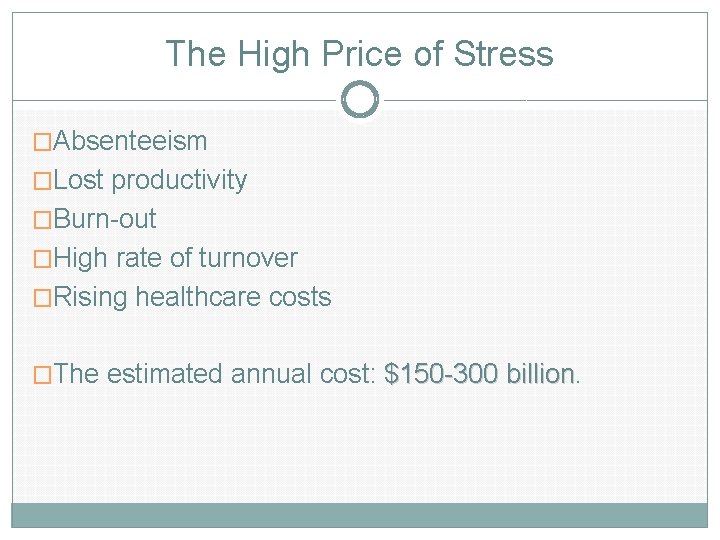
The High Price of Stress �Absenteeism �Lost productivity �Burn-out �High rate of turnover �Rising healthcare costs �The estimated annual cost: $150 -300 billion
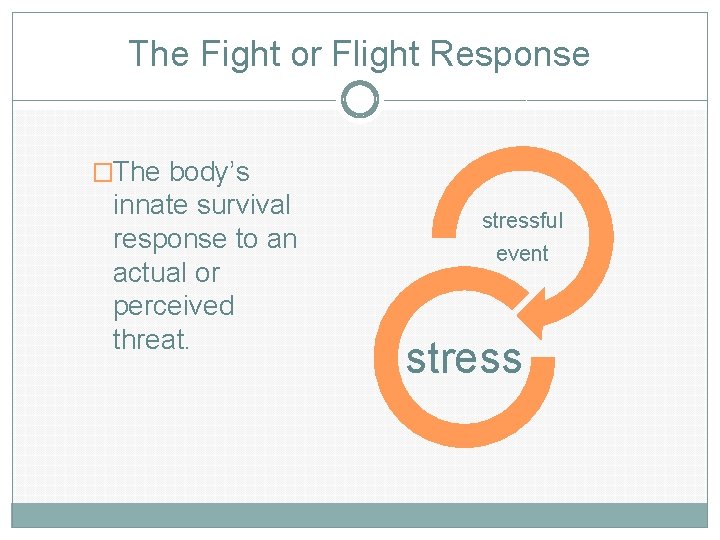
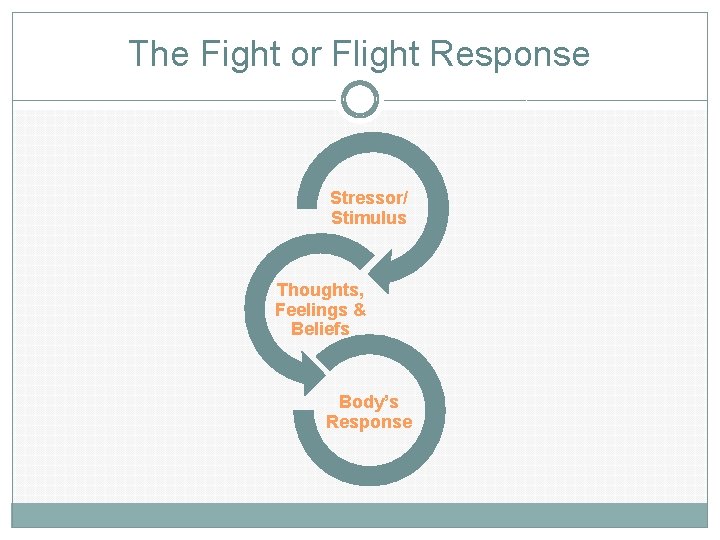
The Fight or Flight Response �The body’s innate survival response to an actual or perceived threat. stressful event stress
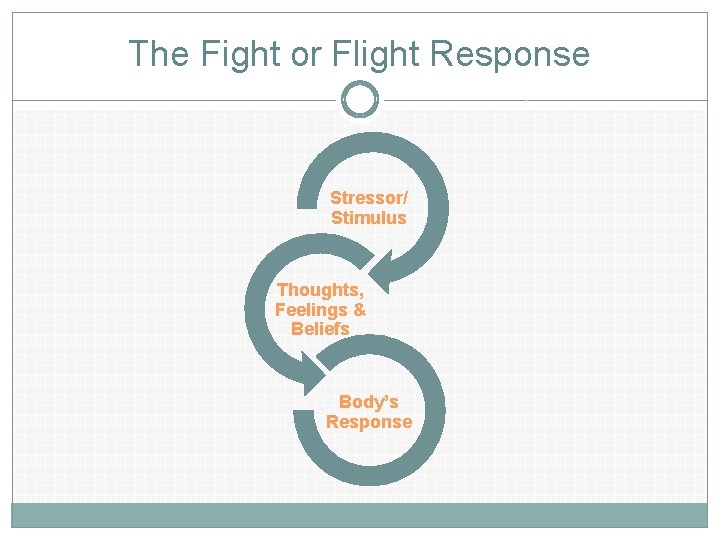
The Fight or Flight Response Stressor/ Stimulus Thoughts, Feelings & Beliefs Body’s Response
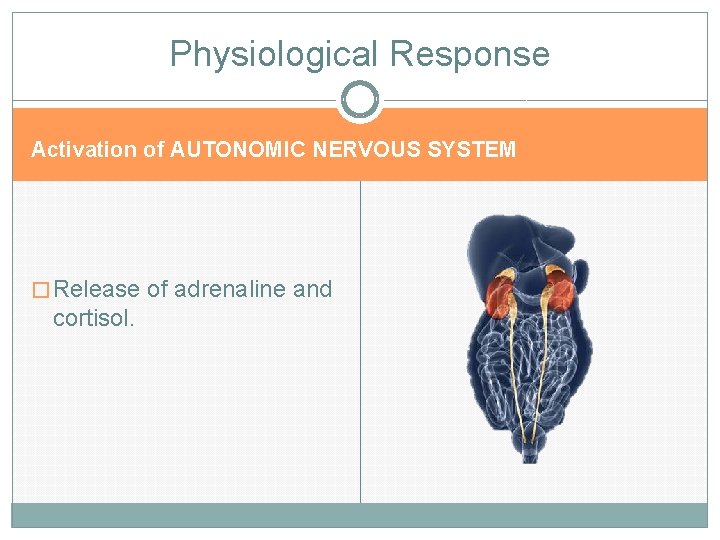
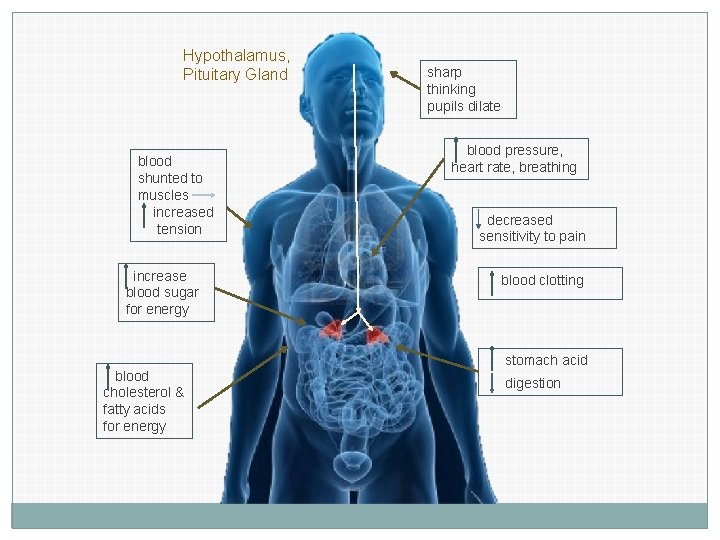
Physiological Response Activation of AUTONOMIC NERVOUS SYSTEM � Release of adrenaline and cortisol.
Hypothalamus, Pituitary Gland blood shunted to muscles increased tension increase blood sugar for energy blood cholesterol & fatty acids for energy sharp thinking pupils dilate blood pressure, heart rate, breathing decreased sensitivity to pain blood clotting stomach acid digestion
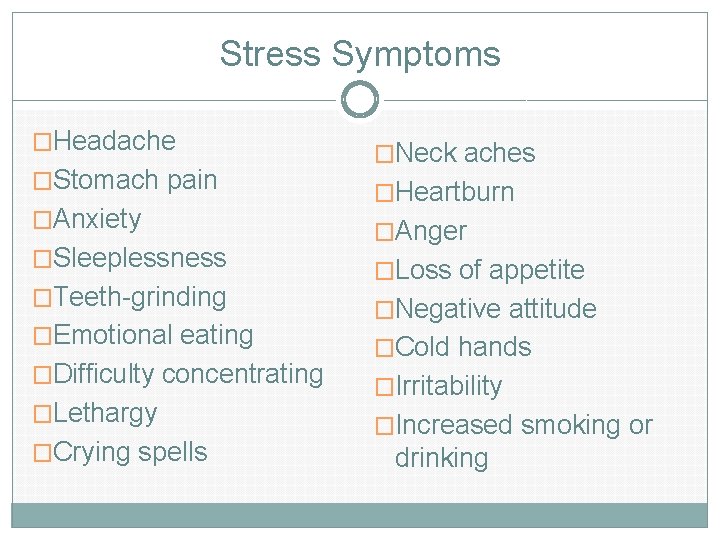
Stress Symptoms �Headache �Stomach pain �Anxiety �Sleeplessness �Teeth-grinding �Emotional eating �Difficulty concentrating �Lethargy �Crying spells �Neck aches �Heartburn �Anger �Loss of appetite �Negative attitude �Cold hands �Irritability �Increased smoking or drinking
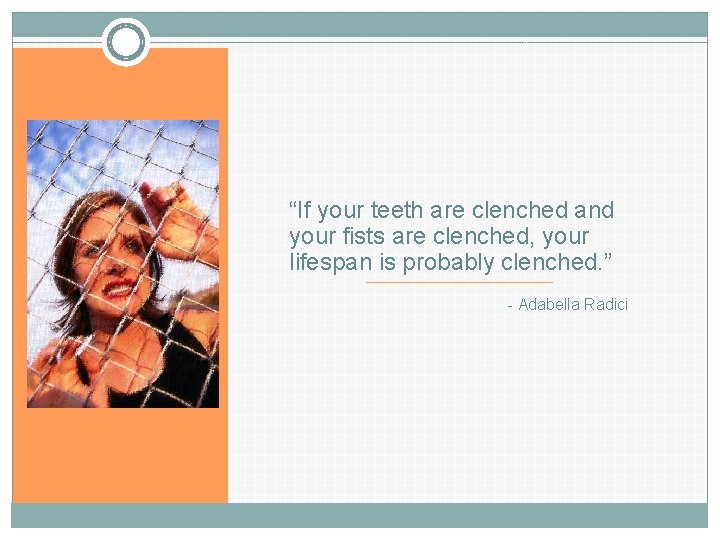
“If your teeth are clenched and your fists are clenched, your lifespan is probably clenched. ” - Adabella Radici
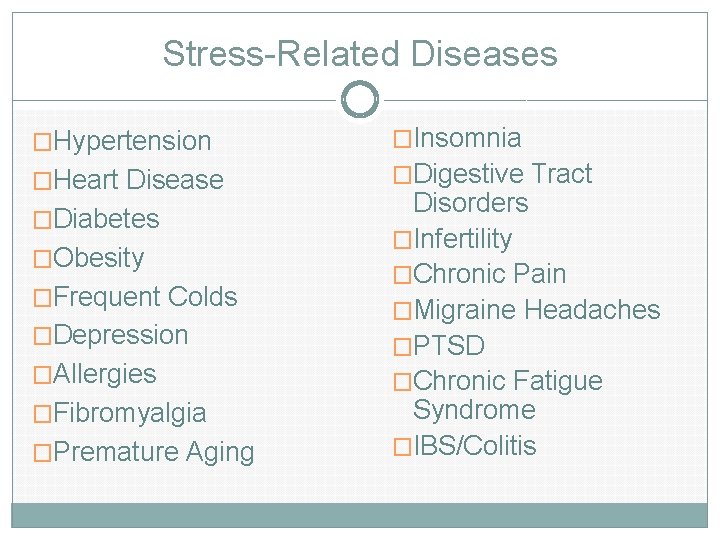
Stress-Related Diseases �Hypertension �Insomnia �Heart Disease �Digestive Tract �Diabetes �Obesity �Frequent Colds �Depression �Allergies �Fibromyalgia �Premature Aging Disorders �Infertility �Chronic Pain �Migraine Headaches �PTSD �Chronic Fatigue Syndrome �IBS/Colitis
The Fight or Flight Response Stressor/ Stimulus Thoughts, Feelings & Beliefs Body’s Response
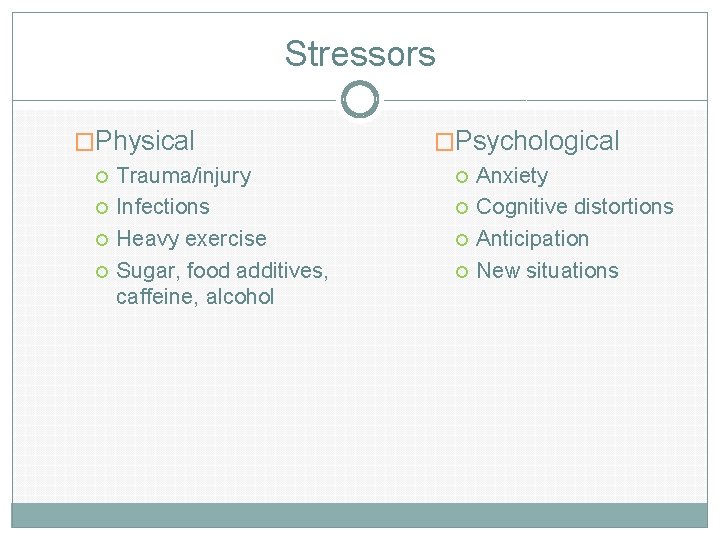
Stressors �Physical Trauma/injury Infections Heavy exercise Sugar, food additives, caffeine, alcohol �Psychological Anxiety Cognitive distortions Anticipation New situations
What are three main stressors in your life?
The #1 Source of Stress You!
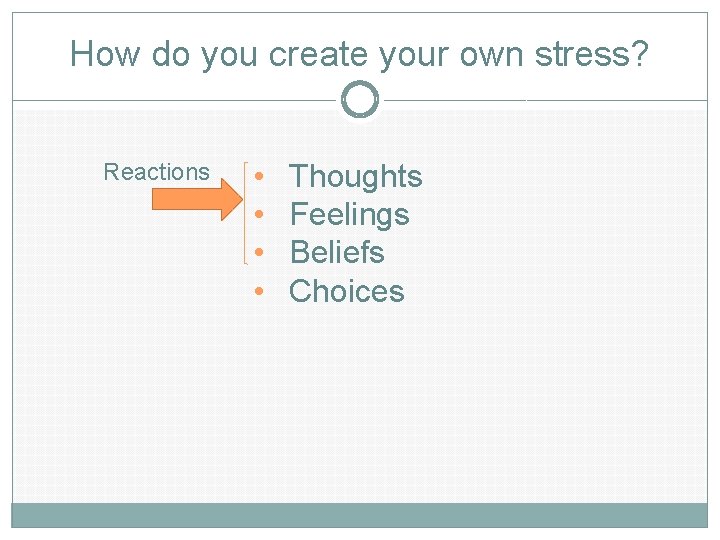
How do you create your own stress? Reactions • • Thoughts Feelings Beliefs Choices
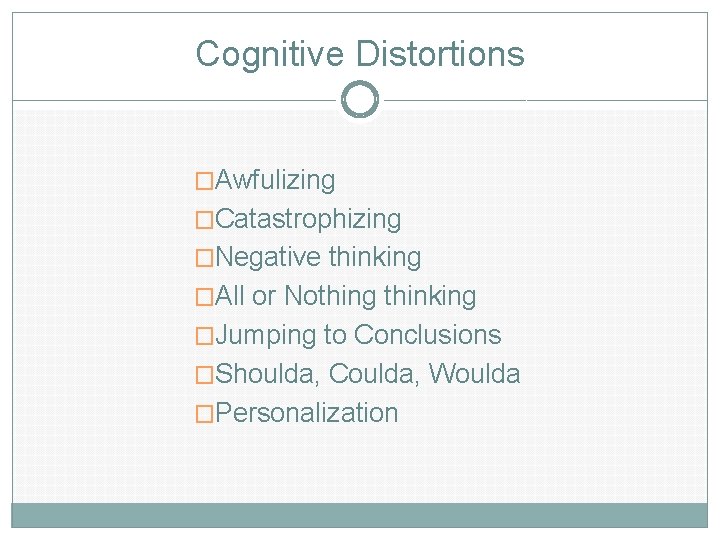
Cognitive Distortions �Awfulizing �Catastrophizing �Negative thinking �All or Nothing thinking �Jumping to Conclusions �Shoulda, Coulda, Woulda �Personalization
Inner Peace through Stress Mastery
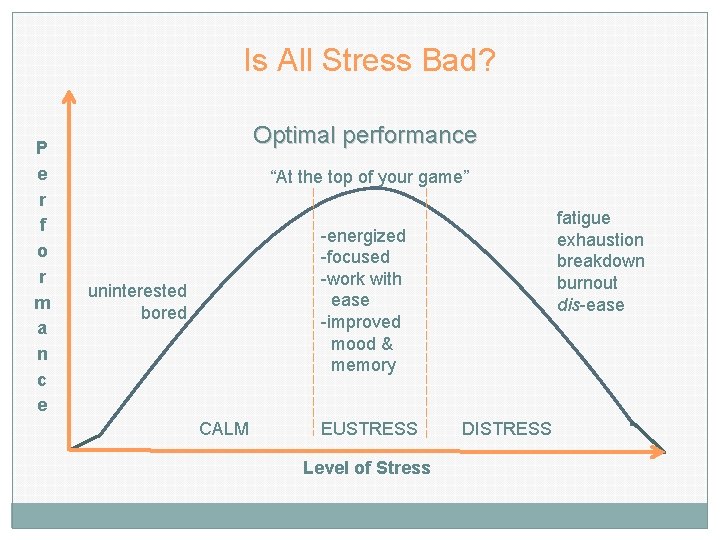
Is All Stress Bad? P e r f o r m a n c e Optimal performance “At the top of your game” fatigue exhaustion breakdown burnout dis-ease -energized -focused -work with ease -improved mood & memory uninterested bored CALM EUSTRESS Level of Stress DISTRESS
Homeostasis: Balance �An “ideal state” in which a constant internal environment promotes optimal functioning; a condition of internal equilibrium. �Recovery time is imperative to guard against stress’ negative effects on the body. �Stress tends to be cumulative. �There is a declining capacity to return to balance with age.
Management vs Mastery Management oftentimes = Unhealthy coping ü Overeating ü Overspending ü Dependence on painkillers and sleeping pills ü Addiction to gambling, internet, gaming, watching TV ü Smoking ü Drinking
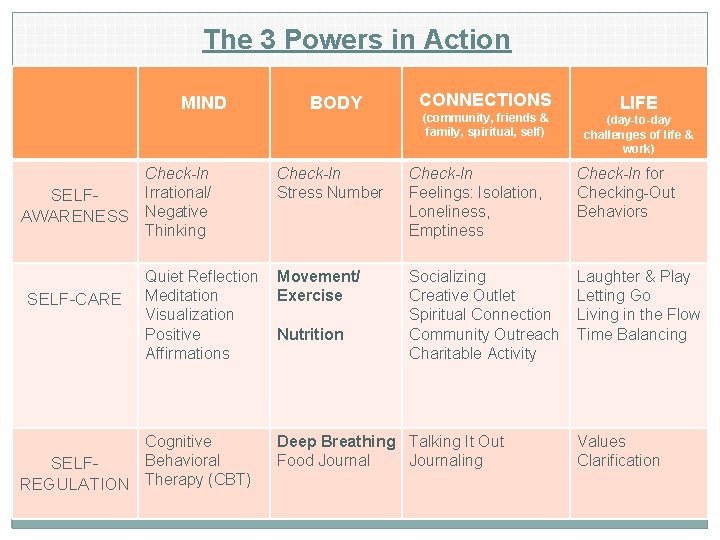
The Powers of Stress Mastery • Self-Awareness-becoming conscious of your body, thoughts, reactions, and choices. • Self-Care- taking steps toward developing practices and skills for stress reduction and resiliency. • Self-Regulation- regularly monitoring where you are in the process in order to make adjustments.
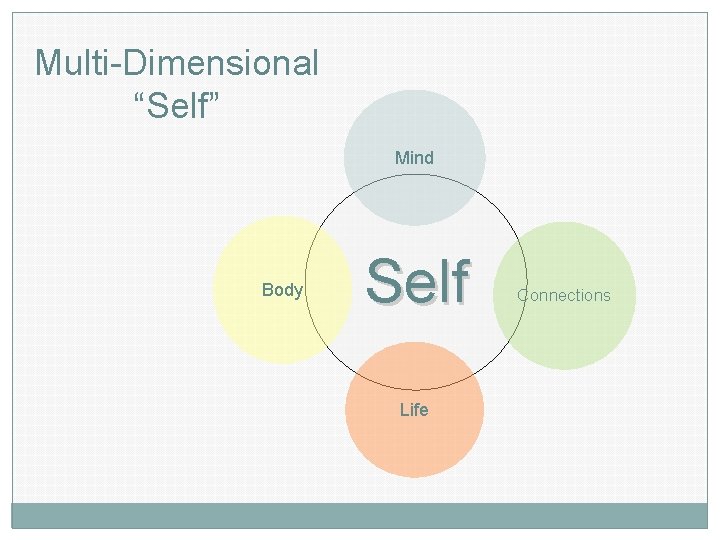
Multi-Dimensional “Self” Mind Body Self Life Connections
The 3 Powers in Action MIND SELFAWARENESS SELF-CARE BODY CONNECTIONS (community, friends & family, spiritual, self) LIFE (day-to-day challenges of life & work) Check-In Irrational/ Negative Thinking Check-In Stress Number Check-In Feelings: Isolation, Loneliness, Emptiness Check-In for Checking-Out Behaviors Quiet Reflection Meditation Visualization Positive Affirmations Movement/ Exercise Socializing Creative Outlet Spiritual Connection Community Outreach Charitable Activity Laughter & Play Letting Go Living in the Flow Time Balancing Cognitive Behavioral SELFREGULATION Therapy (CBT) Nutrition Deep Breathing Talking It Out Food Journaling Values Clarification
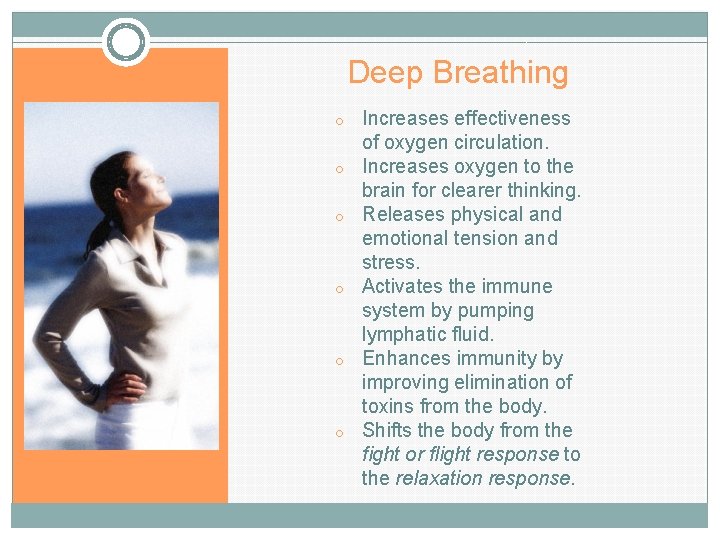
Deep Breathing o o o Increases effectiveness of oxygen circulation. Increases oxygen to the brain for clearer thinking. Releases physical and emotional tension and stress. Activates the immune system by pumping lymphatic fluid. Enhances immunity by improving elimination of toxins from the body. Shifts the body from the fight or flight response to the relaxation response.
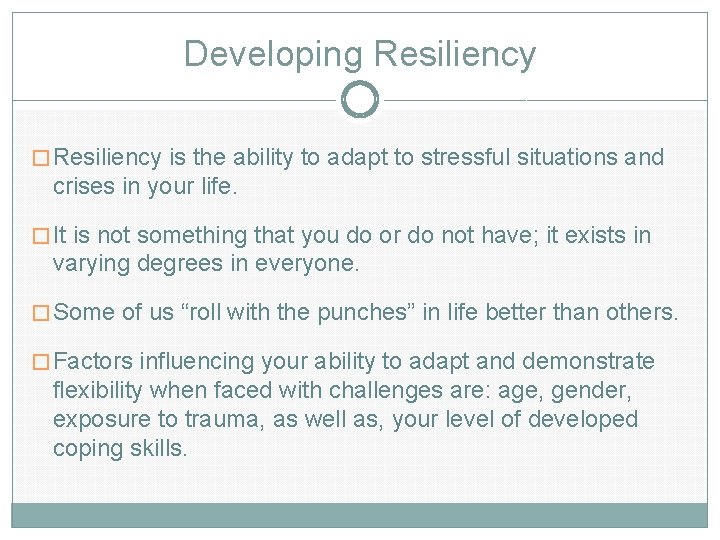
Developing Resiliency � Resiliency is the ability to adapt to stressful situations and crises in your life. � It is not something that you do or do not have; it exists in varying degrees in everyone. � Some of us “roll with the punches” in life better than others. � Factors influencing your ability to adapt and demonstrate flexibility when faced with challenges are: age, gender, exposure to trauma, as well as, your level of developed coping skills.
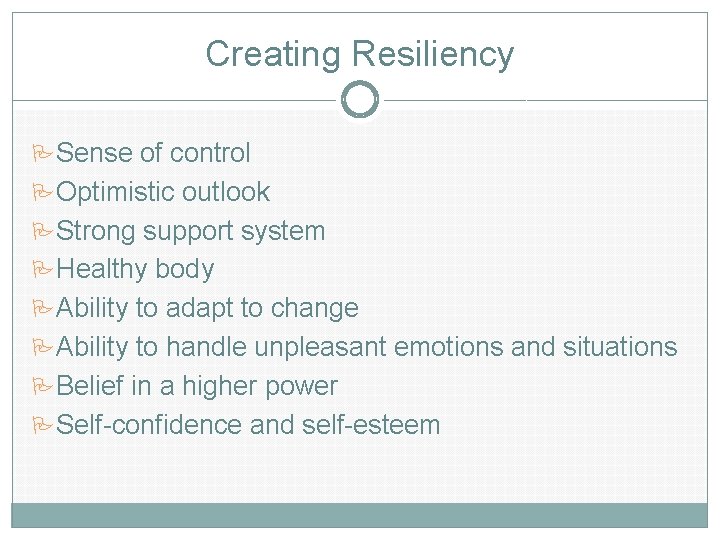
Creating Resiliency PSense of control POptimistic outlook PStrong support system PHealthy body PAbility to adapt to change PAbility to handle unpleasant emotions and situations PBelief in a higher power PSelf-confidence and self-esteem
In Summary Ø We pay a high price for the stress in our lives on many levels, but the good news is that we have the power to change the havoc it wreaks on our lives. Ø There are many stressors in our life, but the biggest stressor is our reaction to stress through our thoughts, feelings and beliefs. Ø Key to the process of stress mastery are the 3 Powers: self-awareness, self-care and self-regulation. Ø Reducing stress and building resiliency are critical to our long-term health and happiness.
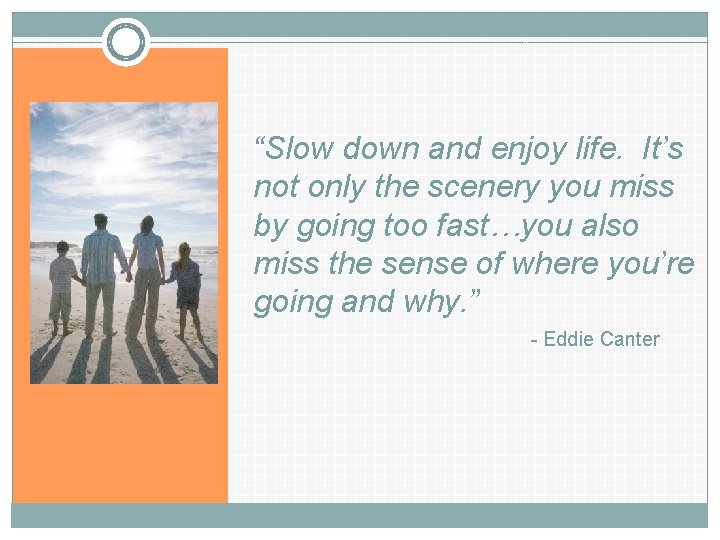
“Slow down and enjoy life. It’s not only the scenery you miss by going too fast…you also miss the sense of where you’re going and why. ” - Eddie Canter