Organizing Data and Information Chapter 3 Fundamentals of

- Slides: 40
Organizing Data and Information Chapter 3 Fundamentals of Information Systems, Second Edition 1
Principles and Learning Objectives • The database approach to data management provides significant advantages over the traditional file-based approach. – Define general data management concepts and terms, highlighting the advantages and disadvantages of the database approach to data management. – Name three database models and outline their basic features, advantages, and disadvantages. Fundamentals of Information Systems, Second Edition 2
Principles and Learning Objectives • A well-designed and well-managed database is an extremely valuable tool in supporting decision making. – Identify the common functions performed by all database management systems and identify three popular end-user database management systems. Fundamentals of Information Systems, Second Edition 3
Principles and Learning Objectives • Further improvements in the use of database technology will continue to evolve and yield real business benefits. – Identify and briefly discuss recent database applications. Fundamentals of Information Systems, Second Edition 4
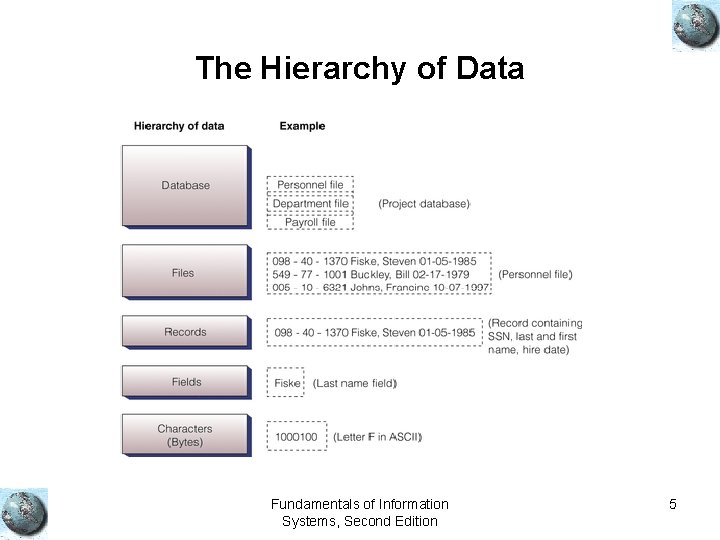
The Hierarchy of Data Fundamentals of Information Systems, Second Edition 5
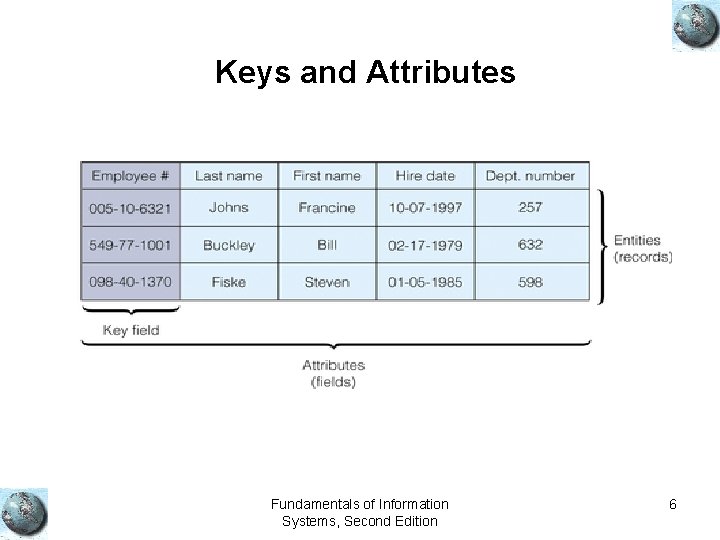
Keys and Attributes Fundamentals of Information Systems, Second Edition 6
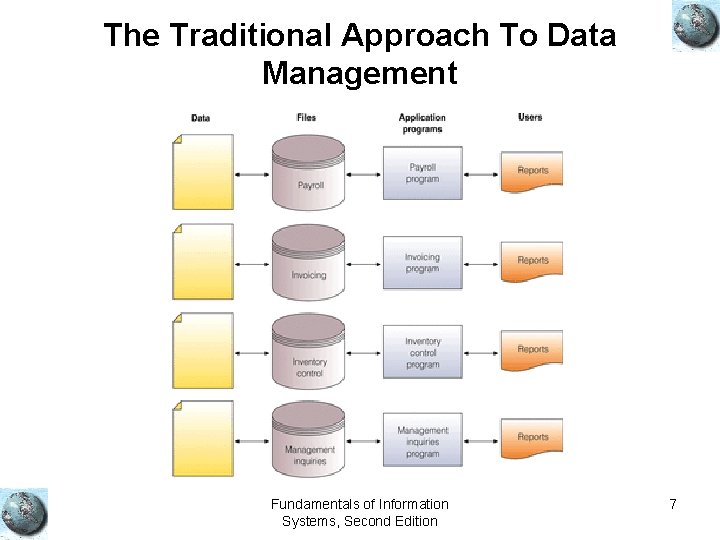
The Traditional Approach To Data Management Fundamentals of Information Systems, Second Edition 7
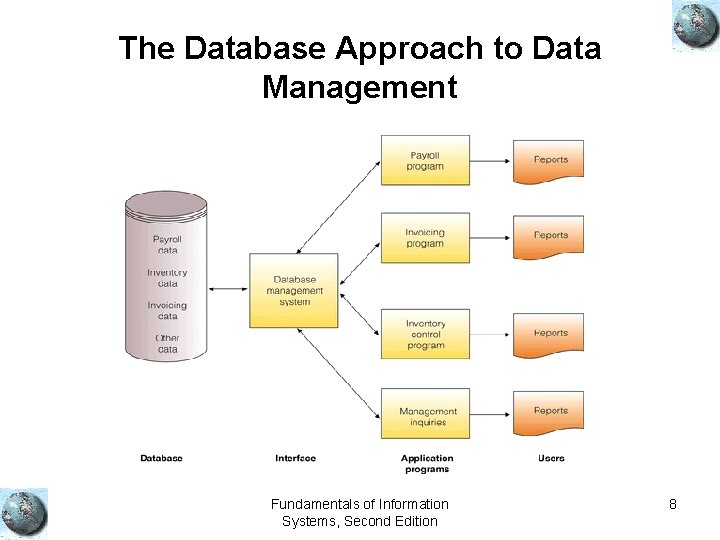
The Database Approach to Data Management Fundamentals of Information Systems, Second Edition 8
Advantages of the Database Approach Fundamentals of Information Systems, Second Edition 9
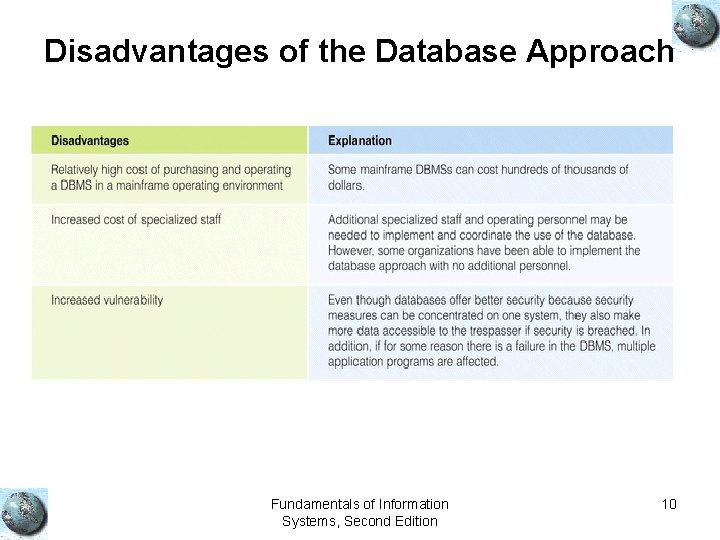
Disadvantages of the Database Approach Fundamentals of Information Systems, Second Edition 10
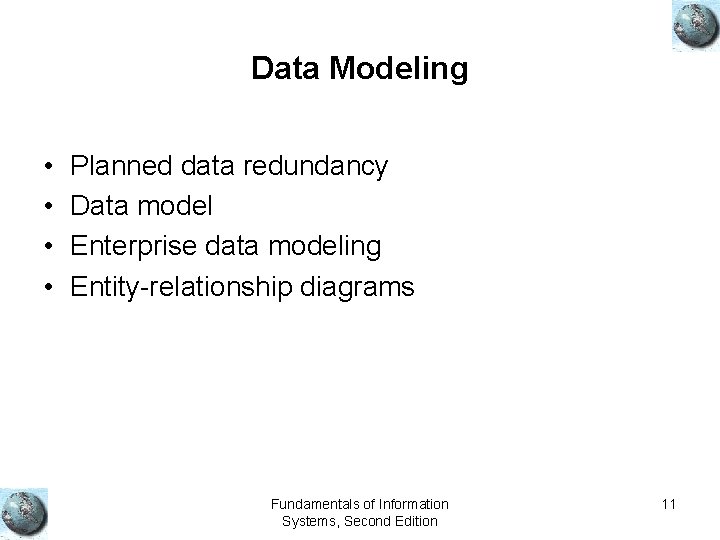
Data Modeling • • Planned data redundancy Data model Enterprise data modeling Entity-relationship diagrams Fundamentals of Information Systems, Second Edition 11
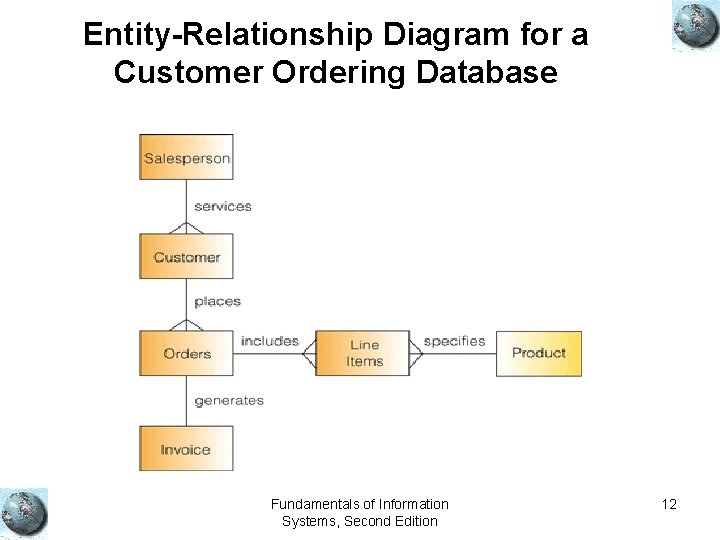
Entity-Relationship Diagram for a Customer Ordering Database Fundamentals of Information Systems, Second Edition 12
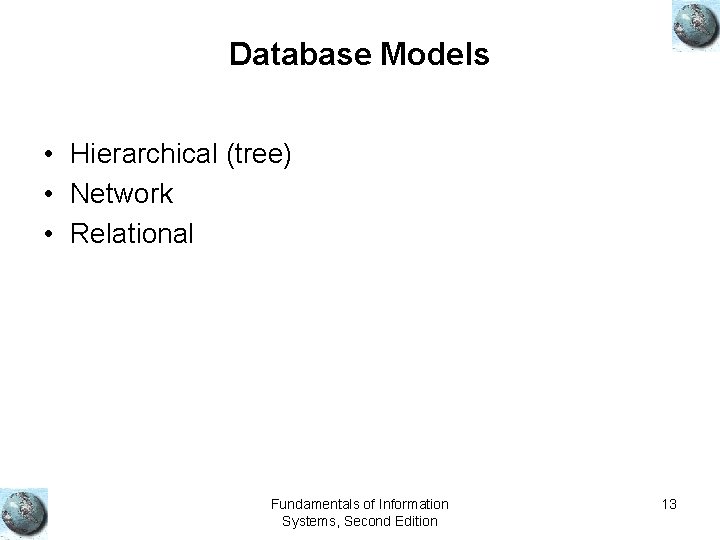
Database Models • Hierarchical (tree) • Network • Relational Fundamentals of Information Systems, Second Edition 13
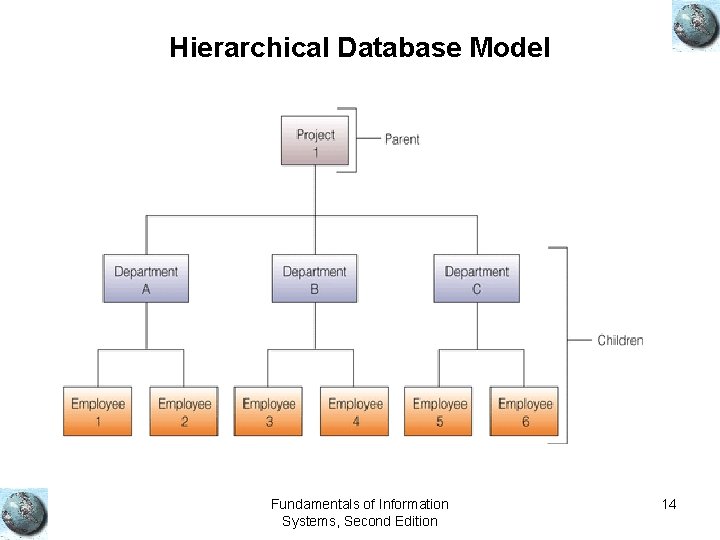
Hierarchical Database Model Fundamentals of Information Systems, Second Edition 14
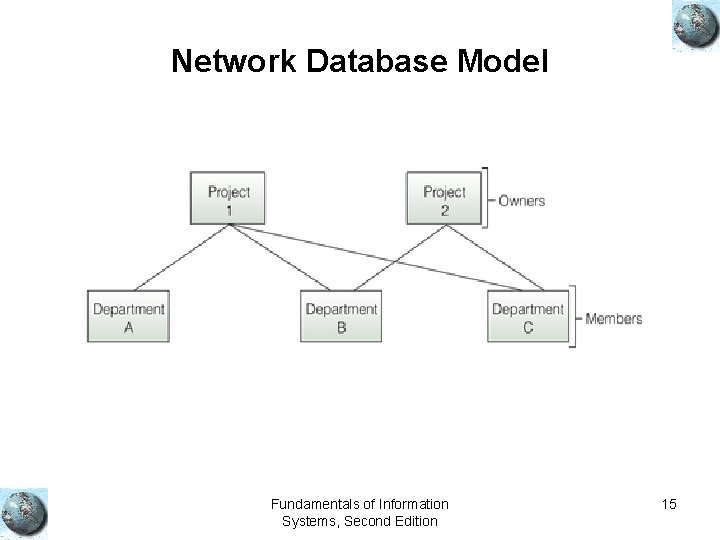
Network Database Model Fundamentals of Information Systems, Second Edition 15
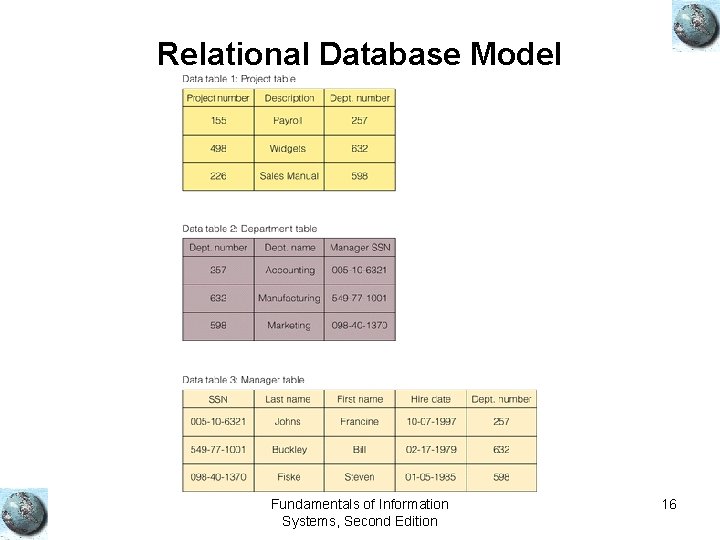
Relational Database Model Fundamentals of Information Systems, Second Edition 16
Relational Models Describe data using a standard tabular format with all data elements placed in two-dimensional tables, called relations, that are the logical equivalent of files. – – Domain Selecting Projecting Joining Fundamentals of Information Systems, Second Edition 17
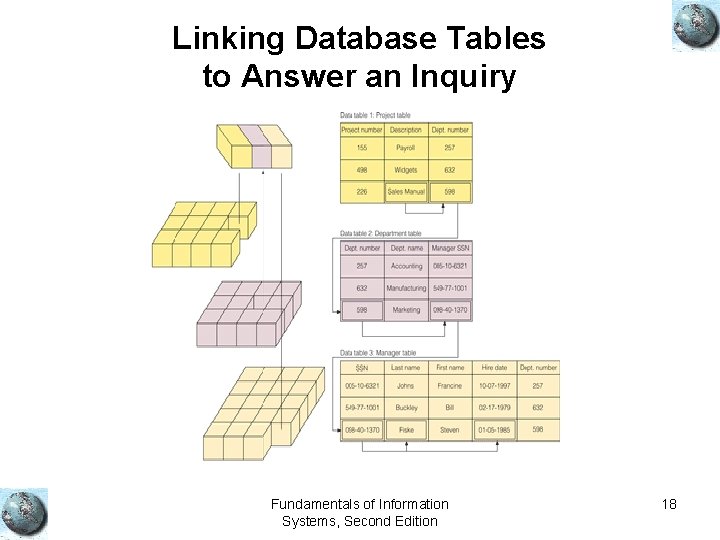
Linking Database Tables to Answer an Inquiry Fundamentals of Information Systems, Second Edition 18
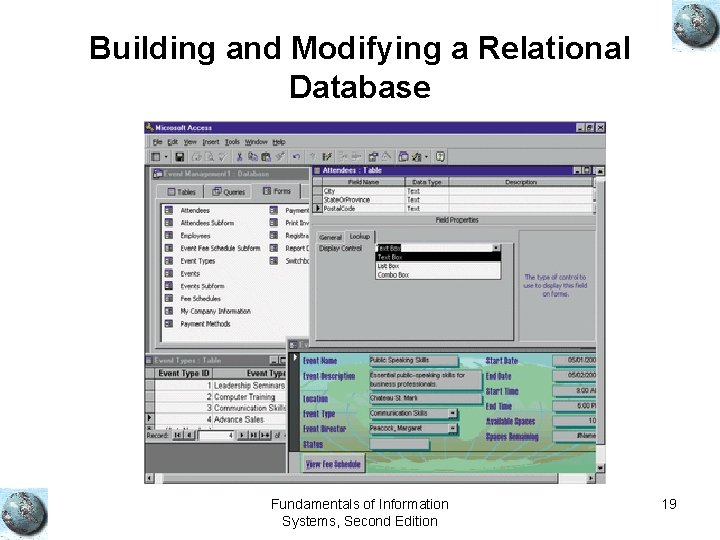
Building and Modifying a Relational Database Fundamentals of Information Systems, Second Edition 19
Database Management Systems Fundamentals of Information Systems, Second Edition 20
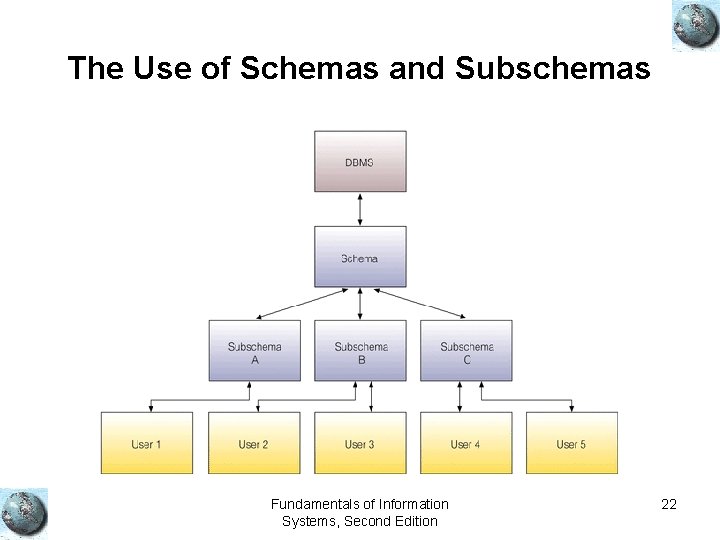
Providing a User View • Schema - a description of the entire database • Subschema - a file that contains a description of a subset of the database and identifies which users can modify the data items in that subset Fundamentals of Information Systems, Second Edition 21
The Use of Schemas and Subschemas Fundamentals of Information Systems, Second Edition 22
Creating and Modifying the Database • Data definition language (DDL) - a collection of instructions and commands used to define and describe data and data relationships in a specific database • Data dictionary – detailed description of data in a database Fundamentals of Information Systems, Second Edition 23
Typical Uses of a Data Dictionary • • Provide a standard definition of terms and data elements Assist programmers in designing and writing programs Simplify database modification Reduce data redundancy Increase data reliability Speed program development Ease modification of data and information Fundamentals of Information Systems, Second Edition 24
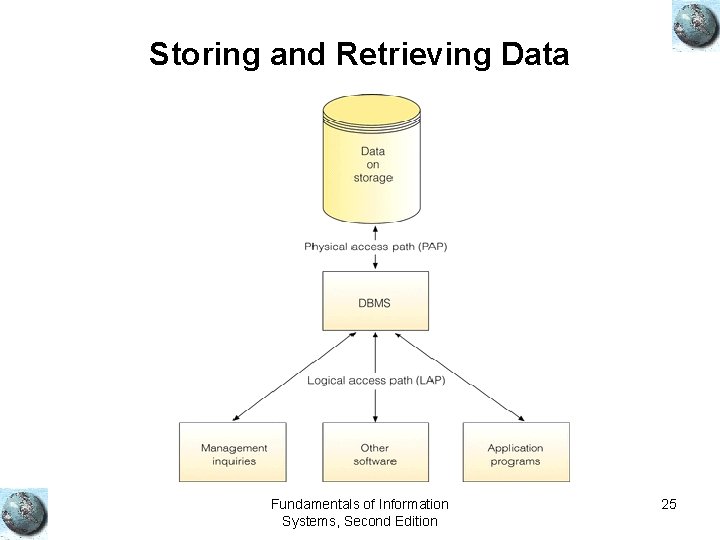
Storing and Retrieving Data Fundamentals of Information Systems, Second Edition 25
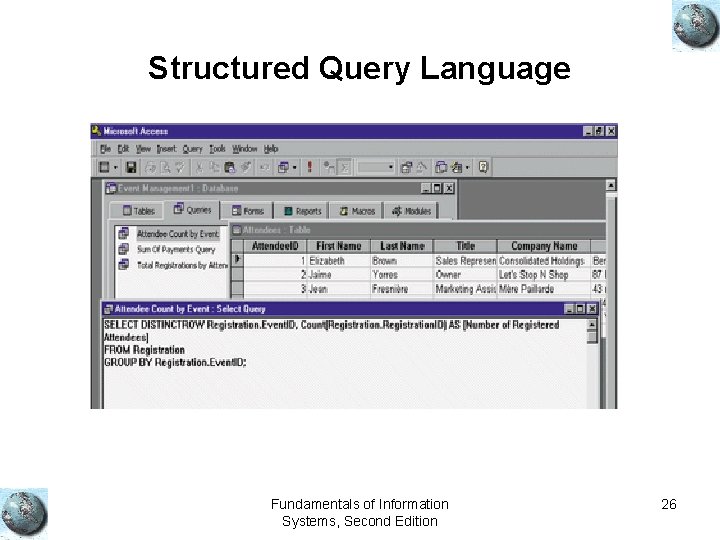
Structured Query Language Fundamentals of Information Systems, Second Edition 26
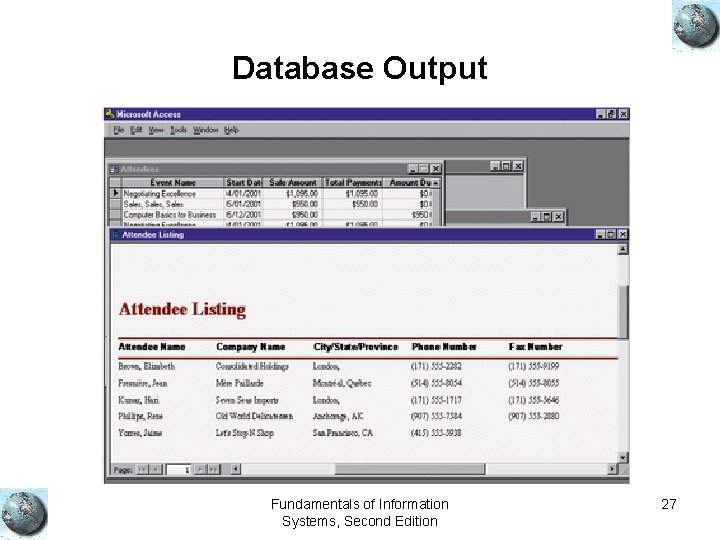
Database Output Fundamentals of Information Systems, Second Edition 27
Popular Database Management Systems • • Paradox database File. Maker Pro Microsoft Access Lotus 1 -2 -3 Spreadsheet Fundamentals of Information Systems, Second Edition 28
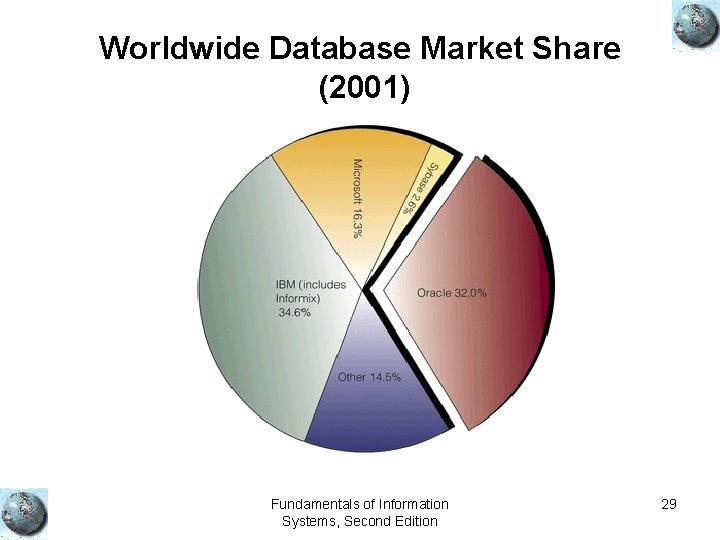
Worldwide Database Market Share (2001) Fundamentals of Information Systems, Second Edition 29
Selecting a Database Management System • • Database size Number of concurrent users Performance Integration Features Vendor Cost Fundamentals of Information Systems, Second Edition 30
Database Applications Fundamentals of Information Systems, Second Edition 31
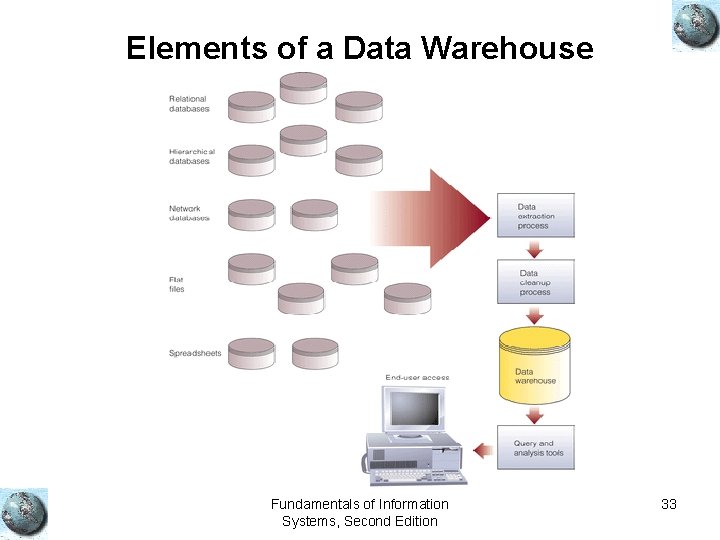
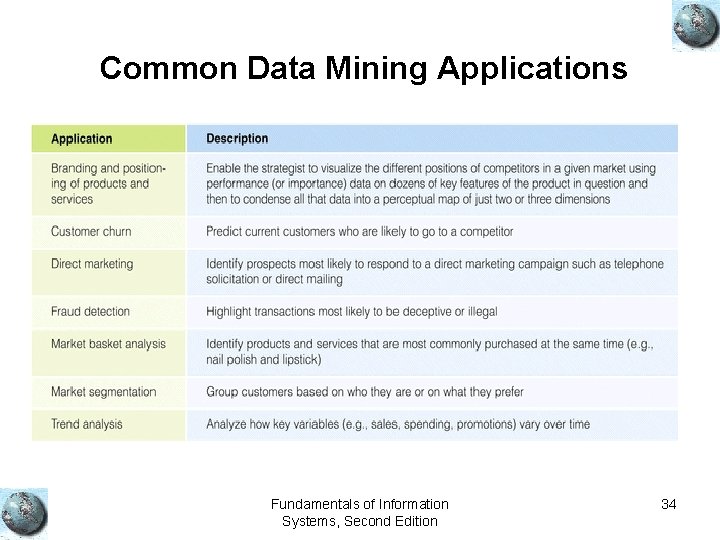
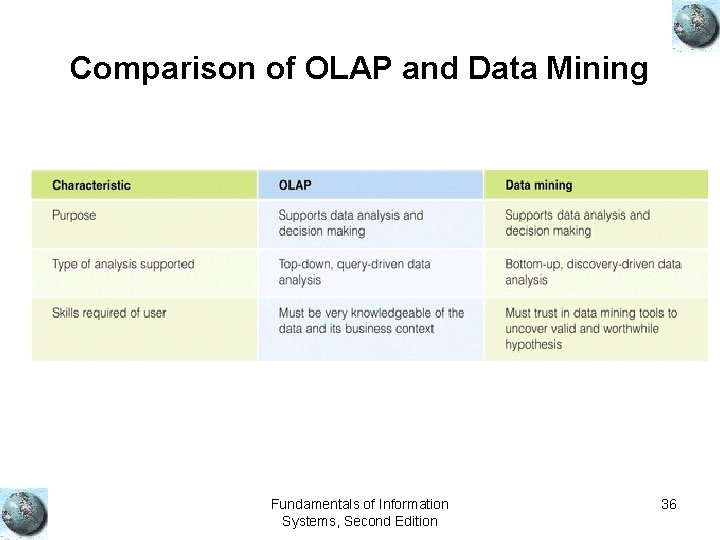
Data Warehouses, Data Marts, and Data Mining • Data Warehouse - a database that collects business information from many sources in the enterprise, covering all aspects of the company’s processes, products, and customers. • Data Mart – a subset of a data warehouse. • Data Mining - an information analysis tool that involves the automated discovery of patterns and relationships in a data warehouse. Fundamentals of Information Systems, Second Edition 32
Elements of a Data Warehouse Fundamentals of Information Systems, Second Edition 33
Common Data Mining Applications Fundamentals of Information Systems, Second Edition 34
Business Intelligence Gathering enough of the right information in a timely manner and usable form. – Competitive intelligence – Counterintelligence – Knowledge management Fundamentals of Information Systems, Second Edition 35
Comparison of OLAP and Data Mining Fundamentals of Information Systems, Second Edition 36
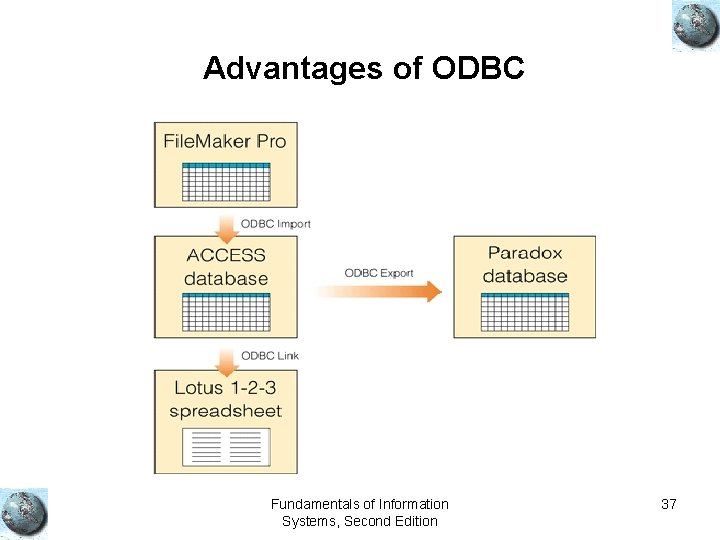
Advantages of ODBC Fundamentals of Information Systems, Second Edition 37
Object-Relational Database Management System • Stores the following types of data as objects: – – – audio images unstructured text spatial data Fundamentals of Information Systems, Second Edition 38
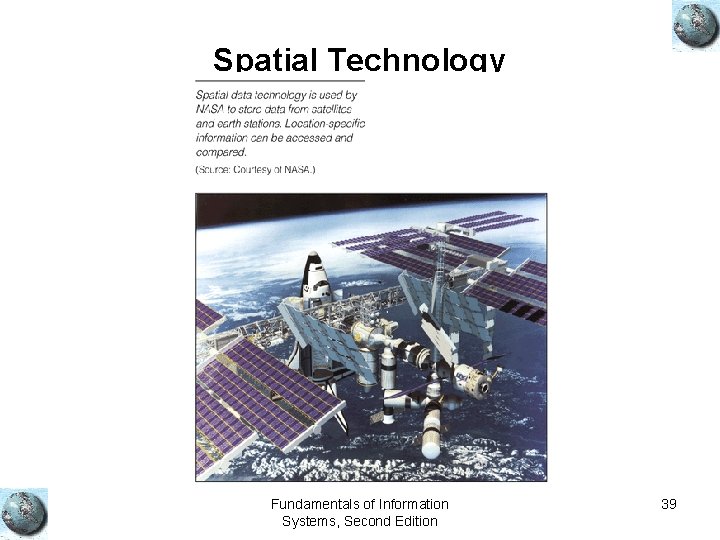
Spatial Technology Fundamentals of Information Systems, Second Edition 39
Summary • Data - one of the most valuable resources a firm possesses. • Entity - a generalized class of objects for which data is collected, stored, and maintained. • Attribute - a characteristic of an entity. • DBMS - a group of programs used as an interface between a database and application programs. • Data mining - the automated discovery of patterns and relationships in a data warehouse. Fundamentals of Information Systems, Second Edition 40