Of Skyscrapers Sandor Put Those Comprehension Strategies Down

- Slides: 25
Of Skyscrapers & Sand—or, Put Those Comprehension Strategies Down The Importance of Background Knowledge Foundations to Effective Textual Comprehension & Analysis Eric Kalenze, Author & Education Consultant Twitter - @erickalenze Email - erickalenze@gmail. com A Total Ed Case blog - erickalenze. wordpress. com
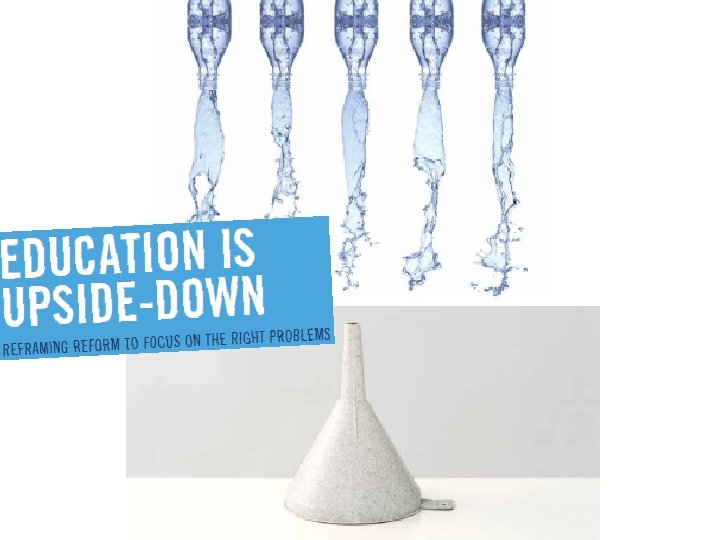
Chapter Five, Education Is Upside-Down Building Skyscrapers on Sand Key Assertions: Bloom’s Taxonomy misinterpreted, misapplied Reading is not a skill, must stop being treated as such ‘LOWER ORDER’ = ESSENTIAL ORDER
Demo Activity: Read & Process Individually: Close-Read distributed passage as suggested With 1 -2 Neighbors: Work to complete accompanying questions/tasks (on reverse) Full-group share, process
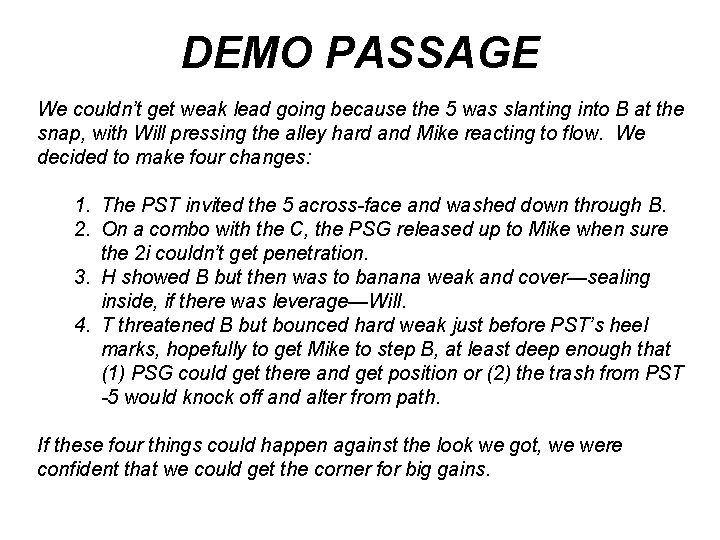
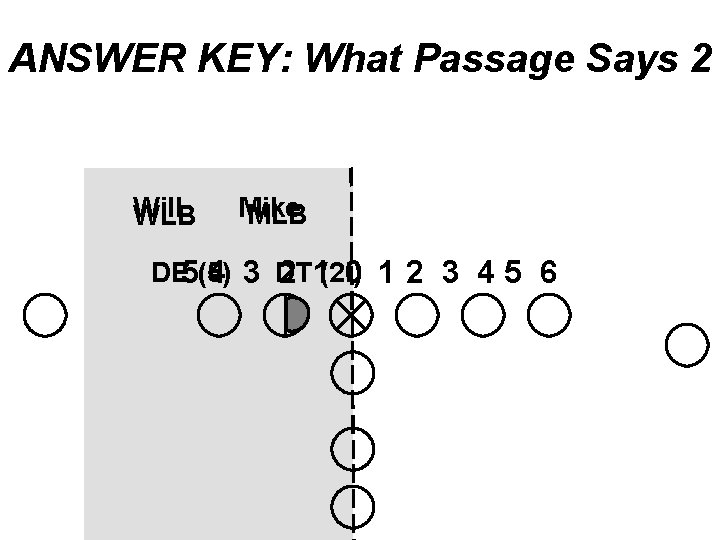
DEMO PASSAGE We couldn’t get weak lead going because the 5 was slanting into B at the snap, with Will pressing the alley hard and Mike reacting to flow. We decided to make four changes: 1. The PST invited the 5 across-face and washed down through B. 2. On a combo with the C, the PSG released up to Mike when sure the 2 i couldn’t get penetration. 3. H showed B but then was to banana weak and cover—sealing inside, if there was leverage—Will. 4. T threatened B but bounced hard weak just before PST’s heel marks, hopefully to get Mike to step B, at least deep enough that (1) PSG could get there and get position or (2) the trash from PST -5 would knock off and alter from path. If these four things could happen against the look we got, we were confident that we could get the corner for big gains.
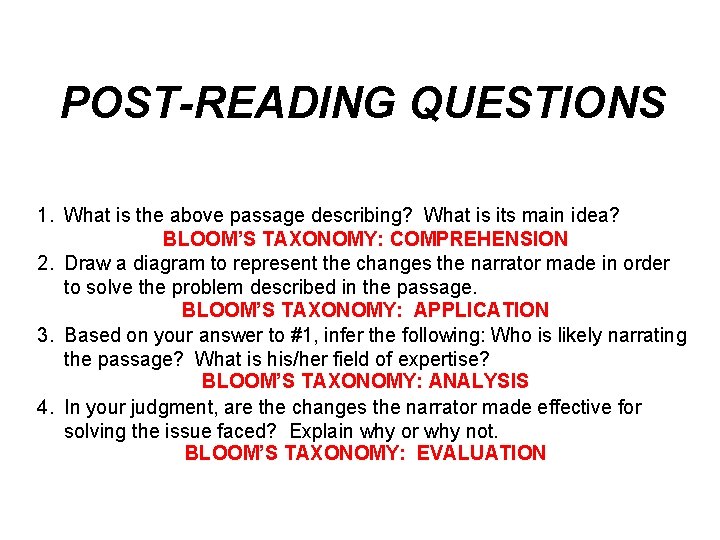
POST-READING QUESTIONS 1. What is the above passage describing? What is its main idea? BLOOM’S TAXONOMY: COMPREHENSION 2. Draw a diagram to represent the changes the narrator made in order to solve the problem described in the passage. BLOOM’S TAXONOMY: APPLICATION 3. Based on your answer to #1, infer the following: Who is likely narrating the passage? What is his/her field of expertise? BLOOM’S TAXONOMY: ANALYSIS 4. In your judgment, are the changes the narrator made effective for solving the issue faced? Explain why or why not. BLOOM’S TAXONOMY: EVALUATION
ANSWER KEY: What Passage is About Passage is a football coach (American football, that is) explaining adjustments his team made to a play.
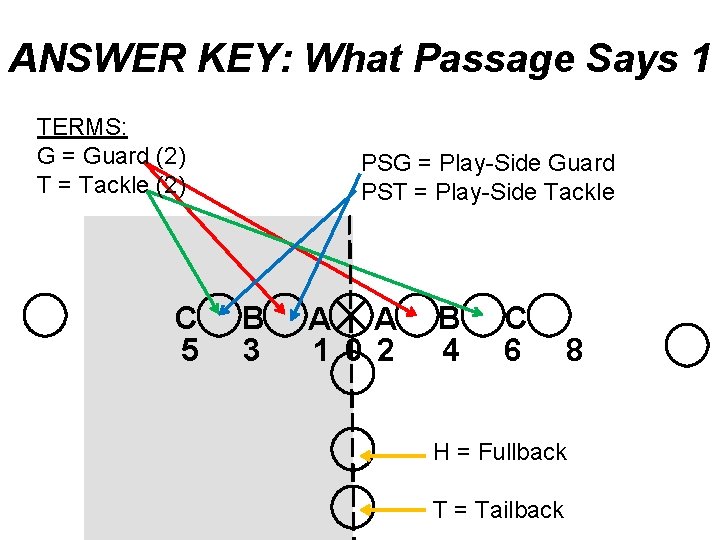
ANSWER KEY: What Passage Says 1 TERMS: G = Guard (2) T = Tackle (2) C 5 PSG = Play-Side Guard PST = Play-Side Tackle B 3 A A 1 0 2 B 4 C 6 8 H = Fullback T = Tailback 0
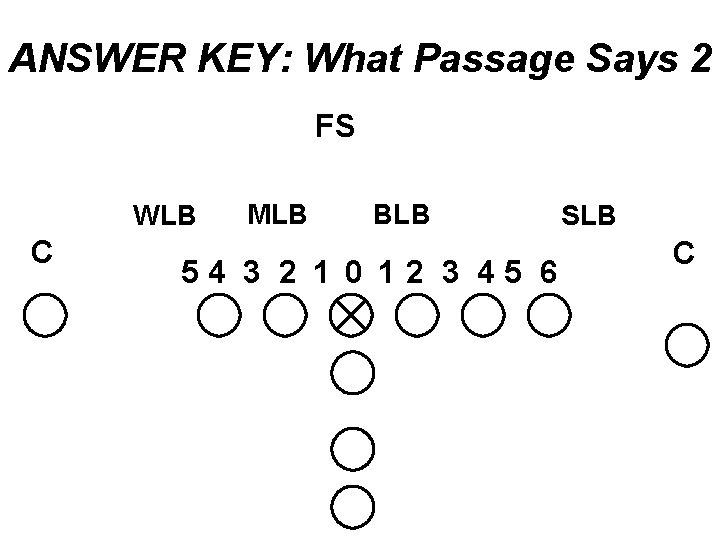
ANSWER KEY: What Passage Says 2 FS WLB C MLB BLB 54 3 2 1 0 1 2 3 45 6 SLB C 0
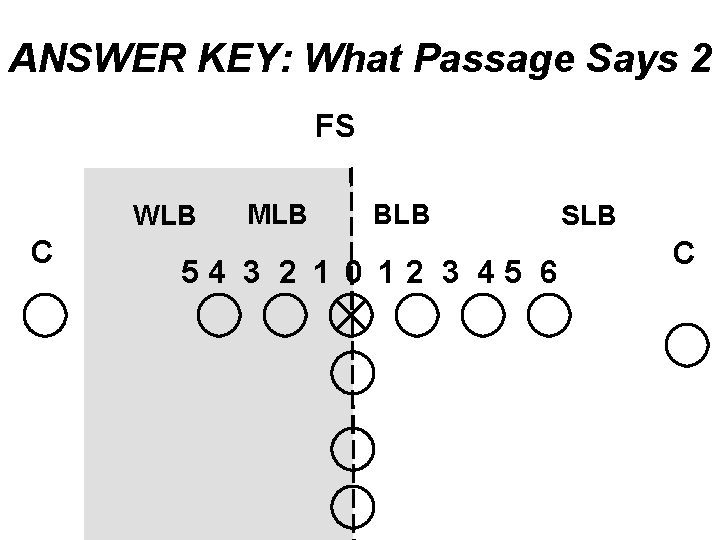
ANSWER KEY: What Passage Says 2 FS WLB C MLB BLB 54 3 2 1 0 1 2 3 45 6 SLB C 0
ANSWER KEY: What Passage Says 2 Will WLB Mike MLB DE 5(5) 4 3 DT 2 1(2 i) 0 1 2 3 45 6 0
POST-READING QUESTIONS 1. What is the above passage describing? What is its main idea? BLOOM’S TAXONOMY: COMPREHENSION 2. Draw a diagram to represent the changes the narrator made in order to solve the problem described in the passage. BLOOM’S TAXONOMY: APPLICATION 3. Based on your answer to #1, infer the following: Who is likely narrating the passage? What is his/her field of expertise? BLOOM’S TAXONOMY: ANALYSIS 4. In your judgment, are the changes the narrator made effective for solving the issue faced? Explain why or why not. BLOOM’S TAXONOMY: EVALUATION BACKGROUND KNOWLEDGE MATTERS TO COMPREHENSION BECAUSE WRITERS LEAVE GAPS.
Accountability Era Complications Pressure to increase assessment scores quickly: schools, teachers (!) judged on them Practitioners act according to trained-in and/or intuitive ideals (ex: Knowledgebuilding as lowest rung of Bloom’s), not science of learning, to quickly build comprehension skills & habits
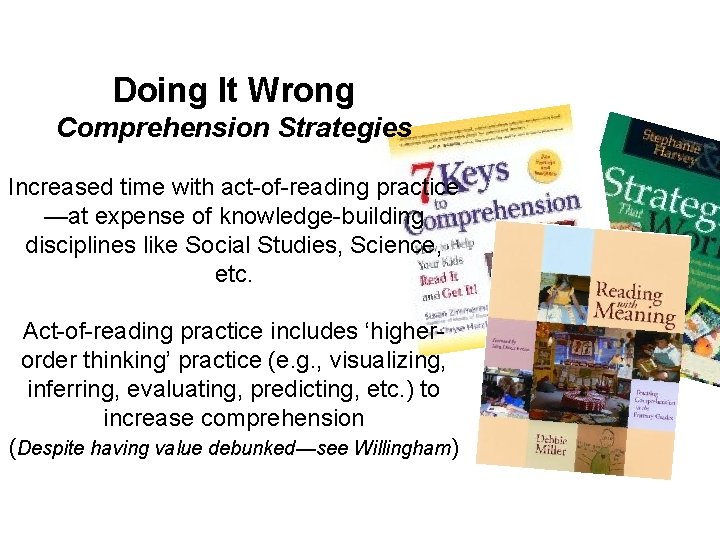
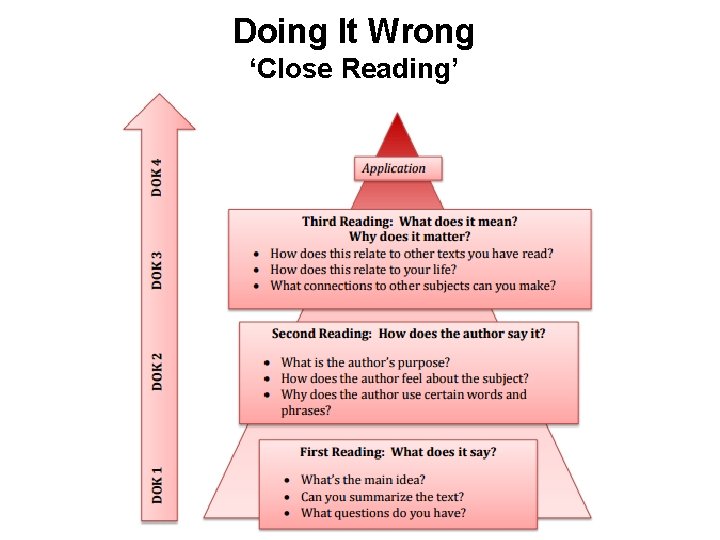
Doing It Wrong Comprehension Strategies Increased time with act-of-reading practice —at expense of knowledge-building disciplines like Social Studies, Science, etc. Act-of-reading practice includes ‘higherorder thinking’ practice (e. g. , visualizing, inferring, evaluating, predicting, etc. ) to increase comprehension (Despite having value debunked—see Willingham)
Doing It Wrong ‘Close Reading’
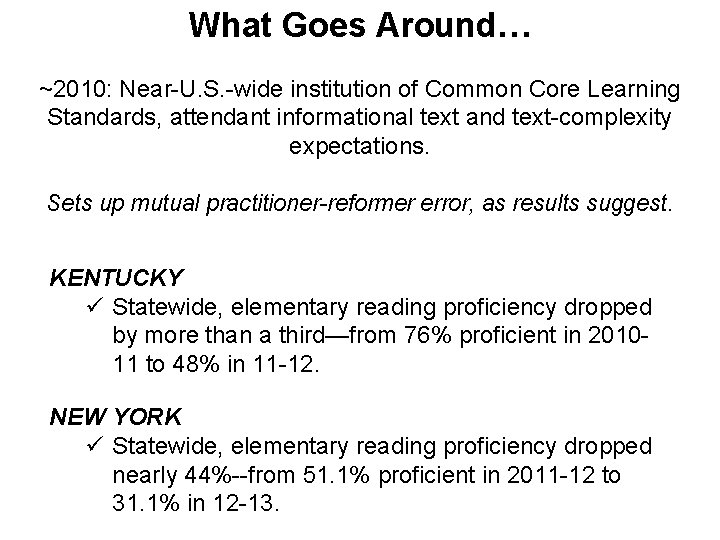
What Goes Around… ~2010: Near-U. S. -wide institution of Common Core Learning Standards, attendant informational text and text-complexity expectations. Sets up mutual practitioner-reformer error, as results suggest. KENTUCKY ü Statewide, elementary reading proficiency dropped by more than a third—from 76% proficient in 201011 to 48% in 11 -12. NEW YORK ü Statewide, elementary reading proficiency dropped nearly 44%--from 51. 1% proficient in 2011 -12 to 31. 1% in 12 -13.
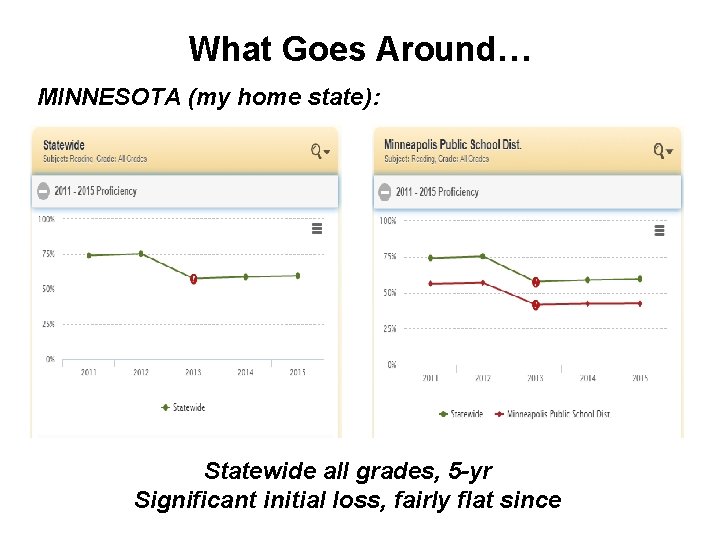
What Goes Around… MINNESOTA (my home state): Statewide all grades, 5 -yr Significant initial loss, fairly flat since
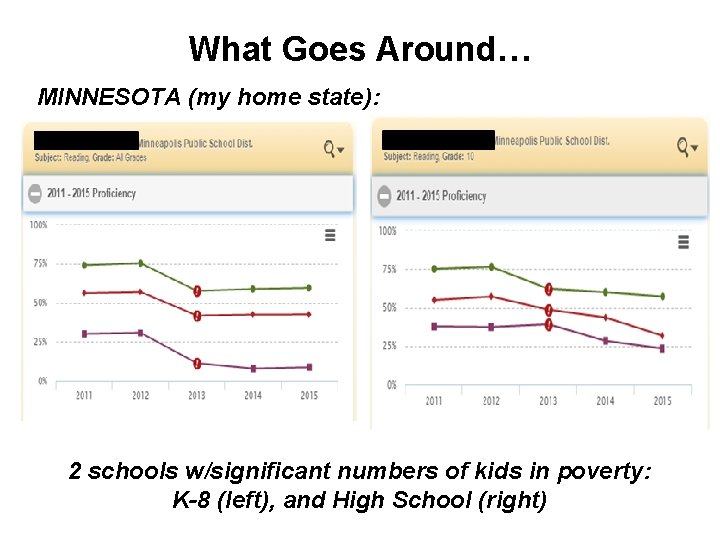
What Goes Around… MINNESOTA (my home state): 2 schools w/significant numbers of kids in poverty: K-8 (left), and High School (right)
Instructional Implications Remember: Mission is to TEACH how to comprehend, analyze, and be moved by literature …and it may take some doing, with students’ low background knowledge. Prepare to install background knowledge, per works’ key themes (exs: Crucible, Gatsby, others). Make time, and weave crucial knowledge points into all unit planning. Connect to neighboring disciplines, leverage as possible.
Leadership Implications Push colleagues on questions of students’ readiness for texts: ‘If not there, what do you do to get them there? ’ Important: Build research-based awareness of comprehension strategies’ limits (to start, see this slideshow’s ‘Credits & Suggested References’—Willingham a goldmine) Curriculum Matters: Do you have what you need, across disciplines, to support literacy goals?
Questions, Discussion Eric Kalenze Education Is Upside-Down Twitter: @erickalenze, Facebook Author Page erickalenze@gmail. com
Credits & Suggested References Harvey, Stephanie, Goudvis, Anne. Strategies That Work: Teaching Comprehension for Understanding and Engagement (2 nd ed. ). Portland, ME: Stenhouse, 2007. Hildebrandt, Jennifer. “Close Reading Progression. ” Chaparral Middle School faculty website, https: //d 3 jc 3 ahdjad 7 x 7. cloudfront. net/lmrhph. ZWOW 7 Agv. Lkxyl. L 7 ZVx 3 Ji. NCx 2 hb 1 l. Db 7 y 3 KMK 0 HPd. H. pdf Date Accessed 10/5/2015 Hirsch, E. D. Cultural Literacy: What Every American Needs to Know, Rev. ed. New York: Random House, 1987. Hirsch, E. D. The Knowledge Deficit: Closing the Shocking Educaiton Gap for American Children. Boston, MA: Houghton Mifflin, 2006. Miller, Debbie. Reading With Meaning: Teaching Comprehension in the Primary Grades. Portland, ME: Stenhouse, 2002. Willingham, Daniel, Lovette, Gail. “Can Reading Comprehension be Taught? ”. Teachers College Record, Date Published: September 26, 2014 http: //www. tcrecord. org. proxy. its. virginia. edu ID Number: 17701, Date Accessed: 10/4/2014 Willingham, Daniel. “Collateral damage of excessive reading comprehension strategy instruction. ” Science and Education Blog, Date Published: April 30, 2012 http: //www. danielwillingham. com/daniel-willingham-science-and-educationblog/collateral-damage-of-reading-comprehension-strategy-instruction Date Accessed: 10/4/2015 Willingham, Daniel. Raising Kids Who Read. . San Francisco, CA: : Jossey Bass, 20015. Willingham, Daniel. “Teaching Content IS Teaching Reading”. Instructional Video, Youtube: https: //www. youtube. com/watch? v=Ri. P-ijdxq. Ec Willingham, Daniel. “The Usefulness of Brief Instruction in Reading Comprehension Strategies. ” “How We Learn: Ask the Cognitive Scientist” column, American Educator, winter 2006/07. American Federation of Teachers. http: //www. aft. org/sites/default/files/periodicals/Cog. Sci. pdf Date Accessed: 10/4/2015 Willingham, Daniel. Why Don’t Students Like School? A Cognitive Scientist Answers Questions About How the Mind Works and What it Means for the Classroom. . San Francisco, CA: Jossey Bass, 2009. Zimmerman, Susan, Hutchins, Chryse. 7 Keys to Comprehension: How to Help Your Kids Read It and Get It! New York: Harmony, 2003.