Nuclearcereal packet family Singleparent family extended family Reconstituted









- Slides: 52
Nuclear/cereal packet family
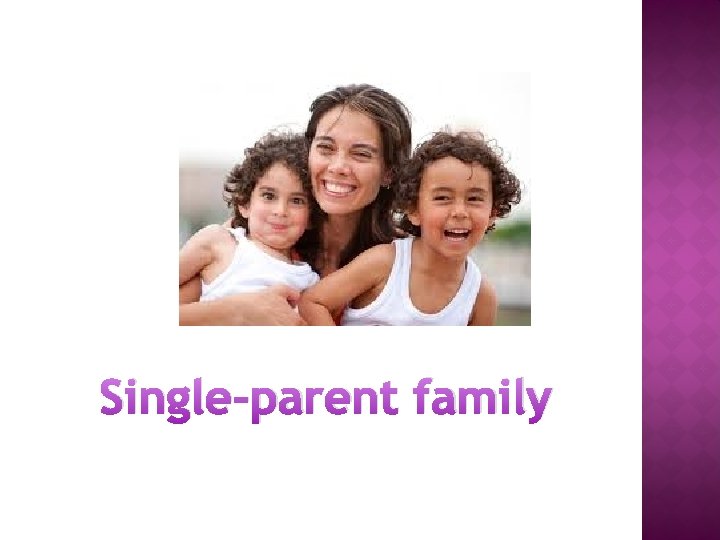
Single-parent family
extended family
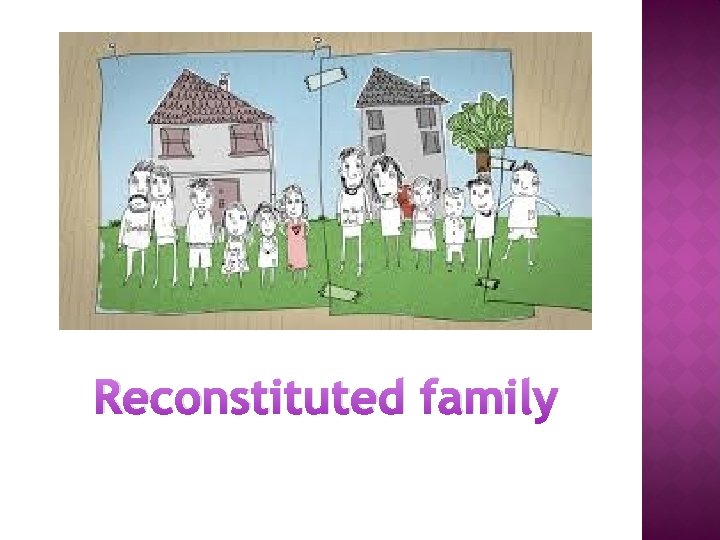
Reconstituted family
Cohabiting couples
Singleton
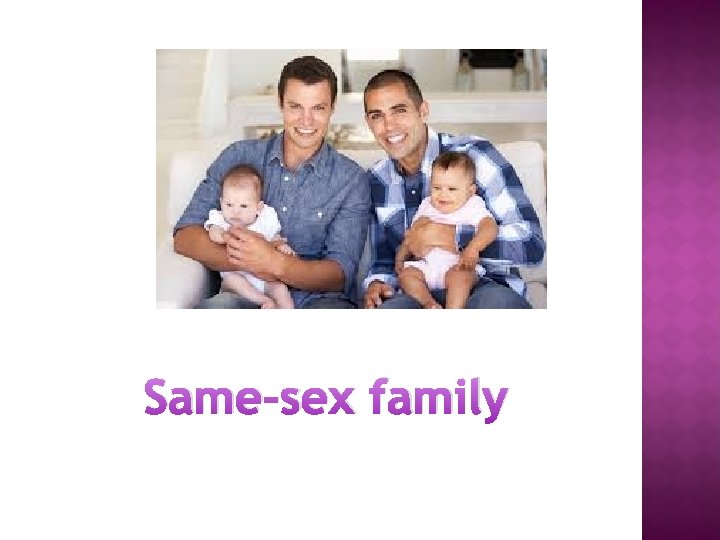
Same-sex family
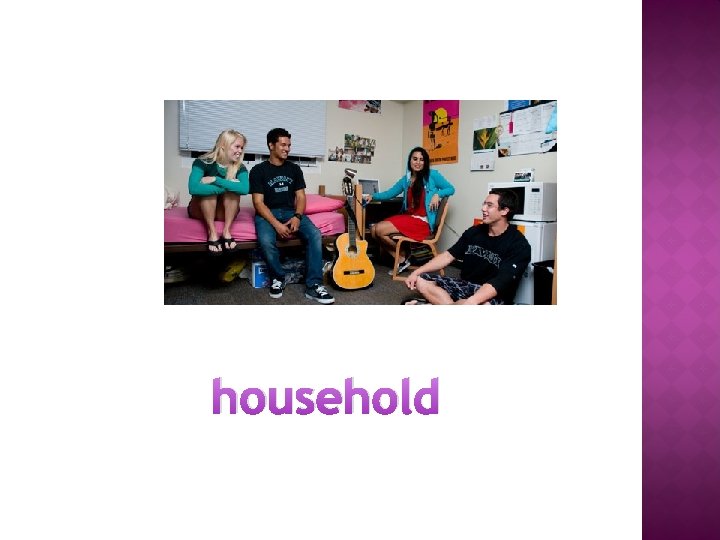
household
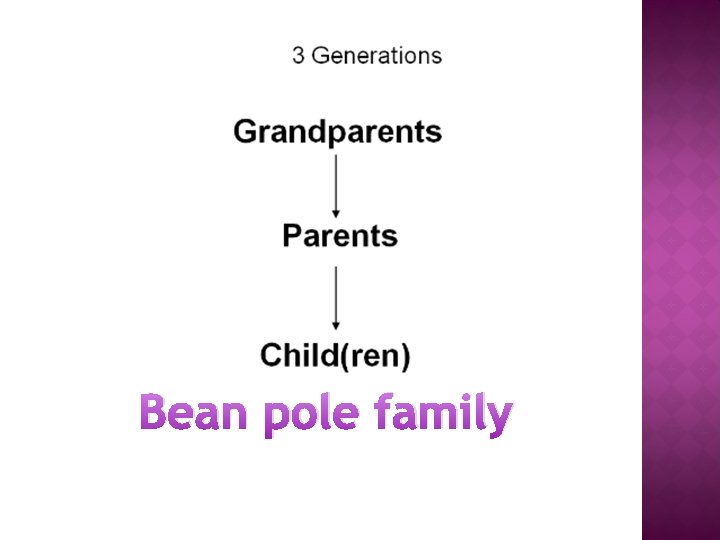
Bean pole family
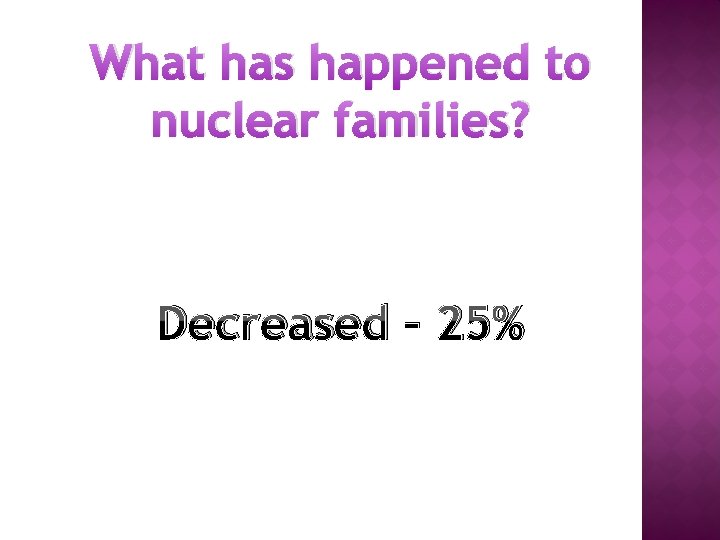
What has happened to nuclear families? Decreased – 25%
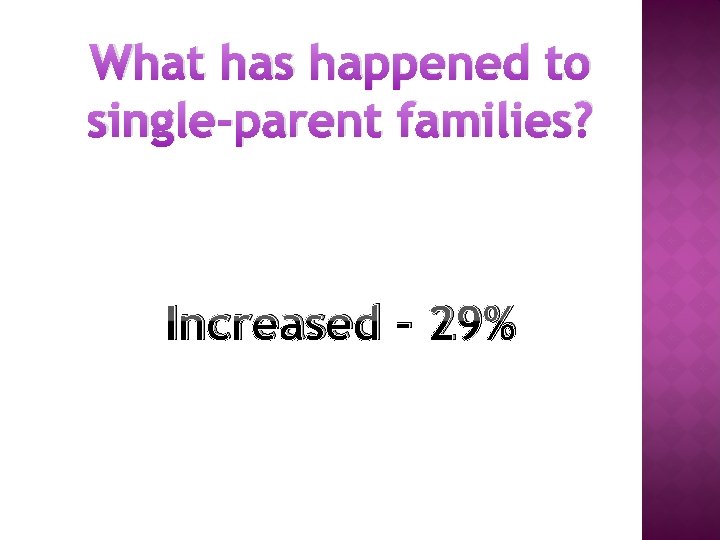
What has happened to single-parent families? Increased – 29%
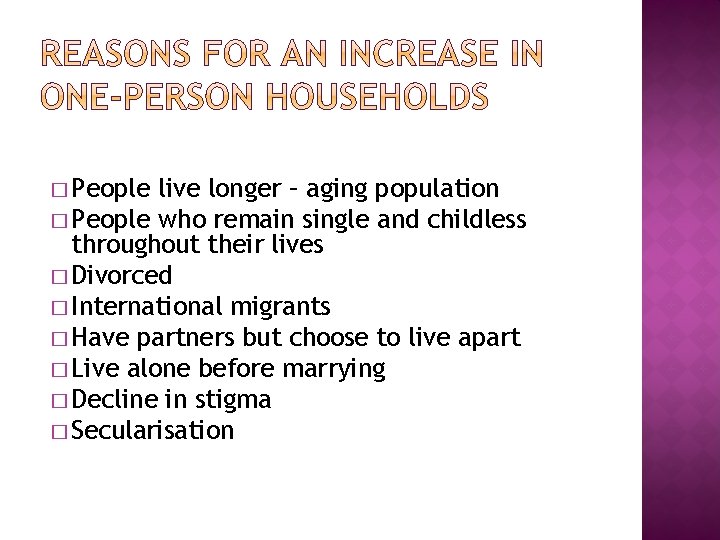
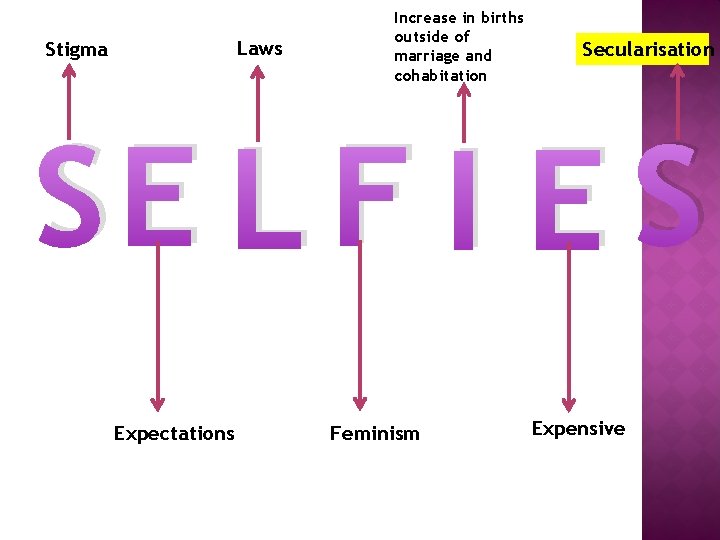
� People live longer – aging population � People who remain single and childless throughout their lives � Divorced � International migrants � Have partners but choose to live apart � Live alone before marrying � Decline in stigma � Secularisation
Explain what sociologists mean by family diversity (4 marks)
Patterns in marriage and divorce?
Trends in marriage: � Marriage rate is number of marriages per thousand per year � Marriage is decreasing � 1981 marriage rate 7. 1 � 2005 marriage rate 5. 2 � The age people are getting married has increased � Re-marriage accounts for 40% of marriages
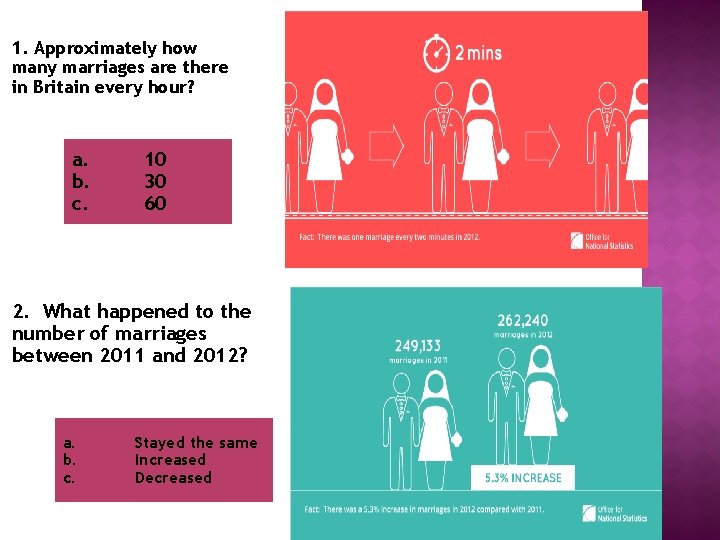
1. Approximately how many marriages are there in Britain every hour? a. b. c. 10 30 60 2. What happened to the number of marriages between 2011 and 2012? a. b. c. Stayed the same Increased Decreased
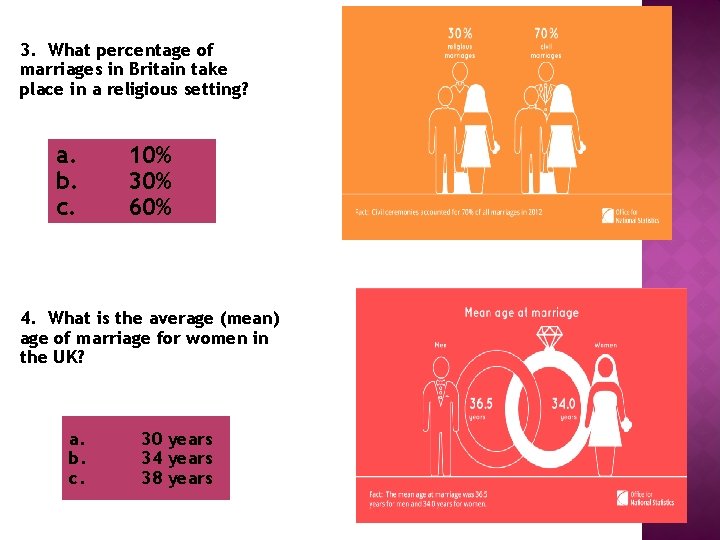
3. What percentage of marriages in Britain take place in a religious setting? a. b. c. 10% 30% 60% 4. What is the average (mean) age of marriage for women in the UK? a. b. c. 30 years 34 years 38 years
� The number of divorces doubled from 19611969 � Doubled again by 1972 � Divorce rate peaked in 1993 � Recently numbers have fallen but are 6 times higher than 1961 � The Divorce Law Reform Act (1969)
Laws Stigma Increase in births outside of marriage and cohabitation Secularisation SE L F I E S Expectations Feminism Expensive
Explain what sociologists mean by life-course analysis/life cycle (4 marks)
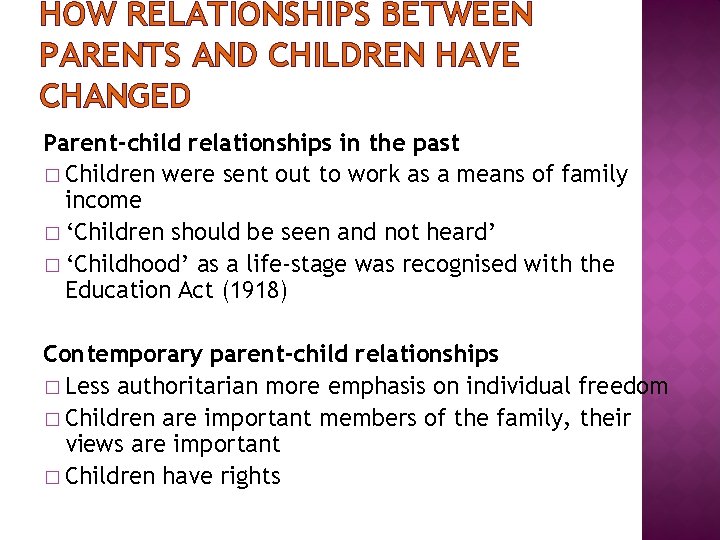
HOW RELATIONSHIPS BETWEEN PARENTS AND CHILDREN HAVE CHANGED Parent-child relationships in the past � Children were sent out to work as a means of family income � ‘Children should be seen and not heard’ � ‘Childhood’ as a life-stage was recognised with the Education Act (1918) Contemporary parent-child relationships � Less authoritarian more emphasis on individual freedom � Children are important members of the family, their views are important � Children have rights
What type of restrictions do we place on children in the UK? Mini-whiteboards
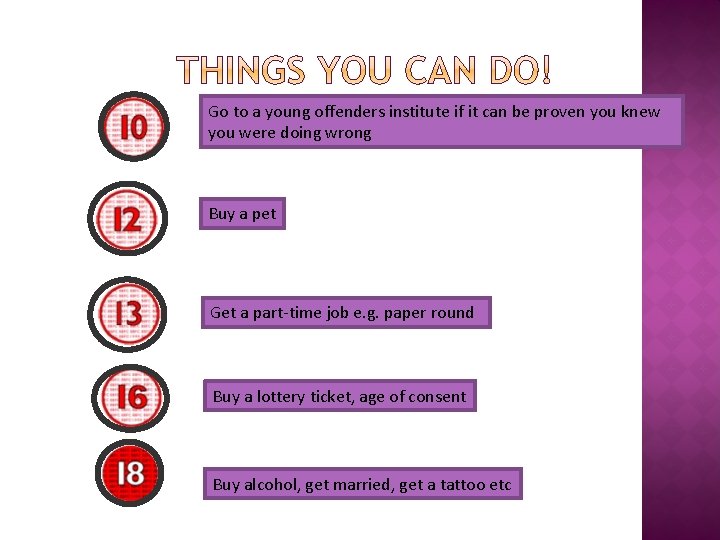
Go to a young offenders institute if it can be proven you knew you were doing wrong Buy a pet Get a part-time job e. g. paper round Buy a lottery ticket, age of consent Buy alcohol, get married, get a tattoo etc
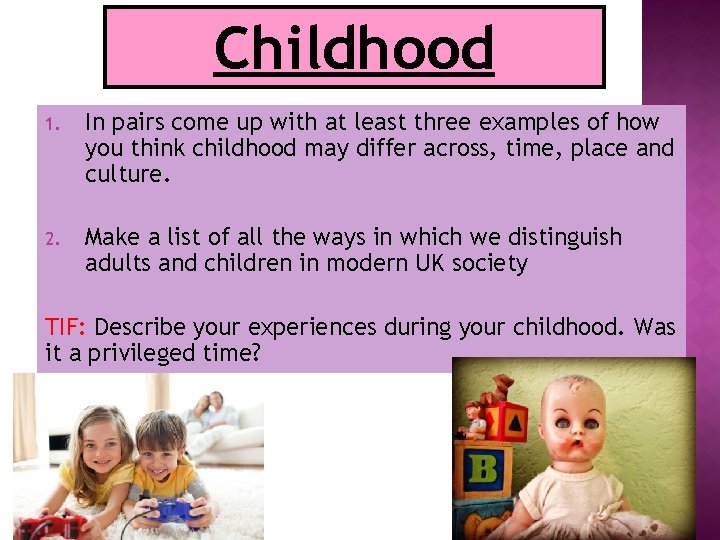
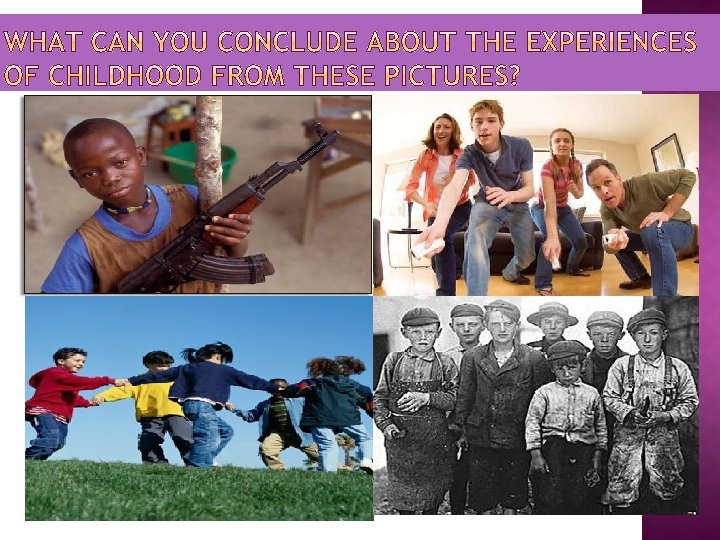
Childhood 1. In pairs come up with at least three examples of how you think childhood may differ across, time, place and culture. 2. Make a list of all the ways in which we distinguish adults and children in modern UK society TIF: Describe your experiences during your childhood. Was it a privileged time?
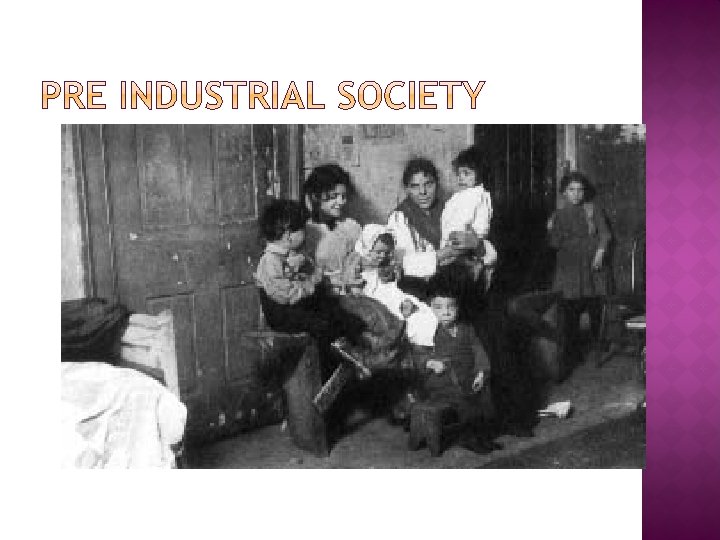
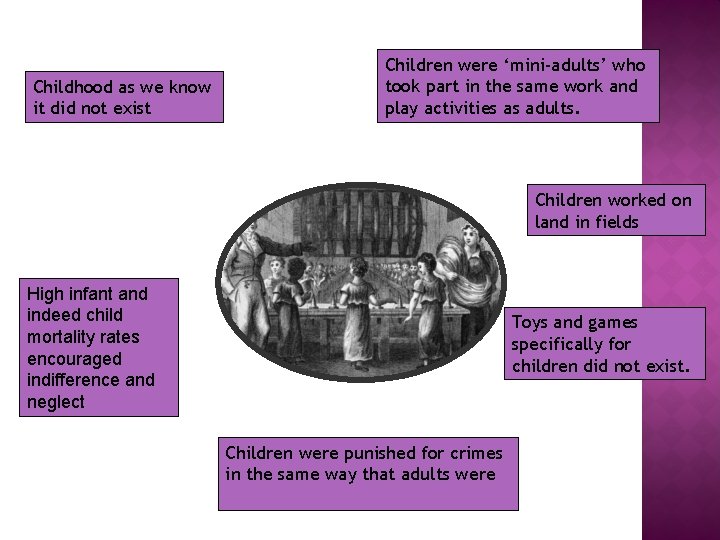
Childhood as we know it did not exist Children were ‘mini-adults’ who took part in the same work and play activities as adults. Children worked on land in fields High infant and indeed child mortality rates encouraged indifference and neglect Toys and games specifically for children did not exist. Children were punished for crimes in the same way that adults were
Do you think childhood got better or worse? Explain your ans
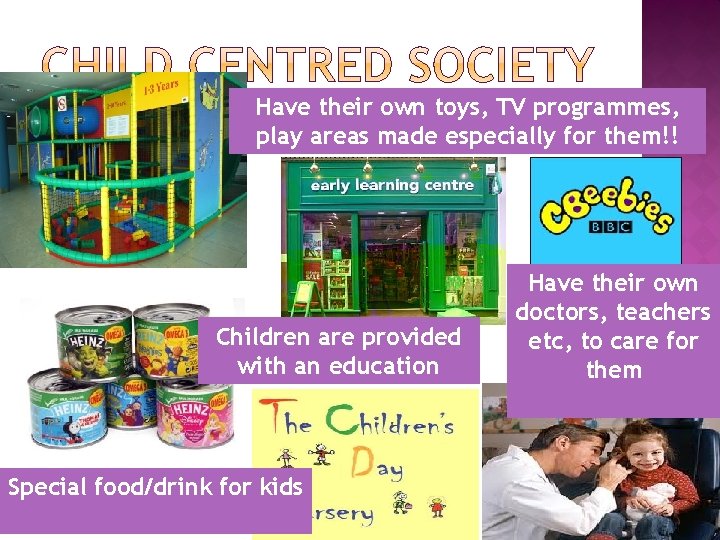
Have their own toys, TV programmes, play areas made especially for them!! Children are provided with an education Special food/drink for kids Have their own doctors, teachers etc, to care for them
1. Describe one way in which relations between parents and their children have changed in the past 50 years and explain why this change has happened. (5 marks) 2. Discuss how far sociologists would agree that changes in family size have led to families becoming more child-centred. (12 marks)
Marxist, Feminist, Functionalist and New Right
� Nuclear family key institution in society � Individuals have basic needs that need to be met for society to run smoothly � Four main functions � Reproduction � Economic � Emotional � Primary socialisation
� More recent version of the functionalist approach � Traditional, patriarchal, nuclear family is the ideal family � Children more likely to develop into stable adults if brought up by both parents � Young boys brought up by single-mothers lack role models and become delinquent � Woman carer man breadwinner � Oppose gay rights, sexual freedom and abortion
� Conflict view � Critical of the family � The nuclear family allows social inequalities to continue from one generation to the next – rich able to pass on huge wealth � Private education � Ideology: through the socialization in the family lower class groups are taught to accept their position in society � Unit of consumption
� Conflict view � Critical of the family � Has a negative impact on the lives of women � Marriage benefits men more than women – free domestic labour and sexual services � The differences between men and women are socially constructed and the family contributes to this through primary socialization – different language, clothes, toys � Young children learn how they are expected to behave and take on the roles they see their parents perform
� Describe one criticism of the traditional nuclear family made by some sociologists and explain why other sociologists might not agree. [5 marks]
Before the 1970 s Men and Women 70 s’ to Present day Modern Men and Women
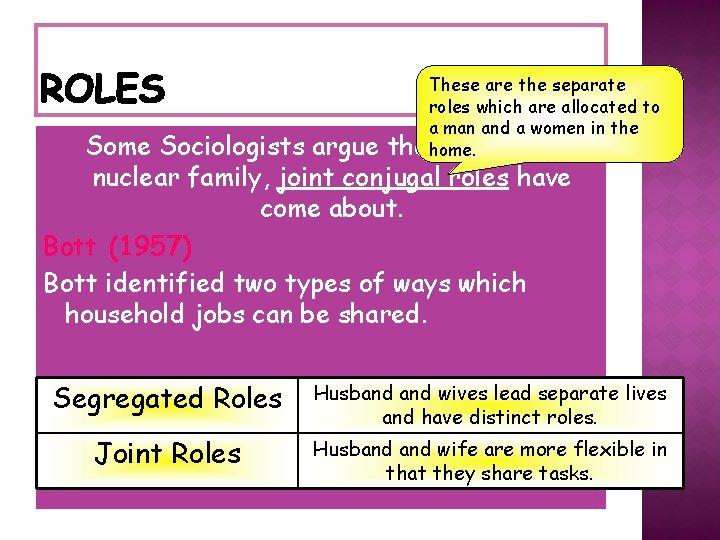
These are the separate roles which are allocated to a man and a women in the thathome. from the Some Sociologists argue nuclear family, joint conjugal roles have come about. Bott (1957) Bott identified two types of ways which household jobs can be shared. Segregated Roles Husband wives lead separate lives and have distinct roles. Joint Roles Husband wife are more flexible in that they share tasks.
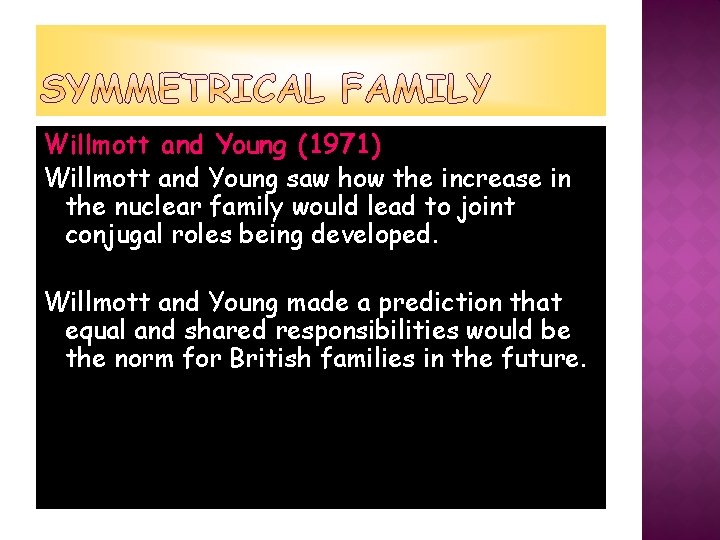
Willmott and Young (1971) Willmott and Young saw how the increase in the nuclear family would lead to joint conjugal roles being developed. Willmott and Young made a prediction that equal and shared responsibilities would be the norm for British families in the future.
Willmott and Young claimed that although the wife still continues to have primary responsibility, 72% of husbands get involved with housework tasks other than washing up.
Oakley (1974) � Oakley argues that men only have to do a few tasks around the house to qualify as having joint roles. � Oakley’s research found that it was rare for men to do a lot of housework. � Men participated in 15% of housework and 25% of childcare � Men ‘cherry pick’ the best jobs
Triple shift - Paid employment - Housework - Emotional work which is needed in order to make a relationship work. OR Dual burden
Pahl (1989, 1993) Pahl carried out a study on how couples managed their money and discovered that just over a quarter of couple had system of money management where by the degree of equality was fair. Think about your household. Is there equality When it comes to money management.
Edgell… The decisions which men made were: � Moving House � Finance � Car The decisions which women made were: � Interior Decorations � Food and Other Domestic Spending � Children's Clothes
� Discuss how far sociologists would agree that the roles of men and women in the family have changed significantly in the past 50 years. (12 marks) � Explain what sociologists mean by authority relationships in families. (4 marks) � Explain what sociologists mean by the domestic division of labour. (4 marks)
Task: Draw a mind map to show the reasons why we are living longer. Work in pairs. Why are we living longer? TIF task: Choose one factor from your mind map and explain in detail how it affects someone's life expectancy.
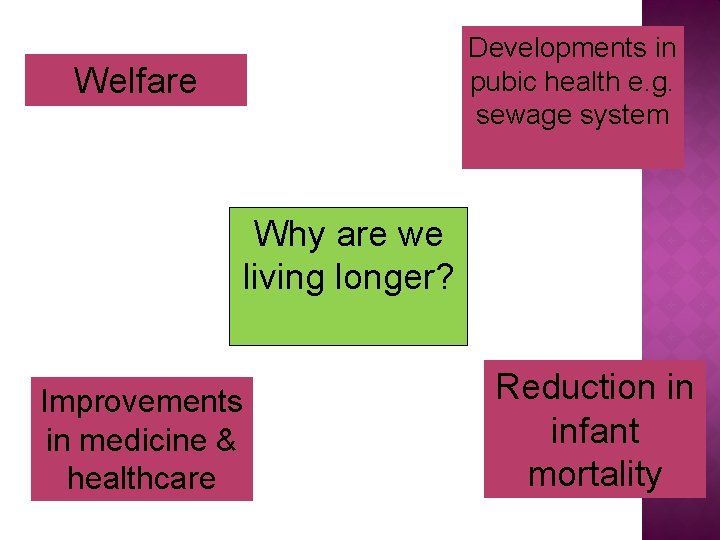
Developments in pubic health e. g. sewage system Welfare Why are we living longer? Improvements in medicine & healthcare Reduction in infant mortality
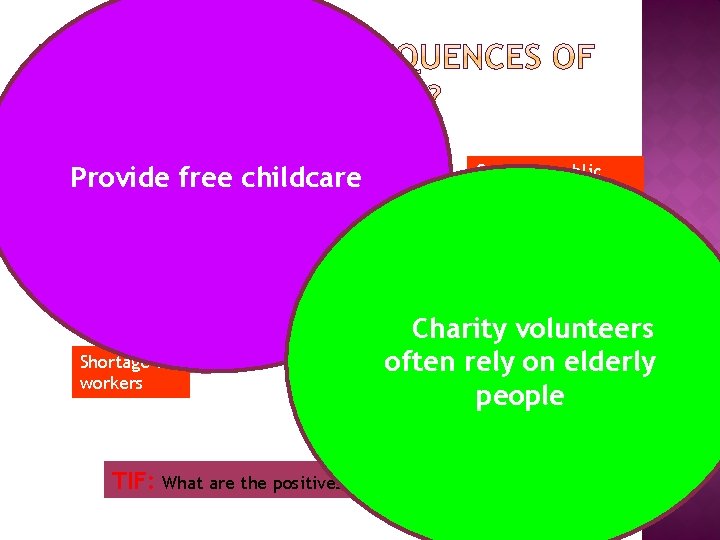
Increase in Provide dependency ration: leads to higher taxes free childcare Consume public services: healthcare housing transport Negative Shortage of workers Charity volunteers often rely on elderly Pension time-bomb people TIF: What are the positives to having an ageing population?
� Explain what sociologists mean by an ageing population (4 marks)