Network Functions n n n Definition examples and
- Slides: 28
Network Functions n n n Definition, examples , and general property Poles, zeros, and frequency response Poles, zeros, and impulse response Physical interpretation of poles and zeros Application to oscillator design Symmetry properties
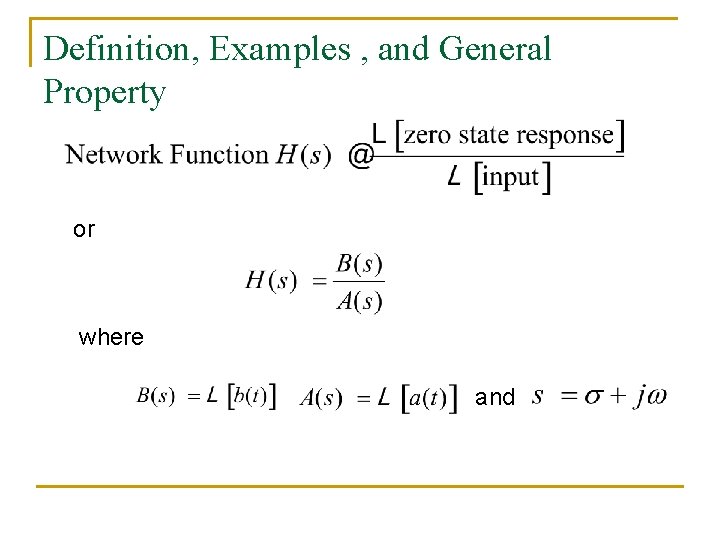
Definition, Examples , and General Property or where and
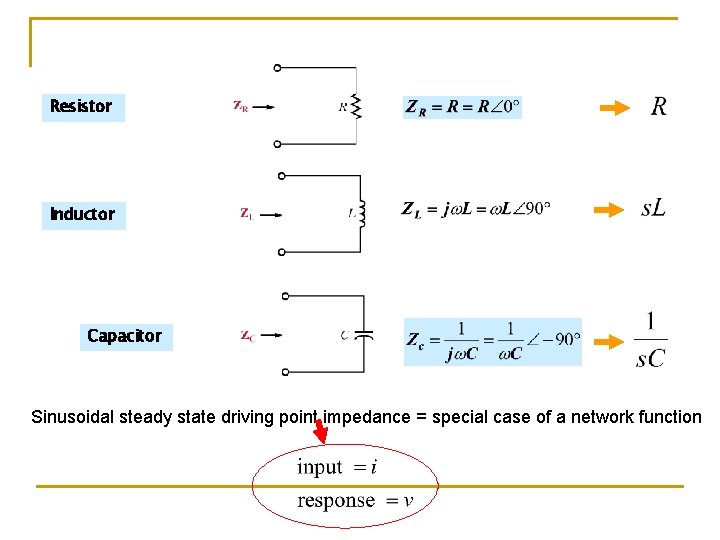
Resistor Inductor Capacitor Sinusoidal steady state driving point impedance = special case of a network function
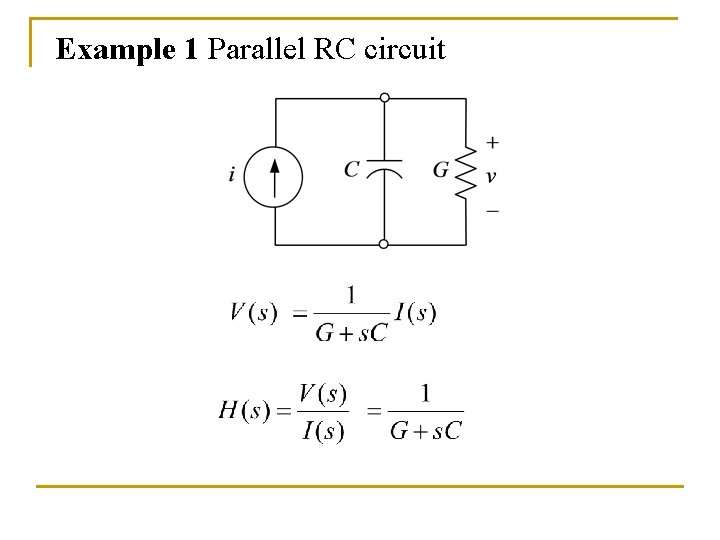
Example 1 Parallel RC circuit
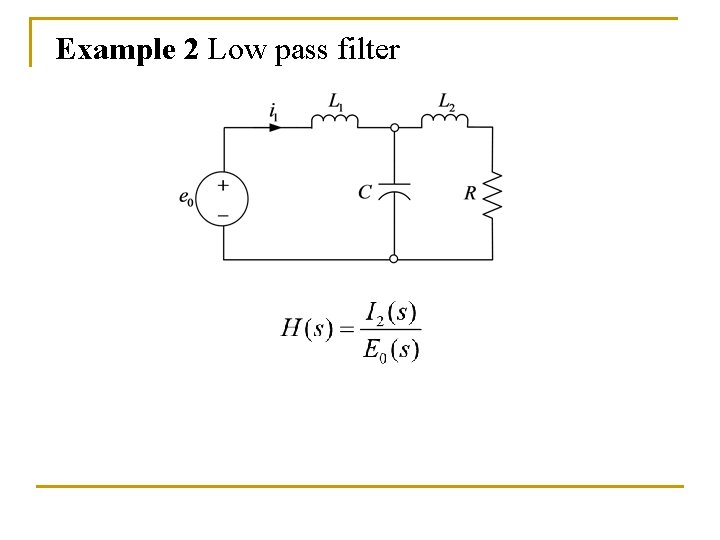
Example 2 Low pass filter
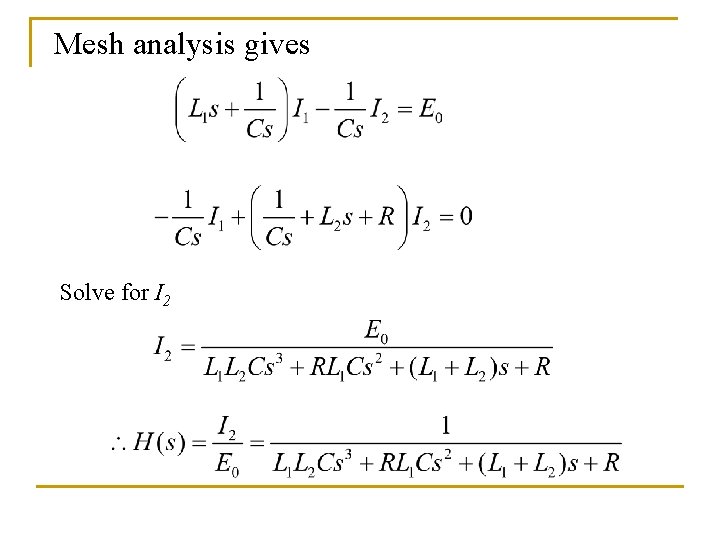
Mesh analysis gives Solve for I 2
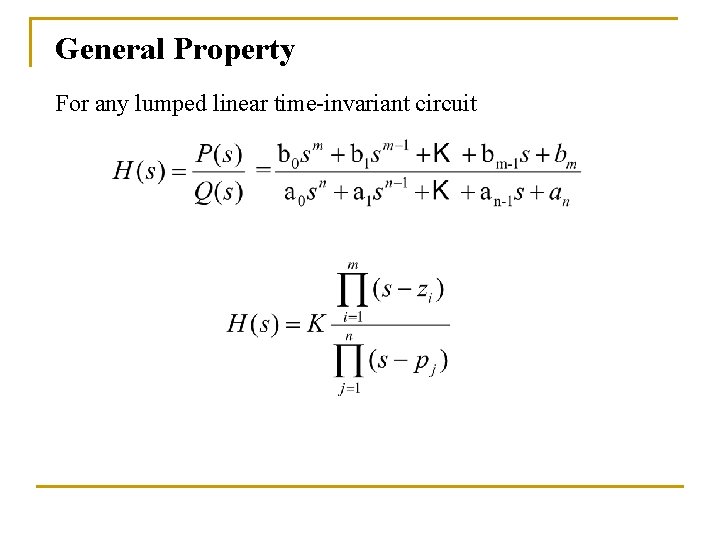
General Property For any lumped linear time-invariant circuit
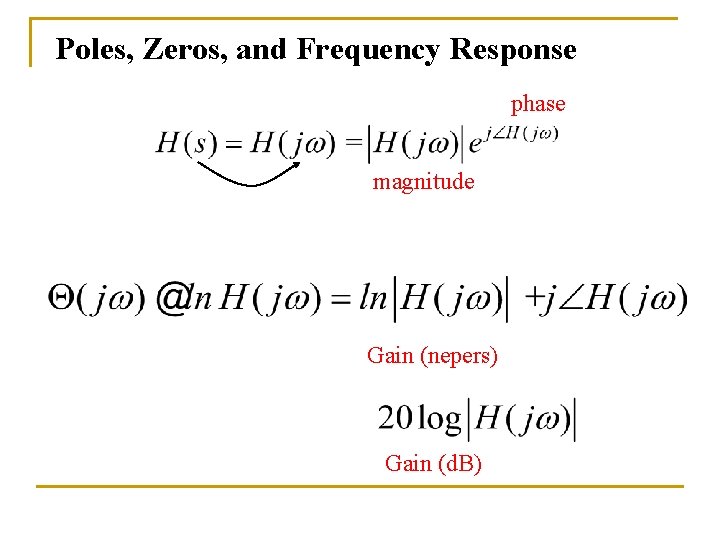
Poles, Zeros, and Frequency Response phase magnitude Gain (nepers) Gain (d. B)
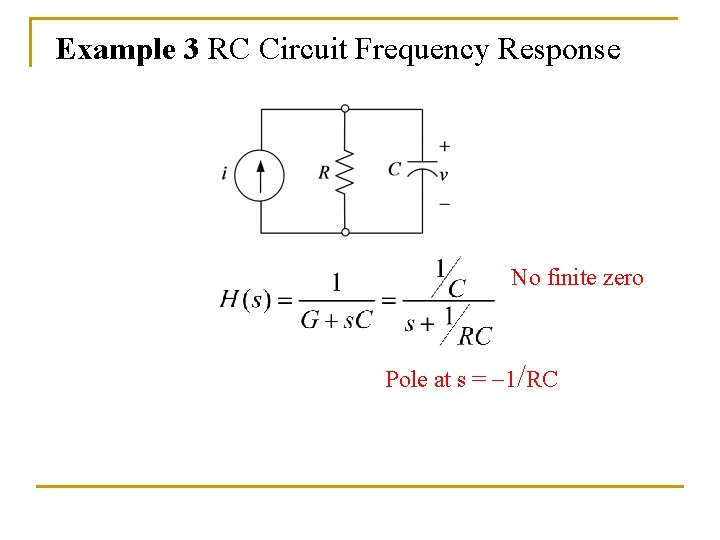
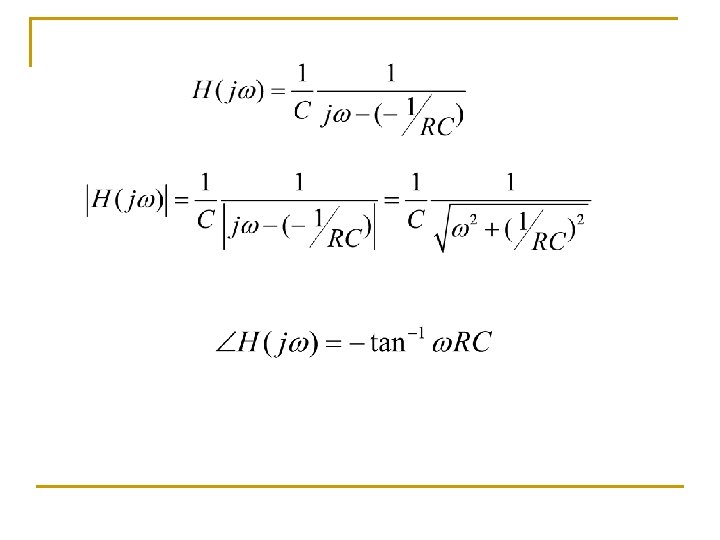
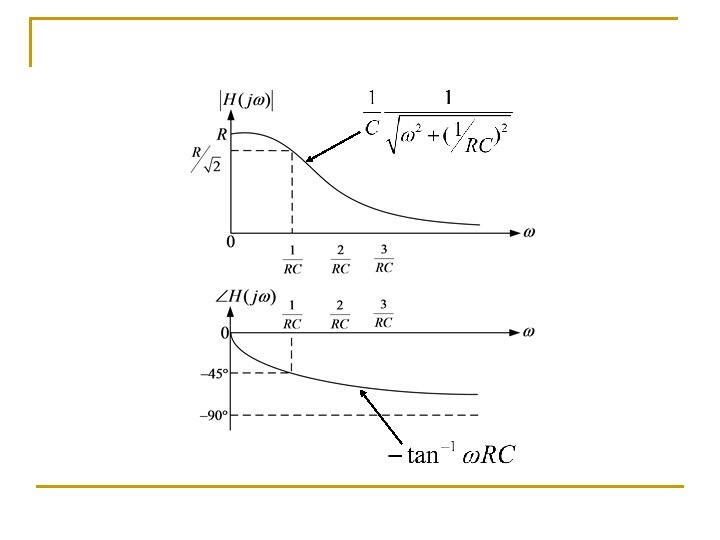
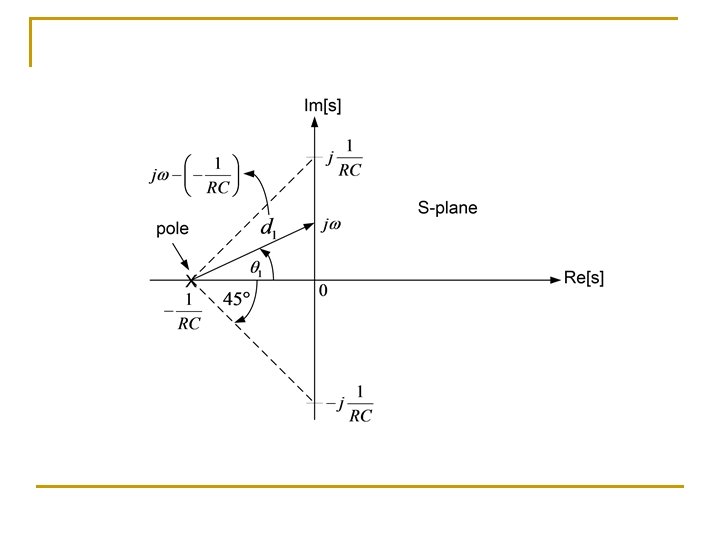
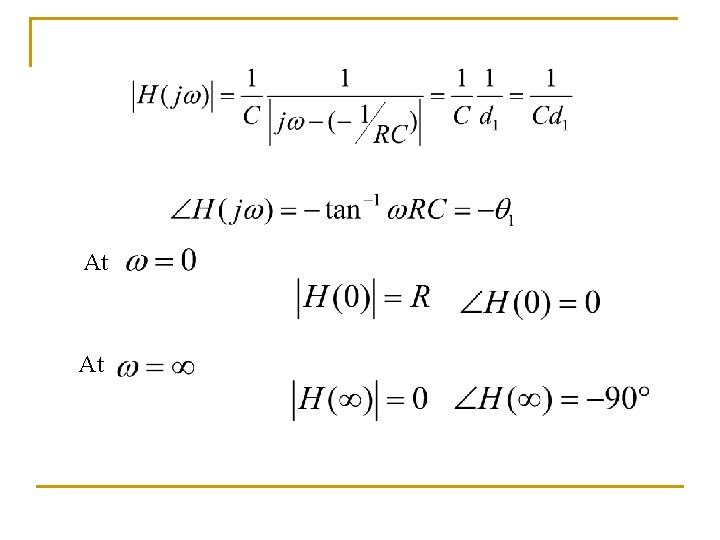
Example 3 RC Circuit Frequency Response No finite zero Pole at s = -1/RC
At At
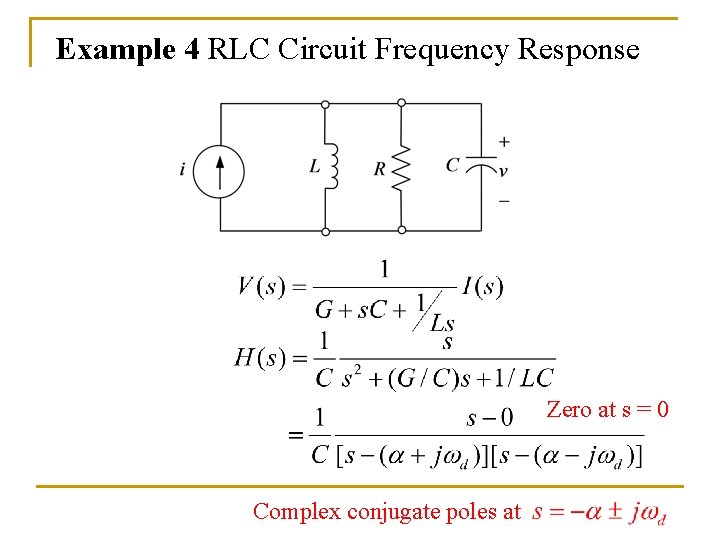
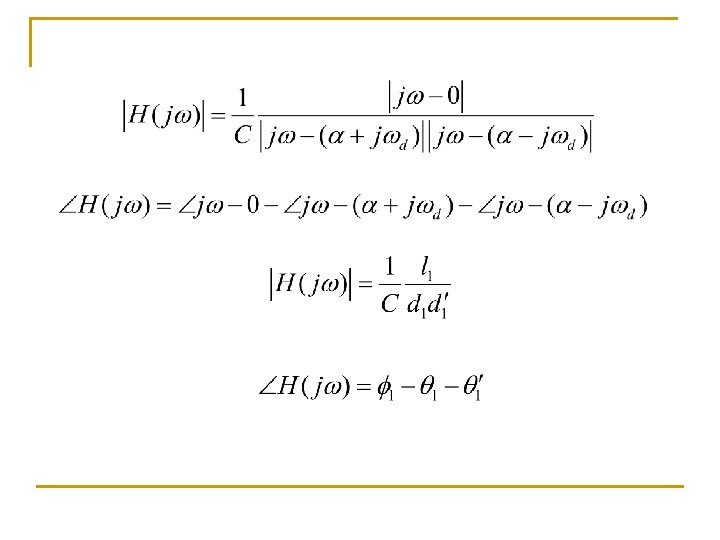
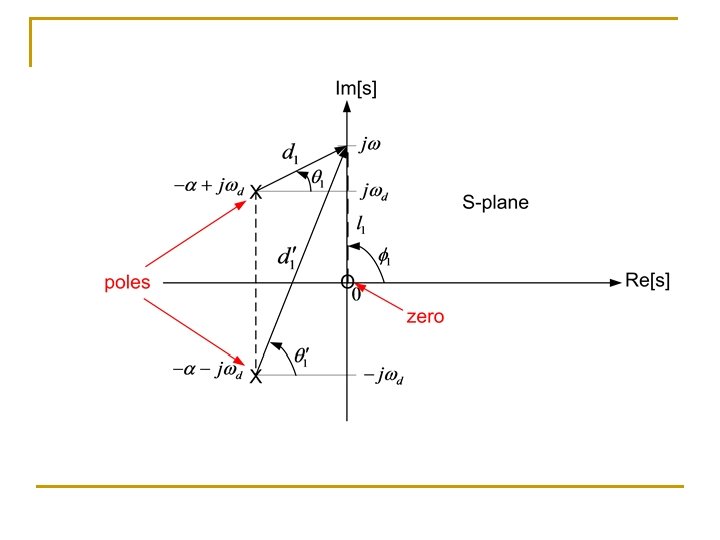
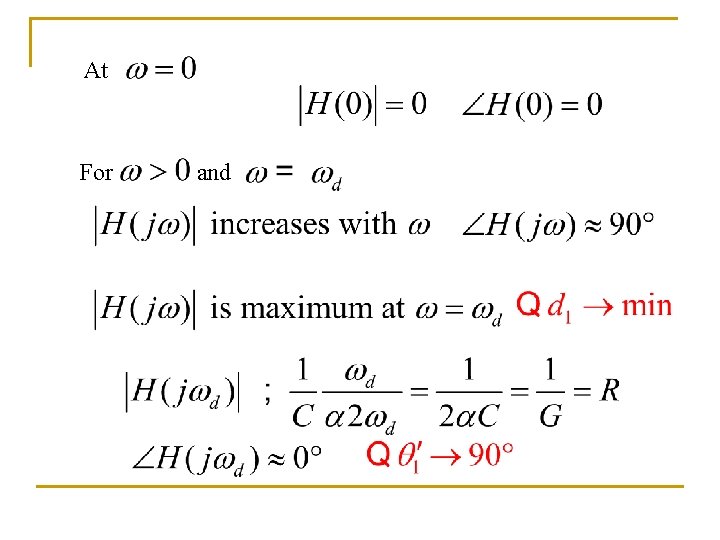
Example 4 RLC Circuit Frequency Response Zero at s = 0 Complex conjugate poles at
At For and
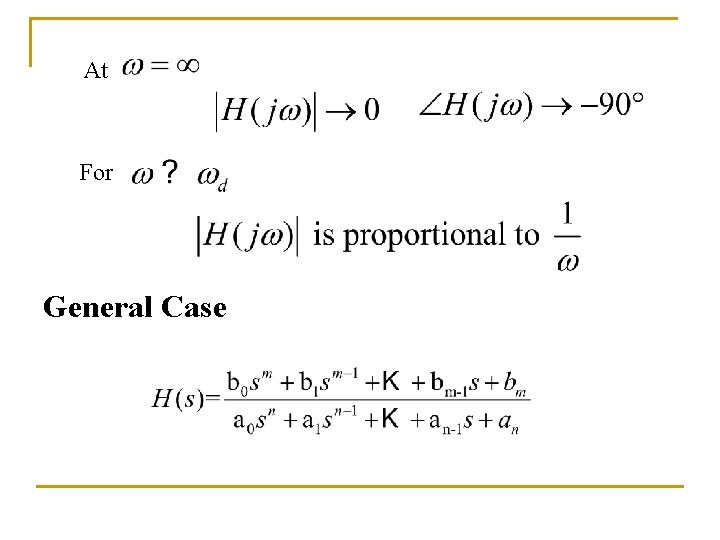
At For General Case
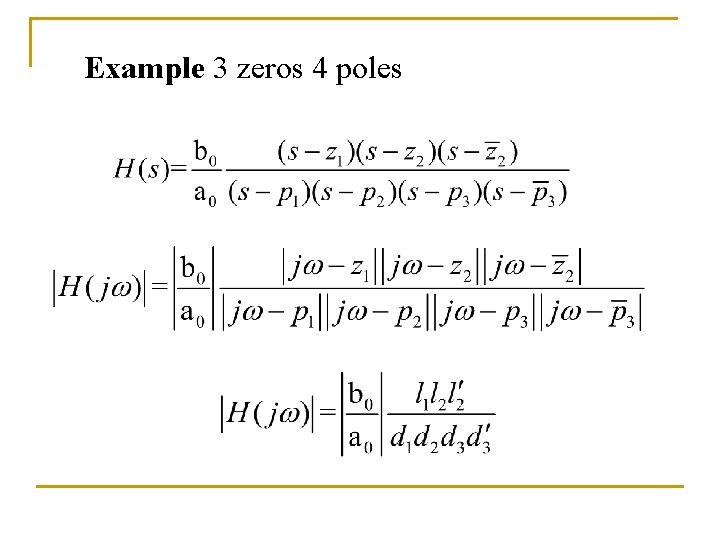
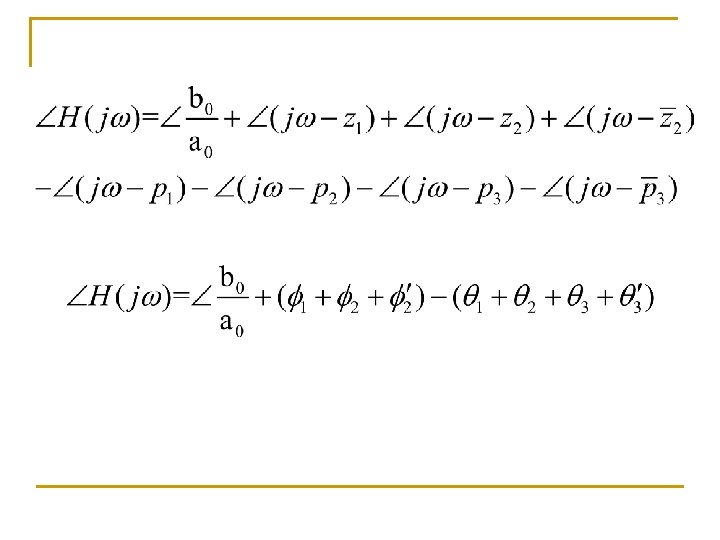
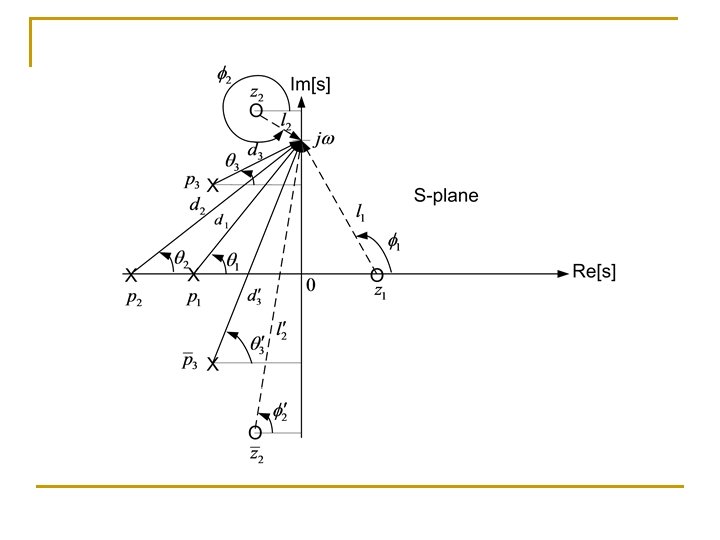
Example 3 zeros 4 poles
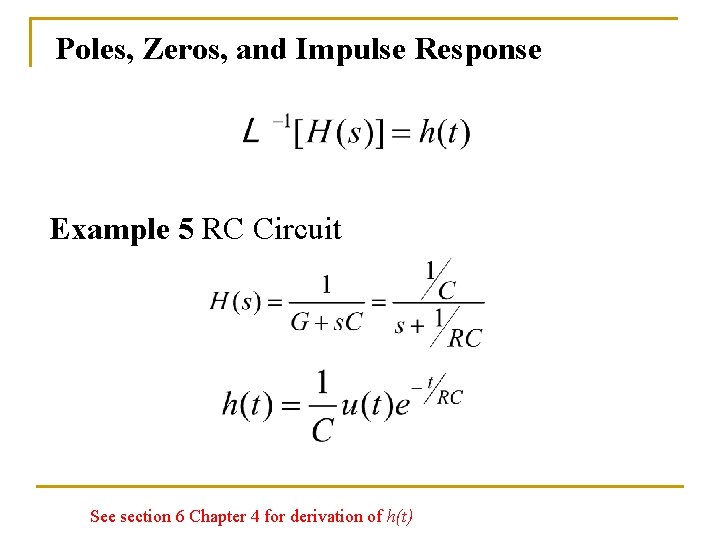
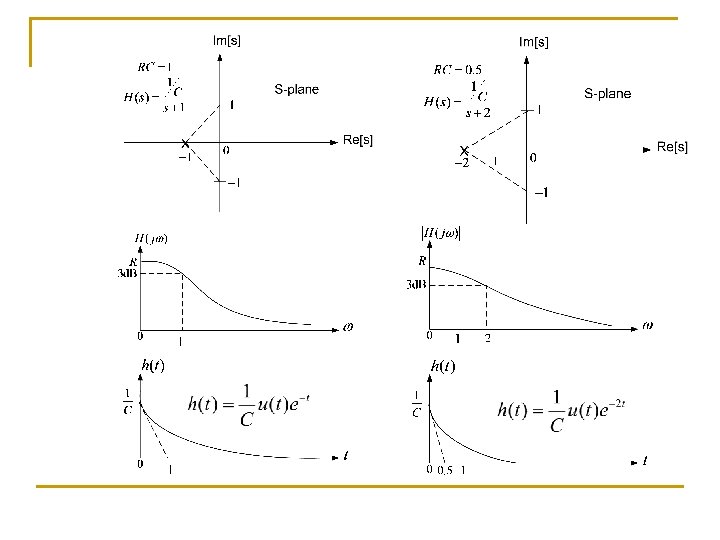
Poles, Zeros, and Impulse Response Example 5 RC Circuit See section 6 Chapter 4 for derivation of h(t)
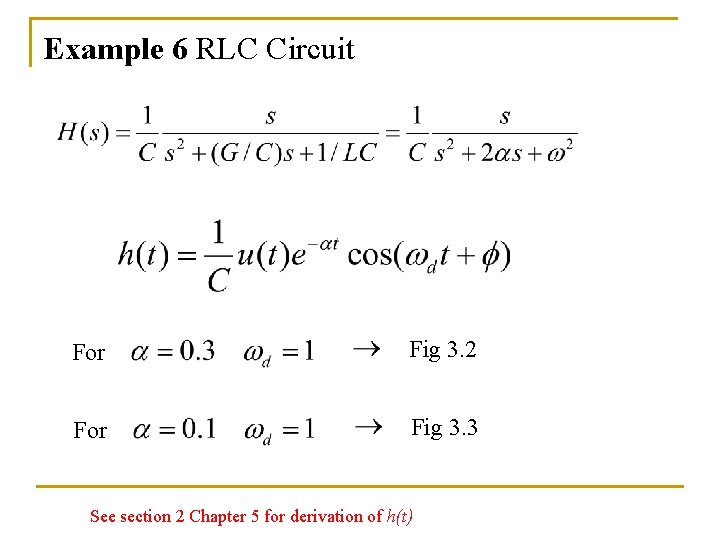
Example 6 RLC Circuit For Fig 3. 2 For Fig 3. 3 See section 2 Chapter 5 for derivation of h(t)
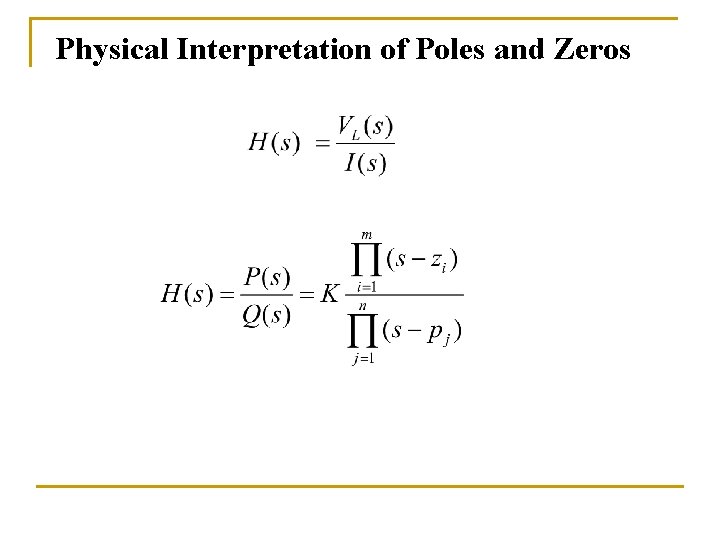
Physical Interpretation of Poles and Zeros
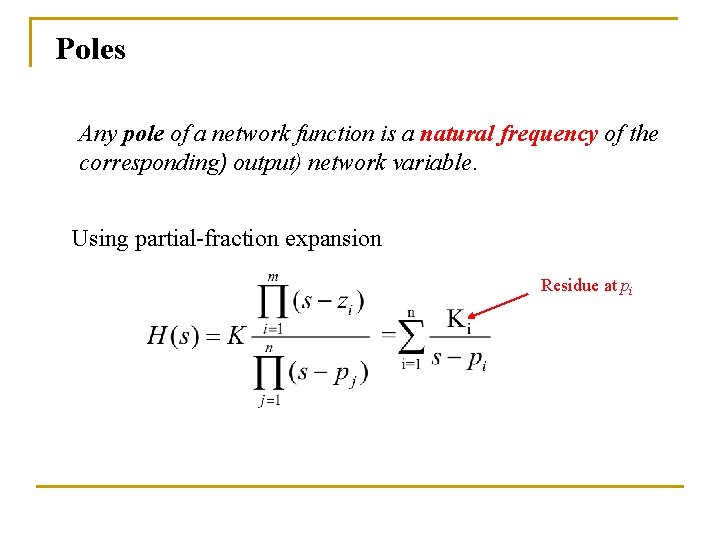
Poles Any pole of a network function is a natural frequency of the corresponding) output) network variable. Using partial-fraction expansion Residue at pi
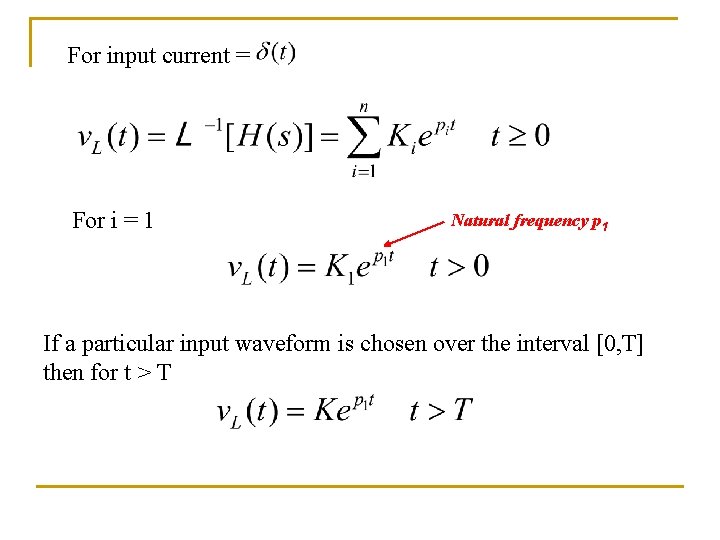
For input current = For i = 1 Natural frequency p 1 If a particular input waveform is chosen over the interval [0, T] then for t > T
Summary Any pole of a network function is a natural frequency of the corresponding) output) network variable, but any natural frequency of a network variable need not be a pole of a given network function which has this network variable as output.