Neonatal and Infant CRRT Jordan M Symons MD

- Slides: 34
Neonatal and Infant CRRT Jordan M. Symons, MD University of Washington School of Medicine Children’s Hospital & Regional Medical Center Seattle, WA jordan. symons@seattlechildrens. org
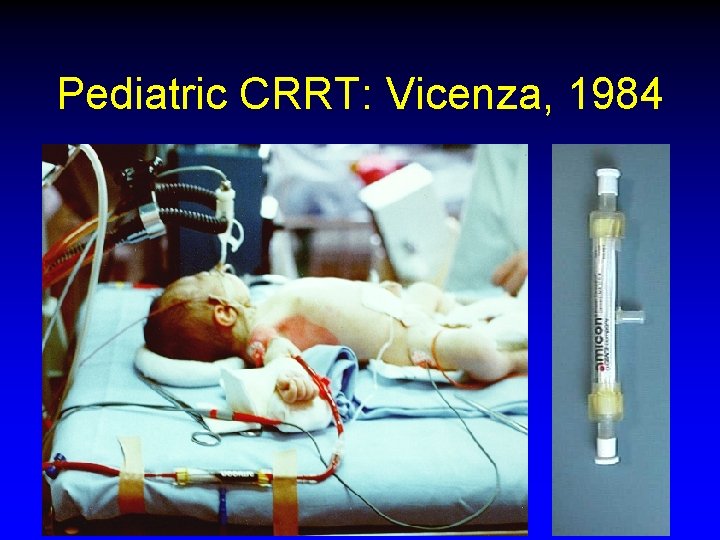
Pediatric CRRT: Vicenza, 1984
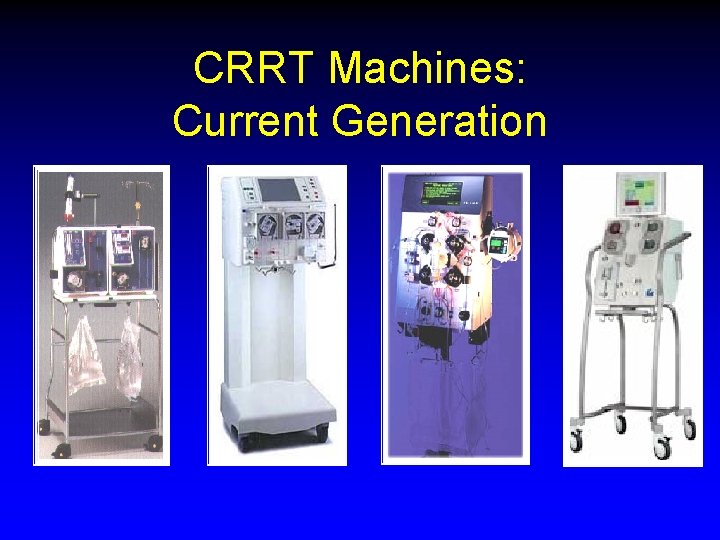
CRRT Machines: Current Generation
Vascular Access for Pediatric CRRT • Smaller patients require smaller catheters • Difficulty achieving access • Difficulty maintaining access • Limited access sites
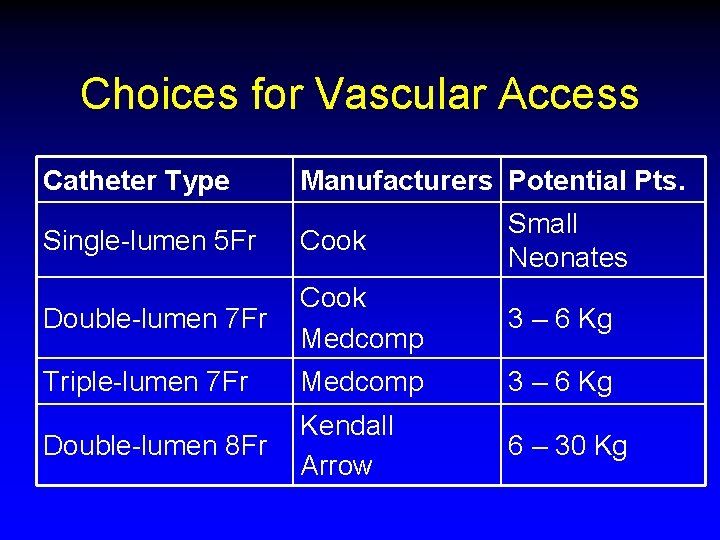
Choices for Vascular Access Catheter Type Manufacturers Potential Pts. Single-lumen 5 Fr Cook Small Neonates Double-lumen 7 Fr Cook Medcomp 3 – 6 Kg Triple-lumen 7 Fr Medcomp 3 – 6 Kg Double-lumen 8 Fr Kendall Arrow 6 – 30 Kg
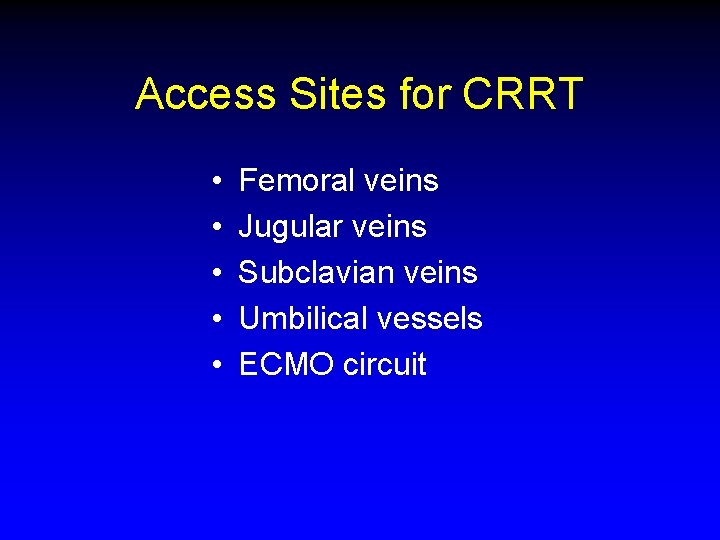
Access Sites for CRRT • • • Femoral veins Jugular veins Subclavian veins Umbilical vessels ECMO circuit
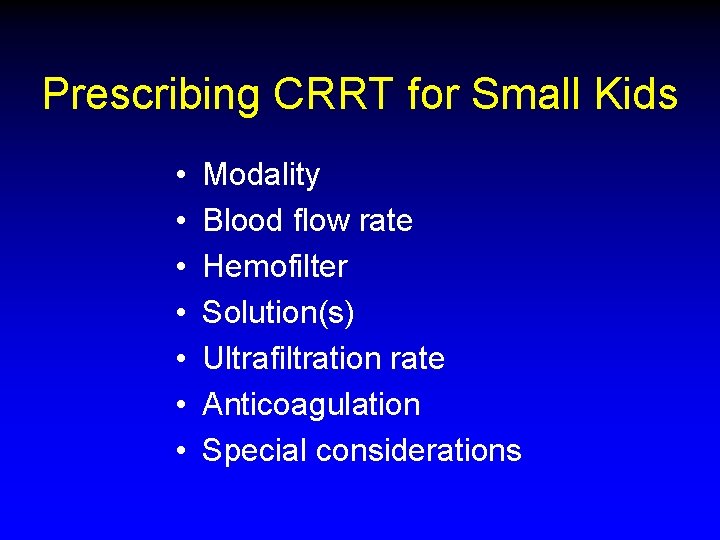
Prescribing CRRT for Small Kids • • Modality Blood flow rate Hemofilter Solution(s) Ultrafiltration rate Anticoagulation Special considerations
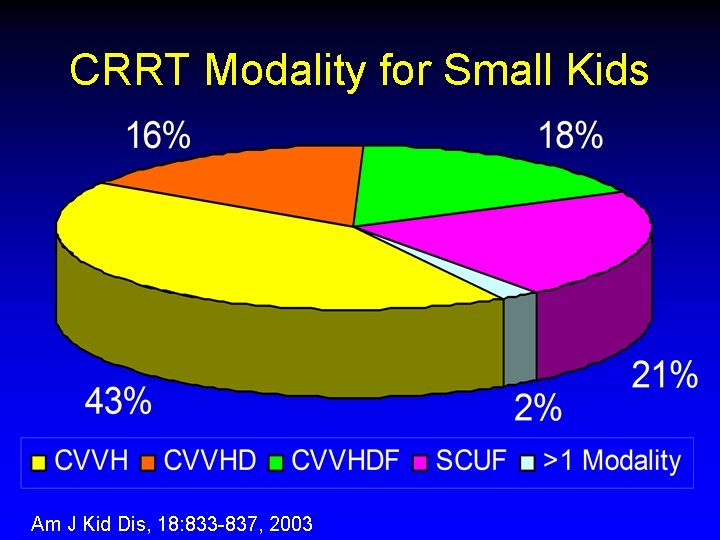
CRRT Modality for Small Kids Am J Kid Dis, 18: 833 -837, 2003
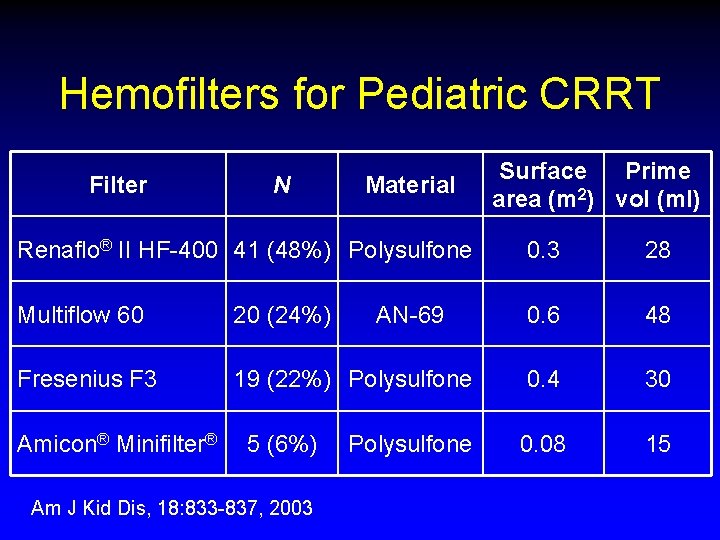
Hemofilters for Pediatric CRRT Filter N Material Surface Prime area (m 2) vol (ml) Renaflo® II HF-400 41 (48%) Polysulfone 0. 3 28 Multiflow 60 20 (24%) 0. 6 48 Fresenius F 3 19 (22%) Polysulfone 0. 4 30 0. 08 15 Amicon® Minifilter® 5 (6%) Am J Kid Dis, 18: 833 -837, 2003 AN-69 Polysulfone
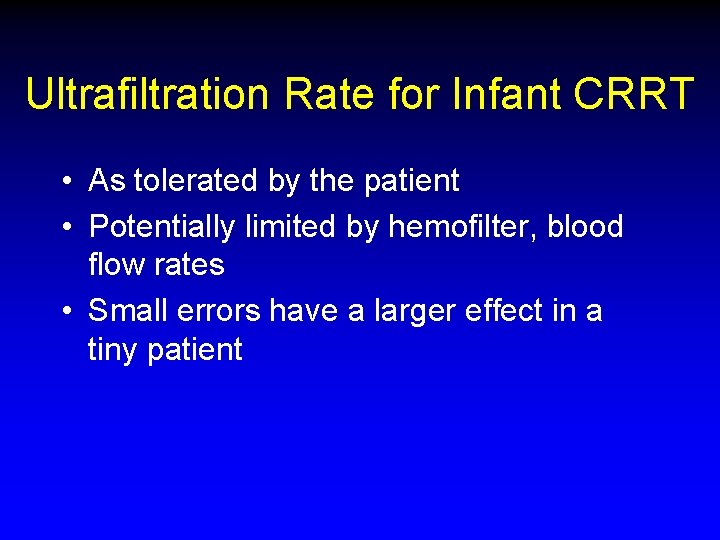
Ultrafiltration Rate for Infant CRRT • As tolerated by the patient • Potentially limited by hemofilter, blood flow rates • Small errors have a larger effect in a tiny patient
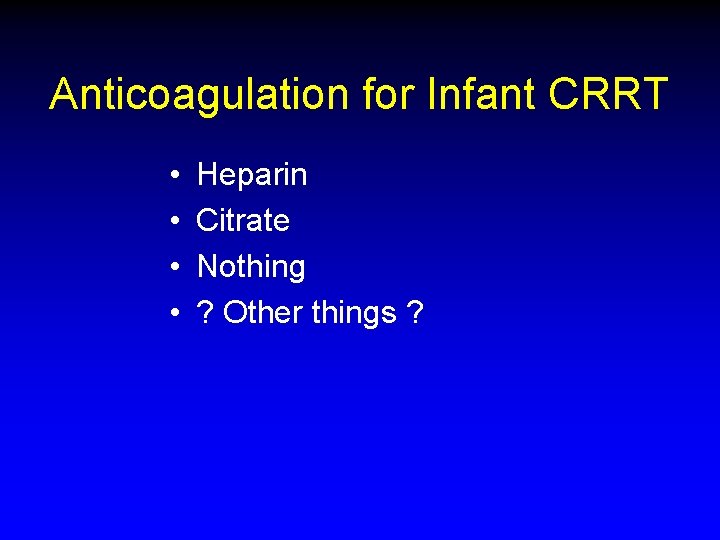
Anticoagulation for Infant CRRT • • Heparin Citrate Nothing ? Other things ?
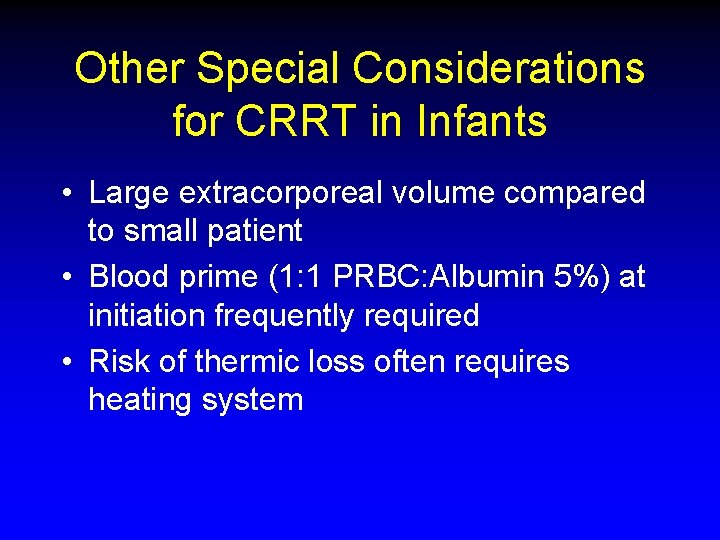
Other Special Considerations for CRRT in Infants • Large extracorporeal volume compared to small patient • Blood prime (1: 1 PRBC: Albumin 5%) at initiation frequently required • Risk of thermic loss often requires heating system
Potential Complications of Infant CRRT • • Volume related problems Biochemical and nutritional problems Hemorrhage Infection Technical problems Logistical problems Bradykinin release syndrome
Logistical Issues for Infant CRRT • Infrequently performed procedure in neonatal units • Vascular access can be difficult to organize and obtain • Neonatology staff may be unfamiliar with equipment, procedure, risks • Written procedures may improve coordination and results of therapy
Bradykinin Release Syndrome • Mucosal congestion, bronchospasm, hypotension at start of CRRT • Resolves with discontinuation of CRRT • Thought to be related to bradykinin release when patient’s blood contacts hemofilter • Exquisitely p. H sensitive
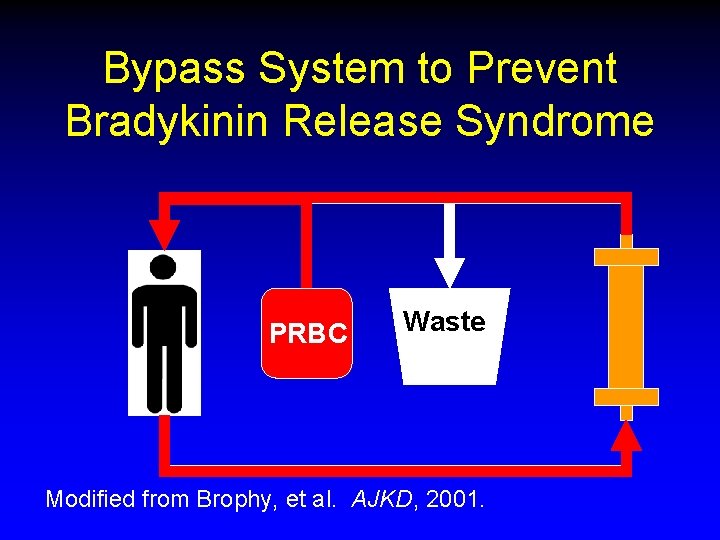
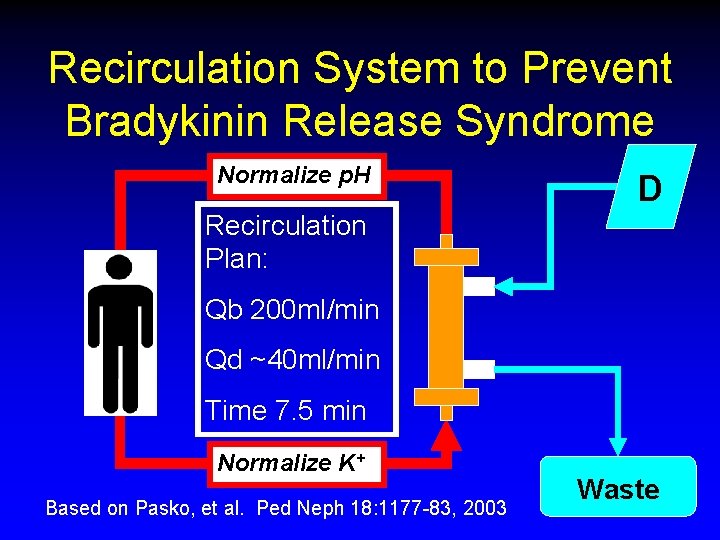
Technique Modifications to Prevent Bradykinin Release Syndrome • Buffered system: add THAM, Ca. Cl, Na. Bicarb to PRBCs • Bypass system: prime circuit with saline, run PRBCs into patient on venous return line • Recirculation system: recirculate blood prime against dialysate
Bypass System to Prevent Bradykinin Release Syndrome PRBC Waste Modified from Brophy, et al. AJKD, 2001.
Recirculation System to Prevent Bradykinin Release Syndrome Normalize p. H D Recirculation Plan: Qb 200 ml/min Qd ~40 ml/min Time 7. 5 min Normalize K+ Based on Pasko, et al. Ped Neph 18: 1177 -83, 2003 Waste
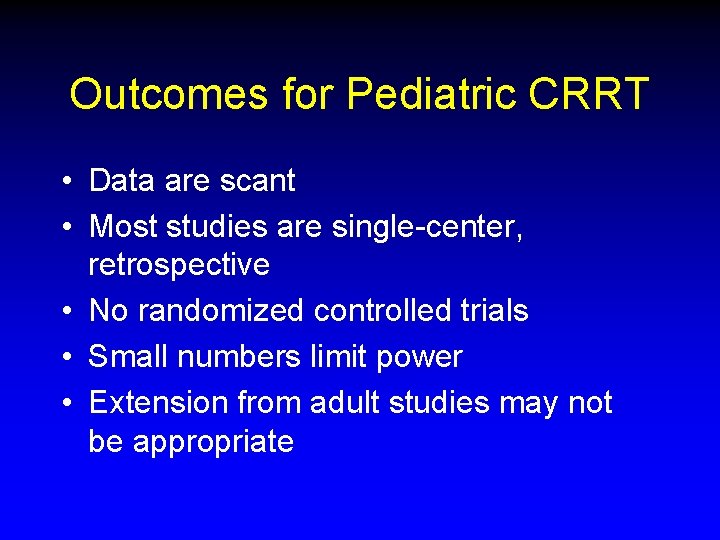
Outcomes for Pediatric CRRT • Data are scant • Most studies are single-center, retrospective • No randomized controlled trials • Small numbers limit power • Extension from adult studies may not be appropriate
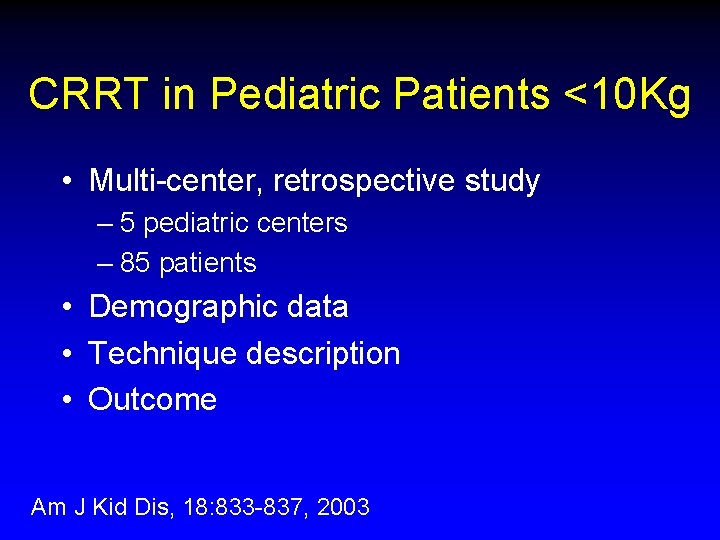
CRRT in Pediatric Patients <10 Kg • Multi-center, retrospective study – 5 pediatric centers – 85 patients • Demographic data • Technique description • Outcome Am J Kid Dis, 18: 833 -837, 2003
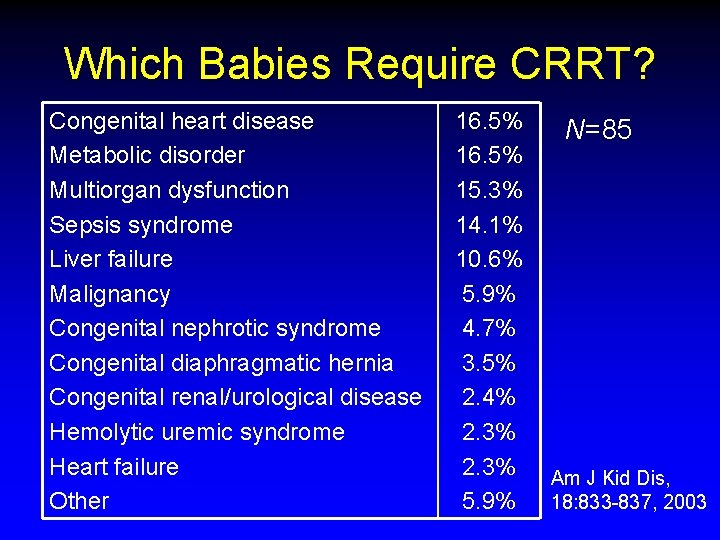
Which Babies Require CRRT? Congenital heart disease Metabolic disorder Multiorgan dysfunction Sepsis syndrome Liver failure Malignancy Congenital nephrotic syndrome Congenital diaphragmatic hernia Congenital renal/urological disease Hemolytic uremic syndrome Heart failure Other 16. 5% 15. 3% 14. 1% 10. 6% 5. 9% 4. 7% 3. 5% 2. 4% 2. 3% 5. 9% N=85 Am J Kid Dis, 18: 833 -837, 2003
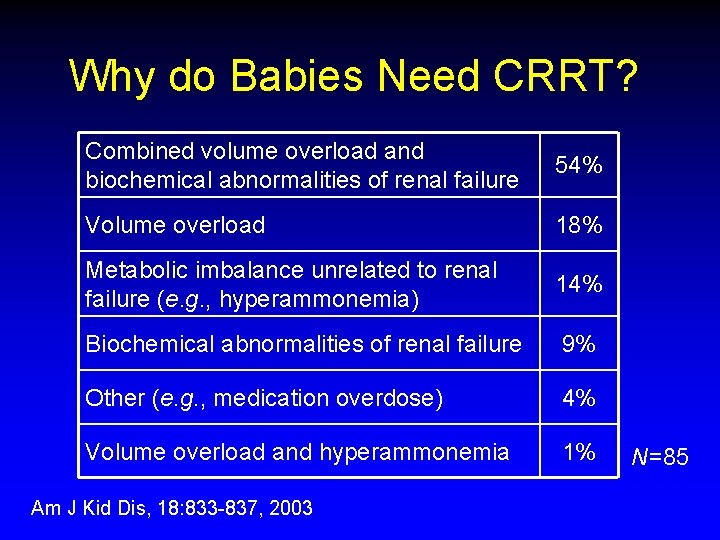
Why do Babies Need CRRT? Combined volume overload and biochemical abnormalities of renal failure 54% Volume overload 18% Metabolic imbalance unrelated to renal failure (e. g. , hyperammonemia) 14% Biochemical abnormalities of renal failure 9% Other (e. g. , medication overdose) 4% Volume overload and hyperammonemia 1% Am J Kid Dis, 18: 833 -837, 2003 N=85
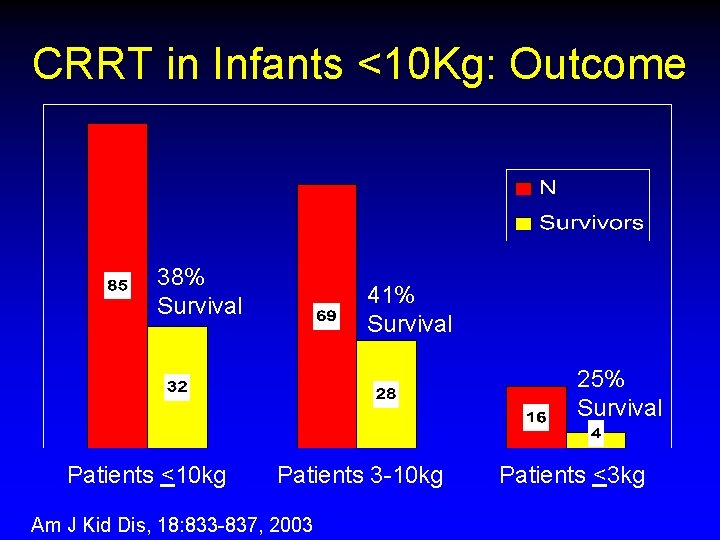
CRRT in Infants <10 Kg: Outcome 38% Survival 41% Survival 25% Survival Patients <10 kg Patients 3 -10 kg Am J Kid Dis, 18: 833 -837, 2003 Patients <3 kg
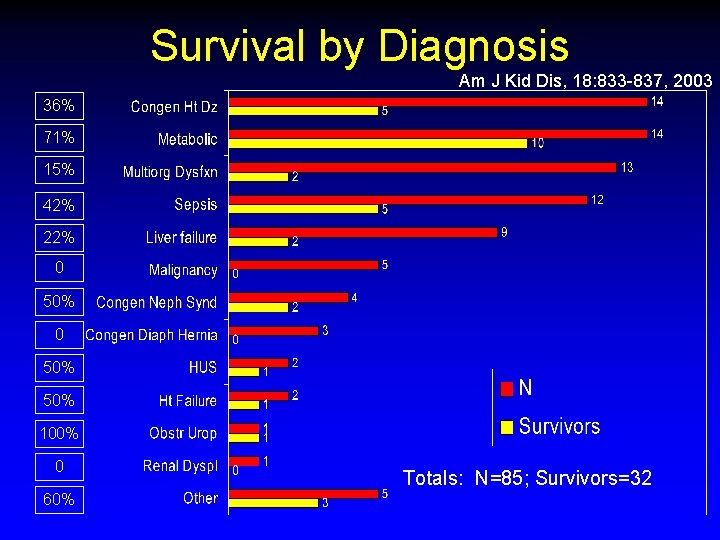
Survival by Diagnosis Am J Kid Dis, 18: 833 -837, 2003 36% 71% 15% 42% 22% 0 50% 50% 100% 0 60% Totals: N=85; Survivors=32
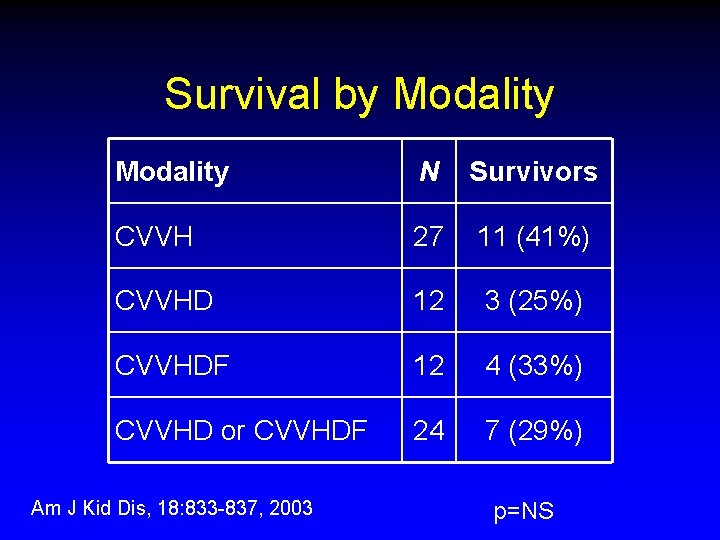
Survival by Modality N Survivors CVVH 27 11 (41%) CVVHD 12 3 (25%) CVVHDF 12 4 (33%) CVVHD or CVVHDF 24 7 (29%) Am J Kid Dis, 18: 833 -837, 2003 p=NS
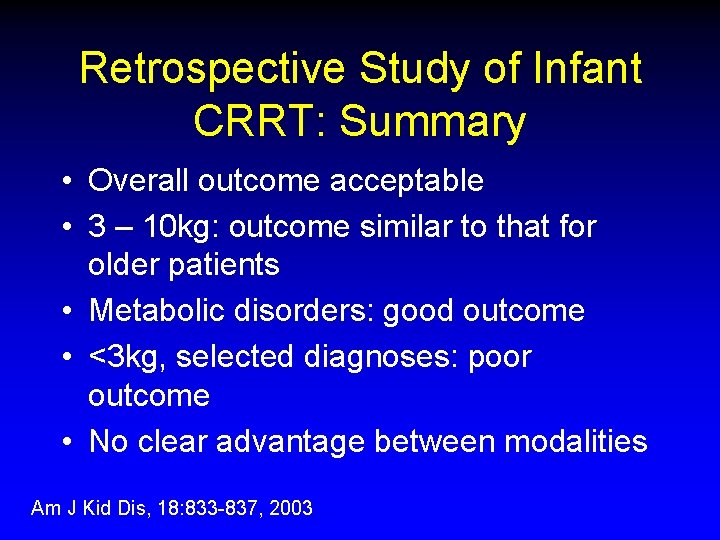
Retrospective Study of Infant CRRT: Summary • Overall outcome acceptable • 3 – 10 kg: outcome similar to that for older patients • Metabolic disorders: good outcome • <3 kg, selected diagnoses: poor outcome • No clear advantage between modalities Am J Kid Dis, 18: 833 -837, 2003
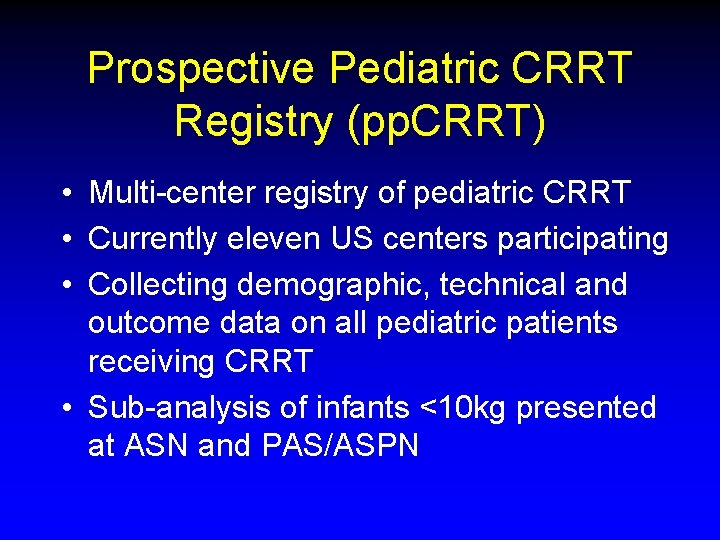
Prospective Pediatric CRRT Registry (pp. CRRT) • Multi-center registry of pediatric CRRT • Currently eleven US centers participating • Collecting demographic, technical and outcome data on all pediatric patients receiving CRRT • Sub-analysis of infants <10 kg presented at ASN and PAS/ASPN
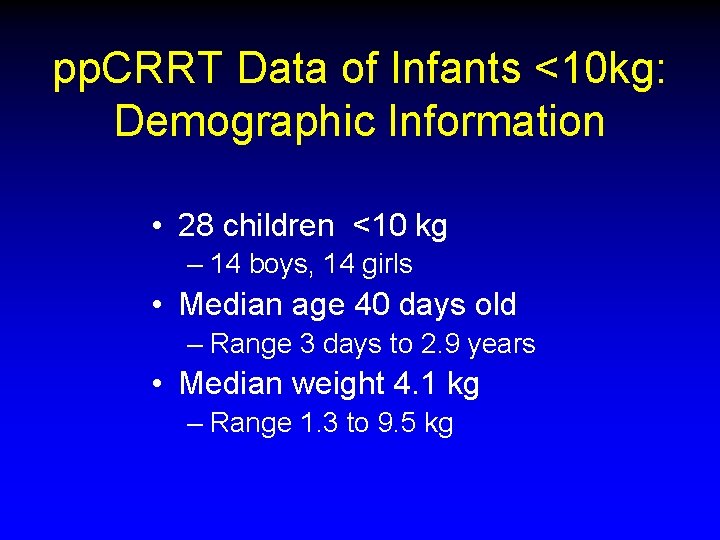
pp. CRRT Data of Infants <10 kg: Demographic Information • 28 children <10 kg – 14 boys, 14 girls • Median age 40 days old – Range 3 days to 2. 9 years • Median weight 4. 1 kg – Range 1. 3 to 9. 5 kg
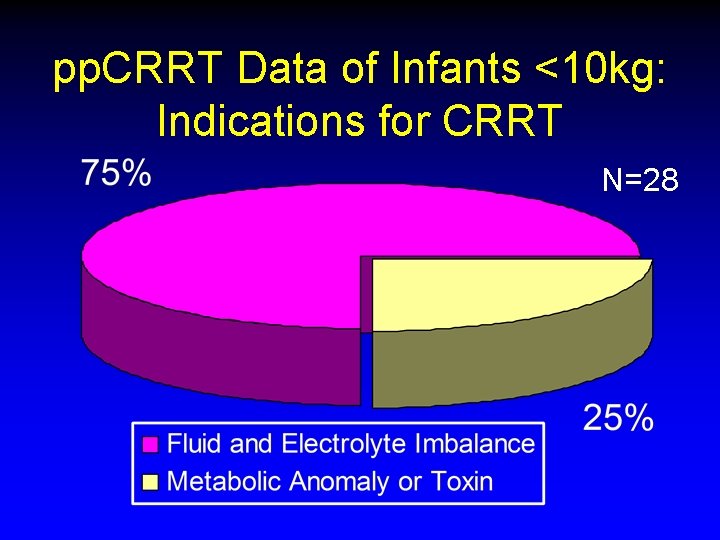
pp. CRRT Data of Infants <10 kg: Indications for CRRT N=28
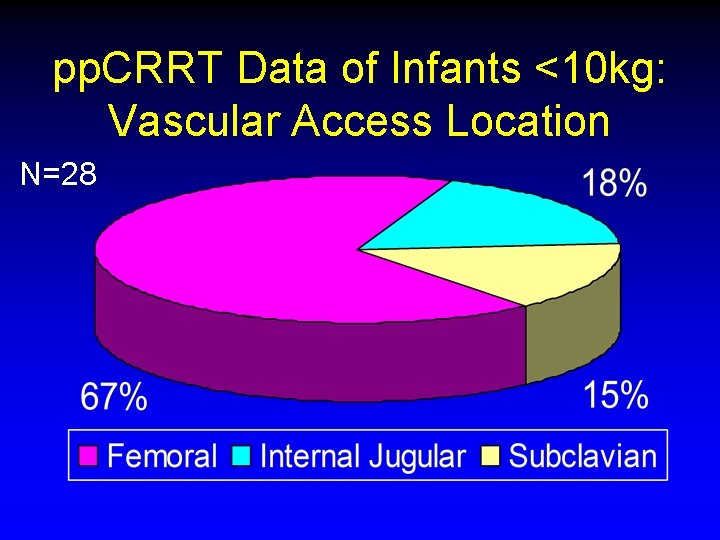
pp. CRRT Data of Infants <10 kg: Vascular Access Location N=28
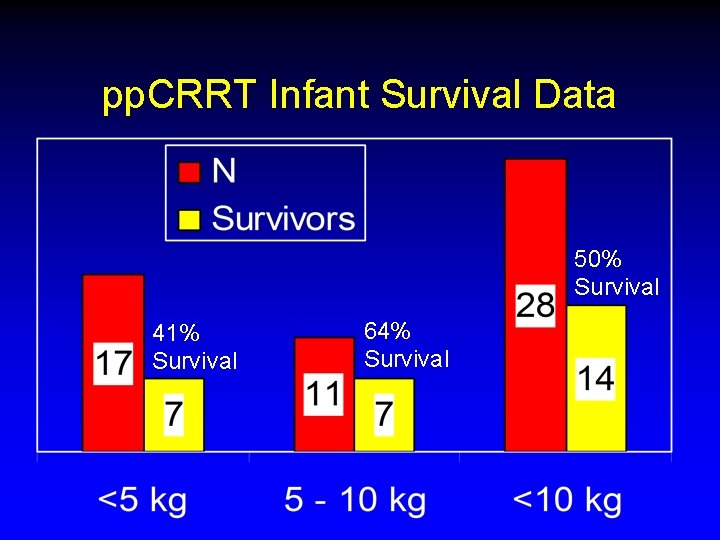
pp. CRRT Infant Survival Data 50% Survival 41% Survival 64% Survival
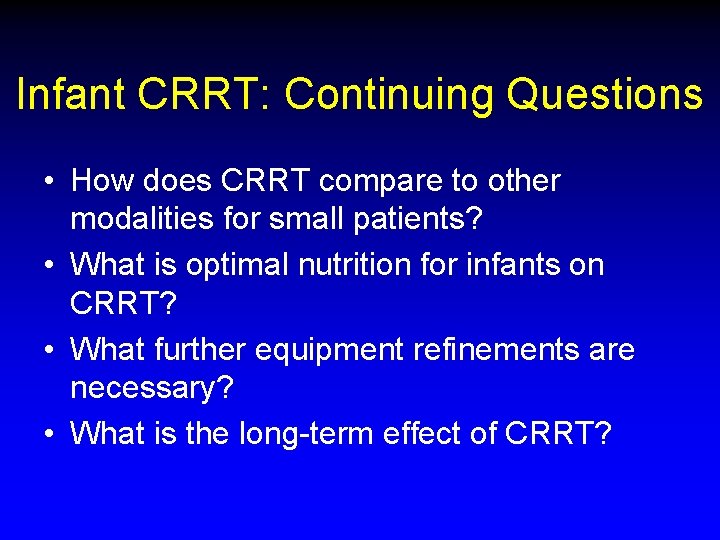
Infant CRRT: Continuing Questions • How does CRRT compare to other modalities for small patients? • What is optimal nutrition for infants on CRRT? • What further equipment refinements are necessary? • What is the long-term effect of CRRT?
Thanks!