Negotiation Reflection PositionsIntetersts Todays Agenda Reading Quiz 1





- Slides: 25
Negotiation Reflection
Positions/Intetersts
Today’s Agenda • Reading Quiz 1 – Closed note, closed book – AT THE END OF CLASS ( you are welcome) • Interests and Positions • Debrief Texoil
Texoil • What were the BATNAs for each party? • What were the reservation values for each party? • What were the aspiration values for each party? • What was each party’s position? • What were each party’s interests?
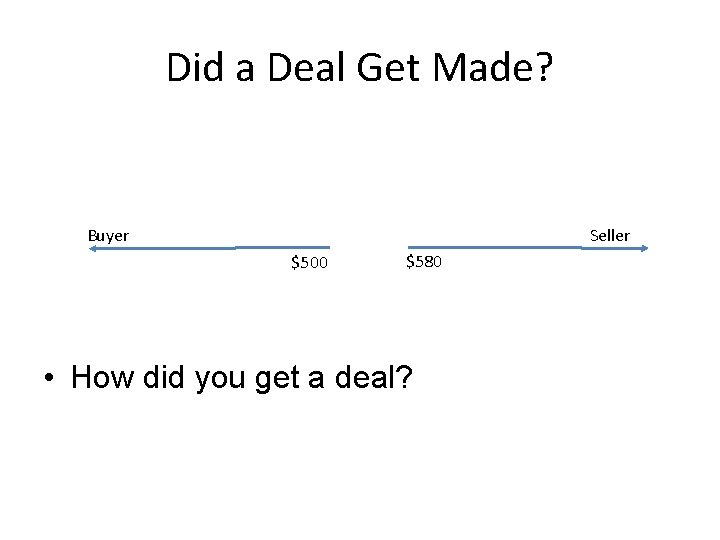
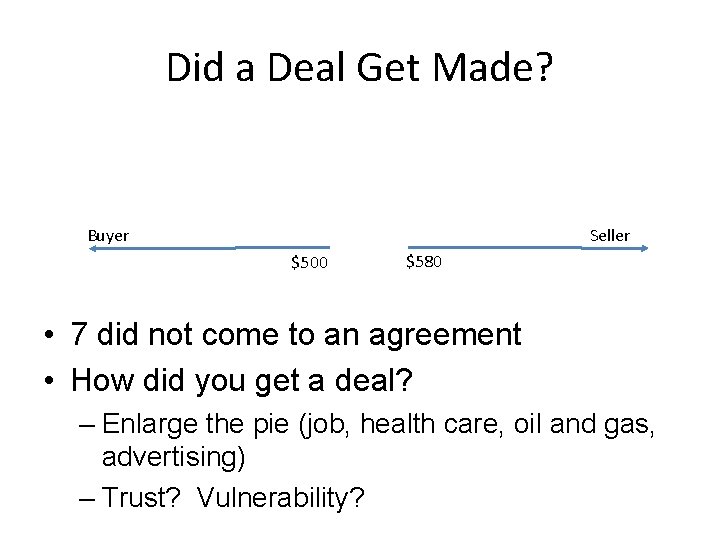
Did a Deal Get Made? Seller Buyer $500 $580 • How did you get a deal?
Did a Deal Get Made? Seller Buyer $500 $580 • 7 did not come to an agreement • How did you get a deal? – Enlarge the pie (job, health care, oil and gas, advertising) – Trust? Vulnerability?
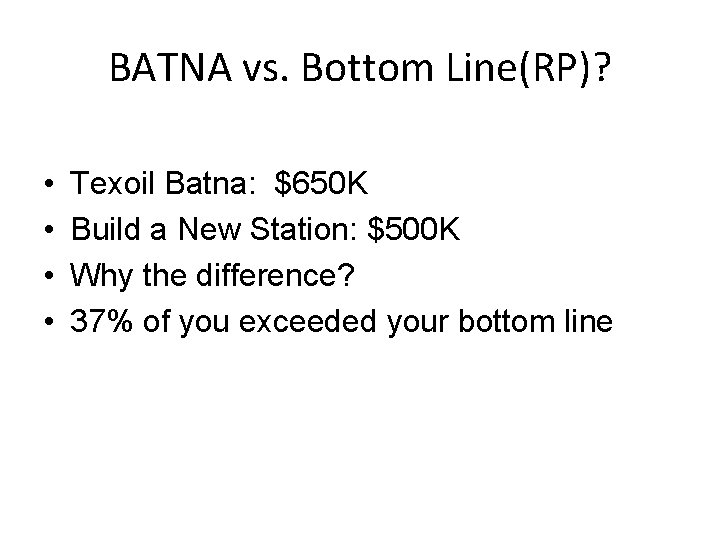
BATNA vs. Bottom Line(RP)? • • Texoil Batna: $650 K Build a New Station: $500 K Why the difference? 37% of you exceeded your bottom line
Sale Money Plus other things…. .
Integrative Negotiations • Recall: Effective negotiations: – Produce wise agreement – Be efficient – Improve the Relationship between parties
Conflict vs. differ Conflict: preferences oppose Differ issues opposes
Recall • Effective negotiations: – Produce wise agreement – Be efficient – Improve the Relationship between parties
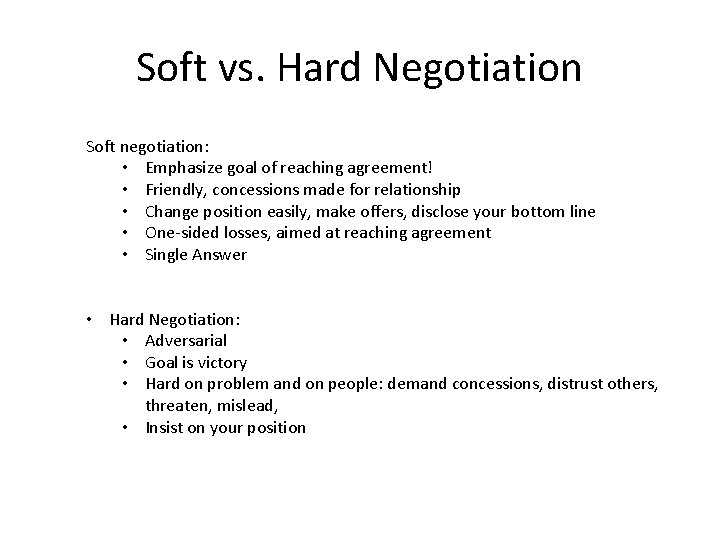
Soft vs. Hard Negotiation Soft negotiation: • Emphasize goal of reaching agreement! • Friendly, concessions made for relationship • Change position easily, make offers, disclose your bottom line • One-sided losses, aimed at reaching agreement • Single Answer • Hard Negotiation: • Adversarial • Goal is victory • Hard on problem and on people: demand concessions, distrust others, threaten, mislead, • Insist on your position
Choice between Hard and Soft
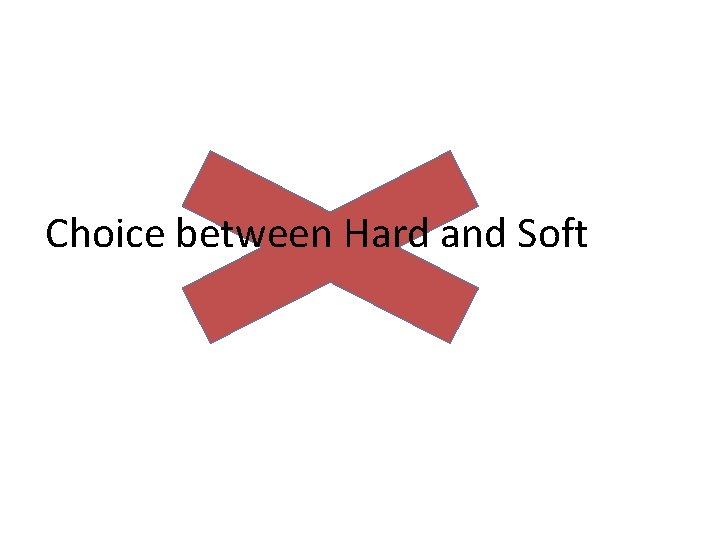
Choice between Hard and Soft
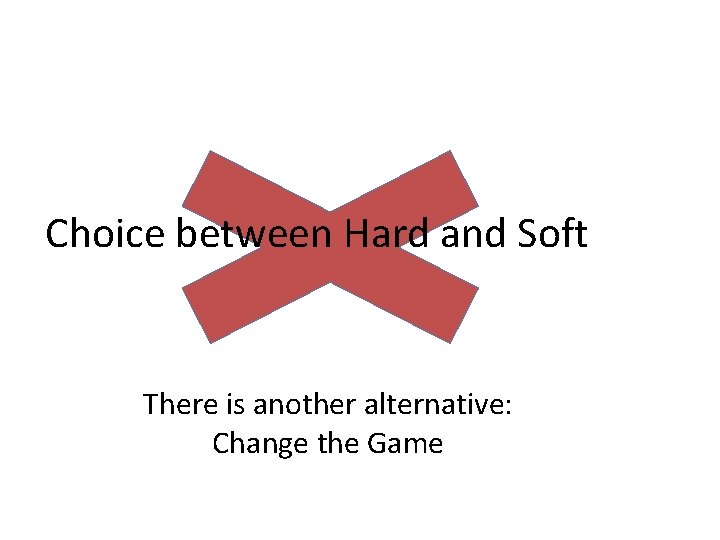
Choice between Hard and Soft There is another alternative: Change the Game
Principled Negotiation • Separate people from the problem • Focus on interests not positions • Generate a variety of options before deciding on one • Insist that the results be based on some objective standards
Separate the People from the Probelm • Hard on Problems, soft on People • Clear the air first: deal with people problems upfront so that they don’t cloud issue • Walk a mile in the shoes of the other • Don’t assume the worst because its “safe” • Don’t play the blame game (even when deserved). • Give people a stake in the outcome
Positions vs Interests • https: //www. google. com/url? sa=t&rct=j&q=& esrc=s&source=web&cd=1&cad=rja&uact=8& ved=0 ah. UKEwi 6 uc 61 oa. TPAh. VI 2 SYKHV 1_DNg Q 3 yw. IHTAA&url=https%3 A%2 F%2 Fwww. yout ube. com%2 Fwatch%3 Fv%3 Dm. TTwc. CVaj. Ac&u sg=AFQj. CNHxi. JBWc 3 R 2 Re. IGL_V 6 Hl 4 evb 6 m 9 A &bvm=bv. 133700528, d. e. WE
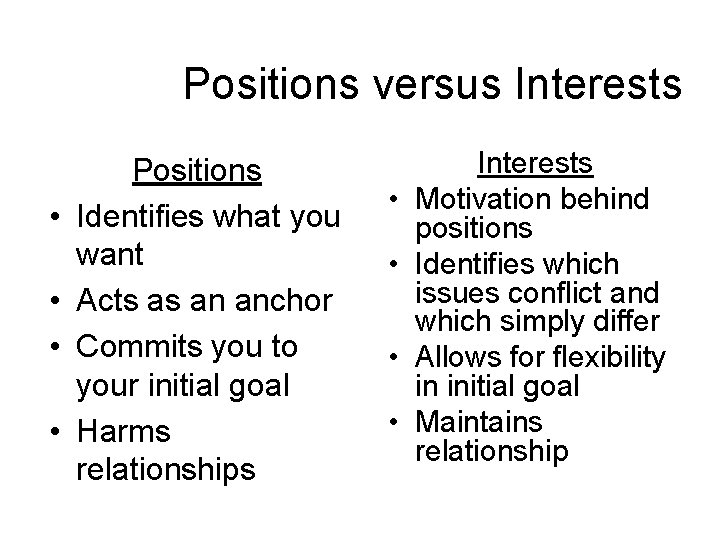
Positions versus Interests • • Positions Identifies what you want Acts as an anchor Commits you to your initial goal Harms relationships • • Interests Motivation behind positions Identifies which issues conflict and which simply differ Allows for flexibility in initial goal Maintains relationship
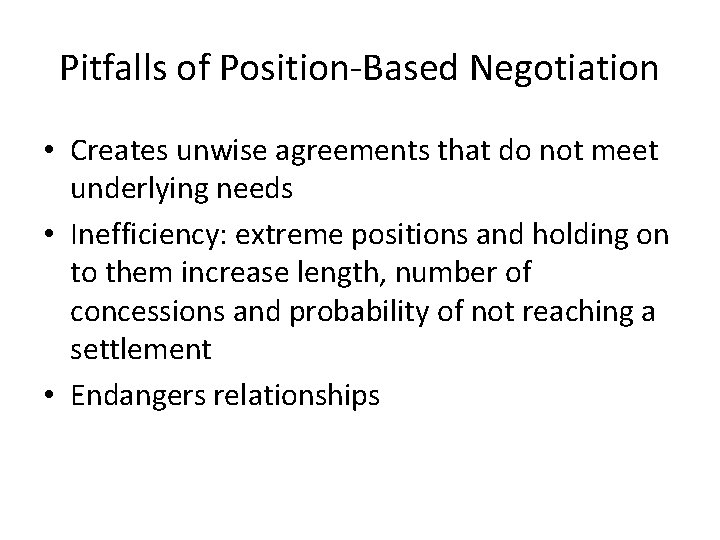
Pitfalls of Position-Based Negotiation • Creates unwise agreements that do not meet underlying needs • Inefficiency: extreme positions and holding on to them increase length, number of concessions and probability of not reaching a settlement • Endangers relationships
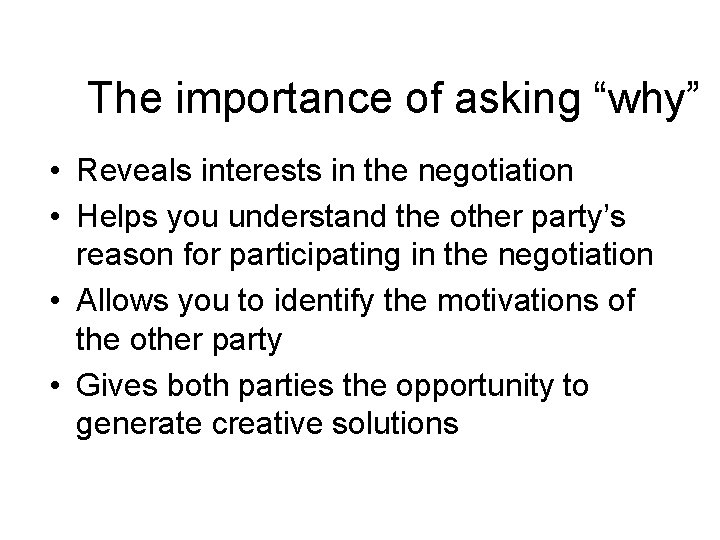
The importance of asking “why” • Reveals interests in the negotiation • Helps you understand the other party’s reason for participating in the negotiation • Allows you to identify the motivations of the other party • Gives both parties the opportunity to generate creative solutions
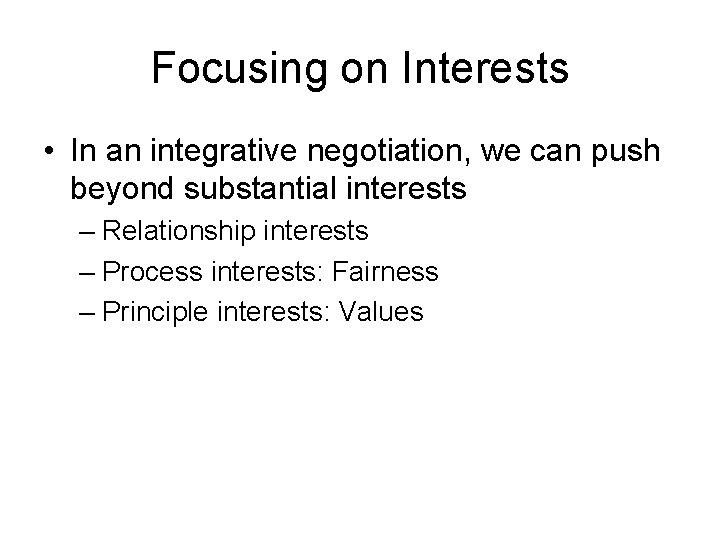
Focusing on Interests • In an integrative negotiation, we can push beyond substantial interests – Relationship interests – Process interests: Fairness – Principle interests: Values