Mlp Summer workshop INRA Nancy August 20 21
- Slides: 21
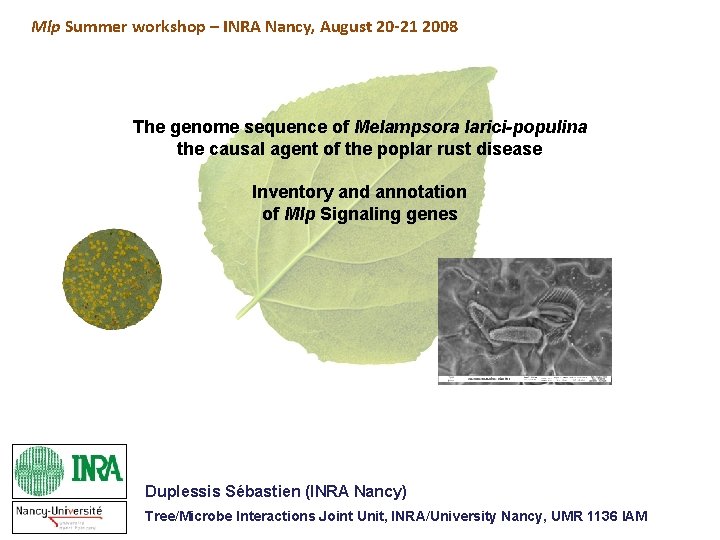
Mlp Summer workshop – INRA Nancy, August 20 -21 2008 The genome sequence of Melampsora larici-populina the causal agent of the poplar rust disease Inventory and annotation of Mlp Signaling genes Duplessis Sébastien (INRA Nancy) Tree/Microbe Interactions Joint Unit, INRA/University Nancy, UMR 1136 IAM
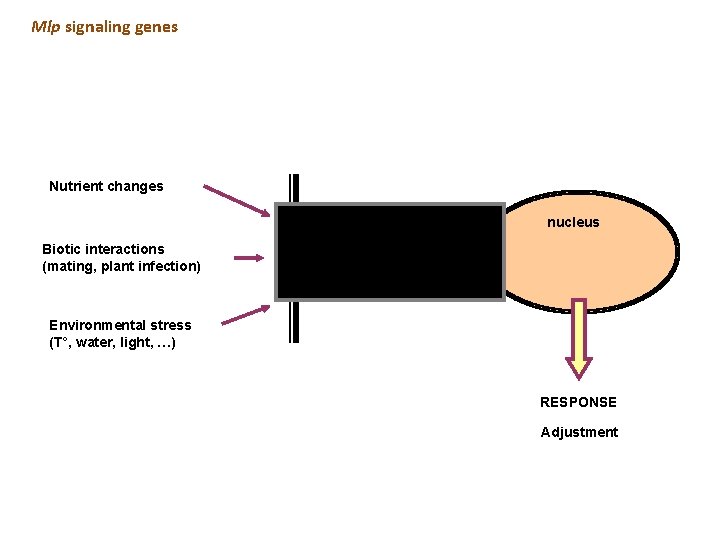
Mlp signaling genes Nutrient changes nucleus Biotic interactions (mating, plant infection) Environmental stress (T°, water, light, …) RESPONSE Adjustment
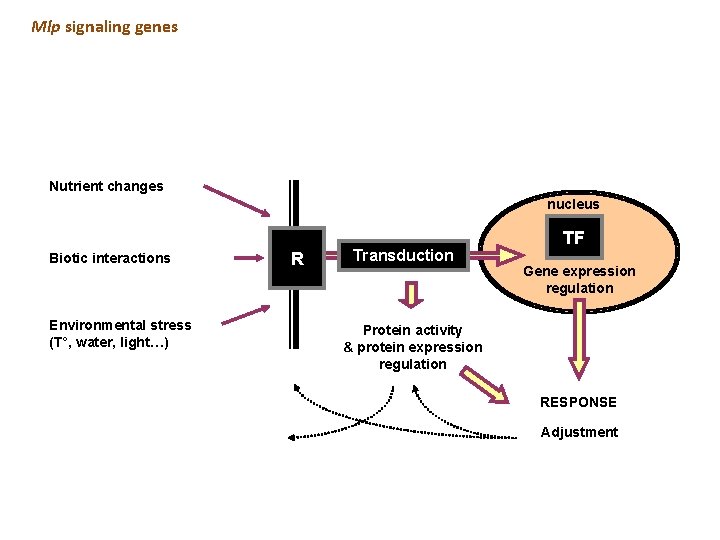
Mlp signaling genes Nutrient changes nucleus Biotic interactions Environmental stress (T°, water, light…) R Transduction TF Gene expression regulation Protein activity & protein expression regulation RESPONSE Adjustment
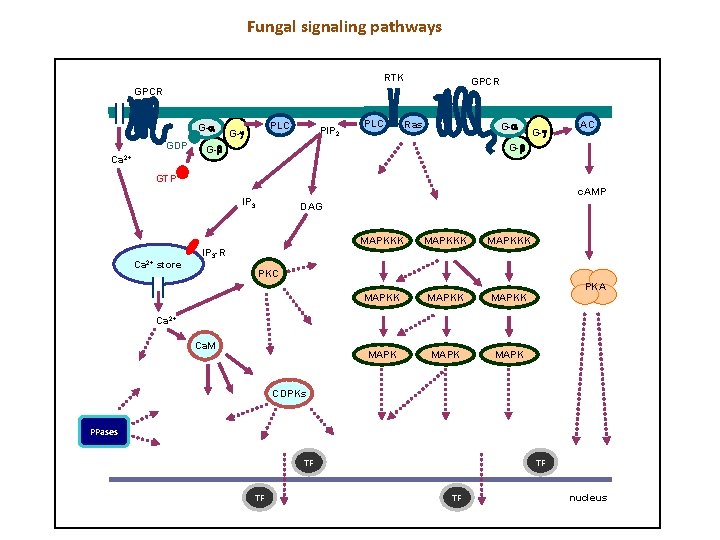
Fungal signaling pathways RTK GPCR G- GDP Ca 2+ PLC G- PIP 2 PLC Ras G- AC G- GTP c. AMP IP 3 Ca 2+ store DAG MAPKKK MAPKK MAPK IP 3 -R PKC PKA Ca 2+ Ca. M CDPKs PPases TF TF nucleus
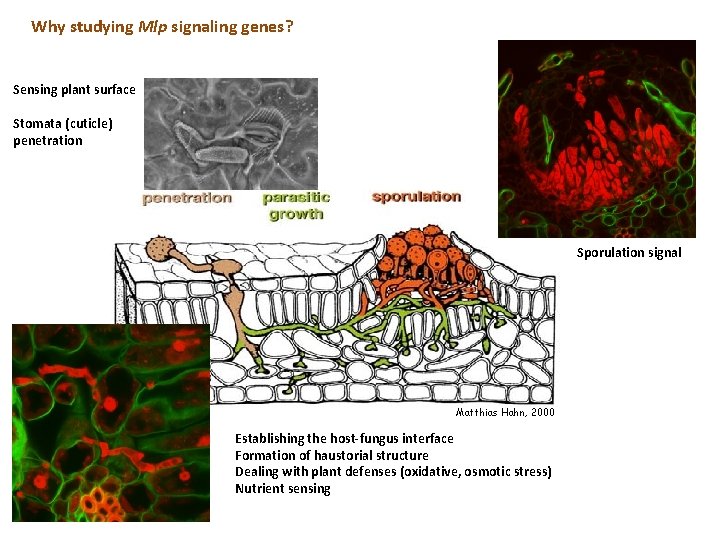
Why studying Mlp signaling genes? Sensing plant surface Stomata (cuticle) penetration Sporulation signal Matthias Hahn, 2000 Establishing the host-fungus interface Formation of haustorial structure Dealing with plant defenses (oxidative, osmotic stress) Nutrient sensing
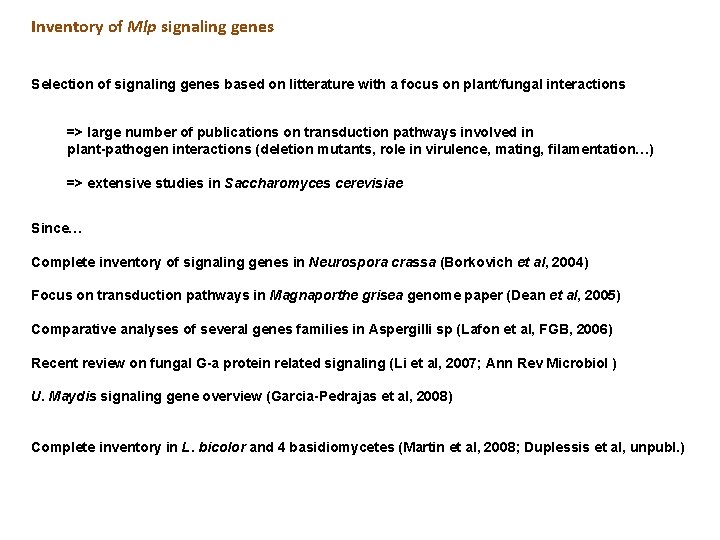
Inventory of Mlp signaling genes Selection of signaling genes based on litterature with a focus on plant/fungal interactions => large number of publications on transduction pathways involved in plant-pathogen interactions (deletion mutants, role in virulence, mating, filamentation…) => extensive studies in Saccharomyces cerevisiae Since… Complete inventory of signaling genes in Neurospora crassa (Borkovich et al, 2004) Focus on transduction pathways in Magnaporthe grisea genome paper (Dean et al, 2005) Comparative analyses of several genes families in Aspergilli sp (Lafon et al, FGB, 2006) Recent review on fungal G-a protein related signaling (Li et al, 2007; Ann Rev Microbiol ) U. Maydis signaling gene overview (Garcia-Pedrajas et al, 2008) Complete inventory in L. bicolor and 4 basidiomycetes (Martin et al, 2008; Duplessis et al, unpubl. )
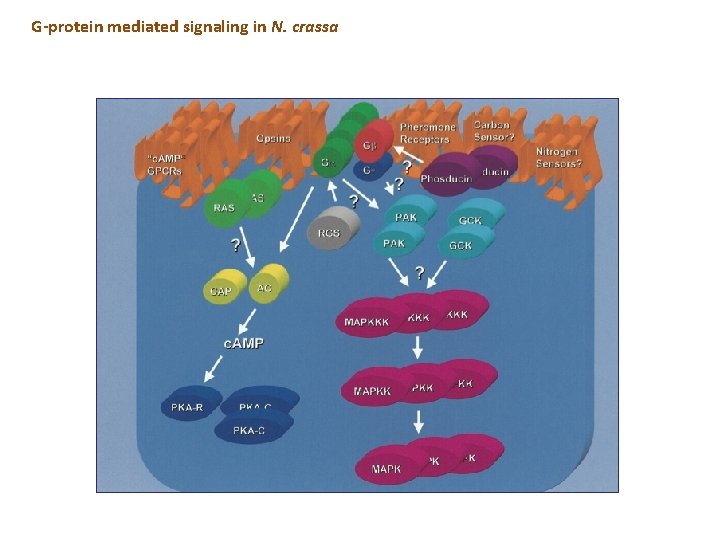
G-protein mediated signaling in N. crassa
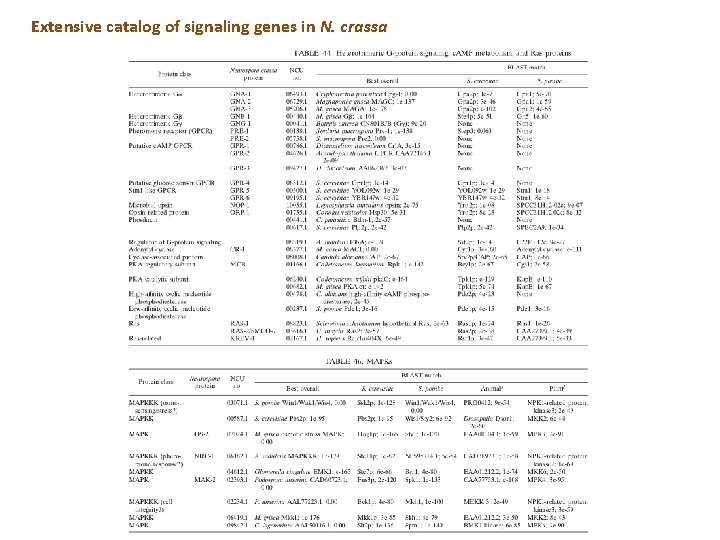
Extensive catalog of signaling genes in N. crassa
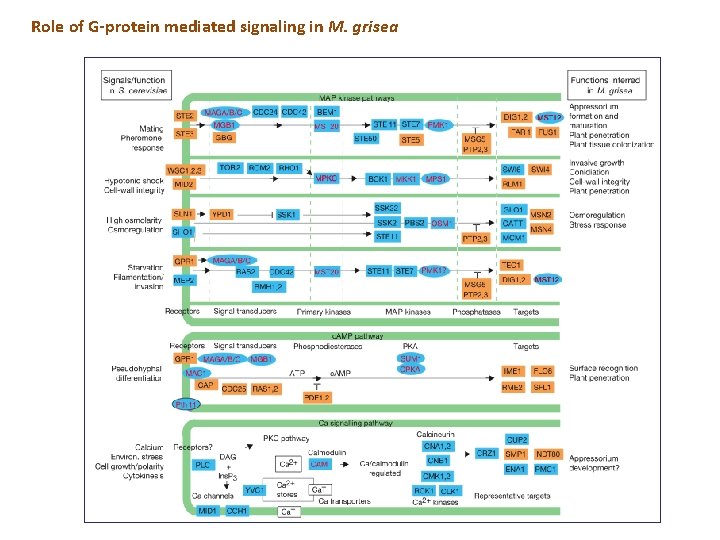
Role of G-protein mediated signaling in M. grisea
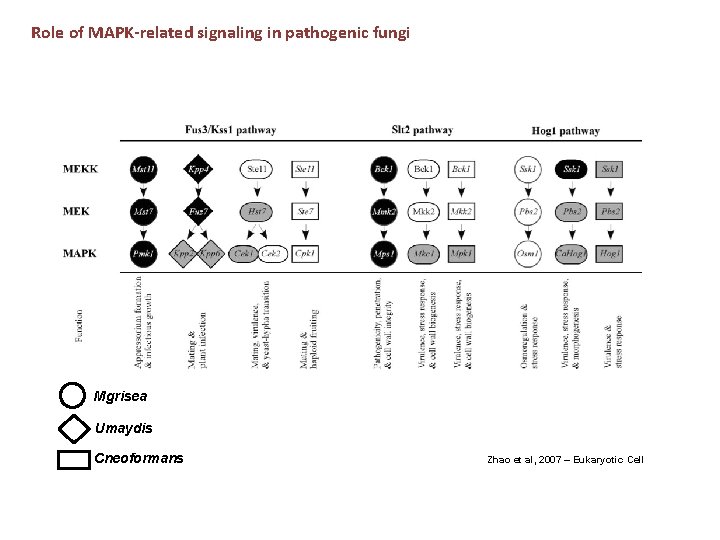
Role of MAPK-related signaling in pathogenic fungi Mgrisea Umaydis Cneoformans Zhao et al, 2007 – Eukaryotic Cell
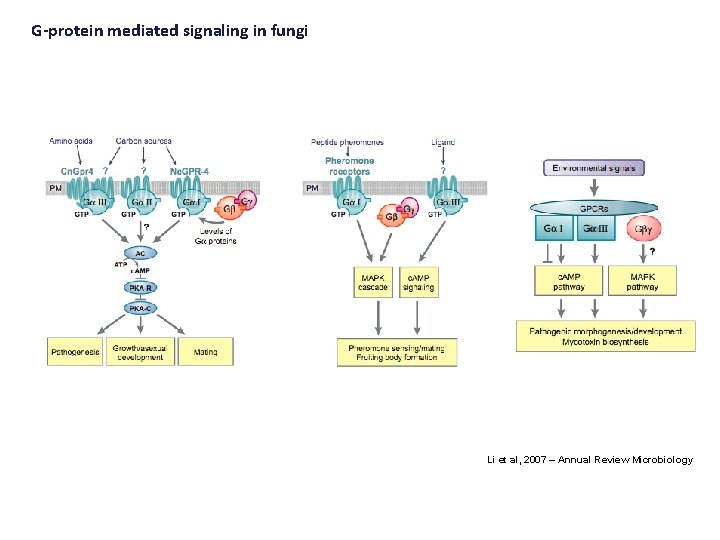
G-protein mediated signaling in fungi Li et al, 2007 – Annual Review Microbiology
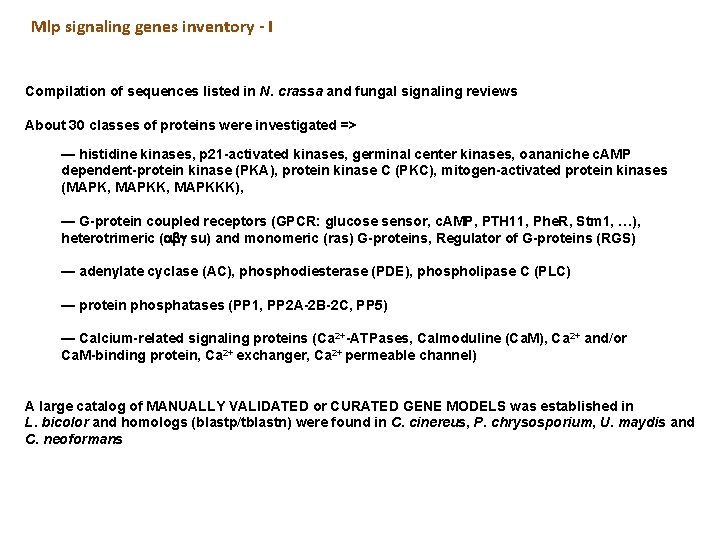
Mlp signaling genes inventory - I Compilation of sequences listed in N. crassa and fungal signaling reviews About 30 classes of proteins were investigated => — histidine kinases, p 21 -activated kinases, germinal center kinases, oananiche c. AMP dependent-protein kinase (PKA), protein kinase C (PKC), mitogen-activated protein kinases (MAPK, MAPKKK), — G-protein coupled receptors (GPCR: glucose sensor, c. AMP, PTH 11, Phe. R, Stm 1, …), heterotrimeric ( su) and monomeric (ras) G-proteins, Regulator of G-proteins (RGS) — adenylate cyclase (AC), phosphodiesterase (PDE), phospholipase C (PLC) — protein phosphatases (PP 1, PP 2 A-2 B-2 C, PP 5) — Calcium-related signaling proteins (Ca 2+-ATPases, Calmoduline (Ca. M), Ca 2+ and/or Ca. M-binding protein, Ca 2+ exchanger, Ca 2+ permeable channel) A large catalog of MANUALLY VALIDATED or CURATED GENE MODELS was established in L. bicolor and homologs (blastp/tblastn) were found in C. cinereus, P. chrysosporium, U. maydis and C. neoformans
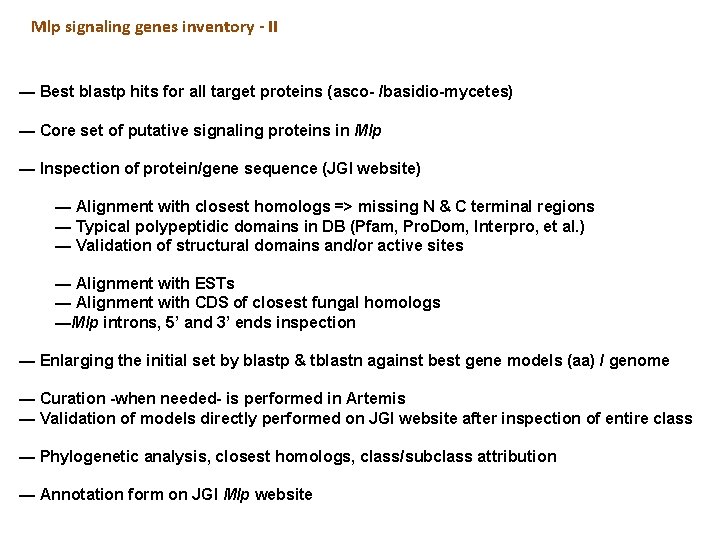
Mlp signaling genes inventory - II — Best blastp hits for all target proteins (asco- /basidio-mycetes) — Core set of putative signaling proteins in Mlp — Inspection of protein/gene sequence (JGI website) — Alignment with closest homologs => missing N & C terminal regions — Typical polypeptidic domains in DB (Pfam, Pro. Dom, Interpro, et al. ) — Validation of structural domains and/or active sites — Alignment with ESTs — Alignment with CDS of closest fungal homologs —Mlp introns, 5’ and 3’ ends inspection — Enlarging the initial set by blastp & tblastn against best gene models (aa) / genome — Curation -when needed- is performed in Artemis — Validation of models directly performed on JGI website after inspection of entire class — Phylogenetic analysis, closest homologs, class/subclass attribution — Annotation form on JGI Mlp website
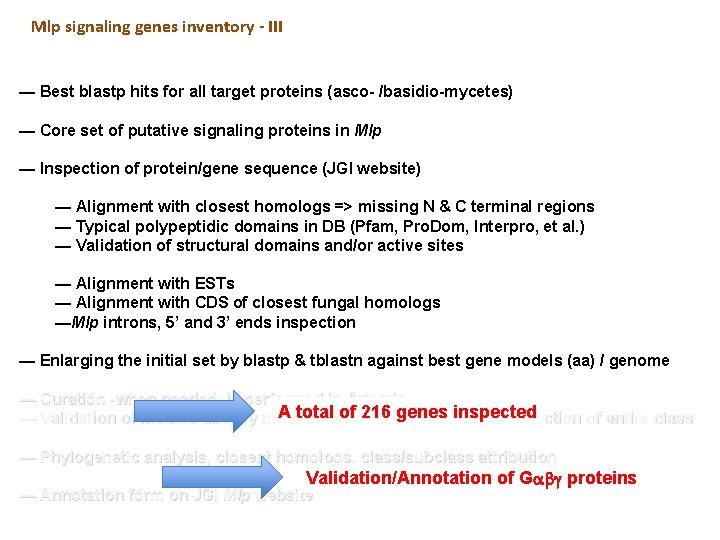
Mlp signaling genes inventory - III — Best blastp hits for all target proteins (asco- /basidio-mycetes) — Core set of putative signaling proteins in Mlp — Inspection of protein/gene sequence (JGI website) — Alignment with closest homologs => missing N & C terminal regions — Typical polypeptidic domains in DB (Pfam, Pro. Dom, Interpro, et al. ) — Validation of structural domains and/or active sites — Alignment with ESTs — Alignment with CDS of closest fungal homologs —Mlp introns, 5’ and 3’ ends inspection — Enlarging the initial set by blastp & tblastn against best gene models (aa) / genome — Curation -when needed- is performed in Artemis A total of — Validation of models directly performed on 216 JGI genes websiteinspected after inspection of entire class — Phylogenetic analysis, closest homologs, class/subclass attribution Validation/Annotation of G proteins — Annotation form on JGI Mlp website
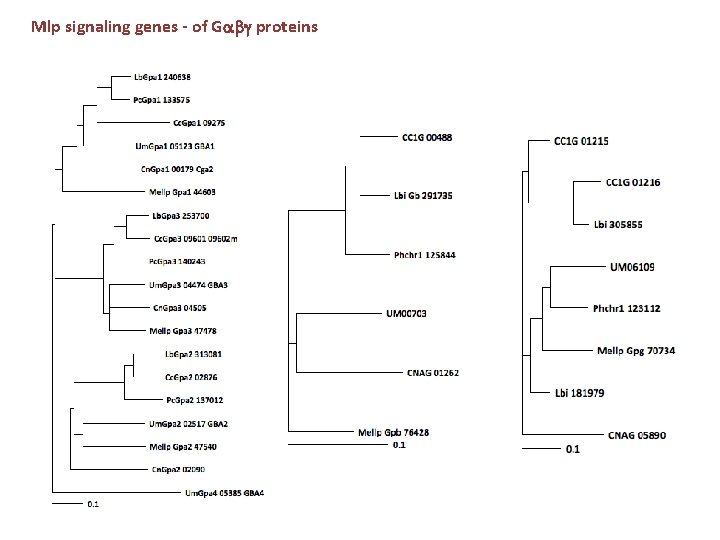
Mlp signaling genes - of G proteins
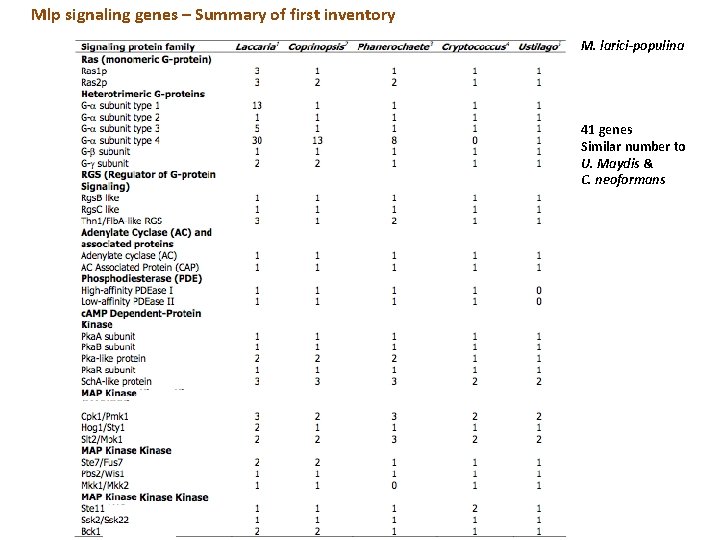
Mlp signaling genes – Summary of first inventory M. larici-populina 41 genes Similar number to U. Maydis & C. neoformans
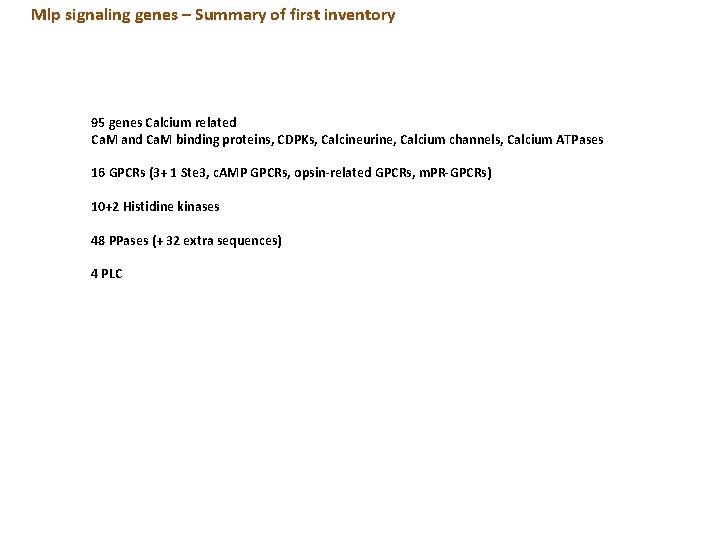
Mlp signaling genes – Summary of first inventory 95 genes Calcium related Ca. M and Ca. M binding proteins, CDPKs, Calcineurine, Calcium channels, Calcium ATPases 16 GPCRs (3+ 1 Ste 3, c. AMP GPCRs, opsin-related GPCRs, m. PR-GPCRs) 10+2 Histidine kinases 48 PPases (+ 32 extra sequences) 4 PLC
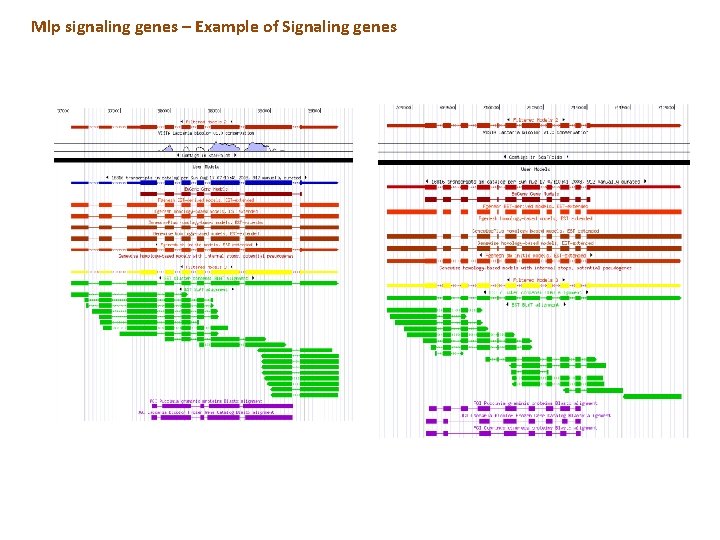
Mlp signaling genes – Example of Signaling genes
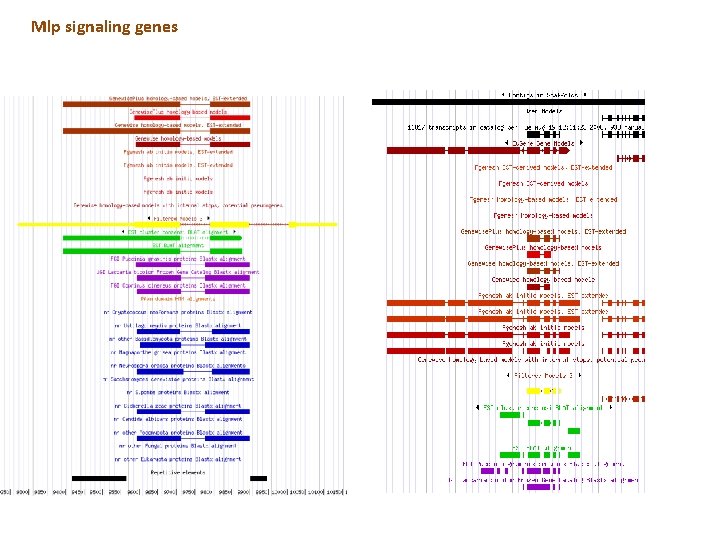
Mlp signaling genes
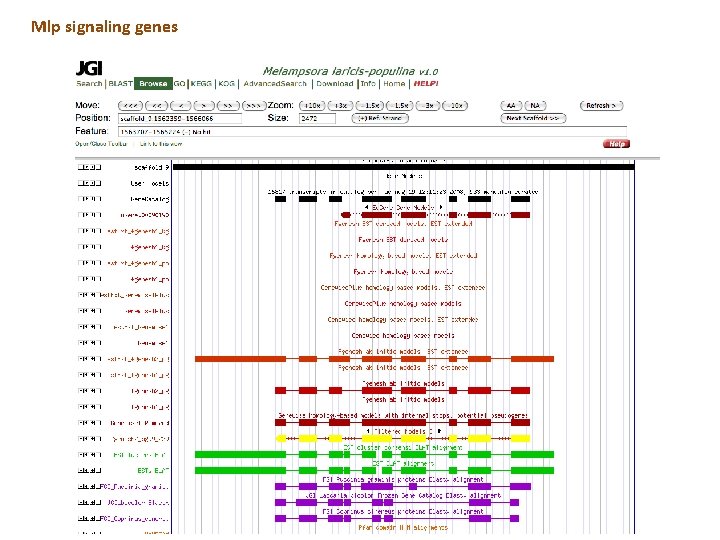
Mlp signaling genes
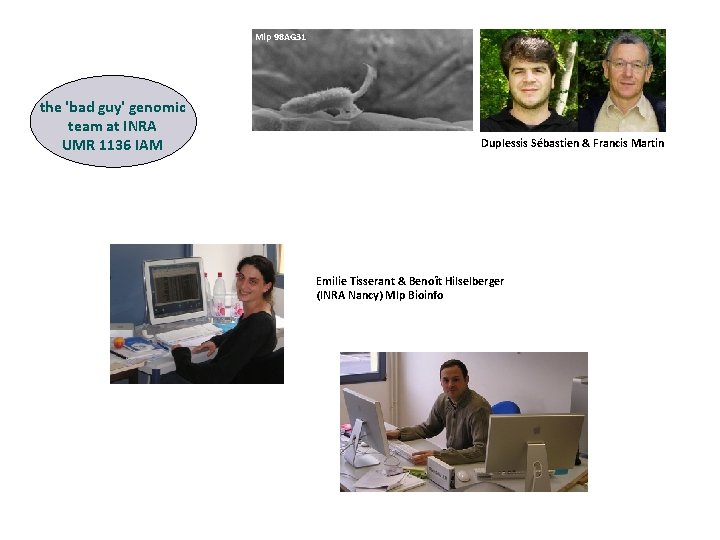
Mlp 98 AG 31 the 'bad guy' genomic team at INRA UMR 1136 IAM Duplessis Sébastien & Francis Martin Emilie Tisserant & Benoît Hilselberger (INRA Nancy) Mlp Bioinfo