Marie Curie Actions individual Fellowships Aristotle University of




- Slides: 34
Marie Curie Actions individual Fellowships Aristotle University of Thessaloniki 17 May 2012 Maria Tsivertara People Programme; Marie Curie Actions Directorate-General for Education and Culture European Commission
Agenda § § MCAs in FP 7 Individual Fellowships Career Integration Grants Evaluation Criteria
FP 7 Marie Curie Actions = People Programme
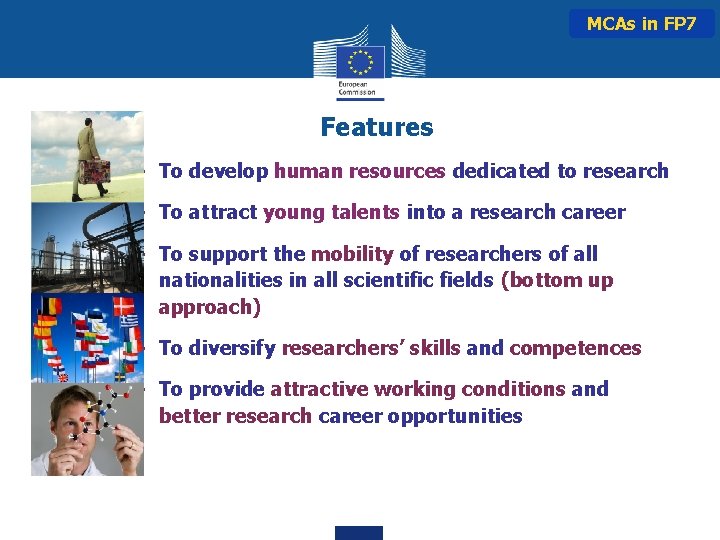
MCAs in FP 7 Features • To develop human resources dedicated to research • To attract young talents into a research career • To support the mobility of researchers of all nationalities in all scientific fields (bottom up approach) • To diversify researchers’ skills and competences • To provide attractive working conditions and better research career opportunities
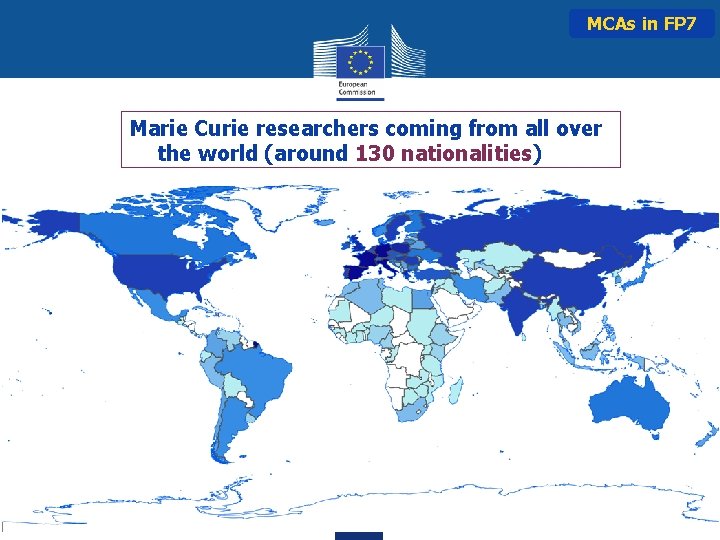
MCAs in FP 7 Marie Curie researchers coming from all over the world (around 130 nationalities)
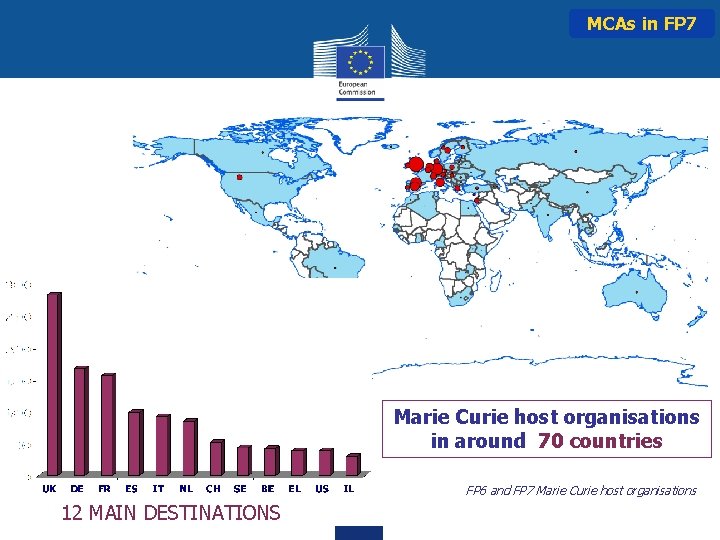
MCAs in FP 7 Marie Curie host organisations in around 70 countries FP 6 and FP 7 Marie Curie host organisations 12 MAIN DESTINATIONS
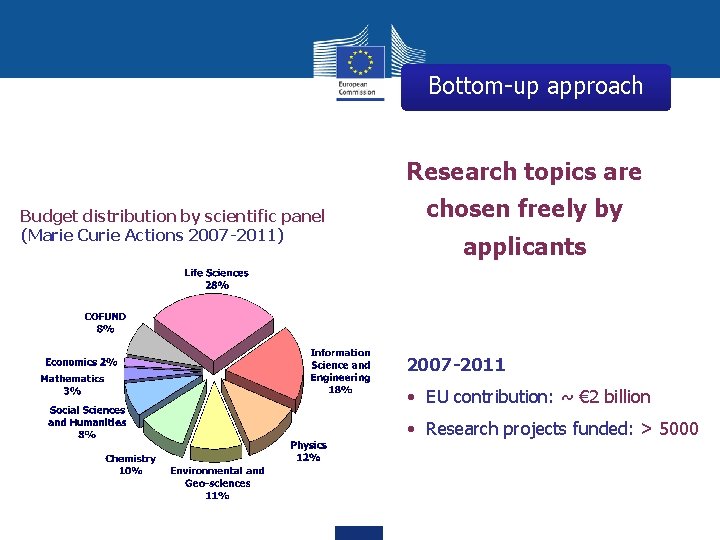
Bottom-up approach Research topics are Budget distribution by scientific panel (Marie Curie Actions 2007 -2011) chosen freely by applicants 2007 -2011 • EU contribution: ~ € 2 billion • Research projects funded: > 5000
MCAs in FP 7 • Around 60. 000 researchers financed since the creation of the Marie Curie Actions • More than 10. 000 Ph. D supported in FP 7 • 38% of women among FP 7 MCA fellows • SMEs play a major role: they account for more than 50% of all businesses participating in IAPP and ITN • 50 -60% of the budget dedicated to research on societal challenges
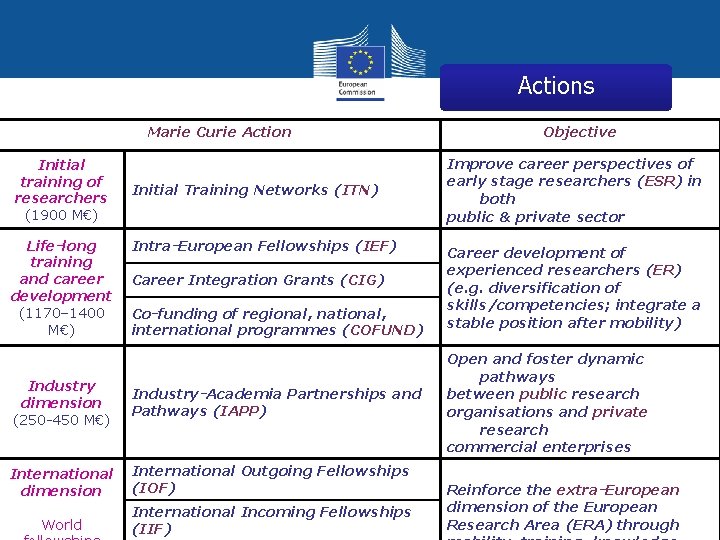
Actions Marie Curie Action Initial training of researchers (1900 M€) Life-long training and career development (1170– 1400 M€) Initial Training Networks (ITN) Intra-European Fellowships (IEF) Career Integration Grants (CIG) Co-funding of regional, national, international programmes (COFUND) Industry dimension (250 -450 M€) Industry-Academia Partnerships and Pathways (IAPP) International dimension International Outgoing Fellowships (IOF) World International Incoming Fellowships (IIF) Objective Improve career perspectives of early stage researchers (ESR) in both public & private sector Career development of experienced researchers (ER) (e. g. diversification of skills/competencies; integrate a stable position after mobility) Open and foster dynamic pathways between public research organisations and private research commercial enterprises Reinforce the extra-European dimension of the European Research Area (ERA) through
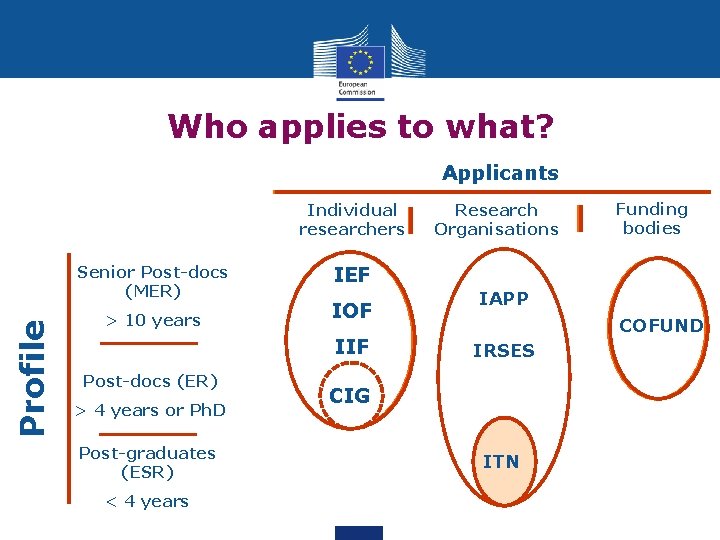
Who applies to what? Applicants Individual researchers Profile Senior Post-docs (MER) > 10 years > 4 years or Ph. D Post-graduates (ESR) < 4 years Funding bodies IEF IOF IIF Post-docs (ER) Research Organisations IAPP COFUND IRSES CIG ITN
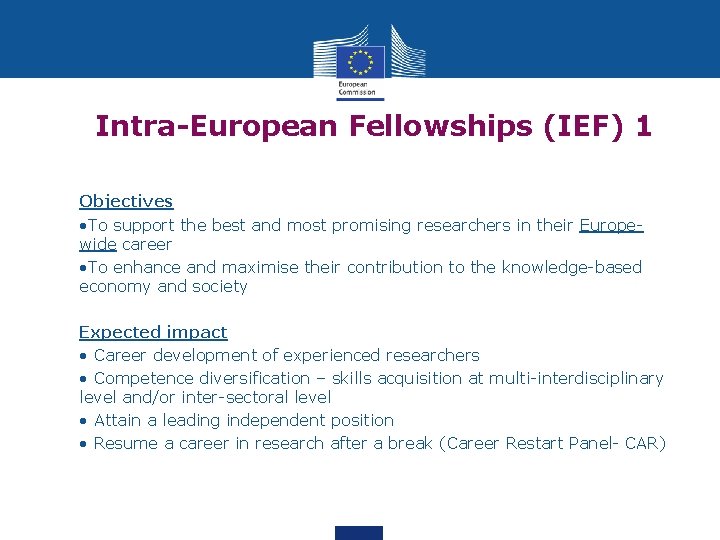
Intra-European Fellowships (IEF) 1 Objectives • To support the best and most promising researchers in their Europewide career • To enhance and maximise their contribution to the knowledge-based economy and society Expected impact • Career development of experienced researchers • Competence diversification – skills acquisition at multi-interdisciplinary level and/or inter-sectoral level • Attain a leading independent position • Resume a career in research after a break (Career Restart Panel- CAR)
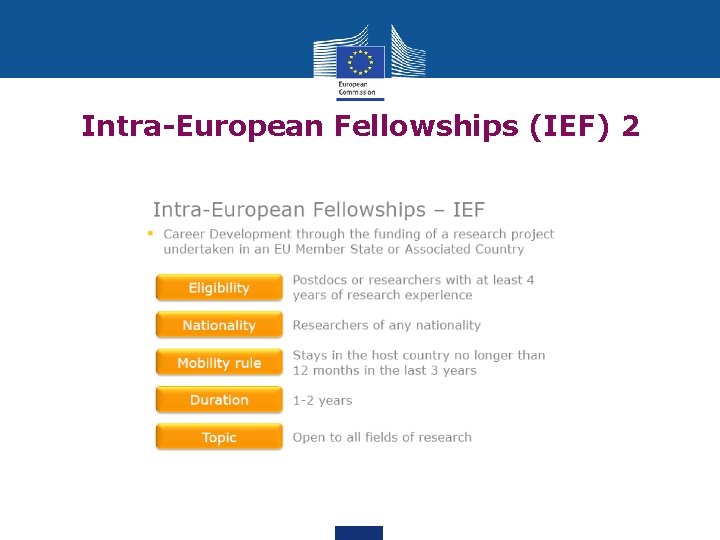
Intra-European Fellowships (IEF) 2
Intra-European Fellowships (IEF) 3 CAREER RESTART PANEL • Encouraging researchers to return to research after a career break • No fellowship or employment in research for at least 12 months immediately prior to the call deadline • Modified mobility rule (3 years out of 5) • Multidisciplinary panel (CHE, SOC, ECO, ENG, ENV, LIF, MAT, PHY)
International Outgoing Fellowships (IOF) 1 Objectives • To reinforce the international dimension of researchers’ careers • To transfer acquired knowledge to Member States (MS) and Associated Countries (AC) Expected impact § Significant advances in researchers' careers § Acquisition of complementary research competences § Reach a position of professional maturity
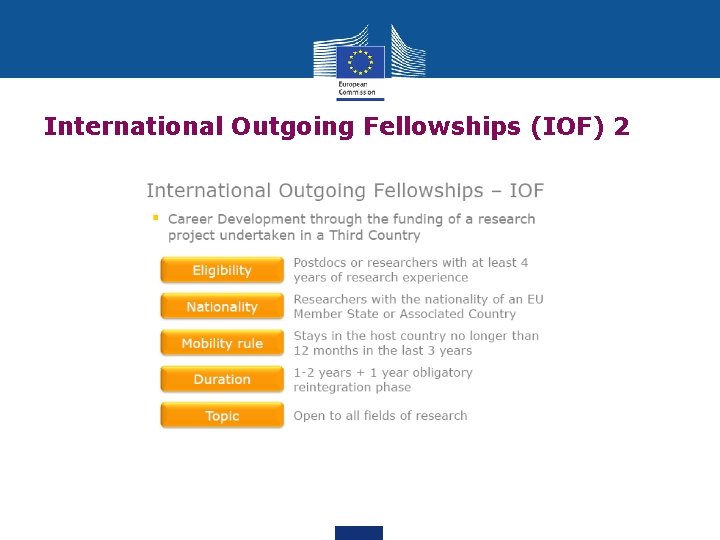
International Outgoing Fellowships (IOF) 2
International Outgoing Fellowships (IOF) 3 • Fellowships of 2 phases: - initial outgoing phase in a Third Country (1 -2 years) - mandatory re-integration phase in EU or AC (1 year – return host) • Grant Agreement to be concluded with the host institution located in the MS or AC
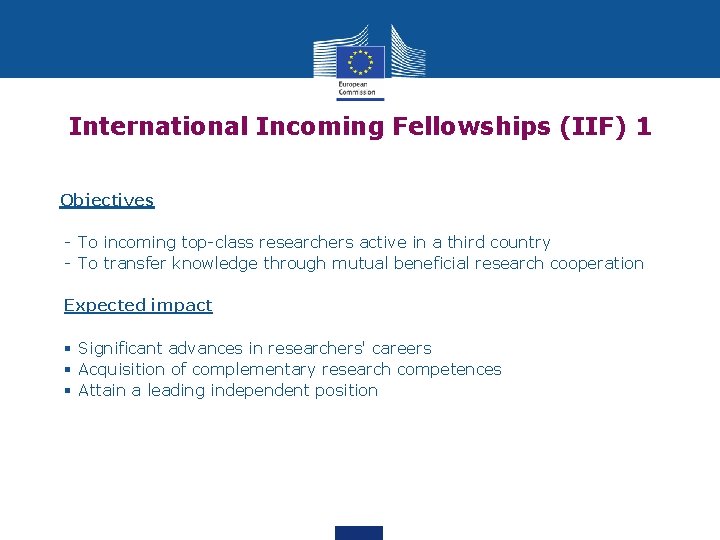
International Incoming Fellowships (IIF) 1 Objectives - To incoming top-class researchers active in a third country - To transfer knowledge through mutual beneficial research cooperation Expected impact § Significant advances in researchers' careers § Acquisition of complementary research competences § Attain a leading independent position
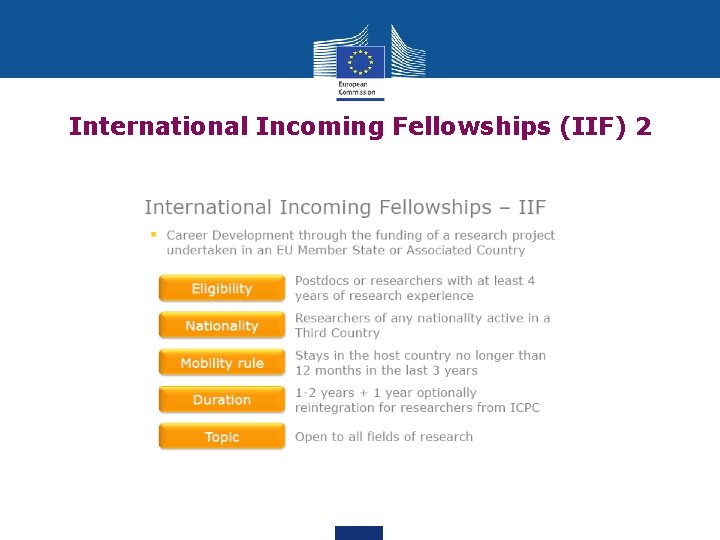
International Incoming Fellowships (IIF) 2
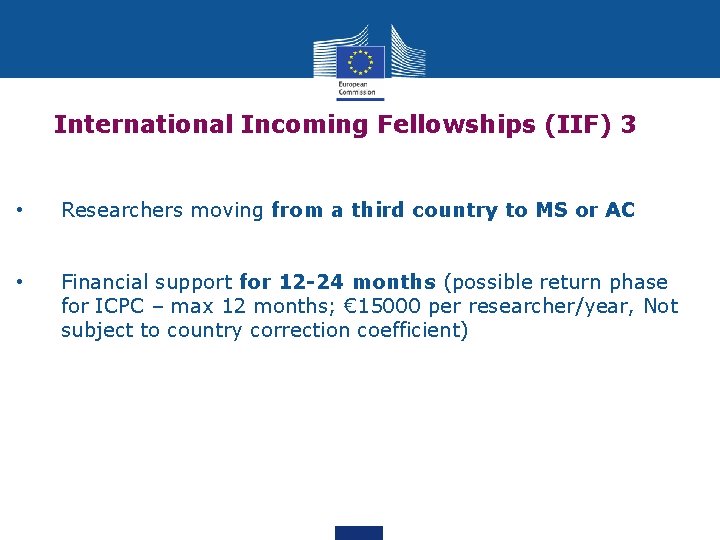
International Incoming Fellowships (IIF) 3 • Researchers moving from a third country to MS or AC • Financial support for 12 -24 months (possible return phase for ICPC – max 12 months; € 15000 per researcher/year, Not subject to country correction coefficient)
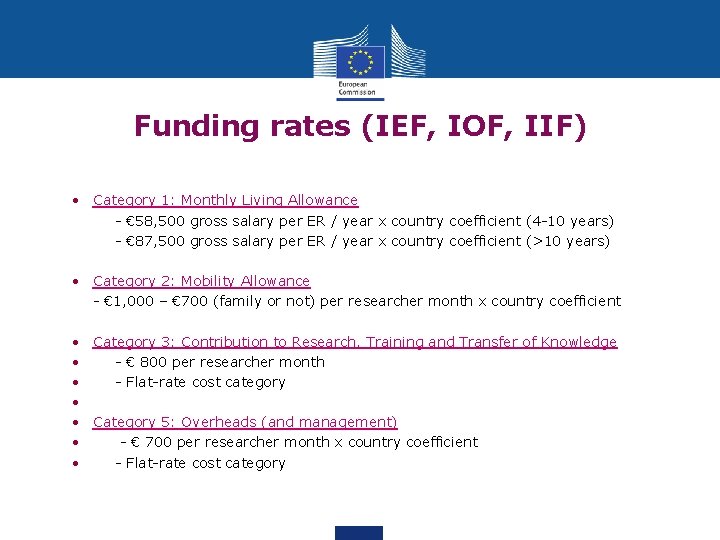
Funding rates (IEF, IOF, IIF) • Category 1: Monthly Living Allowance - € 58, 500 gross salary per ER / year x country coefficient (4 -10 years) - € 87, 500 gross salary per ER / year x country coefficient (>10 years) • Category 2: Mobility Allowance - € 1, 000 – € 700 (family or not) per researcher month x country coefficient • Category 3: Contribution to Research, Τraining and Transfer of Knowledge • - € 800 per researcher month • - Flat-rate cost category • • Category 5: Overheads (and management) • - € 700 per researcher month x country coefficient • - Flat-rate cost category
Career Integration Grants (CIG) 1 Objectives • To reinforce the ERA by encouraging researchers to establish themselves in a MS or AC • To attract and retain the best researchers in Europe Expected impact • Provide researchers with opportunities for long term research position in Europe • Reinforcement of the human research potential in the ERA • Increase knowledge transfer and trans-national cooperation for EU research organisations
Career Integration Grants (CIG) 2 1. For Experienced Researchers § Must have a Ph. D or at least 4 years of research experience 2. Researchers can be of any nationality 3. Researchers must move country to take up research job (must comply with Mobility Rule) § No nationality requirement => Possible to return to home country 4. Duration of CIG: 24 – 48 months. 5. Host must offer full time research post for at least the duration of the CIG grant. 6. EU contribution: 25 000€/year (lump sum)
Career Integration Grants (CIG) 3 e. CIG Host perspective can not be combined with • other Marie Curie Grants • other ”personal grants” (e. g. ERC grants) CIG funding as lump sum => for any type of costs of the proposed project • Part of salary of Researcher (or other people working on project) • Equipment, consumables, travel • Overhead, management costs • Etc
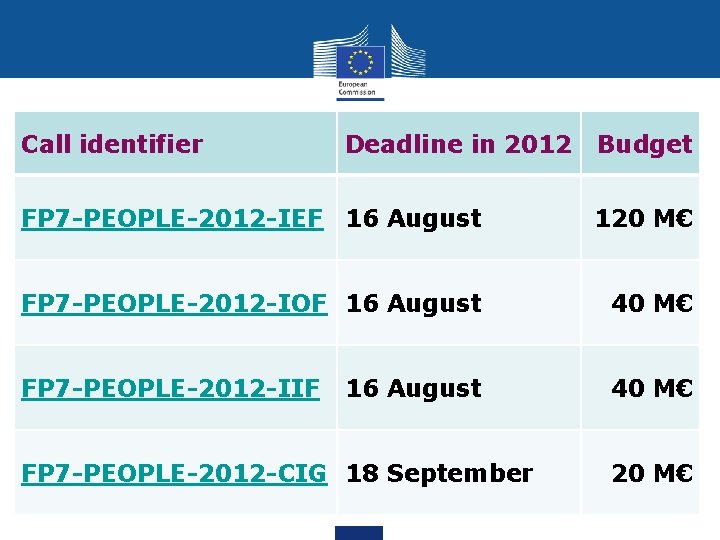
Call identifier Deadline in 2012 Budget FP 7 -PEOPLE-2012 -IEF 16 August 120 M€ FP 7 -PEOPLE-2012 -IOF 16 August 40 M€ FP 7 -PEOPLE-2012 -IIF 40 M€ 16 August FP 7 -PEOPLE-2012 -CIG 18 September 20 M€
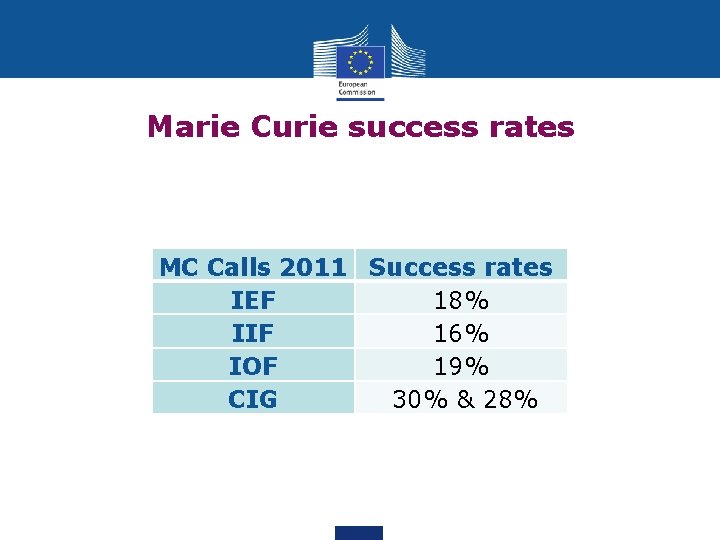
Marie Curie success rates MC Calls 2011 Success rates IEF 18% IIF 16% IOF 19% CIG 30% & 28%
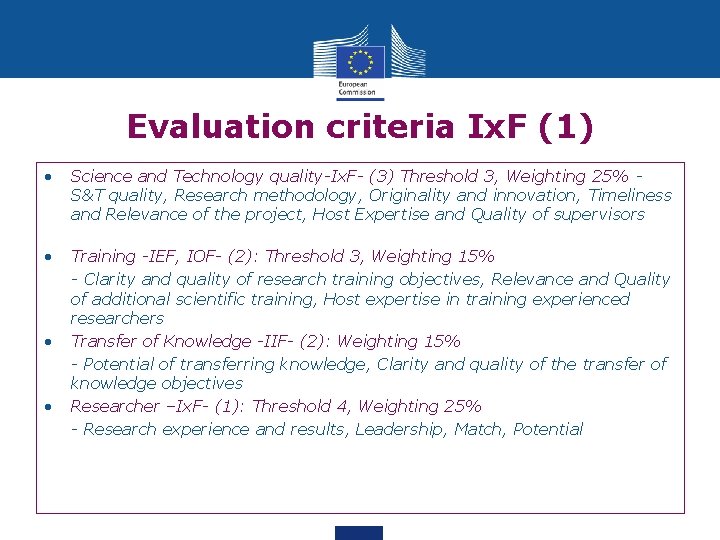
Evaluation criteria Ix. F (1) • Science and Technology quality-Ix. F- (3) Threshold 3, Weighting 25% S&T quality, Research methodology, Originality and innovation, Timeliness and Relevance of the project, Host Expertise and Quality of supervisors • Training -IEF, IOF- (2): Threshold 3, Weighting 15% - Clarity and quality of research training objectives, Relevance and Quality of additional scientific training, Host expertise in training experienced researchers Transfer of Knowledge -IIF- (2): Weighting 15% - Potential of transferring knowledge, Clarity and quality of the transfer of knowledge objectives Researcher –Ix. F- (1): Threshold 4, Weighting 25% - Research experience and results, Leadership, Match, Potential • •
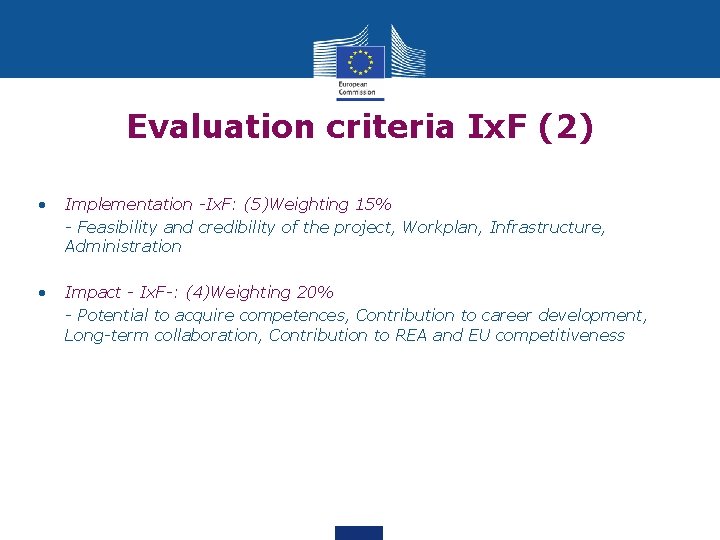
Evaluation criteria Ix. F (2) • Implementation -Ix. F: (5)Weighting 15% - Feasibility and credibility of the project, Workplan, Infrastructure, Administration • Impact - Ix. F-: (4)Weighting 20% - Potential to acquire competences, Contribution to career development, Long-term collaboration, Contribution to REA and EU competitiveness
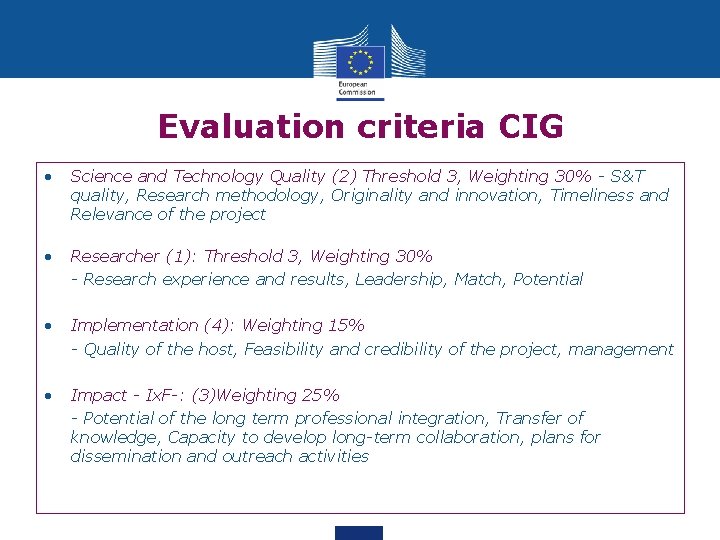
Evaluation criteria CIG • Science and Technology Quality (2) Threshold 3, Weighting 30% - S&T quality, Research methodology, Originality and innovation, Timeliness and Relevance of the project • Researcher (1): Threshold 3, Weighting 30% - Research experience and results, Leadership, Match, Potential • Implementation (4): Weighting 15% - Quality of the host, Feasibility and credibility of the project, management • Impact - Ix. F-: (3)Weighting 25% - Potential of the long term professional integration, Transfer of knowledge, Capacity to develop long-term collaboration, plans for dissemination and outreach activities
Hints for a successful proposal (1) • The evaluators may not all be world experts in exactly the area of your proposal – avoid using very specific jargon and acronyms • Provide the evaluators with evidence for your claims, but avoid external resources (links to websites etc. ) • Graphics and charts can be very helpful, but don’t overdo it! Make sure they are readable in black & white. • Take also note of the following…
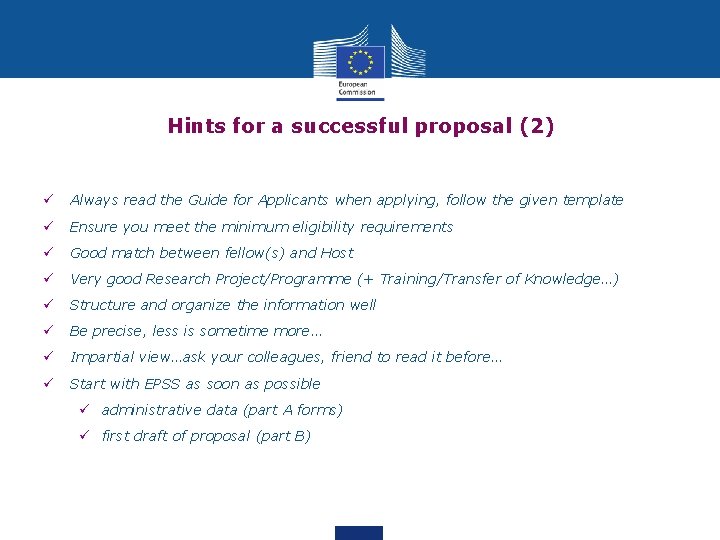
Hints for a successful proposal (2) ü Always read the Guide for Applicants when applying, follow the given template ü Ensure you meet the minimum eligibility requirements ü Good match between fellow(s) and Host ü Very good Research Project/Programme (+ Training/Transfer of Knowledge…) ü Structure and organize the information well ü Be precise, less is sometime more… ü Impartial view…ask your colleagues, friend to read it before… ü Start with EPSS as soon as possible ü administrative data (part A forms) ü first draft of proposal (part B)
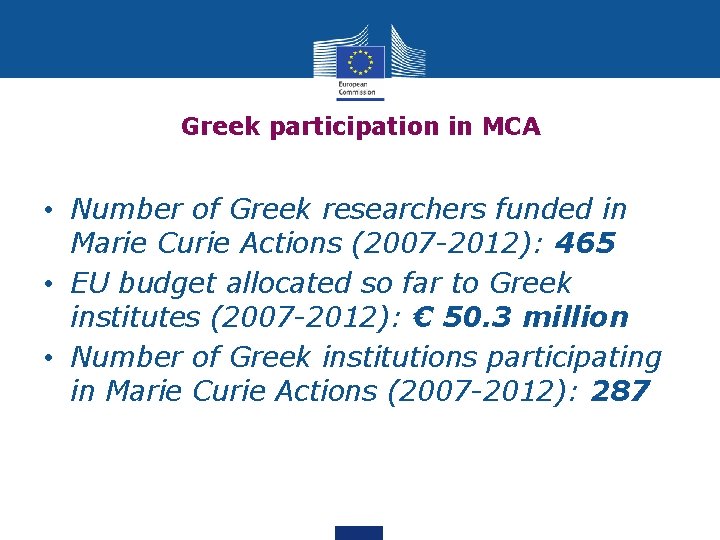
Greek participation in MCA • Number of Greek researchers funded in Marie Curie Actions (2007 -2012): 465 • EU budget allocated so far to Greek institutes (2007 -2012): € 50. 3 million • Number of Greek institutions participating in Marie Curie Actions (2007 -2012): 287
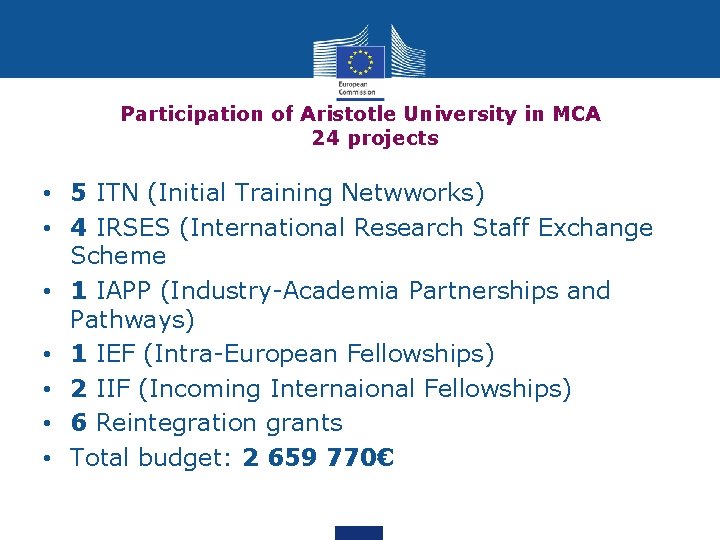
Participation of Aristotle University in MCA 24 projects • 5 ITN (Initial Training Netwworks) • 4 IRSES (International Research Staff Exchange Scheme • 1 IAPP (Industry-Academia Partnerships and Pathways) • 1 IEF (Intra-European Fellowships) • 2 IIF (Incoming Internaional Fellowships) • 6 Reintegration grants • Total budget: 2 659 770€
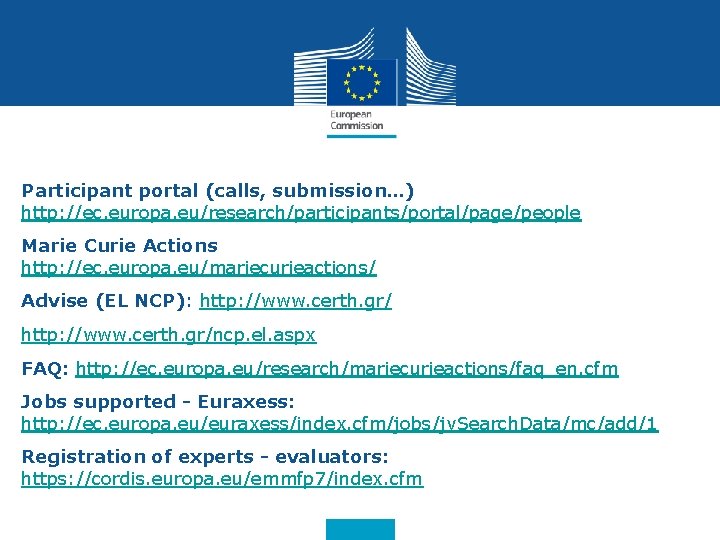
Participant portal (calls, submission…) http: //ec. europa. eu/research/participants/portal/page/people Marie Curie Actions http: //ec. europa. eu/mariecurieactions/ Advise (EL NCP): http: //www. certh. gr/ncp. el. aspx FAQ: http: //ec. europa. eu/research/mariecurieactions/faq_en. cfm Jobs supported - Euraxess: http: //ec. europa. eu/euraxess/index. cfm/jobs/jv. Search. Data/mc/add/1 Registration of experts - evaluators: https: //cordis. europa. eu/emmfp 7/index. cfm Date: in 12 pts
34 THANK YOU FOR YOUR ATTENTION