
Marie Curie NI The Benefits of Palliative Interventions
@Marie. Curie. NI
The Benefits of Palliative Interventions for Chronic Respiratory Diseases Dr Joan Regan Palliative Medicine Consultant Co‐Medical Director Marie Curie Hospice Belfast @Marie. Curie. NI
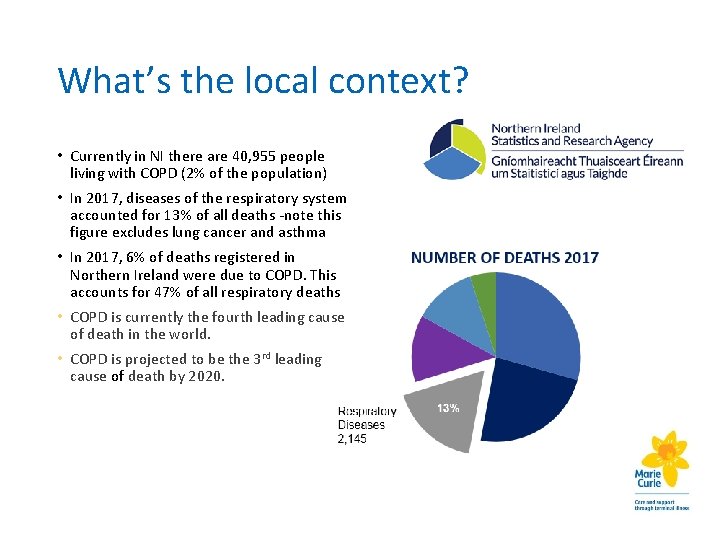
What’s the local context? • Currently in NI there are 40, 955 people living with COPD (2% of the population) • In 2017, diseases of the respiratory system accounted for 13% of all deaths ‐note this figure excludes lung cancer and asthma • In 2017, 6% of deaths registered in Northern Ireland were due to COPD. This accounts for 47% of all respiratory deaths • COPD is currently the fourth leading cause of death in the world. • COPD is projected to be the 3 rd leading cause of death by 2020.
Chronic Breathlessness • Breathlessness that persists despite optimal treatment of the underlying pathophysiology; and results in disability. (Johnson et al. 2017) • The “lived experience”: • Subjective sensation • In COPD—often associated with emotional descriptors such as “frightening”. . “helpless”. . “awful” (Williams 2008) • Acute episodes of SOB lasting minutes • Difficulties with ADLs—washing, dressing, toileting, moving around • Meaning of breathlessness for the individual

Martin’s Experience https: //vimeo. com/39258619
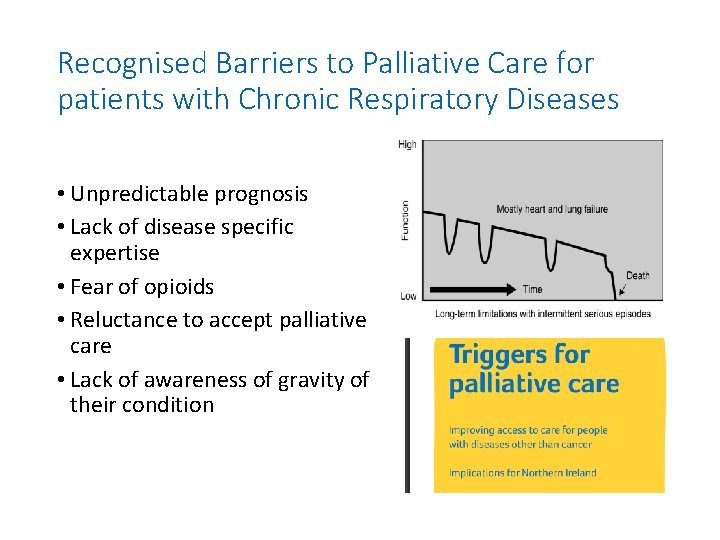
Recognised Barriers to Palliative Care for patients with Chronic Respiratory Diseases • Unpredictable prognosis • Lack of disease specific expertise • Fear of opioids • Reluctance to accept palliative care • Lack of awareness of gravity of their condition
Inadequate Palliative Care in Chronic Lung Disease. An Issue of Health Care Inequality Crystal E. Brown 1, Nancy S. Jecker 2, and J. Randall Curtis 1 Vol. 13, No. 3 | Mar 01, 2016 Annals of American Thoracic Society • Patients suffer higher symptom burden, social isolation and lower Qo. L than patients with cancer diagnoses • Patients with COPD are more likely to receive cardiopulmonary resuscitation 1 hour before death • Patients with ILD were less likely to have assessment of their pain than were patients with cancer • Both patients with COPD and ILD were less likely to have a discussion of prognoses compared with patients with cancer
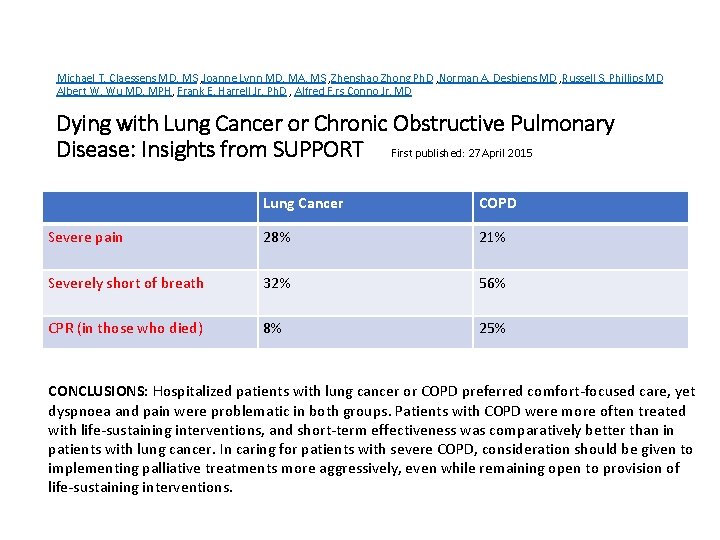
Michael T. Claessens MD, MS , Joanne Lynn MD, MA, MS , Zhenshao Zhong Ph. D , Norman A. Desbiens MD , Russell S. Phillips MD Albert W. Wu MD, MPH, Frank E. Harrell Jr. Ph. D , Alfred F. rs Conno Jr. MD Dying with Lung Cancer or Chronic Obstructive Pulmonary Disease: Insights from SUPPORT First published: 27 April 2015 Lung Cancer COPD Severe pain 28% 21% Severely short of breath 32% 56% CPR (in those who died) 8% 25% CONCLUSIONS: Hospitalized patients with lung cancer or COPD preferred comfort‐focused care, yet dyspnoea and pain were problematic in both groups. Patients with COPD were more often treated with life‐sustaining interventions, and short‐term effectiveness was comparatively better than in patients with lung cancer. In caring for patients with severe COPD, consideration should be given to implementing palliative treatments more aggressively, even while remaining open to provision of life‐sustaining interventions.
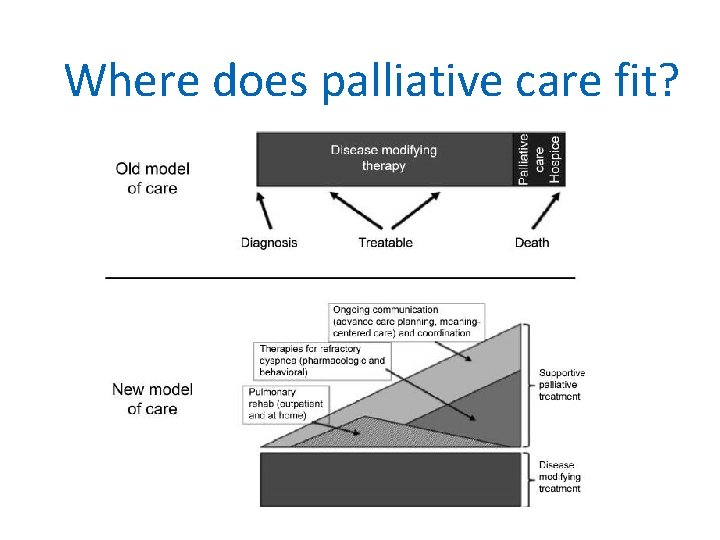
Where does palliative care fit?

Teamworks best
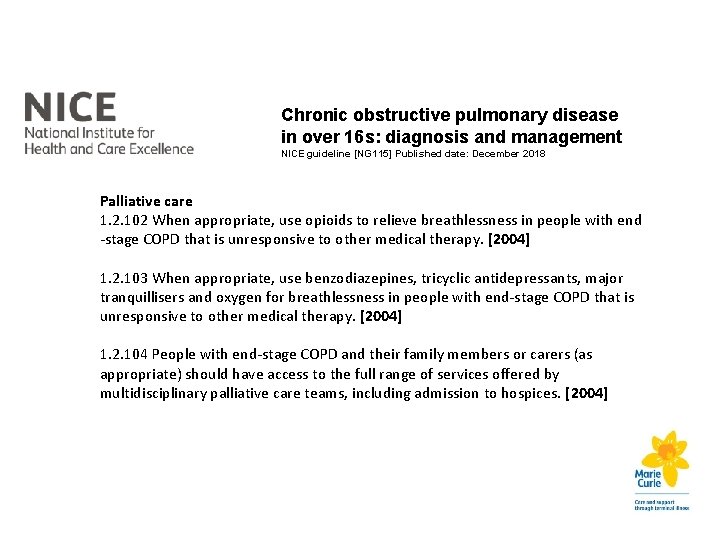
Chronic obstructive pulmonary disease in over 16 s: diagnosis and management NICE guideline [NG 115] Published date: December 2018 Palliative care 1. 2. 102 When appropriate, use opioids to relieve breathlessness in people with end ‐stage COPD that is unresponsive to other medical therapy. [2004] 1. 2. 103 When appropriate, use benzodiazepines, tricyclic antidepressants, major tranquillisers and oxygen for breathlessness in people with end‐stage COPD that is unresponsive to other medical therapy. [2004] 1. 2. 104 People with end‐stage COPD and their family members or carers (as appropriate) should have access to the full range of services offered by multidisciplinary palliative care teams, including admission to hospices. [2004]
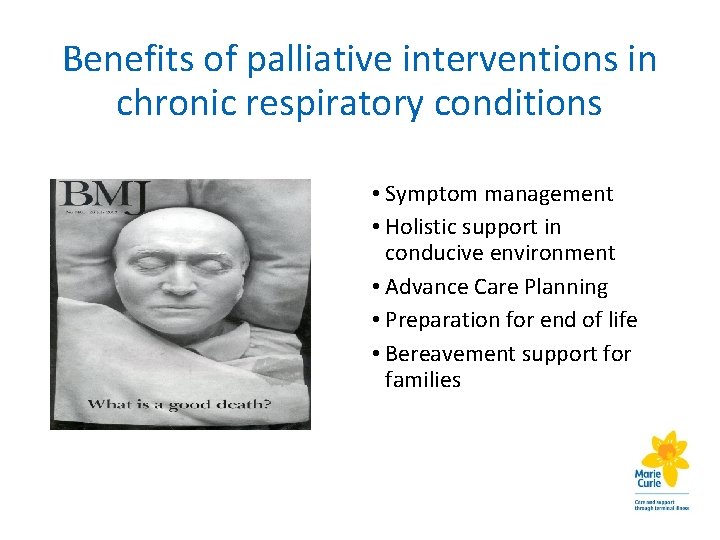
Benefits of palliative interventions in chronic respiratory conditions • Symptom management • Holistic support in conducive environment • Advance Care Planning • Preparation for end of life • Bereavement support for families
The hidden psychological impact of chronic respiratory diseases Dr Kelly Martínez Clinical Psychologist Community Respiratory Team Belfast Health & Social Care Trust
Plan • Mental health and COPD – Anxiety – Depression • The Community Respiratory Team and my role in it • How I work • What helps? • Resources
Mental health and COPD • Individuals with COPD more likely to experience anxiety and depression – 40% prevalence v 10% in general population (Demyttenaere et al. , 2004) • Poorer outcomes – Length of stay, survival rates (Kennedy et al. , 2015) – Interference with pulmonary rehab (Schuz et al. , 2015; Fan et al. , 2008) • Those experiencing childhood trauma more likely to develop COPD (Anda et al. , 2008)
Anxiety and COPD • Anxiety – anticipation of future threat and inability to cope • Fear – imminent threat (real or perceived) – Panic is a fear response • Rates of anxiety higher in COPD than in patients with cancer, heart failure and other medical conditions (Brenes, 2003) • Physical symptoms – fight, flight or freeze. Overlap with COPD symptoms
Depression and COPD • Patients with severe COPD twice as likely to develop depression as those with mild COPD (Yohannes & Alexopoulos, 2014) • Cause and consequence (Atlantis et al. , 2013) • Loss – Role – Coping strategy – Independence – Physical comfort/ease – Future hopes/plans – Clash of current capability with beliefs • Thoughts of self‐harm/suicide
Other concerns… • Post Traumatic Stress Disorder – Northern Ireland has highest rate in the world (Ferry et al. , 2012) – Can be from one event (e. g. ICU admission) or chronic trauma (e. g. domestic violence) • Cognitive changes – Age and chronic hypoxia – Impact on self‐management
Belfast Trust Community Respiratory Team • Multidisciplinary team care in the community for patients with a diagnosis of moderate to severe COPD or ILD/pulmonary fibrosis • MDT: Nursing, Physiotherapy, Occupational Therapy, Dietetics, GPw. SI and Clinical Psychology • Access to Clinical Psychology for CRT solely through CRT professionals – no direct referrals
• Screen for mood difficulties using PHQ‐ 9 and GAD 7 • Discuss at weekly MDM • Clinical psychology service provided through – MDM discussion – Consultation – Co‐working/supervision – One‐to‐one and group therapy – Staff training
ACT • Starts from the premise that suffering is a normal, inevitable part of life • Behavioural therapy – cognitions less important • Aim is to achieve a rich, full meaningful life while accepting the inevitable pain that goes with it – through taking values‐guided, mindful action • ACT teaches: – Mindfulness skills – Ways to identify what is truly important to you
What helps? • • • Listening is an intervention Empathise and normalise Managing expectations Acting non‐judgementally Being consistent Focusing on basics – Take 5: Give, Be active, Connect, Keep learning, Take notice
Belfast Trust resources • Single Point of Referral (65+) – Psychiatry of Old Age, CMHT for Older People, Home Treatment Team for 65+ • Emergency Referrals (within 4 hrs) 02895 042700 or OOH 02895 454999 • Urgent (2 weeks) or Routine referrals via CCG • Can self refer to CMHTOP • One Point of Referral (18‐ 65) – New patients for mental health assessment – Referrals via CCG, email • Mental Health Hub – For mild to moderate mental health problems
Other resources • NI Chest Heart & Stroke – Taking Control programme (6 weeks) • Available across N Ireland • Info available https: //nichs. org. uk/how‐we‐can‐support‐ you/taking‐control‐self‐management/ Tel: 028 9032 0184 • ICU support group – ICU https: //icusteps. org/support/belfast • Northern Trust – Clinical Health Psychology service 028 9441 3127
Improving access to palliative care for patients with chronic respiratory diseases Anne Marie Marley Respiratory Nurse Consultant Belfast Health and Social Care Trust
Patients in the last year of their lives…. . • Identification may be difficult • Focus on single system disease despite complex picture • Rapid decision making in acute situation • Therapy may be harmful “. . we must remain alert to the possibility that we may be over-treating patients to their detriment. Experience shows that this may be best achieved by honest, open and full discussion with patients. ” CMO Scotland Annual Report 2014 -15
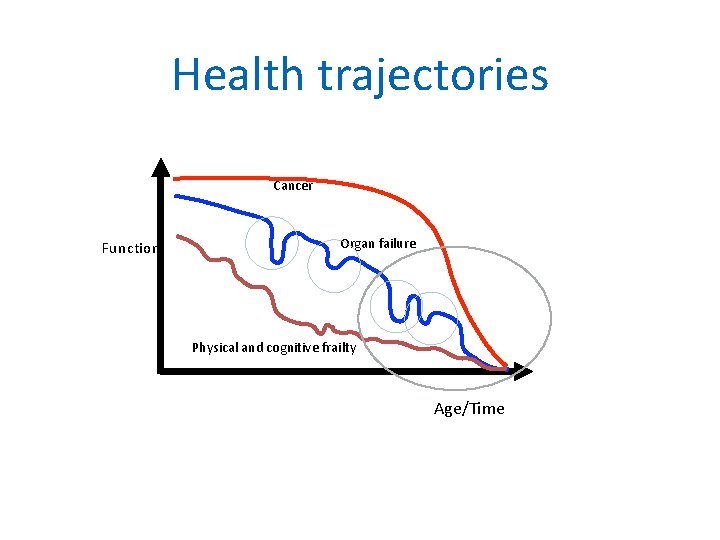
Health trajectories Cancer Function Organ failure Physical and cognitive frailty Age/Time
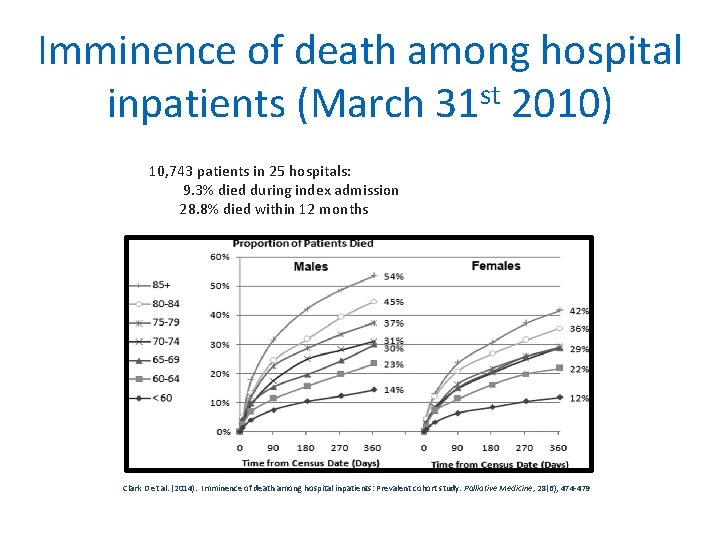
Imminence of death among hospital st inpatients (March 31 2010) ➢ 10, 743 patients in 25 hospitals: ➢ 9. 3% died during index admission • 28. 8% died within 12 months Clark D et al. (2014). Imminence of death among hospital inpatients: Prevalent cohort study. Palliative Medicine, 28(6), 474‐ 479
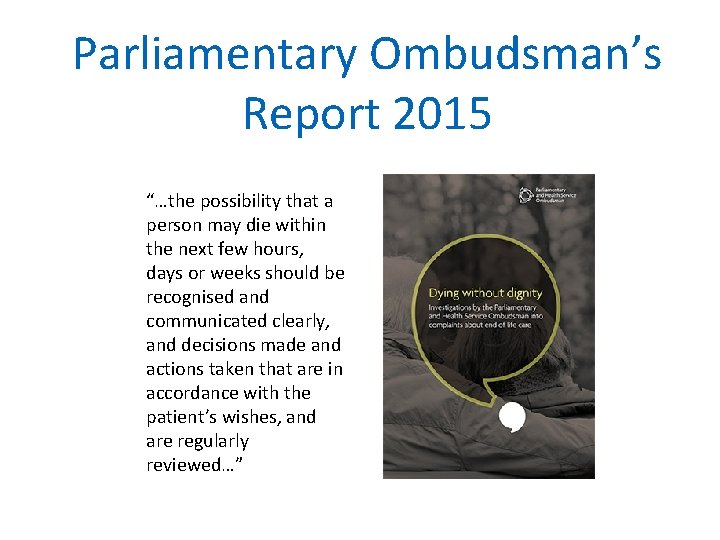
Parliamentary Ombudsman’s Report 2015 “…the possibility that a person may die within the next few hours, days or weeks should be recognised and communicated clearly, and decisions made and actions taken that are in accordance with the patient’s wishes, and are regularly reviewed…”
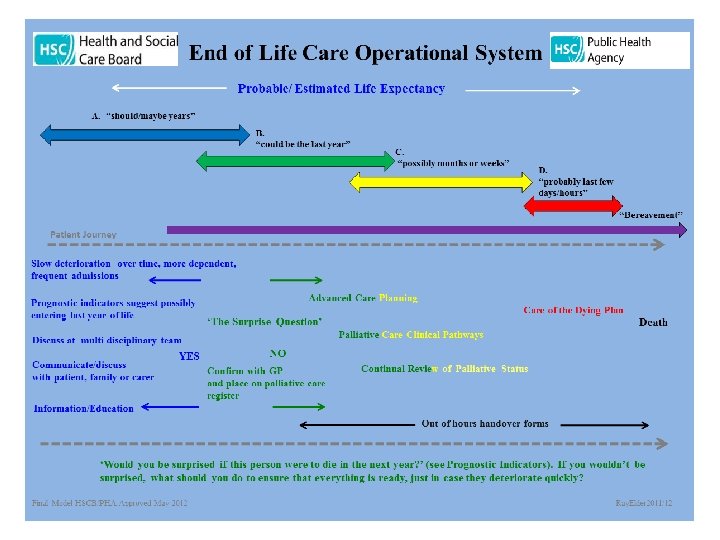
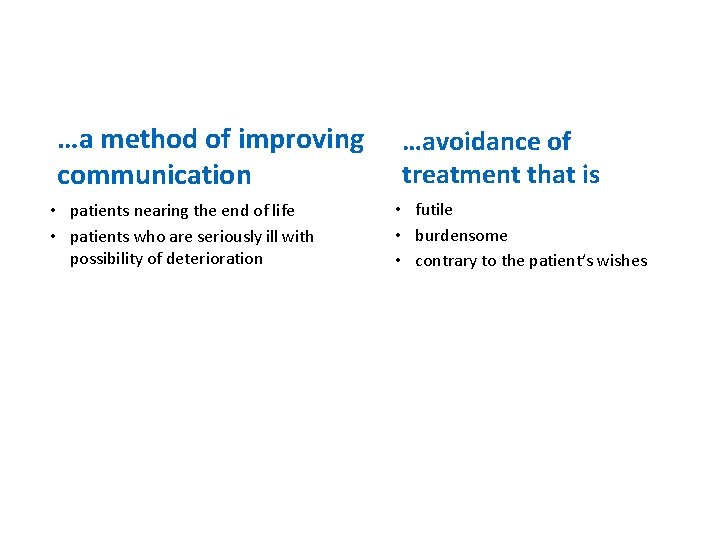
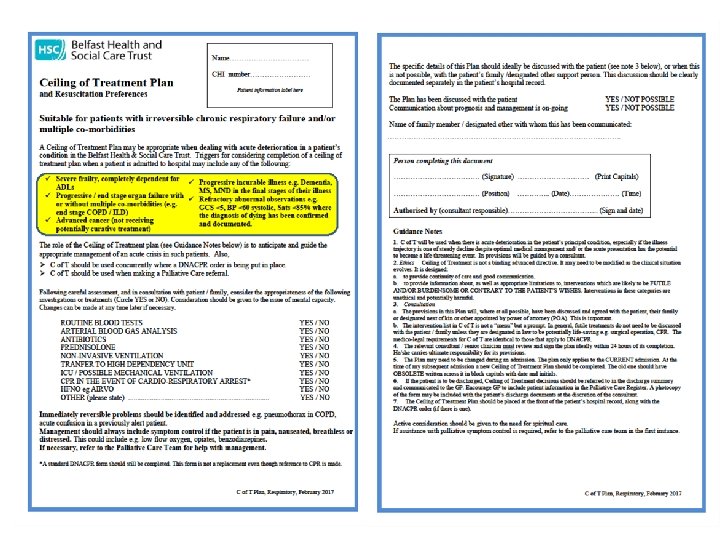
…a method of improving communication • patients nearing the end of life • patients who are seriously ill with possibility of deterioration …avoidance of treatment that is • futile • burdensome • contrary to the patient’s wishes
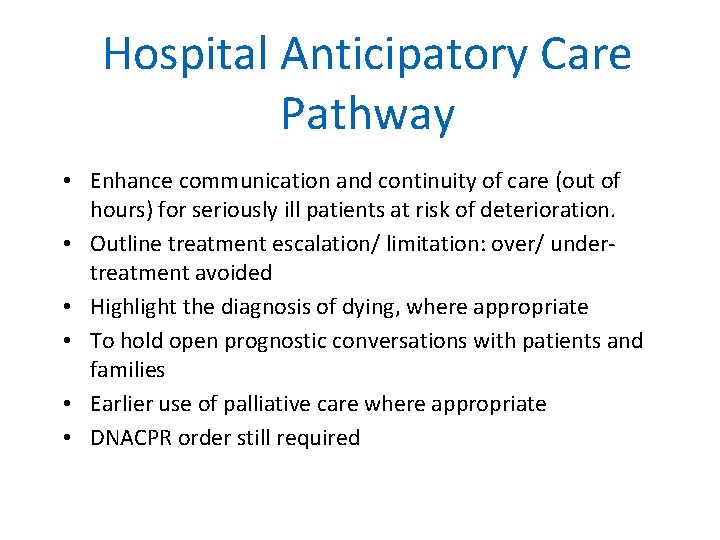
Hospital Anticipatory Care Pathway • Enhance communication and continuity of care (out of hours) for seriously ill patients at risk of deterioration. • Outline treatment escalation/ limitation: over/ under‐ treatment avoided • Highlight the diagnosis of dying, where appropriate • To hold open prognostic conversations with patients and families • Earlier use of palliative care where appropriate • DNACPR order still required
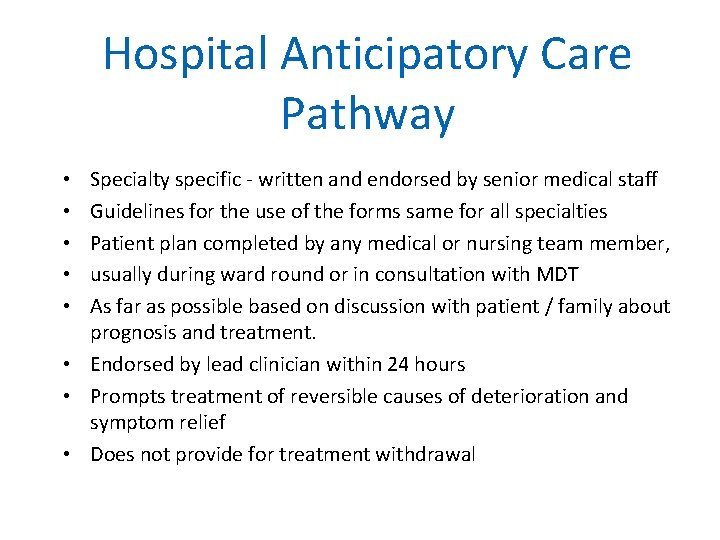
Hospital Anticipatory Care Pathway Specialty specific ‐ written and endorsed by senior medical staff Guidelines for the use of the forms same for all specialties Patient plan completed by any medical or nursing team member, usually during ward round or in consultation with MDT As far as possible based on discussion with patient / family about prognosis and treatment. • Endorsed by lead clinician within 24 hours • Prompts treatment of reversible causes of deterioration and symptom relief • Does not provide for treatment withdrawal • • •
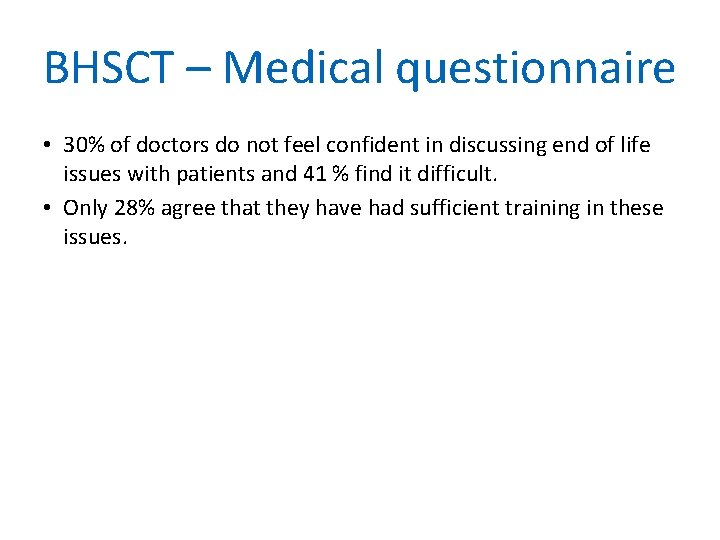
BHSCT – Medical questionnaire • 30% of doctors do not feel confident in discussing end of life issues with patients and 41 % find it difficult. • Only 28% agree that they have had sufficient training in these issues.
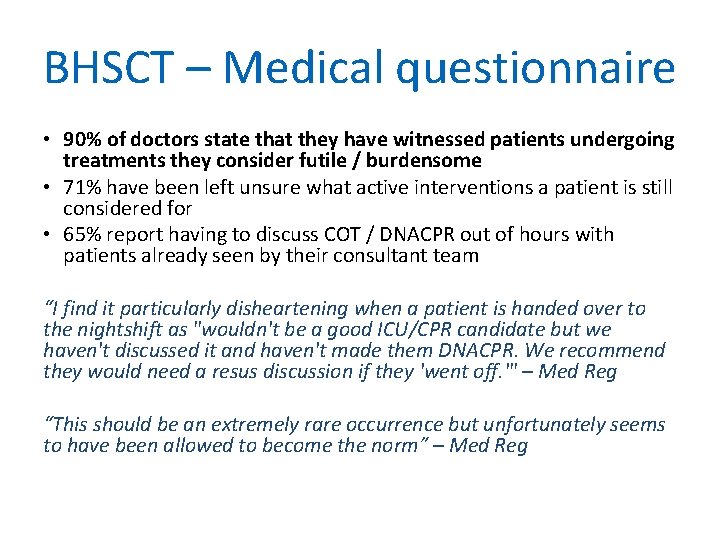
BHSCT – Medical questionnaire • 90% of doctors state that they have witnessed patients undergoing treatments they consider futile / burdensome • 71% have been left unsure what active interventions a patient is still considered for • 65% report having to discuss COT / DNACPR out of hours with patients already seen by their consultant team “I find it particularly disheartening when a patient is handed over to the nightshift as "wouldn't be a good ICU/CPR candidate but we haven't discussed it and haven't made them DNACPR. We recommend they would need a resus discussion if they 'went off. '" – Med Reg “This should be an extremely rare occurrence but unfortunately seems to have been allowed to become the norm” – Med Reg
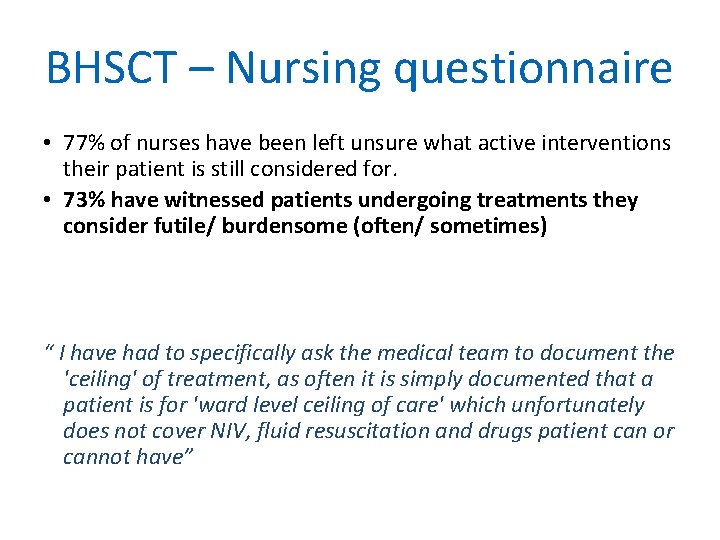
BHSCT – Nursing questionnaire • 77% of nurses have been left unsure what active interventions their patient is still considered for. • 73% have witnessed patients undergoing treatments they consider futile/ burdensome (often/ sometimes) “ I have had to specifically ask the medical team to document the 'ceiling' of treatment, as often it is simply documented that a patient is for 'ward level ceiling of care' which unfortunately does not cover NIV, fluid resuscitation and drugs patient can or cannot have”
BHSCT – Nursing questionnaire • “I have regrettably witnessed nursing colleagues interpret a DNACPR order as a license to do less for the patient. . . ” • ‘’I feel that sometimes it is left too late to keep a patient comfortable… sometimes active treatments at this late stage can cause stress and anxiety to both the patient and their relatives’’

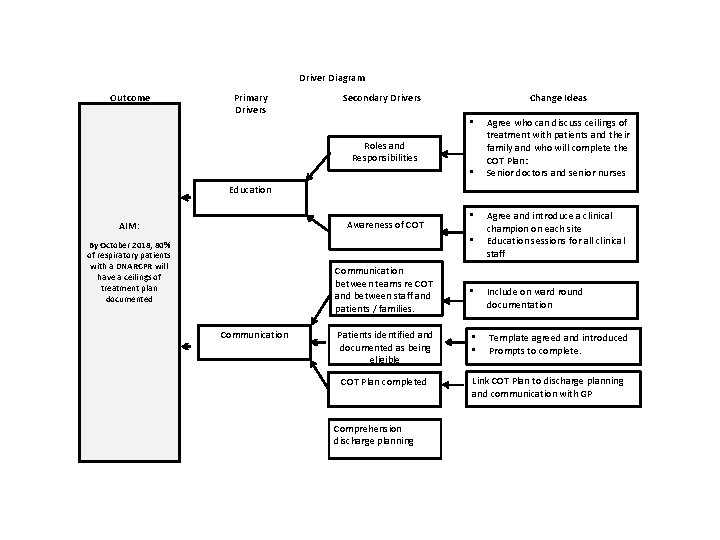
Driver Diagram Outcome Primary Drivers Secondary Drivers Change Ideas • Roles and Responsibilities • Agree who can discuss ceilings of treatment with patients and their family and who will complete the COT Plan: Senior doctors and senior nurses Education Awareness of COT AIM: • • By October 2018, 80% of respiratory patients with a DNARCPR will have a ceilings of treatment plan documented Communication Agree and introduce a clinical champion on each site Education sessions for all clinical staff Communication between teams re COT and between staff and patients / families. • Include on ward round documentation Patients identified and documented as being eligible • • Template agreed and introduced Prompts to complete. COT Plan completed Comprehension discharge planning Link COT Plan to discharge planning and communication with GP
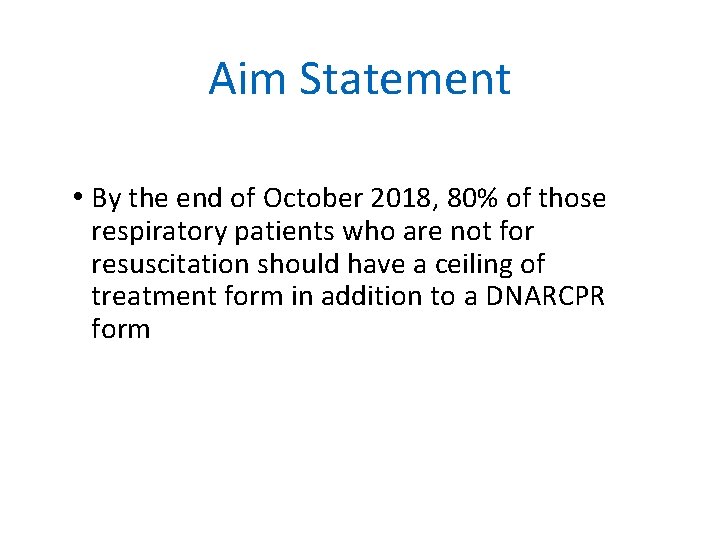
Aim Statement • By the end of October 2018, 80% of those respiratory patients who are not for resuscitation should have a ceiling of treatment form in addition to a DNARCPR form
When should palliative care be initiated? • When a patient has active, progressive and usually advanced disease for which the prognosis is limited (although it can be several years) and the focus of care is quality of life. • Palliative care is a continuum of care that may apply from diagnosis of a life‐ limiting condition right through to the end phase of life when death is expected (DHSSPS 2010)
BHSCT standard for nursing discharge of patients who have palliative or end of life care needs All patients who have palliative or end of life care needs should be given the opportunity to have a district nursing palliative assessment at home, regardless of their perceived need in hospital. The standard and supporting information can be found on the Palliative and End of Life (strategic) HUB site.
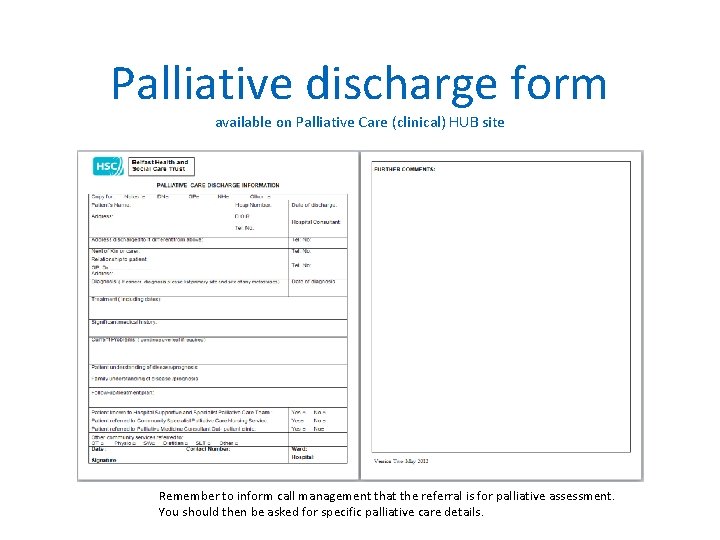
Palliative discharge form available on Palliative Care (clinical) HUB site Remember to inform call management that the referral is for palliative assessment. You should then be asked for specific palliative care details.
Benefits to the patient It is anticipated that the timely referral to district nursing services will result in: • Identified and registered on a district nursing case load • Access services only available via district nursing • A named key worker, who in partnership with the patient, will help to co‐ ordinate his/her care • Individualised holistic assessment of the patient’s/carer’s needs and the opportunity to engage in proactive planning • Information on who to contact if needed both in and out of hours • Increased opportunity for GPs to provide relevant information to OOH services • Patient’s needs, wishes and decisions discussed and, with their permission, communicated to those caring for them including in/out of hours services • The patient being placed on the resident Trust palliative and end of life care coordination system.
In Summary ‐ We want to… • Improve patient safety… • Avoid overtreatment / over‐investigation – when this is futile, burdensome, or against patient wishes • Avoid under treatment – By removing ambiguity – By initiating palliative care measures where appropriate • Enhance communication and continuity of care (out of hours) for seriously ill patients at risk of deterioration • Encourage communication and openness with our patients – Involve them in decision making – Don’t avoid difficult prognostic conversations
Marie Curie Breathing Space Clinic Lesley Rutherford

What is the Breathing Space Clinic? § Weekly, Nurse-led, multi-disciplinary clinic located at Marie Curie Hospice Belfast § § Physiotherapist Occupational therapist Social worker Complementary therapists § Client Group: § People with lung cancer or mesothelioma § People with advanced non-malignant respiratory conditions such as COPD, pulmonary fibrosis § In exceptional circumstances, people with a primary cancer, other than lung, with extensive pulmonary metastases, causing breathlessness
Driving force behind the development of the “Breathing Space Clinic”
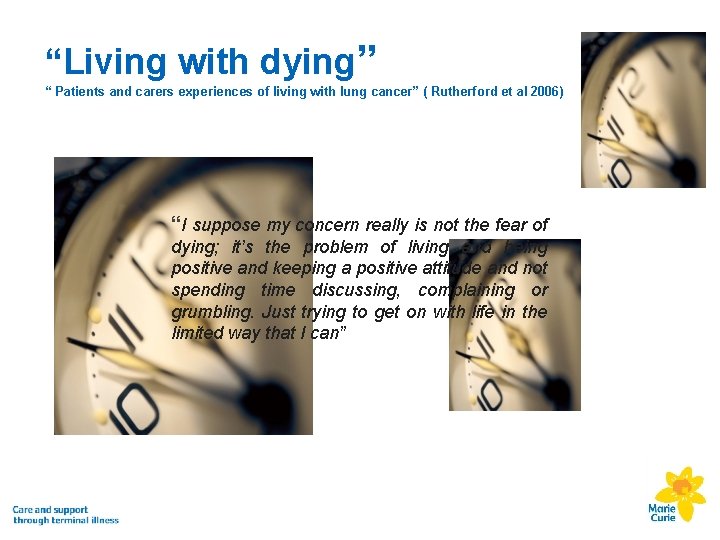
“Living with dying” “ Patients and carers experiences of living with lung cancer” ( Rutherford et al 2006) “I suppose my concern really is not the fear of dying; it’s the problem of living and being positive and keeping a positive attitude and not spending time discussing, complaining or grumbling. Just trying to get on with life in the limited way that I can”
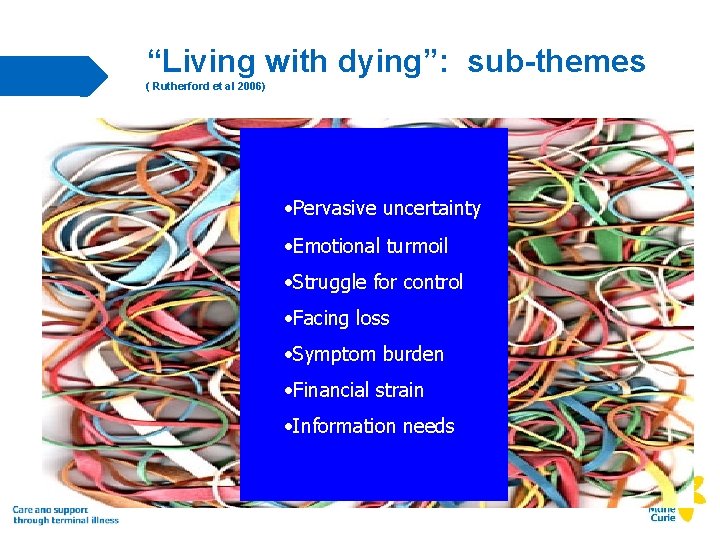
“Living with dying”: sub-themes ( Rutherford et al 2006) • Pervasive uncertainty • Emotional turmoil • Struggle for control • Facing loss • Symptom burden • Financial strain • Information needs
“Need for improved communication” ( Rutherford et al 2006) § Confusion around roles and responsibilities of healthcare professionals. § Unclear pathways once treatment completed, leaving patients and carers feeling “abandoned”. “Who do you phone if you take bad; the doctor, the hospital or what? What do you do? No one’s told me anything. Nobody seems to care. You are on your own and that’s it”” ( patient)
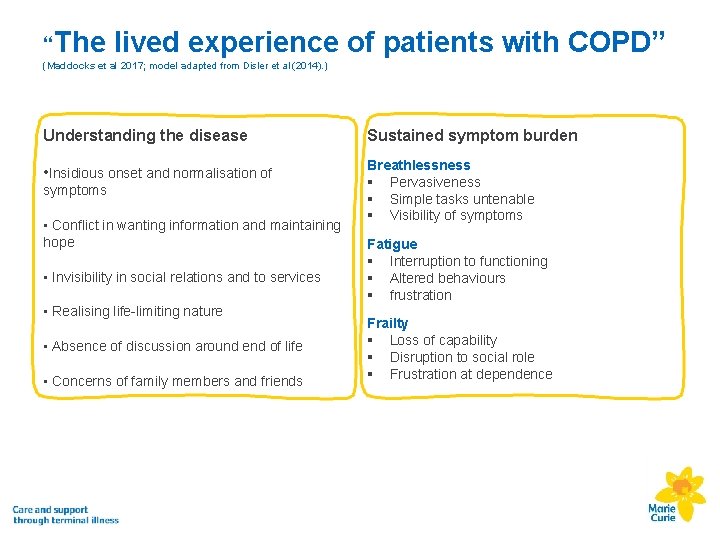
“The lived experience of patients with COPD” (Maddocks et al 2017; model adapted from Disler et al (2014). ) Understanding the disease Sustained symptom burden • Insidious onset and normalisation of Breathlessness § Pervasiveness § Simple tasks untenable § Visibility of symptoms • Conflict in wanting information and maintaining hope • Invisibility in social relations and to services • Realising life-limiting nature • Absence of discussion around end of life • Concerns of family members and friends Fatigue § Interruption to functioning § Altered behaviours § frustration Frailty § Loss of capability § Disruption to social role § Frustration at dependence
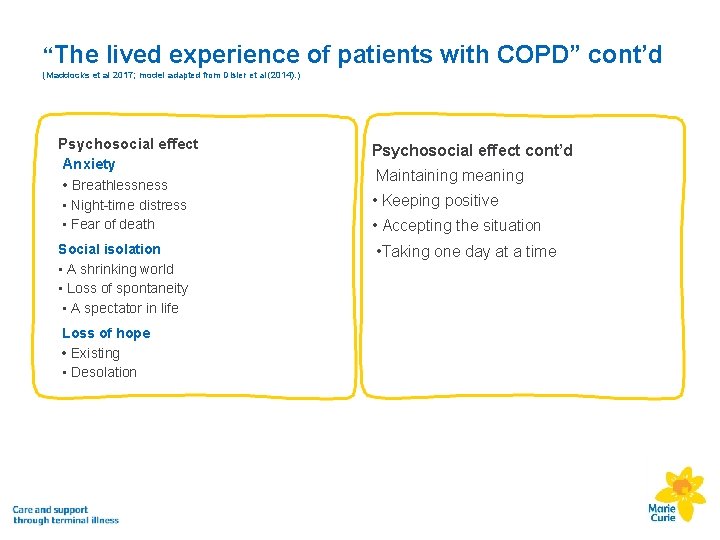
“The lived experience of patients with COPD” cont’d (Maddocks et al 2017; model adapted from Disler et al (2014). ) Psychosocial effect Anxiety • Breathlessness Psychosocial effect cont’d Maintaining meaning • Night-time distress • Fear of death • Keeping positive Social isolation • A shrinking world • Loss of spontaneity • A spectator in life • Taking one day at a time Loss of hope • Existing • Desolation • Accepting the situation
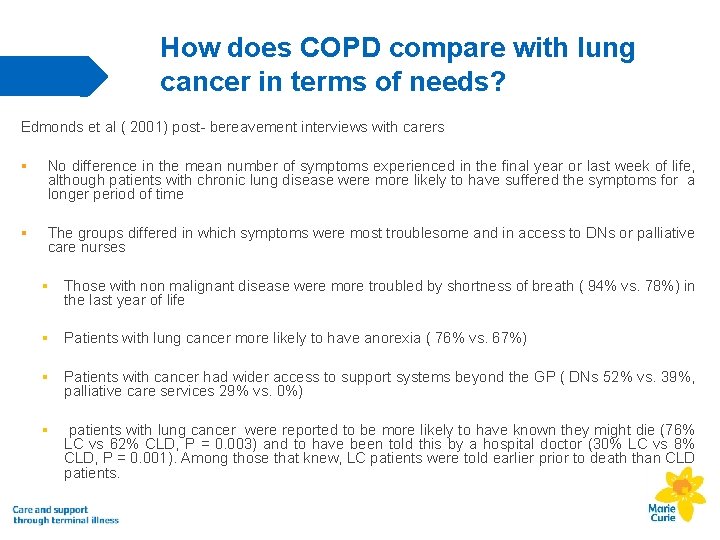
How does COPD compare with lung cancer in terms of needs? Edmonds et al ( 2001) post- bereavement interviews with carers § No difference in the mean number of symptoms experienced in the final year or last week of life, although patients with chronic lung disease were more likely to have suffered the symptoms for a longer period of time § The groups differed in which symptoms were most troublesome and in access to DNs or palliative care nurses § Those with non malignant disease were more troubled by shortness of breath ( 94% vs. 78%) in the last year of life § Patients with lung cancer more likely to have anorexia ( 76% vs. 67%) § Patients with cancer had wider access to support systems beyond the GP ( DNs 52% vs. 39%, palliative care services 29% vs. 0%) § patients with lung cancer were reported to be more likely to have known they might die (76% LC vs 62% CLD, P = 0. 003) and to have been told this by a hospital doctor (30% LC vs 8% CLD, P = 0. 001). Among those that knew, LC patients were told earlier prior to death than CLD patients.
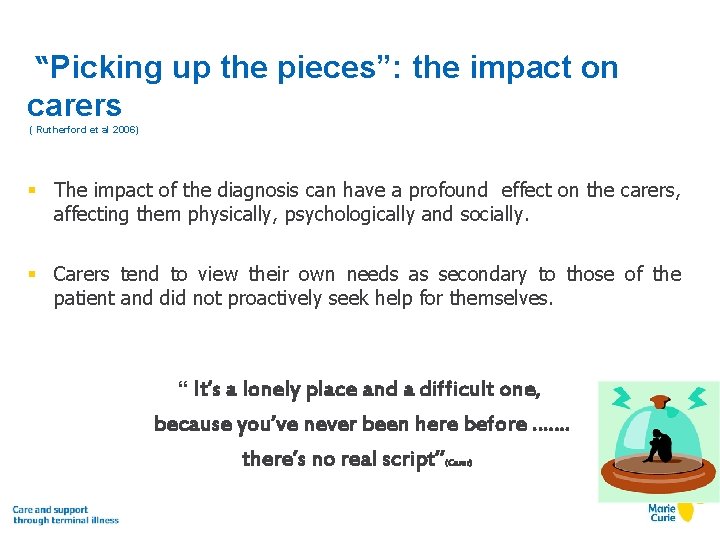
“Picking up the pieces”: the impact on carers ( Rutherford et al 2006) § The impact of the diagnosis can have a profound effect on the carers, affecting them physically, psychologically and socially. § Carers tend to view their own needs as secondary to those of the patient and did not proactively seek help for themselves. “ It’s a lonely place and a difficult one, because you’ve never been here before ……. there’s no real script”(Carer)
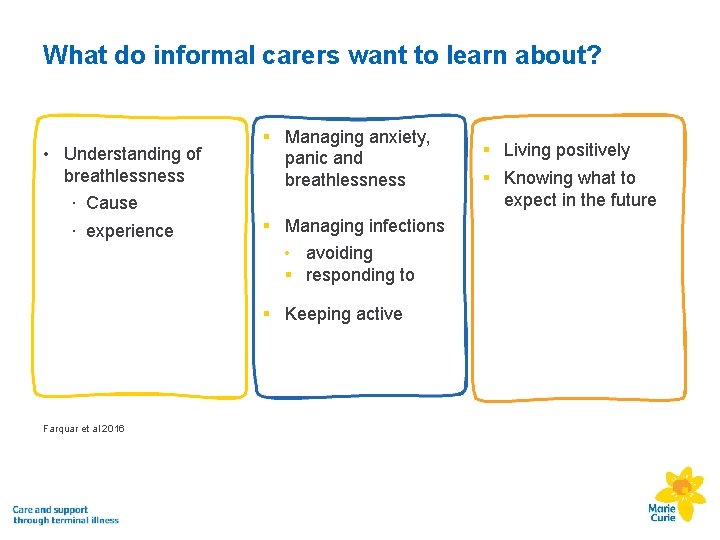
What do informal carers want to learn about? • Understanding of breathlessness ∙ Cause ∙ experience § Managing anxiety, panic and breathlessness § Managing infections • avoiding § responding to § Keeping active Farquar et al 2016 § Living positively § Knowing what to expect in the future
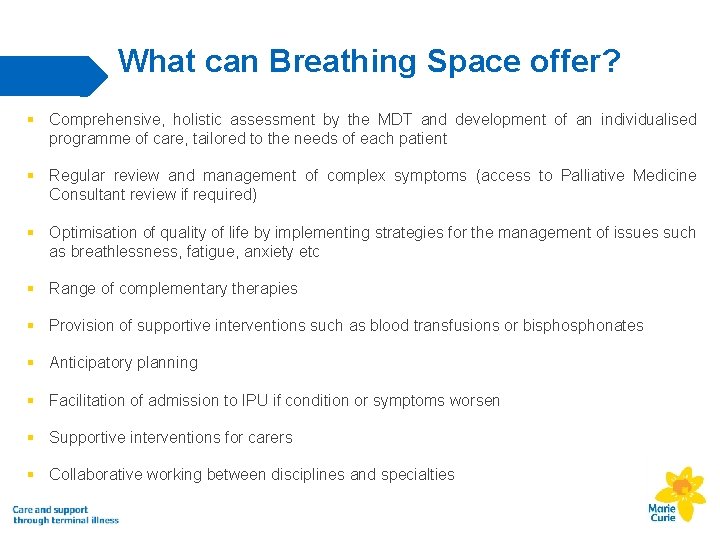
What can Breathing Space offer? § Comprehensive, holistic assessment by the MDT and development of an individualised programme of care, tailored to the needs of each patient § Regular review and management of complex symptoms (access to Palliative Medicine Consultant review if required) § Optimisation of quality of life by implementing strategies for the management of issues such as breathlessness, fatigue, anxiety etc § Range of complementary therapies § Provision of supportive interventions such as blood transfusions or bisphonates § Anticipatory planning § Facilitation of admission to IPU if condition or symptoms worsen § Supportive interventions for carers § Collaborative working between disciplines and specialties

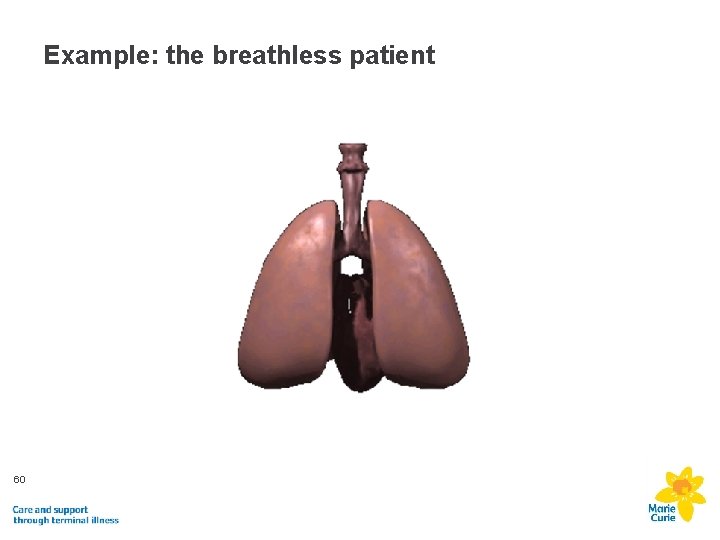
Example: the breathless patient 60
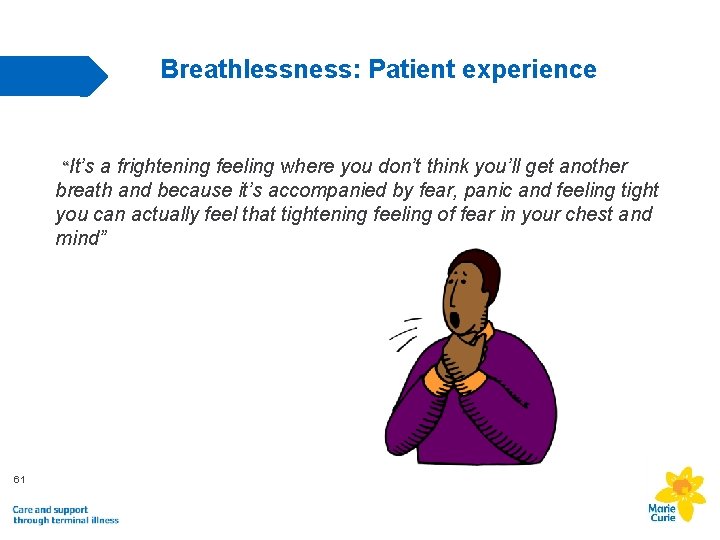
Breathlessness: Patient experience “It’s a frightening feeling where you don’t think you’ll get another breath and because it’s accompanied by fear, panic and feeling tight you can actually feel that tightening feeling of fear in your chest and mind” 61
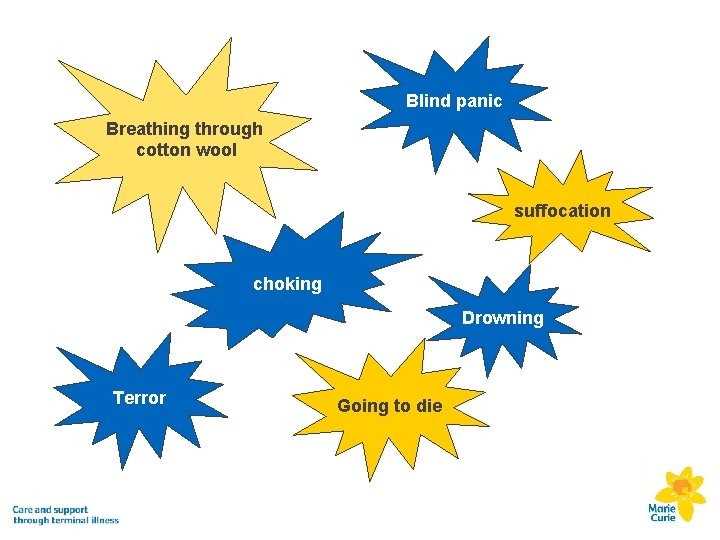
Blind panic Breathing through cotton wool suffocation choking Drowning Terror Going to die
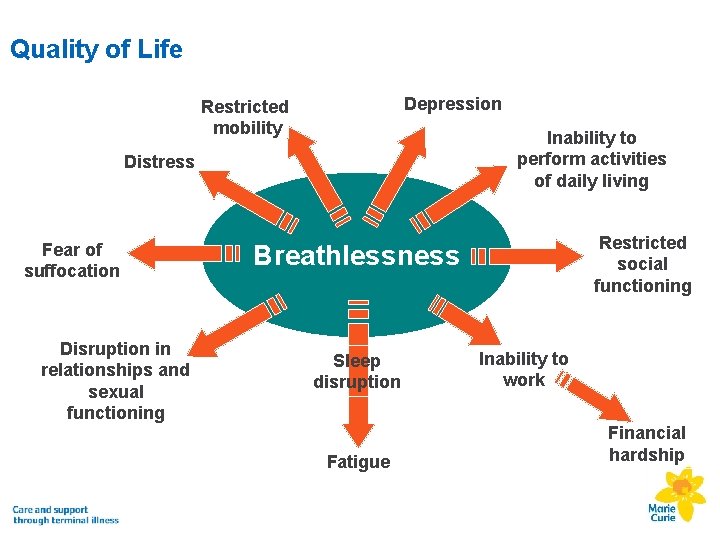
Quality of Life Depression Restricted mobility Inability to perform activities of daily living Distress Fear of suffocation Disruption in relationships and sexual functioning Restricted social functioning Breathlessness Sleep disruption Fatigue Inability to work Financial hardship
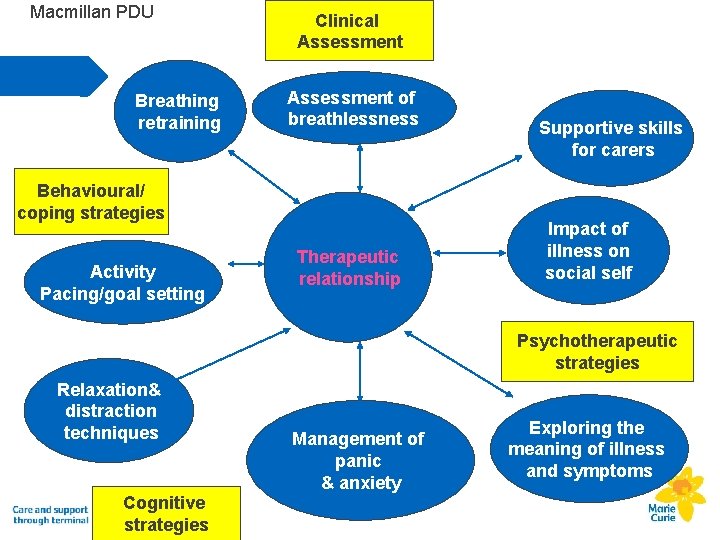
Macmillan PDU Breathing retraining Clinical Assessment of breathlessness Behavioural/ coping strategies Activity Pacing/goal setting Therapeutic relationship Supportive skills for carers Impact of illness on social self Psychotherapeutic strategies Relaxation& distraction techniques Cognitive strategies Management of panic & anxiety Exploring the meaning of illness and symptoms
65
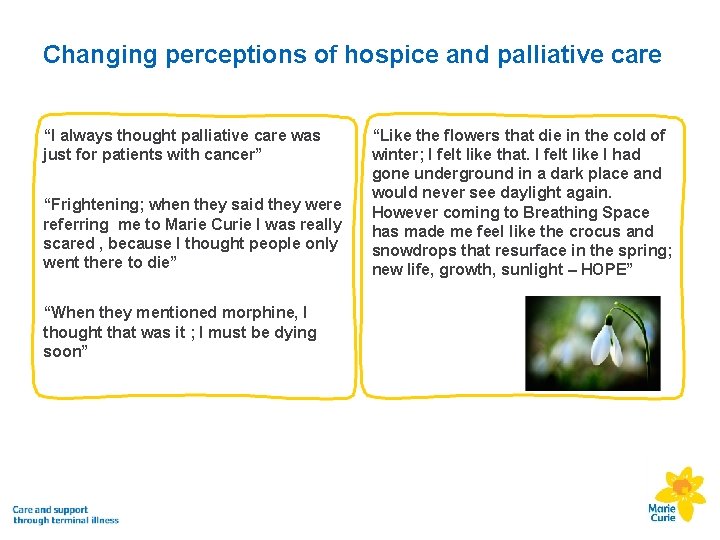
Changing perceptions of hospice and palliative care “I always thought palliative care was just for patients with cancer” “Frightening; when they said they were referring me to Marie Curie I was really scared , because I thought people only went there to die” “When they mentioned morphine, I thought that was it ; I must be dying soon” “Like the flowers that die in the cold of winter; I felt like that. I felt like I had gone underground in a dark place and would never see daylight again. However coming to Breathing Space has made me feel like the crocus and snowdrops that resurface in the spring; new life, growth, sunlight – HOPE”
How and when to refer? § Referrals can be made by any health care professional, (with the permission of the patient), using the regional referral form or CCG § Patients with palliative needs can be referred at any stage of their disease trajectory § GPs will be notified of the referral before the patient attends
Palliative Care for Non. Malignant Respiratory Disease: a US-Ireland Perspective Dr Clare Mc Veigh RN Lecturer (Education) School of Nursing and Midwifery, QUB @clareveigh @QUBSONM
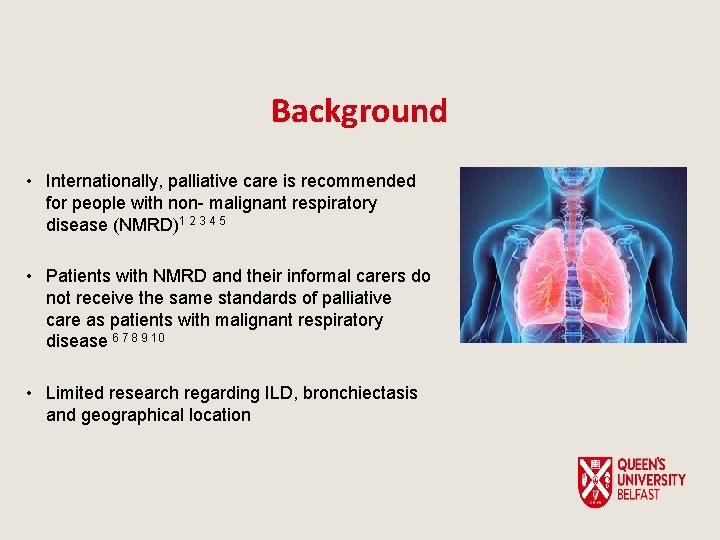
Background • Internationally, palliative care is recommended for people with non- malignant respiratory disease (NMRD)1 2 3 4 5 • Patients with NMRD and their informal carers do not receive the same standards of palliative care as patients with malignant respiratory disease 6 7 8 9 10 • Limited research regarding ILD, bronchiectasis and geographical location
All- Ireland Study (2012 – 013) Aim To explore specialist and generalist palliative care provision for people with non-malignant respiratory disease, in rural and urban areas in the North and Republic of Ireland.
About the study 11 v 2 rural and 2 urban sites on the Island of Ireland v. Semi-structured interviews with bereaved informal carers of patients with COPD (n=12), ILD (n=4) or bronchiectasis (n=1) who had died 3 -18 months previously v. Focus groups (n=4) with HCPs ( n=18).
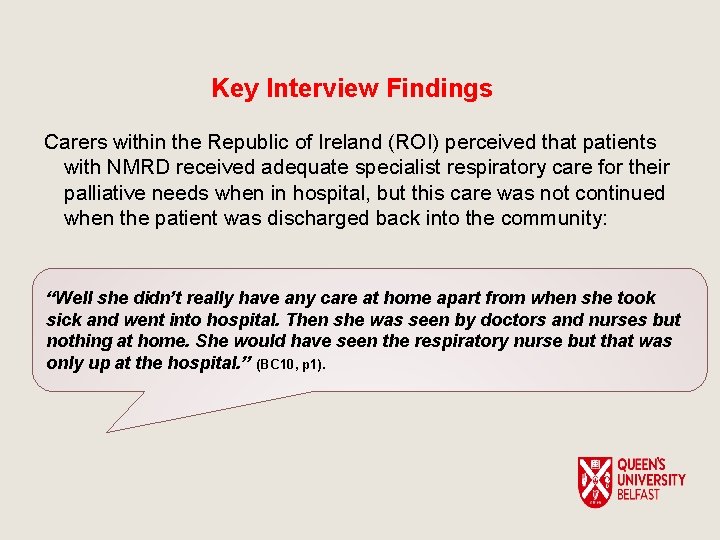
Key Interview Findings Carers within the Republic of Ireland (ROI) perceived that patients with NMRD received adequate specialist respiratory care for their palliative needs when in hospital, but this care was not continued when the patient was discharged back into the community: “Well she didn’t really have any care at home apart from when she took sick and went into hospital. Then she was seen by doctors and nurses but nothing at home. She would have seen the respiratory nurse but that was only up at the hospital. ” (BC 10, p 1).
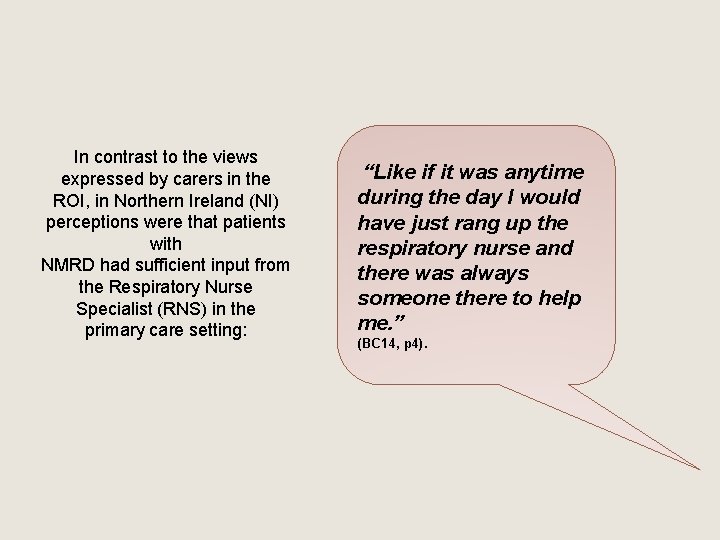
In contrast to the views expressed by carers in the ROI, in Northern Ireland (NI) perceptions were that patients with NMRD had sufficient input from the Respiratory Nurse Specialist (RNS) in the primary care setting: “Like if it was anytime during the day I would have just rang up the respiratory nurse and there was always someone there to help me. ” (BC 14, p 4).
Interview Findings Specialist palliative care was only introduced when the patient was nearing the end of life, and carers felt that the patient could have benefited from earlier integration “We would have liked to have had more of the [specialist] palliative care side of things earlier on rather than just before he died. ” (BC 15, p 3).
Key Focus Group Findings The views expressed by HCPs in the ROI indicated an inequality of generalist and specialist palliative care service provision for patients with ILD or bronchiectasis, in comparison to COPD: “Bronchiectasis patients are left to self manage at home and I would say that the COPD patients are getting a better [specialist and generalist] palliative care service than the other cohorts [ILD and bronchiectasis]. ” (RN 7, Respiratory Nurse Specialist, p 9).
Future direction of palliative care for NMRD “I know my limitations in terms of symptomatically. What can the specialist palliative care nurses bring in that we [RNS] perhaps wouldn’t even consider? Therefore I think that specialist palliative care is required on that account. ” (RN 7, Respiratory Nurse Specialist, p 8). “We don’t have a model for either delivering palliative care or respiratory care and I suppose we should. ” (RN 5, Respiratory Nurse Specialist, p 8). “I think that in some of these NMRD patients the fact that they have a chronic disease may not mean that they need specialist palliative care but certainly a palliative approach is needed and is all our responsibilities regardless of our qualifications. ” (PCN 4, Palliative Care Nurse Specialist, p 5).
Palliative Care in Rural America for Veterans with NMRD v Over 20. 4 million war veterans in the US, and they are three times more likely to develop NMRD than the general population. v War veterans come with unique holistic symptom need and complexities due to exposure to war and combat situations. v. Large number of uninsured war veterans who live in sparsely populated areas with limited local palliative service provision. REFERENCES and further info. To be published in BMC Palliative Care in March
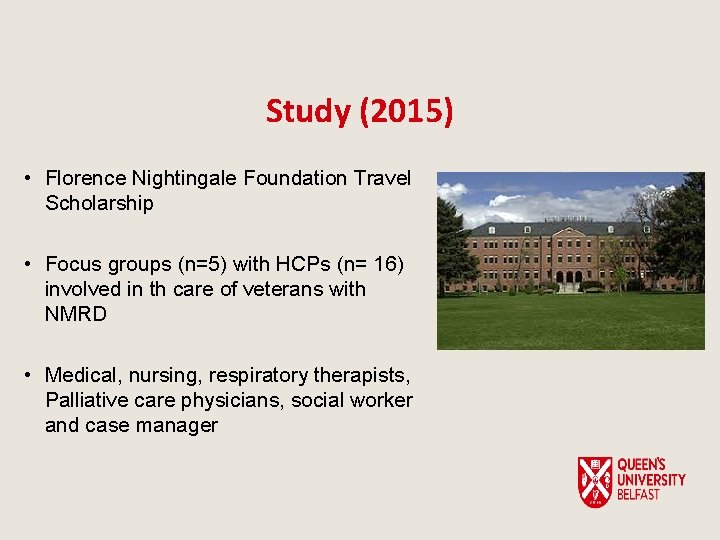
Study (2015) • Florence Nightingale Foundation Travel Scholarship • Focus groups (n=5) with HCPs (n= 16) involved in th care of veterans with NMRD • Medical, nursing, respiratory therapists, Palliative care physicians, social worker and case manager
Key Findings Healthcare professionals perceived that veterans with NMRD often viewed palliative care as ‘surrendering’ to their illness: “War veterans are almost unwilling to admit that they would be giving up, and I think that's what palliative care is perceived as, you're just giving up. And so I think they kind of shy away from anything that would give them that feeling that they have surrendered. ” (RT 2) “Men are very rightful and they don't want anybody to think that they're less of a man for wearing oxygen. I mean, they won’t wear it to the store because they don't want people to see them wearing their oxygen or they might not want to admit how short of breath they are and how debilitated they are because they want to be “strong men. ” (RT 1)
Financial Barriers “The medicine pays for the physician to do procedures. If you do more procedures you get paid more, so people (physicians) are going to all the specialities where there a lot of procedures. In hospice medicine there are not that many procedures…. ” (MD 2) “I don't think it's quite as easy to provide everything that they [veteran population with NMRD] need to maintain their quality of life. We do whatever they need for oxygen, but out in the real world [outside the veteran hospital] it's run by what insurance wants to pay and what the patient ultimately can pay too. ” (RT 1)
Living remotely Participants also perceived that veterans with NMRD are less likely to receive the appropriate level of palliative care services that they require if they live in rural areas: “You go into rural communities and it becomes really problematic because these patients would like to go home and their families many times want them at home but then we can’t get the speciality RT or the speciality nurses, or maybe even an ER that's close. ” (RN 2)
Key Implications • Enhanced availability of specialist respiratory and palliative care services would enhance generalists access to specialist support for NMRD • Services need to also filter down to patients with bronchiectasis and ILD • Future research explore the feasibility of a service development model to enhance availability of services 12 13 • Digital technology to deliver care in remote areas for HCPs, patients and informal carers • Education at undergraduate and postgraduate level

References 1. 2. 3. 4. 5. 6. 7. 8. 9. 10. 11. 12. 13. Bradley B. , Branley H. M. , Egan J. J, Greaves M. S. , Hansell D. M. , Harrison N. K. & Wilsher M. L. (2008) British Thoracic Society Interstitial Lung Disease Guideline Group, British Thoracic Society Standards of Care Committee; Thoracic Society of Australia; New Zealand Thoracic Society; Irish Thoracic Society. Interstitial lung disease guideline: the British Thoracic Society in collaboration with the Thoracic Society of Australia and New Zealand the Irish Thoracic Society. Thorax 63(Suppl 5), 1 -58. Lanken P. N. , Terry P. B. , De. Lisser H. M. , Fahy B. F. , Hansen-Flaschen J. , Heffner J. E. , Levy M. , Mularski R. A. , Osborne M. L. , Prendergast T. J. & Rocker G. (2008) An official American Thoracic Society clinical policy statement: palliative care for patients with respiratory diseases and critical illnesses. American journal of respiratory and critical care medicine 177(8), 912 -927. National Institute for Health and Care Excellence (2010) Chronic obstructive pulmonary disease Management of chronic obstructive pulmonary disease in adults in primary and secondary care (partial update). NICE, UK. Raghu G. , Collard H. R. , Egan J. J. , Martinez F. J. , Behr J. , Brown K. K. & Schu nemann H. J. (2011)An official ATS/ERS/JRS/ALAT statement: idiopathic pulmonary fibrosis: evidence-based guidelines for diagnosis and management. American Journal of Respiratory and Critical Care Medicine 183(6), 788 -824. National Institute for Health and Care Excellence (2013) Idiopathic pulmonary fibrosis: The diagnosis and management of suspected idiopathic pulmonary fibrosis. NICE, UK. Goodridge D. , Lawson J. , Duggleby W. , Marciniuk D. , Rennie D. & Stang M. (2008) Health care utilization of patients with chronic obstructive pulmonary disease and lung cancer in the last 12 months of life. Respiratory Medicine 102(6), 885 - 891. Partridge M. R. , Khatri A. , Sutton L. , Welham S. & Afmedzai S. H. (2009) Palliative care services for those with chronic lung disease. Chronic Respiratory Disease 6, 13 - 17. Bajwah, S. , Koffman, J. Higginson, I. J. , Ross, J. R. , Wells, A. U. , Birring, S. S. and Riley, J. (2012) ‘ “I wish I knew more…” the end-of-life planning and information needs for end-stage fibrotic interstitial lung disease: views of patients, carers and health professionals. ’ BMJ supportive & palliative care. 3 (1), p. p. 84 -90. Beernaert K. , Cohen J. , Deliens L. , Devroey D. , Vanthomme K. , Pardon K. & Van den Block L. (2013) Referral to palliative care in COPD and other chronic disease: A population-based study. Respiratory Medicine 107(11), 1731 -1739. Lindell K. O. , Liang Z. , Hoffman L. A. , Rosenzweig M. Q. , Saul M. I. , Pilewski J. M. , Gibson K. F. & Kaminski N. (2014) Palliative Care and Location of Death in Decedents with Idiopathic Pulmonary Fibrosis. Chest 147(2), 423 -429. Mc. Veigh, C, Reid, J, Hudson, P, Larkin, P, Porter, S & Marley, AM 2014, 'The experiences of palliative care health service provision for people with non-malignant respiratory disease and their caregivers: an all-Ireland study' Journal of Advanced Nursing, vol. 70, no. 3, pp. 687 -697. https: //doi. org/10. 1111/jan. 12240 Mc. Veigh, C, Reid, J, Larkin, P, Porter, S & Hudson, P 2017, 'The provision of generalist and specialist palliative care for patients with non-malignant respiratory disease in the North and Republic of Ireland: a qualitative study' BMC Palliative Care, vol 17, no. 6. DOI: 10. 1186/s 12904 -017 -0220 -1 Mc. Veigh, C, Reid, J, Larkin, P, Porter, S & Hudson, P 2018, ‘The experience of palliative care service provision for people with non-malignant respiratory disease and their family carers: an all-Ireland qualitative study’ Journal of Advanced Nursing, vol 74, no. 2. DOI: 10. 1111/jan. 13453
Q&A panel @Marie. Curie. NI
- Slides: 84