Life cycle of a grant Mary Louise Healy
- Slides: 35
Life cycle of a grant Mary Louise Healy Johns Hopkins University Governor’s Grants Office Higher Education Conference May 22, 2012
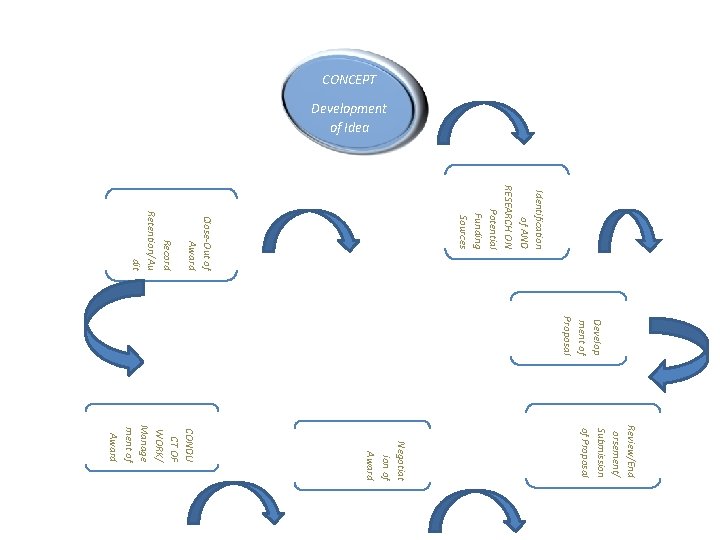
CONCEPT Development of Idea Identification of AND RESEARCH ON Potential Funding Sources Close-Out of Award Record Retention/Au dit Develop ment of Proposal Review/End orsement/ Submission of Proposal Negotiat ion of Award CONDU CT OF WORK/ Manage ment of Award
CONCEPT • Work to be done drives funding search and all activities • Concept may evolve but shouldn’t be changed to fit a mold (read: funding opportunity) • Revisit throughout cycle • DON’T “Chase the Money. ” Stay true to the concept
More an art than a science. . IDENTIFICATION OF AND RESEARCH ON FUNDING SOURCES
Funding Search • Internet Tools – – – – Grants. gov Governor’s Grants Office Web Site Agency Web Sites Subscription lists Subscription Search Engines Foundation Center (free site) General Search • Contacts – Know what’s going on in the field – Collaborate with colleagues/understand how they’re funded • STAY AWARE!
Research – Doing Your Homework • “Fit” is prime • Understand the sponsor’s mission, goals, priorities • Understand funding trends • Review lists of previous awards – request copy of funded proposal(s) • Talk to current/previous awardees • TALK TO PROGRAMMATIC REPRESENTATIVE
Providing funding to you is not the sponsor’s reason for being. You must provide a compelling proposal that convinces the sponsor that you, through your work, are best suited to help the sponsor fulfill its mission.
Ready to write? First, read, and read again DEVELOPMENT OF THE PROPOSAL
Proposal Development – the RFP, Announcement, Guidelines. . . • Become intimate with the request for proposals (RFP) • Read, read, and read again • They may be called “guidelines” but they are not suggestions • Follow the instructions/guidelines EXACTLY
“Hit the Reviewers Over the Head” If the reviewers can’t find the section in the proposal that addresses each review criterion, that is your failure, not theirs. Proposal organization – consider using the headings in the RFP as a guide
Proposal Development Considerations • If you include it in the proposal: – Say it clearly • No jargon • Be concise; get to the point • A picture is worth a thousand words – Back it up with facts/data/literature review – It becomes the basis for the award • • Be prepared to do it Be prepared to measure your performance Be prepared to report on it BE PREPARED TO MAKE CHANGES/CORRECTIONS ONCE THE AWARD IS MADE
Or, “What’s taking so long? REVIEW/ENDORSEMENT/ SUBMISSION OF PROPOSAL
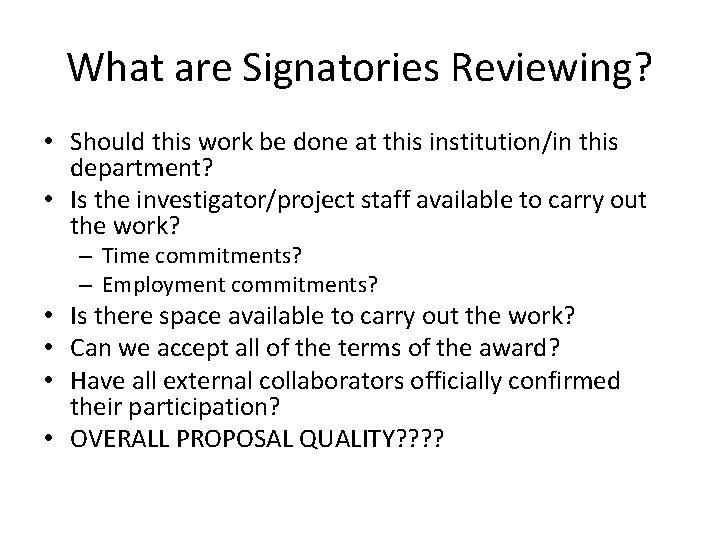
What are Signatories Reviewing? • Should this work be done at this institution/in this department? • Is the investigator/project staff available to carry out the work? – Time commitments? – Employment commitments? • Is there space available to carry out the work? • Can we accept all of the terms of the award? • Have all external collaborators officially confirmed their participation? • OVERALL PROPOSAL QUALITY? ?
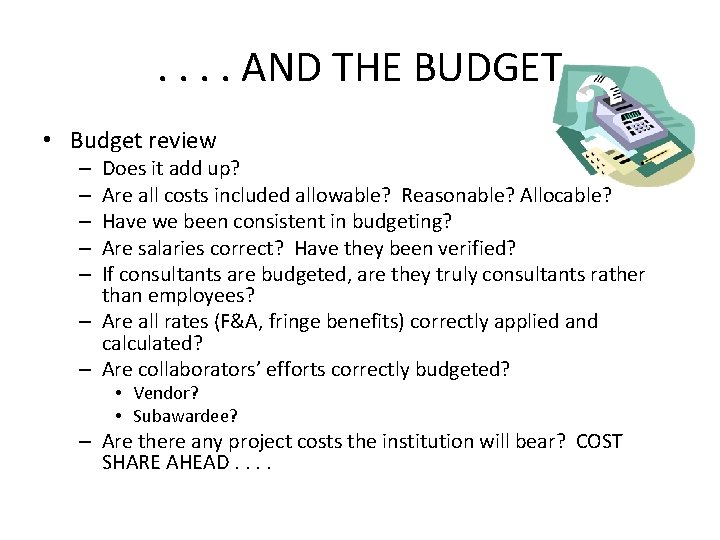
. . AND THE BUDGET • Budget review Does it add up? Are all costs included allowable? Reasonable? Allocable? Have we been consistent in budgeting? Are salaries correct? Have they been verified? If consultants are budgeted, are they truly consultants rather than employees? – Are all rates (F&A, fringe benefits) correctly applied and calculated? – Are collaborators’ efforts correctly budgeted? – – – • Vendor? • Subawardee? – Are there any project costs the institution will bear? COST SHARE AHEAD. .
Now We Can Submit • • Electronic submission systems Paper submission Correctly completing forms THIS IS A TIME CONSUMING STEP re, o m ny t? a ies , righ p o 5 c dline 1 ke dea a o m e the t eed befor n n’t utes o d in u o m Y 3 you e st i h tt I g n a c o
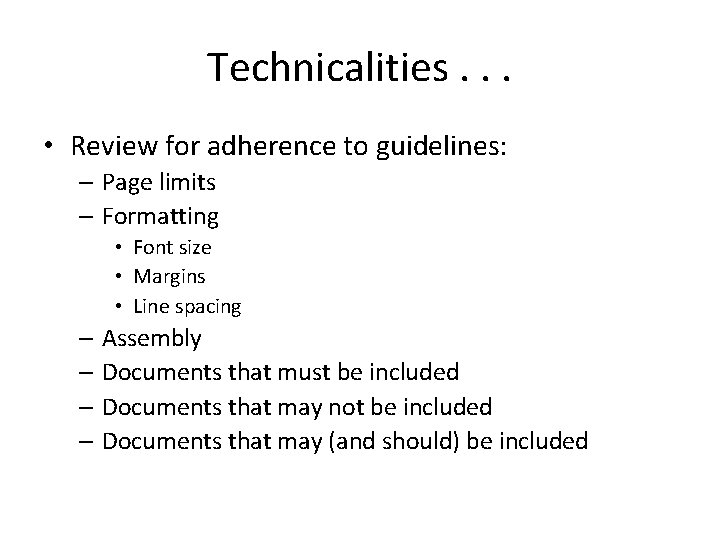
Technicalities. . . • Review for adherence to guidelines: – Page limits – Formatting • Font size • Margins • Line spacing – Assembly – Documents that must be included – Documents that may not be included – Documents that may (and should) be included
Proposal is Submitted – and Award Accepted -- by the Institution • Signature/electronic submission of proposal certifies: – Institution is able, and willing, to carry out the work – Investigators/project staff named are available to carry out the work – Institution is in compliance with, and will adhere to, applicable regulations – If a sample award document is included, proposal submission indicates institution’s acceptance of terms – Budget is sufficient to carry out work proposed and follows cost principles and institutional policies – Proposal is something on which the institution is willing to put its name Just sign it, I have a deadline here!!!!
The cycle continues. . NOT FUNDED?
If the Proposal is Not Funded • Remember: This is not a rejection, it’s a declination to fund • Access and carefully consider reviewers’ comments • Calm down • Talk with programmatic official about improving the proposal • Revise and resubmit • SAME ACTION = SAME RESULT -- do not simply resubmit (“recycle”) and expect to be funded the next time
Project success depends on getting it right at this stage NEGOTIATION OF AWARD
Award Negotiation • Just-in-time information – Other support – Ethical considerations • Human subjects • Animal subjects • Review of award document for: – Changes to the proposal as submitted • Budget cuts • Reduce scope to match budget? Implied cost share? – Terms and conditions • Congruence with applicable regulations and institutional policy – Are we able to accept this? – Can we comply with all requirements? • Business Practices • Do we want to comply? • How much will it cost to comply?
“Here’s What’s Happening” • Award negotiation can be a lengthy process, depending on the sponsor and the type of agreement offered • Investigator/project director wants to start work • Sponsored project office needs to negotiate acceptable terms • Everyone needs to be aware of progress and why it may be delayed
. . . and Management of Award CONDUCT OF WORK
Let’s Work Together Here • Investigator/project director carries out work • Institution, through sponsored projects office, in collaboration with department, ensures compliance with award terms • Proposal is a statement of intention and budget is a numerical representation of the proposal. . . THINGS CHANGE
Award Conduct • Doing the work = incurring expenses – Hiring employees – “Paying the bills” – No expenditures = nothing done? • Disseminating the results – This is part of the expectation of award! – Publications – Travel to present – Broader impacts
Award Management • Changes – Prior approval required? – Does it constitute a change in scope? – Do we need more time? • Submission of required reports – Technical -- progress – Financial – Special reporting requirements • Subaward issuance and monitoring • Ongoing compliance with all terms
Award Management – Following the Rules • Administrative Requirements – OMB Circular A-110, “Uniform Administrative Requirements for Grants and Other Agreements with Institutions of Higher Education, Hospitals and Other Non-Profit Organizations” – Codified at 2 CFR 215 • Cost Principles – OMB Circular A-21, “Cost Principles for Educational Institutions” – Codified at 2 CFR 220 • • • Agency-specific regulations Program specific requirements Special conditions Award-specific terms Institutional policies
Award Management – Budget Management • Monthly account reconciliation • Rebudgeting • Spending rates • Daily decision: should I charge this expense to my award? y, w Head oka. . . s it e g r a e ch t ard w a e o th
Always Consider the Benefit of the Activity/Expenditure to the Funded Project The sponsor made the award to allow you to do what you offered to do in the proposal
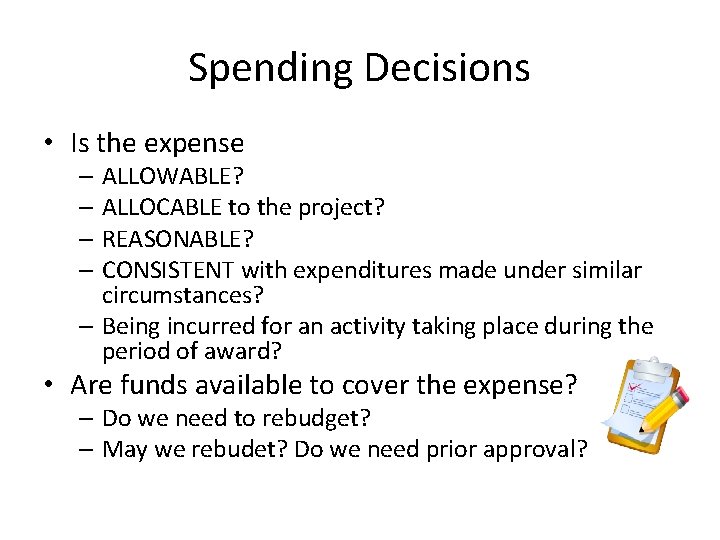
Spending Decisions • Is the expense – ALLOWABLE? – ALLOCABLE to the project? – REASONABLE? – CONSISTENT with expenditures made under similar circumstances? – Being incurred for an activity taking place during the period of award? • Are funds available to cover the expense? – Do we need to rebudget? – May we rebudet? Do we need prior approval?
Finishing the work, paying the final bills, submitting the reports. . . CLOSEOUT OF AWARD
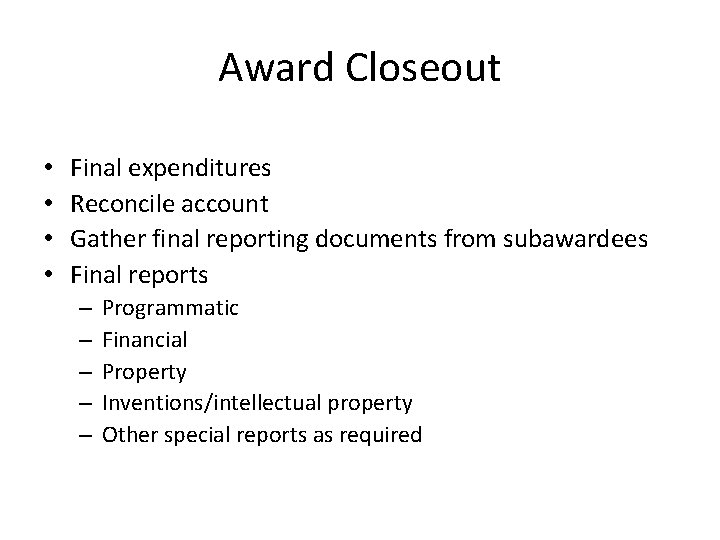
Award Closeout • • Final expenditures Reconcile account Gather final reporting documents from subawardees Final reports – – – Programmatic Financial Property Inventions/intellectual property Other special reports as required
Record Retention and Audit • OMB Circular A-133, “Audits of States, Local Governments and Non-Profit Organizations” • What’s done is not done -- just because you spent the money doesn’t mean the expense cannot be disallowed on audit • Retain records according to institutional record retention policy • If it’s there, it’s auditable. .
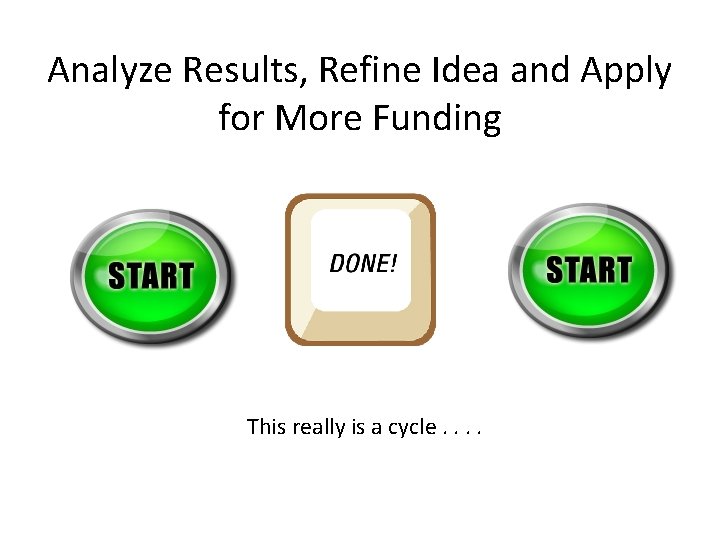
Analyze Results, Refine Idea and Apply for More Funding This really is a cycle. .
Thank You. . Mary Louise Healy Johns Hopkins University mhealy 11@jhu. edu