Lecture 13 Radiative Forcing Radiative Forcing Definition A



- Slides: 35
Lecture 13 Radiative Forcing
Radiative Forcing Definition: A change in the net radiation at the top of the atmosphere due to some external factor.
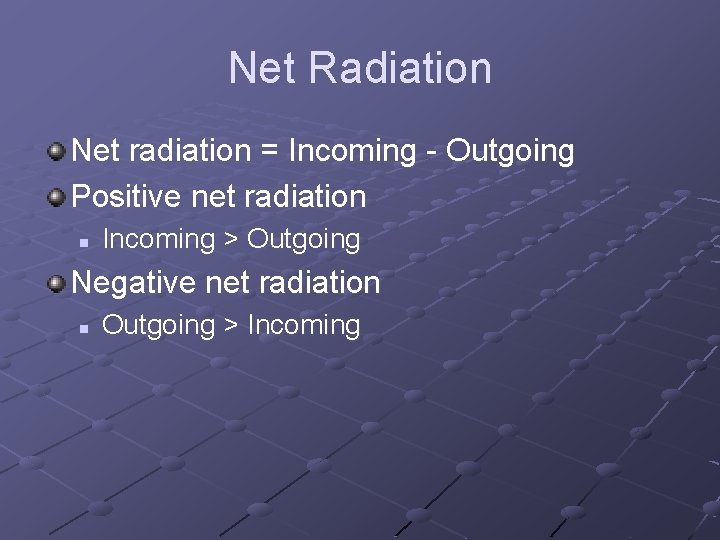
Net Radiation Net radiation = Incoming - Outgoing Positive net radiation n Incoming > Outgoing Negative net radiation n Outgoing > Incoming
Positive & Negative Forcing Positive forcing warming Negative forcing cooling
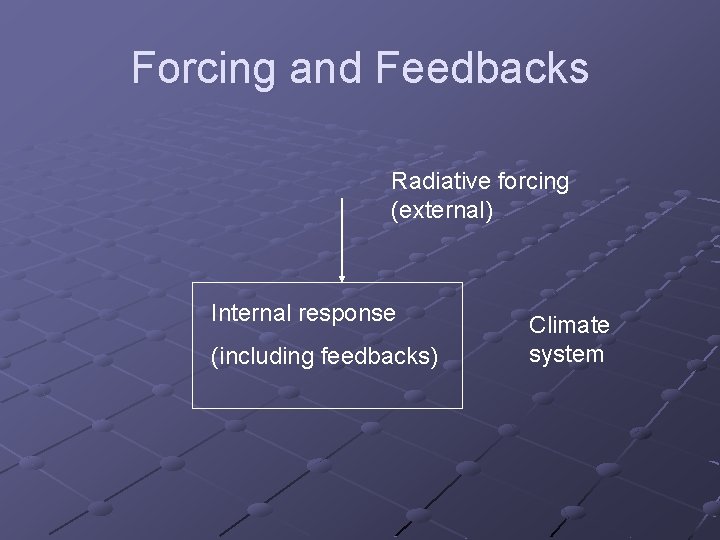
Forcing and Feedbacks Radiative forcing (external) Internal response (including feedbacks) Climate system
Forcing and Feedbacks “Forcing” is produced by an external process, e. g. n n n Changes in solar flux Volcanic eruptions Human actions A feedback is a response to temperature changes n Example: Increased water vapor due to warming
More Anthropogenic increases in greenhouse gases are considered forcings Increases in greenhouse gases that are caused by temperature changes are feedbacks
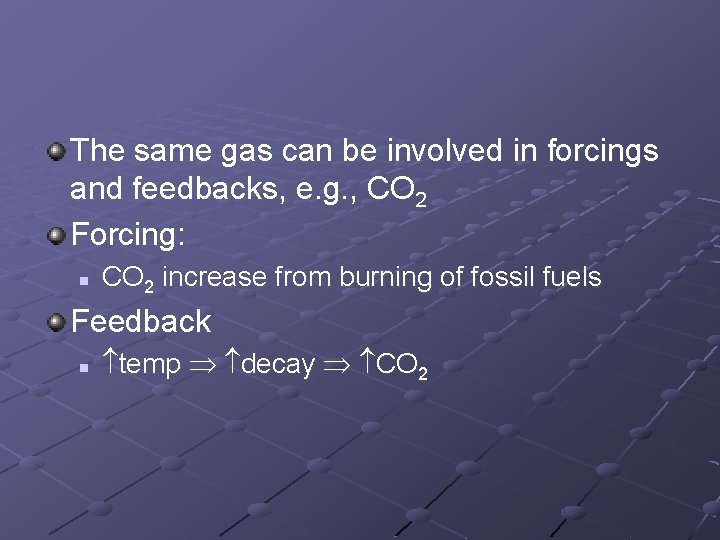
The same gas can be involved in forcings and feedbacks, e. g. , CO 2 Forcing: n CO 2 increase from burning of fossil fuels Feedback n temp decay CO 2
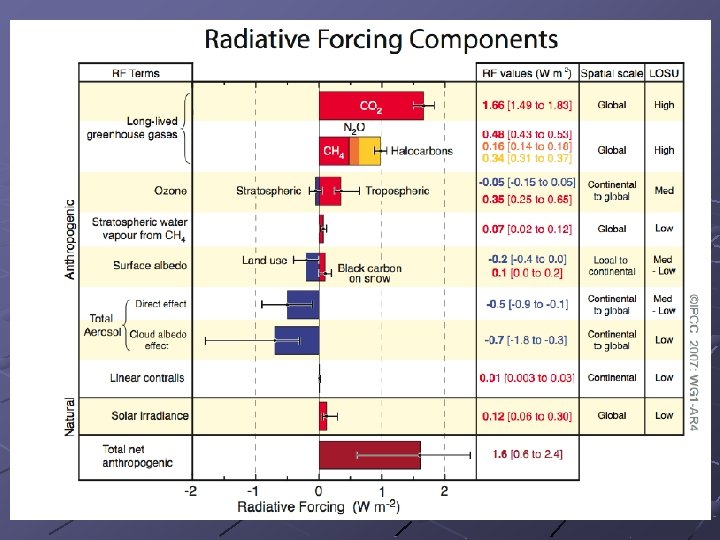
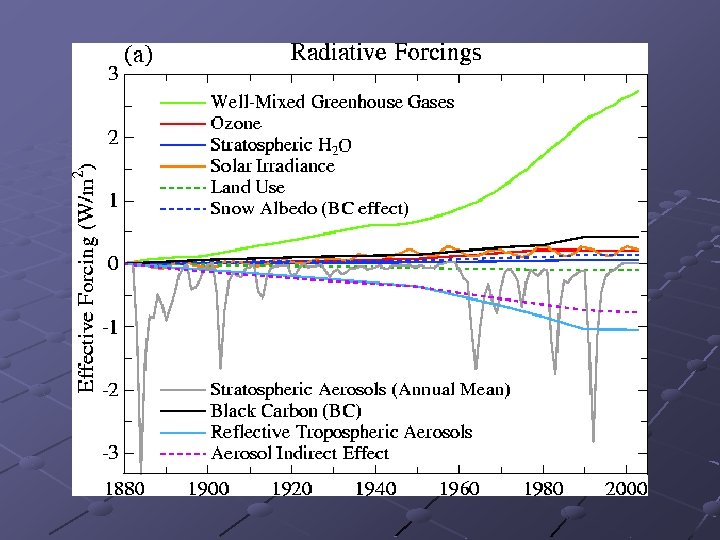
Comparing Causes of Temperature Change Assumption: Larger radiative forcing larger effect on temperature Comparisons follow Source: Intergovernmental Panel on Climate Change (IPCC)
Positive Radiative Forcings Largest – by far: increased greenhouse gases n Increase is almost entirely anthropogenic
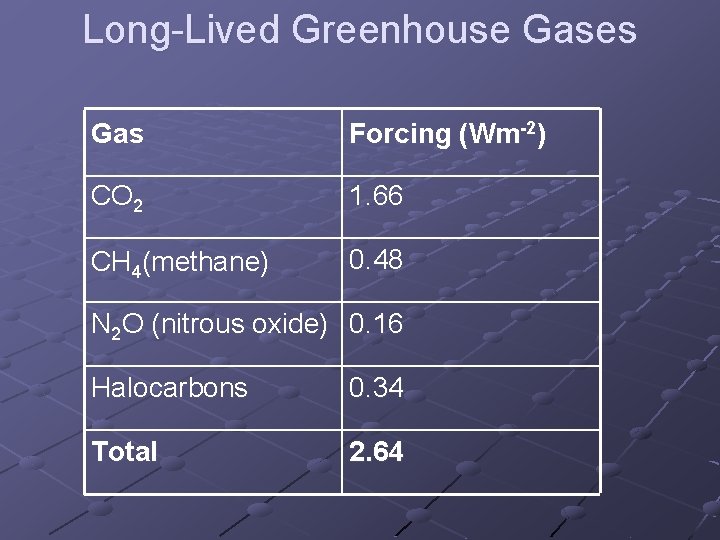
Long-Lived Greenhouse Gases Gas Forcing (Wm-2) CO 2 1. 66 CH 4(methane) 0. 48 N 2 O (nitrous oxide) 0. 16 Halocarbons 0. 34 Total 2. 64
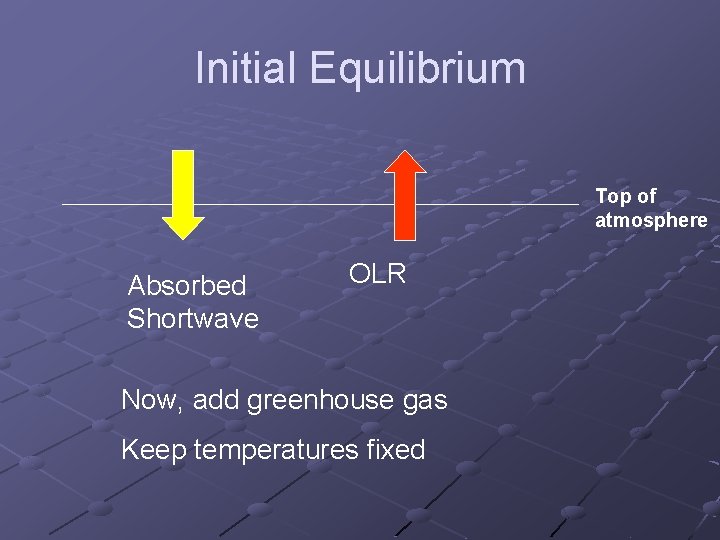
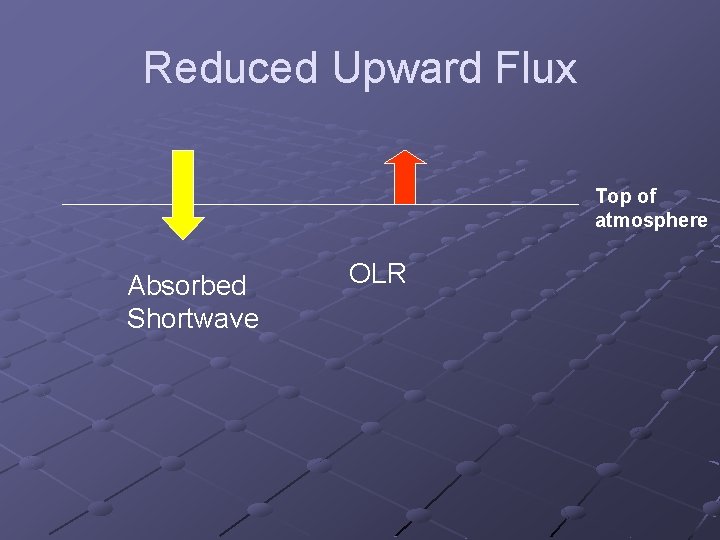
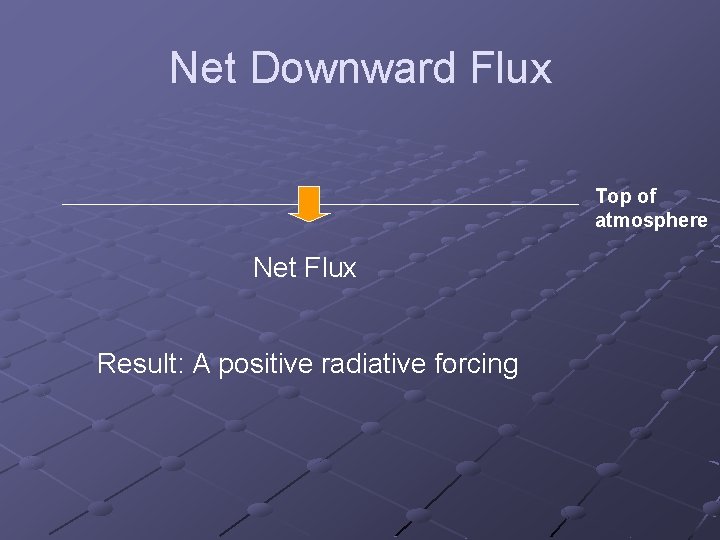
More About Greenhouse Gases Radiative transfer model Adding greenhouse gas reduces outgoing longwave radiation (OLR) at top of atmosphere
Initial Equilibrium Top of atmosphere Absorbed Shortwave OLR Now, add greenhouse gas Keep temperatures fixed
Reduced Upward Flux Top of atmosphere Absorbed Shortwave OLR
Net Downward Flux Top of atmosphere Net Flux Result: A positive radiative forcing
Negative Radiative Forcings Largest: Increase in sulfate aerosols n Mostly anthropogenic
Anthropogenic Sulfate Aerosols Coal and diesel fuel contain sulfur Burning of these fuels produces sulfur dioxide (a gas) In the atmosphere, this gas is converted into particles
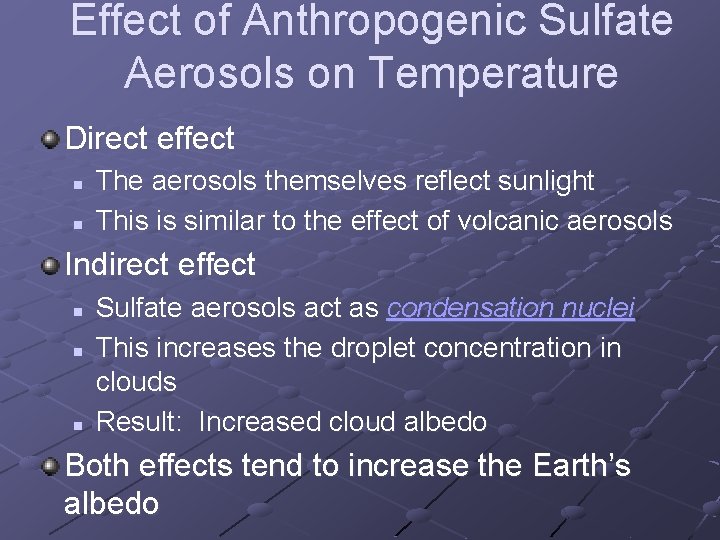
Effect of Anthropogenic Sulfate Aerosols on Temperature Direct effect n n The aerosols themselves reflect sunlight This is similar to the effect of volcanic aerosols Indirect effect n n n Sulfate aerosols act as condensation nuclei This increases the droplet concentration in clouds Result: Increased cloud albedo Both effects tend to increase the Earth’s albedo
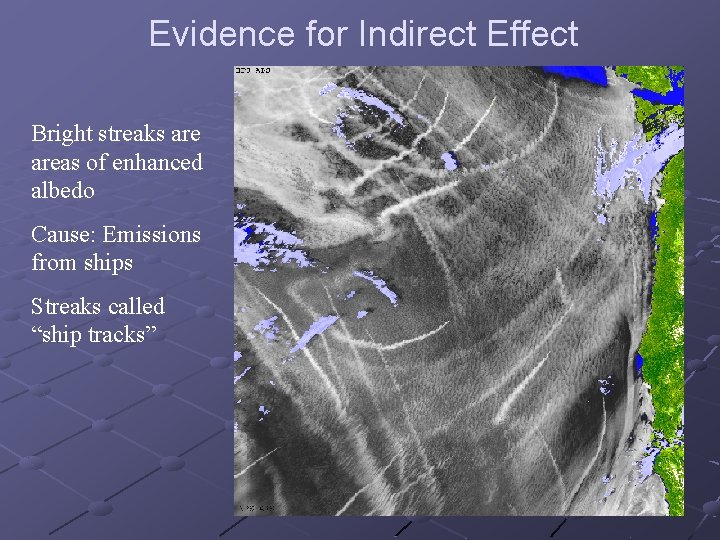
Evidence for Indirect Effect Bright streaks areas of enhanced albedo Cause: Emissions from ships Streaks called “ship tracks”
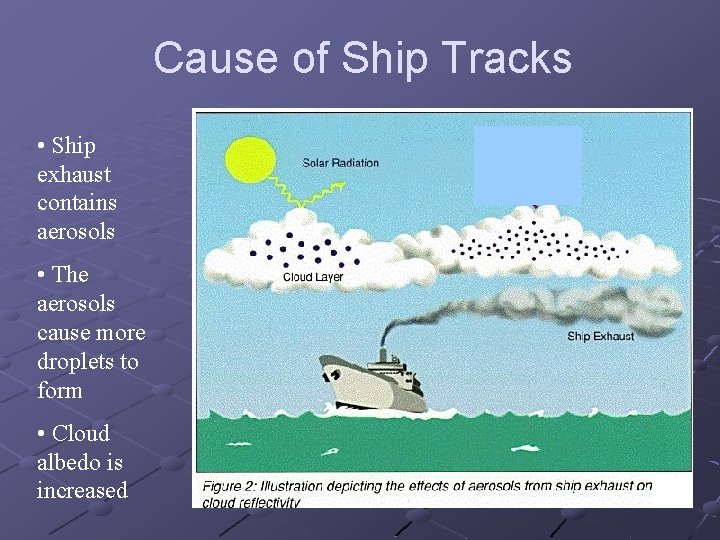
Cause of Ship Tracks • Ship exhaust contains aerosols • The aerosols cause more droplets to form • Cloud albedo is increased
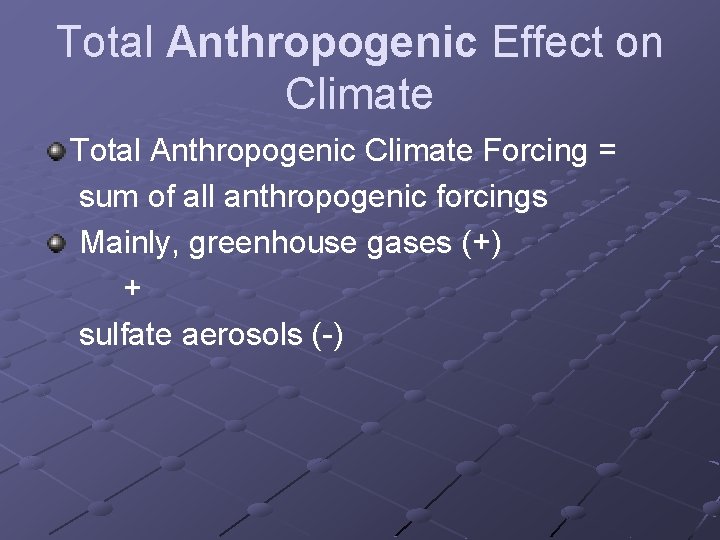
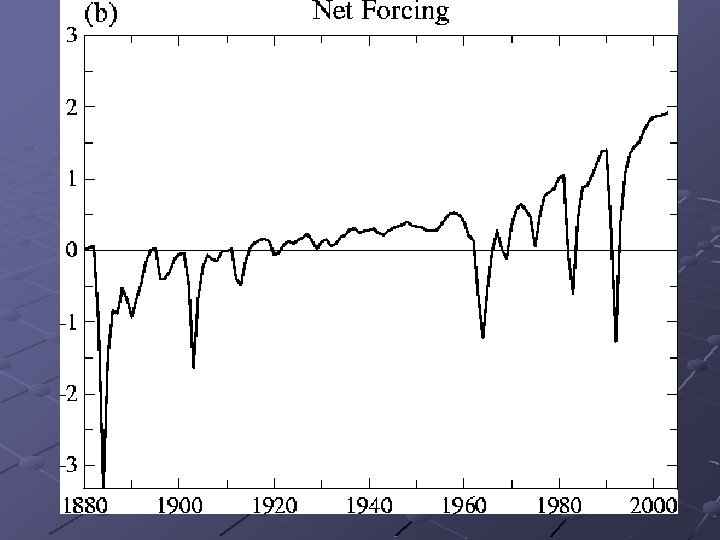
Total Anthropogenic Effect on Climate Total Anthropogenic Climate Forcing = sum of all anthropogenic forcings Mainly, greenhouse gases (+) + sulfate aerosols (-)
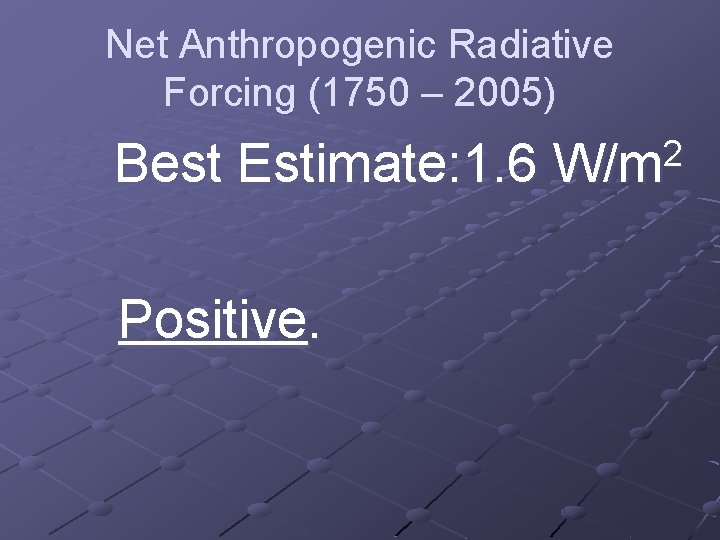
Net Anthropogenic Radiative Forcing (1750 – 2005) Best Estimate: 1. 6 Positive. 2 W/m
Solar Irradiance Some evidence suggests solar irradiance may have increased lately Current estimate of forcing: very small Note: Evidence is very weak!
Engineering Solution to Global Warming? Sulfate aerosols cool the Earth Why not deliberately increase sulfur emissions? Answer: Sulfur emissions contribute to acid rain
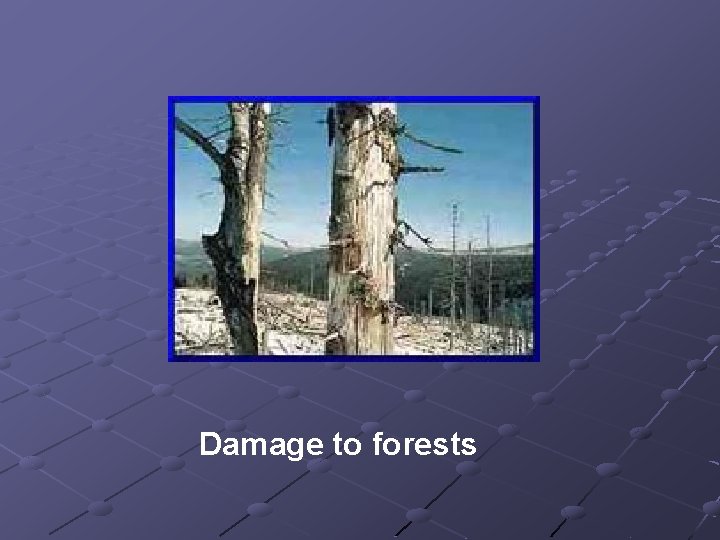
Damage to forests
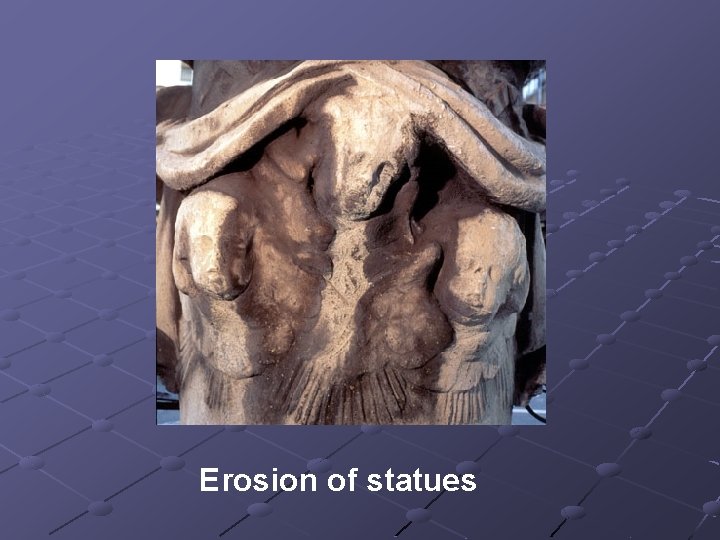
Erosion of statues
Words on gravestone obliterated
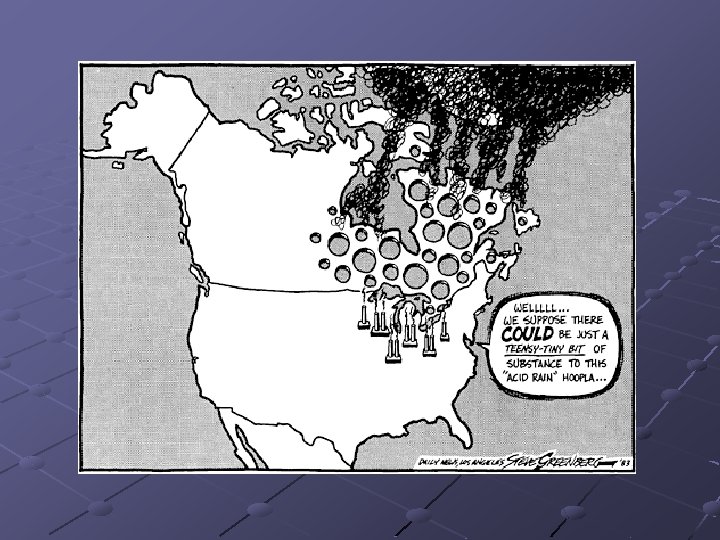
Effect on Aquatic Life http: //www. elmhurst. edu/~chm/vchembook /195 lakeeffects. html Canadian lakes have acidified by U. S. pollution
Reducing acid rain Sulfur emissions have been reduced Result: Less acid rain
Acid Rain vs. Global Warming Reducing sulfur emissions reduces acidity Reducing sulfur emissions reduces cooling effect of sulfate aerosols Result: Accelerated warming http: //www. sciencedaily. com/releases/199 9/07/990708075951. htm