K1 WRITING STRENGTHENING YOUR CORE AUGUST 2016 INTRODUCTION


- Slides: 92
K-1 WRITING STRENGTHENING YOUR CORE AUGUST 2016
INTRODUCTION Cydnee Carter Utah State Board of Education (USBE) • ELA Specialist (elementary) • WIDA Specialist cydnee. carter@schools. utah. gov
INTRODUCTIONS • Name • Grade Level • Years of Experience • If I could learn one thing today, I would most appreciate…
AGENDA • Stages of Writing and Spelling Development • Letter Formation and Handwriting • Vocabulary • Writing Collection Project • Mentor Text • Quick Bursts of Writing
BENEFITS OF WRITING • How does writing enhance reading, understanding, academic performance, and life skills?
TABLE DISCUSSION • How much class time is spent on writing instruction/practice per day? • In the context of what subject matter? • What kinds of student groupings are used? • What programs/materials/lesson frameworks are used for guidance?
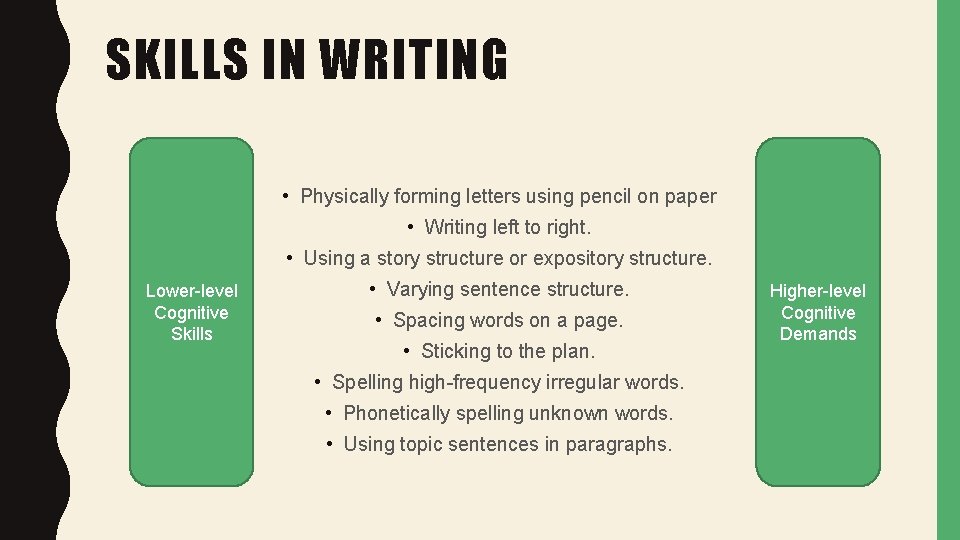
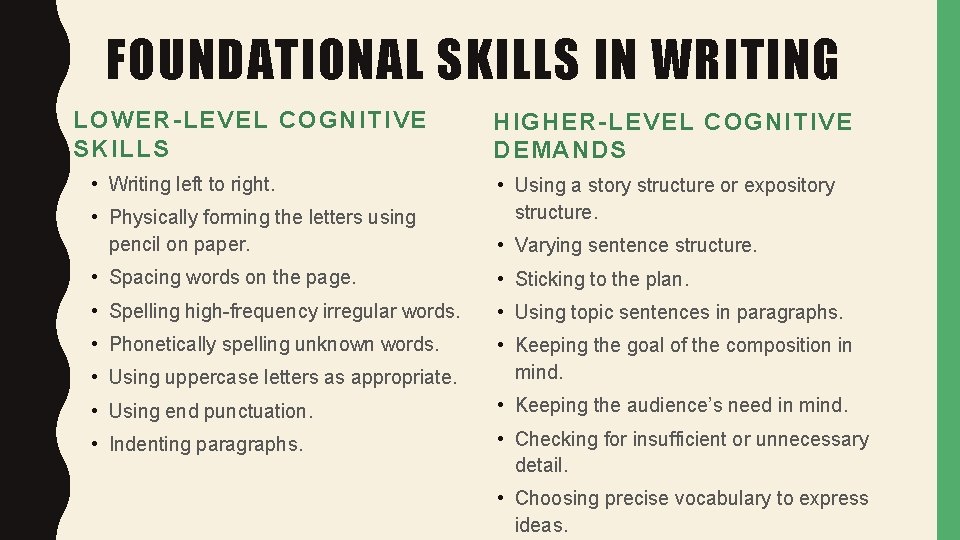
SKILLS IN WRITING • Physically forming letters using pencil on paper • Writing left to right. • Using a story structure or expository structure. Lower-level Cognitive Skills • Varying sentence structure. • Spacing words on a page. • Sticking to the plan. • Spelling high-frequency irregular words. • Phonetically spelling unknown words. • Using topic sentences in paragraphs. Higher-level Cognitive Demands
FOUNDATIONAL SKILLS IN WRITING LOWER-LEVEL COGNITIVE SKILLS • Writing left to right. • Physically forming the letters using pencil on paper. HIGHER-LEVEL COGNITIVE DEMANDS • Using a story structure or expository structure. • Varying sentence structure. • Spacing words on the page. • Sticking to the plan. • Spelling high-frequency irregular words. • Using topic sentences in paragraphs. • Phonetically spelling unknown words. • Using uppercase letters as appropriate. • Keeping the goal of the composition in mind. • Using end punctuation. • Keeping the audience’s need in mind. • Indenting paragraphs. • Checking for insufficient or unnecessary detail. • Choosing precise vocabulary to express ideas.
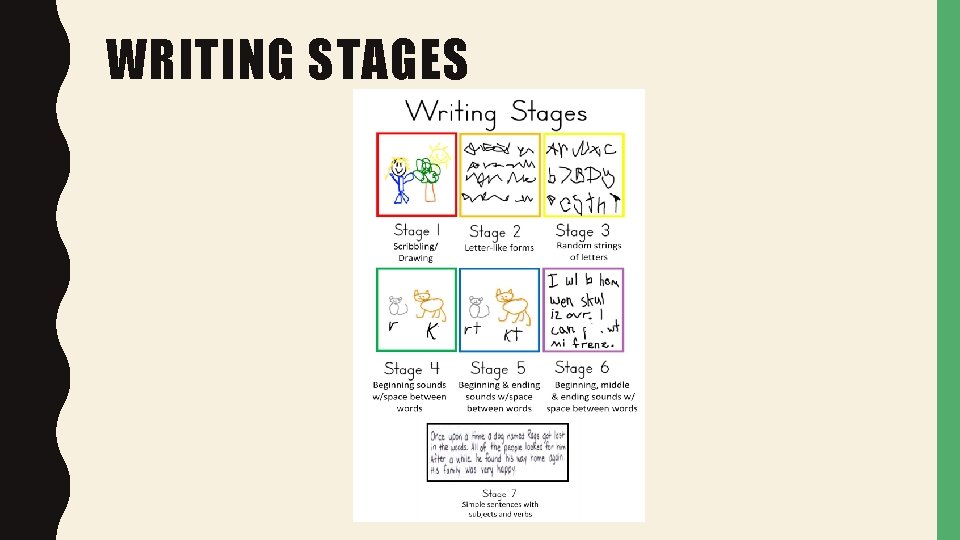
STAGES OF WRITING
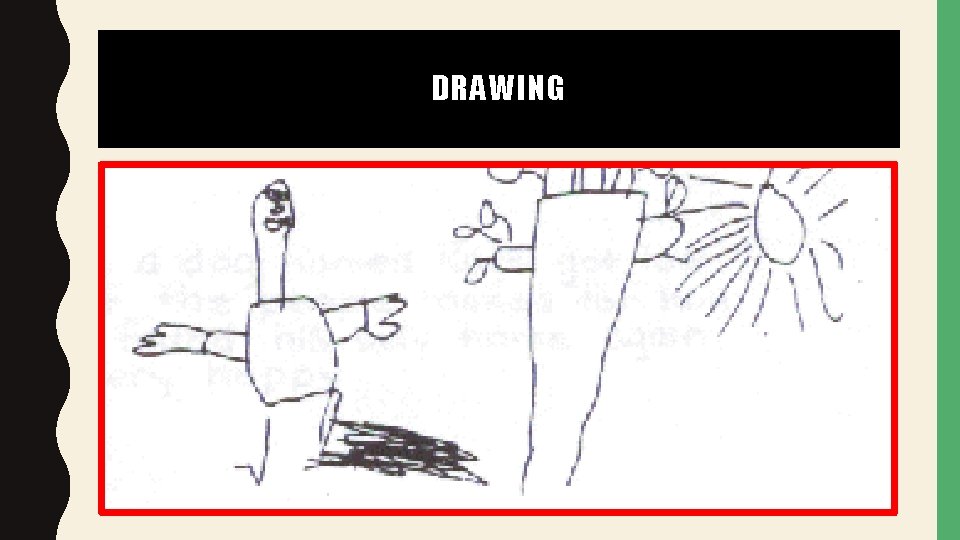
DRAWING
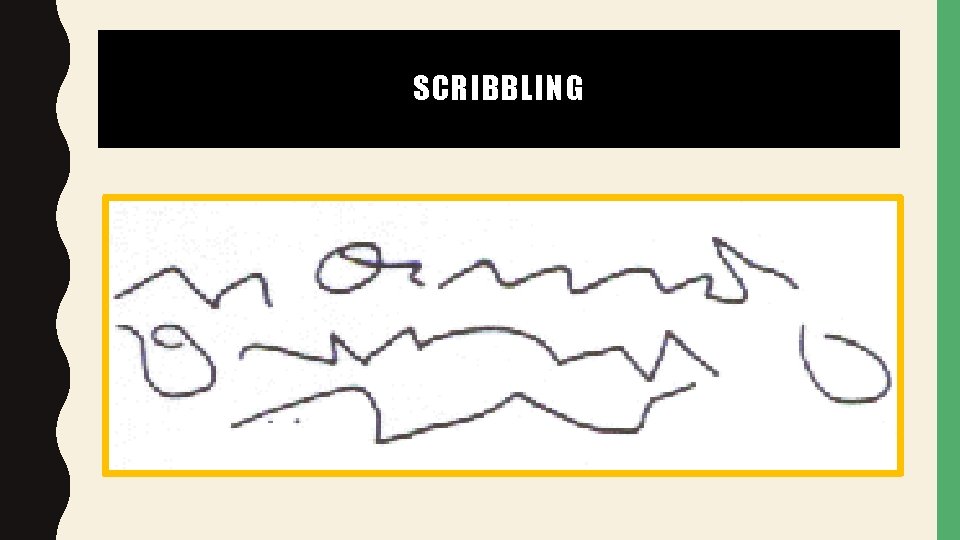
SCRIBBLING
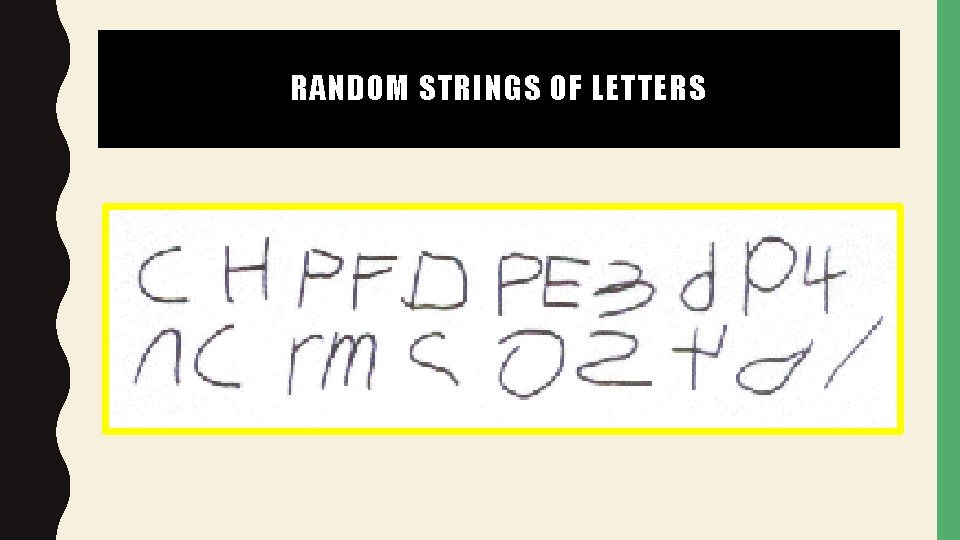
RANDOM STRINGS OF LETTERS
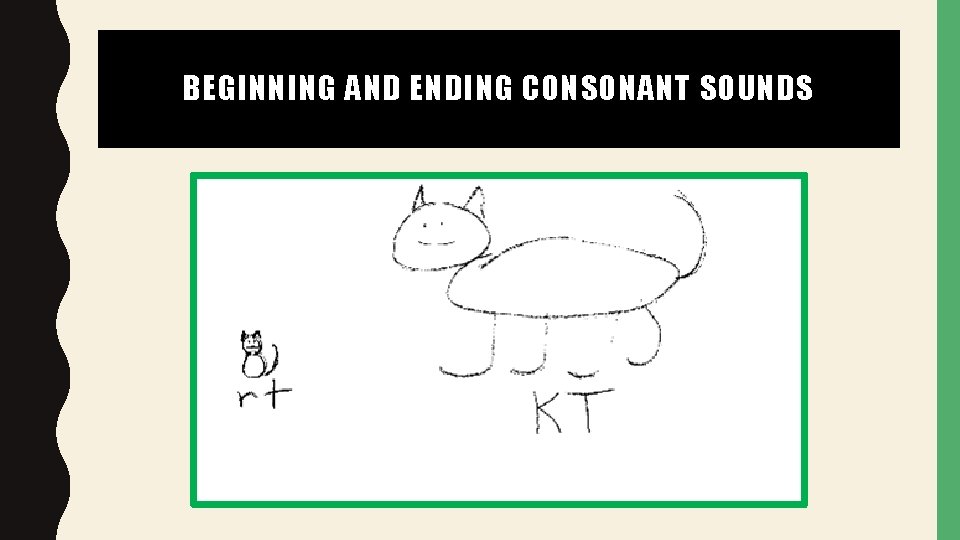
BEGINNING AND ENDING CONSONANT SOUNDS
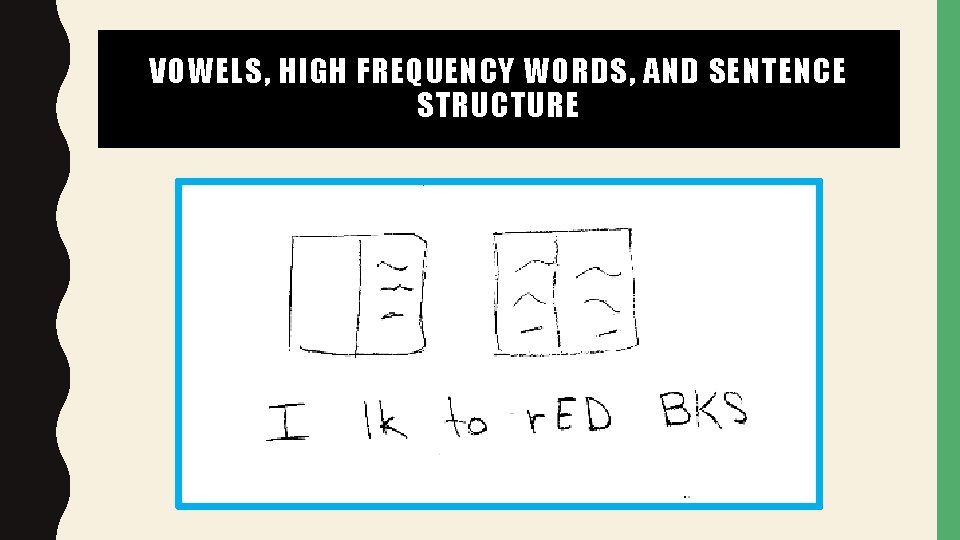
VOWELS, HIGH FREQUENCY WORDS, AND SENTENCE STRUCTURE
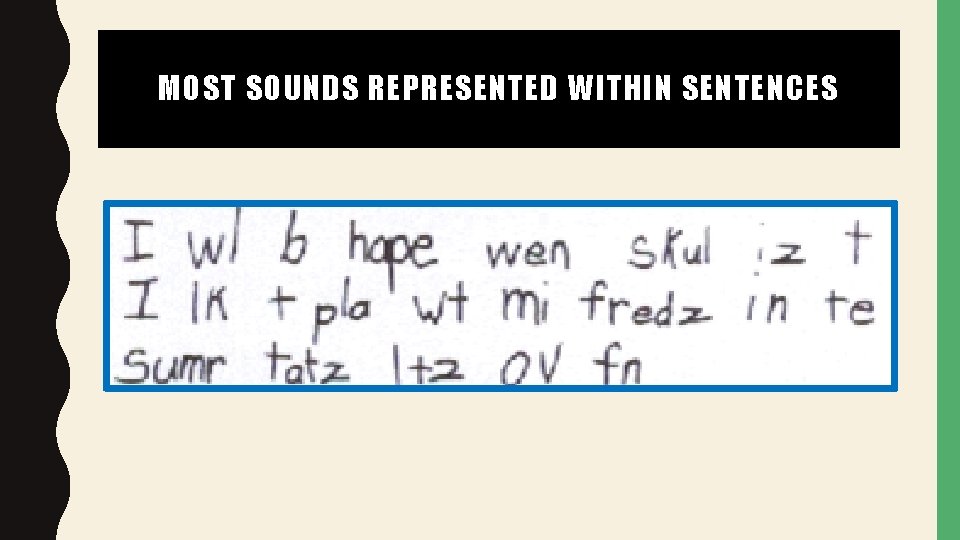
MOST SOUNDS REPRESENTED WITHIN SENTENCES
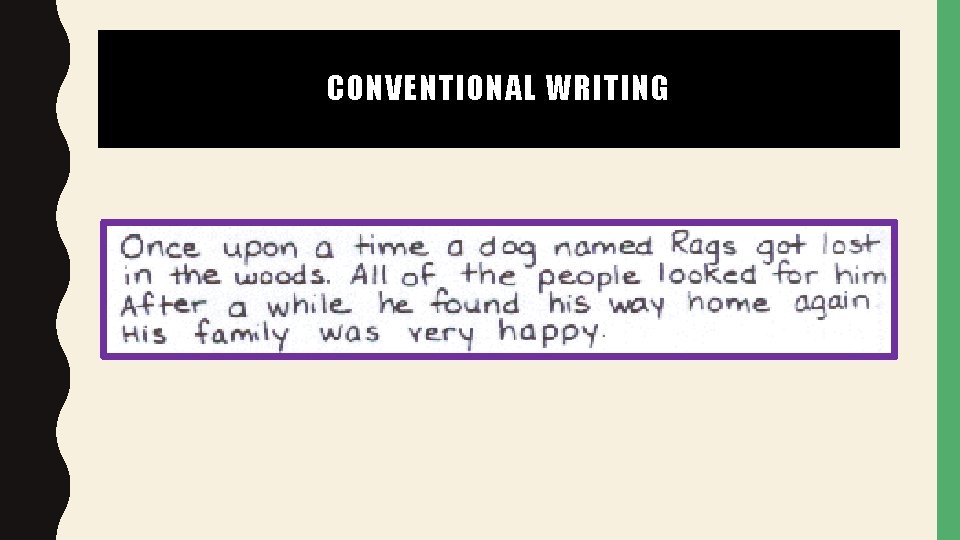
CONVENTIONAL WRITING
WRITING STAGES
DISCUSSION How does your knowledge of the writing stages help to guide your instruction to improve student writing?
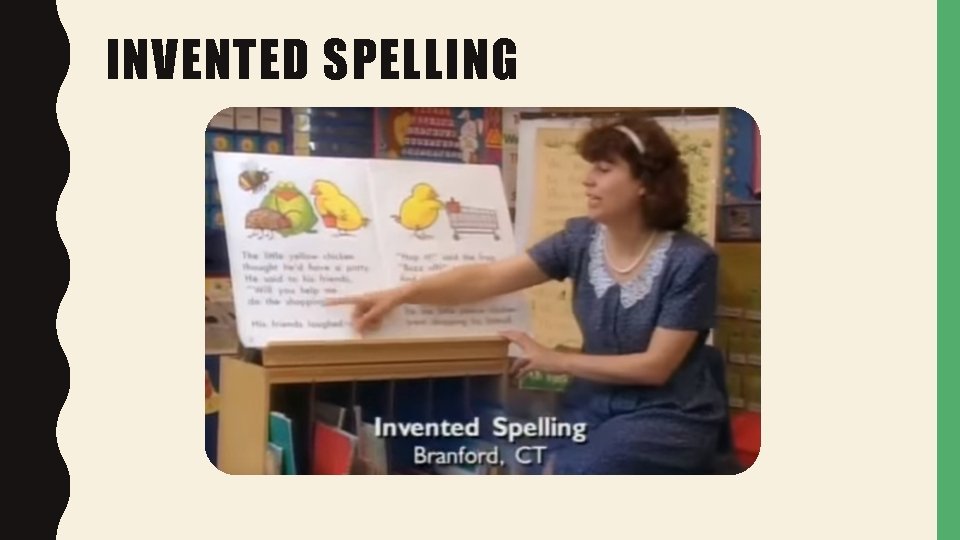
INVENTED SPELLING
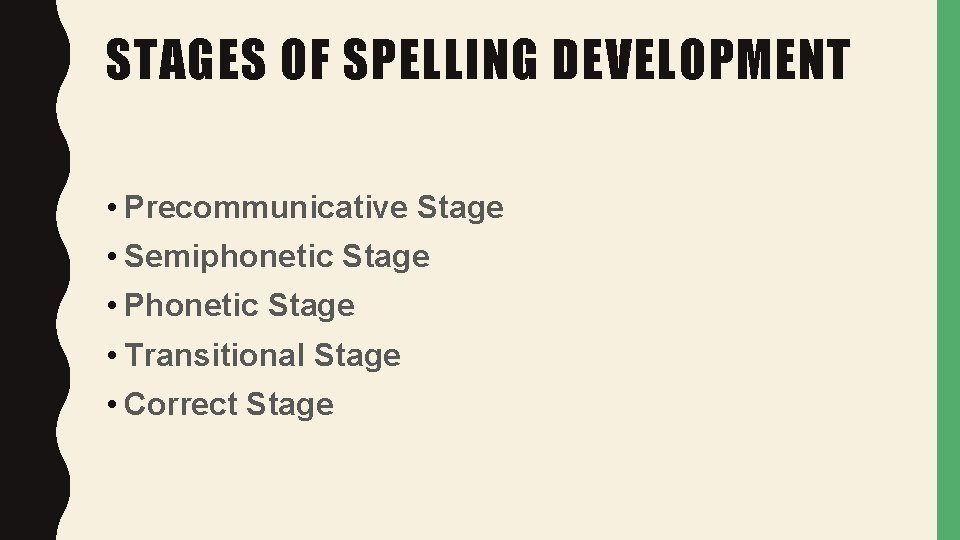
STAGES OF SPELLING DEVELOPMENT • Precommunicative Stage • Semiphonetic Stage • Phonetic Stage • Transitional Stage • Correct Stage
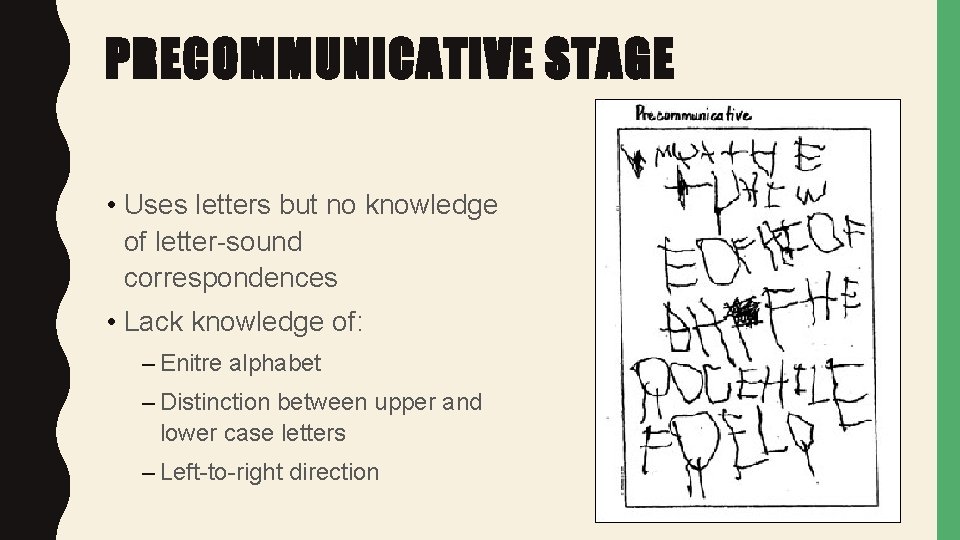
PRECOMMUNICATIVE STAGE • Uses letters but no knowledge of letter-sound correspondences • Lack knowledge of: – Enitre alphabet – Distinction between upper and lower case letters – Left-to-right direction
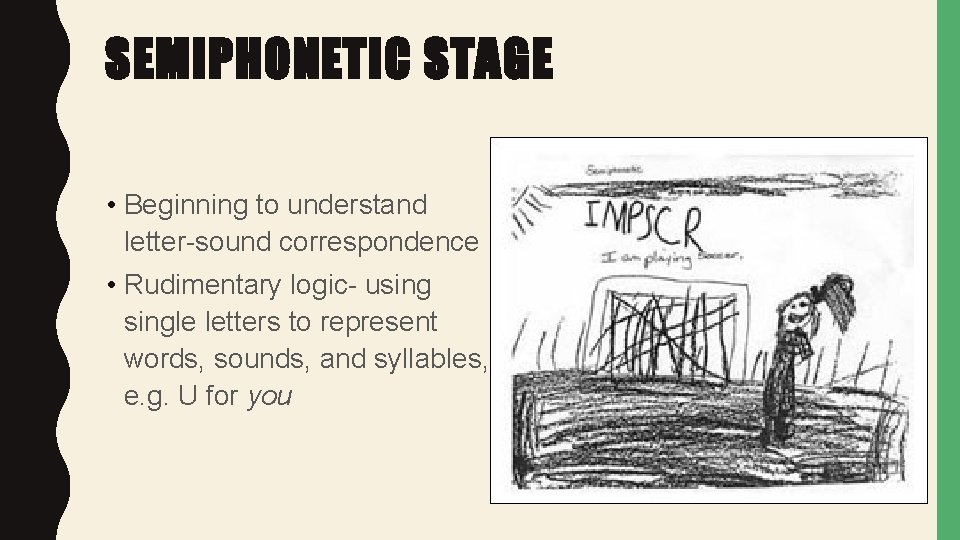
SEMIPHONETIC STAGE • Beginning to understand letter-sound correspondence • Rudimentary logic- usingle letters to represent words, sounds, and syllables, e. g. U for you
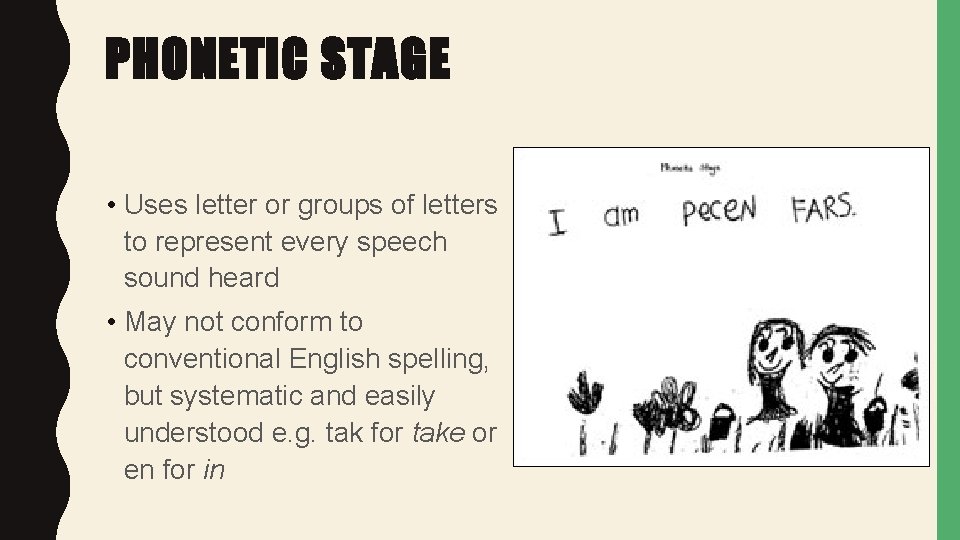
PHONETIC STAGE • Uses letter or groups of letters to represent every speech sound heard • May not conform to conventional English spelling, but systematic and easily understood e. g. tak for take or en for in
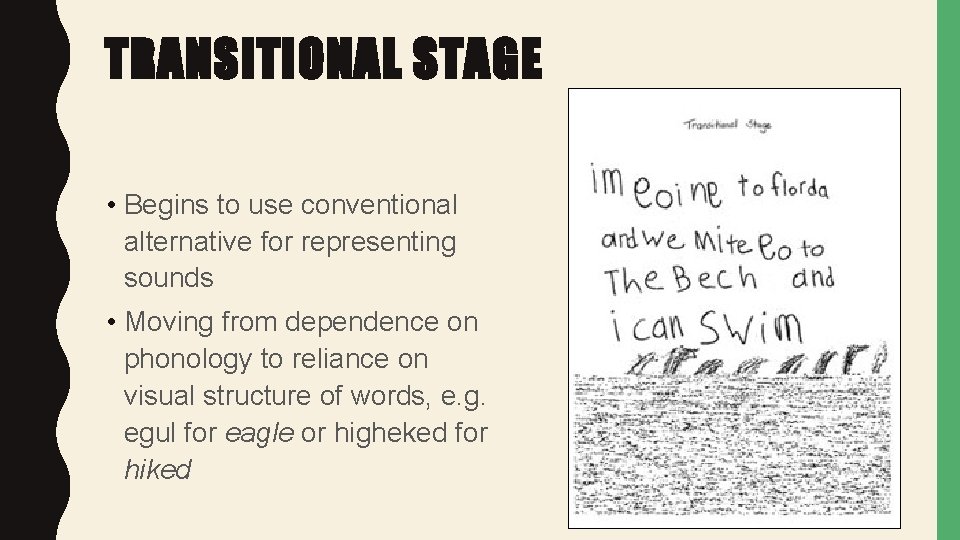
TRANSITIONAL STAGE • Begins to use conventional alternative for representing sounds • Moving from dependence on phonology to reliance on visual structure of words, e. g. egul for eagle or higheked for hiked
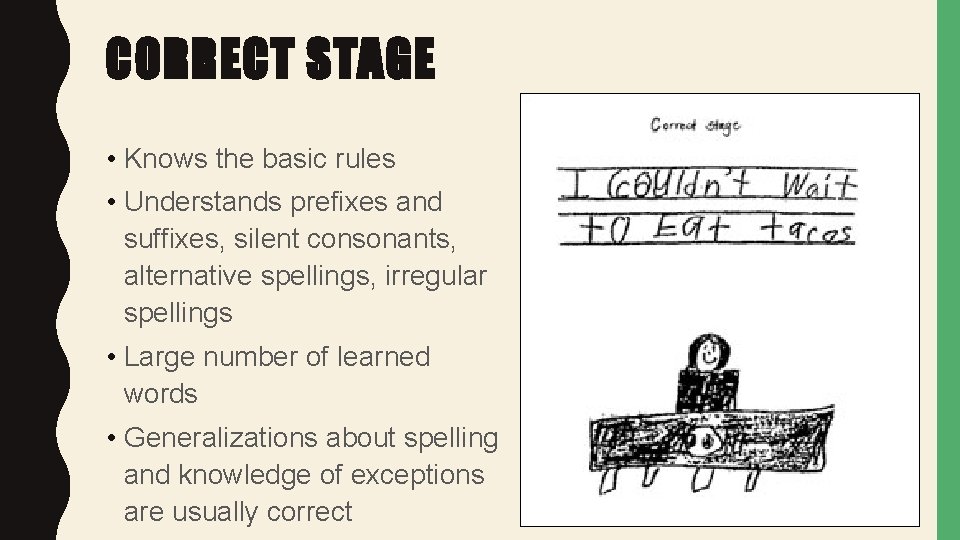
CORRECT STAGE • Knows the basic rules • Understands prefixes and suffixes, silent consonants, alternative spellings, irregular spellings • Large number of learned words • Generalizations about spelling and knowledge of exceptions are usually correct
INVENTED SPELLING
LETTER FORMATION AND HANDWRITING
WHY TEACH HANDWRITING? Handwriting (both manuscript and cursive) is an important skill for students to learn. Teaching and practicing writing allows students to write letters correctly and efficiently. Fluent writers are able to focus on generating idea, producing grammatically correct text, and considering audience. Even when a student moves to a computer or other device, that writing fluency is important to the composing process. – Utah State Board of Education
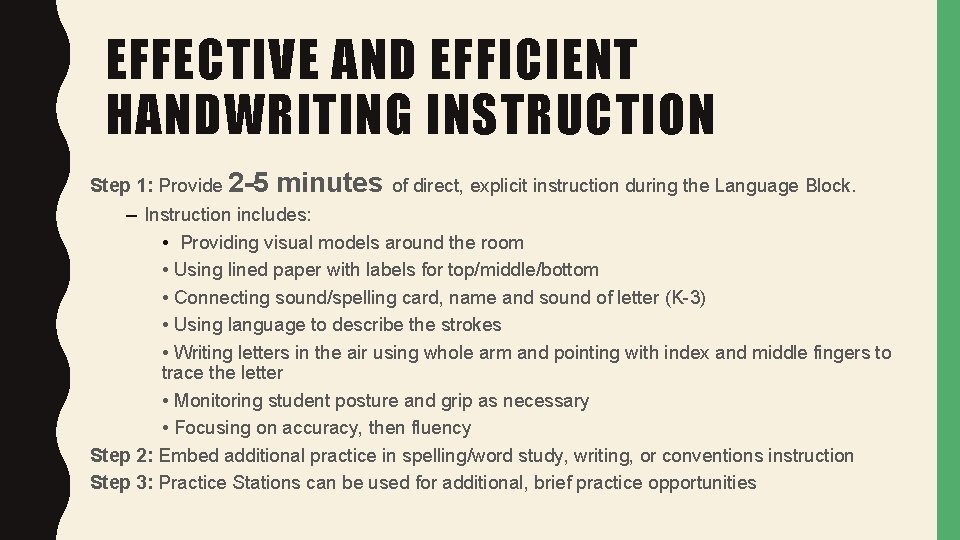
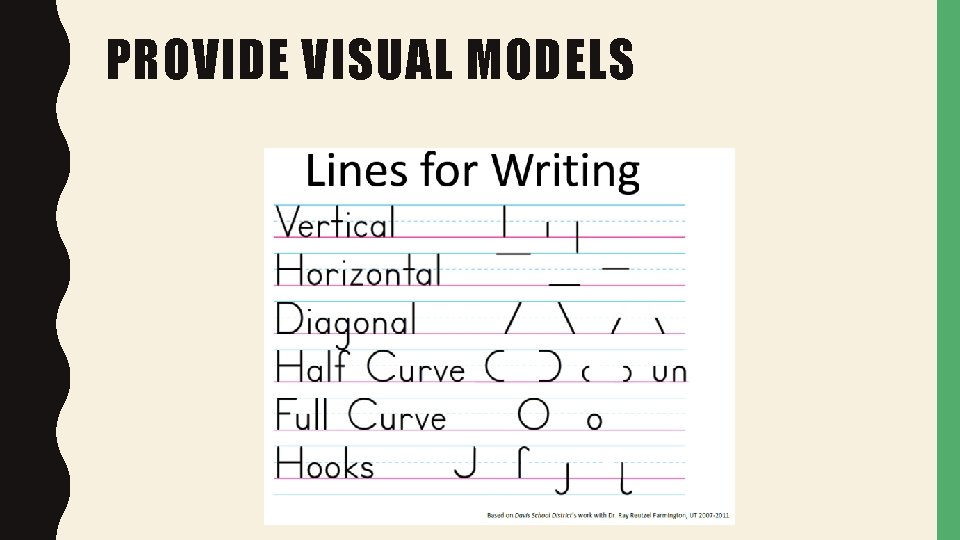
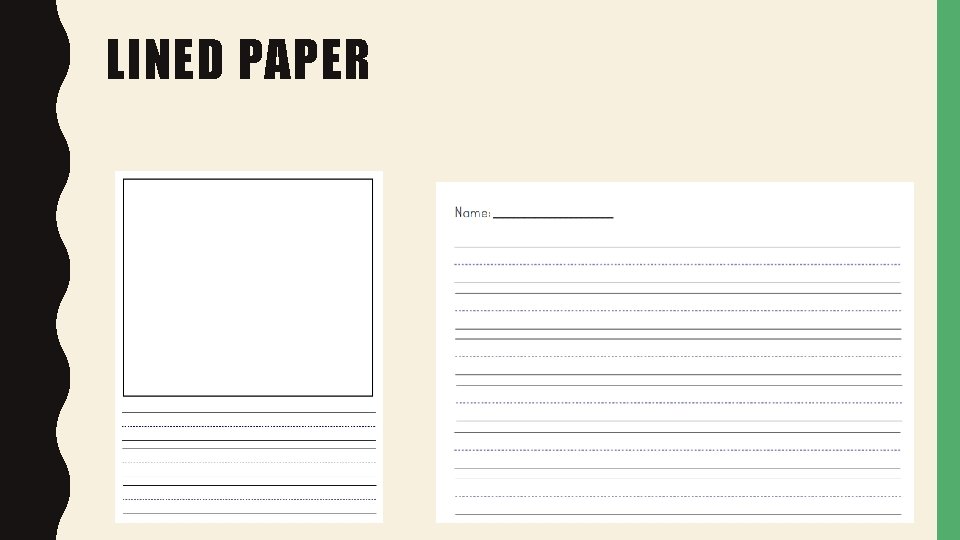
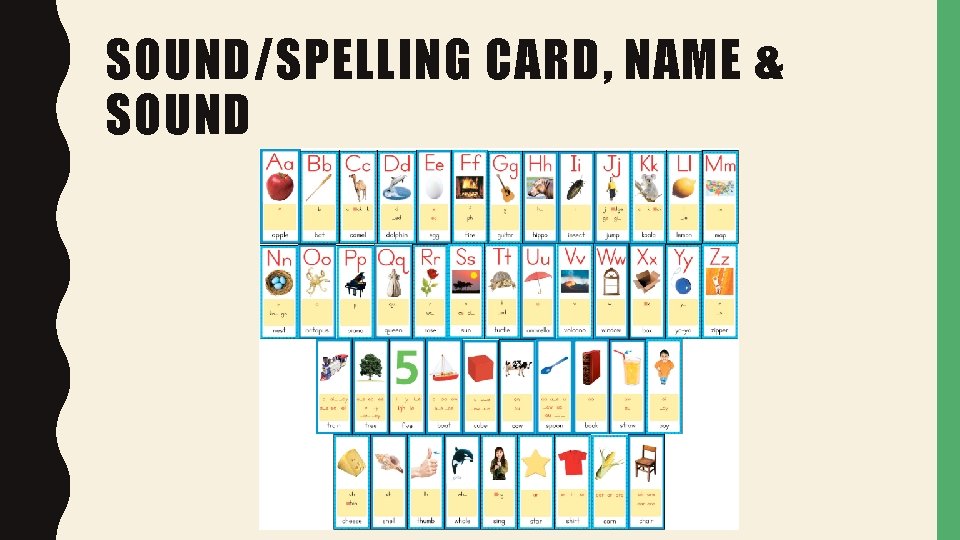
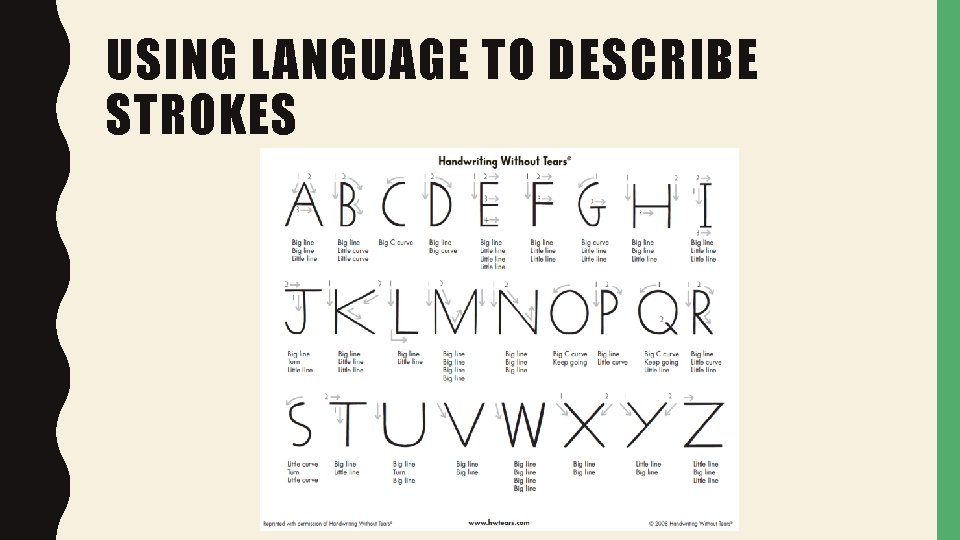
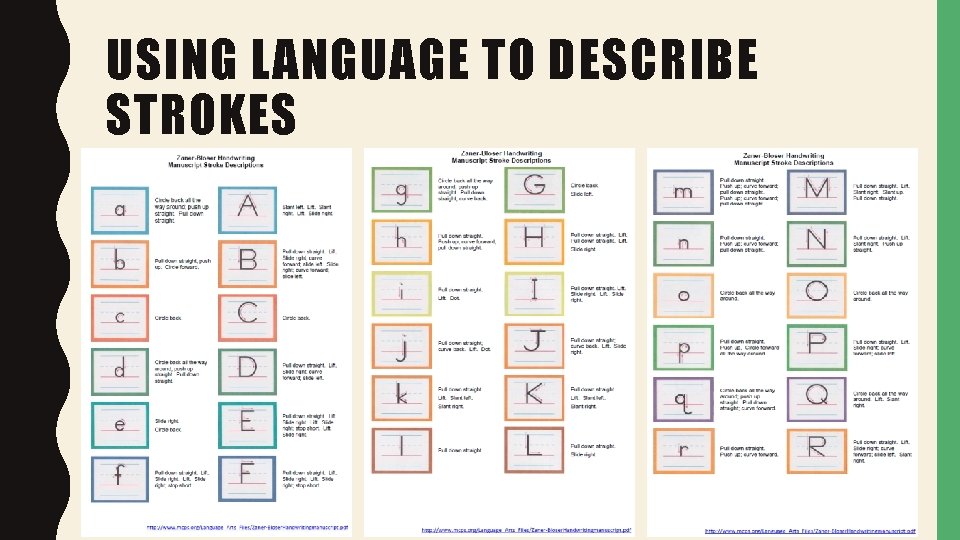
EFFECTIVE AND EFFICIENT HANDWRITING INSTRUCTION Step 1: Provide 2 -5 minutes of direct, explicit instruction during the Language Block. – Instruction includes: • Providing visual models around the room • Using lined paper with labels for top/middle/bottom • Connecting sound/spelling card, name and sound of letter (K-3) • Using language to describe the strokes • Writing letters in the air using whole arm and pointing with index and middle fingers to trace the letter • Monitoring student posture and grip as necessary • Focusing on accuracy, then fluency Step 2: Embed additional practice in spelling/word study, writing, or conventions instruction Step 3: Practice Stations can be used for additional, brief practice opportunities
PROVIDE VISUAL MODELS
LINED PAPER
SOUND/SPELLING CARD, NAME & SOUND
USING LANGUAGE TO DESCRIBE STROKES
USING LANGUAGE TO DESCRIBE STROKES
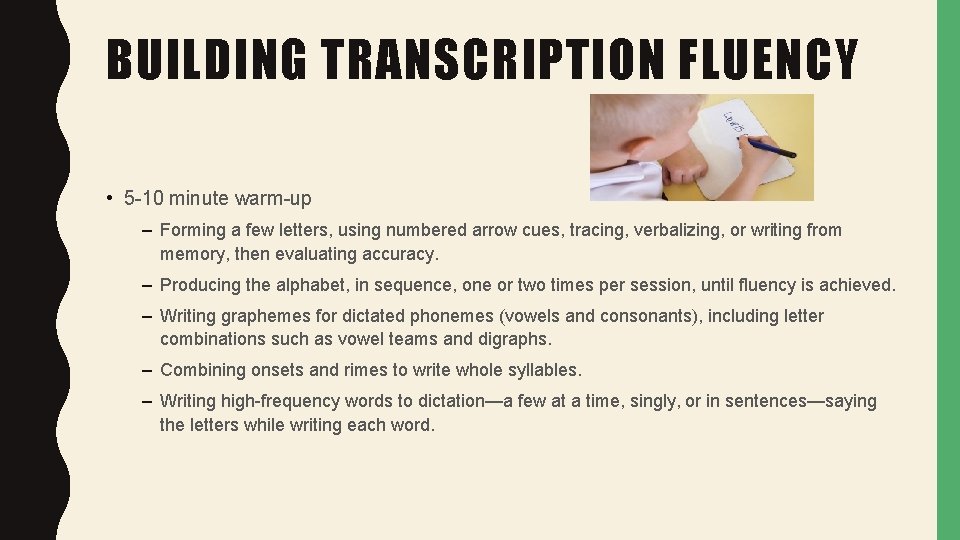
BUILDING TRANSCRIPTION FLUENCY • 5 -10 minute warm-up – Forming a few letters, using numbered arrow cues, tracing, verbalizing, or writing from memory, then evaluating accuracy. – Producing the alphabet, in sequence, one or two times per session, until fluency is achieved. – Writing graphemes for dictated phonemes (vowels and consonants), including letter combinations such as vowel teams and digraphs. – Combining onsets and rimes to write whole syllables. – Writing high-frequency words to dictation—a few at a time, singly, or in sentences—saying the letters while writing each word.
VOCABULARY
VOCABULARY
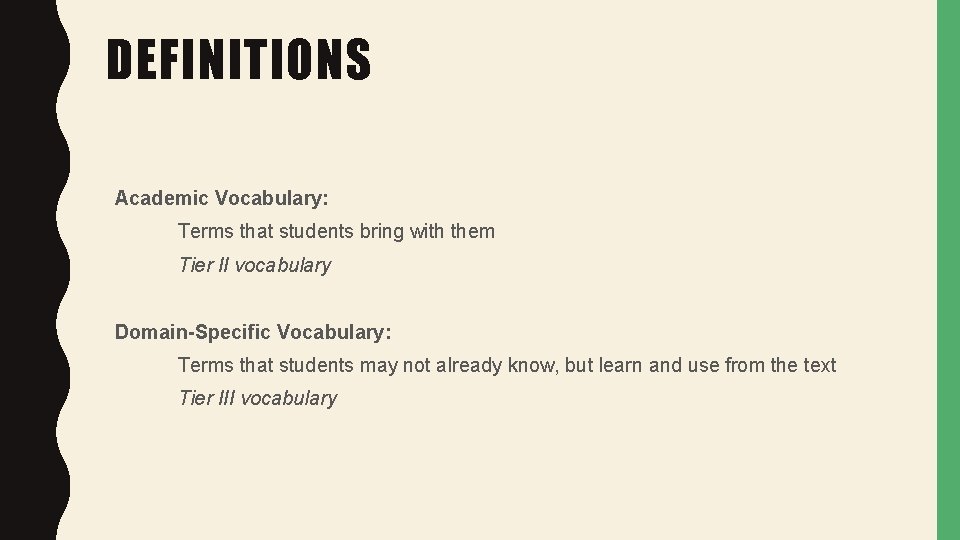
DEFINITIONS Academic Vocabulary: Terms that students bring with them Tier II vocabulary Domain-Specific Vocabulary: Terms that students may not already know, but learn and use from the text Tier III vocabulary
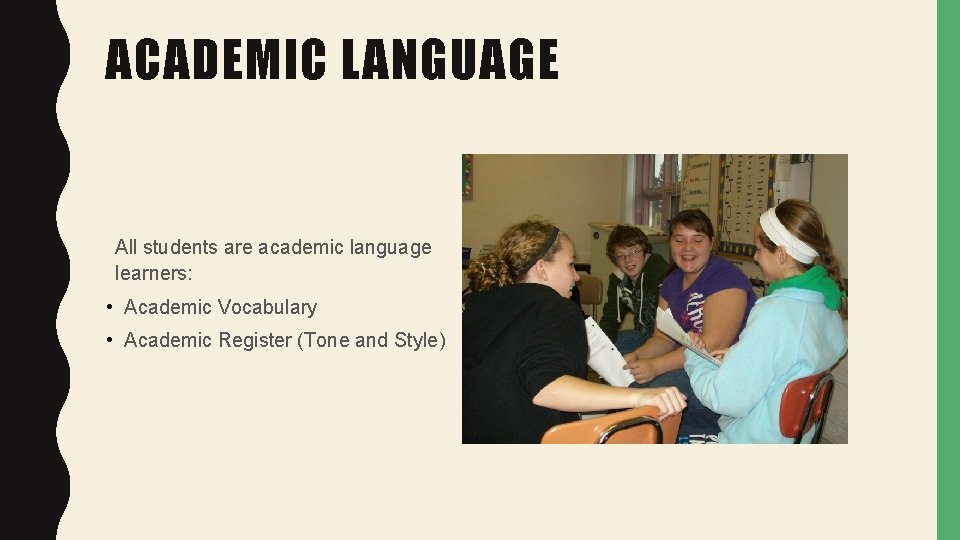
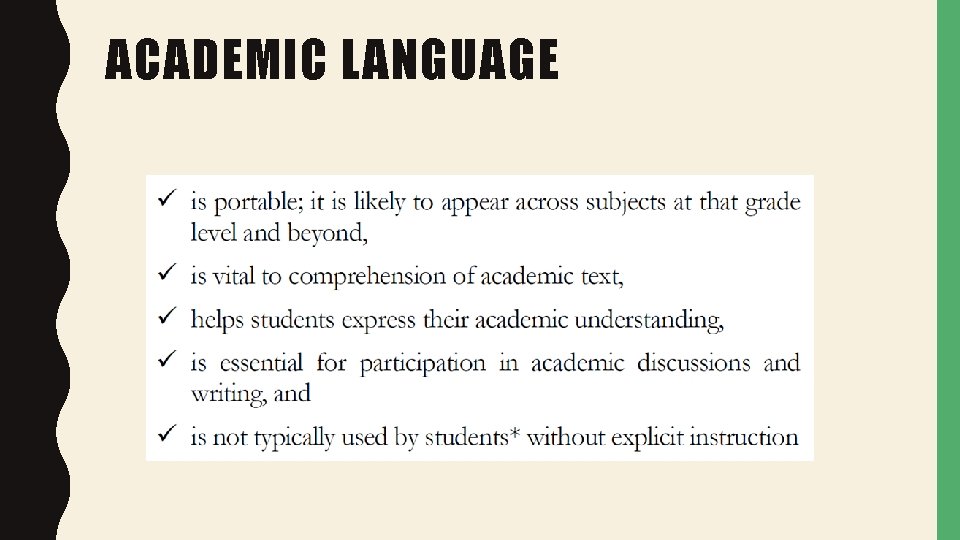
ACADEMIC LANGUAGE All students are academic language learners: • Academic Vocabulary • Academic Register (Tone and Style)
ACADEMIC LANGUAGE
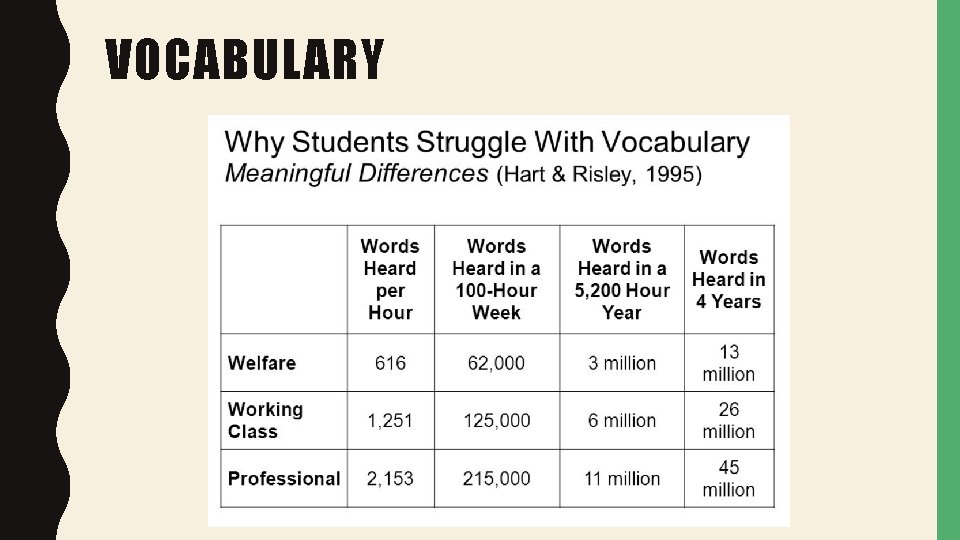
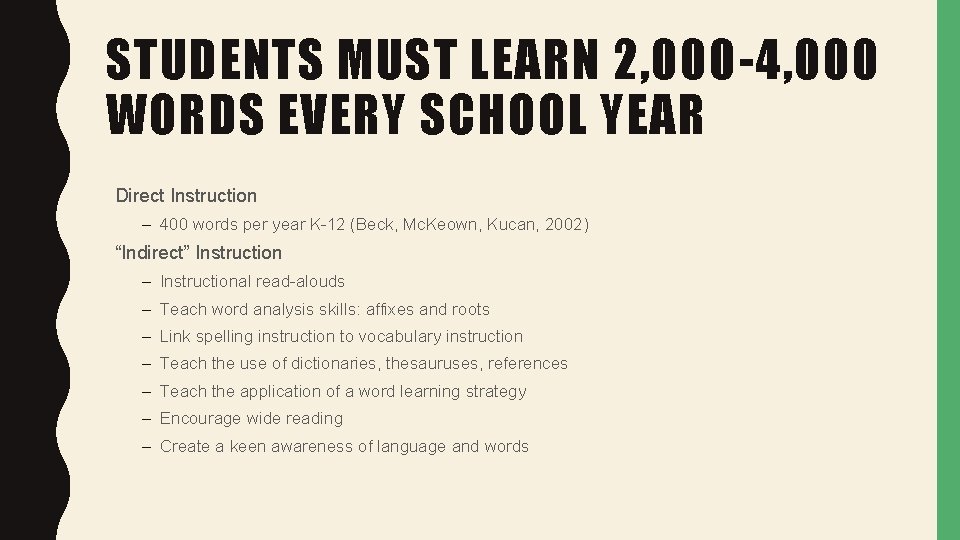
STUDENTS MUST LEARN 2, 000 -4, 000 WORDS EVERY SCHOOL YEAR Direct Instruction – 400 words per year K-12 (Beck, Mc. Keown, Kucan, 2002) “Indirect” Instruction – Instructional read-alouds – Teach word analysis skills: affixes and roots – Link spelling instruction to vocabulary instruction – Teach the use of dictionaries, thesauruses, references – Teach the application of a word learning strategy – Encourage wide reading – Create a keen awareness of language and words
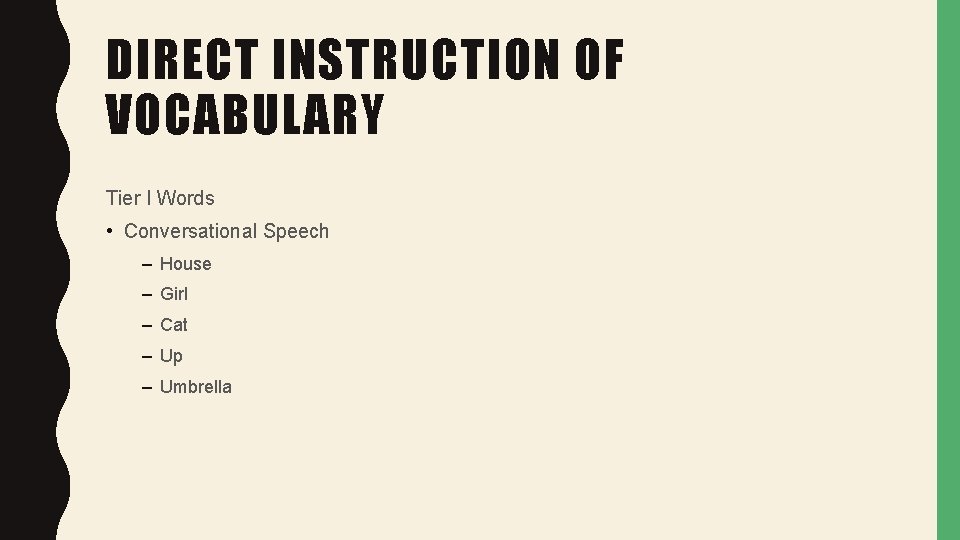
DIRECT INSTRUCTION OF VOCABULARY Tier I Words • Conversational Speech – House – Girl – Cat – Up – Umbrella
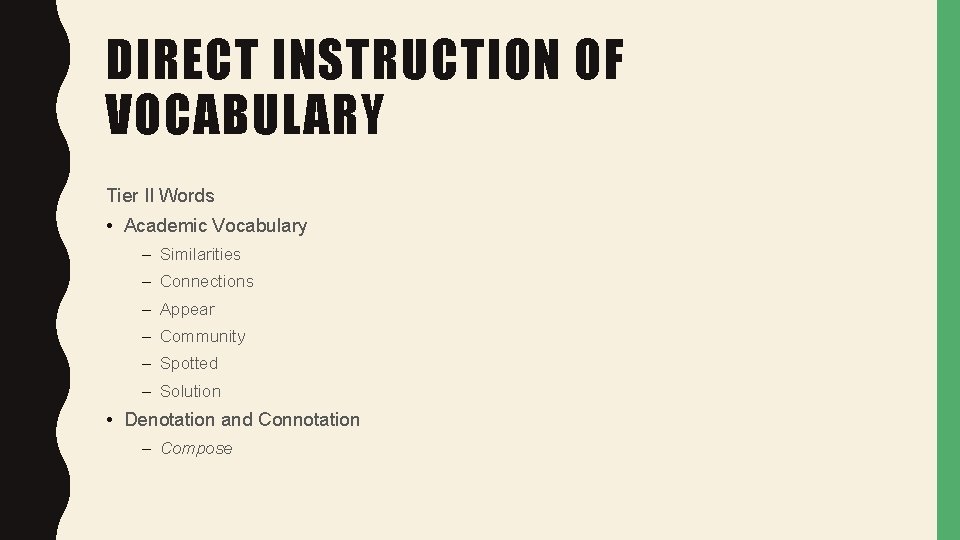
DIRECT INSTRUCTION OF VOCABULARY Tier II Words • Academic Vocabulary – Similarities – Connections – Appear – Community – Spotted – Solution • Denotation and Connotation – Compose
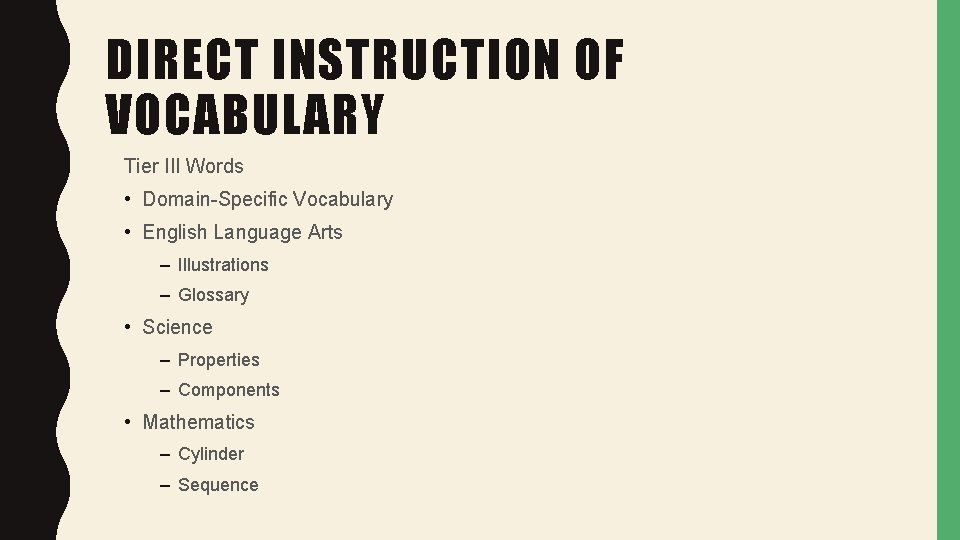
DIRECT INSTRUCTION OF VOCABULARY Tier III Words • Domain-Specific Vocabulary • English Language Arts – Illustrations – Glossary • Science – Properties – Components • Mathematics – Cylinder – Sequence
WRITING COLLECTION PROJECT
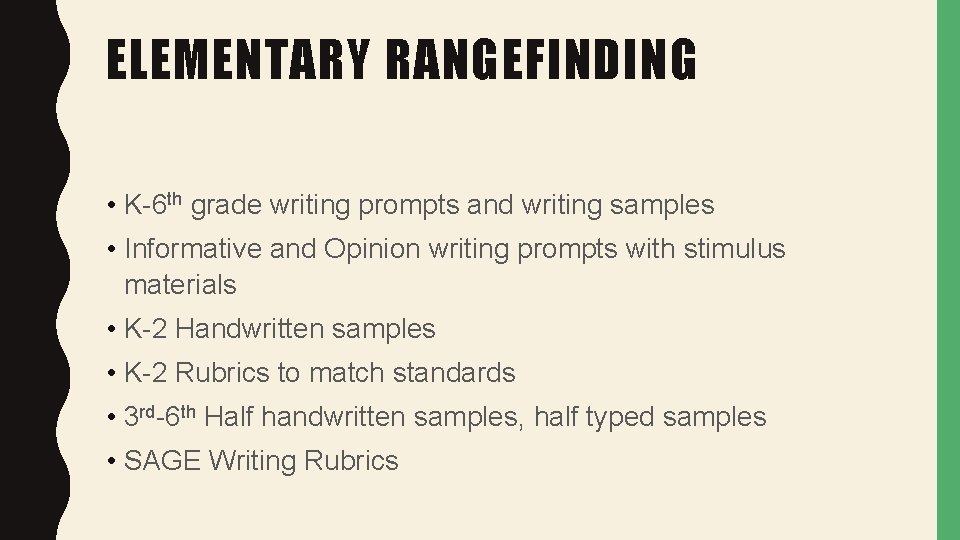
ELEMENTARY RANGEFINDING • K-6 th grade writing prompts and writing samples • Informative and Opinion writing prompts with stimulus materials • K-2 Handwritten samples • K-2 Rubrics to match standards • 3 rd-6 th Half handwritten samples, half typed samples • SAGE Writing Rubrics
WRITING COLLECTION PROJECT • All prompts, rubrics, and annotated samples can be found on UEN http: //www. uen. org/core/languagearts/writing-collection/
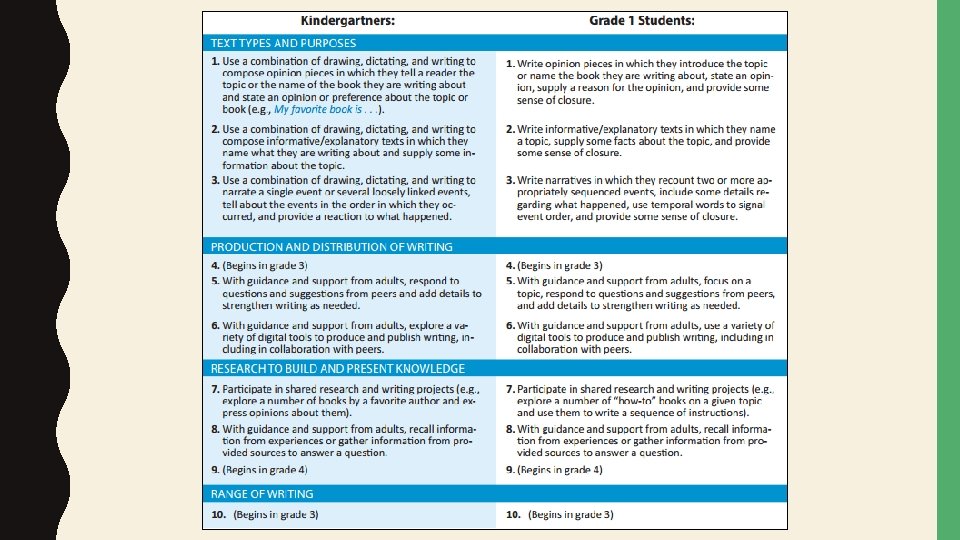
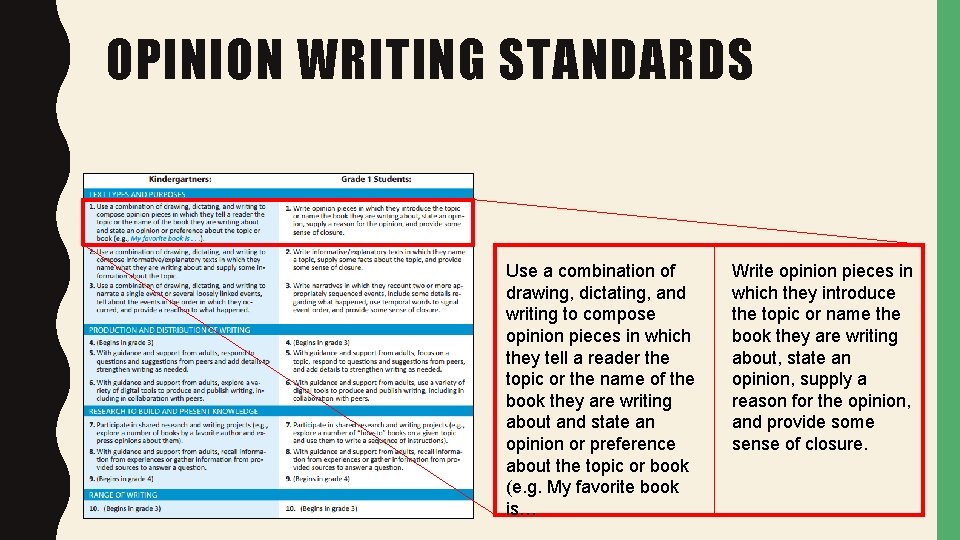
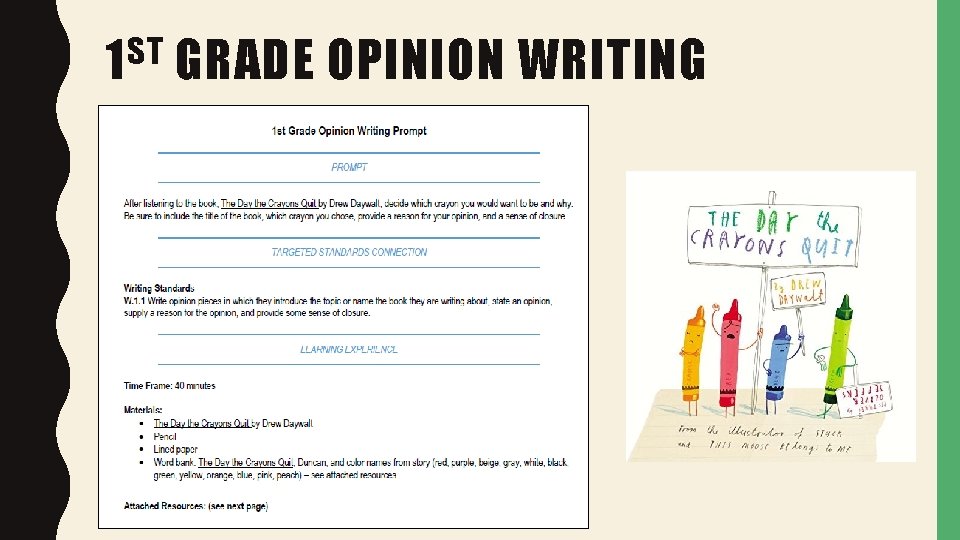
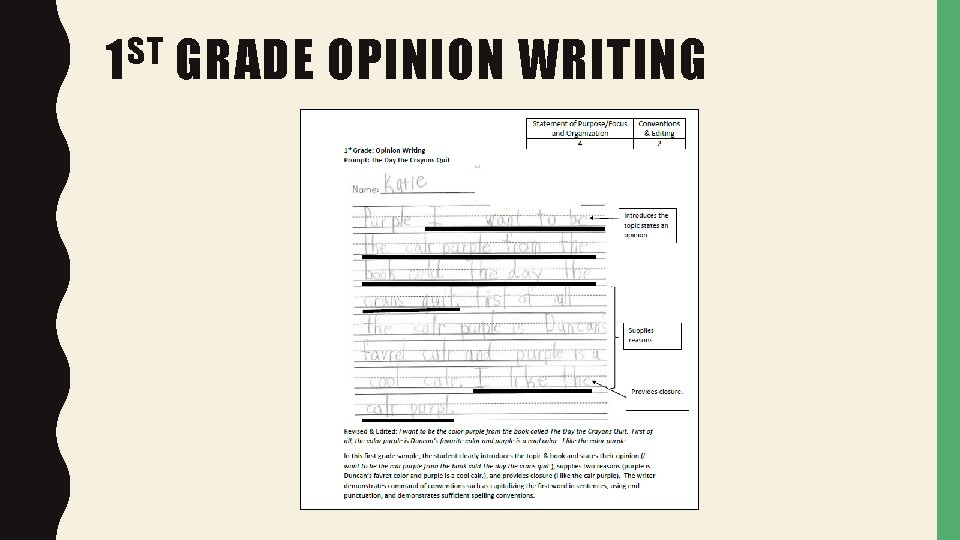
OPINION WRITING STANDARDS Use a combination of drawing, dictating, and writing to compose opinion pieces in which they tell a reader the topic or the name of the book they are writing about and state an opinion or preference about the topic or book (e. g. My favorite book is… Write opinion pieces in which they introduce the topic or name the book they are writing about, state an opinion, supply a reason for the opinion, and provide some sense of closure.
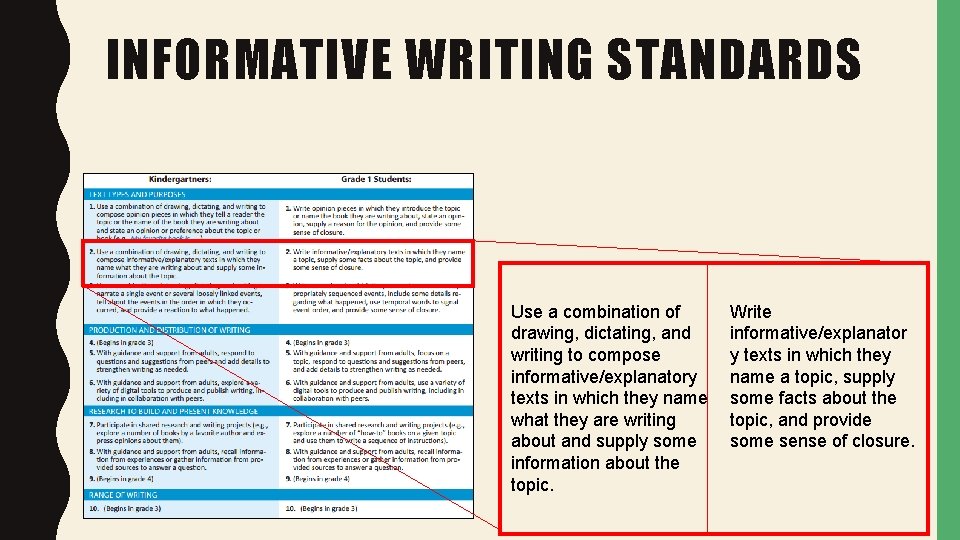
INFORMATIVE WRITING STANDARDS Use a combination of drawing, dictating, and writing to compose informative/explanatory texts in which they name what they are writing about and supply some information about the topic. Write informative/explanator y texts in which they name a topic, supply some facts about the topic, and provide some sense of closure.
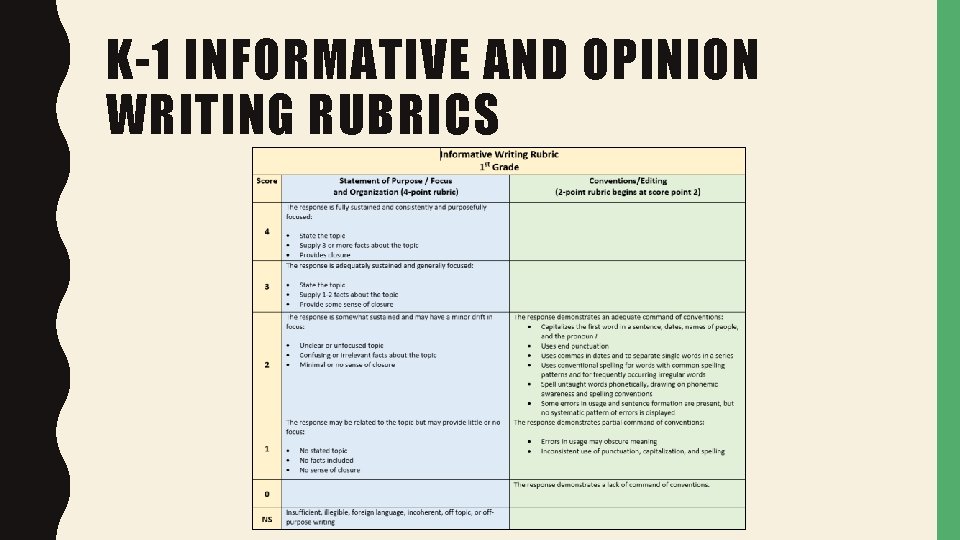
K-1 INFORMATIVE AND OPINION WRITING RUBRICS
THE DAY THE CRAYONS QUIT
ST 1 GRADE OPINION WRITING
ST 1 GRADE OPINION WRITING
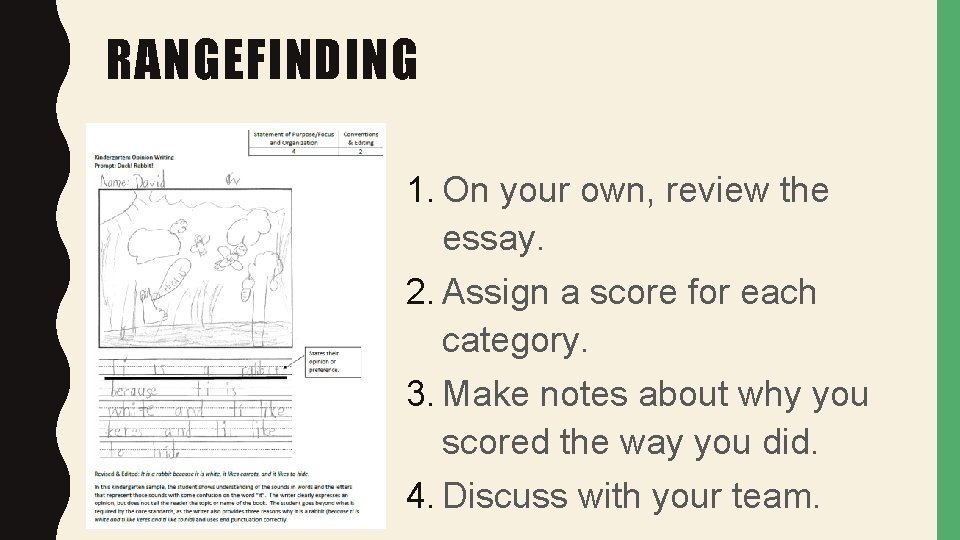
WRITING SAMPLES
RANGEFINDING 1. On your own, review the essay. 2. Assign a score for each category. 3. Make notes about why you scored the way you did. 4. Discuss with your team.
MENTOR TEXT
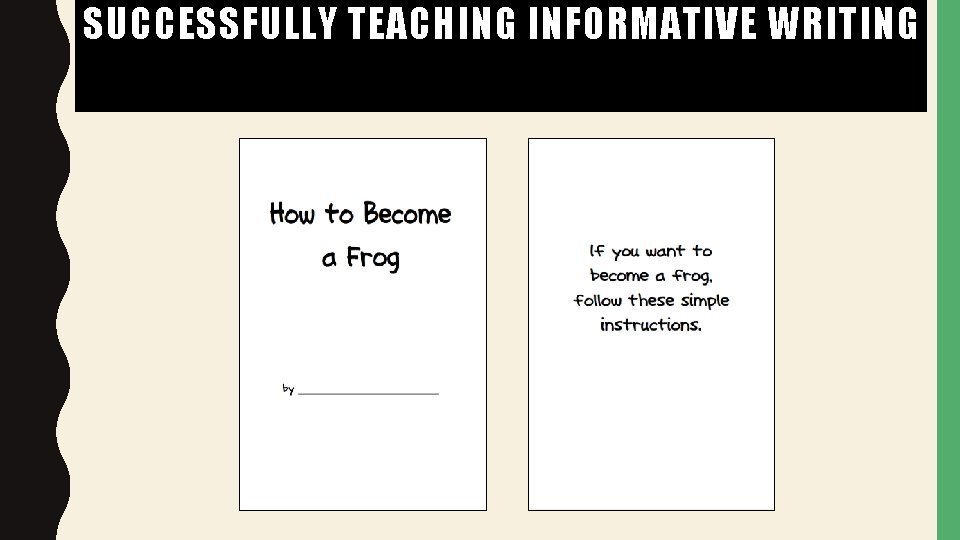
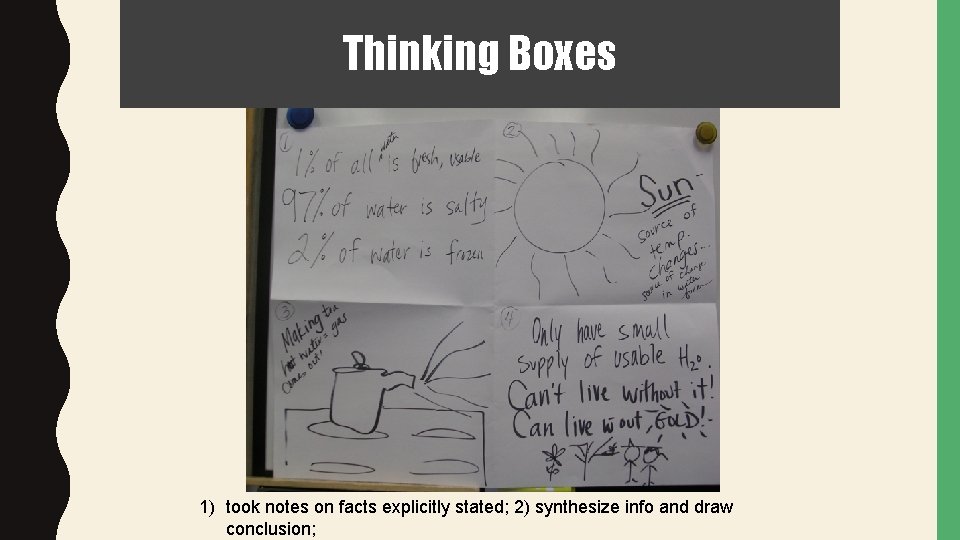
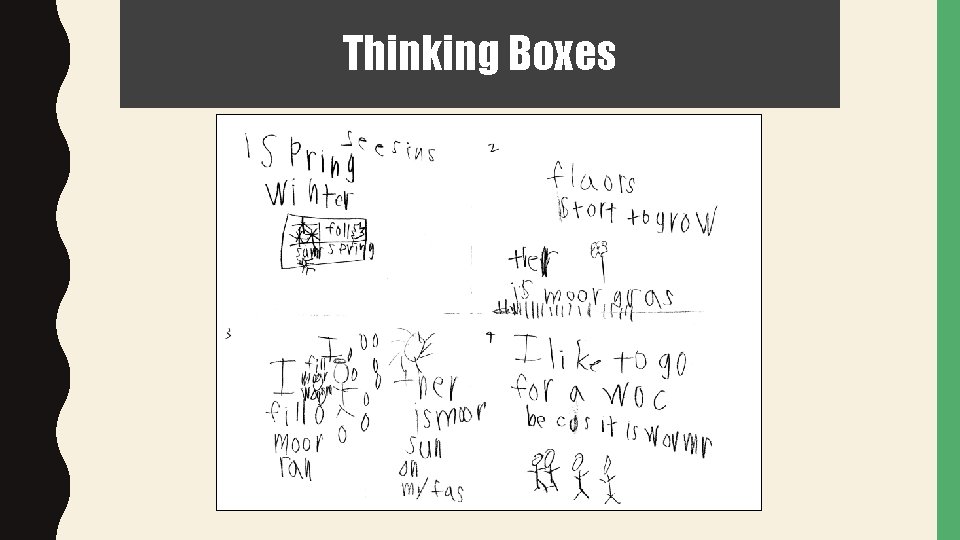
SUCCESSFULLY TEACHING INFORMATIVE WRITING Students need to first build knowledge about a topic before they are asked to produce formal informative writing pieces. Remember to use the Stop, Think, and Write Strategies: • • Thinking Boxes Quick Jot Quick Try Quick Write
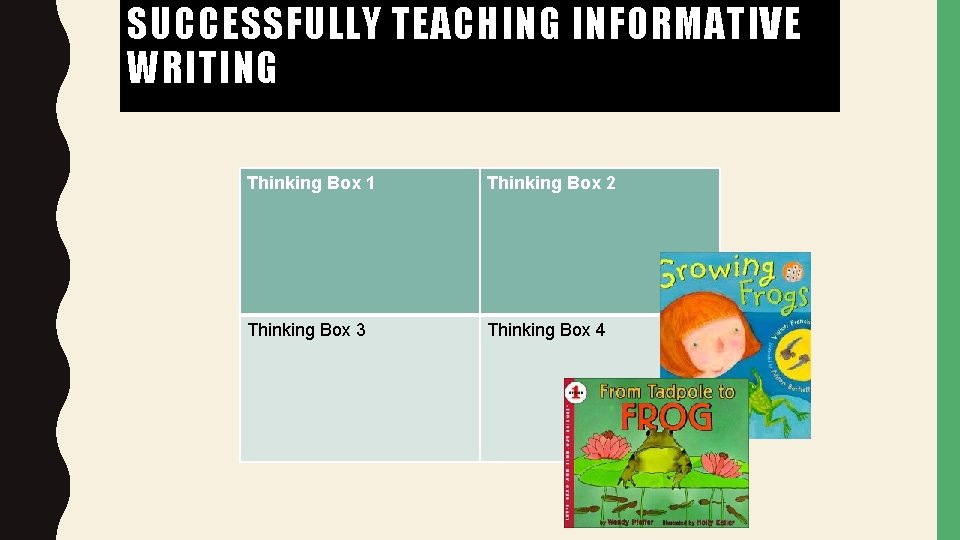
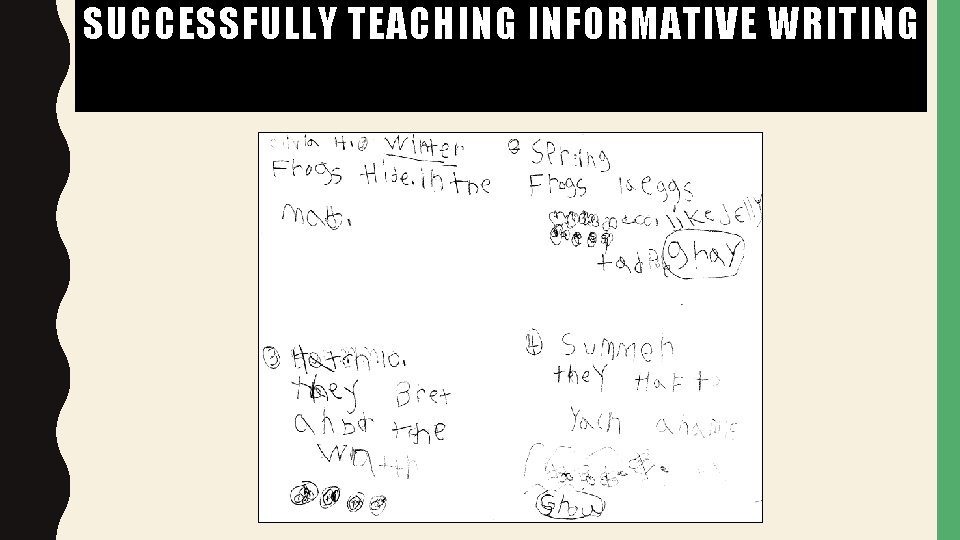
SUCCESSFULLY TEACHING INFORMATIVE WRITING Thinking Box 1 Thinking Box 2 Thinking Box 3 Thinking Box 4
SUCCESSFULLY TEACHING INFORMATIVE WRITING
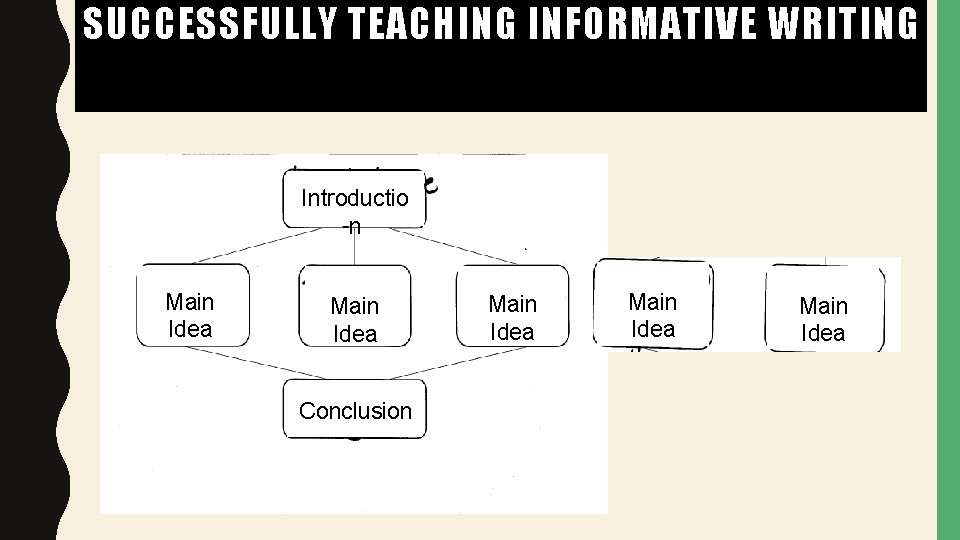
SUCCESSFULLY TEACHING INFORMATIVE WRITING Introductio n Main Idea Conclusion Main Idea
SUCCESSFULLY TEACHING INFORMATIVE WRITING The purpose of this routine is to show students a model of quality writing. Students and teacher analyze the writing of skilled writers to see how experts successfully write in a particular genre or use language in masterful ways. This routine is important to you because students have an “expert by their side” guiding them in their own writing attempts. Students grow as writers through multiple opportunities to explore the writing techniques and styles of many authors.
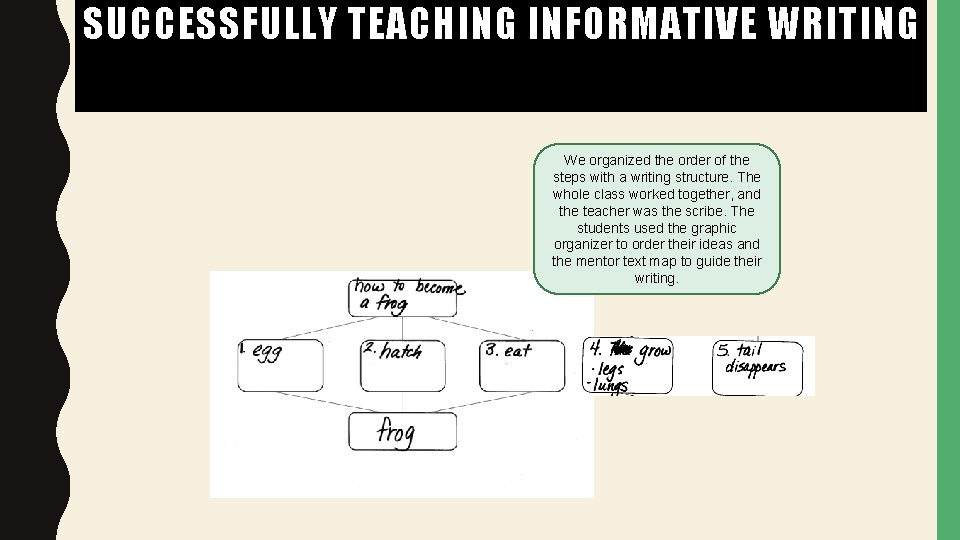
SUCCESSFULLY TEACHING INFORMATIVE WRITING We organized the order of the steps with a writing structure. The whole class worked together, and the teacher was the scribe. The students used the graphic organizer to order their ideas and the mentor text map to guide their writing.
SUCCESSFULLY TEACHING INFORMATIVE WRITING
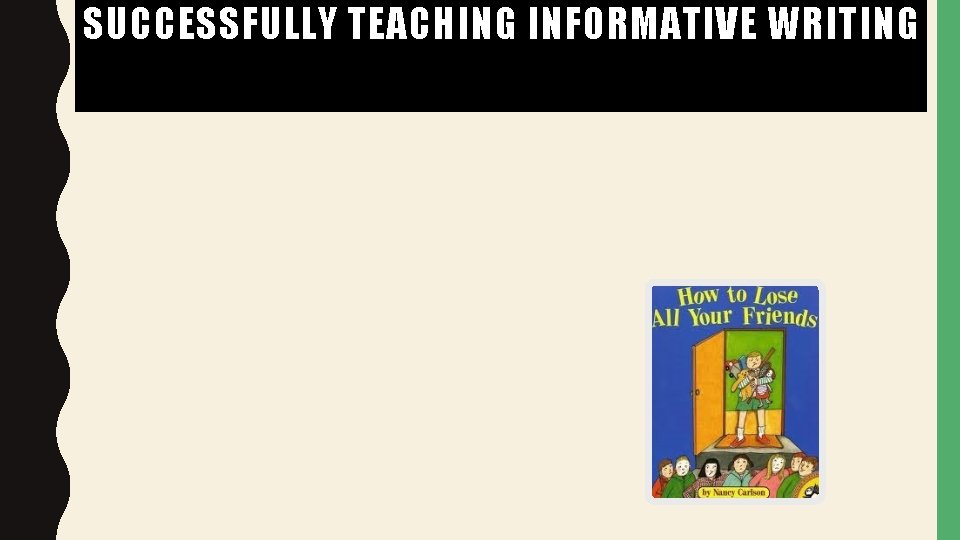
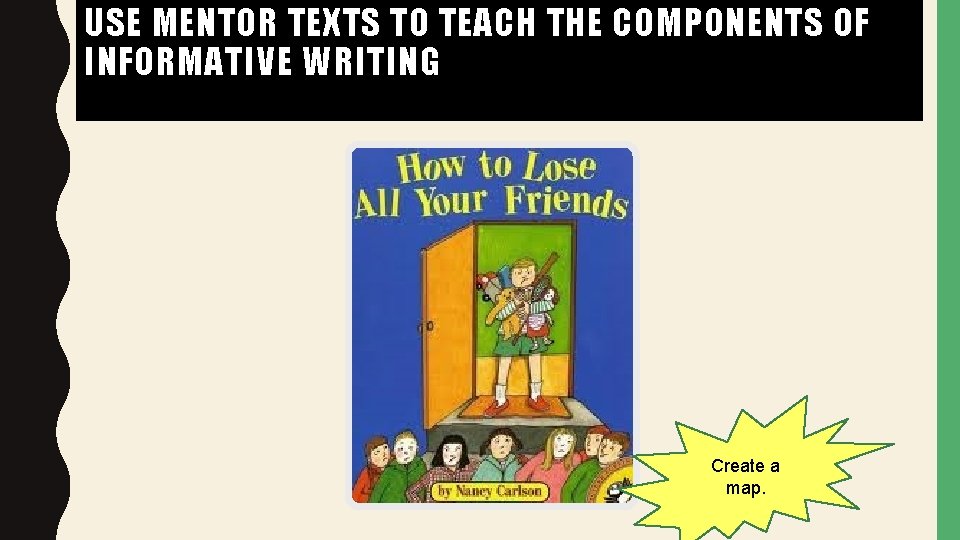
USE MENTOR TEXTS TO TEACH THE COMPONENTS OF INFORMATIVE WRITING Create a map.
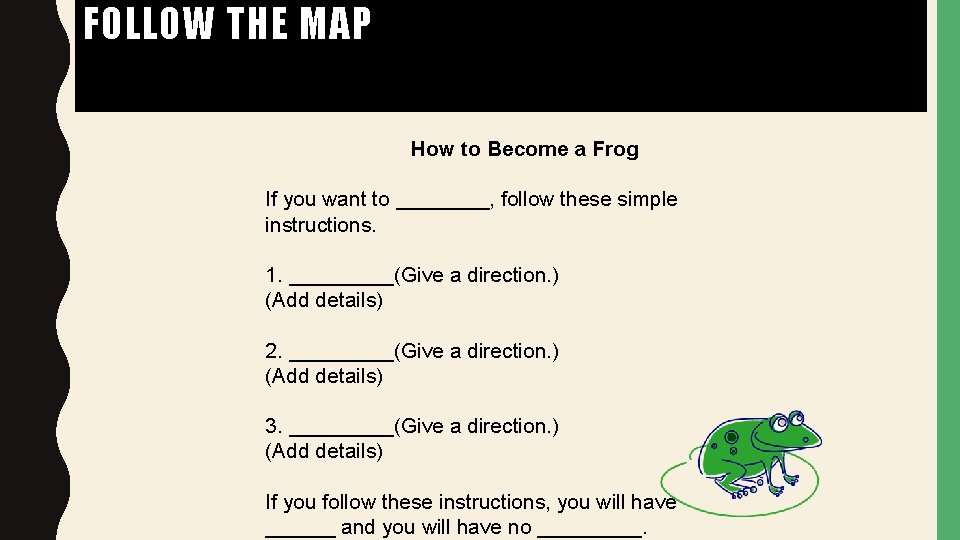
FOLLOW THE MAP How to Become a Frog If you want to ____, follow these simple instructions. 1. _____(Give a direction. ) (Add details) 2. _____(Give a direction. ) (Add details) 3. _____(Give a direction. ) (Add details) If you follow these instructions, you will have ______ and you will have no _____.
SUCCESSFULLY TEACHING INFORMATIVE WRITING
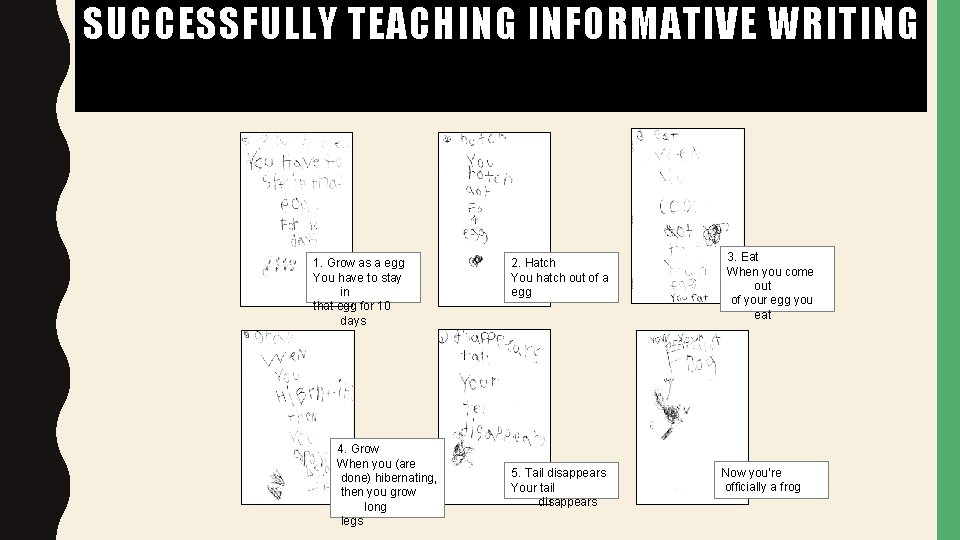
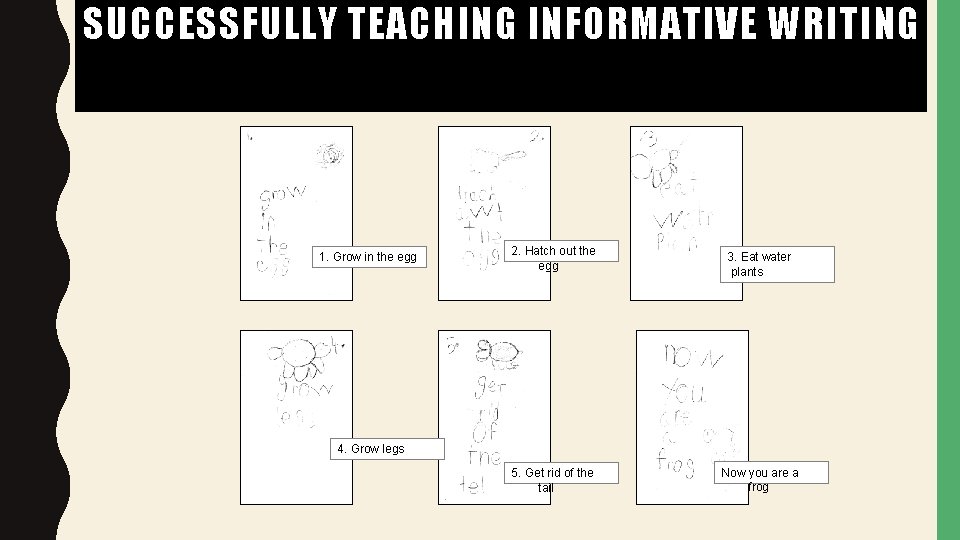
SUCCESSFULLY TEACHING INFORMATIVE WRITING 1. Grow as a egg You have to stay in that egg for 10 days 4. Grow When you (are done) hibernating, then you grow long legs 2. Hatch You hatch out of a egg 5. Tail disappears Your tail disappears 3. Eat When you come out of your egg you eat Now you’re officially a frog
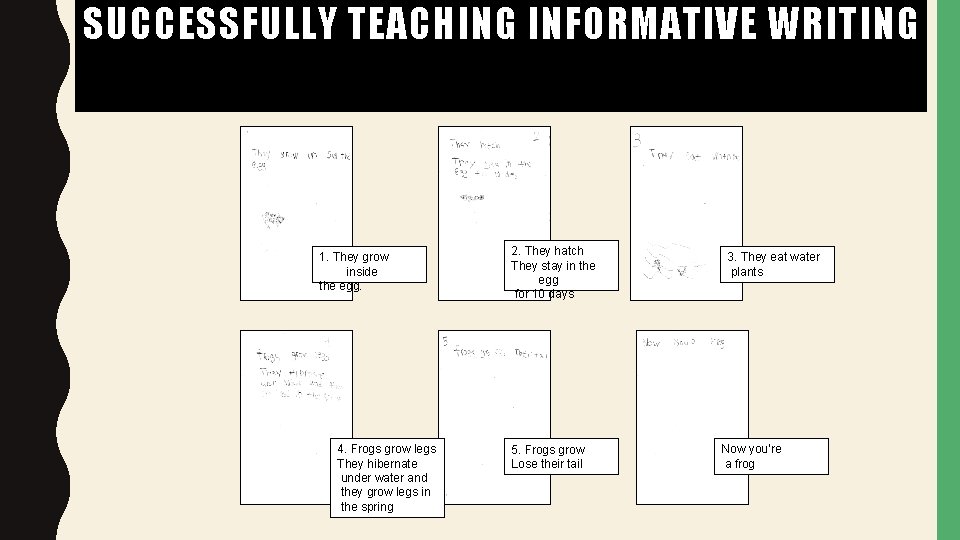
SUCCESSFULLY TEACHING INFORMATIVE WRITING 1. They grow inside the egg. 4. Frogs grow legs They hibernate under water and they grow legs in the spring 2. They hatch They stay in the egg for 10 days 5. Frogs grow Lose their tail 3. They eat water plants Now you’re a frog
SUCCESSFULLY TEACHING INFORMATIVE WRITING 1. Grow in the egg 2. Hatch out the egg 3. Eat water plants 4. Grow legs 5. Get rid of the tail Now you are a frog
MENTOR TEXT ROUTINE: REVIEW OF KEY POINTS • Select a Standard. • Use a text that is an excellent model of that standard. (Group related information together, introduce a topic, …) • Read and understand the text together. • Analyze the text together. Create a map for the whole class to use. • The teacher models writing with the map before the students write. (This gives students a second model. ) • Students follow the map to produce their own writing.
CHALLENGE SPELLING WORDS
CHALLENGE SPELLING WORDS “Students who struggle mightily with spelling or worry unnecessarily about perfect spelling do not write fluently or easily. ” - Shane Templeton
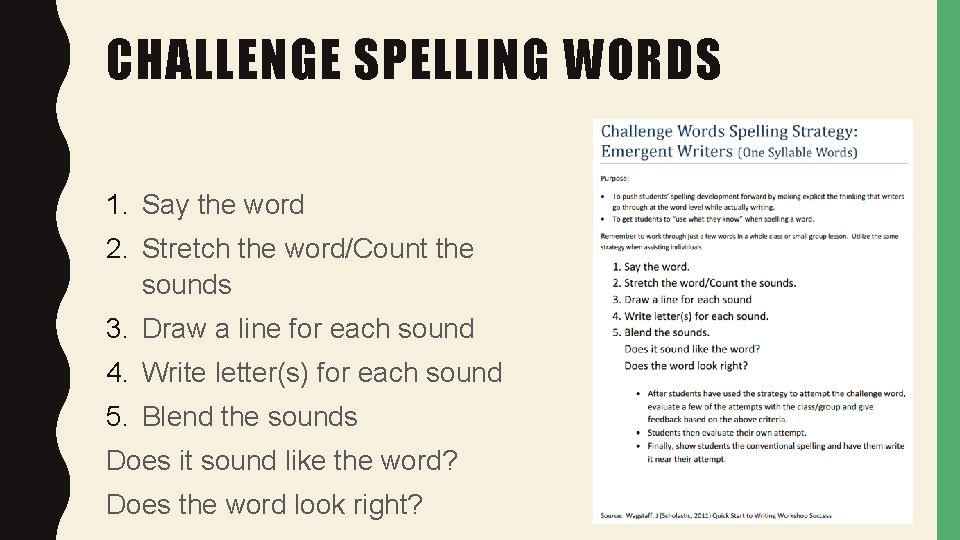
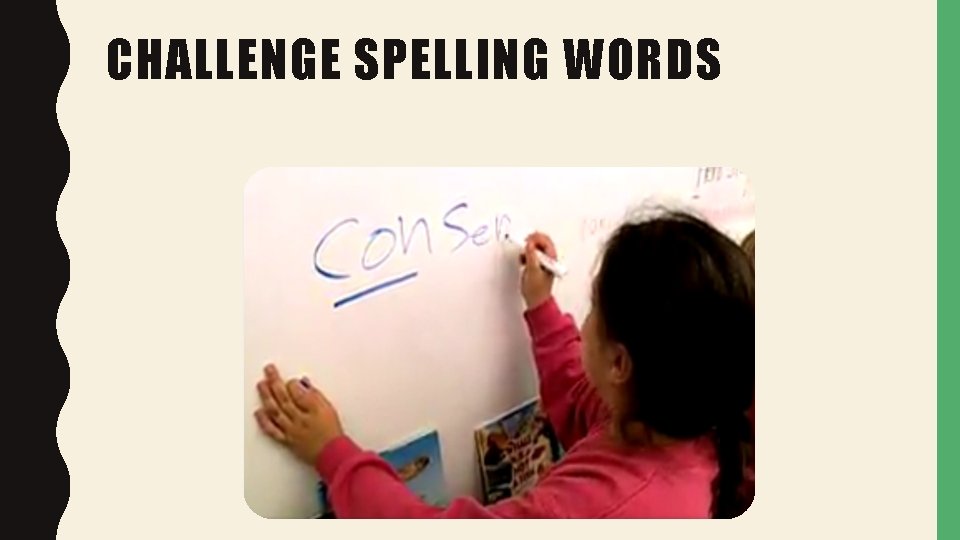
CHALLENGE SPELLING WORDS 1. Say the word 2. Stretch the word/Count the sounds 3. Draw a line for each sound 4. Write letter(s) for each sound 5. Blend the sounds Does it sound like the word? Does the word look right?
CHALLENGE SPELLING WORDS
MODELED AND SHARED WRITING
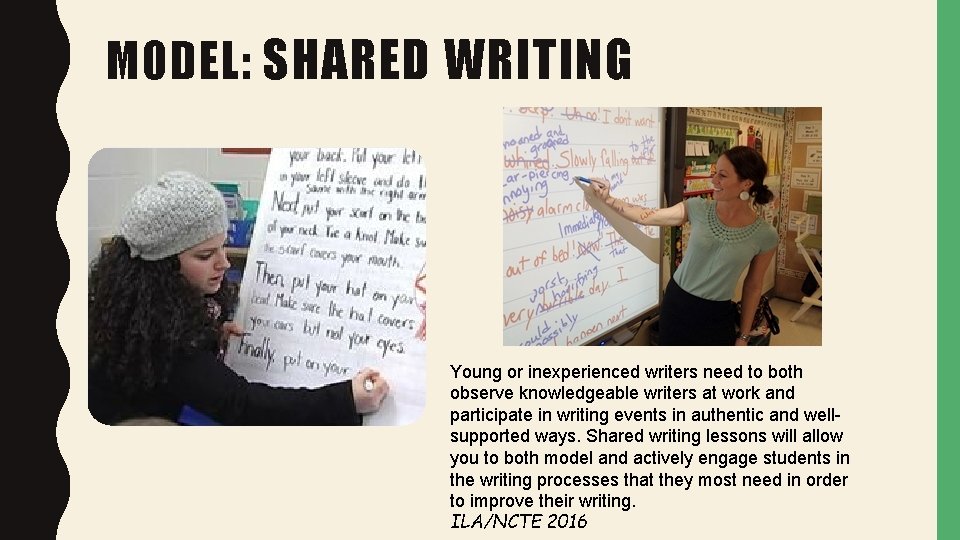
MODEL: SHARED WRITING Young or inexperienced writers need to both observe knowledgeable writers at work and participate in writing events in authentic and wellsupported ways. Shared writing lessons will allow you to both model and actively engage students in the writing processes that they most need in order to improve their writing. ILA/NCTE 2016
QUICK BURSTS OF WRITING
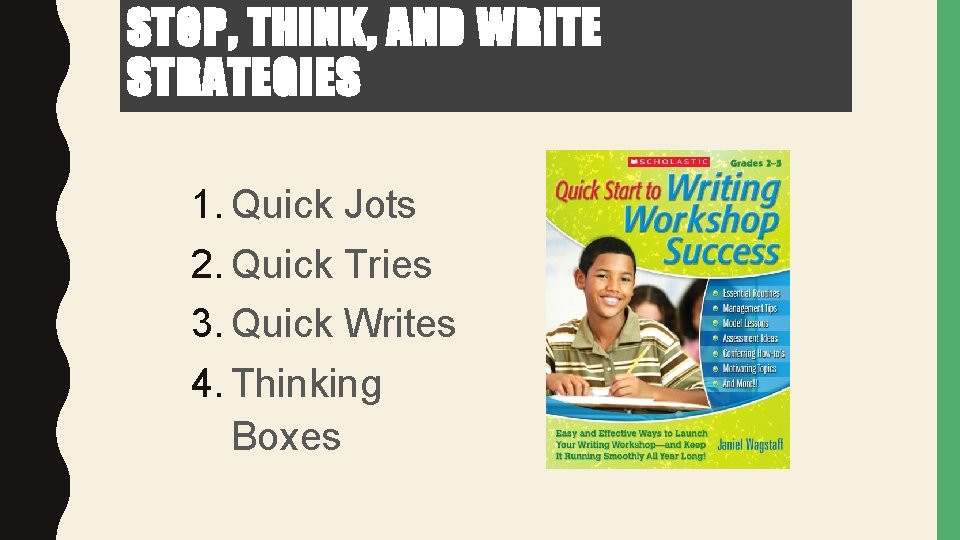
STOP, THINK, AND WRITE STRATEGIES 1. Quick Jots 2. Quick Tries 3. Quick Writes 4. Thinking Boxes
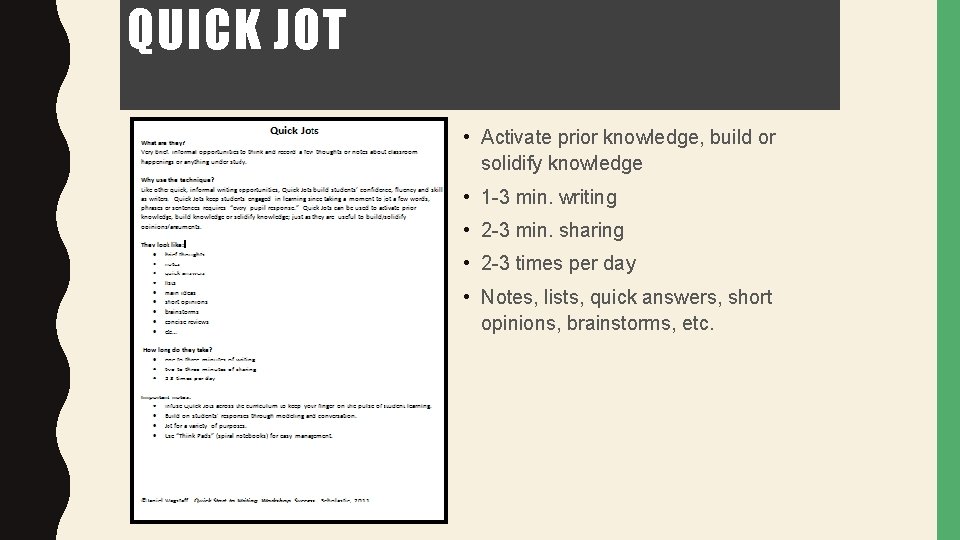
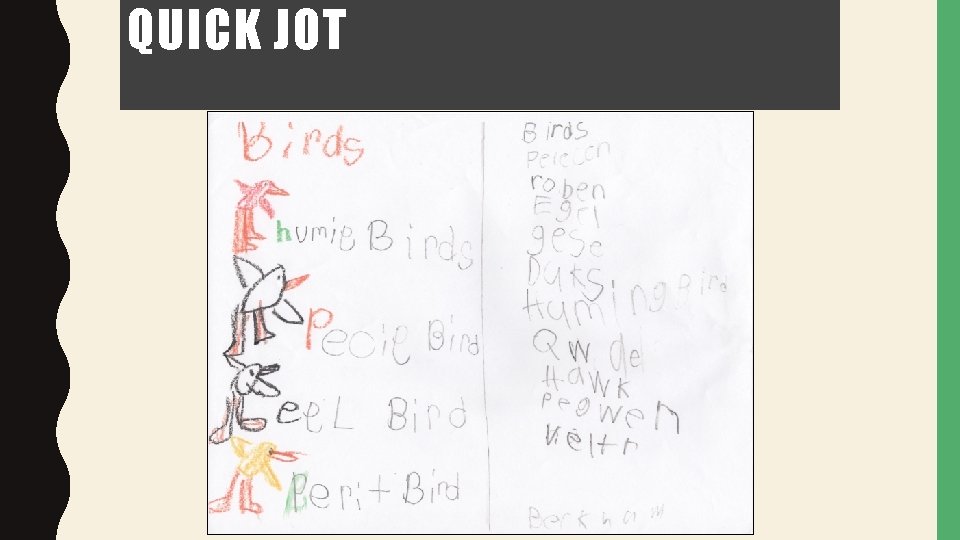
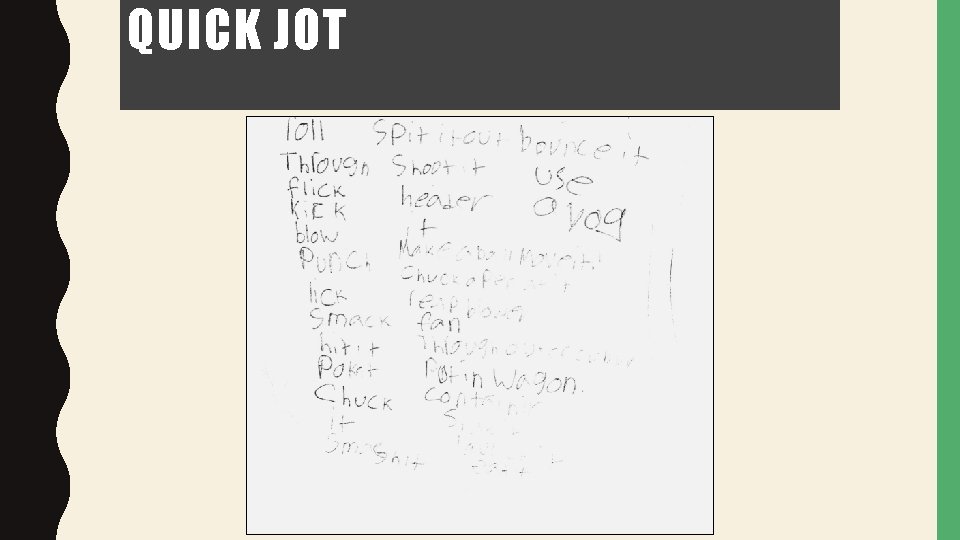
QUICK JOT • Activate prior knowledge, build or solidify knowledge • 1 -3 min. writing • 2 -3 min. sharing • 2 -3 times per day • Notes, lists, quick answers, short opinions, brainstorms, etc.
QUICK JOT
QUICK JOT
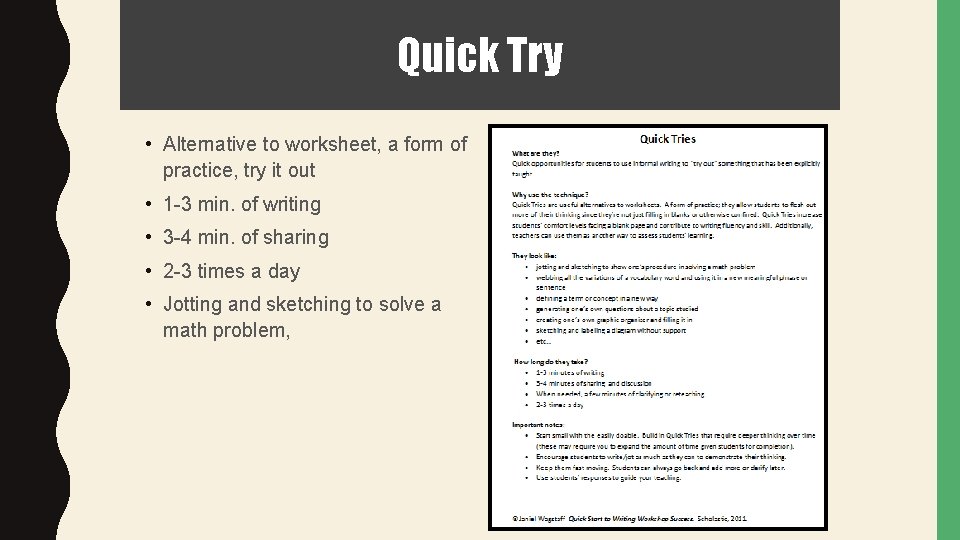
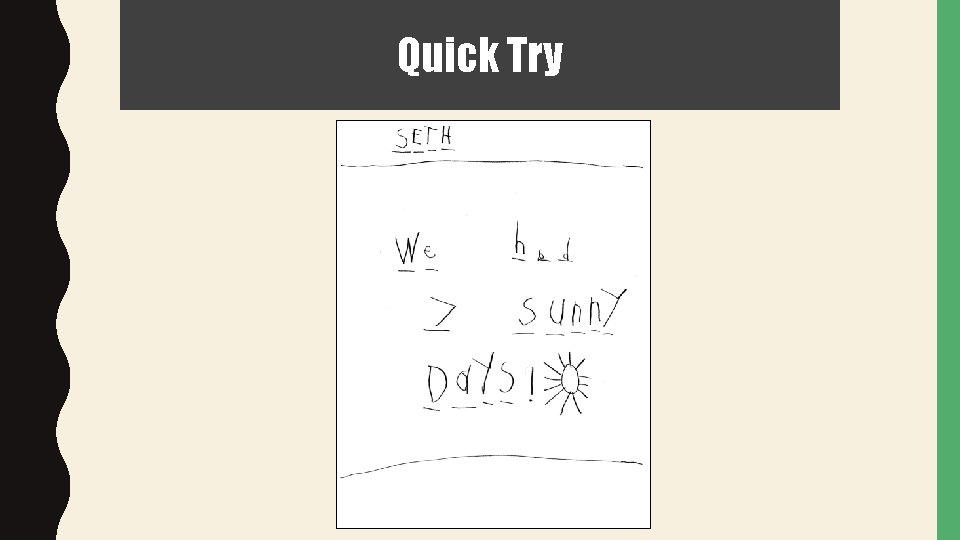
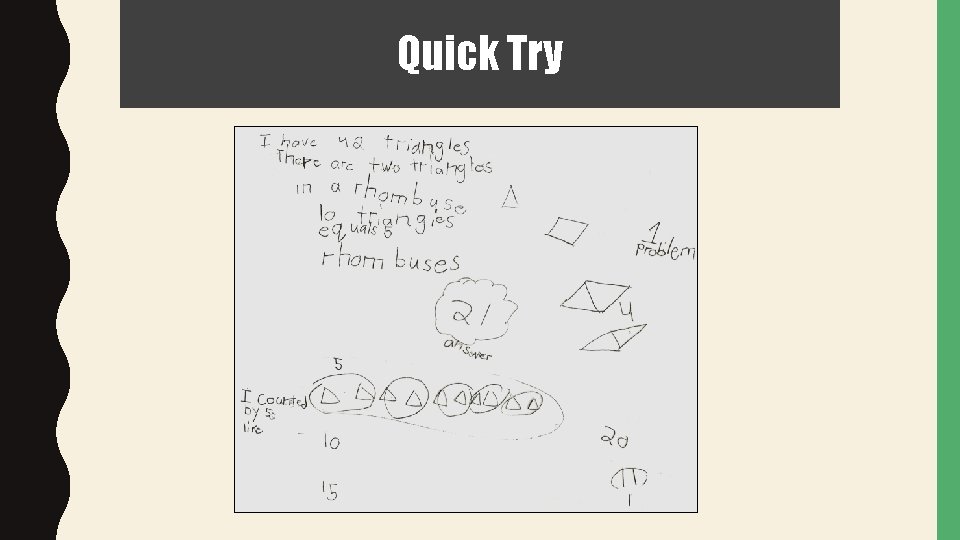
Quick Try • Alternative to worksheet, a form of practice, try it out • 1 -3 min. of writing • 3 -4 min. of sharing • 2 -3 times a day • Jotting and sketching to solve a math problem,
Quick Try
Quick Try
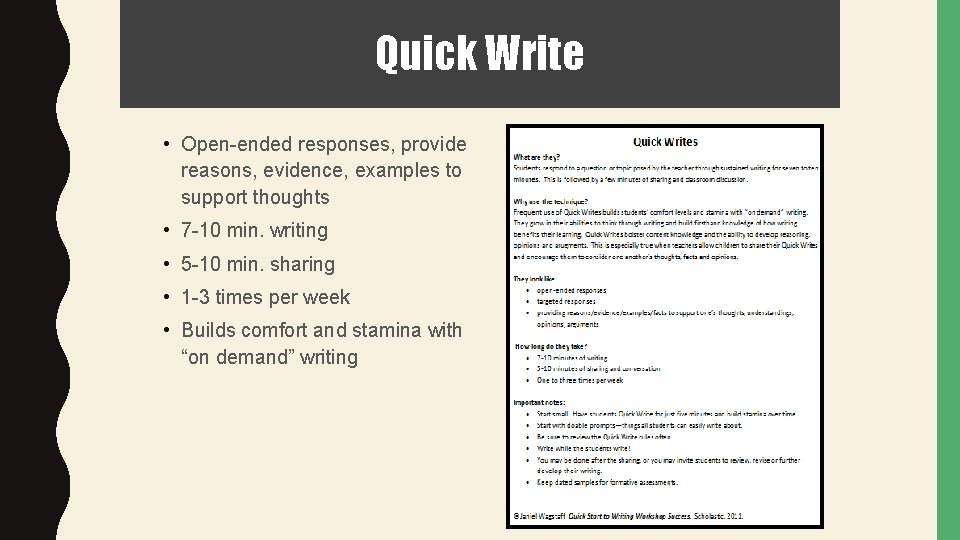
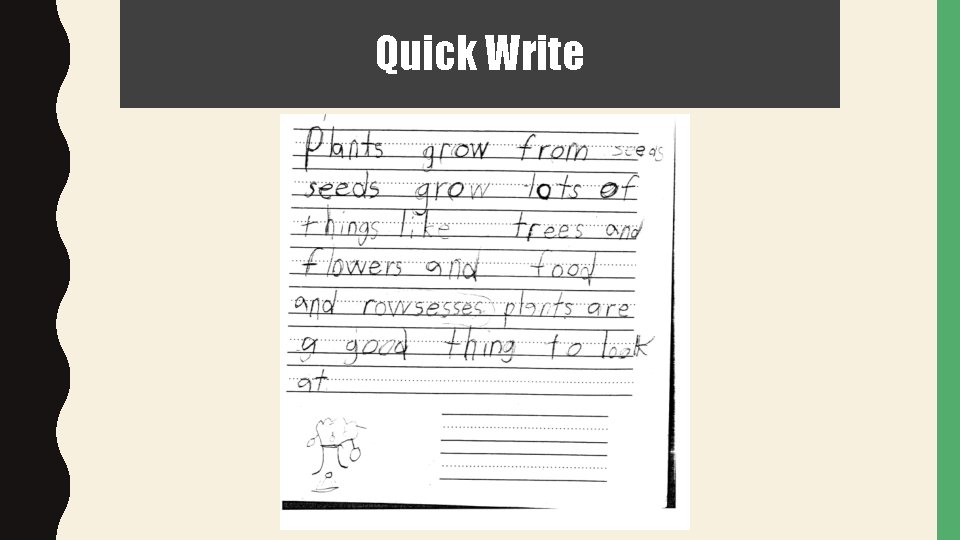
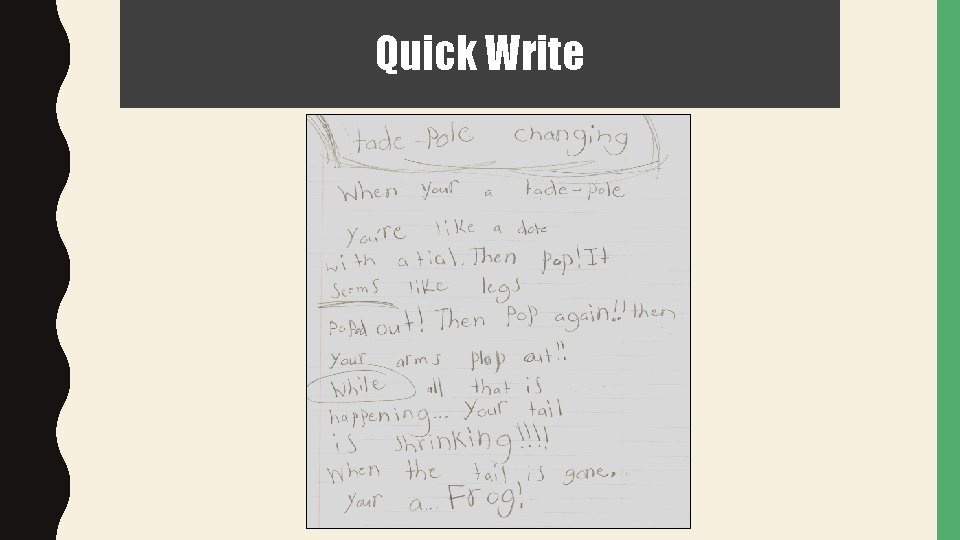
Quick Write • Open-ended responses, provide reasons, evidence, examples to support thoughts • 7 -10 min. writing • 5 -10 min. sharing • 1 -3 times per week • Builds comfort and stamina with “on demand” writing
Quick Write
Quick Write
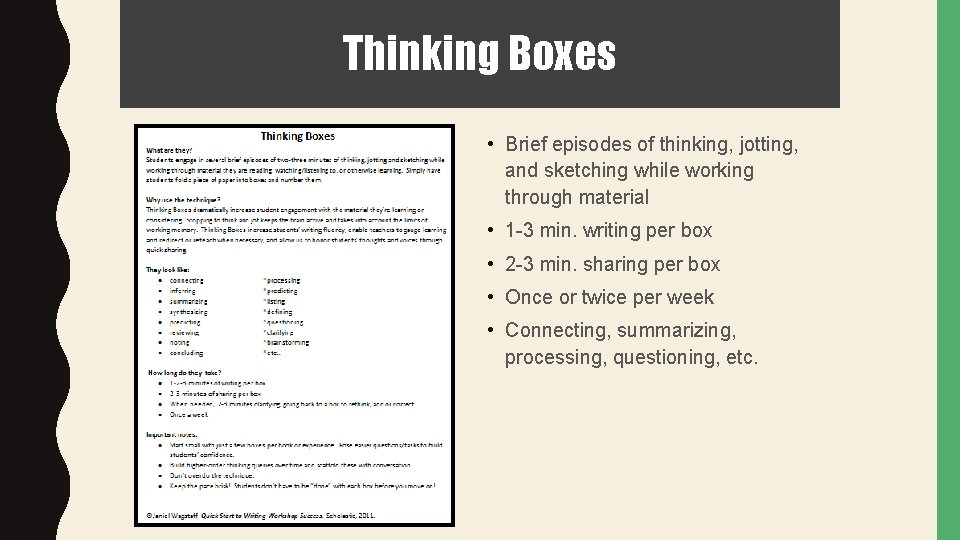
Thinking Boxes • Brief episodes of thinking, jotting, and sketching while working through material • 1 -3 min. writing per box • 2 -3 min. sharing per box • Once or twice per week • Connecting, summarizing, processing, questioning, etc.
Thinking Boxes 1) took notes on facts explicitly stated; 2) synthesize info and draw conclusion;
Thinking Boxes
QUICK WRITE Have you used any of these strategies? How might this work in your classroom? What Quick Burst Writing Strategy might you use?