JUDGMENT AND DECISION MAKING Module 6 Anchoring and





- Slides: 47
JUDGMENT AND DECISION MAKING Module 6 Anchoring and adjustment
Today, we talk about… § Anchoring and adjustment § The pervasiveness and robustness of the phenomenon § Anchoring on ourselves § Different explanations of why anchoring and adjustment occurs
Anchoring and adjustment § Anchoring: Assimilation of a judgment to a previously considered standard
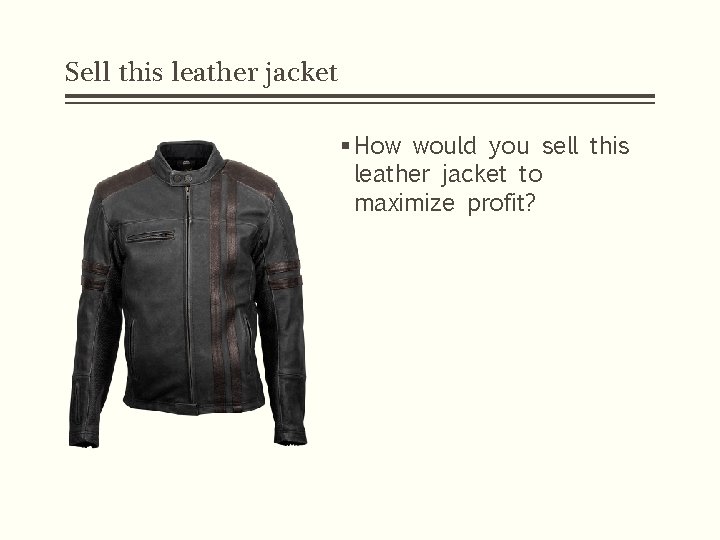
Sell this leather jacket § How would you sell this leather jacket to maximize profit?
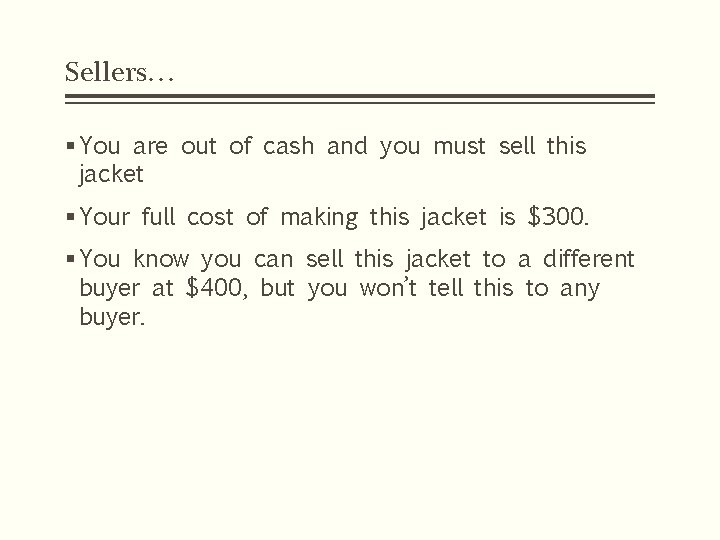
Sellers… § You are out of cash and you must sell this jacket § Your full cost of making this jacket is $300. § You know you can sell this jacket to a different buyer at $400, but you won’t tell this to any buyer.
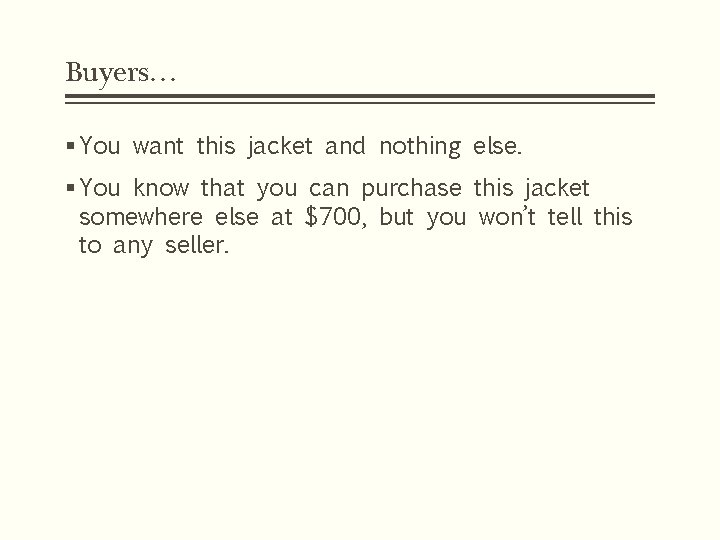
Buyers… § You want this jacket and nothing else. § You know that you can purchase this jacket somewhere else at $700, but you won’t tell this to any seller.
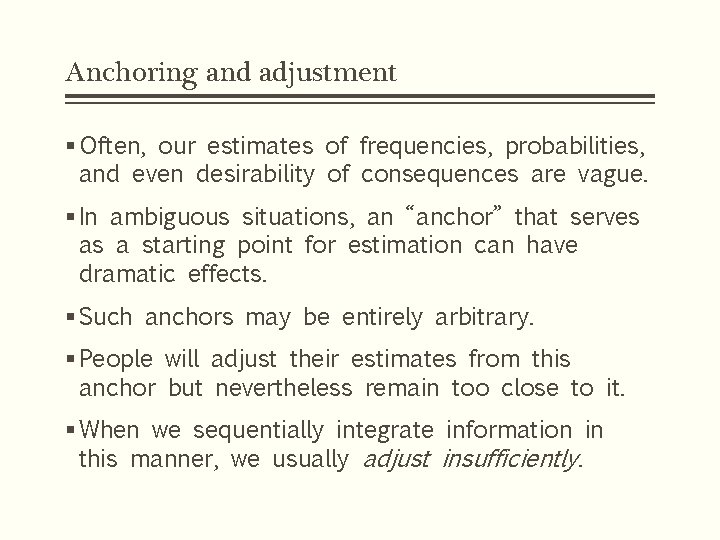
Anchoring and adjustment § Often, our estimates of frequencies, probabilities, and even desirability of consequences are vague. § In ambiguous situations, an “anchor” that serves as a starting point for estimation can have dramatic effects. § Such anchors may be entirely arbitrary. § People will adjust their estimates from this anchor but nevertheless remain too close to it. § When we sequentially integrate information in this manner, we usually adjust insufficiently.
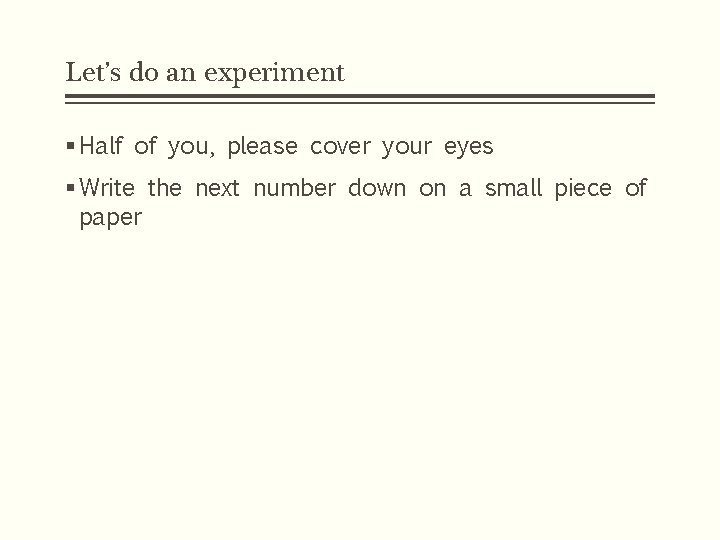
Let’s do an experiment § Half of you, please cover your eyes § Write the next number down on a small piece of paper
§ 55
Now answer these questions § Is the percentage of African nations among UN members larger or smaller than the number you just wrote? § What is your best guess of the percentage of African nations in the UN?
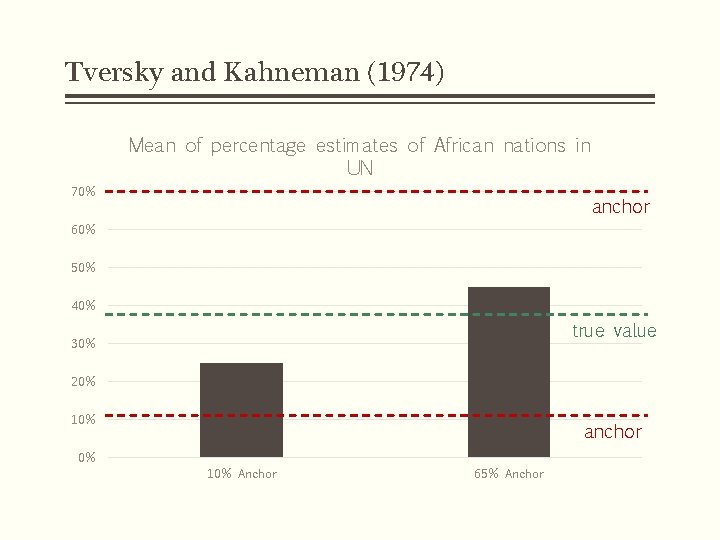
The classic demonstration of anchoring § Tversky and Kahneman (1974) § Rigged wheel of fortune such that it stops only at either 10 or 65 § Spun the wheel in front of a small group of students and asked them to write down the number § Two questions asked: § Is the percentage of African nations among UN members larger or smaller than the number you just wrote? (comparative anchoring question) § What is your best guess of the percentage of African nations in the UN? (absolute anchoring question)
Tversky and Kahneman (1974) Mean of percentage estimates of African nations in UN 70% anchor 60% 50% 40% true value 30% 20% 10% 0% anchor 10% Anchor 65% Anchor
Anchoring: A pervasive and robust effect §Legal judgments § Englich, Mussweiler, & Strack (2006). Playing dice with criminal sentences: The influence of irrelevant anchors on experts’ judicial decision making
Englich, Mussweiler, & Strack (2006) § Shows how sentencing decisions of experienced legal professionals are influenced by irrelevant sentencing demands, even if they are blatantly random
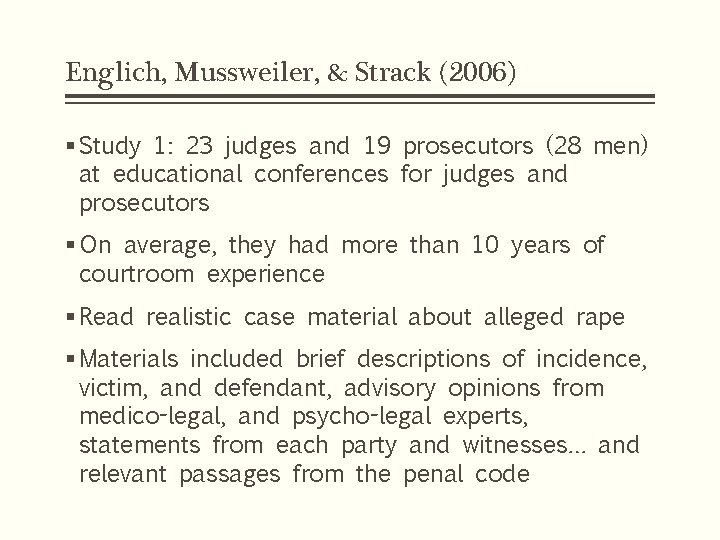
Englich, Mussweiler, & Strack (2006) § Study 1: 23 judges and 19 prosecutors (28 men) at educational conferences for judges and prosecutors § On average, they had more than 10 years of courtroom experience § Read realistic case material about alleged rape § Materials included brief descriptions of incidence, victim, and defendant, advisory opinions from medico-legal, and psycho-legal experts, statements from each party and witnesses… and relevant passages from the penal code
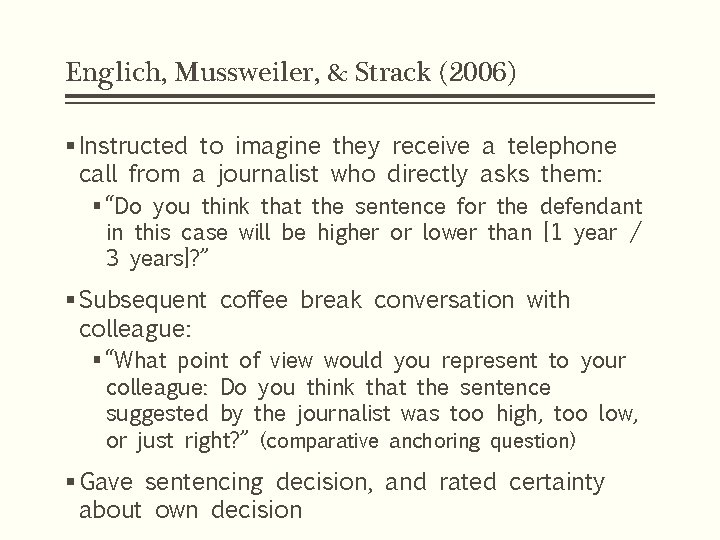
Englich, Mussweiler, & Strack (2006) § Instructed to imagine they receive a telephone call from a journalist who directly asks them: § “Do you think that the sentence for the defendant in this case will be higher or lower than [1 year / 3 years]? ” § Subsequent coffee break conversation with colleague: § “What point of view would you represent to your colleague: Do you think that the sentence suggested by the journalist was too high, too low, or just right? ” (comparative anchoring question) § Gave sentencing decision, and rated certainty about own decision
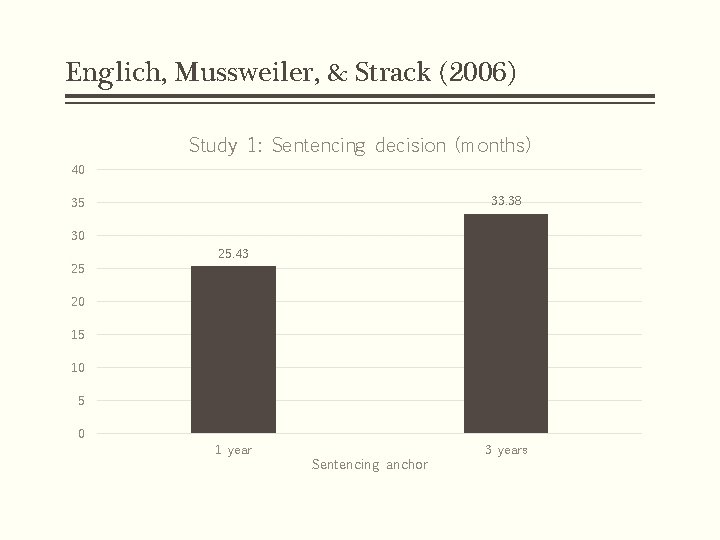
Englich, Mussweiler, & Strack (2006) Study 1: Sentencing decision (months) 40 33. 38 35 30 25 25. 43 20 15 10 5 0 1 year Sentencing anchor 3 years
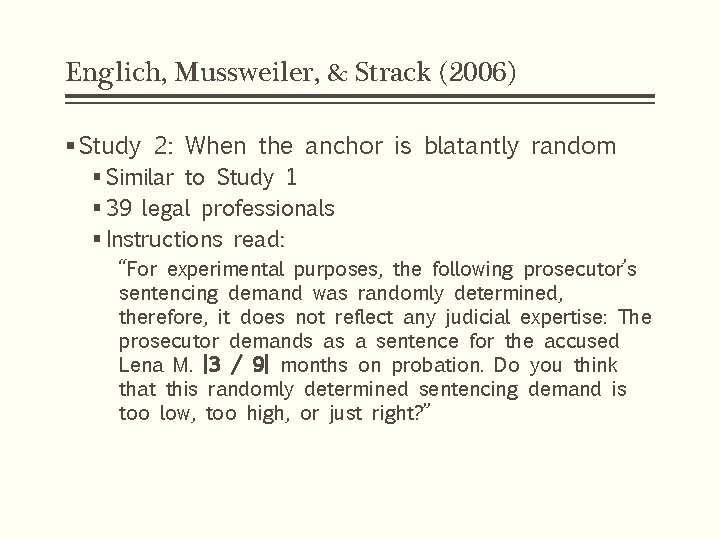
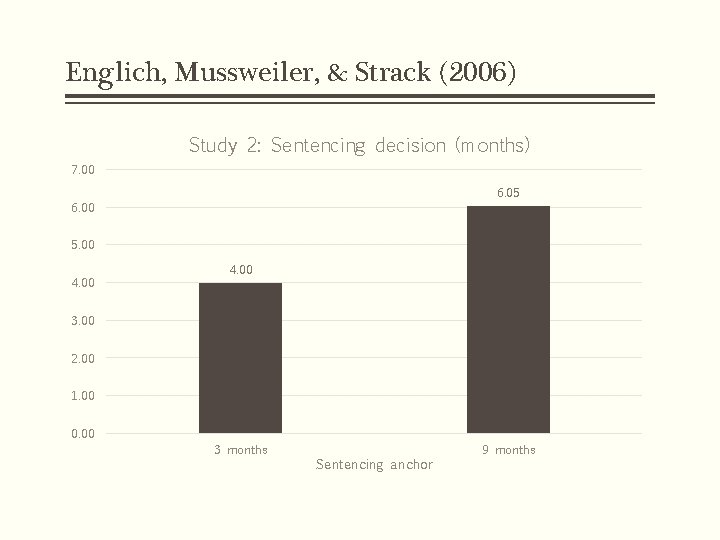
Englich, Mussweiler, & Strack (2006) § Study 2: When the anchor is blatantly random § Similar to Study 1 § 39 legal professionals § Instructions read: “For experimental purposes, the following prosecutor’s sentencing demand was randomly determined, therefore, it does not reflect any judicial expertise: The prosecutor demands as a sentence for the accused Lena M. [3 / 9] months on probation. Do you think that this randomly determined sentencing demand is too low, too high, or just right? ”
Englich, Mussweiler, & Strack (2006) Study 2: Sentencing decision (months) 7. 00 6. 05 6. 00 5. 00 4. 00 3. 00 2. 00 1. 00 0. 00 3 months Sentencing anchor 9 months
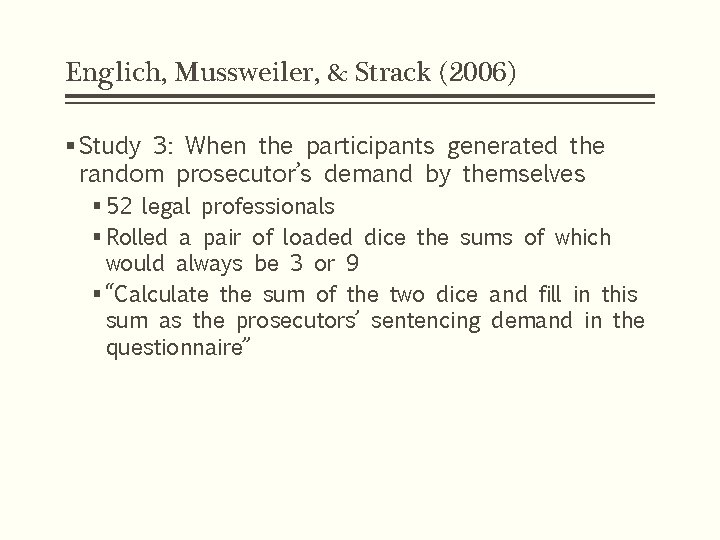
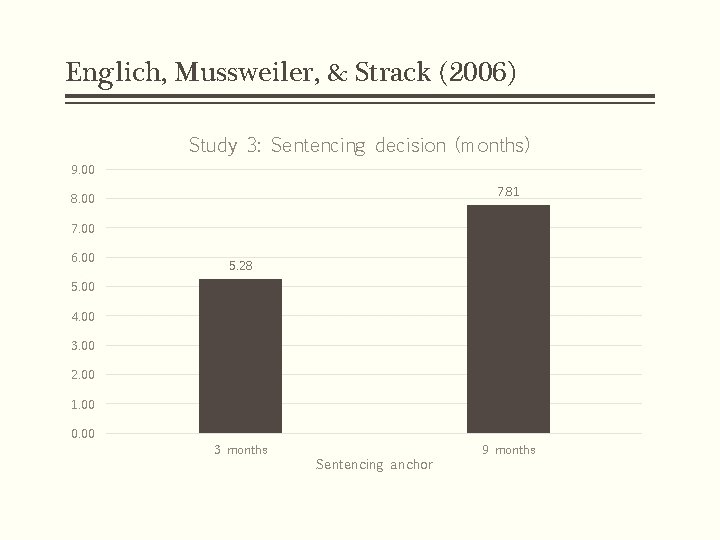
Englich, Mussweiler, & Strack (2006) § Study 3: When the participants generated the random prosecutor’s demand by themselves § 52 legal professionals § Rolled a pair of loaded dice the sums of which would always be 3 or 9 § “Calculate the sum of the two dice and fill in this sum as the prosecutors’ sentencing demand in the questionnaire”
Englich, Mussweiler, & Strack (2006) Study 3: Sentencing decision (months) 9. 00 7. 81 8. 00 7. 00 6. 00 5. 28 5. 00 4. 00 3. 00 2. 00 1. 00 0. 00 3 months Sentencing anchor 9 months
Englich, Mussweiler, & Strack (2006) § Shows how even well trained experts can be influenced by irrelevant anchors § Robustness of anchoring effects: It worked even when anchors were blatantly irrelevant and the experts knew it
ANCHORING ON OURSELVES
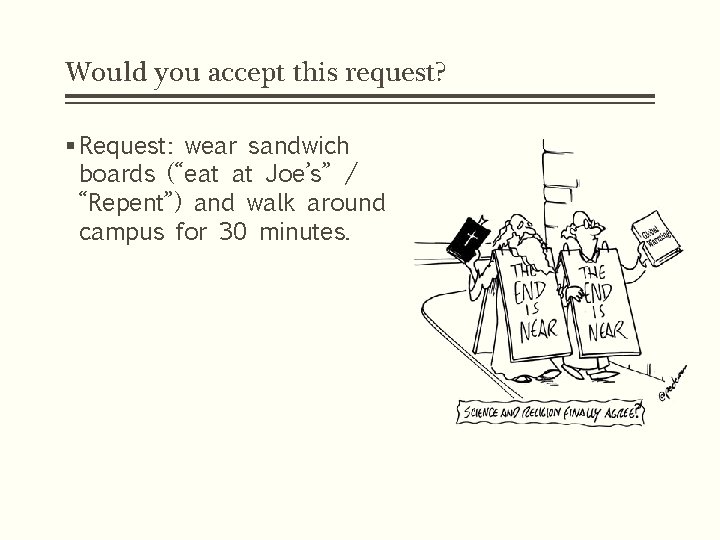
Would you accept this request? § Request: wear sandwich boards (“eat at Joe’s” / “Repent”) and walk around campus for 30 minutes.
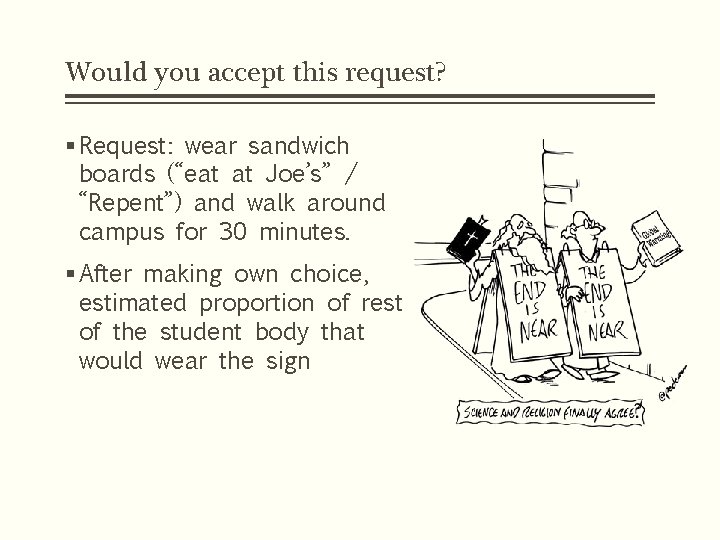
Would you accept this request? § Request: wear sandwich boards (“eat at Joe’s” / “Repent”) and walk around campus for 30 minutes. § After making own choice, estimated proportion of rest of the student body that would wear the sign
Anchoring on ourselves § Projection: When we make judgments about someone we do not know well, we often engage in an egocentric process § We “anchor” on our own attitude or behavior (or what we think we would do) and, if needed, adjust for aspects of the other person that are different from us or aspects of ourselves that we think are unusual.
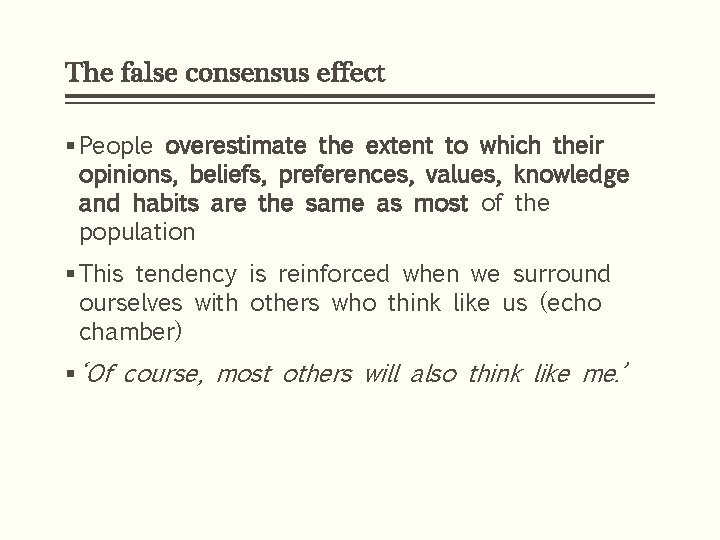
The false consensus effect § People overestimate the extent to which their opinions, beliefs, preferences, values, knowledge and habits are the same as most of the population § This tendency is reinforced when we surround ourselves with others who think like us (echo chamber) § ‘Of course, most others will also think like me. ’
The false consensus effect § A research example § Ross, Greene, & House (1977). The “false consensus effect”: An egocentric bias in social perception and attribution processes § Compared participants’ self-choice to comply with odd request by researcher with their estimates of consensus of others’ compliance
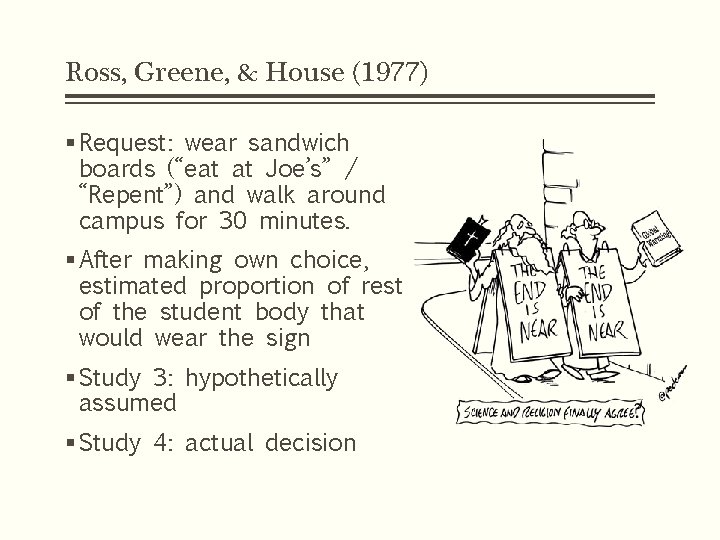
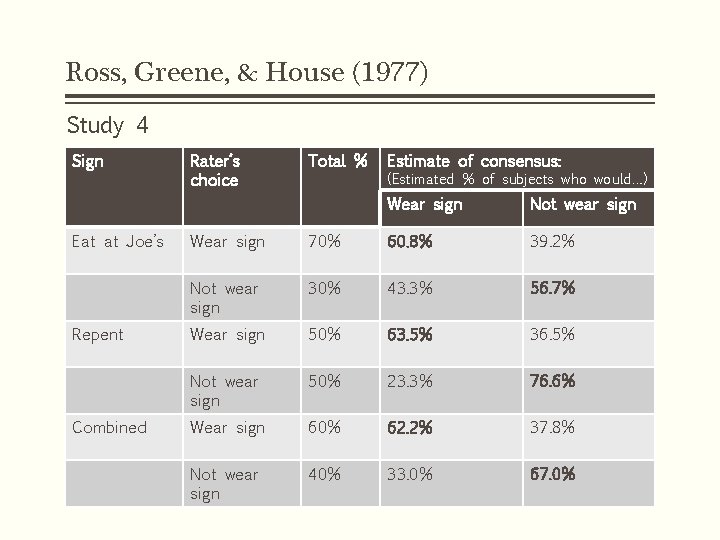
Ross, Greene, & House (1977) § Request: wear sandwich boards (“eat at Joe’s” / “Repent”) and walk around campus for 30 minutes. § After making own choice, estimated proportion of rest of the student body that would wear the sign § Study 3: hypothetically assumed § Study 4: actual decision
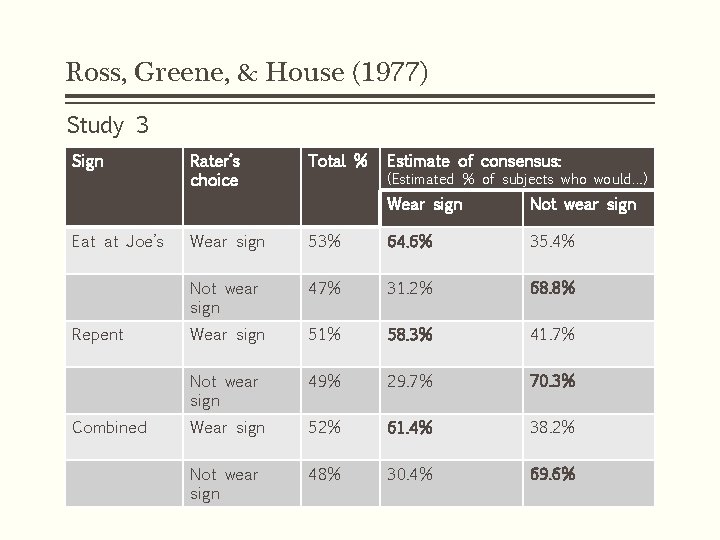
Ross, Greene, & House (1977) Study 3 Sign Eat at Joe’s Repent Combined Rater’s choice Total % Estimate of consensus: (Estimated % of subjects who would…) Wear sign Not wear sign Wear sign 53% 64. 6% 35. 4% Not wear sign 47% 31. 2% 68. 8% Wear sign 51% 58. 3% 41. 7% Not wear sign 49% 29. 7% 70. 3% Wear sign 52% 61. 4% 38. 2% Not wear sign 48% 30. 4% 69. 6%
Ross, Greene, & House (1977) Study 4 Sign Eat at Joe’s Repent Combined Rater’s choice Total % Estimate of consensus: (Estimated % of subjects who would…) Wear sign Not wear sign Wear sign 70% 60. 8% 39. 2% Not wear sign 30% 43. 3% 56. 7% Wear sign 50% 63. 5% 36. 5% Not wear sign 50% 23. 3% 76. 6% Wear sign 60% 62. 2% 37. 8% Not wear sign 40% 33. 0% 67. 0%
Ross, Greene, & House (1977) § False consensus effect: Overall, participants believed that their own choice represented the majority preference
WHY DOES ANCHORING HAPPEN?
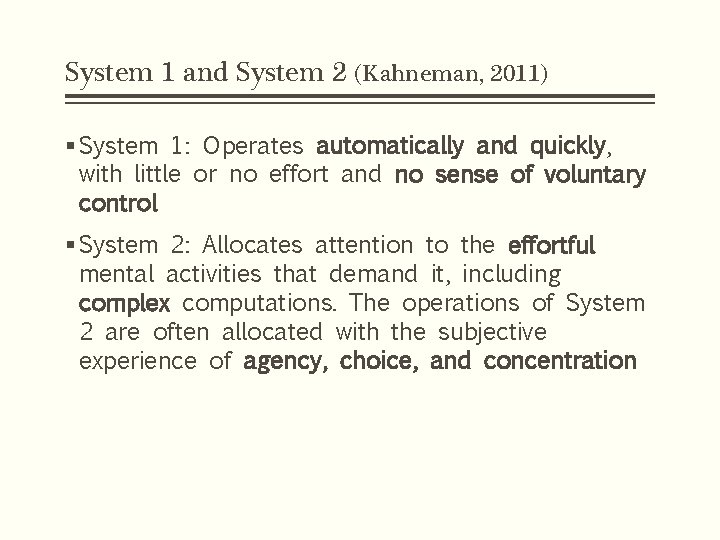
System 1 and System 2 (Kahneman, 2011) § System 1: Operates automatically and quickly, with little or no effort and no sense of voluntary control § System 2: Allocates attention to the effortful mental activities that demand it, including complex computations. The operations of System 2 are often allocated with the subjective experience of agency, choice, and concentration
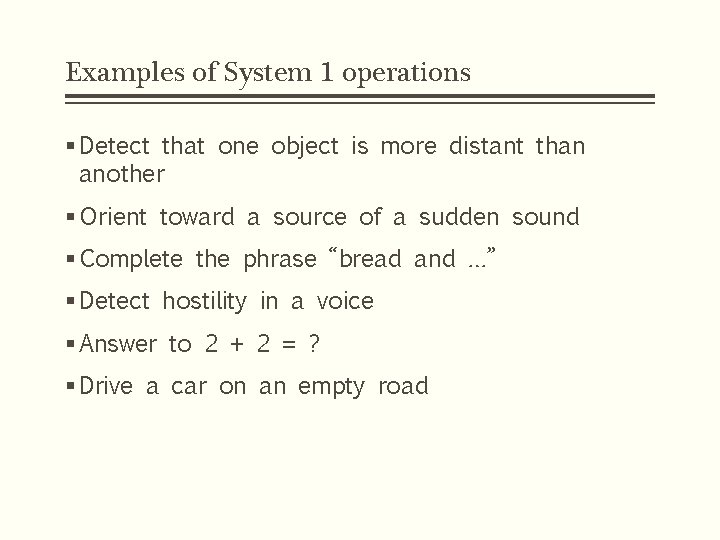
Examples of System 1 operations § Detect that one object is more distant than another § Orient toward a source of a sudden sound § Complete the phrase “bread and …” § Detect hostility in a voice § Answer to 2 + 2 = ? § Drive a car on an empty road
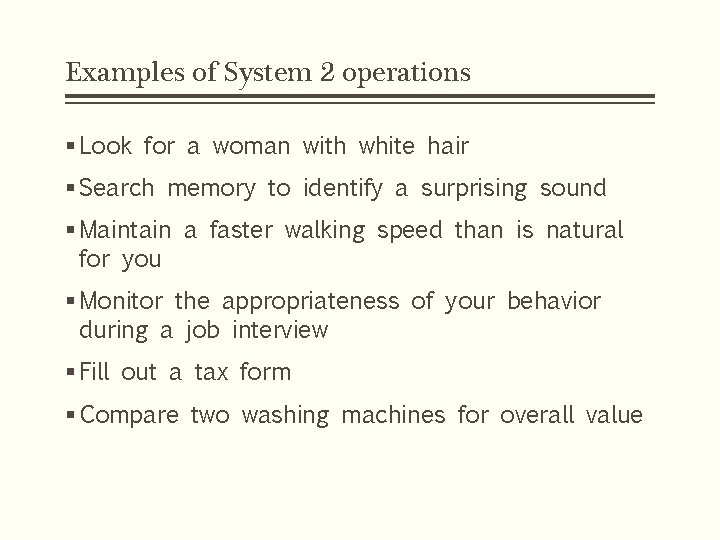
Examples of System 2 operations § Look for a woman with white hair § Search memory to identify a surprising sound § Maintain a faster walking speed than is natural for you § Monitor the appropriateness of your behavior during a job interview § Fill out a tax form § Compare two washing machines for overall value
Why anchoring happens § Deliberate process (System 2): Insufficient adjustment § Non-deliberate processes (System 1)
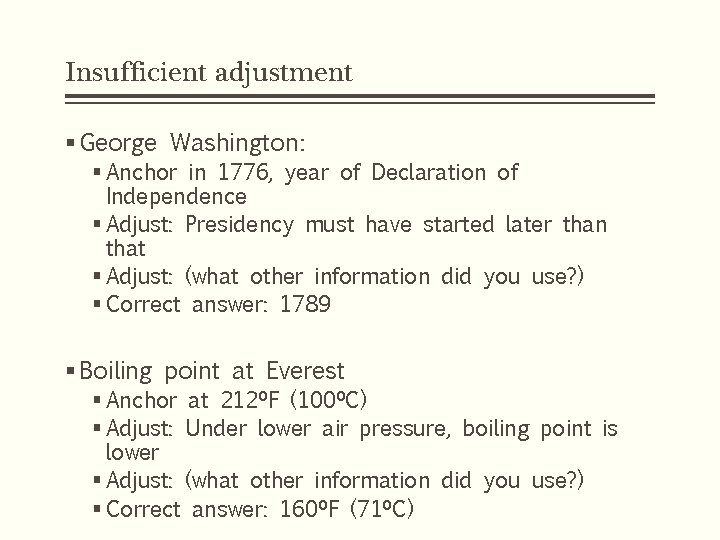
Insufficient adjustment § Start from an anchoring number § Assess whether it is too high or too low § Gradually adjust our estimate by mentally moving from the anchor § However, this adjustment is often insufficient
Insufficient adjustment § Answer the following questions: § When did George Washington become president? § What is the boiling temperature of water at the top of Mount Everest?
Insufficient adjustment § George Washington: § Anchor in 1776, year of Declaration of Independence § Adjust: Presidency must have started later than that § Adjust: (what other information did you use? ) § Correct answer: 1789 § Boiling point at Everest § Anchor at 212ºF (100ºC) § Adjust: Under lower air pressure, boiling point is lower § Adjust: (what other information did you use? ) § Correct answer: 160ºF (71ºC)
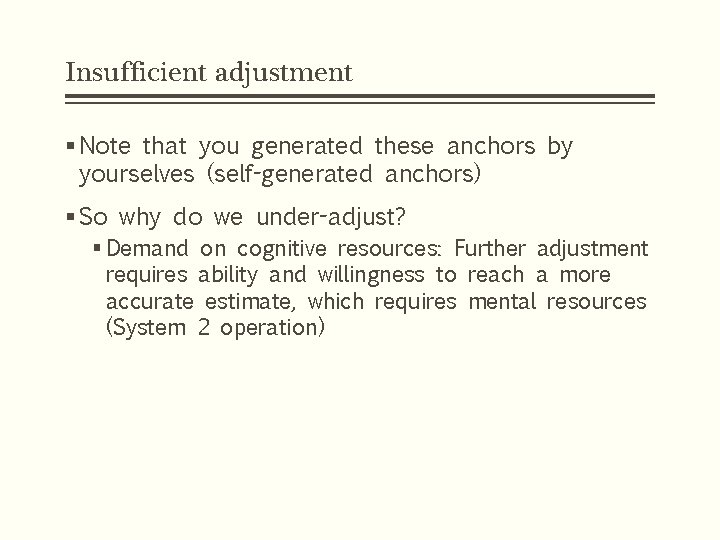
Insufficient adjustment § Note that you generated these anchors by yourselves (self-generated anchors) § So why do we under-adjust? § Demand on cognitive resources: Further adjustment requires ability and willingness to reach a more accurate estimate, which requires mental resources (System 2 operation)
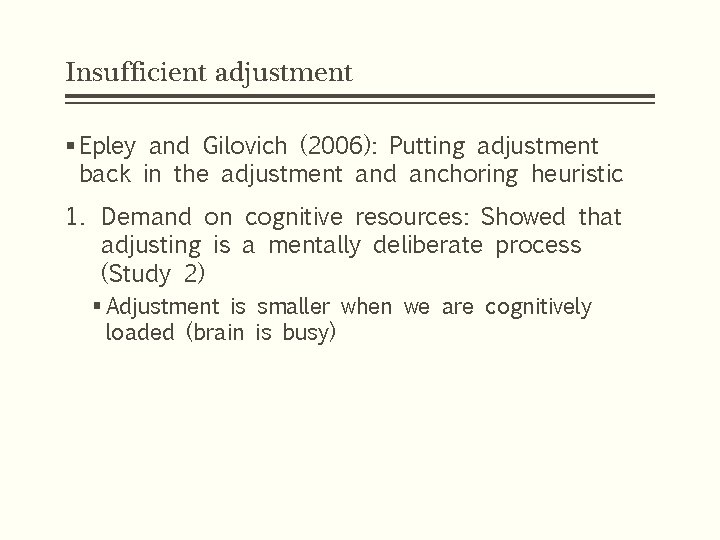
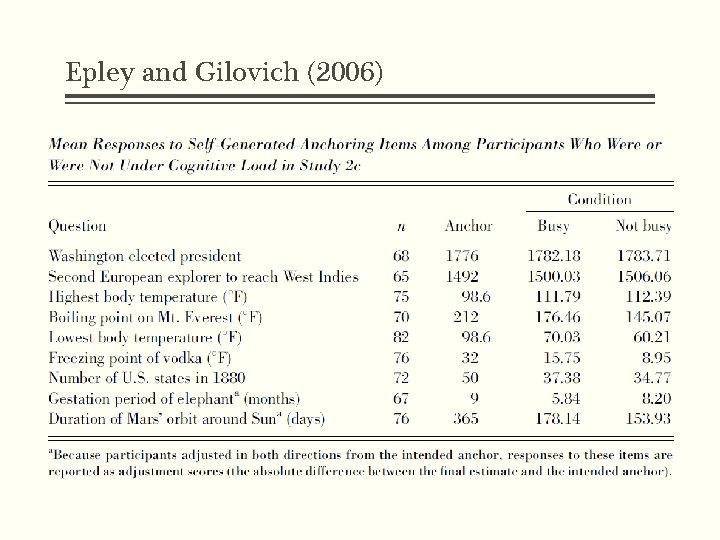
Insufficient adjustment § Epley and Gilovich (2006): Putting adjustment back in the adjustment and anchoring heuristic 1. Demand on cognitive resources: Showed that adjusting is a mentally deliberate process (Study 2) § Adjustment is smaller when we are cognitively loaded (brain is busy)
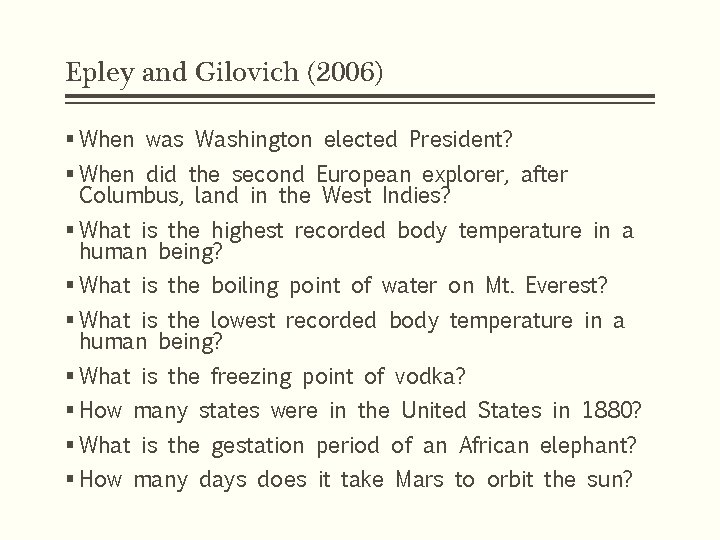
Epley and Gilovich (2006) § When was Washington elected President? § When did the second European explorer, after Columbus, land in the West Indies? § What is the highest recorded body temperature in a human being? § What is the boiling point of water on Mt. Everest? § What is the lowest recorded body temperature in a human being? § What is the freezing point of vodka? § How many states were in the United States in 1880? § What is the gestation period of an African elephant? § How many days does it take Mars to orbit the sun?
Epley and Gilovich (2006) Study 2 § 94 undergraduate students § Answered self-generated anchoring questions embedded in larger questionnaire § Half were randomly assigned to be made cognitively busy by having to memorize 8 -letter string presented before each question EIRVQKTF Try holding that in memory while: 112 × 86
Epley and Gilovich (2006)
Epley and Gilovich (2006) § Study 2: We adjust less when we are cognitively loaded § Best explains anchoring when anchors are selfgenerated rather than given by experimenter