Jan 29 2020 Shin Inouye Osaka City Univeristy
- Slides: 46
合同セミナー, Jan. 29, 2020 冷却原子における散乱 Shin Inouye Osaka City Univeristy 1
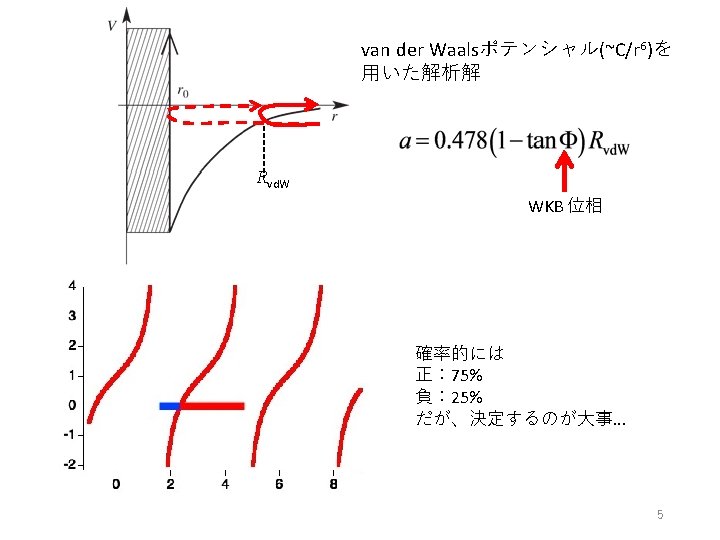
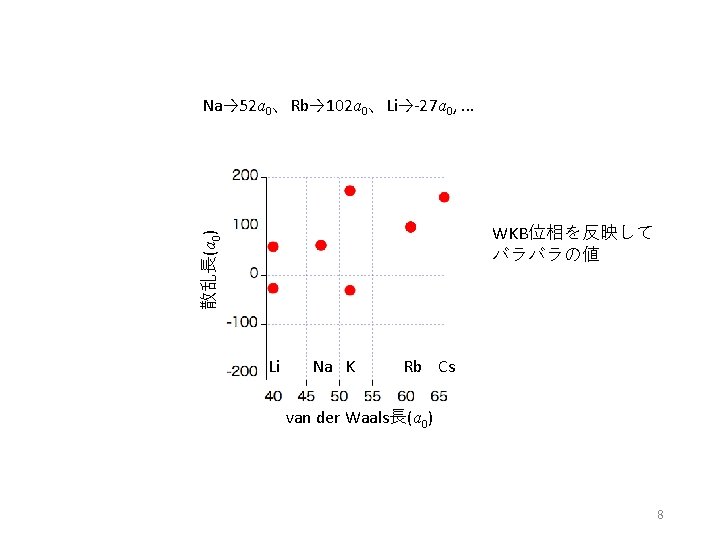
Na→ 52 a 0、Rb→ 102 a 0、Li→-27 a 0, . . . 散乱長(a 0) WKB位相を反映して バラバラの値 Li Na K Rb Cs van der Waals長(a 0) 8
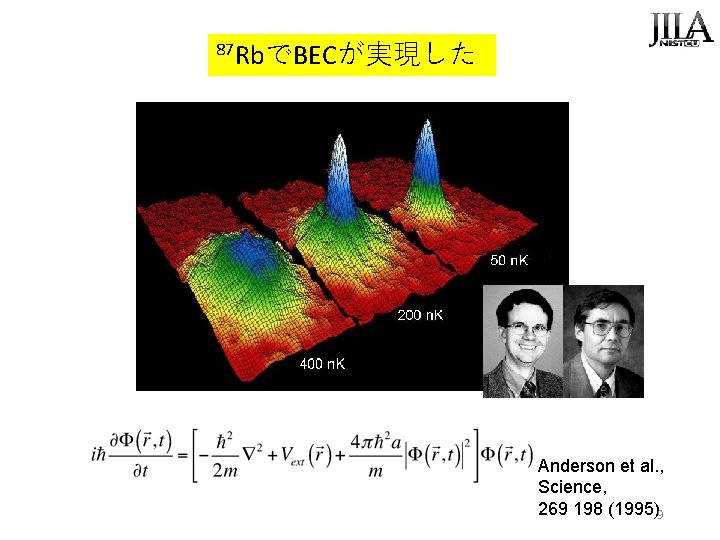
87 RbでBECが実現した Anderson et al. , Science, 269 198 (1995)9
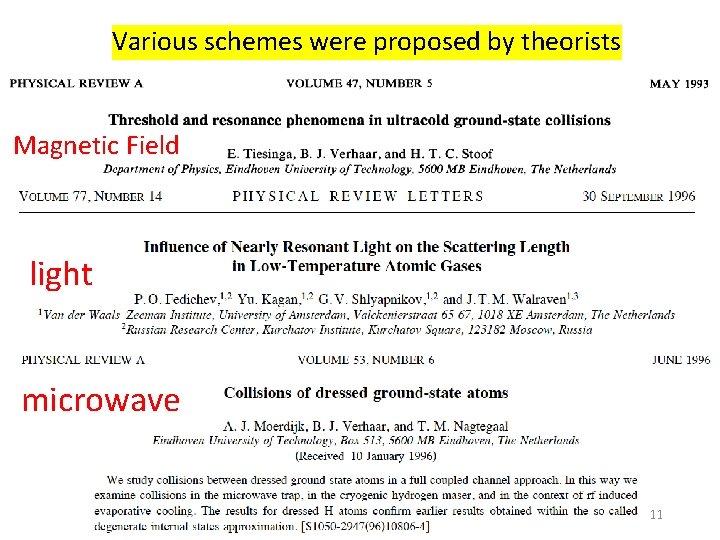
Various schemes were proposed by theorists Magnetic Field RF light microwave 11
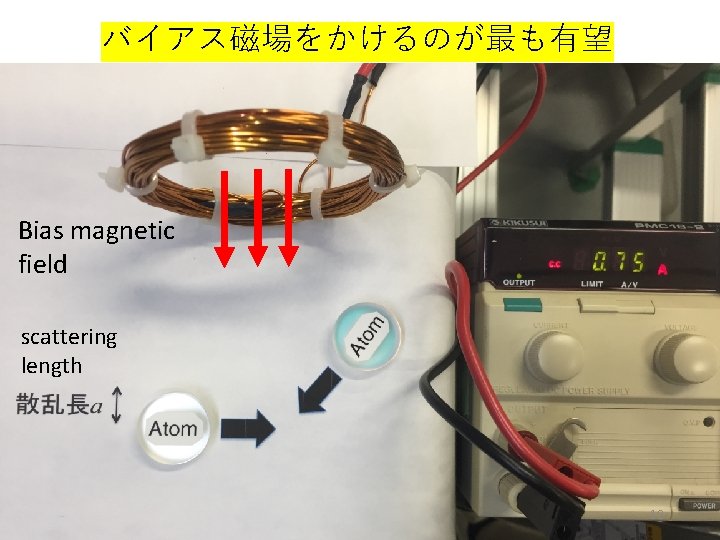
バイアス磁場をかけるのが最も有望 Bias magnetic field scattering length 12
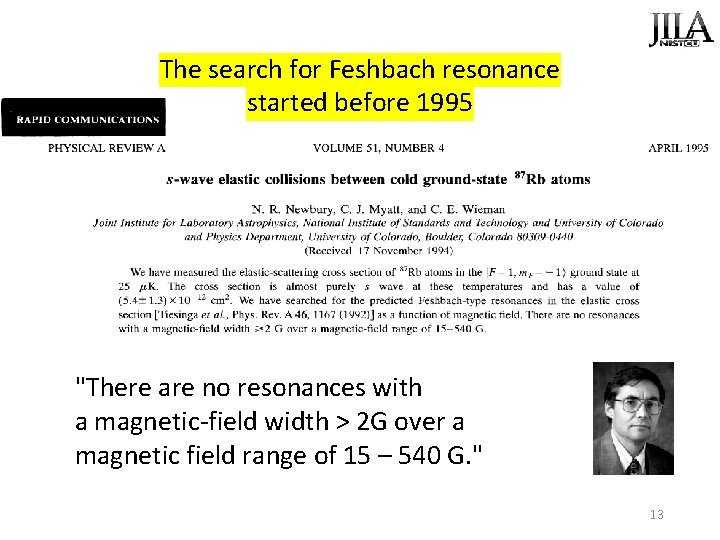
The search for Feshbach resonance started before 1995 "There are no resonances with a magnetic-field width > 2 G over a magnetic field range of 15 – 540 G. " 13
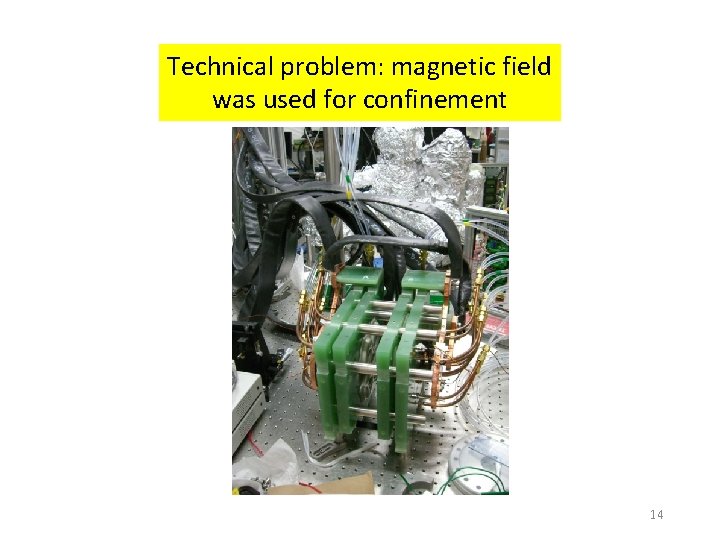
Technical problem: magnetic field was used for confinement 14
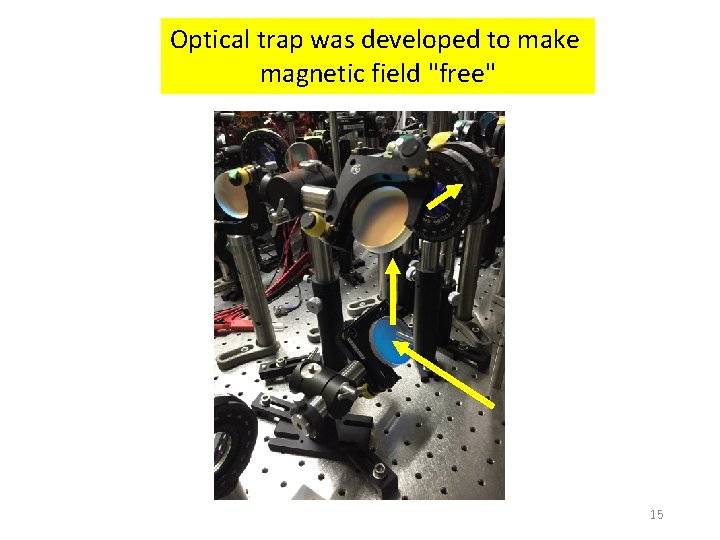
Optical trap was developed to make magnetic field "free" 15
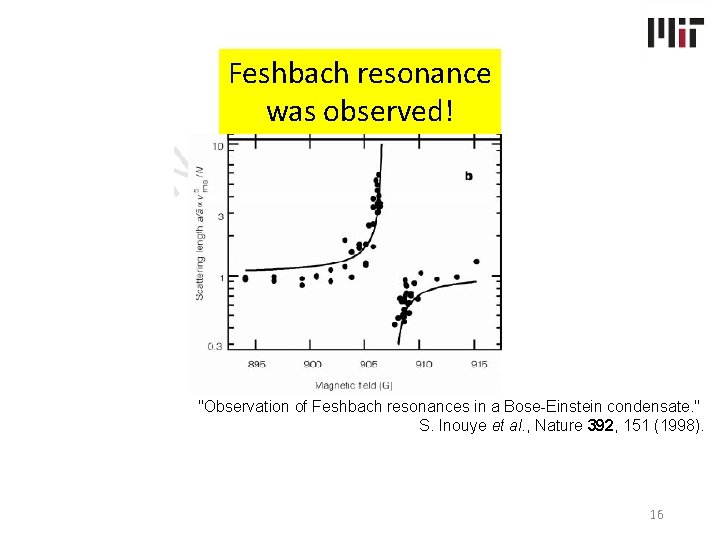
Feshbach resonance was observed! "Observation of Feshbach resonances in a Bose-Einstein condensate. " S. Inouye et al. , Nature 392, 151 (1998). 16
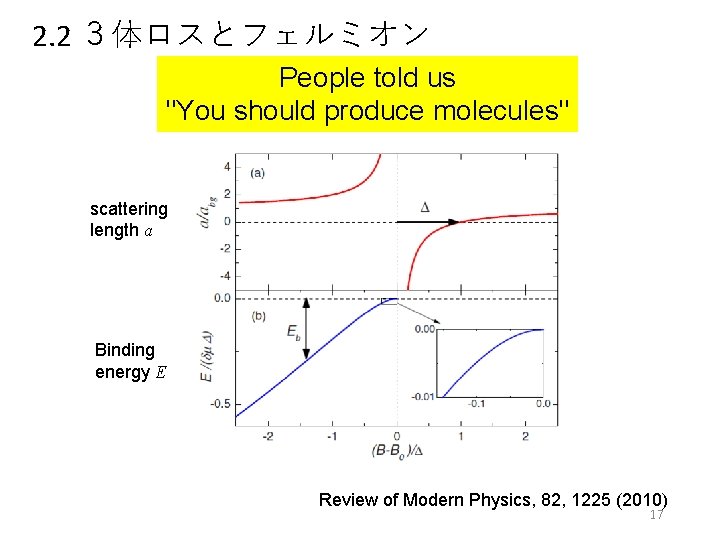
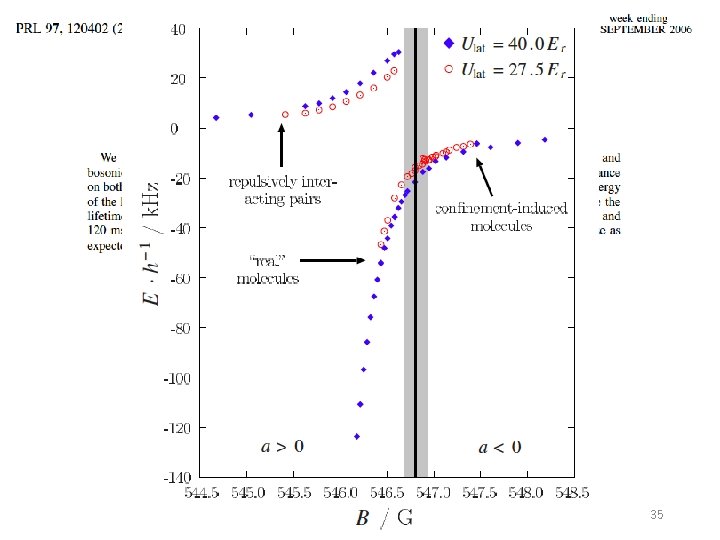
2. 2 3体ロスとフェルミオン People told us "You should produce molecules" scattering length a Binding energy E Review of Modern Physics, 82, 1225 (2010) 17
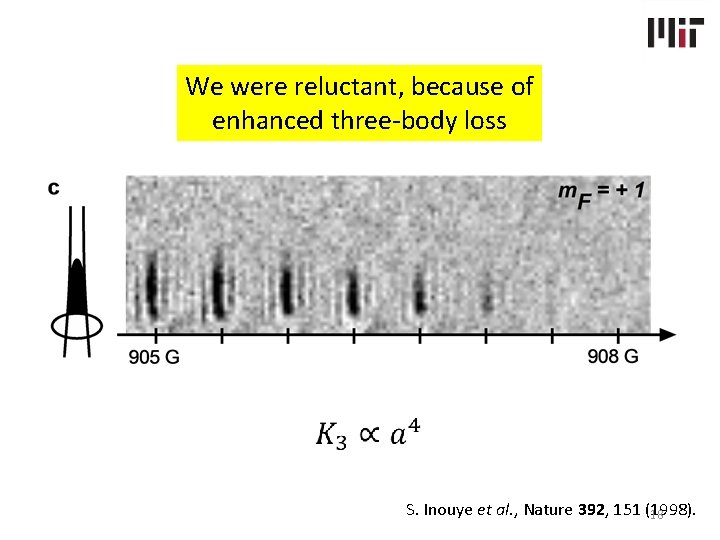
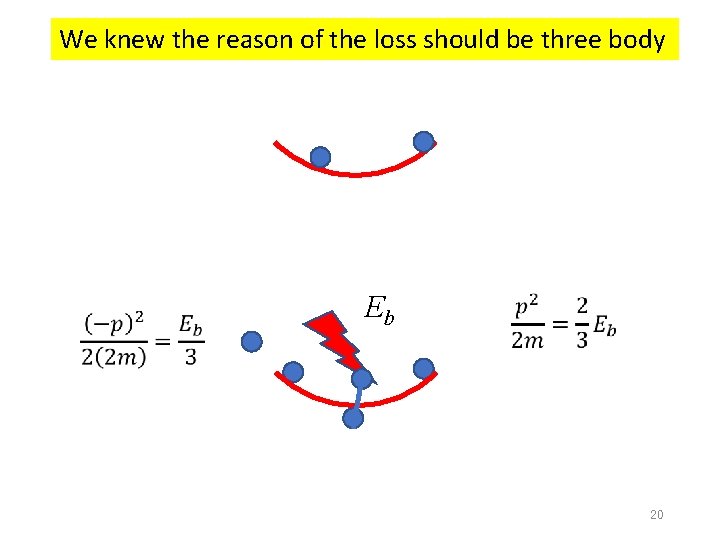
We were reluctant, because of enhanced three-body loss S. Inouye et al. , Nature 392, 151 (1998). 18
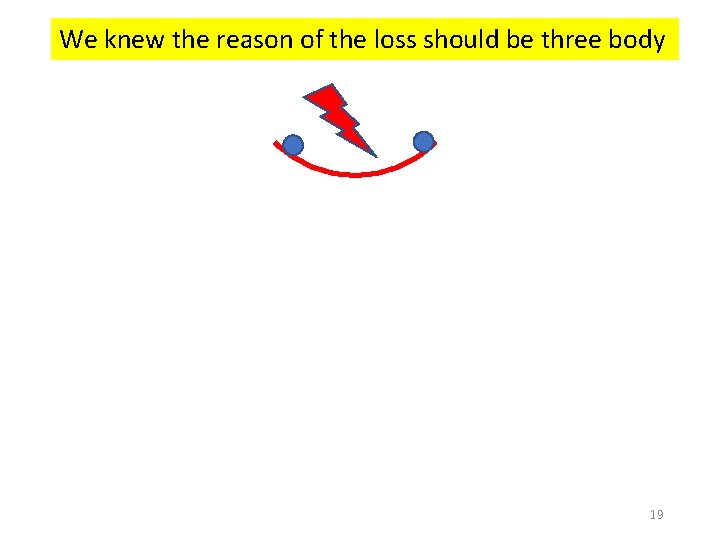
We knew the reason of the loss should be three body 19
We knew the reason of the loss should be three body Eb 20
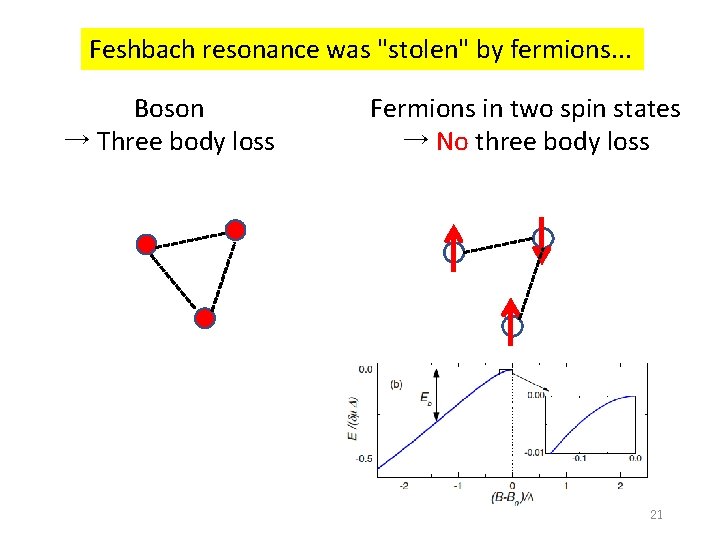
Feshbach resonance was "stolen" by fermions. . . Boson → Three body loss Fermions in two spin states → No three body loss 21
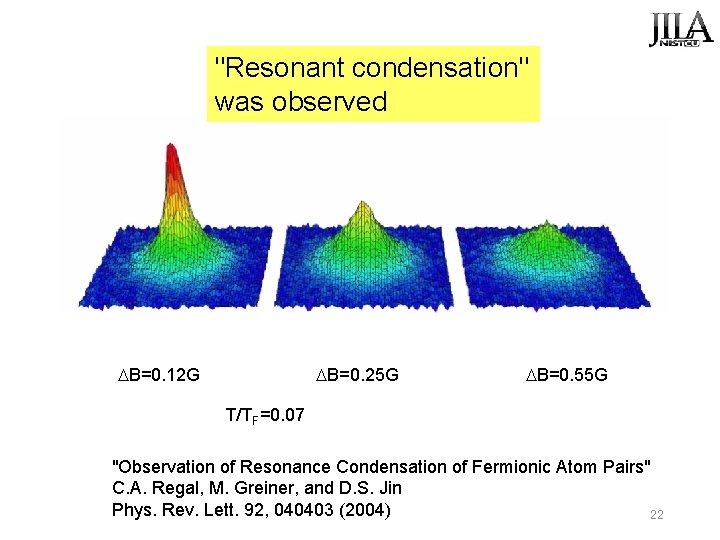
"Resonant condensation" was observed DB=0. 12 G DB=0. 25 G DB=0. 55 G T/TF=0. 07 "Observation of Resonance Condensation of Fermionic Atom Pairs" C. A. Regal, M. Greiner, and D. S. Jin Phys. Rev. Lett. 92, 040403 (2004) 22
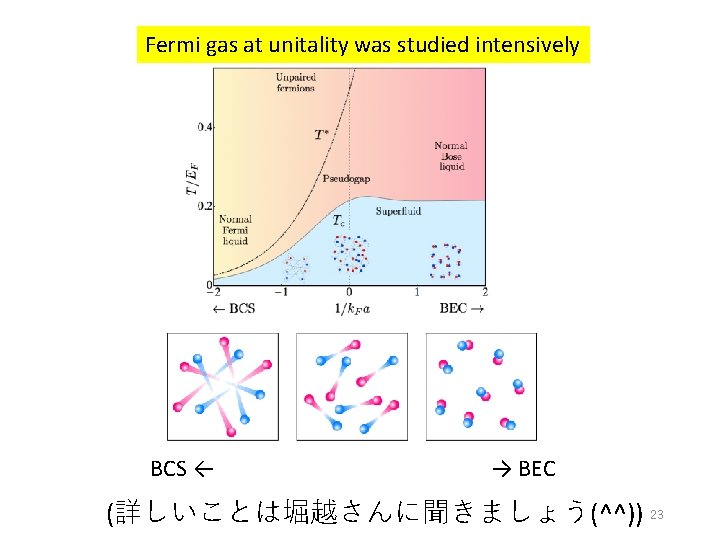
Fermi gas at unitality was studied intensively BCS ← → BEC (詳しいことは堀越さんに聞きましょう(^^)) 23
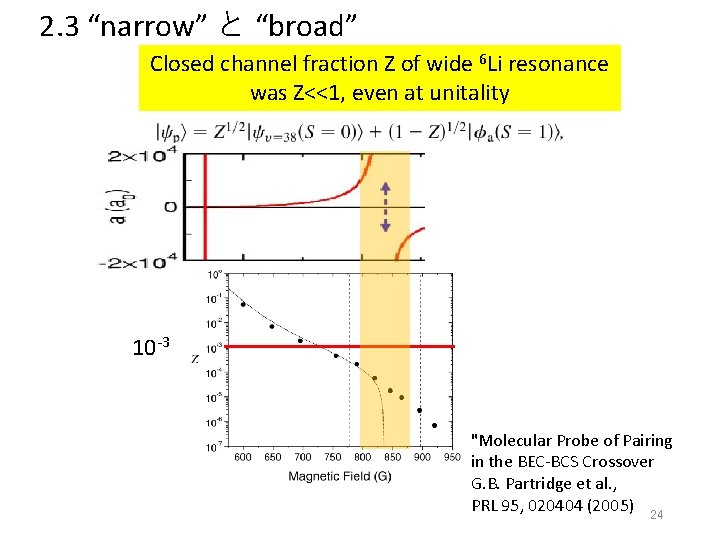
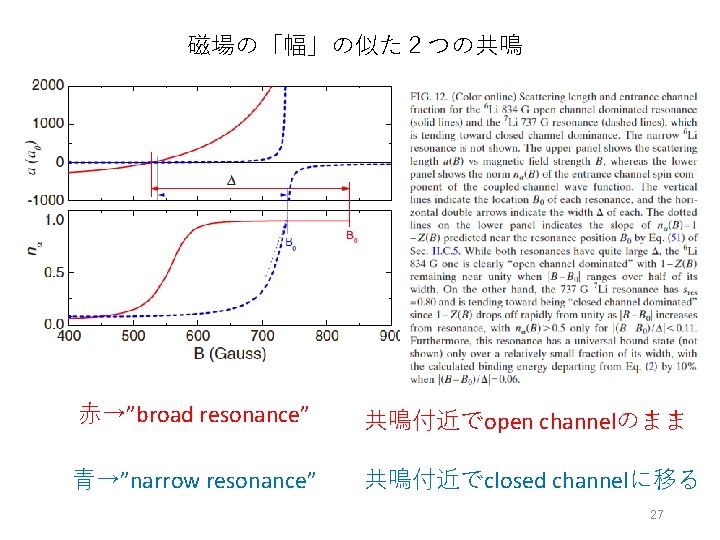
2. 3 “narrow” と “broad” Closed channel fraction Z of wide 6 Li resonance was Z<<1, even at unitality 10 -3 "Molecular Probe of Pairing in the BEC-BCS Crossover G. B. Partridge et al. , PRL 95, 020404 (2005) 24
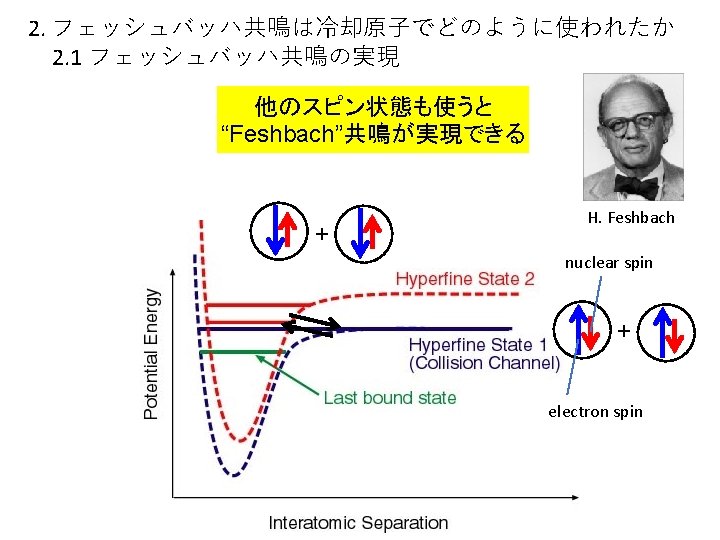
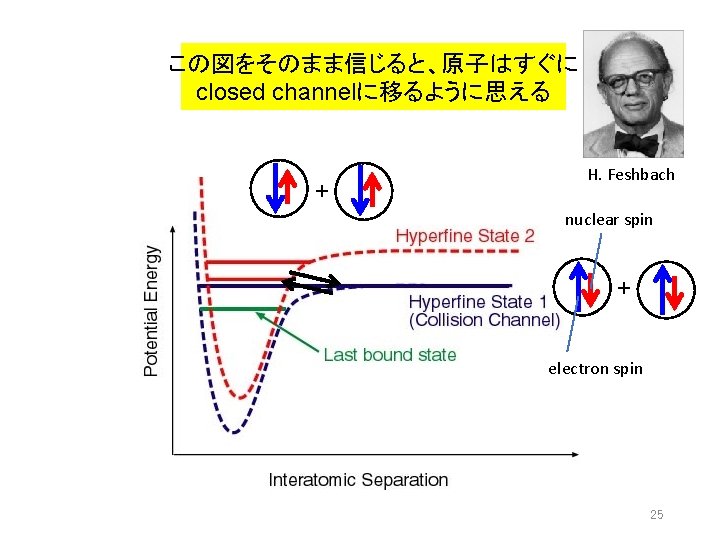
この図をそのまま信じると、原子はすぐに closed channelに移るように思える + H. Feshbach nuclear spin + electron spin 25
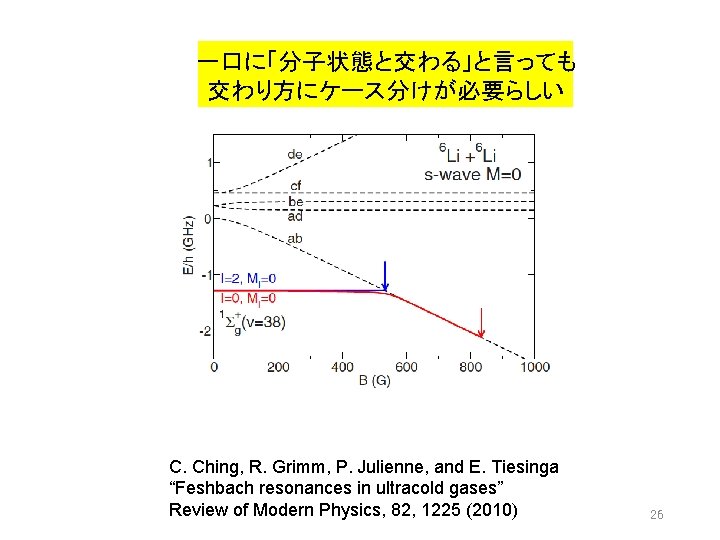
一口に「分子状態と交わる」と言っても 交わり方にケース分けが必要らしい C. Ching, R. Grimm, P. Julienne, and E. Tiesinga “Feshbach resonances in ultracold gases” Review of Modern Physics, 82, 1225 (2010) 26
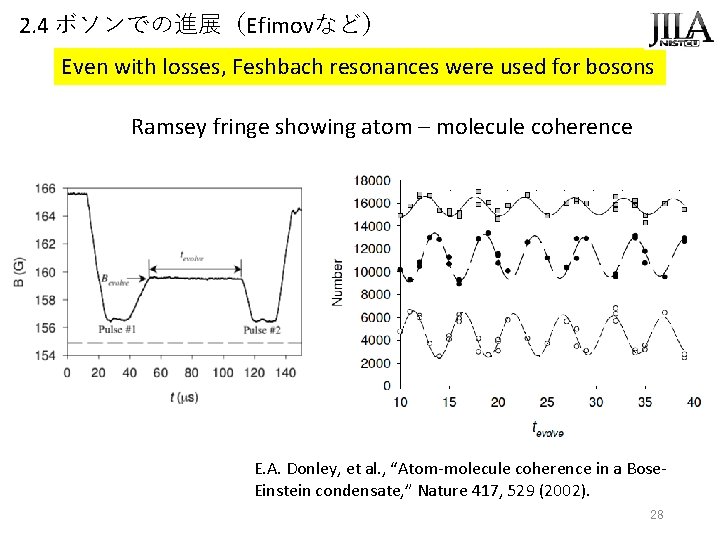
2. 4 ボソンでの進展(Efimovなど) Even with losses, Feshbach resonances were used for bosons Ramsey fringe showing atom – molecule coherence E. A. Donley, et al. , “Atom-molecule coherence in a Bose. Einstein condensate, ” Nature 417, 529 (2002). 28
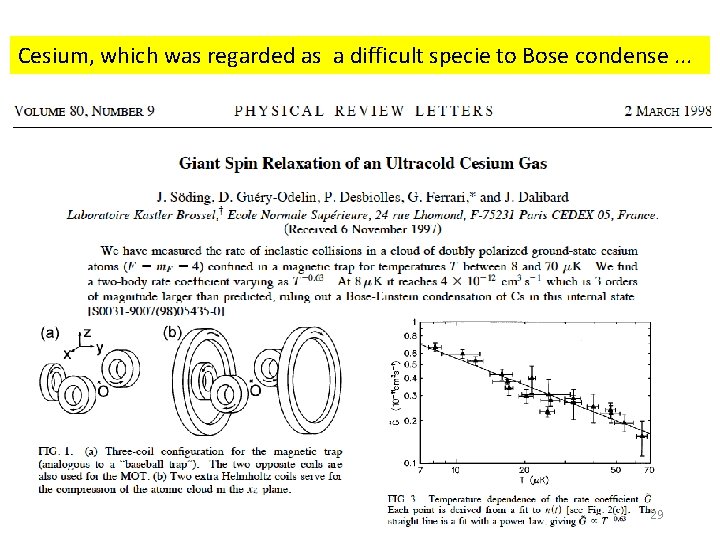
Cesium, which was regarded as a difficult specie to Bose condense. . . 29
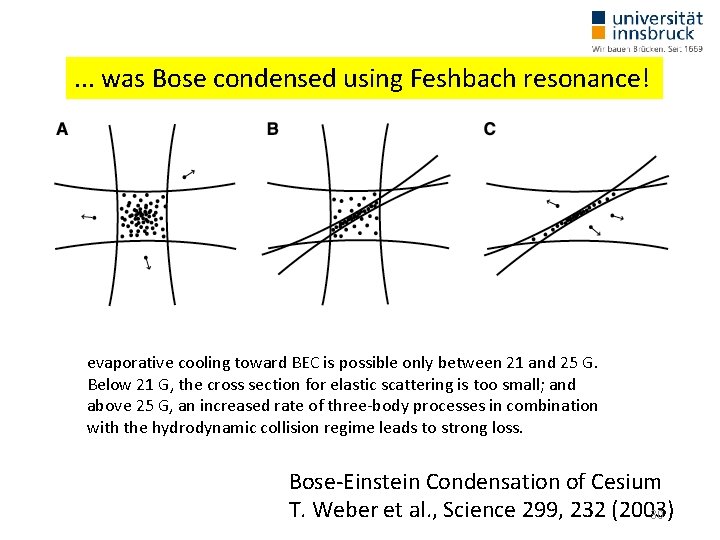
. . . was Bose condensed using Feshbach resonance! evaporative cooling toward BEC is possible only between 21 and 25 G. Below 21 G, the cross section for elastic scattering is too small; and above 25 G, an increased rate of three-body processes in combination with the hydrodynamic collision regime leads to strong loss. Bose-Einstein Condensation of Cesium T. Weber et al. , Science 299, 232 (2003) 30
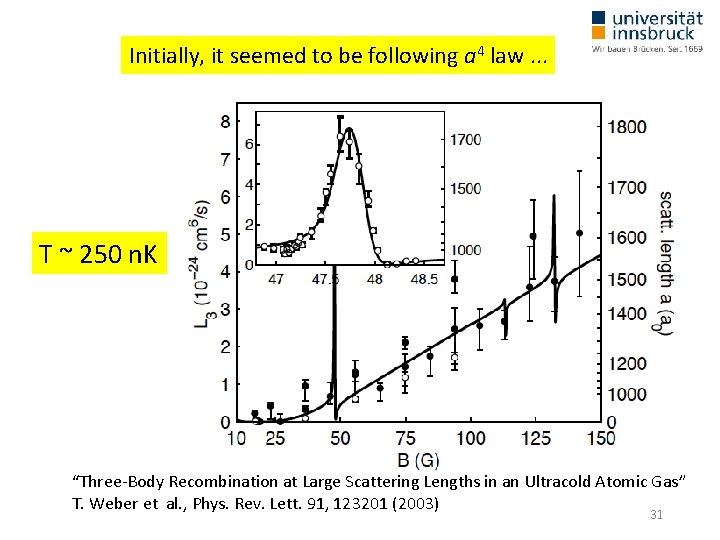
Initially, it seemed to be following a 4 law. . . T ~ 250 n. K “Three-Body Recombination at Large Scattering Lengths in an Ultracold Atomic Gas” T. Weber et al. , Phys. Rev. Lett. 91, 123201 (2003) 31
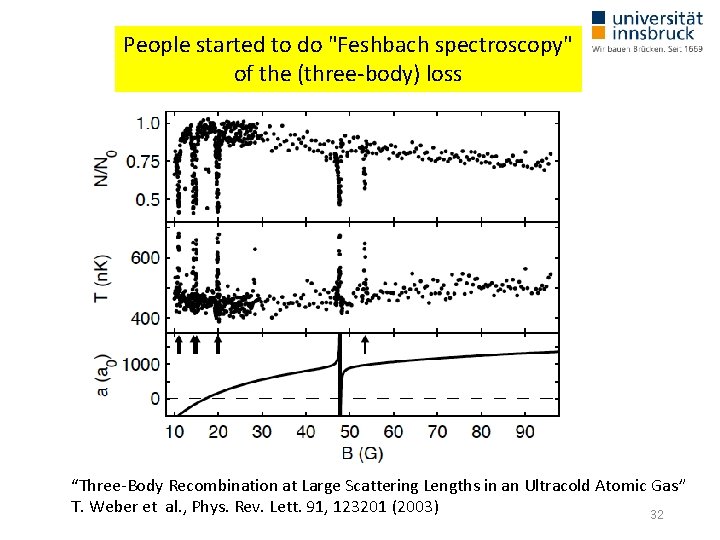
People started to do "Feshbach spectroscopy" of the (three-body) loss “Three-Body Recombination at Large Scattering Lengths in an Ultracold Atomic Gas” T. Weber et al. , Phys. Rev. Lett. 91, 123201 (2003) 32
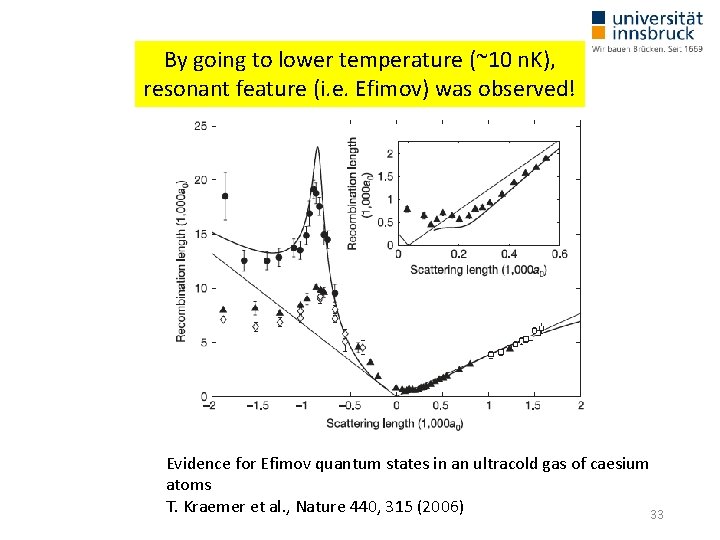
By going to lower temperature (~10 n. K), resonant feature (i. e. Efimov) was observed! Evidence for Efimov quantum states in an ultracold gas of caesium atoms T. Kraemer et al. , Nature 440, 315 (2006) 33
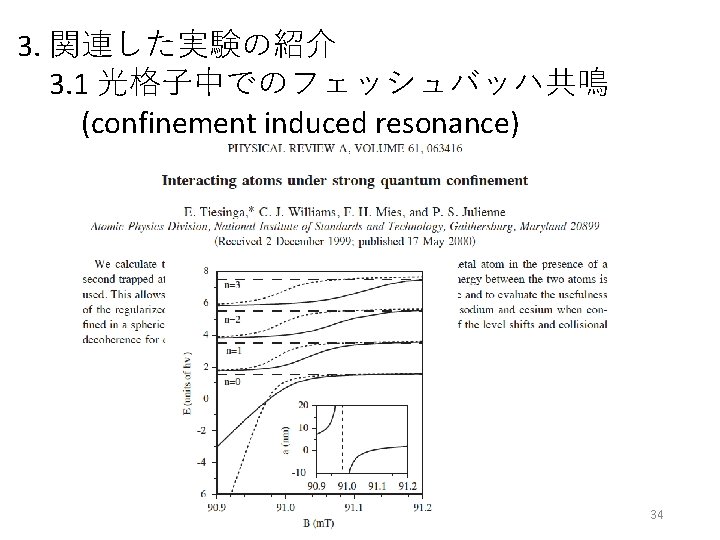
35
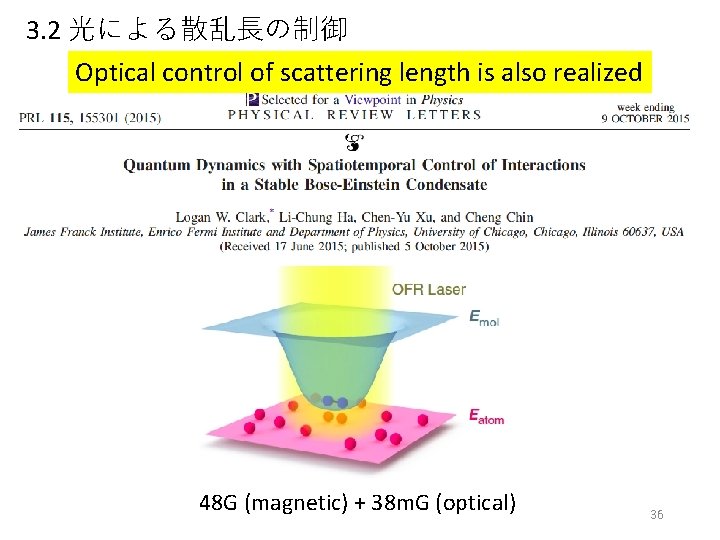
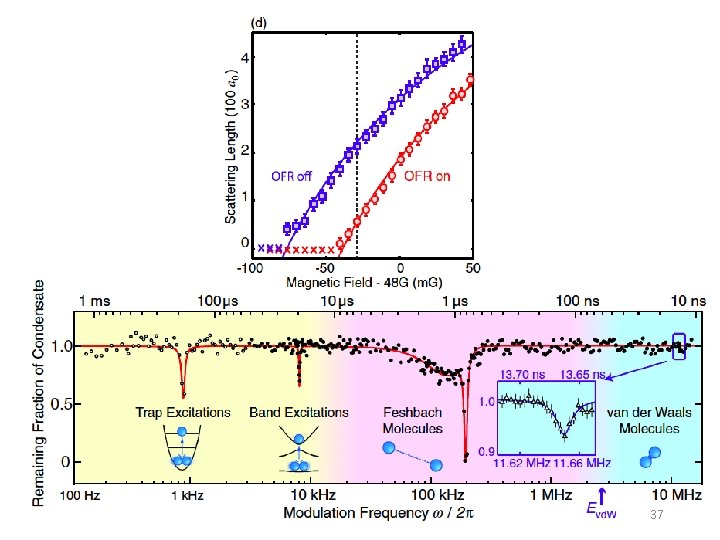
3. 2 光による散乱長の制御 Optical control of scattering length is also realized 48 G (magnetic) + 38 m. G (optical) 36
37
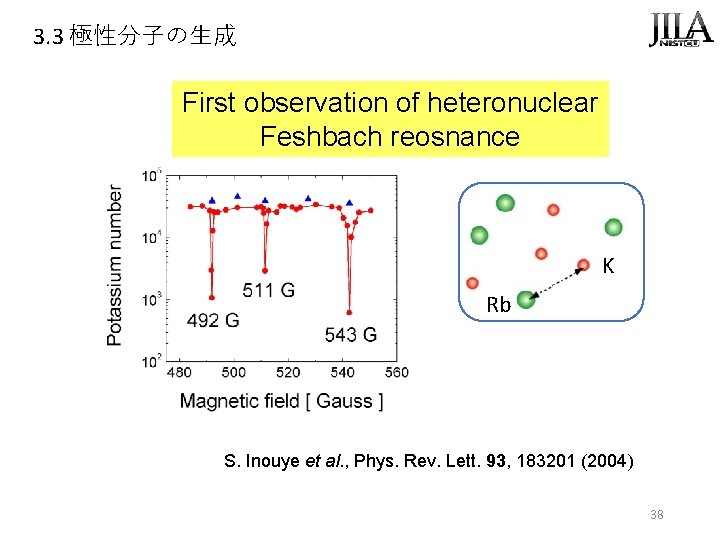
3. 3 極性分子の生成 First observation of heteronuclear Feshbach reosnance K Rb S. Inouye et al. , Phys. Rev. Lett. 93, 183201 (2004) 38
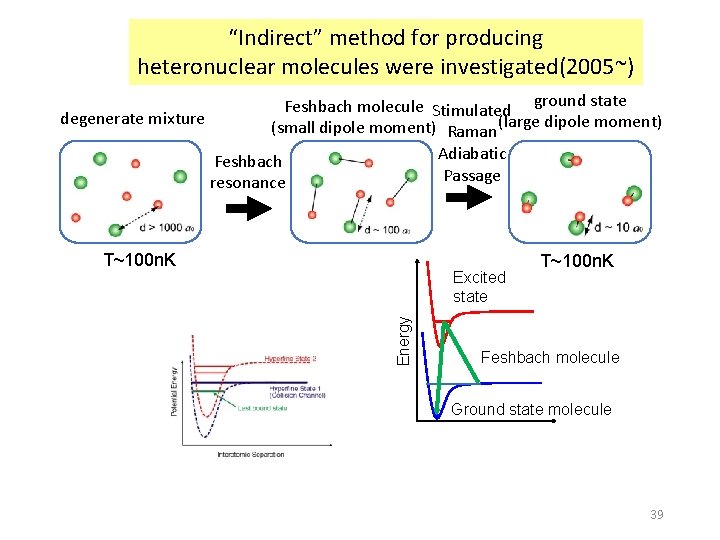
“Indirect” method for producing heteronuclear molecules were investigated(2005~) Feshbach molecule Stimulated ground state degenerate mixture (small dipole moment) Raman (large dipole moment) Adiabatic Feshbach Passage resonance T~100 n. K Energy Excited state T~100 n. K Feshbach molecule Ground state molecule 39
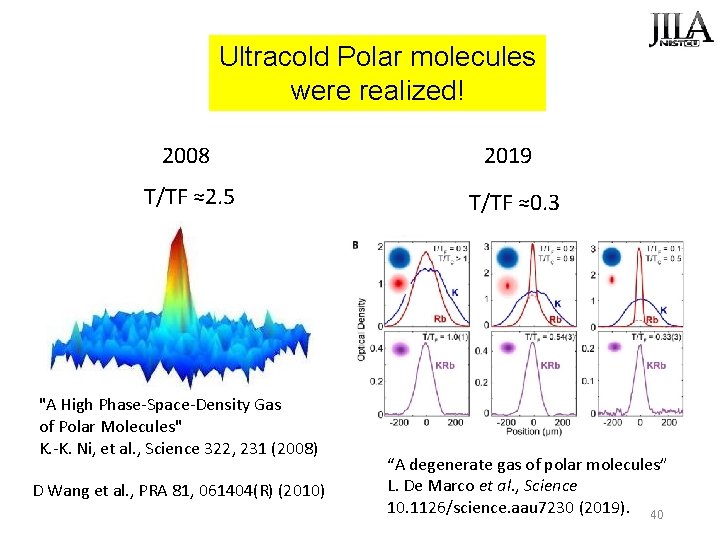
Ultracold Polar molecules were realized! 2008 2019 T/TF ≈2. 5 T/TF ≈0. 3 "A High Phase-Space-Density Gas of Polar Molecules" K. -K. Ni, et al. , Science 322, 231 (2008) D Wang et al. , PRA 81, 061404(R) (2010) “A degenerate gas of polar molecules” L. De Marco et al. , Science 10. 1126/science. aau 7230 (2019). 40
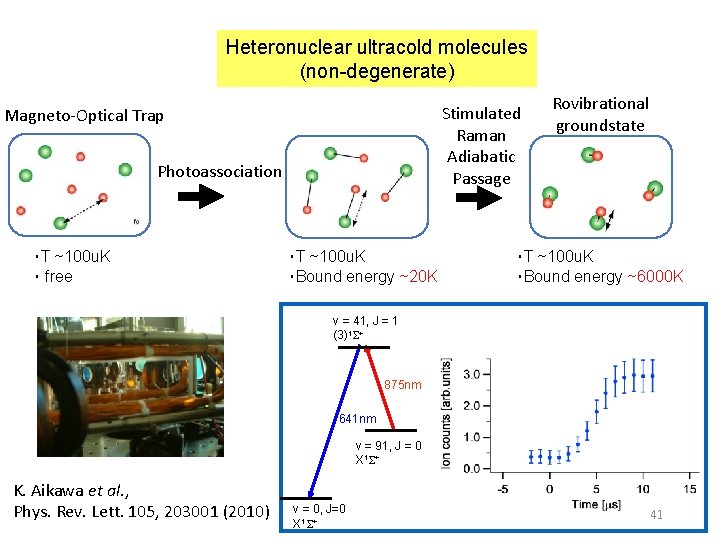
Heteronuclear ultracold molecules (non-degenerate) Stimulated Raman Adiabatic Passage Magneto-Optical Trap Photoassociation ・T ~100 u. K ・ free ・T ~100 u. K ・Bound energy ~20 K Rovibrational groundstate ・T ~100 u. K ・Bound energy ~6000 K v = 41, J = 1 (3)1 S+ 875 nm 641 nm v = 91, J = 0 X 1 S+ K. Aikawa et al. , Phys. Rev. Lett. 105, 203001 (2010) v = 0, J=0 X 1 S+ 41
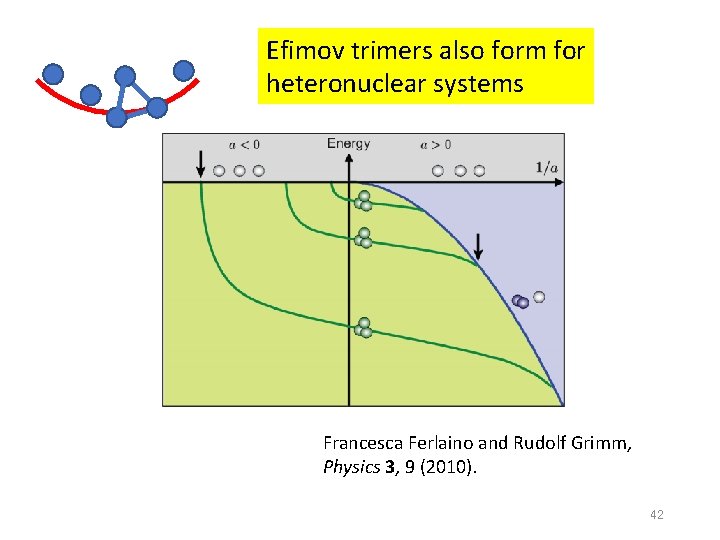
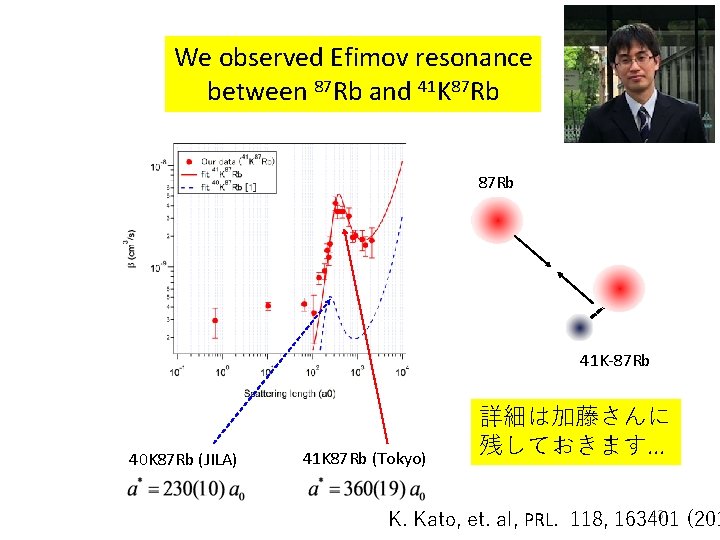
Efimov trimers also form for heteronuclear systems Francesca Ferlaino and Rudolf Grimm, Physics 3, 9 (2010). 42
We observed Efimov resonance between 87 Rb and 41 K 87 Rb 41 K-87 Rb 40 K 87 Rb (JILA) 41 K 87 Rb (Tokyo) 詳細は加藤さんに 残しておきます. . . 43 K. Kato, et. al, PRL. 118, 163401 (201
45