Introduction to Water Supply Harsha Ratnaweera Professor Norwegian
- Slides: 30
Introduction to Water Supply Harsha Ratnaweera Professor, Norwegian University of Life Sciences Victor Gevod Dr. Chem. Sci. , Ukraine State University of Chemical Technology
Learning targets § Overview of the challenges and requirements related to water supply at present and in the future § Knowledge about the historical development of modern water supply, and of the treatment processes applied nowadays § Awareness of the expectations of the consumers and the conclusions derived from there § Attracting attention for the importance of disinfection and the role of corrosion in distribution systems Water Supply: Introduction 2
Outline - Present status - The challenges - History of water treatment - Requirement and goals - Overview of processes and equipment - Disinfection - Corrosion control - Distribution systems Water Supply: Introduction 3
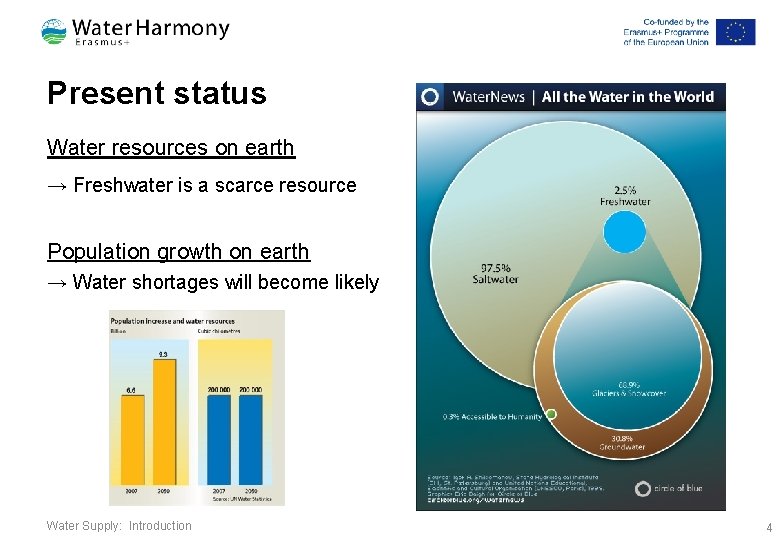
Present status Water resources on earth → Freshwater is a scarce resource Population growth on earth → Water shortages will become likely Water Supply: Introduction 4
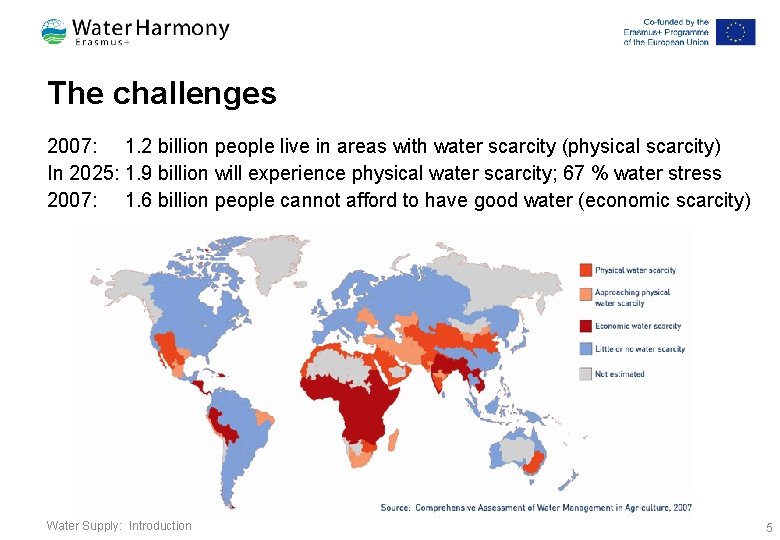
The challenges 2007: 1. 2 billion people live in areas with water scarcity (physical scarcity) In 2025: 1. 9 billion will experience physical water scarcity; 67 % water stress 2007: 1. 6 billion people cannot afford to have good water (economic scarcity) Water Supply: Introduction 5
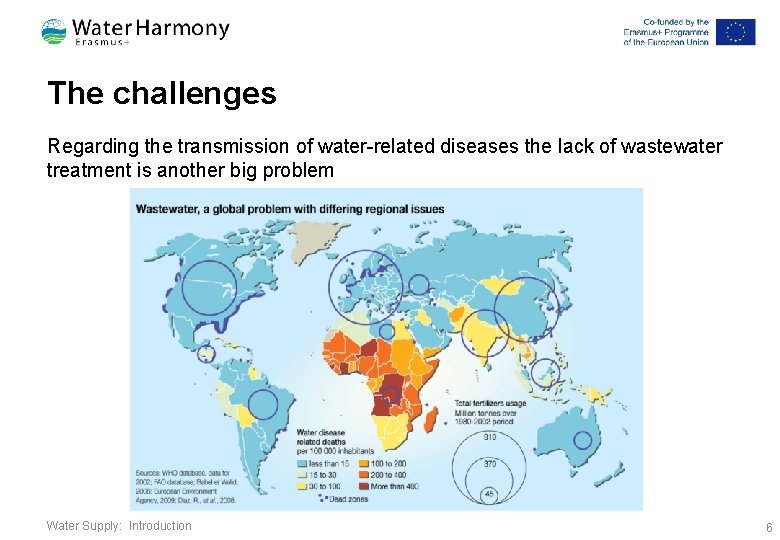
The challenges Regarding the transmission of water-related diseases the lack of wastewater treatment is another big problem Water Supply: Introduction 6
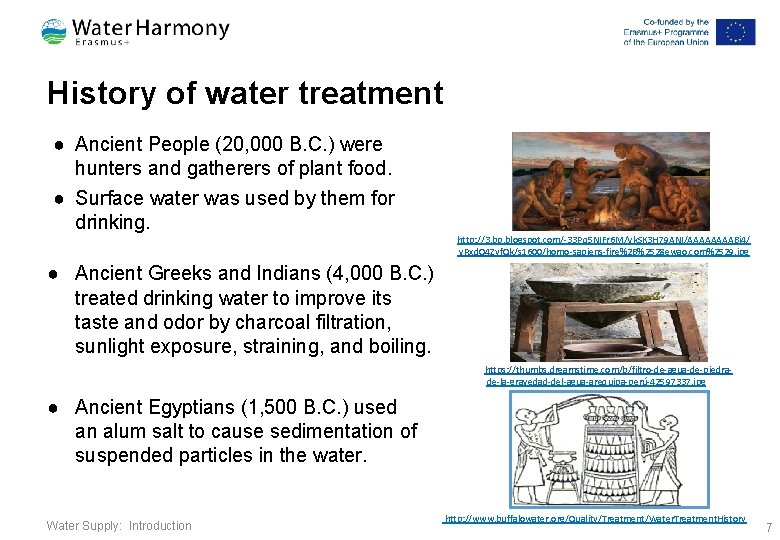
History of water treatment ● Ancient People (20, 000 B. C. ) were hunters and gatherers of plant food. ● Surface water was used by them for drinking. http: //3. bp. blogspot. com/-33 Pq 5 NIFr 6 M/Vk. SK 3 H 79 ANI/AAAABi 4/ v. Rxd. O 4 Zyf. Qk/s 1600/homo-sapiens-fire%2 B%2528 ewao. com%2529. jpg ● Ancient Greeks and Indians (4, 000 B. C. ) treated drinking water to improve its taste and odor by charcoal filtration, sunlight exposure, straining, and boiling. https: //thumbs. dreamstime. com/b/filtro-de-agua-de-piedrade-la-gravedad-del-agua-arequipa-perú-42597337. jpg ● Ancient Egyptians (1, 500 B. C. ) used an alum salt to cause sedimentation of suspended particles in the water. Water Supply: Introduction http: //www. buffalowater. org/Quality/Treatment/Water. Treatment. History 7
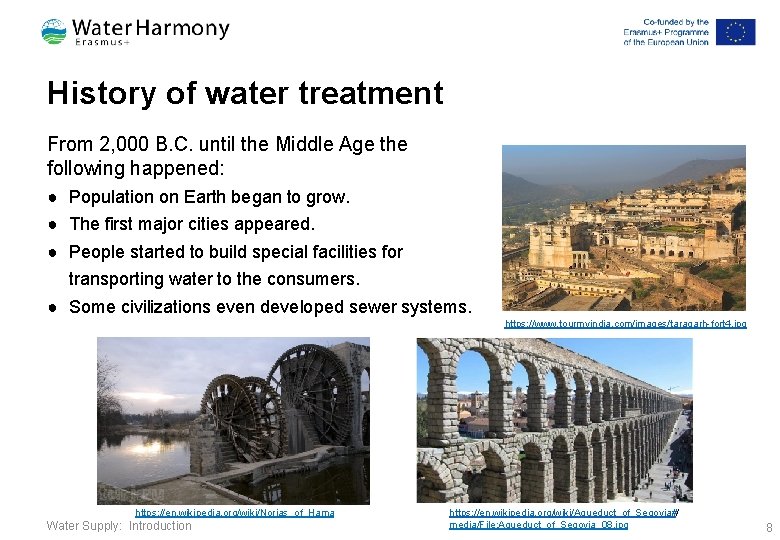
History of water treatment From 2, 000 B. C. until the Middle Age the following happened: ● Population on Earth began to grow. ● The first major cities appeared. ● People started to build special facilities for transporting water to the consumers. ● Some civilizations even developed sewer systems. https: //www. tourmyindia. com/images/taragarh-fort 4. jpg https: //en. wikipedia. org/wiki/Norias_of_Hama Water Supply: Introduction https: //en. wikipedia. org/wiki/Aqueduct_of_Segovia#/ media/File: Aqueduct_of_Segovia_08. jpg 8
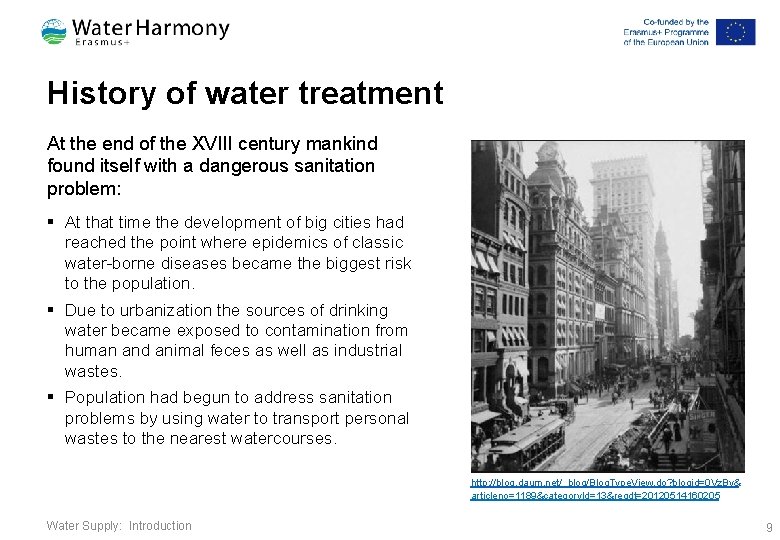
History of water treatment At the end of the XVIII century mankind found itself with a dangerous sanitation problem: § At that time the development of big cities had reached the point where epidemics of classic water-borne diseases became the biggest risk to the population. § Due to urbanization the sources of drinking water became exposed to contamination from human and animal feces as well as industrial wastes. § Population had begun to address sanitation problems by using water to transport personal wastes to the nearest watercourses. http: //blog. daum. net/_blog/Blog. Type. View. do? blogid=0 Vz. By& articleno=1189&category. Id=13®dt=20120514160205 Water Supply: Introduction 9
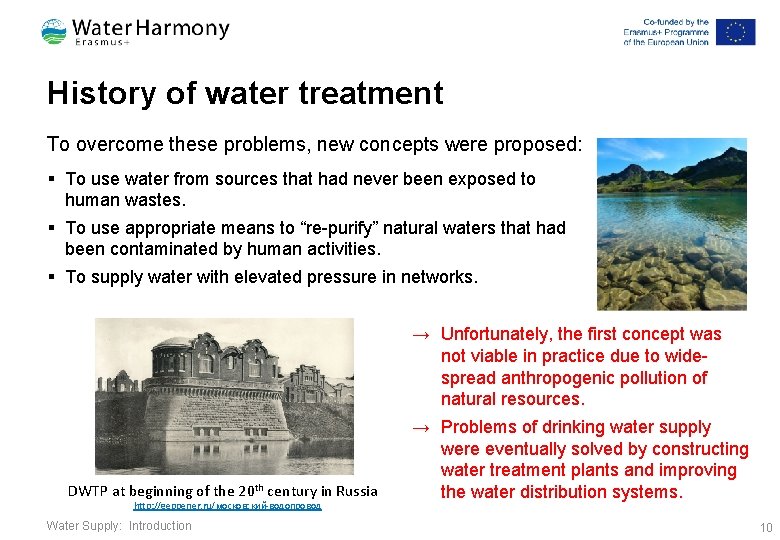
History of water treatment To overcome these problems, new concepts were proposed: § To use water from sources that had never been exposed to human wastes. § To use appropriate means to “re-purify” natural waters that had been contaminated by human activities. § To supply water with elevated pressure in networks. → Unfortunately, the first concept was not viable in practice due to widespread anthropogenic pollution of natural resources. DWTP at beginning of the 20 th century in Russia http: //geppener. ru/московский-водопровод Water Supply: Introduction → Problems of drinking water supply were eventually solved by constructing water treatment plants and improving the water distribution systems. 10
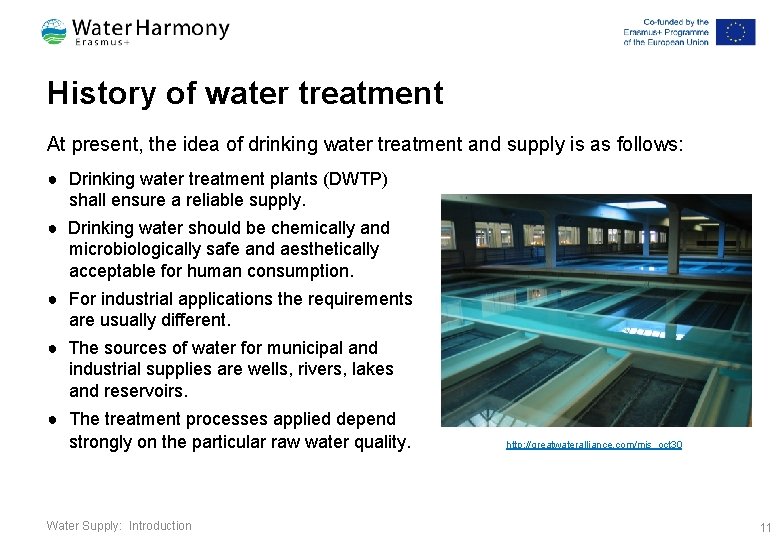
History of water treatment At present, the idea of drinking water treatment and supply is as follows: ● Drinking water treatment plants (DWTP) shall ensure a reliable supply. ● Drinking water should be chemically and microbiologically safe and aesthetically acceptable for human consumption. ● For industrial applications the requirements are usually different. ● The sources of water for municipal and industrial supplies are wells, rivers, lakes and reservoirs. ● The treatment processes applied depend strongly on the particular raw water quality. Water Supply: Introduction http: //greatwateralliance. com/mjs_oct 30 11
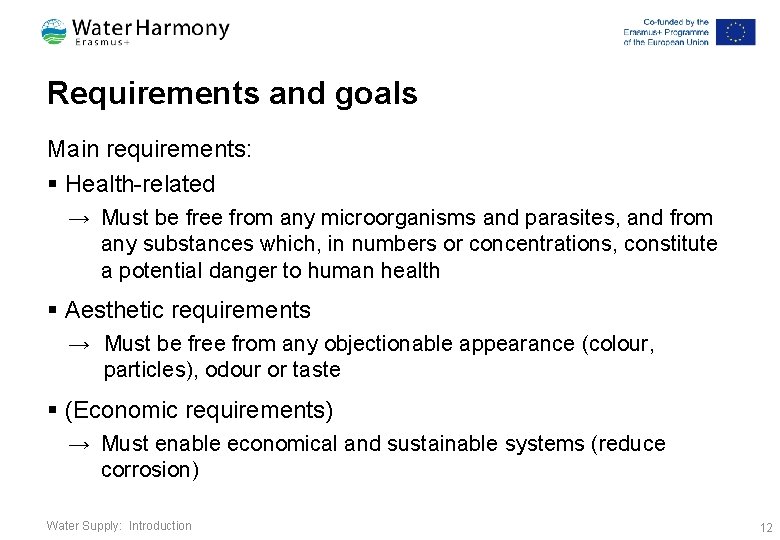
Requirements and goals Main requirements: § Health-related → Must be free from any microorganisms and parasites, and from any substances which, in numbers or concentrations, constitute a potential danger to human health § Aesthetic requirements → Must be free from any objectionable appearance (colour, particles), odour or taste § (Economic requirements) → Must enable economical and sustainable systems (reduce corrosion) Water Supply: Introduction 12
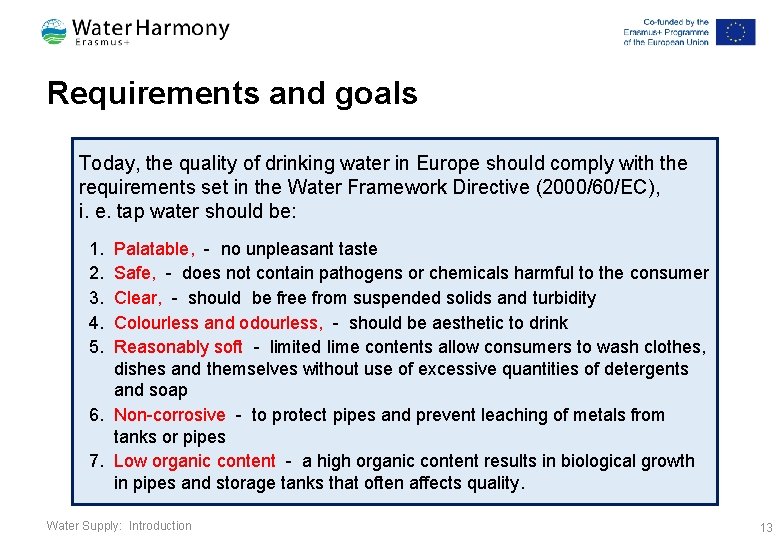
Requirements and goals Today, the quality of drinking water in Europe should comply with the requirements set in the Water Framework Directive (2000/60/EC), i. e. tap water should be: 1. Palatable, - no unpleasant taste 2. Safe, - does not contain pathogens or chemicals harmful to the consumer 3. Clear, - should be free from suspended solids and turbidity 4. Colourless and odourless, - should be aesthetic to drink 5. Reasonably soft - limited lime contents allow consumers to wash clothes, dishes and themselves without use of excessive quantities of detergents and soap 6. Non-corrosive - to protect pipes and prevent leaching of metals from tanks or pipes 7. Low organic content - a high organic content results in biological growth in pipes and storage tanks that often affects quality. Water Supply: Introduction 13
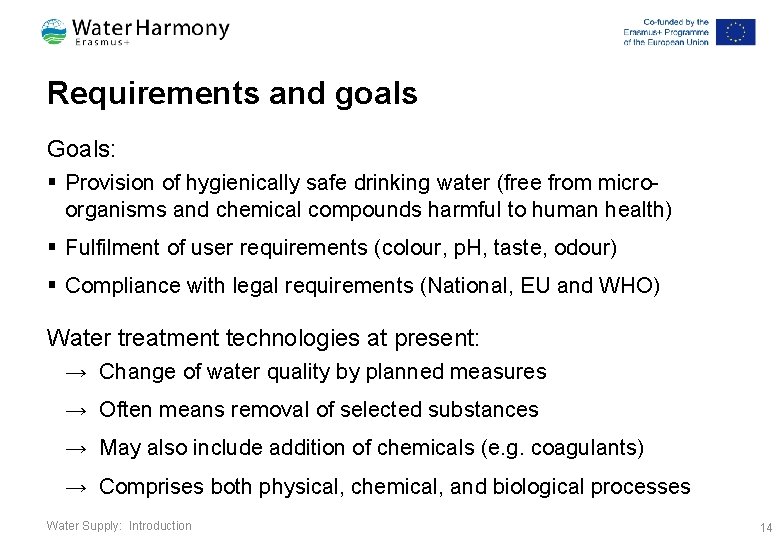
Requirements and goals Goals: § Provision of hygienically safe drinking water (free from microorganisms and chemical compounds harmful to human health) § Fulfilment of user requirements (colour, p. H, taste, odour) § Compliance with legal requirements (National, EU and WHO) Water treatment technologies at present: → Change of water quality by planned measures → Often means removal of selected substances → May also include addition of chemicals (e. g. coagulants) → Comprises both physical, chemical, and biological processes Water Supply: Introduction 14
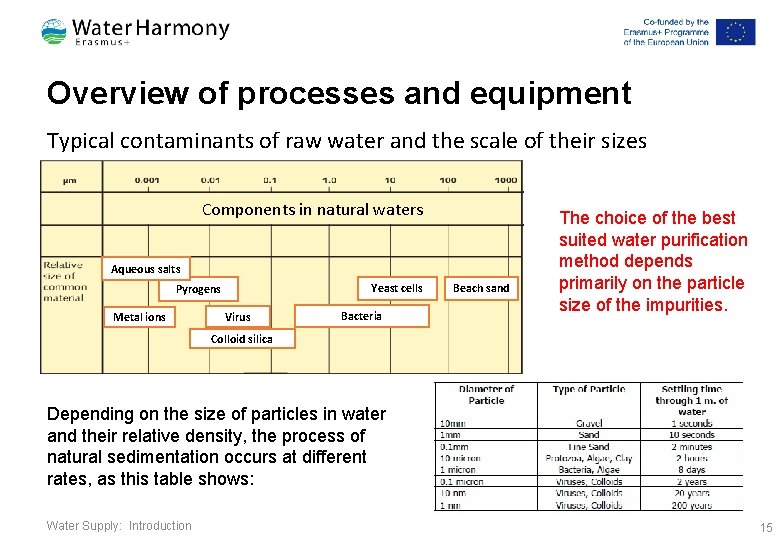
Overview of processes and equipment Typical contaminants of raw water and the scale of their sizes Components in natural waters Aqueous salts Yeast cells Pyrogens Metal ions Virus Bacteria Beach sand The choice of the best suited water purification method depends primarily on the particle size of the impurities. Colloid silica Depending on the size of particles in water and their relative density, the process of natural sedimentation occurs at different rates, as this table shows: Water Supply: Introduction 15
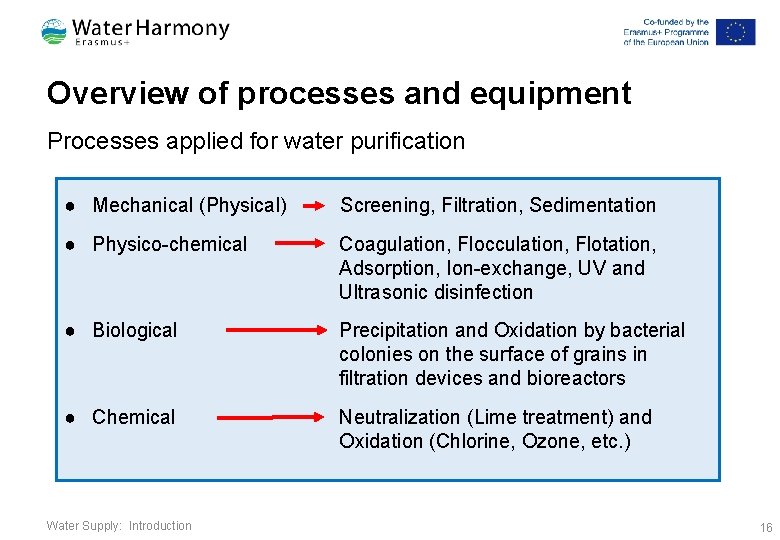
Overview of processes and equipment Processes applied for water purification ● Mechanical (Physical) Screening, Filtration, Sedimentation ● Physico-chemical Coagulation, Flocculation, Flotation, Adsorption, Ion-exchange, UV and Ultrasonic disinfection ● Biological Precipitation and Oxidation by bacterial colonies on the surface of grains in filtration devices and bioreactors ● Chemical Neutralization (Lime treatment) and Oxidation (Chlorine, Ozone, etc. ) Water Supply: Introduction 16
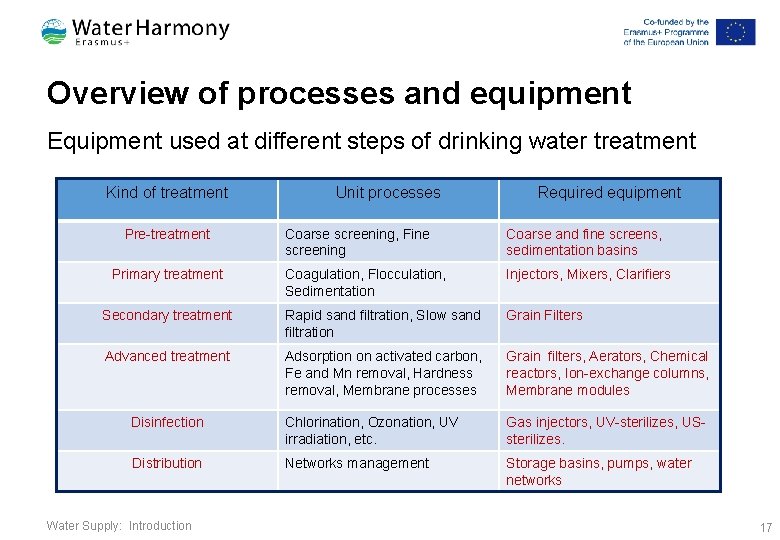
Overview of processes and equipment Equipment used at different steps of drinking water treatment Kind of treatment Pre-treatment Unit processes Required equipment Coarse screening, Fine screening Coarse and fine screens, sedimentation basins Coagulation, Flocculation, Sedimentation Injectors, Mixers, Clarifiers Secondary treatment Rapid sand filtration, Slow sand filtration Grain Filters Advanced treatment Adsorption on activated carbon, Fe and Mn removal, Hardness removal, Membrane processes Grain filters, Aerators, Chemical reactors, Ion-exchange columns, Membrane modules Disinfection Chlorination, Ozonation, UV irradiation, etc. Gas injectors, UV-sterilizes, USsterilizes. Distribution Networks management Storage basins, pumps, water networks Primary treatment Water Supply: Introduction 17
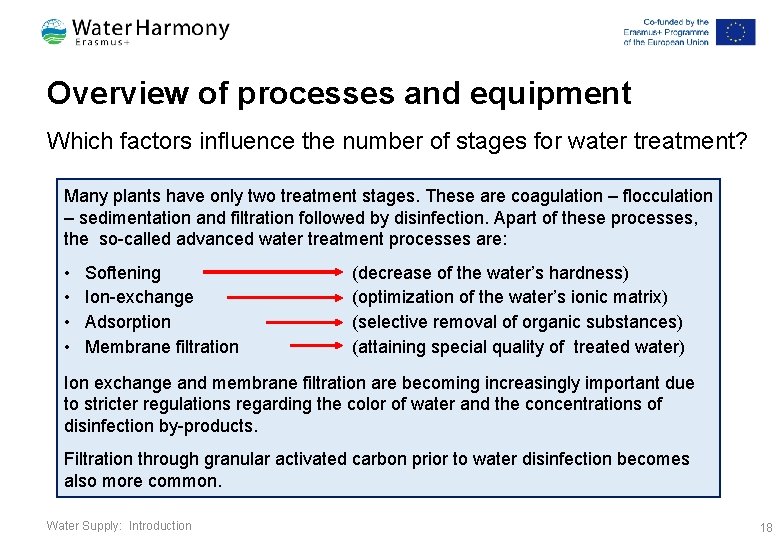
Overview of processes and equipment Which factors influence the number of stages for water treatment? Many plants have only two treatment stages. These are coagulation – flocculation – sedimentation and filtration followed by disinfection. Apart of these processes, the so-called advanced water treatment processes are: • • Softening Ion-exchange Adsorption Membrane filtration (decrease of the water’s hardness) (optimization of the water’s ionic matrix) (selective removal of organic substances) (attaining special quality of treated water) Ion exchange and membrane filtration are becoming increasingly important due to stricter regulations regarding the color of water and the concentrations of disinfection by-products. Filtration through granular activated carbon prior to water disinfection becomes also more common. Water Supply: Introduction 18
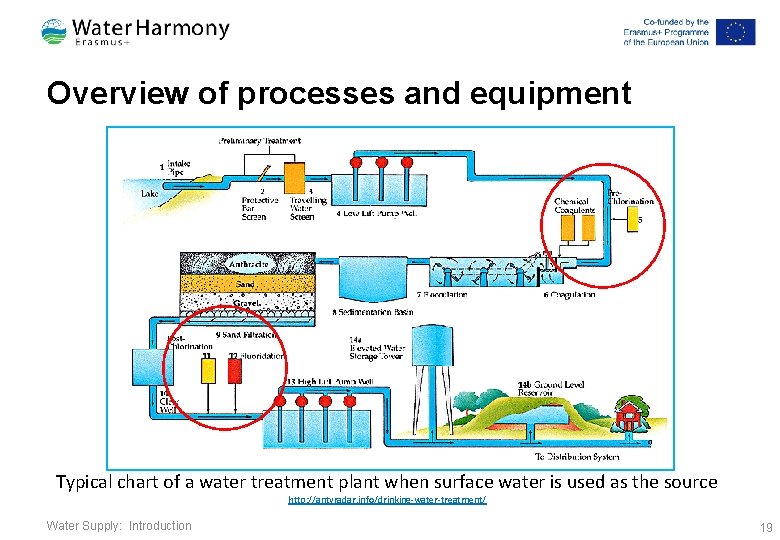
Overview of processes and equipment Typical chart of a water treatment plant when surface water is used as the source http: //antyradar. info/drinking-water-treatment/ Water Supply: Introduction 19
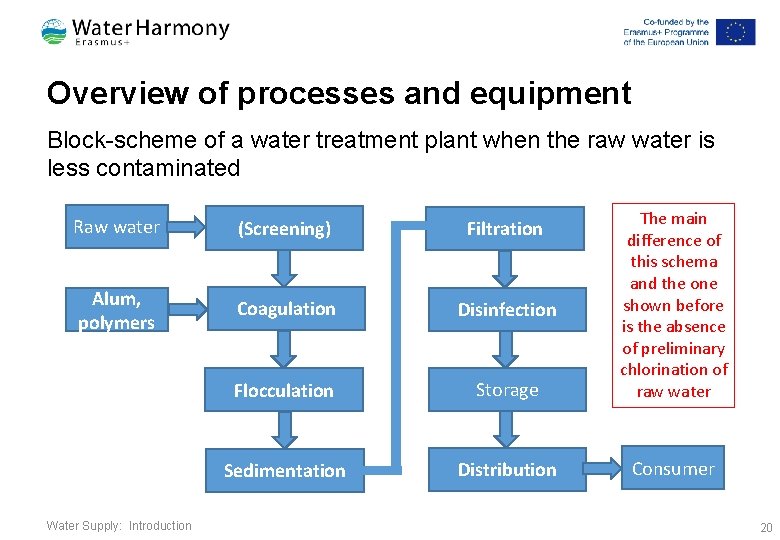
Overview of processes and equipment Block-scheme of a water treatment plant when the raw water is less contaminated Raw water (Screening) Filtration Alum, polymers Coagulation Disinfection Flocculation Storage The main difference of this schema and the one shown before is the absence of preliminary chlorination of raw water Sedimentation Distribution Consumer Water Supply: Introduction 20
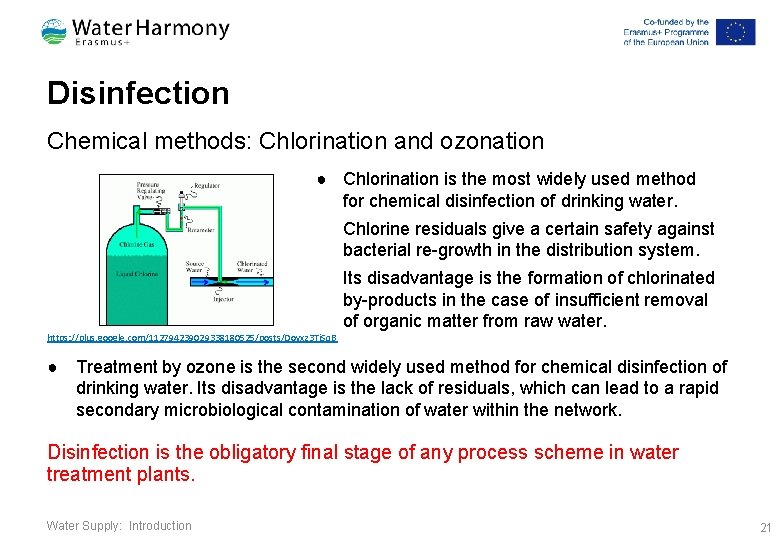
Disinfection Chemical methods: Chlorination and ozonation ● Chlorination is the most widely used method for chemical disinfection of drinking water. Chlorine residuals give a certain safety against bacterial re-growth in the distribution system. Its disadvantage is the formation of chlorinated by-products in the case of insufficient removal of organic matter from raw water. https: //plus. google. com/112794239029338180525/posts/Dovxz 3 Ti. Sq. B ● Treatment by ozone is the second widely used method for chemical disinfection of drinking water. Its disadvantage is the lack of residuals, which can lead to a rapid secondary microbiological contamination of water within the network. Disinfection is the obligatory final stage of any process scheme in water treatment plants. Water Supply: Introduction 21
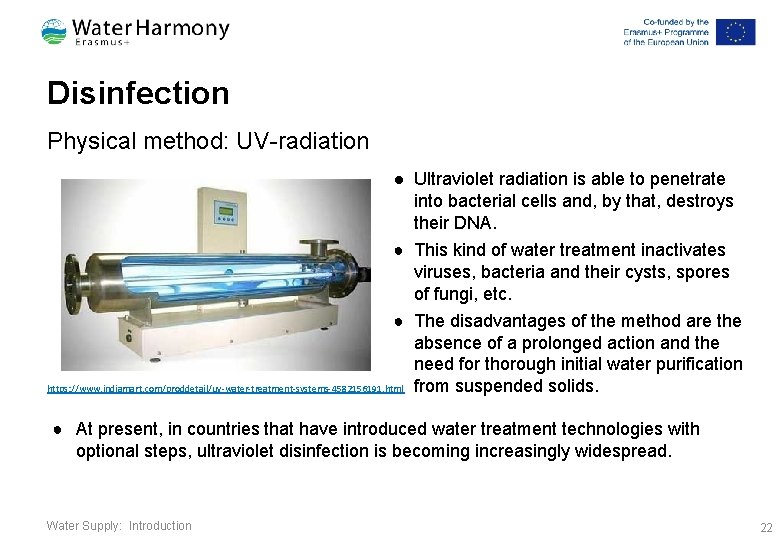
Disinfection Physical method: UV-radiation ● Ultraviolet radiation is able to penetrate into bacterial cells and, by that, destroys their DNA. ● This kind of water treatment inactivates viruses, bacteria and their cysts, spores of fungi, etc. ● The disadvantages of the method are the absence of a prolonged action and the need for thorough initial water purification https: //www. indiamart. com/proddetail/uv-water-treatment-systems-4582156191. html from suspended solids. ● At present, in countries that have introduced water treatment technologies with optional steps, ultraviolet disinfection is becoming increasingly widespread. Water Supply: Introduction 22
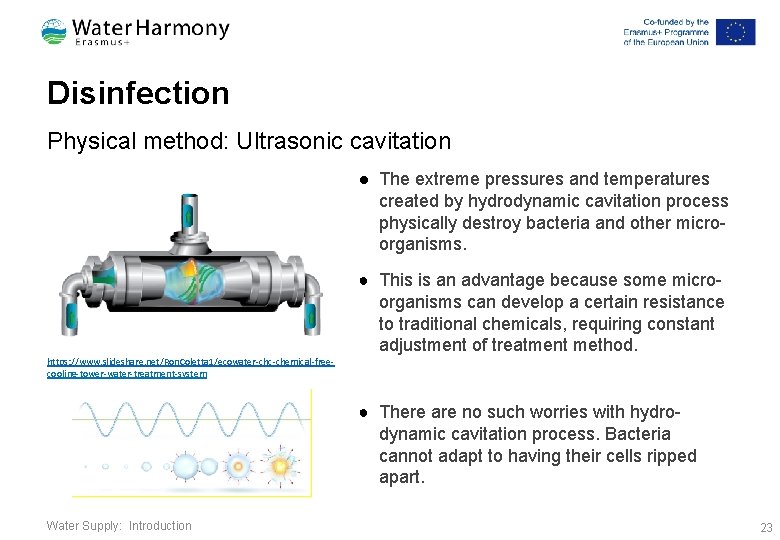
Disinfection Physical method: Ultrasonic cavitation ● The extreme pressures and temperatures created by hydrodynamic cavitation process physically destroy bacteria and other microorganisms. ● This is an advantage because some microorganisms can develop a certain resistance to traditional chemicals, requiring constant adjustment of treatment method. https: //www. slideshare. net/Ron. Coletta 1/ecowater-chc-chemical-freecooling-tower-water-treatment-system Water Supply: Introduction ● There are no such worries with hydrodynamic cavitation process. Bacteria cannot adapt to having their cells ripped apart. 23
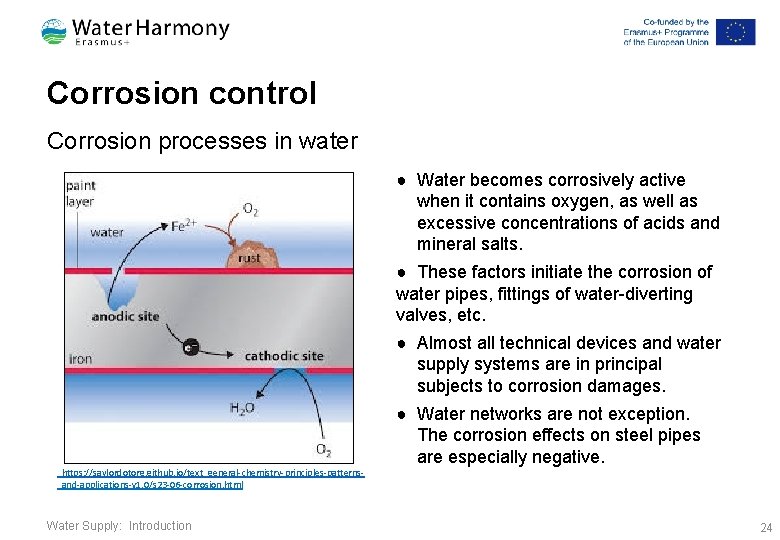
Corrosion control Corrosion processes in water ● Water becomes corrosively active when it contains oxygen, as well as excessive concentrations of acids and mineral salts. ● These factors initiate the corrosion of water pipes, fittings of water-diverting valves, etc. ● Almost all technical devices and water supply systems are in principal subjects to corrosion damages. ● Water networks are not exception. The corrosion effects on steel pipes are especially negative. https: //saylordotorg. github. io/text_general-chemistry-principles-patternsand-applications-v 1. 0/s 23 -06 -corrosion. html Water Supply: Introduction 24
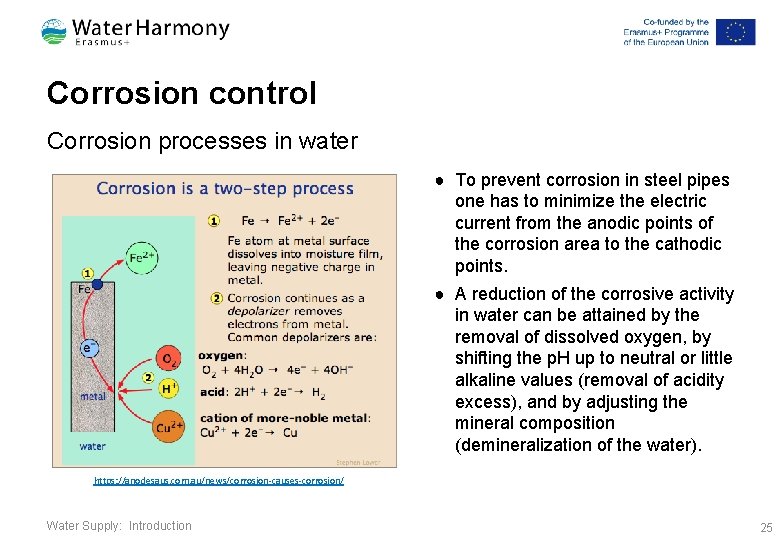
Corrosion control Corrosion processes in water ● To prevent corrosion in steel pipes one has to minimize the electric current from the anodic points of the corrosion area to the cathodic points. ● A reduction of the corrosive activity in water can be attained by the removal of dissolved oxygen, by shifting the p. H up to neutral or little alkaline values (removal of acidity excess), and by adjusting the mineral composition (demineralization of the water). https: //anodesaus. com. au/news/corrosion-causes-corrosion/ Water Supply: Introduction 25
Corrosion control Correction of water acidity (p. H adjustment) ● When rain falls the water is slightly acidic and, by that, naturally aggressive. The water can then dissolve calcite and other minerals in the groundwater aquifer and become neutralized. If this neutralization does not occur or if other contaminants are dissolved the water will be acidic. ● Acidic waters result in the corrosion of steel and copper pipes, heating cylinders and other equipment, leading to pinprick corrosion and holes. ● At p. H values below 7 water is considered to be acidic, and corrosion accelerates at p. H levels below 6. 5. With p. H levels below 6. 0 water is considered to be extremely aggressive. ● Water acidity can be removed by adding lime or sodium hydroxide, or by filtration through a bed of any carbonate containing material (i. e. calcite, dolomite). Water Supply: Introduction 26
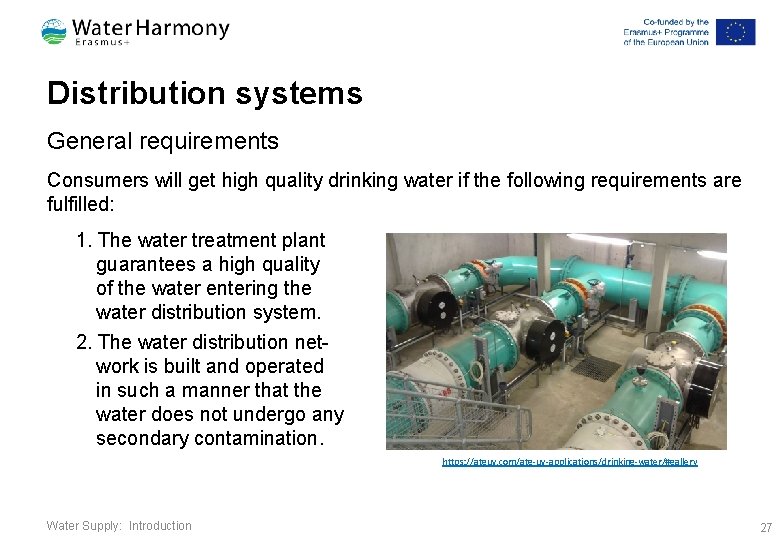
Distribution systems General requirements Consumers will get high quality drinking water if the following requirements are fulfilled: 1. The water treatment plant guarantees a high quality of the water entering the water distribution system. 2. The water distribution network is built and operated in such a manner that the water does not undergo any secondary contamination. https: //atguv. com/atg-uv-applications/drinking-water/#gallery Water Supply: Introduction 27
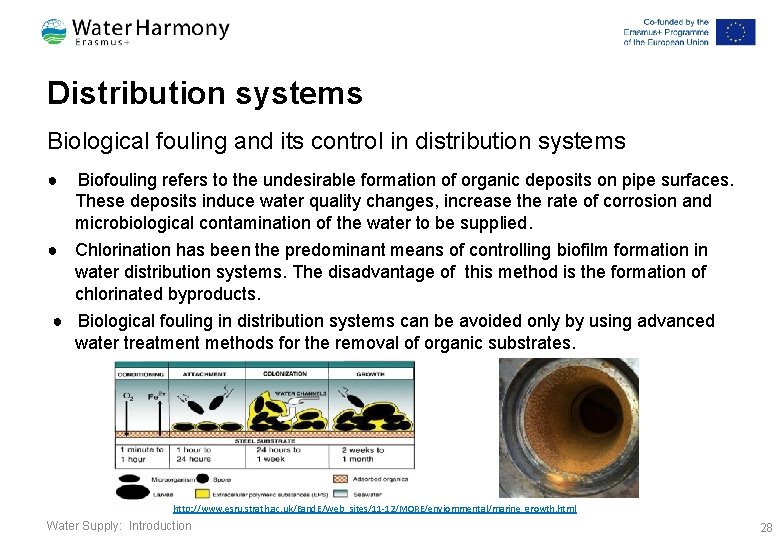
Distribution systems Biological fouling and its control in distribution systems ● Biofouling refers to the undesirable formation of organic deposits on pipe surfaces. These deposits induce water quality changes, increase the rate of corrosion and microbiological contamination of the water to be supplied. ● Chlorination has been the predominant means of controlling biofilm formation in water distribution systems. The disadvantage of this method is the formation of chlorinated byproducts. ● Biological fouling in distribution systems can be avoided only by using advanced water treatment methods for the removal of organic substrates. http: //www. esru. strath. ac. uk/Eand. E/Web_sites/11 -12/MORE/enviornmental/marine_growth. html Water Supply: Introduction 28
Questions § Which main factors are responsible for the water stress that is already visible in different parts of the world? § What are the main differences between modern water supply systems and the first approaches developed in earlier times? § How can present requirements and goals be characterized? § How can water treatment processes be classified with respect to their principles? § Which processes are available for water disinfection? § Which water quality parameters are important for the corrosion of materials that are in contact with water? Water Supply: Introduction 29
References AWWA: Water Treatment Plant Design. 5 th ed. , Mc. Graw-Hill, New York 2012 https: //www. circleofblue. org/ The United Nations World Water Development Report 1 „Water for People – Water for Life“. UNESCO Publishing, Paris 2003 The United Nations World Water Development Report 2 „Water – a shared responsibility“. UNESCO Publishing, Paris 2006 The United Nations World Water Development Report 3 „Water in a changing world”. UNESCO Publishing, Paris 2009 25 Years Progress on Sanitation and Drinking Water – 2015 Update and MDG Assessment. WHO Press, Geneva 2015 Guidelines for Drinking Water Quality. WHO Press, Geneva 2011 Water Supply: Introduction 30