
RECOVERY RECYCLING AND REUSE Prof Harsha Ratnaweera harshanmbu
RECOVERY, RECYCLING AND REUSE Prof. Harsha Ratnaweera, harsha@nmbu. no Norwegian University of Life Sciences

Outline § Introduction § Potable use § Non potable use § Groundwater recharge § Sludge in agriculture § Recovery of beneficial material § Energy Resources recovery, recycle and reuse 2
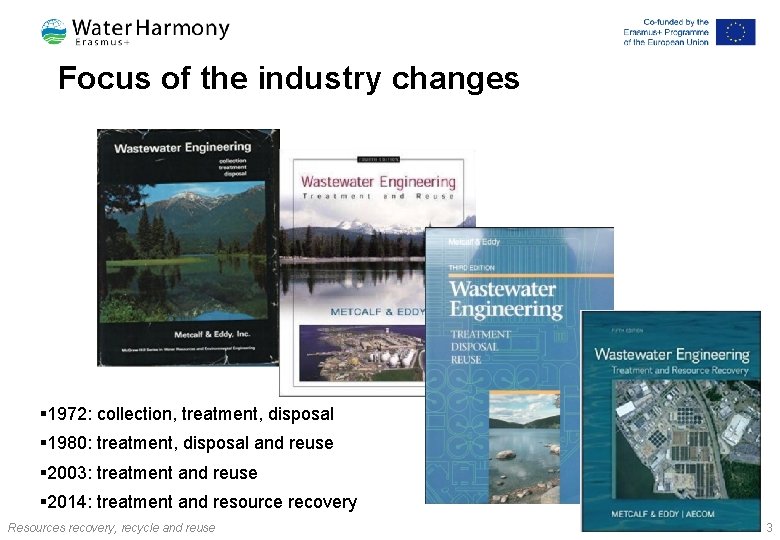
Focus of the industry changes § 1972: collection, treatment, disposal § 1980: treatment, disposal and reuse § 2003: treatment and reuse § 2014: treatment and resource recovery Resources recovery, recycle and reuse 3
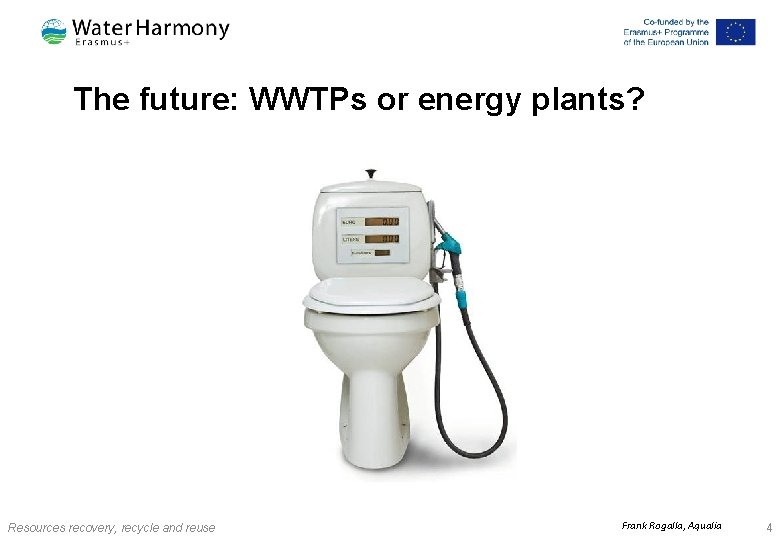
The future: WWTPs or energy plants? Resources recovery, recycle and reuse Frank Rogalla, Aqualia 4
Beneficial use of wastewater • • • Reuse of water Sludge as a fertiliser & soil conditioner Recovery of nutrients Recovery of salts /other matters Energy recovery and production • Industrial wastewater reuse & recycling will not be addressed in this lecture, although they have additional benefits – food additives, heavy metals etc Resources recovery, recycle and reuse 5
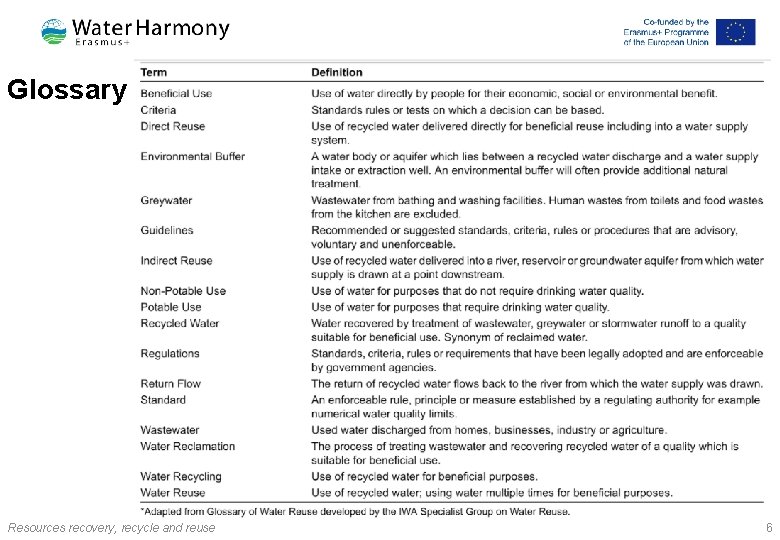
Glossary Resources recovery, recycle and reuse 6
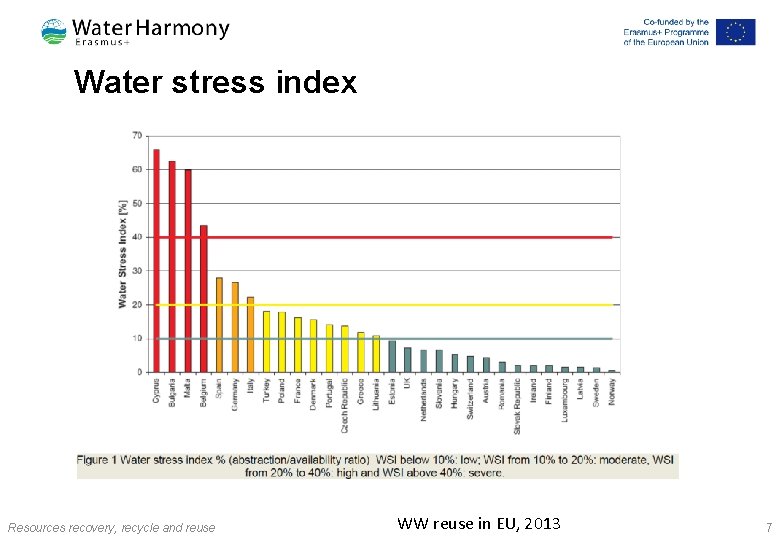
Water stress index Resources recovery, recycle and reuse WW reuse in EU, 2013 7
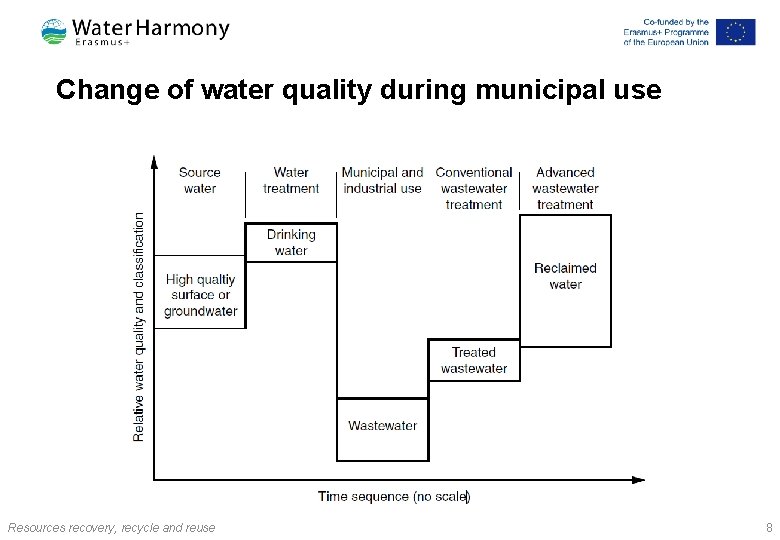
Change of water quality during municipal use Resources recovery, recycle and reuse 8
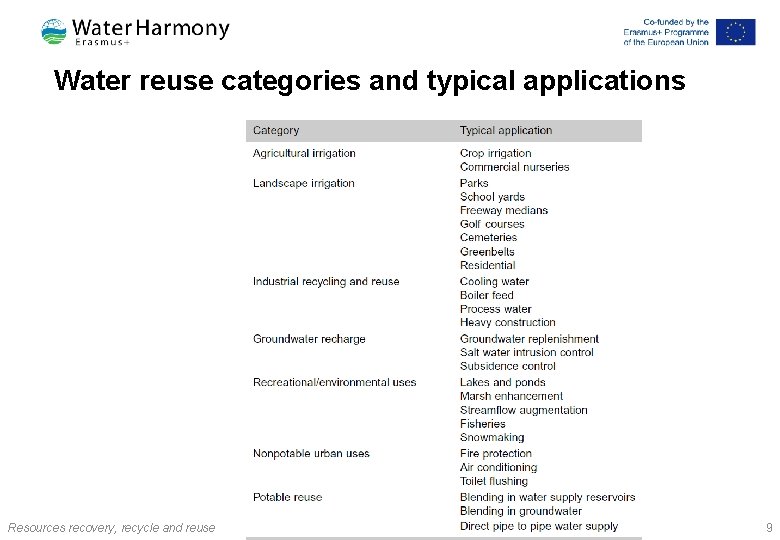
Water reuse categories and typical applications Resources recovery, recycle and reuse 9
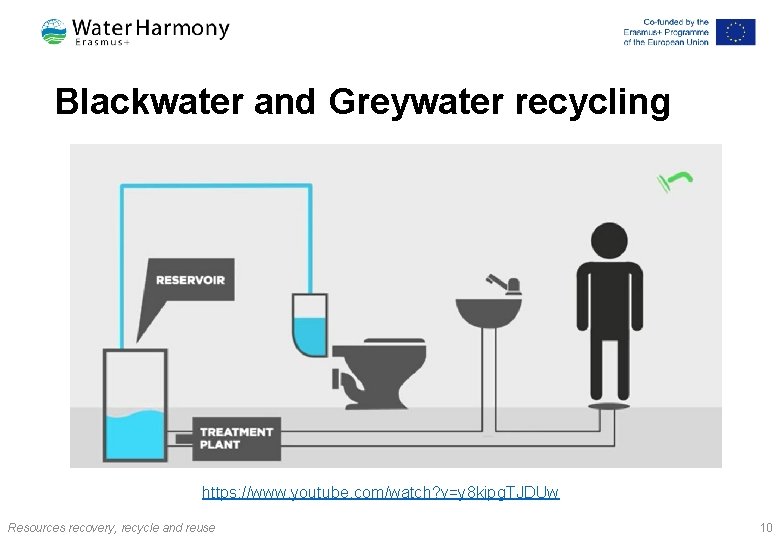
Blackwater and Greywater recycling https: //www. youtube. com/watch? v=y 8 kipg. TJDUw Resources recovery, recycle and reuse 10
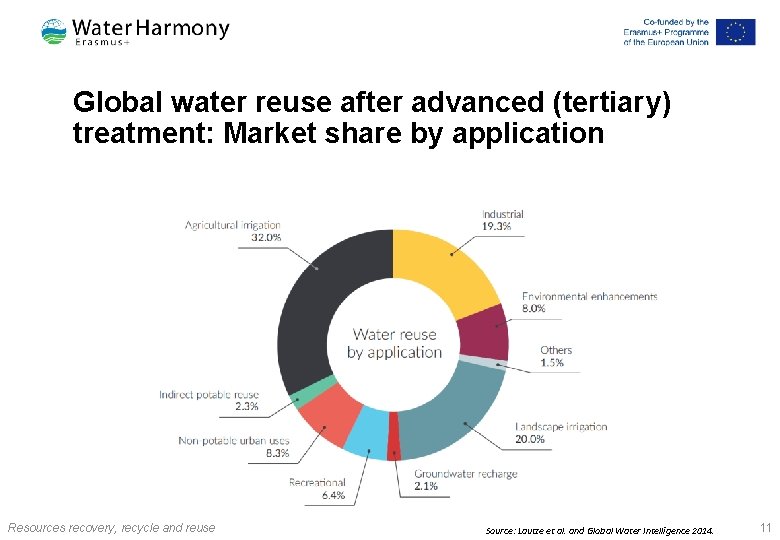
Global water reuse after advanced (tertiary) treatment: Market share by application Resources recovery, recycle and reuse Source: Lautze et al. and Global Water Intelligence 2014. 11
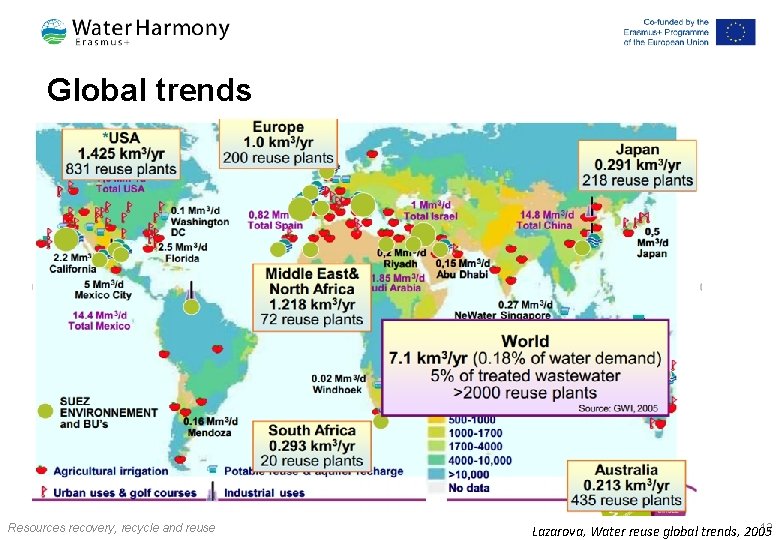
Global trends Resources recovery, recycle and reuse 12 Lazarova, Water reuse global trends, 2005

Wastewater as a resource
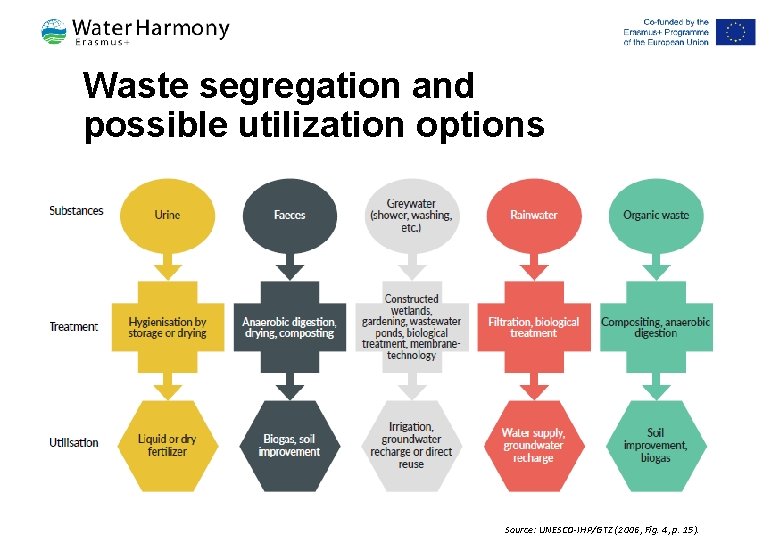
Waste segregation and possible utilization options Source: UNESCO-IHP/GTZ (2006, Fig. 4, p. 15).
Outline § Introduction § Potable use § Non potable use § Groundwater recharge § Sludge in agriculture § Recovery of beneficial material § Energy Resources recovery, recycle and reuse 15
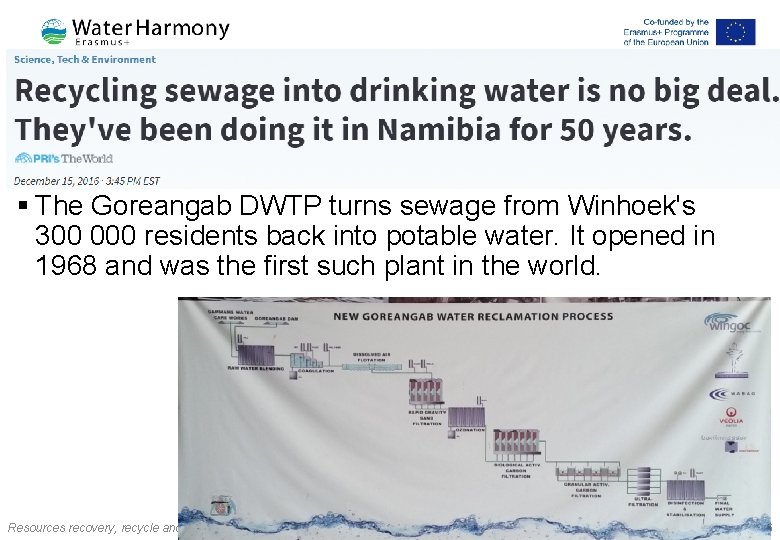
§ The Goreangab DWTP turns sewage from Winhoek's 300 000 residents back into potable water. It opened in 1968 and was the first such plant in the world. Resources recovery, recycle and reuse 16
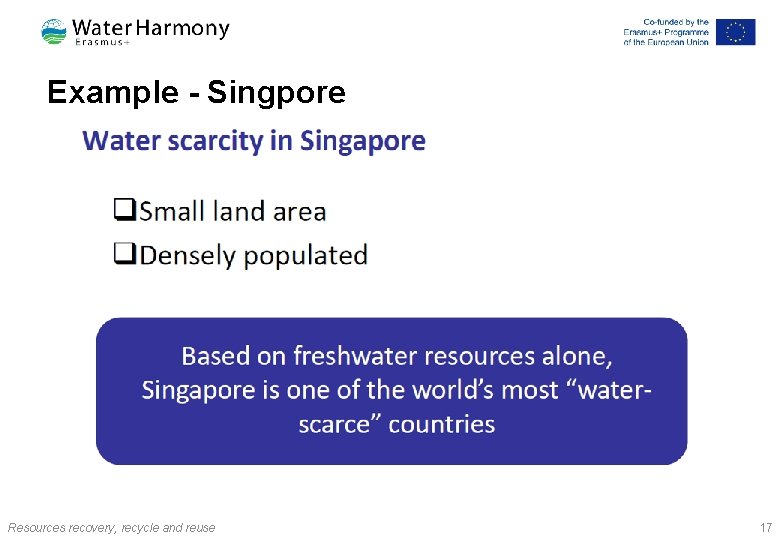
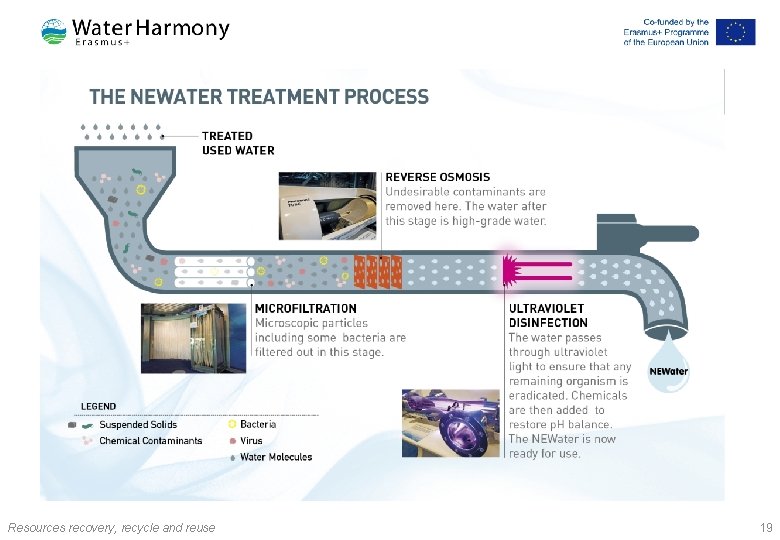
Example - Singpore Resources recovery, recycle and reuse 17
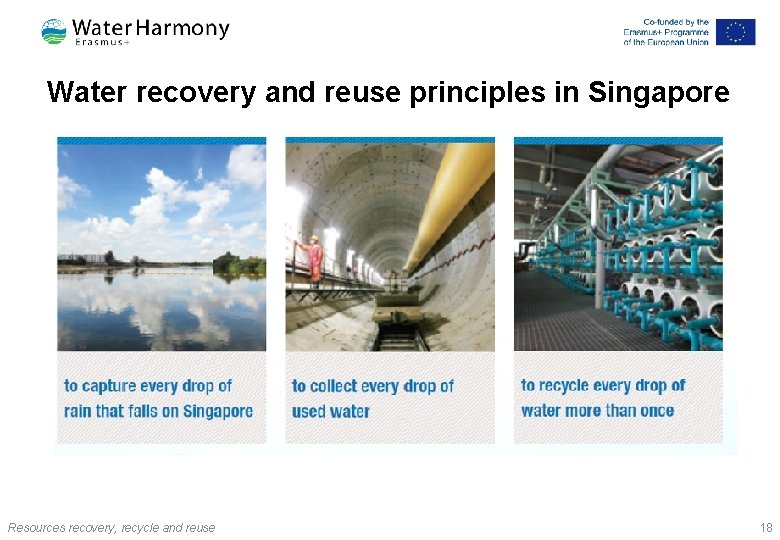
Water recovery and reuse principles in Singapore Resources recovery, recycle and reuse 18
Resources recovery, recycle and reuse 19
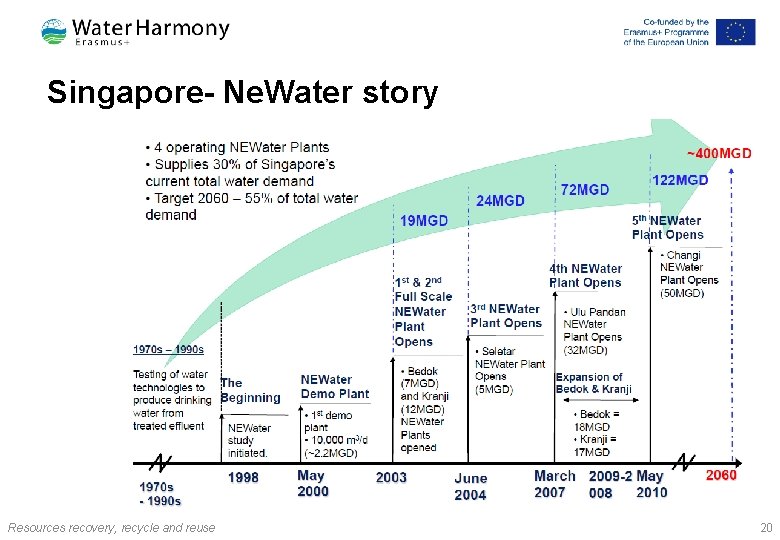
Singapore- Ne. Water story Resources recovery, recycle and reuse 20
Outline § Introduction § Potable use § Non potable use § Groundwater recharge § Sludge in agriculture § Recovery of beneficial material § Energy Resources recovery, recycle and reuse 21
Non-potable use § For cooling towers § For toilet flushing § For gardening § For agriculture Resources recovery, recycle and reuse 22
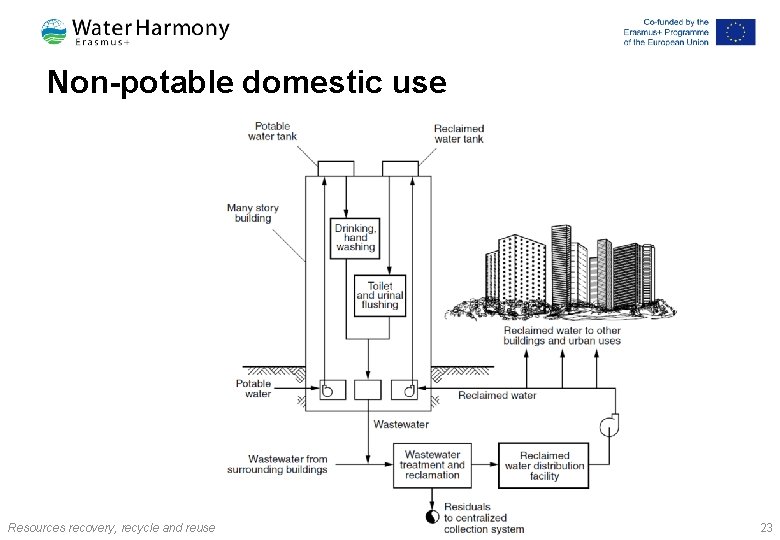
Non-potable domestic use Resources recovery, recycle and reuse 23
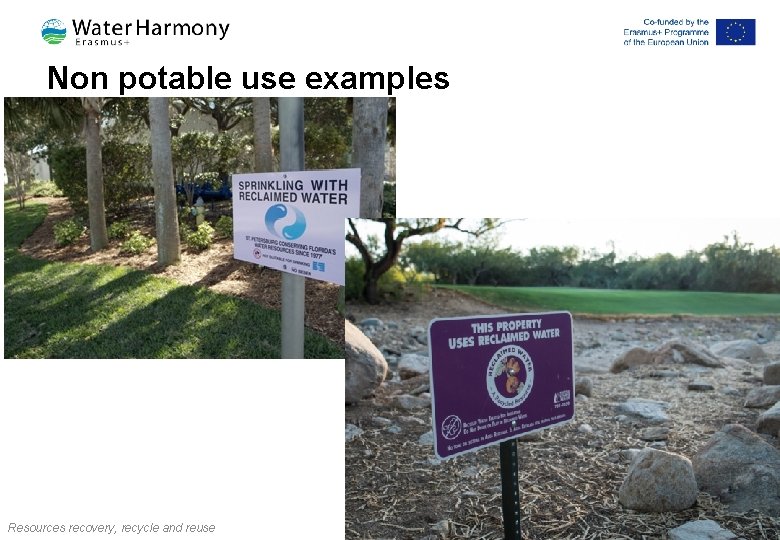
Non potable use examples Resources recovery, recycle and reuse 24
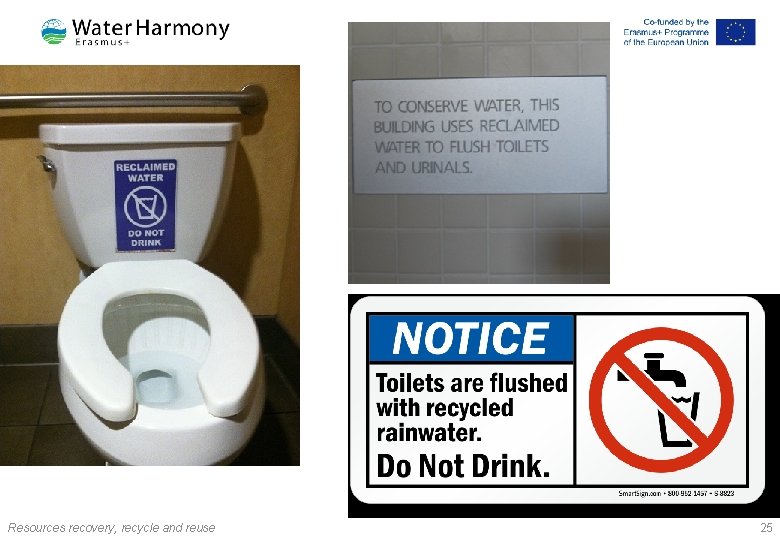
Resources recovery, recycle and reuse 25
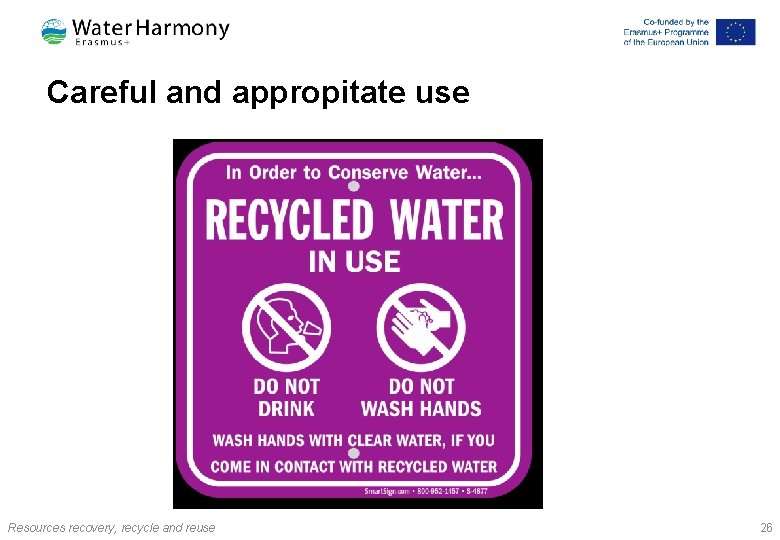
Careful and appropitate use Resources recovery, recycle and reuse 26
Outline § Introduction § Potable use § Non potable use § Groundwater recharge § Sludge in agriculture § Recovery of beneficial material § Energy Resources recovery, recycle and reuse 27
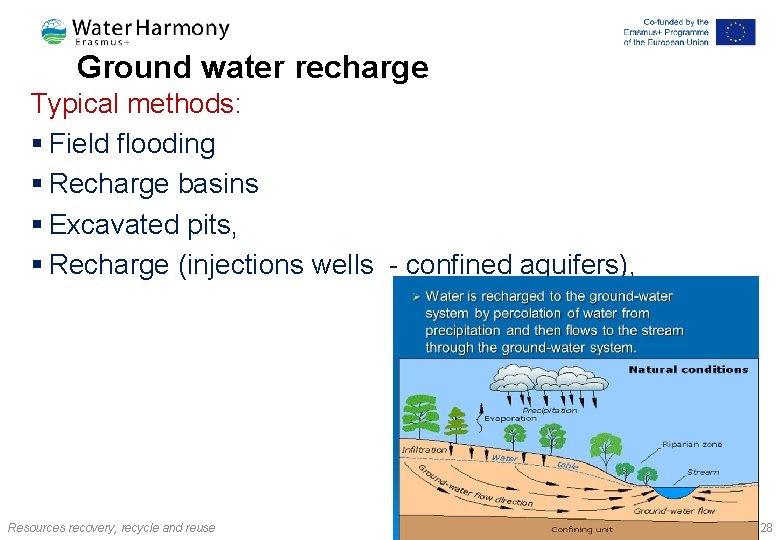
Ground water recharge Typical methods: § Field flooding § Recharge basins § Excavated pits, § Recharge (injections wells - confined aquifers), Resources recovery, recycle and reuse 28
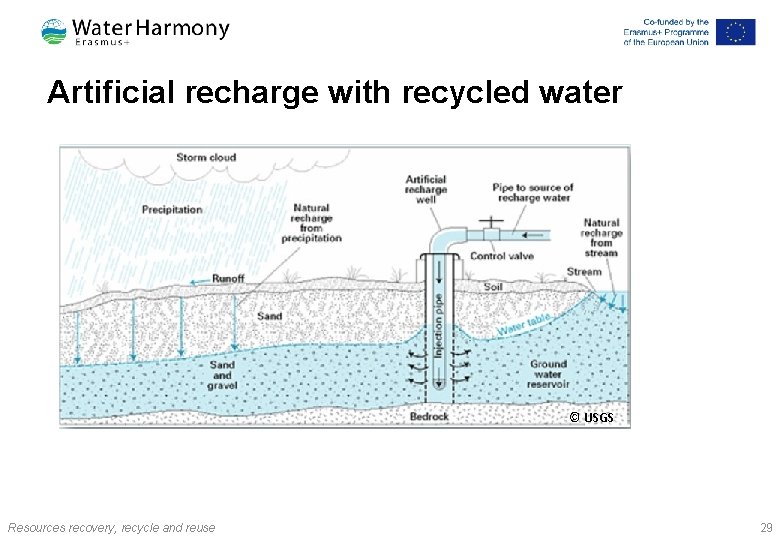
Artificial recharge with recycled water © USGS Resources recovery, recycle and reuse 29
Outline § Introduction § Potable use § Non potable use § Groundwater recharge § Sludge in agriculture § Recovery of beneficial material § Energy Resources recovery, recycle and reuse 30
Sludge: fertilizer / soil conditioner Resources recovery, recycle and reuse 31
Usage of sludge in agriculture. EU § COUNCIL DIRECTIVE of 12 June 1986 on the protection of the environment, and in particular of the soil, when sewage sludge is used in agriculture (86/278/EEC) § Only if the national authorities regulates its use. § Limit values for concentrations of heavy metals • in the soil • in sludge • maximum annual quantities into the soil Resources recovery, recycle and reuse 32
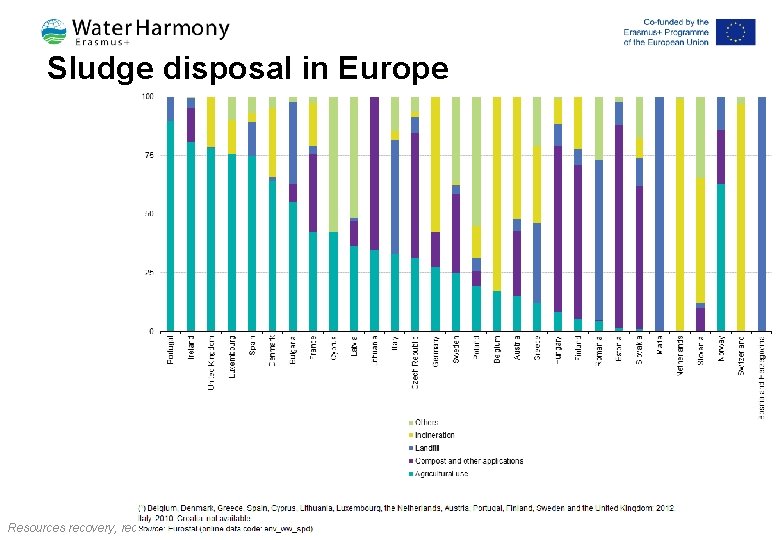
Sludge disposal in Europe Resources recovery, recycle and reuse 33
Resources recovery, recycle and reuse 34
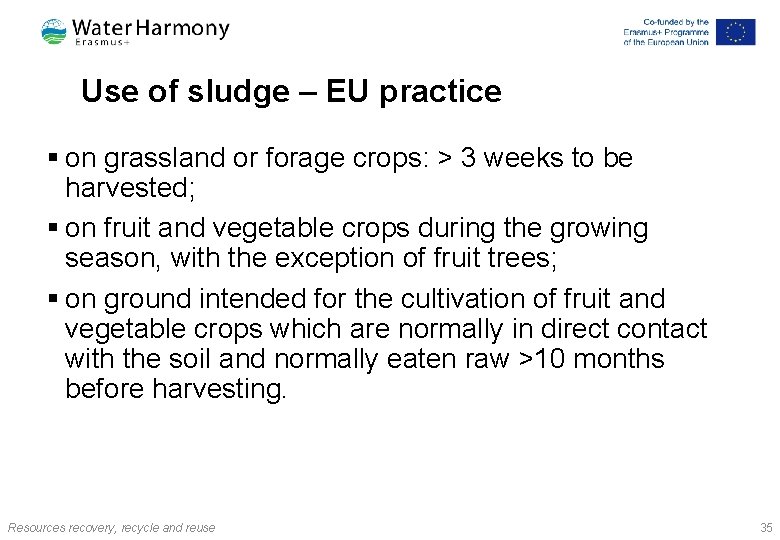
Use of sludge – EU practice § on grassland or forage crops: > 3 weeks to be harvested; § on fruit and vegetable crops during the growing season, with the exception of fruit trees; § on ground intended for the cultivation of fruit and vegetable crops which are normally in direct contact with the soil and normally eaten raw >10 months before harvesting. Resources recovery, recycle and reuse 35
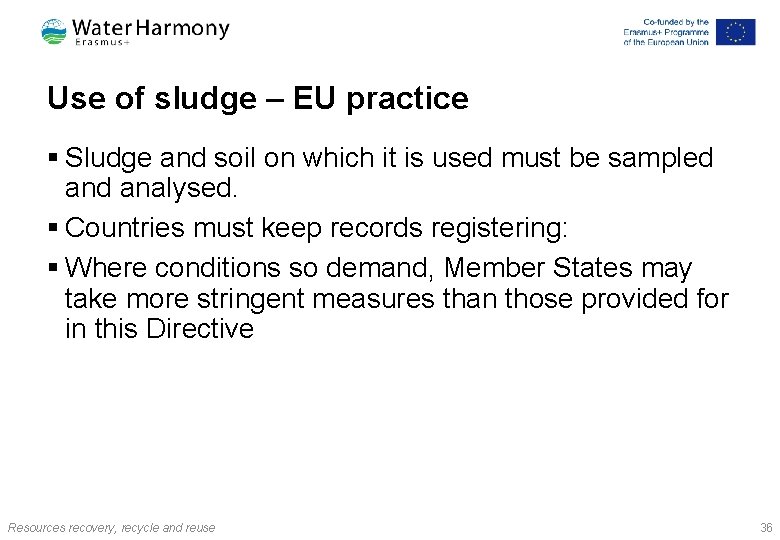
Use of sludge – EU practice § Sludge and soil on which it is used must be sampled analysed. § Countries must keep records registering: § Where conditions so demand, Member States may take more stringent measures than those provided for in this Directive Resources recovery, recycle and reuse 36
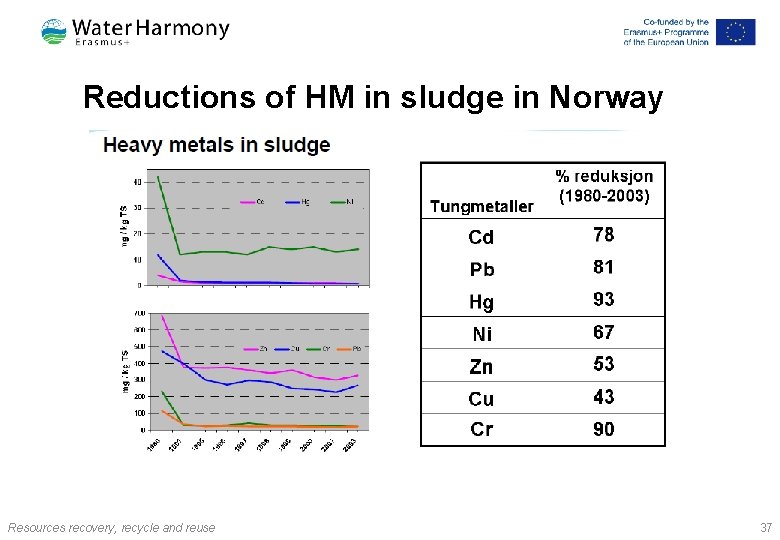
Reductions of HM in sludge in Norway Resources recovery, recycle and reuse 37
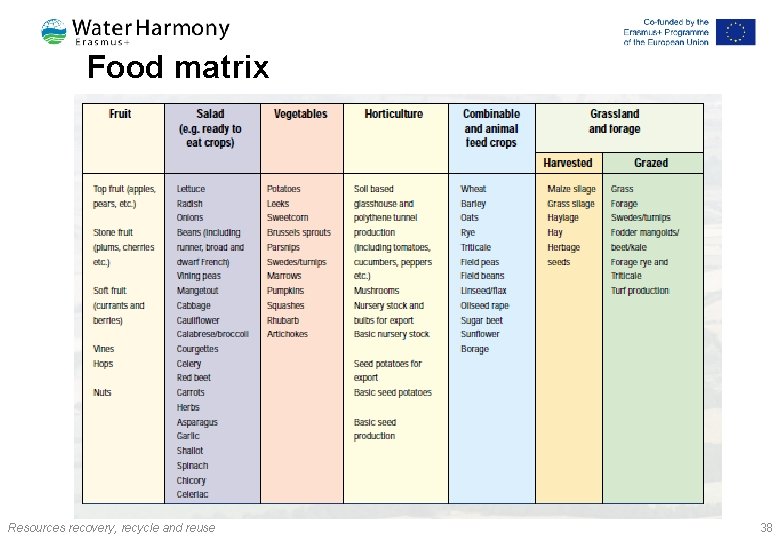
Food matrix Resources recovery, recycle and reuse 38
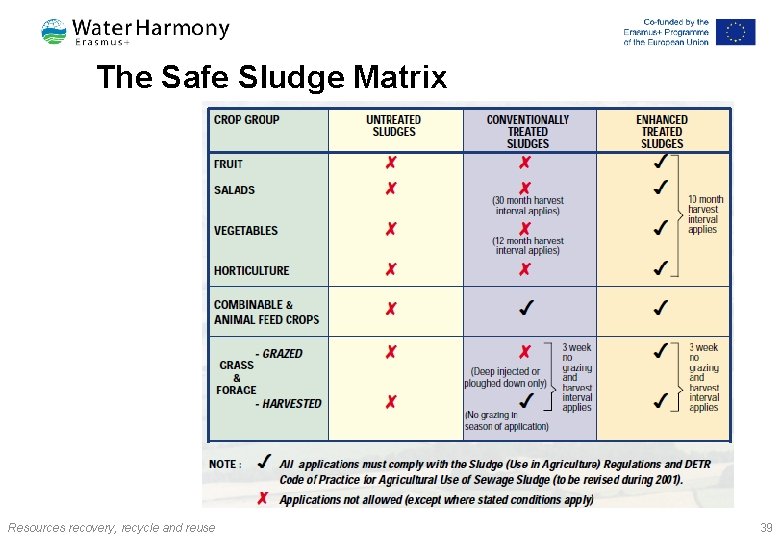
The Safe Sludge Matrix Resources recovery, recycle and reuse 39
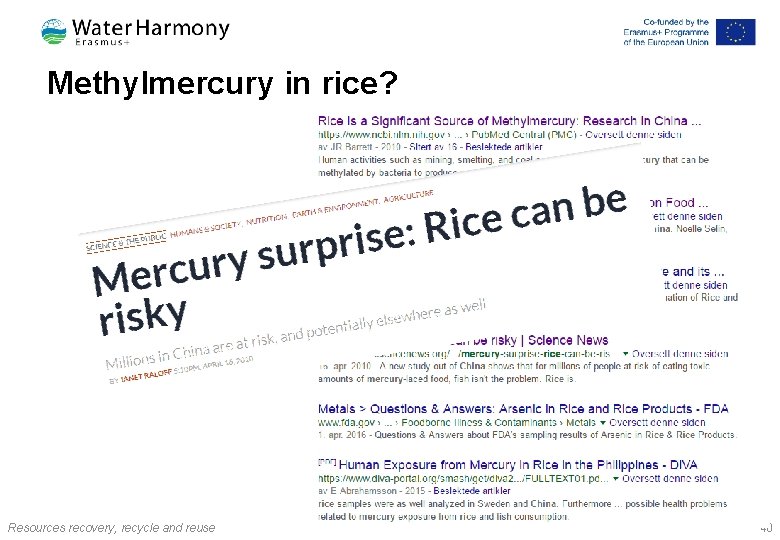
Methylmercury in rice? Resources recovery, recycle and reuse 40
Outline § Introduction § Potable use § Non potable use § Groundwater recharge § Sludge in agriculture § Recovery of beneficial material § Energy Resources recovery, recycle and reuse 41
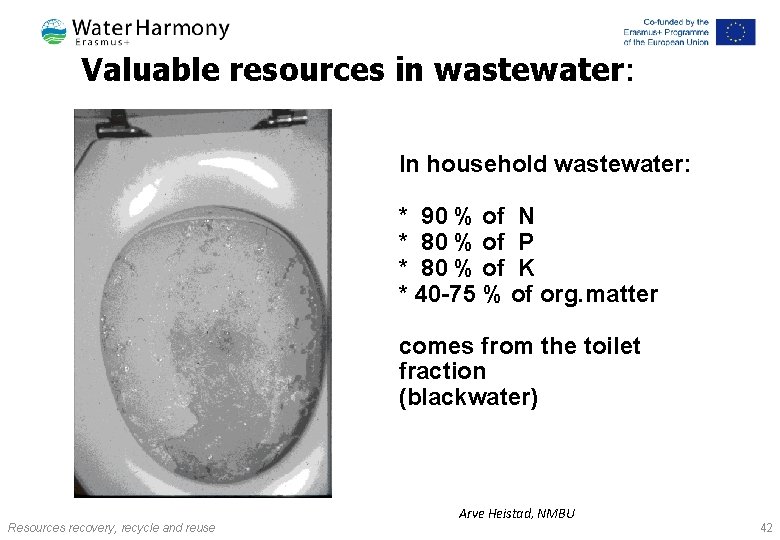
Valuable resources in wastewater: In household wastewater: * 90 % of N * 80 % of P * 80 % of K * 40 -75 % of org. matter comes from the toilet fraction (blackwater) Resources recovery, recycle and reuse Arve Heistad, NMBU 42
Recovery of nutrients § Phosphates: mineral P reserves diminishing; need increases and no substitute § Nitrogen: Abundant in the atmosphere but takes a considerable energy input to capture it and convert it into a fertilizer product § Organic carbon Resources recovery, recycle and reuse 43
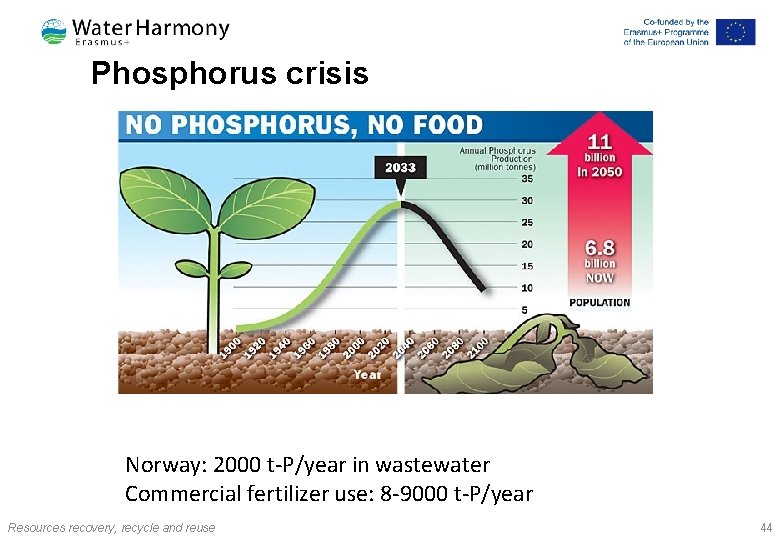
Phosphorus crisis Norway: 2000 t-P/year in wastewater Commercial fertilizer use: 8 -9000 t-P/year Resources recovery, recycle and reuse 44
Resources recovery, recycle and reuse 45
Impact of WW treatment on plant availability of P § Bio-P removal: Plant Availability = mineral fertilizer § Coagulation with Fe or Al: Plant Availability decreases with increasing content of Fe and Al in the sludge § Coagulation with Ca: Reduces plant availability less than Fe and Al Resources recovery, recycle and reuse 46
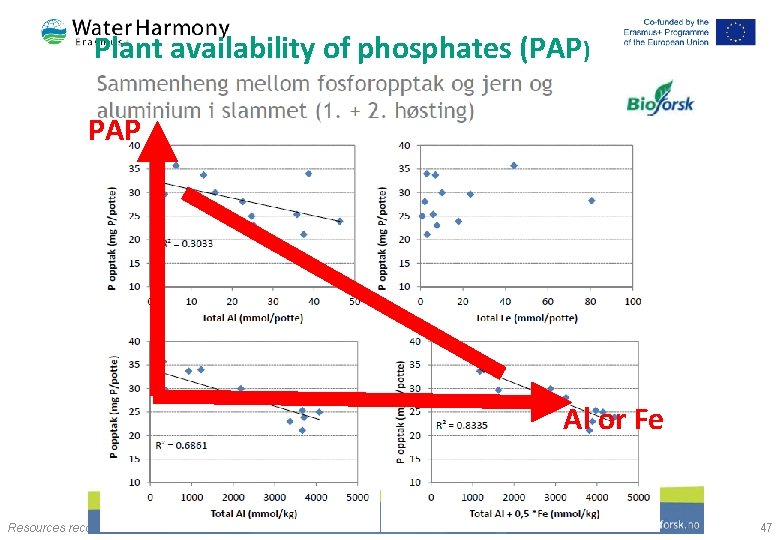
Plant availability of phosphates (PAP) PAP Al or Fe Resources recovery, recycle and reuse 47
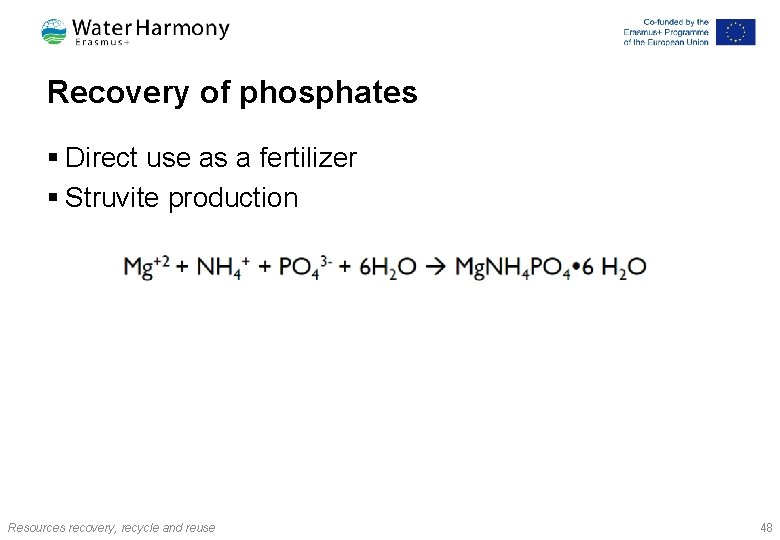
Recovery of phosphates § Direct use as a fertilizer § Struvite production Resources recovery, recycle and reuse 48
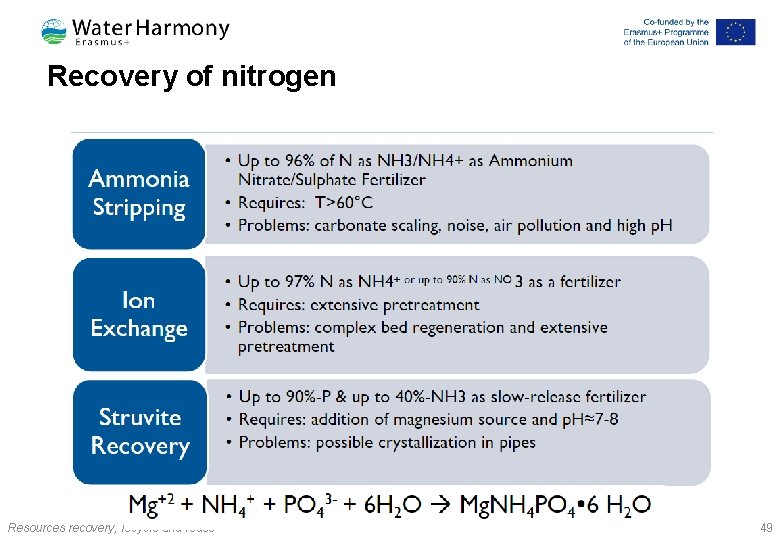
Recovery of nitrogen Resources recovery, recycle and reuse 49
Other valuable material from sludge § A study of 50 WWTPs in US: • 13 most lucrative elements (Ag, Cu, Au, P, Fe, Pd, Mn, Zn, Ir, Al, Cd, Ti, Ga, and Cr) with a combined value of US $280/ton of sludge • 1 ton of sludge contains 16. 7 g of Silver and 0. 33 g of gold Resources recovery, recycle and reuse 50
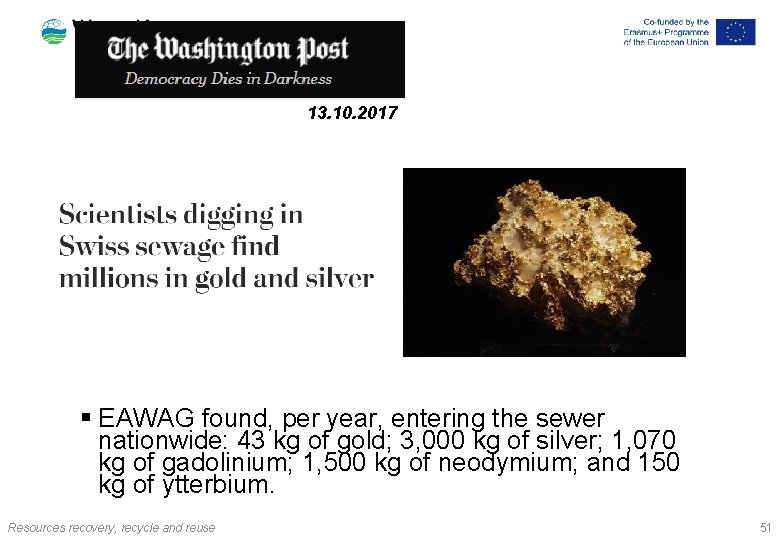
13. 10. 2017 § EAWAG found, per year, entering the sewer nationwide: 43 kg of gold; 3, 000 kg of silver; 1, 070 kg of gadolinium; 1, 500 kg of neodymium; and 150 kg of ytterbium. Resources recovery, recycle and reuse 51
Outline § Introduction § Potable use § Non potable use § Groundwater recharge § Sludge in agriculture § Recovery of beneficial material § Energy Resources recovery, recycle and reuse 52
Energy from WW and sludge Resources recovery, recycle and reuse 53
Resources recovery, recycle and reuse 54
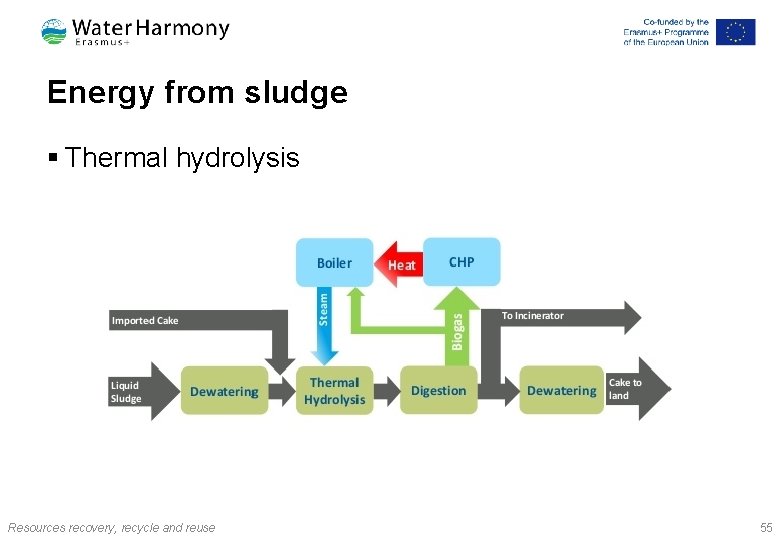
Energy from sludge § Thermal hydrolysis Resources recovery, recycle and reuse 55
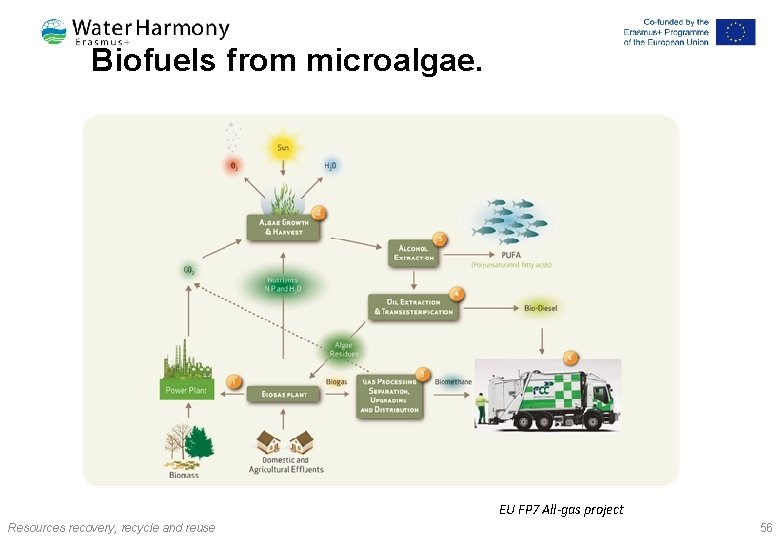
Biofuels from microalgae. EU FP 7 All-gas project Resources recovery, recycle and reuse 56
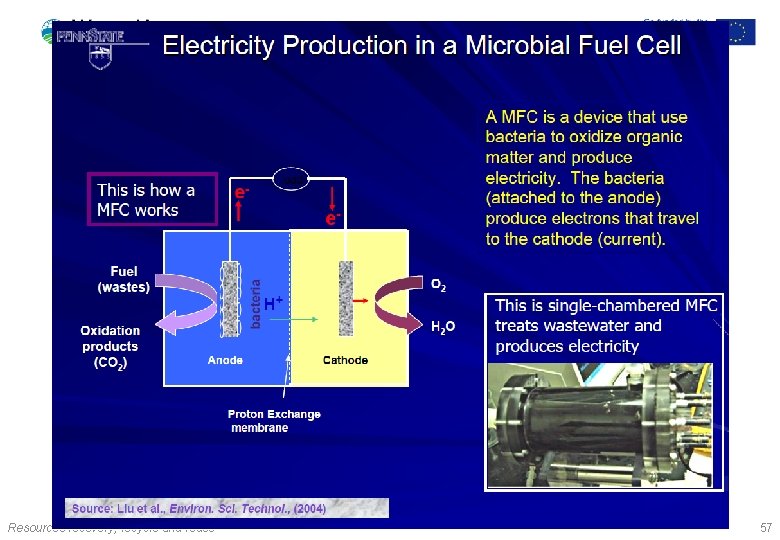
Resources recovery, recycle and reuse 57
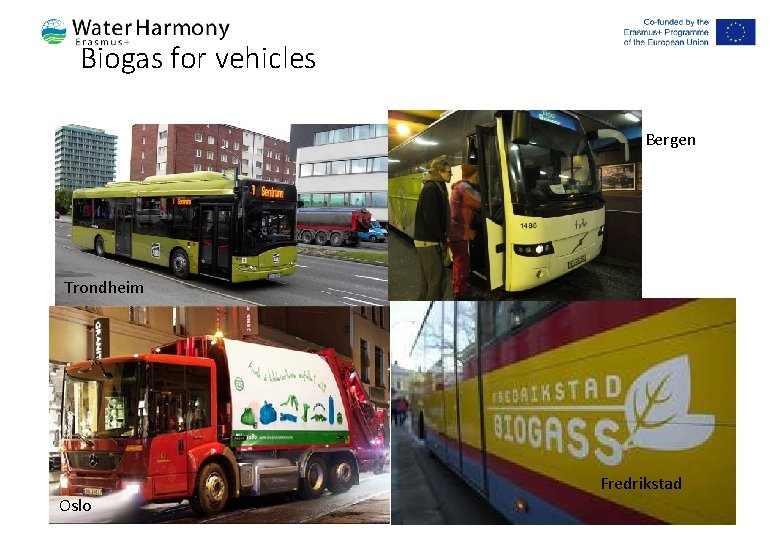
Biogas for vehicles Bergen Trondheim Oslo Fredrikstad
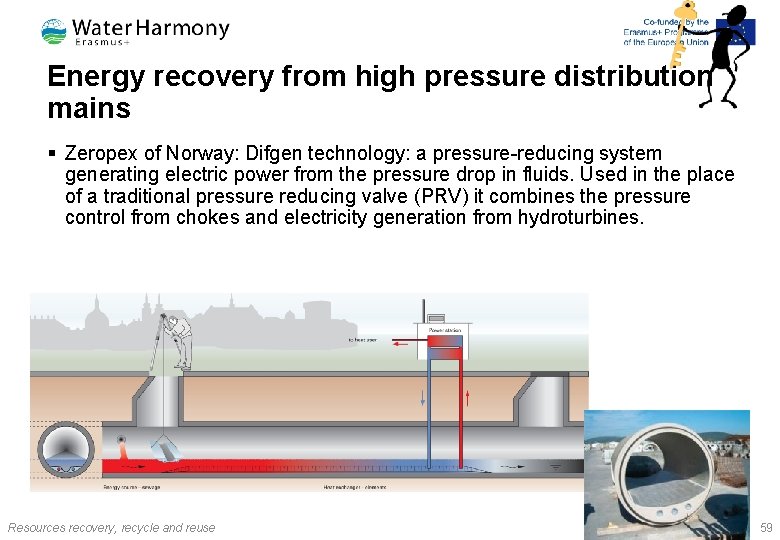
Energy recovery from high pressure distribution mains § Zeropex of Norway: Difgen technology: a pressure-reducing system generating electric power from the pressure drop in fluids. Used in the place of a traditional pressure reducing valve (PRV) it combines the pressure control from chokes and electricity generation from hydroturbines. Resources recovery, recycle and reuse 59 59
§ Energy required for secondary wastewater treatment • 1, 200 to 2, 400 MJ/1000 m 3 § Energy available in wastewater for treatment, • 5 000 -6 000 MJ/1000 m 3 § Energy available in wastewater is 2 to 4 times the amount required for treatment Resources recovery, recycle and reuse 60 60
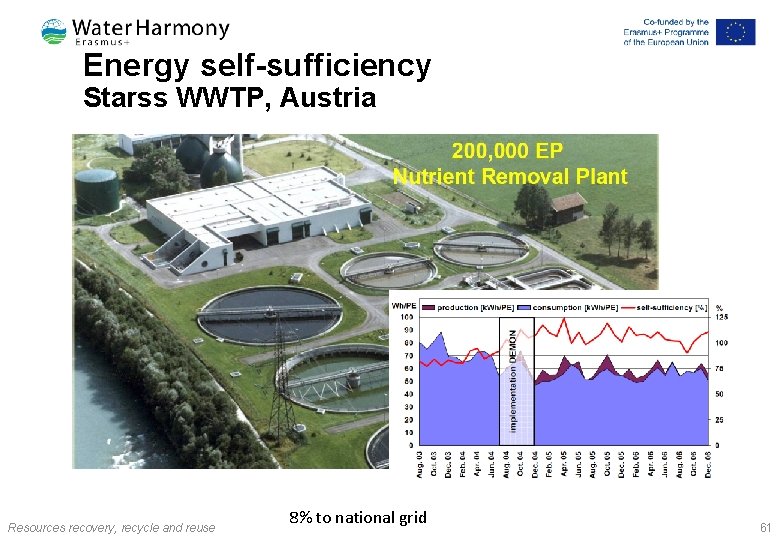
Energy self-sufficiency Starss WWTP, Austria Resources recovery, recycle and reuse 8% to national grid 61
Energy from effluent drop § Vienna, Austria AWTP discharges 560 000 m 3/d (148 MGD) to Danube River § Drop to Danube River from plant outfall • 5 m (16. 5 ft drop) between headworks and Danube River § Electricity requirements for operation = 175 000 k. Wh/d (63. 8 Million k. Wh per year) § Vertical axis turbine produces 1. 5 Million k. Wh per year used on-site in treatment plant’s grid (2. 6% of plant use) http: //www. aquamedia. at/templates/index. cfm/id/27096 Resources recovery, recycle and reuse 62
Basic sources for this presentation Maetrials from Associate Prof. Sergii Kontsevoi, serkon 157@ukr. net, National Technical University KPI named after Igor Sikorsky Water Encyclopedia, Volume 1, Domestic, Municipal, and Industrial Water Supply and Waste Disposal. Jay H. Lehr (Editor-in-Chief), Jack Keeley (Editor), Janet Lehr (Associate Editor). ISBN: 978 -0 -471 -73687 -5. 952 pages, 2005 Water reuse : issues, technologies, and applications / written by Takashi Asano … [et al. ]. ISBN-13: 978 -0 -07 -145927 -3. 1503 pages, 2007 PUB, Singapore's National Water Agency: https: //www. pub. gov. sg https: //www. youtube. com/user/pubwebadmin Resources recovery, recycle and reuse 63
- Slides: 63