
The Norwegian paradox Today everything is set for


- Slides: 48
The Norwegian paradox • Today everything is set for gender equality regarding work-life balance in Norway • Still we have great differences between men and women regarding time use, equal pay and sector segregation in the labour marked.
A political will to facilitate the work-life balance • High labor force participation among women • Family politics in working life (part time, breaks for breastfeeding, parental leave, leave due to sick children) • High proportion of women in higher education • Available day care • From bread winning fathers to participating fathers • Strengthening of The Gender Equality Act • High proportion of women in higher education
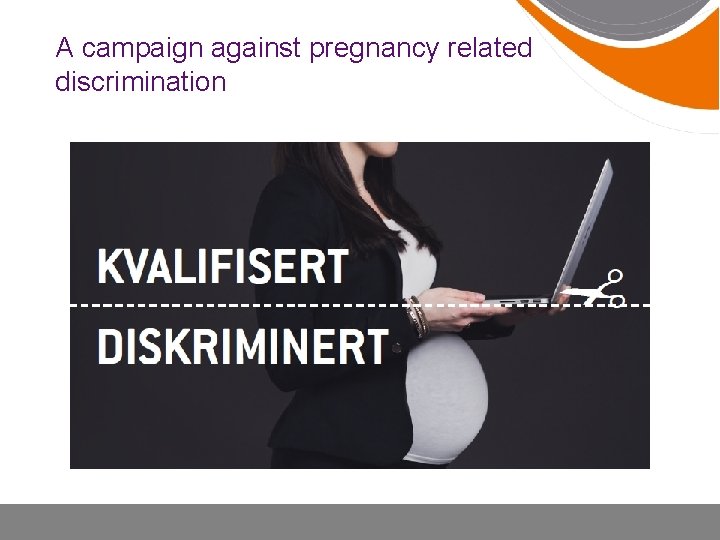
• In spite of all this - the Ombud's office receives many complaints about for examples pregnancy related discrimination in working life
Some historic explanations of the paradox
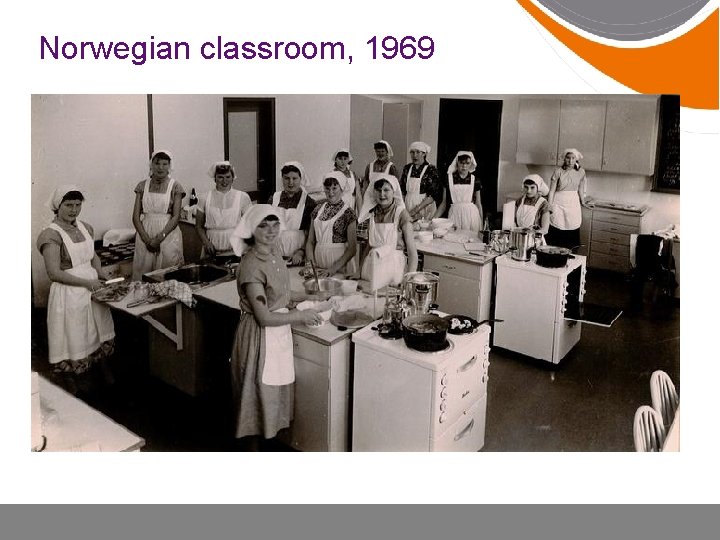
Norwegian classroom, 1969
Housewive society
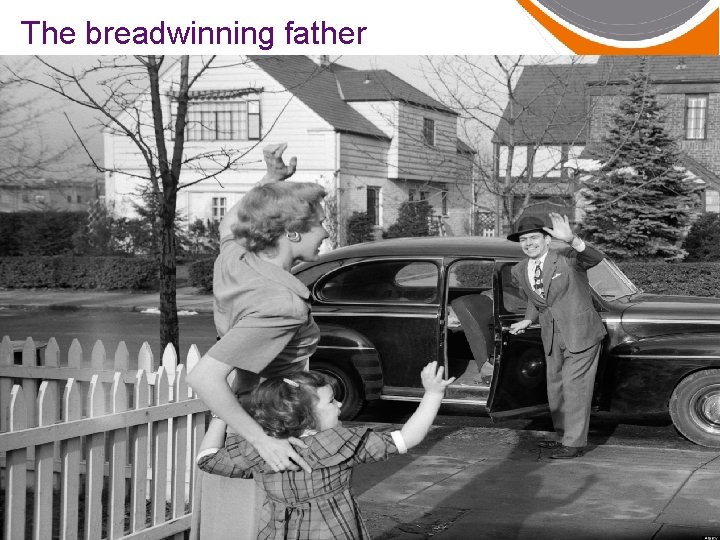
The breadwinning father
Modernity • • • expansion of the welfare state need of labor force women entered the labor market education revolution social and geographic mobility
Housewives become part time workers
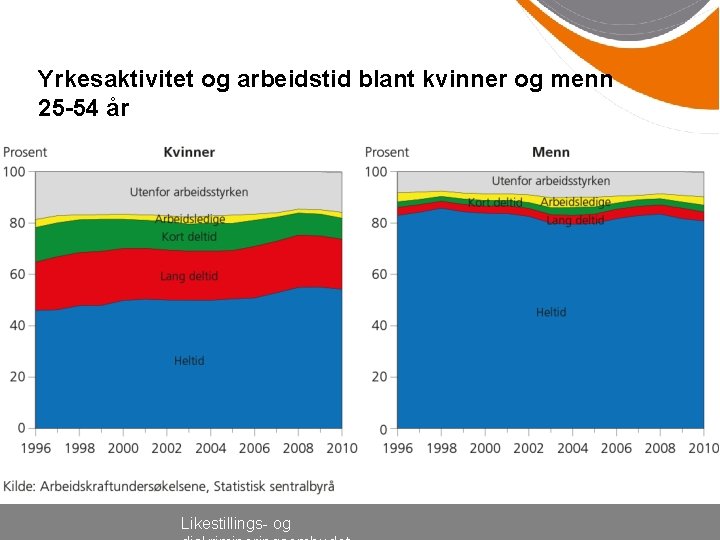
Yrkesaktivitet og arbeidstid blant kvinner og menn 25 -54 år Likestillings- og
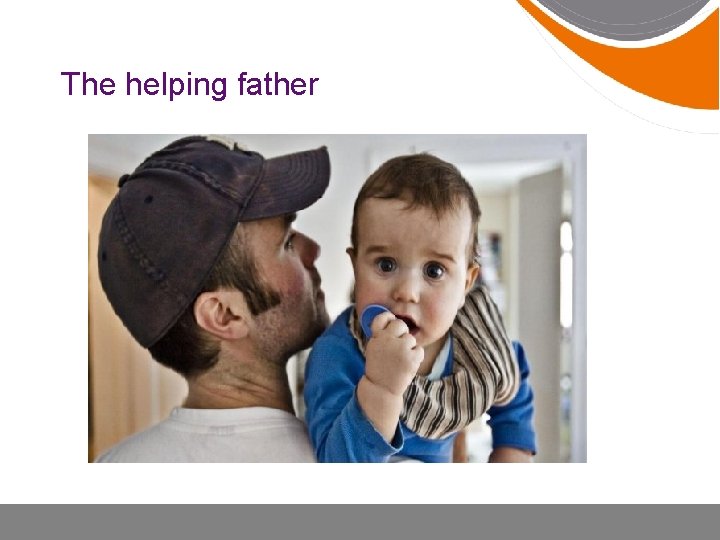
The helping father
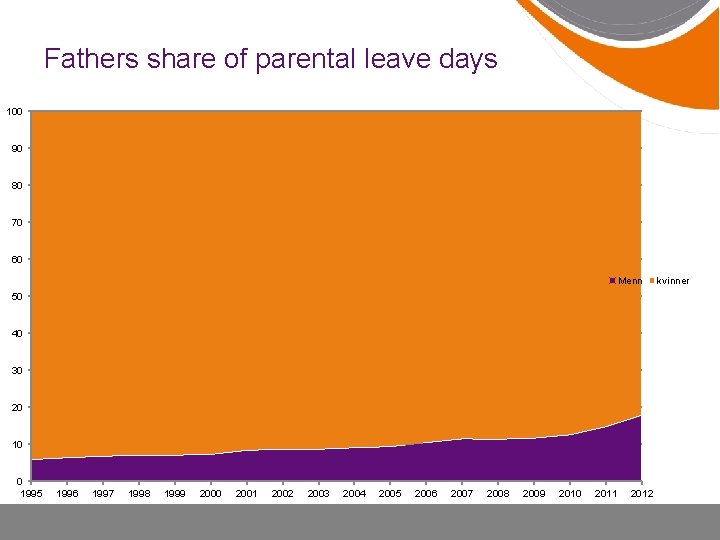
Fathers share of parental leave days 100 90 80 70 60 Menn 50 40 30 20 10 0 1995 1996 1997 1998 1999 2000 2001 2002 2003 2004 2005 2006 2007 2008 2009 2010 2011 2012 kvinner
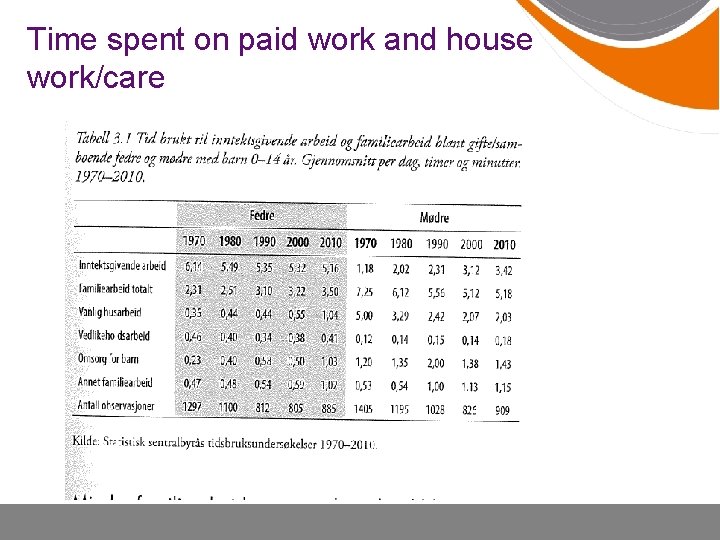
Time spent on paid work and house work/care
What is the paradox • Gender equality politics makes it possible for women to combine work and family, • BUT it also cement the gender stereotypes because fathers use them less or do not use them at all
How can we explain the paradox? • Working mothers make most use of the welfare benefits • This makes working mothers less attractive in the labor market • This is an important mechanism for discrimination
What can we do whit the paradox? • What is the prevalence of pregnancy related discrimination in the Norway Without having the possibility to combine paid work and caring for children, there can be no equality between men and women We need that men use family friendly arrangement in the same that women do We need employers to respect the act and se the benefits in having a non discriminatory policy
A campaign against pregnancy related discrimination
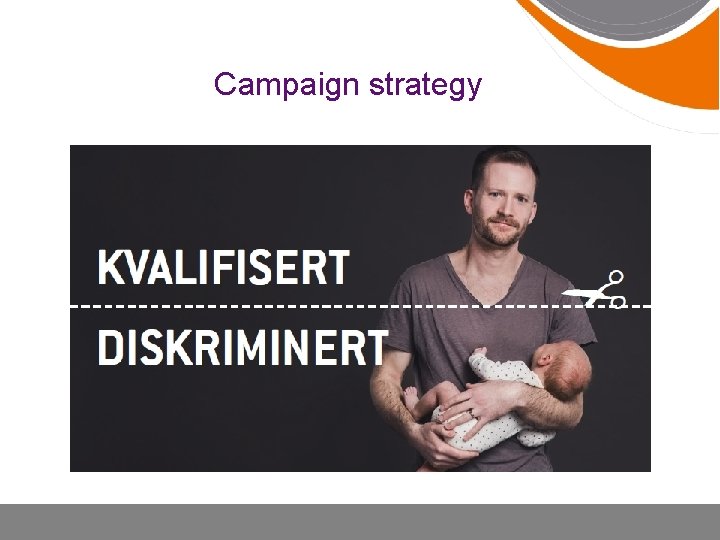
Campaign strategy
Target groups • Jobseekers and employees – Expectant parents – Parents on leave – Young people • Employers
The social partners • In Norway the social partners hold an influential position • There can be no change in the working life without contribution from the social partners • Cooperation with the social partners
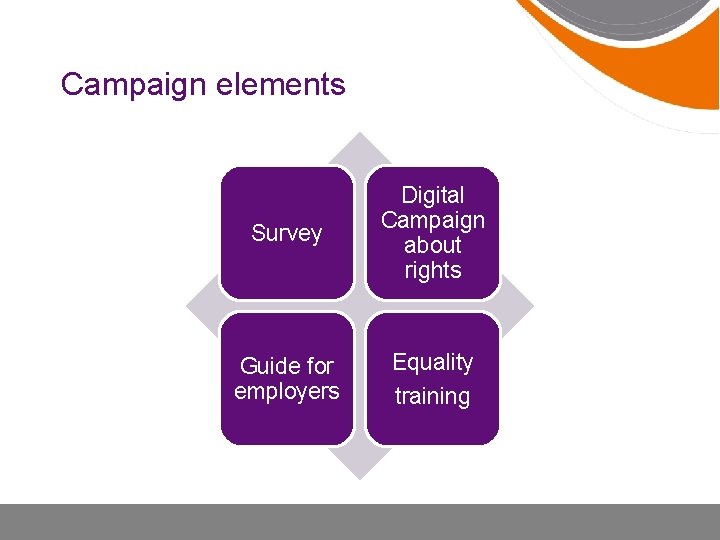
Campaign elements Survey Digital Campaign about rights Guide for employers Equality training
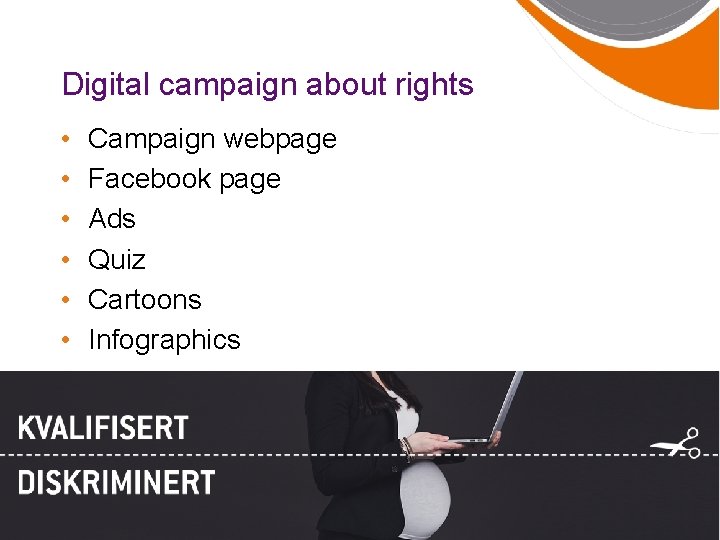
Digital campaign about rights • • • Campaign webpage Facebook page Ads Quiz Cartoons Infographics
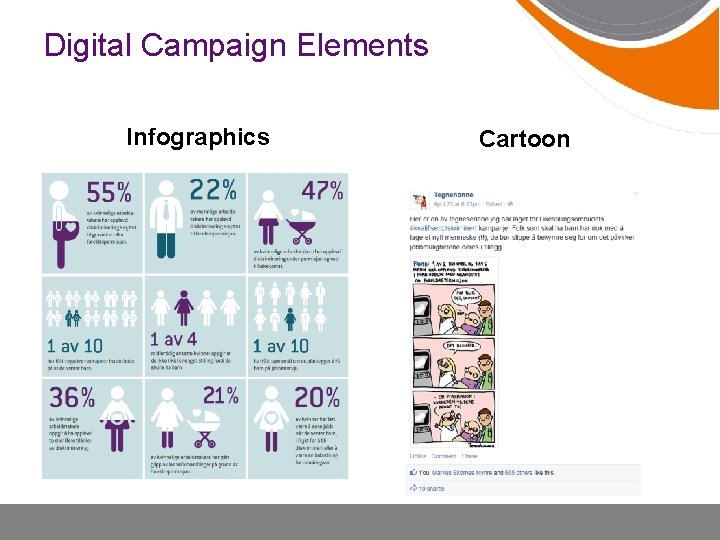
Digital Campaign Elements Infographics Cartoon
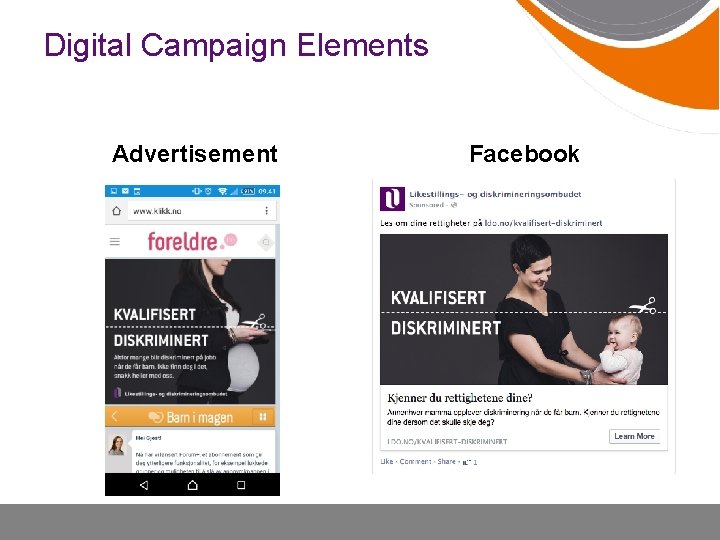
Digital Campaign Elements Advertisement Facebook
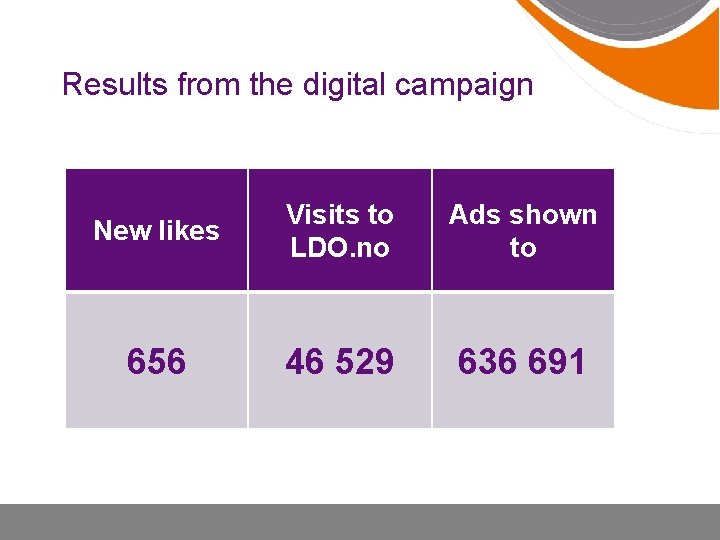
Results from the digital campaign New likes Visits to LDO. no Ads shown to 656 46 529 636 691
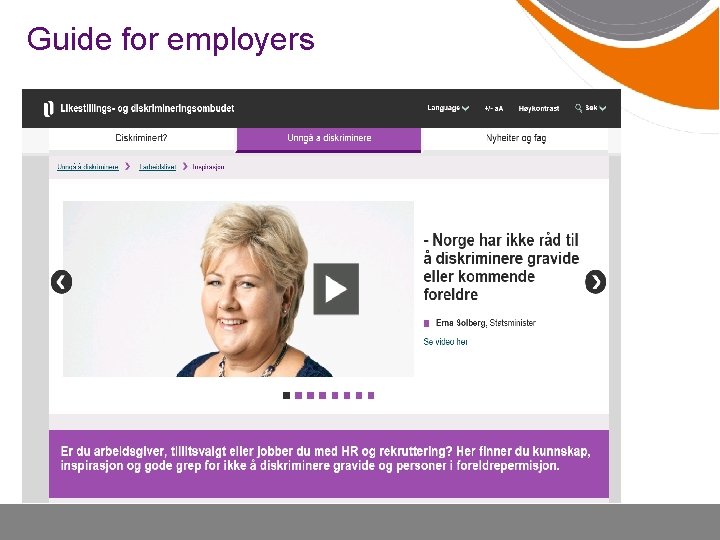
Guide for employers
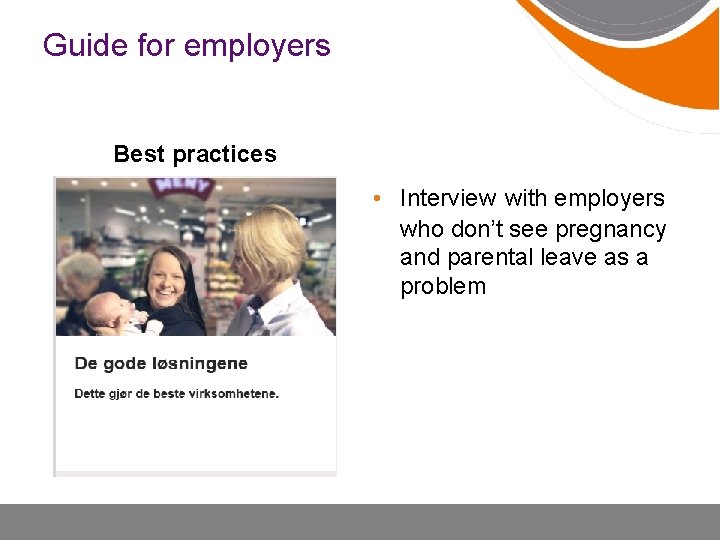
Guide for employers Best practices • Interview with employers who don’t see pregnancy and parental leave as a problem
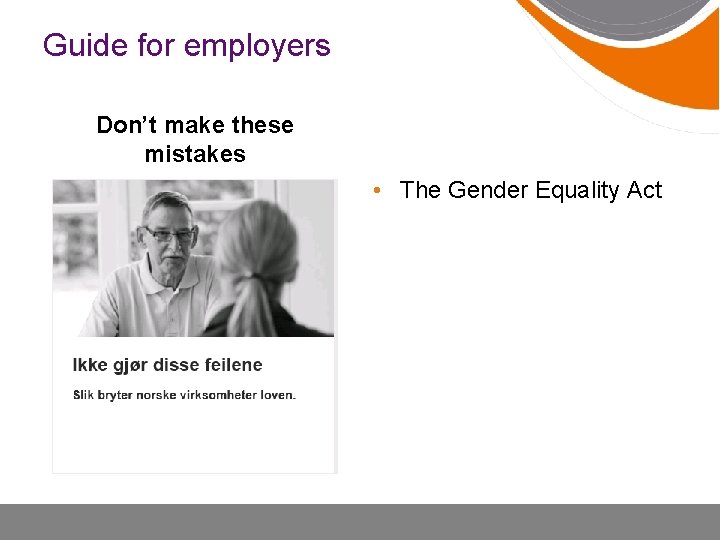
Guide for employers Don’t make these mistakes • The Gender Equality Act
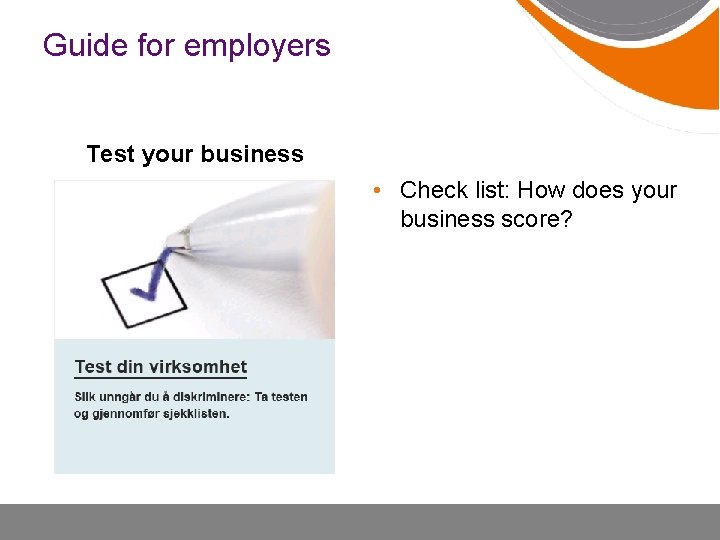
Guide for employers Test your business • Check list: How does your business score?
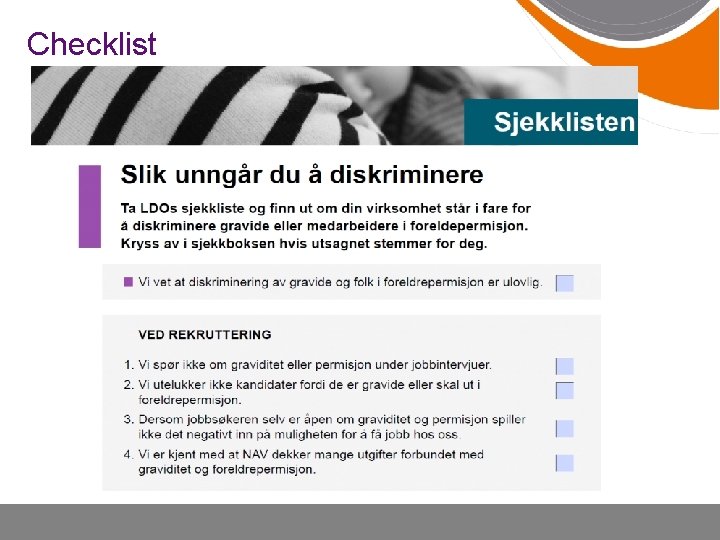
Checklist
Survey on discrimination on the basis of pregnancy and parental leave
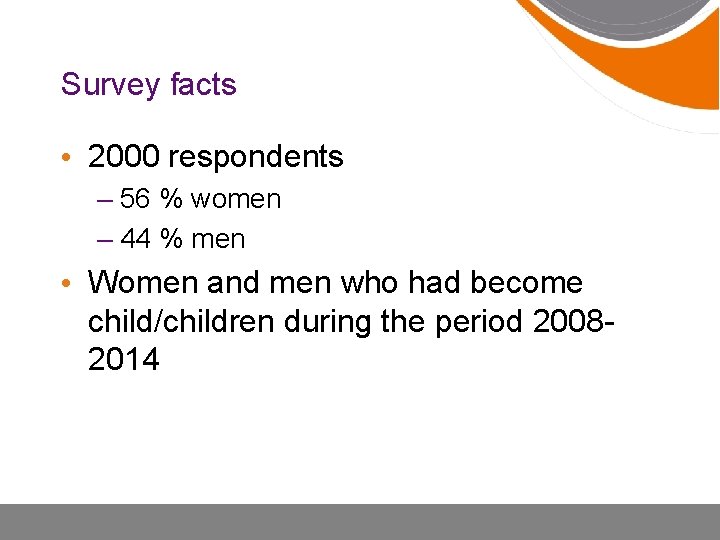
Survey facts • 2000 respondents – 56 % women – 44 % men • Women and men who had become child/children during the period 20082014
The questions • Questions on the basis of the provisions in the Norwegian equality Act: – Experiences in relation to applying for jobs, at work when expecting a child, during and after parental leave. • Negative experiences, not necessarily illegal
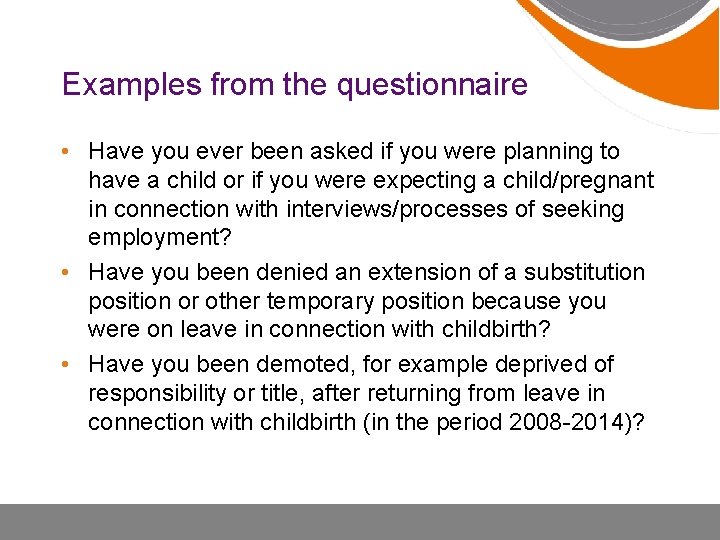
Examples from the questionnaire • Have you ever been asked if you were planning to have a child or if you were expecting a child/pregnant in connection with interviews/processes of seeking employment? • Have you been denied an extension of a substitution position or other temporary position because you were on leave in connection with childbirth? • Have you been demoted, for example deprived of responsibility or title, after returning from leave in connection with childbirth (in the period 2008 -2014)?
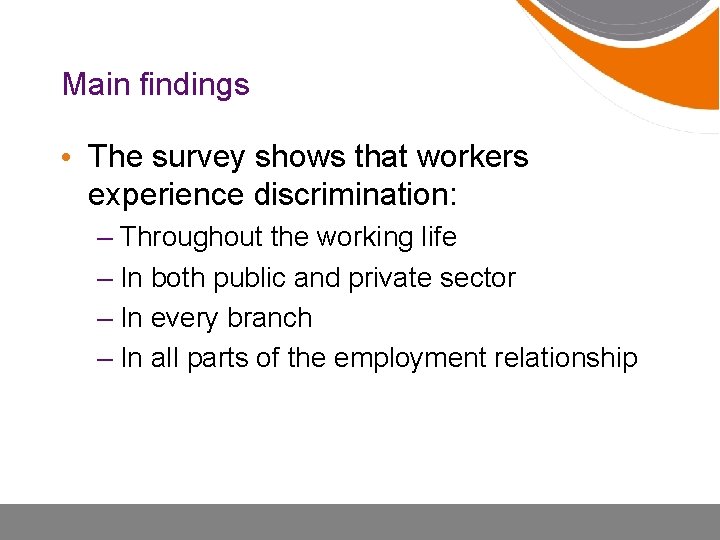
Main findings • The survey shows that workers experience discrimination: – Throughout the working life – In both public and private sector – In every branch – In all parts of the employment relationship
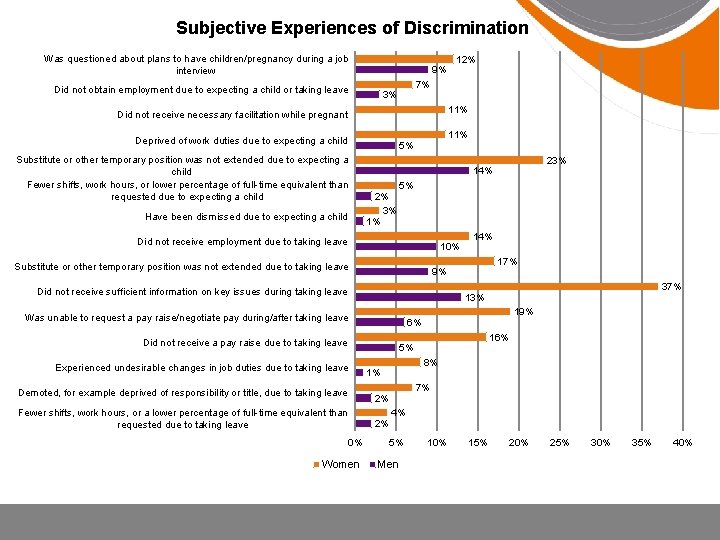
Subjective Experiences of Discrimination Was questioned about plans to have children/pregnancy during a job interview 9% Did not obtain employment due to expecting a child or taking leave 12% 7% 3% 11% Did not receive necessary facilitation while pregnant Deprived of work duties due to expecting a child 11% 5% Substitute or other temporary position was not extended due to expecting a child Fewer shifts, work hours, or lower percentage of full-time equivalent than requested due to expecting a child Have been dismissed due to expecting a child 2% 3% 1% 5% Did not receive employment due to taking leave 10% Substitute or other temporary position was not extended due to taking leave 14% 17% 9% Did not receive sufficient information on key issues during taking leave 19% 6% Did not receive a pay raise due to taking leave 16% 5% Demoted, for example deprived of responsibility or title, due to taking leave Fewer shifts, work hours, or a lower percentage of full-time equivalent than requested due to taking leave 0% Women 37% 13% Was unable to request a pay raise/negotiate pay during/after taking leave Experienced undesirable changes in job duties due to taking leave 23% 14% 8% 1% 7% 2% 2% 4% 5% Men 10% 15% 20% 25% 30% 35% 40%
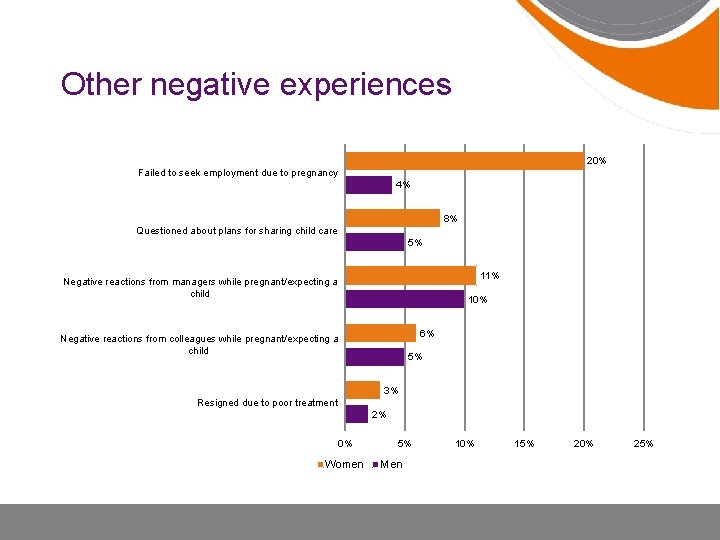
Other negative experiences 20% Failed to seek employment due to pregnancy 4% 8% Questioned about plans for sharing child care 5% 11% Negative reactions from managers while pregnant/expecting a child 10% 6% Negative reactions from colleagues while pregnant/expecting a child 5% 3% Resigned due to poor treatment 2% 0% Women 5% Men 10% 15% 20% 25%
Recommendations for action Illustration: www. neitileu. no
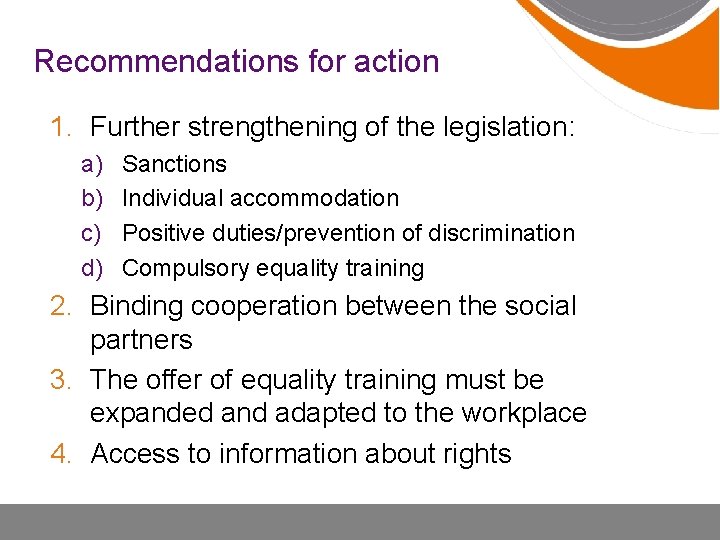
Recommendations for action 1. Further strengthening of the legislation: a) b) c) d) Sanctions Individual accommodation Positive duties/prevention of discrimination Compulsory equality training 2. Binding cooperation between the social partners 3. The offer of equality training must be expanded and adapted to the workplace 4. Access to information about rights
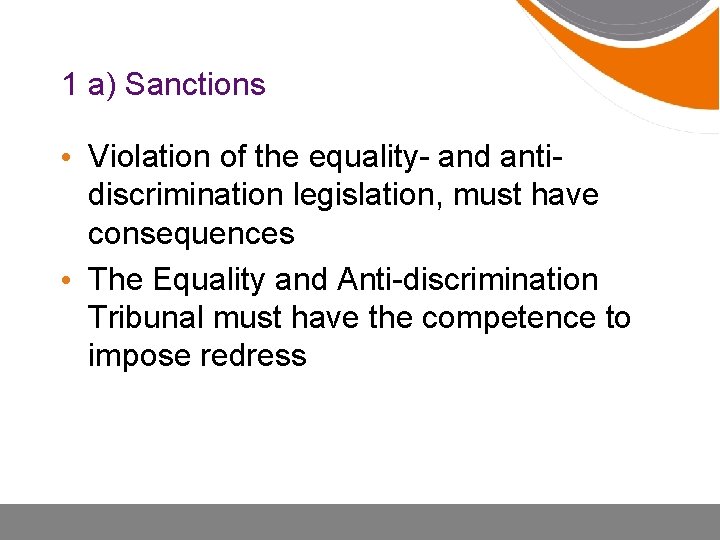
1 a) Sanctions • Violation of the equality- and antidiscrimination legislation, must have consequences • The Equality and Anti-discrimination Tribunal must have the competence to impose redress
1 b) Individual accommodation • There must be a clear obligation to provide individual accommodation to pregnant workers • A specific provision must be introduced/imposed
1 c) Positive duties • Legal prohibition is not sufficient to avoid discrimination • Employers must have a legal obligation to prevent discrimination in the workplace
1 d) Compulsory equality training • There must be a legal obligation regarding equality training for employers and company representatives • Training in how to promote equality and combat discrimination in the workplace • Today the training is optional
2. Binding cooperation in the tripartite cooperation • No changes in the labor market without involving the social partners
3. The offer of equality training must be expanded • In every region • Sector wise adaption
4. Access to information about rights • Pregnant women and fathers to be must be guaranteed information about their rights