Introduction to Nuclear Power Kenneth M Klemow Ph
- Slides: 30
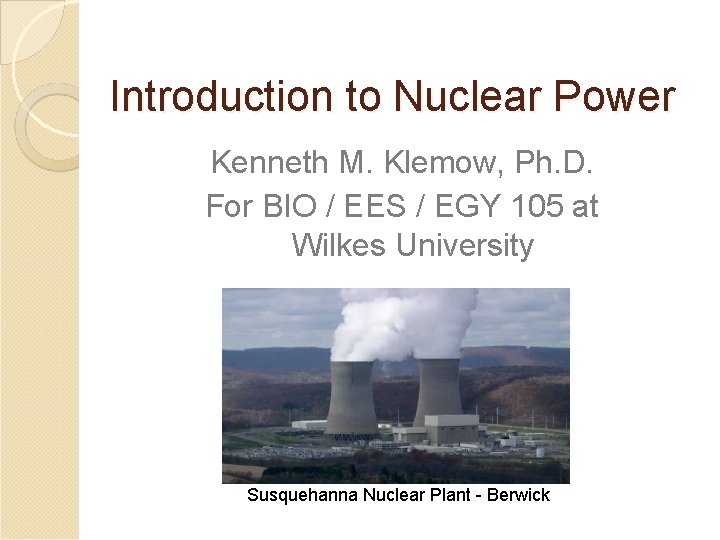
Introduction to Nuclear Power Kenneth M. Klemow, Ph. D. For BIO / EES / EGY 105 at Wilkes University Susquehanna Nuclear Plant - Berwick
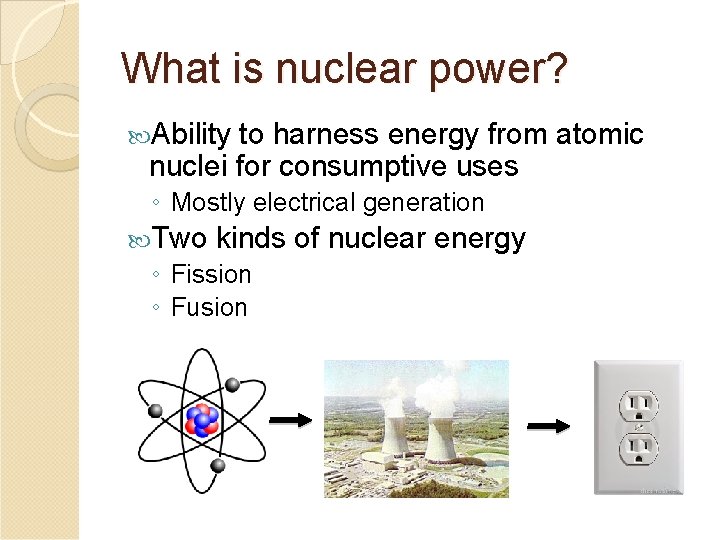
What is nuclear power? Ability to harness energy from atomic nuclei for consumptive uses ◦ Mostly electrical generation Two kinds of nuclear energy ◦ Fission ◦ Fusion
Nuclear fission Heavy atoms split, producing smaller particles, electromagnetic radiation, and energy. Most common form of nuclear fission involves splitting of certain forms of Uranium
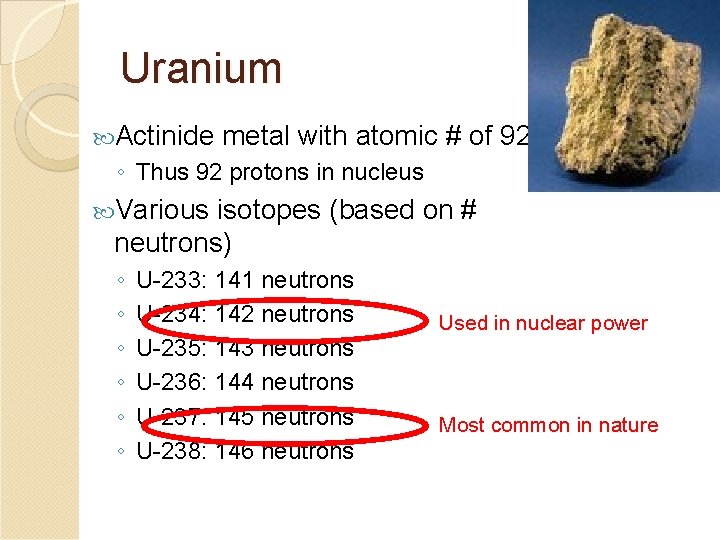
Uranium Actinide metal with atomic # of 92. ◦ Thus 92 protons in nucleus Various isotopes (based on # neutrons) ◦ ◦ ◦ U-233: 141 neutrons U-234: 142 neutrons U-235: 143 neutrons U-236: 144 neutrons U-237: 145 neutrons U-238: 146 neutrons Used in nuclear power Most common in nature
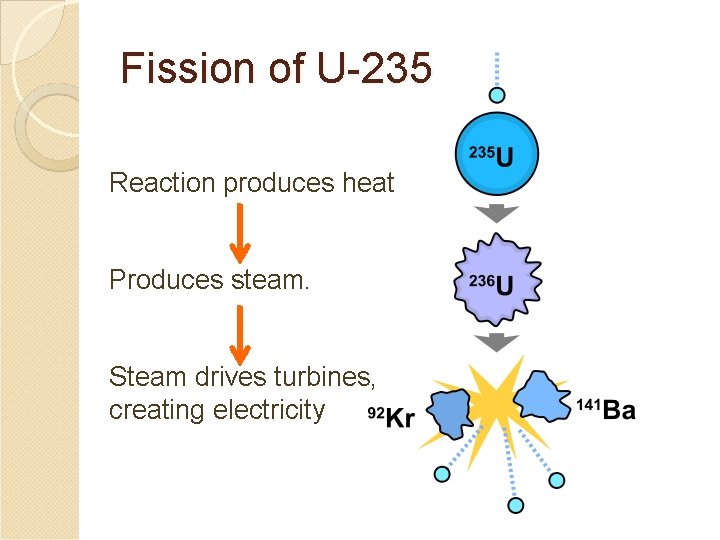
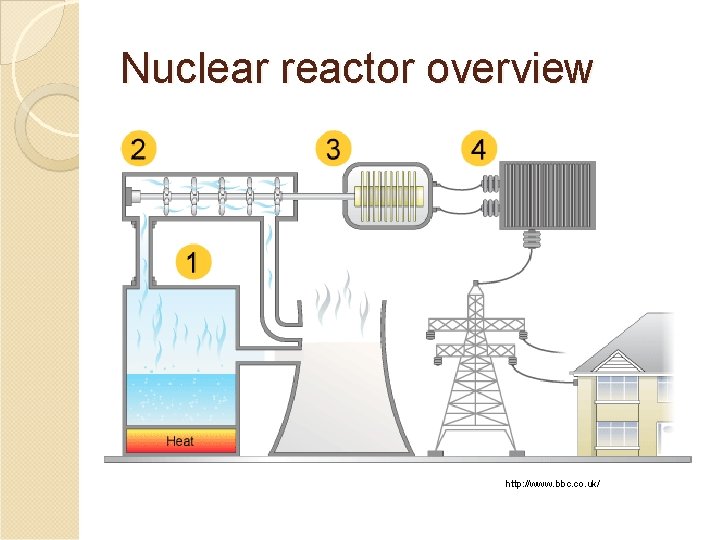
Fission of U-235 Reaction produces heat Produces steam. Steam drives turbines, creating electricity
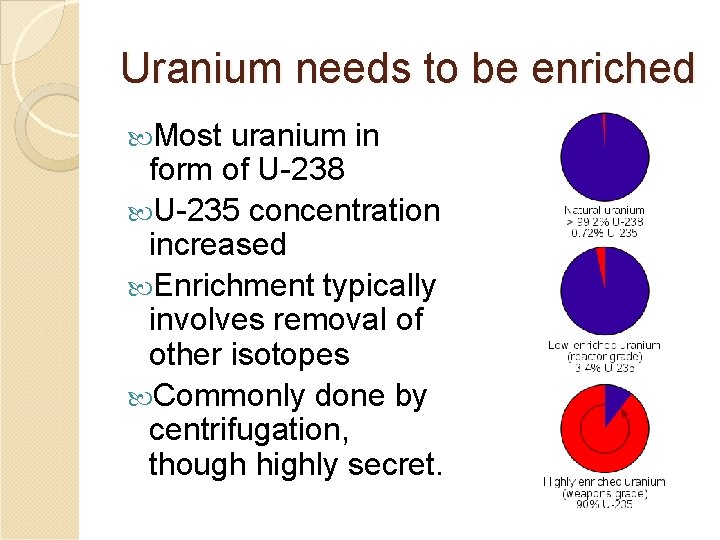
Uranium needs to be enriched Most uranium in form of U-238 U-235 concentration increased Enrichment typically involves removal of other isotopes Commonly done by centrifugation, though highly secret.
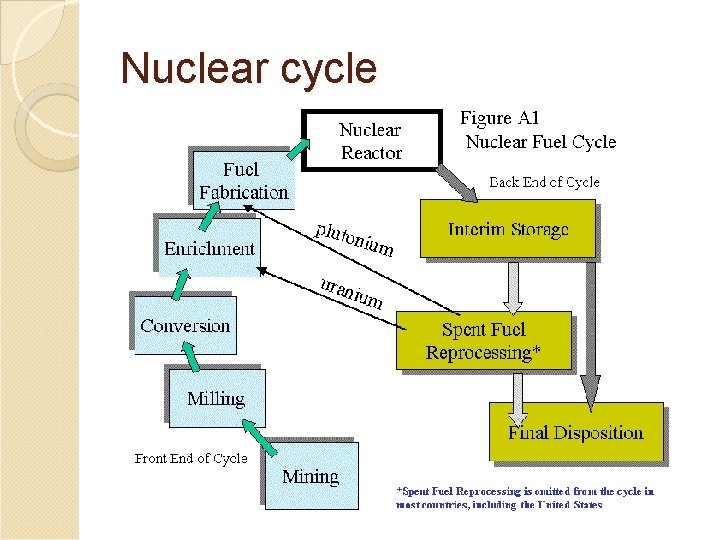
Nuclear cycle
Nuclear reactor overview http: //www. bbc. co. uk/
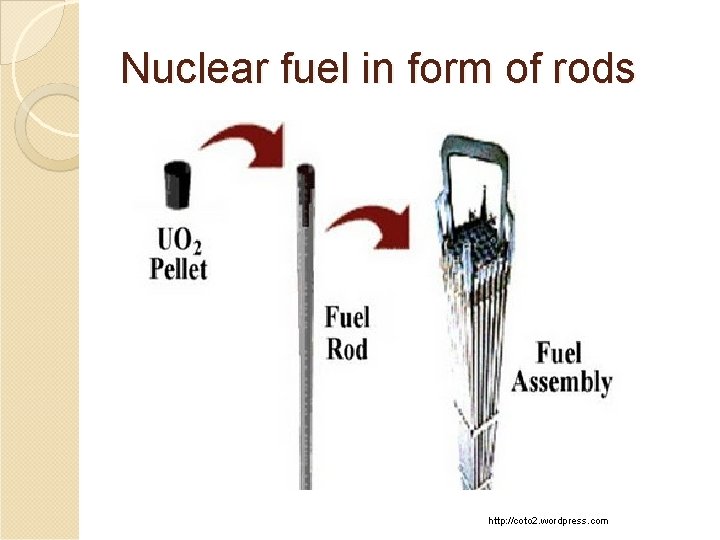
Nuclear fuel in form of rods http: //coto 2. wordpress. com
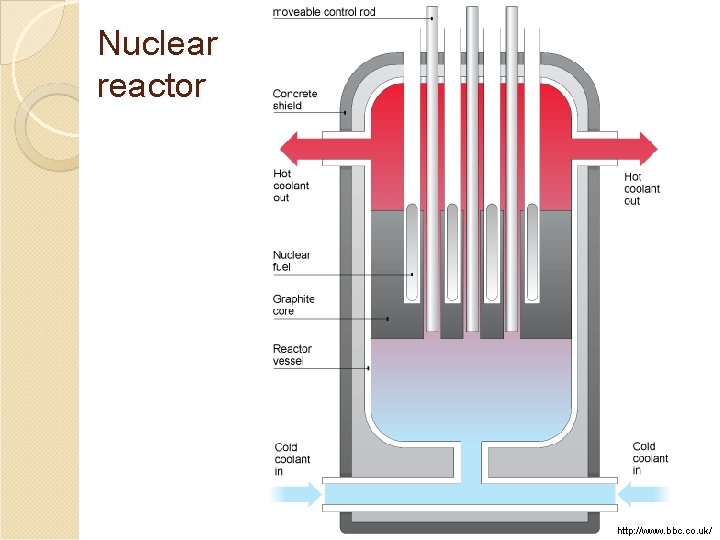
Nuclear reactor http: //www. bbc. co. uk/
History Basis in 1930 s ◦ Atomic nuclei contain vast energy 1940 s ◦ Research on nuclear energy wrapped into Manhattan Project – atomic bomb Early 1950 s ◦ US, Canada, USSR began work on generating electricity via nuclear energy ◦ USSR builds nuclear reactor to feed into power grid.
History II Late 1950 s ◦ Nuclear plants constructed in Pennsylvania and Virginia, Idaho, and USSR 1960 -1980 ◦ Nuclear capacity increased greatly in US, Europe, USSR. 1980 s and after ◦ Nuclear construction slowed due to rising anti-nuclear sentiment, costs involved in meeting more stringent standards
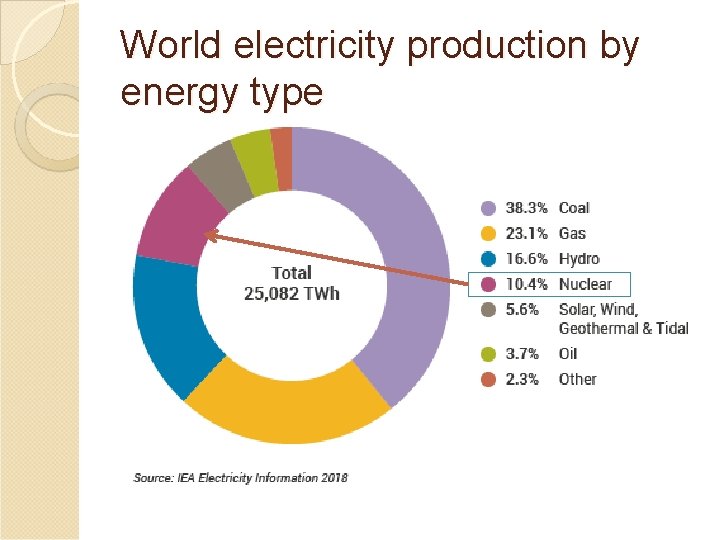
World electricity production by energy type
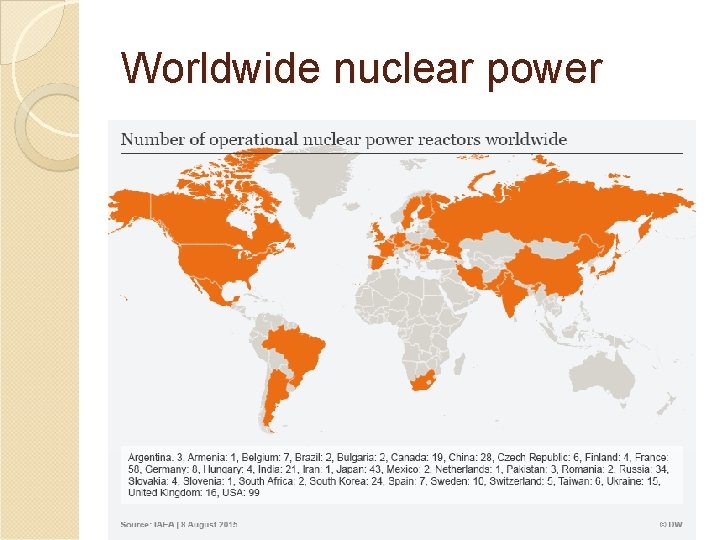
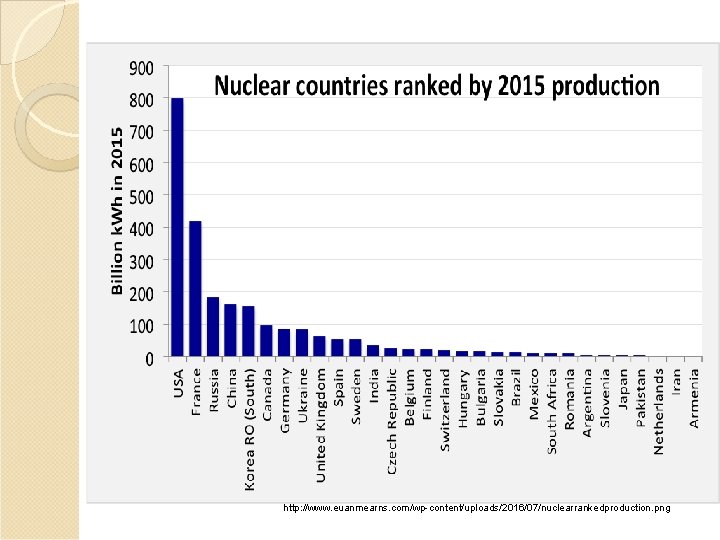
Worldwide nuclear power
http: //www. euanmearns. com/wp-content/uploads/2016/07/nuclearrankedproduction. png
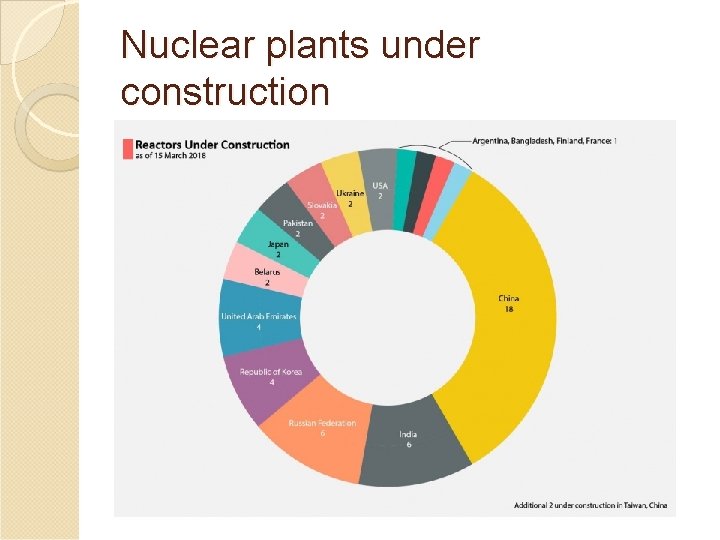
Nuclear plants under construction
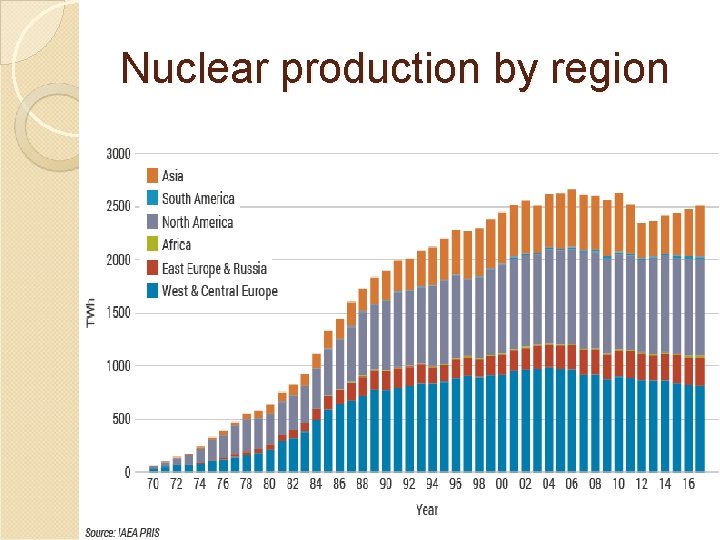
Nuclear production by region
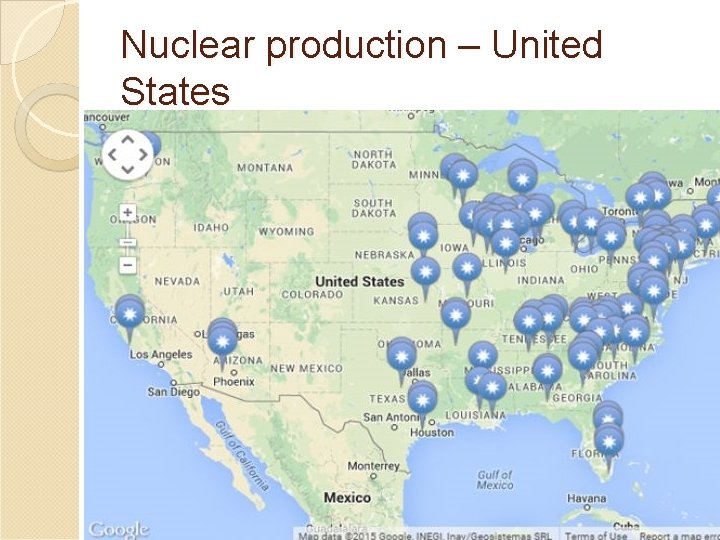
Nuclear production – United States
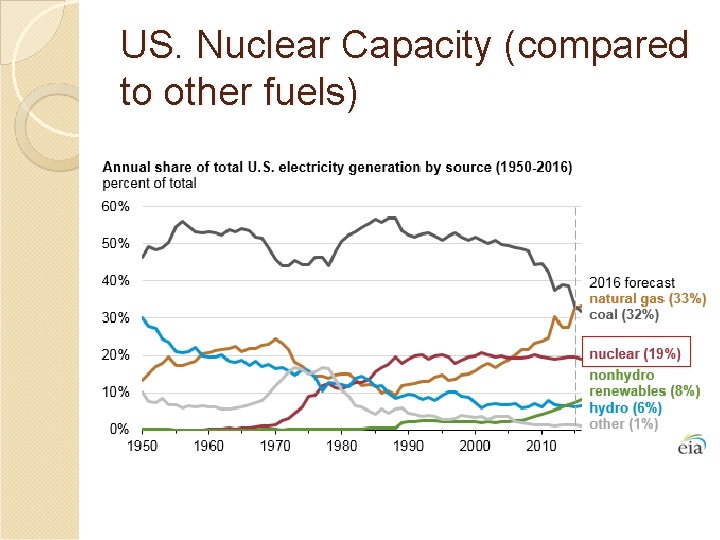
US. Nuclear Capacity (compared to other fuels)
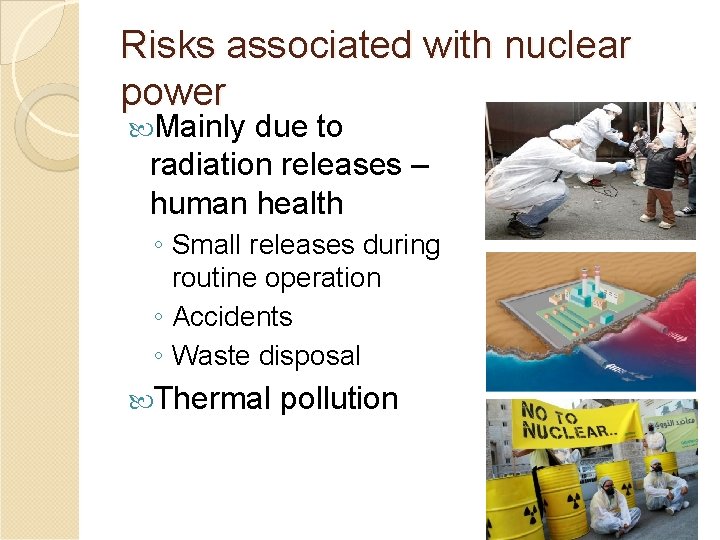
Risks associated with nuclear power Mainly due to radiation releases – human health ◦ Small releases during routine operation ◦ Accidents ◦ Waste disposal Thermal pollution
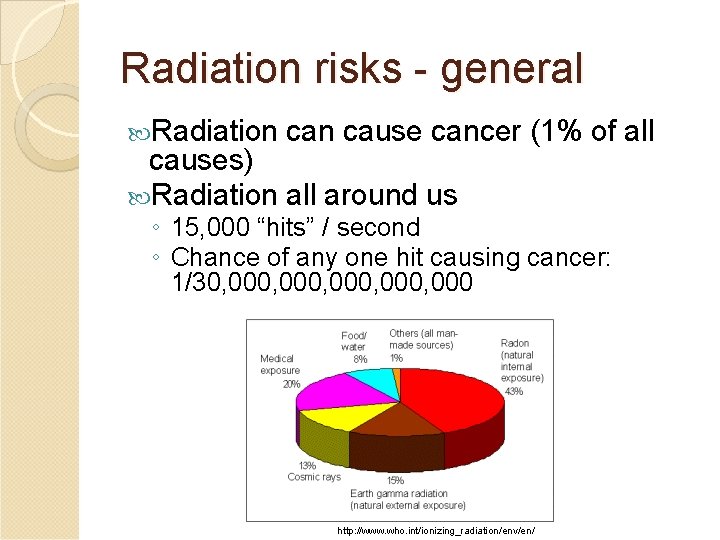
Radiation risks - general Radiation cause cancer (1% of all causes) Radiation all around us ◦ 15, 000 “hits” / second ◦ Chance of any one hit causing cancer: 1/30, 000, 000 http: //www. who. int/ionizing_radiation/env/en/
Increased risk by nuclear power Represents 0. 2% of increased exposure Thus 0. 002% increased cancer rate ◦ Reduces life expectancy by one hour ◦ Risks from fossil fuel sources: 3 -40 days
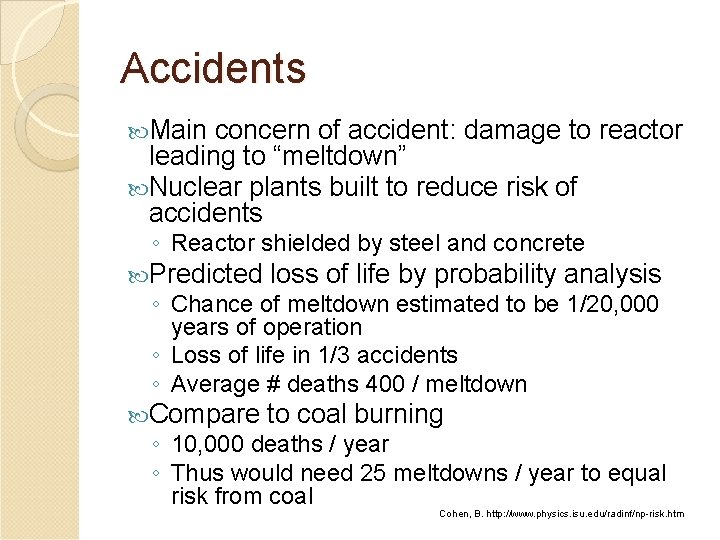
Accidents Main concern of accident: damage to reactor leading to “meltdown” Nuclear plants built to reduce risk of accidents ◦ Reactor shielded by steel and concrete Predicted loss of life by probability analysis Compare to coal burning ◦ Chance of meltdown estimated to be 1/20, 000 years of operation ◦ Loss of life in 1/3 accidents ◦ Average # deaths 400 / meltdown ◦ 10, 000 deaths / year ◦ Thus would need 25 meltdowns / year to equal risk from coal Cohen, B. http: //www. physics. isu. edu/radinf/np-risk. htm
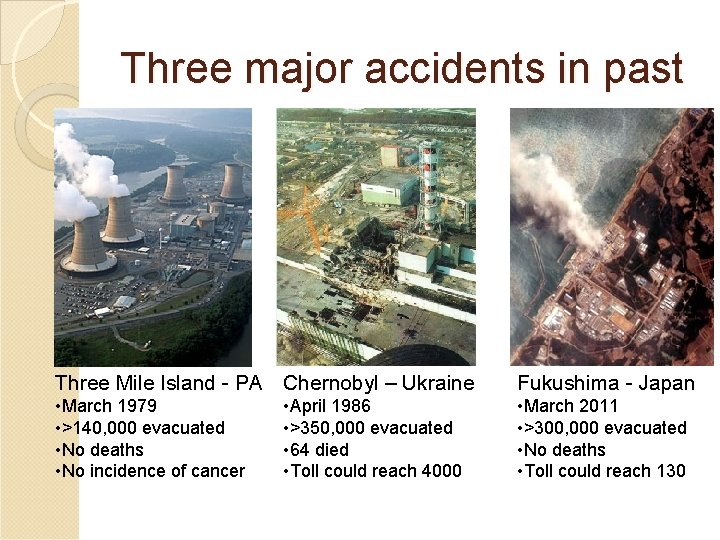
Three major accidents in past Three Mile Island - PA Chernobyl – Ukraine Fukushima - Japan • March 1979 • >140, 000 evacuated • No deaths • No incidence of cancer • March 2011 • >300, 000 evacuated • No deaths • Toll could reach 130 • April 1986 • >350, 000 evacuated • 64 died • Toll could reach 4000
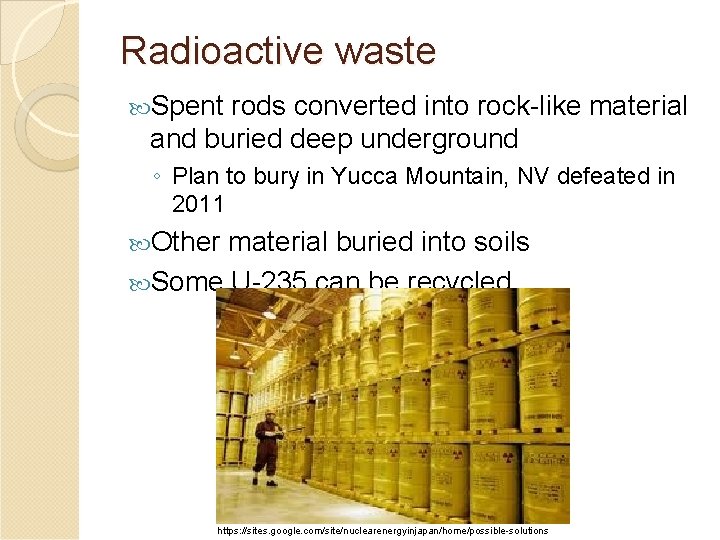
Radioactive waste Spent rods converted into rock-like material and buried deep underground ◦ Plan to bury in Yucca Mountain, NV defeated in 2011 Other material buried into soils Some U-235 can be recycled https: //sites. google. com/site/nuclearenergyinjapan/home/possible-solutions
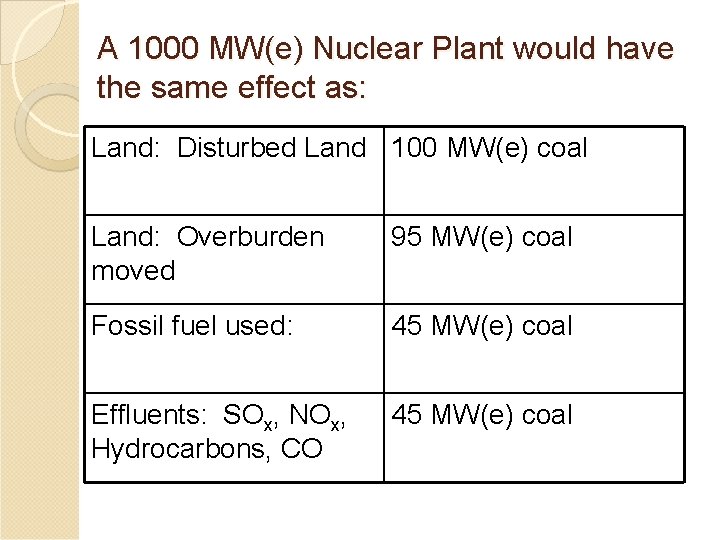
A 1000 MW(e) Nuclear Plant would have the same effect as: Land: Disturbed Land 100 MW(e) coal Land: Overburden moved 95 MW(e) coal Fossil fuel used: 45 MW(e) coal Effluents: SOx, NOx, Hydrocarbons, CO 45 MW(e) coal
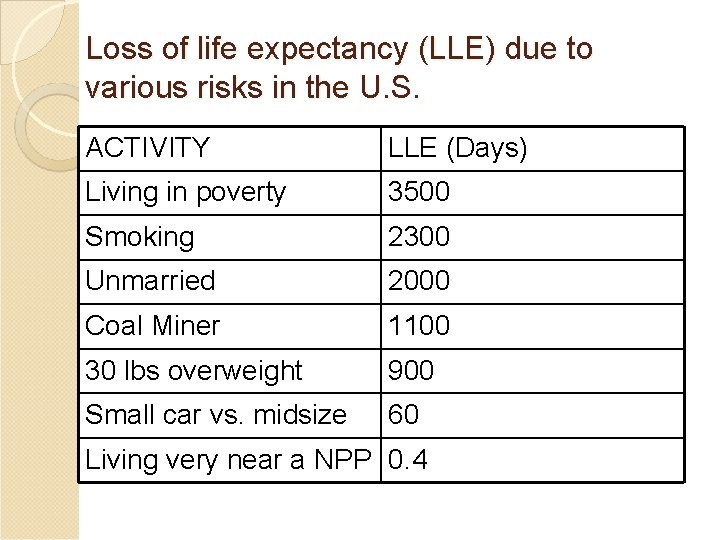
Loss of life expectancy (LLE) due to various risks in the U. S. ACTIVITY LLE (Days) Living in poverty 3500 Smoking 2300 Unmarried 2000 Coal Miner 1100 30 lbs overweight 900 Small car vs. midsize 60 Living very near a NPP 0. 4
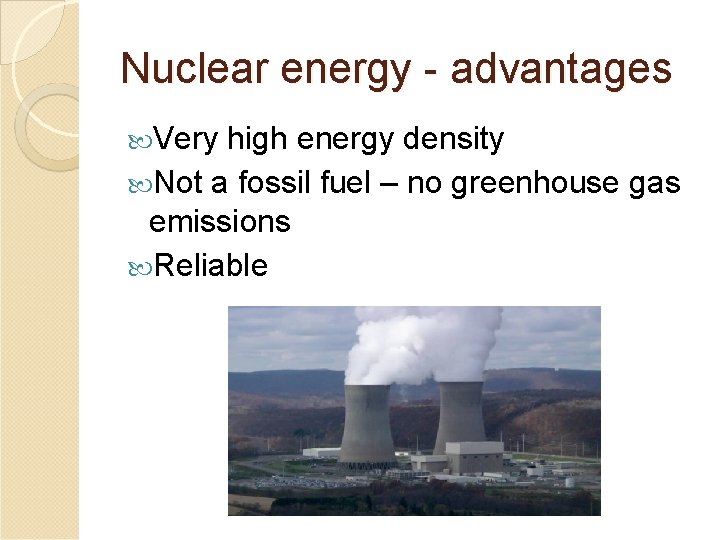
Nuclear energy - advantages Very high energy density Not a fossil fuel – no greenhouse gas emissions Reliable
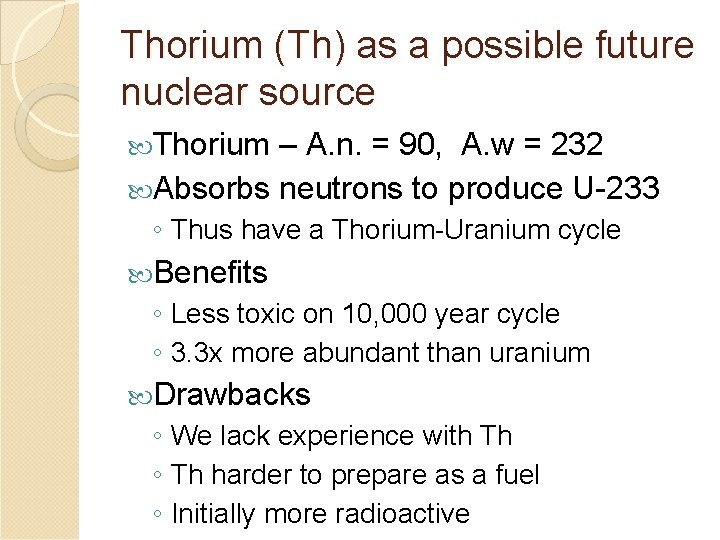
Thorium (Th) as a possible future nuclear source Thorium – A. n. = 90, A. w = 232 Absorbs neutrons to produce U-233 ◦ Thus have a Thorium-Uranium cycle Benefits ◦ Less toxic on 10, 000 year cycle ◦ 3. 3 x more abundant than uranium Drawbacks ◦ We lack experience with Th ◦ Th harder to prepare as a fuel ◦ Initially more radioactive
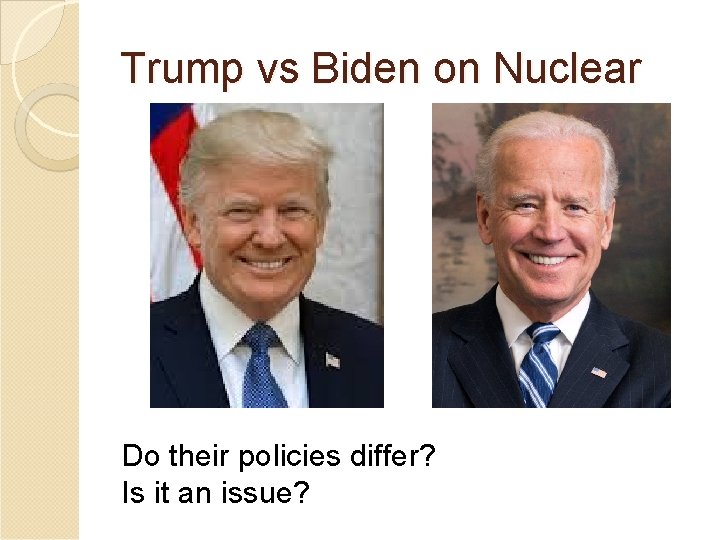
Trump vs Biden on Nuclear Do their policies differ? Is it an issue?