
Kenneth Nelson Professor of sociology Swedish Institute for

- Slides: 28
Kenneth Nelson Professor of sociology Swedish Institute for Social Research (SOFI) Stockholm University Sweden
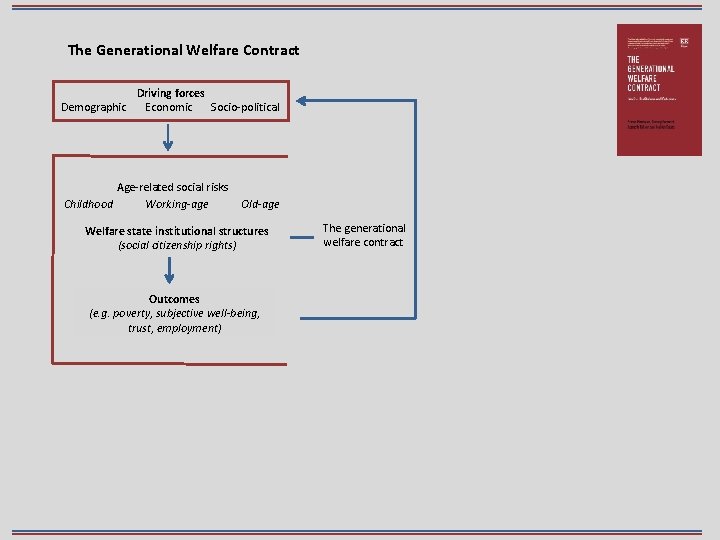
The Generational Welfare Contract Driving forces Demographic Economic Socio-political Childhood Age-related social risks Working-age Old-age Welfare state institutional structures (social citizenship rights) Outcomes (e. g. poverty, subjective well-being, trust, employment) The generational welfare contract
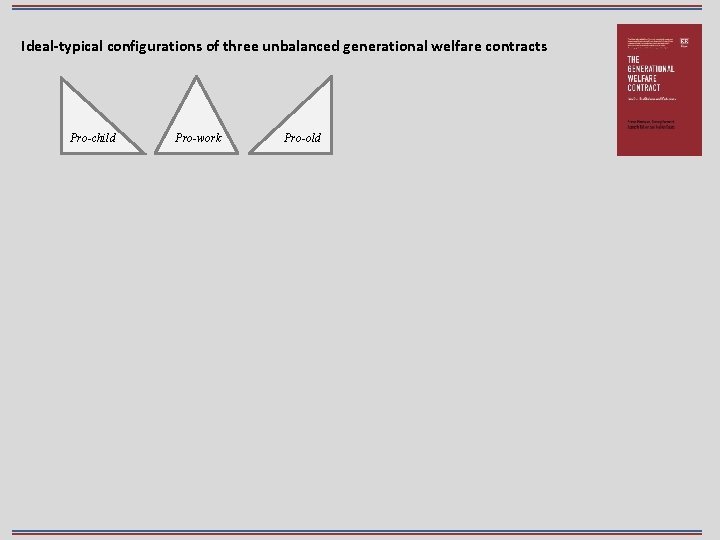
Ideal-typical configurations of three unbalanced generational welfare contracts Pro-child Pro-work Pro-old
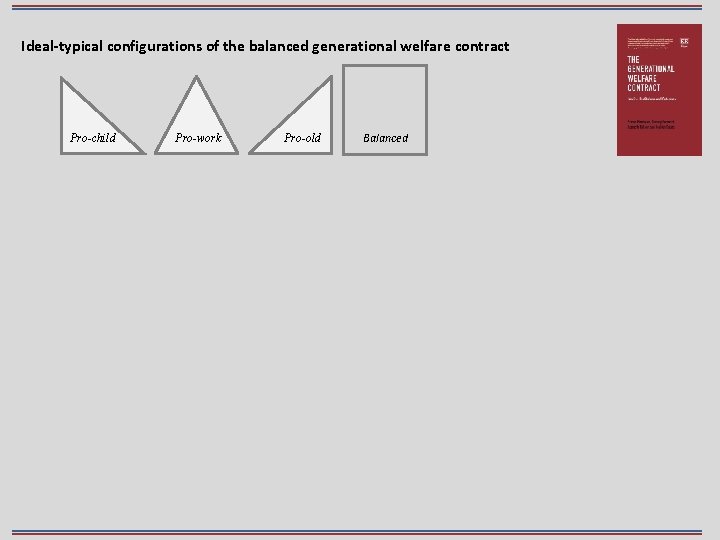
Ideal-typical configurations of the balanced generational welfare contract Pro-child Pro-work Pro-old Balanced
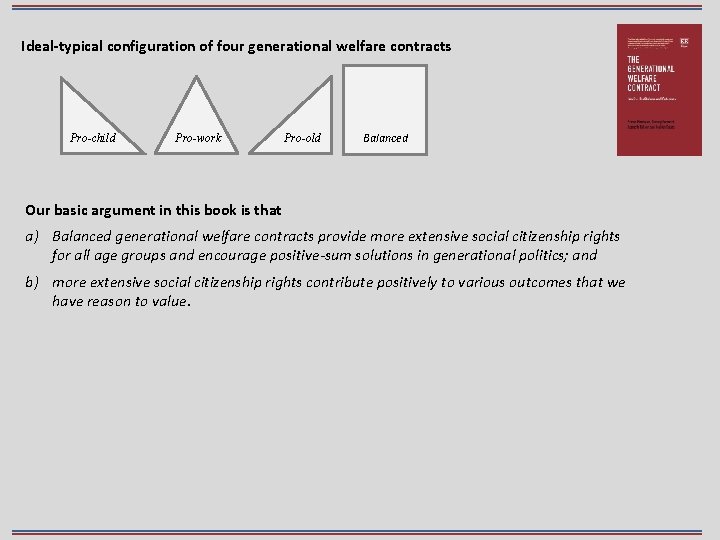
Ideal-typical configuration of four generational welfare contracts Pro-child Pro-work Pro-old Balanced Our basic argument in this book is that a) Balanced generational welfare contracts provide more extensive social citizenship rights for all age groups and encourage positive-sum solutions in generational politics; and b) more extensive social citizenship rights contribute positively to various outcomes that we have reason to value.
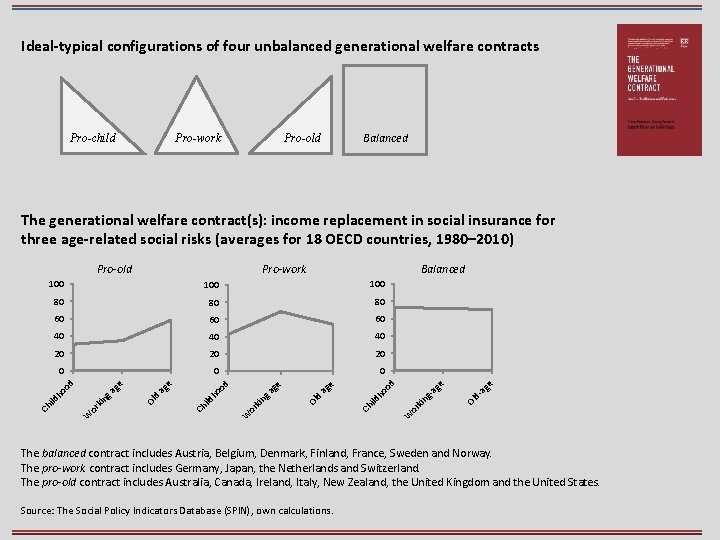
Ideal-typical configurations of four unbalanced generational welfare contracts Pro-child Balanced Pro-old Pro-work The generational welfare contract(s): income replacement in social insurance for three age-related social risks (averages for 18 OECD countries, 1980– 2010) 80 80 60 60 60 40 40 40 20 20 20 0 e gag kin or Ch ild ho e d ag kin W or Ol g a g e od ho ild Ch d ag Ol kin or W e e g a g ho ild Ch od 80 od 100 dag e Balanced 100 Ol Pro-work W Pro-old 100 The balanced contract includes Austria, Belgium, Denmark, Finland, France, Sweden and Norway. The pro-work contract includes Germany, Japan, the Netherlands and Switzerland. The pro-old contract includes Australia, Canada, Ireland, Italy, New Zealand, the United Kingdom and the United States. Source: The Social Policy Indicators Database (SPIN), own calculations.
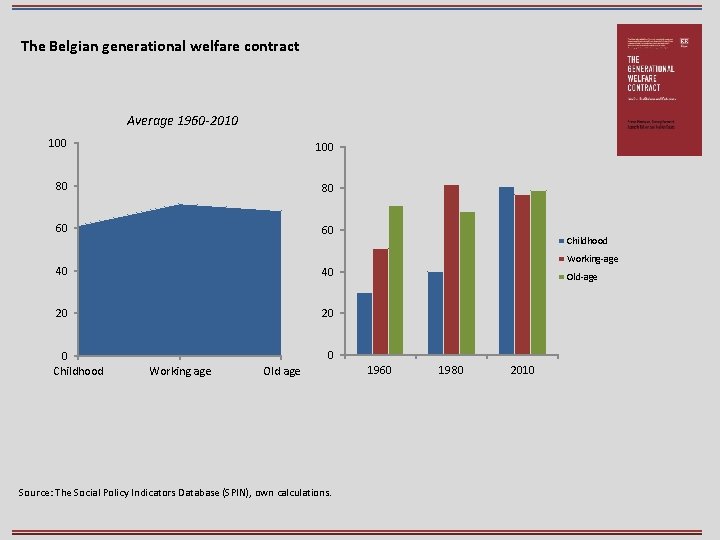
The Belgian generational welfare contract Average 1960 -2010 100 80 80 60 60 40 40 20 20 0 Childhood Working-age Old-age 0 Working age Old age Source: The Social Policy Indicators Database (SPIN), own calculations. 1960 1980 2010
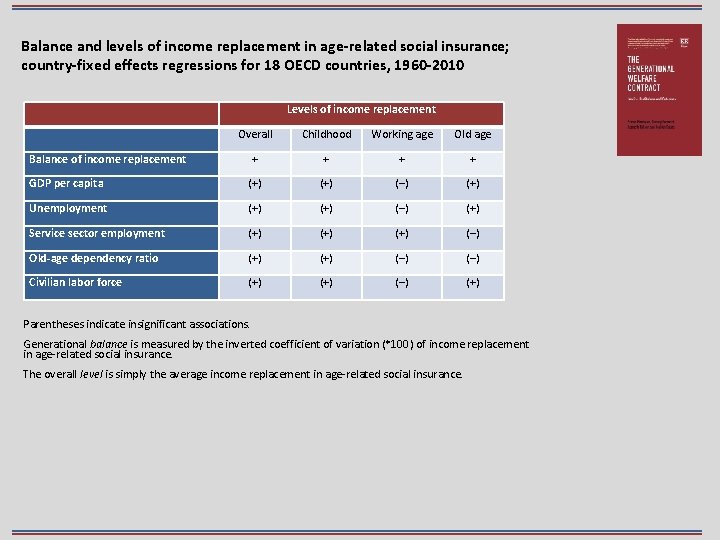
Balance and levels of income replacement in age-related social insurance; country-fixed effects regressions for 18 OECD countries, 1960 -2010 Levels of income replacement Overall Childhood Working age Old age + + GDP per capita (+) (–) (+) Unemployment (+) (–) (+) Service sector employment (+) (+) (–) Old-age dependency ratio (+) (–) Civilian labor force (+) (–) (+) Balance of income replacement Parentheses indicate insignificant associations. Generational balance is measured by the inverted coefficient of variation (*100) of income replacement in age-related social insurance. The overall level is simply the average income replacement in age-related social insurance.
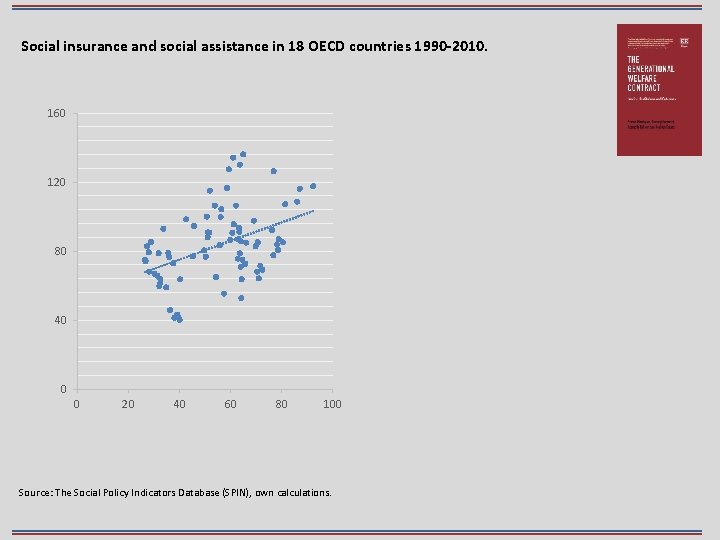
Social insurance and social assistance in 18 OECD countries 1990 -2010. 160 120 80 40 0 0 20 40 60 80 100 Source: The Social Policy Indicators Database (SPIN), own calculations.
Contents Chapter 1: Introduction Chapter 2: Three dimensions of generational justice Chapter 3: The generational welfare contract Chapter 4: Profiling the generational welfare contract Chapter 5: Contracts against poverty Chapter 6: Contracts for life satisfaction and happiness Chapter 7: Contracts for trust Chapter 8: Contracts for or against employment? Chapter 9: Politics of generational welfare contracts Chapter 10: The generational welfare contract on the agenda
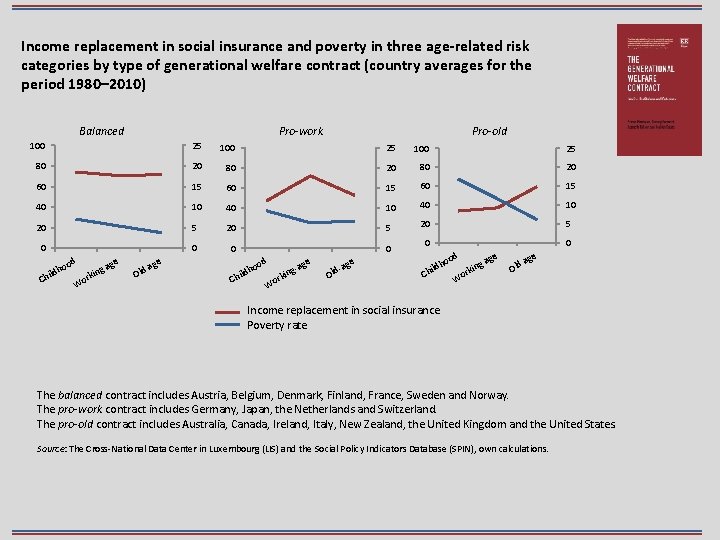
Income replacement in social insurance and poverty in three age-related risk categories by type of generational welfare contract (country averages for the period 1980– 2010) Balanced Pro-work Pro-old 100 25 80 20 60 15 40 10 20 5 0 0 d oo h hild C e ag ng rki o W Old e ag d oo C h hild -a ing k r Wo ge e -ag Old 0 0 od o ng ildh rki Ch o W age e ag d l O Income replacement in social insurance Poverty rate The balanced contract includes Austria, Belgium, Denmark, Finland, France, Sweden and Norway. The pro-work contract includes Germany, Japan, the Netherlands and Switzerland. The pro-old contract includes Australia, Canada, Ireland, Italy, New Zealand, the United Kingdom and the United States. Source: The Cross-National Data Center in Luxembourg (LIS) and the Social Policy Indicators Database (SPIN), own calculations.
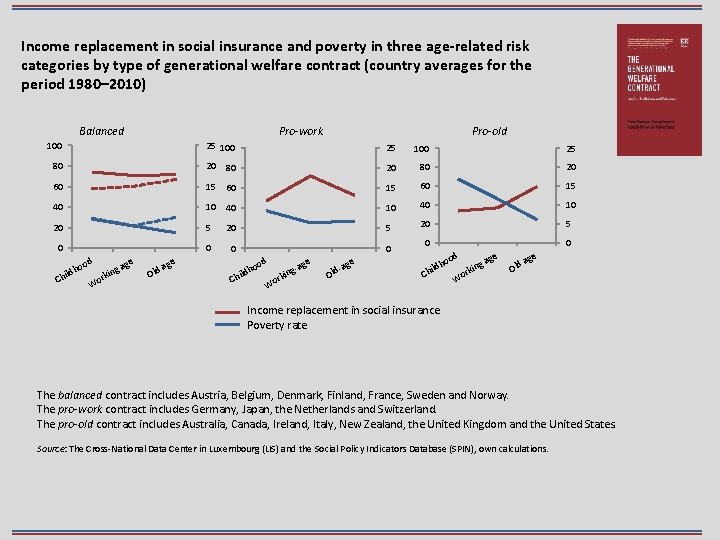
Income replacement in social insurance and poverty in three age-related risk categories by type of generational welfare contract (country averages for the period 1980– 2010) Balanced Pro-work Pro-old 100 25 80 20 60 15 40 10 20 5 0 0 d oo h hild C e ag ng rki o W e ag Old d oo C h hild -a ing k r Wo ge e -ag Old 0 0 od o ng ildh rki Ch o W age e ag d l O Income replacement in social insurance Poverty rate The balanced contract includes Austria, Belgium, Denmark, Finland, France, Sweden and Norway. The pro-work contract includes Germany, Japan, the Netherlands and Switzerland. The pro-old contract includes Australia, Canada, Ireland, Italy, New Zealand, the United Kingdom and the United States. Source: The Cross-National Data Center in Luxembourg (LIS) and the Social Policy Indicators Database (SPIN), own calculations.
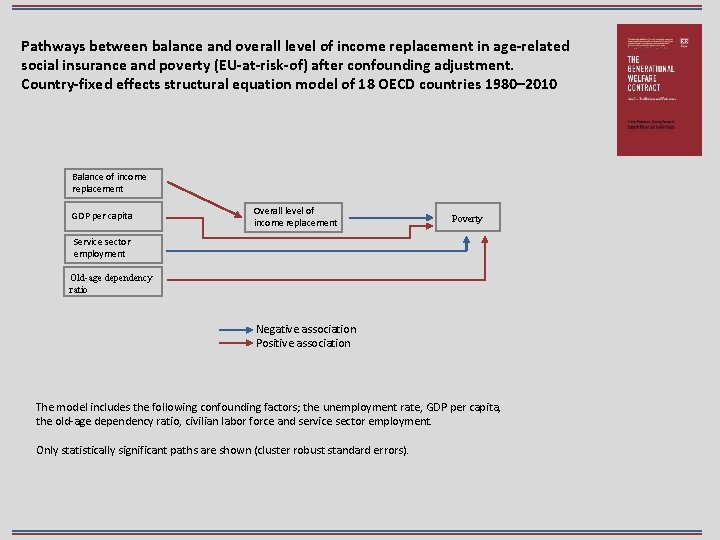
Pathways between balance and overall level of income replacement in age-related social insurance and poverty (EU-at-risk-of) after confounding adjustment. Country-fixed effects structural equation model of 18 OECD countries 1980– 2010 Balance of income replacement GDP per capita Overall level of income replacement Poverty Service sector employment Old-age dependency ratio Negative association Positive association The model includes the following confounding factors; the unemployment rate, GDP per capita, the old-age dependency ratio, civilian labor force and service sector employment. Only statistically significant paths are shown (cluster robust standard errors).
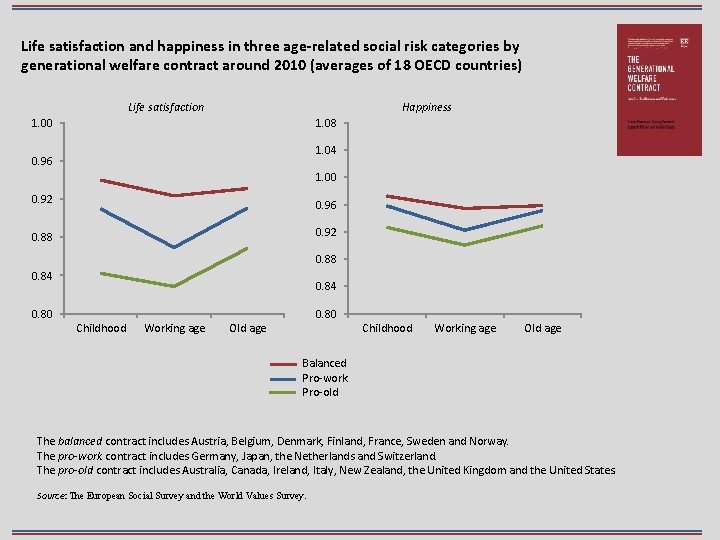
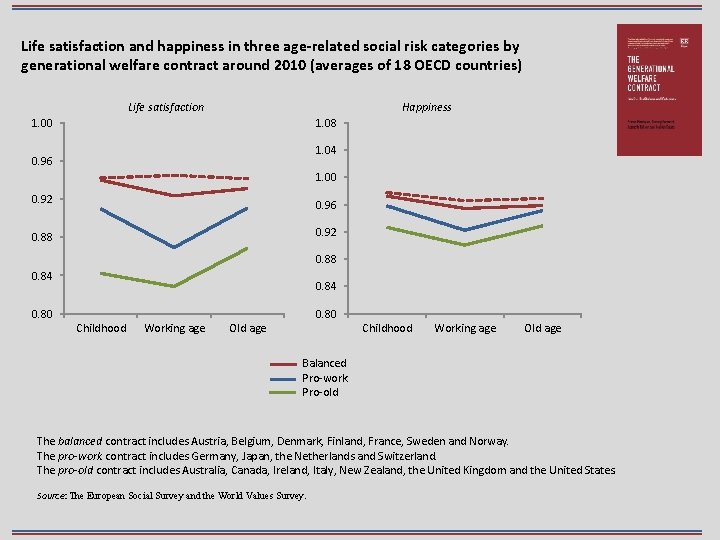
Life satisfaction and happiness in three age-related social risk categories by generational welfare contract around 2010 (averages of 18 OECD countries) Life satisfaction 1. 00 Happiness 1. 08 1. 04 0. 96 1. 00 0. 92 0. 96 0. 88 0. 92 0. 88 0. 84 0. 80 Childhood Working age Old age Balanced Pro-work Pro-old The balanced contract includes Austria, Belgium, Denmark, Finland, France, Sweden and Norway. The pro-work contract includes Germany, Japan, the Netherlands and Switzerland. The pro-old contract includes Australia, Canada, Ireland, Italy, New Zealand, the United Kingdom and the United States. Source: The European Social Survey and the World Values Survey.
Life satisfaction and happiness in three age-related social risk categories by generational welfare contract around 2010 (averages of 18 OECD countries) Life satisfaction 1. 00 Happiness 1. 08 1. 04 0. 96 1. 00 0. 92 0. 96 0. 88 0. 92 0. 88 0. 84 0. 80 Childhood Working age Old age Balanced Pro-work Pro-old The balanced contract includes Austria, Belgium, Denmark, Finland, France, Sweden and Norway. The pro-work contract includes Germany, Japan, the Netherlands and Switzerland. The pro-old contract includes Australia, Canada, Ireland, Italy, New Zealand, the United Kingdom and the United States. Source: The European Social Survey and the World Values Survey.
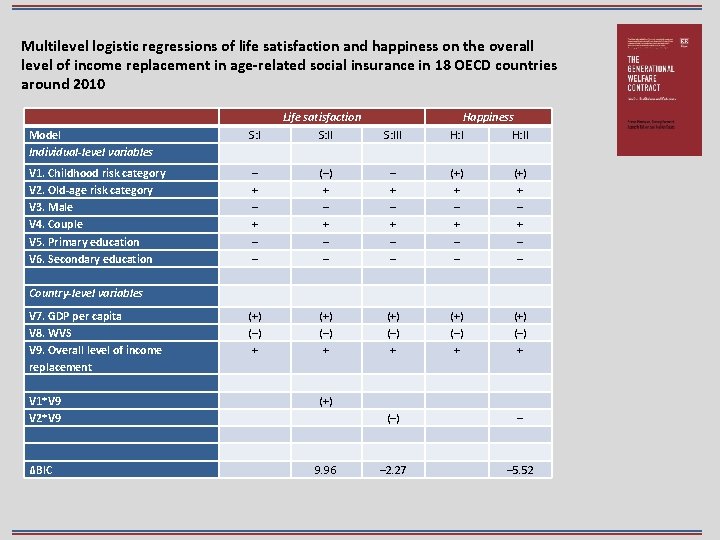
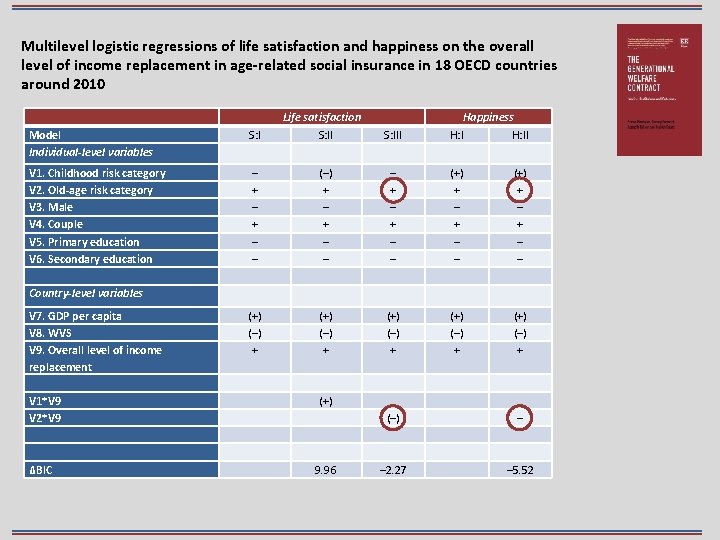
Multilevel logistic regressions of life satisfaction and happiness on the overall level of income replacement in age-related social insurance in 18 OECD countries around 2010 Model Individual-level variables S: I Life satisfaction S: III Happiness H: II V 1. Childhood risk category V 2. Old-age risk category V 3. Male V 4. Couple V 5. Primary education V 6. Secondary education Country-level variables – + – – (–) + – – – + – – (+) + – + – – V 7. GDP per capita V 8. WVS V 9. Overall level of income replacement V 1*V 9 V 2*V 9 ∆BIC (+) (–) + (+) (–) + (+) 9. 96 (–) – – 2. 27 – 5. 52
Multilevel logistic regressions of life satisfaction and happiness on the overall level of income replacement in age-related social insurance in 18 OECD countries around 2010 Model Individual-level variables S: I Life satisfaction S: III Happiness H: II V 1. Childhood risk category V 2. Old-age risk category V 3. Male V 4. Couple V 5. Primary education V 6. Secondary education Country-level variables – + – – (–) + – – – + – – (+) + – + – – V 7. GDP per capita V 8. WVS V 9. Overall level of income replacement V 1*V 9 V 2*V 9 ∆BIC (+) (–) + (+) (–) + (+) 9. 96 (–) – – 2. 27 – 5. 52
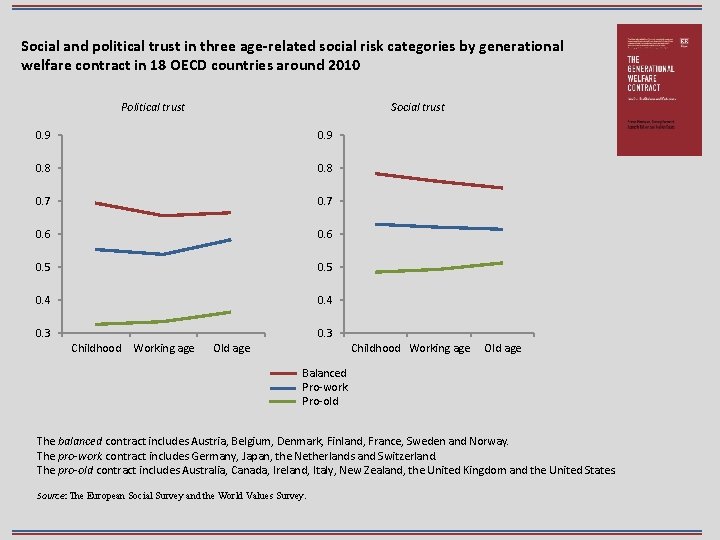
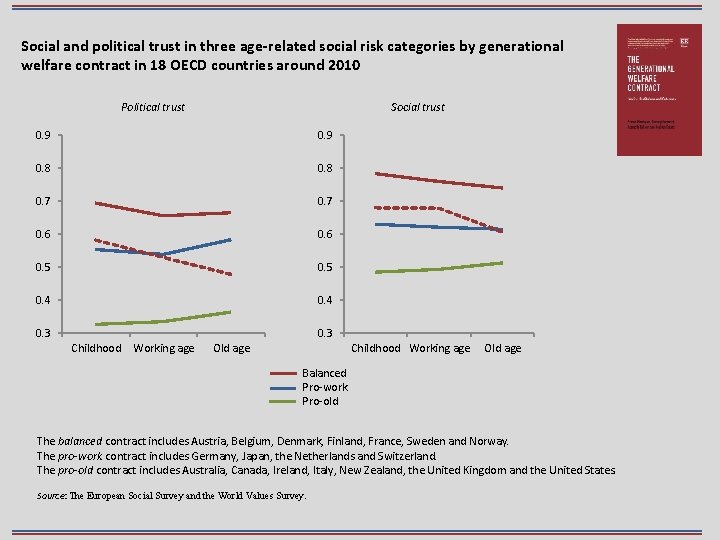
Social and political trust in three age-related social risk categories by generational welfare contract in 18 OECD countries around 2010 Political trust Social trust 0. 9 0. 8 0. 7 0. 6 0. 5 0. 4 0. 3 Childhood Working age 0. 3 Old age Childhood Working age Old age Balanced Pro-work Pro-old The balanced contract includes Austria, Belgium, Denmark, Finland, France, Sweden and Norway. The pro-work contract includes Germany, Japan, the Netherlands and Switzerland. The pro-old contract includes Australia, Canada, Ireland, Italy, New Zealand, the United Kingdom and the United States. Source: The European Social Survey and the World Values Survey.
Social and political trust in three age-related social risk categories by generational welfare contract in 18 OECD countries around 2010 Political trust Social trust 0. 9 0. 8 0. 7 0. 6 0. 5 0. 4 0. 3 Childhood Working age 0. 3 Old age Childhood Working age Old age Balanced Pro-work Pro-old The balanced contract includes Austria, Belgium, Denmark, Finland, France, Sweden and Norway. The pro-work contract includes Germany, Japan, the Netherlands and Switzerland. The pro-old contract includes Australia, Canada, Ireland, Italy, New Zealand, the United Kingdom and the United States. Source: The European Social Survey and the World Values Survey.
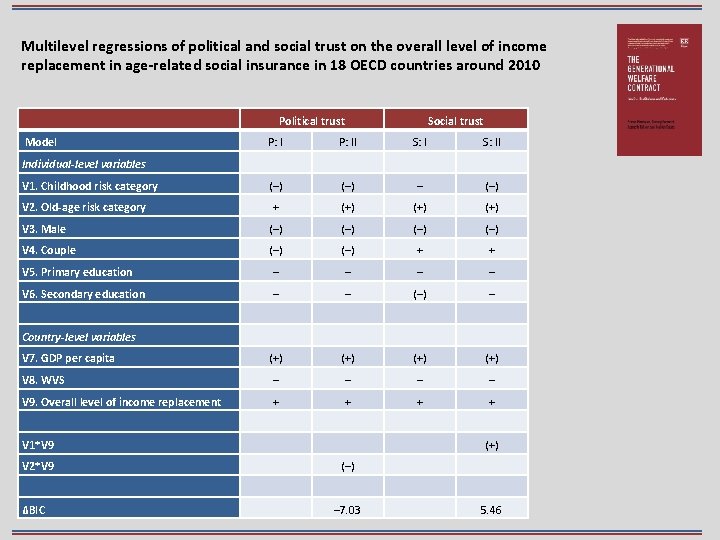
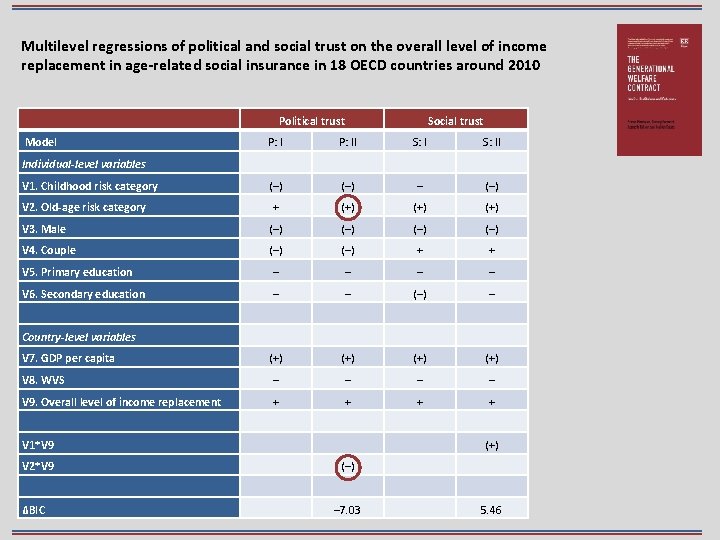
Multilevel regressions of political and social trust on the overall level of income replacement in age-related social insurance in 18 OECD countries around 2010 Political trust Model Individual-level variables V 1. Childhood risk category P: I Social trust P: II S: II (–) – (–) + (+) (+) V 3. Male (–) (–) V 4. Couple (–) + + V 5. Primary education – – V 6. Secondary education – – (–) – (+) (+) V 8. WVS – – V 9. Overall level of income replacement + + (+) V 2. Old-age risk category Country-level variables V 7. GDP per capita *p < 0. 05, **p < 0. 01 using cluster robust standard errors. V 1*V 9 V 2*V 9 (–) ∆BIC – 7. 03 5. 46
Multilevel regressions of political and social trust on the overall level of income replacement in age-related social insurance in 18 OECD countries around 2010 Political trust Model Individual-level variables V 1. Childhood risk category P: I Social trust P: II S: II (–) – (–) + (+) (+) V 3. Male (–) (–) V 4. Couple (–) + + V 5. Primary education – – V 6. Secondary education – – (–) – (+) (+) V 8. WVS – – V 9. Overall level of income replacement + + (+) V 2. Old-age risk category Country-level variables V 7. GDP per capita *p < 0. 05, **p < 0. 01 using cluster robust standard errors. V 1*V 9 V 2*V 9 (–) ∆BIC – 7. 03 5. 46
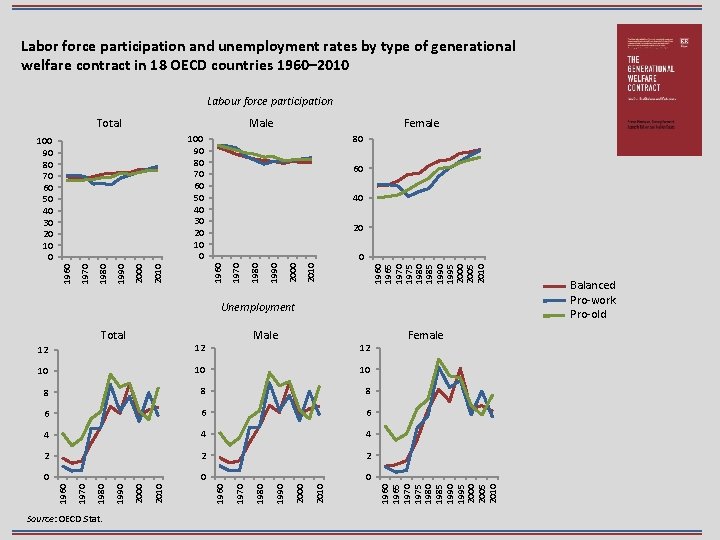
Labor force participation and unemployment rates by type of generational welfare contract in 18 OECD countries 1960– 2010 Labour force participation Total Male Female 80 60 40 20 1965 1970 1975 1980 1985 1990 1995 2000 2005 2010 2000 1990 1980 1970 0 1960 2010 2000 1990 1980 1960 Unemployment 6 4 4 4 2 2 2 0 0 0 Source: OECD. Stat. 2010 6 2000 6 1990 8 1980 8 1970 8 2010 10 2000 10 1990 10 1980 12 1970 12 1960 1965 1970 1975 1980 1985 1990 1995 2000 2005 2010 Total Male Female 1960 1970 100 90 80 70 60 50 40 30 20 10 0 Balanced Pro-work Pro-old
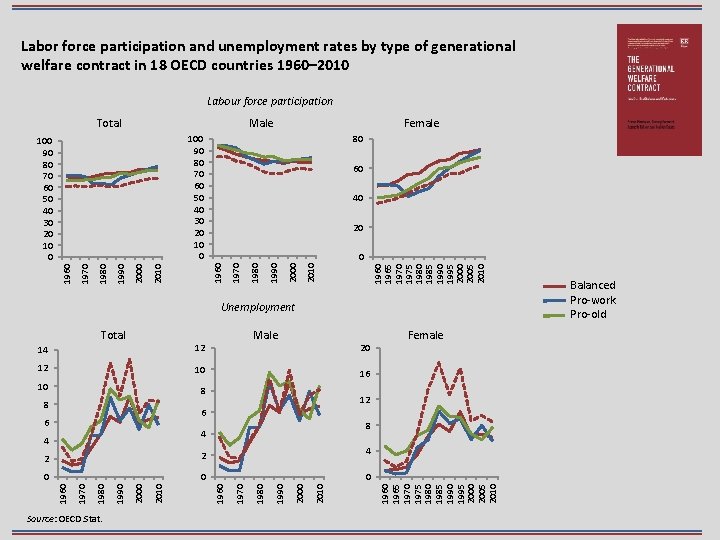
Labor force participation and unemployment rates by type of generational welfare contract in 18 OECD countries 1960– 2010 Labour force participation Total Male Female 80 60 40 20 1965 1970 1975 1980 1985 1990 1995 2000 2005 2010 2000 1990 1980 1970 0 1960 2010 2000 1990 1980 1960 Unemployment Total Male Female 14 12 20 12 10 16 10 8 8 12 6 8 4 4 Source: OECD. Stat. 2010 2000 1990 1980 1970 2010 0 2000 0 1990 0 1980 4 1970 2 1960 1965 1970 1975 1980 1985 1990 1995 2000 2005 2010 6 1960 1970 100 90 80 70 60 50 40 30 20 10 0 Balanced Pro-work Pro-old
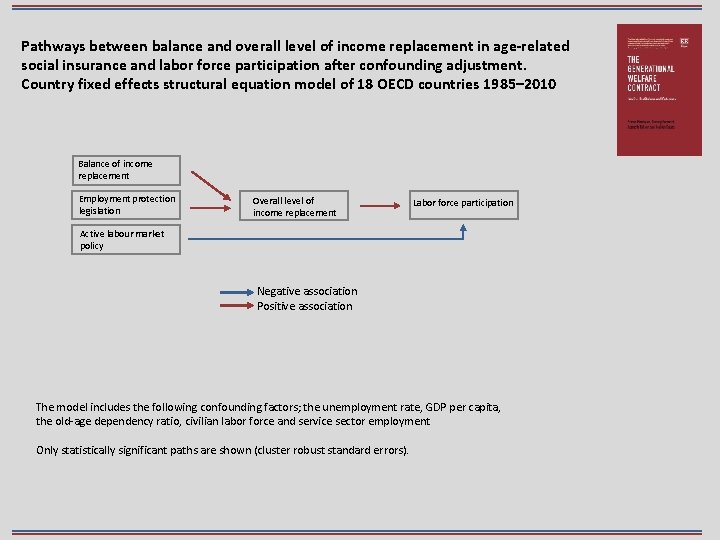
Pathways between balance and overall level of income replacement in age-related social insurance and labor force participation after confounding adjustment. Country fixed effects structural equation model of 18 OECD countries 1985– 2010 Balance of income replacement Employment protection legislation Overall level of income replacement Labor force participation Active labour market policy Negative association Positive association The model includes the following confounding factors; the unemployment rate, GDP per capita, the old-age dependency ratio, civilian labor force and service sector employment Only statistically significant paths are shown (cluster robust standard errors).
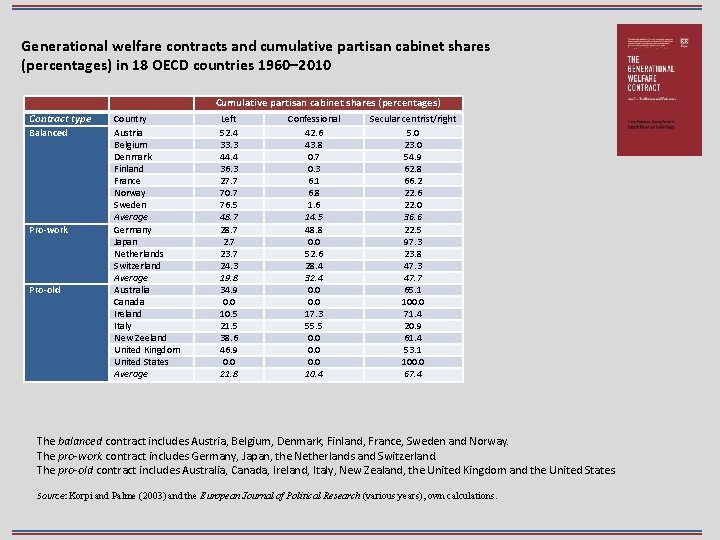
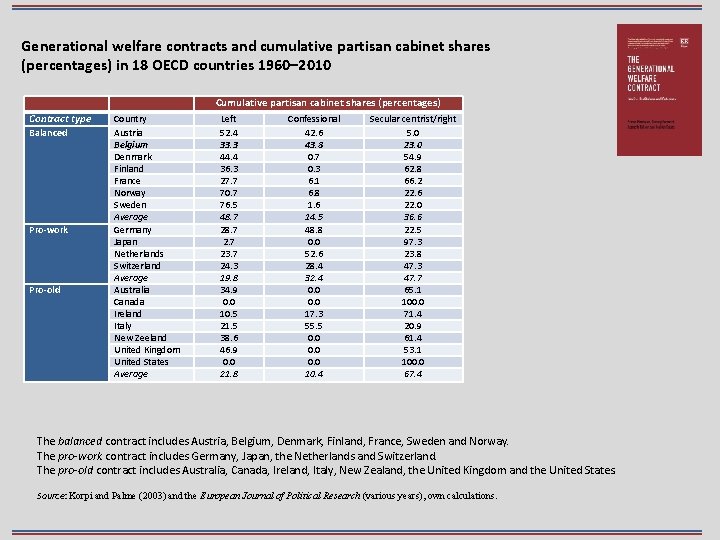
Generational welfare contracts and cumulative partisan cabinet shares (percentages) in 18 OECD countries 1960– 2010 Contract type Country Austria Belgium Denmark Finland France Norway Sweden Average Germany Japan Netherlands Switzerland Average Australia Canada Ireland Italy New Zeeland United Kingdom United States Average Balanced Pro-work Pro-old Cumulative partisan cabinet shares (percentages) Left 52. 4 33. 3 44. 4 36. 3 27. 7 70. 7 76. 5 48. 7 23. 7 24. 3 19. 8 34. 9 0. 0 10. 5 21. 5 38. 6 46. 9 0. 0 21. 8 Confessional 42. 6 43. 8 0. 7 0. 3 6. 1 6. 8 1. 6 14. 5 48. 8 0. 0 52. 6 28. 4 32. 4 0. 0 17. 3 55. 5 0. 0 10. 4 Secular centrist/right 5. 0 23. 0 54. 9 62. 8 66. 2 22. 6 22. 0 36. 6 22. 5 97. 3 23. 8 47. 3 47. 7 65. 1 100. 0 71. 4 20. 9 61. 4 53. 1 100. 0 67. 4 The balanced contract includes Austria, Belgium, Denmark, Finland, France, Sweden and Norway. The pro-work contract includes Germany, Japan, the Netherlands and Switzerland. The pro-old contract includes Australia, Canada, Ireland, Italy, New Zealand, the United Kingdom and the United States. Source: Korpi and Palme (2003) and the European Journal of Political Research (various years), own calculations.
Generational welfare contracts and cumulative partisan cabinet shares (percentages) in 18 OECD countries 1960– 2010 Contract type Country Austria Belgium Denmark Finland France Norway Sweden Average Germany Japan Netherlands Switzerland Average Australia Canada Ireland Italy New Zeeland United Kingdom United States Average Balanced Pro-work Pro-old Cumulative partisan cabinet shares (percentages) Left 52. 4 33. 3 44. 4 36. 3 27. 7 70. 7 76. 5 48. 7 23. 7 24. 3 19. 8 34. 9 0. 0 10. 5 21. 5 38. 6 46. 9 0. 0 21. 8 Confessional 42. 6 43. 8 0. 7 0. 3 6. 1 6. 8 1. 6 14. 5 48. 8 0. 0 52. 6 28. 4 32. 4 0. 0 17. 3 55. 5 0. 0 10. 4 Secular centrist/right 5. 0 23. 0 54. 9 62. 8 66. 2 22. 6 22. 0 36. 6 22. 5 97. 3 23. 8 47. 3 47. 7 65. 1 100. 0 71. 4 20. 9 61. 4 53. 1 100. 0 67. 4 The balanced contract includes Austria, Belgium, Denmark, Finland, France, Sweden and Norway. The pro-work contract includes Germany, Japan, the Netherlands and Switzerland. The pro-old contract includes Australia, Canada, Ireland, Italy, New Zealand, the United Kingdom and the United States. Source: Korpi and Palme (2003) and the European Journal of Political Research (various years), own calculations.
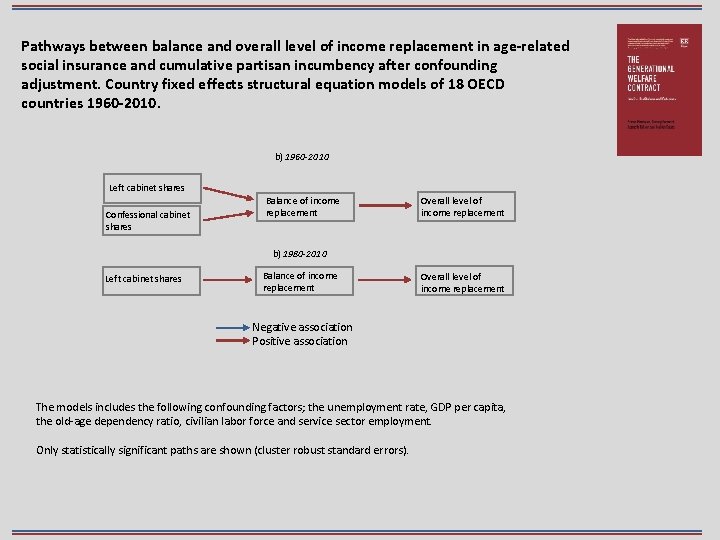
Pathways between balance and overall level of income replacement in age-related social insurance and cumulative partisan incumbency after confounding adjustment. Country fixed effects structural equation models of 18 OECD countries 1960 -2010. b) 1960 -2010 Left cabinet shares Confessional cabinet shares Balance of income replacement Overall level of income replacement b) 1980 -2010 Left cabinet shares Balance of income replacement Overall level of income replacement Negative association Positive association The models includes the following confounding factors; the unemployment rate, GDP per capita, the old-age dependency ratio, civilian labor force and service sector employment. Only statistically significant paths are shown (cluster robust standard errors).
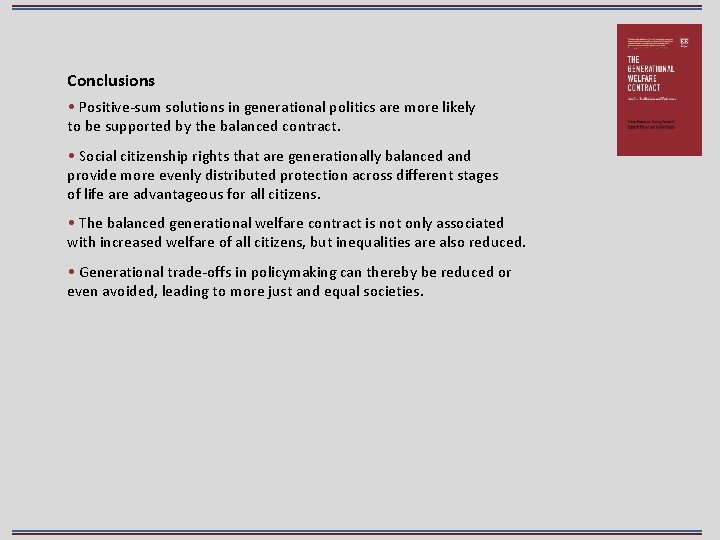
Conclusions • Positive-sum solutions in generational politics are more likely to be supported by the balanced contract. • Social citizenship rights that are generationally balanced and provide more evenly distributed protection across different stages of life are advantageous for all citizens. • The balanced generational welfare contract is not only associated with increased welfare of all citizens, but inequalities are also reduced. • Generational trade-offs in policymaking can thereby be reduced or even avoided, leading to more just and equal societies.