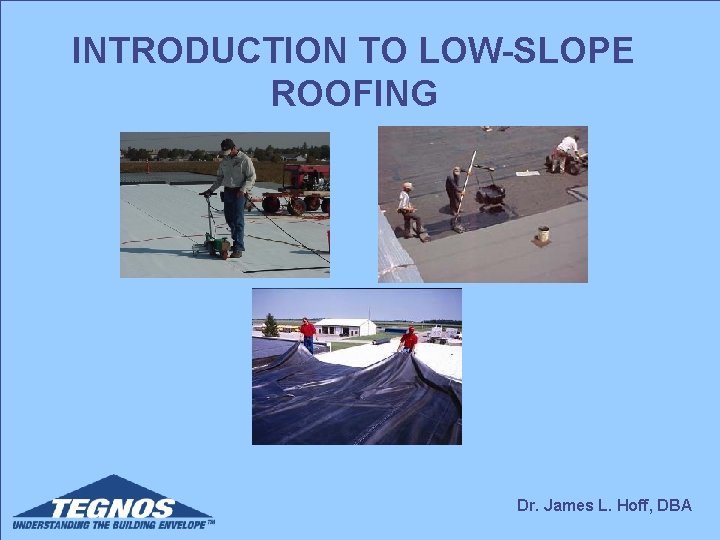
INTRODUCTION TO LOWSLOPE ROOFING Dr James L Hoff







- Slides: 56
INTRODUCTION TO LOW-SLOPE ROOFING Dr. James L. Hoff, DBA
Commercial Roofing • • Historical Perspective Modern Roofing Materials Roofing New Roofing Trends
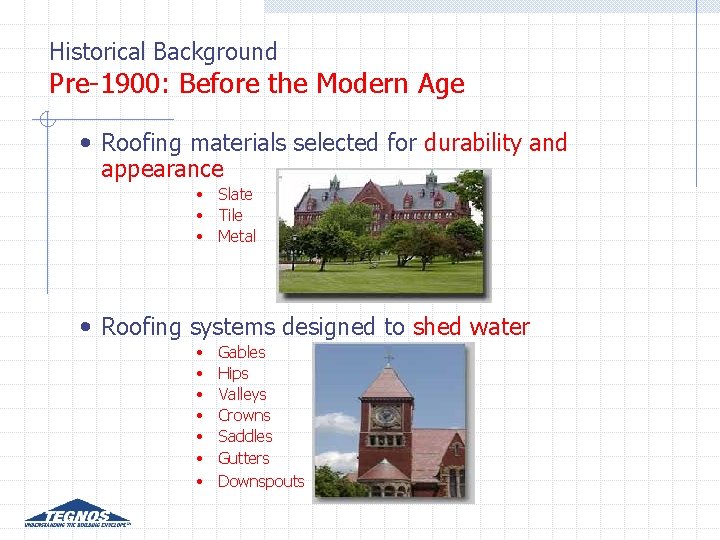
Historical Background Pre-1900: Before the Modern Age • Roofing materials selected for durability and appearance • Slate • Tile • Metal • Roofing systems designed to shed water • • Gables Hips Valleys Crowns Saddles Gutters Downspouts
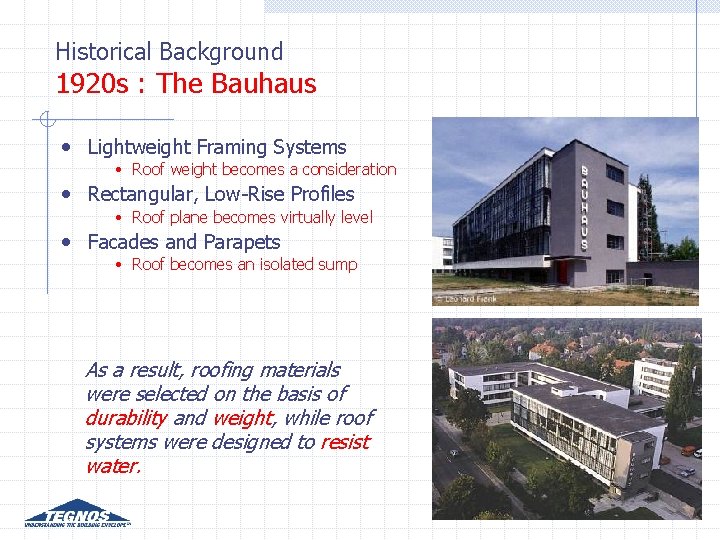
Historical Background 1920 s : The Bauhaus • Lightweight Framing Systems • Roof weight becomes a consideration • Rectangular, Low-Rise Profiles • Roof plane becomes virtually level • Facades and Parapets • Roof becomes an isolated sump As a result, roofing materials were selected on the basis of durability and weight, while roof systems were designed to resist water.
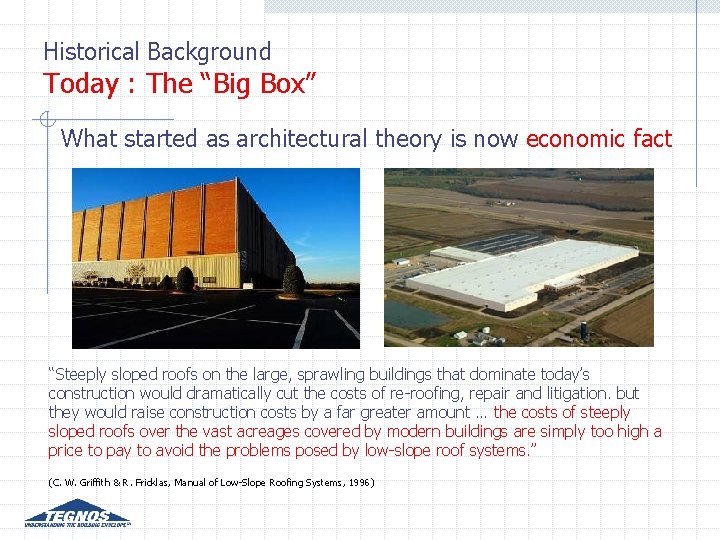
Historical Background Today : The “Big Box” What started as architectural theory is now economic fact “Steeply sloped roofs on the large, sprawling buildings that dominate today’s construction would dramatically cut the costs of re-roofing, repair and litigation. but they would raise construction costs by a far greater amount … the costs of steeply sloped roofs over the vast acreages covered by modern buildings are simply too high a price to pay to avoid the problems posed by low-slope roof systems. ” (C. W. Griffith & R. Fricklas, Manual of Low-Slope Roofing Systems, 1996)
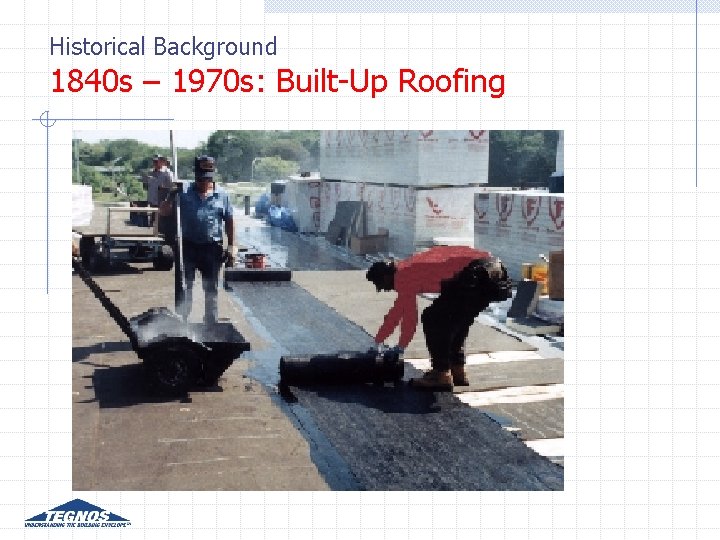
Historical Background 1840 s – 1970 s: Built-Up Roofing
Historical Background 1840 s – 1970 s: Built-Up Roofing • Originally employed to waterproof ships • Redundant layers of bitumen & felts • Bitumen serves as adhesive and waterproofing • Felts stabilize and strengthen the bitumen • Frequently surfaced with aggregate • Traditional “tar & gravel” roof
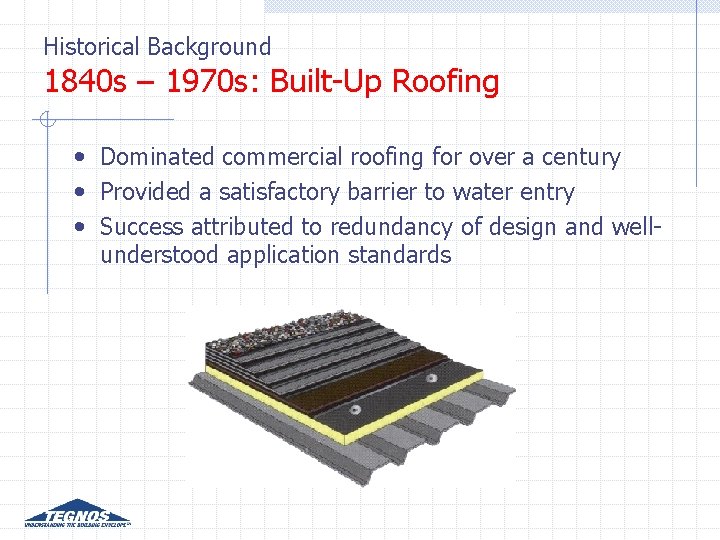
Historical Background 1840 s – 1970 s: Built-Up Roofing • Dominated commercial roofing for over a century • Provided a satisfactory barrier to water entry • Success attributed to redundancy of design and wellunderstood application standards
Historical Background 1970 s: The Perfect Storm • Health concerns over asbestos • Asbestos felts replaced by organic (paper) felts • Lower strength • Higher moisture absorption • OPEC oil embargo • • Cost of asphalt increased dramatically Quality of asphalt decreased • Increasing energy efficiency • • Higher “R” insulations installed under built-up membranes Splitting due to “thermal shock” increased
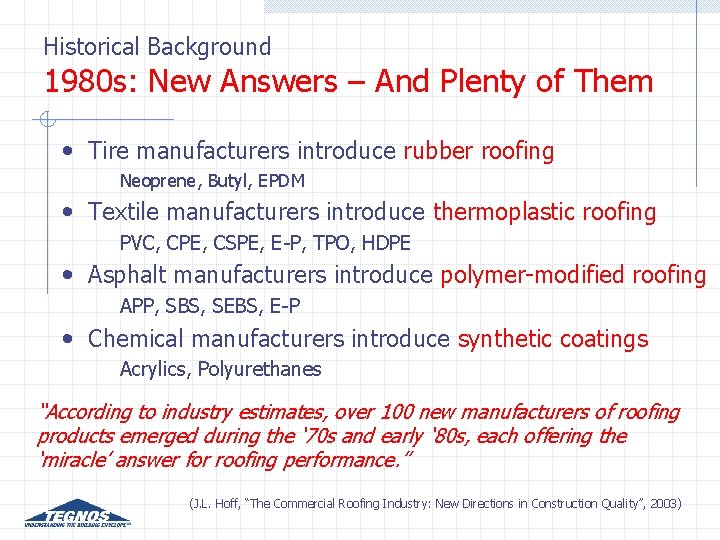
Historical Background 1980 s: New Answers – And Plenty of Them • Tire manufacturers introduce rubber roofing Neoprene, Butyl, EPDM • Textile manufacturers introduce thermoplastic roofing PVC, CPE, CSPE, E-P, TPO, HDPE • Asphalt manufacturers introduce polymer-modified roofing APP, SBS, SEBS, E-P • Chemical manufacturers introduce synthetic coatings Acrylics, Polyurethanes “According to industry estimates, over 100 new manufacturers of roofing products emerged during the ‘ 70 s and early ‘ 80 s, each offering the ‘miracle’ answer for roofing performance. ” (J. L. Hoff, “The Commercial Roofing Industry: New Directions in Construction Quality”, 2003)
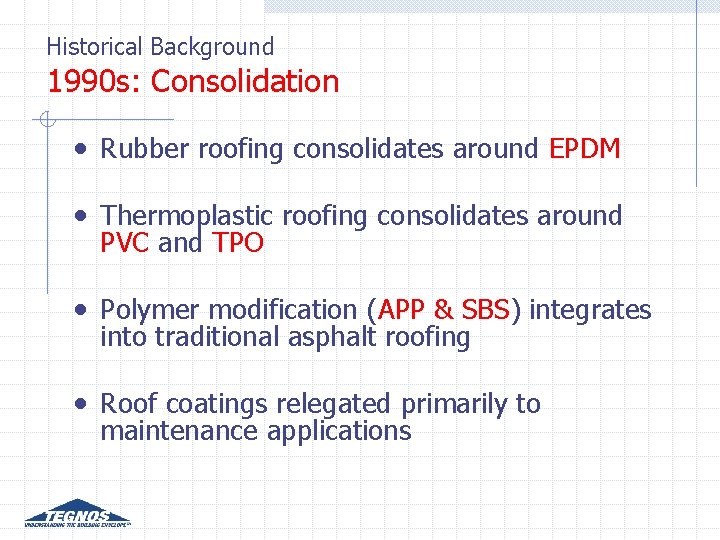
Historical Background 1990 s: Consolidation • Rubber roofing consolidates around EPDM • Thermoplastic roofing consolidates around PVC and TPO • Polymer modification (APP & SBS) integrates into traditional asphalt roofing • Roof coatings relegated primarily to maintenance applications
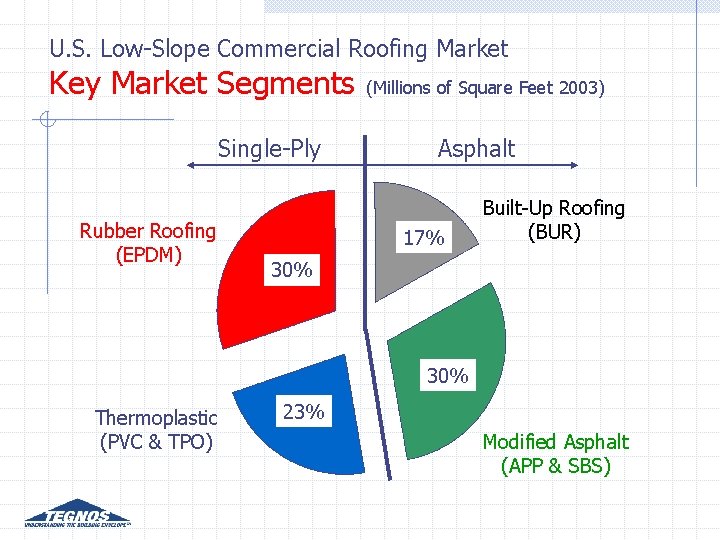
U. S. Low-Slope Commercial Roofing Market Key Market Segments Single-Ply Rubber Roofing (EPDM) (Millions of Square Feet 2003) Asphalt 17% Built-Up Roofing (BUR) 30% Thermoplastic (PVC & TPO) 23% Modified Asphalt (APP & SBS)
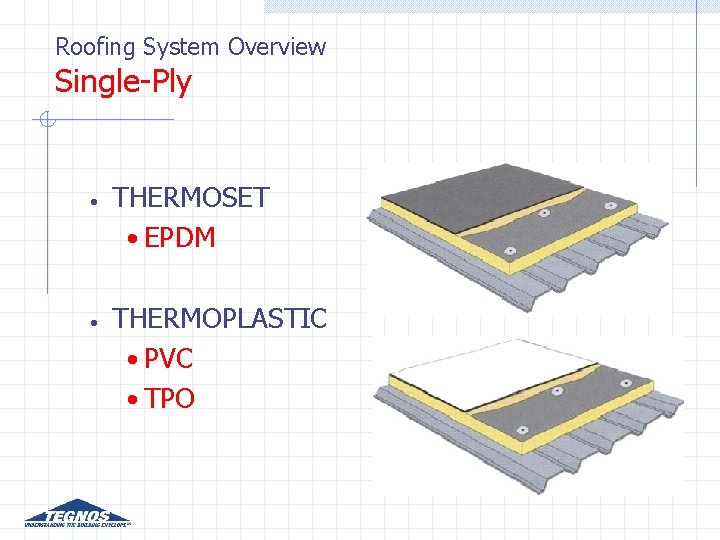
Roofing System Overview Single-Ply • • THERMOSET • EPDM THERMOPLASTIC • PVC • TPO
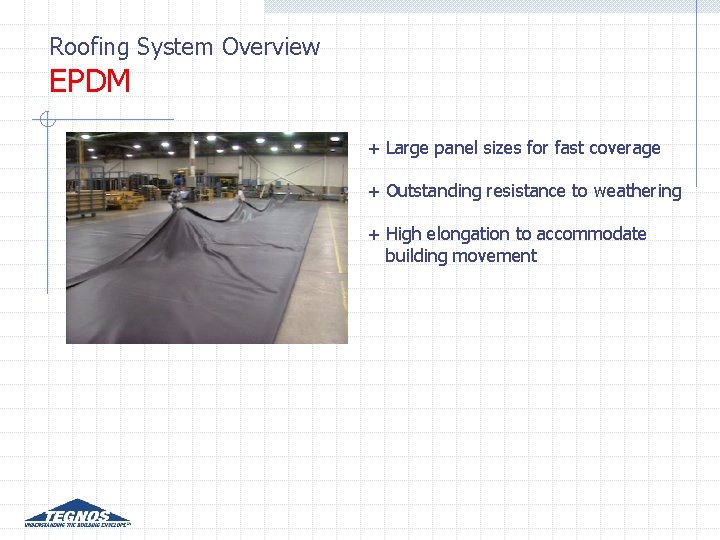
Roofing System Overview EPDM + Large panel sizes for fast coverage + Outstanding resistance to weathering + High elongation to accommodate building movement
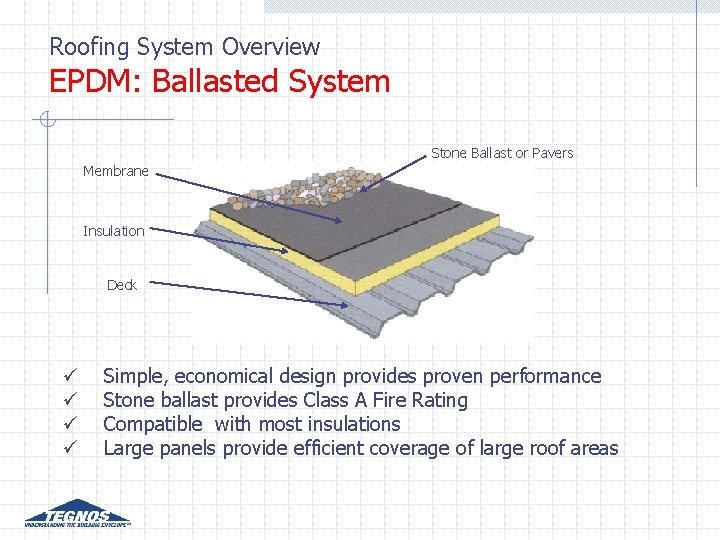
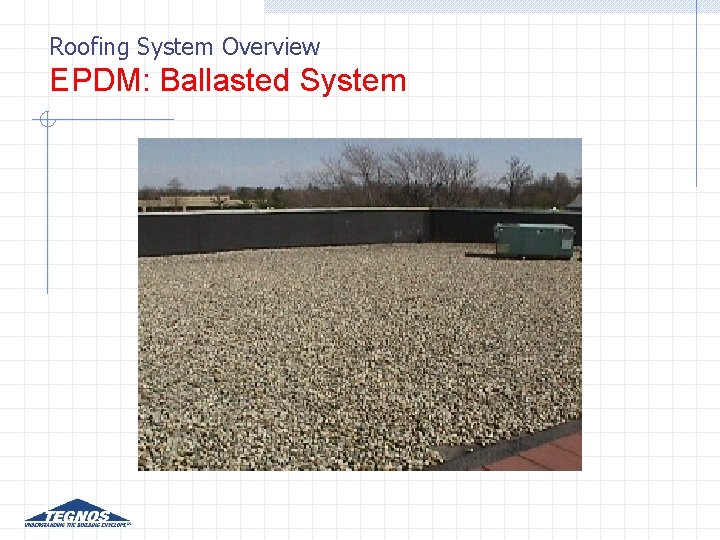
Roofing System Overview EPDM: Ballasted System Stone Ballast or Pavers Membrane Insulation Deck ü ü Simple, economical design provides proven performance Stone ballast provides Class A Fire Rating Compatible with most insulations Large panels provide efficient coverage of large roof areas
Roofing System Overview EPDM: Ballasted System
Roofing System Overview EPDM: Ballasted System
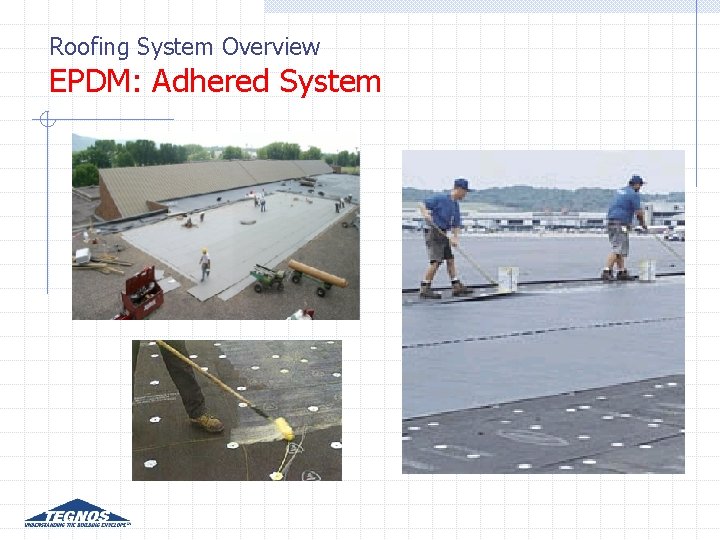
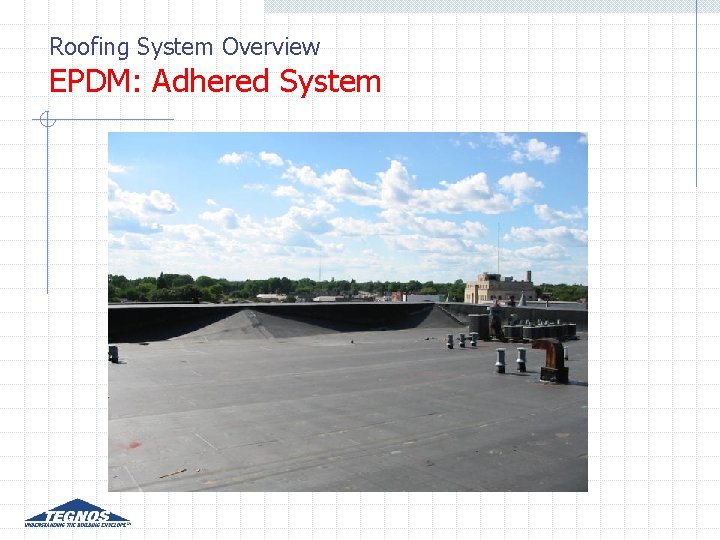
Roofing System Overview EPDM: Adhered System Membrane Insulation plates & fasteners Adhesive Deck Insulation ü Design Flexibility - Adapts easily to unusual roof profiles ü Excellent for high wind conditions ü Time-proven application method provides high dependability
Roofing System Overview EPDM: Adhered System
Roofing System Overview EPDM: Adhered System
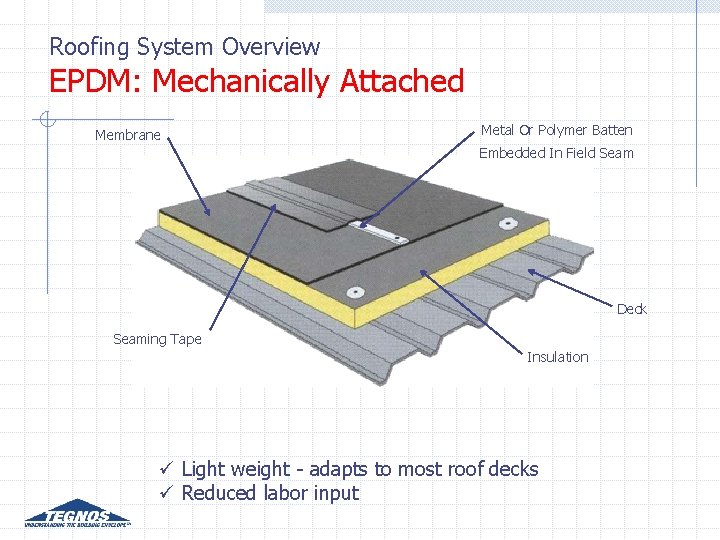
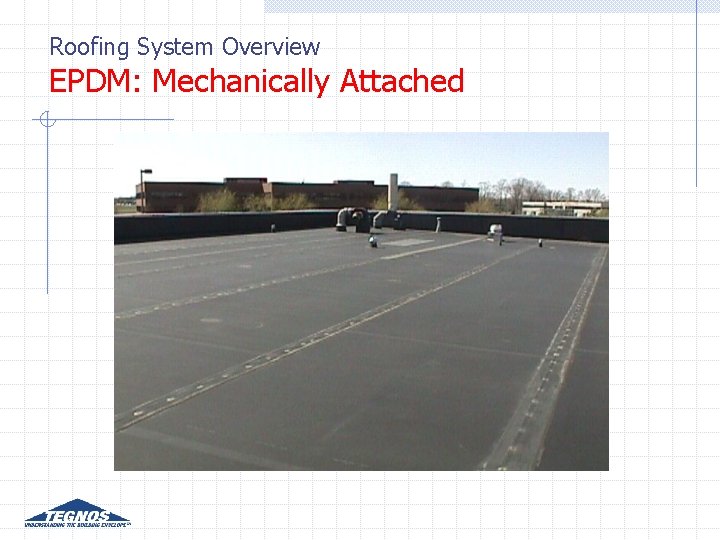
Roofing System Overview EPDM: Mechanically Attached Membrane Metal Or Polymer Batten Embedded In Field Seam Deck Seaming Tape Insulation ü Light weight - adapts to most roof decks ü Reduced labor input
Roofing System Overview EPDM: Mechanically Attached
Roofing System Overview EPDM: Mechanically Attached
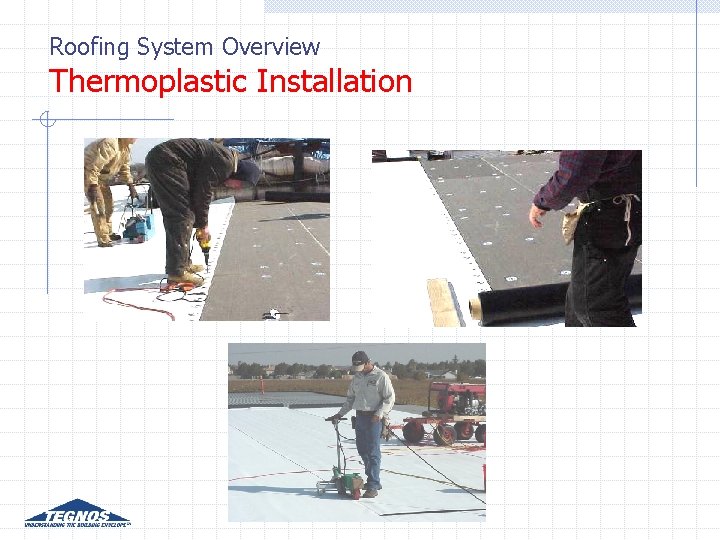
Roofing System Overview Thermoplastic + Heat-reflective white surface + Fast, simple welded panel seams + Available in variety of colors
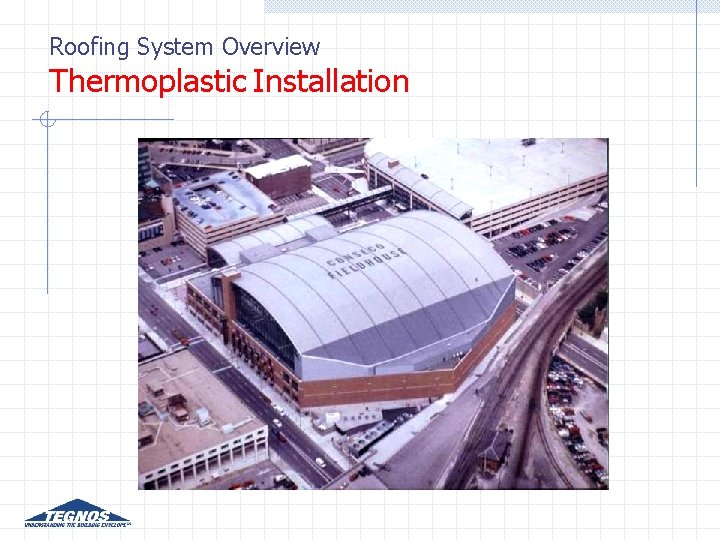
Roofing System Overview Thermoplastic Installation
Roofing System Overview Thermoplastic Installation
Roofing System Overview Asphalt • • Built-Up Roofing • BUR Modified Bitumen • APP • SBS
Roofing System Overview Built-Up Roofing (BUR) Gravel Surfacing Cover Board Insulation Ply Felts Set In Asphalt
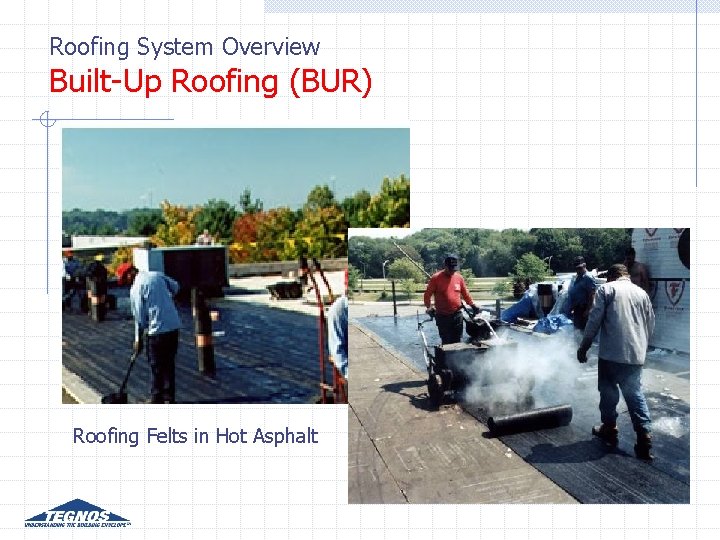
Roofing System Overview Built-Up Roofing (BUR) Roofing Felts in Hot Asphalt
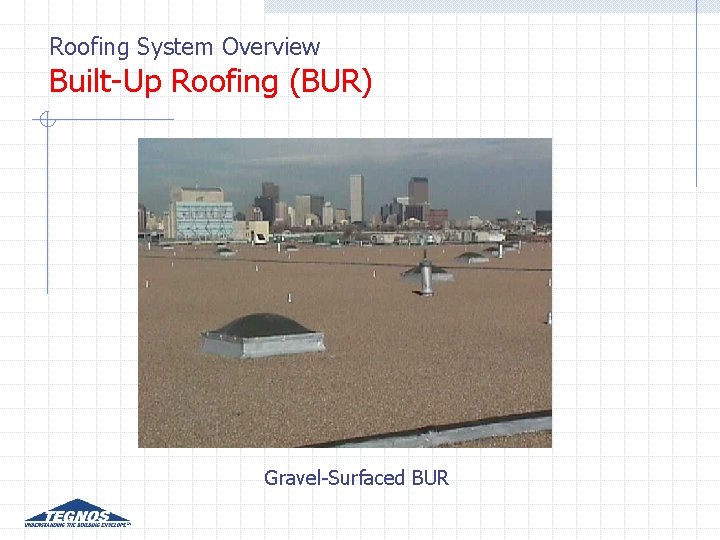
Roofing System Overview Built-Up Roofing (BUR) Gravel-Surfaced BUR
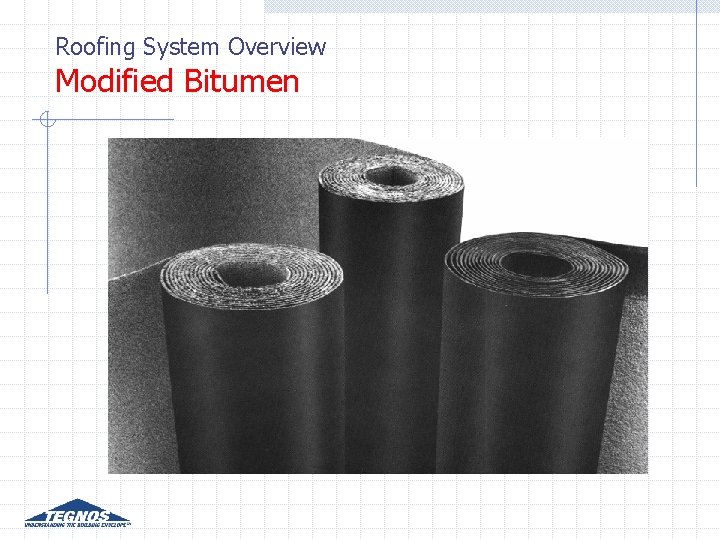
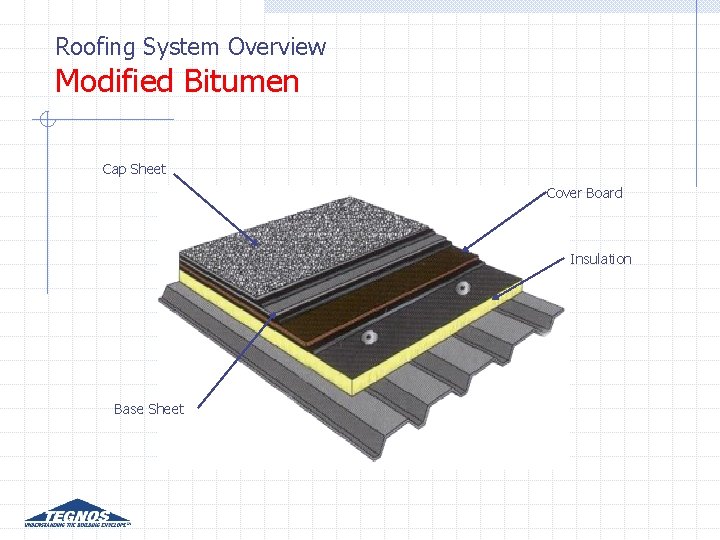
Roofing System Overview Modified Bitumen
Roofing System Overview Modified Bitumen Cap Sheet Cover Board Insulation Base Sheet
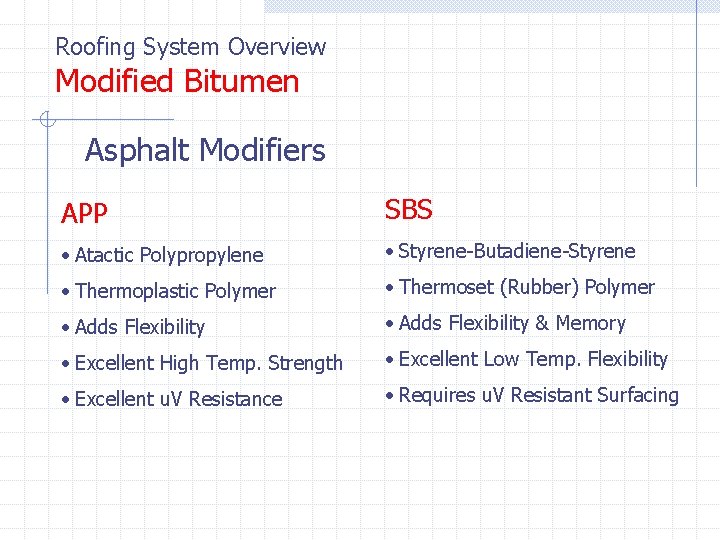
Roofing System Overview Modified Bitumen Asphalt Modifiers APP SBS • Atactic Polypropylene • Styrene-Butadiene-Styrene • Thermoplastic Polymer • Thermoset (Rubber) Polymer • Adds Flexibility & Memory • Excellent High Temp. Strength • Excellent Low Temp. Flexibility • Excellent u. V Resistance • Requires u. V Resistant Surfacing
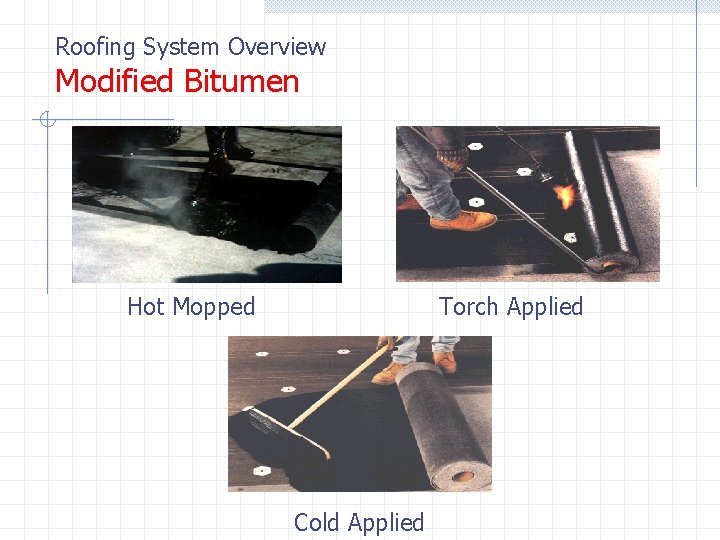
Roofing System Overview Modified Bitumen Hot Mopped Torch Applied Cold Applied
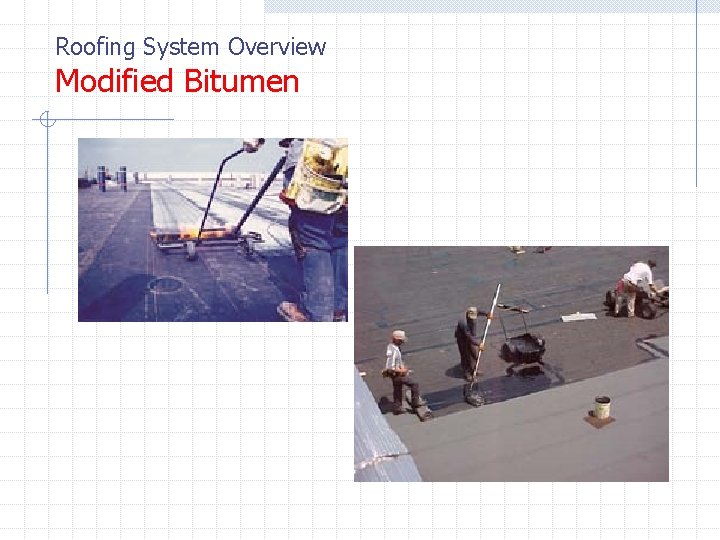
Roofing System Overview Modified Bitumen
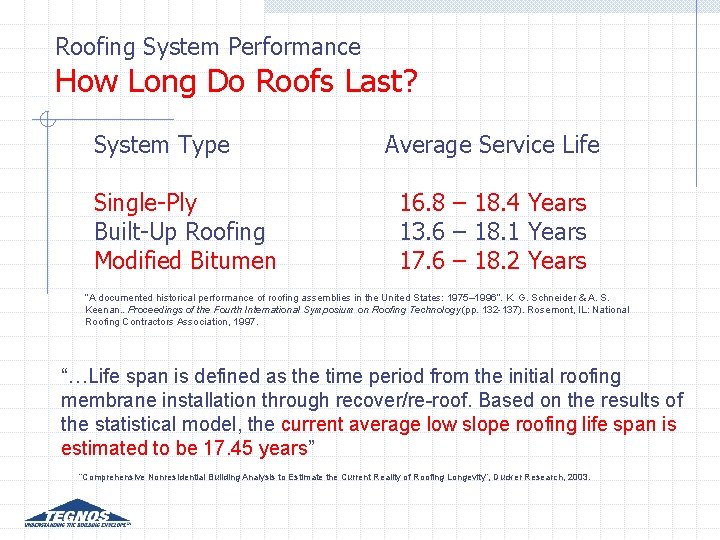
Roofing System Performance How Long Do Roofs Last? System Type Single-Ply Built-Up Roofing Modified Bitumen Average Service Life 16. 8 – 18. 4 Years 13. 6 – 18. 1 Years 17. 6 – 18. 2 Years “A documented historical performance of roofing assemblies in the United States: 1975– 1996”. K. G. Schneider & A. S. Keenan. . Proceedings of the Fourth International Symposium on Roofing Technology (pp. 132 -137). Rosemont, IL: National Roofing Contractors Association, 1997. “…Life span is defined as the time period from the initial roofing membrane installation through recover/re-roof. Based on the results of the statistical model, the current average low slope roofing life span is estimated to be 17. 45 years” “Comprehensive Nonresidential Building Analysis to Estimate the Current Reality of Roofing Longevity”, Ducker Research, 2003.
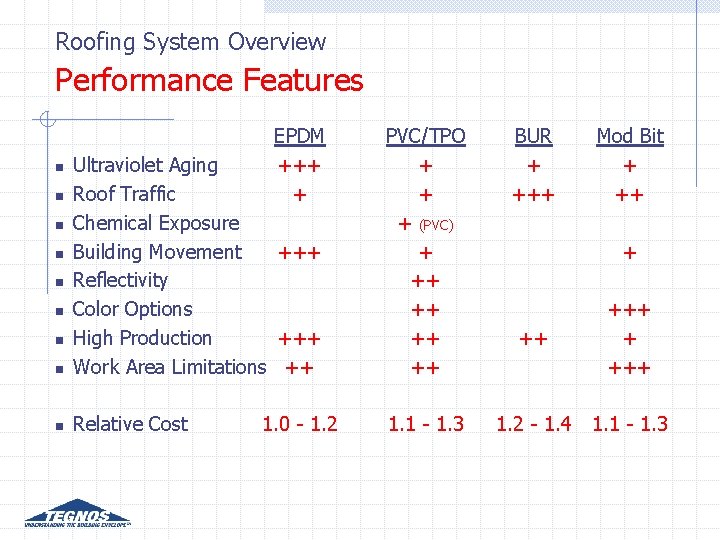
Roofing System Overview Performance Features BUR + ++ n Ultraviolet Aging Roof Traffic Chemical Exposure Building Movement +++ Reflectivity Color Options High Production +++ Work Area Limitations ++ PVC/TPO + + + (PVC) + ++ ++ +++ n Relative Cost 1. 1 - 1. 3 1. 2 - 1. 4 1. 1 - 1. 3 n n n n EPDM +++ + 1. 0 - 1. 2 Mod Bit + ++ +
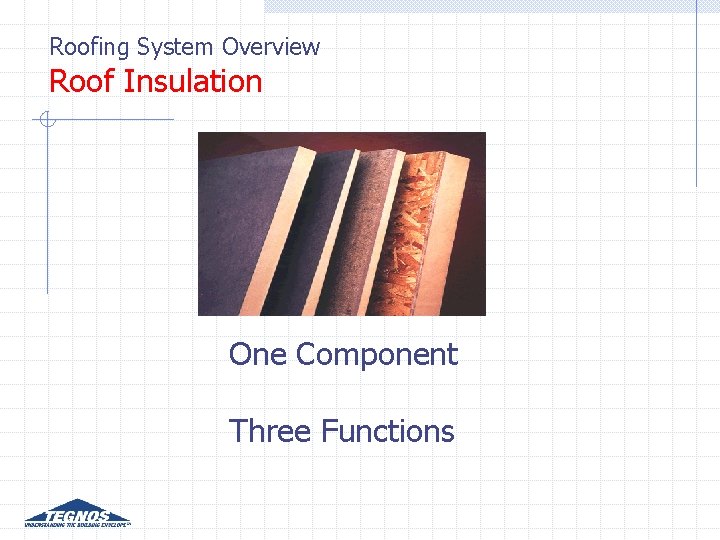
Roofing System Overview Roof Insulation One Component Three Functions
Roofing Insulation Thermal Barrier Typical “R” Value per Inch Thickness
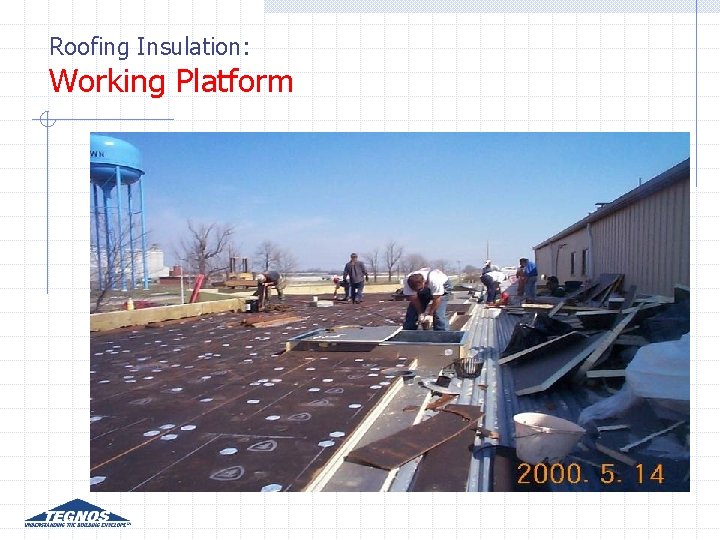
Roofing Insulation: Working Platform
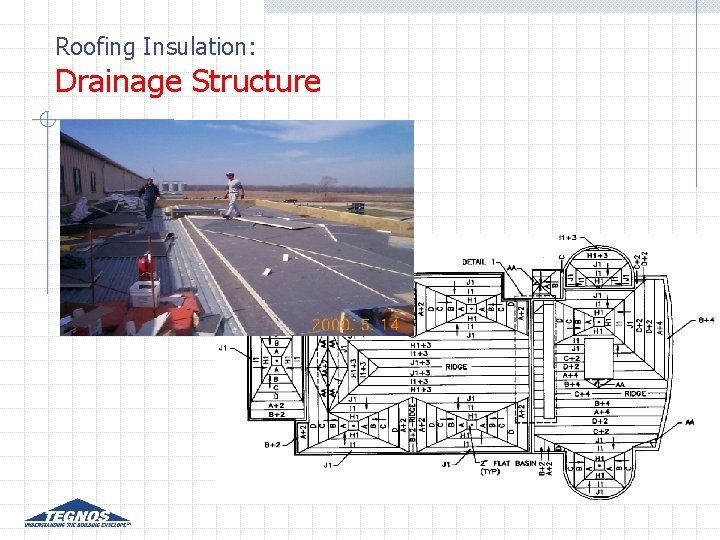
Roofing Insulation: Drainage Structure
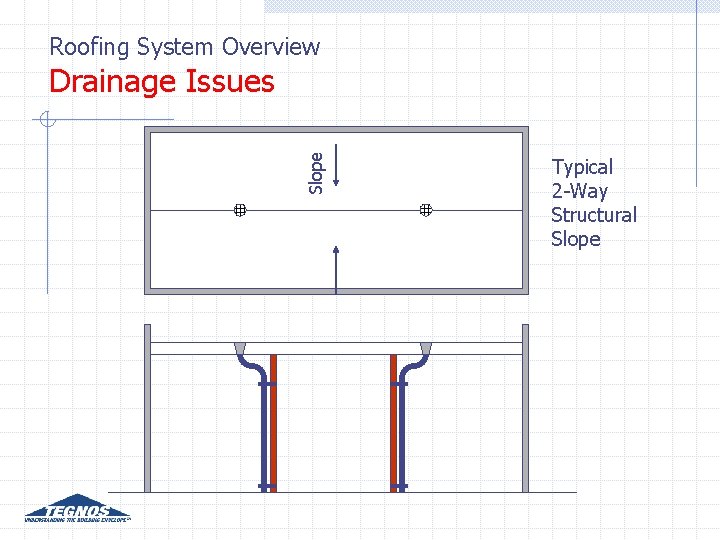
Roofing System Overview Slope Drainage Issues Typical 2 -Way Structural Slope
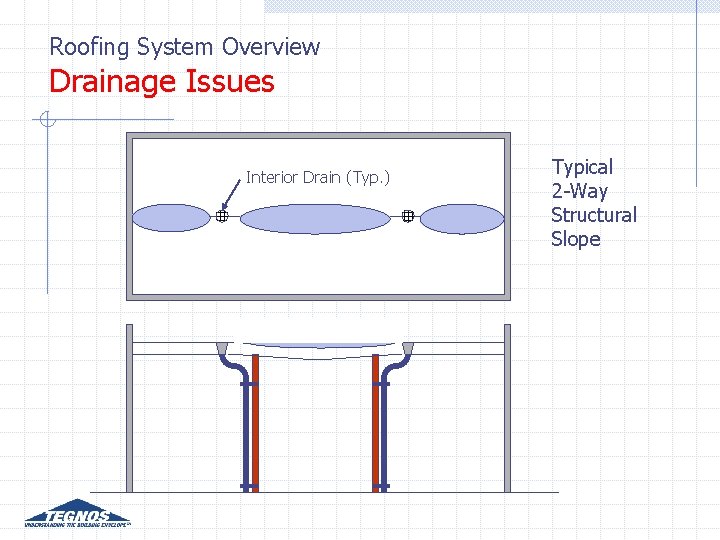
Roofing System Overview Drainage Issues Interior Drain (Typ. ) Typical 2 -Way Structural Slope
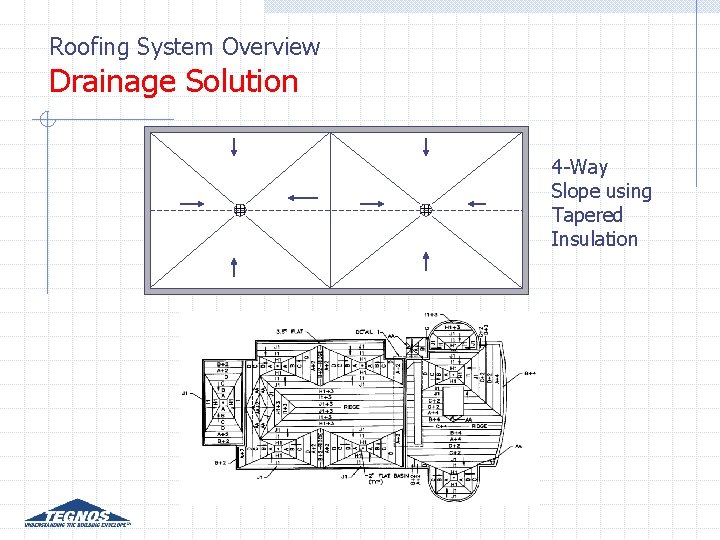
Roofing System Overview Drainage Solution 4 -Way Slope using Tapered Insulation
Roofing System Overview New Roofing Trends & Concepts • • Cool Roofs Green / Garden Roofs Solar Roofs Roof Recycling
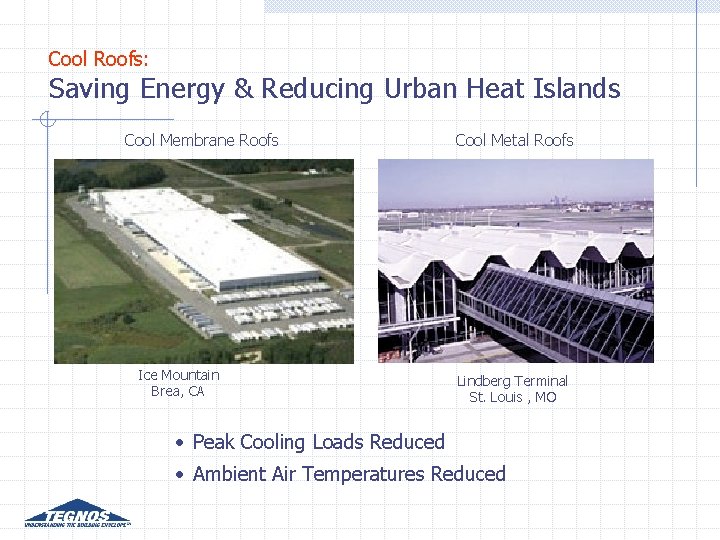
Cool Roofs: Saving Energy & Reducing Urban Heat Islands Cool Membrane Roofs Ice Mountain Brea, CA Cool Metal Roofs Lindberg Terminal St. Louis , MO · Peak Cooling Loads Reduced · Ambient Air Temperatures Reduced
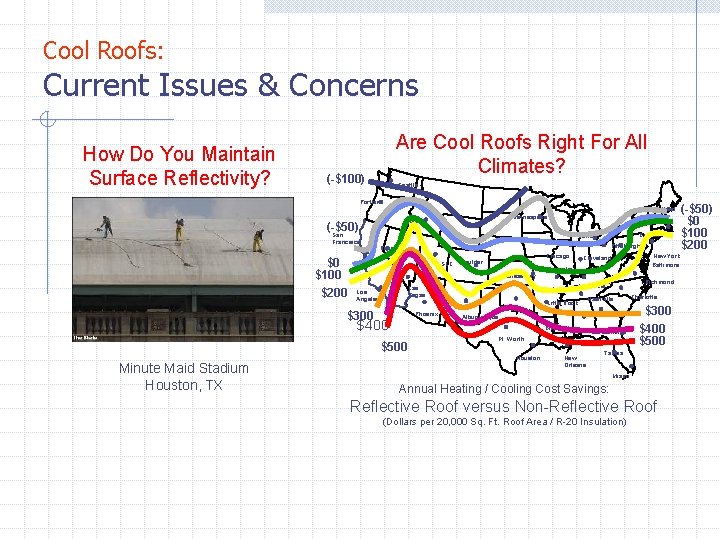
Cool Roofs: Current Issues & Concerns How Do You Maintain Surface Reflectivity? Are Cool Roofs Right For All Climates? (-$100) Seattle Portland (-$50) San Francisco Cheyenne SLC Pittsburgh Chicago Boulder Boston Detroit Milwaukee Reno $0 $100 New York Cleveland Baltimore Indianapolis Kansas City $200 Las Vegas Los Angeles $300 Phoenix $400 St. Louis Ok. City Richmond Louisville Little Rock Nashville Atlanta Albuquerque Birmingham $500 Minute Maid Stadium Houston, TX Minneapolis Boise Jacksonville Ft. Worth Houston New Orleans Charlotte $300 $400 $500 Tampa Miami Annual Heating / Cooling Cost Savings: Reflective Roof versus Non-Reflective Roof (Dollars per 20, 000 Sq. Ft. Roof Area / R-20 Insulation) (-$50) $0 $100 $200
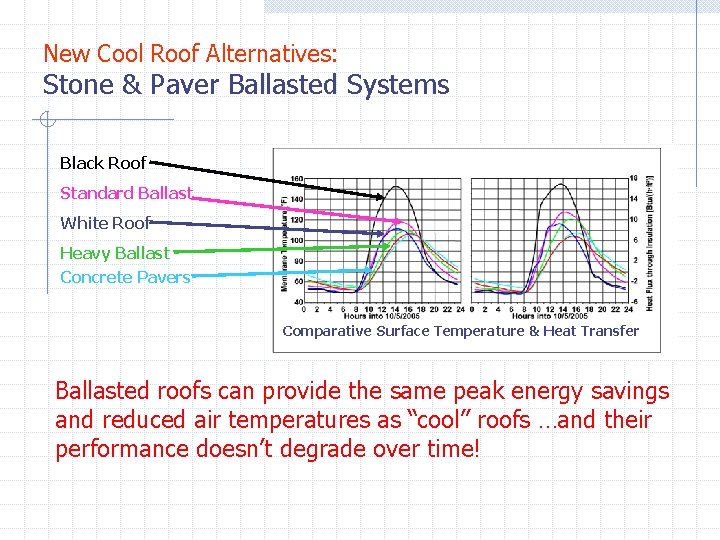
New Cool Roof Alternatives: Stone & Paver Ballasted Systems Envelop Systems Research Apparatus Oak Ridge National Laboratories
New Cool Roof Alternatives: Stone & Paver Ballasted Systems Black Roof Standard Ballast White Roof Heavy Ballast Concrete Pavers Comparative Surface Temperature & Heat Transfer Ballasted roofs can provide the same peak energy savings and reduced air temperatures as “cool” roofs …and their performance doesn’t degrade over time!
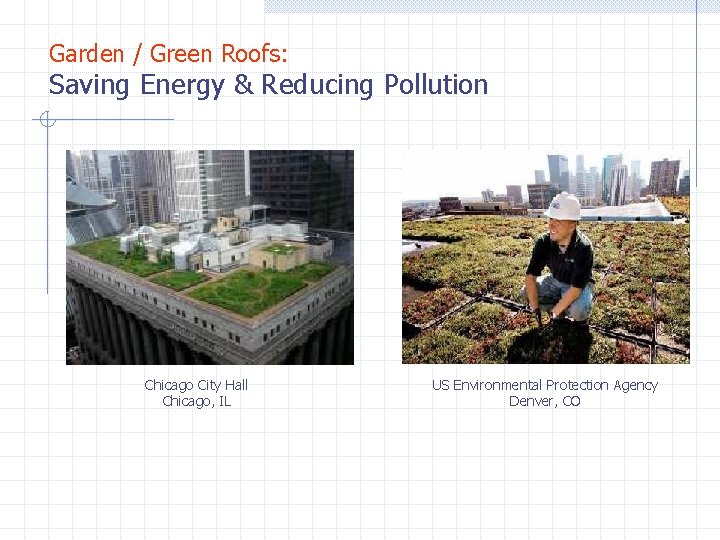
Garden / Green Roofs: Saving Energy & Reducing Pollution Chicago City Hall Chicago, IL US Environmental Protection Agency Denver, CO
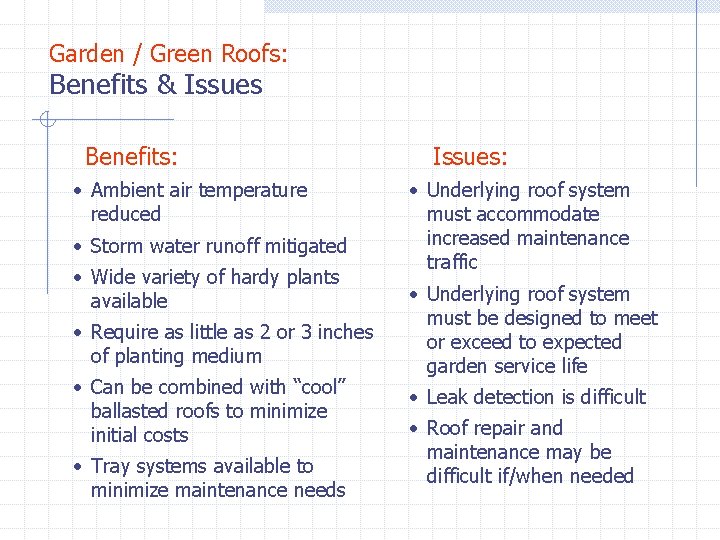
Garden / Green Roofs: Benefits & Issues Benefits: · Ambient air temperature reduced · Storm water runoff mitigated · Wide variety of hardy plants available · Require as little as 2 or 3 inches of planting medium · Can be combined with “cool” ballasted roofs to minimize initial costs · Tray systems available to minimize maintenance needs Issues: · Underlying roof system must accommodate increased maintenance traffic · Underlying roof system must be designed to meet or exceed to expected garden service life · Leak detection is difficult · Roof repair and maintenance may be difficult if/when needed
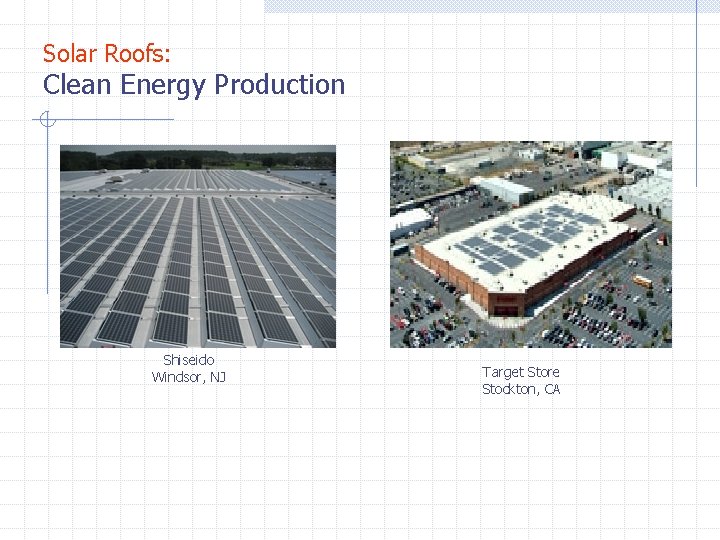
Solar Roofs: Clean Energy Production Shiseido Windsor, NJ Target Store Stockton, CA
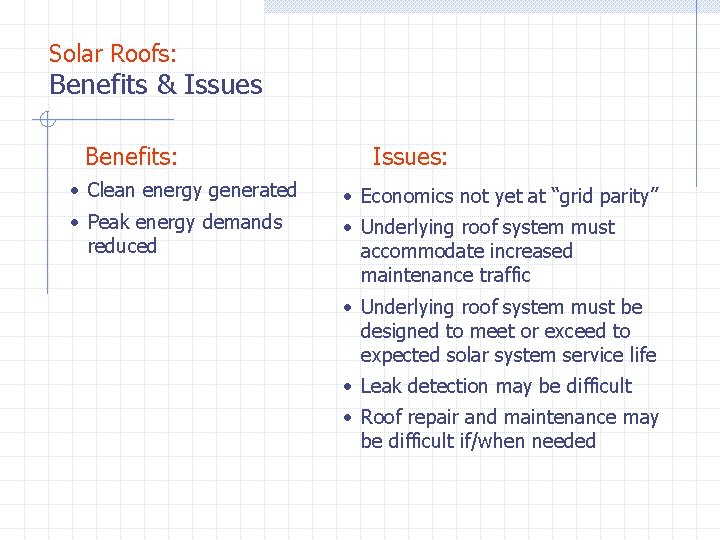
Solar Roofs: Benefits & Issues Benefits: Issues: · Clean energy generated · Economics not yet at “grid parity” · Peak energy demands reduced · Underlying roof system must accommodate increased maintenance traffic · Underlying roof system must be designed to meet or exceed to expected solar system service life · Leak detection may be difficult · Roof repair and maintenance may be difficult if/when needed
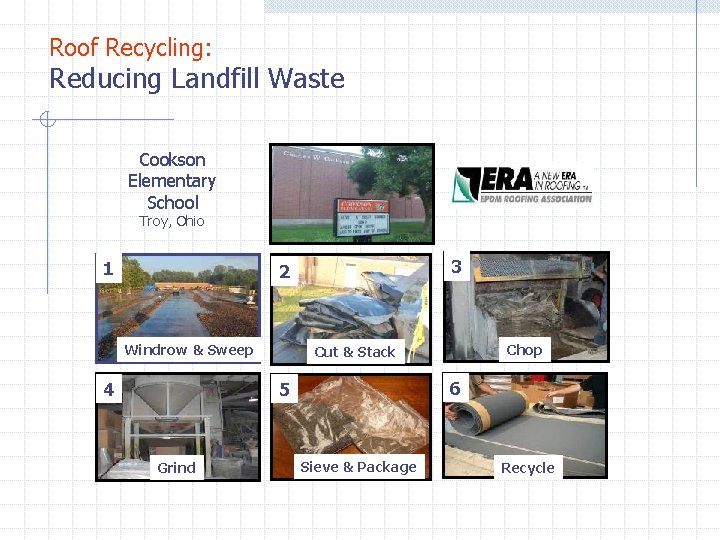
Roof Recycling: Reducing Landfill Waste Cookson Elementary School Troy, Ohio 1 3 2 Windrow & Sweep 4 6 5 Grind Chop Cut & Stack Sieve & Package Recycle
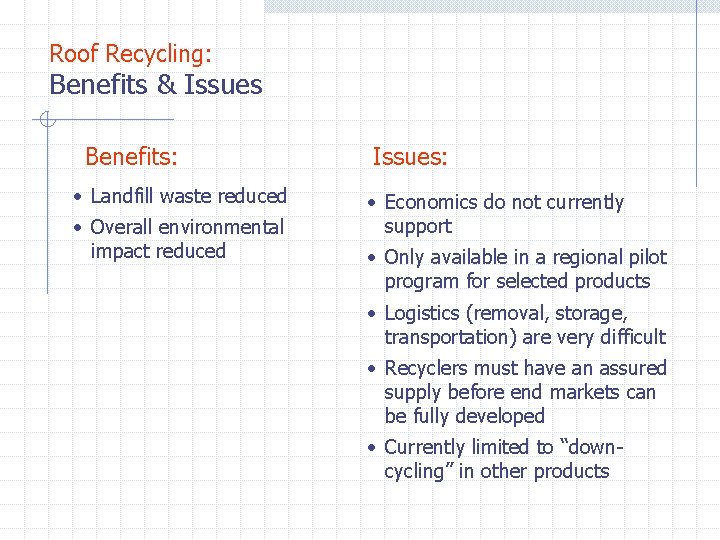
Roof Recycling: Benefits & Issues Benefits: · Landfill waste reduced · Overall environmental impact reduced Issues: · Economics do not currently support · Only available in a regional pilot program for selected products · Logistics (removal, storage, transportation) are very difficult · Recyclers must have an assured supply before end markets can be fully developed · Currently limited to “downcycling” in other products
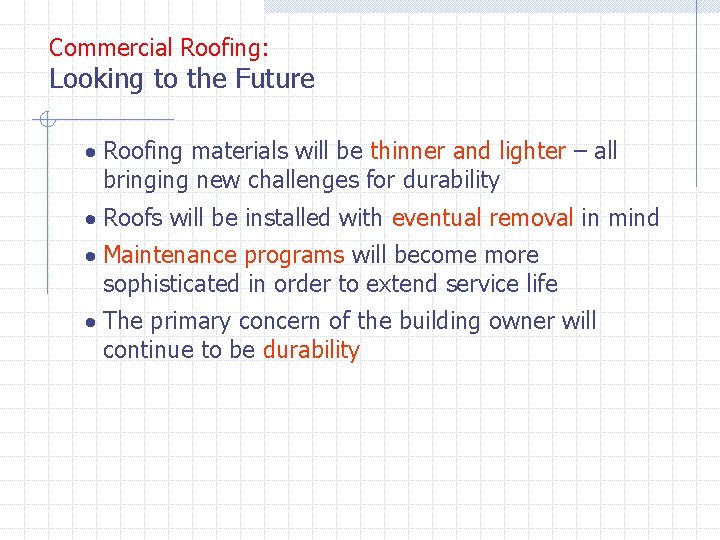
Commercial Roofing: Looking to the Future · Roofing materials will be thinner and lighter – all bringing new challenges for durability · Roofs will be installed with eventual removal in mind · Maintenance programs will become more sophisticated in order to extend service life · The primary concern of the building owner will continue to be durability