
INTRODUCTION TO ELECTRONIC INSTRUMENTATION Chapter 5 INTC 1305
- Slides: 35
INTRODUCTION TO ELECTRONIC INSTRUMENTATION Chapter 5 INTC 1305 – 01 FLOW Vern Wilson
Review of Chapter 4 – Level � Innage/outage � Floats � Interface � Meniscus � Density and head
FLOW MEASUREMENTS Chapter 5
Pipeline Meter Run � Pipeline Meter Run #117 avi
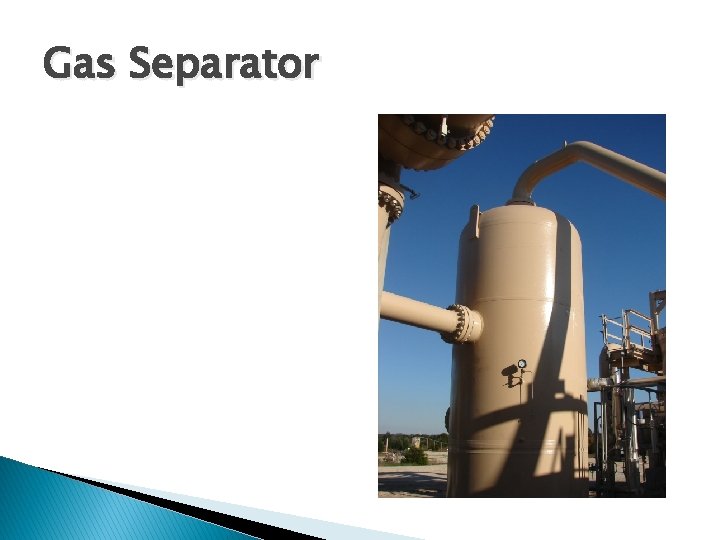
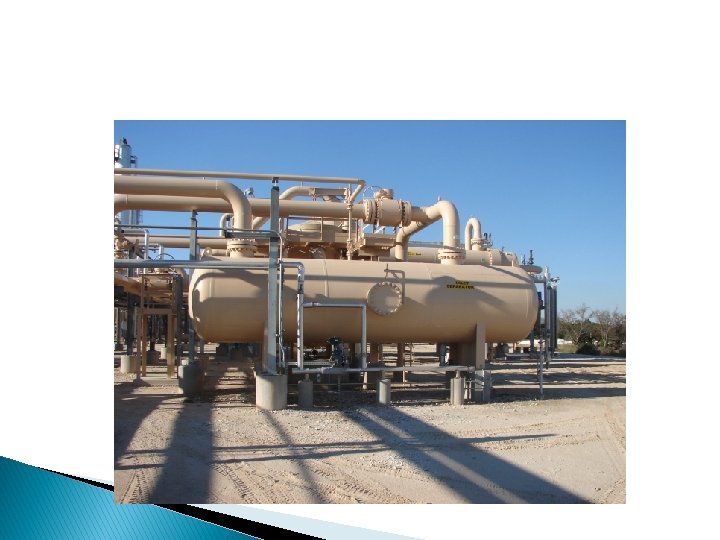
Gas Separator
Summary of Flow – � These instruments measure FLOW � Fluid in motion � Always from hi to lo p � Molecules continually change � Laminar - streamline � Turbulent � Obstructions mess up smooth flow � Usually turbulent flow is consistent
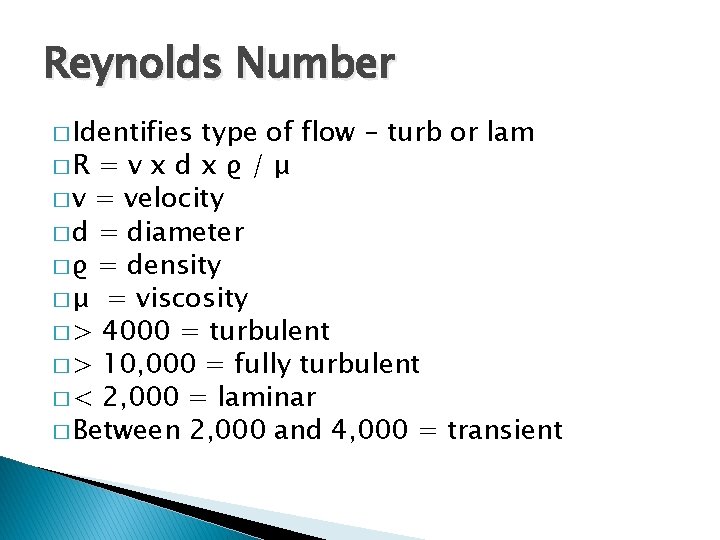
Reynolds Number � Identifies type of flow – turb or lam �R = v x d x ϱ / μ � v = velocity � d = diameter � ϱ = density � μ = viscosity � > 4000 = turbulent � > 10, 000 = fully turbulent � < 2, 000 = laminar � Between 2, 000 and 4, 000 = transient
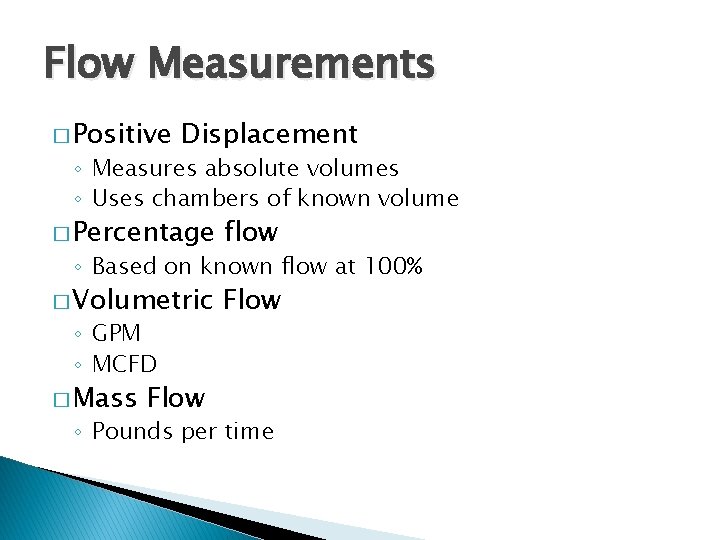
Flow Measurements � Positive Displacement ◦ Measures absolute volumes ◦ Uses chambers of known volume � Percentage flow � Volumetric Flow ◦ Based on known flow at 100% ◦ GPM ◦ MCFD � Mass Flow ◦ Pounds per time
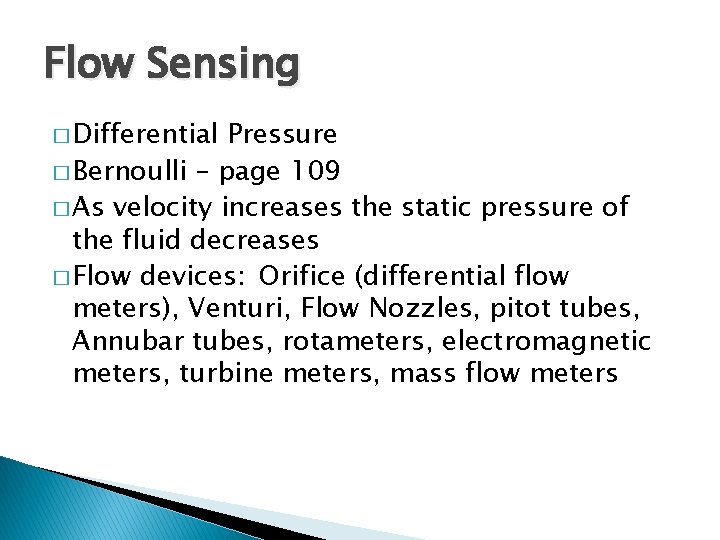
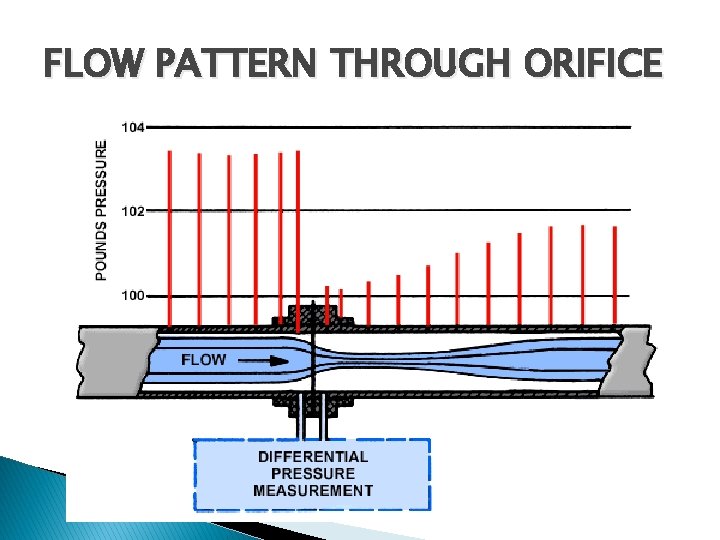
Flow Sensing � Differential Pressure � Bernoulli – page 109 � As velocity increases the static pressure of the fluid decreases � Flow devices: Orifice (differential flow meters), Venturi, Flow Nozzles, pitot tubes, Annubar tubes, rotameters, electromagnetic meters, turbine meters, mass flow meters
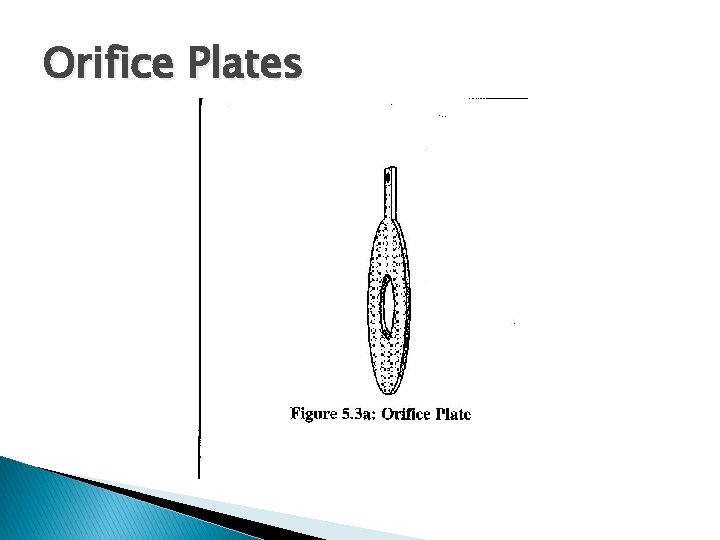
ORIFICE PLATES � Simple pressure drop � Flat upstream – bevelled downside � Set in tapped flanges
Orifice Plates
FLOW PATTERN THROUGH ORIFICE
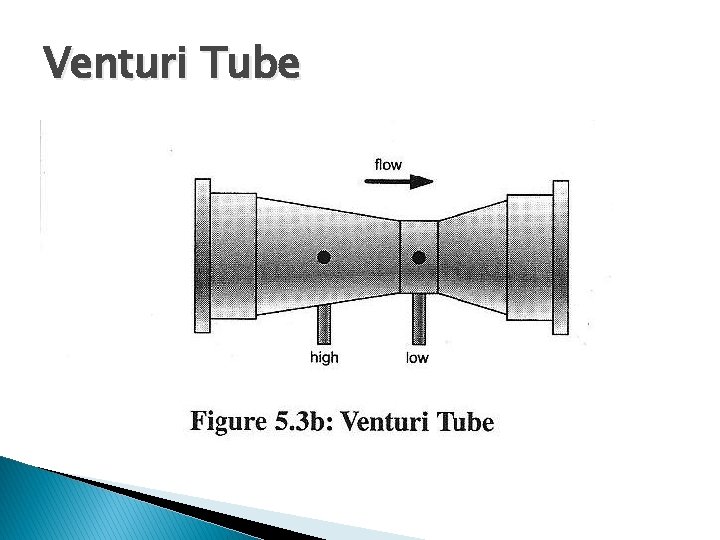
VENTURI TUBES – 5. 3. 2 � Higher cost but lower op costs � Smooth cone shaped � As speeds increase in the throat the pressure is reduced according to Bernoulli
Venturi Tube
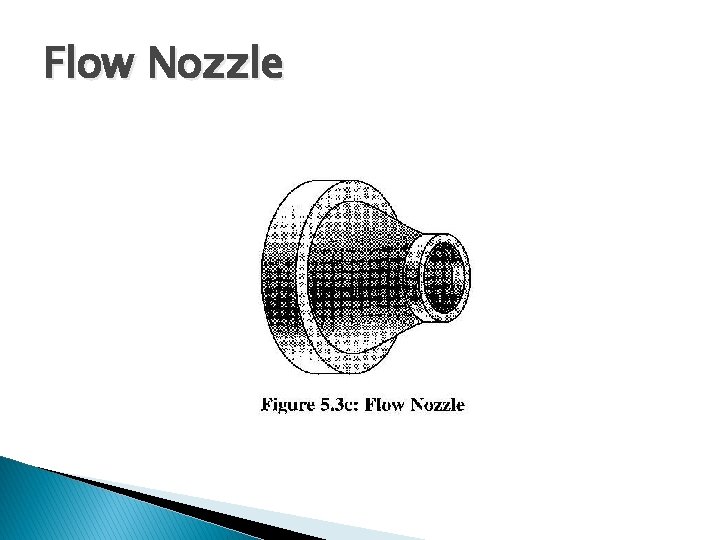
FLOW NOZZLE 5. 3. 3 � Extended tapered inlet � Can be inserted into a flange � Allow higher flow then orifice plates - twice � Can handle slurries � Less $ than venturi but more than orifice
Flow Nozzle
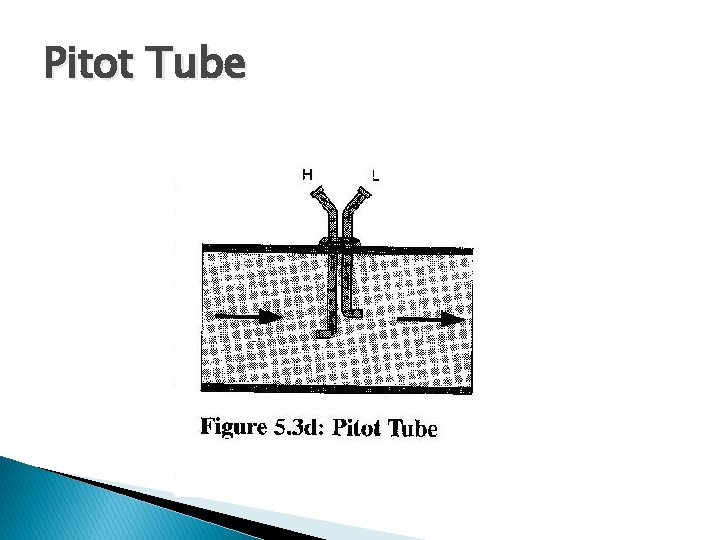
PITOT TUBES 5. 3. 4 � Measures impinging pressure � Disadvantage – measures flow at only one point � Can’t measure laminar flow � ANNUBAR or MULTI PORT � Pitot with several ports
Pitot Tube
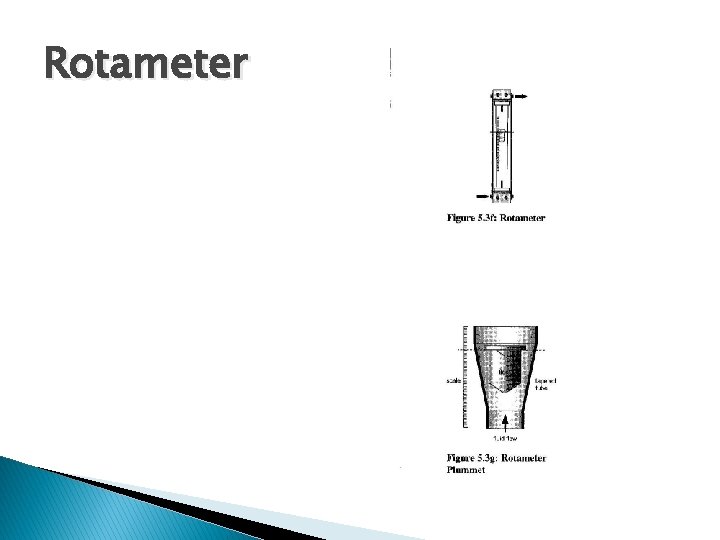
ROTAMETERS � Based on gravity and impinging pressure � Tapered flow tube with a float � Flow tube calibrated to flow � Only give an estimate of flow � Float can be magnetized inside steel tube � Designed for specific small range
Rotameter
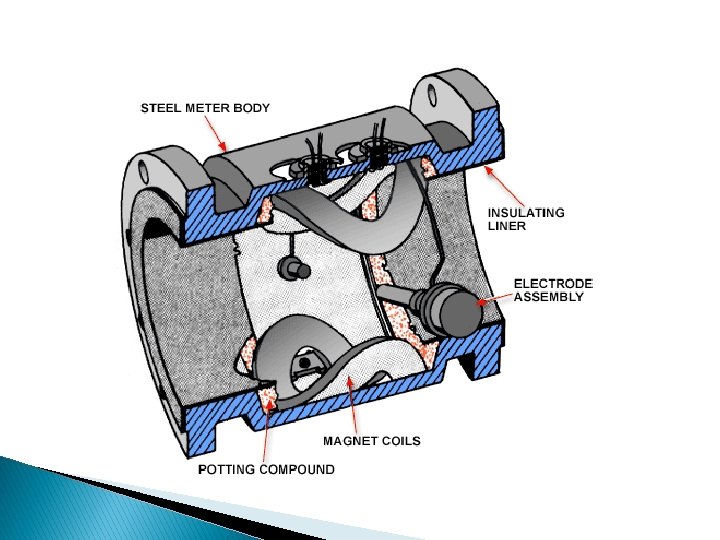
ELECTROMAGNETIC METER � Or Magmeters – no metal in body � Measures electrically conductive liquids � Generally water based � Obstruction free – noninvasive � Food and drug use � Based on Faraday’s law of induction – an electrical potential is produced when a conductor moves at a right angle through a magnetic field
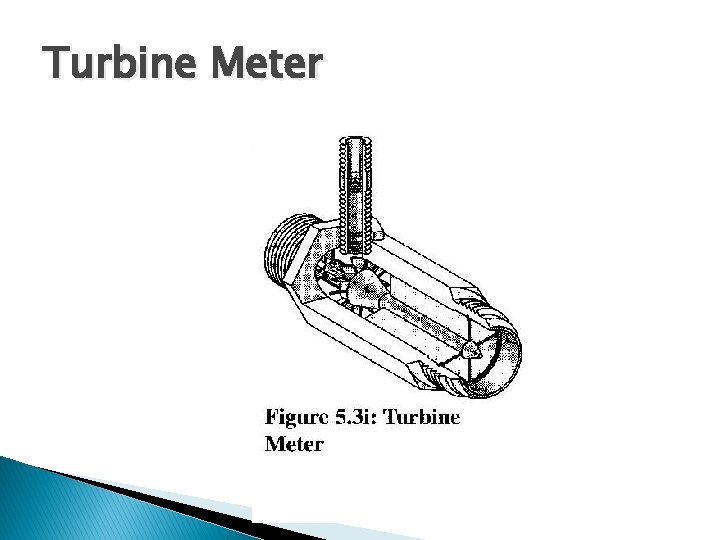
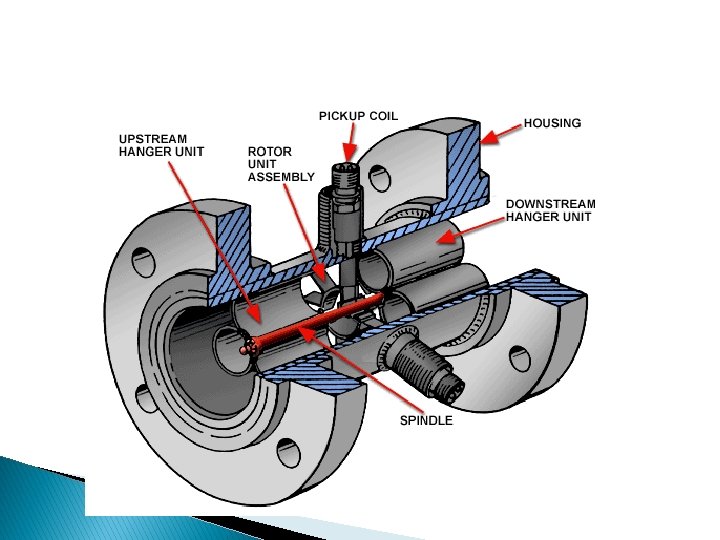
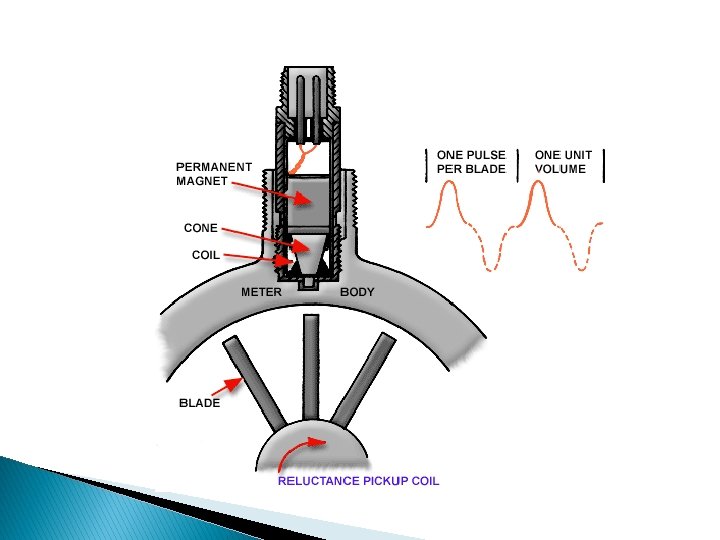
TURBINE METER � Flow tube with free spinning turbine � One blade is magnetic � Induction pick up coil � Each pulse indicates a rotation of the turbine � Simply multiply a K factor times the number of sensor pulses
Turbine Meter
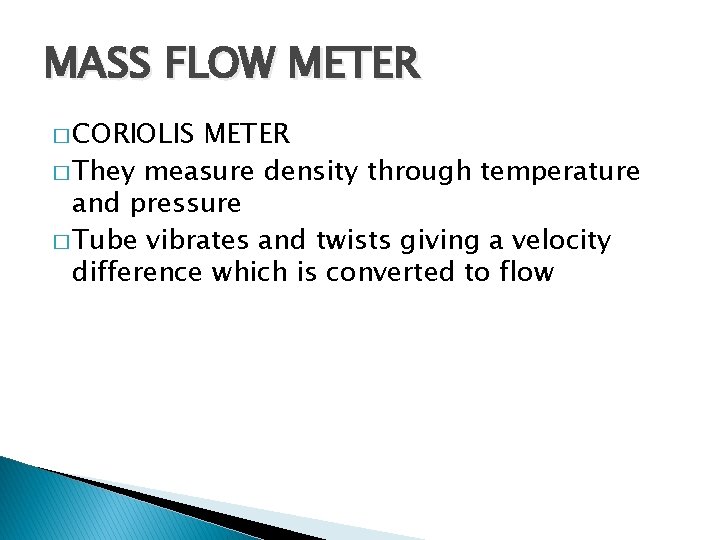
MASS FLOW METER � CORIOLIS METER � They measure density through temperature and pressure � Tube vibrates and twists giving a velocity difference which is converted to flow
DIFFERENTIAL (D/P) TRANSMITTER � Most common � Responds to pressure � Flow is proportional to square root of dp
MEASUREMENT � FLOW MEASURED IN: �GPM �POUNDS PER MINUTE
GPM EXERCISE � An injection program requires 100 barrels of injection fluid per day. � How many GPM is equal to 100 barrels per day? � First: There are 42 gallons per barrel � Second: Convert to GPM
POUNDS PER MINUTE EXERCISE � We are pumping mud that weighs 10. 9 pounds per gallon at 4 barrels per minute. � How many pounds per minute are we pumping? � First: Determine how many pounds are we pumping – 4 barrels = 42 gals/barrel � Second: Determine how many pounds per minute.