Incontinence Dr Gary Sinoff Department of Gerontology University






- Slides: 58
Incontinence Dr. Gary Sinoff Department of Gerontology University of Haifa
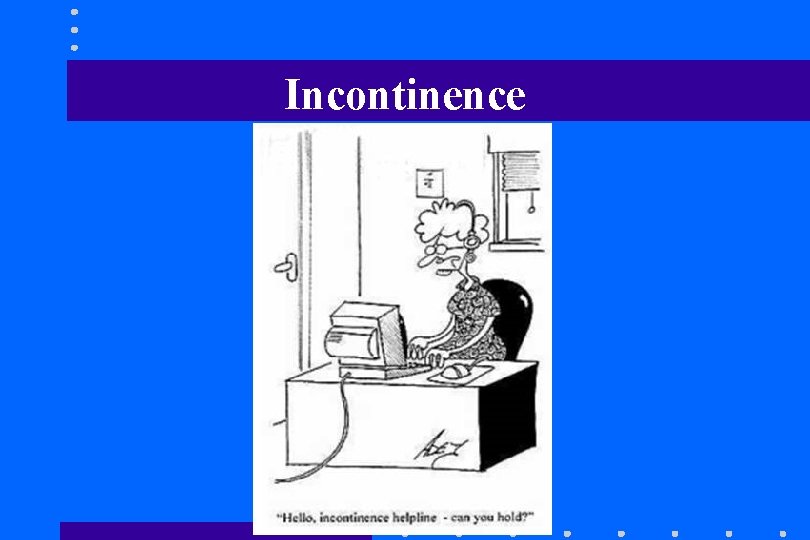
Incontinence
Definition 2 -PC-ME
Definition INCONTINENCE: Involuntary loss of urine or stool in sufficient amount or frequency to constitute a social and/or health problem. A heterogeneous condition that ranges in severity from dribbling to continuous incontinence. If individuals lose only one or two drops of urine when they don’t want to, that’s considered incontinence!
Myths: People who are incontinent are: • Very old • Feeble • Senile • Totally dependent • No longer in control
Brussels
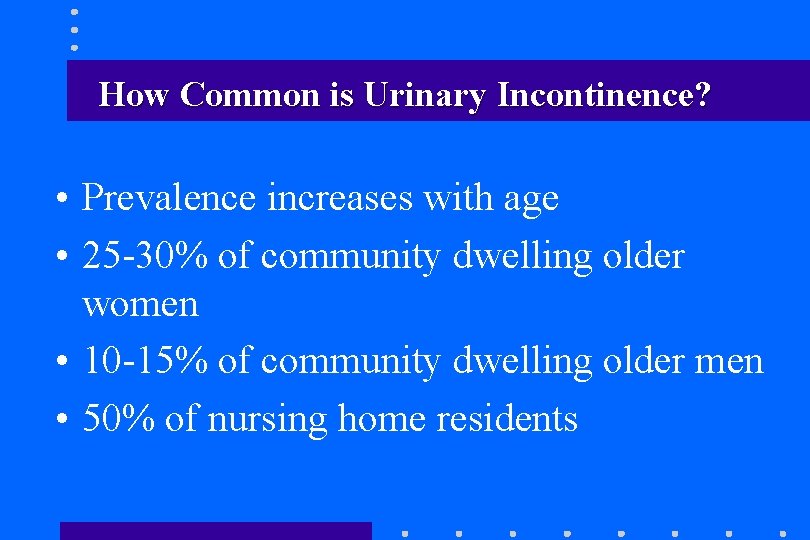
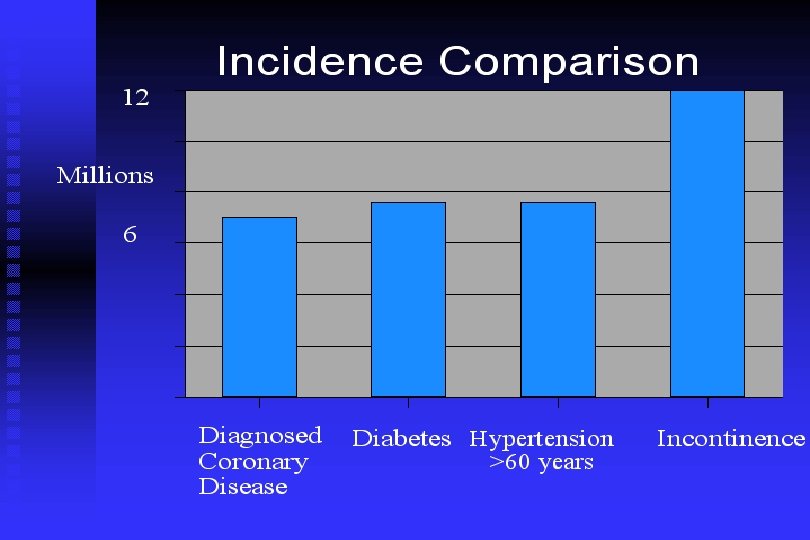
How Common is Urinary Incontinence? • Prevalence increases with age • 25 -30% of community dwelling older women • 10 -15% of community dwelling older men • 50% of nursing home residents
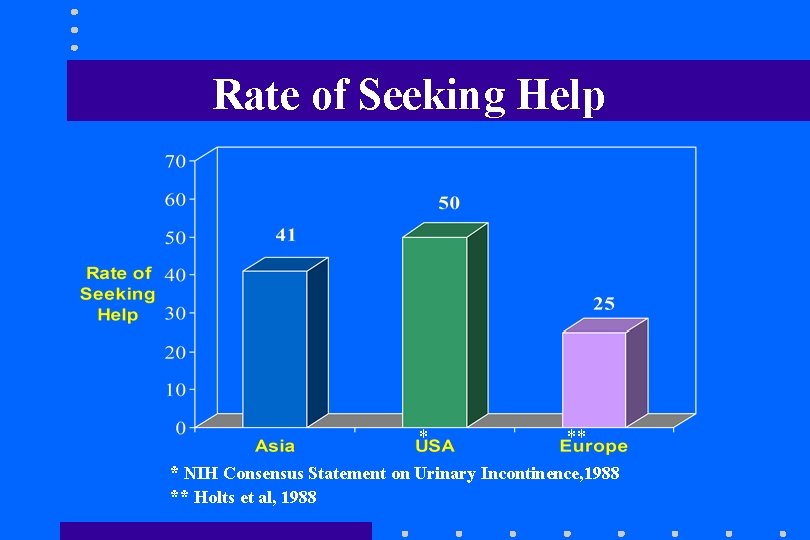
Rate of Seeking Help * ** * NIH Consensus Statement on Urinary Incontinence, 1988 ** Holts et al, 1988
Under-Diagnoses and Under-Treated • Only 32% of primary care physicians routinely ask about incontinence • 50 -75% of patients never describe symptoms to physicians • 80% of urinary incontinence can be cured or improved
Why is Incontinence Important? • Social stigmata - leads to restricted activities and depression • Medical complications - skin breakdown, increased urinary tract infections • Institutionalization - UI is the second leading cause of nursing home placement
Anatomy of Micturition • Detrusor muscle • External and Internal sphincter • CNS control – Pons - facilitates – Cerebral cortex – inhibits • Hormonal effects - estrogen
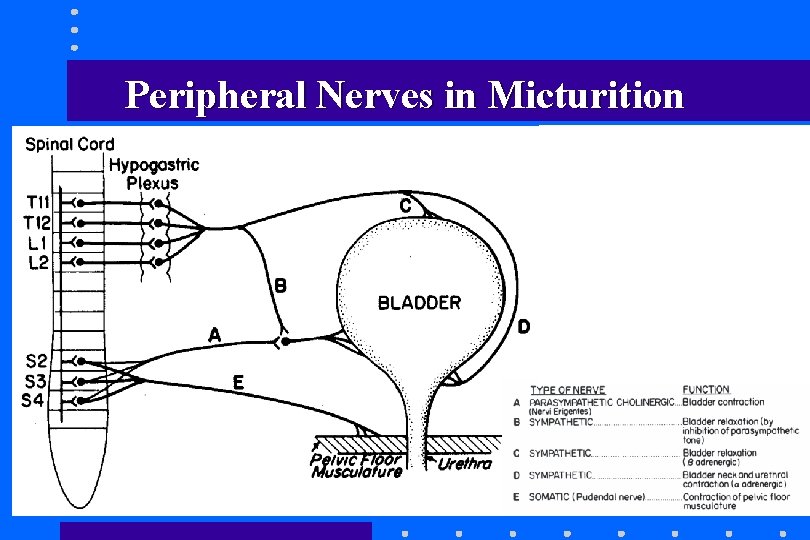
Peripheral Nerves in Micturition
Peripheral Nerves in Micturition • • Parasympathetic (cholinergic) - Bladder contraction Sympathetic - Bladder Relaxation (β adrenergic) Sympathetic - Bladder neck and urethral contraction (α adrenergic) • Somatic (Pudendal nerve) - contraction pelvic floor musculature
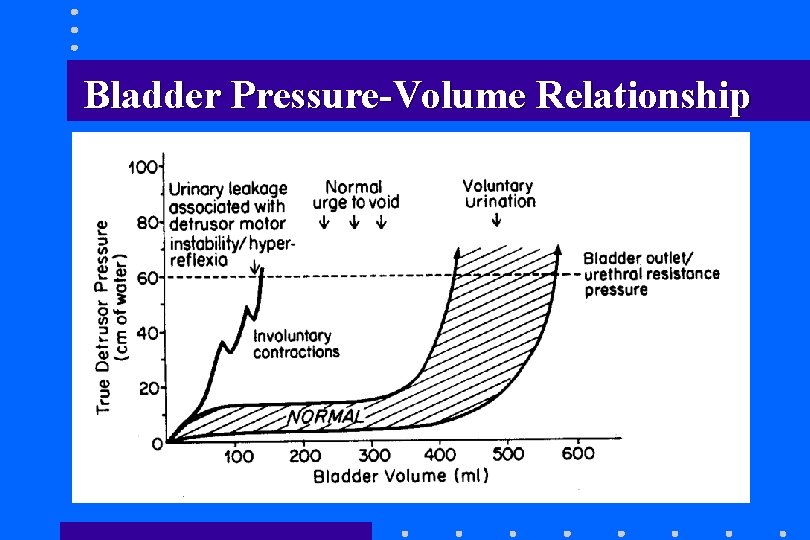
Bladder Pressure-Volume Relationship
Potentially Reversible Causes D I A P P E R S - Delirium - Infection - Atrophic vaginitis or urethritis - Pharmaceuticals - Psychological disorders - Endocrine disorders - Restricted mobility - Stool impaction
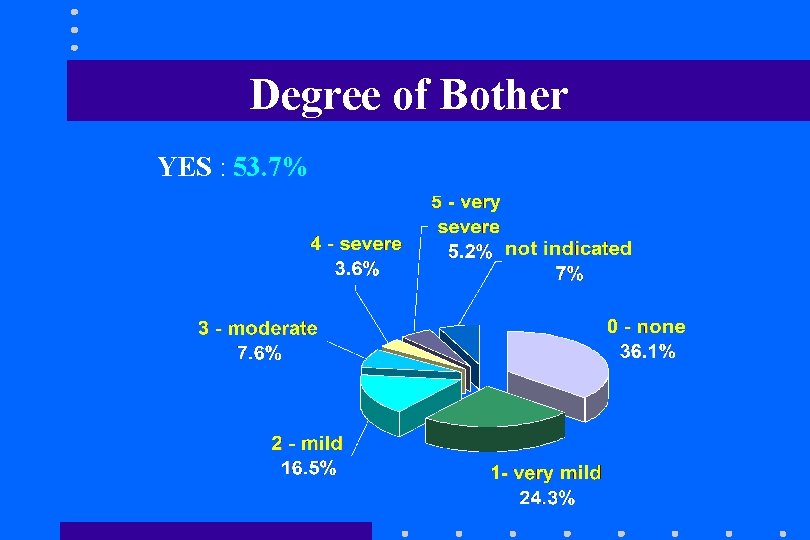
Degree of Bother YES : 53. 7%
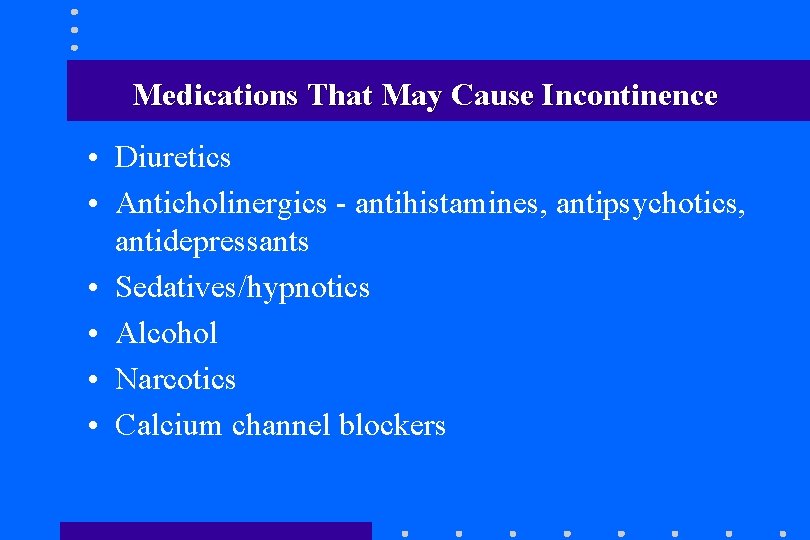
Medications That May Cause Incontinence • Diuretics • Anticholinergics - antihistamines, antipsychotics, antidepressants • Sedatives/hypnotics • Alcohol • Narcotics • Calcium channel blockers
Other factors for urinary incontinence • • • Sociocultural Psychological Muscle tone damage Fluid intake Diseases Surgery
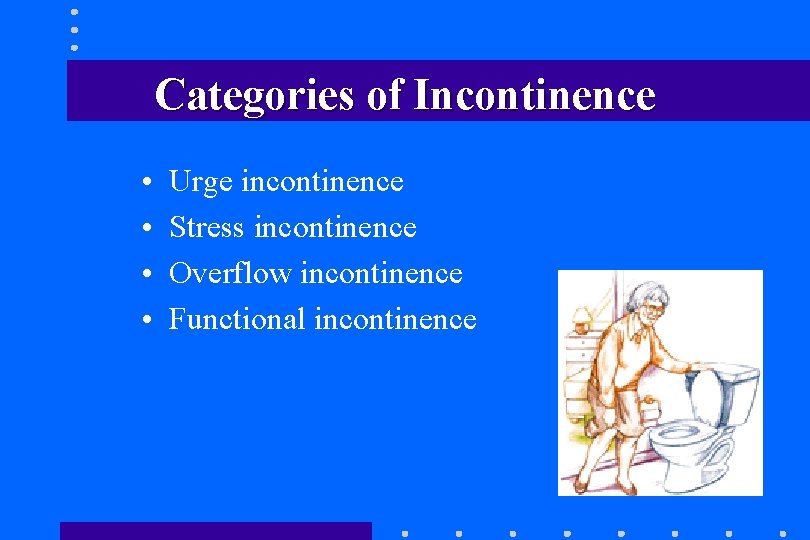
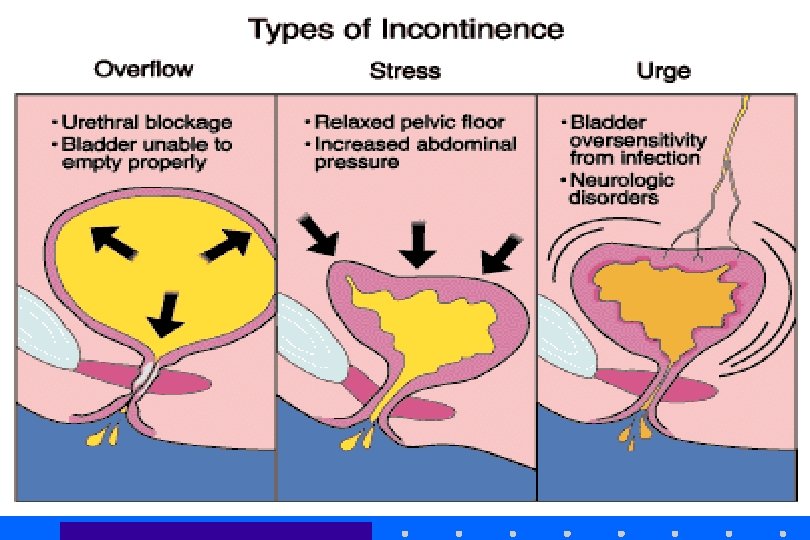
Categories of Incontinence • • Urge incontinence Stress incontinence Overflow incontinence Functional incontinence
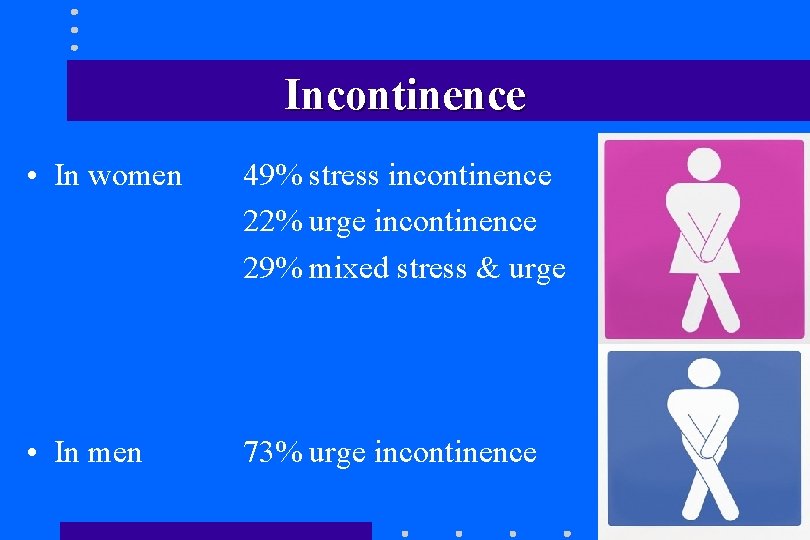
Incontinence • In women 49% stress incontinence 22% urge incontinence 29% mixed stress & urge • In men 73% urge incontinence
Urge Incontinence Other Names: detrusor hyperactivity, detrusor instability, irritable bladder, spastic bladder • • Most common cause of UI >75 years of age Abrupt desire to void cannot be suppressed Usually idiopathic Causes: infection, tumor, stones, atrophic vaginitis or urethritis, stroke, Parkinson’s Disease, dementia
Stress Incontinence • Most common type in women < 75 years old • Occurs with increase in abdominal pressure; cough, sneeze, laughing, etc. • Hypermotility of bladder neck and urethra; associated with aging, hormonal changes, trauma of childbirth or pelvic surgery (85% of cases) • Intrinsic sphincter problems; due to pelvic/incontinence surgery, pelvic radiation, trauma, neurogenic causes (15% of cases)
Overflow Incontinence • Over distention of bladder • Bladder outlet obstruction; stricture, BPH, cystocele, fecal impaction • Non-contractile baldder (hypoactive detrusor or atonic bladder); diabetes, MS, spinal injury, medications
Functional Incontinence • Does not involve lower urinary tract • Result of psychological, cognitive or physical impairment
Diagnostic Tests • • • Stress test (diagnostic for stress incontinence; specificity >90%) Post-void residual Blood Tests (calcium, glucose, BUN, Cr) Urine Culture Simple (bedside) Cystometrics
Urodynamics - Lower urinary tract • • • Uroflowmetry Cystometrography External sphincter electromyography Pressure flow study Videourodynamic study Urethral pressure profilometry
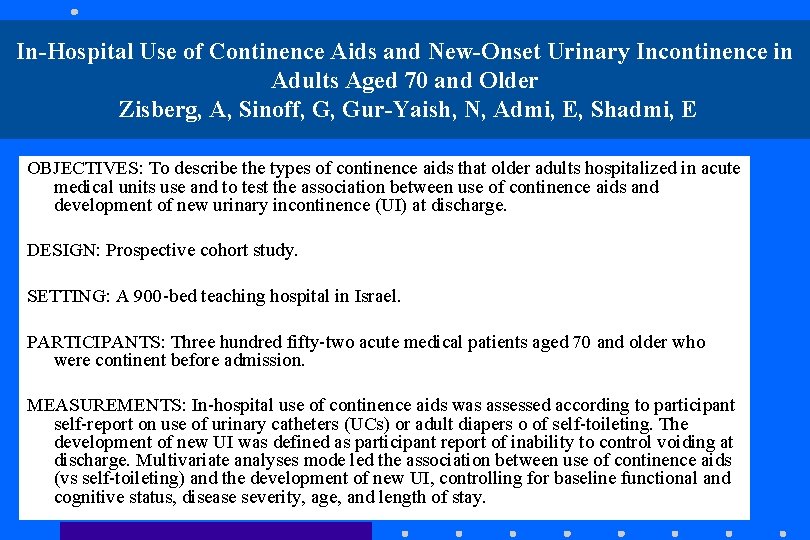
In-Hospital Use of Continence Aids and New-Onset Urinary Incontinence in Adults Aged 70 and Older Zisberg, A, Sinoff, G, Gur-Yaish, N, Admi, E, Shadmi, E OBJECTIVES: To describe the types of continence aids that older adults hospitalized in acute medical units use and to test the association between use of continence aids and development of new urinary incontinence (UI) at discharge. DESIGN: Prospective cohort study. SETTING: A 900 -bed teaching hospital in Israel. PARTICIPANTS: Three hundred fifty-two acute medical patients aged 70 and older who were continent before admission. MEASUREMENTS: In-hospital use of continence aids was assessed according to participant self-report on use of urinary catheters (UCs) or adult diapers o of self-toileting. The development of new UI was defined as participant report of inability to control voiding at discharge. Multivariate analyses mode led the association between use of continence aids (vs self-toileting) and the development of new UI, controlling for baseline functional and cognitive status, disease severity, age, and length of stay.
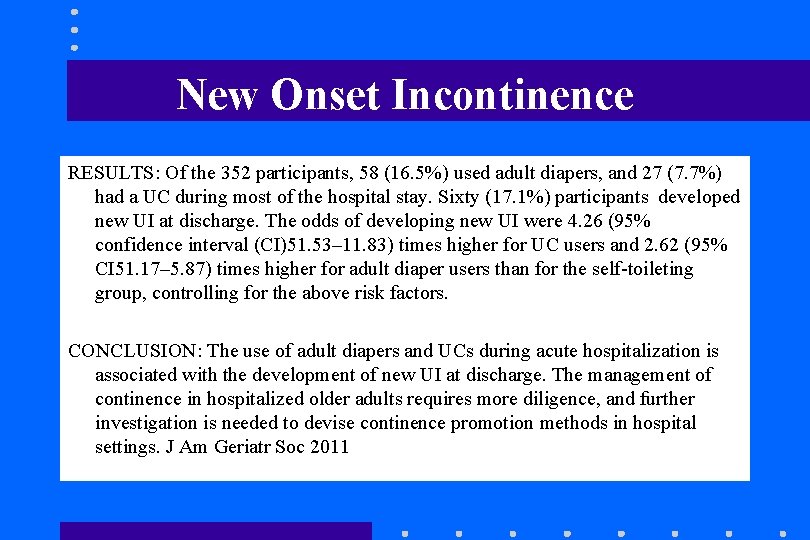
New Onset Incontinence RESULTS: Of the 352 participants, 58 (16. 5%) used adult diapers, and 27 (7. 7%) had a UC during most of the hospital stay. Sixty (17. 1%) participants developed new UI at discharge. The odds of developing new UI were 4. 26 (95% confidence interval (CI)51. 53– 11. 83) times higher for UC users and 2. 62 (95% CI 51. 17– 5. 87) times higher for adult diaper users than for the self-toileting group, controlling for the above risk factors. CONCLUSION: The use of adult diapers and UCs during acute hospitalization is associated with the development of new UI at discharge. The management of continence in hospitalized older adults requires more diligence, and further investigation is needed to devise continence promotion methods in hospital settings. J Am Geriatr Soc 2011
Treatment Options 1
Lifestyle choices • • Reduce or eliminate caffeine Reduce or eliminate alcohol Drink 6 to 8 glasses of water daily Quit smoking Weight control Follow a healthy diet high in fiber Reduce physical barriers to toilet (use bedside commode)
Timed Voiding • Regular scheduled pattern of voiding where the intervals between voiding are gradually increased. • It reduces irritability of the bladder • Reverses bad habits • No longer needing to camp out by the bathroom promotes freedom and independence once again.
Treatment Options • Bladder training – Patient education – Scheduled voiding – Positive reinforcement • Pelvic floor exercises (Kegel Exercises) • Biofeedback • Caregiver interventions – Scheduled toileting – Habit training – Prompted voiding 2
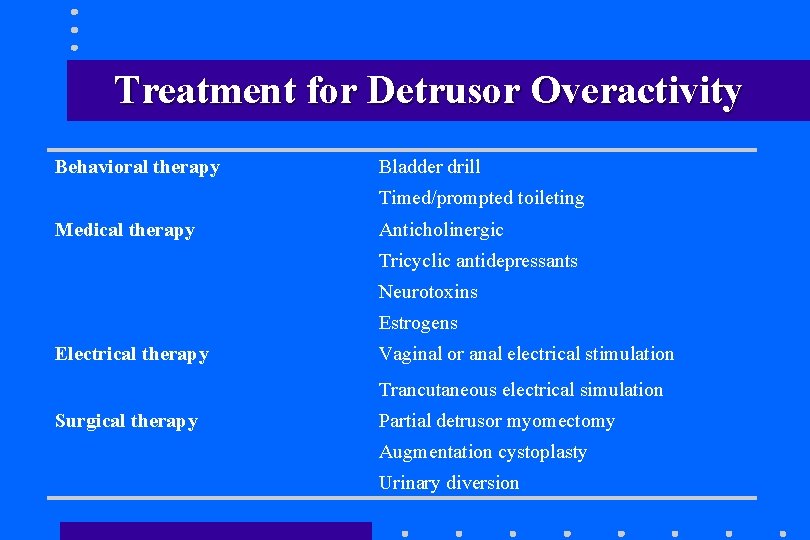
Treatment for Detrusor Overactivity Behavioral therapy Bladder drill Timed/prompted toileting Medical therapy Anticholinergic Tricyclic antidepressants Neurotoxins Estrogens Electrical therapy Vaginal or anal electrical stimulation Trancutaneous electrical simulation Surgical therapy Partial detrusor myomectomy Augmentation cystoplasty Urinary diversion
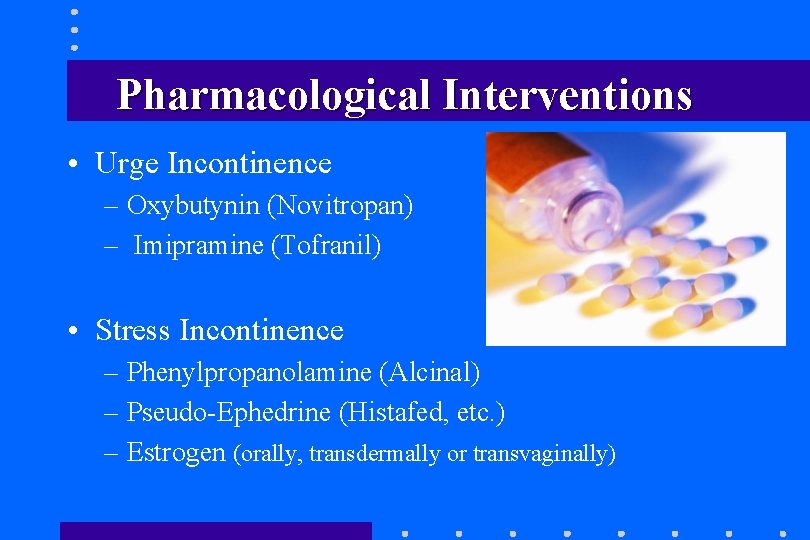
Pharmacological Interventions • Urge Incontinence – Oxybutynin (Novitropan) – Imipramine (Tofranil) • Stress Incontinence – Phenylpropanolamine (Alcinal) – Pseudo-Ephedrine (Histafed, etc. ) – Estrogen (orally, transdermally or transvaginally)
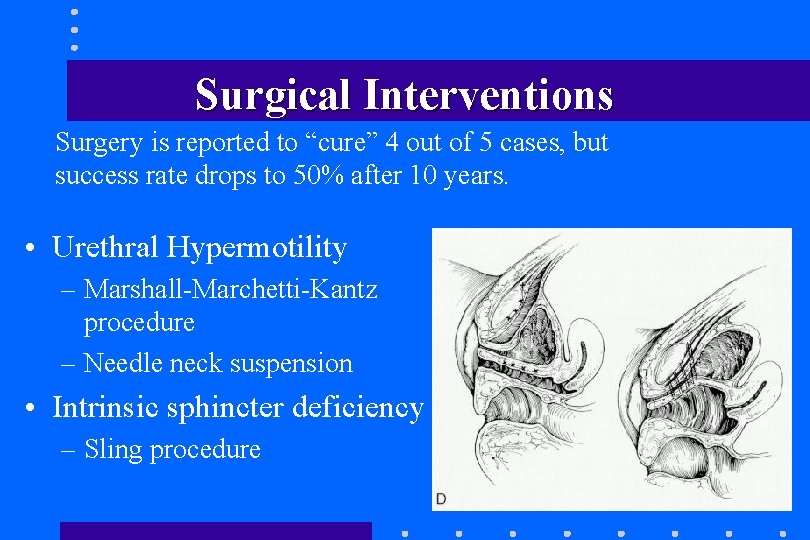
Surgical Interventions Surgery is reported to “cure” 4 out of 5 cases, but success rate drops to 50% after 10 years. • Urethral Hypermotility – Marshall-Marchetti-Kantz procedure – Needle neck suspension • Intrinsic sphincter deficiency – Sling procedure
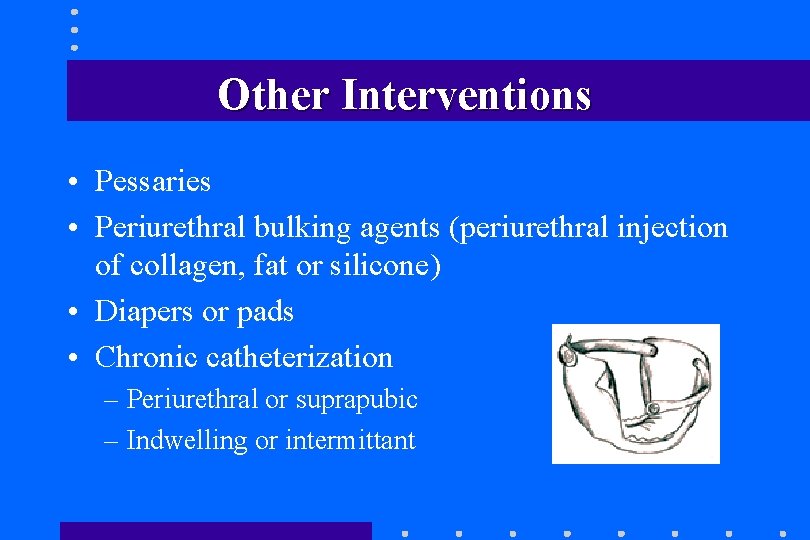
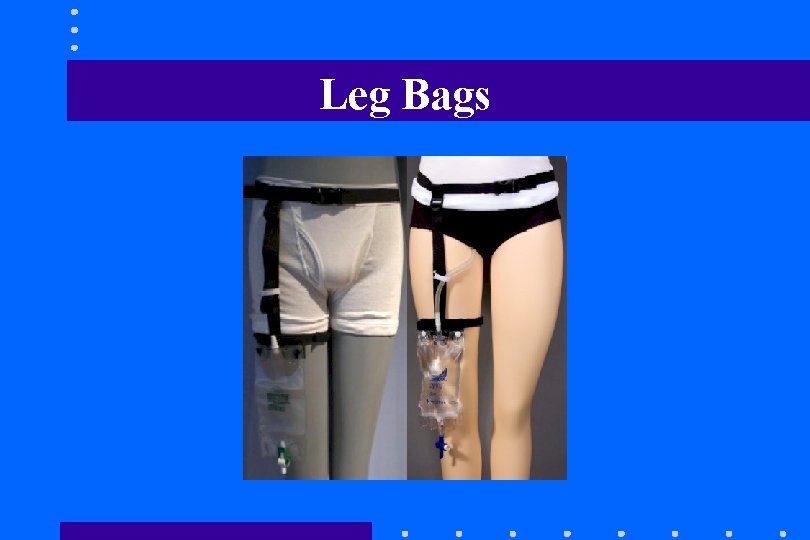
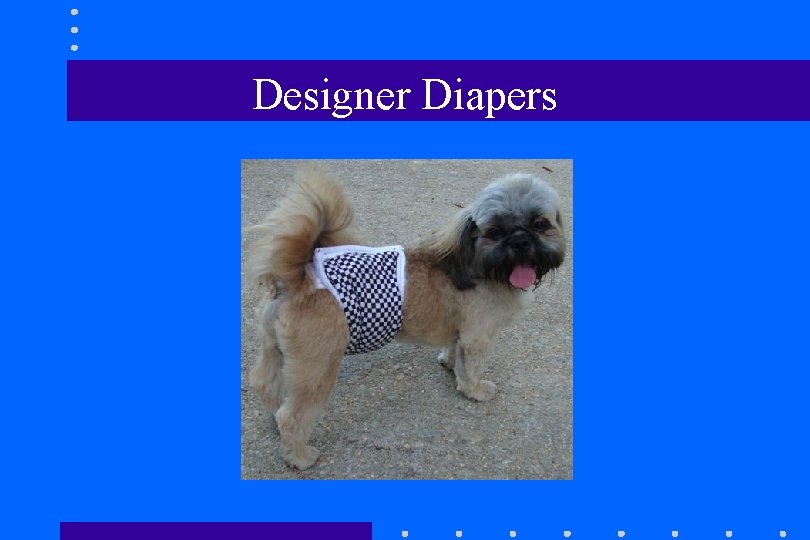
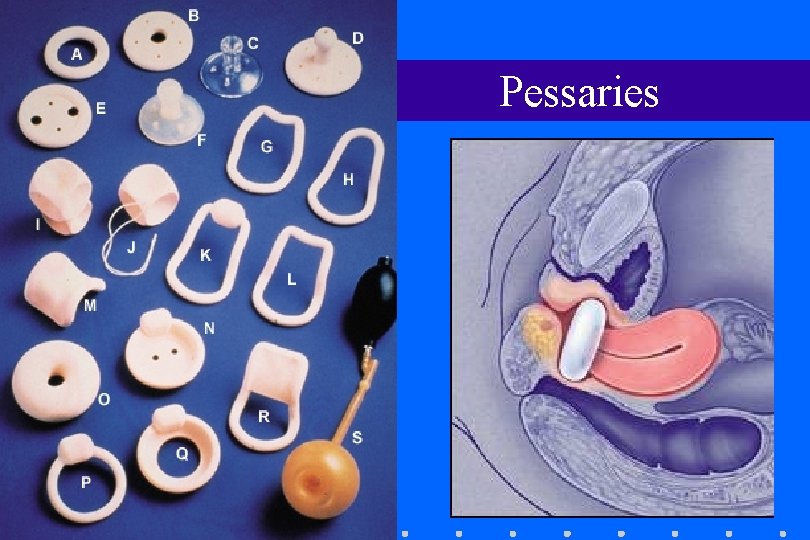
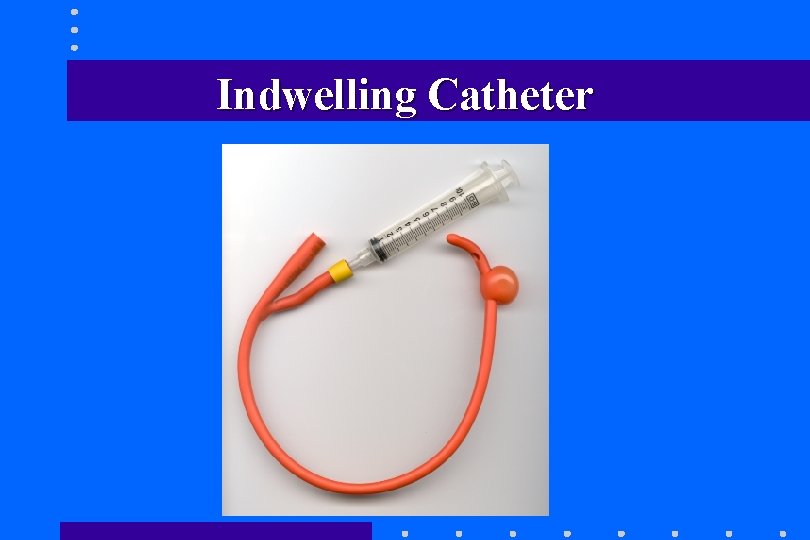
Other Interventions • Pessaries • Periurethral bulking agents (periurethral injection of collagen, fat or silicone) • Diapers or pads • Chronic catheterization – Periurethral or suprapubic – Indwelling or intermittant
Leg Bags
Designer Diapers
Pessaries
Indwelling Catheter
Fecal Incontinence
Fecal Incontinence • “The inability to control the passage of flatus, liquid or solid stool” • 2% prevalence community, increases in NH • Profoundly disabling, also on body image • Number of different etiologies • Variety of medical and surgical treatments available
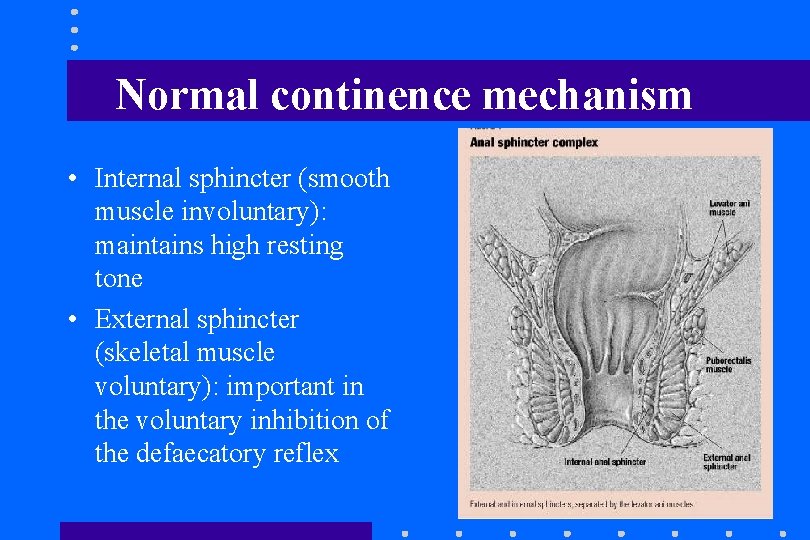
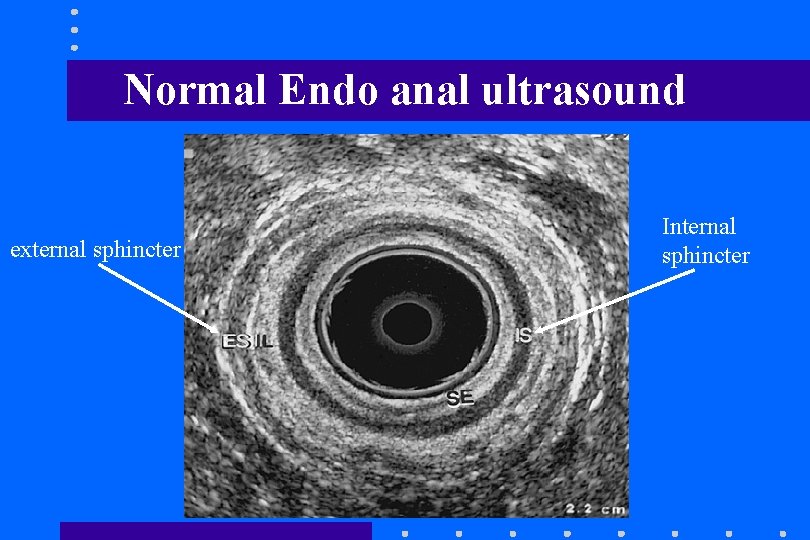
Normal continence mechanism • Internal sphincter (smooth muscle involuntary): maintains high resting tone • External sphincter (skeletal muscle voluntary): important in the voluntary inhibition of the defaecatory reflex
Factors Affecting GIT Elimination • Physiological changes with age • Physical Activity • Diet • Psychological Factors • Surgical
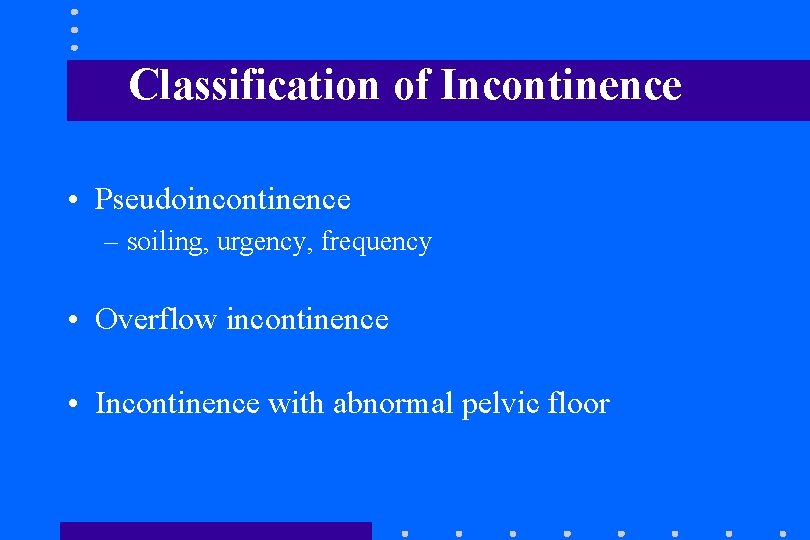
Classification of Incontinence • Pseudoincontinence – soiling, urgency, frequency • Overflow incontinence • Incontinence with abnormal pelvic floor
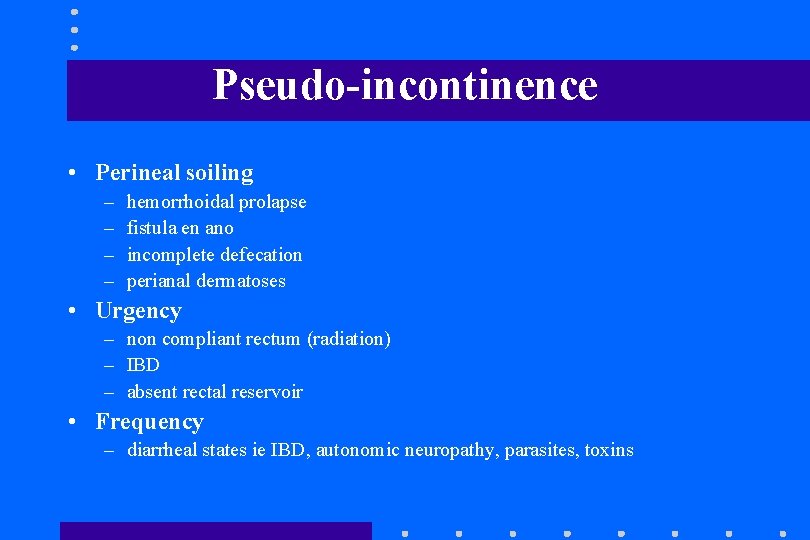
Pseudo-incontinence • Perineal soiling – – hemorrhoidal prolapse fistula en ano incomplete defecation perianal dermatoses • Urgency – non compliant rectum (radiation) – IBD – absent rectal reservoir • Frequency – diarrheal states ie IBD, autonomic neuropathy, parasites, toxins
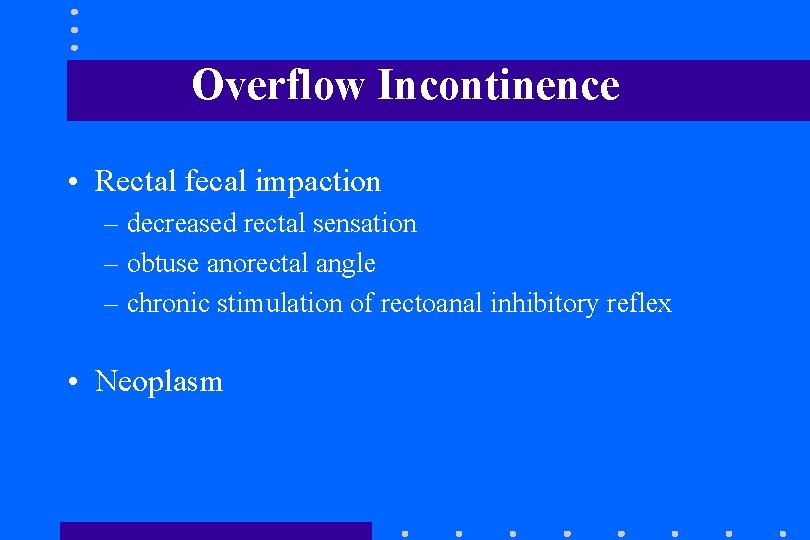
Overflow Incontinence • Rectal fecal impaction – decreased rectal sensation – obtuse anorectal angle – chronic stimulation of rectoanal inhibitory reflex • Neoplasm
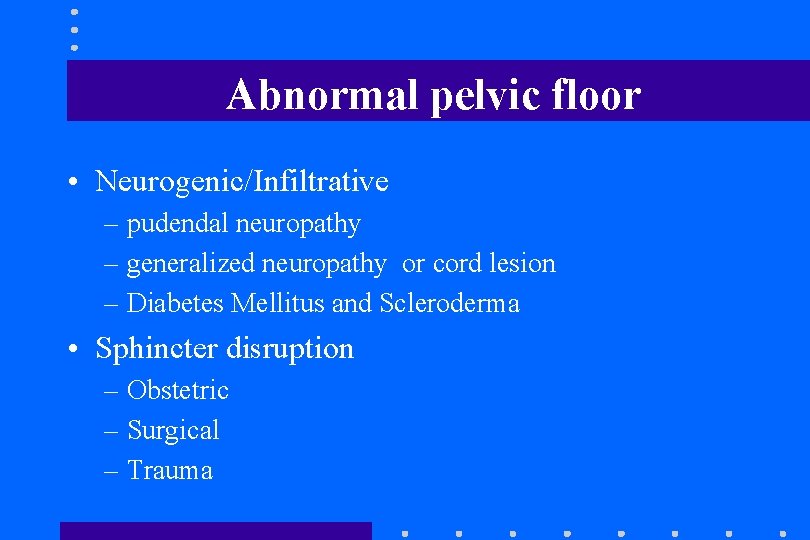
Abnormal pelvic floor • Neurogenic/Infiltrative – pudendal neuropathy – generalized neuropathy or cord lesion – Diabetes Mellitus and Scleroderma • Sphincter disruption – Obstetric – Surgical – Trauma
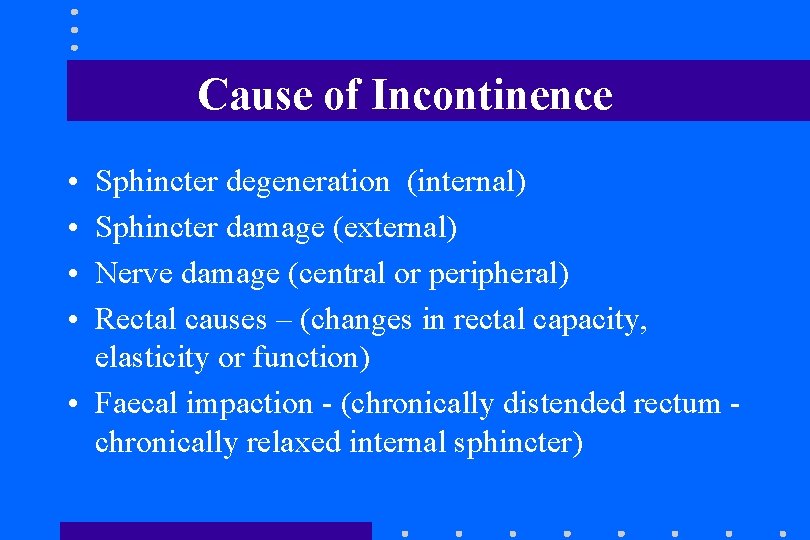
Cause of Incontinence • • Sphincter degeneration (internal) Sphincter damage (external) Nerve damage (central or peripheral) Rectal causes – (changes in rectal capacity, elasticity or function) • Faecal impaction - (chronically distended rectum chronically relaxed internal sphincter)
Examination • PR examination – tone, contractile strength, perineal descent on straining • Impacted and overflow incontinence • Anal Fistula • Haemorrhoids • Rectocele
Anorectal physiology laboratory • Functional - Manometric studies, Dynamic Fluoroscopy • Anatomical - Endoanal ultrasound, MRI • Neurological - Pudendal nerve latency tests
Manometry • Voluntary anal squeeze pressure • Low resting pressure: internal sphincter abnormality • Reduced squeeze pressures: external sphincter problem • Fatigueability of the external sphincter: relevance in urge incontinence
Endoanal ultrasound • Anatomical information • Likely be of benefit post obstetrics or surgical trauma • After first vaginal delivery 30% have demonstrated sphincter defects • 1/3 of these develops symptoms incontinence/ urgency
Normal Endo anal ultrasound external sphincter Internal sphincter
Managing Bowel Incontinence: · Note when incontinence is likely to occur and put patient on bedpan at that time. · Keep the skin clean and dry by using proper hygienic measures. · Change bed linens and clothing as necessary. · Confer with the physician about using a suppository or daily cleansing enema. · Repeated rectal examinations
Next Week Iatrogenic Damage