IAM Overview and Selfassessment Exercise Keith Hazelton UWMadison
- Slides: 27
IAM Overview and Self-assessment Exercise Keith Hazelton, UW-Madison & Internet 2 MACE Renee Shuey, Penn State & In. Common TAC Cochair In. Common CAMP, Columbus, 22 June 2011
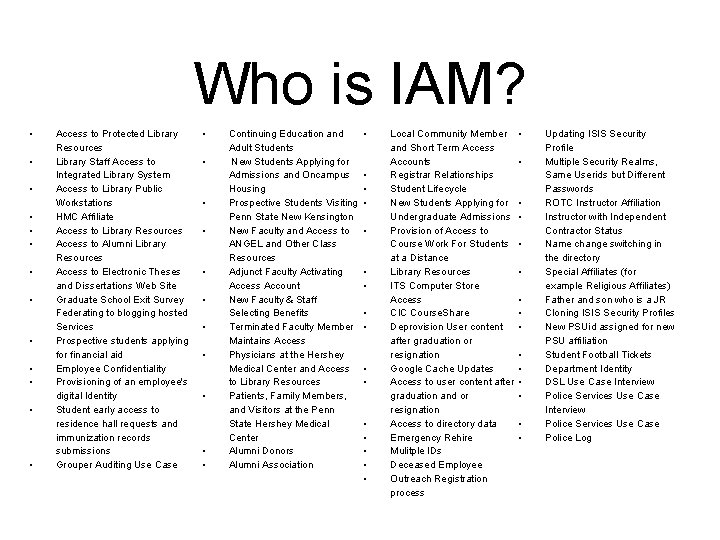
Who is IAM? • • • • Access to Protected Library Resources Library Staff Access to Integrated Library System Access to Library Public Workstations HMC Affiliate Access to Library Resources Access to Alumni Library Resources Access to Electronic Theses and Dissertations Web Site Graduate School Exit Survey Federating to blogging hosted Services Prospective students applying for financial aid Employee Confidentiality Provisioning of an employee's digital Identity Student early access to residence hall requests and immunization records submissions Grouper Auditing Use Case • • • Continuing Education and • Adult Students New Students Applying for Admissions and Oncampus • Housing • Prospective Students Visiting • Penn State New Kensington New Faculty and Access to • ANGEL and Other Class Resources Adjunct Faculty Activating • Access Account • New Faculty & Staff Selecting Benefits • Terminated Faculty Member • Maintains Access Physicians at the Hershey Medical Center and Access • to Library Resources • Patients, Family Members, and Visitors at the Penn State Hershey Medical • Center • Alumni Donors • Alumni Association • • Local Community Member • and Short Term Access Accounts • Registrar Relationships Student Lifecycle New Students Applying for • Undergraduate Admissions • Provision of Access to Course Work For Students • at a Distance Library Resources • ITS Computer Store Access • CIC Course. Share • Deprovision User content • after graduation or resignation • Google Cache Updates • Access to user content after • graduation and or • resignation Access to directory data • Emergency Rehire • Mulitple IDs Deceased Employee Outreach Registration process Updating ISIS Security Profile Multiple Security Realms, Same Userids but Different Passwords ROTC Instructor Affiliation Instructor with Independent Contractor Status Name change switching in the directory Special Affiliates (for example Religious Affiliates) Father and son who is a JR Cloning ISIS Security Profiles New PSUid assigned for new PSU affiliation Student Football Tickets Department Identity DSL Use Case Interview Police Services Use Case Police Log
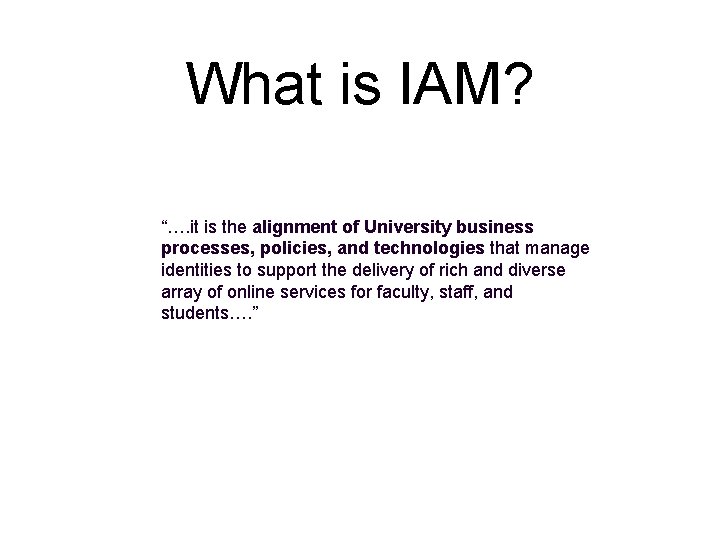
What is IAM? “…. it is the alignment of University business processes, policies, and technologies that manage identities to support the delivery of rich and diverse array of online services for faculty, staff, and students…. ”
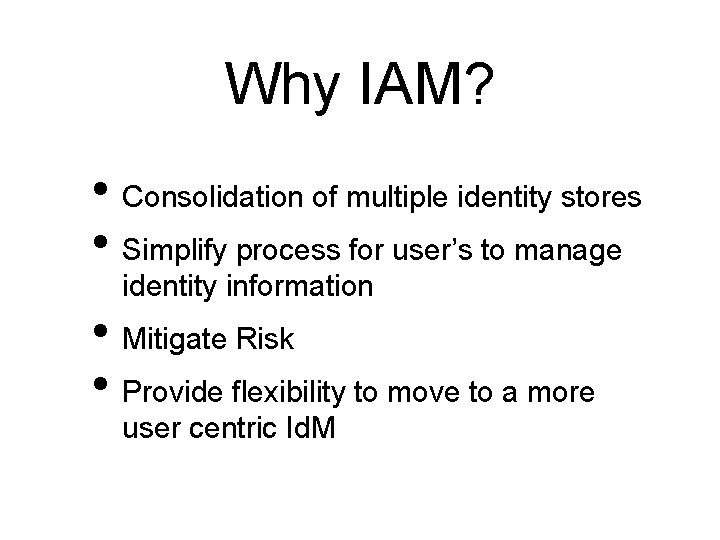
Why IAM? • Consolidation of multiple identity stores • Simplify process for user’s to manage identity information • Mitigate Risk • Provide flexibility to move to a more user centric Id. M
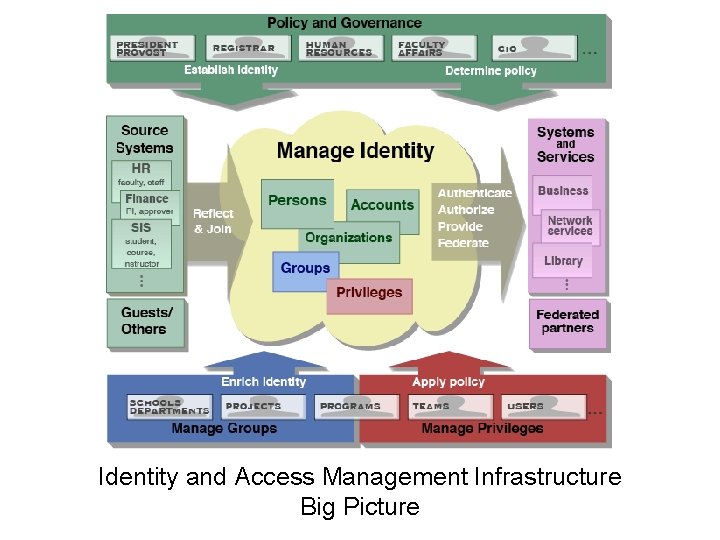
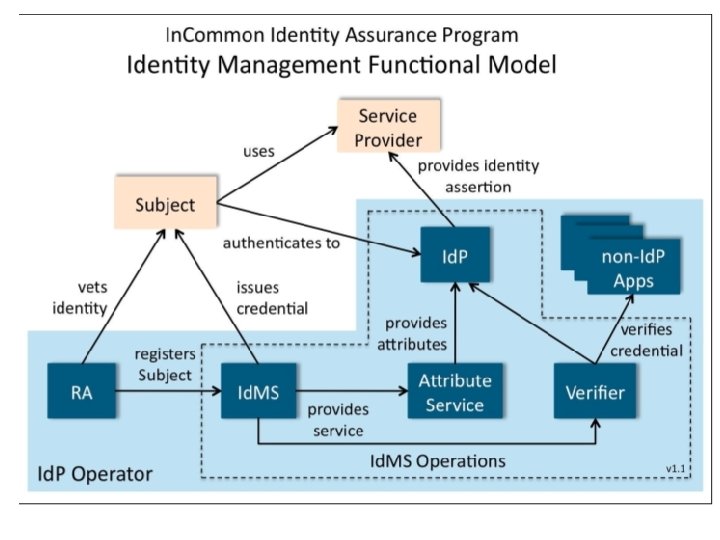
Identity and Access Management Infrastructure Big Picture
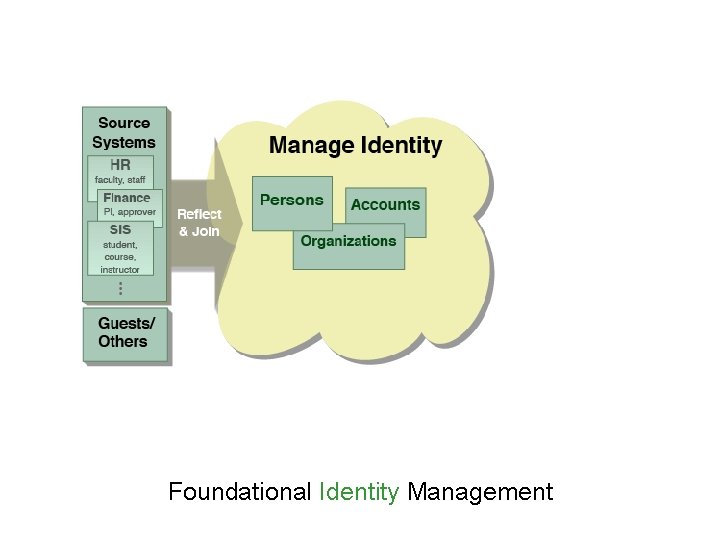
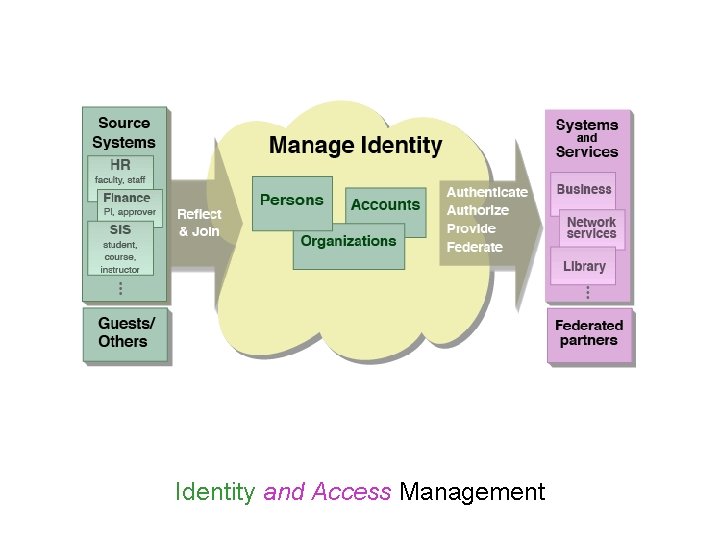
Foundational Identity Management
Identity and Access Management
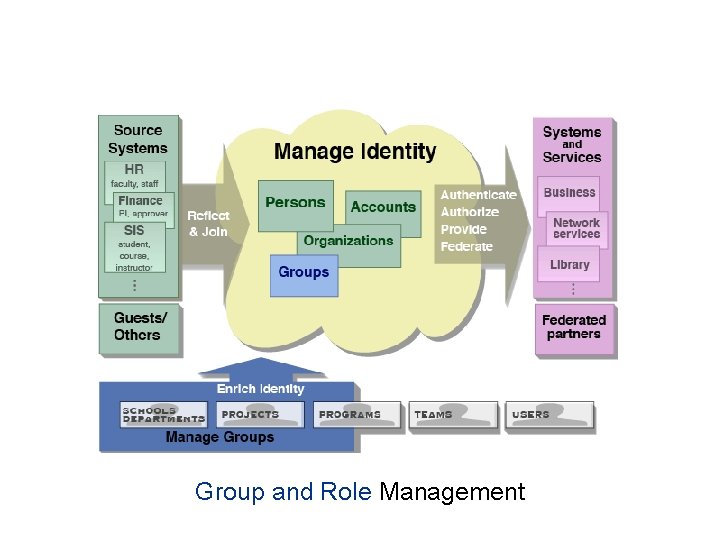
Group and Role Management
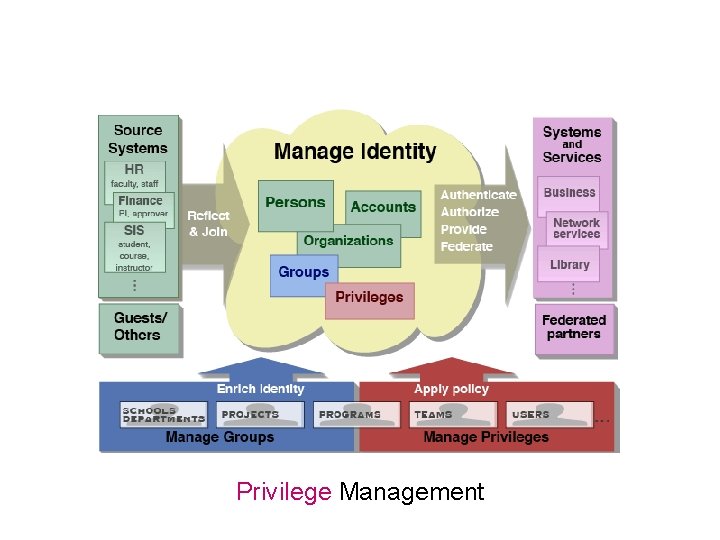
Privilege Management
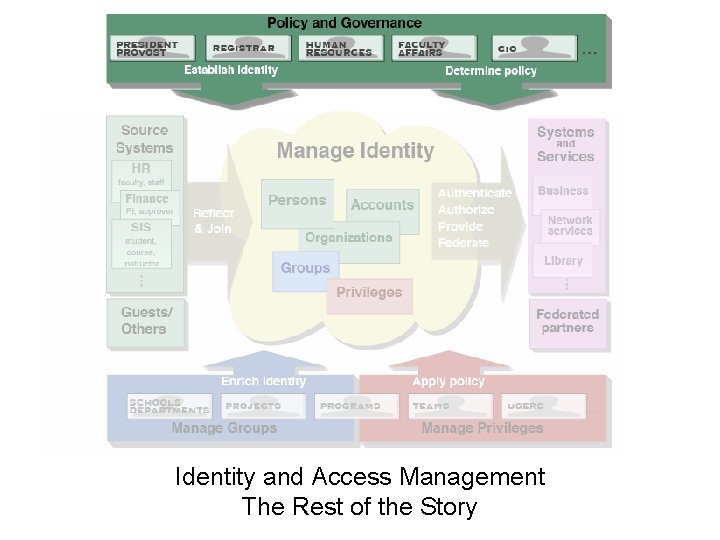
Identity and Access Management The Rest of the Story
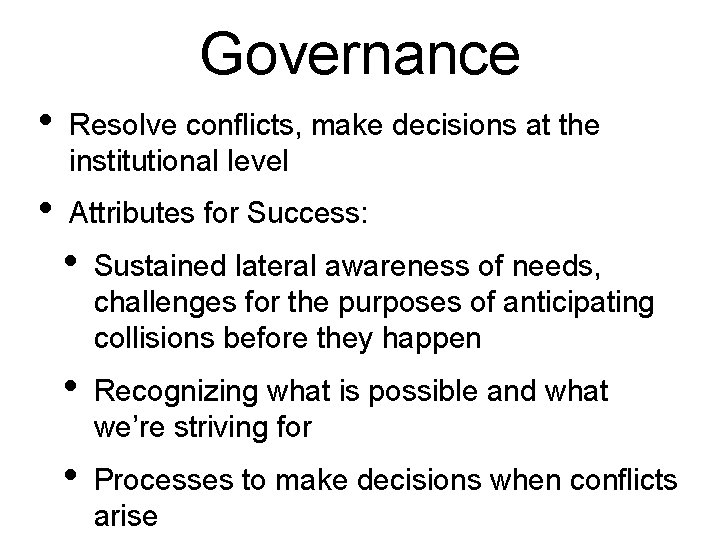
Governance • Resolve conflicts, make decisions at the institutional level • Attributes for Success: • Sustained lateral awareness of needs, challenges for the purposes of anticipating collisions before they happen • Recognizing what is possible and what we’re striving for • Processes to make decisions when conflicts arise
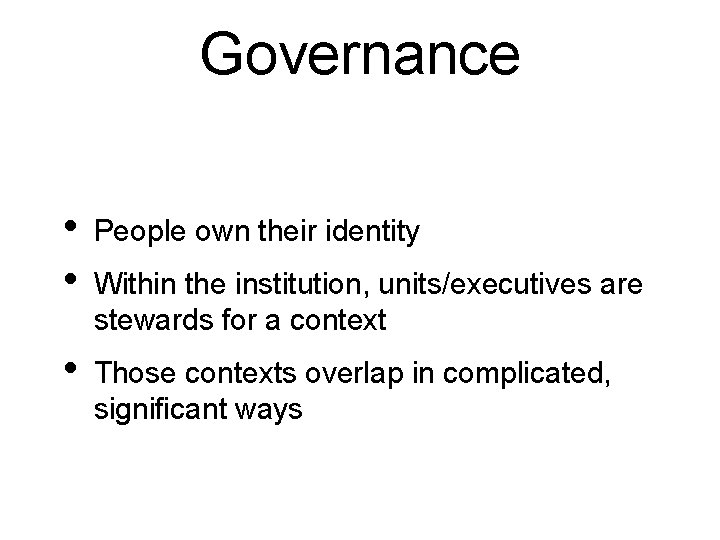
Governance • • People own their identity • Those contexts overlap in complicated, significant ways Within the institution, units/executives are stewards for a context
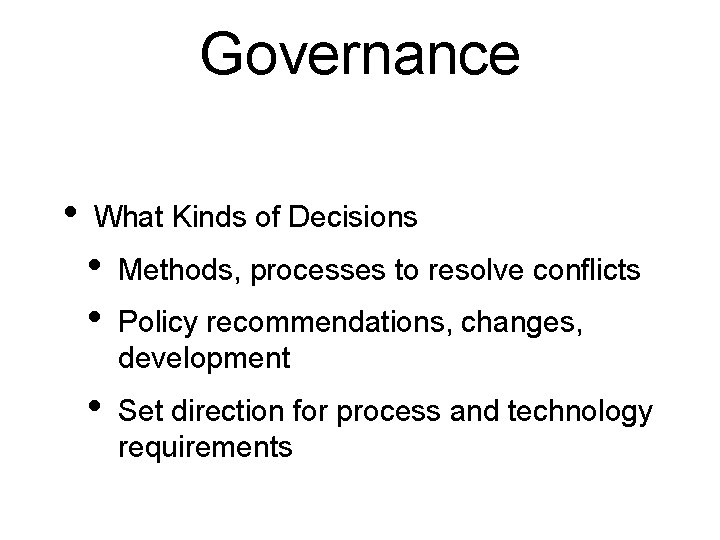
Governance • What Kinds of Decisions • • Methods, processes to resolve conflicts • Set direction for process and technology requirements Policy recommendations, changes, development
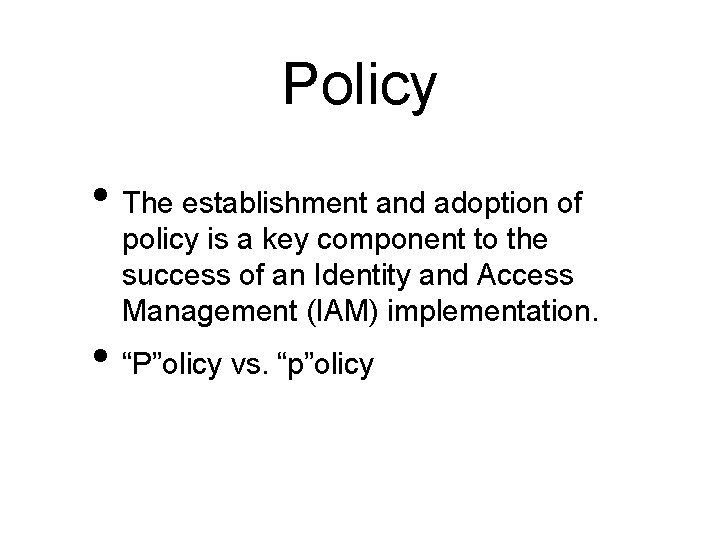
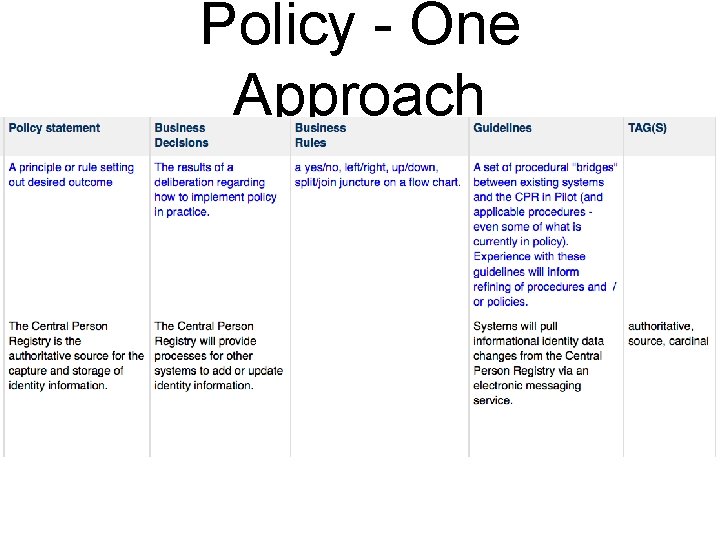
Policy • The establishment and adoption of policy is a key component to the success of an Identity and Access Management (IAM) implementation. • “P”olicy vs. “p”olicy
Policy - One Approach
The State of Identity Management Self-assessment Questionnaire
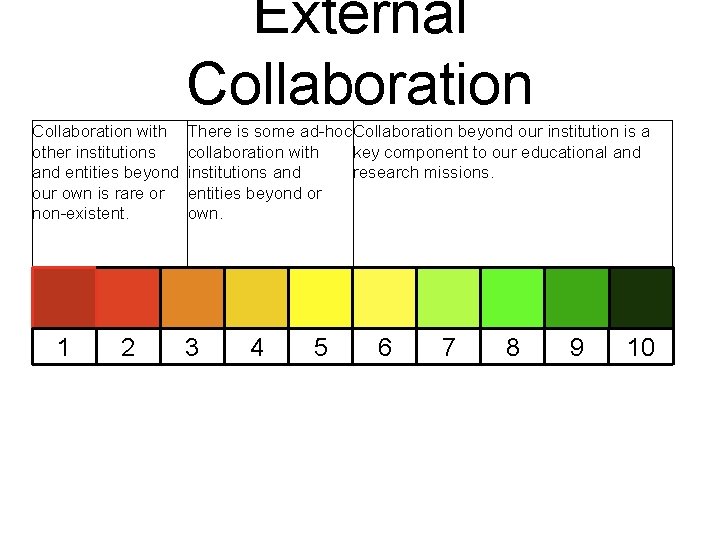
External Collaboration with There is some ad-hoc Collaboration beyond our institution is a other institutions collaboration with key component to our educational and entities beyond institutions and research missions. our own is rare or entities beyond or non-existent. own. 1 2 3 4 5 6 7 8 9 10
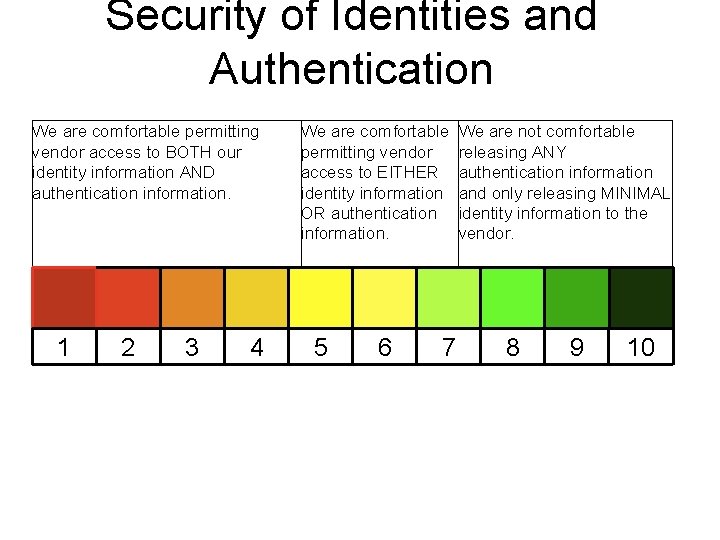
Security of Identities and Authentication We are comfortable permitting vendor access to BOTH our identity information AND authentication information. 1 2 3 4 We are comfortable We are not comfortable permitting vendor releasing ANY access to EITHER authentication information identity information and only releasing MINIMAL OR authentication identity information to the information. vendor. 5 6 7 8 9 10
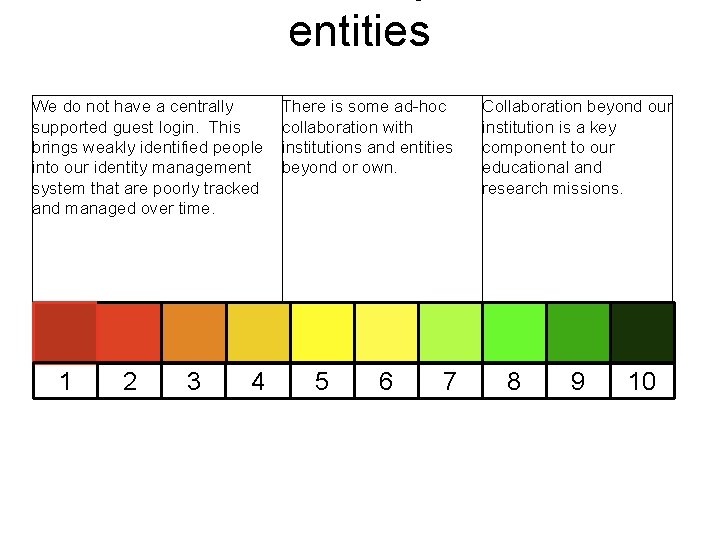
entities We do not have a centrally supported guest login. This brings weakly identified people into our identity management system that are poorly tracked and managed over time. 1 2 3 4 There is some ad-hoc collaboration with institutions and entities beyond or own. 5 6 7 Collaboration beyond our institution is a key component to our educational and research missions. 8 9 10
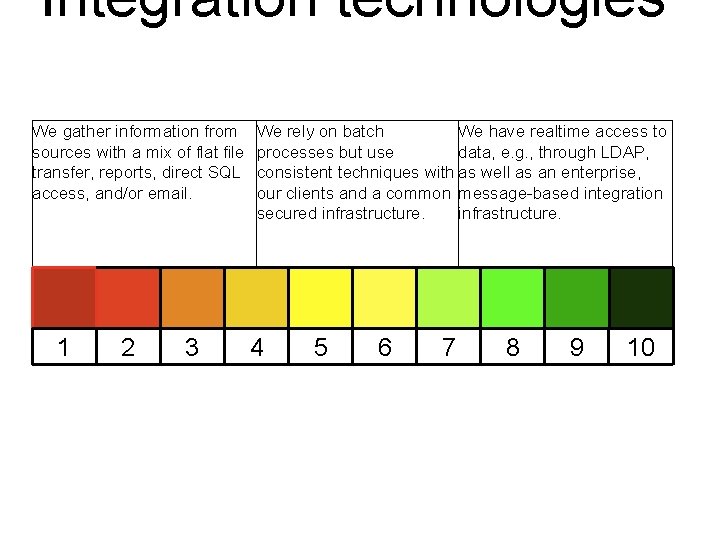
Integration technologies We gather information from sources with a mix of flat file transfer, reports, direct SQL access, and/or email. 1 2 3 We rely on batch We have realtime access to processes but use data, e. g. , through LDAP, consistent techniques with as well as an enterprise, our clients and a common message-based integration secured infrastructure. 4 5 6 7 8 9 10
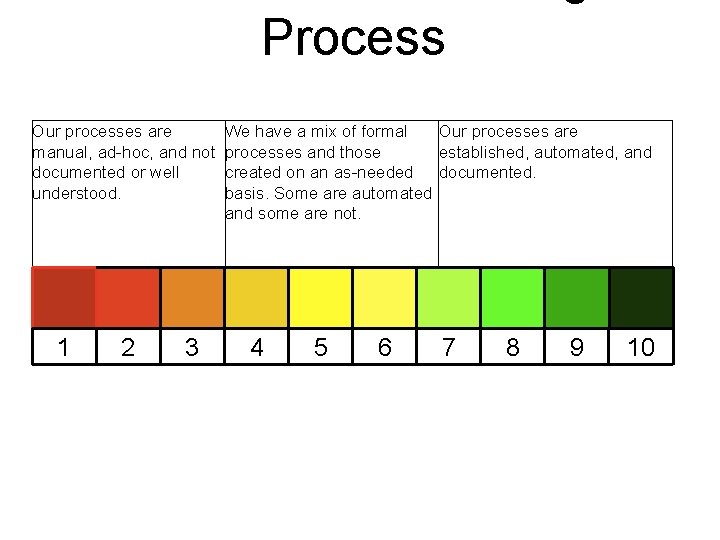
Process Our processes are We have a mix of formal Our processes are manual, ad-hoc, and not processes and those established, automated, and documented or well created on an as-needed documented. understood. basis. Some are automated and some are not. 1 2 3 4 5 6 7 8 9 10
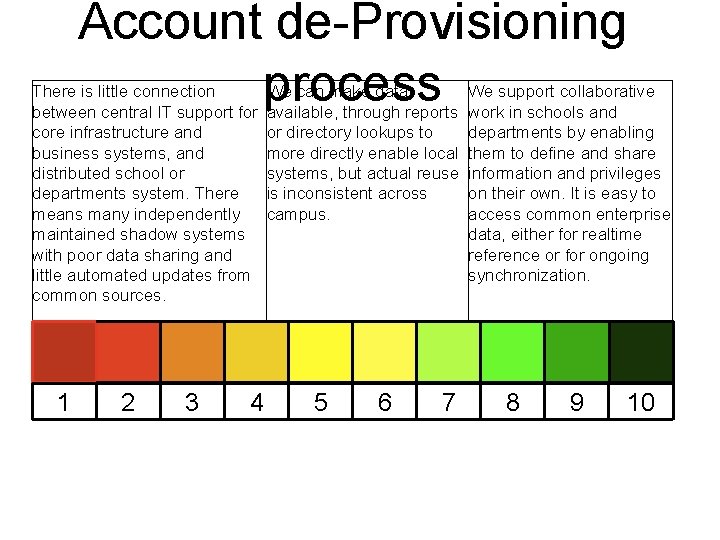
Account de-Provisioning process There is little connection We can make data We support collaborative between central IT support for available, through reports work in schools and core infrastructure and or directory lookups to departments by enabling business systems, and more directly enable local them to define and share distributed school or systems, but actual reuse information and privileges departments system. There is inconsistent across on their own. It is easy to means many independently campus. access common enterprise maintained shadow systems data, either for realtime with poor data sharing and reference or for ongoing little automated updates from synchronization. common sources. 1 2 3 4 5 6 7 8 9 10
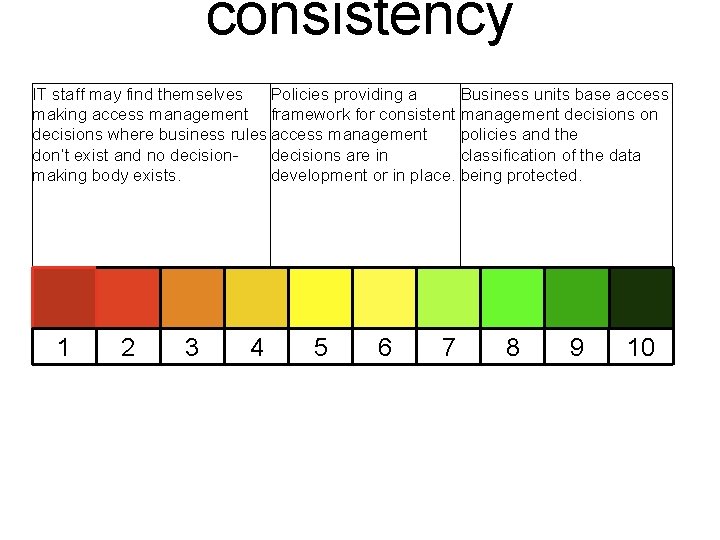
consistency IT staff may find themselves Policies providing a Business units base access making access management framework for consistent management decisions on decisions where business rules access management policies and the don’t exist and no decisions are in classification of the data making body exists. development or in place. being protected. 1 2 3 4 5 6 7 8 9 10
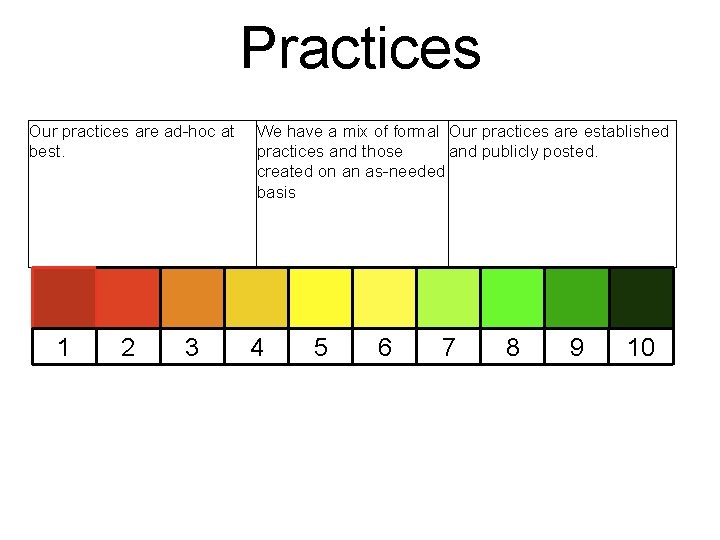
Practices Our practices are ad-hoc at best. 1 2 3 We have a mix of formal Our practices are established practices and those and publicly posted. created on an as-needed basis 4 5 6 7 8 9 10
Self Assessment - Group Exercise ~30 Minutes
Additional Resources • In. Common • http: //www. incommonfederation. org/ • EDUCAUSE Id. M • http: //www. educause. edu/iam • Grouper • http: //www. internet 2. edu/grouper/ • PACCMAN • http: //middleware. internet 2. edu/pacc