Hangeul Korean Korean made easy for Starters Introduction
- Slides: 27
Hangeul (Korean) 한글 Korean made easy for Starters ° Introduction to Hangeul ° Characteristics of Korean Vowels and Consonants ° Characteristics of Korean Sentences
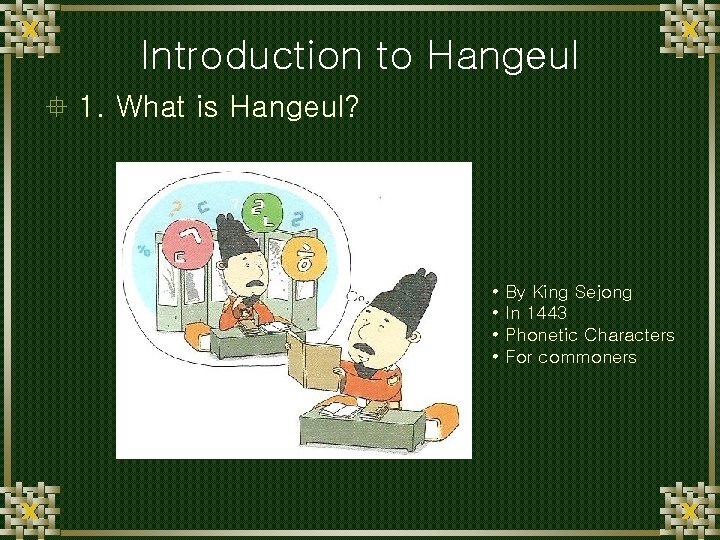
Introduction to Hangeul ° 1. What is Hangeul? • • By King Sejong In 1443 Phonetic Characters For commoners
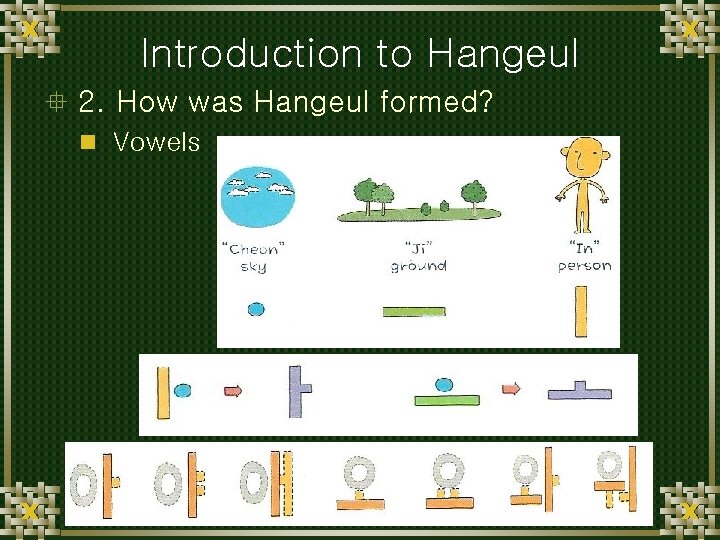
Introduction to Hangeul ° 2. How was Hangeul formed? n Vowels
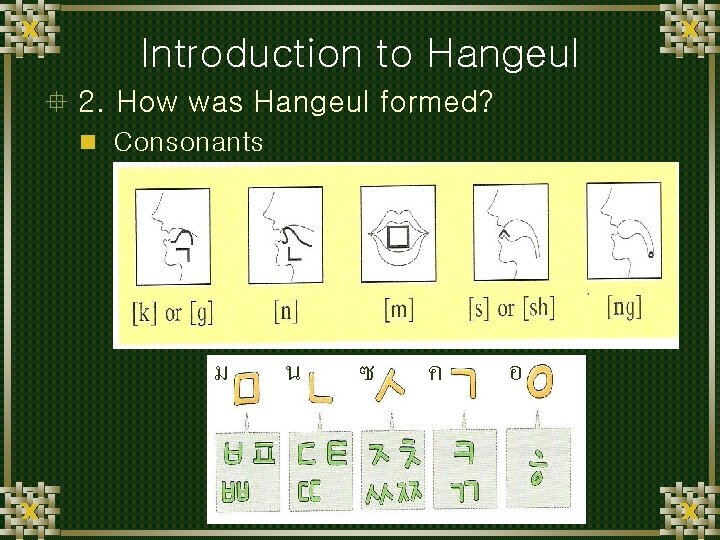
Introduction to Hangeul ° 2. How was Hangeul formed? n Consonants ม น ซ ค อ
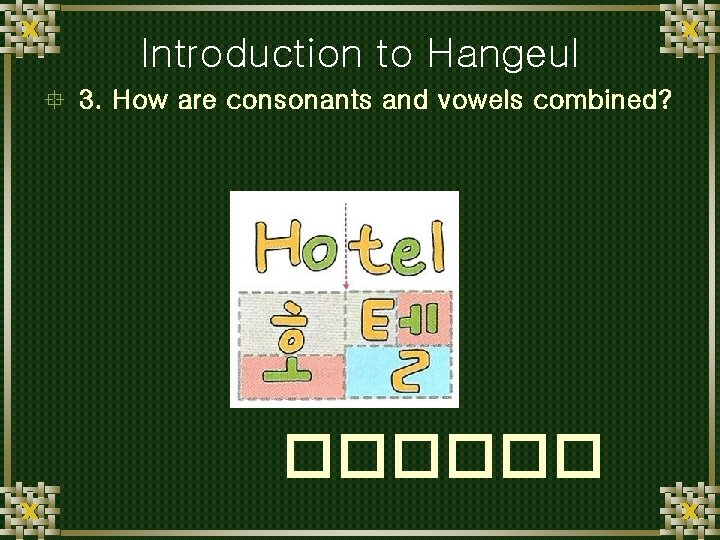
Introduction to Hangeul ° 3. How are consonants and vowels combined? ������
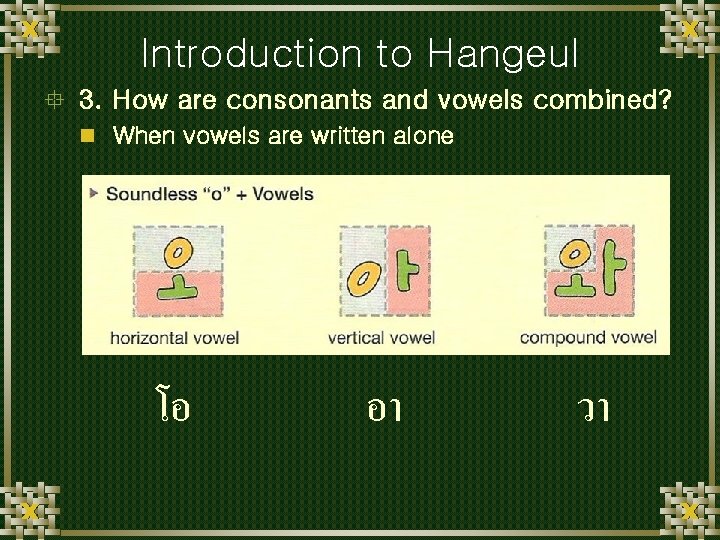
Introduction to Hangeul ° 3. How are consonants and vowels combined? n When vowels are written alone โอ อา วา
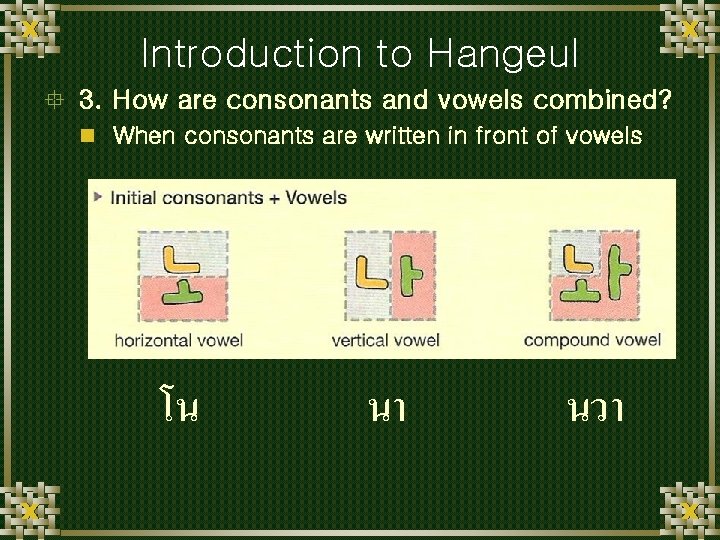
Introduction to Hangeul ° 3. How are consonants and vowels combined? n When consonants are written in front of vowels โน นา นวา
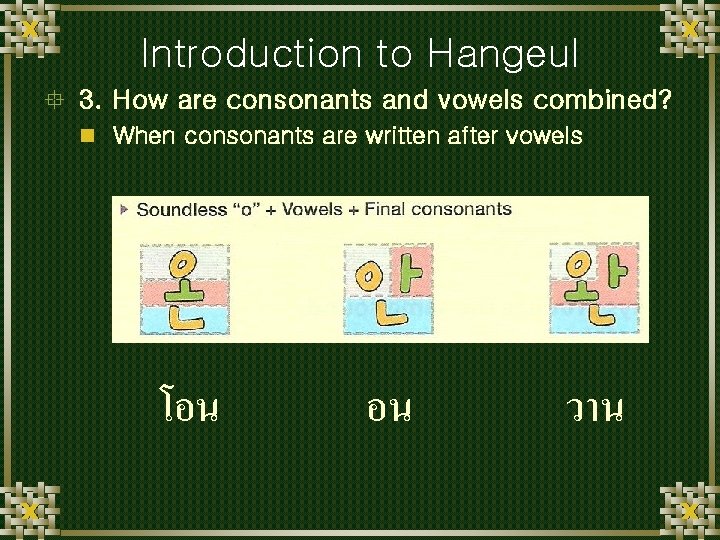
Introduction to Hangeul ° 3. How are consonants and vowels combined? n When consonants are written after vowels โอน อน วาน
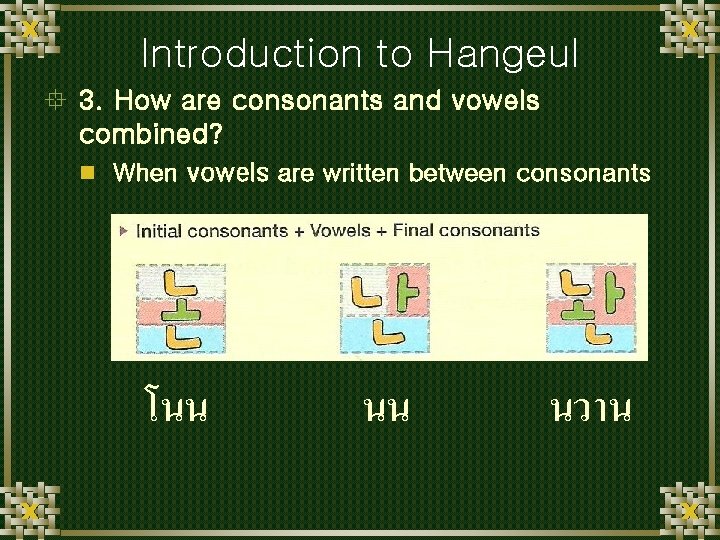
Introduction to Hangeul ° 3. How are consonants and vowels combined? n When vowels are written between consonants โนน นน นวาน
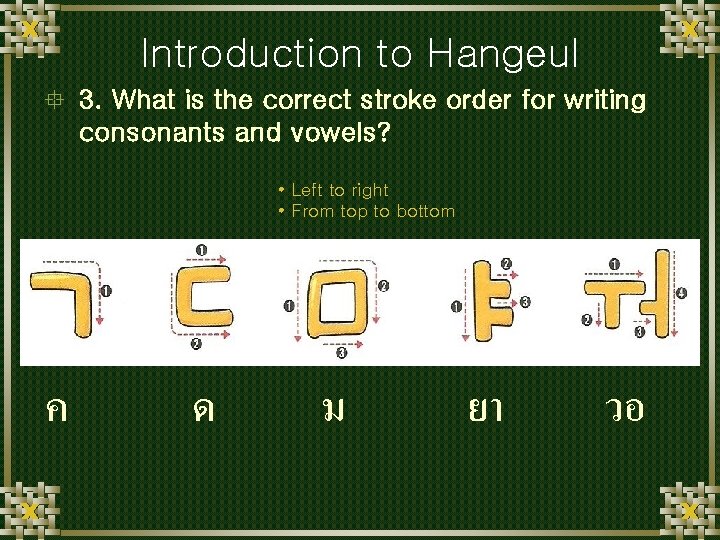
Introduction to Hangeul ° 3. What is the correct stroke order for writing consonants and vowels? • Left to right • From top to bottom ค ด ม ยา วอ
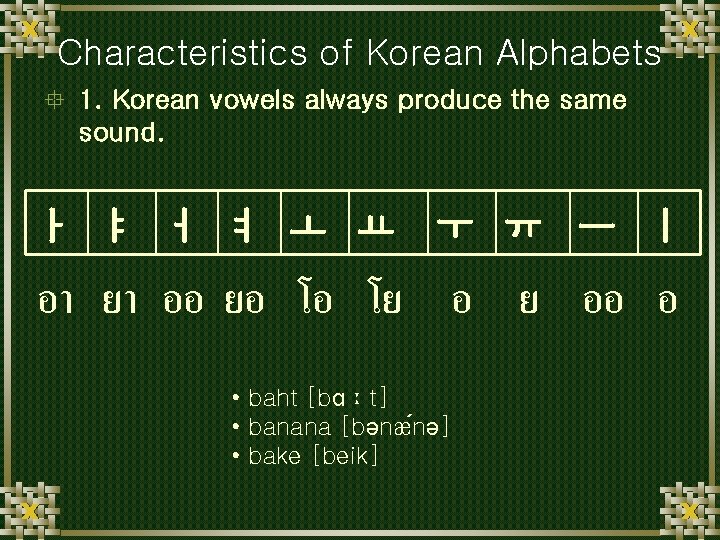
Characteristics of Korean Alphabets ° 1. Korean vowels always produce the same sound. ㅏ ㅑ ㅓ ㅕ ㅗ ㅛ ㅜ ㅠ ㅡ ㅣ อา ยา ออ ยอ โอ โย อ ย ออ อ • baht [bɑːt] • banana [bənæ nə] • bake [beik]
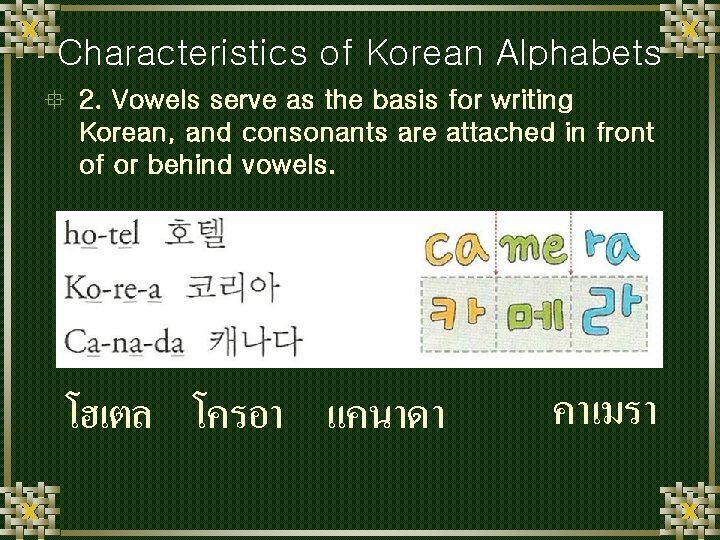
Characteristics of Korean Alphabets ° 2. Vowels serve as the basis for writing Korean, and consonants are attached in front of or behind vowels. โฮเตล โครอา แคนาดา คาเมรา
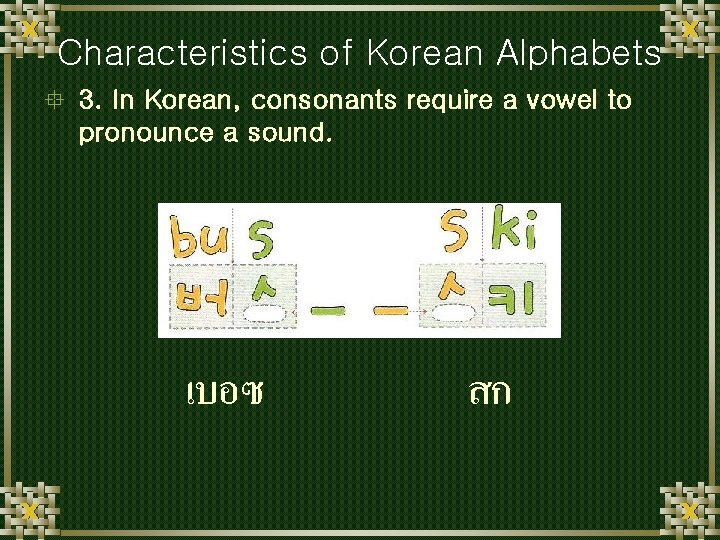
Characteristics of Korean Alphabets ° 3. In Korean, consonants require a vowel to pronounce a sound. เบอซ สก
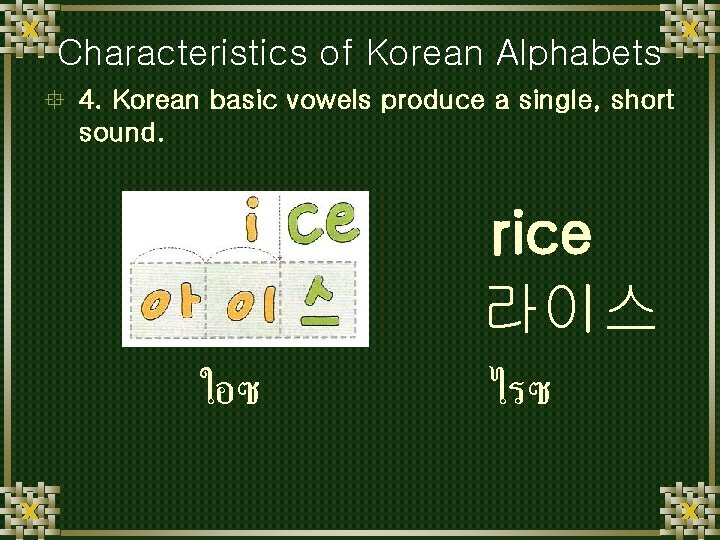
Characteristics of Korean Alphabets ° 4. Korean basic vowels produce a single, short sound. rice 라이스 ใอซ ไรซ
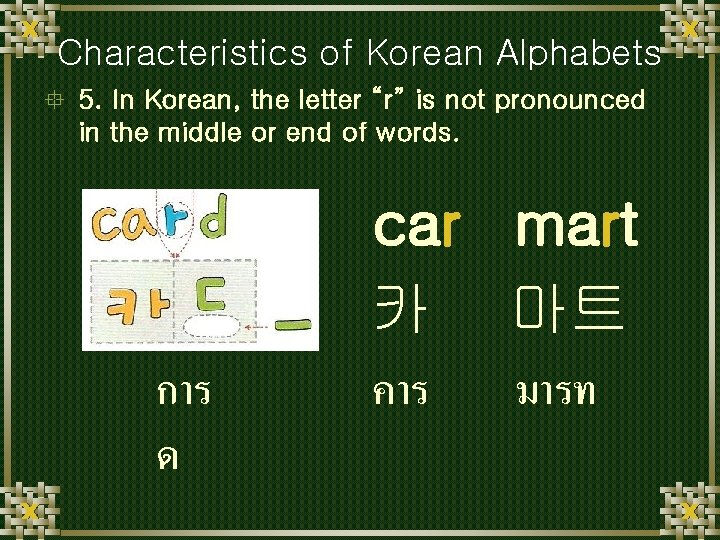
Characteristics of Korean Alphabets ° 5. In Korean, the letter “r” is not pronounced in the middle or end of words. car mart 카 마트 การ ด คาร มารท
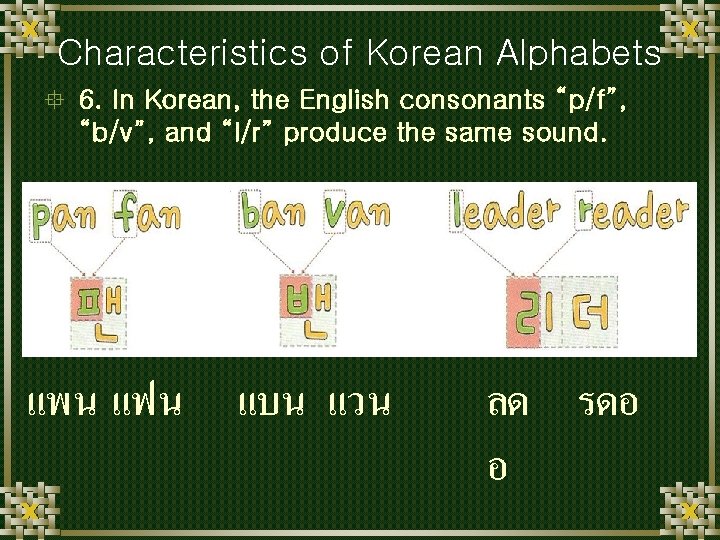
Characteristics of Korean Alphabets ° 6. In Korean, the English consonants “p/f”, “b/v”, and “l/r” produce the same sound. แพน แฟน แบน แวน ลด รดอ อ
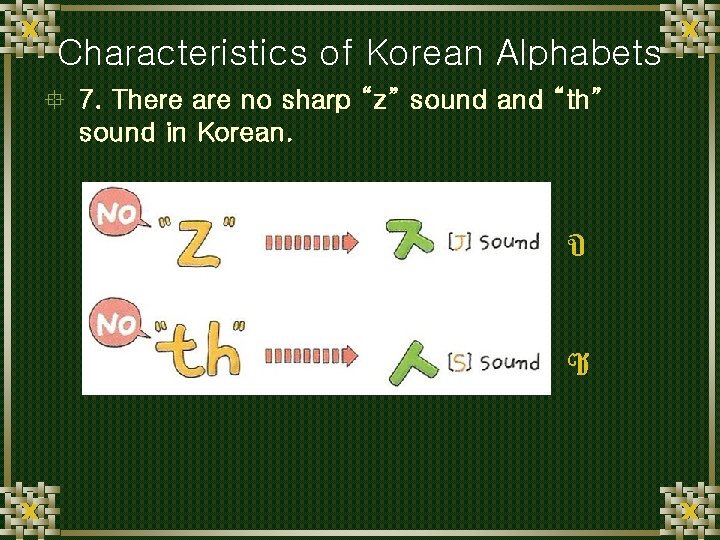
Characteristics of Korean Alphabets ° 7. There are no sharp “z” sound and “th” sound in Korean. จ ซ
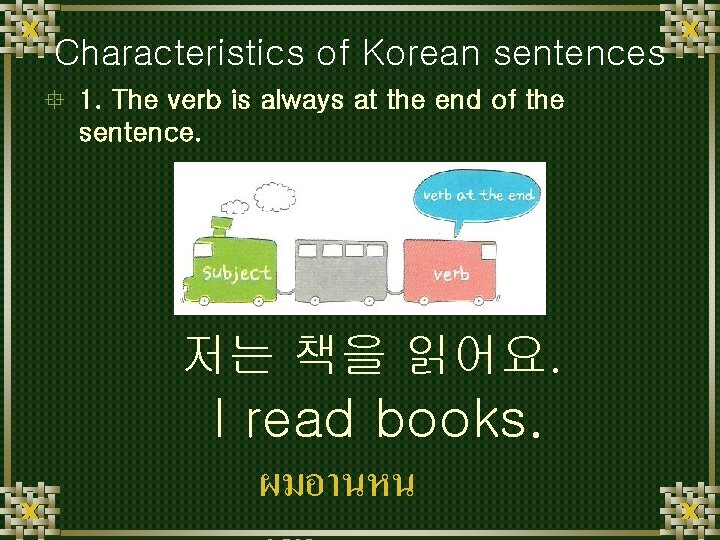
Characteristics of Korean sentences ° 1. The verb is always at the end of the sentence. 저는 책을 읽어요. I read books. ผมอานหน
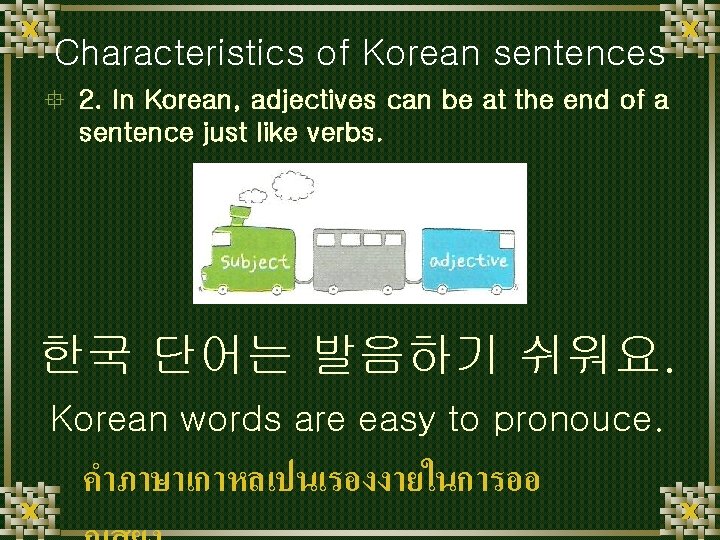
Characteristics of Korean sentences ° 2. In Korean, adjectives can be at the end of a sentence just like verbs. 한국 단어는 발음하기 쉬워요. Korean words are easy to pronouce. คำภาษาเกาหลเปนเรองงายในการออ
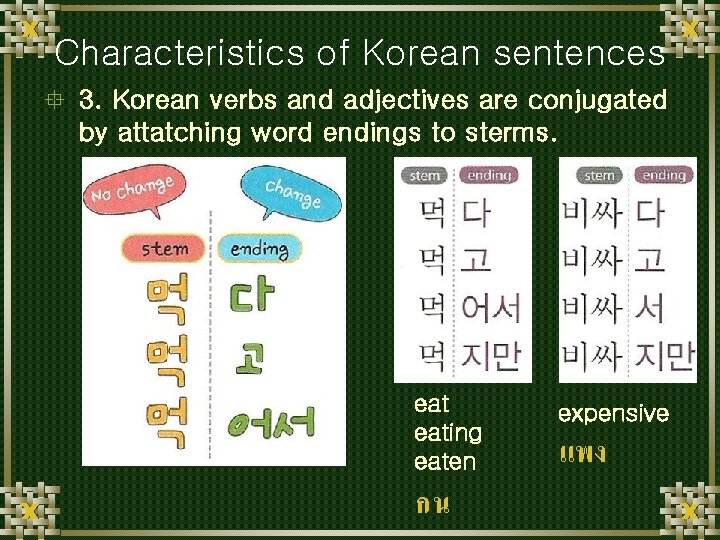
Characteristics of Korean sentences ° 3. Korean verbs and adjectives are conjugated by attatching word endings to sterms. eating eaten กน expensive แพง
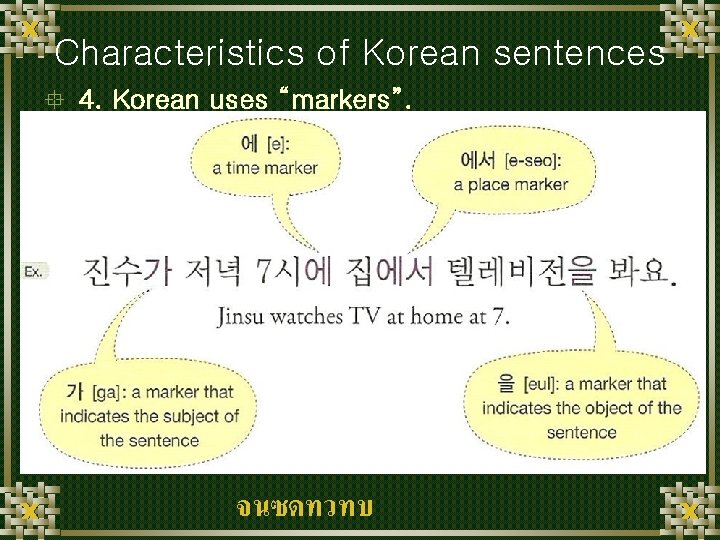
Characteristics of Korean sentences ° 4. Korean uses “markers”. จนซดทวทบ
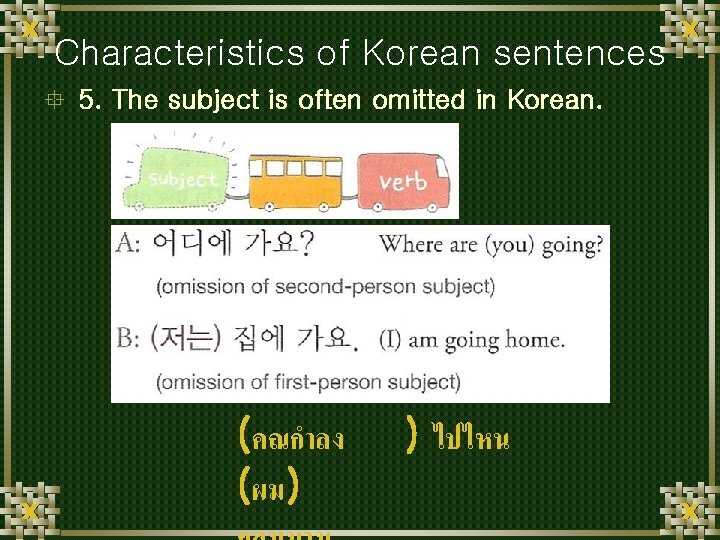
Characteristics of Korean sentences ° 5. The subject is often omitted in Korean. (คณกำลง (ผม) ) ไปไหน
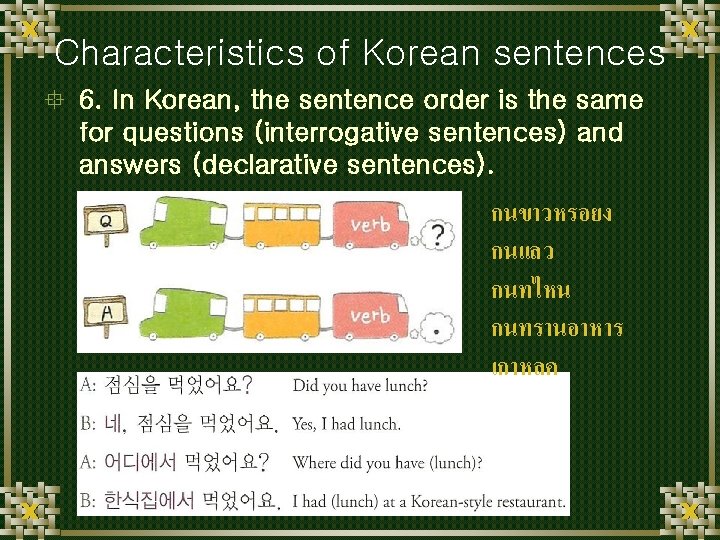
Characteristics of Korean sentences ° 6. In Korean, the sentence order is the same for questions (interrogative sentences) and answers (declarative sentences). กนขาวหรอยง กนแลว กนทไหน กนทรานอาหาร เกาหลค
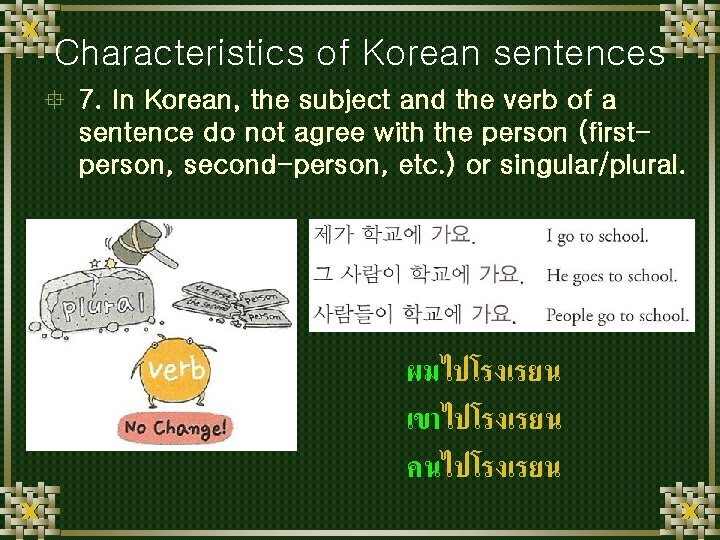
Characteristics of Korean sentences ° 7. In Korean, the subject and the verb of a sentence do not agree with the person (firstperson, second-person, etc. ) or singular/plural. ผมไปโรงเรยน เขาไปโรงเรยน คนไปโรงเรยน
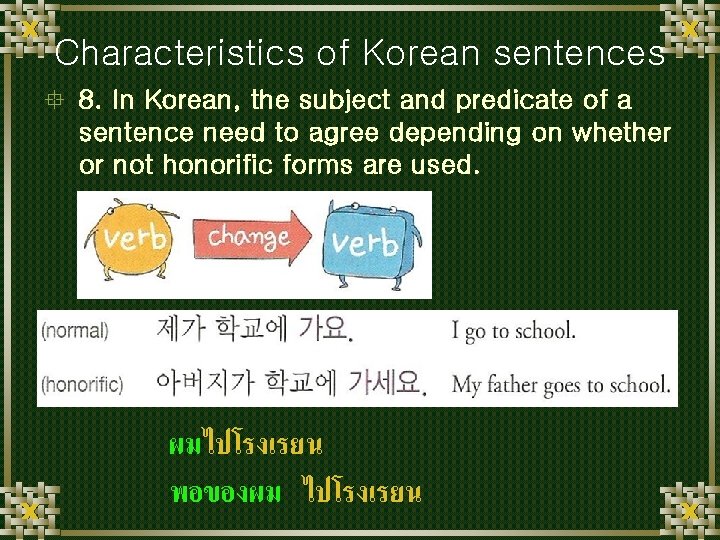
Characteristics of Korean sentences ° 8. In Korean, the subject and predicate of a sentence need to agree depending on whether or not honorific forms are used. ผมไปโรงเรยน พอของผม ไปโรงเรยน
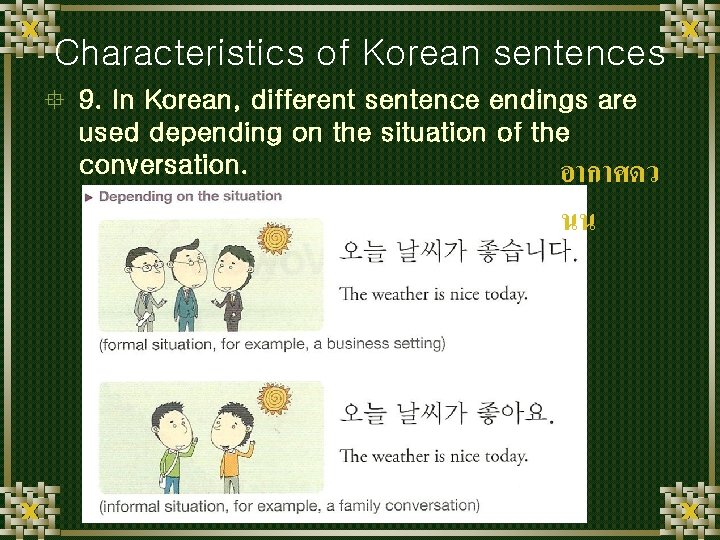
Characteristics of Korean sentences ° 9. In Korean, different sentence endings are used depending on the situation of the conversation. อากาศดว นน
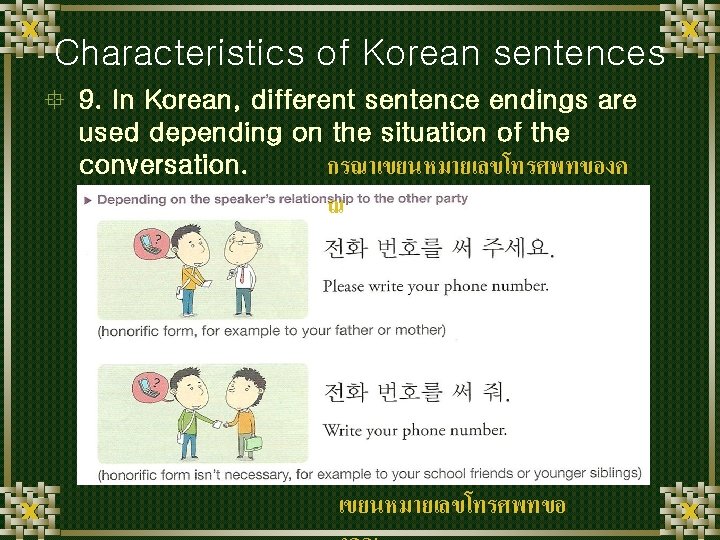
Characteristics of Korean sentences ° 9. In Korean, different sentence endings are used depending on the situation of the conversation. กรณาเขยนหมายเลขโทรศพทของค ณ เขยนหมายเลขโทรศพทขอ