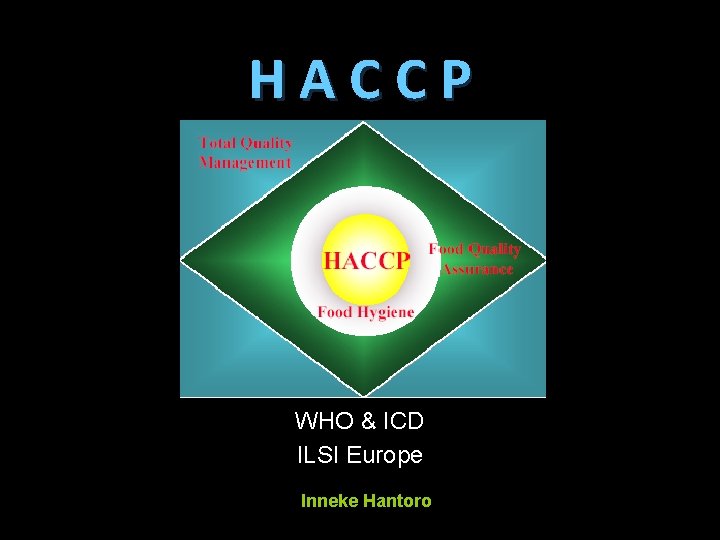
HACCP WHO ICD ILSI Europe Inneke Hantoro Introduction
- Slides: 36
HACCP WHO & ICD ILSI Europe Inneke Hantoro
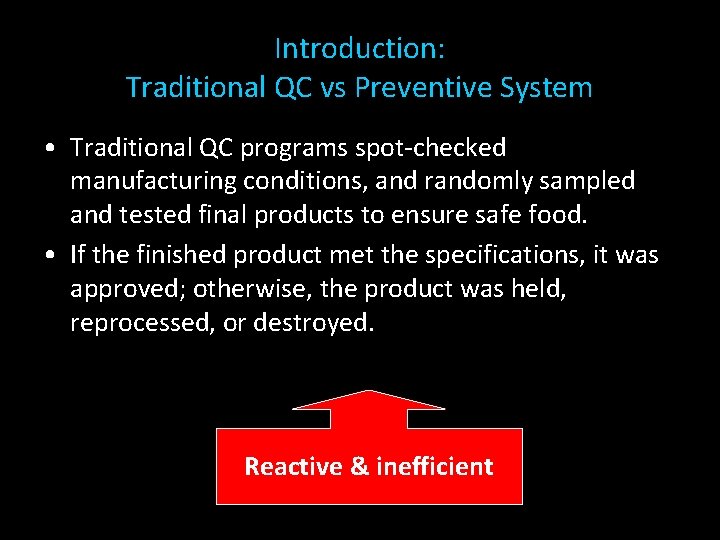
Introduction: Traditional QC vs Preventive System • Traditional QC programs spot-checked manufacturing conditions, and randomly sampled and tested final products to ensure safe food. • If the finished product met the specifications, it was approved; otherwise, the product was held, reprocessed, or destroyed. Reactive & inefficient
Introduction: Traditional QC vs Preventive System • An HACCP program is about preventive systems — to eliminate a problem before it happens. • The actions that these systems provoke are essentially preclusive — they are designed to prevent problems rather than solve them after they have occurred. • QC checks occur during the process so that a finished product is deemed consistently safe.
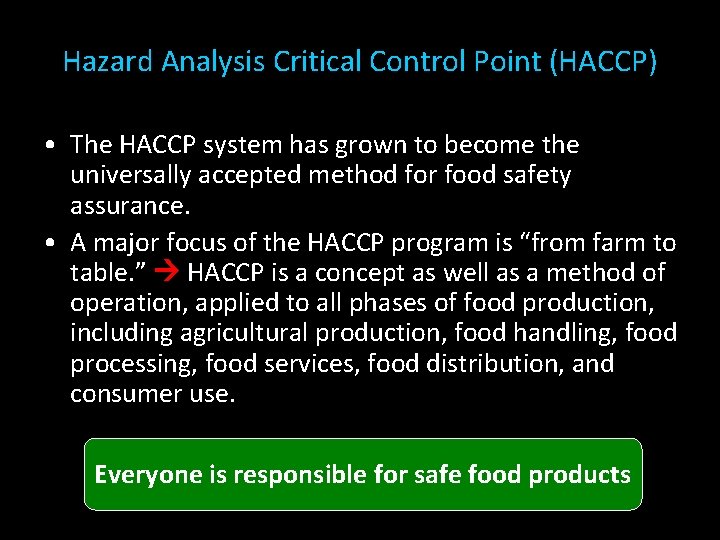
Hazard Analysis Critical Control Point (HACCP) • The HACCP system has grown to become the universally accepted method for food safety assurance. • A major focus of the HACCP program is “from farm to table. ” HACCP is a concept as well as a method of operation, applied to all phases of food production, including agricultural production, food handling, food processing, food services, food distribution, and consumer use. Everyone is responsible for safe food products
Hazard Analysis Critical Control Point (HACCP) • The Hazard Analysis and Critical Control Point (HACCP) system is a science-based system created to identify specific hazards and actions to control them in order to ensure food safety and quality. • A ‘hazard’ is ‘a biological, chemical or physical agent in, or condition of, food with the potential to cause an adverse health effect’ (Codex Alimentarius, 1997).
The need for an effective food safety assurance method • Foodborne disease are a widespread public health problem. • Emergence of foodborne disease. • Increased knowledge and awareness of the serious and chronic health effects. • New food technologies and processing methods. • Increased awareness of the economic consequences of foodborne disease.
The need for an effective food safety assurance method • • Increase in the number of vulnerable people. Industrialization and mass production. Urbanization and changing lifestyle. Increase tourism and international trade in foodstuffs. • Increase consumer awareness of food safety.
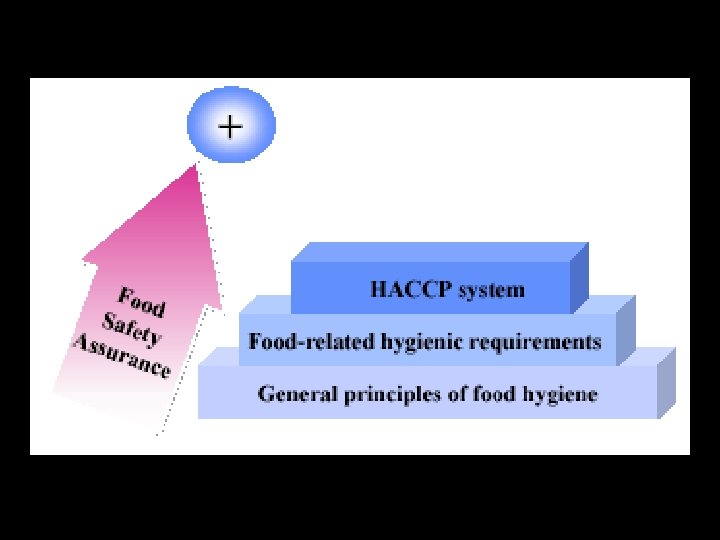
Food Safety Assurance Good Manufacturing practices (GM) and Good Hygiene Practices (GHP) necessary But not always sufficient
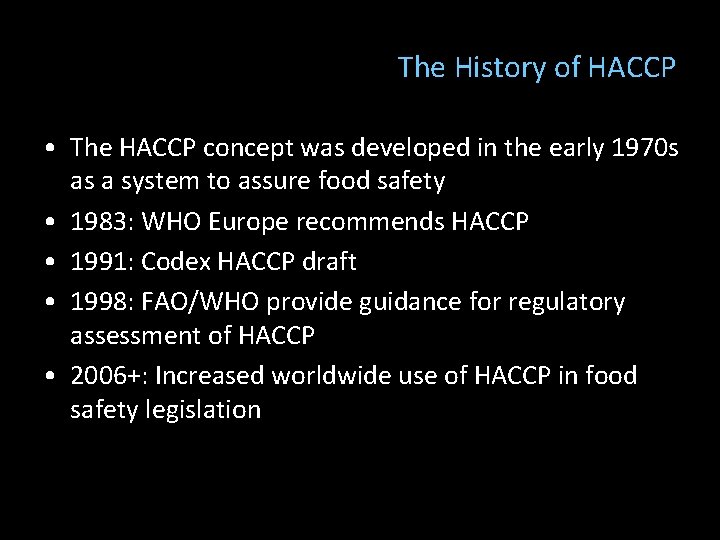
The History of HACCP • The HACCP concept was developed in the early 1970 s as a system to assure food safety • 1983: WHO Europe recommends HACCP • 1991: Codex HACCP draft • 1998: FAO/WHO provide guidance for regulatory assessment of HACCP • 2006+: Increased worldwide use of HACCP in food safety legislation
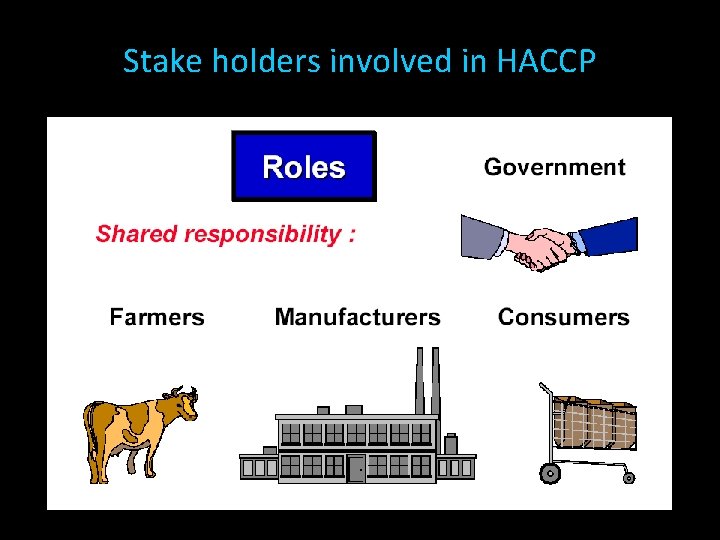
Stake holders involved in HACCP
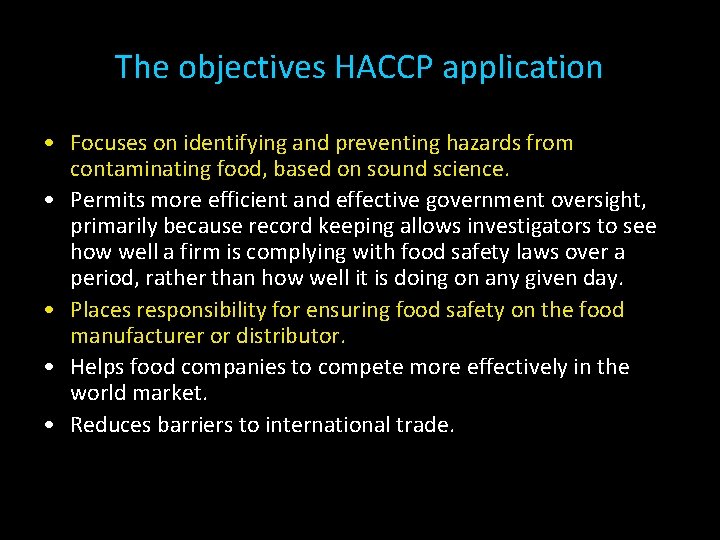
The objectives HACCP application • Focuses on identifying and preventing hazards from contaminating food, based on sound science. • Permits more efficient and effective government oversight, primarily because record keeping allows investigators to see how well a firm is complying with food safety laws over a period, rather than how well it is doing on any given day. • Places responsibility for ensuring food safety on the food manufacturer or distributor. • Helps food companies to compete more effectively in the world market. • Reduces barriers to international trade.
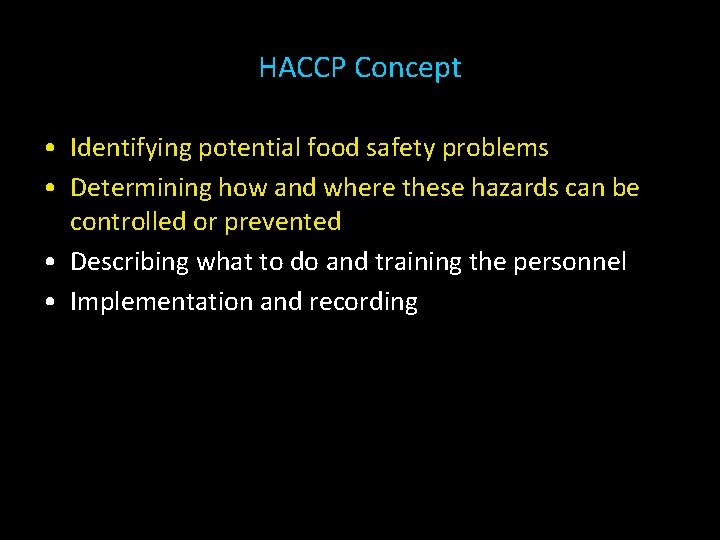
HACCP Concept • Identifying potential food safety problems • Determining how and where these hazards can be controlled or prevented • Describing what to do and training the personnel • Implementation and recording
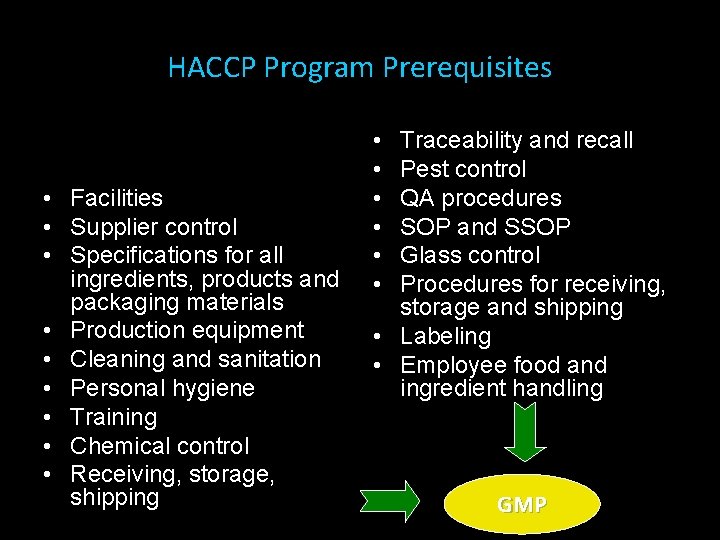
HACCP Program Prerequisites • Facilities • Supplier control • Specifications for all ingredients, products and packaging materials • Production equipment • Cleaning and sanitation • Personal hygiene • Training • Chemical control • Receiving, storage, shipping • • • Traceability and recall Pest control QA procedures SOP and SSOP Glass control Procedures for receiving, storage and shipping • Labeling • Employee food and ingredient handling GMP
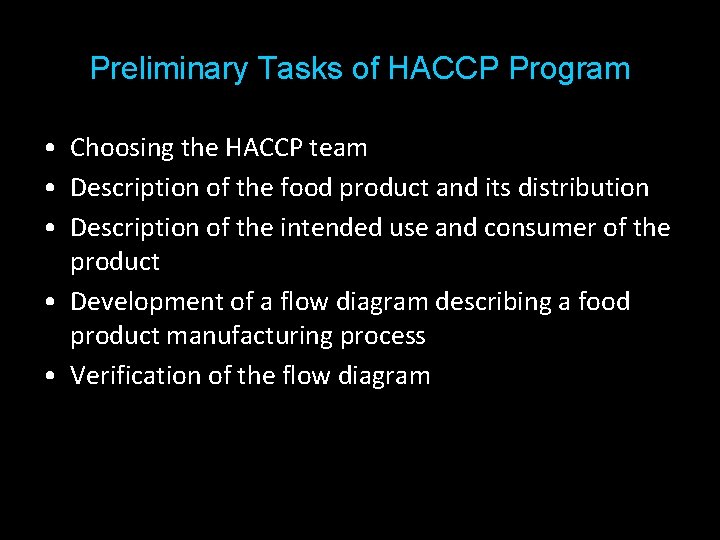
Preliminary Tasks of HACCP Program • Choosing the HACCP team • Description of the food product and its distribution • Description of the intended use and consumer of the product • Development of a flow diagram describing a food product manufacturing process • Verification of the flow diagram
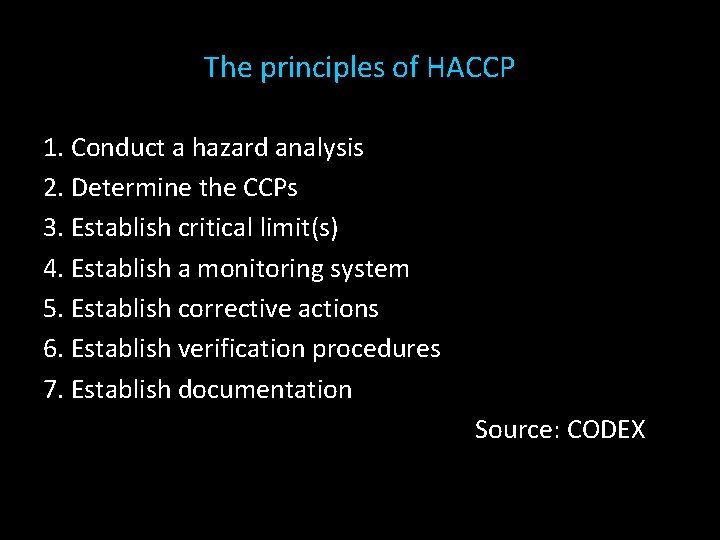
The principles of HACCP 1. Conduct a hazard analysis 2. Determine the CCPs 3. Establish critical limit(s) 4. Establish a monitoring system 5. Establish corrective actions 6. Establish verification procedures 7. Establish documentation Source: CODEX
1. Hazard Analysis • The process of collecting and evaluating information on hazards and conditions leading to their presence to decide which are significant for food safety and should be addressed in the HACCP plan.
Information needed for hazard analysis: • the agents that could be present in the food under study • the severity of the effects and the likelihood of their occurrence • the levels that could cause adverse health effects • the conditions that could lead to unacceptable levels
Areas to consider in Hazard Analysis • • Raw materials and ingredients Product formulation Processing conditions Packaging Storage and distribution Preparation and use Target groups
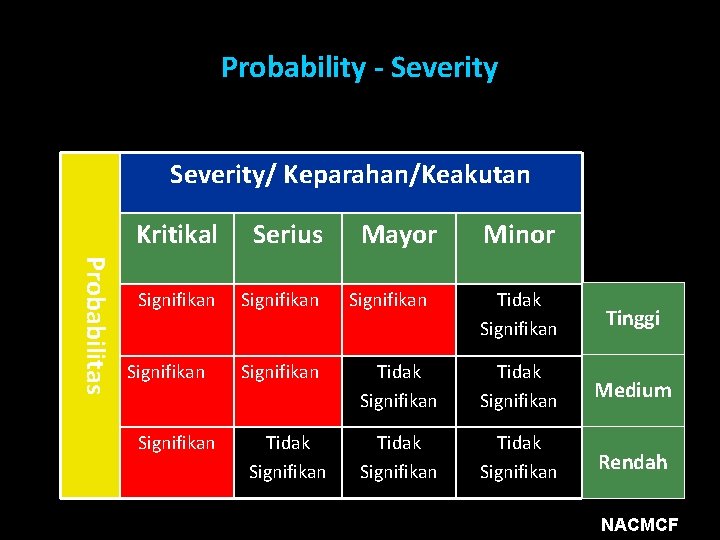
Probability - Severity/ Keparahan/Keakutan Probabilitas Kritikal Serius Signifikan Signifikan Tidak Signifikan Mayor Signifikan Minor Tidak Signifikan Tinggi Tidak Signifikan Medium Tidak Signifikan Rendah NACMCF
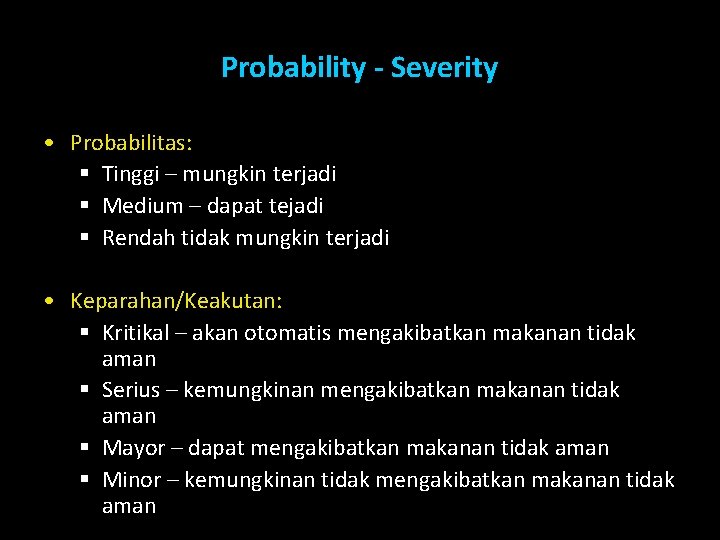
Probability - Severity • Probabilitas: § Tinggi – mungkin terjadi § Medium – dapat tejadi § Rendah tidak mungkin terjadi • Keparahan/Keakutan: § Kritikal – akan otomatis mengakibatkan makanan tidak aman § Serius – kemungkinan mengakibatkan makanan tidak aman § Mayor – dapat mengakibatkan makanan tidak aman § Minor – kemungkinan tidak mengakibatkan makanan tidak aman
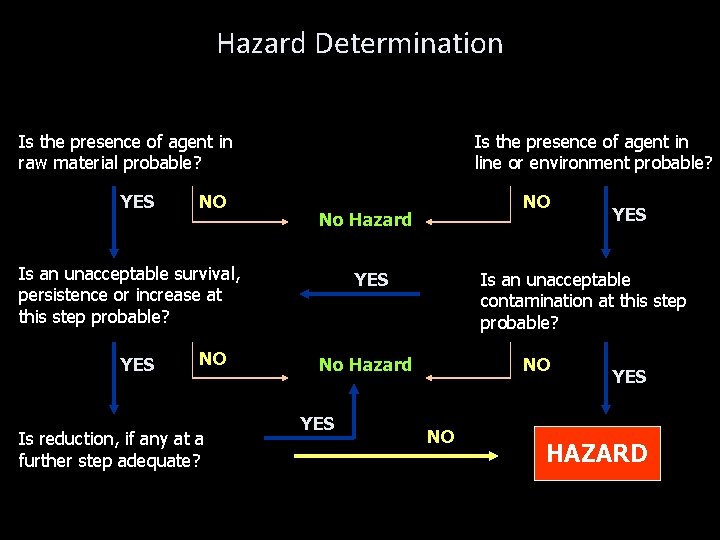
Hazard Determination Is the presence of agent in raw material probable? YES NO Is the presence of agent in line or environment probable? No Hazard Is an unacceptable survival, persistence or increase at this step probable? YES NO Is reduction, if any at a further step adequate? NO YES Is an unacceptable contamination at this step probable? No Hazard YES NO NO YES HAZARD
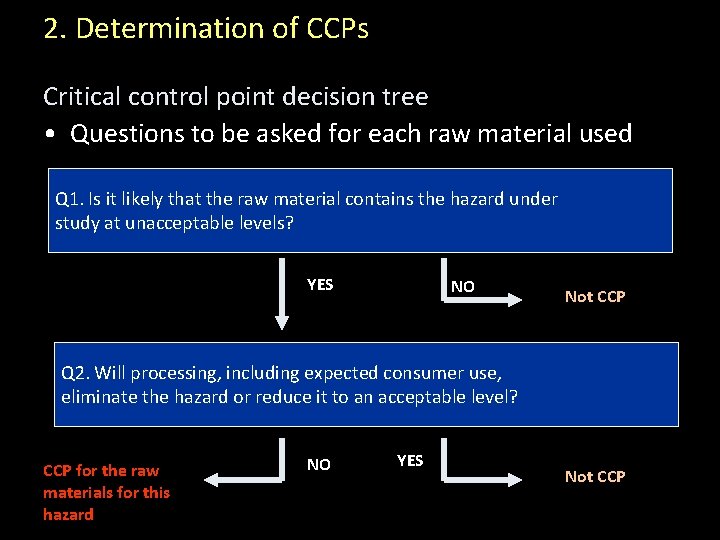
2. Determination of CCPs Critical control point decision tree • Questions to be asked for each raw material used Q 1. Is it likely that the raw material contains the hazard under study at unacceptable levels? YES NO Not CCP Q 2. Will processing, including expected consumer use, eliminate the hazard or reduce it to an acceptable level? CCP for the raw materials for this hazard NO YES Not CCP
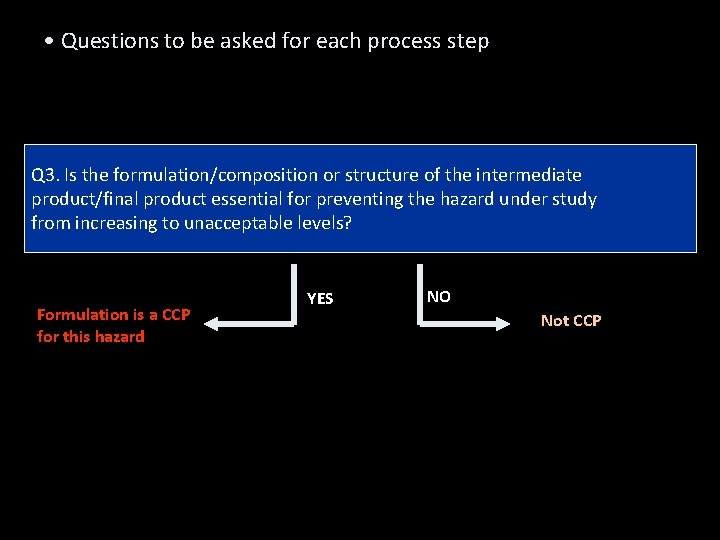
• Questions to be asked for each process step Q 3. Is the formulation/composition or structure of the intermediate product/final product essential for preventing the hazard under study from increasing to unacceptable levels? Formulation is a CCP for this hazard YES NO Not CCP
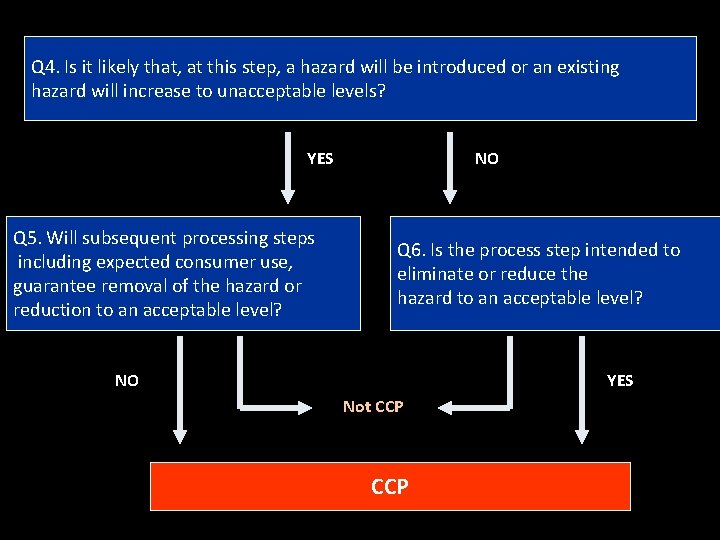
Q 4. Is it likely that, at this step, a hazard will be introduced or an existing hazard will increase to unacceptable levels? YES Q 5. Will subsequent processing steps including expected consumer use, guarantee removal of the hazard or reduction to an acceptable level? NO Q 6. Is the process step intended to eliminate or reduce the hazard to an acceptable level? NO YES Not CCP
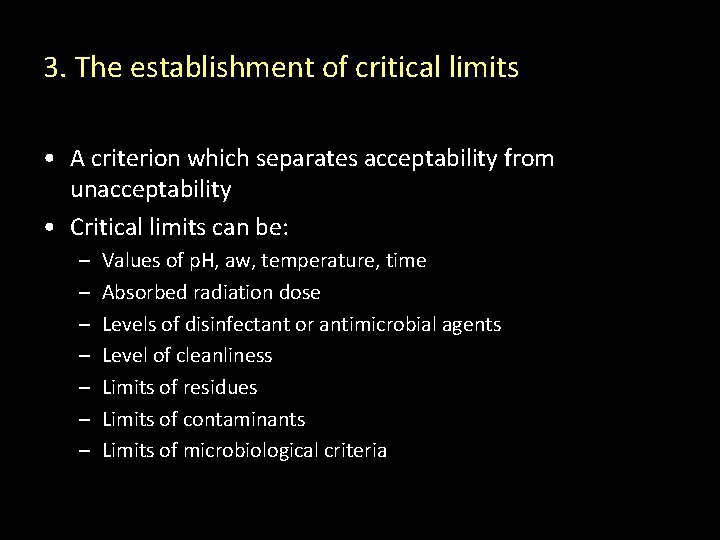
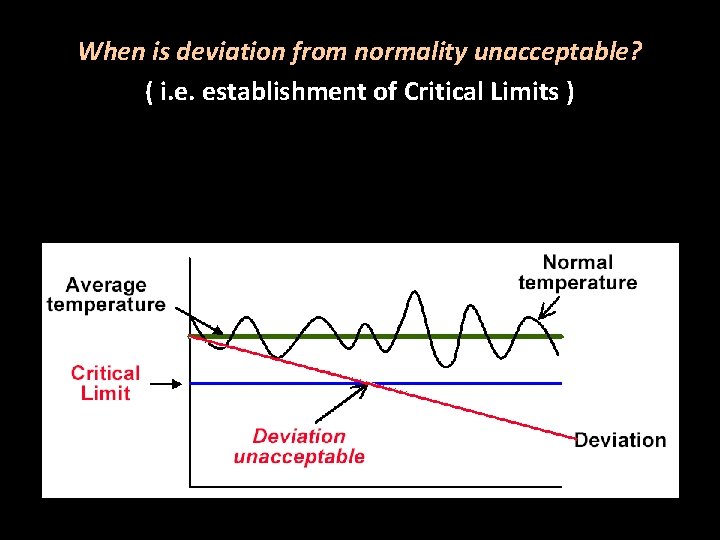
3. The establishment of critical limits • A criterion which separates acceptability from unacceptability • Critical limits can be: – – – – Values of p. H, aw, temperature, time Absorbed radiation dose Levels of disinfectant or antimicrobial agents Level of cleanliness Limits of residues Limits of contaminants Limits of microbiological criteria
When is deviation from normality unacceptable? ( i. e. establishment of Critical Limits )
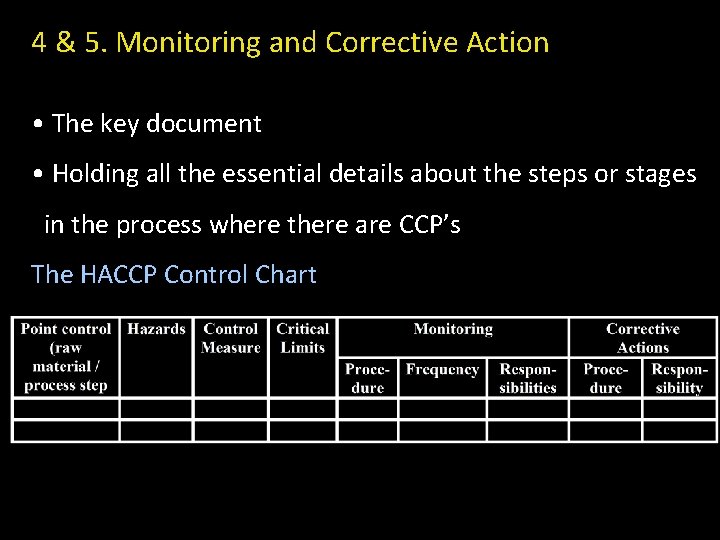
4 & 5. Monitoring and Corrective Action • The key document • Holding all the essential details about the steps or stages in the process where there are CCP’s The HACCP Control Chart
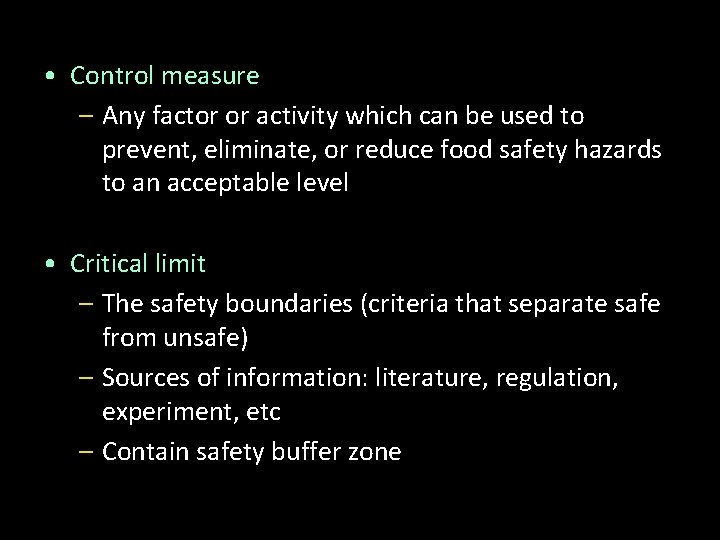
• Control measure – Any factor or activity which can be used to prevent, eliminate, or reduce food safety hazards to an acceptable level • Critical limit – The safety boundaries (criteria that separate safe from unsafe) – Sources of information: literature, regulation, experiment, etc – Contain safety buffer zone
• Monitoring – Observation or measurement to ensure that the process is operating within the critical limit – Based on some form of inspection and testing – The frequency depends on the nature of the CCP and the type of monitoring procedure – Clarify to all personnel involve (what to do and how to do it)
• Corrective action – The action should be taken when the result shows a deviation from the critical limit – Adjust the process to bring it back under control – Deal with the material produced under the deviation period • Hold on the product • Rework • Release product after sampling and testing • Direct into less sensitive products, e. g. animal feed – Clarify to all personnel involve (what to do and how to do it)
6. Verification • The application of methods, procedures, tests, and other evaluations, in addition to monitoring, to determine conformity with the HACCP plan. • This is primarily the responsibility of the industry, however some verification activities can be undertaken during regulatory assessments Conformity: – Activities are carried out according to the established procedures e. g. the HACCP plan and prerequisites
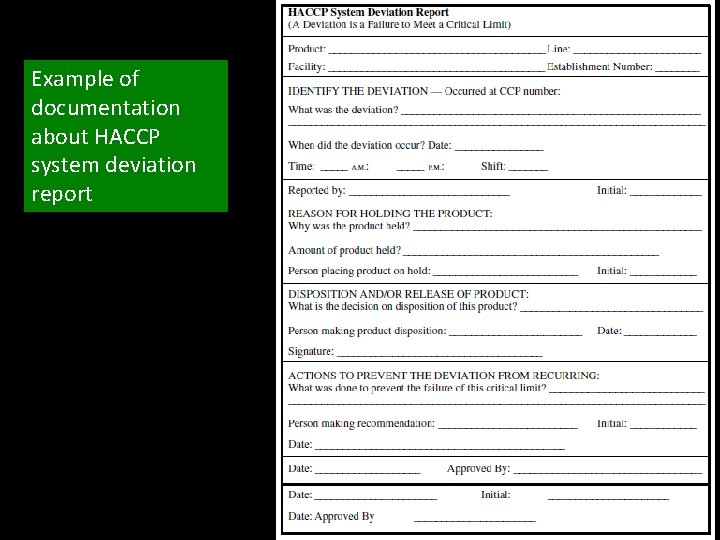
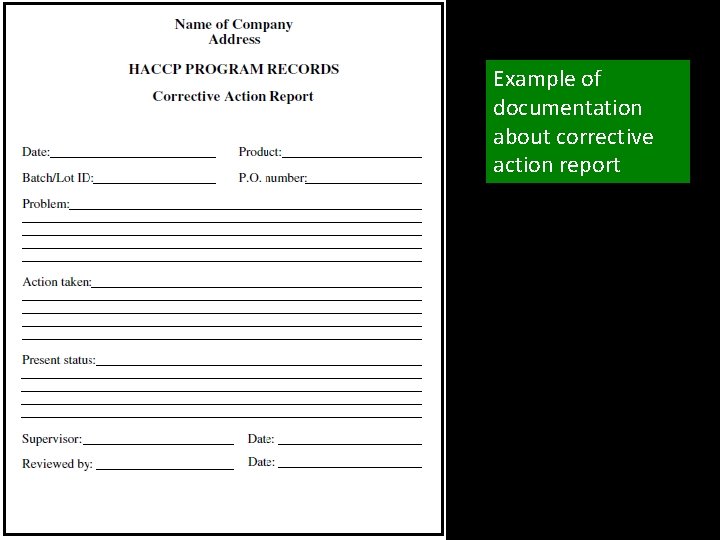
7. Establishment of the record - keeping procedures • An HACCP program should be thoroughly documented and implemented establishing procedures for the identification, storage, retrieval maintenance, protection, and disposition of documents. • The documentation generated must be formal written records providing factual evidence that an activity has been performed in a timely manner in accordance with established procedures. • Information contained in corrective action records provides a description of the deviation and an evaluation of the corrective action taken, as well as a notation as to final disposition of the affected product. • The name of the individual responsible for taking the corrective action should be included.
Example of documentation about HACCP system deviation report
Example of documentation about corrective action report
References • Arvanitoyannis, I. S. 2009. HACCP and ISO 22000: Application to Foods of Animal Origin. Blackwell Publishing Ltd. • Vasconcellos, J. A. 2004. Quality Assurance for the Food Industry: A Practical Approach. CRC Press, Boca Raton. • van Schothorst, M. 2004. A simple guide to understanding and applying the hazard analysis critical control point concept 3 rd Ed. Belgium. ILSI Europe.