group dynamics Dr A Xavier Mahimairaj Kurt Levin

- Slides: 39
group dynamics Dr. A. Xavier Mahimairaj
Kurt Levin was a smart dude B = f(P, E) Behavior is a function of personal qualities and social environment
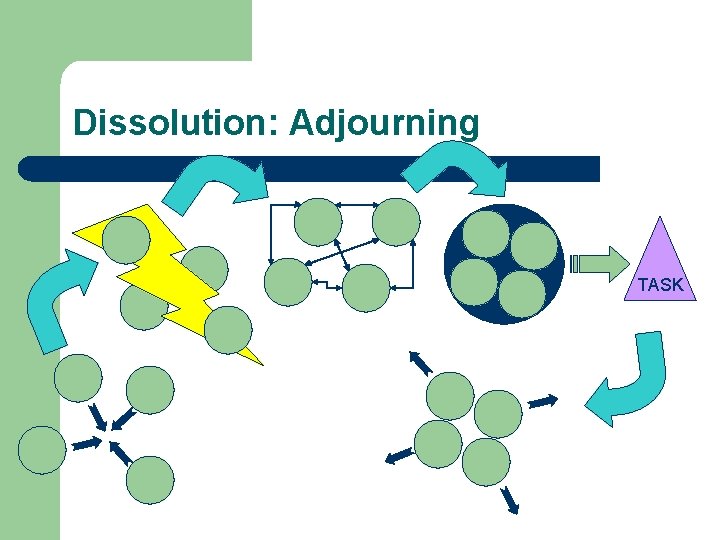
Stages of Group Development l l Orientation: Forming Conflict: Storming Structure: Norming Work: Performing
Orientation: Forming Major processes l Members become familiar with each other and the group; dependency and inclusion issues; acceptance of leader and group consensus Characteristics l Communications are tentative, polite; concern for ambiguity, group’s goals; leader is active; members are compliant
Conflict: Storming Major processes l Disagreement over procedures; expression of dissatisfaction; tension among members; antagonism toward leader Characteristics l Criticism of ideas; poor attendance; hostility; polarization and coalition forming
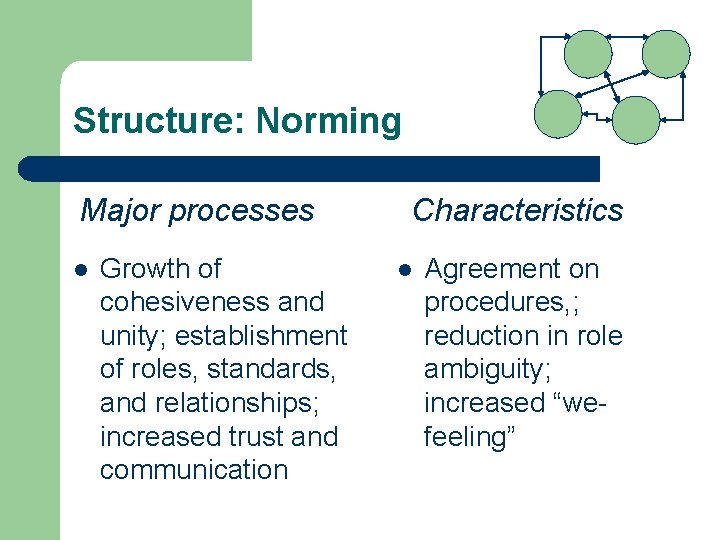
Structure: Norming Major processes l Growth of cohesiveness and unity; establishment of roles, standards, and relationships; increased trust and communication Characteristics l Agreement on procedures, ; reduction in role ambiguity; increased “wefeeling”
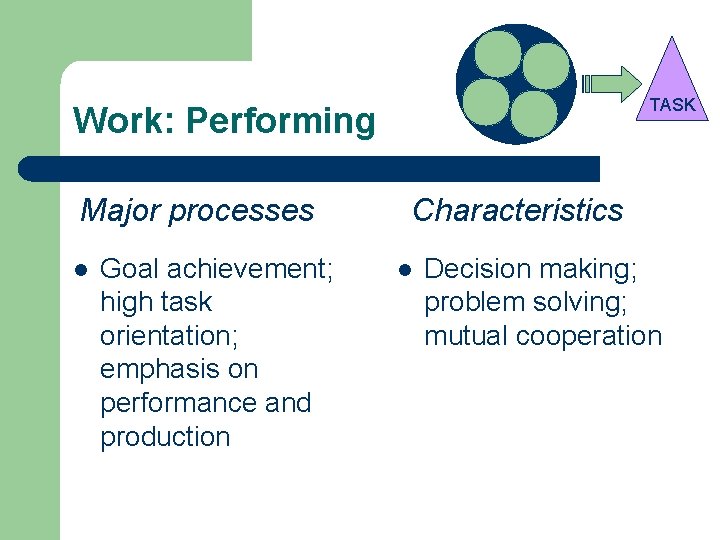
TASK Work: Performing Major processes l Goal achievement; high task orientation; emphasis on performance and production Characteristics l Decision making; problem solving; mutual cooperation
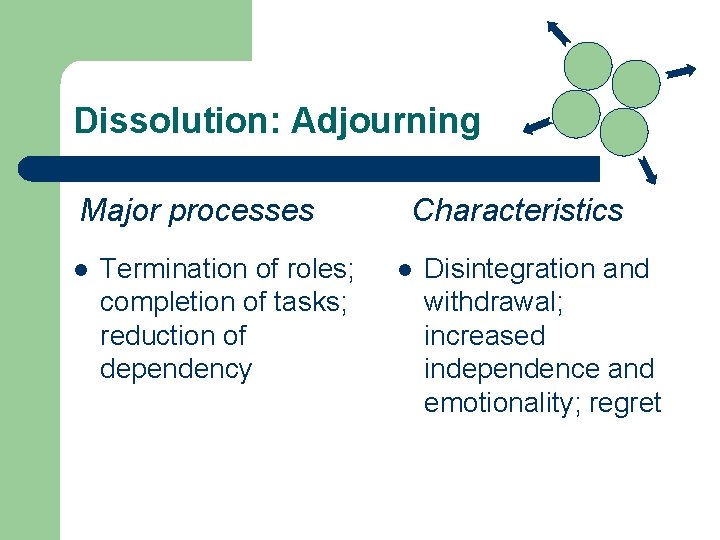
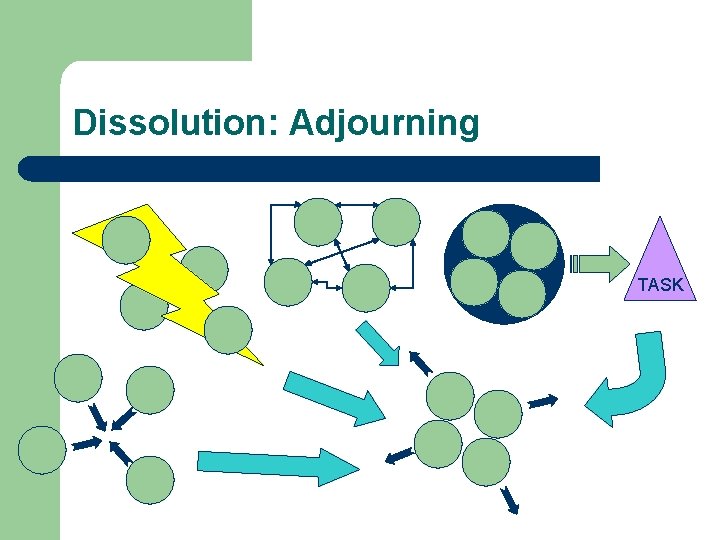
Dissolution: Adjourning Major processes l Termination of roles; completion of tasks; reduction of dependency Characteristics l Disintegration and withdrawal; increased independence and emotionality; regret
Dissolution: Adjourning TASK
Dissolution: Adjourning TASK
Interesting Group Phenomena l l l Brainstorming Social Loafing Group Polarization Confirmation Bias Groupthink
Brainstorming: Does it work? l l Sometimes Brainstorming groups have been shown to both increase and decrease the number of ideas collected Why? Groups can energize thought but can also be inefficient in sharing and compiling ideas
Brainstorming: Does it work? l Ways to make brainstorming better – – – Set clear rules Members should be encouraged to write individually during and AFTER the session Brainwriting: write and pass Have silence periods during the session Have lots of time: no rushing Stay focused
Social Loafing l The reduction of individual effort when people work in groups compared to when they work alone – Tactics to combat social loafing l l More identifiability Set goals Increase involvement/excitement/investment Increase group identity
Group Polarization (Risky Shift) l The tendency to respond in a more extreme way when making a choice or expressing an opinion as part of a group, as opposed to when responding individually
Confirmation Bias l The tendency to seek out information that confirms one’s inferences rather than disconfirms them
Groupthink l l A distorted style of thinking that renders group members incapable of making rational decisions. Members try so hard to agree with one another that they make mistakes and commit errors that could be easily avoided.
Groupthink l Groupthink happens when these conditions are present and active in a group: – – – Overestimation of the group / illusion of invulnerability Closed-mindedness Pressures towards uniformity / self censorship / illusion of unanimity
Groupthink l How to avoid groupthink – – – Require full discussions of pros/cons Arrange for the group to meet in smaller groups Designate a devil’s advocate Make a list of all possible decisions before choosing Limit desire to agree until all options are explored
Learning Organization l l A learning organization is the term given to an organization which facilitates the learning of its employees so that the organization can continuously transforms itself. A learning organization is an organization that actively creates, captures, transfers, and mobilizes knowledge to enable it to adapt to a changing environment.
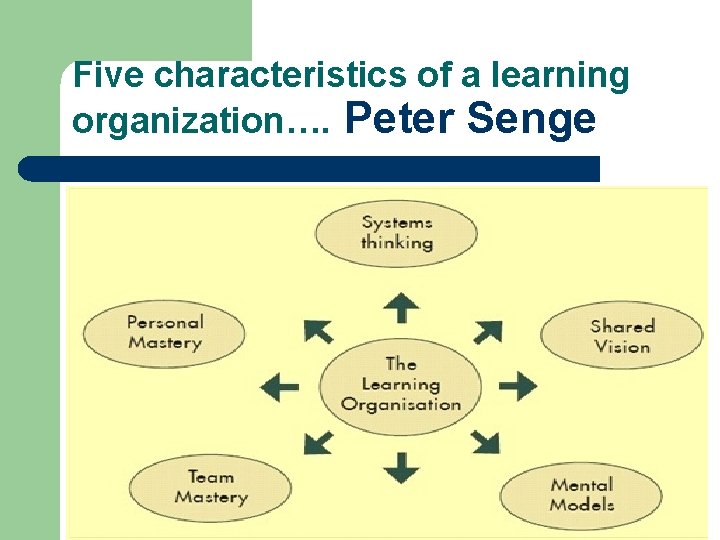
l Peter Senge has defined the learning organization as the organization “in which you cannot learn because learning is so insinuated into the fabric of life. ” According to him the learning organizations are “ …organizations where people continually expand their capacity to create the results they truly desire, where new and expansive patterns of thinking are nurtured, where collective aspiration is set free, and where people are continually learning to see the whole together”.
l Learning organization can also be defined as an “Organization with an ingrained philosophy for anticipating, reacting and responding to change, complexity and uncertainty. ”
l Mc. Gill and his colleagues had defined the learning organization as “a company that can respond to new information by altering the very “programming” by which information is processed and evaluated. ”
Five characteristics of a learning organization…. Peter Senge
Benefits of a learning organization l l l Maintaining levels of innovation and remaining competitive Being better placed to respond to external pressures Having the knowledge to better link resources to customer needs
Benefits of a learning organization l l l Improving quality of outputs at all the levels Improving the corporate image of the organization by becoming more people oriented Increasing the pace of change within the organization
Conflict Management
What is a conflict management style and why do I need to know this? l Conflict Management Style: Form of behavior that a person practices in response to conflict with others l When living and interacting with others on campus, you need to know how to resolve issues in different situations.
Conflict: Where does it come from? l Goals l Personality conflicts l Scarce resources l Styles l Values
The Positive Side of Conflict l Conflict can teach you to make the most of each situation and use it as a learning opportunity or a leadership opportunity. l You can also use it as an opportunity to transform the situation into something better.
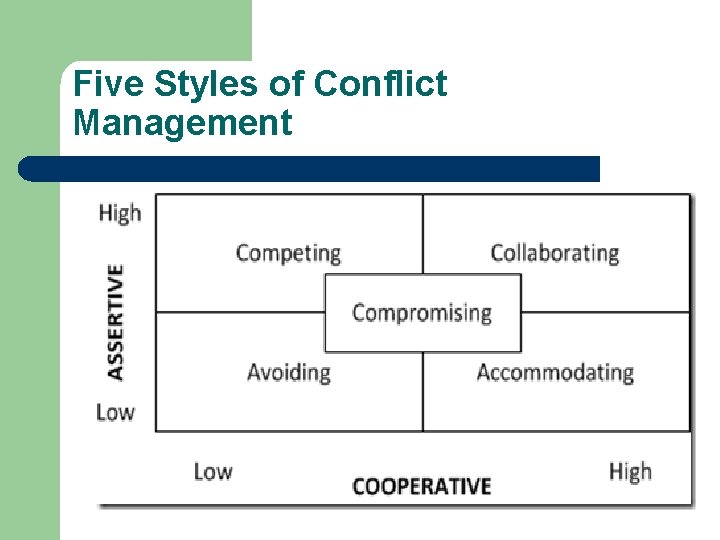
Five Styles of Conflict Management
Accommodating People who accommodate are unassertive and very cooperative. l l Give in during a conflict Acknowledge they made a mistake/decide it was no big deal Put relationships first, ignore issues, and try to keep peace at any price Effective when the other person or party has a better plan or solution
Avoiding People who avoid conflict are generally unassertive and uncooperative. l l l Avoid the conflict entirely or delay their response instead of voicing concerns Can create some space in an emotional environment Not a good long-term strategy
Collaborating Collaborators are both assertive and cooperative. l Assert own views while also listening to other views and welcoming differences l Seek a “win-win” outcome l Identify underlying concerns of a conflict l Create room for multiple ideas l Requires time and effort from both parties
Competing People who approach conflict in a competitive way assert themselves and do not cooperate while pursuing their own concerns at another’s expense. l Takes on a “win-lose” approach where one person wins and one person loses l Does not rely on cooperation with the other party to reach outcome l May be appropriate for emergencies when time is important
Compromising Compromisers are moderately assertive and moderately cooperative. l l Try to find fast, mutually acceptable solutions to conflicts that partially satisfy both parties Results in a “lose-lose” approach Appropriate temporary solution Considered an easy way out when you need more time to collaborate to find a better solution
Which one is best? There is no BEST way to handle conflict. Each conflict is different and requires a different response. As a society, we teach: “Two heads are better than one. ” (Collaborating) “Kill your enemies with kindness. ” (Accommodating) “Split the difference. ” (Compromising) “Leave well enough alone. ” (Avoiding) “Might makes right. ” (Competing)
Conclusion l Different conflict management styles may be used when faced with different situations. l Knowing yourself and fully understanding each situation will help you understand the conflict management style needed. l Try a scenario-based approach to test the effectiveness of different approaches to specific situations.
l. Thank you!