GFF RMNCAH Investment Case to reach UHC in


- Slides: 18
GFF: RMNCAH Investment Case to reach UHC in DRC Kinshasa, June 2016
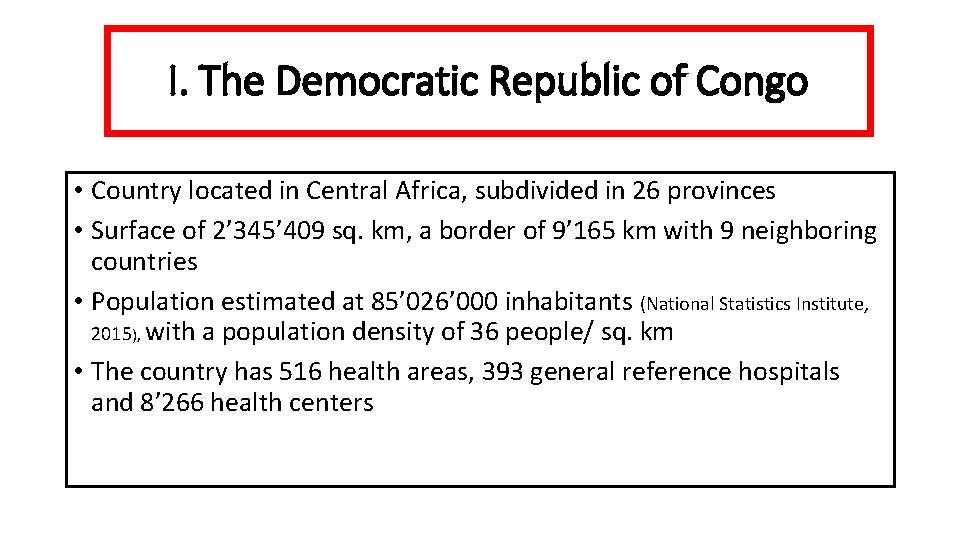
I. The Democratic Republic of Congo • Country located in Central Africa, subdivided in 26 provinces • Surface of 2’ 345’ 409 sq. km, a border of 9’ 165 km with 9 neighboring countries • Population estimated at 85’ 026’ 000 inhabitants (National Statistics Institute, 2015), with a population density of 36 people/ sq. km • The country has 516 health areas, 393 general reference hospitals and 8’ 266 health centers
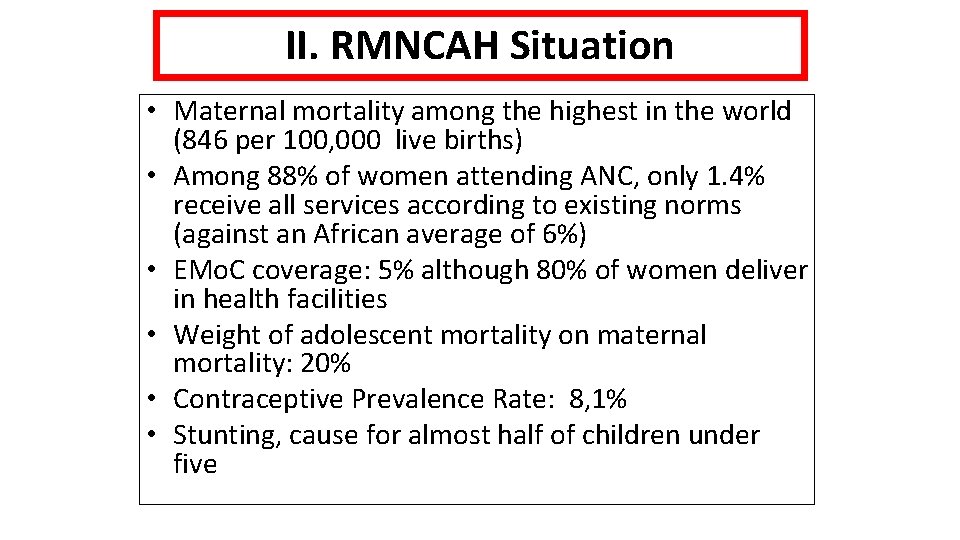
II. RMNCAH Situation • Maternal mortality among the highest in the world (846 per 100, 000 live births) • Among 88% of women attending ANC, only 1. 4% receive all services according to existing norms (against an African average of 6%) • EMo. C coverage: 5% although 80% of women deliver in health facilities • Weight of adolescent mortality on maternal mortality: 20% • Contraceptive Prevalence Rate: 8, 1% • Stunting, cause for almost half of children under five
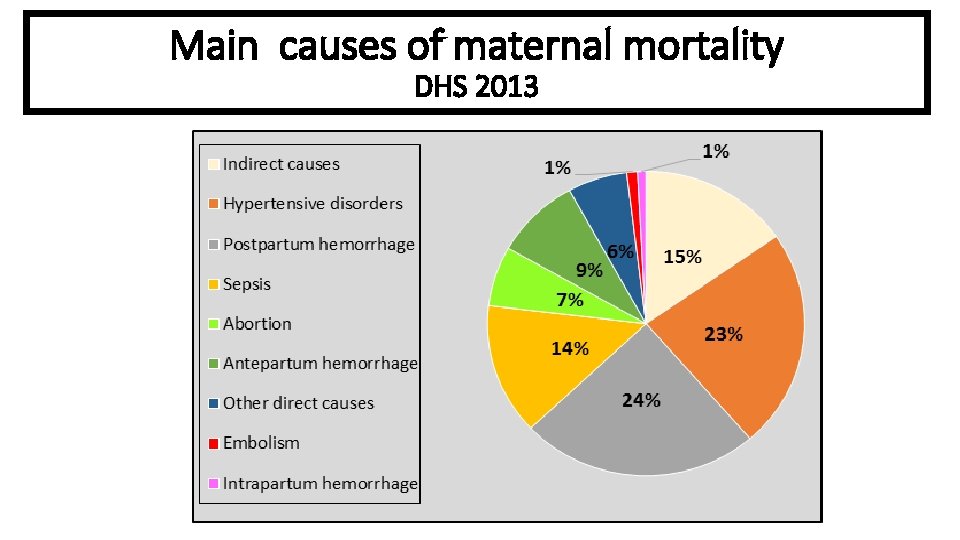
Main causes of maternal mortality DHS 2013
Main causes of mortality among children aged 0 -1 month DHS 2013
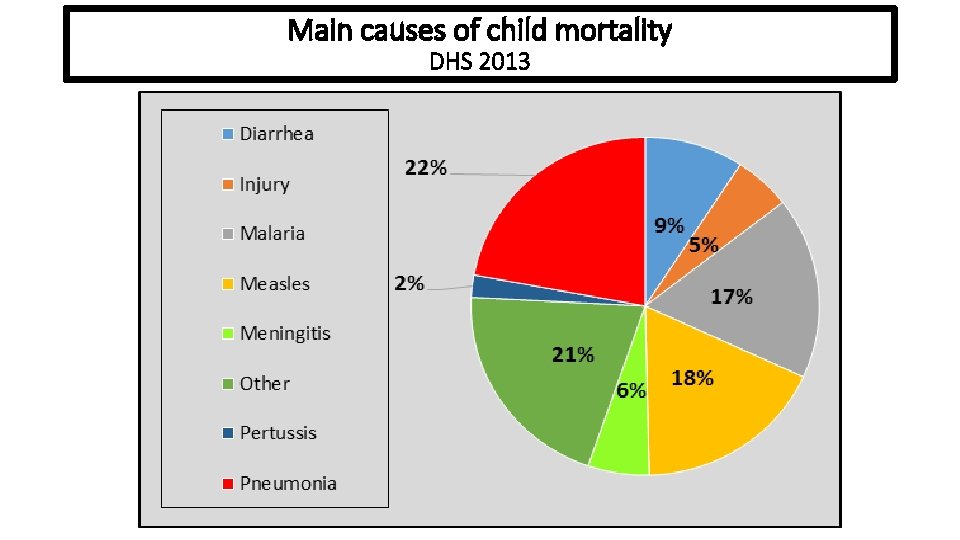
Main causes of child mortality DHS 2013
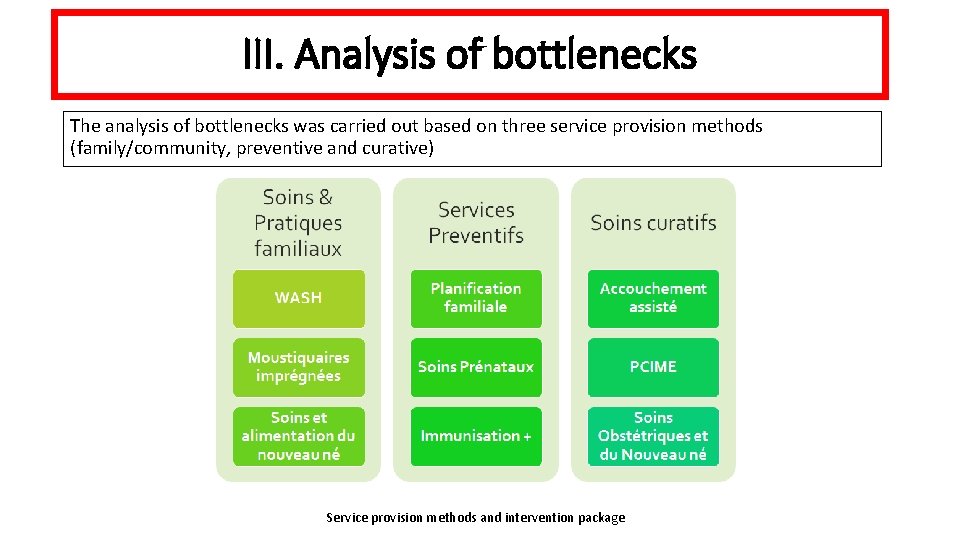
III. Analysis of bottlenecks The analysis of bottlenecks was carried out based on three service provision methods (family/community, preventive and curative) Service provision methods and intervention package
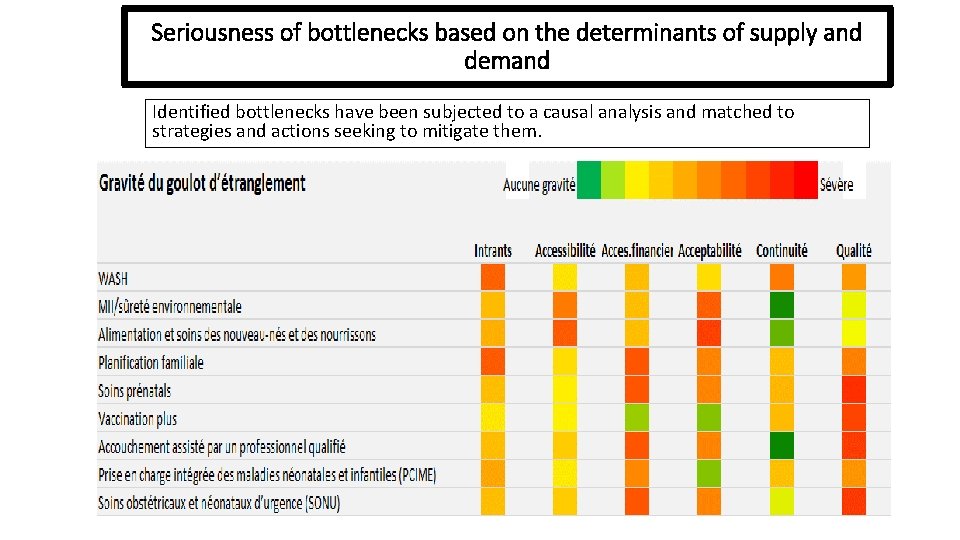
Seriousness of bottlenecks based on the determinants of supply and demand Identified bottlenecks have been subjected to a causal analysis and matched to strategies and actions seeking to mitigate them.
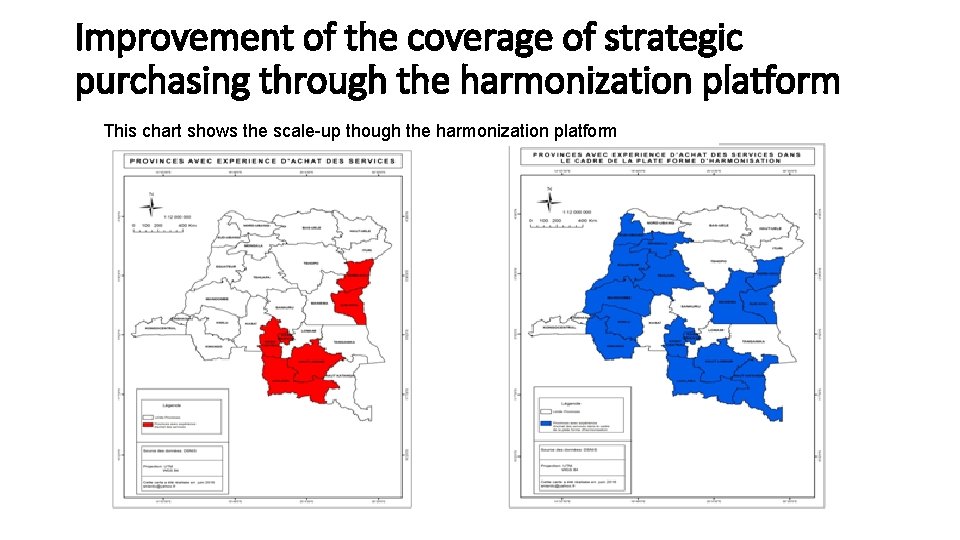
Improvement of the coverage of strategic purchasing through the harmonization platform This chart shows the scale-up though the harmonization platform
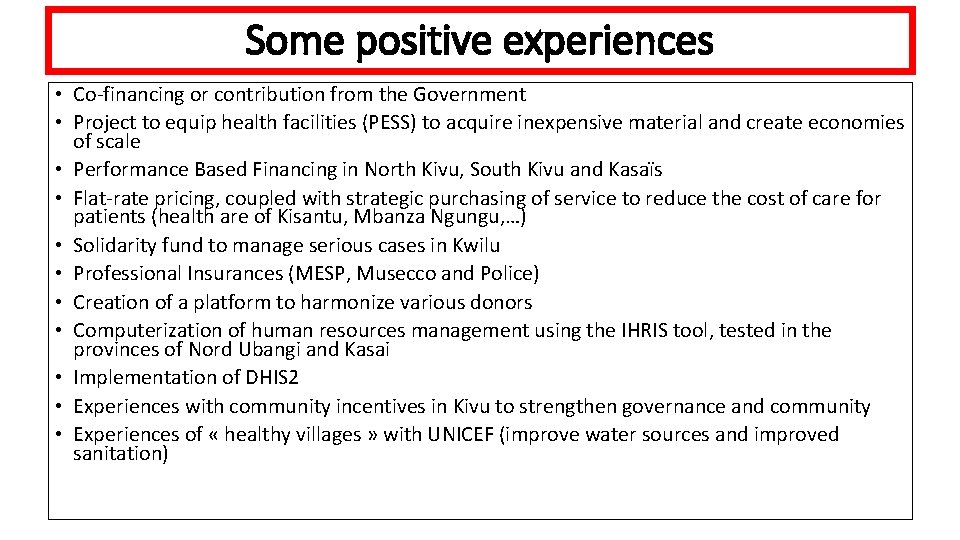
Some positive experiences • Co-financing or contribution from the Government • Project to equip health facilities (PESS) to acquire inexpensive material and create economies of scale • Performance Based Financing in North Kivu, South Kivu and Kasaïs • Flat-rate pricing, coupled with strategic purchasing of service to reduce the cost of care for patients (health are of Kisantu, Mbanza Ngungu, …) • Solidarity fund to manage serious cases in Kwilu • Professional Insurances (MESP, Musecco and Police) • Creation of a platform to harmonize various donors • Computerization of human resources management using the IHRIS tool, tested in the provinces of Nord Ubangi and Kasai • Implementation of DHIS 2 • Experiences with community incentives in Kivu to strengthen governance and community • Experiences of « healthy villages » with UNICEF (improve water sources and improved sanitation)
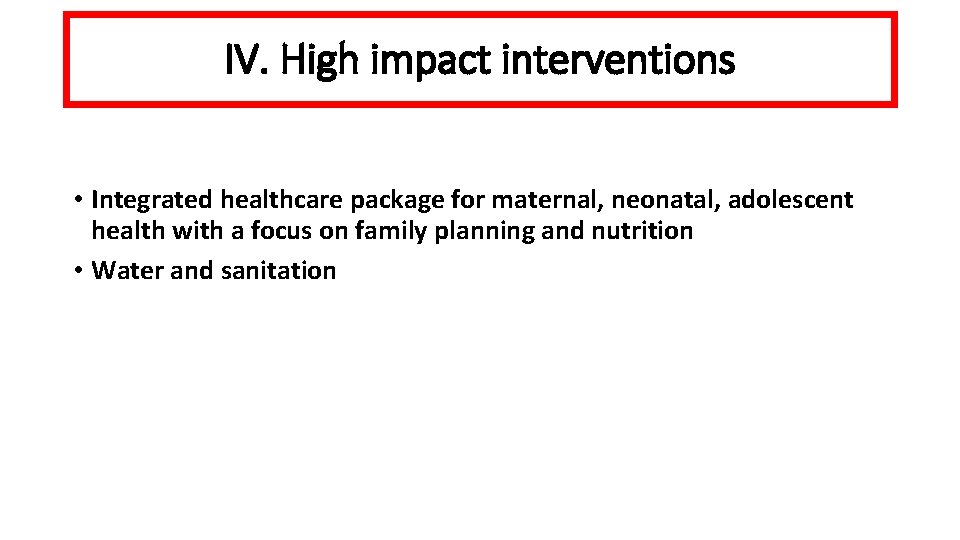
IV. High impact interventions • Integrated healthcare package for maternal, neonatal, adolescent health with a focus on family planning and nutrition • Water and sanitation
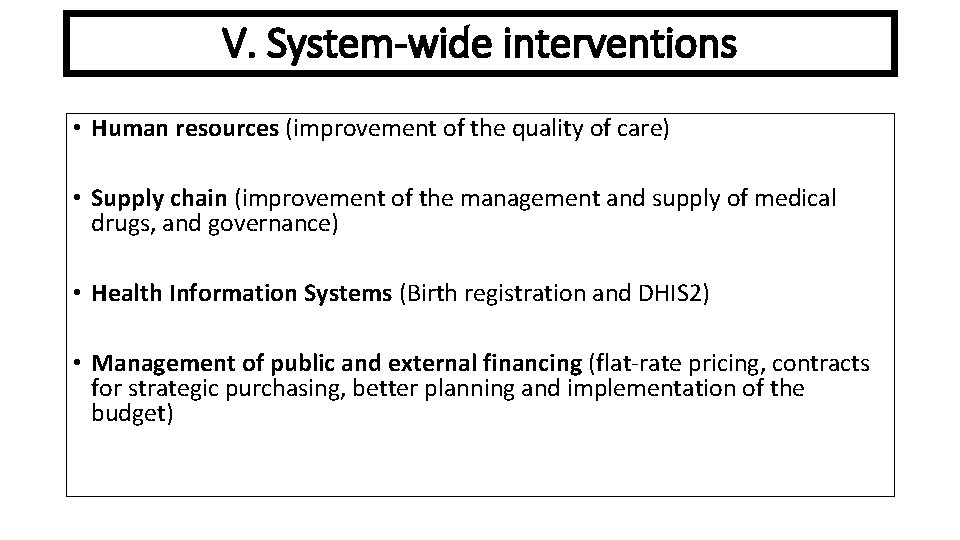
V. System-wide interventions • Human resources (improvement of the quality of care) • Supply chain (improvement of the management and supply of medical drugs, and governance) • Health Information Systems (Birth registration and DHIS 2) • Management of public and external financing (flat-rate pricing, contracts for strategic purchasing, better planning and implementation of the budget)
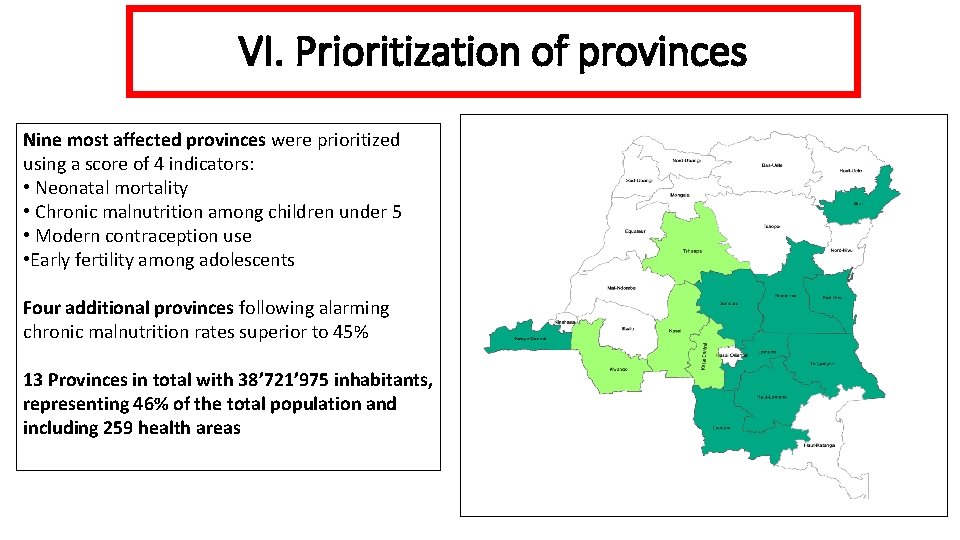
VI. Prioritization of provinces Nine most affected provinces were prioritized using a score of 4 indicators: • Neonatal mortality • Chronic malnutrition among children under 5 • Modern contraception use • Early fertility among adolescents Four additional provinces following alarming chronic malnutrition rates superior to 45% 13 Provinces in total with 38’ 721’ 975 inhabitants, representing 46% of the total population and including 259 health areas
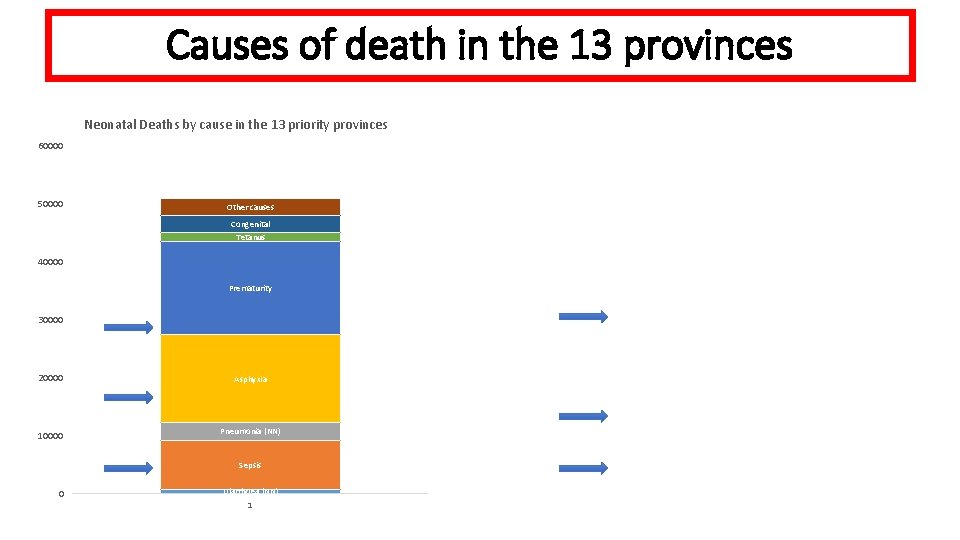
Causes of death in the 13 provinces Neonatal Deaths by cause in the 13 priority provinces 60000 50000 Other causes Congenital Tetanus 40000 Prematurity 30000 20000 Asphyxia 10000 Pneumonia (NN) Sepsis 0 Diarrhoea (NN) 1
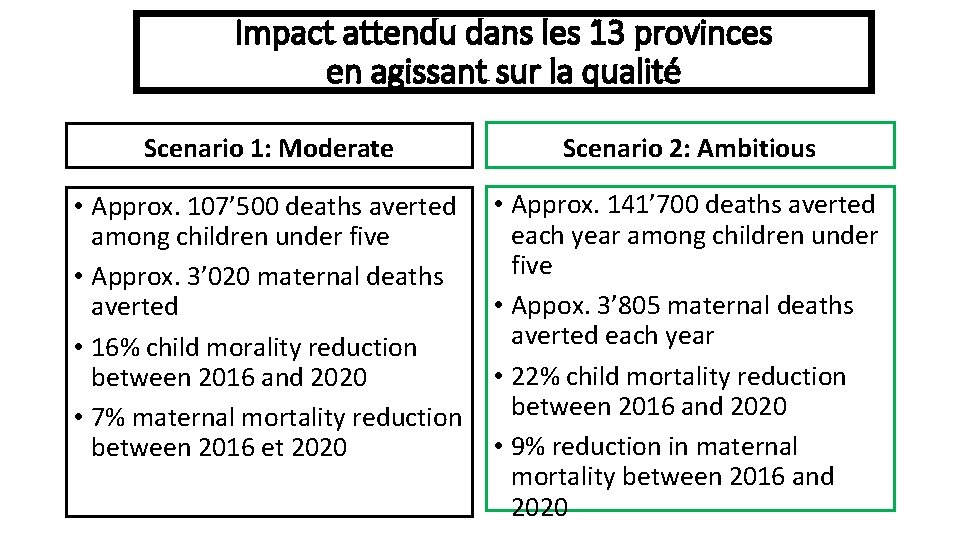
Impact attendu dans les 13 provinces en agissant sur la qualité Scenario 1: Moderate Scenario 2: Ambitious • Approx. 107’ 500 deaths averted among children under five • Approx. 3’ 020 maternal deaths averted • 16% child morality reduction between 2016 and 2020 • 7% maternal mortality reduction between 2016 et 2020 • Approx. 141’ 700 deaths averted each year among children under five • Appox. 3’ 805 maternal deaths averted each year • 22% child mortality reduction between 2016 and 2020 • 9% reduction in maternal mortality between 2016 and 2020
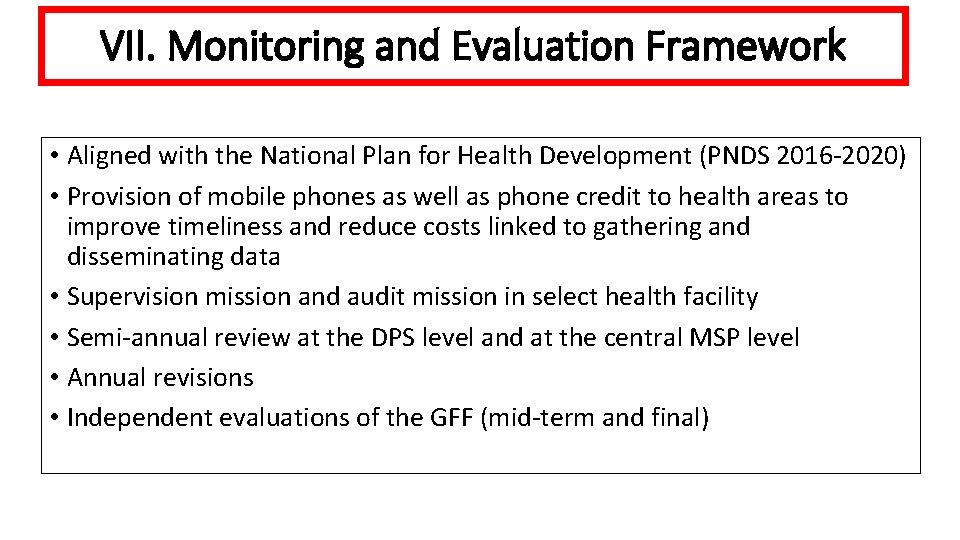
VII. Monitoring and Evaluation Framework • Aligned with the National Plan for Health Development (PNDS 2016 -2020) • Provision of mobile phones as well as phone credit to health areas to improve timeliness and reduce costs linked to gathering and disseminating data • Supervision mission and audit mission in select health facility • Semi-annual review at the DPS level and at the central MSP level • Annual revisions • Independent evaluations of the GFF (mid-term and final)
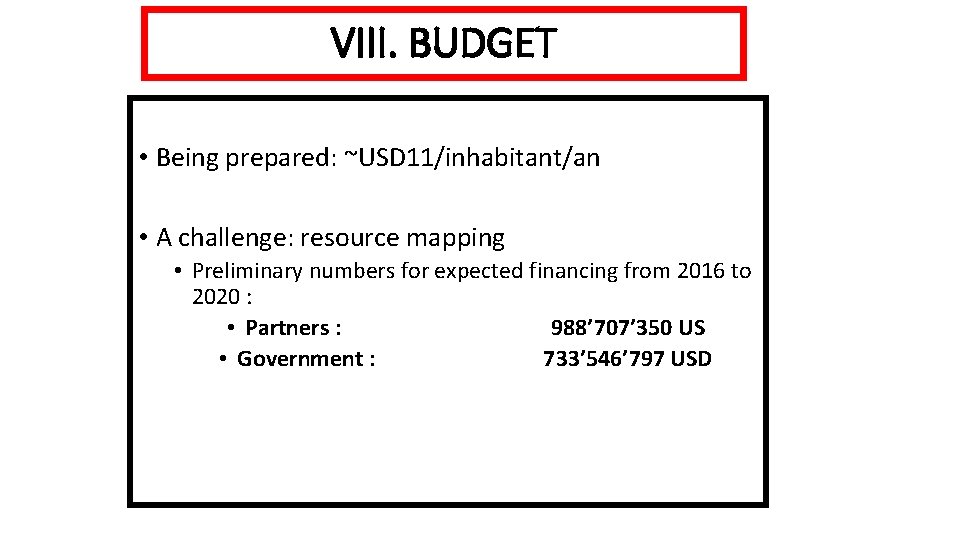
VIII. BUDGET • Being prepared: ~USD 11/inhabitant/an • A challenge: resource mapping • Preliminary numbers for expected financing from 2016 to 2020 : • Partners : 988’ 707’ 350 US • Government : 733’ 546’ 797 USD
Thank you for your kind attention