Geology of Virginia Why Pulls together what they



- Slides: 76
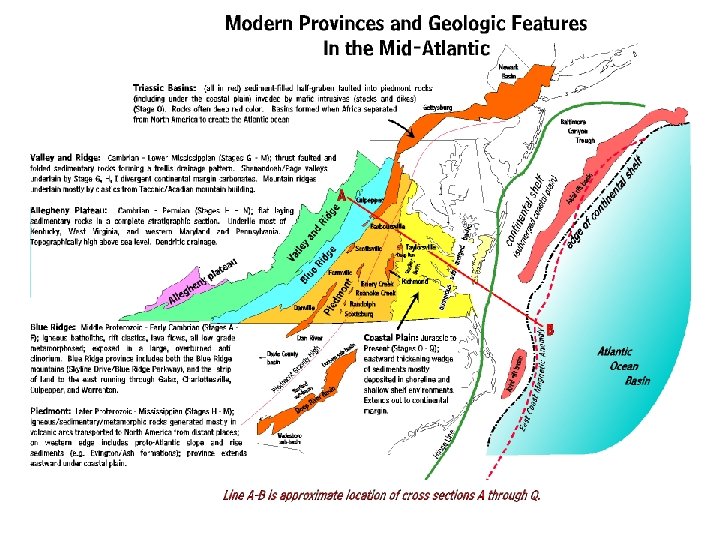
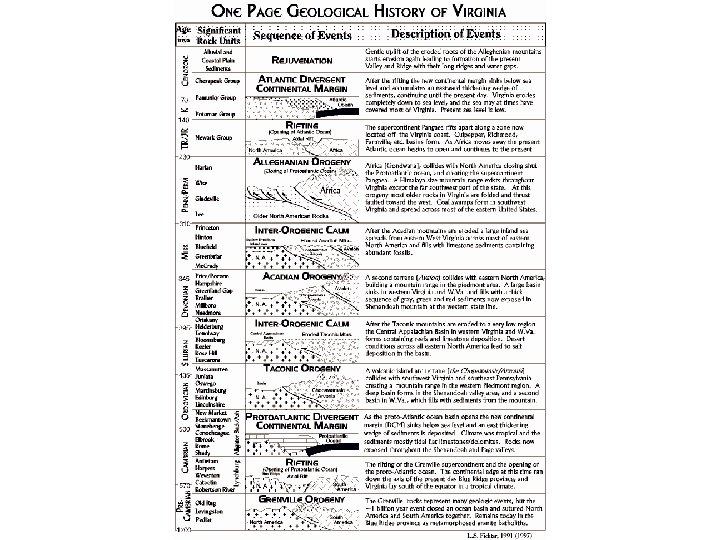
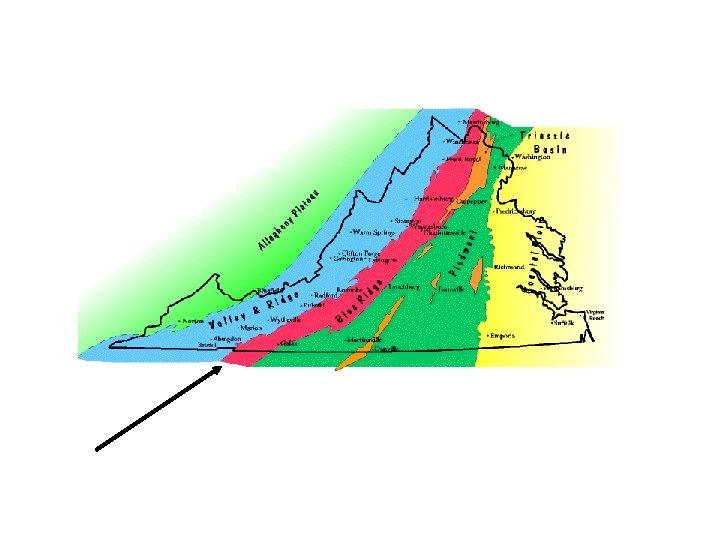
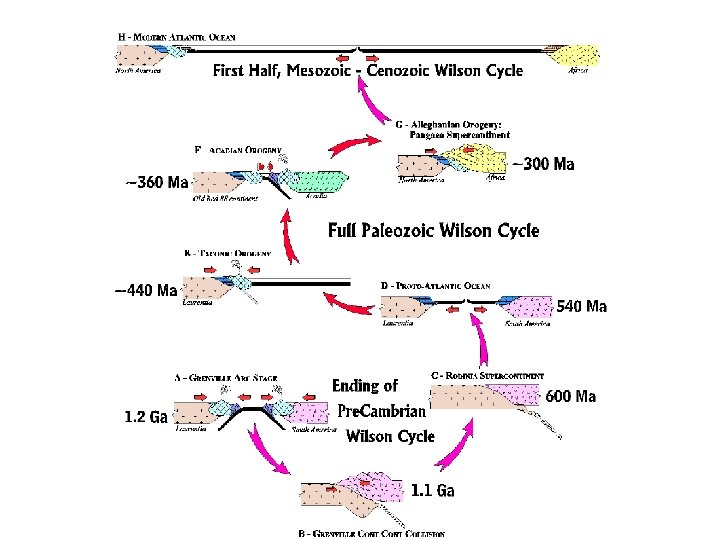
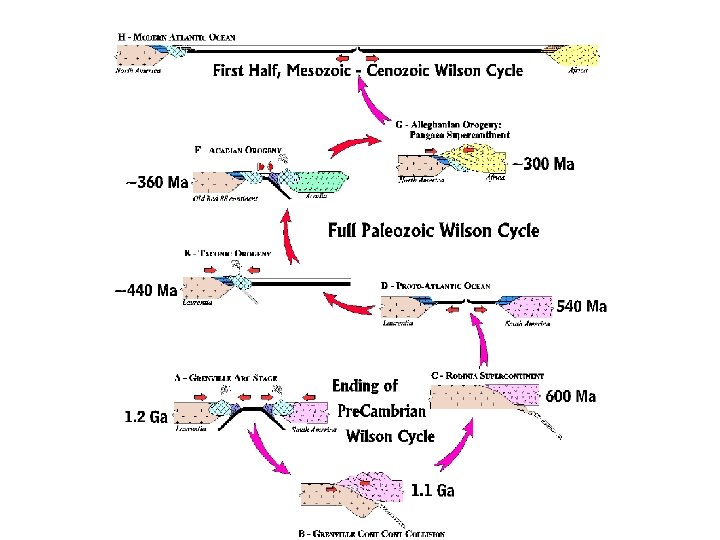
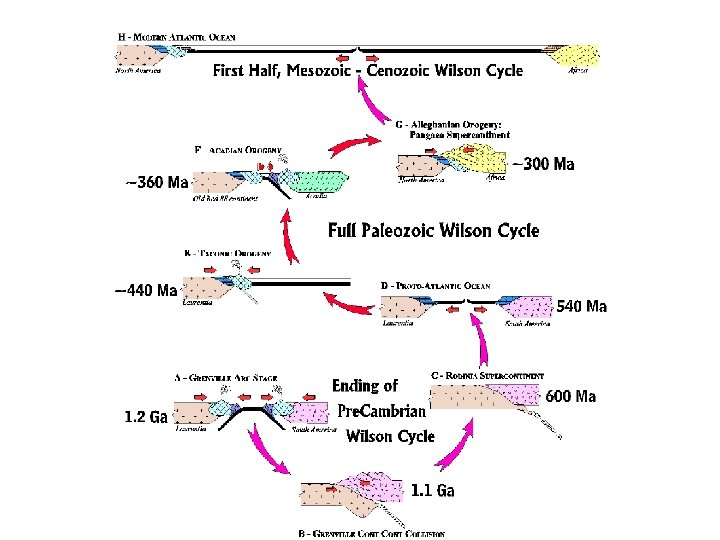
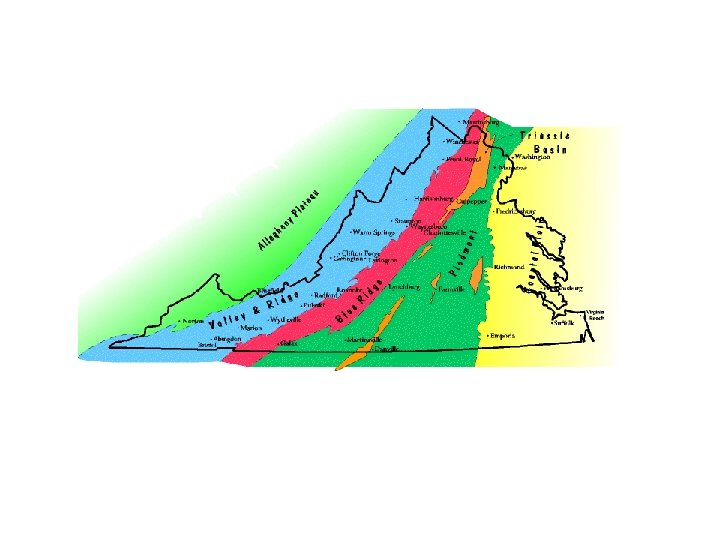
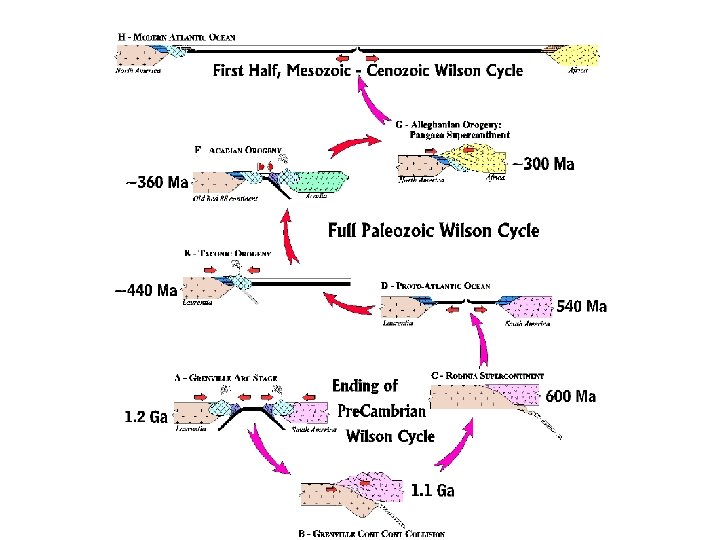
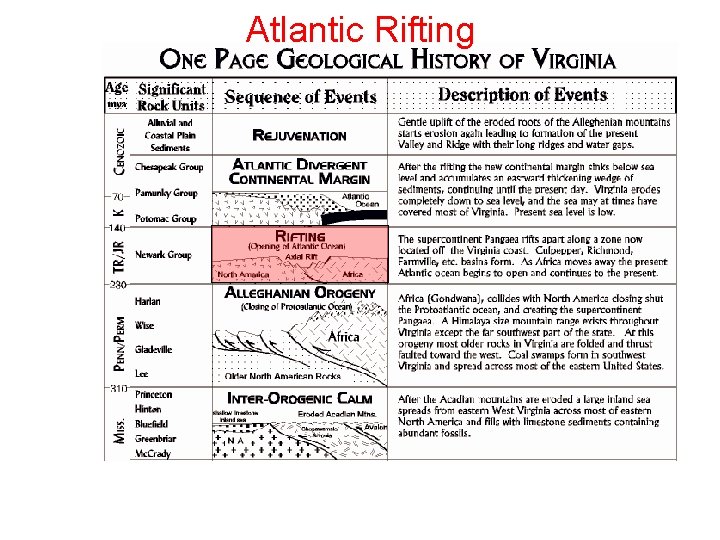
Geology of Virginia • Why? Pulls together what they already know: • Rocks • Plate Tectonics • Wilson Cycles • Geologic Structures • Stratigraphic Principles/Sequence of Events • Geologic Time • Map and Cross Section Interpretation ES. 8 The student will investigate and understand geologic processes including plate tectonics. Key concepts include • a) how geologic processes are evidenced in the physiographic provinces of Virginia including the Coastal Plain, Piedmont, Blue Ridge, Valley and Ridge, and Appalachian Plateau; • b) processes (faulting, folding, volcanism, metamorphism, weathering, erosion, deposition, and sedimentation) and their resulting features; and • c) tectonic processes (subduction, rifting and sea floor spreading, and continental collision).
Defining Characteristics of PC: • formation of Earth’s crust and main bombardment • first life appears • first multicellular animals at end of interval Defining characteristics from Smithsonian site (link on portal): http: //www. nmnh. si. edu/paleo/geotime/main/index. html
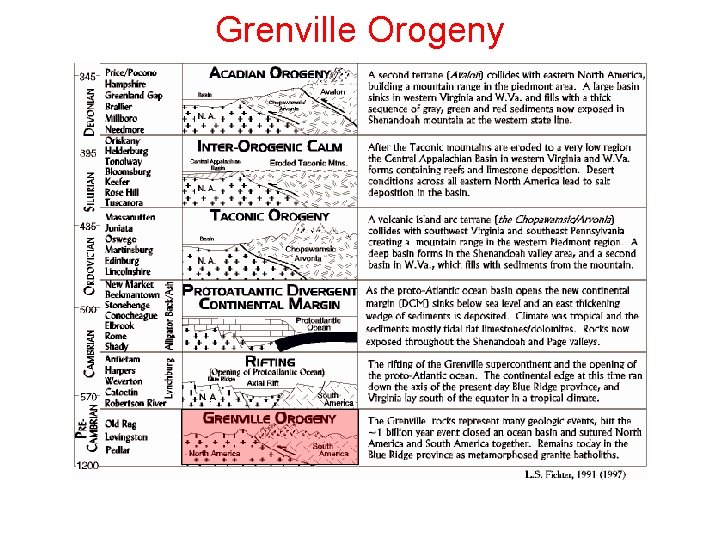
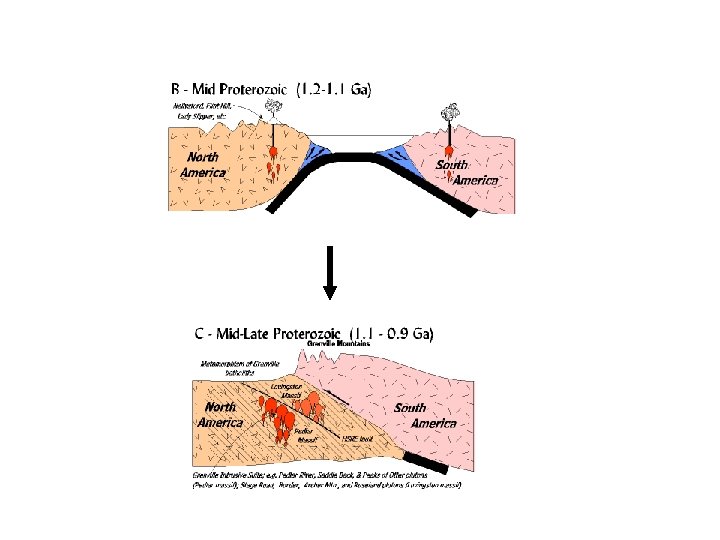
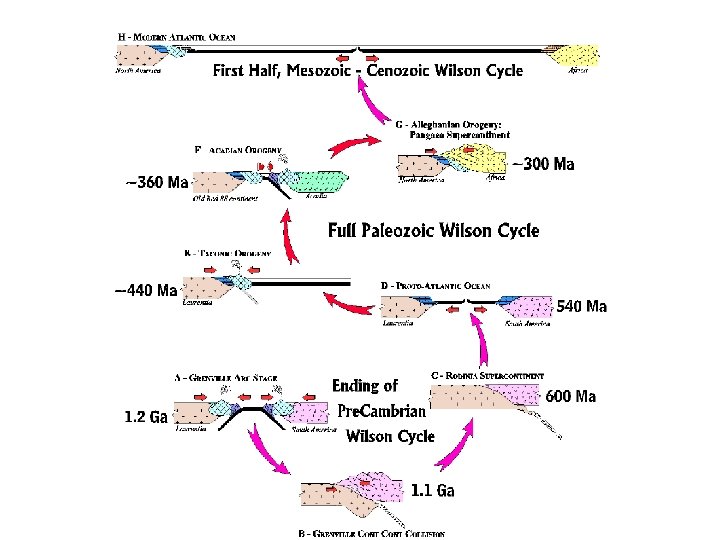
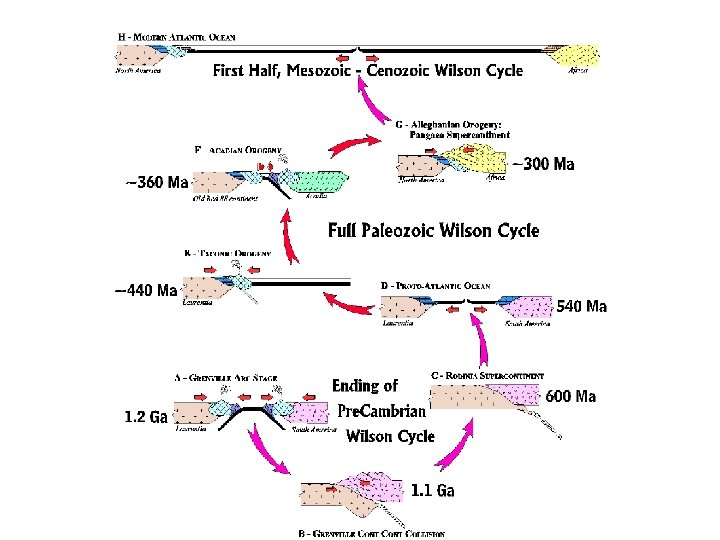
Grenville Orogeny
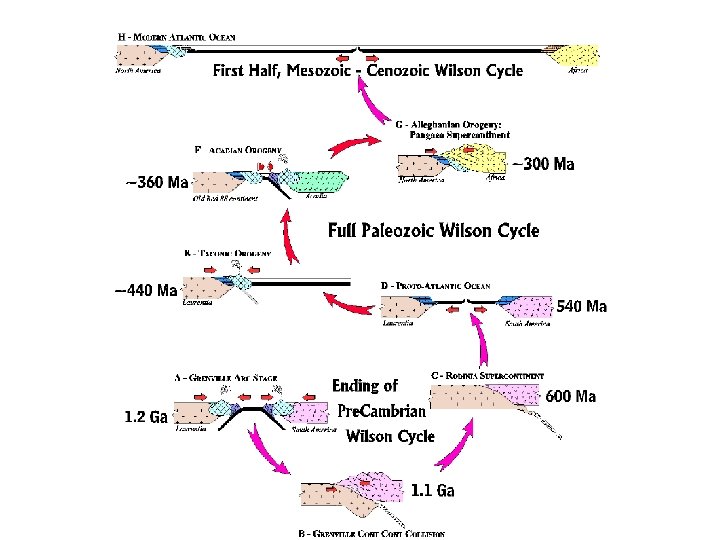
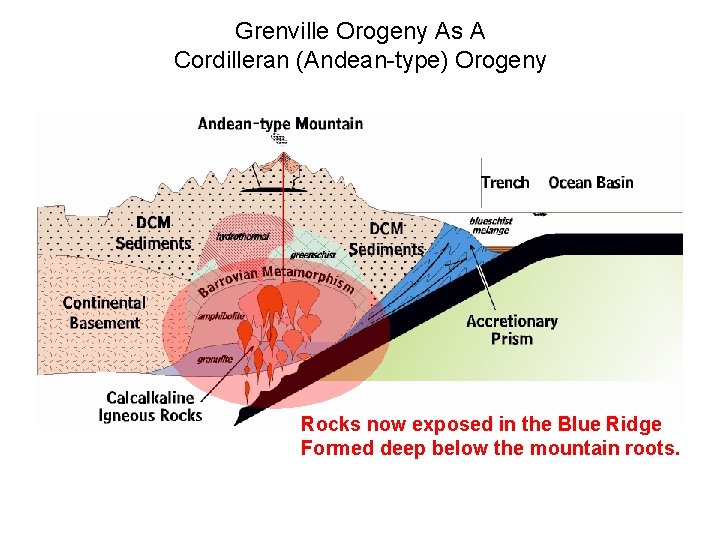
Grenville Orogeny As A Cordilleran (Andean-type) Orogeny Rocks now exposed in the Blue Ridge Formed deep below the mountain roots.
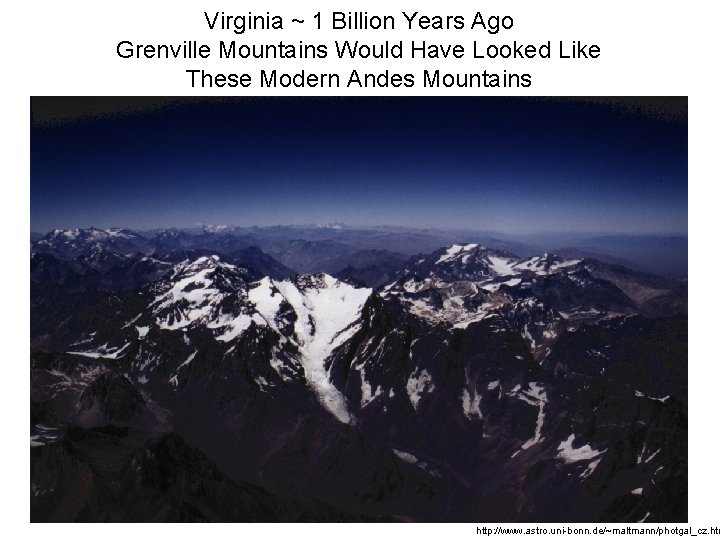
Virginia ~ 1 Billion Years Ago Grenville Mountains Would Have Looked Like These Modern Andes Mountains http: //www. astro. uni-bonn. de/~maltmann/photgal_cz. htm
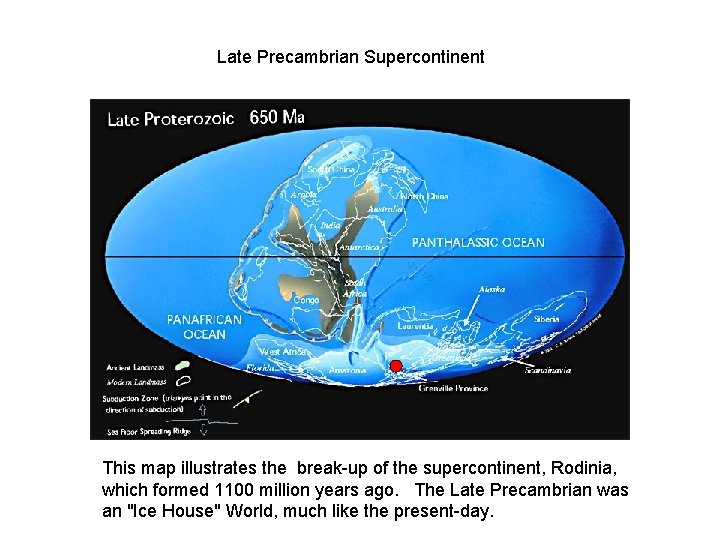
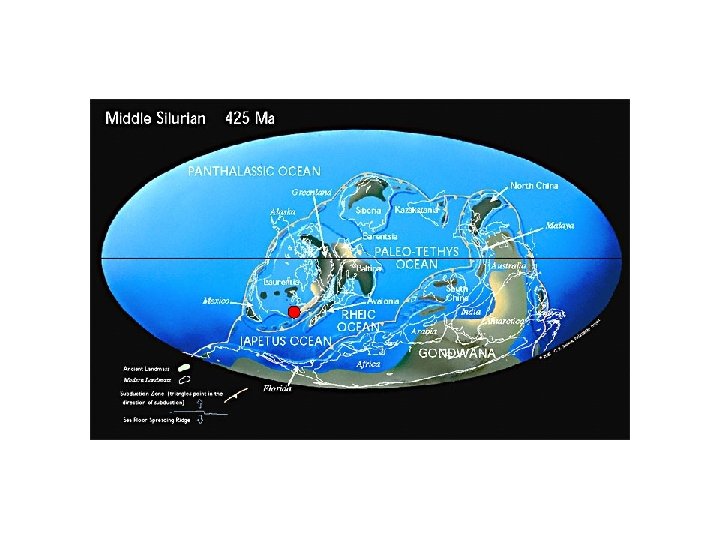
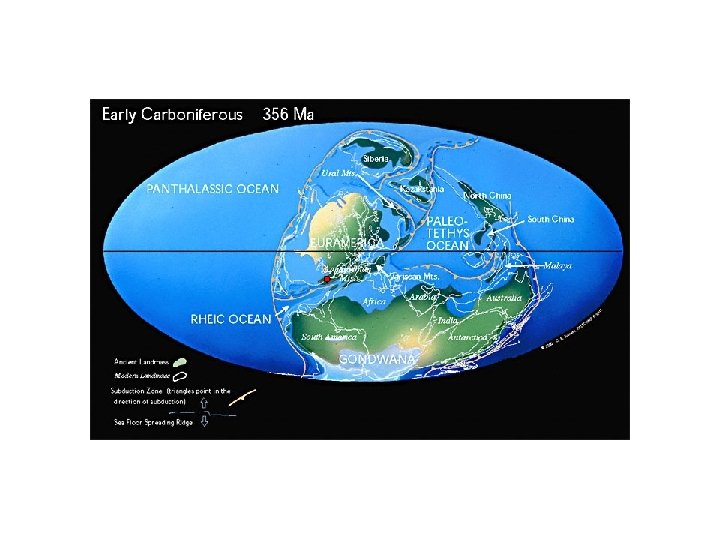
Late Precambrian Supercontinent This map illustrates the break-up of the supercontinent, Rodinia, which formed 1100 million years ago. The Late Precambrian was an "Ice House" World, much like the present-day.
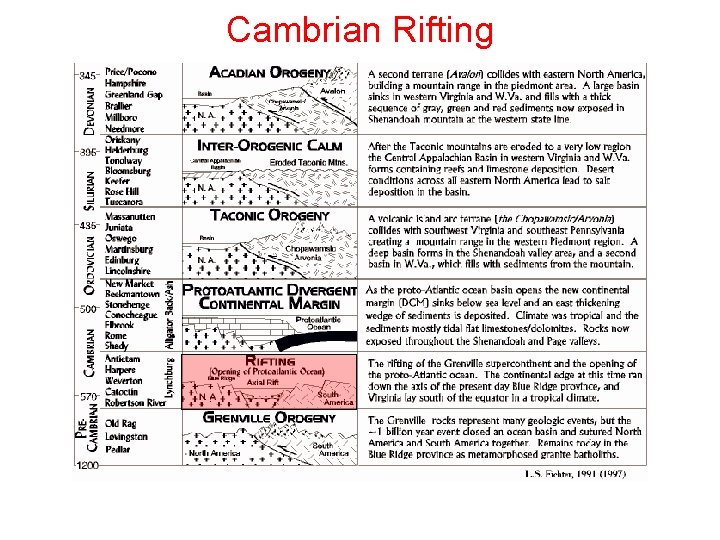
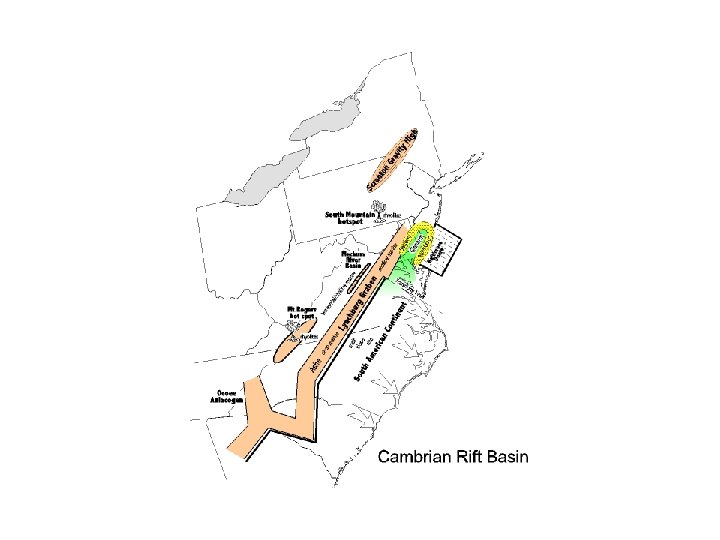
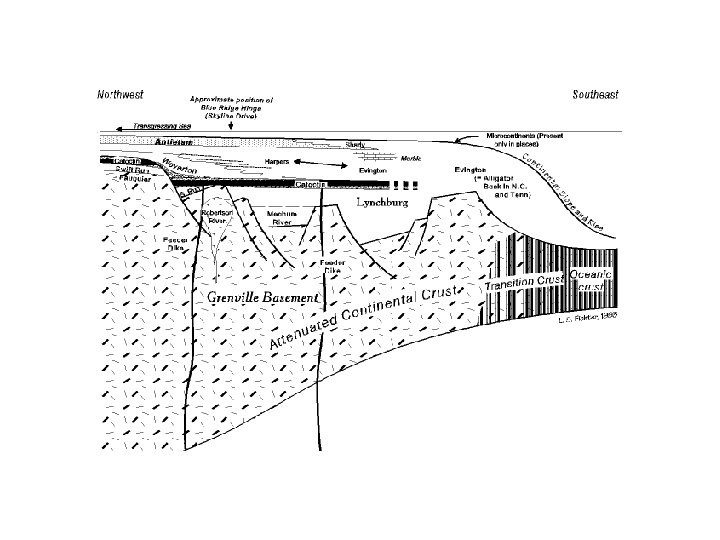
Cambrian Rifting
Defining Characteristics of the Cambrian: • Cambrian Explosion • skeletonized animals • early animal diversification
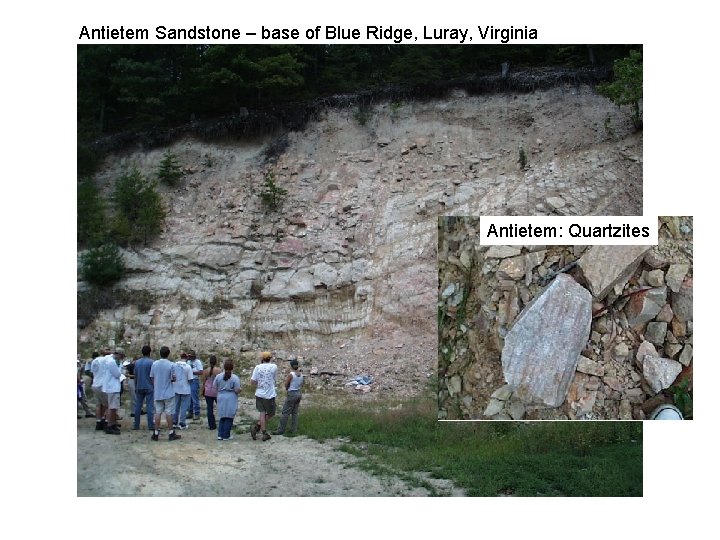
Antietem Sandstone – base of Blue Ridge, Luray, Virginia Antietem: Quartzites
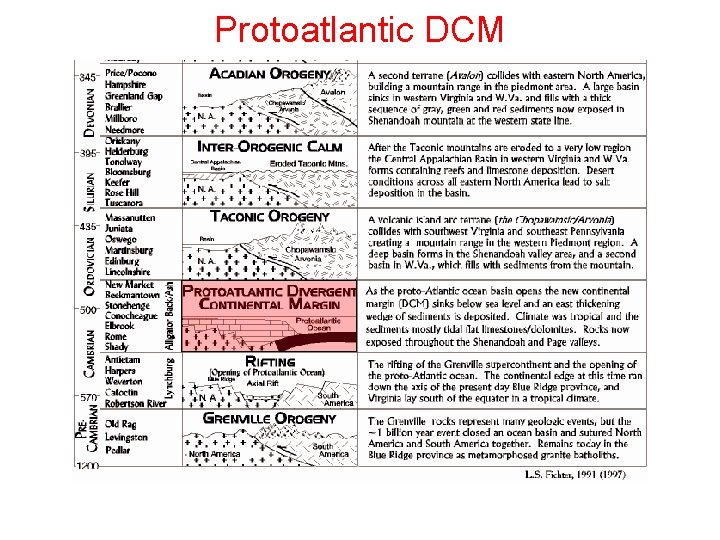
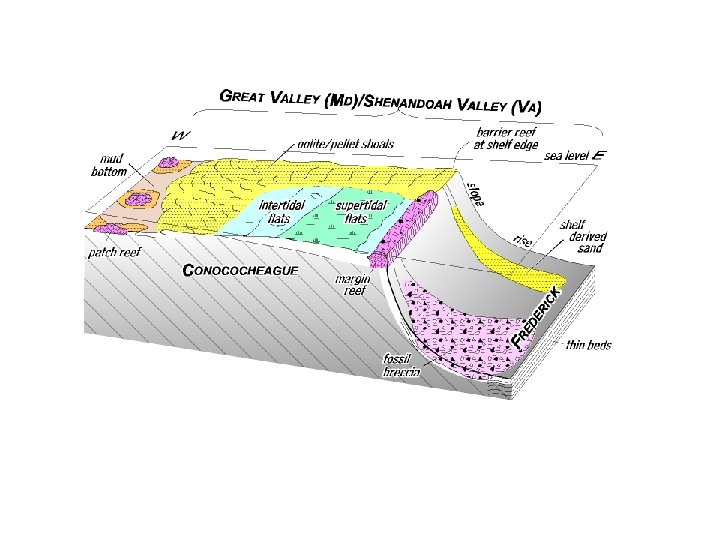
Protoatlantic DCM
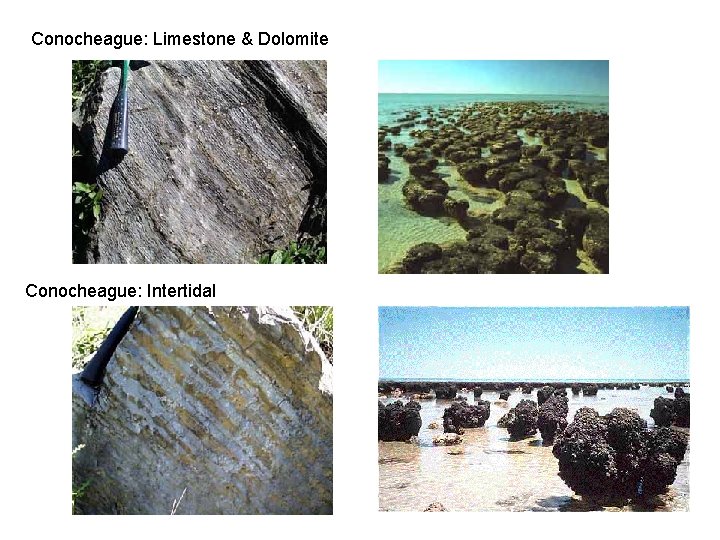
Conocheague: Limestone & Dolomite Conocheague: Intertidal
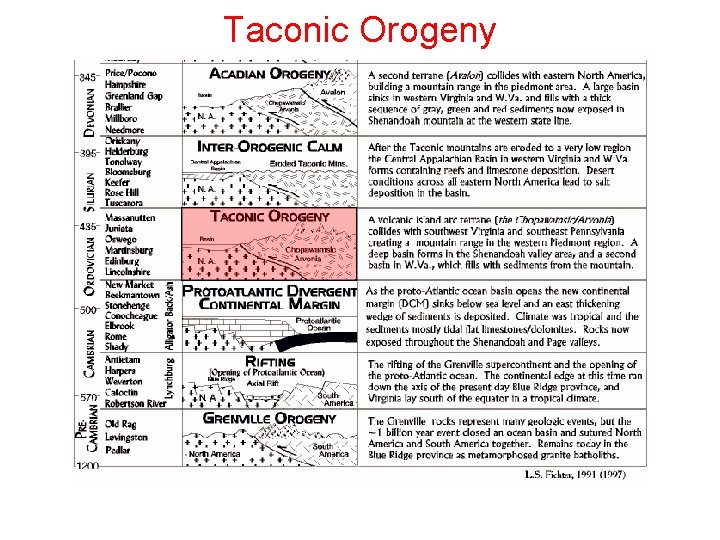
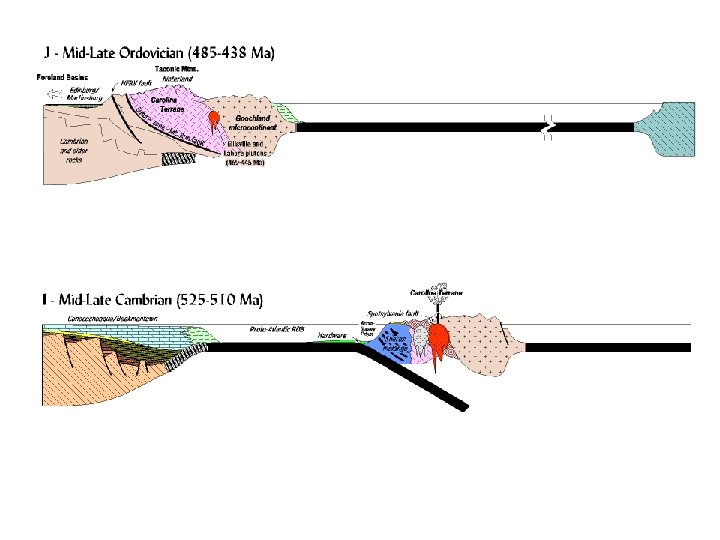
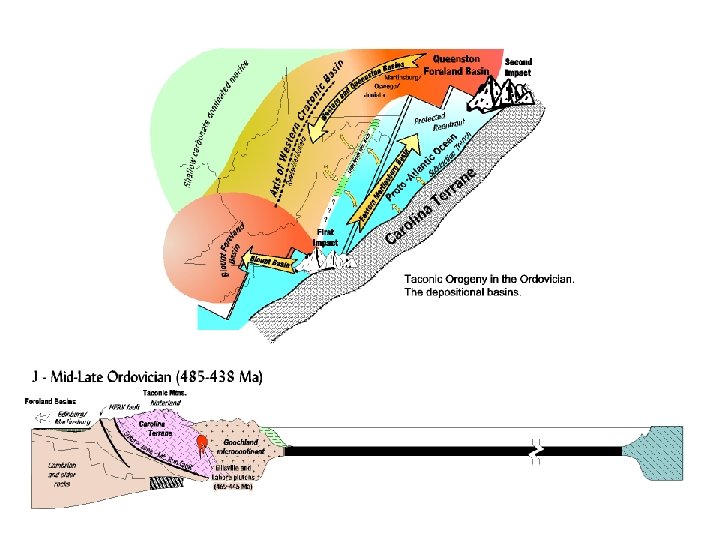
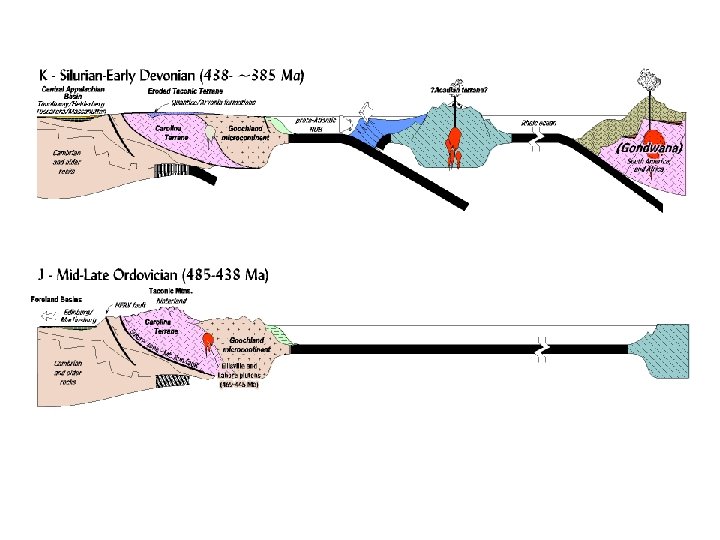
Taconic Orogeny
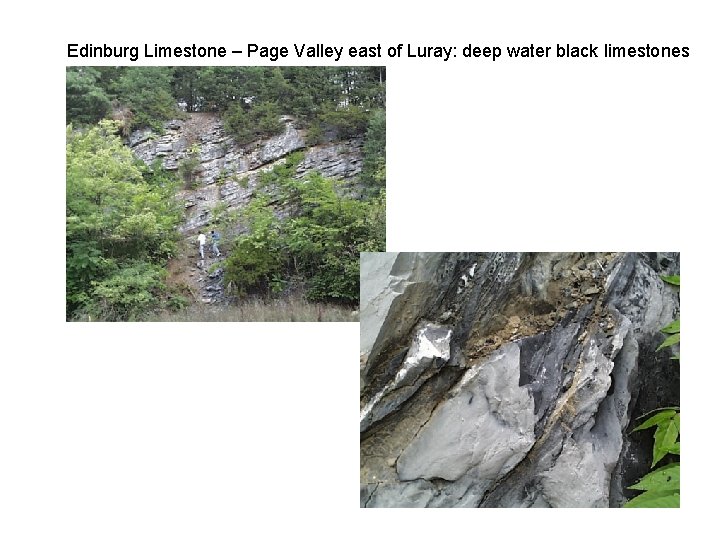
Edinburg Limestone – Page Valley east of Luray: deep water black limestones
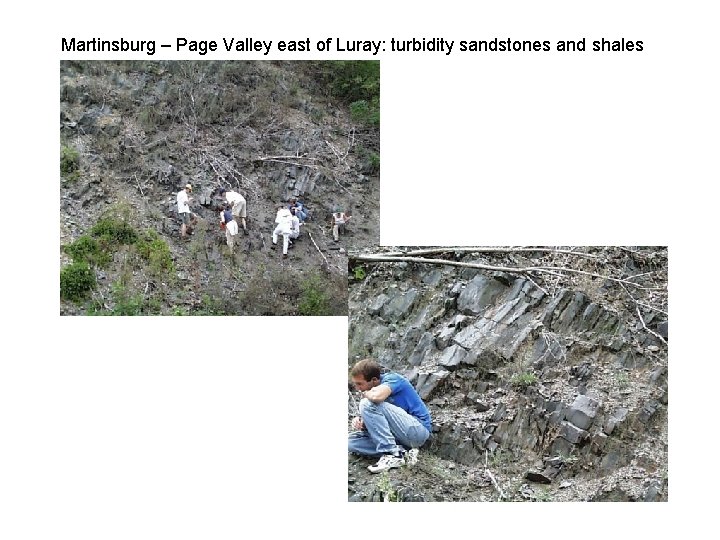
Martinsburg – Page Valley east of Luray: turbidity sandstones and shales
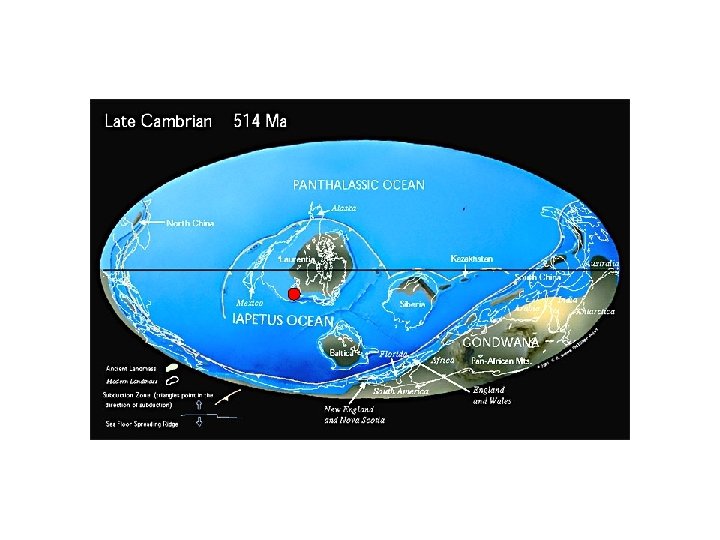
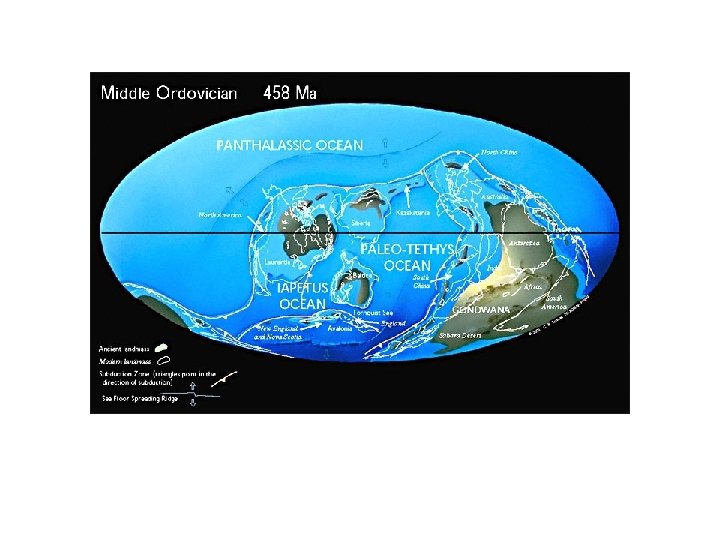
Defining Characteristics of Ordovician: • diversification of marine invertebrate Paleozoic Fauna • end-Ordovician extinction • During the Ordovician ancient oceans separated the barren continents of Laurentia, Baltica, Siberia and Gondwana. • The end of the Ordovician was one of the coldest times in Earth history. Ice covered much of the southern region of Gondwana.
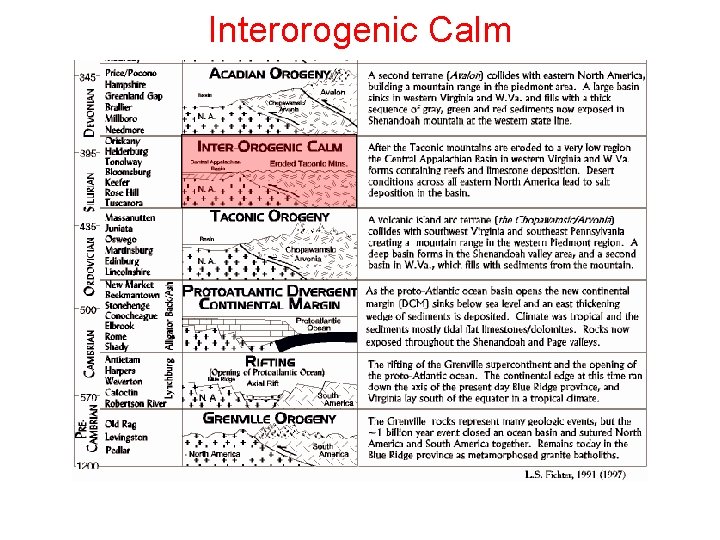
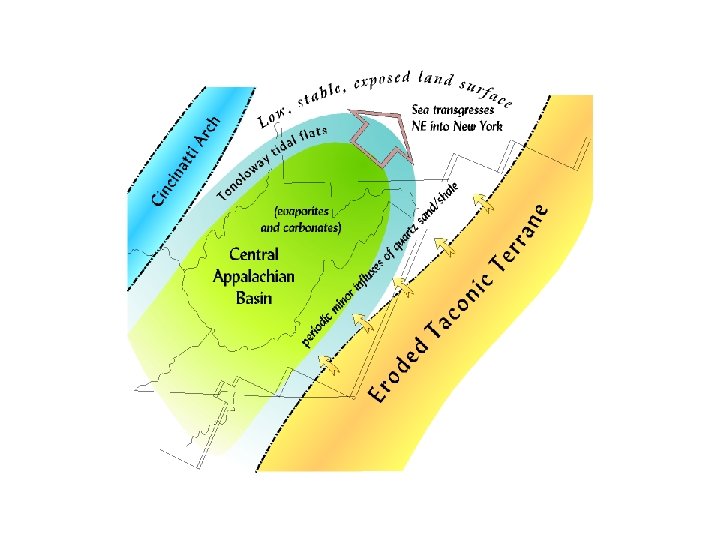
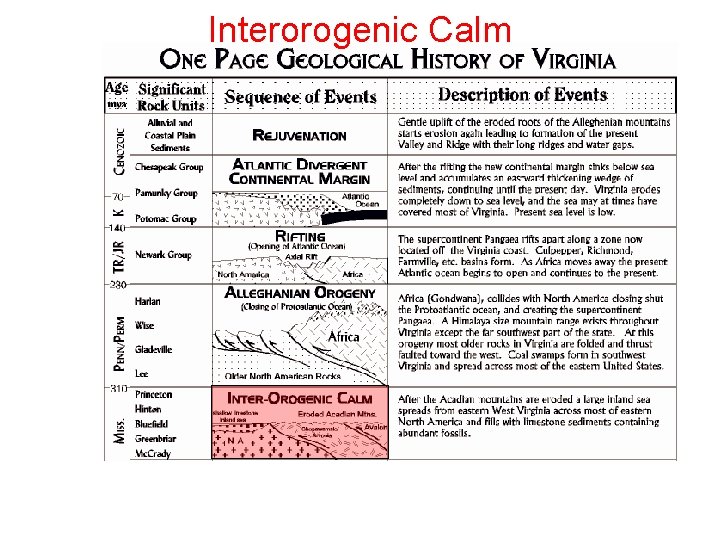
Interorogenic Calm
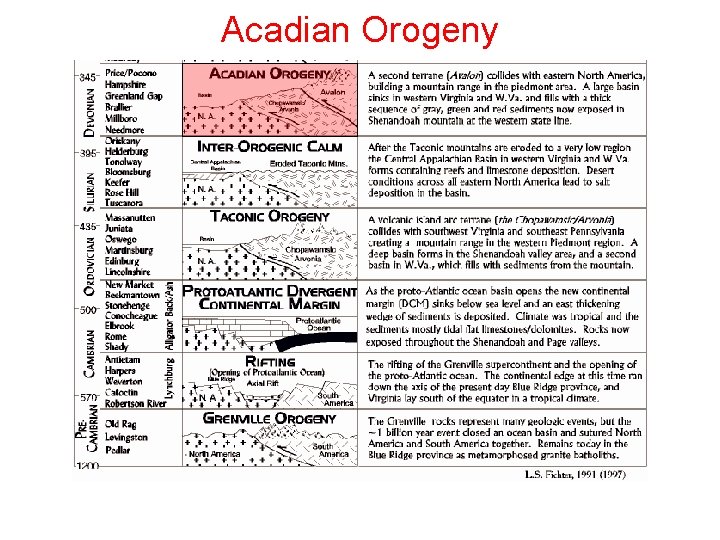
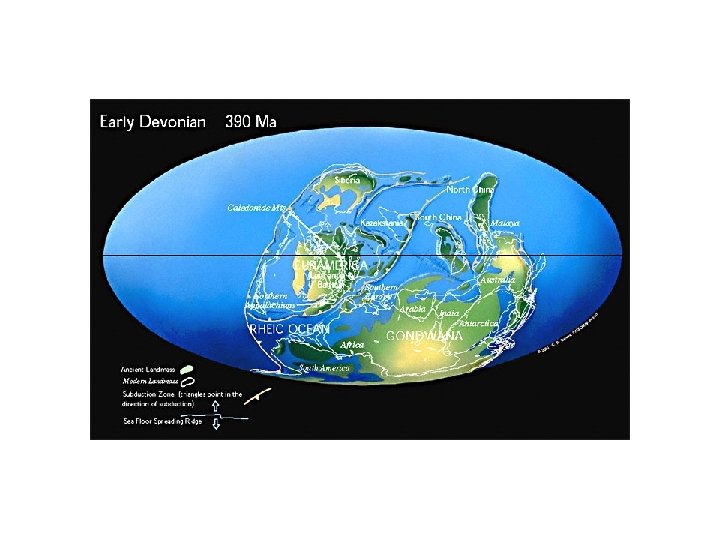
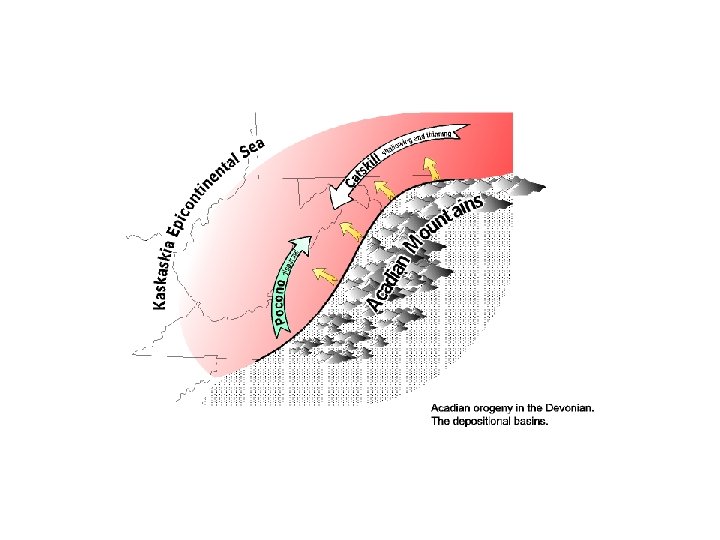
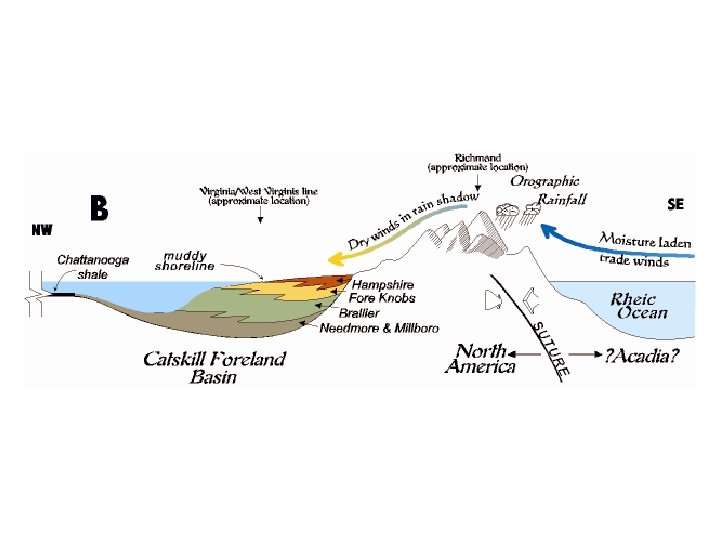
Acadian Orogeny
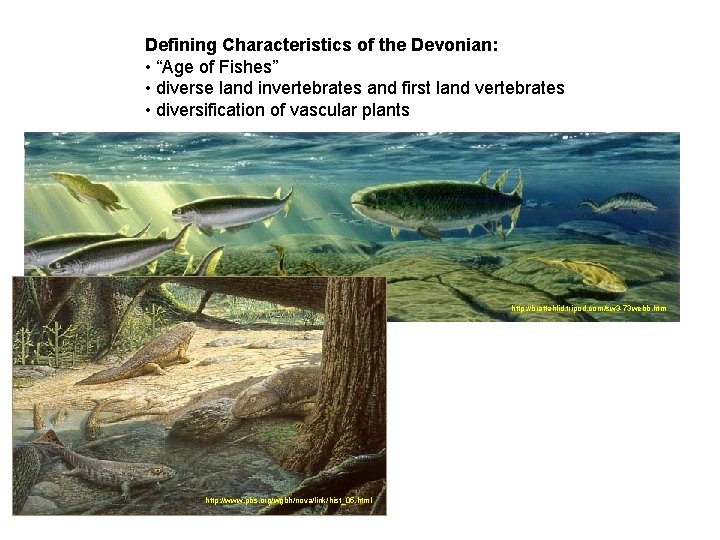
Defining Characteristics of the Devonian: • “Age of Fishes” • diverse land invertebrates and first land vertebrates • diversification of vascular plants http: //brattahlid. tripod. com/sw 3 -73 webb. htm http: //www. pbs. org/wgbh/nova/link/hist_05. html
Interorogenic Calm
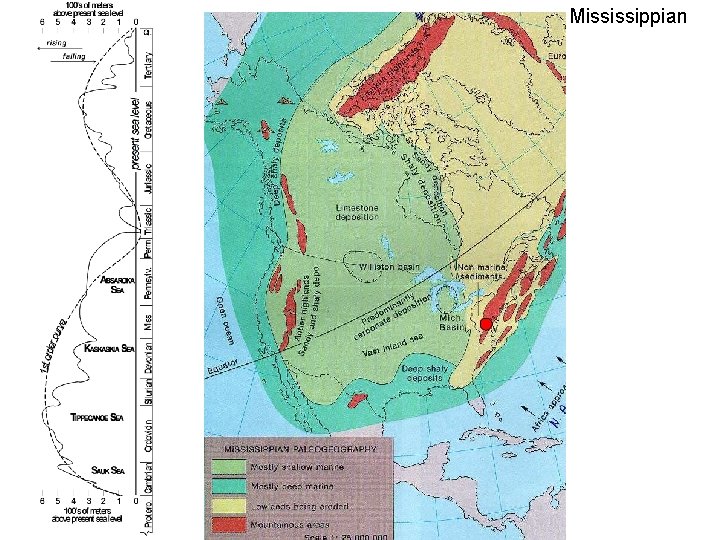
Mississippian
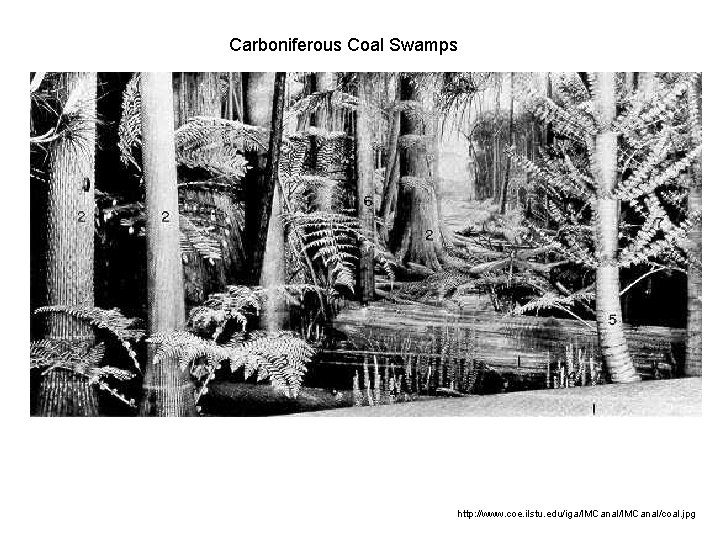
Carboniferous Coal Swamps http: //www. coe. ilstu. edu/iga/IMCanal/coal. jpg
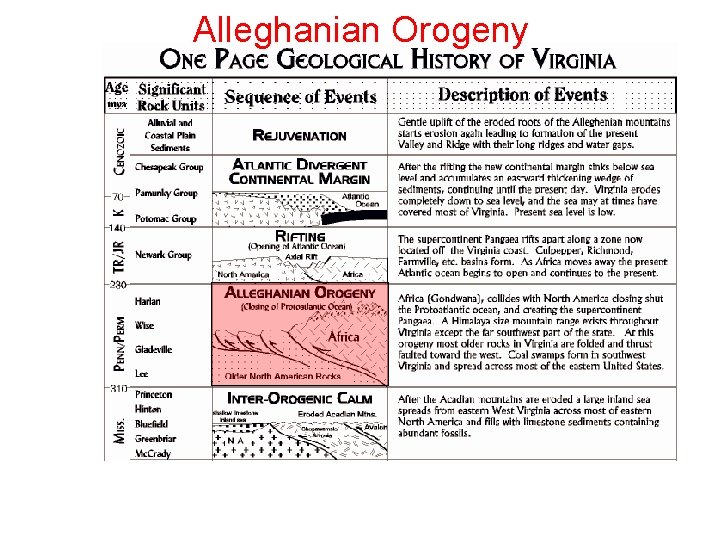
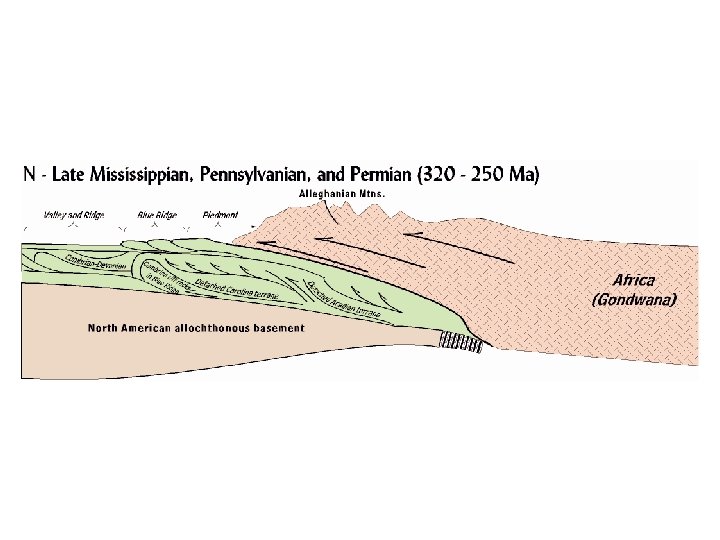
Alleghanian Orogeny
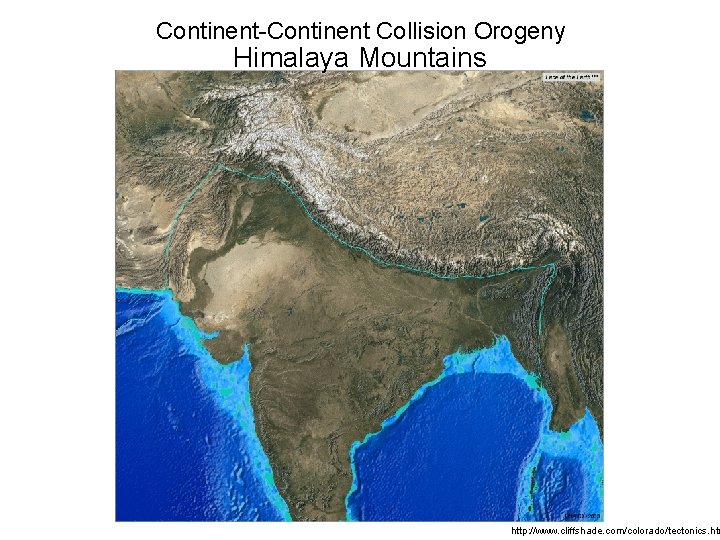
Continent-Continent Collision Orogeny Himalaya Mountains http: //www. cliffshade. com/colorado/tectonics. htm
Atlantic Rifting
Pre-rifting
Early Rifting
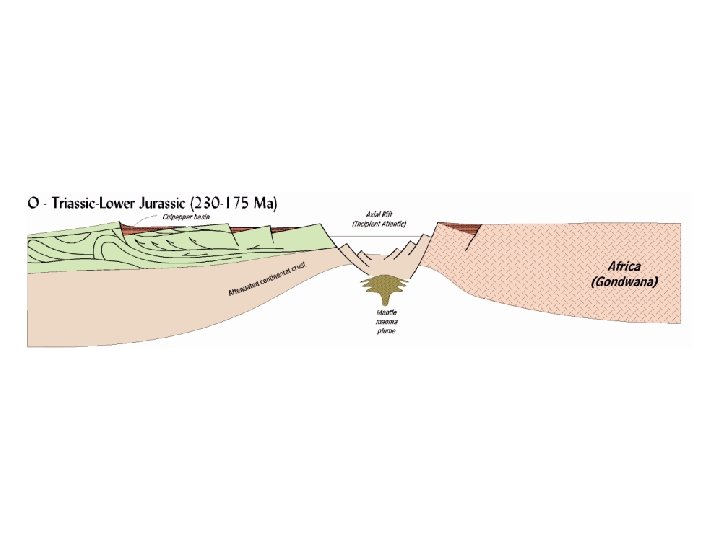
Rifting
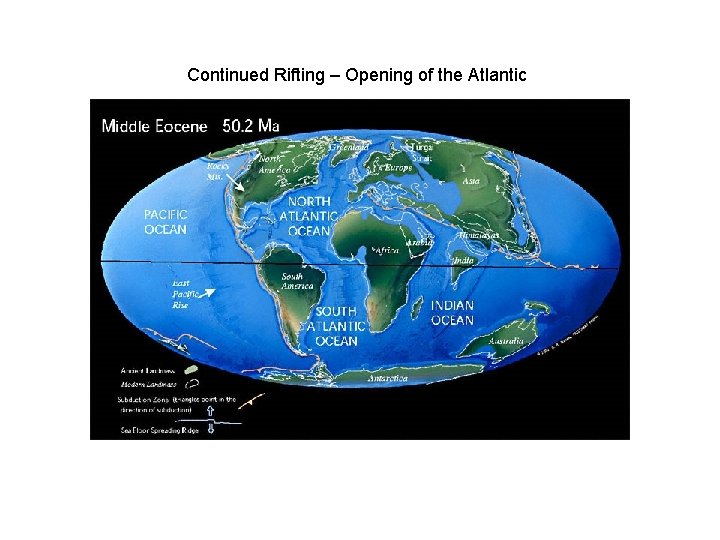
Continued Rifting – Opening of Atlantic
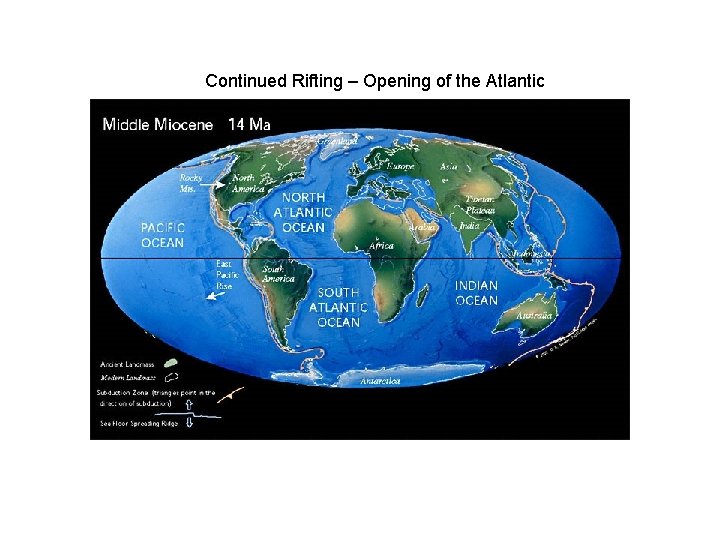
Continued Rifting – Opening of the Atlantic
Continued Rifting – Opening of the Atlantic
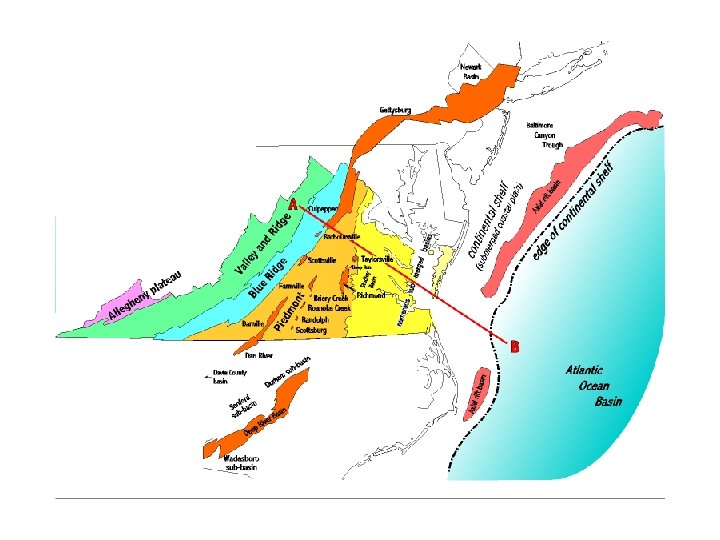
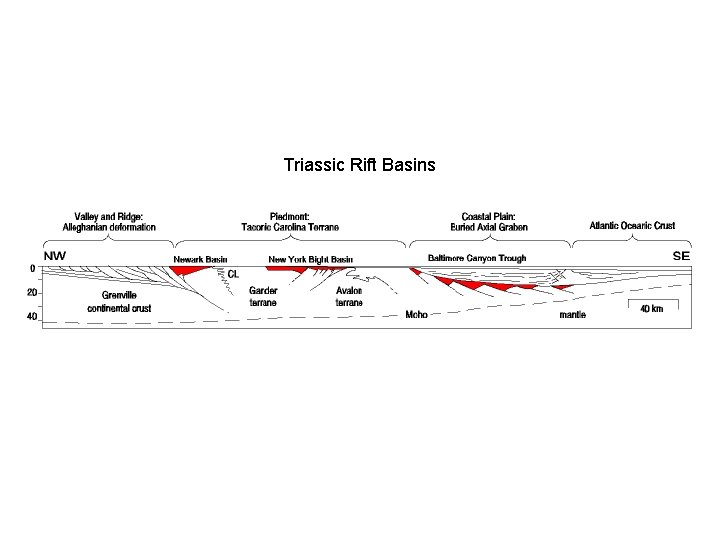
Triassic Rift Basins
Triassic Dinosaur Footprints from Eastern North America The Atlantic Rifting Zone, especially the basins of the Newark Supergroup, are famous for their reptile footprints. Tens of thousands of Triassic and Jurassic tracks have been found since they were first recognized in 1836 by Edward Hitchcock. The tracks of Triassic age are especially important because they document the rise to dominance of the dinosaurs. They are also very, very well preserved. Grallator parallelum track from Furnace Hill, PA. (track found by Mike Szajna and Brian Hartline) Theropod tracks called Grallator and Anchisauripus appear in Newark Supergroup rocks in strata of early Late Triassic age and become larger and more abundant into younger strata. The structure of this kind of track suggests that it was probably made by a small (? young) theropod dinosaur similar to Coelophysis. Reconstruction of Atreipus based on the hypothesis that it was made by an ornithischian dinosaur. From Olsen and Baird (1986). http: //rainbow. ldeo. columbia. edu/courses/v 1001/10. html
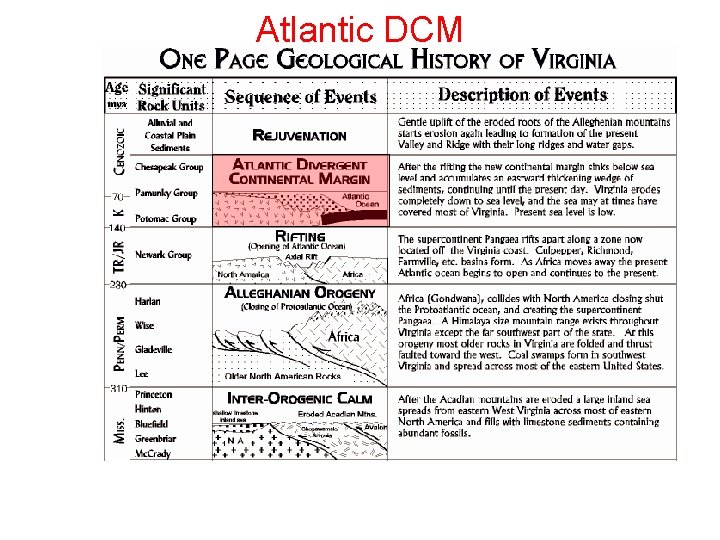
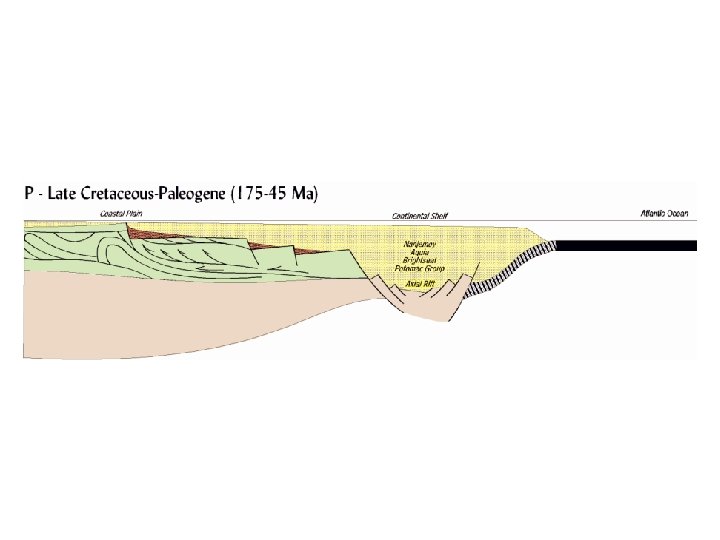
Atlantic DCM
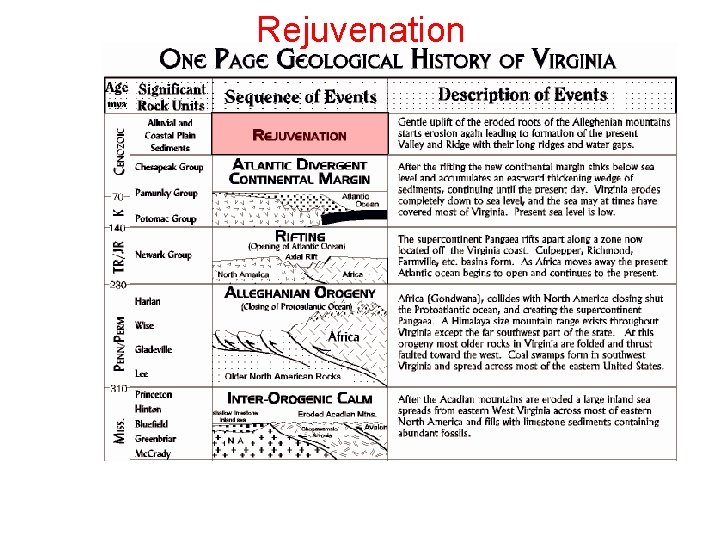
Rejuvenation
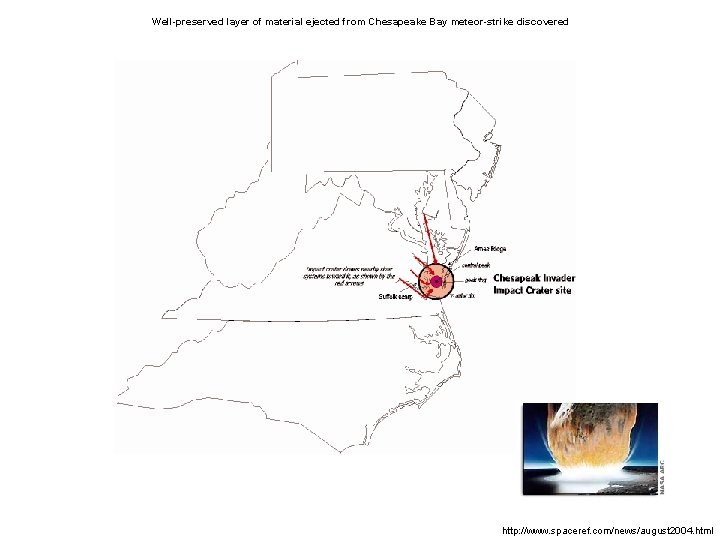
Well-preserved layer of material ejected from Chesapeake Bay meteor-strike discovered http: //www. spaceref. com/news/august 2004. html