
Redesigning Introductory College Geology Courses at Arizona State
- Slides: 21
Redesigning Introductory College Geology Courses at Arizona State University Julia K Johnson, Stephen J Reynolds, James Tyburczy, Thomas Sharp School of Earth and Space Exploration Arizona State University March 2010
Setting of ASU Geology Redesign GLG 101 taken by ~2, 500 students per year Five classes per semester, each with 220 -230 students Taught by various faculty members Laboratory is separate, but related course and generally follows same sequence of topics Most students are non-science majors (fulfill science requirement), but some majors
Goals of GLG 101 Teach students about scientific methods Improve their observation and critical thinking skills Learn key geologic concepts and processes Help student understand the relevance of geology to their lives Not hate science more as a result of taking the class
Goals of ASU Redesign Effort Free up class time to engage students in active learning Allow students to learn in different modes, some asynchronous Have students engage in inquiry/problem solving Develop authentic methods of assessment that demonstrate mastery of subject Allow faculty instructor and teaching assistant to be more efficient, saving time and money
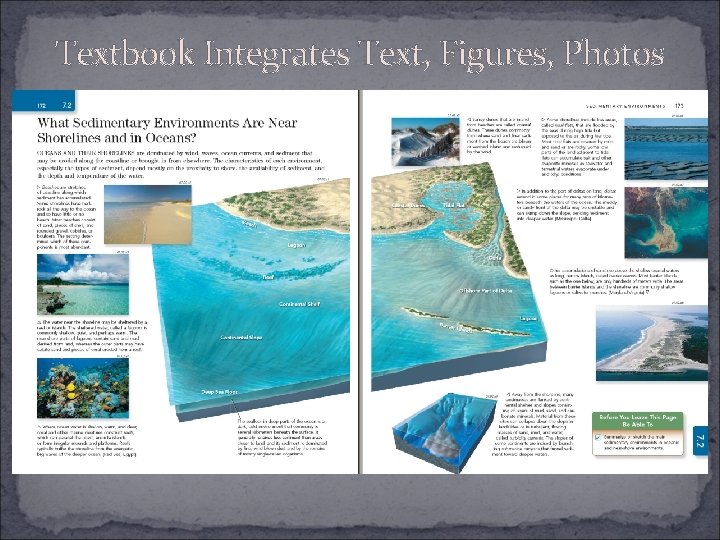
Textbook Integrates Text, Figures, Photos
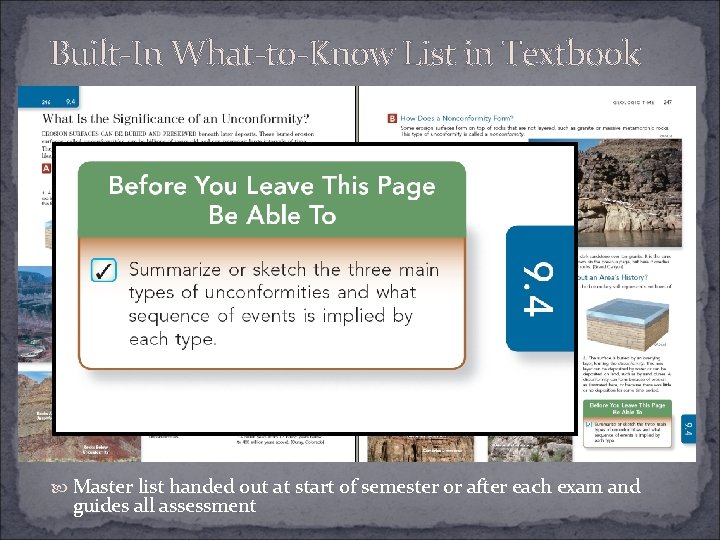
Built-In What-to-Know List in Textbook Master list handed out at start of semester or after each exam and guides all assessment
Online Content Truly multimedia – images and narration Photos Illustrations Animations Video clips Audio Embedded assessment Graduate-student designed and produced media Formative and final assessment via online surveys and in-person interviews
Activites During Class Less covering of content (more time for activities consistent with goals) Time for student observations, interpretations, problem solving (critical thinking) Power. Point with interactive media Think-Pair-Share, small-group discussions, and whole -class discussions Meaningful demonstrations Clicker questions, including from online quizzes
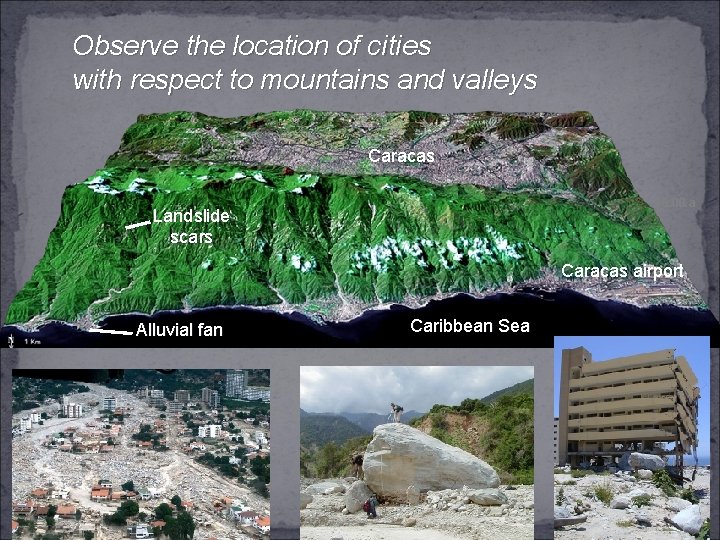
Observe the location of cities with respect to mountains and valleys Caracas 15. 00. a Landslide scars Caracas airport Alluvial fan Caribbean Sea
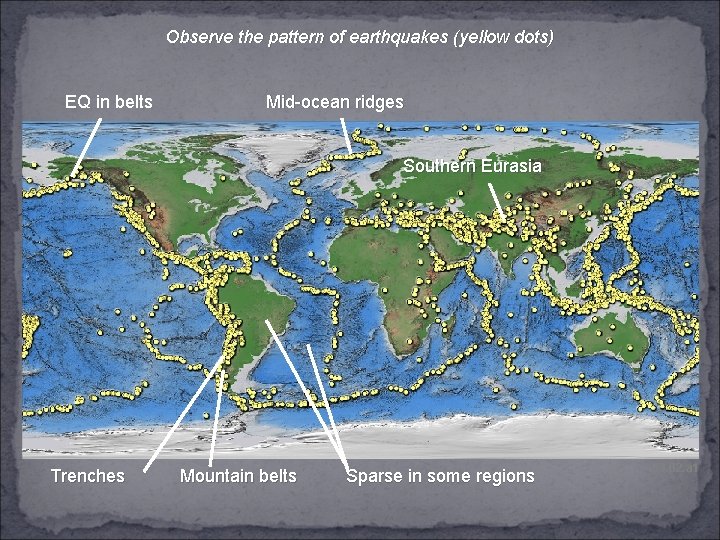
Observe the pattern of earthquakes (yellow dots) EQ in belts Mid-ocean ridges Southern Eurasia Trenches Mountain belts Sparse in some regions 03. 02. a 1
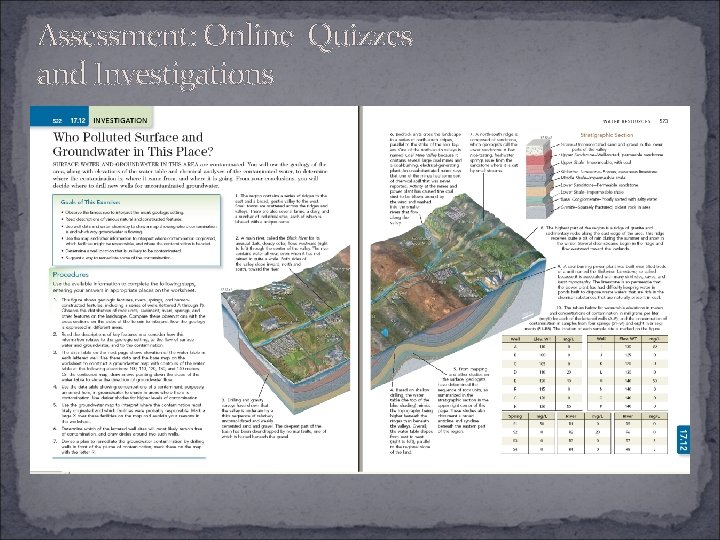
Assessment: Online Quizzes and Investigations
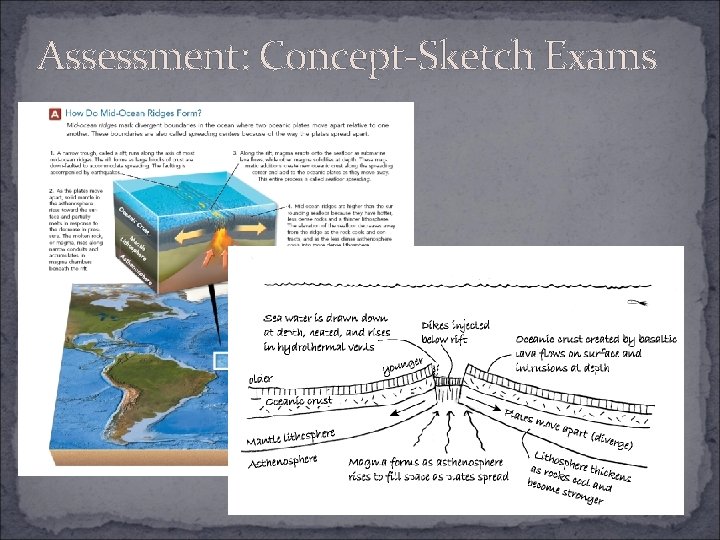
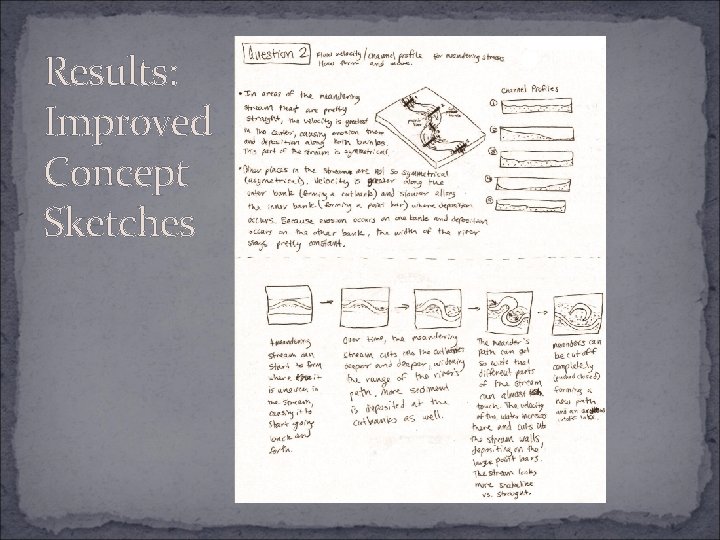
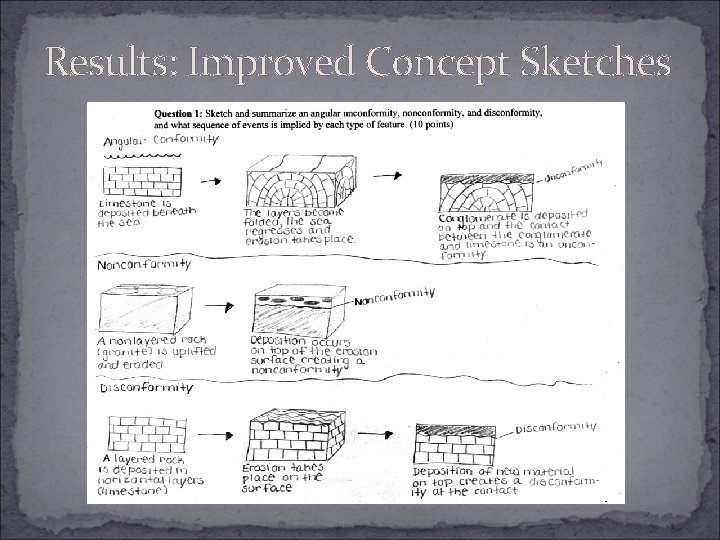
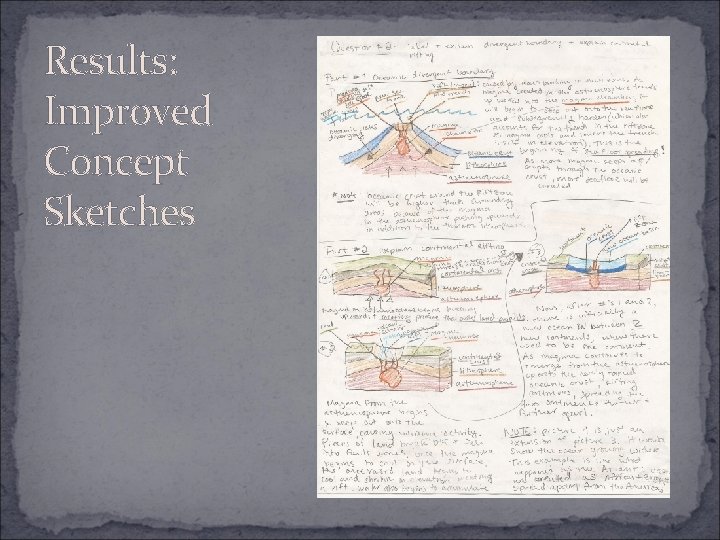
Assessment: Concept-Sketch Exams
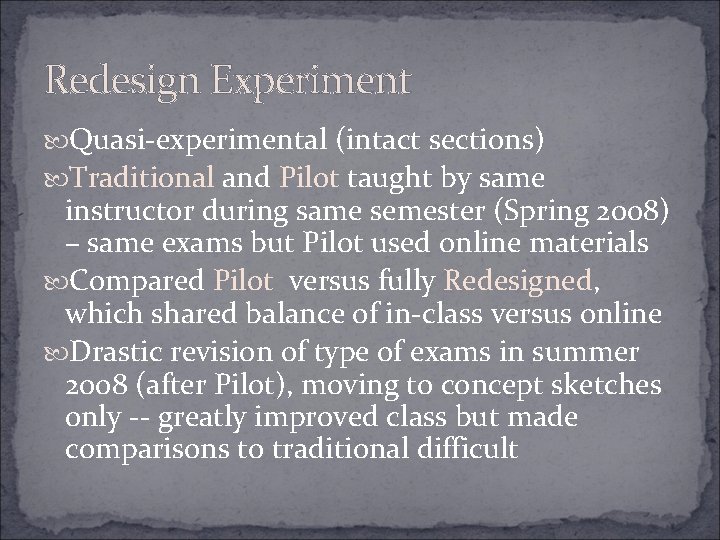
Redesign Experiment Quasi-experimental (intact sections) Traditional and Pilot taught by same instructor during same semester (Spring 2008) – same exams but Pilot used online materials Compared Pilot versus fully Redesigned, which shared balance of in-class versus online Drastic revision of type of exams in summer 2008 (after Pilot), moving to concept sketches only -- greatly improved class but made comparisons to traditional difficult
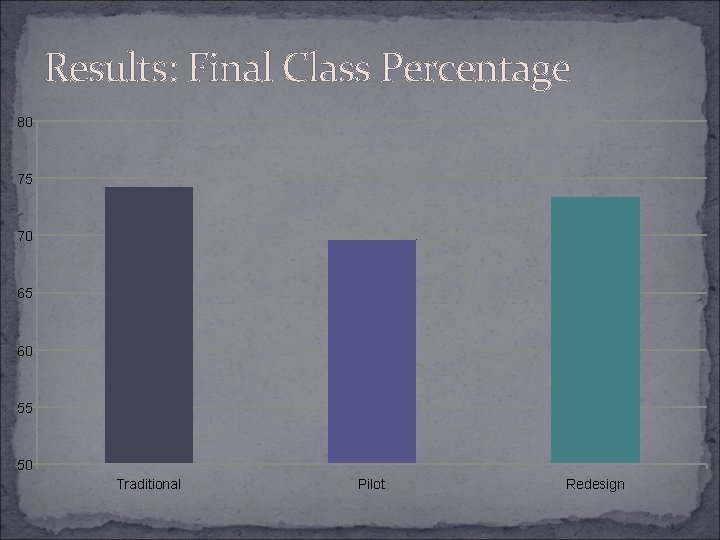
Results: Final Class Percentage 80 75 70 65 60 55 50 Traditional Pilot Redesign
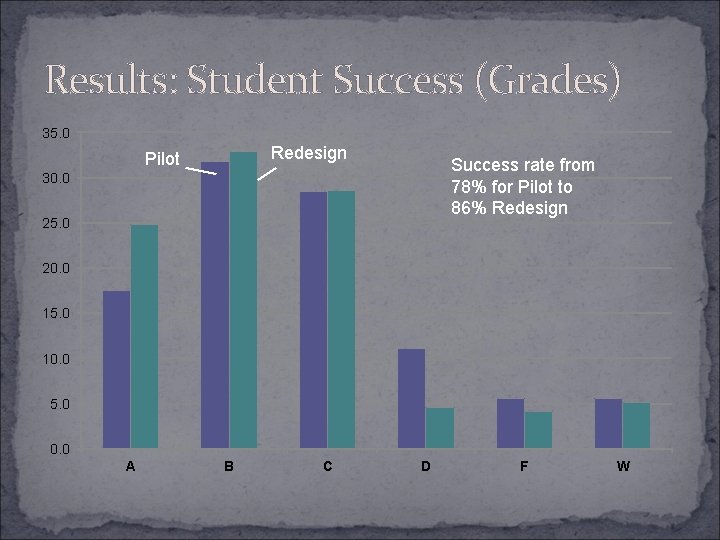
Results: Student Success (Grades) 35. 0 Redesign Pilot Success rate from 78% for Pilot to 86% Redesign 30. 0 25. 0 20. 0 15. 0 10. 0 5. 0 0. 0 A B C D F W
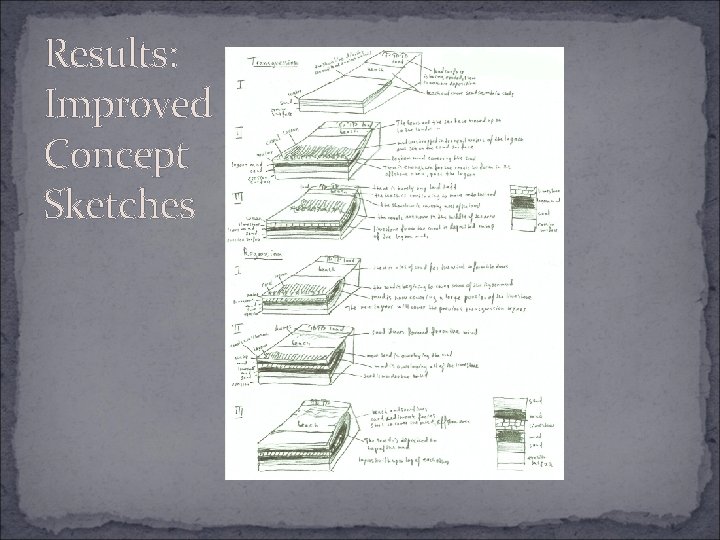
Results: Improved Concept Sketches
Results: Improved Concept Sketches
Results: Improved Concept Sketches
Results: Improved Concept Sketches
Cost and Time Savings Estimate 30% savings for instructors and more than 35% for teaching assistant Sources of savings Less meetings per week (50% - 66% of original) Less class preparation, exam preparation, and grading Automation of quizzes and investigations (Blackboard) Shared Resources Photocopying Savings offset by Increase in email traffic and issues with Blackboard
Implementation Issues Development of online materials Involvement of students in process Refinement of online materials using surveys, interviews, and degree of difficulty Issues translating in-class or paper-based activities to Blackboard Buy-in of faculty members