
Crustal Deformation Folds Faults Mountain Building 11 1
Crustal Deformation • Folds • Faults • Mountain Building
11. 1 Rock Deformation Factors Affecting Deformation Factors that influence the. strength of a rock and how it will deform include temperature, confining pressure, rock type, and time • Deformation is a general term that refers to all changes in the original shape and/or size of a rock body. - Most crustal deformation occurs along plate margins. • Stress is the force per unit area acting on a solid. • Strain is the change in shape or volume of a body of rock as a result of stress.
11. 1 Rock Deformation Factors Affecting Deformation Temperature and Pressure • Rocks deform permanently in two ways: brittle deformation and ductile deformation. - Brittle deformation is the fracturing of an object once its strength is exceeded. - Ductile deformation is a type of solid state flow that produces a change in the size and shape of an object without fracturing the object.
11. 1 Rock Deformation Factors Affecting Deformation Rock Type • Mineral composition and texture of a rock also greatly affect how it will deform. • Rocks like granite and basalt usually fail by brittle deformation • Sedimentary rocks loosely cemented or metamorphic rocks with foliation usually fail by ductile deformation Time • Forces that are unable to deform rock when first applied may cause rock to flow if the force is maintained over a long period of time.
11. 1 Rock Deformation Types of Stress The three types of stresses that rocks commonly undergo are tensional stress, compressional stress, and shear stress. Compressional Stress: when rocks are squeezed or shortened Tensional Stress: caused by rocks being pulled in opposite directions Shear stress: causes a body of rock to be distorted
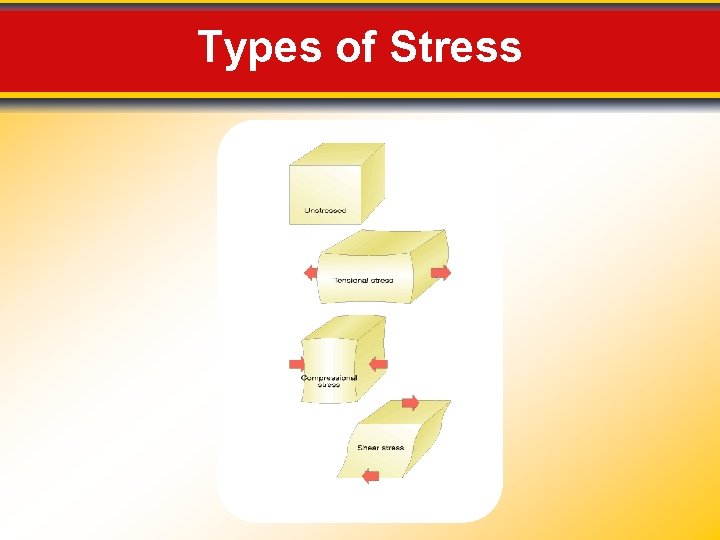
Types of Stress
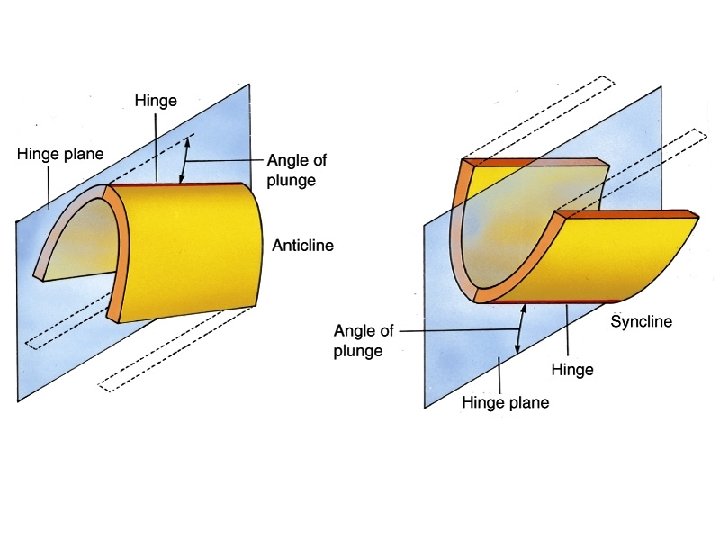
11. 1 Rock Deformation Folds Anticlines • Anticlines are most commonly formed by the upfolding, or arching, of rock layers. Synclines • Synclines are linear downfolds in sedimentary strata. • Synclines are often found in association with anticlines. Monoclines • Monoclines are large step-like folds in otherwise horizontal sedimentary strata.
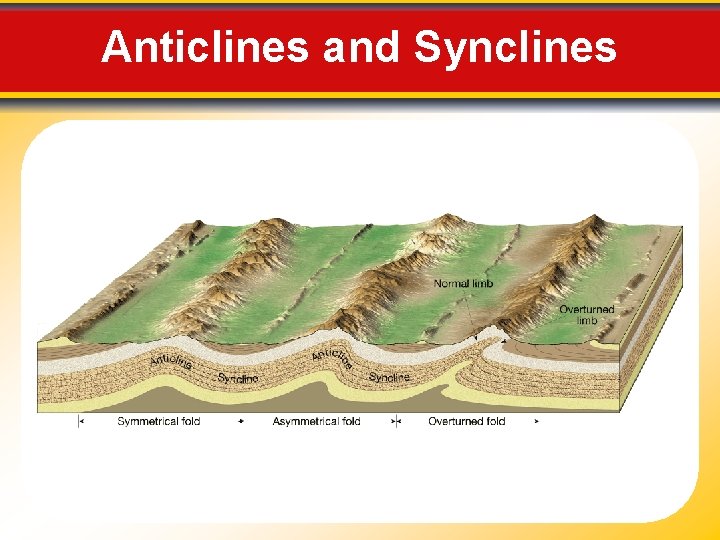
Anticlines and Synclines
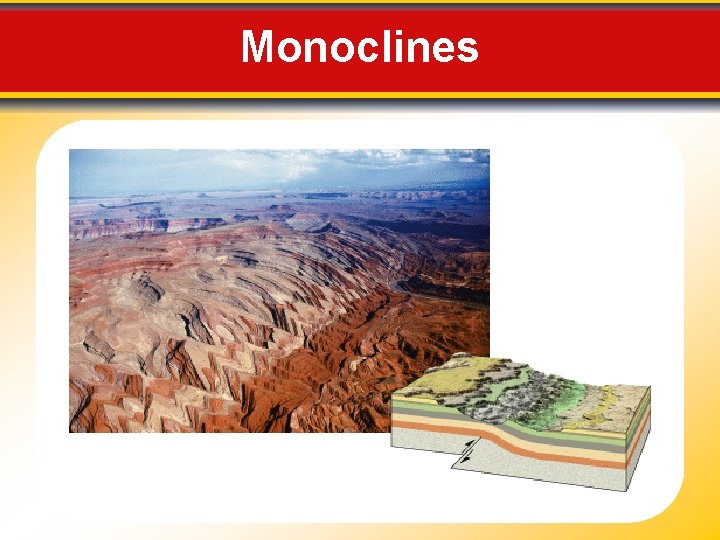
Monoclines
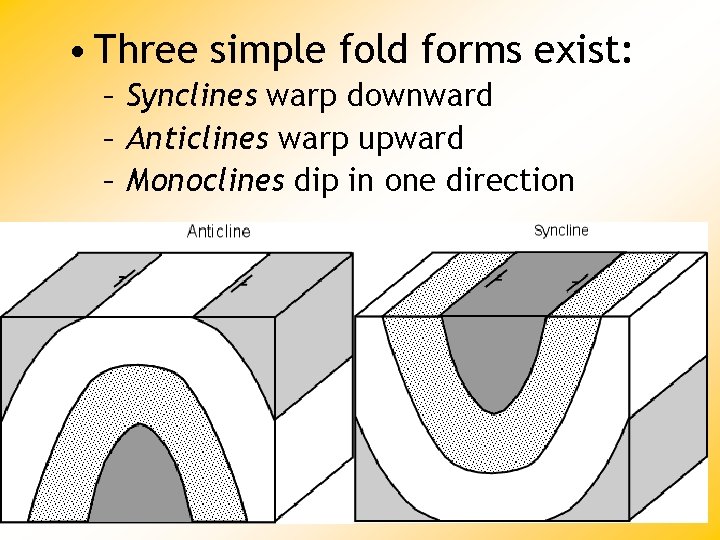
• Three simple fold forms exist: – Synclines warp downward – Anticlines warp upward – Monoclines dip in one direction
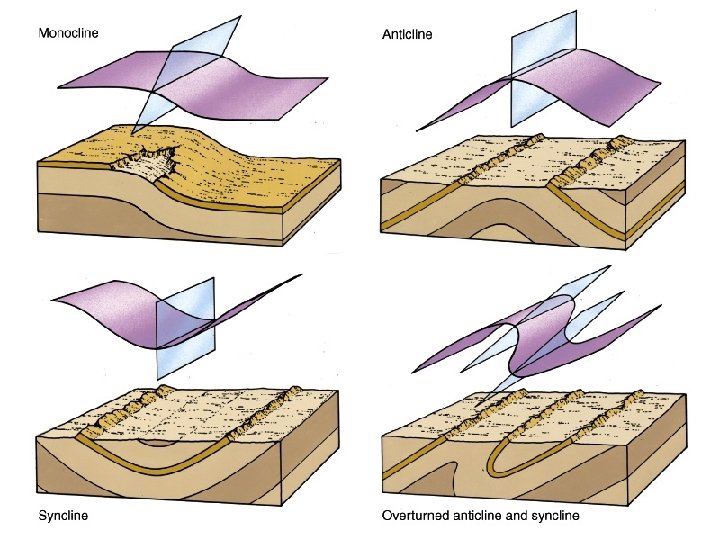
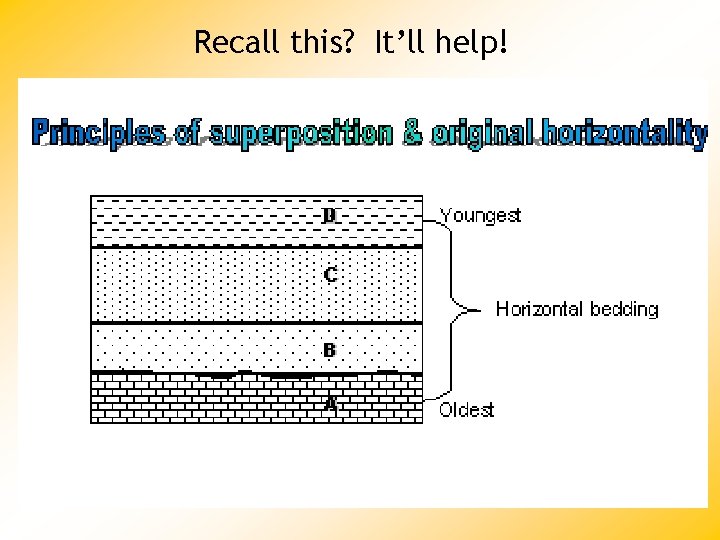
Recall this? It’ll help!
Anticlines & Synclines • Sequence of ages of strata indicate the geologic structure in folds: – Anticlines: oldest layers exposed at the center of the fold – Synclines: youngest strata exposed along the center of the fold
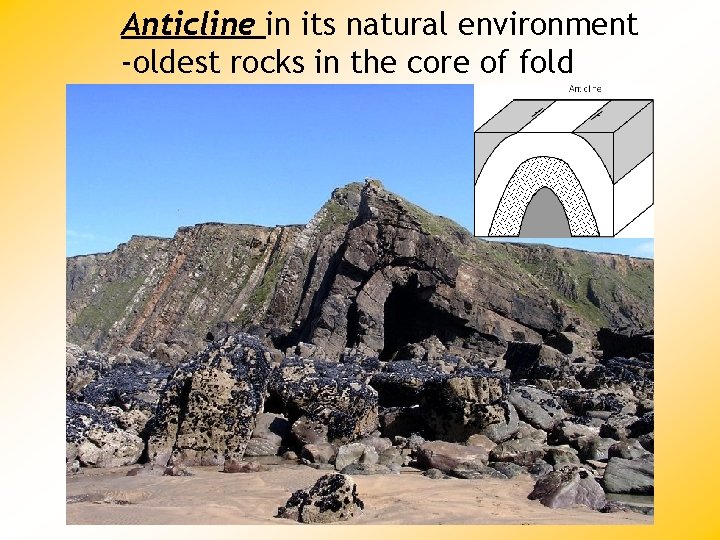
Anticline in its natural environment -oldest rocks in the core of fold
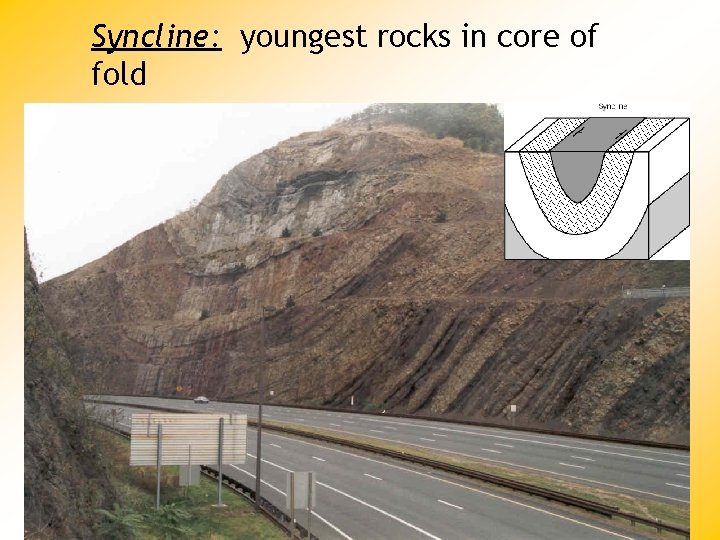
Syncline: youngest rocks in core of fold
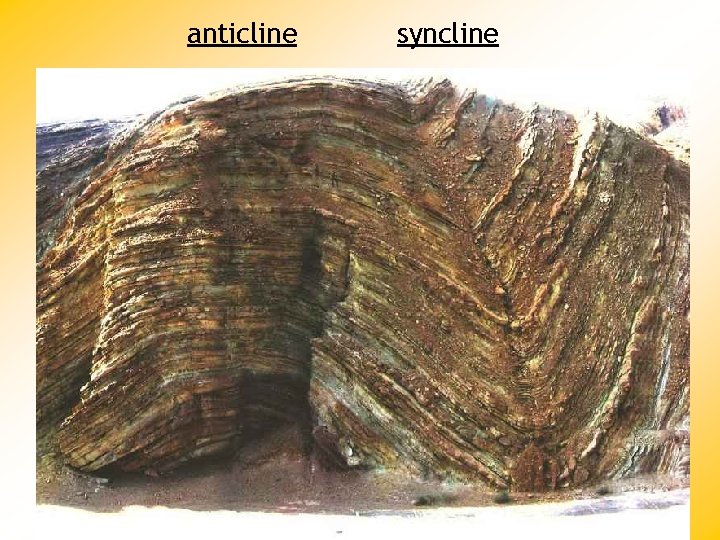
anticline syncline
Fold Belts • Orogenic belts consist of long linear series of folds – Fold geometry is not overly complex – Pattern of outcrops may appear complex – Complex folds may develop as folds are: • Re-folded • Cut by thrust faults
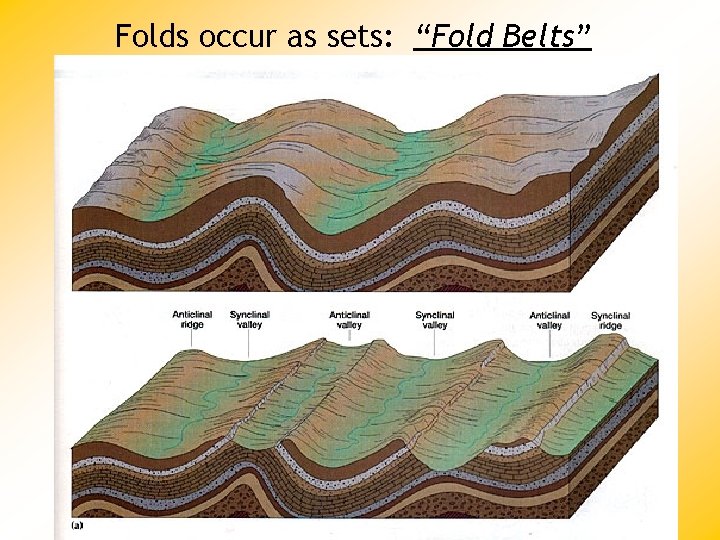
Folds occur as sets: “Fold Belts”
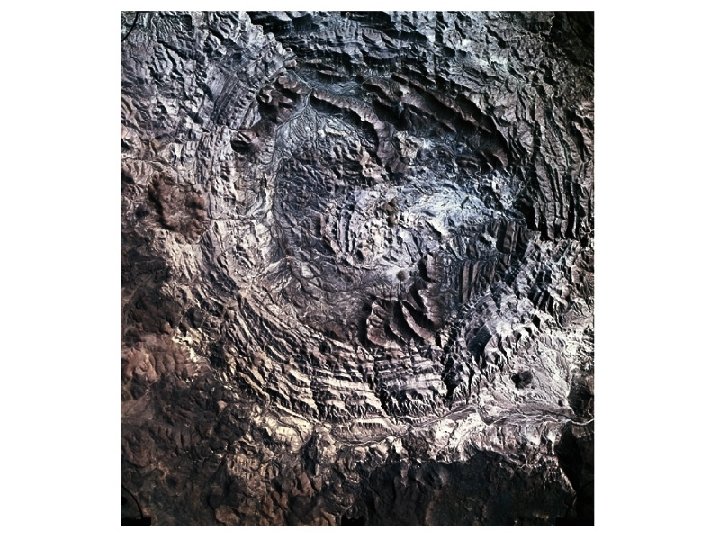
Complex Folds • Domes & Basins – Generally occur in continental interiors – Broadly warped regions – Roughly circular pattern of outcrops
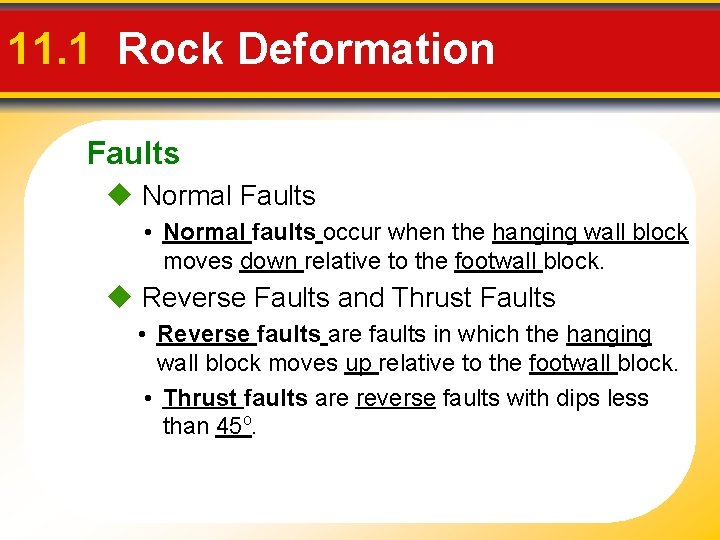
11. 1 Rock Deformation Faults Normal Faults • Normal faults occur when the hanging wall block moves down relative to the footwall block. Reverse Faults and Thrust Faults • Reverse faults are faults in which the hanging wall block moves up relative to the footwall block. • Thrust faults are reverse faults with dips less than 45 o.
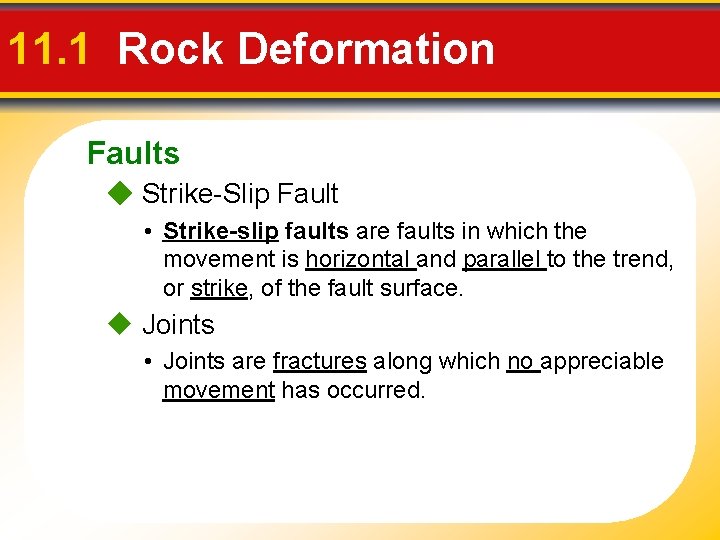
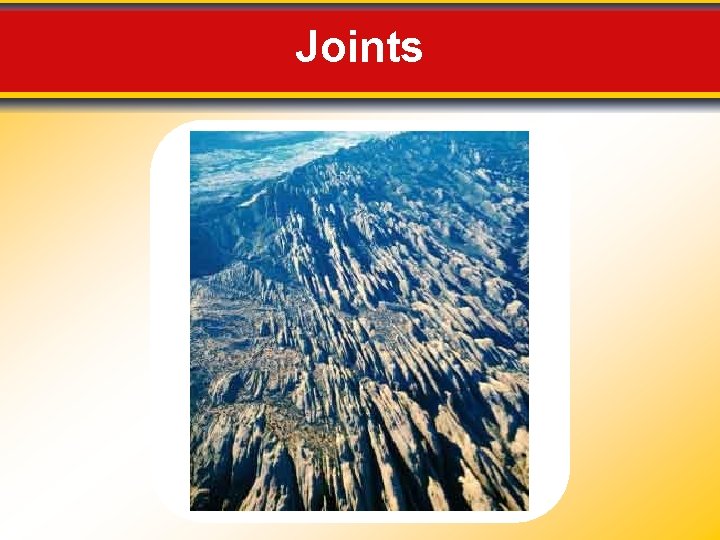
11. 1 Rock Deformation Faults Strike-Slip Fault • Strike-slip faults are faults in which the movement is horizontal and parallel to the trend, or strike, of the fault surface. Joints • Joints are fractures along which no appreciable movement has occurred.
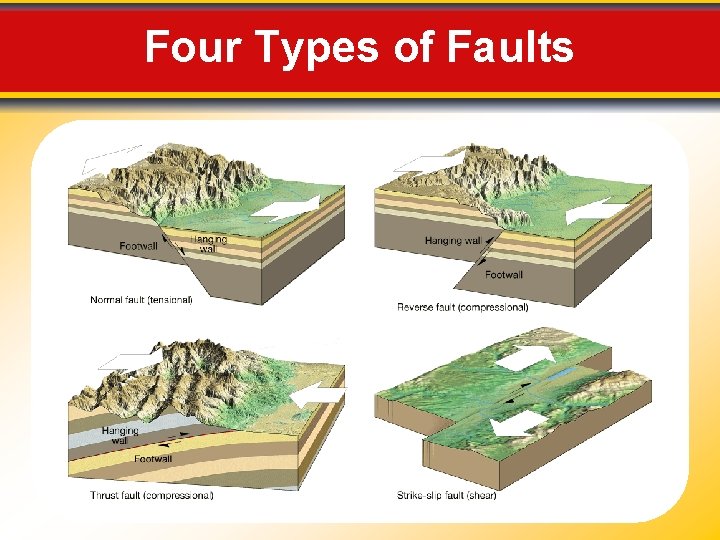
Four Types of Faults
Joints
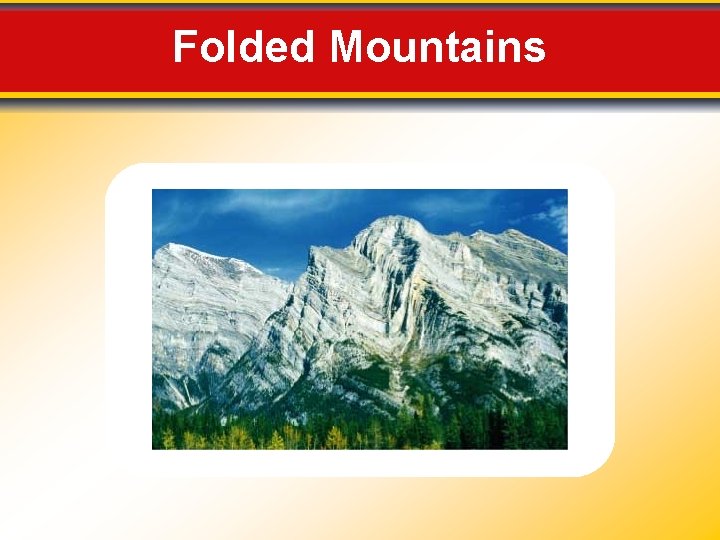
11. 2 Types of Mountains Folded Mountains are classified by the dominant processes that have formed them. • Orogenesis is the collection of processes that result in the forming of mountains. Folded Mountains • Mountains that are formed primarily by folding are called folded mountains. • Major Force is Compression Stress • Ex: Northern Rockies, Appalachian, Alps
Folded Mountains
11. 2 Types of Mountains Fault-Block Mountains Large-scale normal faults are associated with structures called fault-block mountains. • Fault-block mountains are formed as large blocks of crust are uplifted and tilted along normal faults. • Grabens are formed by the downward displacement of fault-bounded blocks. • Horsts are elongated, uplifted blocks of crust bounded by faults.
11. 2 Types of Mountains Fault-Block Mountains Major Force= tensional stress Ex: Sierra Nevadas in CA or Tetons in WY
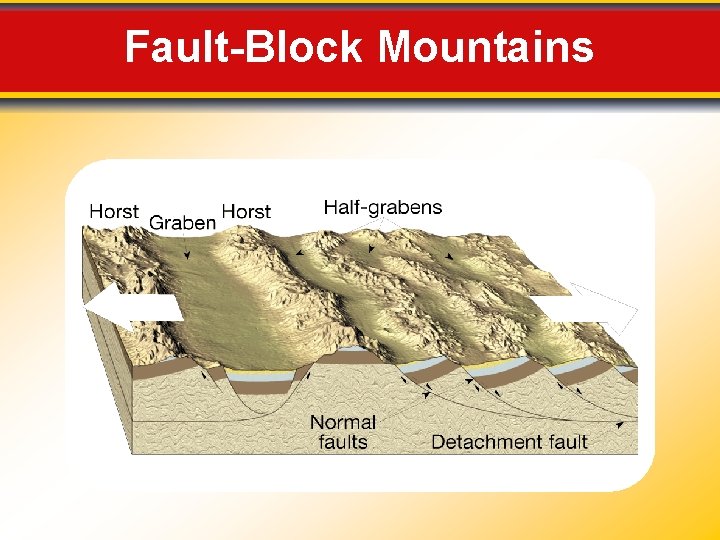
Fault-Block Mountains
11. 2 Types of Mountains Domes and Basins When upwarping produces a circular or elongated structure, the feature is called a dome. • Uplifted mountains are circular or elongated structures formed by uplifting of the underlying basement rock. • Example: Black Hills of South Dakota
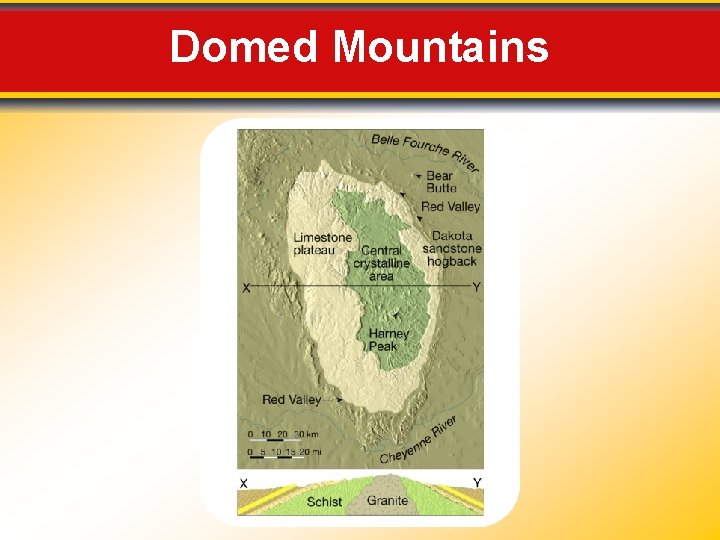
Domed Mountains
11. 3 Mountain Formation Mountain Building at Convergent Boundaries Most mountain building occurs at convergent plate boundaries. Colliding plates provide the compressional forces that fold, fault, and metamorphose thick layers of sediments deposited at the edges of landmasses.
11. 3 Mountain Formation Mountain Building at Convergent Boundaries Ocean-Ocean Convergence • Ocean-ocean convergence mainly produces volcanic mountains. Ocean-Continental Convergence • The types of mountains formed by oceancontinental convergence are volcanic mountains and folded mountains. • An accretionary wedge is the accumulation of different sedimentary and metamorphic rocks with some scraps of ocean crust.
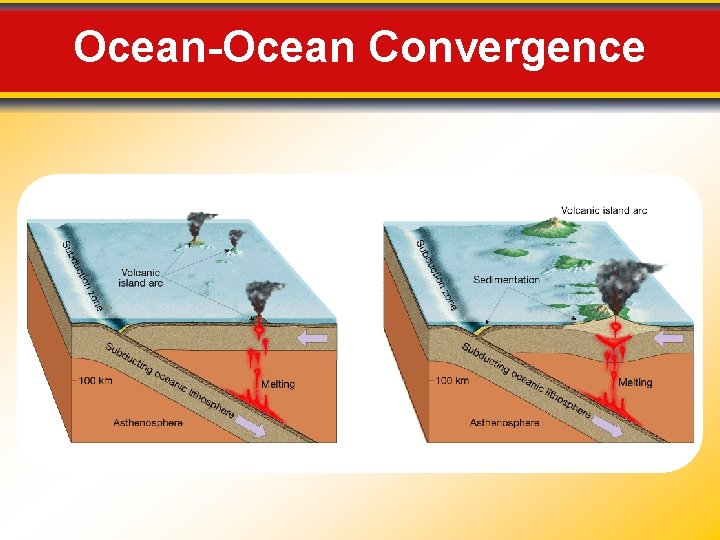
Ocean-Ocean Convergence
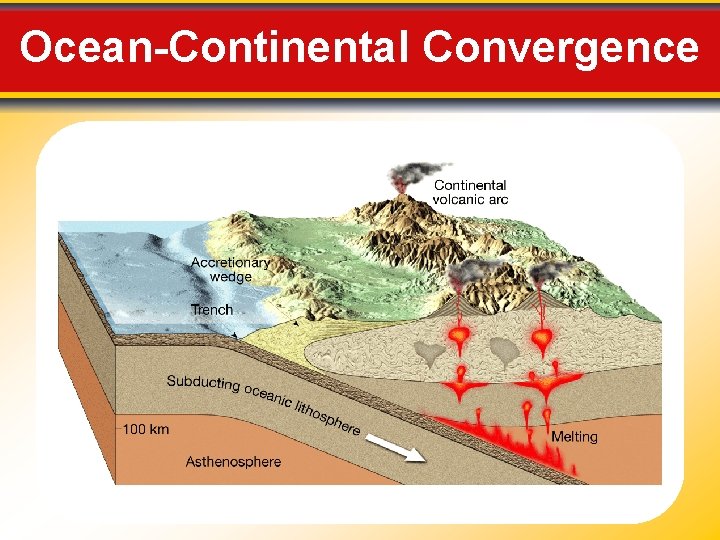
Ocean-Continental Convergence
11. 3 Mountain Formation Mountain Building at Convergent Boundaries Continental-Continental Convergence • At a convergent boundary between two plates carrying continental crust, a collision between the continental fragments will result and form folded mountains.
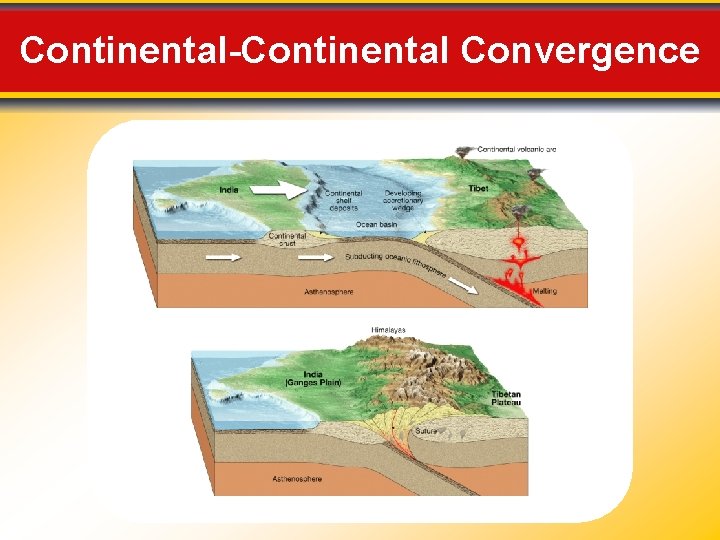
Continental-Continental Convergence
11. 3 Mountain Formation Mountain Building at Divergent Boundaries The mountains that form along ocean ridges at divergent plate boundaries are fault-block type mountains. Example: Mid Atlantic Ridge
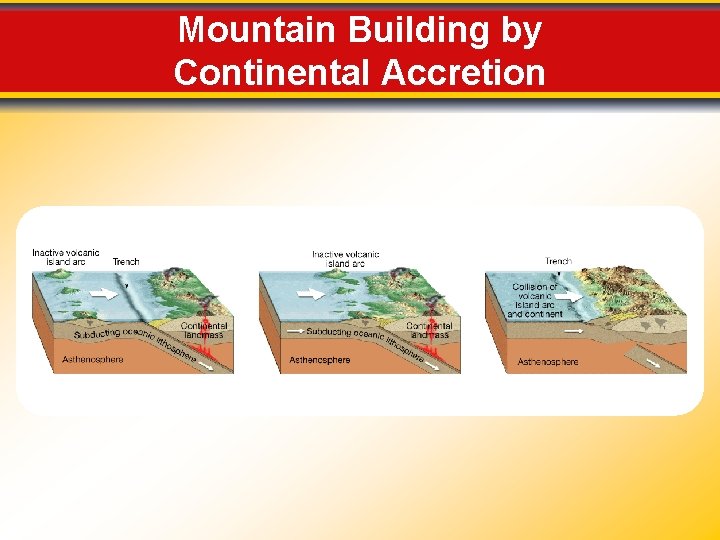
Mountain Building by Continental Accretion
11. 3 Mountain Formation Non-Boundary Mountains Not all mountains are formed by plate boundaries. Some are formed by hot spots or regional extension or stretching.
11. 3 Mountain Formation Continental Accretion is a process that occurs when crustal fragments collide with and stay connected to a continental plate. Terranes • Terranes are any crustal fragments that have a geologic history distinct from that of the adjoining fragments. • Terranes occur along the Pacific Coast.
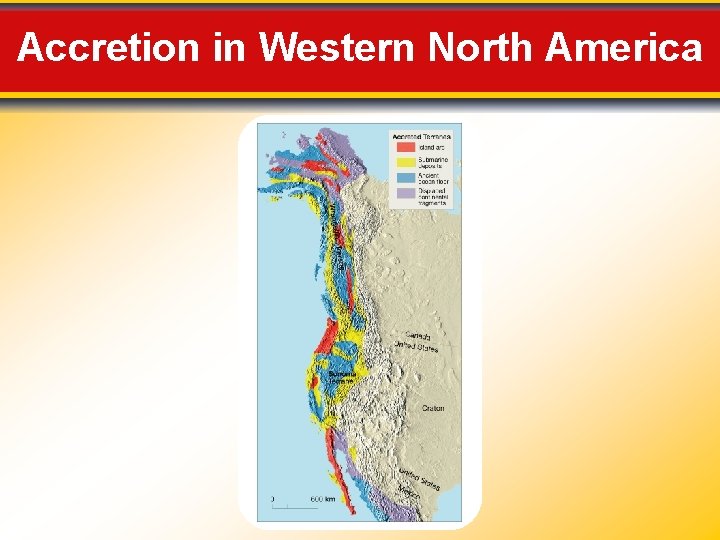
Accretion in Western North America
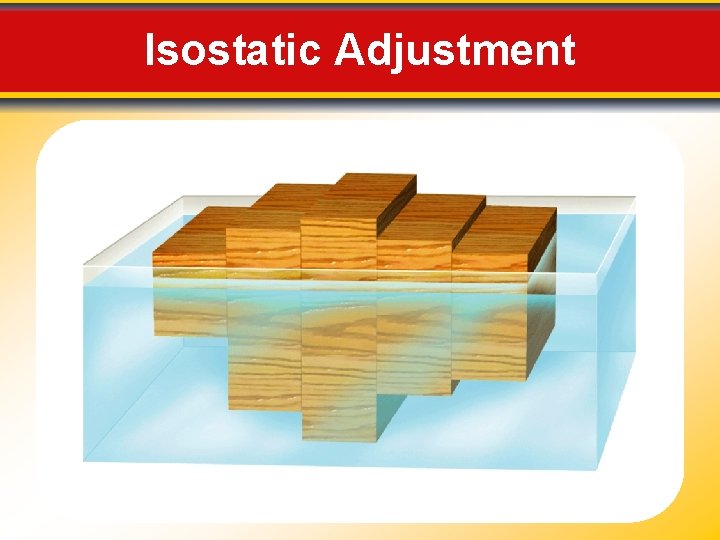
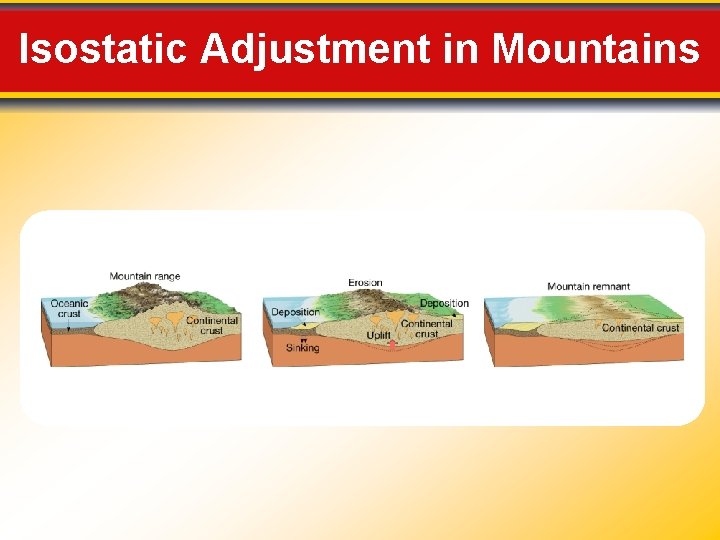
11. 3 Mountain Formation Principles of Isostasy Isostatic Adjustment for Mountains • Isostasy is the concept that Earth’s crust is floating in gravitational balance upon the material of the mantle. • Because of isostasy, deformed and thickened crust will undergo regional uplift both during mountain building and for a long period afterward. • Isostatic adjustment is the process of establishing a new level of gravitational equilibrium.
Isostatic Adjustment
Isostatic Adjustment in Mountains
- Slides: 46