Fine Motor Skills motor skills that depend upon
- Slides: 12
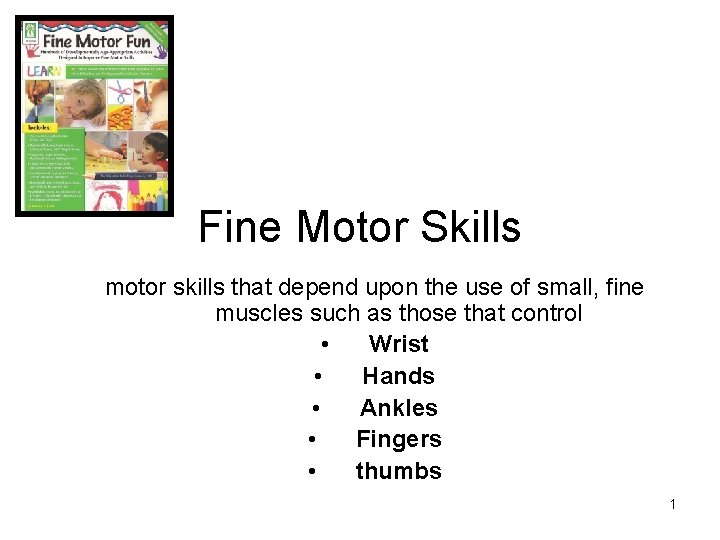
Fine Motor Skills motor skills that depend upon the use of small, fine muscles such as those that control • Wrist • Hands • Ankles • Fingers • thumbs 1
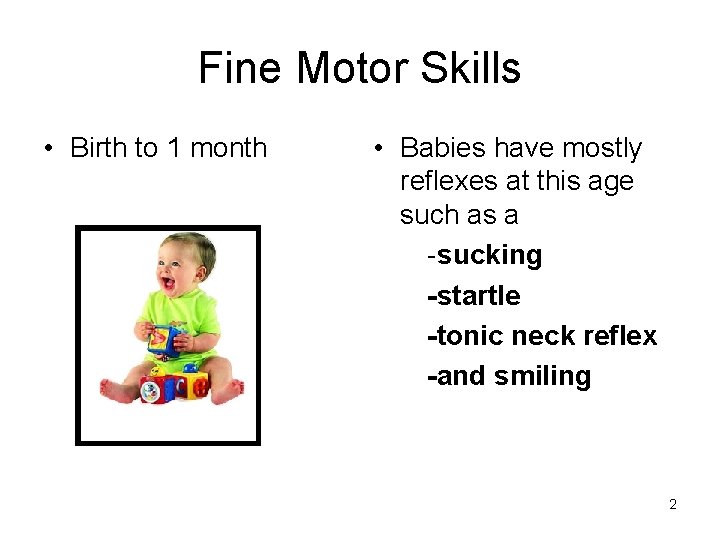
Fine Motor Skills • Birth to 1 month • Babies have mostly reflexes at this age such as a -sucking -startle -tonic neck reflex -and smiling 2
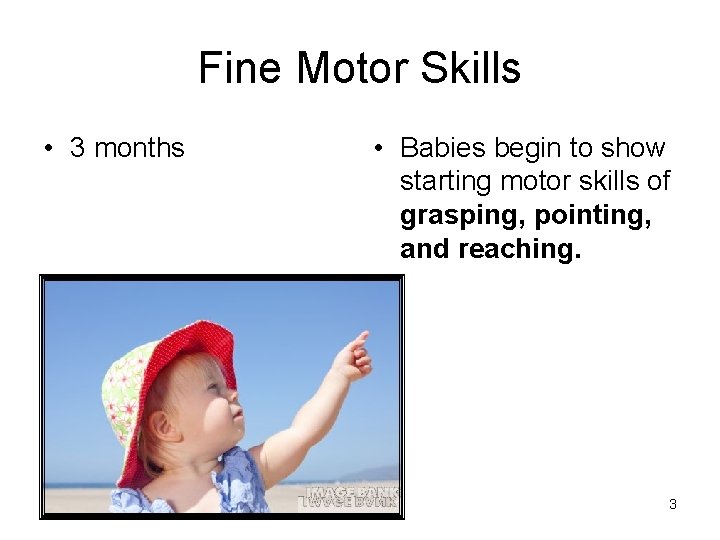
Fine Motor Skills • 3 months • Babies begin to show starting motor skills of grasping, pointing, and reaching. 3
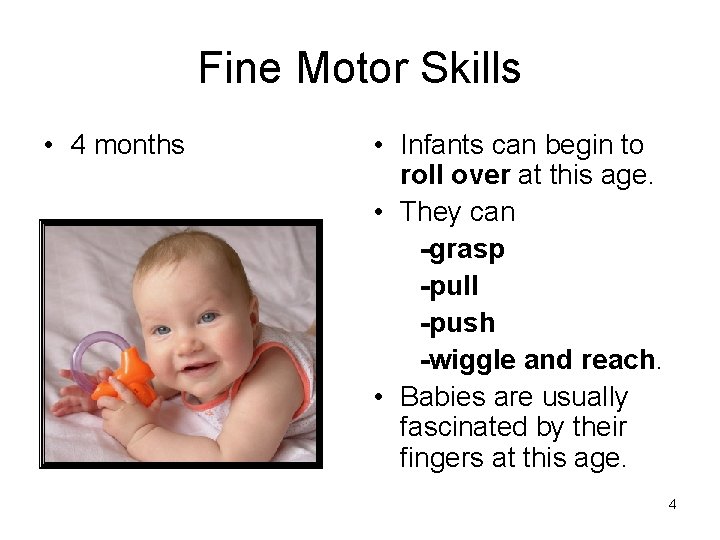
Fine Motor Skills • 4 months • Infants can begin to roll over at this age. • They can -grasp -pull -push -wiggle and reach. • Babies are usually fascinated by their fingers at this age. 4
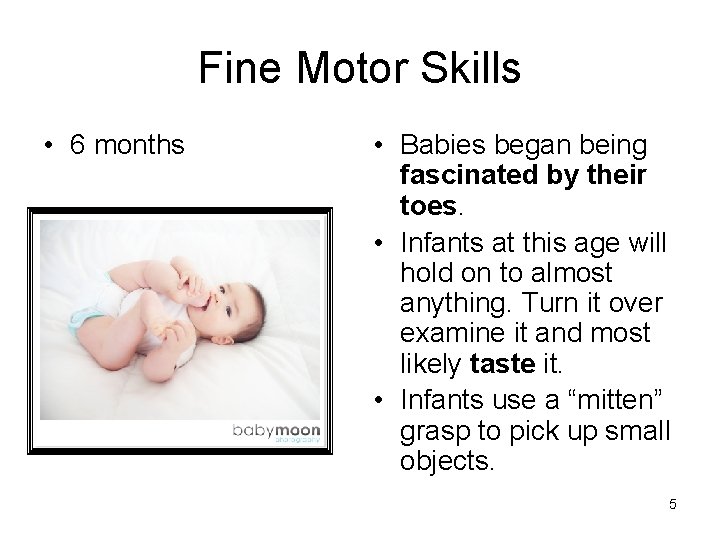
Fine Motor Skills • 6 months • Babies began being fascinated by their toes. • Infants at this age will hold on to almost anything. Turn it over examine it and most likely taste it. • Infants use a “mitten” grasp to pick up small objects. 5
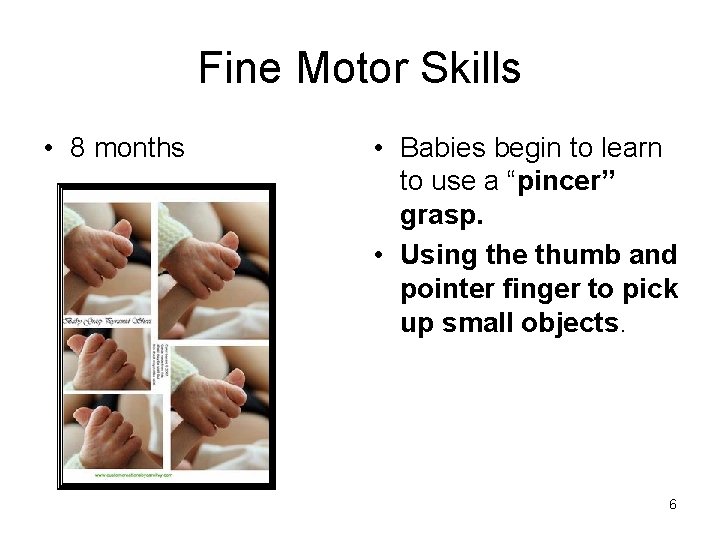
Fine Motor Skills • 8 months • Babies begin to learn to use a “pincer” grasp. • Using the thumb and pointer finger to pick up small objects. 6
Fine Motor Skills • 9 -10 months • Infants will begin moving objects back and forth from one hand to the other. • They can begin to pick up very small objects such as lint. 7
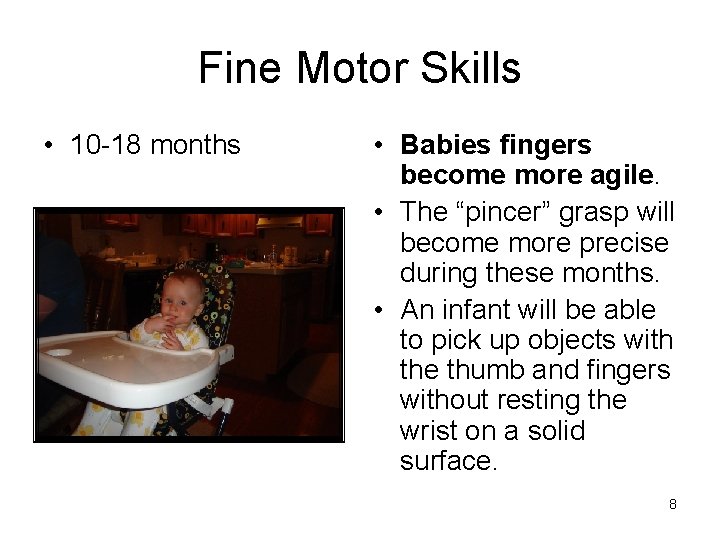
Fine Motor Skills • 10 -18 months • Babies fingers become more agile. • The “pincer” grasp will become more precise during these months. • An infant will be able to pick up objects with the thumb and fingers without resting the wrist on a solid surface. 8
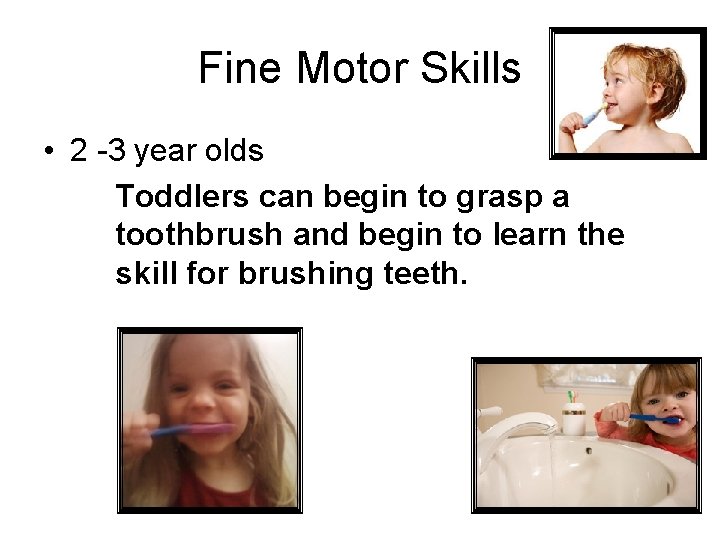
Fine Motor Skills • 2 -3 year olds Toddlers can begin to grasp a toothbrush and begin to learn the skill for brushing teeth. 9
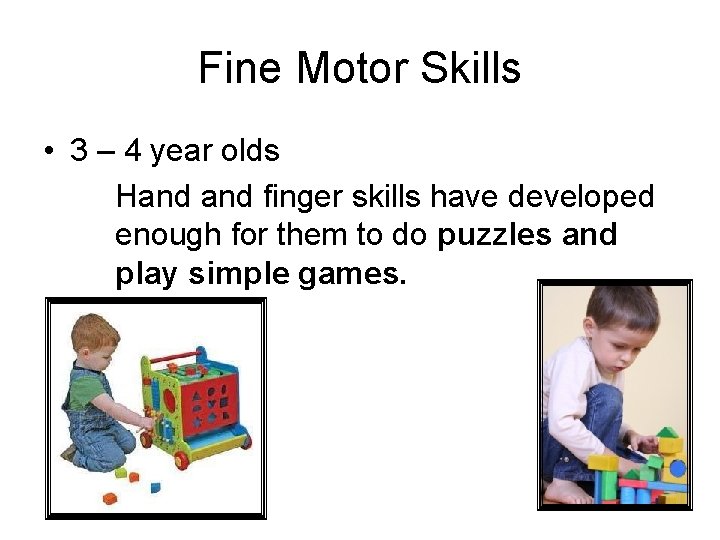
Fine Motor Skills • 3 – 4 year olds Hand finger skills have developed enough for them to do puzzles and play simple games. 10
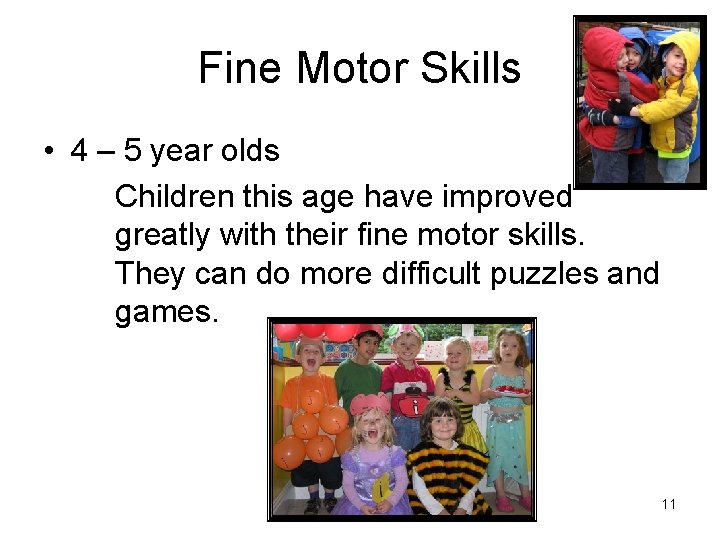
Fine Motor Skills • 4 – 5 year olds Children this age have improved greatly with their fine motor skills. They can do more difficult puzzles and games. 11
Fine Motor Skills • Use the notes and complete the worksheet. • Due at the end of class. • Once graded it will go in your interactive notebook under the notes section. 12