FINANCIAL AID 101 Kristen Isaksen Associate Director of


- Slides: 39
FINANCIAL AID 101 Kristen Isaksen Associate Director of Financial Aid Monmouth University
Topics We’ll Cover § Terms & tools § Completing the 2020 -21 Free Application for Federal Student Aid (FAFSA) § Types & sources of aid § Aid programs § Tips
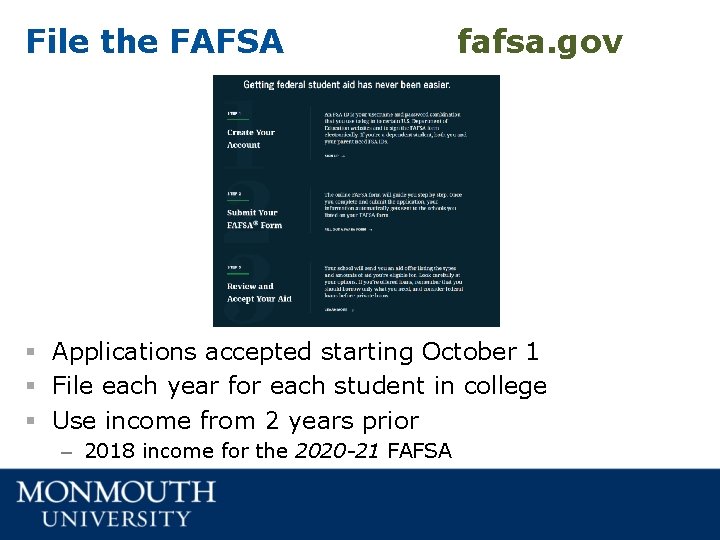
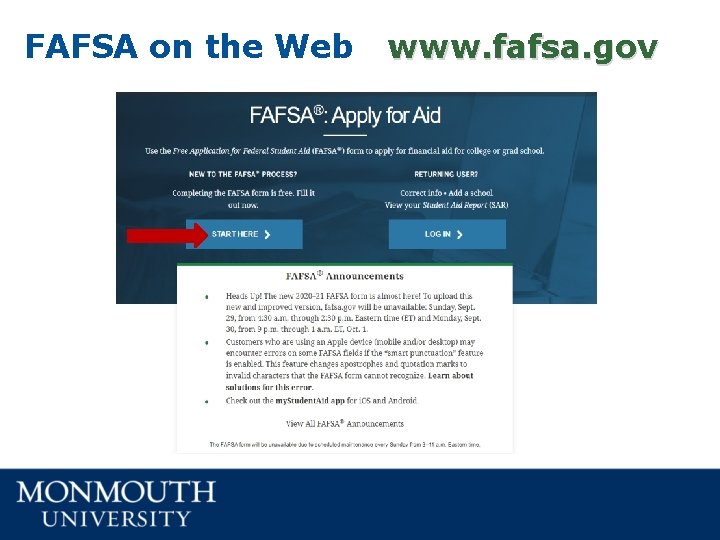
File the FAFSA fafsa. gov § Applications accepted starting October 1 § File each year for each student in college § Use income from 2 years prior – 2018 income for the 2020 -21 FAFSA
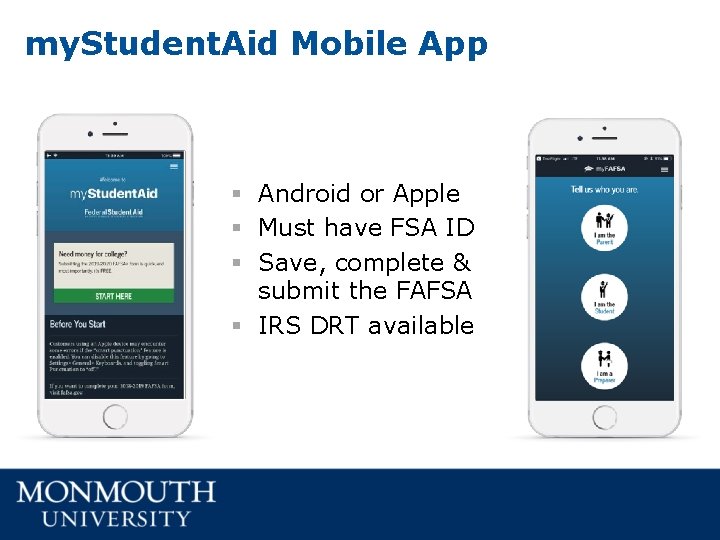
my. Student. Aid Mobile App § Android or Apple § Must have FSA ID § Save, complete & submit the FAFSA § IRS DRT available
Federal Methodology § Federal Methodology – Formula created by Congress, uses all information on the FAFSA. – Determines the Federal Expected Family Contribution (EFC).
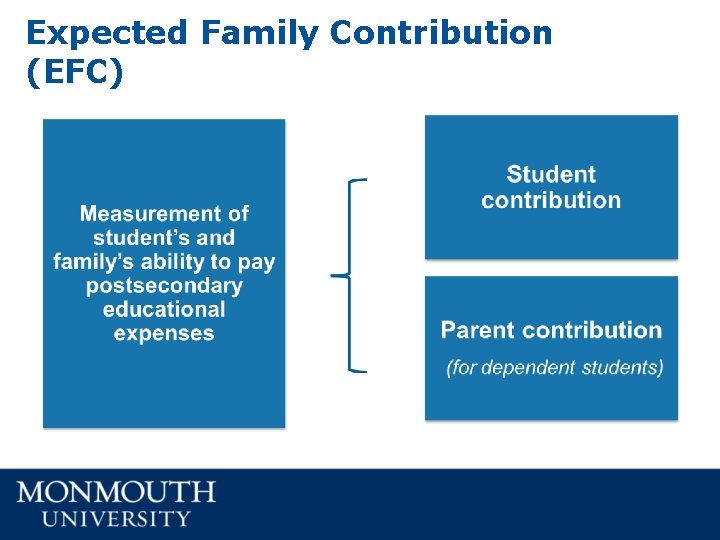
Expected Family Contribution (EFC)
Expected Family Contribution (EFC) § Index number that the financial aid office uses to determine aid eligibility § Stays the same regardless of college choice § The EFC is not: – The amount of money you will pay – The amount of federal aid you will receive
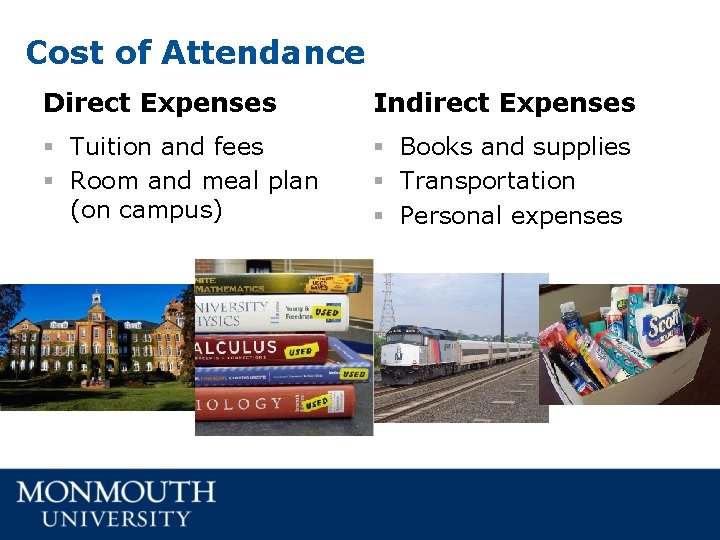
Cost of Attendance Direct Expenses Indirect Expenses § Tuition and fees § Room and meal plan (on campus) § Books and supplies § Transportation § Personal expenses
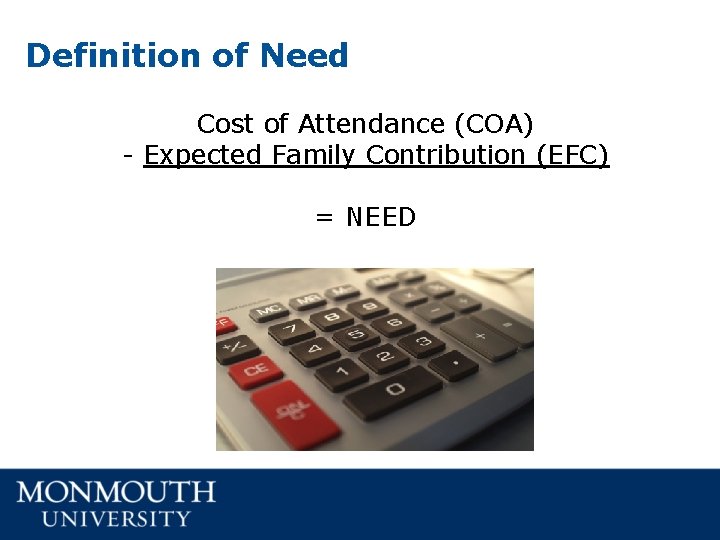
Definition of Need Cost of Attendance (COA) - Expected Family Contribution (EFC) = NEED
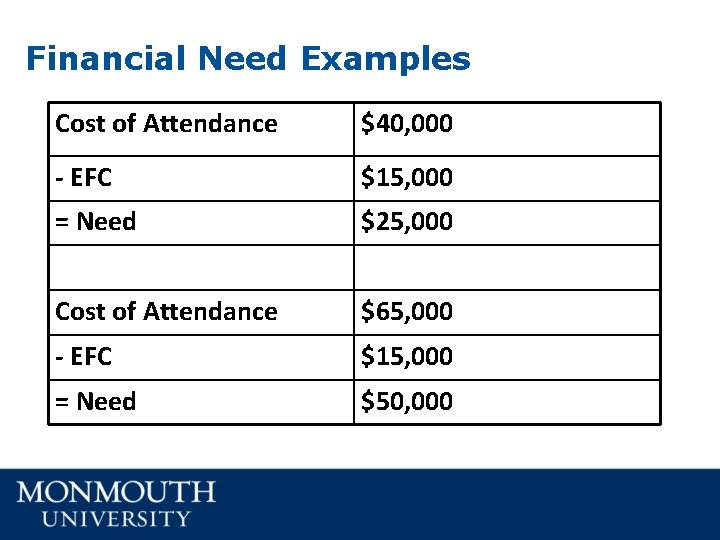
Financial Need Examples Cost of Attendance $40, 000 - EFC $15, 000 = Need $25, 000 Cost of Attendance $65, 000 - EFC $15, 000 = Need $50, 000
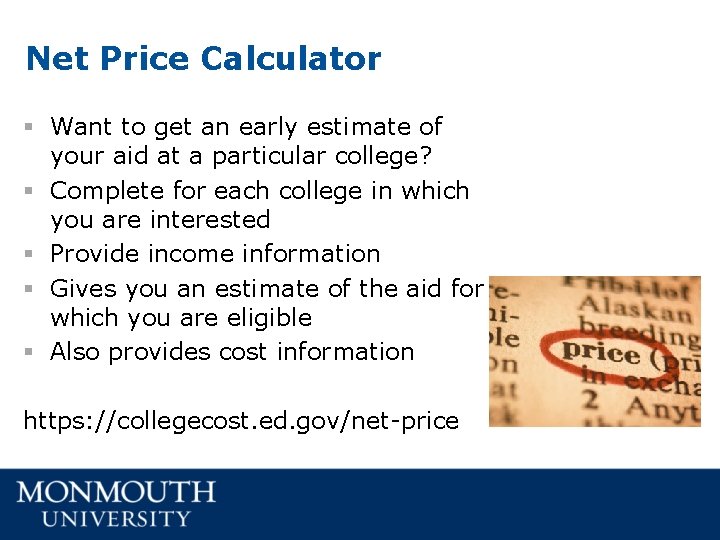
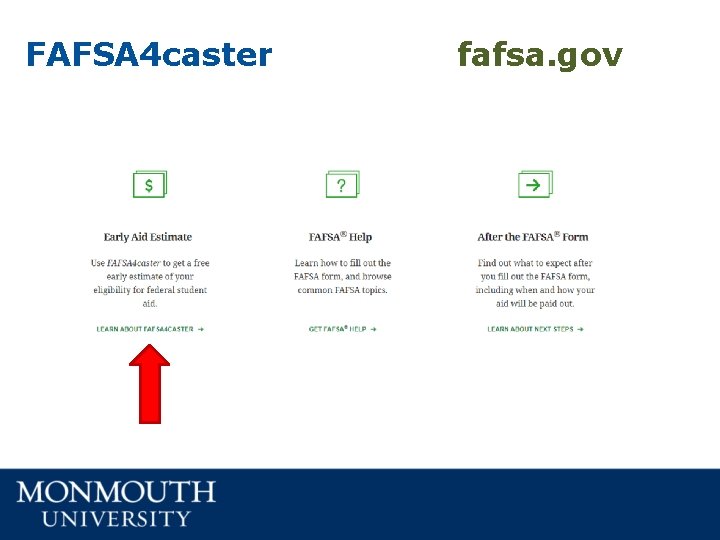
Net Price Calculator § Want to get an early estimate of your aid at a particular college? § Complete for each college in which you are interested § Provide income information § Gives you an estimate of the aid for which you are eligible § Also provides cost information https: //collegecost. ed. gov/net-price
FAFSA 4 caster fafsa. gov
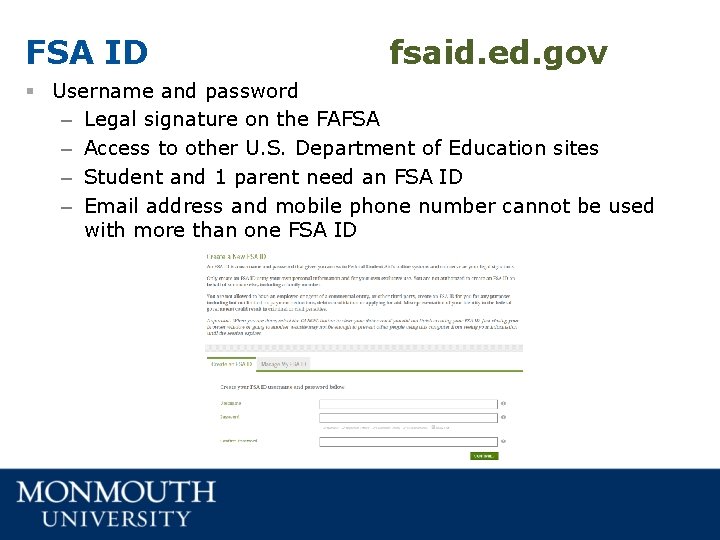
FSA ID fsaid. ed. gov § Username and password – Legal signature on the FAFSA – Access to other U. S. Department of Education sites – Student and 1 parent need an FSA ID – Email address and mobile phone number cannot be used with more than one FSA ID
FAFSA on the Web www. fafsa. gov
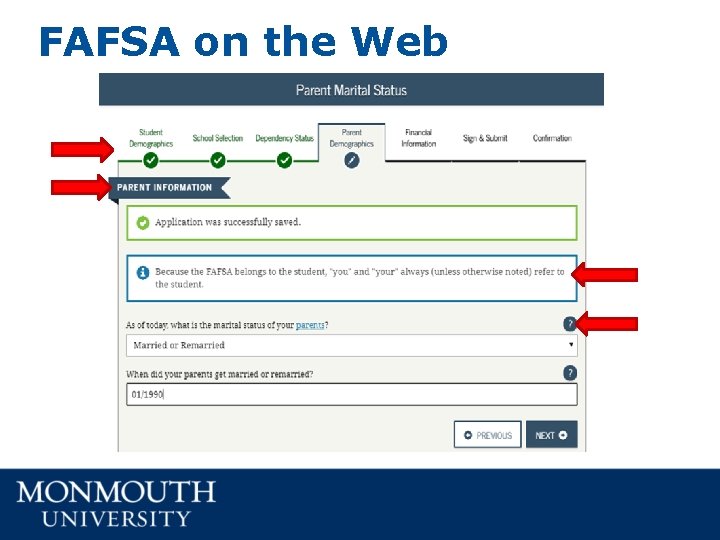
FAFSA on the Web
General Eligibility Requirements Students § Earn a high school diploma or equivalent. § Accepted for enrollment in an eligible program. § Must be U. S. citizen or eligible non-citizen.
General Eligibility Requirements Students § Must have valid Social Security Number (SSN) – www. ssa. gov § Must be registered with Selective Service (if male and required) – www. sss. gov
Completing the FAFSA § Student demographic information – SSN – Citizenship status – Marital status – State of legal residence – Drug conviction status – Selective Service registration – Level of parents’ school completion
Completing the FAFSA § Student dependency status – Born before January 1, 1997 – Married – Serving on active duty in the U. S. Armed Forces – Veteran of the U. S. Armed Forces – Since turning age 13 § Both parents were deceased § In foster care § Dependent or ward of the court – Emancipated minor – In legal guardianship
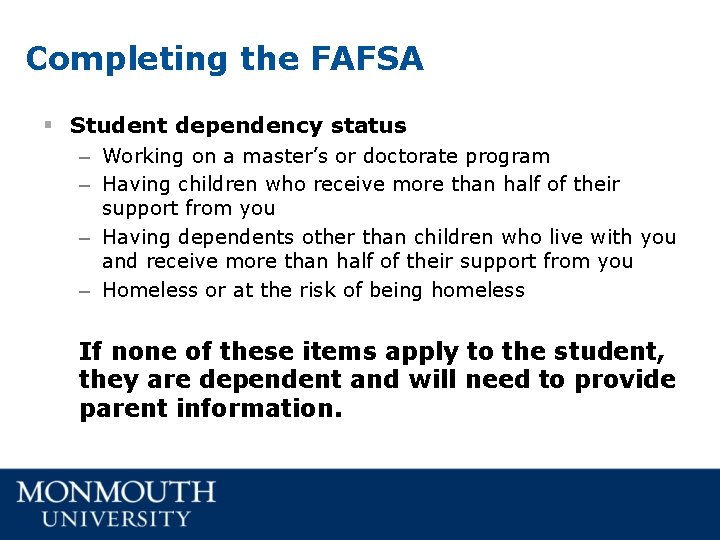
Completing the FAFSA § Student dependency status – Working on a master’s or doctorate program – Having children who receive more than half of their support from you – Having dependents other than children who live with you and receive more than half of their support from you – Homeless or at the risk of being homeless If none of these items apply to the student, they are dependent and will need to provide parent information.
Completing the FAFSA § Parent(s) Information – Marital Status (as of the day the FAFSA is completed) § Never married § Unmarried, both legal parents living together § Married or remarried § Divorced or separated § Widowed – Household size/# in college – SSN/Name/Date of Birth – State of legal residence
IRS Data Retrieval Tool § Applicants may submit a real-time request for IRS tax data. § The IRS will authenticate the taxpayer’s identity. § If a match is found, the IRS will send the results in real-time. § Applicants may choose whether or not to transfer the data.
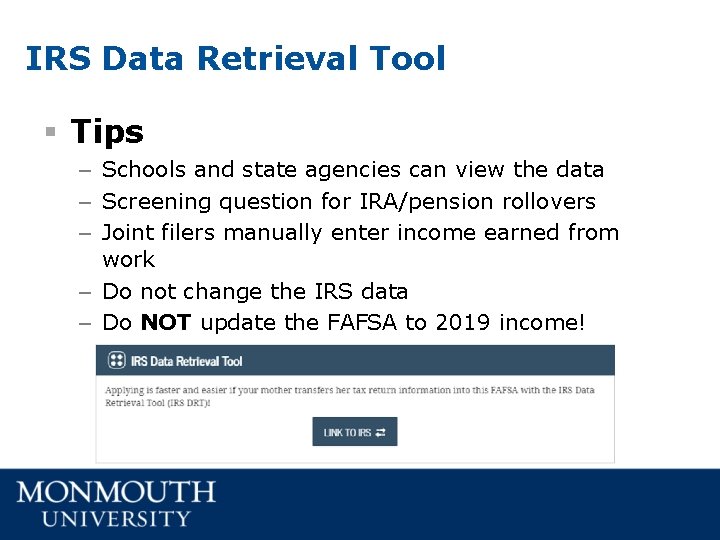
IRS Data Retrieval Tool § Tips – Schools and state agencies can view the data – Screening question for IRA/pension rollovers – Joint filers manually enter income earned from work – Do not change the IRS data – Do NOT update the FAFSA to 2019 income!
Completing the FAFSA § Asset questions – As of the day the FAFSA is completed § Cash, savings and checking accounts § Investment net worth § Business/Investment Farm § List colleges to receive the information (up to 10) § Enter the FSA ID for student and parent
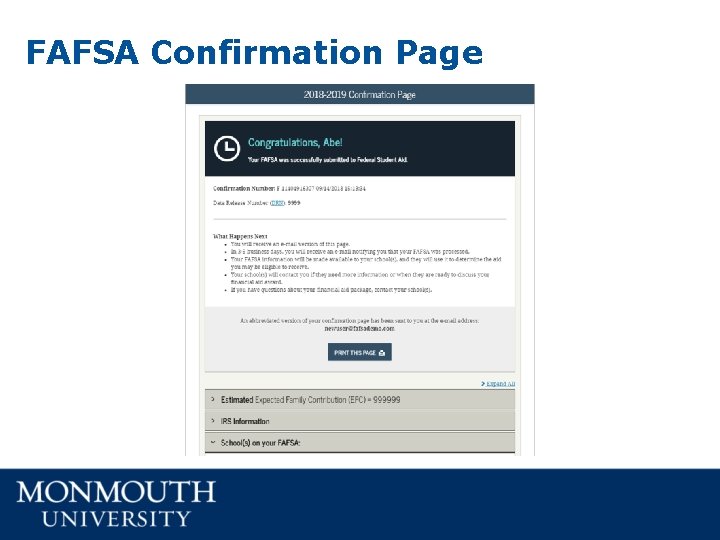
FAFSA Confirmation Page
Process § File Free Application for Federal Student Aid (FAFSA) – Use the DRT § Receive Student Aid Report (SAR) § Complete any institution specific applications § Receive/Return Financial Aid Award Letter § Provide Additional Documentation § Process Student Loans
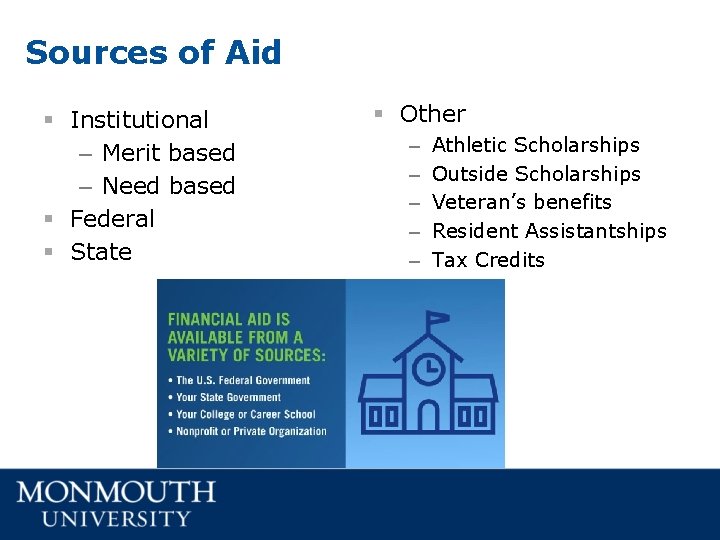
Sources of Aid § Institutional – Merit based – Need based § Federal § State § Other – – – Athletic Scholarships Outside Scholarships Veteran’s benefits Resident Assistantships Tax Credits
Tax Credits § § American Opportunity Tax Credit Lifetime Learning Tax Credit Tuition and Fees Deduction Student Loan Interest Deduction
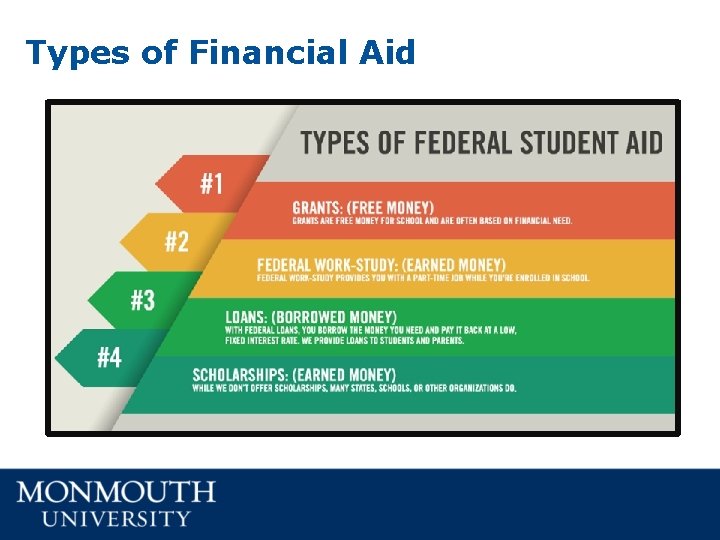
Types of Financial Aid
Grants and Scholarships § Federal – Federal Pell Grant – Federal Supplemental Educational Opportunity Grant (SEOG) – Teacher Education Assistance for College and Higher Education (TEACH) Grant – Iraq and Afghanistan Service Grants
Grants and Scholarships § STATE – New Jersey Tuition Aid Grant (TAG) – NJSTARS and NJSTARS II – Educational Opportunity Fund (EOF) www. njgrants. org
More Grants and Scholarships § Private Sources – Think local and global – Use the Counseling Office’s Resources – Internet Resources § § www. fastweb. com www. scholarships. com – Only use free resources
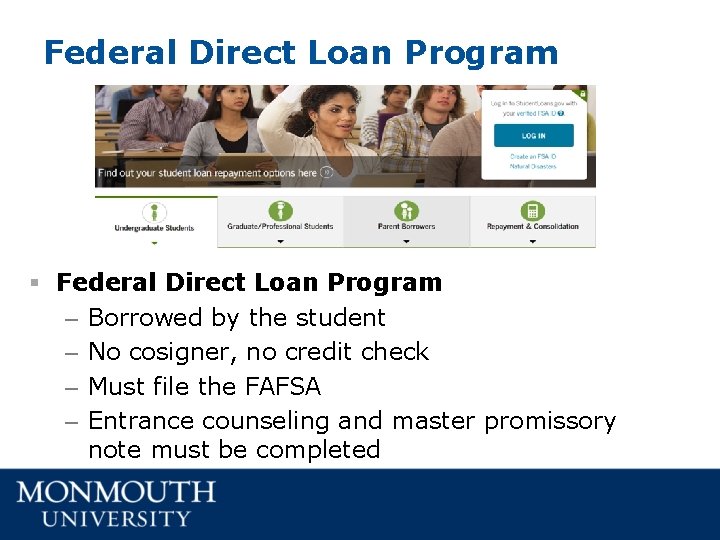
Federal Direct Loan Program § Federal Direct Loan Program – Borrowed by the student – No cosigner, no credit check – Must file the FAFSA – Entrance counseling and master promissory note must be completed
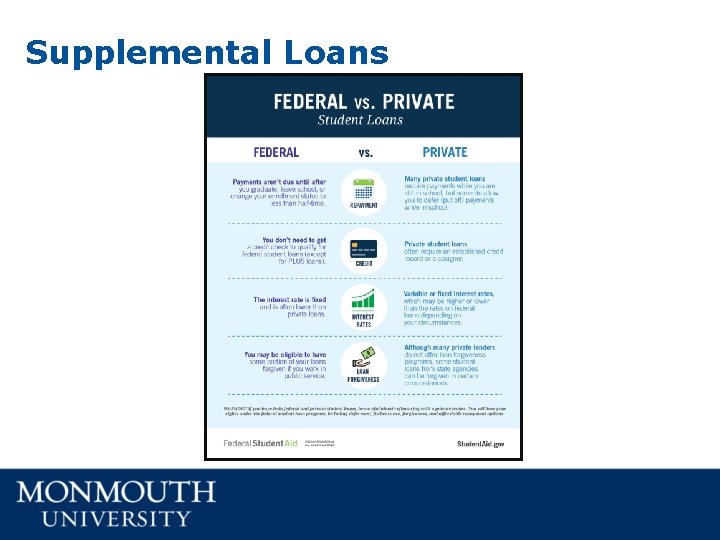
Supplemental Loans
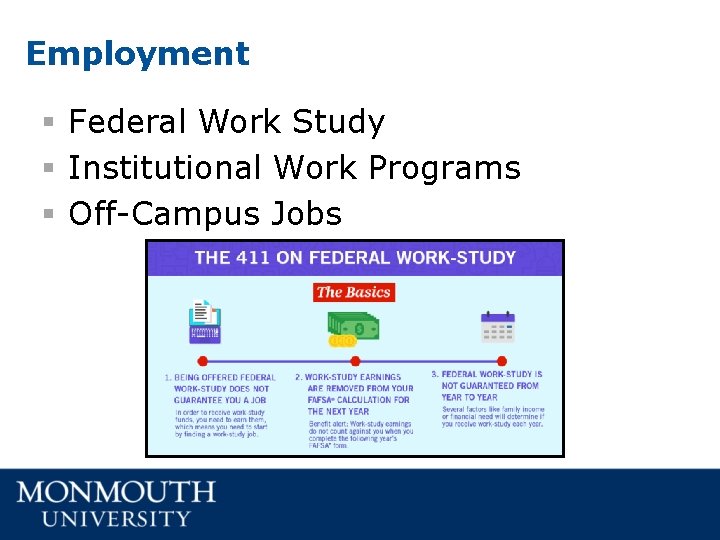
Employment § Federal Work Study § Institutional Work Programs § Off-Campus Jobs
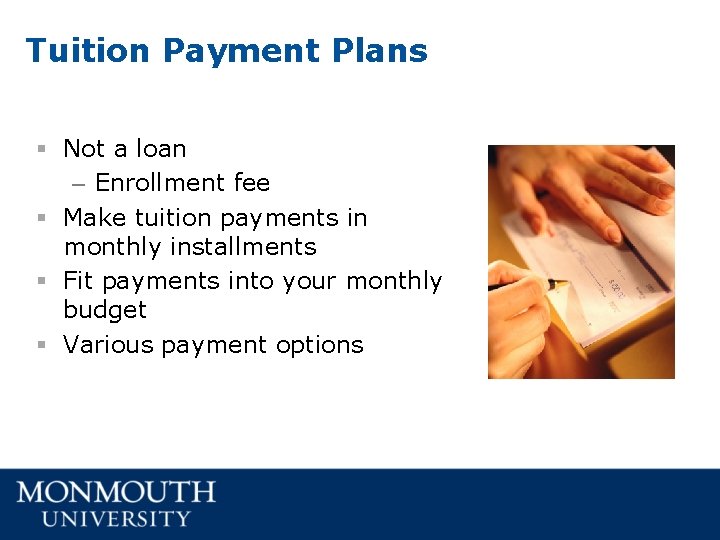
Tuition Payment Plans § Not a loan – Enrollment fee § Make tuition payments in monthly installments § Fit payments into your monthly budget § Various payment options
Tips § READ, READ – all mail/email promptly – instructions carefully – review before submitting § Maintain copies of all documents § Do not sign your son or daughter’s name/FSA ID to financial aid documents § Involve your student § Consult a financial aid officer
Questions to ask a Financial Aid Administrator § Are institutional scholarship and grant awards renewable? § What are the policies for work-study positions? § Will an outside scholarship change my aid? § How can I use financial aid to pay for books? § What if there’s been a job loss, loss of untaxed benefit, or other change in circumstance?
Questions Monmouth. financialaidtv. com Studentaid. gov/resources