
SNU GSIS How to Give Aid International Development

- Slides: 33
SNU GSIS How to Give Aid? International Development Cooperation: Theory & Practice
Assumptions u The purpose of aid is to increase the welfare of the recipient country. n n 2 When the donor is altruistic When welfare of the recipient country is global public good
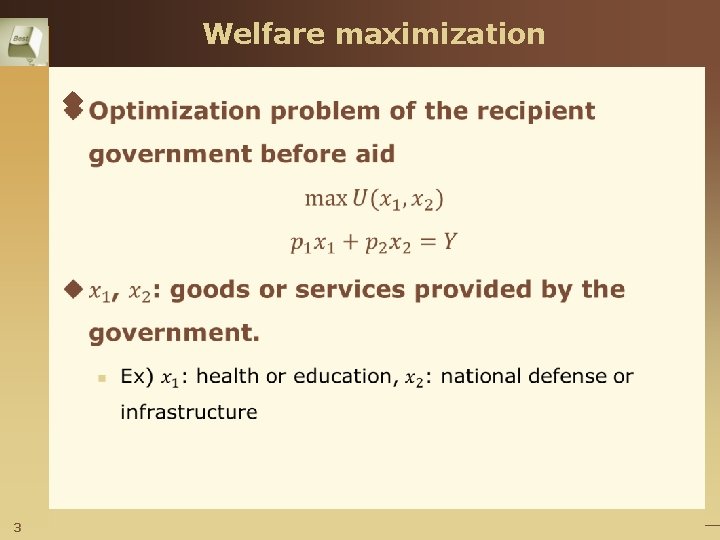
Welfare maximization u 3
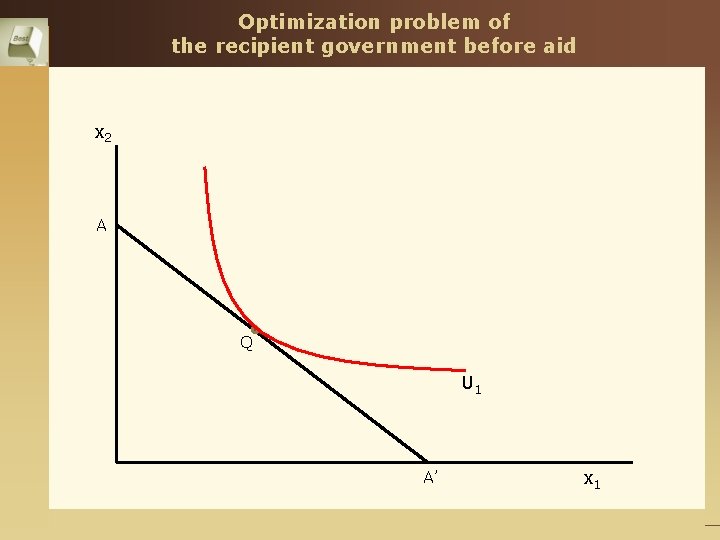
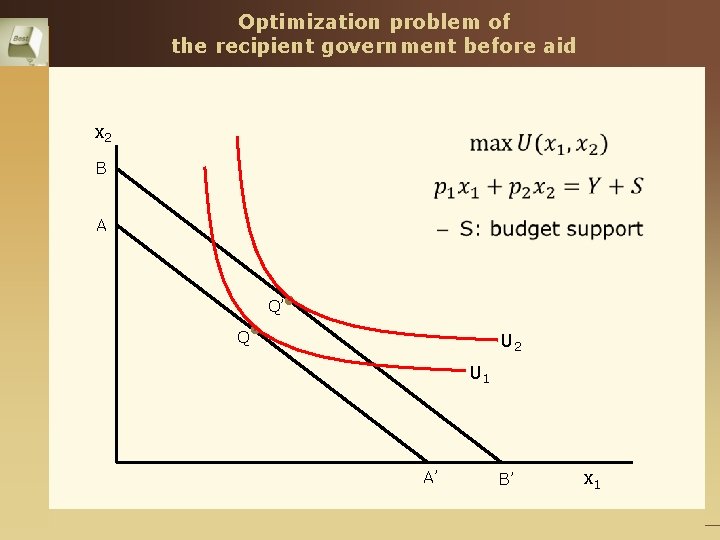
Optimization problem of the recipient government before aid x 2 A Q U 1 A’ x 1
Optimization problem of the recipient government before aid x 2 B A Q’ Q U 2 U 1 A’ B’ x 1
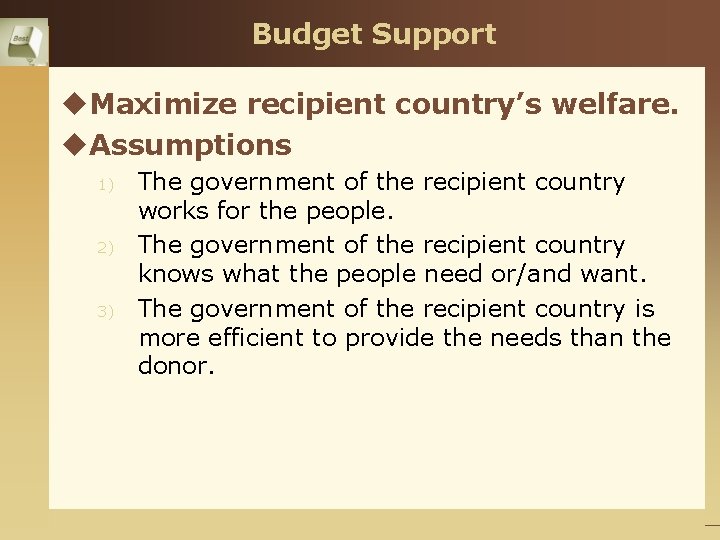
Budget Support u. Maximize recipient country’s welfare. u. Assumptions 1) 2) 3) The government of the recipient country works for the people. The government of the recipient country knows what the people need or/and want. The government of the recipient country is more efficient to provide the needs than the donor.
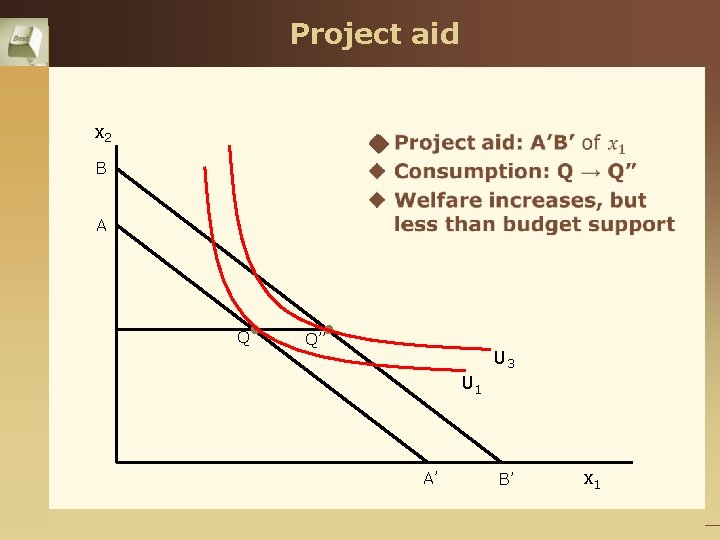
Project aid x 2 u B A Q Q’’ U 3 U 1 A’ B’ x 1
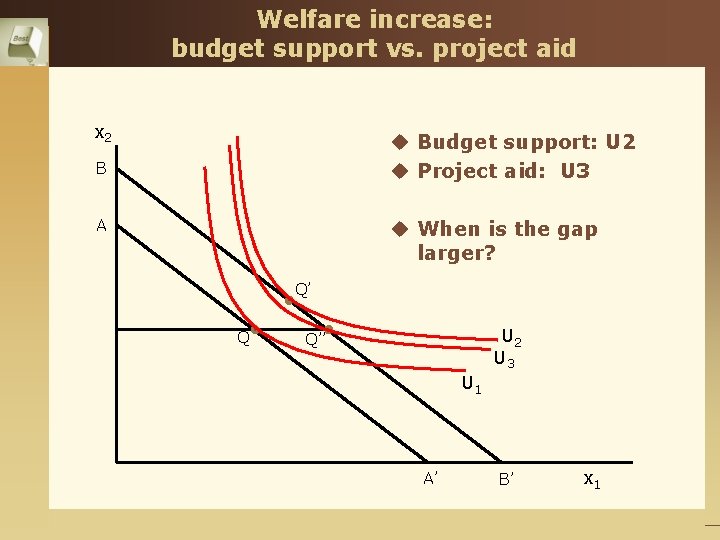
Welfare increase: budget support vs. project aid x 2 u Budget support: U 2 u Project aid: U 3 B A u When is the gap larger? Q’ Q U 2 U 3 Q’’ U 1 A’ B’ x 1
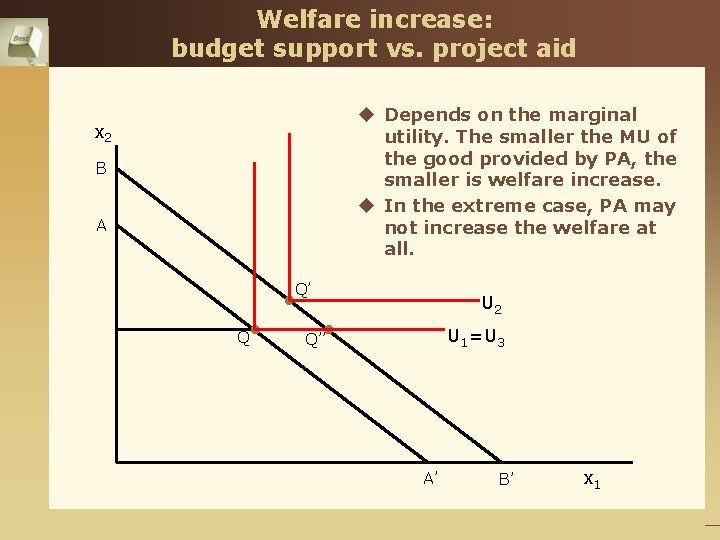
Welfare increase: budget support vs. project aid u Depends on the marginal utility. The smaller the MU of the good provided by PA, the smaller is welfare increase. u In the extreme case, PA may not increase the welfare at all. x 2 B A Q’ Q U 2 U 1 =U 3 Q’’ A’ B’ x 1
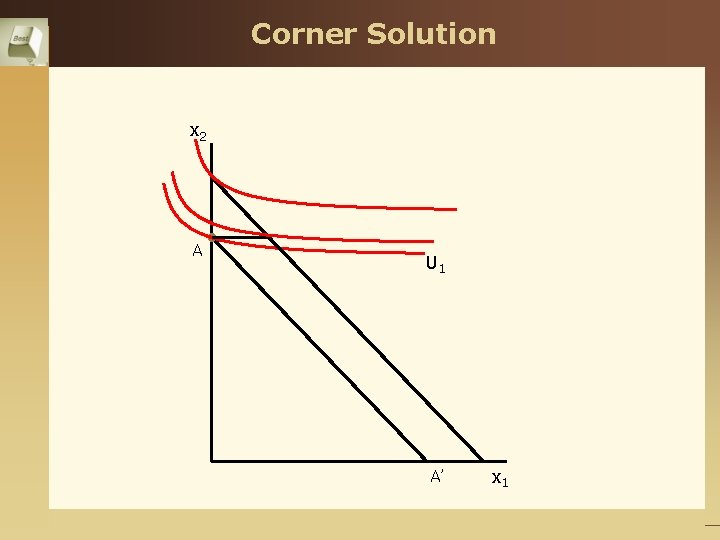
Corner Solution u This phenomenon of small welfare increase may happen in corner solution. u Donor country may provide goods that the recipient country would never consume if the aid were provided in budget support. u Ex: providing cutting edge classroom in an area without even internet access.
Corner Solution x 2 A U 1 A’ x 1
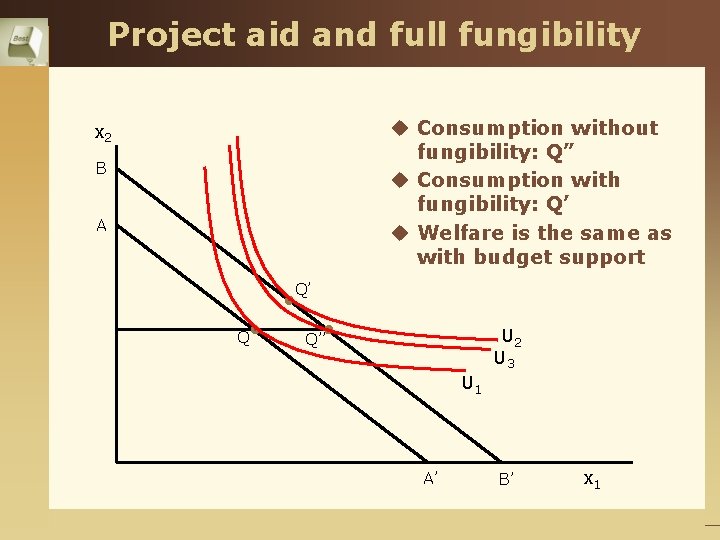
Project aid and full fungibility u Consumption without fungibility: Q” u Consumption with fungibility: Q’ u Welfare is the same as with budget support x 2 B A Q’ Q U 2 U 3 Q’’ U 1 A’ B’ x 1
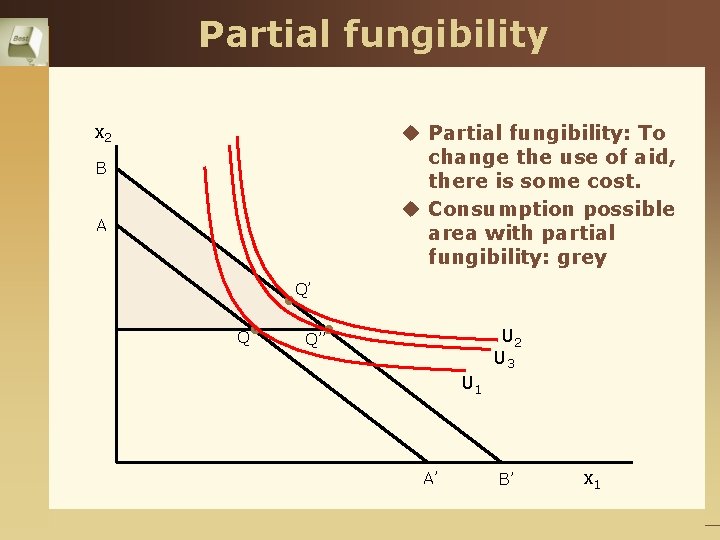
Partial fungibility u Partial fungibility: To change the use of aid, there is some cost. u Consumption possible area with partial fungibility: grey x 2 B A Q’ Q U 2 U 3 Q’’ U 1 A’ B’ x 1
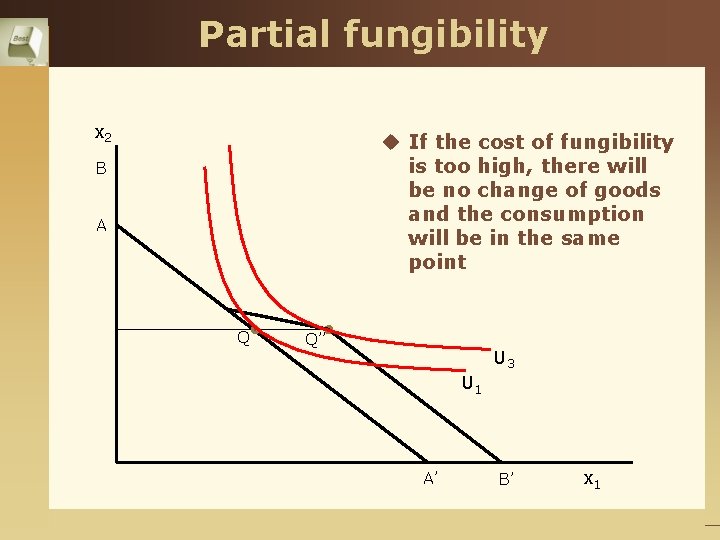
Partial fungibility x 2 u If the cost of fungibility is too high, there will be no change of goods and the consumption will be in the same point B A Q Q’’ U 3 U 1 A’ B’ x 1
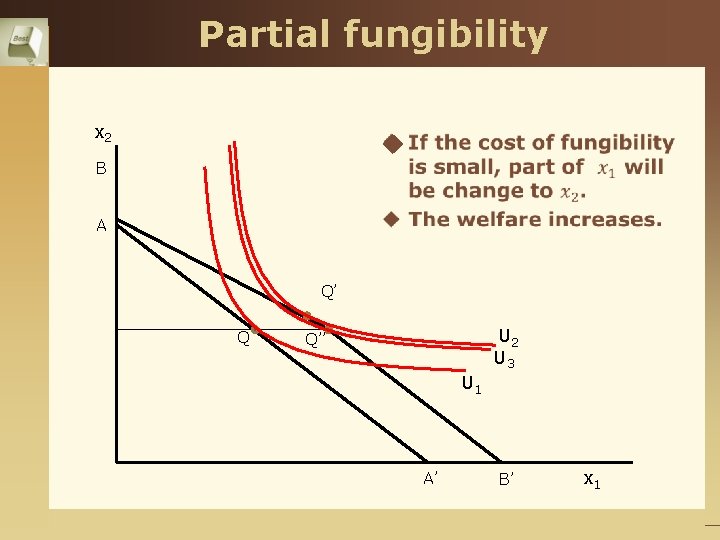
Partial fungibility x 2 u B A Q’ Q U 2 U 3 Q’’ U 1 A’ B’ x 1
Why do donor countries give project aid? 1) The preference of the recipient government is different from that of the people. 2) Donor country government has more information than the recipient government. 3) Global public good.
Corruption: violation of 1) u Recipient government may not work to maximize people’s welfare. u It may have different preference than the people. 17
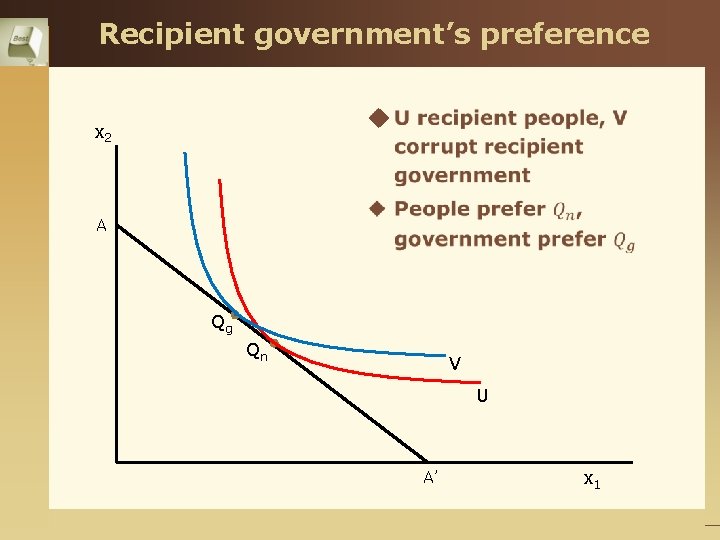
Recipient government’s preference u x 2 A Qg Qn V U A’ x 1
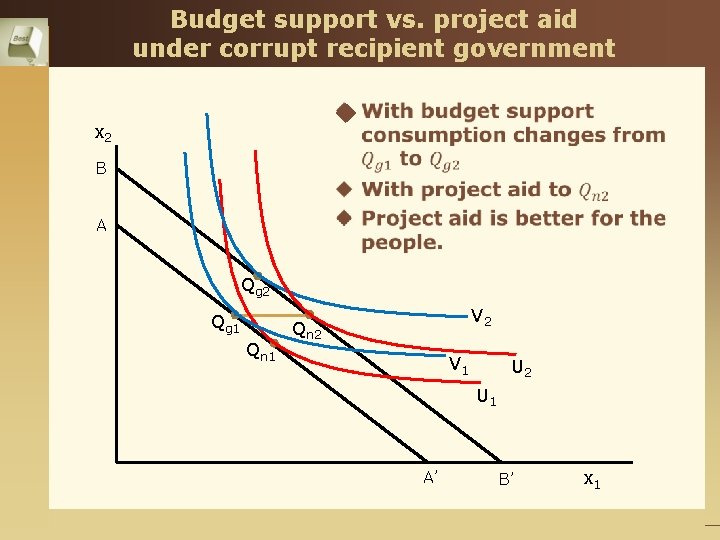
Budget support vs. project aid under corrupt recipient government u x 2 B A Qg 2 Qg 1 Qn 1 V 2 Qn 2 V 1 U 2 U 1 A’ B’ x 1
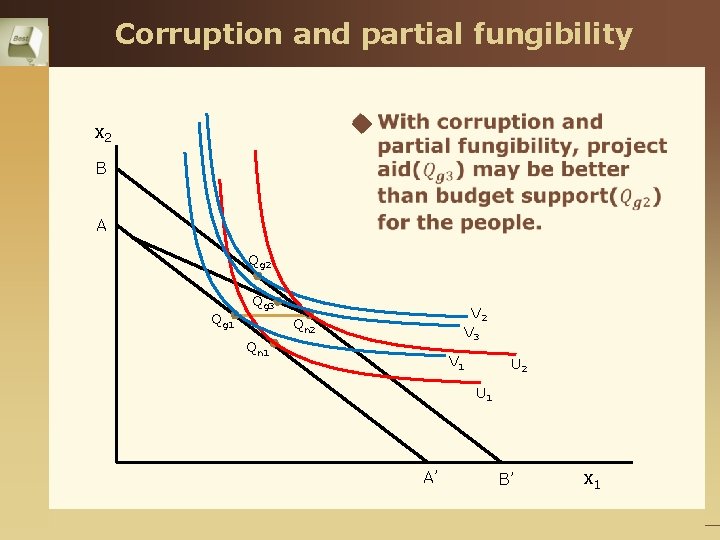
Corruption and partial fungibility u x 2 B A Qg 2 Qg 1 Qg 3 V 2 V 3 Qn 2 Qn 1 V 1 U 2 U 1 A’ B’ x 1
Conditionality u When the recipient government is not efficient or transparent, donor country may impose some conditionality when giving aid. n n Conditionality to introduce measures to enhance transparency. Conditionality to introduce measures to reduce fungibility.
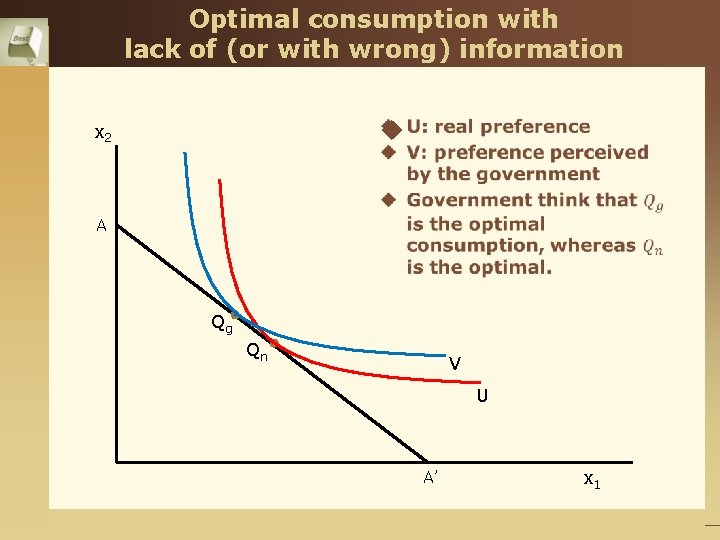
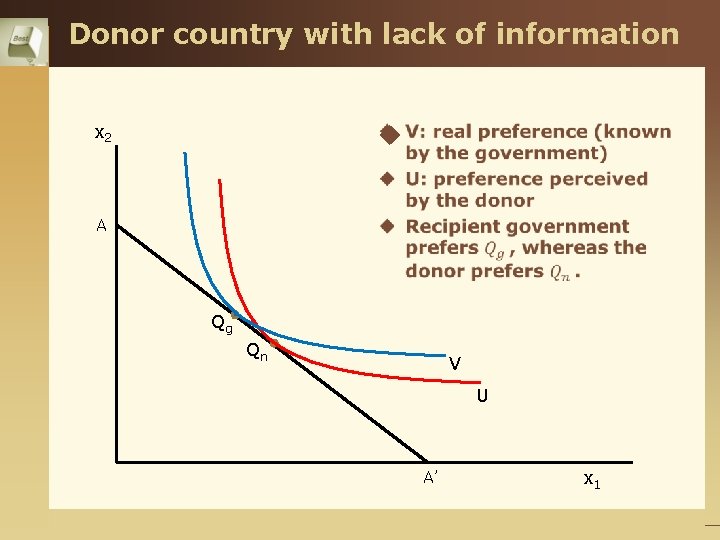
Lack of information: violation of 2) u If the recipient government does not have enough information, assumption 2) may not be satisfied. u The government may not know exactly what is the need of the people. The utility function perceived by the government is not the actual one. n n Ex 1) Health and nutrition is urgent, but the government contends that infrastructure, such as airport, is more urgent. Ex 2) Productivity is low because of the low capacity of the workers, but the government tries to solve the problem by establishing an innovative industrial cluster.
Optimal consumption with lack of (or with wrong) information u x 2 A Qg Qn V U A’ x 1
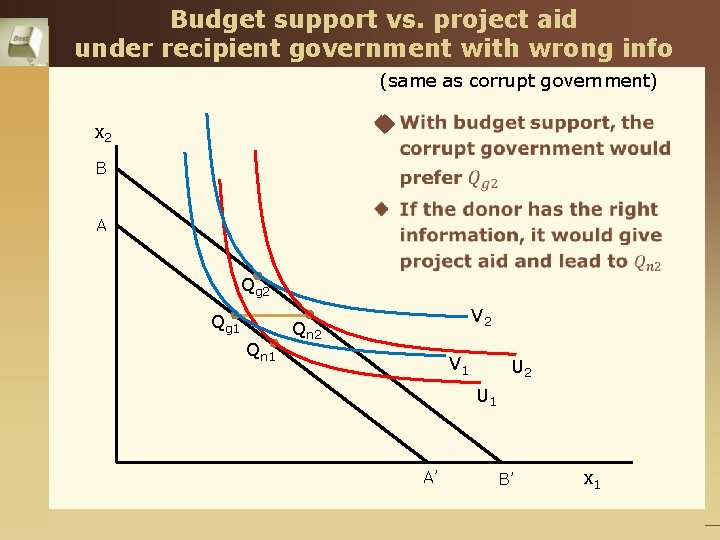
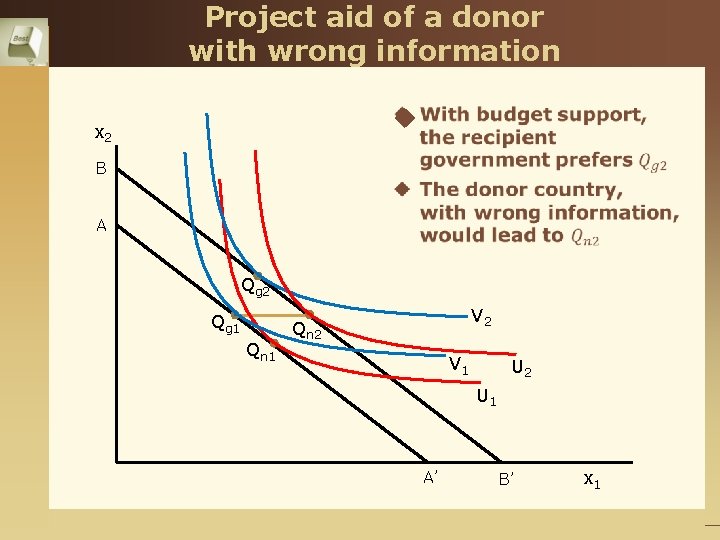
Budget support vs. project aid under recipient government with wrong info (same as corrupt government) u x 2 B A Qg 2 Qg 1 Qn 1 V 2 Qn 2 V 1 U 2 U 1 A’ B’ x 1
Conditionality and policy consulting u When the recipient government is corrupt, conditionality does not work very well because the government does not have the willingness to improve. u When the recipient government has lack of information, the situation could be improved by providing policy consulting
Asymmetric information: recipient country has more information uexamples
Donor country with lack of information x 2 u A Qg Qn V U A’ x 1
Project aid of a donor with wrong information u x 2 B A Qg 2 Qg 1 Qn 1 V 2 Qn 2 V 1 U 2 U 1 A’ B’ x 1
Ownership u If the recipient government has enough information, budget support is the most efficient type of aid. u Donor country must recognize the recipient government’s ownership. u Ownership is not always good. It depends on other elements.
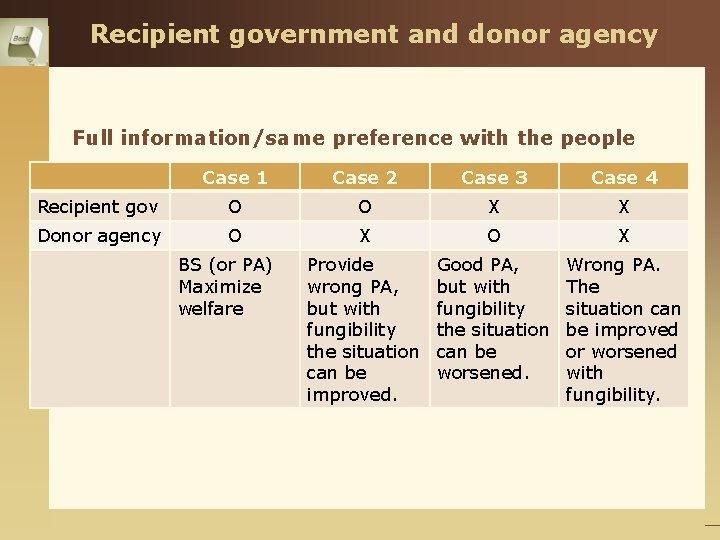
Recipient government and donor agency Full information/same preference with the people Case 1 Case 2 Case 3 Case 4 Recipient gov O O X X Donor agency O X Provide wrong PA, but with fungibility the situation can be improved. Good PA, but with fungibility the situation can be worsened. Wrong PA. The situation can be improved or worsened with fungibility. BS (or PA) Maximize welfare
Global public good u. If a good provided by aid generated cross border or global externalities, it is better for the donor country to provide this good as project aid than to provide budget support.
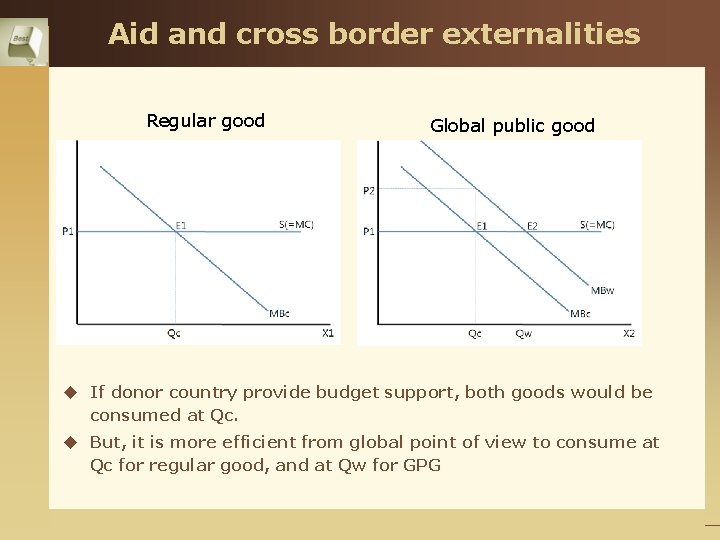
Aid and cross border externalities Regular good Global public good u If donor country provide budget support, both goods would be consumed at Qc. u But, it is more efficient from global point of view to consume at Qc for regular good, and at Qw for GPG
u Q&A 33