Paying for College Jesus Gutierrez DVC Financial Aid








- Slides: 41
Paying for College Jesus Gutierrez, DVC Financial Aid
Topics: • Cost of Attending College • How to Apply for financial aid - FAFSA and California Dream Act • Types of Financial Aid Available • Financial Aid Tips • Q&A
How much does it cost to attend college?
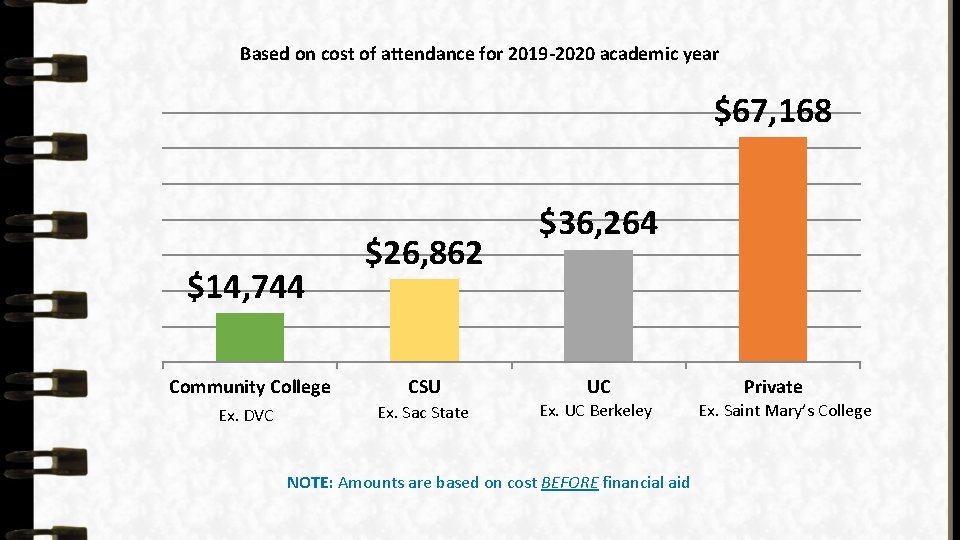
Based on cost of attendance for 2019 -2020 academic year $67, 168 $14, 744 $26, 862 Community College CSU Ex. DVC Ex. Sac State $36, 264 UC Ex. UC Berkeley NOTE: Amounts are based on cost BEFORE financial aid Private Ex. Saint Mary’s College
Financial Aid Tip: Don’t forget to check the “COST OF ATTENDANCE” for each college where you get accepted
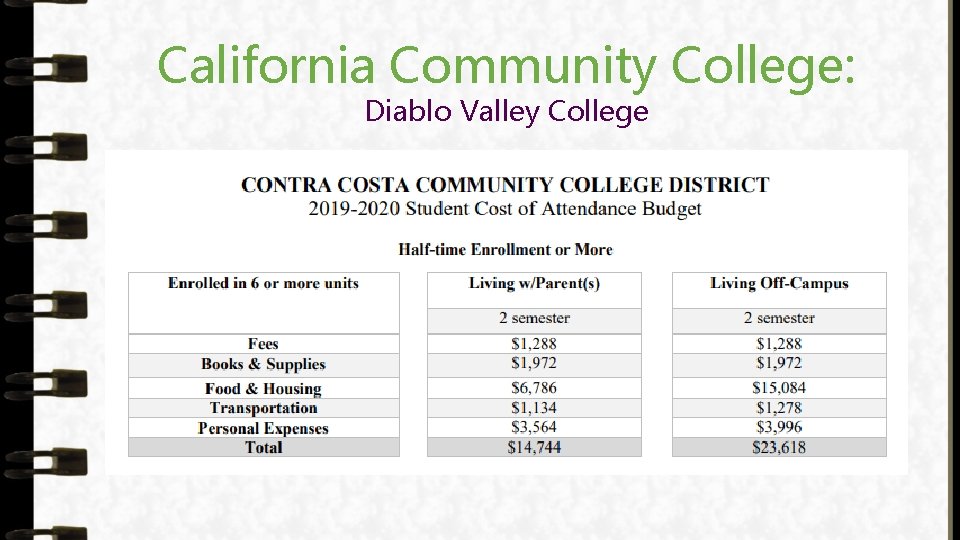
California Community College: Diablo Valley College
How to apply for financial aid
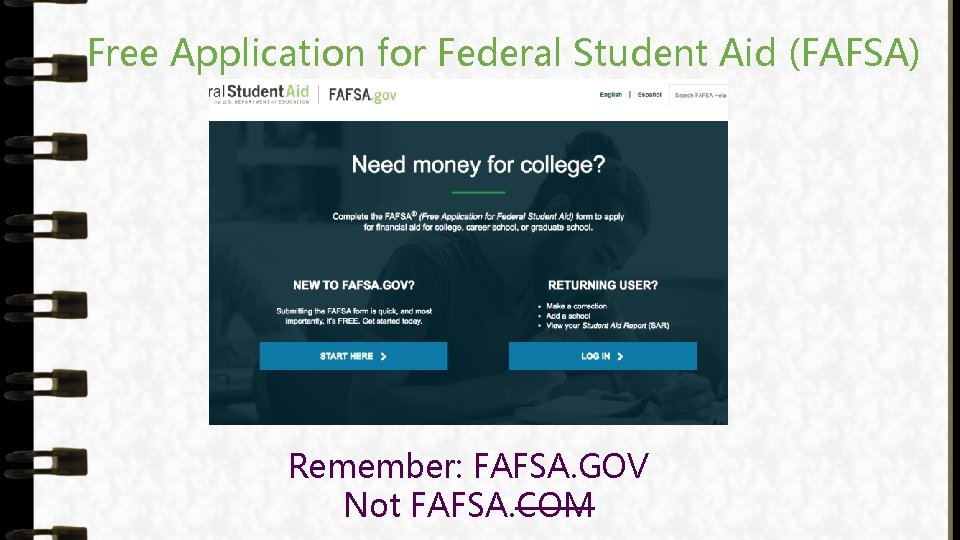
Free Application for Federal Student Aid (FAFSA) Remember: FAFSA. GOV Not FAFSA. COM
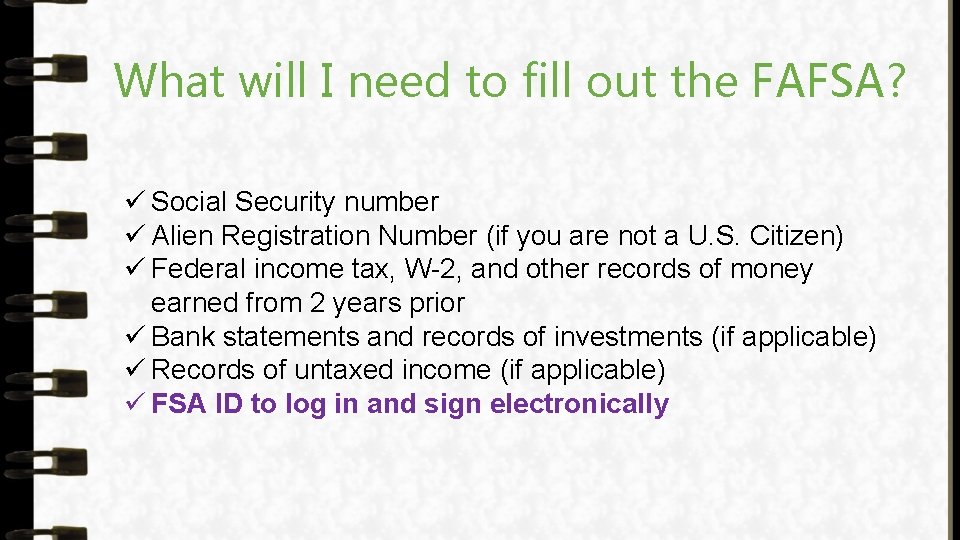
What will I need to fill out the FAFSA? ü Social Security number ü Alien Registration Number (if you are not a U. S. Citizen) ü Federal income tax, W-2, and other records of money earned from 2 years prior ü Bank statements and records of investments (if applicable) ü Records of untaxed income (if applicable) ü FSA ID to log in and sign electronically
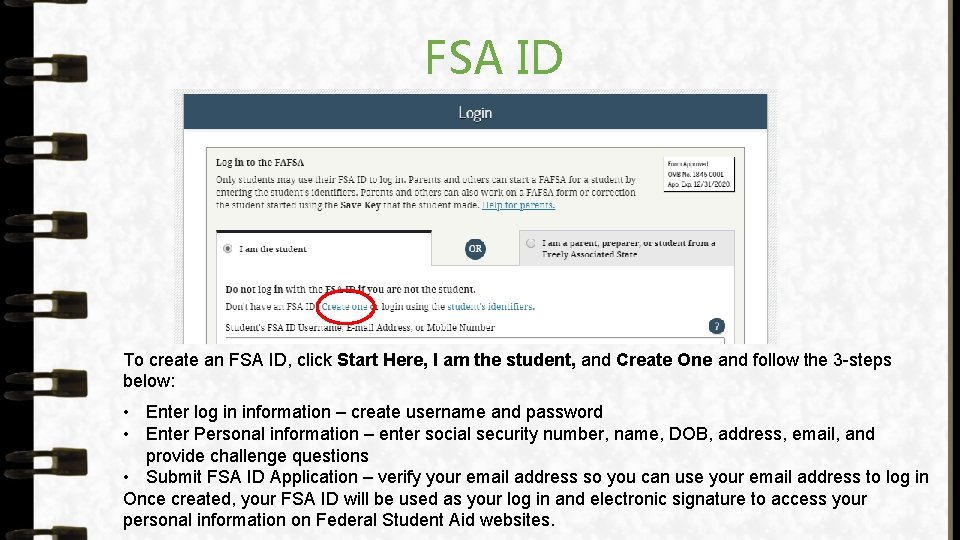
FSA ID To create an FSA ID, click Start Here, I am the student, and Create One and follow the 3 -steps below: • Enter log in information – create username and password • Enter Personal information – enter social security number, name, DOB, address, email, and provide challenge questions • Submit FSA ID Application – verify your email address so you can use your email address to log in Once created, your FSA ID will be used as your log in and electronic signature to access your personal information on Federal Student Aid websites.
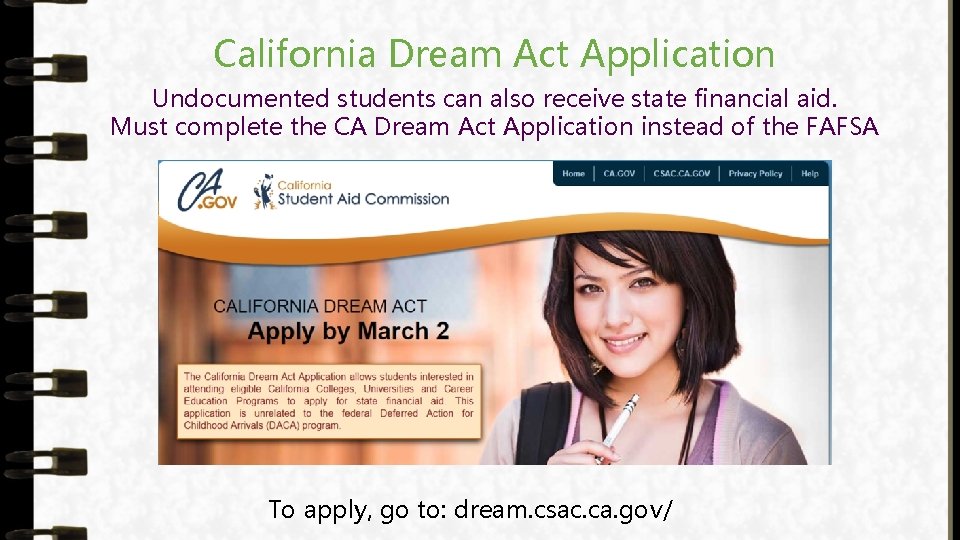
California Dream Act Application Undocumented students can also receive state financial aid. Must complete the CA Dream Act Application instead of the FAFSA To apply, go to: dream. csac. ca. gov/
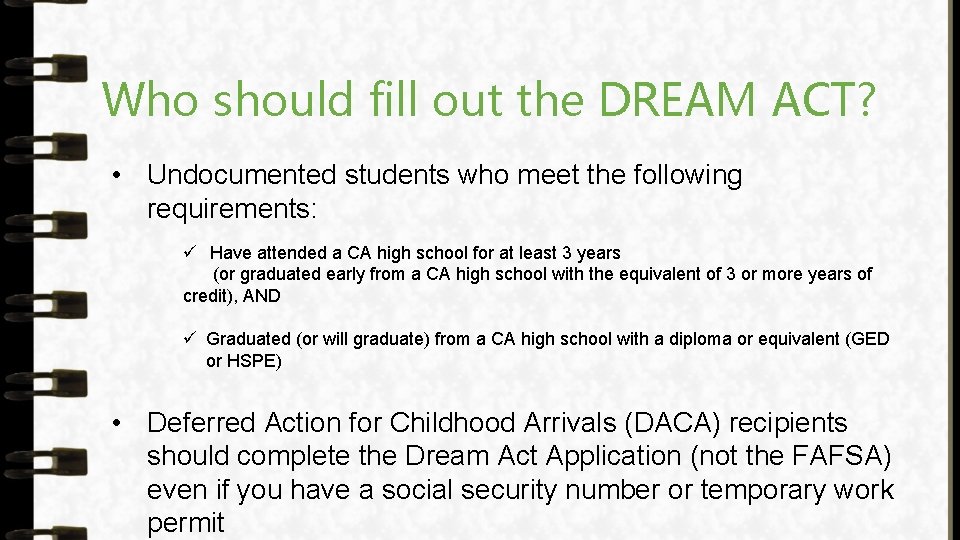
Who should fill out the DREAM ACT? • Undocumented students who meet the following requirements: ü Have attended a CA high school for at least 3 years (or graduated early from a CA high school with the equivalent of 3 or more years of credit), AND ü Graduated (or will graduate) from a CA high school with a diploma or equivalent (GED or HSPE) • Deferred Action for Childhood Arrivals (DACA) recipients should complete the Dream Act Application (not the FAFSA) even if you have a social security number or temporary work permit
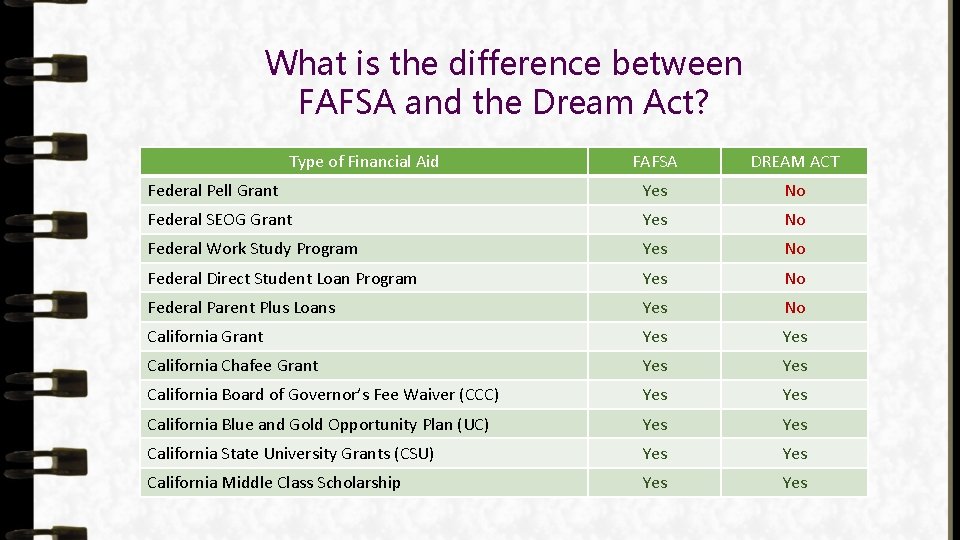
What is the difference between FAFSA and the Dream Act? Type of Financial Aid FAFSA DREAM ACT Federal Pell Grant Yes No Federal SEOG Grant Yes No Federal Work Study Program Yes No Federal Direct Student Loan Program Yes No Federal Parent Plus Loans Yes No California Grant Yes California Chafee Grant Yes California Board of Governor’s Fee Waiver (CCC) Yes California Blue and Gold Opportunity Plan (UC) Yes California State University Grants (CSU) Yes California Middle Class Scholarship Yes
What types of financial aid are available?
Federal Financial Aid Programs
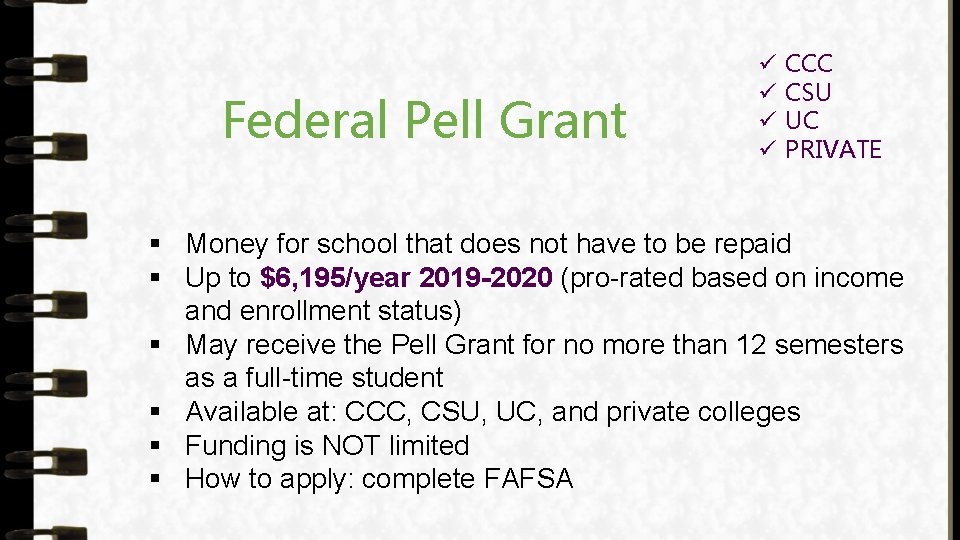
Federal Pell Grant ü ü CCC CSU UC PRIVATE § Money for school that does not have to be repaid § Up to $6, 195/year 2019 -2020 (pro-rated based on income and enrollment status) § May receive the Pell Grant for no more than 12 semesters as a full-time student § Available at: CCC, CSU, UC, and private colleges § Funding is NOT limited § How to apply: complete FAFSA
Federal Supplemental Educational Opportunity Grant (SEOG) § § ü ü CCC CSU UC PRIVATE Money for school that does not have to be repaid Must be eligible for a Pell Grant Additional $500/year Usually granted to students with lowest income and highest financial need § Funding is limited- students are encouraged to apply early to increase chances of receiving the grant § How to apply: complete FAFSA by March 2 nd
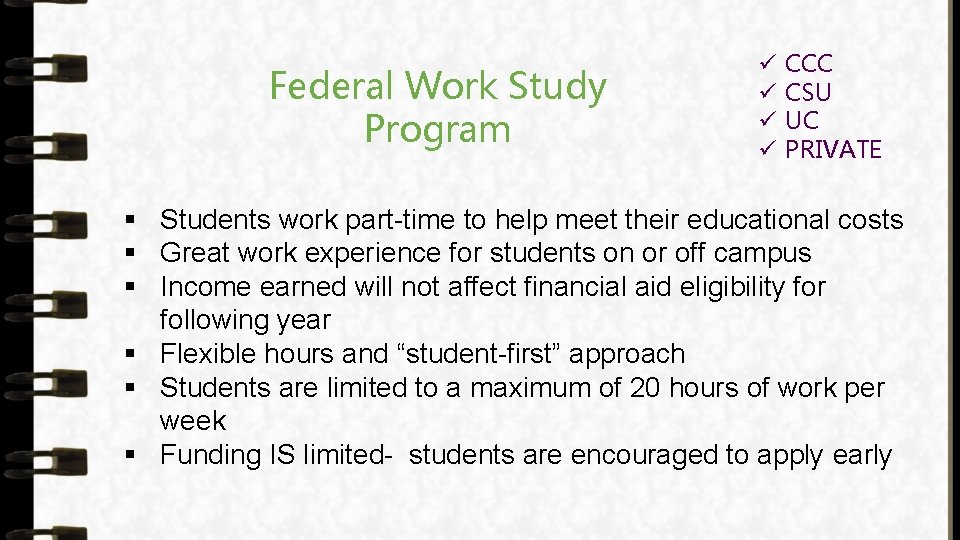
Federal Work Study Program ü ü CCC CSU UC PRIVATE § Students work part-time to help meet their educational costs § Great work experience for students on or off campus § Income earned will not affect financial aid eligibility for following year § Flexible hours and “student-first” approach § Students are limited to a maximum of 20 hours of work per week § Funding IS limited- students are encouraged to apply early
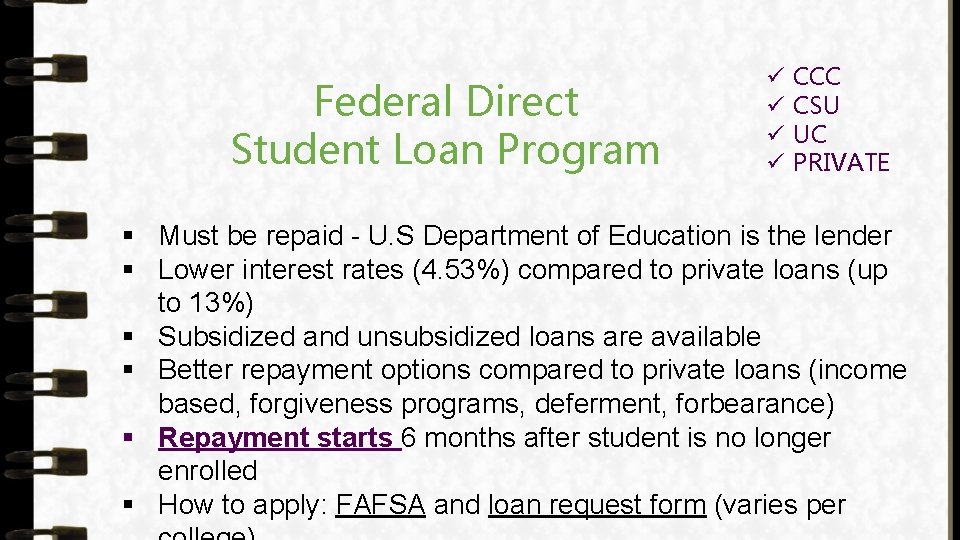
Federal Direct Student Loan Program ü ü CCC CSU UC PRIVATE § Must be repaid - U. S Department of Education is the lender § Lower interest rates (4. 53%) compared to private loans (up to 13%) § Subsidized and unsubsidized loans are available § Better repayment options compared to private loans (income based, forgiveness programs, deferment, forbearance) § Repayment starts 6 months after student is no longer enrolled § How to apply: FAFSA and loan request form (varies per
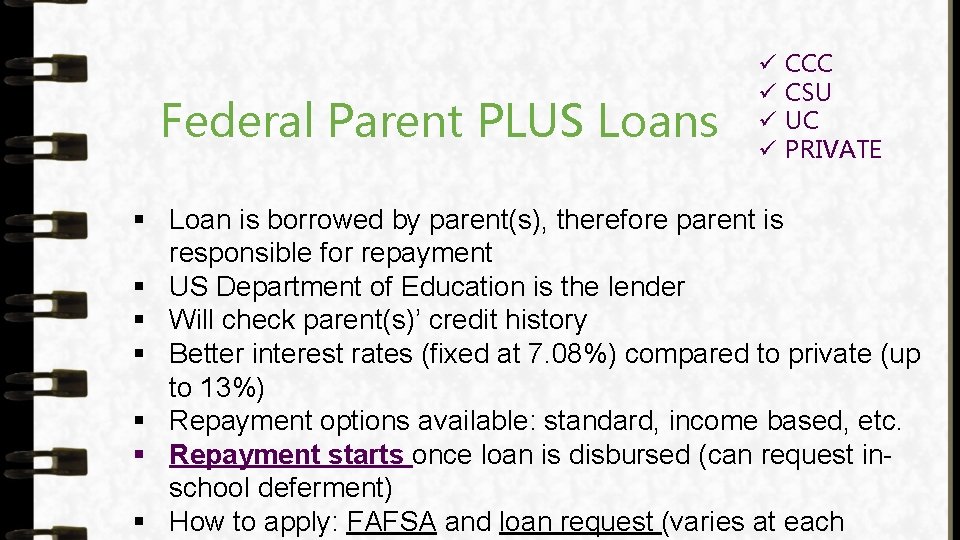
Federal Parent PLUS Loans ü ü CCC CSU UC PRIVATE § Loan is borrowed by parent(s), therefore parent is responsible for repayment § US Department of Education is the lender § Will check parent(s)’ credit history § Better interest rates (fixed at 7. 08%) compared to private (up to 13%) § Repayment options available: standard, income based, etc. § Repayment starts once loan is disbursed (can request inschool deferment) § How to apply: FAFSA and loan request (varies at each
STATE (CALIFORNIA) FINANCIAL AID PROGRAMS
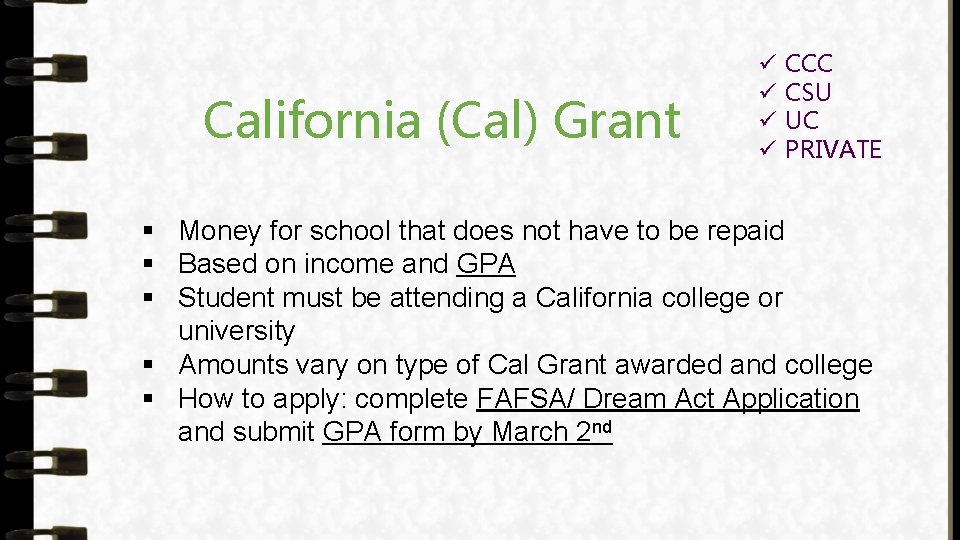
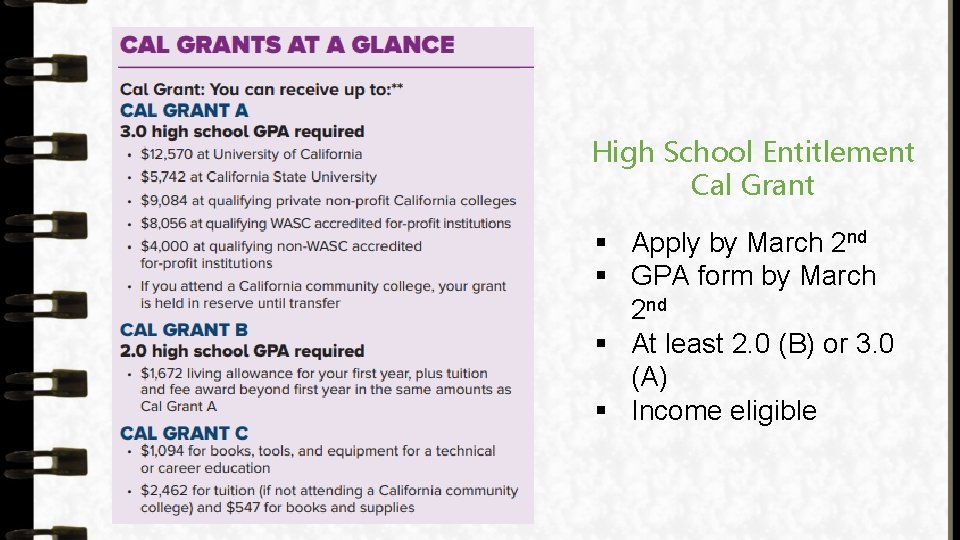
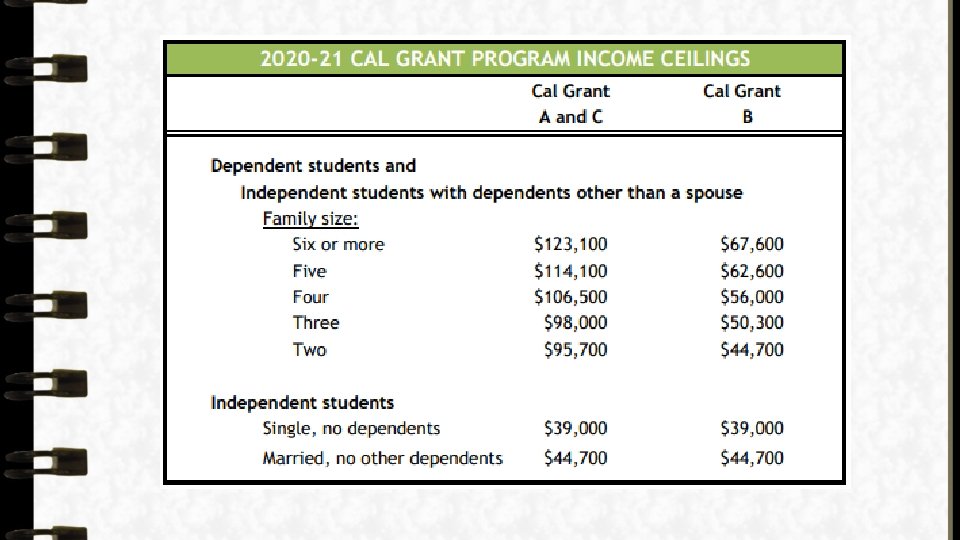
California (Cal) Grant ü ü CCC CSU UC PRIVATE § Money for school that does not have to be repaid § Based on income and GPA § Student must be attending a California college or university § Amounts vary on type of Cal Grant awarded and college § How to apply: complete FAFSA/ Dream Act Application and submit GPA form by March 2 nd
GPA Verification Form
High School Entitlement Cal Grant § Apply by March 2 nd § GPA form by March 2 nd § At least 2. 0 (B) or 3. 0 (A) § Income eligible
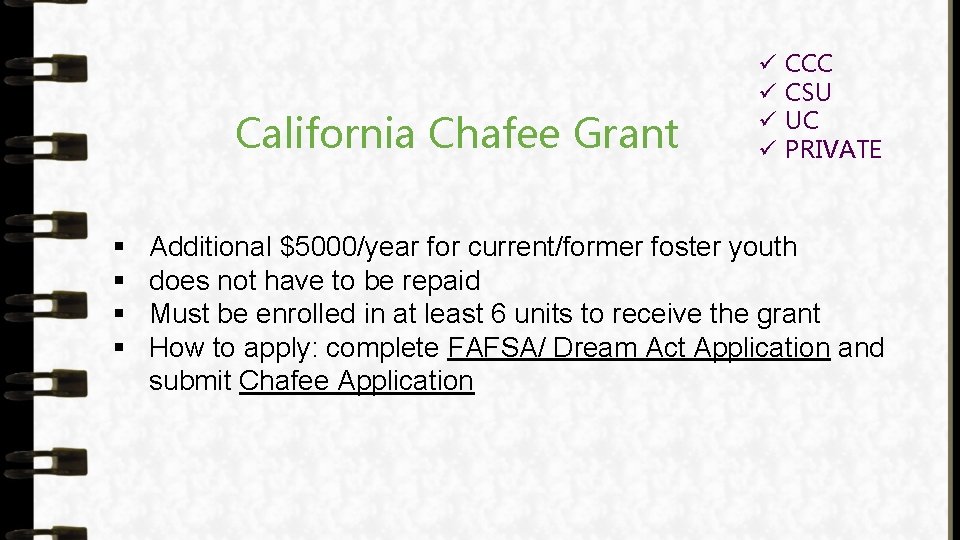
California Chafee Grant § § ü ü CCC CSU UC PRIVATE Additional $5000/year for current/former foster youth does not have to be repaid Must be enrolled in at least 6 units to receive the grant How to apply: complete FAFSA/ Dream Act Application and submit Chafee Application
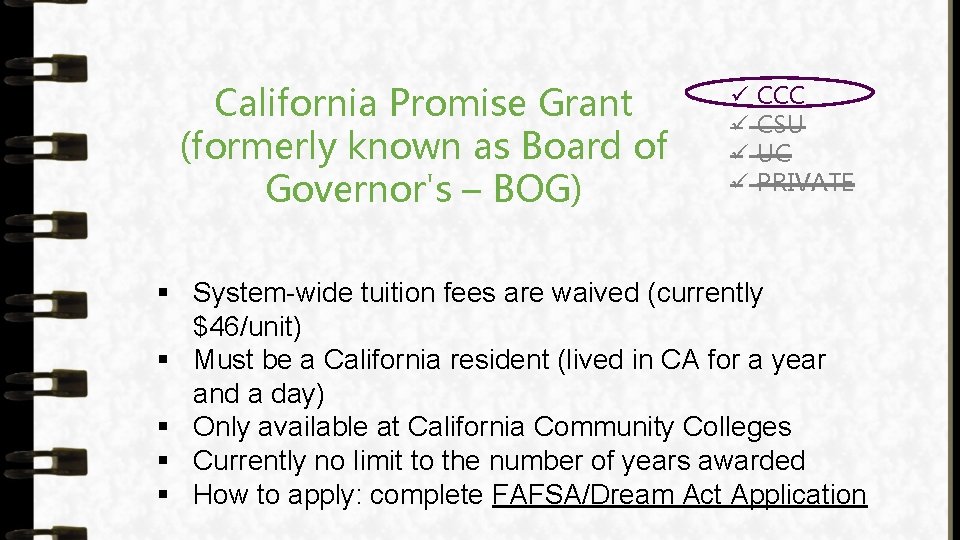
California Promise Grant (formerly known as Board of Governor's – BOG) ü ü CCC CSU UC PRIVATE § System-wide tuition fees are waived (currently $46/unit) § Must be a California resident (lived in CA for a year and a day) § Only available at California Community Colleges § Currently no limit to the number of years awarded § How to apply: complete FAFSA/Dream Act Application
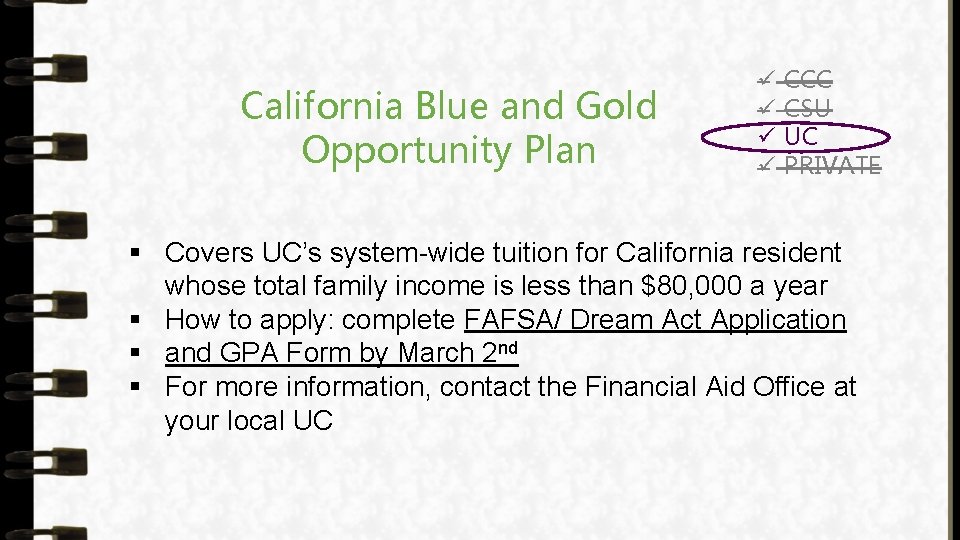
California Blue and Gold Opportunity Plan ü ü CCC CSU UC PRIVATE § Covers UC’s system-wide tuition for California resident whose total family income is less than $80, 000 a year § How to apply: complete FAFSA/ Dream Act Application § and GPA Form by March 2 nd § For more information, contact the Financial Aid Office at your local UC
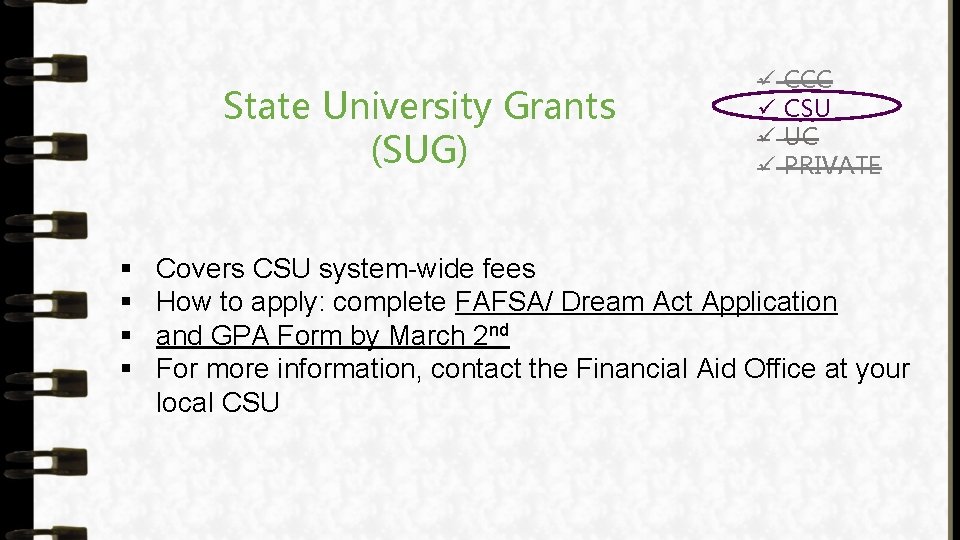
State University Grants (SUG) § § ü ü CCC CSU UC PRIVATE Covers CSU system-wide fees How to apply: complete FAFSA/ Dream Act Application and GPA Form by March 2 nd For more information, contact the Financial Aid Office at your local CSU
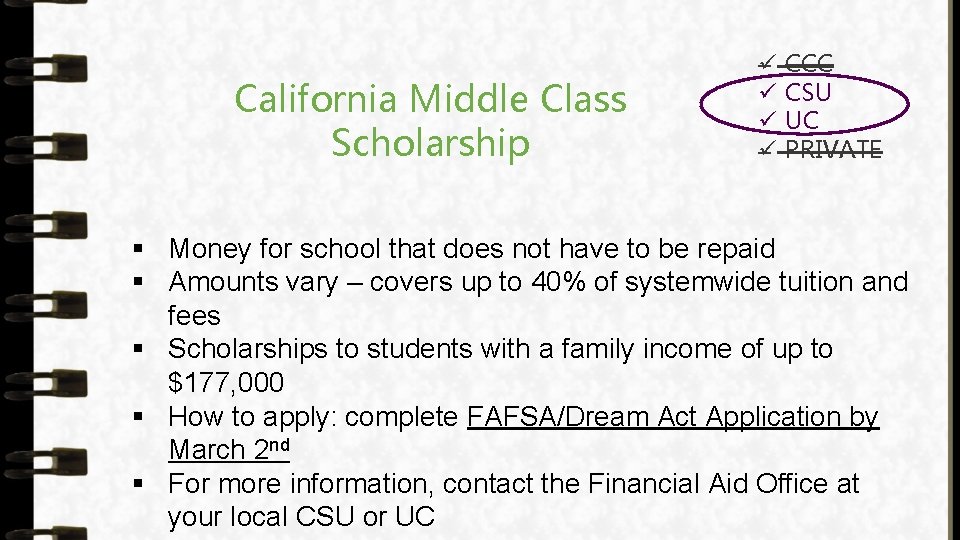
California Middle Class Scholarship ü ü CCC CSU UC PRIVATE § Money for school that does not have to be repaid § Amounts vary – covers up to 40% of systemwide tuition and fees § Scholarships to students with a family income of up to $177, 000 § How to apply: complete FAFSA/Dream Act Application by March 2 nd § For more information, contact the Financial Aid Office at your local CSU or UC
• • Be a first-time college student Enroll in a minimum of 12 units for the fall term Complete a quick FT 3 application/pledge Complete the Federal Application for Federal Student Aid (FAFSA) or Dream Act Application Complete a minimum of 12 units for the semester with a GPA of 2. 0 or higher Receive a refund of your enrollment fees!!! Program now covers first two years of enrollment
Institutional Grants and Scholarship Programs
Institutional Grants and Scholarships ü ü CCC CSU UC PRIVATE § Gift aid funded by the college/university and private donors § Eligibility and amount varies per college (income and merit) § Private colleges tend to offer more institutional grants to minimize the out of pocket costs for families § How to apply: will usually require the FAFSA; some may require additional application forms in addition to the FAFSA
Financial Aid Tips
Everyone should apply § Don’t assume you don’t qualify § The application is free— you have nothing to lose § The FAFSA is easier than ever with the IRS Data Tool § The average time is takes to complete the FAFSA is 30 mins.
Parents have to provide income information for FAFSA/Dream Act Application Regardless of how much support is provided by the parents, a student is still considered DEPENDENT for financial aid purposes unless the student meets one of the following criteria: - At least 24 years old - Married - Have children or other dependents (financially supported by student) - Enrolled in a master’s or doctorate program - Veteran - Orphan, legal guardianship, emancipated minor, foster or homeless youth
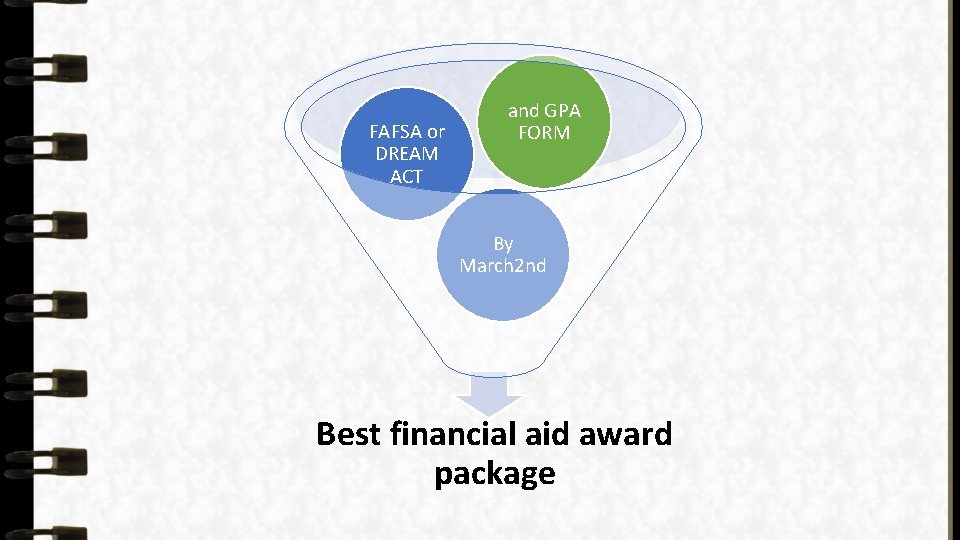
FAFSA or DREAM ACT and GPA FORM By March 2 nd Best financial aid award package
What to expect after you apply…
Follow up with the Financial Aid Office at your college/university. Approximately 30% of FAFSA applications are selected for income verification. You may be asked to provide supporting documents to the financial aid office before your awards are finalized.
Questions?
Thank you! DVC Financial Aid Jesus Gutierrez Financial Aid Assistant, Outreach financialaid@dvc. edu