
EVOLVING IP ISSUES IN BRAND PROTECTION IN THE
EVOLVING IP ISSUES IN BRAND PROTECTION IN THE DIGITAL MARKETING ERA PRESENTED BY STEPHANIE WONG BARRISTER-AT-LAW, DVC
• Advertising techniques e. g. Google Ad. Words, metatags • Evidence of use, wellknown trade marks, honest concurrent use? Likes, followers, Google analytics etc. • Jurisdictional challenges e. g. I -800 Flowers Inc v. Phonenames Ltd ; L'Oréal SA v e. Bay International AG; Argos • Liability of internet service providers • New marketing tools e. g. hashtags # • Issues on “use” and infringement
Google Analytics • A freemium web analytics service offered by Google that tracks and reports website traffic • Main reports: • Audience • Acquisition • Behaviour • Conversions
Google Analytics (cont’d) • Various performance metrics, e. g. : • • • Engagement rate Bounce rate Event tracking Visitor flow Inpage analytics
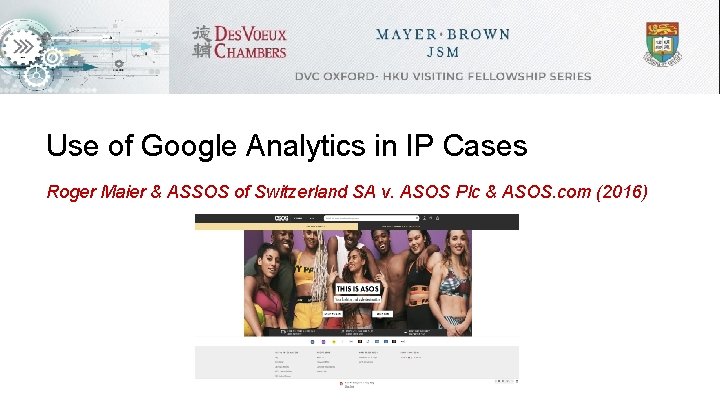
Use of Google Analytics in IP Cases Roger Maier & ASSOS of Switzerland SA v. ASOS Plc & ASOS. com (2016)
Use of Google Analytics in IP Cases Roger Maier & ASSOS of Switzerland SA v. ASOS Plc & ASOS. com • Searches made on the ASOS website looking for Assos products • Getting to the ASOS website using an Assos linked search term • What links come up when you search for “Assos”
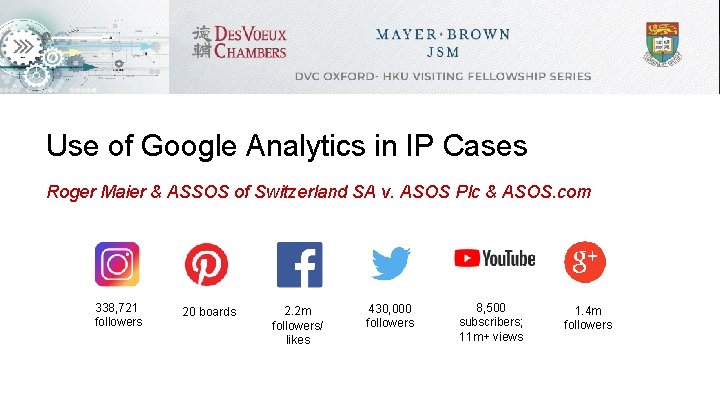
Use of Google Analytics in IP Cases Roger Maier & ASSOS of Switzerland SA v. ASOS Plc & ASOS. com 338, 721 followers 20 boards 2. 2 m followers/ likes 430, 000 followers 8, 500 subscribers; 11 m+ views 1. 4 m followers
Google Ad. Words, Metatags “ Key question: Whether use in a metatag or in advertising keyword is ”use” that constitutes use of the mark for the purposes of TM infringement / passing-off
Google Ad. Words, Metatags • Bidding on the keyword constituted use of the sign in relation to its own goods and services • Use must adversely affect one of the “functions” of TM • Origin / Investment / Advertising functions -- Google v Louis Vuitton (2010)
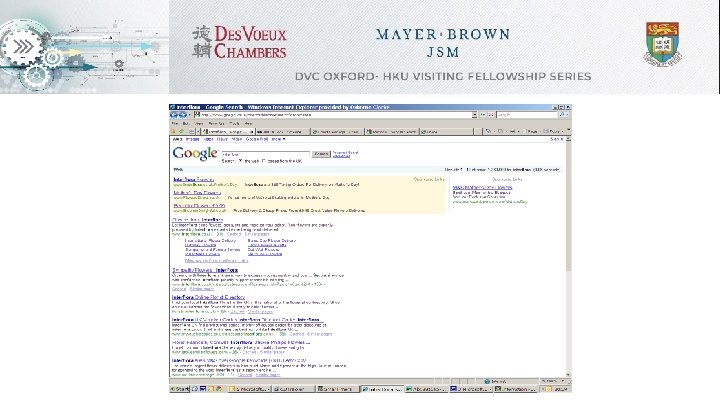
Google Ad. Words, Metatags • “keyword advertising is not inherently objectionable” • “double identity” per se insufficient • Key: whether advertisement does not enable normally informed and reasonably observant internet users, or enables them only with difficulty, to ascertain whether the goods originate from the trade mark owner or an undertaking economically connected to it -- Interflora Inc v. Marks & Spencer plc (No 5) (2015)
Food For Thought/Actionable Takeaways: • Increasing use and acceptance of this type of evidence • Be careful of implications from “big data” and use the data accurately • Double identity cases – introducing a watered-down test for likelihood of confusion? • What exactly are those TM functions other than the origin function? • Interaction with defences (honest concurrent use)
Stephanie Wong Barrister-at-Law The End Thank you Des Voeux Chambers 38/F Gloucester Tower The Landmark, Central E: stephanie. wong@dvc. hk T: +852 2526 3071 W: www. dvc. hk
- Slides: 13