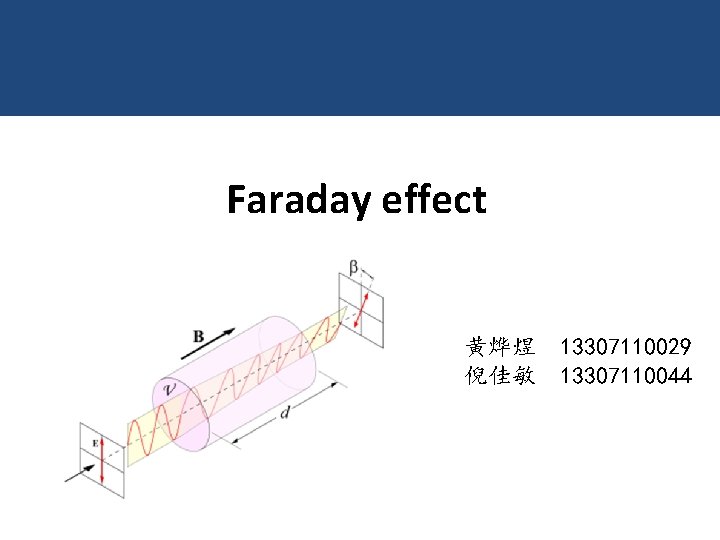
Faraday effect 13307110029 13307110044 Contents Experiment theory and

- Slides: 35
Faraday effect 黄烨煜 13307110029 倪佳敏 13307110044
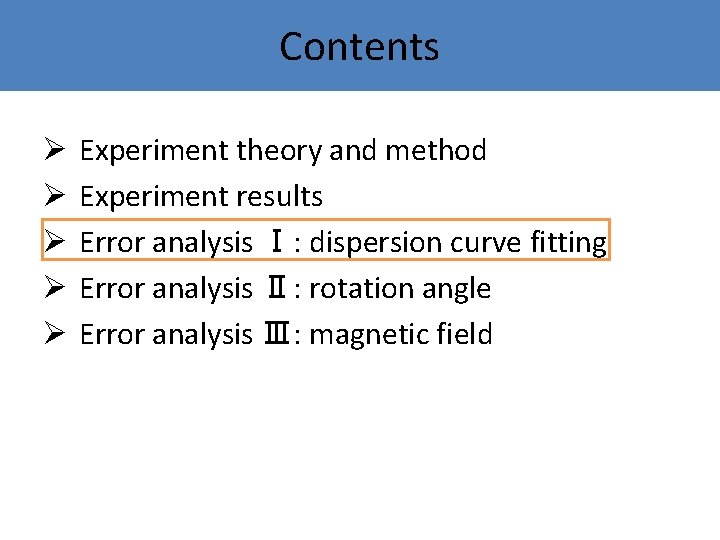
Contents Ø Ø Ø Experiment theory and method Experiment results Error analysis Ⅰ: dispersion curve fitting Error analysis Ⅱ: rotation angle Error analysis Ⅲ: magnetic field
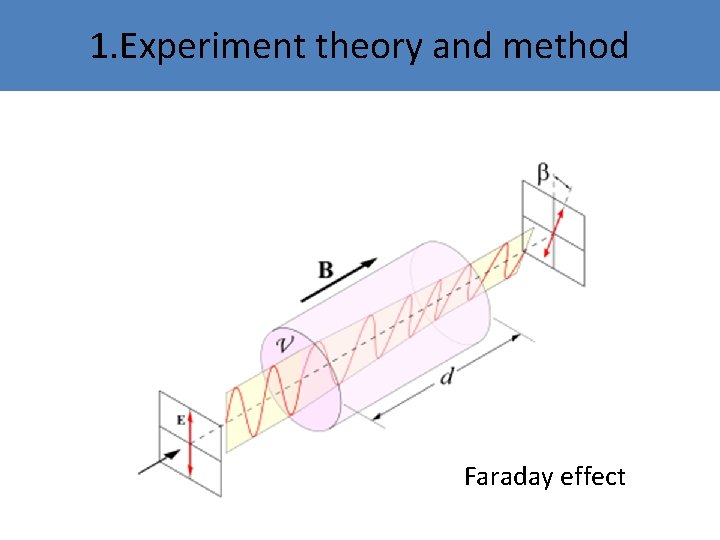
1. Experiment theory and method Faraday effect
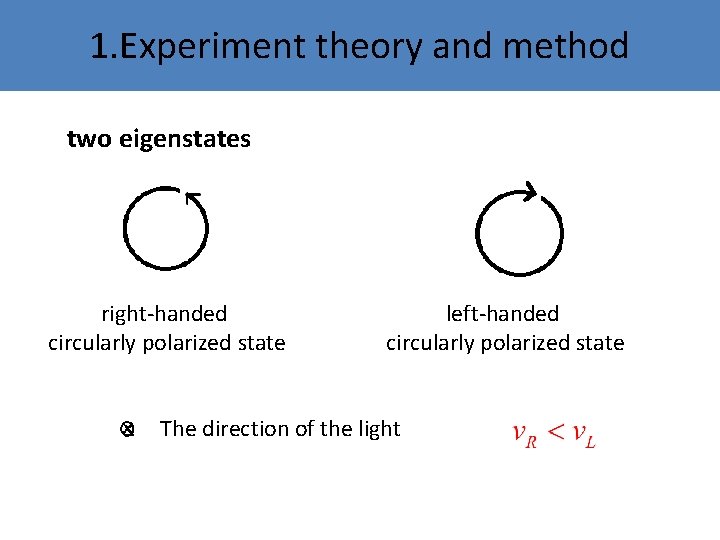
1. Experiment theory and method two eigenstates right-handed circularly polarized state left-handed circularly polarized state The direction of the light
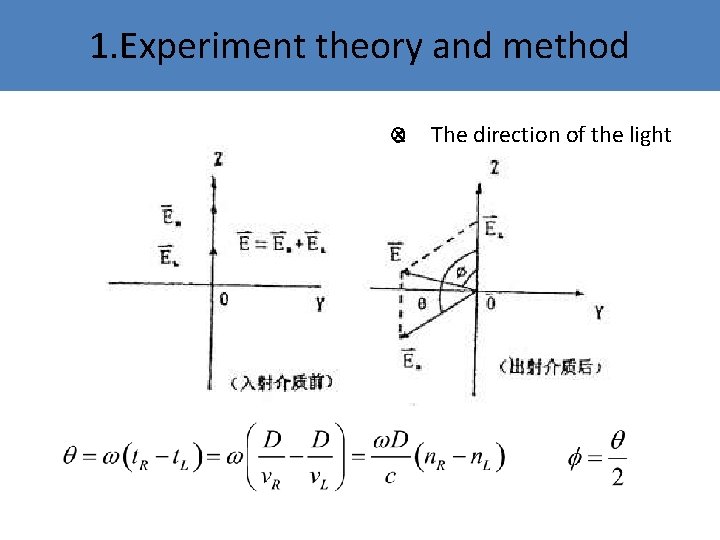
1. Experiment theory and method The direction of the light
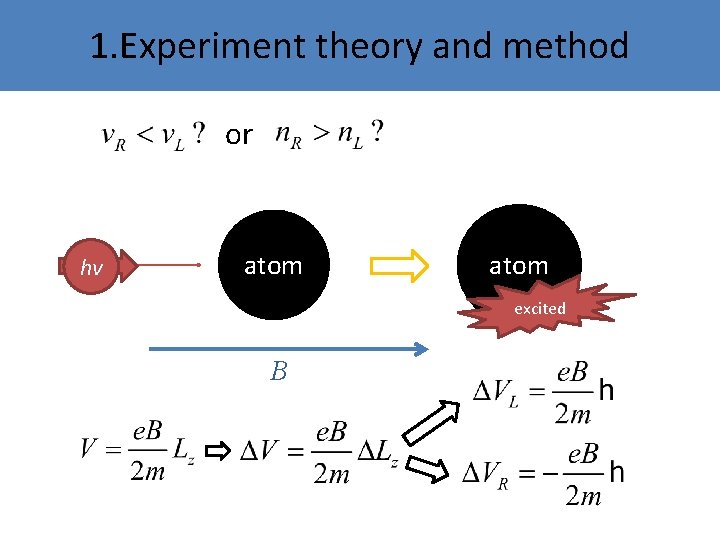
1. Experiment theory and method or hν atom excited B
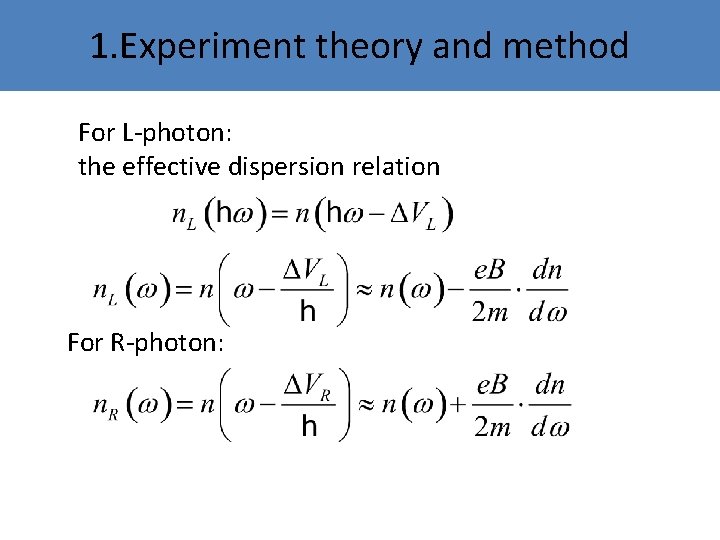
1. Experiment theory and method For L-photon: the effective dispersion relation For R-photon:
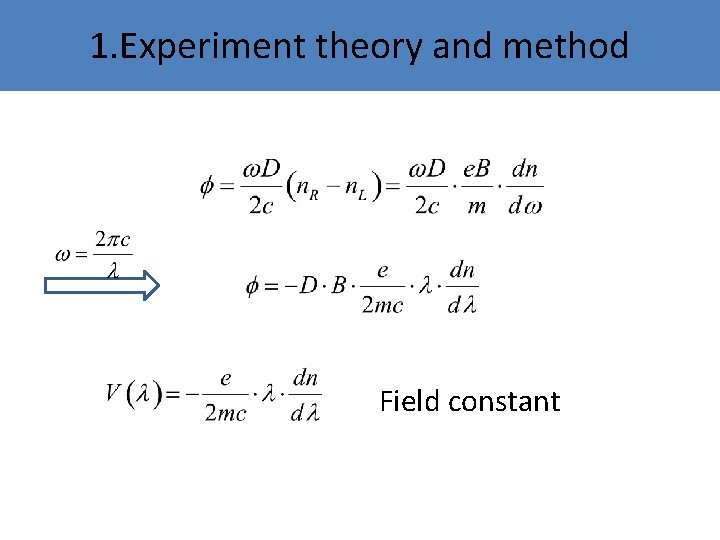
1. Experiment theory and method Field constant
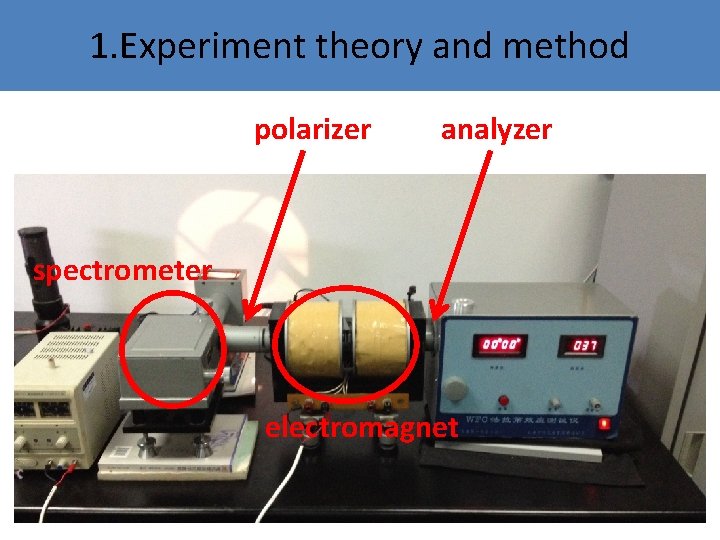
1. Experiment theory and method polarizer analyzer spectrometer electromagnet
Contents Ø Ø Ø Experiment theory and method Experiment results Error analysis Ⅰ: dispersion curve fitting Error analysis Ⅱ: rotation angle Error analysis Ⅲ: magnetic field
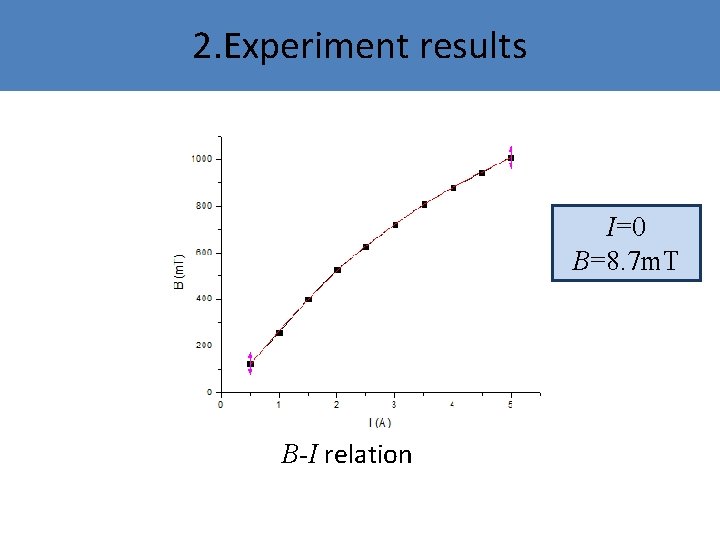
2. Experiment results I=0 B=8. 7 m. T B-I relation
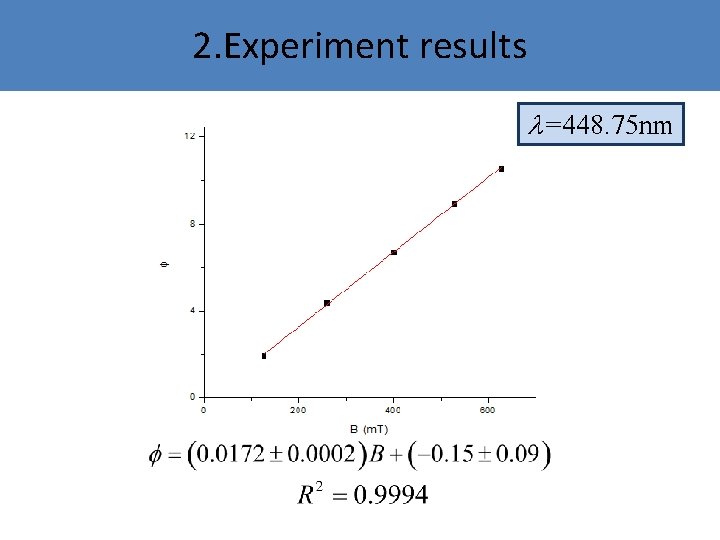
2. Experiment results l=448. 75 nm
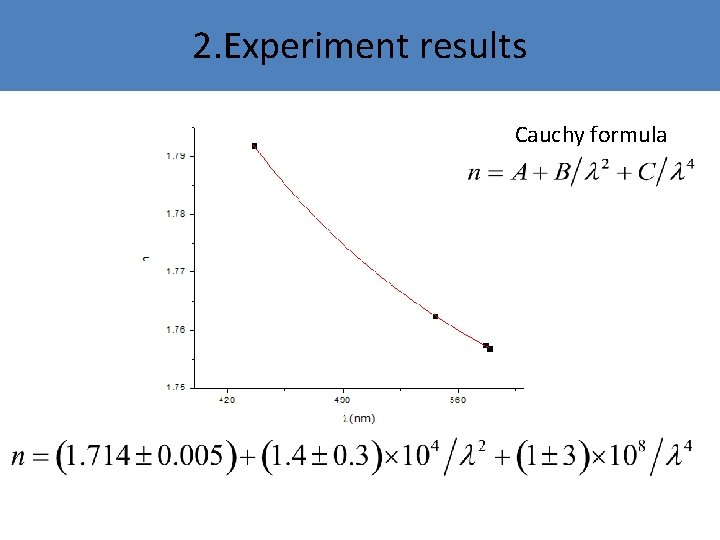
2. Experiment results Cauchy formula
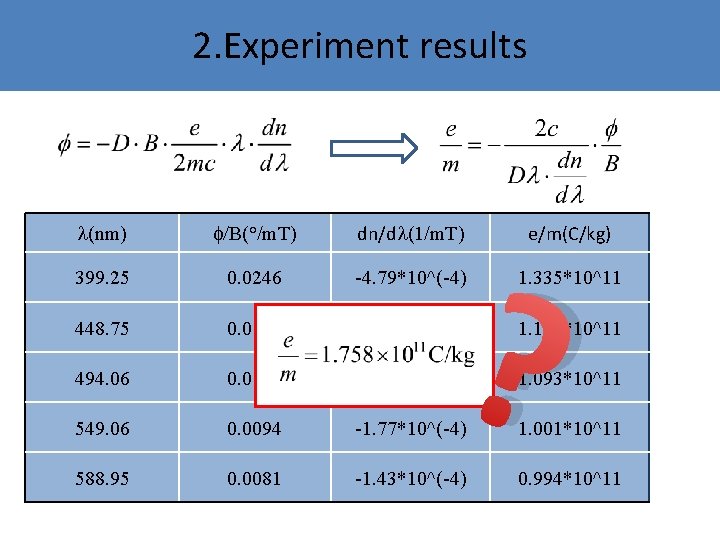
2. Experiment results ? l(nm) f/B(°/m. T) dn/dl(1/m. T) 399. 25 0. 0246 -4. 79*10^(-4) 1. 335*10^11 448. 75 0. 0172 -3. 32*10^(-4) 1. 194*10^11 494. 06 0. 0128 -2. 46*10^(-4) 1. 093*10^11 549. 06 0. 0094 -1. 77*10^(-4) 1. 001*10^11 588. 95 0. 0081 -1. 43*10^(-4) 0. 994*10^11 e/m(C/kg)
Contents Ø Ø Ø Experiment theory and method Experiment results Error analysis Ⅰ: dispersion curve fitting Error analysis Ⅱ: rotation angle Error analysis Ⅲ: magnetic field
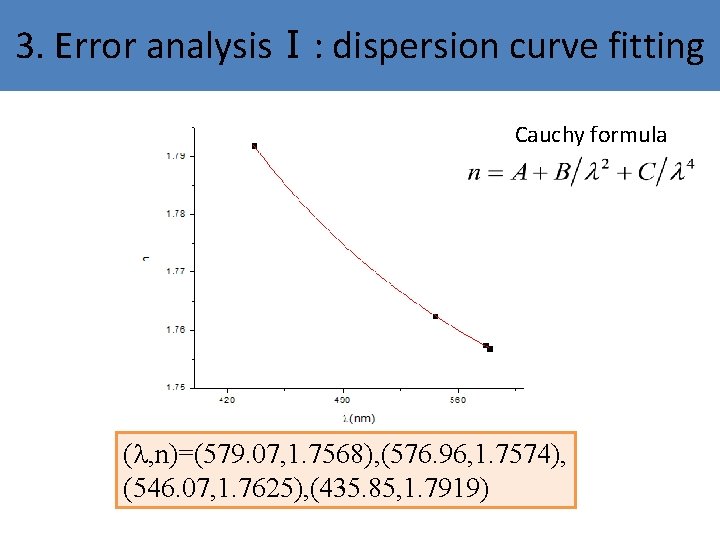
3. Error analysisⅠ: dispersion curve fitting Cauchy formula (l, n)=(579. 07, 1. 7568), (576. 96, 1. 7574), (546. 07, 1. 7625), (435. 85, 1. 7919)
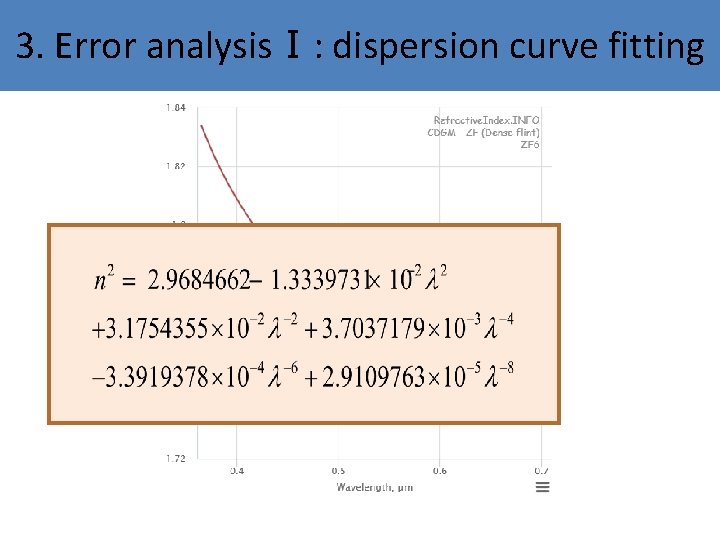
3. Error analysisⅠ: dispersion curve fitting
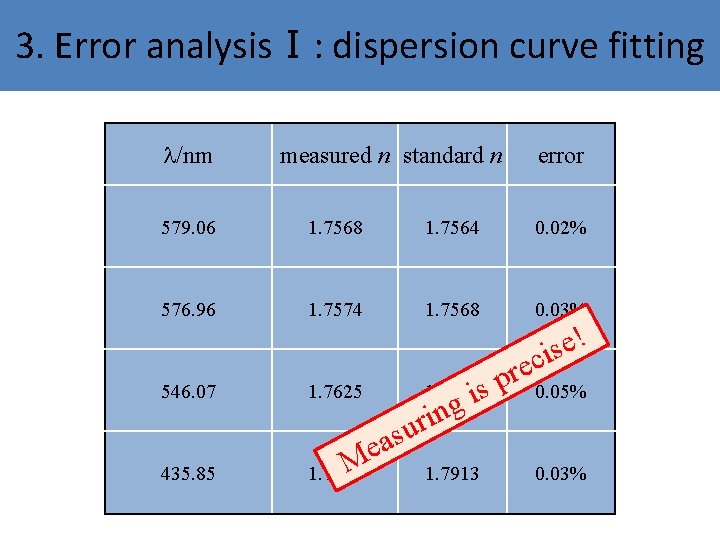
3. Error analysisⅠ: dispersion curve fitting l/nm measured n standard n error 579. 06 1. 7568 1. 7564 0. 02% 576. 96 1. 7574 1. 7568 0. 03% 546. 07 435. 85 e r p 1. 7617 is 0. 05% g n i sur 1. 7625 a e M 1. 7919 ! e cis 1. 7913 0. 03%
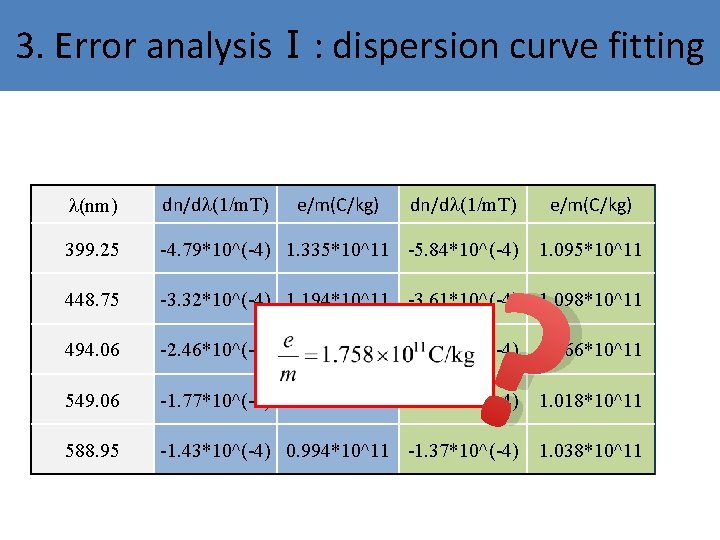
3. Error analysisⅠ: dispersion curve fitting l(nm) dn/dl(1/m. T) 399. 25 -4. 79*10^(-4) 1. 335*10^11 -5. 84*10^(-4) 1. 095*10^11 448. 75 -3. 32*10^(-4) 1. 194*10^11 -3. 61*10^(-4) 1. 098*10^11 494. 06 -2. 46*10^(-4) 1. 093*10^11 -2. 52*10^(-4) 1. 066*10^11 549. 06 -1. 77*10^(-4) 1. 001*10^11 -1. 74*10^(-4) 1. 018*10^11 588. 95 -1. 43*10^(-4) 0. 994*10^11 -1. 37*10^(-4) 1. 038*10^11 e/m(C/kg) dn/dl(1/m. T) e/m(C/kg) ?
Contents Ø Ø Ø Experiment theory and method Experiment results Error analysis Ⅰ: dispersion curve fitting Error analysis Ⅱ: rotation angle Error analysis Ⅲ: magnetic field
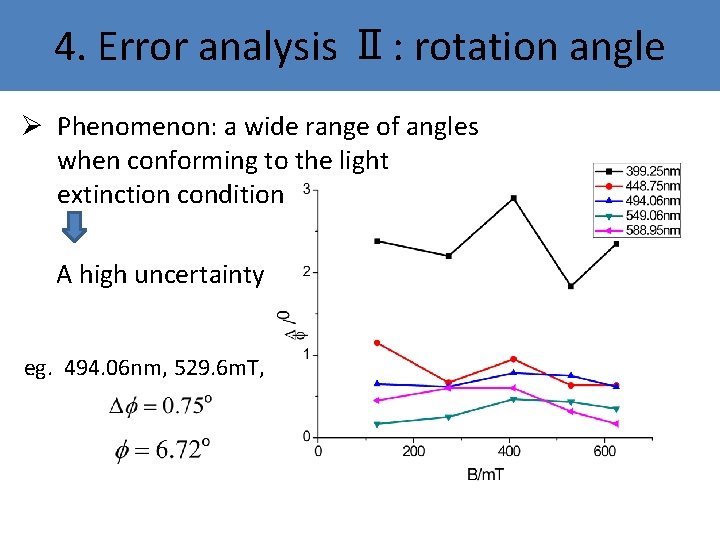
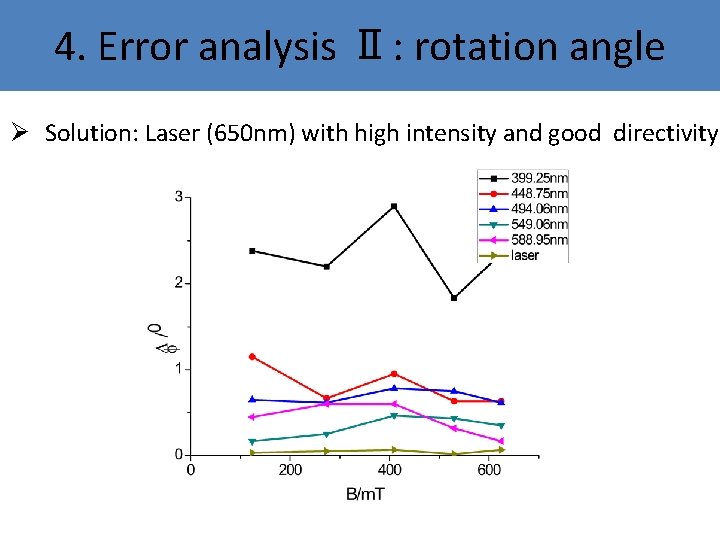
4. Error analysis Ⅱ: rotation angle Ø Phenomenon: a wide range of angles when conforming to the light extinction condition A high uncertainty eg. 494. 06 nm, 529. 6 m. T,
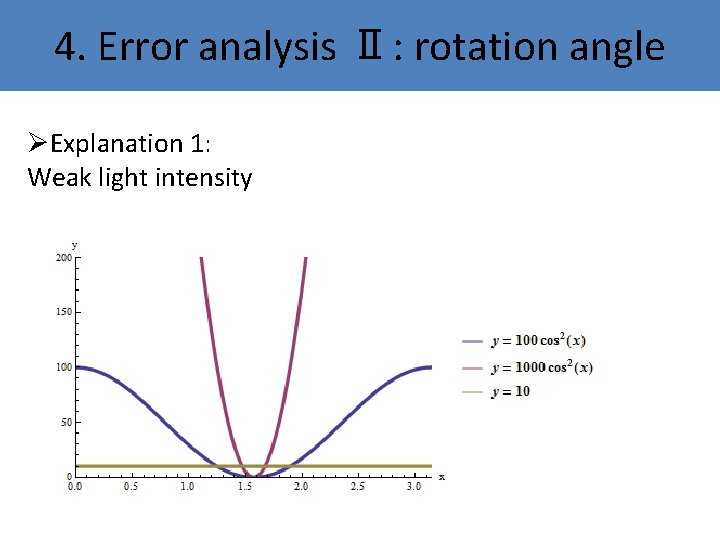
4. Error analysis Ⅱ: rotation angle ØExplanation 1: Weak light intensity
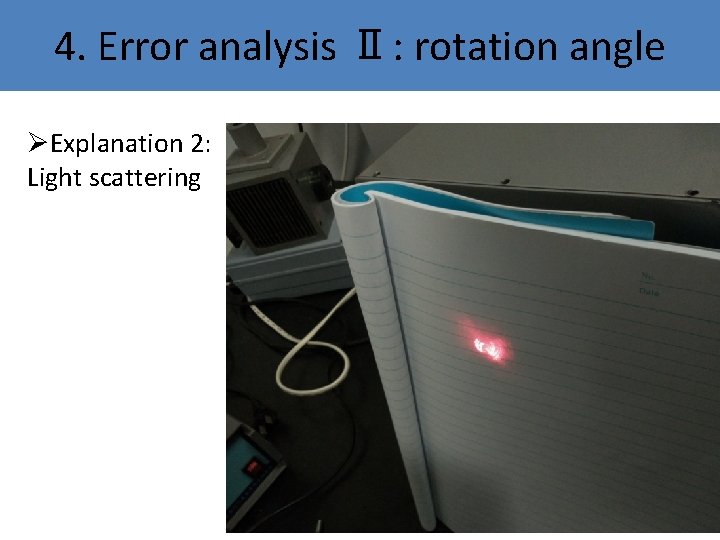
4. Error analysis Ⅱ: rotation angle ØExplanation 2: Light scattering
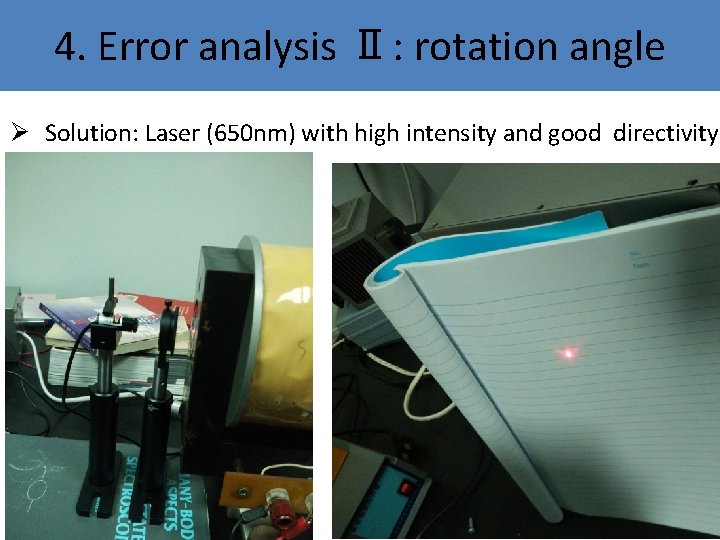
4. Error analysis Ⅱ: rotation angle Ø Solution: Laser (650 nm) with high intensity and good directivity
4. Error analysis Ⅱ: rotation angle Ø Solution: Laser (650 nm) with high intensity and good directivity
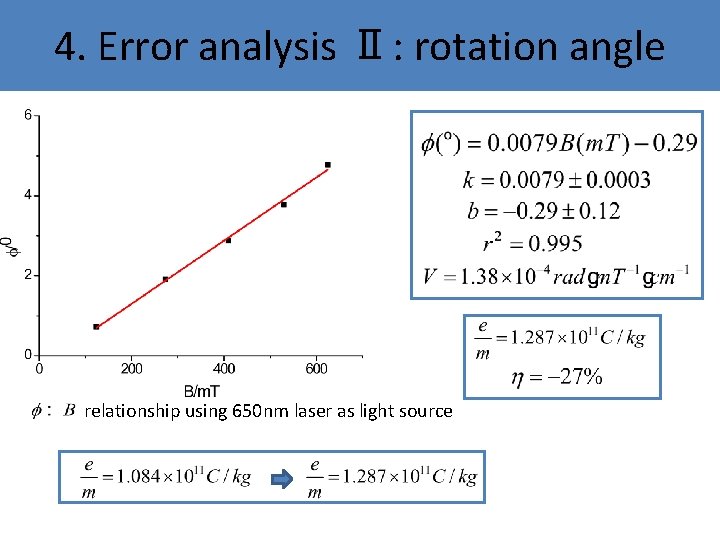
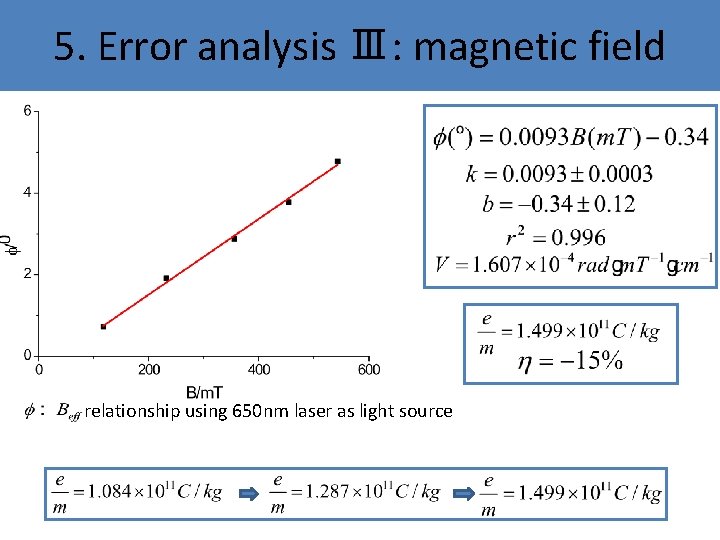
4. Error analysis Ⅱ: rotation angle relationship using 650 nm laser as light source
Contents Ø Ø Ø Experiment theory and method Experiment results Error analysis Ⅰ: dispersion curve fitting Error analysis Ⅱ: rotation angle Error analysis Ⅲ: magnetic field
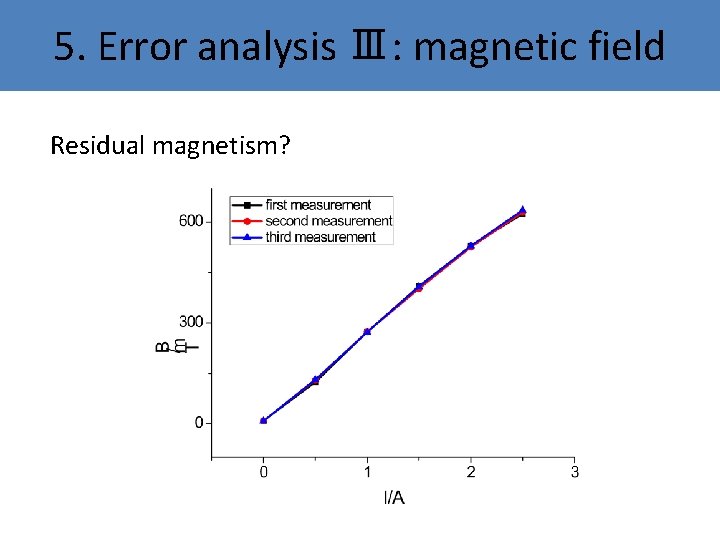
5. Error analysis Ⅲ: magnetic field Residual magnetism?
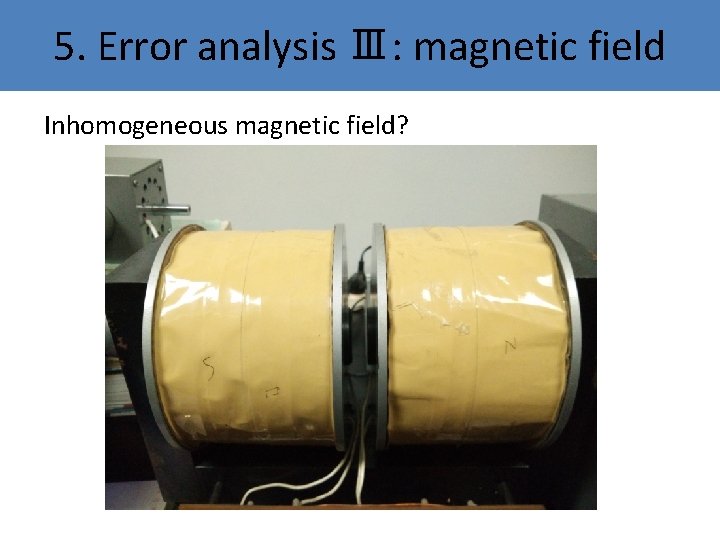
5. Error analysis Ⅲ: magnetic field Inhomogeneous magnetic field?
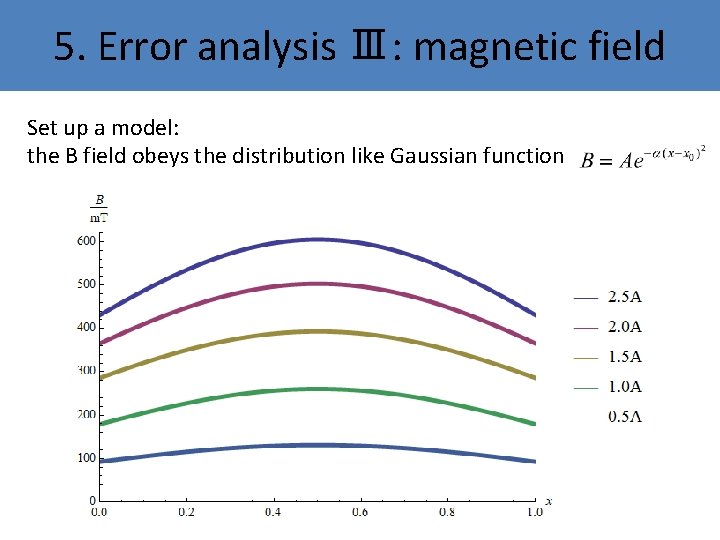
5. Error analysis Ⅲ: magnetic field Set up a model: the B field obeys the distribution like Gaussian function
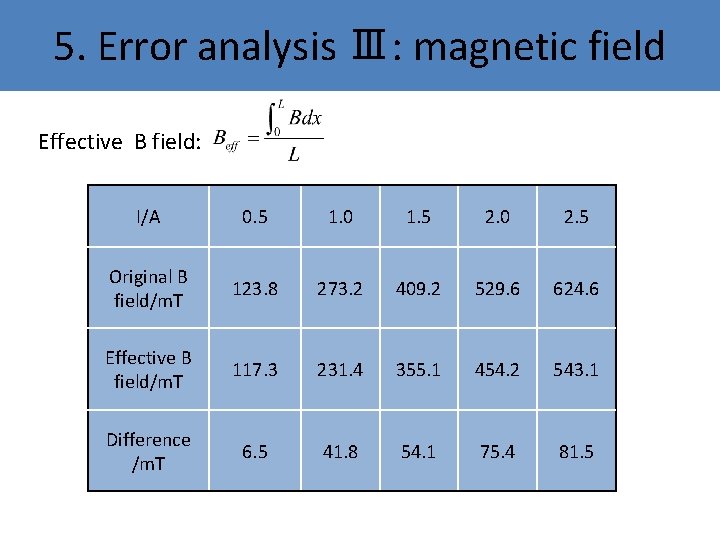
5. Error analysis Ⅲ: magnetic field Effective B field: I/A 0. 5 1. 0 1. 5 2. 0 2. 5 Original B field/m. T 123. 8 273. 2 409. 2 529. 6 624. 6 Effective B field/m. T 117. 3 231. 4 355. 1 454. 2 543. 1 Difference /m. T 6. 5 41. 8 54. 1 75. 4 81. 5
5. Error analysis Ⅲ: magnetic field relationship using 650 nm laser as light source
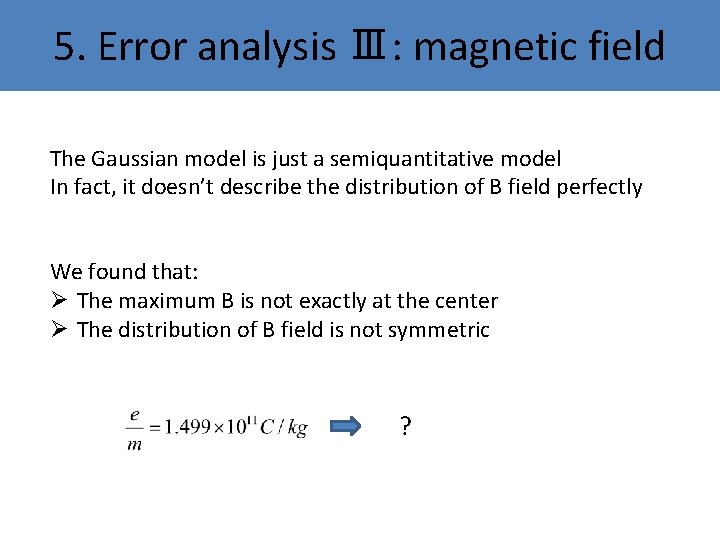
5. Error analysis Ⅲ: magnetic field The Gaussian model is just a semiquantitative model In fact, it doesn’t describe the distribution of B field perfectly We found that: Ø The maximum B is not exactly at the center Ø The distribution of B field is not symmetric ?
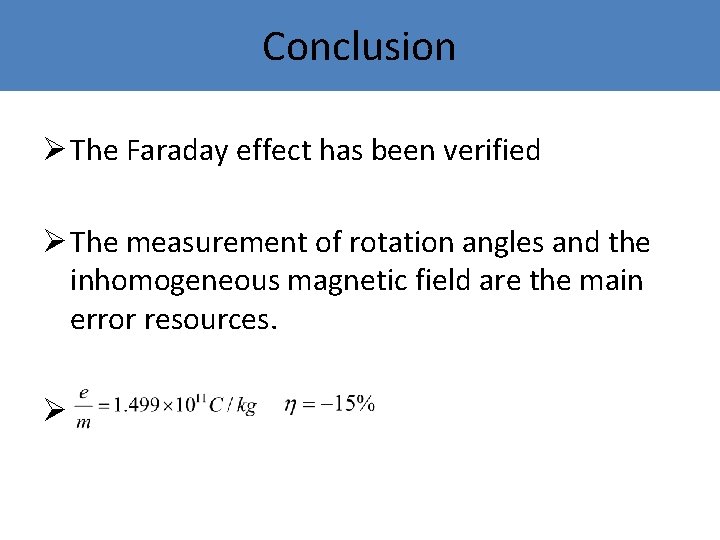
Conclusion Ø The Faraday effect has been verified Ø The measurement of rotation angles and the inhomogeneous magnetic field are the main error resources. Ø
Thank you