Exploring the Changing Landscape of Online Education Ann


- Slides: 19
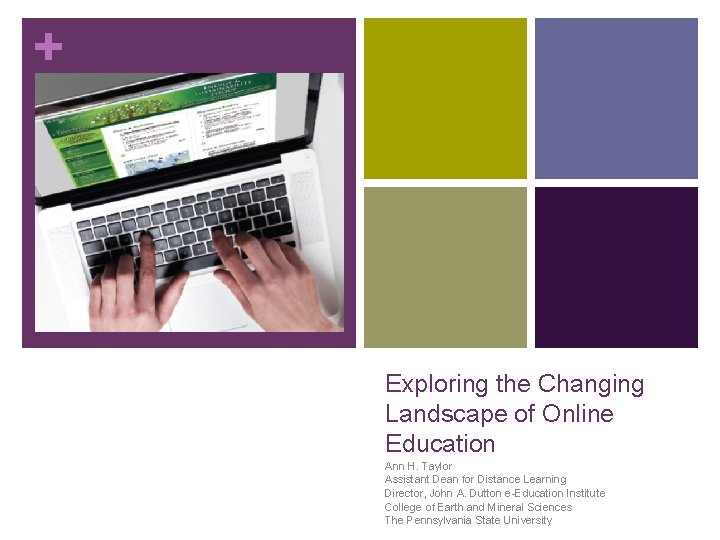
+ Exploring the Changing Landscape of Online Education Ann H. Taylor Assistant Dean for Distance Learning Director, John A. Dutton e-Education Institute College of Earth and Mineral Sciences The Pennsylvania State University
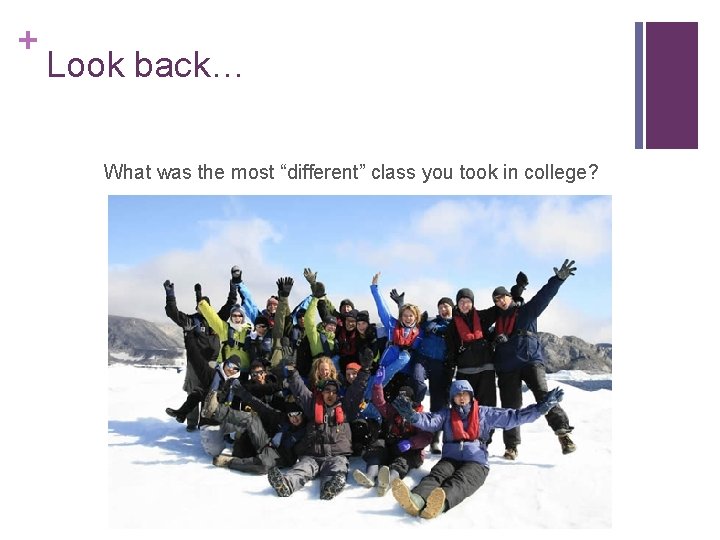
+ Look back… What was the most “different” class you took in college?
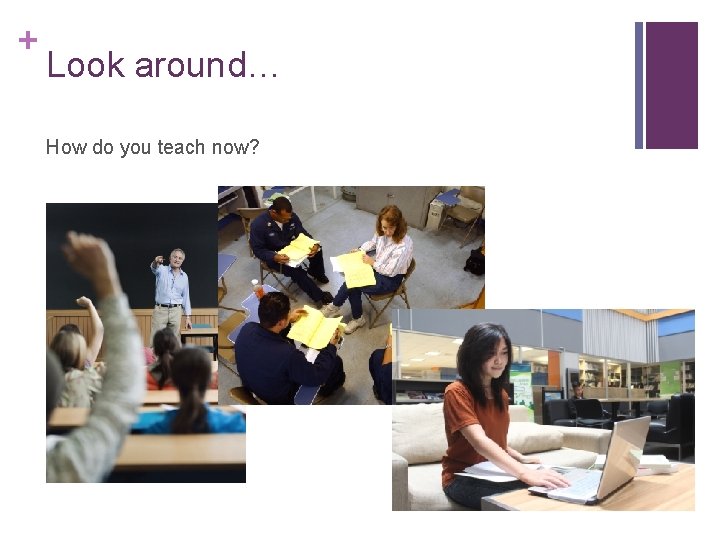
+ Look around… How do you teach now?
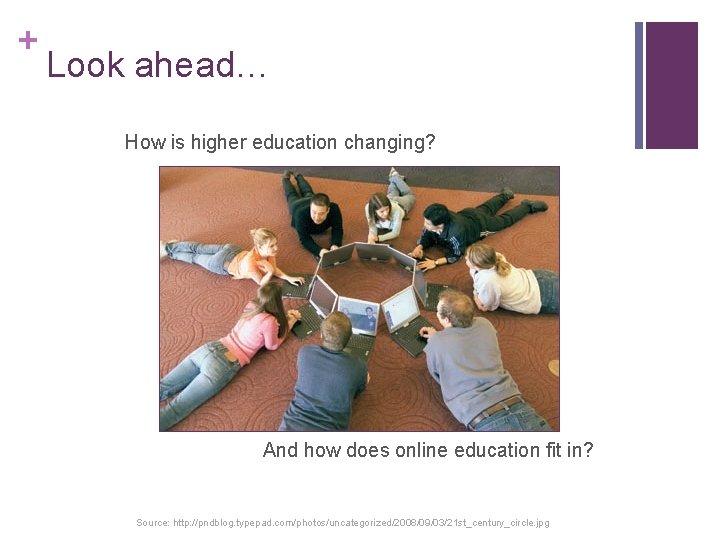
+ Look ahead… How is higher education changing? And how does online education fit in? Source: http: //pndblog. typepad. com/photos/uncategorized/2008/09/03/21 st_century_circle. jpg
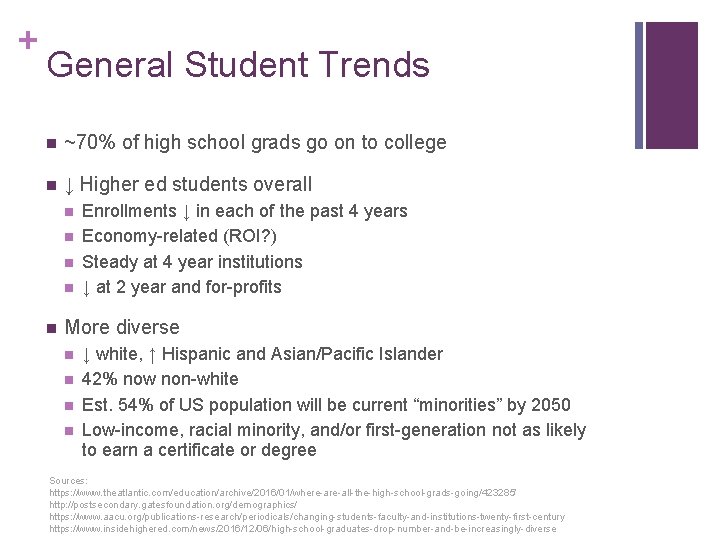
+ General Student Trends n ~70% of high school grads go on to college n ↓ Higher ed students overall n n n Enrollments ↓ in each of the past 4 years Economy-related (ROI? ) Steady at 4 year institutions ↓ at 2 year and for-profits More diverse n n ↓ white, ↑ Hispanic and Asian/Pacific Islander 42% now non-white Est. 54% of US population will be current “minorities” by 2050 Low-income, racial minority, and/or first-generation not as likely to earn a certificate or degree Sources: https: //www. theatlantic. com/education/archive/2016/01/where-all-the-high-school-grads-going/423285/ http: //postsecondary. gatesfoundation. org/demographics/ https: //www. aacu. org/publications-research/periodicals/changing-students-faculty-and-institutions-twenty-first-century https: //www. insidehighered. com/news/2016/12/06/high-school-graduates-drop-number-and-be-increasingly-diverse
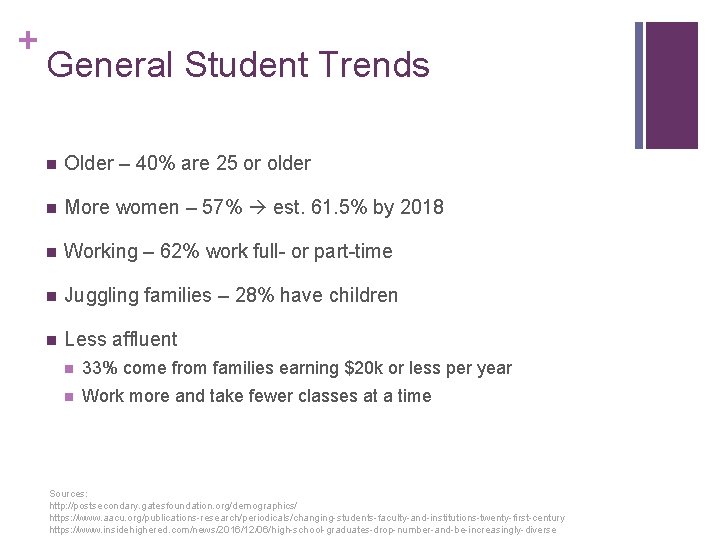
+ General Student Trends n Older – 40% are 25 or older n More women – 57% est. 61. 5% by 2018 n Working – 62% work full- or part-time n Juggling families – 28% have children n Less affluent n 33% come from families earning $20 k or less per year n Work more and take fewer classes at a time Sources: http: //postsecondary. gatesfoundation. org/demographics/ https: //www. aacu. org/publications-research/periodicals/changing-students-faculty-and-institutions-twenty-first-century https: //www. insidehighered. com/news/2016/12/06/high-school-graduates-drop-number-and-be-increasingly-diverse
+ Online Student Trends (2017 U. S. Report) n Population continues to grow n n n >6 million students taking at least 1 distance course (~30%) >14% of higher education students study 100% at a distance n Approximately ½ are enrolled at public institutions n Remaining portion evenly spilt between non-profit and for-profit institutions n Graduate students are 2 X as likely to study 100% at a distance On campus enrollments have ↓ 5% since 2012 n Overall decrease in higher ed students plays a factor, too Source: http: //digitallearningcompass. org/
+ Higher Ed Faculty Trends n “Graying” n n Number of 65+ have doubled since 2000 At least 25% of TT professors are approaching 70 n ↑ technical skills and teaching innovation (new faculty) n ↑ need for learning outcomes accountability n ↑ reliance on non-TT faculty n n New faculty pathways/roles n n Teaching versus research focus; Each with requirements for scholarship) ↑ support for large classrooms n n A response to budget constraints and lower than expected retirements Adding “preceptors” (students or faculty/staff) to traditional TAs ↑ learning design support (“hottest jobs in academy”) Source: 2026 The Decade Ahead: The Seismic Shifts Transforming the Future of Higher Education, Jeffrey Selingo for The Chronicle of Higher Education
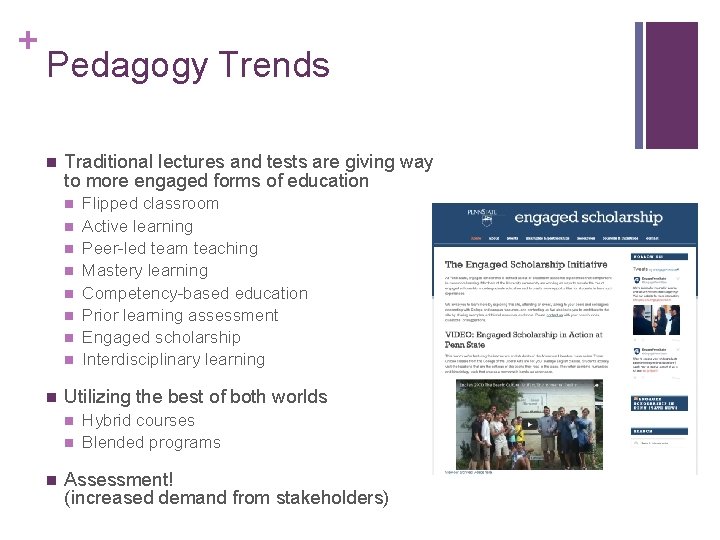
+ Pedagogy Trends n Traditional lectures and tests are giving way to more engaged forms of education n n n n Utilizing the best of both worlds n n n Flipped classroom Active learning Peer-led team teaching Mastery learning Competency-based education Prior learning assessment Engaged scholarship Interdisciplinary learning Hybrid courses Blended programs Assessment! (increased demand from stakeholders)
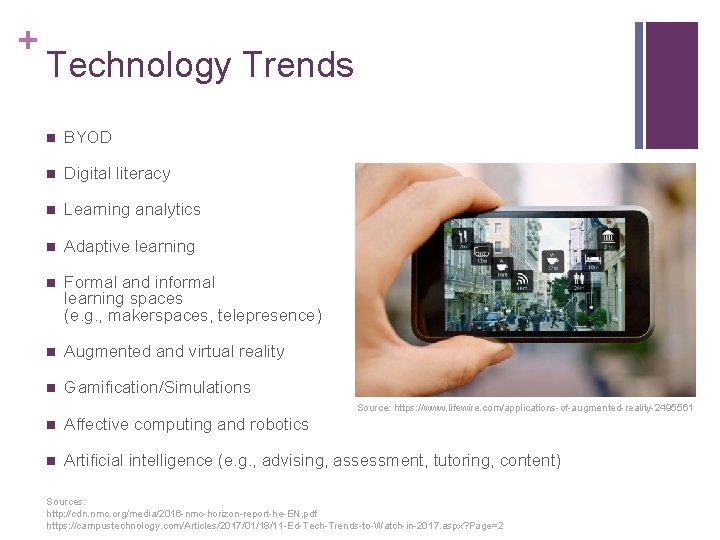
+ Technology Trends n BYOD n Digital literacy n Learning analytics n Adaptive learning n Formal and informal learning spaces (e. g. , makerspaces, telepresence) n Augmented and virtual reality n Gamification/Simulations Source: https: //www. lifewire. com/applications-of-augmented-reality-2495561 n Affective computing and robotics n Artificial intelligence (e. g. , advising, assessment, tutoring, content) Sources: http: //cdn. nmc. org/media/2016 -nmc-horizon-report-he-EN. pdf https: //campustechnology. com/Articles/2017/01/18/11 -Ed-Tech-Trends-to-Watch-in-2017. aspx? Page=2
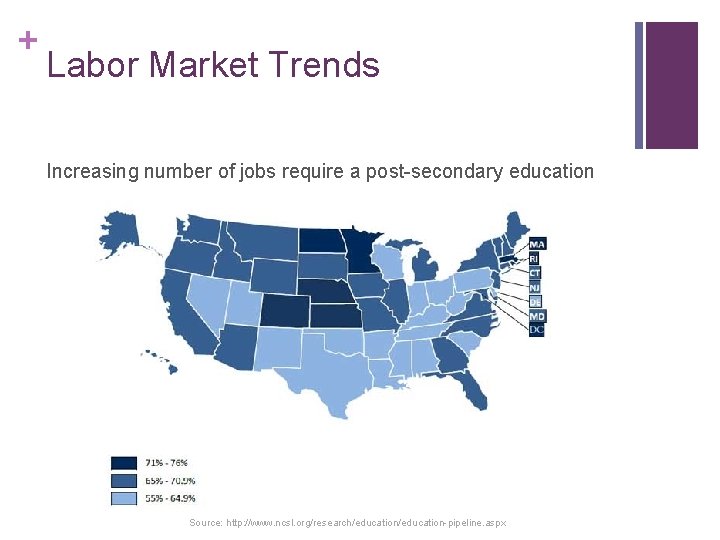
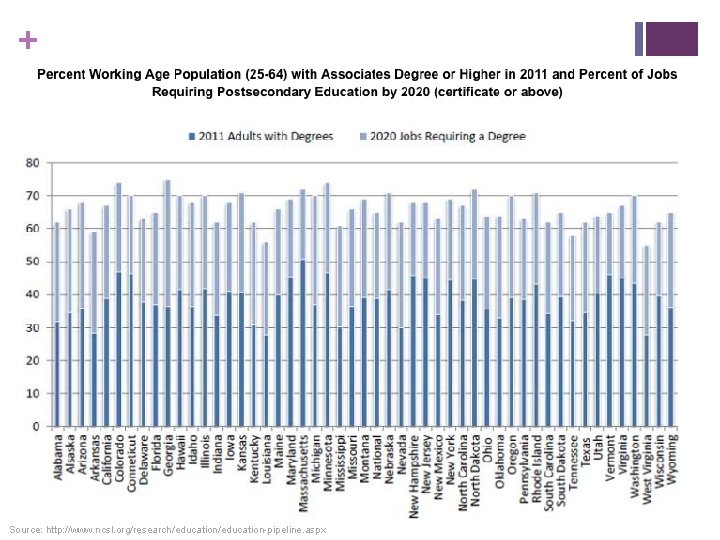
+ Labor Market Trends Increasing number of jobs require a post-secondary education Source: http: //www. ncsl. org/research/education-pipeline. aspx
+ Source: http: //www. ncsl. org/research/education-pipeline. aspx
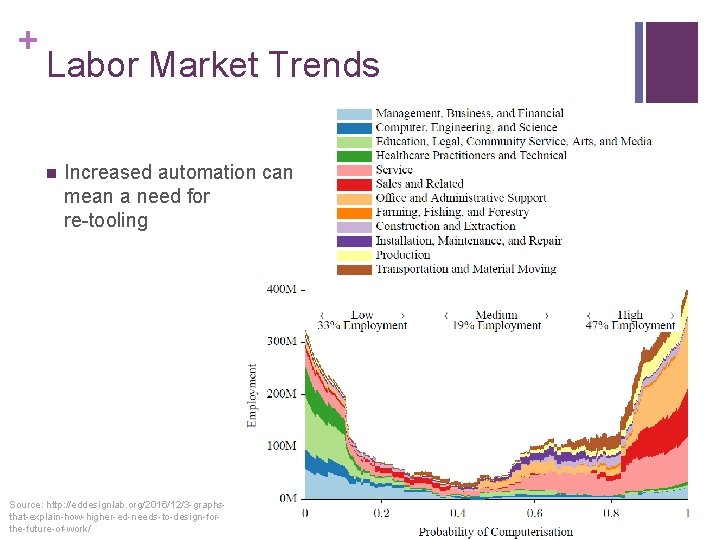
+ Labor Market Trends n Increased automation can mean a need for re-tooling Source: http: //eddesignlab. org/2016/12/3 -graphsthat-explain-how-higher-ed-needs-to-design-forthe-future-of-work/
+ Administrative Trends n ↑ Access to higher education n n ↓ Costs for students n n Revisiting policies on financial aid, admission standards, and residency requirements Helping underprepared students “catch up” Providing more support services Tuition OER Food banks, shelter programs, and emergency assistance funds Demonstrating value as an economic vehicle for regional economies n n Promoting new business development Commercializing faculty and student research
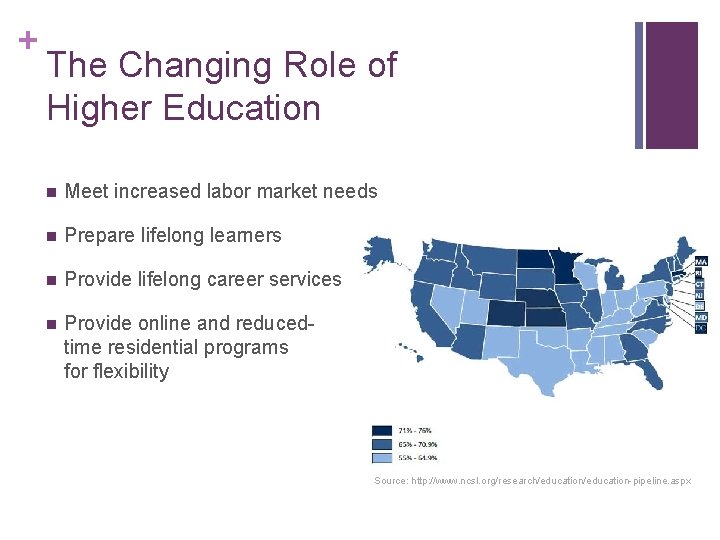
+ The Changing Role of Higher Education n Meet increased labor market needs n Prepare lifelong learners n Provide lifelong career services n Provide online and reducedtime residential programs for flexibility Source: http: //www. ncsl. org/research/education-pipeline. aspx
+ The Changing Landscape of Online Education (CHLOE) n Still growing, but rate is slowing n Competition is growing – “Just a click away” n Most online ed is asynchronous – Students demand convenience/flexibility n Online Program Management: n n n >25% of institutions use an external OPM provider Almost ½ of institutions have a decentralized model Faculty receive compensation for program development at most 4 -year (or more) institutions n Less likely at of community colleges n ↑ Learning design support – Focus on quality assurance n Most online programs have quality standards for course design, program design, online faculty development, and student outcomes Source: https: //www. eduventures. com/chloe-2017/
+ What can we do as faculty? n Prepare our students for today AND tomorrow n Strive to make learning active and engaging n Provide excellent student services n Create seamless access to learning, and ongoing support, for all n Recognize and take advantage of prior knowledge n Stay relevant and connected n Practice “CQI” n Take advantage of professional development opportunities n Get to know a learning designer!