Evaluation of Anti Glaucoma Effect of Aloe vera


- Slides: 23
Evaluation of Anti Glaucoma Effect of Aloe vera (L. ) Burm. f. in Cellulose induced Glaucoma in New Zealand White Rabbits v PRESENTED BY: DR. JHANVI J. VAGHELA, THIRD YEAR RESIDENT, DEPARTMENT OF PHARMACOLOGY, GOVERNMENT MEDICAL COLLEGE, BHAVNAGAR- 364001, GUJARAT (INDIA). MOBILE NO. - 09428991870 EMAIL ID- DRJHANVIVAGHELA 91@GMAIL. COM
Outline v Introduction v Materials & Methods v Results v Discussion v Conclusion v Limitation v Acknowledgement v References
Introduction v Glaucoma is the second leading cause for blindness globally and third leading cause of blindness in India. [1] v The increasing burden of glaucoma is a direct result of higher life expectancy. v Glaucoma is a progressive optic neuropathy characterized by visual field changes and cupping of optic disc. v Raised intraocular pressure (IOP) is one of important risk factor for glaucoma.
v As the pressure rises, the axons of the optic nerve are compressed where they leave the eyeball at the optic disc. v The result is lack of appropriate nutrition of the fibers, which eventually causes death of the involved fibers. v Treatment for this condition is medical and surgical. Definitive treatment remains surgical. v There is considerable risks of standard trabeculectomy and glaucoma drainage device procedures. v And sometimes fibrosis and infection remain a lifelong threat.
v The botanical name of Aloe vera is Aloe barbadensis Miller. v It belongs to the Asphodelaceae (Liliaceae) family. v The origins of these plants are the dry regions of Africa, Asia, and Southern Europe, especially in the Mediterranean regions. v Aloe vera is a medicinal plant having proved anti oxidant, anti microbial, anti-proliferative, anti infflamatory and wound healing property. [4]
v In folklore medicine the use of aloevera is described to reduce intra ocular pressure but not yet supported with experimental evidence. [4] v So, this study was further planned to evaluate intra ocular pressure lowering effect of aloevera.
Materials & Methods v IAEC approval : 51/2016 (25/06/2016) v Animals used were. New Zealand white rabbits of either sex v They were housed and kept under controlled room temperature and humidity (26 ± 2 °C; 40 ± 5%) in a 12 hr light-dark cycle. v The rabbits were given standard laboratory diet and water ad libitum.
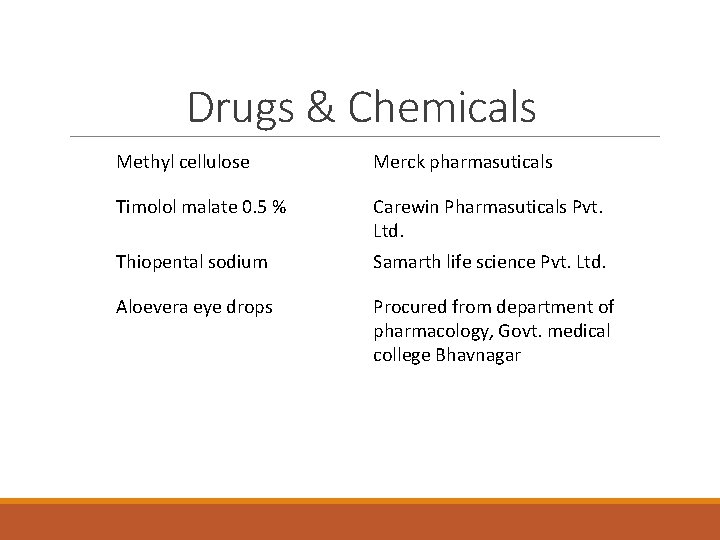
Drugs & Chemicals Methyl cellulose Merck pharmasuticals Timolol malate 0. 5 % Carewin Pharmasuticals Pvt. Ltd. Thiopental sodium Samarth life science Pvt. Ltd. Aloevera eye drops Procured from department of pharmacology, Govt. medical college Bhavnagar
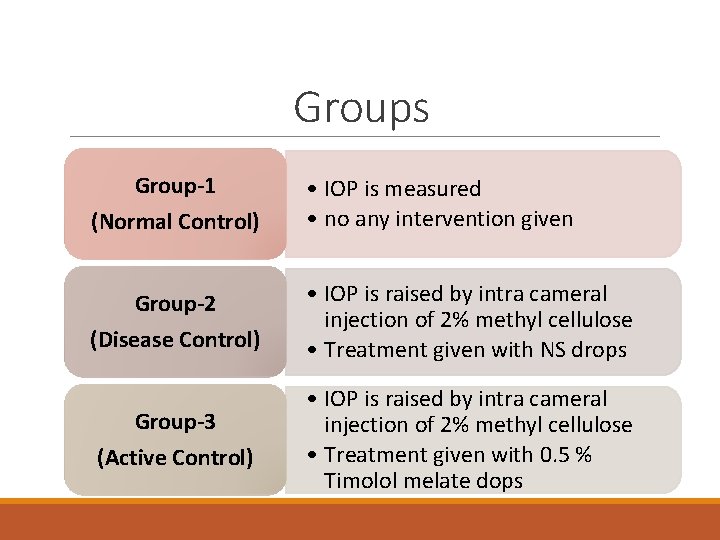
Groups Group-1 (Normal Control) • IOP is measured • no any intervention given Group-2 (Disease Control) • IOP is raised by intra cameral injection of 2% methyl cellulose • Treatment given with NS drops Group-3 (Active Control) • IOP is raised by intra cameral injection of 2% methyl cellulose • Treatment given with 0. 5 % Timolol melate dops
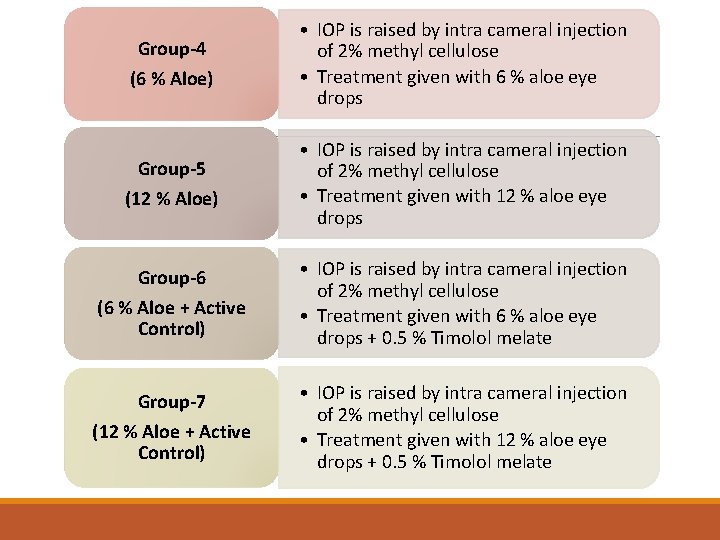
Group-4 (6 % Aloe) • IOP is raised by intra cameral injection of 2% methyl cellulose • Treatment given with 6 % aloe eye drops Group-5 (12 % Aloe) • IOP is raised by intra cameral injection of 2% methyl cellulose • Treatment given with 12 % aloe eye drops Group-6 (6 % Aloe + Active Control) Group-7 (12 % Aloe + Active Control) • IOP is raised by intra cameral injection of 2% methyl cellulose • Treatment given with 6 % aloe eye drops + 0. 5 % Timolol melate • IOP is raised by intra cameral injection of 2% methyl cellulose • Treatment given with 12 % aloe eye drops + 0. 5 % Timolol melate
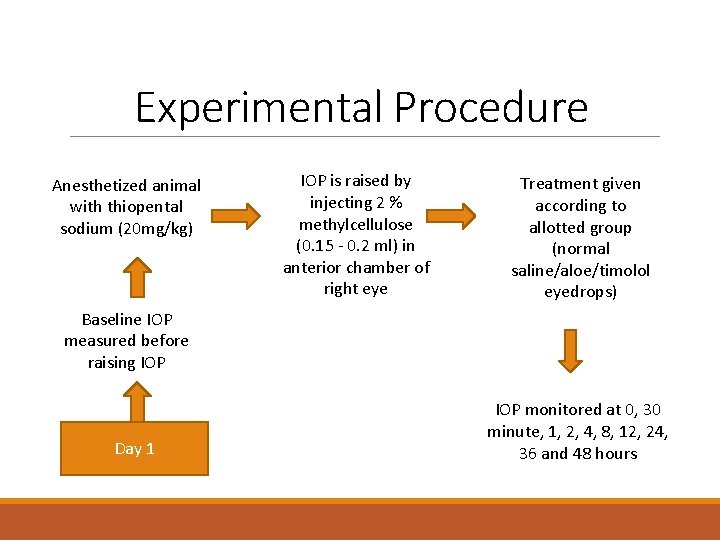
Experimental Procedure Anesthetized animal with thiopental sodium (20 mg/kg) IOP is raised by injecting 2 % methylcellulose (0. 15 - 0. 2 ml) in anterior chamber of right eye Treatment given according to allotted group (normal saline/aloe/timolol eyedrops) Baseline IOP measured before raising IOP Day 1 IOP monitored at 0, 30 minute, 1, 2, 4, 8, 12, 24, 36 and 48 hours
v Anesthesia was given intra venous through marginal ear vein. v Methylcellulose was injected intracameral by 30 gauge needle and 1 ml syringe. v IOP was measured by Schiotz tonometer after topical anesthesia given with 2 % lignocaine.
Results
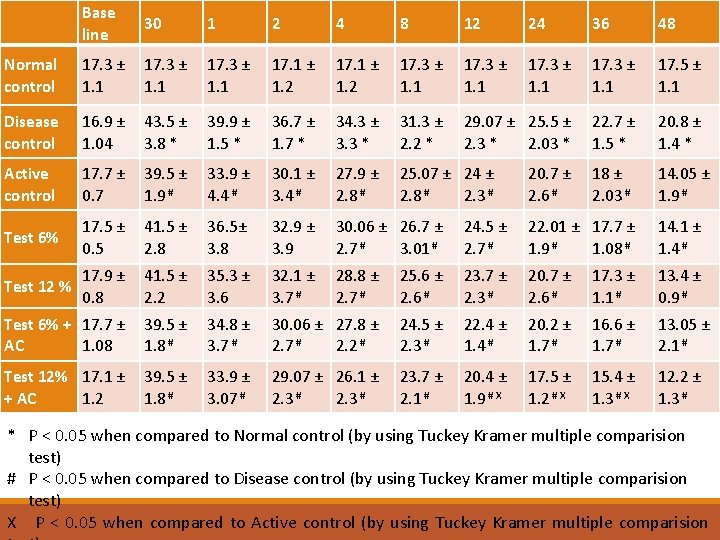
Base line 30 1 2 4 8 12 24 36 48 Normal control 17. 3 ± 1. 1 17. 1 ± 1. 2 17. 3 ± 1. 1 17. 5 ± 1. 1 Disease control 16. 9 ± 1. 04 43. 5 ± 3. 8 * 39. 9 ± 1. 5 * 36. 7 ± 1. 7 * 34. 3 ± 3. 3 * 31. 3 ± 2. 2 * 29. 07 ± 25. 5 ± 2. 3 * 2. 03 * 22. 7 ± 1. 5 * 20. 8 ± 1. 4 * Active control 17. 7 ± 0. 7 39. 5 ± 1. 9 # 33. 9 ± 4. 4 # 30. 1 ± 3. 4 # 27. 9 ± 2. 8 # 25. 07 ± 24 ± 2. 8 # 2. 3 # 18 ± 2. 03 # 14. 05 ± 1. 9 # Test 6% 17. 5 ± 0. 5 41. 5 ± 2. 8 36. 5± 3. 8 32. 9 ± 3. 9 30. 06 ± 26. 7 ± 2. 7 # 3. 01 # 24. 5 ± 2. 7 # 22. 01 ± 17. 7 ± 1. 9 # 1. 08 # 14. 1 ± 1. 4 # Test 12 % 17. 9 ± 0. 8 41. 5 ± 2. 2 35. 3 ± 3. 6 32. 1 ± 3. 7 # 28. 8 ± 2. 7 # 25. 6 ± 2. 6 # 23. 7 ± 2. 3 # 20. 7 ± 2. 6 # 17. 3 ± 1. 1 # 13. 4 ± 0. 9 # Test 6% + 17. 7 ± AC 1. 08 39. 5 ± 1. 8 # 34. 8 ± 3. 7 # 30. 06 ± 27. 8 ± 2. 7 # 2. 2 # 24. 5 ± 2. 3 # 22. 4 ± 1. 4 # 20. 2 ± 1. 7 # 16. 6 ± 1. 7 # 13. 05 ± 2. 1 # Test 12% 17. 1 ± + AC 1. 2 39. 5 ± 1. 8 # 33. 9 ± 3. 07 # 29. 07 ± 26. 1 ± 2. 3 # 23. 7 ± 2. 1 # 20. 4 ± 1. 9 # Χ 17. 5 ± 1. 2 # Χ 15. 4 ± 1. 3 # Χ 12. 2 ± 1. 3 # 20. 7 ± 2. 6 # * P < 0. 05 when compared to Normal control (by using Tuckey Kramer multiple comparision test) # P < 0. 05 when compared to Disease control (by using Tuckey Kramer multiple comparision test) Χ P < 0. 05 when compared to Active control (by using Tuckey Kramer multiple comparision
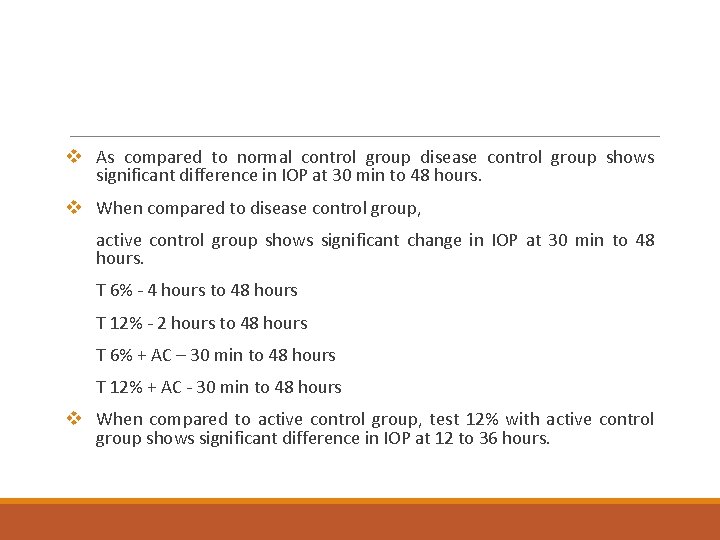
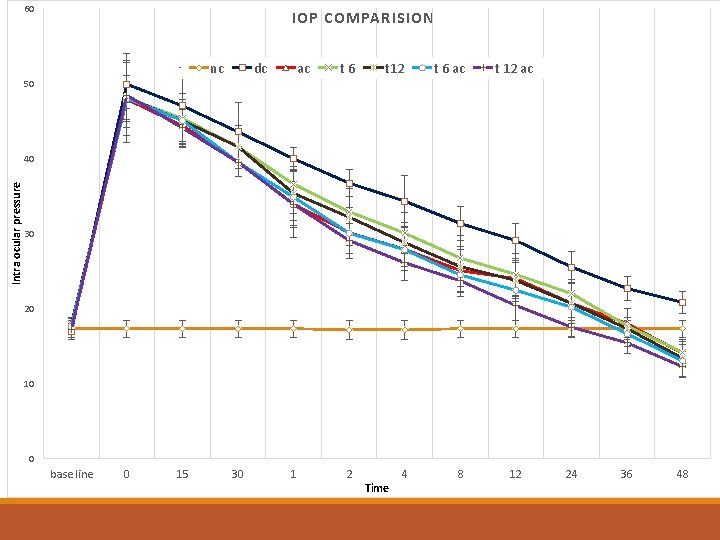
v As compared to normal control group disease control group shows significant difference in IOP at 30 min to 48 hours. v When compared to disease control group, active control group shows significant change in IOP at 30 min to 48 hours. T 6% - 4 hours to 48 hours T 12% - 2 hours to 48 hours T 6% + AC – 30 min to 48 hours T 12% + AC - 30 min to 48 hours v When compared to active control group, test 12% with active control group shows significant difference in IOP at 12 to 36 hours.
60 IOP COMPARISION nc dc ac t 6 t 12 t 6 ac t 12 ac 50 Intra ocular pressure 40 30 20 10 0 base line 0 15 30 1 2 Time 4 8 12 24 36 48
Discussion v Ultrafiltration and diffusion are the passive mechanisms of aqueous humor formation which are dependent on blood pressure level of ciliary capillaries. v Akira Yagi et al suggest that aloe vera gel is having inhibitory effect on thromboxane A 2. It promotes vasodilatation and maintains hemostasis within the vascular endothelium. v So this might be probable mechanism of intraocular pressure lowering effect of aloe vera gel.
Conclusion v Aloe vera gel is having intraocular pressure lowering effect but is not statistically significant when compared to Active control group. v Aloe vera gel concominant treatment with timolol shows statistically significant IOP reduction when compared to active control alone at 12 hour, 24 hour and 36 hour. So the combination shows batter results.
Limitation v Method of tonometry – conventional & old v Newer techniques (tono pen) are available v Model – not ideal as methylcellulose itself filtered out from meshwork eventually.
Acknowledgement Dr. sugnesh parmar, vitreo-retinal surgeon, bhavnagar.
References 1. Kingman S. Glaucoma is second leading cause of blindness globally. Bulletin of the World Health Organization. 2004; 82: 887 -8. 2. World Health Organization. Global data on visual impairments 2010. Geneva: World Health Organization. 2012. 3. Cosmetic Ingredient Review Expert Panel. Final report on the safety assessment of Aloe. Andongensis Extract, Aloe Andongensis Leaf Juice, aloe Arborescens Leaf Extract, Aloe Arborescens Leaf Juice, Aloe Arborescens Leaf Protoplasts, Aloe Barbadensis Flower Extract, Aloe Barbadensis Leaf Juice, aloe Barbadensis Leaf Polysaccharides, Aloe Barbadensis Leaf Water, Aloe Ferox Leaf Extract, Aloe Ferox Leaf Juice, and Aloe Ferox Leaf Juice Extract. International journal of toxicology. 2007; 26: 1. 4. López A, de Tangil MS, Vega-Orellana O, Ramírez AS, Rico M. Phenolic constituents, antioxidant and preliminary antimycoplasmic activities of leaf skin and flowers of Aloe vera (L. ) Burm. f. (syn. A. barbadensis Mill. ) from the Canary Islands (Spain). Molecules. 2013 Apr 26; 18(5): 4942 -54. 5. Baha'a A, Alzubaidy AA, Radi HA. Effect of diltiazem on intraocular pressure in normal and ocular hypertensive rabbits. Al-Qadisiah Medical Journal. 2012; 8(13): 69 -83.
6. Zhong YS, Xiang MH, Ye W, Huang P, Cheng Y, Jiang YQ. Neuroprotective effect of Erigeron Breviscapus (vant) Hand-mazz extract on retinal ganglion cells in rabbits with chronic elevated intraocular pressure. Asian Biomedicine. 2011 Apr 1; 5(2): 195 -203. 7. Zhu MD, Cai FY. Development of experimental chronic intraocular hypertension in the rabbit. Clinical & Experimental Ophthalmology. 1992 Aug 1; 20(3): 225 -34.
6/9/2021 DEPT. OF PHARMACOLOGY, GOVT. MEDICAL COLLEGE BHAVNAGAR 23