English Day Four 1 Read through the story

- Slides: 32
English – Day Four • 1) Read through the story you have written this week. Please edit and make improvements to your work. • Read it through first of all, reading it to someone would be beneficial; does it make sense? • Remember to focus on using a wide range of punctuation such as. , ? ! “ ” If you can’t see a range of punctuation marks, apply these in the right place. Have you used short sentences to build up the tension? • Now look at the vocabulary you have used. Have you repeated any words? Could you improve on any words and make them more powerful?
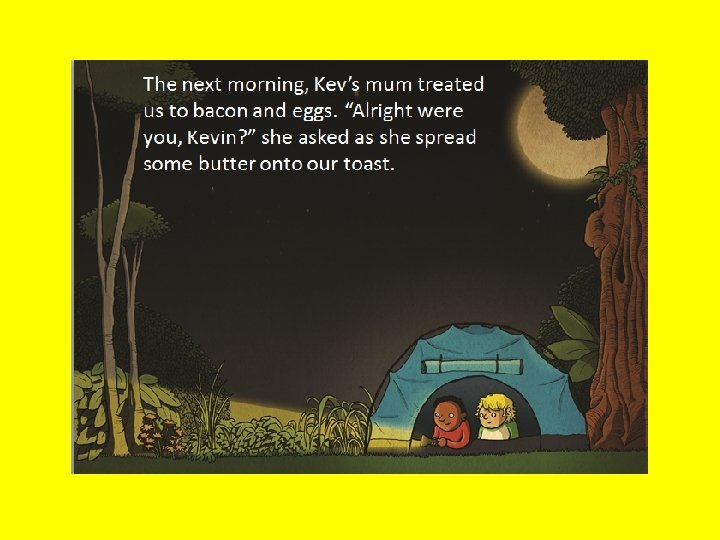
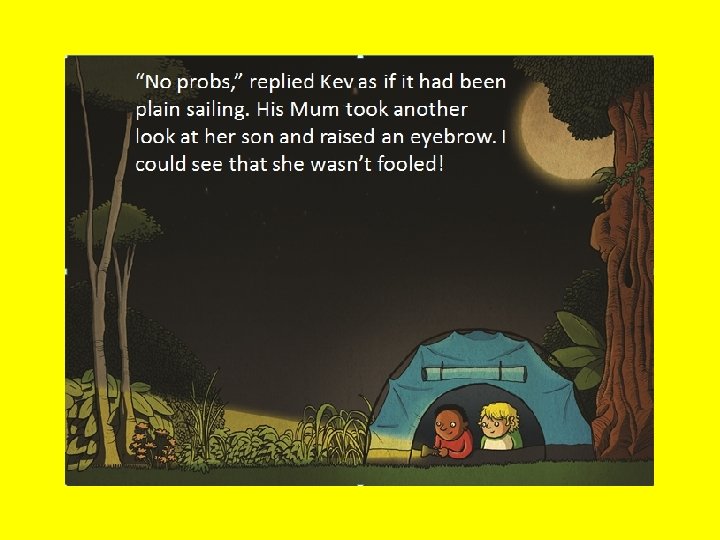
Day Four - continued • Read through the final 2 slides of the story, ‘Staying Out’. • Answer the following questions from the text: • 1) Why do you think Kev’s mum treated the boys to bacon and eggs in the morning? • 2) Why do you think she asked Kev if he was had been alright in the garden? • 3) Do you think Kev really meant ‘no probs’? • 4) Why do you think his mum wasn’t fooled by his reaction?
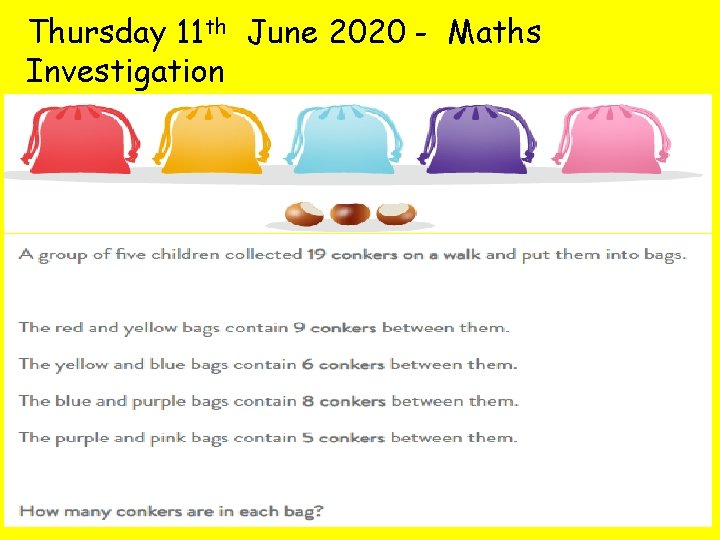
Thursday 11 th June 2020 - Maths Investigation
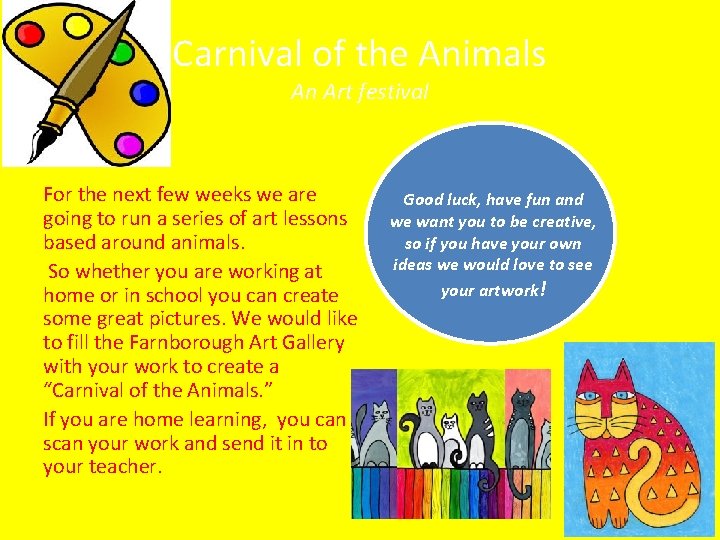
Carnival of the Animals An Art festival For the next few weeks we are going to run a series of art lessons based around animals. So whether you are working at home or in school you can create some great pictures. We would like to fill the Farnborough Art Gallery with your work to create a “Carnival of the Animals. ” If you are home learning, you can scan your work and send it in to your teacher. Good luck, have fun and we want you to be creative, so if you have your own ideas we would love to see your artwork!
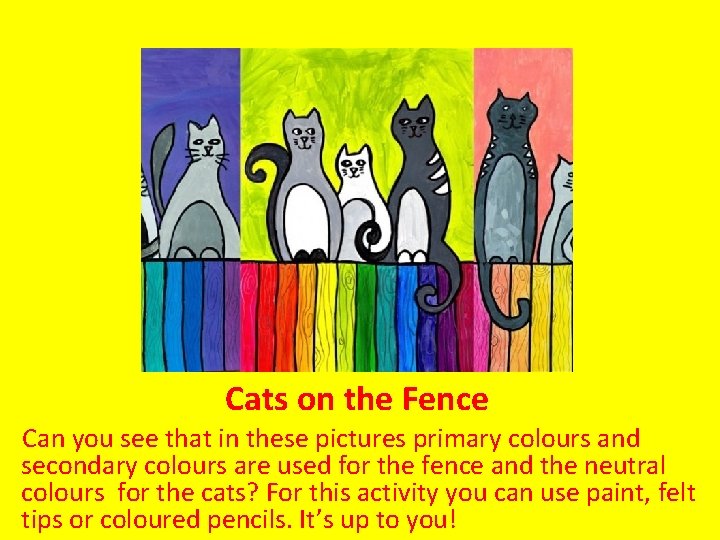
Cats on the Fence Can you see that in these pictures primary colours and secondary colours are used for the fence and the neutral colours for the cats? For this activity you can use paint, felt tips or coloured pencils. It’s up to you!
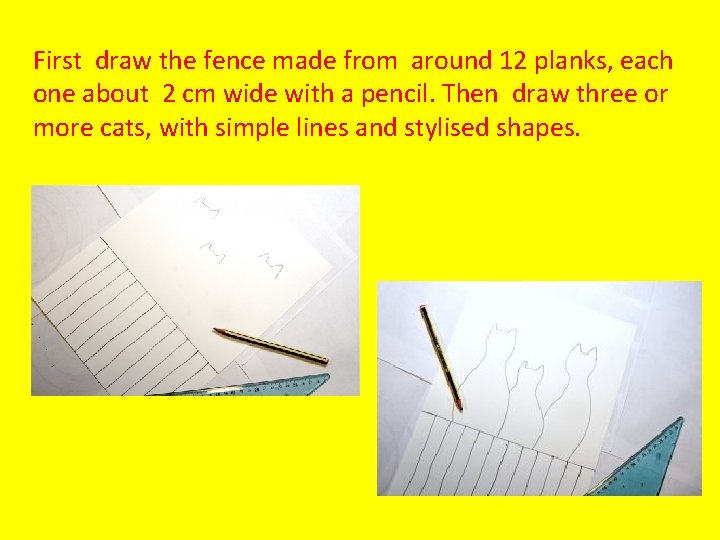
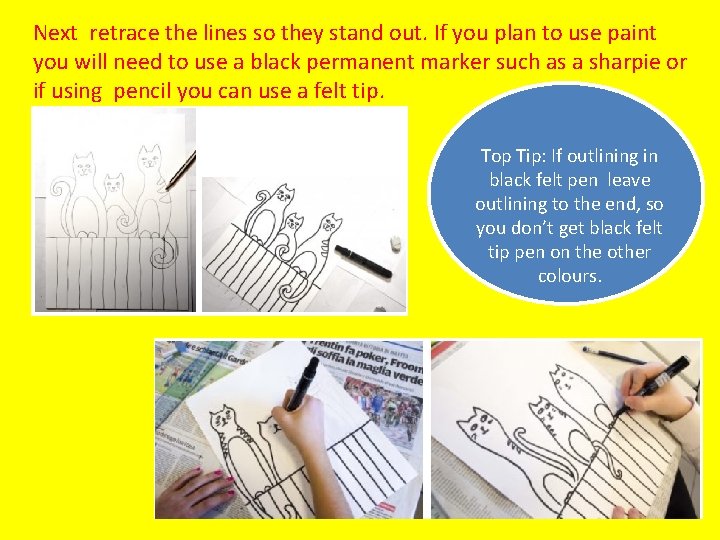
First draw the fence made from around 12 planks, each one about 2 cm wide with a pencil. Then draw three or more cats, with simple lines and stylised shapes.
Next retrace the lines so they stand out. If you plan to use paint you will need to use a black permanent marker such as a sharpie or if using pencil you can use a felt tip. Top Tip: If outlining in black felt pen leave outlining to the end, so you don’t get black felt tip pen on the other colours.
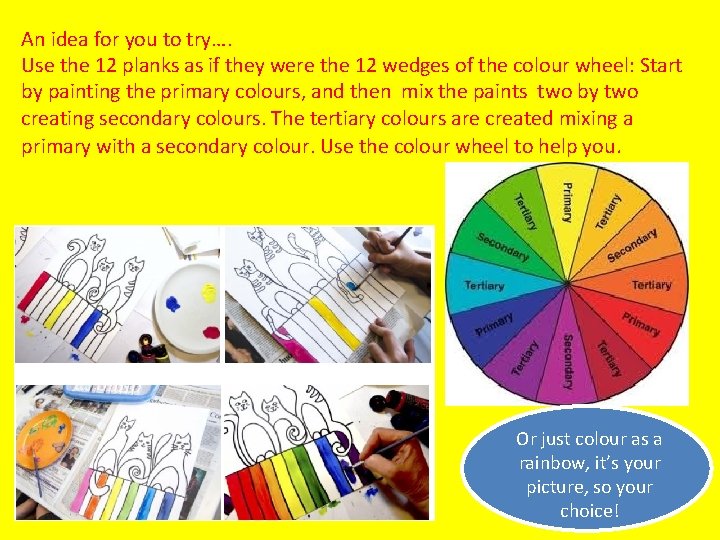
An idea for you to try…. Use the 12 planks as if they were the 12 wedges of the colour wheel: Start by painting the primary colours, and then mix the paints two by two creating secondary colours. The tertiary colours are created mixing a primary with a secondary colour. Use the colour wheel to help you. Or just colour as a rainbow, it’s your picture, so your choice!
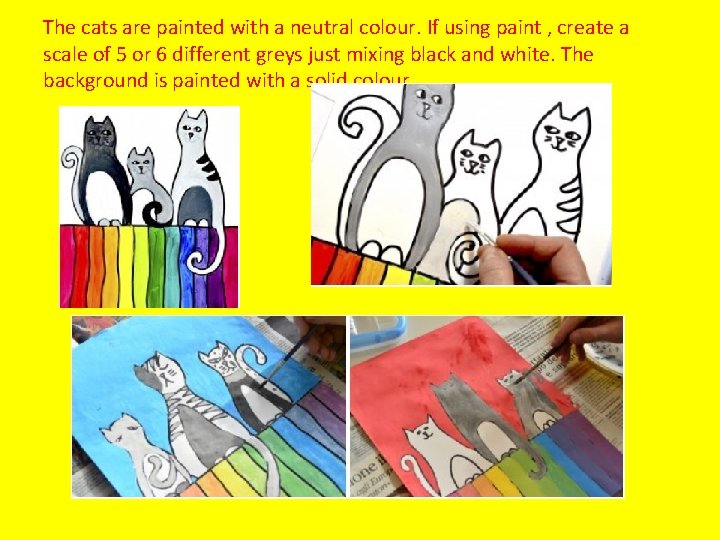
The cats are painted with a neutral colour. If using paint , create a scale of 5 or 6 different greys just mixing black and white. The background is painted with a solid colour.
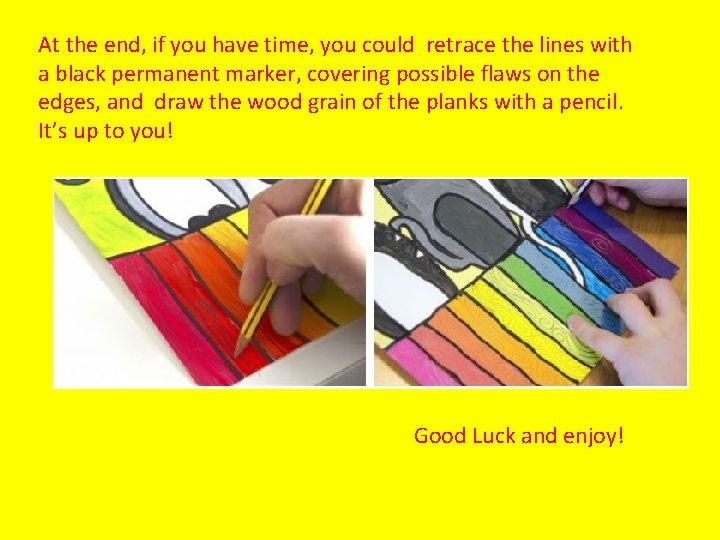
At the end, if you have time, you could retrace the lines with a black permanent marker, covering possible flaws on the edges, and draw the wood grain of the planks with a pencil. It’s up to you! Good Luck and enjoy!
Want to listen to The Carnival of the Animals by Camille Saint-Saëns? Click below: https: //www. youtube. com/w atch? v=1 L 993 HNAa 8 M
The Carnival of the Animals We are going to be learning about a piece of music called ‘The Carnival of the Animals’. It was written by a composer called Camille Saint-Saëns. Do you know what a composer is? A composer is someone who writes music.
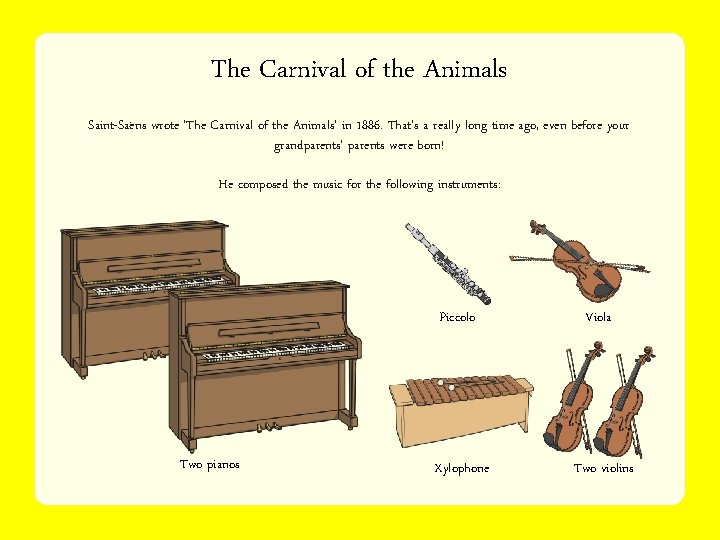
The Carnival of the Animals Saint-Saëns wrote ‘The Carnival of the Animals’ in 1886. That’s a really long time ago, even before your grandparents’ parents were born! He composed the music for the following instruments: Piccolo Two pianos Xylophone Viola Two violins
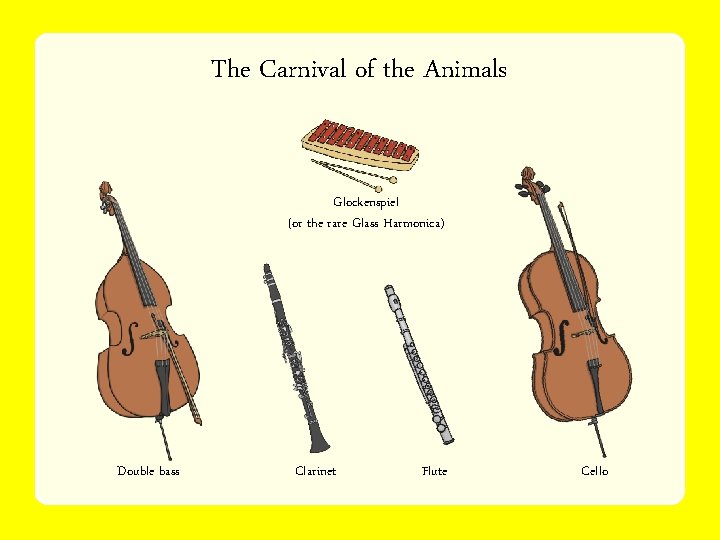
The Carnival of the Animals Glockenspiel (or the rare Glass Harmonica) Double bass Clarinet Flute Cello
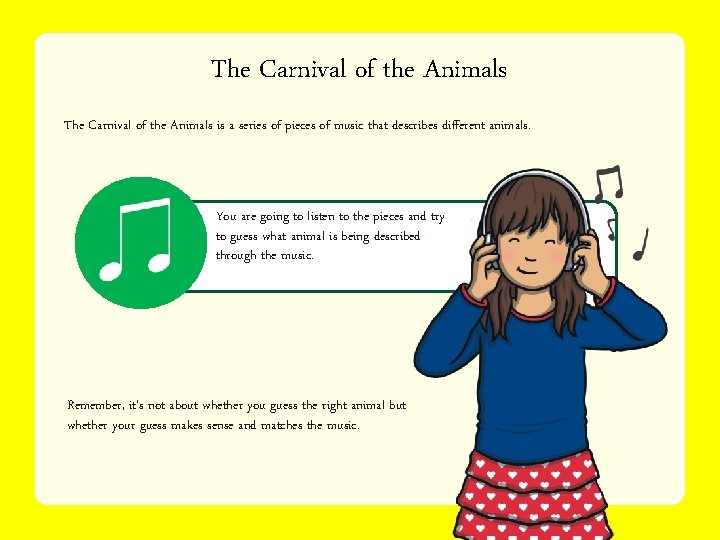
The Carnival of the Animals is a series of pieces of music that describes different animals. You are going to listen to the pieces and try to guess what animal is being described through the music. Remember, it’s not about whether you guess the right animal but whether your guess makes sense and matches the music.
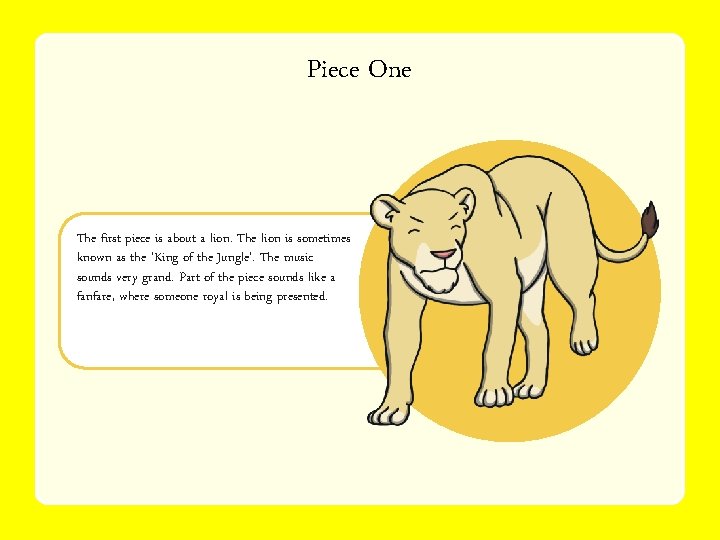
Piece One The first piece is about a lion. The lion is sometimes known as the ‘King of the Jungle’. The music sounds very grand. Part of the piece sounds like a fanfare, where someone royal is being presented.
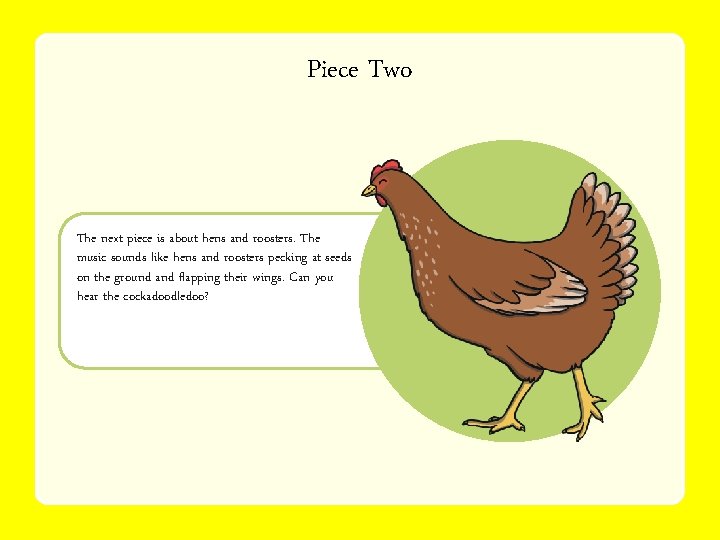
Piece Two The next piece is about hens and roosters. The music sounds like hens and roosters pecking at seeds on the ground and flapping their wings. Can you hear the cockadoodledoo?
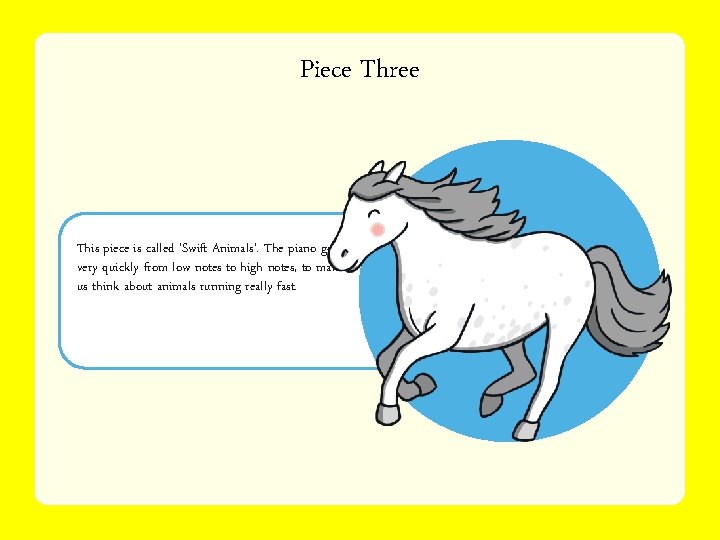
Piece Three This piece is called ‘Swift Animals’. The piano goes very quickly from low notes to high notes, to make us think about animals running really fast.
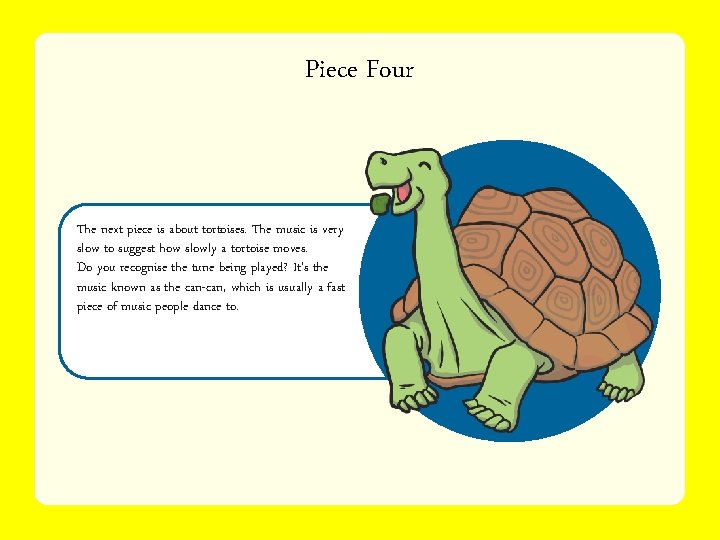
Piece Four The next piece is about tortoises. The music is very slow to suggest how slowly a tortoise moves. Do you recognise the tune being played? It’s the music known as the can-can, which is usually a fast piece of music people dance to.
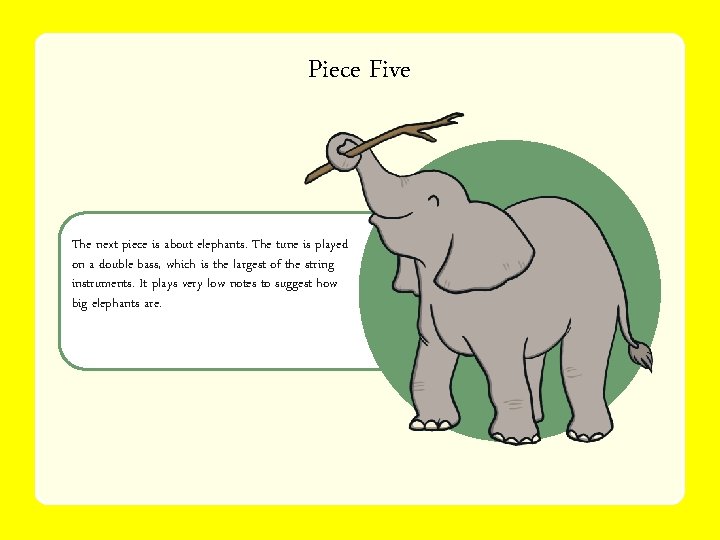
Piece Five The next piece is about elephants. The tune is played on a double bass, which is the largest of the string instruments. It plays very low notes to suggest how big elephants are.
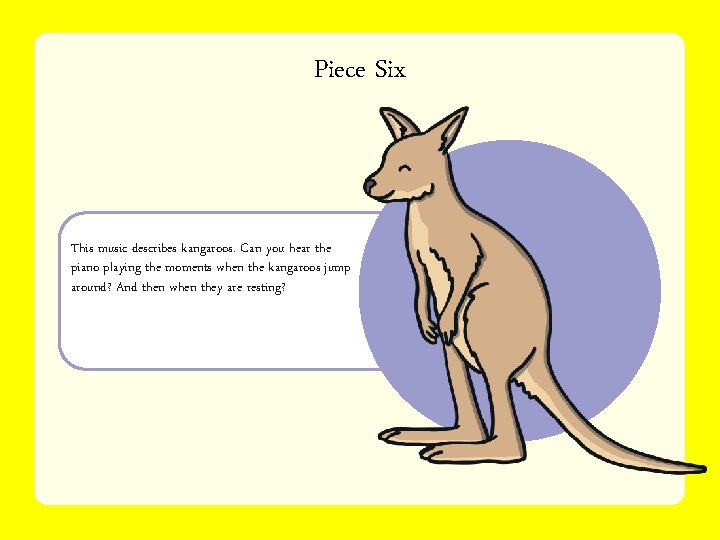
Piece Six This music describes kangaroos. Can you hear the piano playing the moments when the kangaroos jump around? And then when they are resting?
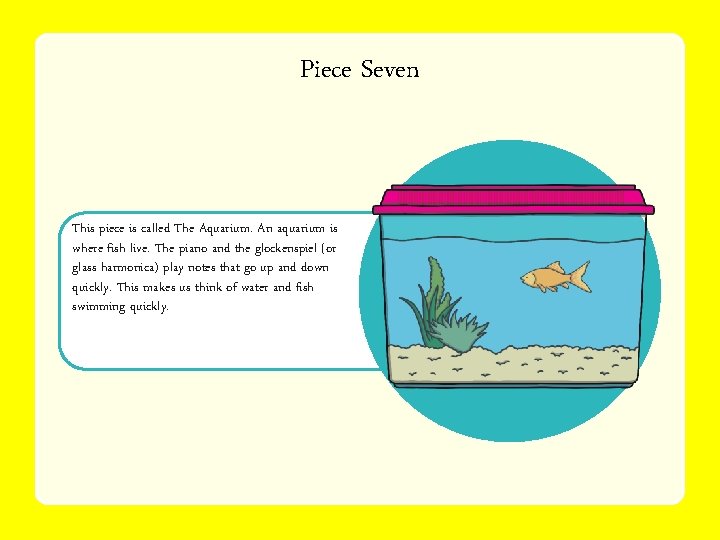
Piece Seven This piece is called The Aquarium. An aquarium is where fish live. The piano and the glockenspiel (or glass harmonica) play notes that go up and down quickly. This makes us think of water and fish swimming quickly.
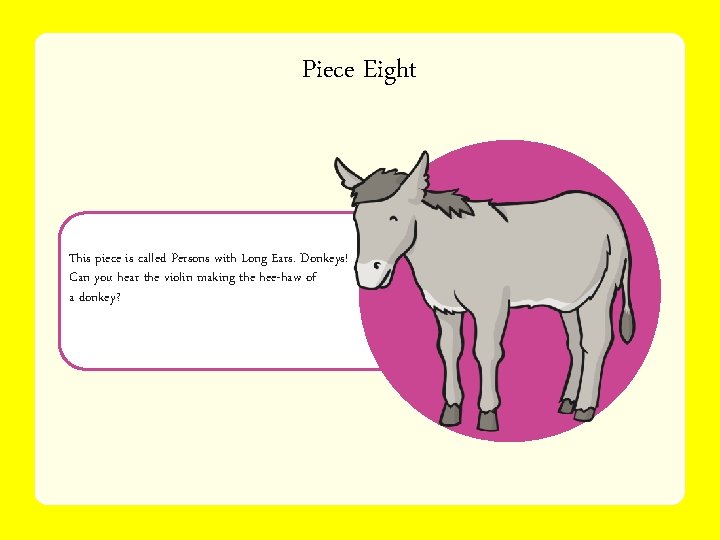
Piece Eight This piece is called Persons with Long Ears. Donkeys! Can you hear the violin making the hee-haw of a donkey?
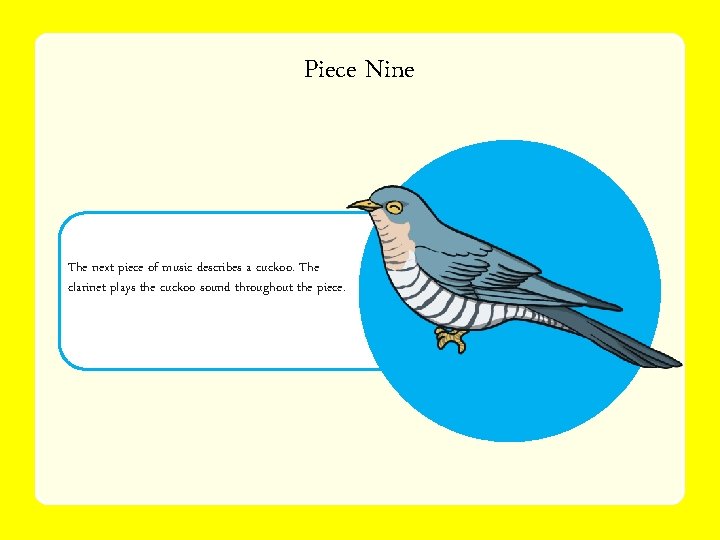
Piece Nine The next piece of music describes a cuckoo. The clarinet plays the cuckoo sound throughout the piece.
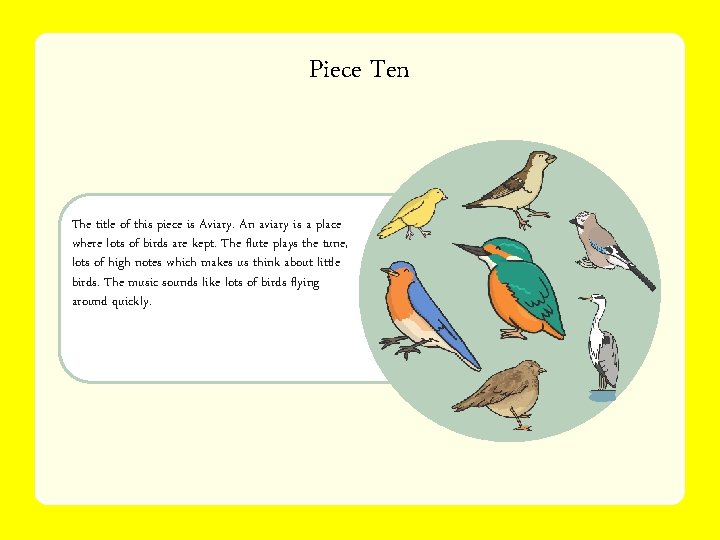
Piece Ten The title of this piece is Aviary. An aviary is a place where lots of birds are kept. The flute plays the tune, lots of high notes which makes us think about little birds. The music sounds like lots of birds flying around quickly.
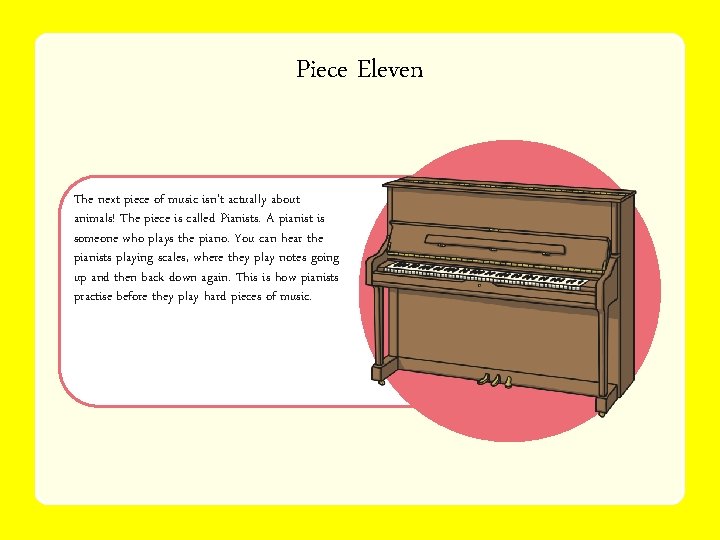
Piece Eleven The next piece of music isn’t actually about animals! The piece is called Pianists. A pianist is someone who plays the piano. You can hear the pianists playing scales, where they play notes going up and then back down again. This is how pianists practise before they play hard pieces of music.
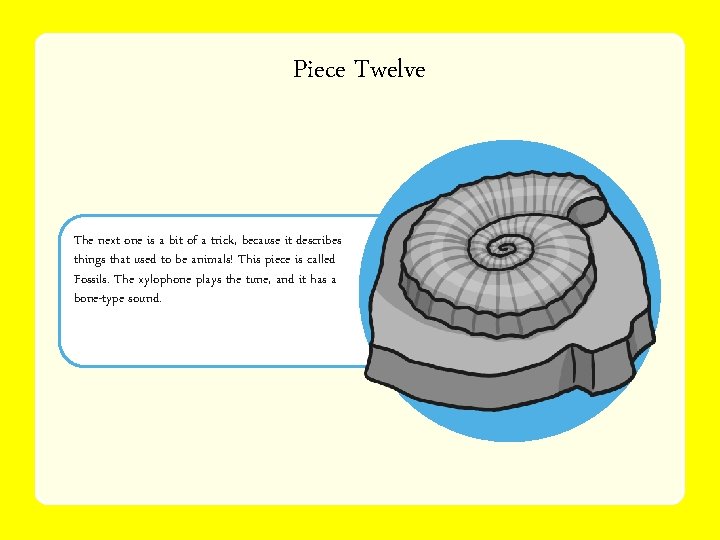
Piece Twelve The next one is a bit of a trick, because it describes things that used to be animals! This piece is called Fossils. The xylophone plays the tune, and it has a bone-type sound.
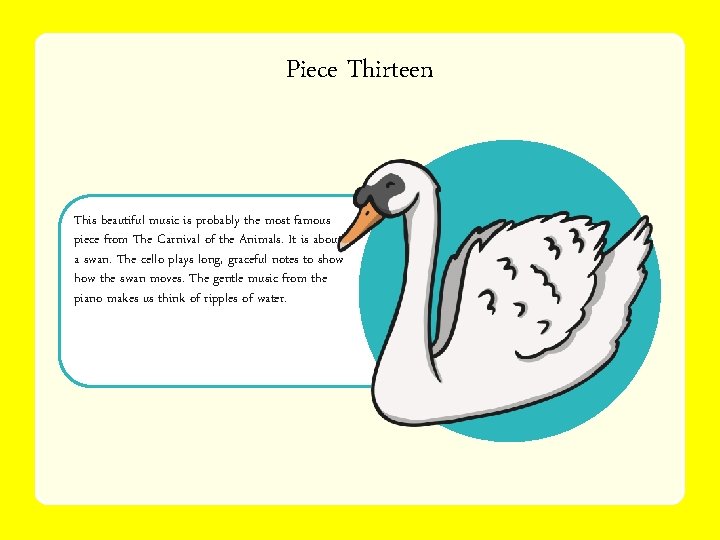
Piece Thirteen This beautiful music is probably the most famous piece from The Carnival of the Animals. It is about a swan. The cello plays long, graceful notes to show the swan moves. The gentle music from the piano makes us think of ripples of water.
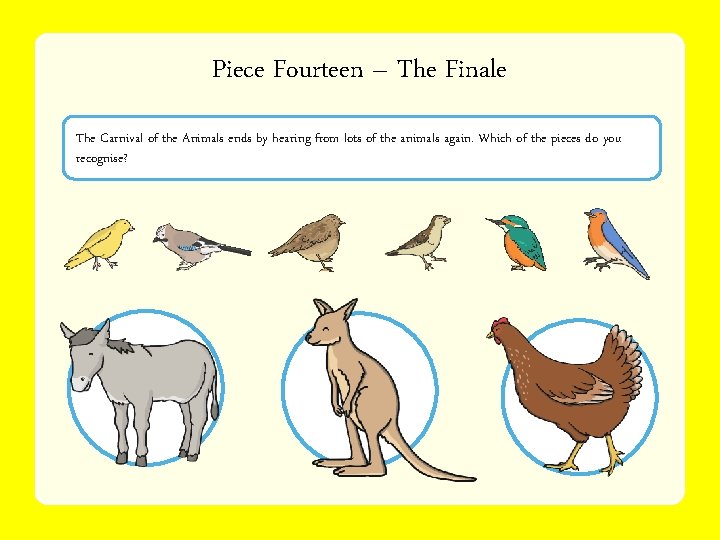
Piece Fourteen – The Finale The Carnival of the Animals ends by hearing from lots of the animals again. Which of the pieces do you recognise?