Electronically Steered Antennas Yoel Gat CEO Satix Fy

- Slides: 39
Electronically Steered Antennas Yoel Gat, CEO Satix. Fy
Outline • • • Defining the scope Why electrically steering antenna? How to electronically steer a beam? Phased array antennas advantages & disadvantages True Time Delay (TTD) antenna basics Loss due to pointing error Types of electrically Steered antennas TTD & ESMA technology Summary: Phased Array Vs. True Time Delay Electronically Steered Antennas | Satix. Fy | 2
Defining the scope of the presentation • • Real Electronically Steered Antennas (no moving parts) Solutions that can be demonstrated today (paper products are always better…) Satellite solutions (not 5 G) Technologies • Analog Phase Shifters • Metamaterial • Digital Beam Forming (True Time Delay) • Challenges • • Power Price (lots of electronics – hence silicon is a necessity) Calibration (frequency, temperature, scan angles, aging) End-to-End Full system requirement, including modems on both ends 3
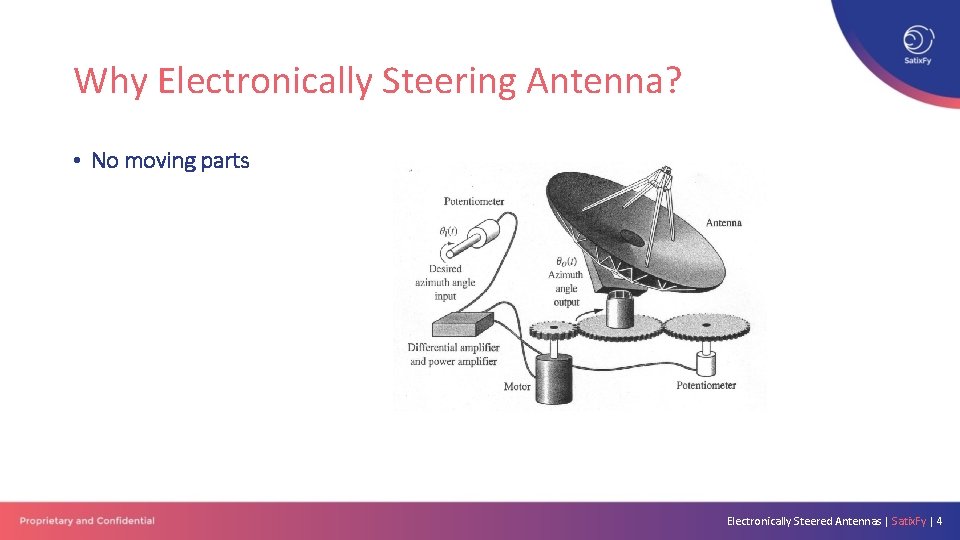
Why Electronically Steering Antenna? • No moving parts Electronically Steered Antennas | Satix. Fy | 4
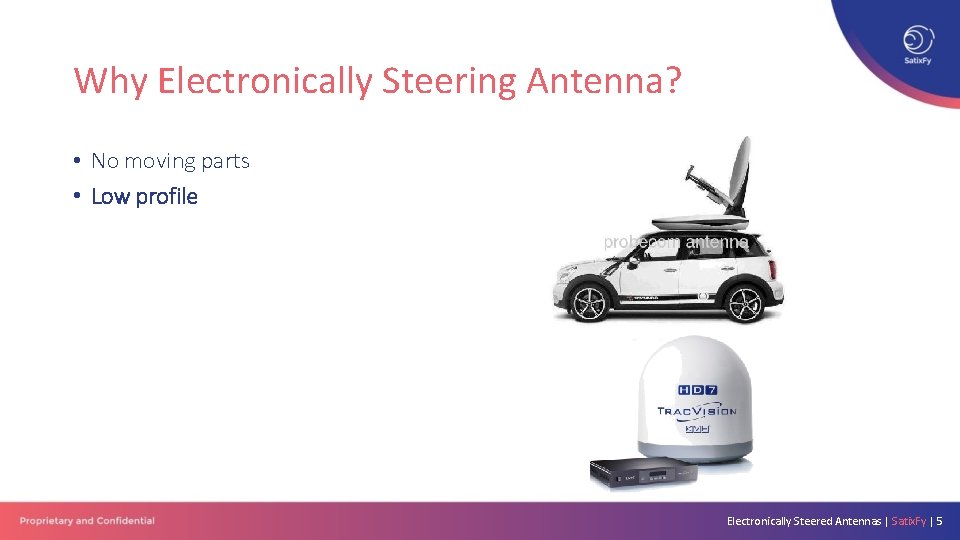
Why Electronically Steering Antenna? • No moving parts • Low profile Electronically Steered Antennas | Satix. Fy | 5
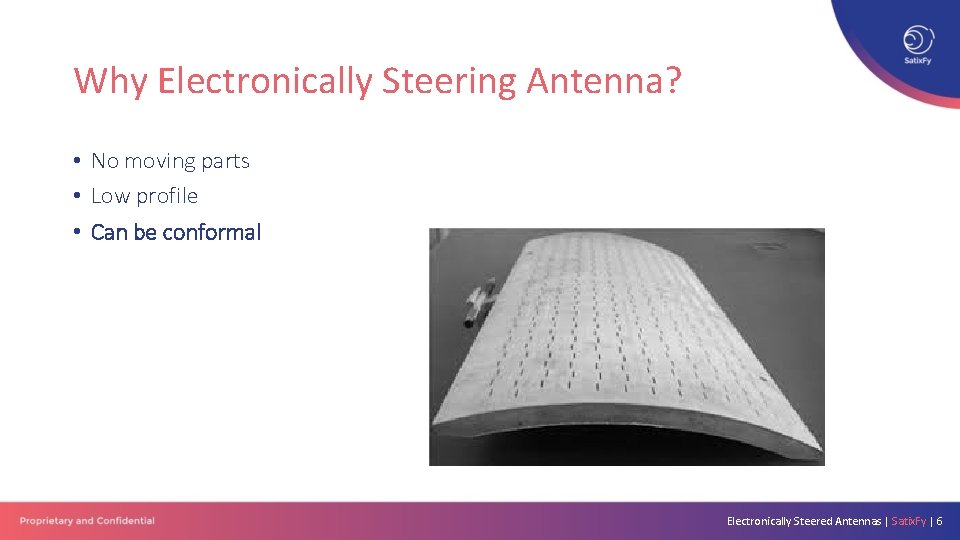
Why Electronically Steering Antenna? • No moving parts • Low profile • Can be conformal Electronically Steered Antennas | Satix. Fy | 6
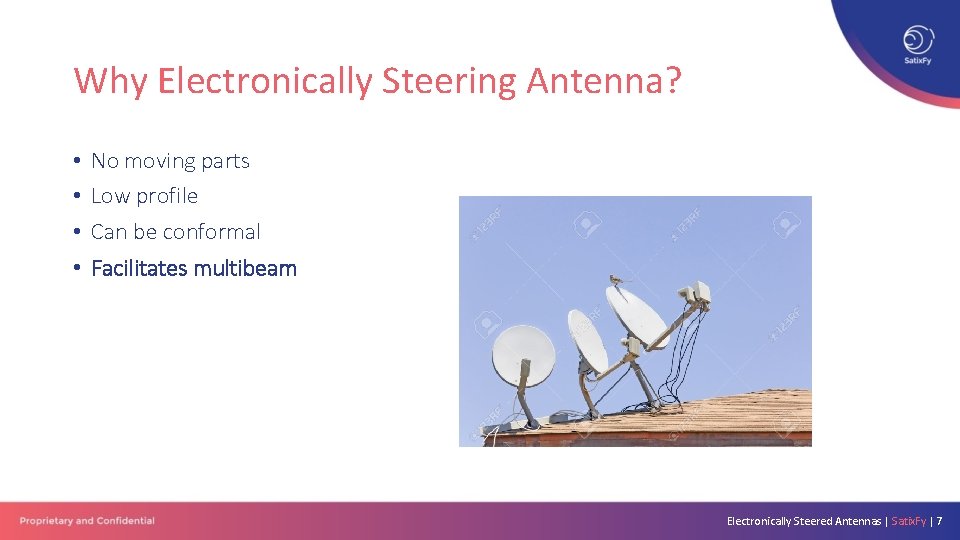
Why Electronically Steering Antenna? • • No moving parts Low profile Can be conformal Facilitates multibeam Electronically Steered Antennas | Satix. Fy | 7
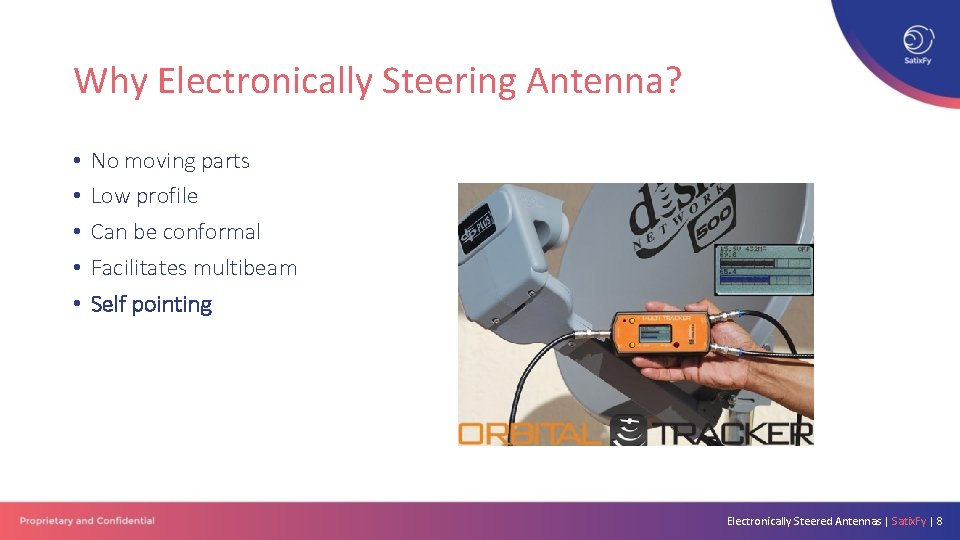
Why Electronically Steering Antenna? • • • No moving parts Low profile Can be conformal Facilitates multibeam Self pointing Electronically Steered Antennas | Satix. Fy | 8
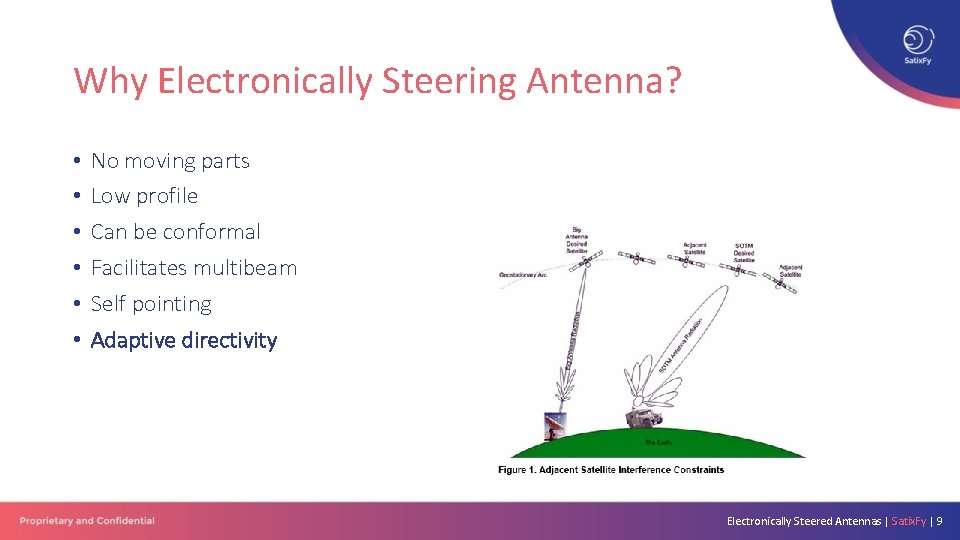
Why Electronically Steering Antenna? • • • No moving parts Low profile Can be conformal Facilitates multibeam Self pointing Adaptive directivity Electronically Steered Antennas | Satix. Fy | 9
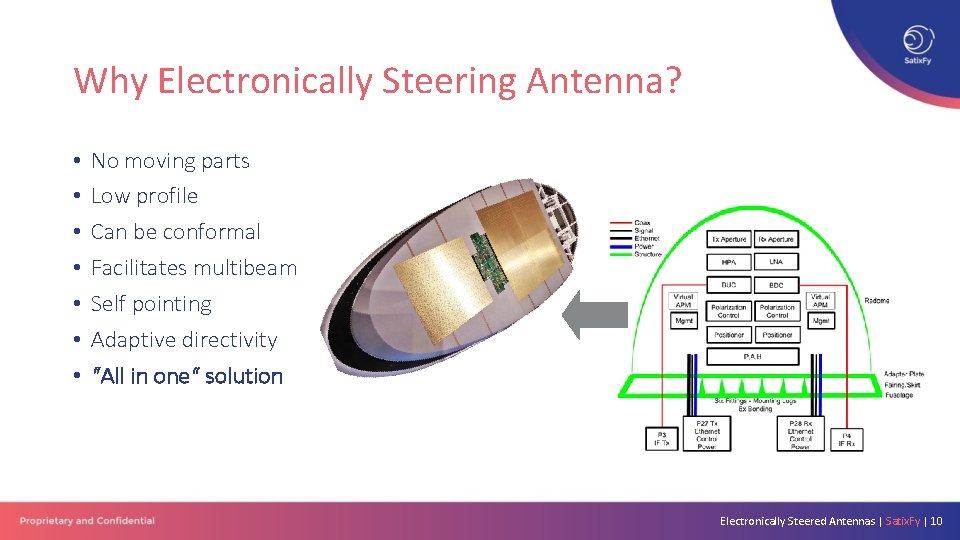
Why Electronically Steering Antenna? • • No moving parts Low profile Can be conformal Facilitates multibeam Self pointing Adaptive directivity “All in one“ solution Electronically Steered Antennas | Satix. Fy | 10
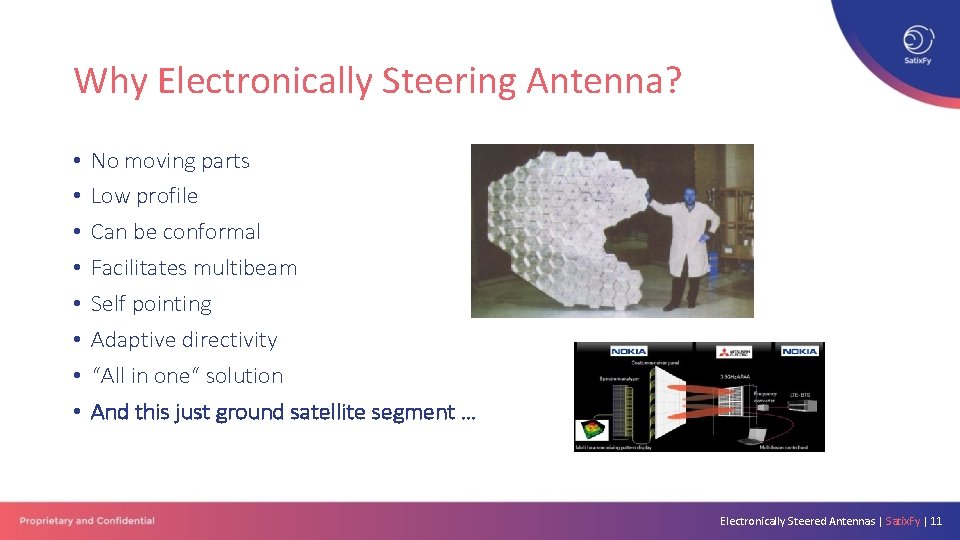
Why Electronically Steering Antenna? • • No moving parts Low profile Can be conformal Facilitates multibeam Self pointing Adaptive directivity “All in one“ solution And this just ground satellite segment … Electronically Steered Antennas | Satix. Fy | 11
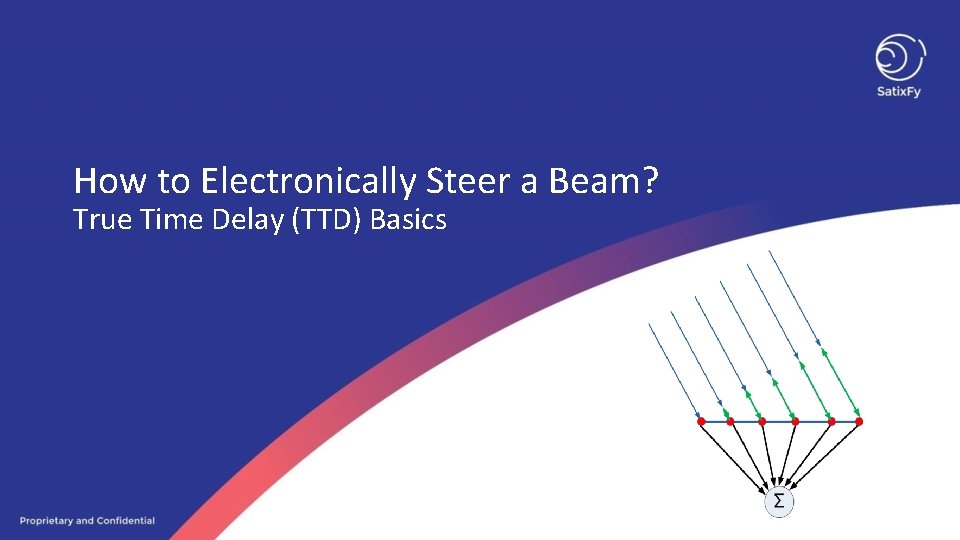
How to Electronically Steer a Beam? True Time Delay (TTD) Basics
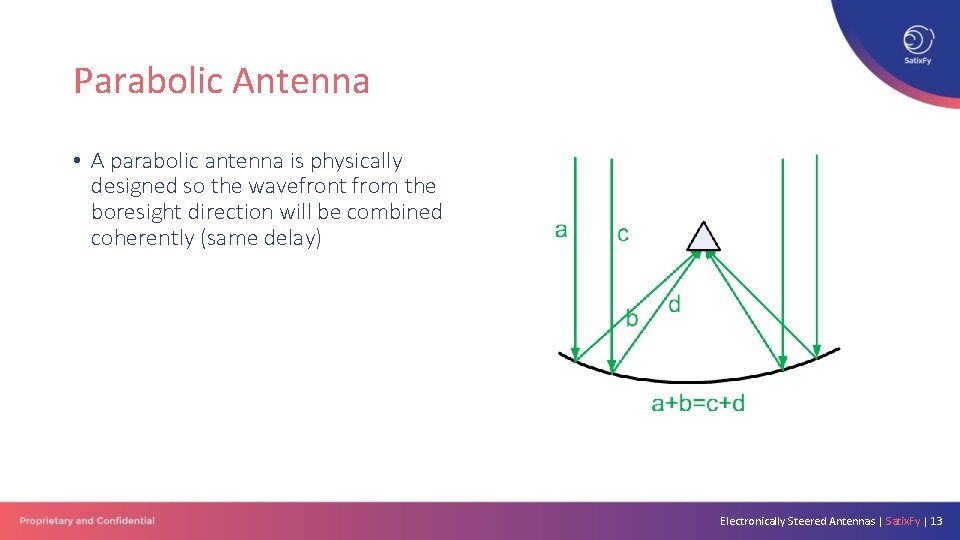
Parabolic Antenna • A parabolic antenna is physically designed so the wavefront from the boresight direction will be combined coherently (same delay) Electronically Steered Antennas | Satix. Fy | 13
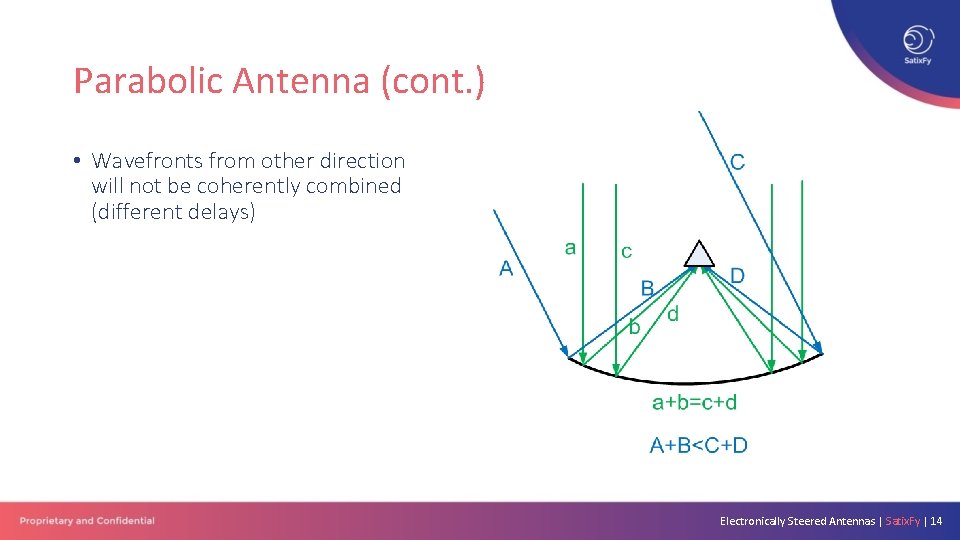
Parabolic Antenna (cont. ) • Wavefronts from other direction will not be coherently combined (different delays) Electronically Steered Antennas | Satix. Fy | 14
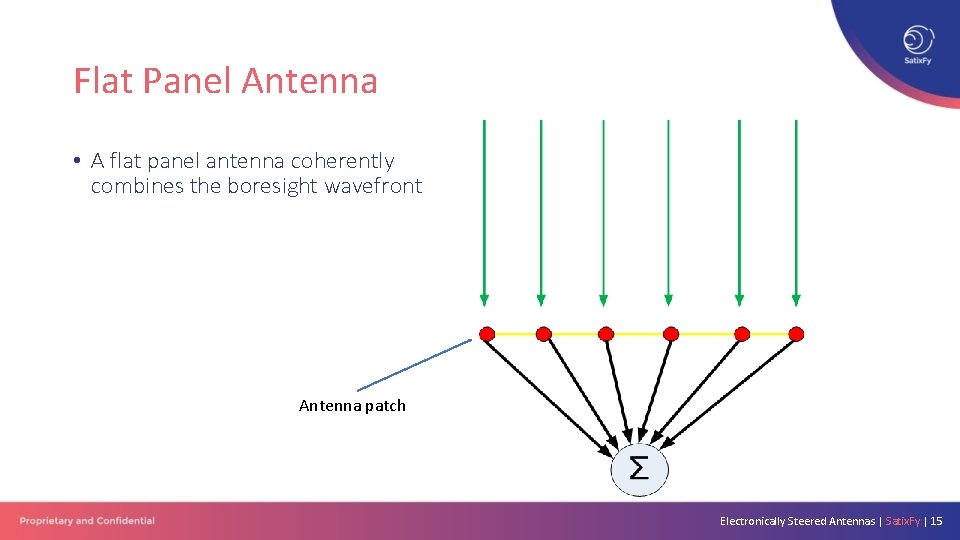
Flat Panel Antenna • A flat panel antenna coherently combines the boresight wavefront Antenna patch Electronically Steered Antennas | Satix. Fy | 15
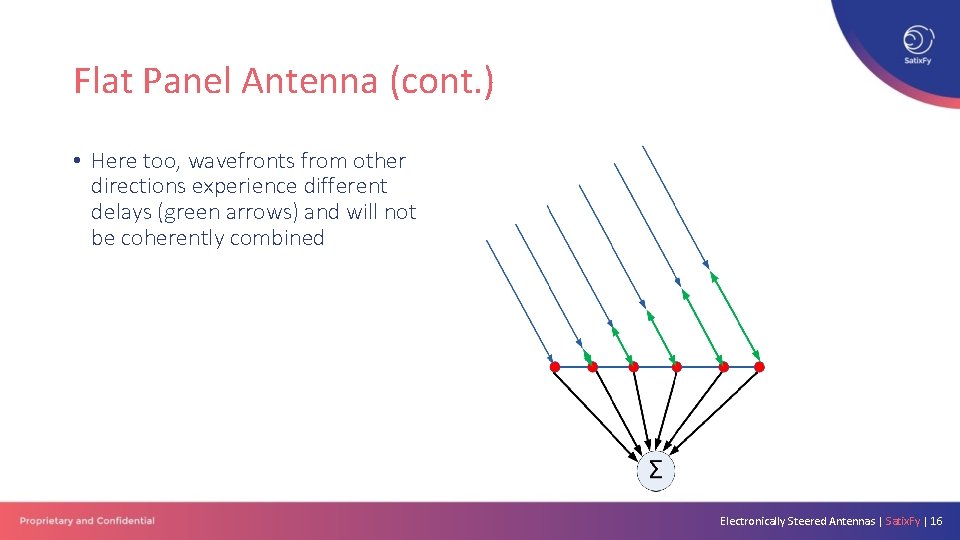
Flat Panel Antenna (cont. ) • Here too, wavefronts from other directions experience different delays (green arrows) and will not be coherently combined Electronically Steered Antennas | Satix. Fy | 16
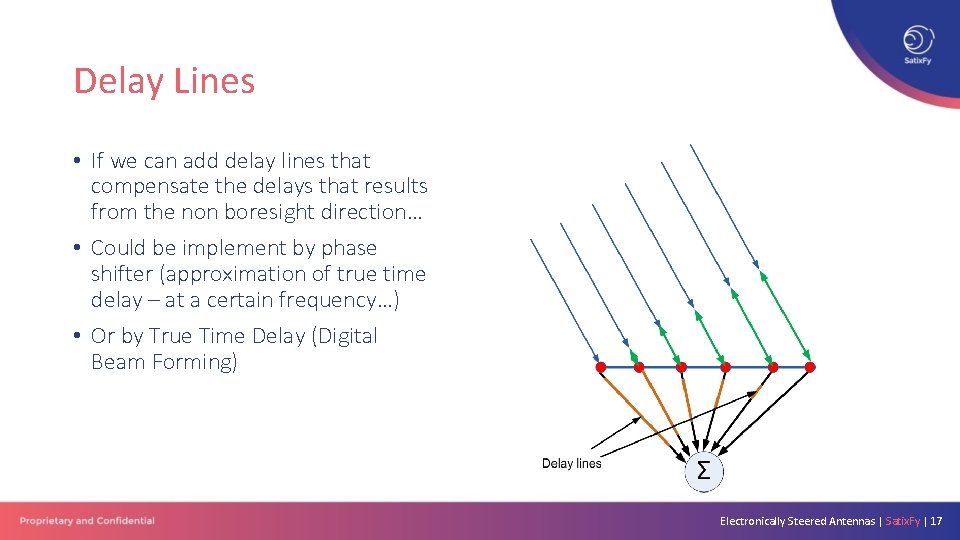
Delay Lines • If we can add delay lines that compensate the delays that results from the non boresight direction… • Could be implement by phase shifter (approximation of true time delay – at a certain frequency…) • Or by True Time Delay (Digital Beam Forming) Electronically Steered Antennas | Satix. Fy | 17
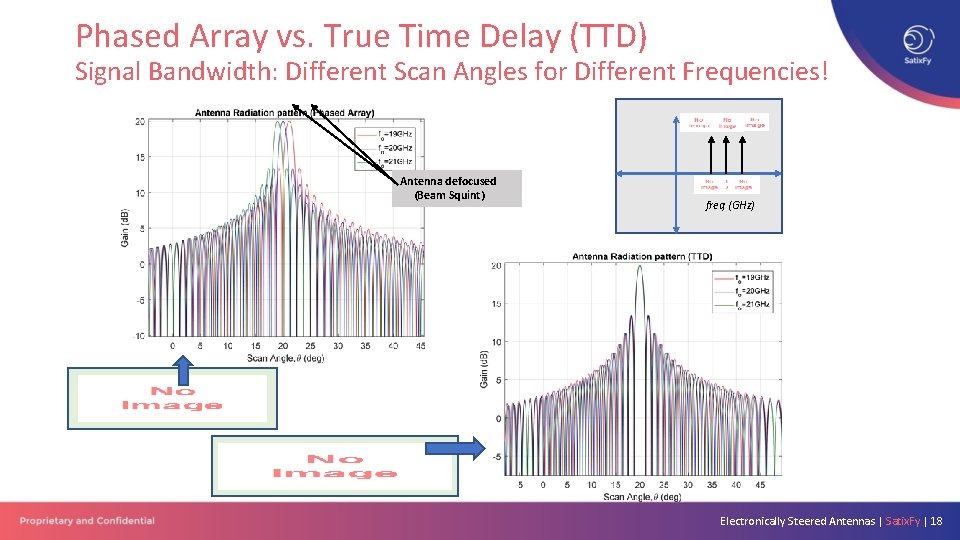
Phased Array vs. True Time Delay (TTD) Signal Bandwidth: Different Scan Angles for Different Frequencies! Antenna defocused (Beam Squint) freq (GHz) Electronically Steered Antennas | Satix. Fy | 18
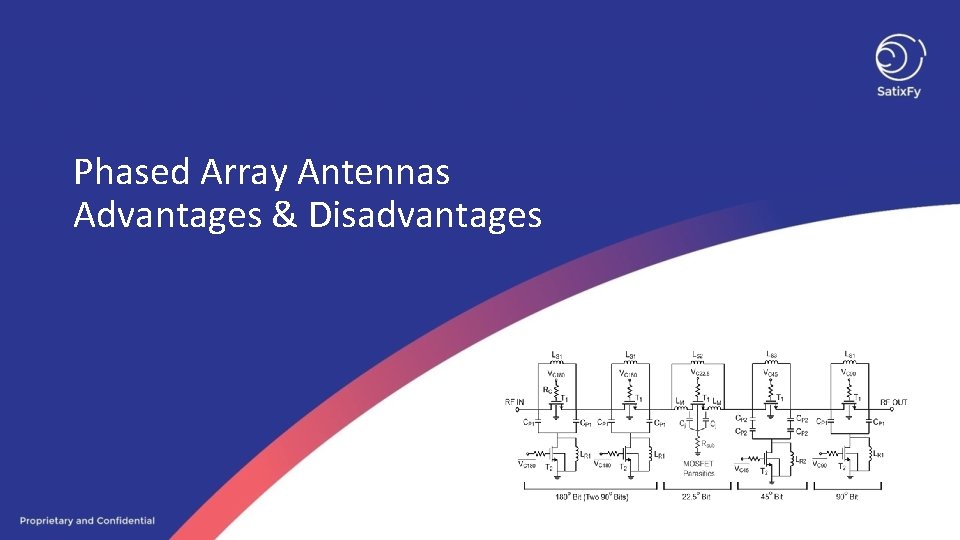
Phased Array Antennas Advantages & Disadvantages
Phased Array Antennas Main Advantages • Low power • Some implementations are passive • Low cost • One phase shifter per antenna patch • Common RF chain Electronically Steered Antennas | Satix. Fy | 20
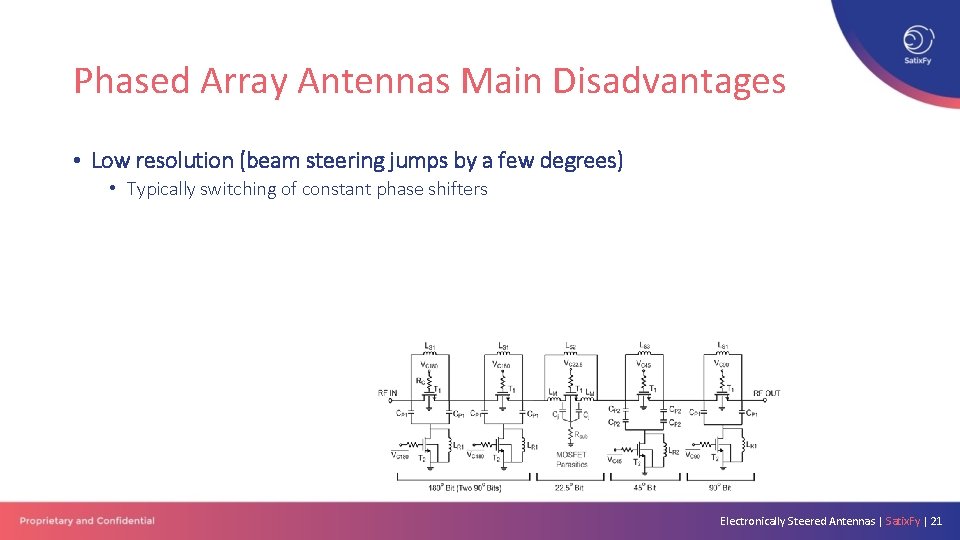
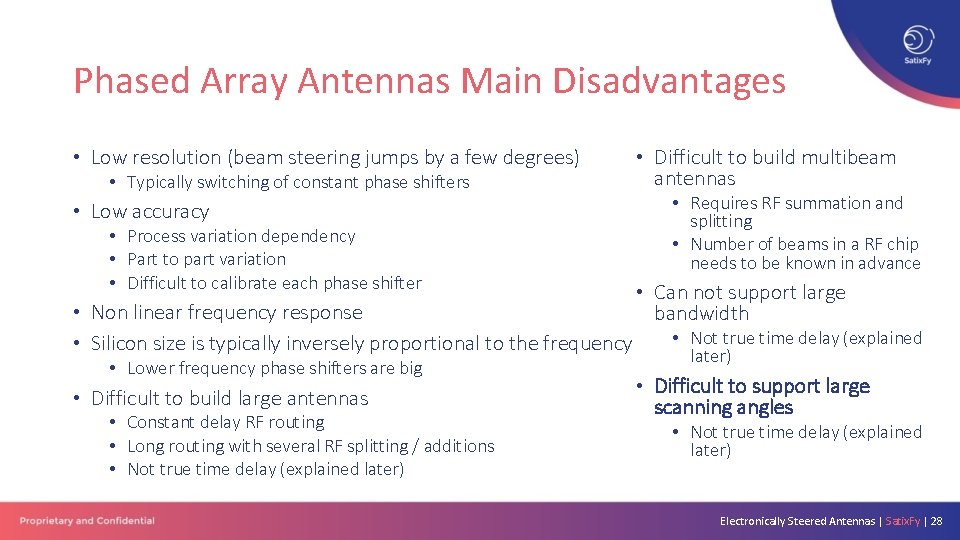
Phased Array Antennas Main Disadvantages • Low resolution (beam steering jumps by a few degrees) • Typically switching of constant phase shifters Electronically Steered Antennas | Satix. Fy | 21
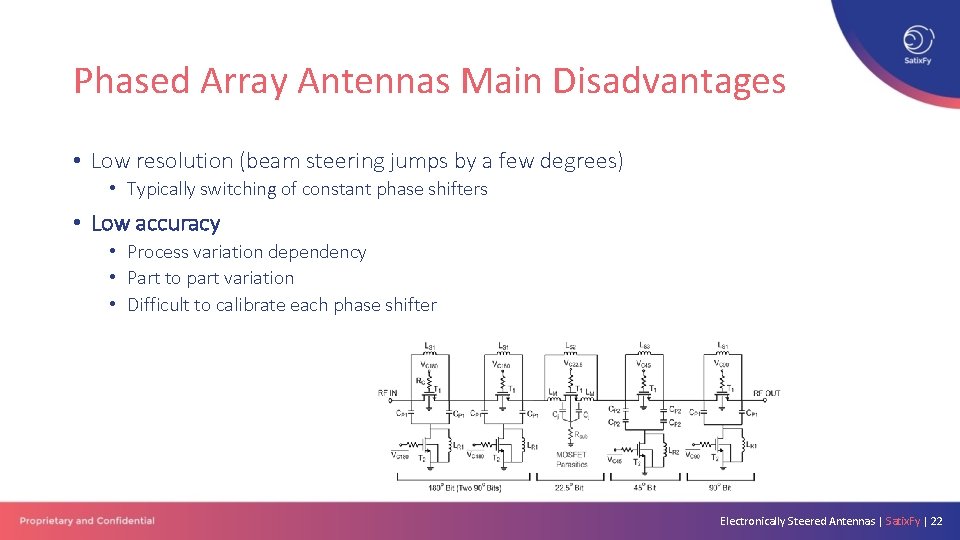
Phased Array Antennas Main Disadvantages • Low resolution (beam steering jumps by a few degrees) • Typically switching of constant phase shifters • Low accuracy • Process variation dependency • Part to part variation • Difficult to calibrate each phase shifter Electronically Steered Antennas | Satix. Fy | 22
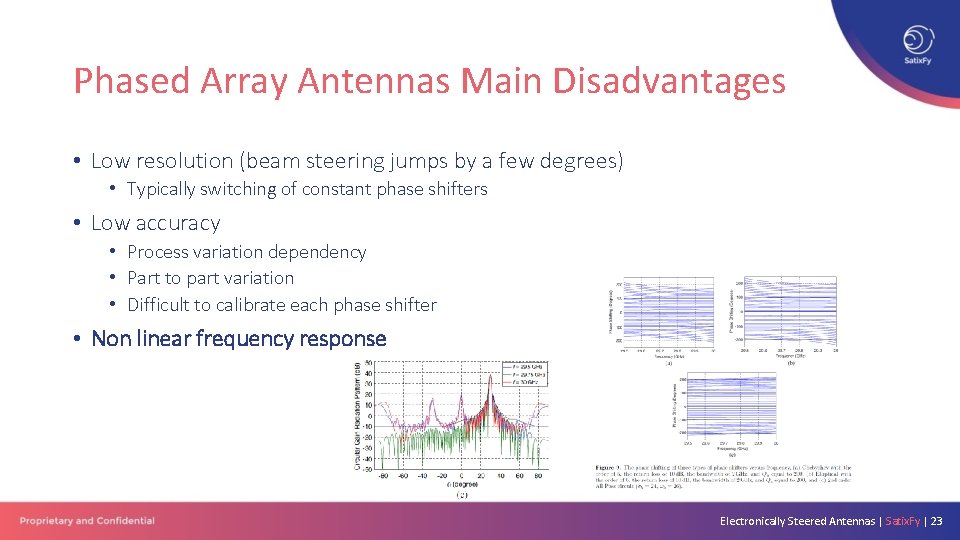
Phased Array Antennas Main Disadvantages • Low resolution (beam steering jumps by a few degrees) • Typically switching of constant phase shifters • Low accuracy • Process variation dependency • Part to part variation • Difficult to calibrate each phase shifter • Non linear frequency response Electronically Steered Antennas | Satix. Fy | 23
Phased Array Antennas Main Disadvantages • Low resolution (beam steering jumps by a few degrees) • Typically switching of constant phase shifters • Low accuracy • Process variation dependency • Part to part variation • Difficult to calibrate each phase shifter • Non linear frequency response • Silicon size is typically inversely proportional to the frequency • Lower frequency phase shifters are big Electronically Steered Antennas | Satix. Fy | 24
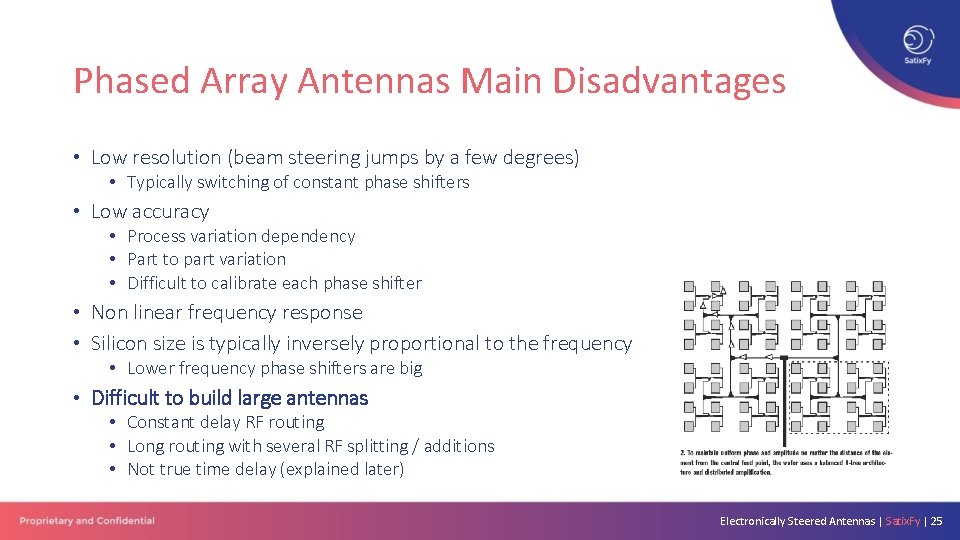
Phased Array Antennas Main Disadvantages • Low resolution (beam steering jumps by a few degrees) • Typically switching of constant phase shifters • Low accuracy • Process variation dependency • Part to part variation • Difficult to calibrate each phase shifter • Non linear frequency response • Silicon size is typically inversely proportional to the frequency • Lower frequency phase shifters are big • Difficult to build large antennas • Constant delay RF routing • Long routing with several RF splitting / additions • Not true time delay (explained later) Electronically Steered Antennas | Satix. Fy | 25
Phased Array Antennas Main Disadvantages • Low resolution (beam steering jumps by a few degrees) • Typically switching of constant phase shifters • Low accuracy • Process variation dependency • Part to part variation • Difficult to calibrate each phase shifter • Difficult to build multibeam antennas • Requires RF summation and splitting • Number of beams in a RF chip needs to be known in advance • Non linear frequency response • Silicon size is typically inversely proportional to the frequency • Lower frequency phase shifters are big • Difficult to build large antennas • Constant delay RF routing • Long routing with several RF splitting / additions • Not true time delay (explained later) Electronically Steered Antennas | Satix. Fy | 26
Phased Array Antennas Main Disadvantages • Low resolution (beam steering jumps by a few degrees) • Typically switching of constant phase shifters • Low accuracy • Process variation dependency • Part to part variation • Difficult to calibrate each phase shifter • Difficult to build multibeam antennas • Requires RF summation and splitting • Number of beams in a RF chip needs to be known in advance • Can not support large • Non linear frequency response • Silicon size is typically inversely proportional to the frequency bandwidth • Lower frequency phase shifters are big • Difficult to build large antennas • Not true time delay (explained later) • Constant delay RF routing • Long routing with several RF splitting / additions • Not true time delay (explained later) Electronically Steered Antennas | Satix. Fy | 27
Phased Array Antennas Main Disadvantages • Low resolution (beam steering jumps by a few degrees) • Typically switching of constant phase shifters • Low accuracy • Process variation dependency • Part to part variation • Difficult to calibrate each phase shifter • Non linear frequency response • Silicon size is typically inversely proportional to the frequency • Lower frequency phase shifters are big • Difficult to build large antennas • Constant delay RF routing • Long routing with several RF splitting / additions • Not true time delay (explained later) • Difficult to build multibeam antennas • Requires RF summation and splitting • Number of beams in a RF chip needs to be known in advance • Can not support large bandwidth • Not true time delay (explained later) • Difficult to support large scanning angles • Not true time delay (explained later) Electronically Steered Antennas | Satix. Fy | 28
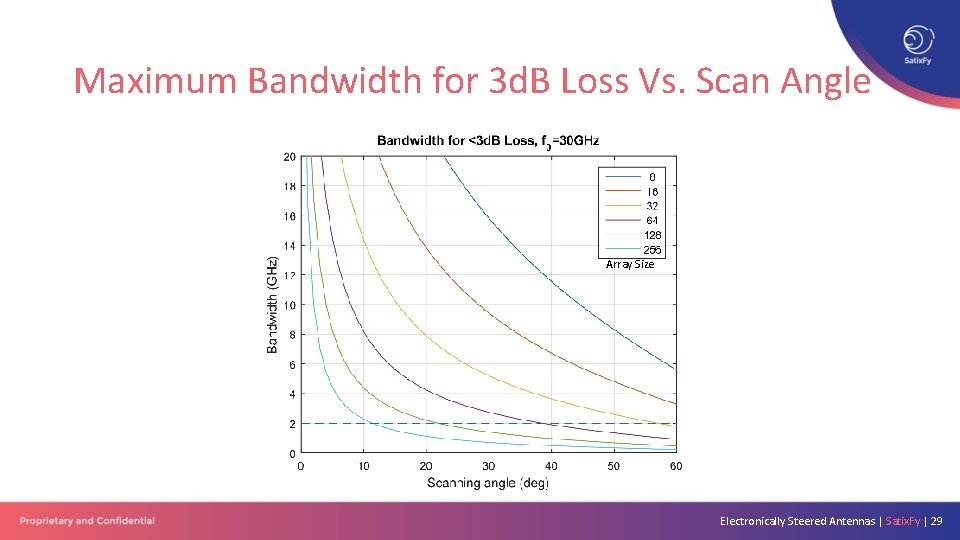
Maximum Bandwidth for 3 d. B Loss Vs. Scan Angle Array Size Electronically Steered Antennas | Satix. Fy | 29
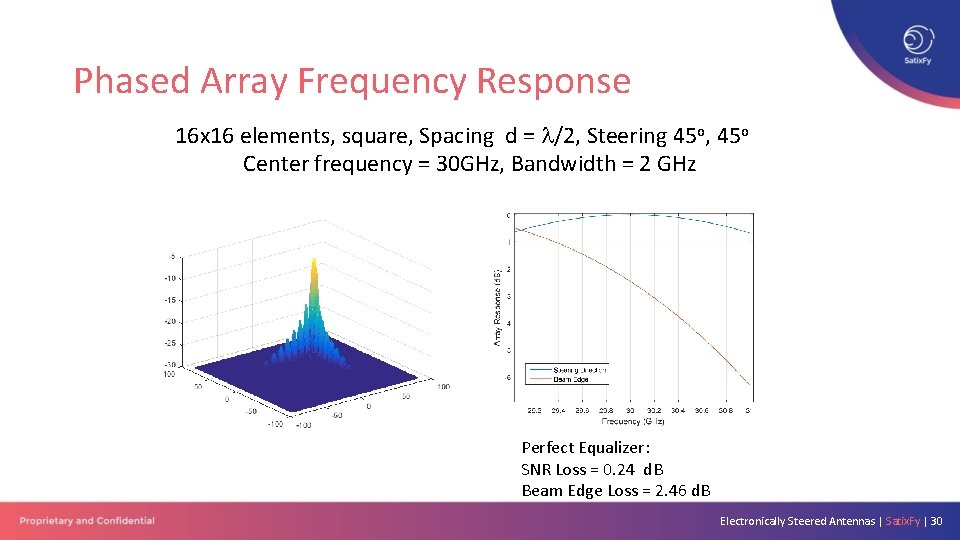
Phased Array Frequency Response 16 x 16 elements, square, Spacing d = /2, Steering 45 o, 45 o Center frequency = 30 GHz, Bandwidth = 2 GHz Perfect Equalizer: SNR Loss = 0. 24 d. B Beam Edge Loss = 2. 46 d. B Electronically Steered Antennas | Satix. Fy | 30
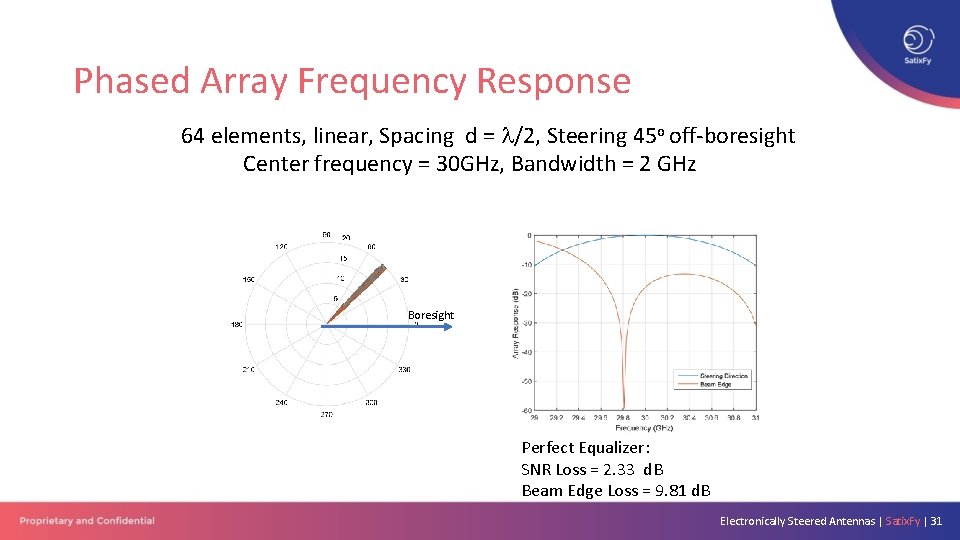
Phased Array Frequency Response 64 elements, linear, Spacing d = /2, Steering 45 o off-boresight Center frequency = 30 GHz, Bandwidth = 2 GHz Boresight Perfect Equalizer: SNR Loss = 2. 33 d. B Beam Edge Loss = 9. 81 d. B Electronically Steered Antennas | Satix. Fy | 31
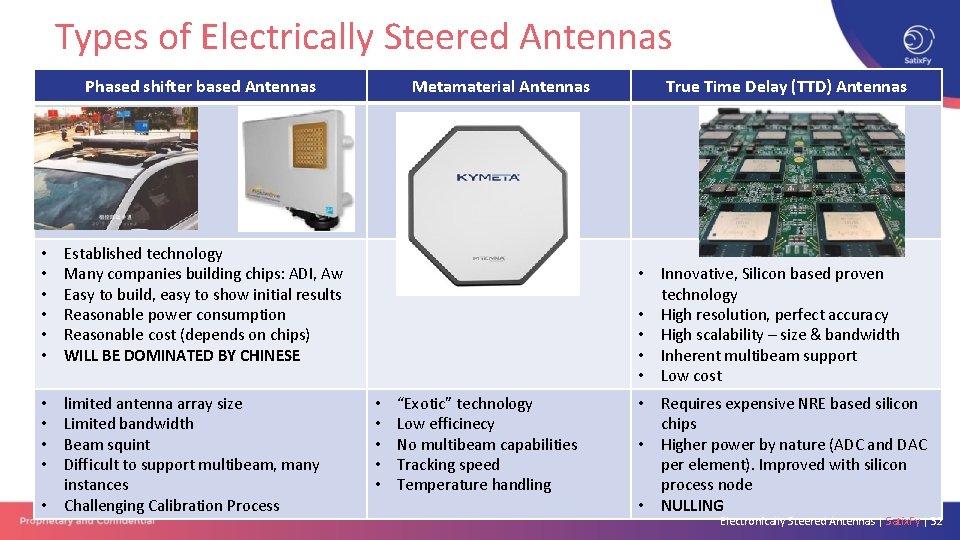
Types of Electrically Steered Antennas Phased shifter based Antennas • • • Established technology Many companies building chips: ADI, Aw Easy to build, easy to show initial results Reasonable power consumption Reasonable cost (depends on chips) WILL BE DOMINATED BY CHINESE limited antenna array size Limited bandwidth Beam squint Difficult to support multibeam, many instances • Challenging Calibration Process • • Metamaterial Antennas True Time Delay (TTD) Antennas • Innovative, Silicon based proven technology • High resolution, perfect accuracy • High scalability – size & bandwidth • Inherent multibeam support • Low cost • • • “Exotic” technology Low efficinecy No multibeam capabilities Tracking speed Temperature handling • Requires expensive NRE based silicon chips • Higher power by nature (ADC and DAC per element). Improved with silicon process node • NULLING Electronically Steered Antennas | Satix. Fy | 32
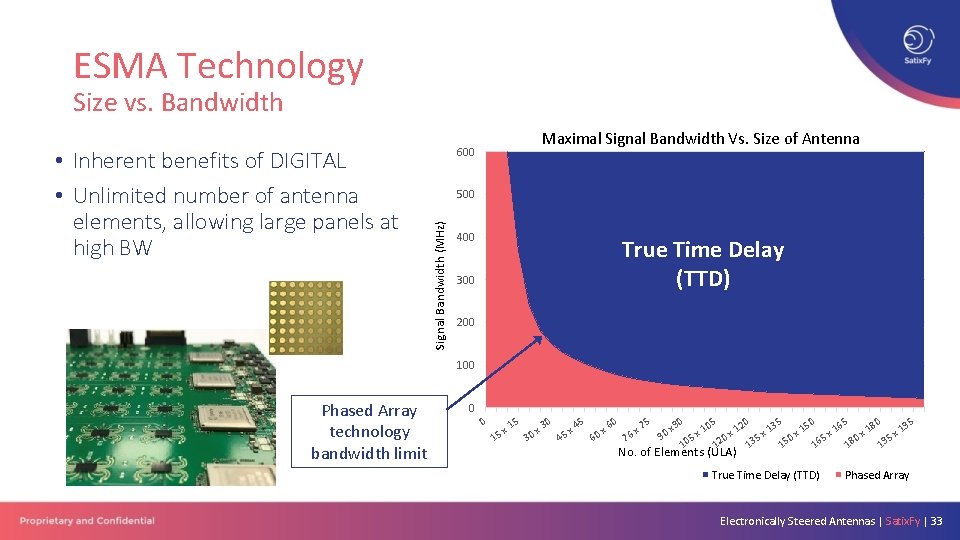
ESMA Technology Size vs. Bandwidth 500 Signal Bandwidth (MHz) • Inherent benefits of DIGITAL • Unlimited number of antenna elements, allowing large panels at high BW Maximal Signal Bandwidth Vs. Size of Antenna 600 400 True Time Delay (TTD) 300 200 100 Phased Array technology bandwidth limit 0 0 15 x 15 30 x 30 45 x 45 60 x 60 75 x 76 90 x 90 5 10 5 x 0 12 0 x 12 No. of Elements (ULA) 5 13 5 x 0 15 0 x 16 True Time Delay (TTD) 5 16 5 x 0 18 0 x 5 19 5 x 19 Phased Array Electronically Steered Antennas | Satix. Fy | 33
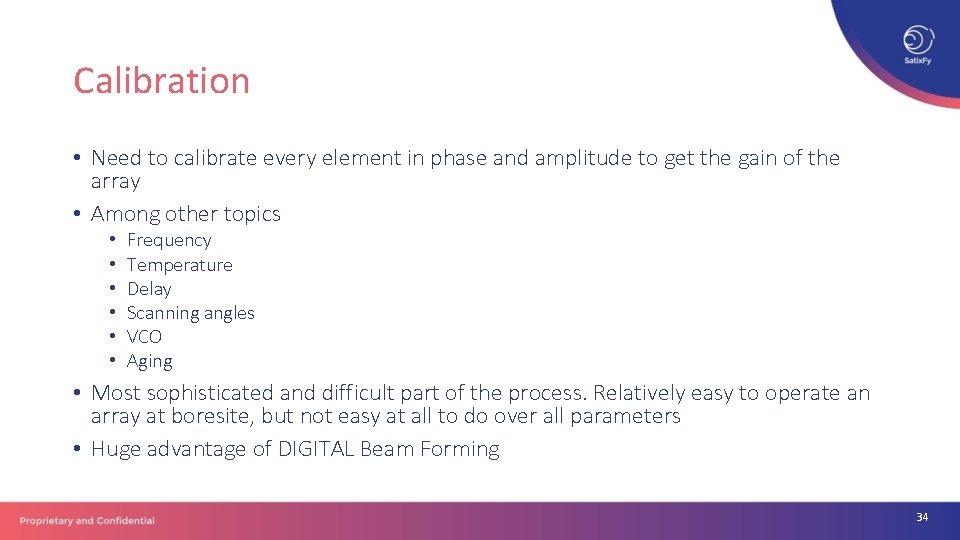
Calibration • Need to calibrate every element in phase and amplitude to get the gain of the array • Among other topics • • • Frequency Temperature Delay Scanning angles VCO Aging • Most sophisticated and difficult part of the process. Relatively easy to operate an array at boresite, but not easy at all to do over all parameters • Huge advantage of DIGITAL Beam Forming 34
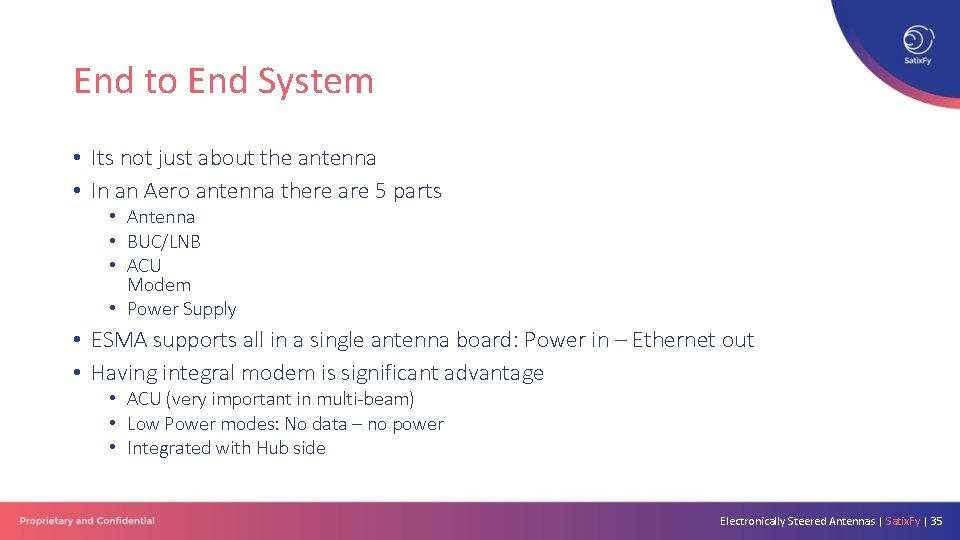
End to End System • Its not just about the antenna • In an Aero antenna there are 5 parts • Antenna • BUC/LNB • ACU Modem • Power Supply • ESMA supports all in a single antenna board: Power in – Ethernet out • Having integral modem is significant advantage • ACU (very important in multi-beam) • Low Power modes: No data – no power • Integrated with Hub side Electronically Steered Antennas | Satix. Fy | 35
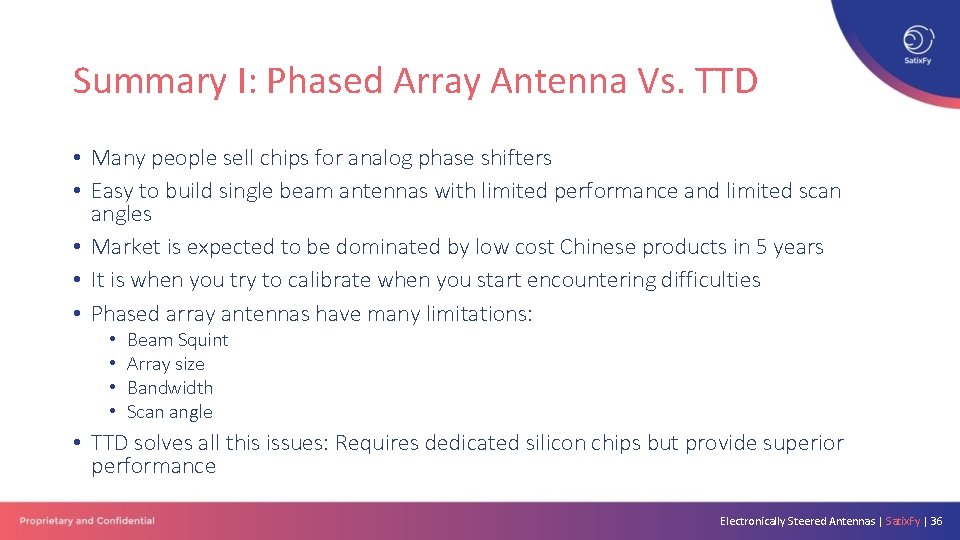
Summary I: Phased Array Antenna Vs. TTD • Many people sell chips for analog phase shifters • Easy to build single beam antennas with limited performance and limited scan angles • Market is expected to be dominated by low cost Chinese products in 5 years • It is when you try to calibrate when you start encountering difficulties • Phased array antennas have many limitations: • • Beam Squint Array size Bandwidth Scan angle • TTD solves all this issues: Requires dedicated silicon chips but provide superior performance Electronically Steered Antennas | Satix. Fy | 36
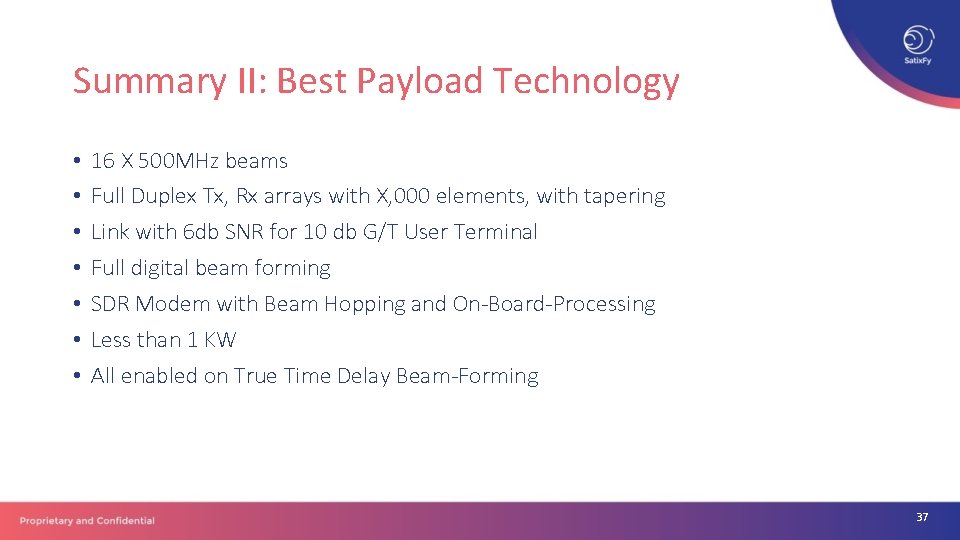
Summary II: Best Payload Technology • • 16 X 500 MHz beams Full Duplex Tx, Rx arrays with X, 000 elements, with tapering Link with 6 db SNR for 10 db G/T User Terminal Full digital beam forming SDR Modem with Beam Hopping and On-Board-Processing Less than 1 KW All enabled on True Time Delay Beam-Forming 37
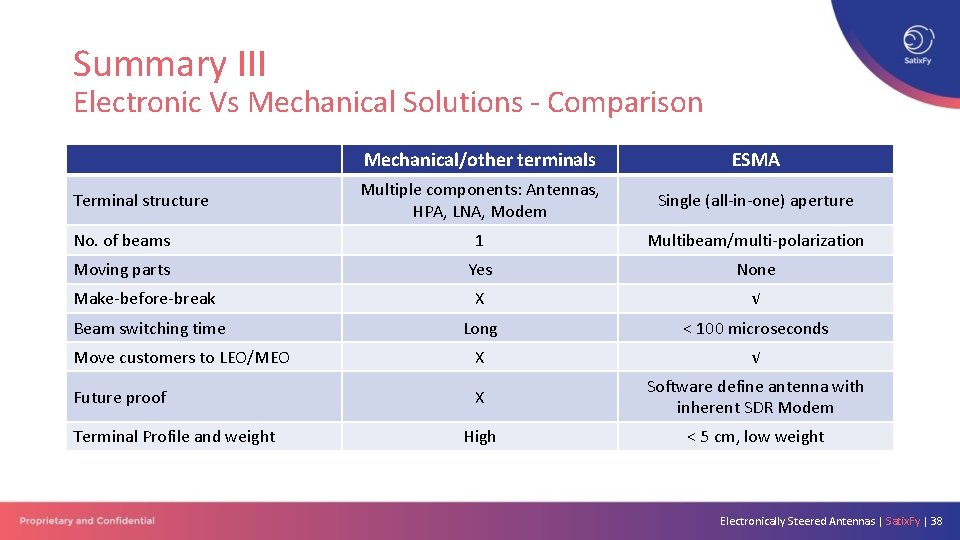
Summary III Electronic Vs Mechanical Solutions - Comparison Mechanical/other terminals ESMA Multiple components: Antennas, HPA, LNA, Modem Single (all-in-one) aperture No. of beams 1 Multibeam/multi-polarization Moving parts Yes None Make-before-break X √ Beam switching time Long < 100 microseconds Move customers to LEO/MEO X √ Future proof X Software define antenna with inherent SDR Modem High < 5 cm, low weight Terminal structure Terminal Profile and weight Electronically Steered Antennas | Satix. Fy | 38
Thank You Satix. Fy 39